Canterbury 2.1 – Tom Penaguin (part 2)

for part 1 of this interview go here
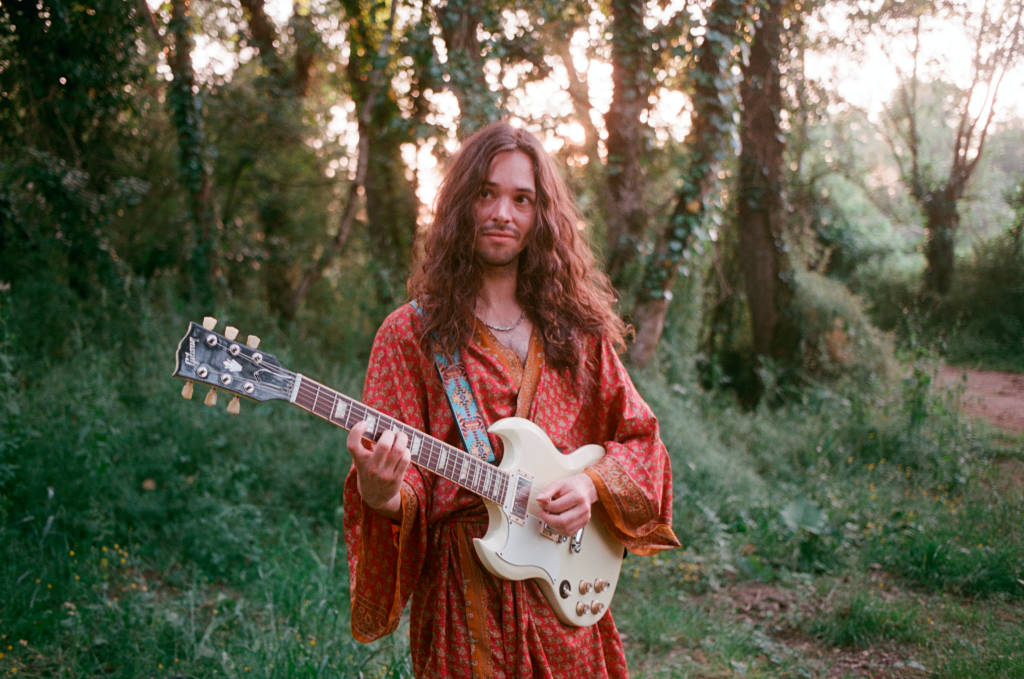
photo: Maureen Piercy

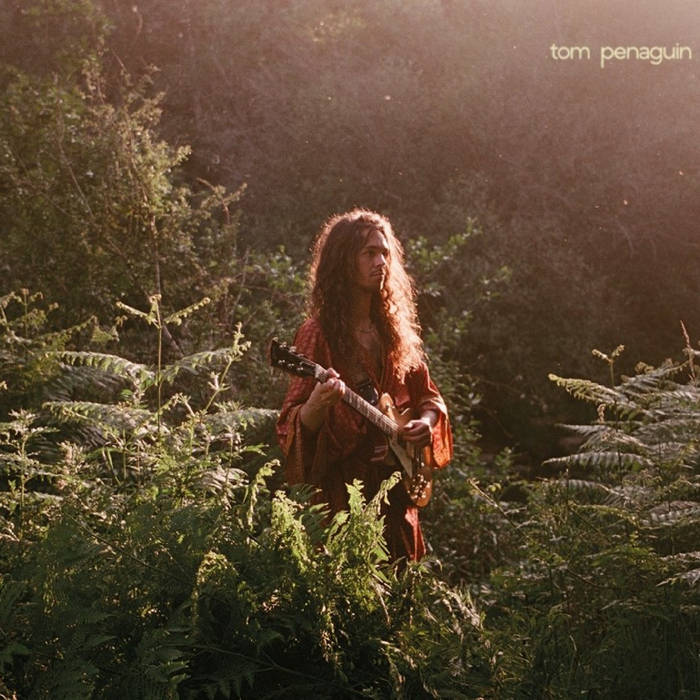
The album Tom Penaguin is an entirely instrumental project of 5 pieces, bringing keyboards much more to the fore than Tom’s previously heard material on Youtube videos and is an album of complex, often introspective composition. There’s a lightness of touch in place, almost an instrumental whimsy which reminds me Hatfield and the North and Gilgamesh, but there are also overt references to other Canterbury bands in other places, most specifically on the extraordinary Aborted Long Piece No 2. The latter sits slightly incongruously in the centre of the album, a brief slice of madness which progresses from the faux-classical organ sounds (so Egg-like) to a preposterously crazed minute or so of aural battery, mixing endless unreasonable timing changes with  relentless fuzz effects to organ and bass. Tom, however, overall sees a closer alignment to National Health:

 I wanted (the album) to feel like it would fit amidst the Canterbury Scene of the Seventies, and the album’s structure is reminiscent of a National Health album where the theme from the beginning is repeated at the end. That’s the kind of coherence I was looking for, and I think it gives the album an entry and exit point.

I shaped the whole album to something similar to what they did back then, with the slow intro, a “main theme” used at the beginning and at the very end of the album, things like that. I think it’s one of the best way to write a coherent album, it gives the listener some time to get into the whole thing, and allows them to go back to “real life” smoothly.

Egg is also a strong influence, I think of it as a great writing tool/skill set. When I’m trying things on keyboards, I often end up with a small pattern that I’m trying to either break or to play in the most difficult way possible. The rest of the instrumentation needs to leave space for it though, otherwise there’d be too much information at a given time, so it ends up with drum, bass, and 2 keyboards max playing intricate patterns, which sounds a bit like Egg, but I haven’t found an alternative to this result yet (and I’m quite ok with that).
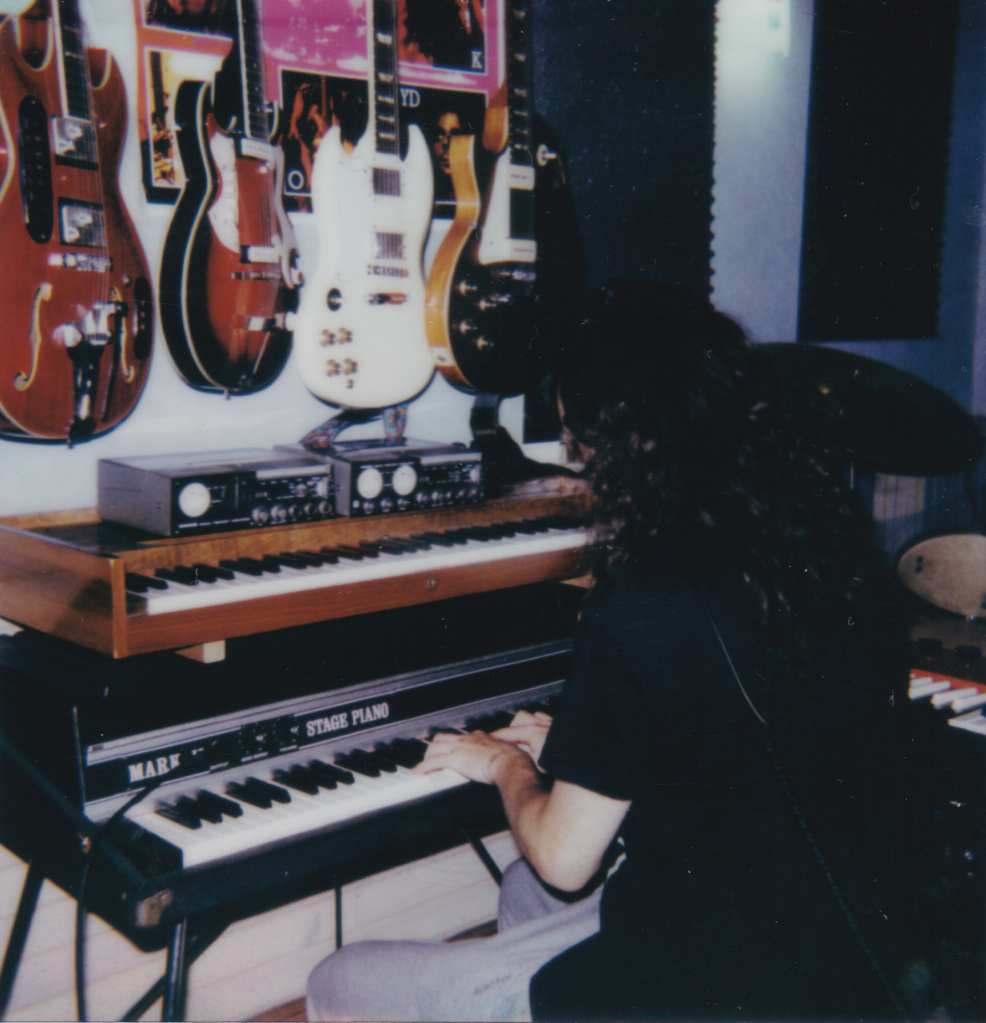
photo: Maureen Piercy

So how did the ‘Canterbury’ project come about?

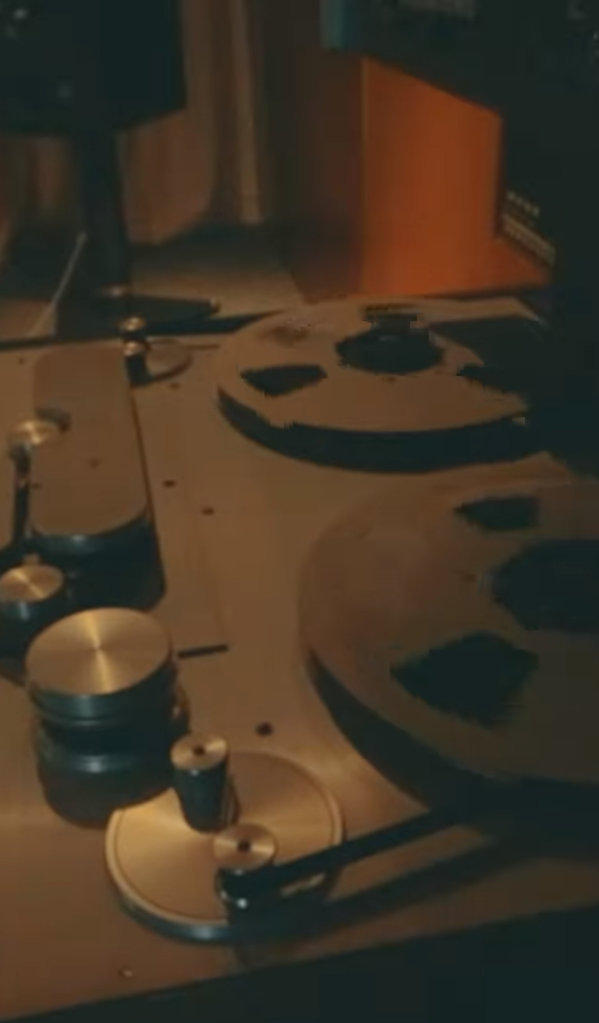
This all comes from a 16 track tape recorder I bought in 2020, I wanted to try what could be done with analogue gear only, including recording and mixing, and I came up with Housefly Leg. It was a real pain to record it alone without any computer or digital stuff… then I bought a Fender Rhodes, a keyboard I was dreaming about for quite a while, and I realised that I was ready and set to try to record the Canterbury album I wanted to do for so long. It took me quite a while to write the B side, a lot of trial and error, but I did it without digging too much into my old compositions, as I’ve evolved a lot musically since. So almost everything is fresh! I re-recorded Housefly Leg, the whole album was recorded using a computer only as a tape recorder with very few digital effects, everything else was done with analogue gear from mixing desk to spring reverb unit.

I finished it in mid 2023, then went to the Black Box studio (where we recorded our last Djiin album) to have it mastered. Then, Maureen, my girlfriend and the photographer responsible for the design of the whole album, sent a message to Ryan from Zopp. We talked a lot, he taught me a lot of things on what to expect as a solo musician in the prog music industry, and I began contacting labels that I thought could be interested, along bands that I thought were in the same musical realms as myself.

Dario from Homunculus Res gave me the lead for àMARXE, and it’s Rafa that was willing to take the most risks regarding the album. I’m glad I trusted him, his work is flawless and we are on the same wavelength, plus I get to be published by a label that also have work from Juzz, Amoeba Split, Love Beat Oracle and Rascal Reporters!
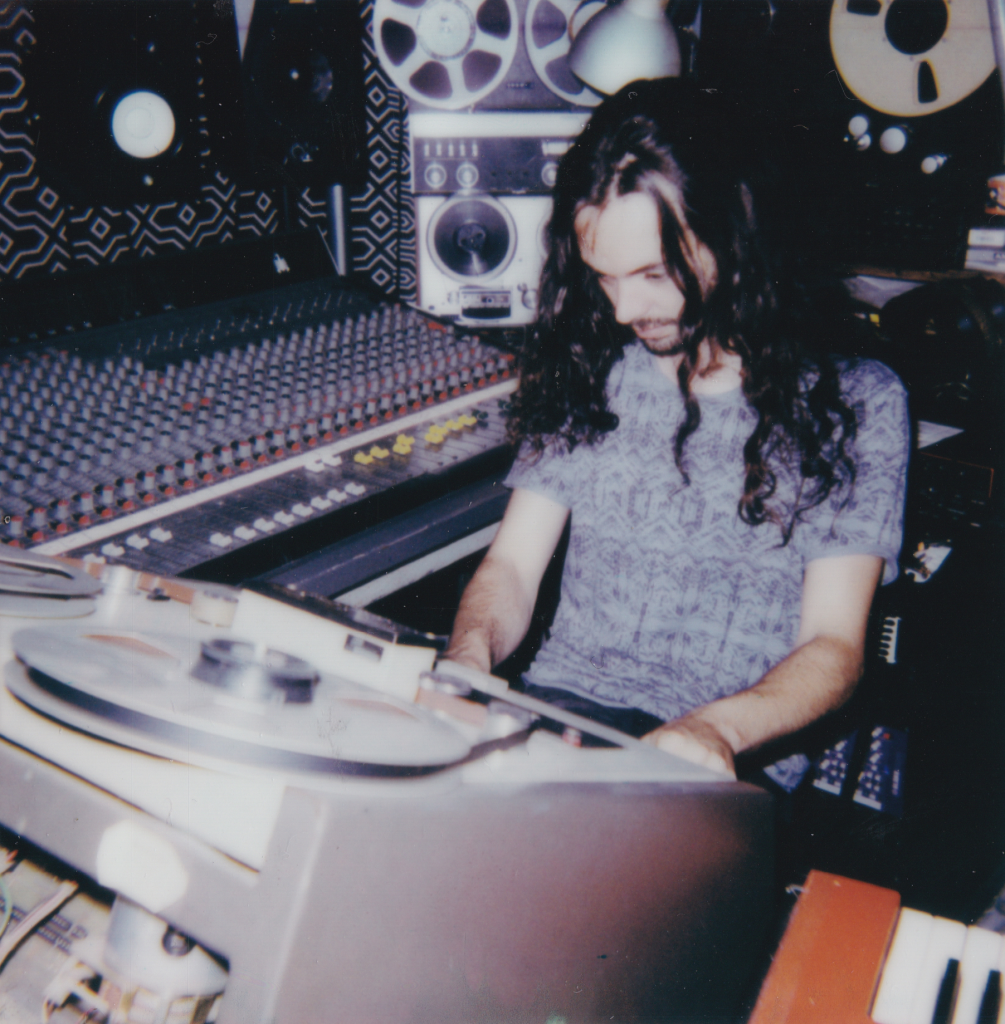
photo: Maureen Piercy

I noted other semi-recognisable approaches within the album: attempts to carve out anthemic themes akin to ‘Tenemos Roads’ on ‘Housefly Leg’, which is followed by a wonderfully effusive bass solo, the latest in a tradition stretching back all the way to Caravan’s ‘For Richard’  via National Health’s ‘Borogroves’. I also noticed that the dual guitar/keyboard lines remind me in places of Khan, as well as Tom’s work elsewhere, particularly on those early Youtube videos being reminiscent of Steve Hillage, although Tom is ambivalent in terms of his guitar influences..

I never really tried bass solos before, I came up with the one from housefly leg on the spot. The chord sequence is very open, so for each chord there is 4 or 5 different bass notes that can give a different meaning to the thing. Guitar-wise I’ve never been too influenced by the Canterbury scene so it’s hard for me to pinpoint a guitar player. I’ve been mostly influenced by Zappa, McLaughlin, Akkerman and Holdsworth, but I sound like none of them because I’m only interested in a fragment of their skillset.

So what of Tom’s other work? His Youtube channel is a pastiche of original compositions, some with clear Canterbury reference points, which are detailed below, others not. There are also medleys of material from bands such as King Crimson, Zappa, Focus and Pink Floyd, all in their own right feats of performance and compilation, as Tom synchronises his talents on a number of instruments. Tom outlines the method:

The process is quite similar between the videos and the album. For the album I wrote everything on computer using virtual instruments. Once I have something that seems ok, I try to play live drums over it. If I’m having fun playing drums, I’ll keep what I have written, if not I’ll erase things and write stuff again. Once I’m pleased with what I wrote, I can begin laying down the drum tracks over the virtual instruments, and then I erase the virtual instruments and I record the real instruments. Once everything is done I’ll take my time to record the solo parts.

I picked out a few choice videos for Tom to comment on – links are also included here. Galaxy on Tape, for example, has a curious, almost educational introduction as Tom takes us through the process of creating a tape loop, before launching into a joyful blissed out sun-god guitar solo.

Galaxy on Tape: I think I had Gong in mind at the time. I wanted to have a synth loop somehow, but didn’t have any synth at the time and I didn’t want to do it digitally. That was a good excuse to do a tape collage loop I think! The loop was then sped up and blended with an organ into a wah pedal and a Fulltone Octafuzz. The wah allowed me to imitate a VCF while the Octafuzz, being an analog octave up pedal that don’t like being fed 2 notes at once, allowed me to emulate a ring modulator. On Galaxy on Tape 2 I had just bought the 8 track tape recorder with its matching mixing desk that you see in the video and I wanted to try it before going into something more challenging musically. I think it’s still influenced by Gong!

Tom’s version of ‘Teeth’ is somewhat impressionistic, messy interpretations of a single riff from the original Soft Machine track, whilst ‘Master Builder’ is a relatively faithful version of  Gong’s seminal ‘Om Riff’.

Tom: ‘For Teeth/Master Builder: honestly, like most of the other covers I did, I just wanted to play that song, and I videotaped it to put in on Youtube.

Typewriter in D: this is a blend between me buying a cheap typewriter, and discovering Kamasi Washington.

There are also a number of additional solo projects Tom has published on Bandcamp, often semi-anonymised, such as Captain Blind Chameleon, which in eschewing keyboards AND featuring multi-tracked vocals is an instrumental diversion, stripped down and heavy. It remains perversely possibly my favourite material amongst his work, despite it being aeons away from his ‘debut’ solo album.

(With) Captain Blind Chameleon I wanted to see how far I could push the concept of very gentle vocal harmonies over a very riff-oriented stoner instrumentation. It was also the perfect excuse to blend prog ideas to a genre that can sound a bit dull when it is too centered on the heavy, bold sound and not enough on the musical content. I have a half written Captain Blind Chameleon vol.2, but it’s more kraut-stoner, there’s no lyrics yet, and I’m not in the mood to work on it currently…

Tom also has had membership, on a more equal footing, with other musicians, such as his first band The Moonrains (who covered pop prog material by the likes of ELO and the Beatles) but more recently his current work with Djiin, which whom is he currently on tour with in Germany.

I had a few projects that never went that far until I joined Djiin in 2017. I joined the band as a bassist, since the one they had previously suddenly went to Poland. I switched to guitar a few months later. Then Allan (Djiin’s drummer) offered me to join Orgöne, a band that he had recently joined, as a keyboard player.

I’m still currently playing guitar in Djiin, but I left Orgöne a few years ago because I thought we were not playing live as much as we should have, and we were a bit stuck while writing what would have been the second album. We recorded it but quickly scrapped everything because we thought about it too much I think. 2 years ago I tried to build my own band, Pramanta, oriented into prog and fusion. We had quite a bit of viable material but I was struggling with the power trio formula, and Claudia, the bassist, left to go back to Spain, so that band was over. I’m trying again with the same drummer, Baptiste, and this time we’ll try to find a keyboard player. We’re currently writing stuff, we just need to find the people that would enjoy playing that.
Finally, given the excitement about his debut solo album, what are the plans for the future?

I’m writing the next album! But there might be something related before that, I don’t want to say too much about it for now.

Thanks to Tom for being so generous with his time, and as eloquent an interviewee as he is a musician!

Tom Penaguin is available on AMarxe records here:

part one of this interview is here

look out for further interviews in this series with the likes of Dario d’Alessandro (Homunculus Res), James Stain (Rascal Reporters), Carla Diratz (Diratz), Dave Newhouse (The Muffins), Eva Muntada (Magick Brother Mystic Sister), Bjorn Klakegg (Needlepoint), Ryan Stevenson (Zopp), Alberto Villaroya (Ameoba Split)

For other interviews in the Canterbury 2.0 series, please click here

Canterbury 2.1 – Tom Penaguin (part 1)

Update: part 2 of this interview is here

The first interview for the Canterbury 2.0 series is, oddly enough, with the one musician on the list with whose work I was blissfully unaware of only 6 months ago. Just before Christmas last year, Ryan Stevenson of Zopp, who will be interviewed later in this series, mentioned the following in a Messenger exchange: “There’s a young French guy called Tom Penaguin who sent me his album asking for record deal advice. It’s AMAZING!”

He wasn’t joking. Tom was kind enough send on some samples of what would eventually end up as the album Tom Penaguin, an instantly recognisable blend of Canterburyesque elements, but just as instructive was dipping into an extraordinary array of Youtube videos chronicling Tom’s development from being a fresh-faced 16 year old all the way through to the present day.

Click here to watch the album being mastered

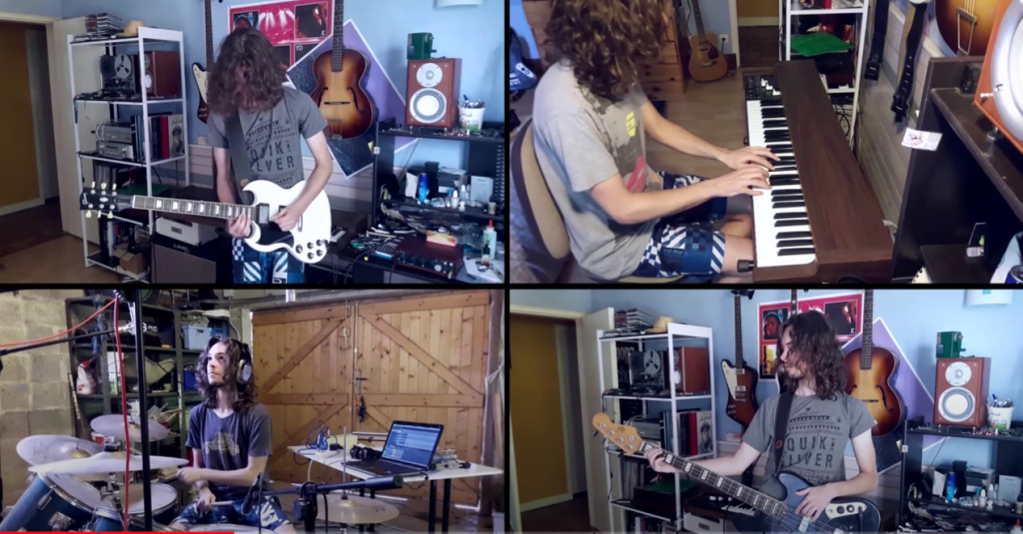
Tom’s calling card is his multi-screened performances where he takes ALL instruments: a dexterous, almost manic drummer; a fluid Hillagesque guitarist; an equally malleable manipulator of the bass: but also not afraid to use keyboards in a variety of roles; innovatively using tape machines to create looped backgrounds; and even on occasion turning his hand to vocals.

All are done with seemingly effortless command, culminating in the album on Amarxe Records that you really should now have before you, a Canterburyesque masterpiece of sorts which dons particular hats to the Dave Stewartesque lineage of Egg, Khan, Hatfield and the North and National Health.

So, before diving into the specifics of that album, let’s examine the long route towards it. Tom, who lives in Western France, is still only 28, and pays the bills through a job working on lathes for farming machinery rather than the  prolific musicianship on display here. So how did one so young get to this level of virtuosity and insight so quickly across such a range of instruments and styles?

(My parents) both played a little bit of guitar when they were young, but I never saw them play regularly. But the acoustic guitars were there so I had the chance to try an adult-sized instrument when I was very young!

As far as I can remember, I’ve always been playing music in a way or another. When I was very young I used to sing “false English” while banging things with sticks or playing with a toy guitar. One day my father even built me a small drum kit with some empty paint buckets and a jerrycan. I began taking guitar and music theory lessons when I was 5 or 6, in a rural music school. I quit the music theory lessons 4 years later as I was not very interested, but I continued guitar lessons for a few years before switching to a country/bluegrass guitar teacher for another 2 or 3 years. When I was in middle school, I used to come back from school and put on either the Who or Led Zeppelin on my bedroom’s hifi for me to spend hours trying to play over it. When I (finally) discovered Zappa, I spent 2 years only listening to his music and trying to play over it. That was the period where I learnt the most.

When I was 6 years old, my parents bought me a vintage organ, an Eko Super Junior A from the seventies. I kept it for a few years before giving it to one of my cousins. Years later, when I was 14 and had suddenly gained an interest into vintage keyboards, I took it back and repaired it since it had sustained a bit of damage (a few broken keys and a chewed up power cord). Then I bought a Hohner Pianet T and I learned how to play on the spot, by trying to imitate what I liked to hear at the time.

I always wanted to play drums, but my parents were reluctant to the idea of having a loud drum kit in the house, so I had to wait around my 15 or 16 birthday to be able to buy a very cheap drum kit that was immediately placed in the garage, far from the house. Same thing, I learned on the spot, by playing over The Who, Henry Cow, Soft Machine, Zappa.

I never tried to actively learn how to play bass, I came to it with the approach of a guitarist. I also never bought one, the 2 basses I own are from a good friend of mine that forgot them in my room (and he was left handed too).

I’ve been writing and recording solo music for quite a while. When I was around 12 years old, my uncle gave me a 4 track cassette tape recorder, and I was immediately hooked. I moved to computers and big reel to reel tape recorders since, but I always had solo projects in a corner of my mind.

photo: Maureen Piercy

I asked Tom what sort of music he was exposed to growing up and how it influenced his own compositional work?

I was exposed to The Doors, Santana, Dire Strait, Eric Clapton, Satriani, Rita Mitsouko… none of it had a real influence on my compositional work. The only thing that had a real influence was that my mother sometime played Zappa’s Yo Mama in the car while going to middle school, that’s what got me into wanting to hear what else was available from that man, and all that I learnt from him.

So what about his own personal connection to Canterbury scene music, and how did it manifest itself?

I think I became aware of the Canterbury scene through the gear they used. I’ve always been fascinated by two things, music and mechanical things, so you can imagine my excitement when I discovered that some keyboards blended both of those aspects! I quickly began to look for bands that used them, because I loved the sound of those instruments, and as I was looking for bands that used Hohner Pianets, I found out about Soft Machine and Egg, but in general this search made me aware and passionate about most of the prog acts of the 70s.

It came a little bit later than the rest of the prog scene. I was around 14 years old when I found out about Genesis, King Crimson yes etc, then Zappa, then the RIO/Canterbury scene around 16 or 17. Very often, the line between jazz fusion and prog is a bit blurred, like with the later albums from Gong, Soft Machine, or focus in general, so I got into that at the same time (I’m currently digging into the MPS repertoire with people like Volker Kriegel, Jasper Van’t Hof, Joachim Kühn etc.. amazing German jazz rock).

I don’t know where this comes from, but I’ve always been very curious about the individuals inside a band. If I really enjoy something, I’ll try to find what bands also included those same musicians, to see which one of them carried the vibe I really liked at the beginning. This went extremely fast with the Canterbury scene, as every musician of the scene played in almost every band. Then I found out that there was a “Canterbury” label glued to almost all my favourite bands, so I dug even further.

photo: Maureen Piercy

So what does Tom regard as the essential components of the Canterbury sound?

The first thing that pops up to me is the fuzzy organ and fuzzy bass sound. I think that originates from Soft Machine touring with Jimi Hendrix. What’s funny to me is that I’m pretty sure Dave Stewart, Hugh Hopper and Mike Ratledge all used a Shaftesbury Duo Fuzz, which happens to be a rebranded Shin-Ei Duo Fuzz, inspired by the Univox Super Fuzz. Those fuzzes are very harsh sounding but work very well with the mellow tone of a Hammond or Lowrey organ. Tim Hodgkinson used a Marshall Supa Fuzz (I asked him directly a while ago), and I’m pretty sure it was placed after the reverb tank of his Farfisa Compact, allowing the tail of the reverb to be distorted as well. I don’t know where the wah pedal comes from, maybe from Hendrix or from an attempt to tame the bright fuzz, but it was also used extensively on organ sounds. It also allows a bit of evolving texture during slow progressing chord parts, since Leslie cabinets were rarely used.

Regarding the compositions, it ranges from psychedelic influences to classical and jazz. What I think is the most interesting thing is that the classical influences are digested in a very different way than “mainstream” progressive music and Italian prog in particular. Here the influences come from modern composers ranging from Stravinsky to Holst, where most of the other prog bands used baroque, classical or romantic influences. Mont Campbell in particular seemed to be very fond of the first two Messian modes (mainly the whole-tone and octatonic modes) which were also used by Stravinsky, Debussy, Ravel… This use of particular modes combined with asymmetrical metrics gives a very mathematical feeling to the music, in a good way.

The lyrics remain very joyful, at times even funny or pataphysical. It feels to me like those lyrics are an excuse to sing, that the song was not built around it. They are always wonderfully written and sung with ease around a very difficult and ever-changing melody line. Henry Cow lyrics were different though, but I think this comes from the RIO side of the music.

More tomorrow as Tom talks extensively about his album, and we also delve into some of his extraordinary Youtube videos.

Tom Penaguin is available on AMarxe records here:

For other interviews in the Canterbury 2.0 series, please click here
Forthcoming interviews on the Facelift blog! – Canterbury 2.0?

Facelift will shortly start publishing extracts from a number of interviews concentrating on a ‘new wave’ of ‘Canterbury’ artists: musicians largely living outside of the United Kingdom who have been tagged with (or have tagged themselves) as belonging to the Canterbury music scene, some intentionally, some not. I saw this phenomenon tagged (I can’t remember where, so please let me know if it was you!) as Canterbury 2.0, which I quite like, although I reckon we might be up to the 5th or 6th iteration by now!

It is hoped over the next few months to publish interviews with the likes of Alberto Villaroya (Amoeba Split), Eva Muntada (Magick Brother Mystic Sister), Ryan Stevenson (Zopp), Bjorn Klakegg (Needlepoint), Dave Newhouse of the Muffins (whose story of course starts much earlier), Carla Diratz (Diratz, Archers of Sorrow), Fabio Golfetti (Violeta de Outono and of course Gong), James Strain (Rascal Reporters) and Dario D’Alessandro (Homunculus Res).

Core questions will be about their current projects; their influences; what they regard as the Canterbury scene (and how they see themselves fitting into it, if at all); and experiences of being a Canterbury fan outside of the UK; plus of course a bit about their own musical history.

This list is far from exhaustive and may yet change/expand.

The impetus for this is partly for a research project I am doing at Canterbury Christ Church University on a range of topics relating to the Canterbury scene, but separate to this it seemed like a very good excuse to find out more about a number of musicians who works I admire, who very much fit within the scope of the Facelift blog. Who knows, maybe information from within these interviews might find a home within a publication of some sort in the future.

The order in  which these interviews have arrived is purely coincidental – so for example within the first 4 interviews I’ve already carried out: Fabio Golfetti of Gong is someone I’ve been in contact with for, we think, 30 years and have talked regularly over the last 8 about doing something of this nature, but I’ve only just finally managed to pin him down! In contrast my interview with James Strain, about his work on the Lunophone project with Dario D’Alessandro, occurred completely unexpectedly when he contacted me last week having just realised he’d been in the town I live in the previous weekend on a visit from his native Ireland, and a chat in Messenger developed into a hour-long conversation.

The first article in the series will be an interview with extraordinary young French multi-instrumentalist Tom Penaguin, but prior to that, the first thing I will do here is point you in the direction of some of the musicians mentioned above – all have agreed in principle to pass on a few thoughts, so it seems a good starting point to introduce you to their music.

In alphabetical order:

Dario d’Alessandrohttps://homunculusres.bandcamp.com/album/ecco-limpero-dei-doppi-sensi

Carla Diratzhttps://discusmusic.bandcamp.com/album/blue-stitches-169cd-2024

Fabio Golfetti https://fabiogolfetti.bandcamp.com/

Bjorn Klakegghttps://needlepoint.bandcamp.com/album/walking-up-that-valley

Eva Muntadahttps://magicbrothermysticsister.bandcamp.com/album/tarot-part-i

Dave Newhousehttps://davenewhouse.bandcamp.com/

Tom Penaguinhttps://amarxe.bandcamp.com/album/tom-penaguin

Ryan Stevenson https://zopp.bandcamp.com/

James Strainhttps://rascalreporters.bandcamp.com/

Alberto Villaroyahttps://amoebasplit.bandcamp.com/