
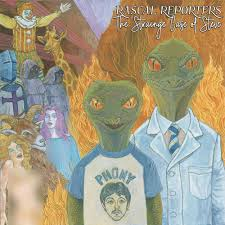
June 21 sees the release of Surroundings, the first album by Lunophone, a pan-European collaboration by two musicians associated separately with a new wave of Canterbury-influenced music: Dario d’Alessandro of Italian band Homunculus Res, and James Strain of Rascal Reporters, the American project dating back to the Seventies who recently took on board James from his base in Ireland and released an album ‘The Strainge Case of Steve’ on Cuneiform Records
This is a meeting of disparate minds with some common musical language: Homunculus are renowned for their short, snappy, poppy tunes of frequent obtuse changes of direction; Rascal Reporters for extended, keyboard-based instrumental pieces, with frequent and convoluted changes of time signature.
Lunophone’s debut album ‘Surroundings’, released on AltRock records (label home to a number of neo-Canterbury-related bands such as Homunculus Res, Alco Frisbass and Loomings), consists of 12 pieces alternatively composed by d’Alessandro and Strain, each clocking in at between 2 and 6 minutes, with the two musicians contributing all instrumentation between them, in addition to d’Alessandro’s vocals. Composition titles rather give away the authorship of each individual piece away as they flip between Italian and Gaelic sounding names. It’s fair to say that the resulting music is a fairly accurate meeting between the two approaches, with the emphasis on both intricacy AND accessibility.
I asked the project’s two members a bit about their routes towards the Lunophone project:
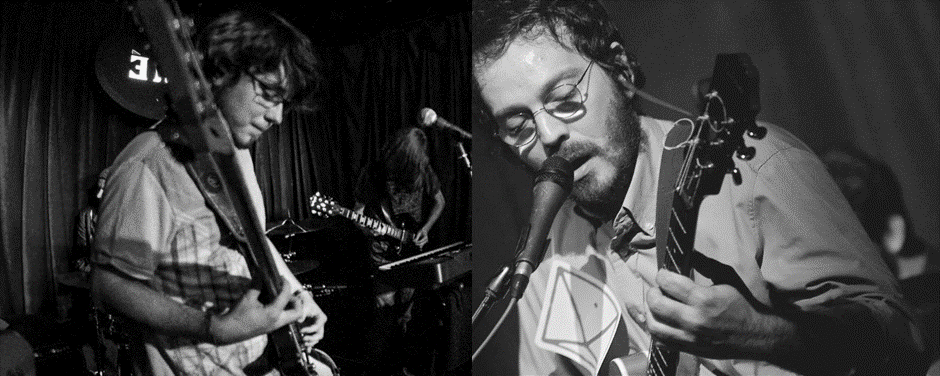
Dario D’Alessandro: James and I have a crazy shared passion for Rascal Reporters, one of my all-time favourite bands.
I had contacted Steve Kretzmer, half of the Rascal Reporters duo, and Brian Donohoe, custodian of the band’s monstrous archive with recordings dating back to 1975 when the two were in high school, to ask their permission to publish a small tribute on the first album of my band Homunculus Res.
James Strain: I actually just found Rascal Reporters on ProgArchives and checked them out because I saw that Kerman (of the 5UUs) featured on Happy Accidents and I became OBSESSED with them. I kept seeing mention of albums and songs by them that I could no longer find anywhere online so I got in touch (with Steve) on Facebook. I learned that he was starting to make new music but he had a bad MIDI keyboard to work with, so I traded a new MIDI keyboard with velocity sensitive keys for a copy of their music archives. When I was exploring that, just as a fan, I started playing around with some unfinished tracks and, for fun, I put drums on an unfinished Steve Kretzmer piece (which we eventually released as ‘Improv Cost Me My Job’). I was initially just going to do a remix project or something sampling Rascal Reporters tracks into hip hop beats but ended up being invited to join the band.
Dario was involved with Rascal Reporters before I even got involved. He was working with Steve (Kretzmer) on some of the tracks he was doing just before I joined. Dario had done versions of some ‘Happy Accident’ sections (the album which was reviewed by Alan Terrill in Facelift Issue 2 all the way back in 1989!) and ‘Egg Soup’ by Steve Kretzmer on the Homunculus Res albums as well, so it was through that that I got to know Dario and Homunculus Res as well. We got to know each other more through working on the full Rascal Reporters album and then when Homunculus were doing their fifth album, he asked me to mix and master it. So through the process of doing that we found that we had an effective and efficient working relationship in terms of being able to communicate clearly with each other over email and get our ideas across to each other, and I think we’re both just people who are able to write and create music fairly quickly and we thought it would be fun to just try out making some stuff together and explore some different kind of ideas together.
Dario: I think I met James in 2018, when, together with Kimara Sajn, Dave Newhouse (The Muffins) and Guy Segers (Univers Zero), I collaborated on Steve Kretzmer’s first pieces he wrote for organ after a long period of inactivity, which then ended in the great comeback ‘The Strainge Case of Steve’ (named partly in reference to the surname of their new member, as well as the fact that the original incarnation of Rascal Reporters included 2 Steves: Kretzmer and the late Steve Gore) including the single ‘Unknowable’, an extremely fun and avant-garde song.
In that period James became increasingly interested in Rascal Reporters until he took charge of making the album that Steve Kretzmer had in mind, thanks to his exceptional skills as a multi-instrumentalist and sound engineer. So we often talked about the album and listened to the tracks I made for Unknowable and others recorded in the meantime.
James played bass on one of our pieces released in 2020. But the collaboration with James, now an actual member of Rascal Reporters, and Steve continued through two covers painted by me for two albums: ‘Redux vol 2’ and ‘The Strainge Case of Steve’.
James also played on another piece of ours and above all he masterfully took care of the mixing and mastering of our latest album ‘ Ecco l’impero dei doppi sensi ‘ released in 2023.
So how did the Lunophone collaboration come about?
Dario: Communication between us was good despite my basic English – we probably understood each other quickly because we have common musical tastes and sensibilities.
James: I was quite excited to try to make something that was more, Canterbury on the nose. Homunculus Res music is quite clearly Canterbury and I was excited to be involved in making something that was very much a Canterbury type thing. Every time I heard that Homunculus were working on a new album I’d always ask Dario if I could do a guest appearance or play something. So on the last two Res albums I did little guest spots.
Dario: Once the work was finished (on ‘Ecco l’impero dei doppi sensi’), we expressed the desire to collaborate together in the future. Towards the half of October of that year (2023), given that my band and I were taking a period in which we wanted to start playing some of our old repertoire again (there are quite a few in ten years of activity) instead of creating new ones, I thought of venting my creativity by suggesting to James that we do something together. So I sent him a song with keyboards, vocals and guitars recorded by me at my house – this song eventually was called ‘Lunaria’ (the opening track on the album).
James: Rascal Reporters had really been the first prog music I produced (James told me how he had initially started off with turntables with mixers, discovered sampling and then slowly built up his playing and compositional abilities from hip hop with his project Auxiliary Phoenix, into jazz fusion both live and in the studio) but I’d had good practice by accompanying Steve Gore and Kretzmer compositions with the Redux projects before I started writing my own songs for the band. I’d initially thought I’d just be an accompanying musician for Steve Kretzmer’s compositions so when he entrusted me to write my own for it, it was a real moment!! I had a lot of fear I’d be that new musician in an old band that everyone says just doesn’t live up to their predecessors!
So the Lunophone album was my first like proper attempt at understanding Canterbury from a compositional point of view I think. the tracks ‘Cioch Charraige’ and ‘Aduantas’ are really conscious attempts to make Canterbury styled music. For my tracks on the Rascal Reporters album it only really came up in relation to sound selection (fuzz organs, lead guitar tones etc). I think a big part of those (2 Lunophone tracks) was some sort of Gilgamesh influence. I wrote the chords on a guitar because that’s how I write, but then played them with a Rhodes sound. So I started with chord progressions with 3-4 notes, no 5ths in the chords usually. I’m not a very analytical composer, I do not write or read music, so sometimes it’s just stabs in the dark but I get a certain vibe from the Canterbury chords that pushed me that way.
There’s no doubt that Strain has fully embraced his reference points: when listening through the album and making notes for this piece, I’d inadvertently jotted down the simple legend ‘Gilgamesh’ against both ‘Aduantas’ and ‘Cioch Charraige’ – testament to the introspective guitar noodling, the gentle wordless vocals, the subtle Gowenesque progressions, and the warm, undulating bass which all recall that band, as does a further Strain composition ‘Uchtog Mhoillithe’, a gentlish wordless love song embellished by d’Alessandro’s Richard Sinclair-esque burblings. However, arguably Strain’s strongest statement is the extraordinarily arresting ‘Dahlbda’- with gamelan keyboard sounds and other eastern inflections – a discordant backdrop of busy, scattered drum rhythms, fuzzed up sounds from bass and eventually a microtonal electric oud solo from Strain which masks a ‘Backwards’ like theme from piano. But, Homunculus-style, ‘Dahlbda’ flits effortlessly through any number of themes, its fuzz sounds contrasting with just a hint of Celtic jiggery.
Dario: the pieces came together quite quickly and we continued to send each other tracks to play on. My contributions are on vocals, keyboards, guitars and some percussion. This led me to sing on all the songs. James doesn’t sing, but on the other hand he plays a lot of instruments, including Middle Eastern and African instruments.
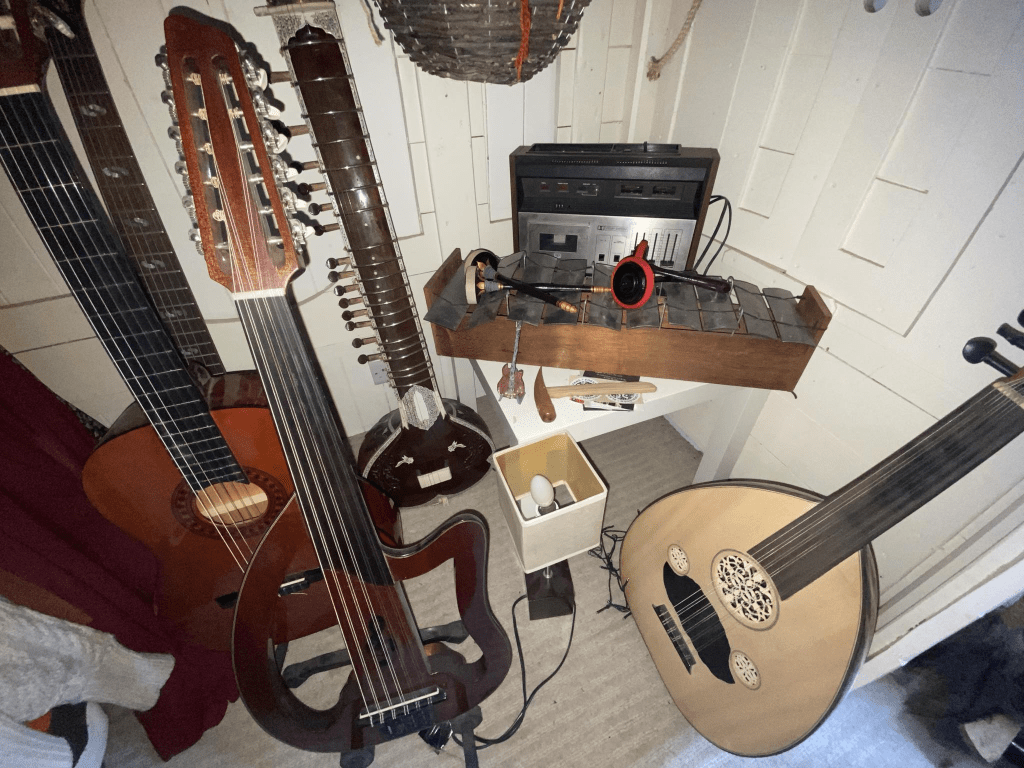
We adopted this method of composition and decided to maintain the authorship of the respective compositions even if obviously each of us created melodies and arrangements on the other’s pieces.
James: I never write chords and melody together so I usually start with chords and rhythm. A big element of the Canterbury sound that I love and tried to incorporate in these was the clean lead guitar tone. Once I’ve got the chords laid down anyway, then I tend to write a melody to it with the clean guitar tone. I try to make it intricate but also with a catchiness, something hummable or singable, something Richard Sinclair could sing – haha!
Lunophone is definitely a different approach for me compositionally. In Rascal Reporters I really go for the through composed approach, avant garde and non-repeating, and I like to try to make the rhythms very off kilter. I like a lot of changes in the songs I’ve written for Rascal Reporters, whereas in Lunophone I’ve been taking a bit of a more ‘traditional’ approach.
I feel like Rascal Reporters is heavily Canterbury influenced for sure, and there are tunes that would be canterbury tunes, but overall is more RIO / avant prog. I guess I feel like in Lunophone I’m trying to not ‘shake the listener off’ as much. for example in Rascal Reporters I might not want any two bars in a row to be in the same time signature. I want it to feel like each bar is as long as it feels like it needs to be, whereas in Lunophone I’m happy to say ‘okay this whole SECTION is in 9/8 or 7/8’ etc.
Dario: I had the same compositional approach that I have with my band, in the sense that I usually prepare a demo and propose it first of all to my drummer. In fact, my pieces for Lunophone sound a lot like Homunculus. The contrast is that Lunophone is an exquisitely studio album, we had fun experimenting and playing many parts.
D’Alessandro’s pieces typically follow the Homunculus template, of contrasting driving, blaring keyboard sounds with fragile, often multi-tracked vocal harmonies, no more so than on ‘Aduantas’; but his own piece de resistance is undoubtedly ‘Zuppa La Sera’, which fades into a gloriously upbeat bossa nova series of noodly keyboard motifs, topped off with playful vocals which may or may not (depending on your understanding of Italian) mask some hidden meaning, it being, after all, a continuation of the ‘soup’ theme visited by both Reporters and Homunculus.
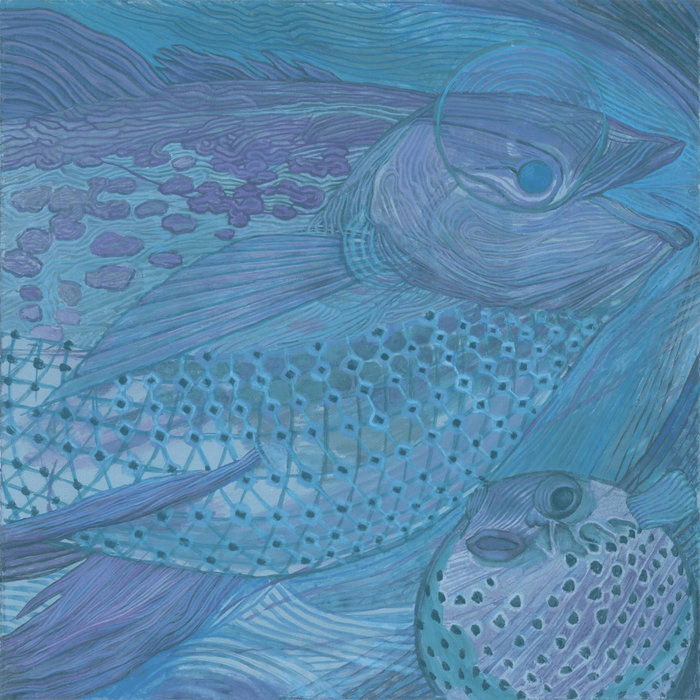
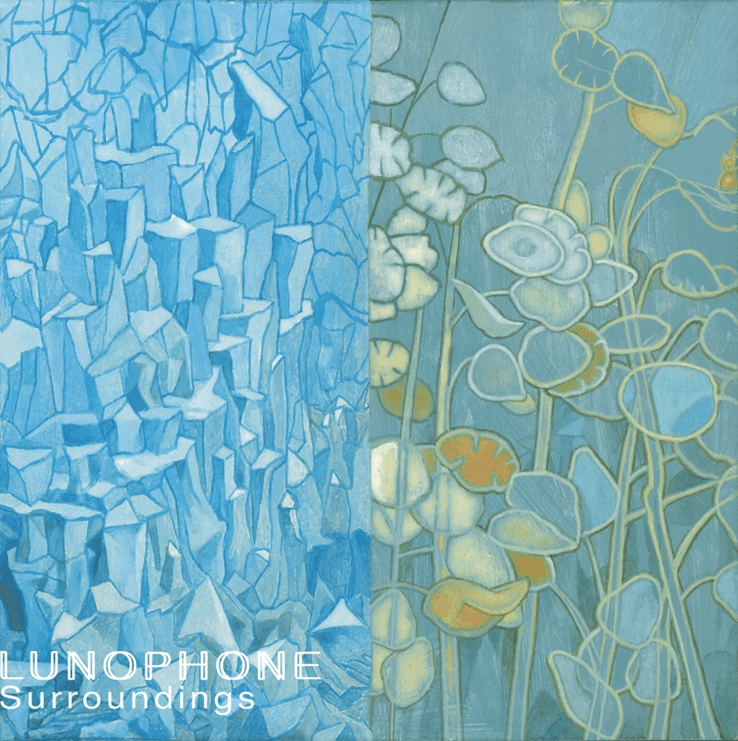
Dario: It must be said that I wanted to infuse the project from a starting point of vague ideas relating to the moon, plants and minerals. This is also reflected in the graphics for the album. The lyrical content of my songs and those I made for James are quite ambiguous and elusive, as I am wont to do. There is always a certain symbolism and something unsaid that hovers in the words. A soup can symbolise life. A monologue can be addressed to someone or to oneself, it could be sincere or false. I enjoy making words or concepts return in different pieces. I often mention the moon in different songs for example. In the songs there is both an abstract and concrete aspect. In addition to the moon (its visibility and otherwise, its detached nature) and the food (soups, fruits, pasta) which perhaps represents the life cycle, I inserted images of cities: railway stations, electricity poles, roads, billboards, cars.
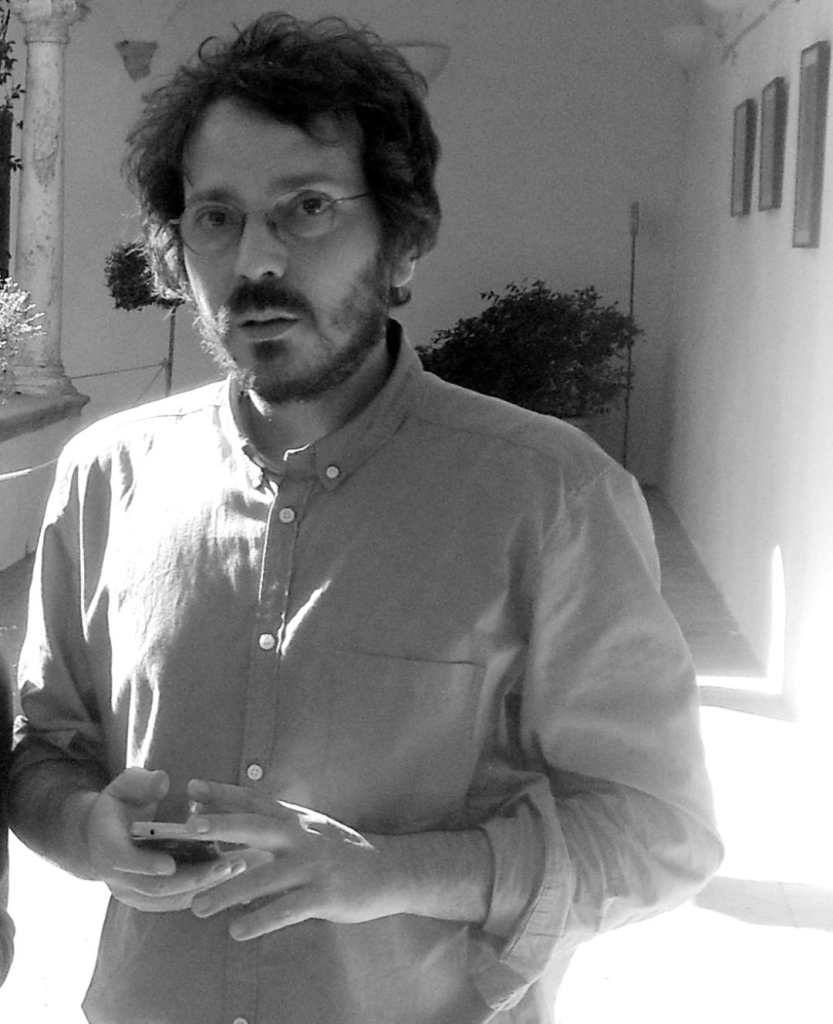
The name (Lunophone) suggests the idea of sounds coming from the moon, as if it were a reflection of what we do here on earth, or as communication outside our human dimension. I think the term sounds good and is easily understandable for an international audience. I also think it reflects the nature of its moody and eccentric music.
The listener should be able to distinguish between our two styles and understand how they work together. And in my opinion the two approaches combine well, the album is stylistically very compact and flows as a single entity. But it’s also likely that we influenced each other as the pieces came out.
The thing that surprised us was the speed with which we did everything, from my first demo in mid-October 2023 to the final mastering in mid-April 2024. This was also possible thanks to James’ skills in the studio, which made things happen quickly.
Album credits
Dario D’Alessandro: vocals & lyrics (1-12), electric guitar (1, 3, 5, 7, 9, 11), classical guitar (2, 7), synthesizers (1-9, 11), piano (7), glockenspiel (7-8), tambourine (11), artwork & layout
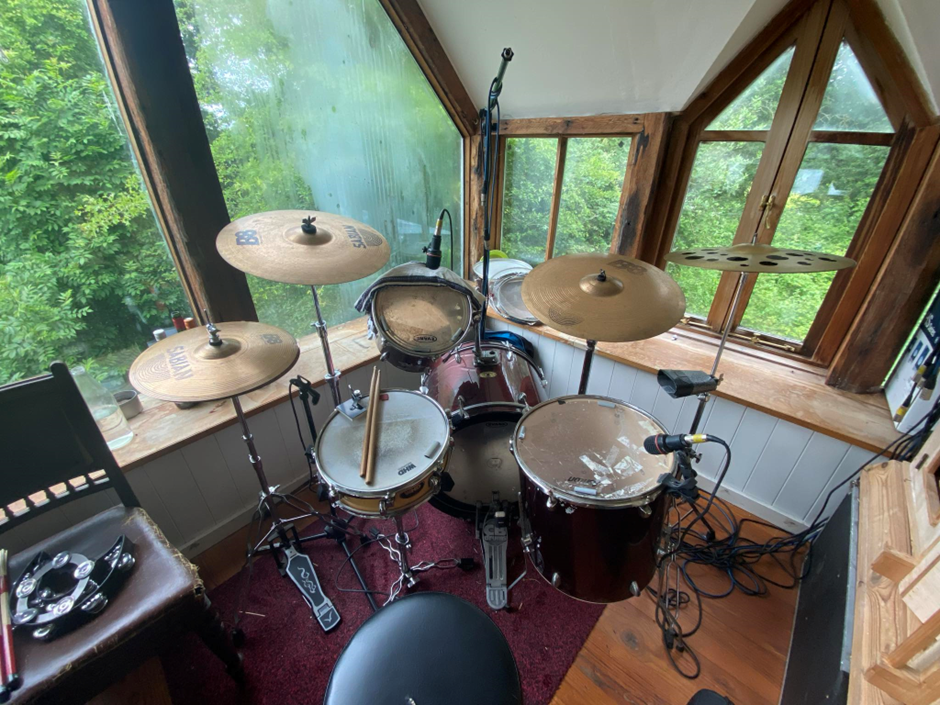
James Strain: bass (1-12), drums (1-12), electric guitar (1-2, 4-12), fretless guitar (4, 7, 12), electric oud (4), sitar (4), piano (4, 6, 8, Rhodes (2, 6, 10), fuzz organ (1, 9, 10), synthesizers (3, 7, 8, 10), MIDI orchestra (2, 4, 12), gamelan gangsa (4), Nuvo DooD (6, 7), percussion (1, 4, 6, 7, 12), mixing & mastering
Lunophone: Surroundings is available at https://store.maracash.com/product_info.php?products_id=844
https://altrockproductions.bandcamp.com/
It is planned to interview Dario at a later date for the ‘Canterbury 2.0’ project about Homunculus Res
For other interviews in the Canterbury 2.0 series, please click here
 The Canterbury scene(zine) continued....
5 thoughts on “Canterbury 2.2 – An interview with Lunophone”