
for an introduction to this series of features on Fabio, click here
Part Three – Invisible Opera Company of Tibet
Part Four – The Glissando Guitar
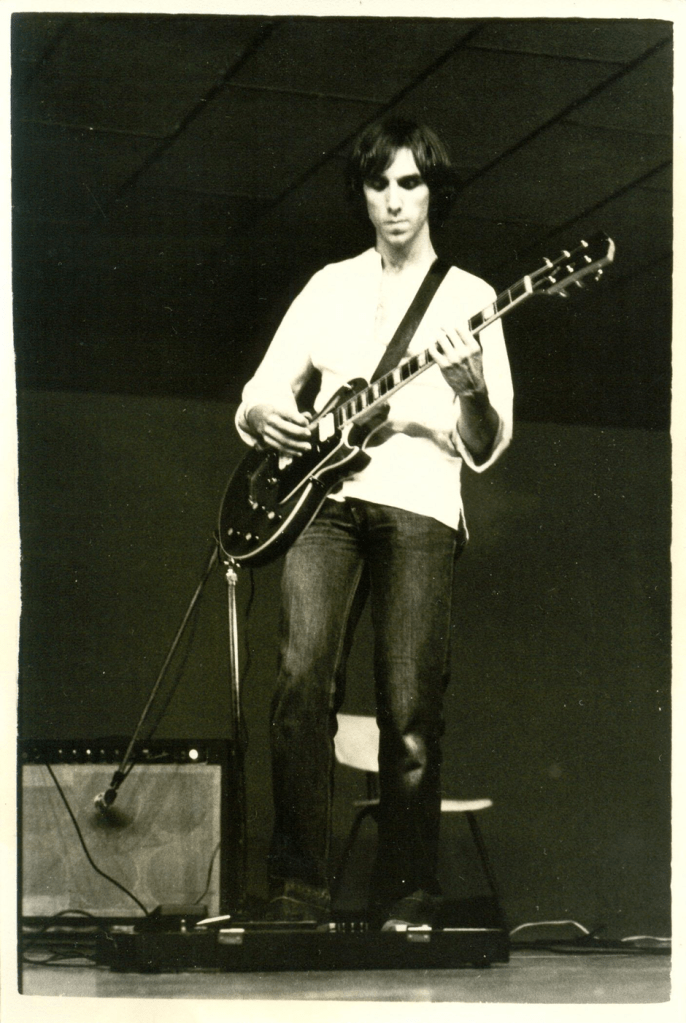
Fabio Golfetti will be best known to readers of this blog as the guitarist with Gong since 2012, but he has an association with a whole host of music written about here, not just as a collaborator with Daevid Allen since 1992, but also as a purveyor of music with clear Canterbury and Gong influences stretching back to his first bands in the early 1980s. A key part of the first parts of our conversations were to establish how on earth music of this ilk permeated into his consciousness in Brazil in the 1970s.
Fabio Golfetti, as his surname suggests, is of Italian extraction, and the collaborations of both himself and son Gabriel (Stratus Luna) with others with Italian-sounding names, had led me to believe that they might be part of an expat community. In fact the Golfetti family has had roots in Brazil since the late Nineteenth century:
Fabio Golfetti: I think Sao Paulo is the biggest Italian community outside Italy. There were two immigration waves into Brazil by Italians. The first was after Italian unification (in the 1870s). In fact Garibaldi lived in Brazil, weirdly. But then the Italians came to work on the land, they were mostly farmers. This is why in the south east of Brazil there are a lot of Italians, because of the climate. The climate there is more similar to the European below the tropics.
So my father’s family were already in Brazil before the First World War. The other part of the family came after the war, a lot of Italians tried to go to North America but it was more complicated, but there are a lot of American Italian people in New York and Chicago, the mafioso, there are a lot of stories about this.
Some of my mum’s family went to New York, I probably have family but I lost contact.
So which part of Italy did Fabio’s family originate from?
My father is from Tuscany, in Livorno, which is on the coast, I’ve never been there, they say it is a very beautiful place. My mother is from the south, a region called Calabria, but my grandmother, there is a weird story, she has Albanian ancestry, and she spoke a completely different dialect. She lived with us when my grandfather died, she came to live with us.
And she had a lot of words that are very weird, like Greek, she dressed like a Greek, she had a lot of superstitions, when there was a thunderstorm, she went to her room, like in Asterix, where they have a fear of the sky falling on their heads, I think my grandmother thought the same! But I didn’t have much chance to talk to my grandmother because she died when I was 12, but probably she had a lot of interesting stories.
But my other grandmother lived until she was 90 – she died when I was 25, she had a lot of stories, she saw Halley’s Comet, for example. They tried to move back to Italy.
So does Fabio regard himself as Brazilian or Italian?
I feel like a Brazilian. But in fact most Brazilians, especially in my area, now maybe it is different, but my generation are mostly of European descent, many are Portuguese, Spanish, Italians and Germans. When I lived in Sao Paulo, in the beginning I lived in a more central area. My parents moved to a place that I lived until I was 18, it was the German area, it appeared like you were in a European place. It was an emptier area, and we lived in a modest family house, many houses were similar – there were a lot of people around and we all played together, football – there was an integration, all races, no difference between the children. In Brazil we have never had a problem with racism, only more recently, because people need to militate about this maybe because of the propaganda on the internet.
So did Fabio grow up in a musical household?
My father loved music, he loved jazz, he was a very happy person, but nobody (in the house) played any instruments. My father listened to classical jazz like Benny Goodman and other things from this era, I think he stopped at Miles Davis. He listened to only jazz, Brazilian music not so much. Lots of jazz from the late Fifties. He listened to the generation 10 years before him. Like me – in the Eighties I was in my twenties, it was the time I could express myself as a musician, but I was into the music of the Seventies.
So what sort of music was Fabio listening to himself?
When I was 13, I had a cousin older than me, very left wing, radical, we lived together until I was 6, they lived on the ground floor, we lived on the upper floor, I have a very good relationship with this cousin, he was 6 years older than me, when I was 13, I went many times to his house, and he had all these albums, the first album he showed me was Pink Floyd’s ‘Meddle’, Led Zeppelin ‘3’, Rolling Stones, the Beatles not so much. He preferred the Rolling Stones, he said the Beatles was more children’s music. Rolling Stones was more aggressive.
My cousin introduced me to rock music, if you want to know my first albums, I can tell you my first 5. Alice Cooper’s ‘School’s Out’, The Hollies, (I don’t know why I ended up with the Hollies) – ‘Distant Light’, there is a famous song called ‘Long Cool Woman (in a Black Dress)’, this song was playing on the radio when I was 12/13, the third album – I had the Who album, a Ten Years After album, Alvin Lee and the Company.
I had a big stereo. I had complaints from everybody!
Then I started buying, or my father bought them for me. At university I started doing little jobs and I started buying vinyl, most I still have. I have kept 400 albums.
When me and Renato (Mello – later of the Invisible Opera Company of Tibet) got into Soft Machine it really changed our lives. We only had a cassette with ‘Moon in June’ on one side and ‘Slightly All The Time’ on the other side – only these two tracks. I think we were 14, and at the time I only listened to Yes, Genesis, a little bit of ‘Selling England by the Pound’, Gentle Giant. Van der Graaf Generator I started to listen to later with a friend, but then suddenly we knew about the Soft Machine which was odd music compared to this classic prog. For some reason this caught us in a way that we said, ‘wow, this is the best music’, because we were moving towards jazz a little bit at that time. I didn’t know about Canterbury or anything related but then one day a friend of mine said well ‘you know Soft Machine ‘Third’?’ Did you listen to Soft Machine ‘One’, it’s completely different!.’ It’s another band and then I found a copy of Soft Machine ‘one’ and then I was, not a shock but I said wow, what is that, it’s more like the ‘Piper at the gates of Dawn’. This was when I was 15 to 16, in 1975.
I put it to Fabio, that like myself, he was coming to Canterbury music somewhat after the event.
In 1975 I was on holidays with my family, my Dad and my Mom in a place very far away from everything at a beach between Sao Paulo and Rio. We heard some short wave radio from Rio because at that time FM was wasn’t going to this places and they played (Steve Hillage’s) ‘Fish Rising’. I recorded it on a cassette but I couldn’t hear the name of the artist but I had the recording of this amazing music. I didn’t know about Gong at that time.
But then my friend Angelo (Pastorello) from Violeta had a rock encyclopedia and he looked up Soft Machine and Soft Machine mentioned Daevid Allen, and then that was the link – Daevid Allen, ‘oh he formed Gong’, but there was no album with Daevid Allen and then it was a mystery. Then I tried to hear Daevid Allen anyway. Angelo’s uncle was a famous doctor in psychiatry in Brazil in Sao Paulo, and he went to France and he brought the ‘Angel’s Egg’ album – it was 1976 and then it was for me and Angelo a kind of shocking music because we never heard anything, sounds like that, that with that synthesiser. And then that caught me, Gong – that sound, that music
This came from Soft Machine but it’s more complex than Soft Machine, this is amazing music… The boss of my father was a French guy, a Gong fan. When my father said, ‘oh he’s going to France, do you want to ask him for an album?’ and he bought me Soft Machine ‘Volume One’ and ‘Two’ and ‘Camembert Electrique’ – he bought these three albums.
When I listened to ‘Camembert’ this changed everything. This was 76-77 – I started earning money at university in 78 and 79 I started working. One day I went to the record shop there was a big import of albums and I saw the gong trilogy – all these albums had appeared on the shelves of the record shop. I bought Angels Egg, I bought You, I bought all these albums.
Was this in Sao Paulo?
FG: this is in Sao Paulo, there was a very big shop called Museu do Disco – it was like a record Museum and they did lot of importing. Caravan I discovered later, again from reading this English book called encyclopedia of rock- It was A4 with plenty of biographies – it was not that complex, but was enough for me to start tracing the path of Gong because of Soft Machine and then I discovered Kevin Ayers and Robert Wyatt.
So what was it about the Canterbury scene that appealed to Fabio?
FG: Robert Wyatt mainly, because the first album that I listened was ‘Rock Bottom’, my father brought it me from France in 1980, and when I listened, I think ‘wow this is a kind of Soft Machine continuation because there the second track (‘A Last Straw’) sounds to me like it’s ‘Slightly All The Time’ with Hugh Hopper. Because when you are a fan you want to hear the same. I had an instant connection. I liked instantaneously Robert Wyatt’s voice so when I found Caravan in a shop I bought the first Caravan album with Pye Hastings singing like Robert – they have almost the same type of voice. I was in love because it also has a guitar!
And then what I decided to do which was interesting was because of Gong I ended up writing to Charly Records. And then they sent me a lot of information, catalogues, they sent me a Daevid Allen biography, written on a typewriter. I still have all of this.
Surely buying from Charly was incredibly expensive
No, vinyl cost £4 at the time. The problem was Brazil has always had a protective trade system, so you have to pay a lot of import tax to buy. At the time in the early 80s, even in Seventies, to send money outside of the country was too complicated, especially in small amounts. Today, it’s no problem, you can use a credit card, Paypal, so I did a lot of tricks to try and send money. One of the tricks was to take a letter, inside the letter I put some cash wrapped in carbon paper, because an Xray will not catch it exactly. The other problems was to find pounds – I remember sending US dollars..
So what about Fabio’s own musical background? We spoke previously about him starting to play the guitar only at 15, but at what age did the my first band happen?
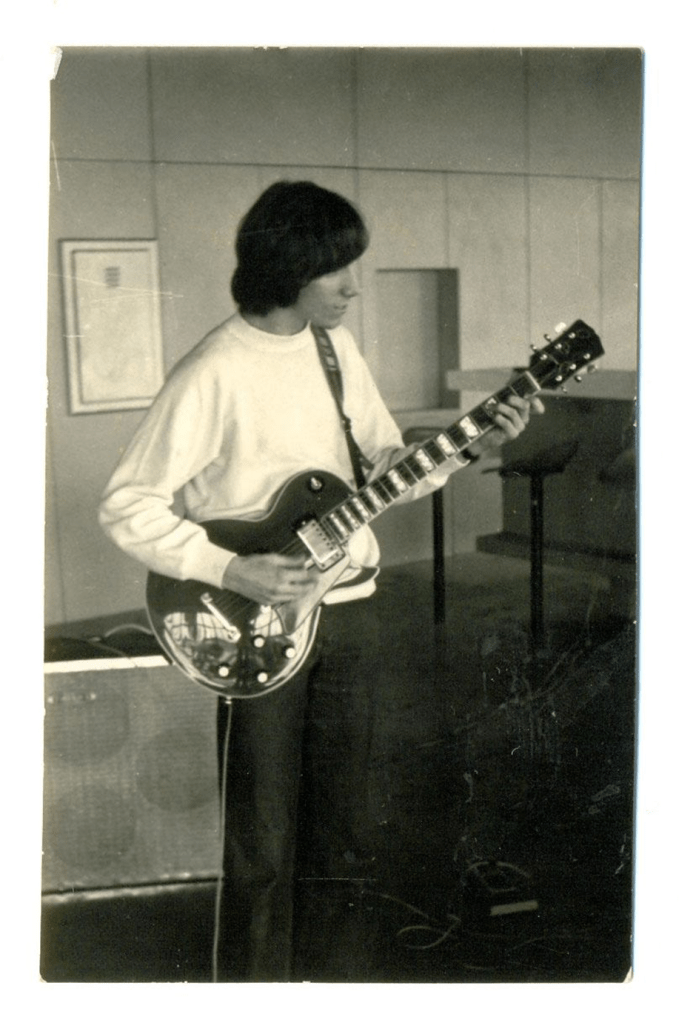
I started playing acoustic guitar with an aunt at the age of 13, she taught me the very basics. Then when I was 14 I switched to Renato’s older brother, Odilon Mello Jr., who was a virtuoso of Brazilian music , from whom I learned how to listen and trained my ears to grab a song. He was an intuitive musician which gave me the ability to understand complex harmonies without knowing theory. Right after Odilon I met a classical guitarist and contemporary composer Luiz Henrique de Bragança, and with him I was trained to play Renaissance and Baroque music and Contemporary, like Dowland, Bach, Vivaldi, Leo Brouwer. I learned more about understanding music, theory and concepts than properly becoming a classical guitarist. He was a person that could cross the music of Gyorgi Ligeti and Debussy with Archie Shepp and Jimi Hendrix. I had lessons with him for 2 years. Afterwards, I bought my first electric guitar in 1978 and then I was at university, meeting new people and forming bands.
At 19 I had my first recording and was in a proper band. At university we were more into Brazilian culture, we were more in an art school, we wanted to create music as art so we had some improvised elements. When I was 19, I loved Sun Ra, loved Soft Machine, some Brazilian avant-garde artists, all this crazy music.. But I didn’t have the ability to play that music and we tried to play music that we couldn’t play! There was a big wave of jazz, in Sao Paulo especially, because the Montreux Jazz Festival happened in Sao Paulo in 1978-79, and all these big artists came to play this festival. It was amazing to see these people like Chick Corea, Dizzy Gillespie and George Duke.
It was very hard to be like all those musicians – we didn’t have the instruments or the technique to play this important stuff! This is why I decided to do Violeta de Outono later, starting from the basics.
A number of early musical explorations have appeared in recent years on Fabio’s Invisivel label, these include projects such as:
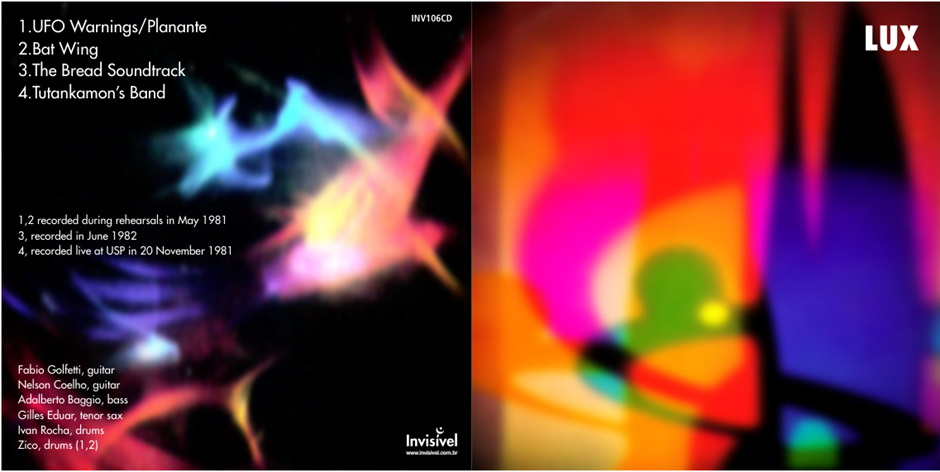
Lux from 1981/82, evidence of which is captured on bandcamp (https://invisivelrecords.bandcamp.com/album/lux) a rambling, effects-laden series of explorations where Fabio played for the first time alongside fellow guitarist Nelson Coelho;
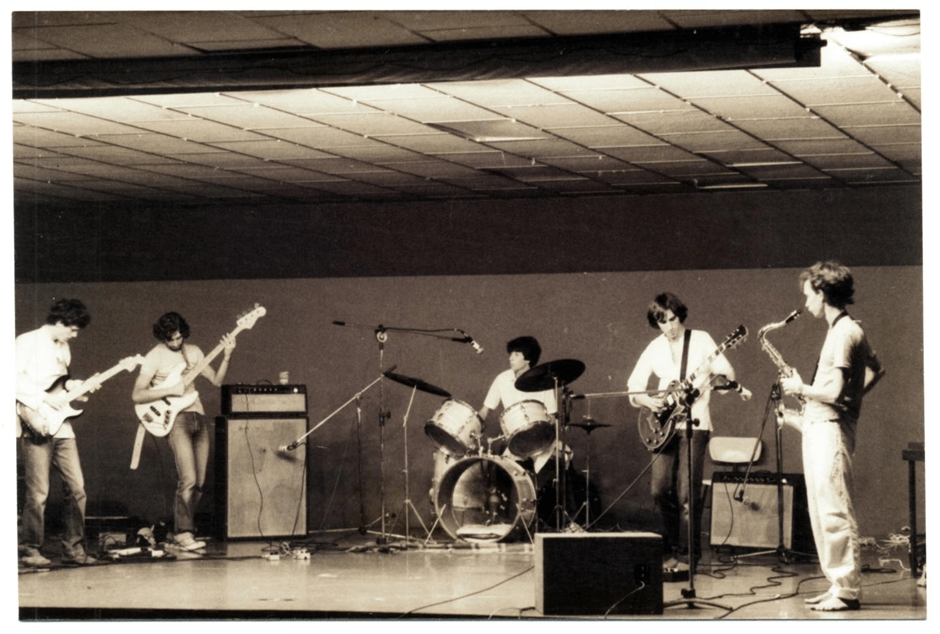
AMT, from 1983 (https://invisivelrecords.bandcamp.com/album/amt-1) , which was much more structured, jazzy and musically ambitious and featured Fabio’s long-term friend and collaborator Renato Mello on saxophone, again alongside Coelho;
Ultimato, also from 1983 https://invisivelrecords.bandcamp.com/album/ultimato – was a stripped down, spiky no-wave outfit recalling the dissonance of Daevid Allen’s Playbax project from his time in the United States in the early 1980s;
There was also Zero (from 1984), who, on the surface at least appeared to be a much more overt attempt to crack the airwaves: fronted by a different lead singer and powered by crisp, contemporary drumbeats – Fabio was nothing if not prolific during these university years – I asked him if the band name Zero was a deliberate reference towards the ‘Zero the Hero’ of Gong mythology.
We had a band called Zero – it was more pop (music) but was still quite complex. I don’t remember exactly how the name appeared but my friend the singer in Zero (Guilherme Isnard) was interested in using of a logo of barcodes. Barcodes were a new thing at the time. So he designed a logo with a bar code. I liked Zero the Hero and we had this barcode so we both agreed in different ways.

Fabio’s time at university, of course, may have been an opportunity to hone his music skills, but ultimately his studies (he did a 5 year architecture course) were his priority. He did, however, find an innovative way to blend both:
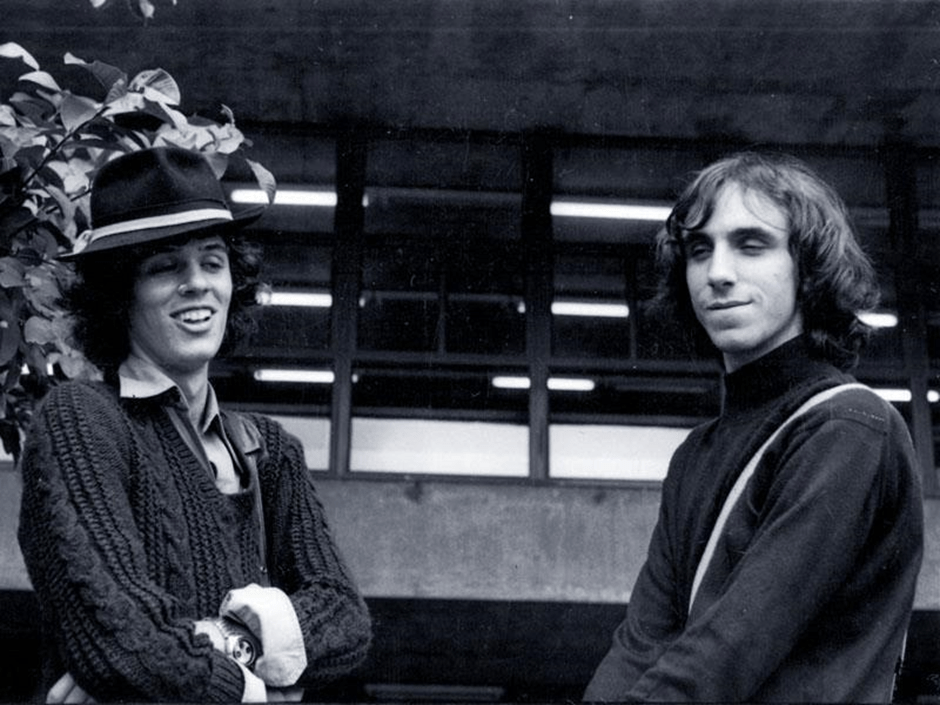
Nelson (Coelho, the guitarist) my friend, was in a team with me. We met in 1978 at The Architectural School in Sao Paulo. We played together in our early bands in the University until the end of the band Zero that we all left in early 1985. We continued to play in projects like Stereotrips, and he joined me in one incarnation of Invisible Opera. I’ve guested with his band Dialeto (https://dialeto.bandcamp.com/album/pandelirium) several times, including producing his albums.
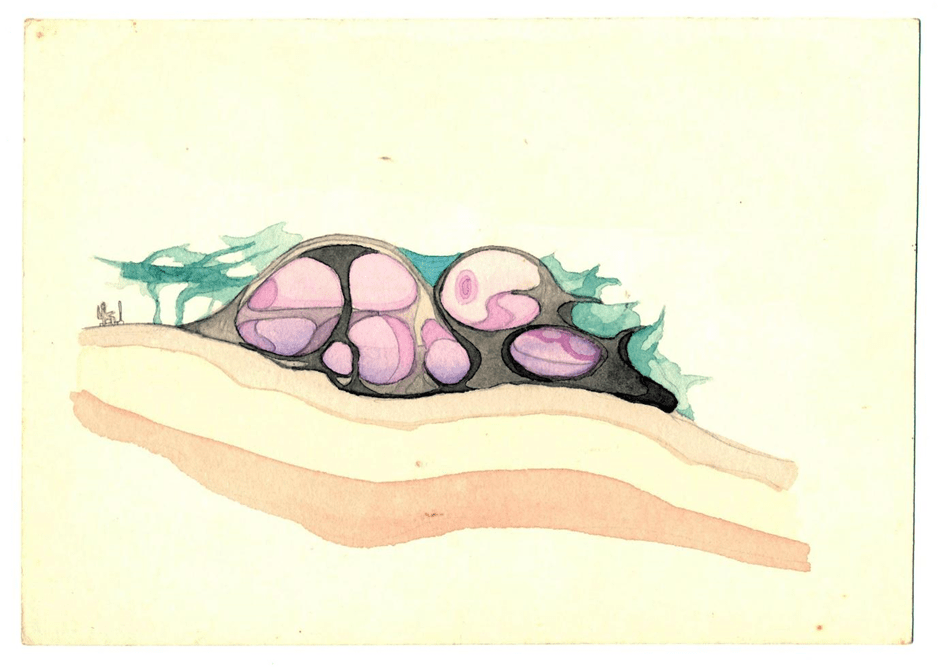
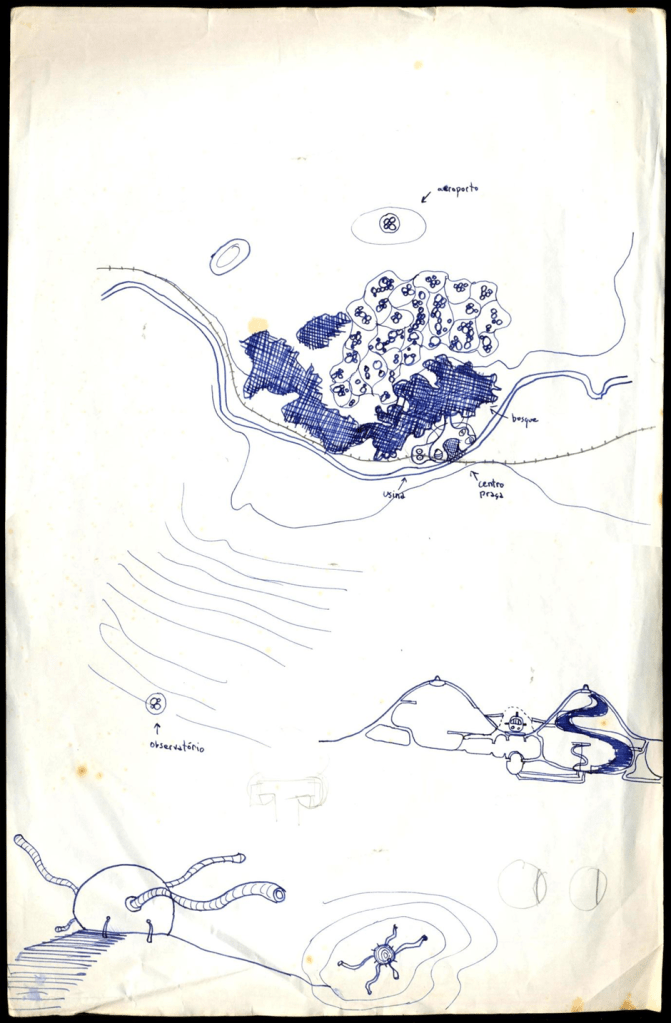
The utopian idea of Planet Gong inspired us to do a project, a small village, based on this surreal idea of Gong as an imaginary planet. At the last stage at university you have to present something, but this was the previous year. In the 4th year we had an opportunity to plan a village with a lot of elements inspired by the Gong mythology. Of course we didn’t have the pot head pixies (!) but we combined these ideas with those of Asterix, the village in France. We incorporated concepts of high technology and sustainability to build an economical system in the world which has village connections. The planning and design of the city is very inspired by psychological communication and telepathy. , We made an advanced technological village, inspired by Gong, but also old concepts of village community, like Asterix where you live surrounded by nature.
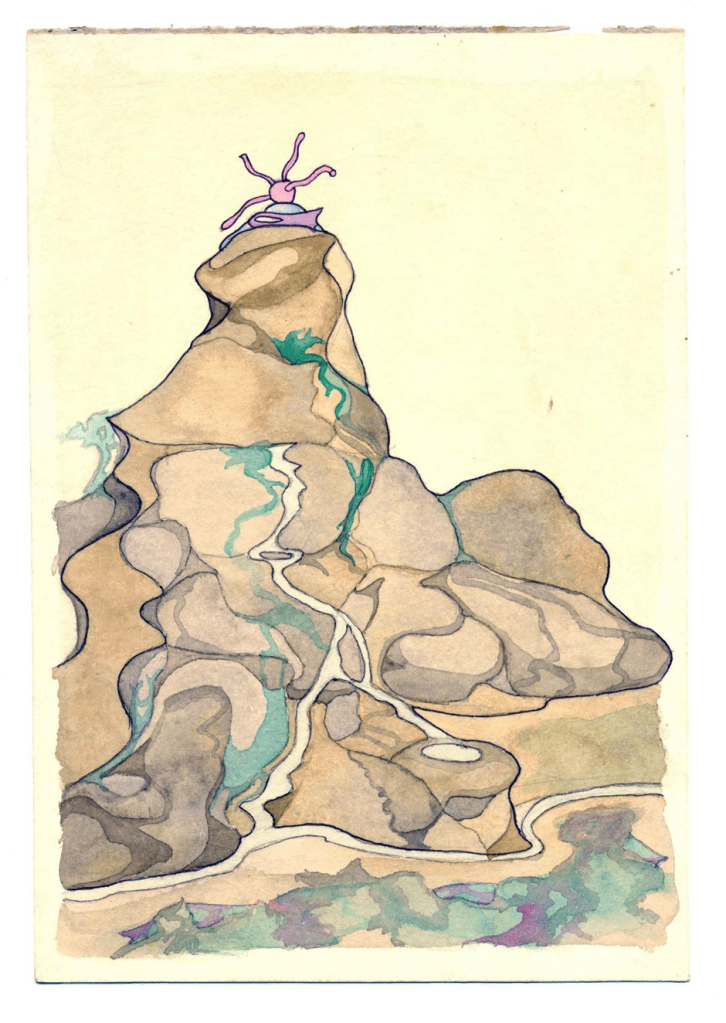
Fabio took me through some images he still has on his phone of the project.
FG: it was an utopian idea. I was really inspired by this Gong trilogy, people living in a community, this vision of a better world. Look, this is one of the drawings of the village, with a Bananamoon Observatory, to catch telepathic waves, this is the top of the houses, a type of organic integrated system. We chose a site, it was a real site in the hills. The designs consisted of houses but also common places. It wasn’t a physical project, it was only ideas. I drew this in watercolours. Architecture, it is different from art, it has an art but the way you draw is symbolic, to pass an idea.
In the next part of the interview, Fabio talks more about the events which led to the formation of Violeta de Outono, the band which he is best known for in Brazil as well as the history of that particular band, now well into their fourth decade of existence.
For other interviews in the Canterbury 2.0 series, please click here
 The Canterbury scene(zine) continued....
5 thoughts on “Canterbury 2.3 – Fabio Golfetti interview Part 1– The Formative Years”