
Part Three – Invisible Opera Company of Tibet
Part Four – The Glissando Guitar
Violeta de Outono have been playing in Brazil for almost 40 years, and have recorded a dozen or so ‘core’ albums (the picture is slightly muddied by Fabio’s extensive restoration of early material, live performances, special projects including orchestral interpretation of their works, and reworkings of their classic material). But as we hinted at in the previous episode, Violeta de Outono evolved from a number of other bands in Sao Paulo in the early Eighties.
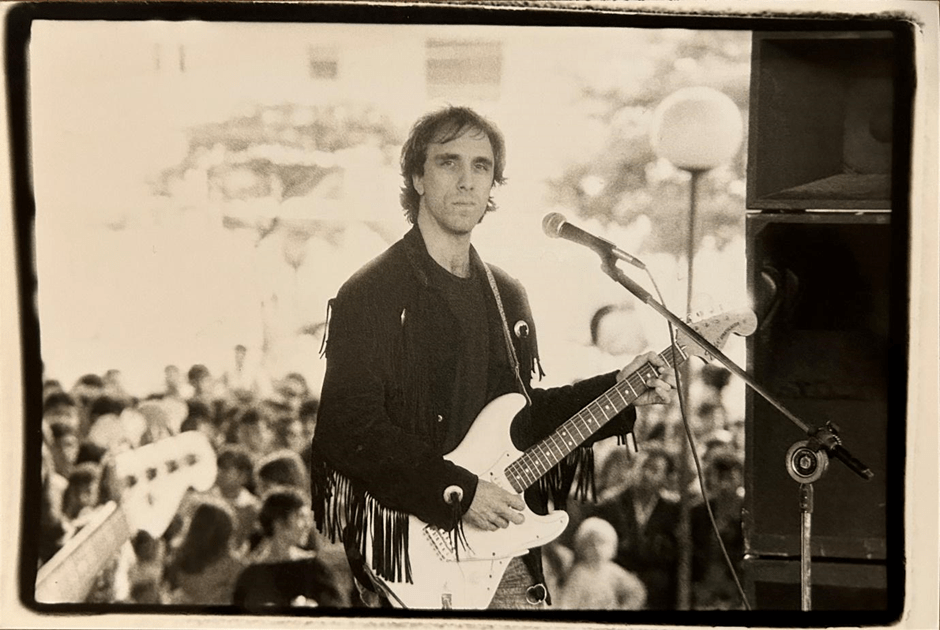
I had a band called Lux (in 1981/2), then we changed the name to AMT-1, because it is an abbreviation of one of those things in the film 2001: A Space Odyssey, and then for the third time we changed the name of the band, because when we changed a member we changed the name of the band, so we changed the name to Ultimato when Claudio Souza joined. This was the band in which we started to develop the sound of no wave, the mix of punk and jazz, we were more instrumental, this was in 1982. After this the band became Zero, because we decided if we were instrumental, we wouldn’t get anywhere, and we needed a vocalist to become more popular, and play in different places, and then we found the singer for Zero.
We wanted to see what could happen as we were inexperienced. The drummer Claudio (Souza) had been with me since Ultimato, then we continued with Zero, then we started doing Violeta de Outono in parallel. By then I was already playing glissando, I already had the equipment to play glissando properly, and the first thing we played with Violeta was ‘Tomorrow Never Knows’. We wanted to play psychedelic music, and decided to play this simple song I could play on the gliss. I always say, that with the Beatles, if you go to ‘The White Album’ you can see all the styles of rock on this album. ‘Tomorrow Never Knows’ was actually on the previous album but it defined a style. If you have ‘Helter Skelter’ you have a band that can play music in this style. So I decided that ‘Tomorrow Never Knows’ was the style of band I wanted.
The two friends that I started the band with (Claudio Souza and Angelo Pastorello) were friends from our teenage years and they never became professional musicians. We became a professional band but only for three years in the first era of the band. We didn’t make money enough to survive, so Angelo continued with photography and the drummer Claudio has a company selling stones for floors – granite marble.
I formed Lux with my friend I was 20 years old and when I formed this band me and Claudio the drummer we said, well let’s go back and try to learn music, like try to learn how to write a pop tune, and try to write a song. This is how I found my friend the bass player Angelo – he wasn’t a musician, he’s a photographer, but I said, ‘Angelo can you just play two notes on the bass – just play!’ – so I gave the bass to him – we borrowed a bass and he just started to make this most simple thing and this was good because then we start learning again how to how to make music.
Violeta was a very healthy band because me, Angelo and Claudio, this three piece band, we formed because of our friendship. I read one Robert Fripp article saying that for a band to exist there are three ingredients: money, friendship and good music – so you need to have two of these to make a band be successful. For example you make a lot of money and you are friends but you play shitty music – that’s one scenario. The other one – you play good music, you make a lot of money but you hate each other!
But with Angelo and Claudio we were very good friends from our teenage years so the band – we like the music we play, and we have a very good friendship, so if we make money it’s okay but it’s not necessary. We still meet every week when I’m in Sao Paulo, to play, jam, and eat pizza!
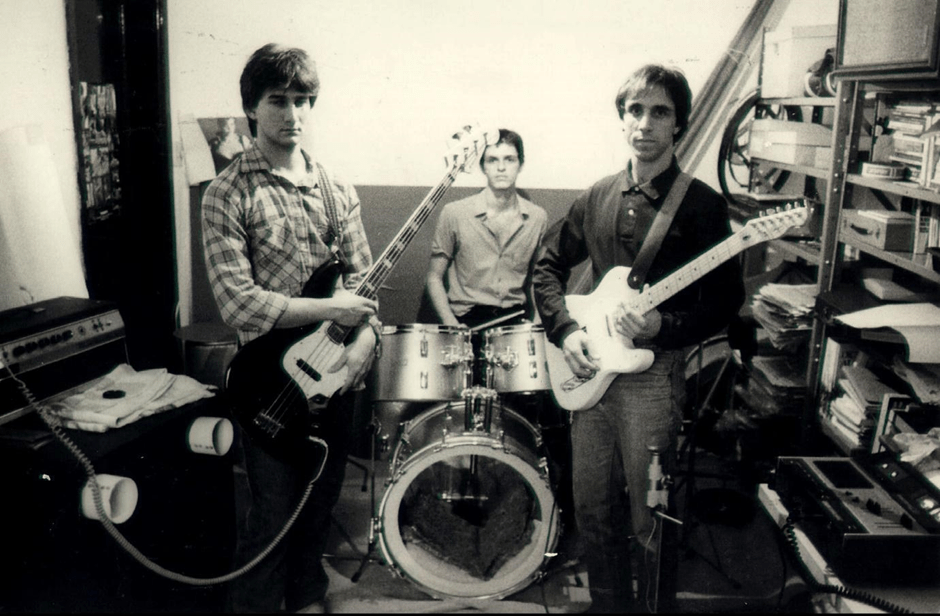
The opening track on the first album, ‘Outono’ (Portuguese for autumn) also did much to set out a benchmark for future material by the trio – a simple strident guitar motif based around 2 notes which ushers in a thundering bassline. Fabio gives the back story to the origin’s of the band’s name.
An interesting story is the lyrics, I grabbed the lyrics from Chinese poetry – that poem, defines the style of the lyrics I wrote – the Chinese write a lot about exile from their Homeland and the poem is about exile in autumn. This is a very old poem from the 12 century translated by my girlfriend Irene Sinnecker. As this method went well I felt I was on the right direction and then I discovered the way to write – normally I write the songs and the lyrics I always write after. I have a melody in my head and then I start – normally I use disconnected words. Sometimes we do this the same way with Gong – we create a melody and then we start singing anything just to feel the words. It develops from there.
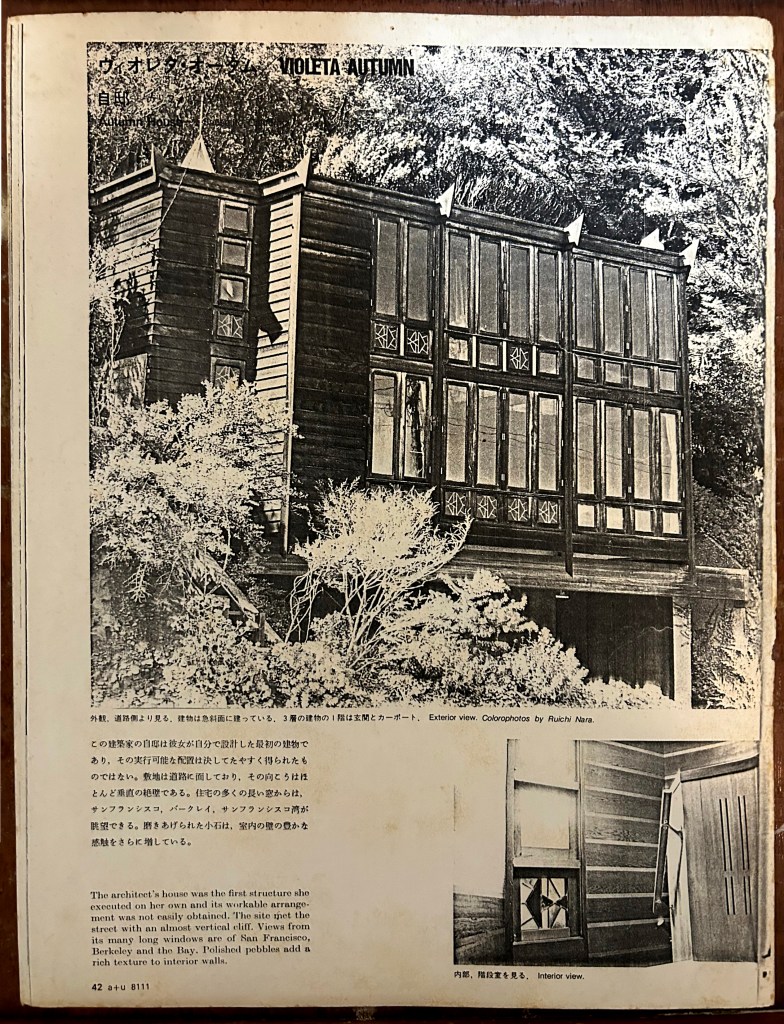
Another clue as to the origins to the band’s name is from the scan shown above
When I was at the library of the Architectural School, I discovered this article in a nice Japanese magazine called AU . Violeta Autumn is the name of an American architect, and I was very interested in discovering more about it, because we already had the Violeta de Outono name. Now I can find her!
I’ve always been interested in what impact Violeta de Outono had in their homeland – whilst practically unknown in the United Kingdom they are often mentioned, in their own publicity at least, as being movers and shakers in the independent Brazilian music scene. But I’d always got the sense from talking to Fabio that when Violeta started, they reached a large audience relatively quickly and so I asked about how this process came about.
FG: it’s interesting because normally when we play – if we play too many gigs in the same area then sometimes people will not come, but normally if we play in Sao Paulo for example then after a year without playing we have around 500 to 600 people, which is good.
But what is interesting is the renewal: it’s people that heard about the name of the band, some young people. The same happens with Gong. It is not something pre-determined, it is natural and spontaneous.
We were in the right place at the right time. We spent one year (before) playing privately, in rehearsal rooms, because we weren’t confident about playing live and Angelo was learning to play the bass. We composed most of the first album in this first year in 1984, and we continued into 1985. At the end of 1985 my friend Nelson who played with me in Zero, he also had a project and he said he had a date for us to play in Sao Paulo, in a basement, a very nice place, it was for underground music in Sao Paulo for avant garde music. The venue was Lira Paulistana (a name from a famous Brazilian writer, Mario de Andrade), a cult venue where many avant-garde jazz/ experimental artists played, and they opened for the emergent Paulistano (from Sao Paulo city) rock bands. When we played there it was on the 12th December 1985, it seems that we were one of the last bands playing there before they closed.
(This gig is captured at https://invisivelrecords.bandcamp.com/album/lira-paulistana-12121985)
We didn’t have a name at this point, but we decided to use these words, Violeta and Outono. Outono means autumn, Violeta because of the light, the colour. Autumn, all the lyrics were all based on this melancholic Chinese thing. But also autumn we all liked, maybe it was because it was the season I was born.
The gig was for about 100 people, a very small place, but there was a journalist for the main rock magazine called Bizz, and she liked what we did, and she said, I will write a review, I want it to be a feature, and we went to the studio of this big magazine, it was related to a big pub chain in Brazil.
Parallel to this I had an idea around the same time in December (1984). We were rehearsing in a room, a bedroom, in a friend’s house, it was not a studio, it was just a room with a lot of books, we rented the place and we put our stuff in there. So there’s a drum here, a guitar facing, and a bass here, it is a tiny room. So I had my cassette recorder, an Akai, and I had a very good microphone my friend Nelson lent me, a stereo mic – it captures stereo in a very nice way. Due to my inexperience and based on my intuition, I placed the microphone at a certain height, it is almost between the kick and snare so it captures the guitar on one side, the drums on the other side, the bass in the centre.
So I captured this live rehearsal. We did a demo, I overdubbed the vocals with my reel to reel. It was recorded with empathy, we could hear the guitar, drums and bass, and then I overdubbed the vocals with lots of echo, I had this echo pedal. It was just after the gig, and before we released the interview. I sent it to a big radio station with an alternative network which was trying to find an audience for these new trends. They had a good signal – a big area in Sao Paulo and a bit outside. It was called 89FM, which still exists as Radio Rock.
So when we sent the music to this radio, there was one of the guys there who loved the songs. And we were lucky to record in the way we had done, because when you put this in the radio system, because they have a big valve amplifier, and a big compressor, you find that if you have music that has few instruments, like the Police, then they sound big, the drums sound big, so because of this low technology when it was amplified on the radio, it sounds amazing, like these old 60s bands because it was recorded not in a dry studio, a live room, so it sounds amazing on the radio.
So on this radio, with a very big reach, in one month we became popular, they started playing 4 of our songs, they alternated, played more than once in a day, and after a few weeks we were popular on the radio on one of the emergent radio stations. Then we had a gig in March. The radio play happened January to February, and all the people came and we had a big audience of 600, there was another band, it was a kind of festival, but people already knew our songs, they sing them together, this was after only 3 months! This is why I say we were in the right place. It was spontaneous. Then I realised I had discovered the way to record the jazz drums, if you look at the Dave Brubeck quartet, there is a video of them playing Take Five, if you look at the drums you will see that they put the microphone in the same position!
I believe in intuition, I don’t know what the scientific explanation is, but I think you should trust your instincts.
Nowadays when I record an album I try not to have more than 3 takes. After the third one, for safety, after it becomes more mechanical, you lose the musicality. When you go to intuition you have the best result
So how did things evolve with the band from here?
FG: the first gig was in March, and then the word started to spread. We started connections to magazines, newspapers and these people spread the name of the band and we had a contract with an independent label. The label was Wop Bop, a small record collector shop that decided to start a label, I think maybe I still have 3 copies of this release. We went to the studio and recorded 3 songs because they wanted to do an EP and we said, ‘Violeta has different aspects, let’s do a pop song, ‘Outono’, because it’s very poppy, another song with more instrumental parts, and then we choose a Gongish one, 7 minutes in which I play a lot of gliss, ‘Reflexos da Noite’. That song is very Gonglike, there is a long section like ‘Inner Temple’ with glissando, not well recorded.
(This EP is still available to hear at https://violetadeoutono.com/music/violeta-de-outono-ep/)
Just after recording, we played a lot, in 1986-87, we played maybe 40 gigs, for a band in Brazil this is quite unusual, it is complicated because it is a big country. Gigs were more like for 300-400 people but because we were a new band we were invited to play festivals, radio festivals. We even played in a festival for 4000 people in Rio with all the famous bands in Brazil, As our songs were broadcast on the radio in Sao Paulo, very quickly they spread also into Rio where all the labels were based. The equivalent of 89Fm was Radio Fluminense. Following the example of 89Fm in Sao Paulo, they played our songs and to celebrate their anniversary they organized a big festival in a sports ballroom with bands that already had a big audience, and we were invited because we were considered a promising band, like the youngest child!
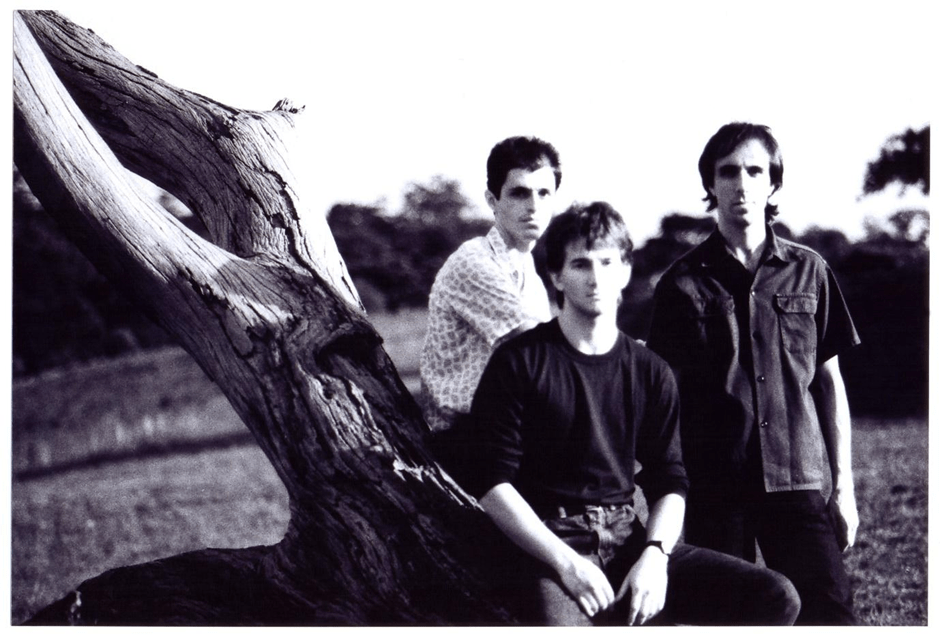
Most of the bands were 2 years younger than us, because we started with Zero but then we decided to start again, so we were older than most of the bands of my generation
In Brazil at that time there was a very popular rock scene, Rock in Rio (the biggest Brazilian festival, which still exists today) or Hollywood Rock (which existed between 1988 and 1996) – ‘The festival was cancelled when the Brazilian government prohibited tobacco and alcohol companies from sponsoring cultural and sporting events’) Record labels saw they could make a lot of money, this is why they invested in bands like us.
When I first heard Violeta de Outono, which arrived at Facelift HQ on cassette at some point in the early 1990s, it appeared to be slightly outside my sphere of usual listening. Tracks were short, punchy, stripped down in terms of sound. It had obviously been sent to me because of the Gong connection, and I could hear the glissando, and I could hear the Gong references, but there were other clear influences there, most notably early Pink Floyd, most certainly the Beatles, even elements of Caravan. But in other respects it was almost indie. I was living in Manchester at the time and could hear almost an Oasis-like edge. I wondered if that was deliberate?
Well, we didn’t know about Oasis. It was still the 80s. I like Oasis, but didn’t know about them until 1995, just after my daughter were born. We listened to them a lot, also Kula Shaker. At that time in Brazil there was the birth of MTV, MTV never played British bands, only the American grunge bands, like Pearl Jam, which dominated Brazilian coverage. Oasis played in Brazil in 1998. But Violeta were definitely considered more indie than prog. The band became prog rock after by ‘Volume 7’ like a classic 70s and, but in the beginning they called us a ‘grey psychedelic’ band, it’s not flowery, but more like Syd Barrett’s ‘Pipers At The Gate of Dawn’, Pink Floyd were more grey than colourful. Here and Now was also a big reference point for Violeta because we all loved ‘Give and Take’, Here and Now is closer to what we can do, the songwriting, and the way we played.
Violeta was connected to Gong aside from the glissando because of the first Gong album, ‘Magick Brother’, in fact we did a recreation of ‘Pretty Miss Titty’ (Lírio de Vidro (Glass Lily)) and on our demo we included part of ‘Prostitute Poem’.
I felt with Violeta de Outono that I had a band, I should work with the material the band were able to produce. The band had a very good chemistry, because when we played we could understand what musically everyone could contribute. I like the drummer Claudio he’s never dedicated his life to being a professional drummer, but when we play we have an interaction. At the Invisible Opera live at the Britannia, he played – we have an instant connection so this is about what I like, we have a kind of chemistry, but I know we could never sound like Gong because technically if you look to Gong, Pierre Moerlen drumming, Didier playing saxophone, you will never find anyone like this. Renato (Mello – from the Invisible Opera Company of Tibet) he very much looks to Elton Dean and John Coltrane. He is also not a full-time musician but for me he has a big talent, and his older brother was the one that introduced us both to this music.
So for Violeta I thought we should do the music with the skills everybody had, playing this simple organic music, and I was trying to learn how to create chords to create a proper song.
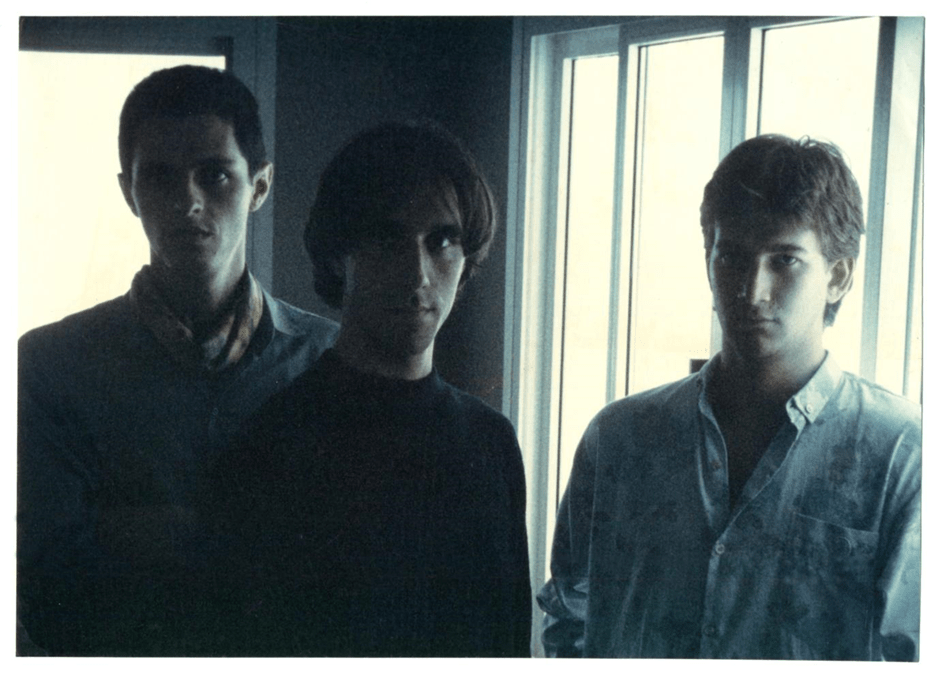
Despite the fact that we talked for half a dozen hours, and much of that conversation appears in various guises in this set of articles, I realised in retrospect that we hadn’t talked in depth about the development of Violeta de Outono or dissected their many fine albums, so here’s a brief guide as to their development:
Their debut album ‘Violeta de Outono’ (1987) is the album which captured my listening attention back in the early Nineties and set the groundwork for most of the subsequent work for the next few years – these are accessible rock tunes with simple guitar riffs or motifs, occasional eastern inflections, punchy, exposed bass lines and clean drum accompaniment, overlayed with an understated, slightly dreamy vocal delivery. There are plenty of semi-recognisable musical motifs: ‘Declinio de Maio’ recalls Richard Sinclair’s falling vocal line on ‘Winter Wine’; ‘Luz’ or ‘Sombras Flutantes’ revisit the atmosphere and menace of Pink Floyd’s ‘Ummagumma’ excursions, and ‘Noturno Deserto’ inserts those gamelan influences picked up via Fabio’s interest in Asian cultures (further complemented by a trip to Bali). And of course, there is the telltale use of glissando, most notably on the concluding cover of ‘Tomorrow Never Knows’, the most obvious nod to Fabio’s own Beatles influences.
‘Em Tode Parte’ (1989) follows a similar template to the first album if the end result is not quite as striking: there is even more overt reference to some of the band’s influences as Soft Machine’s ‘Joy of a Toy’ is quoted on the opening track ‘Rinoceronte na Montanha de Geleia’, whilst the ‘Flying Teacup’ chant is channelled on ‘Aqui e Agora’. A highlight however, might however be the very Beatlesesque title track, or the ethereal Indian vibes of ‘Terra Distante’.
The third album ‘Mulher na Montanha’ very much constitutes a return to form with its bass-heavy, riffy, driving songs – from the slide guitar on the opening title track with staccato batterie, through to two magnificent pulsing tracks in ‘Outro Lado’ and ‘Crème Gelado, Desculpe’. In many ways this album constitutes perhaps the full realisation of this line-up’s ambitions, complete with a number of raga-like pieces (‘Sonho’, ‘Ilusao’) to acknowledge the link also with Daevid Allen’s post Gong solo work. ‘Espelhos Planos’, meanwhile is notable for containing the original slide guitar riff from Gong’s ‘The Thing That Should Be’, which launched their post-Daevid Allen album ‘Rejoice! I’m Dead’. In fact this album was originally a collection of demos the band presented to BMG – much of the material was eventually recorded as ‘Outro Lado’ (see later).
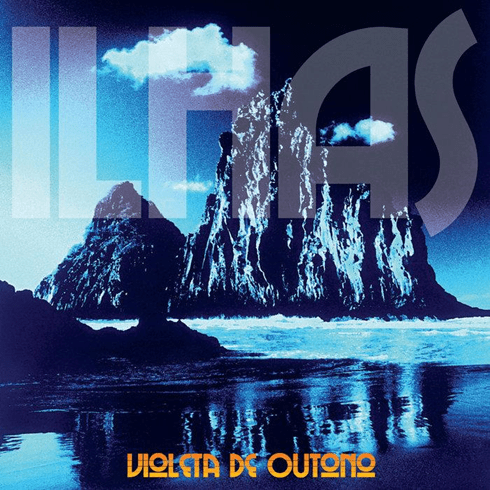
‘Ilhas’, from 2005, contains the most overt references to Fabio and the band’s influences, partly through its titles: ‘Echoes’, ‘Mahavishnu’ and the opener ‘Linguas de Gato em Gelatina’ (Google translate this for a very clear reference point!), but also within the music itself (‘Blues’ hints at Pink Floyd’s ‘Money’ and ‘Mahavishnu’ and ‘Cartas’ Gong’s towards ‘And You Tried So Hard’). Less ambiguous is the superb ‘Eclipse’, a gloriously augmented interpretation of the bass line from Gong’s ‘Fohat Digs Holes In Space’, where Fabio’s evocative Gilmouresque guitar chords, pristineness personified, add a whole new dimension to the original. ‘Ilhas’ also sees the first appearance of Fabio’s beautiful ballad ‘Jupiter’.
‘Volume 7’ and ‘Espectro’, released in 2007 and 2012 respectively, provided a tangible change of direction for the band.
Recruiting Gabriel Costa on bass and critically, for their new sound, Fernando Cardoso on keyboards ( Jose Luiz Dinola had also joined on drums for the ‘Espectro’ album), these are the albums Fabio alluded to as satisfying his proggy alter ego: expanded pieces, more extravagant arrangements, with room for exquisite soloing on Hammond organ, more expansive basslines, and overall a more stretched-out method of composition not seen since AMT. Track names such as ‘Caravana’ are indicative of a wider brief than the trio version of the band, and allow Fabio chance to explore more jazzy, progressive territory both as a rhythm and lead guitarist with a hint in many places of bands such as Khan. These are both very fine albums, augmented in 2016 by ‘Spaces’, before Fabio called time on this expanded version of the band.
One should also mention Outro Lado, released in 2022 a celebration of the reformation of the original three piece of the band – these are reworked versions of many of the best of the Violeta early repertoire.
A full discography including all Violeta releases will be included in a later part of this interview series but all things Fabio can be found at http://www.fabiogolfetti.com
In part 3 of this interview series with Fabio, we explore Fabio’s relationship with the Gong network of bands, his own Brazilian interpretation of the Invisible Opera Company of Tibet concept, and how his slowly forging of an enduring relationship with Daevid Allen.
Part Three – Invisible Opera Company of Tibet
For other interviews in the Canterbury 2.0 series, please click here
 The Canterbury scene(zine) continued....
5 thoughts on “Canterbury 2.3 – Fabio Golfetti interview Part 2– Violeta de Outono”