
‘Here’s another epic. We only provide epics. That’s what we do!’.
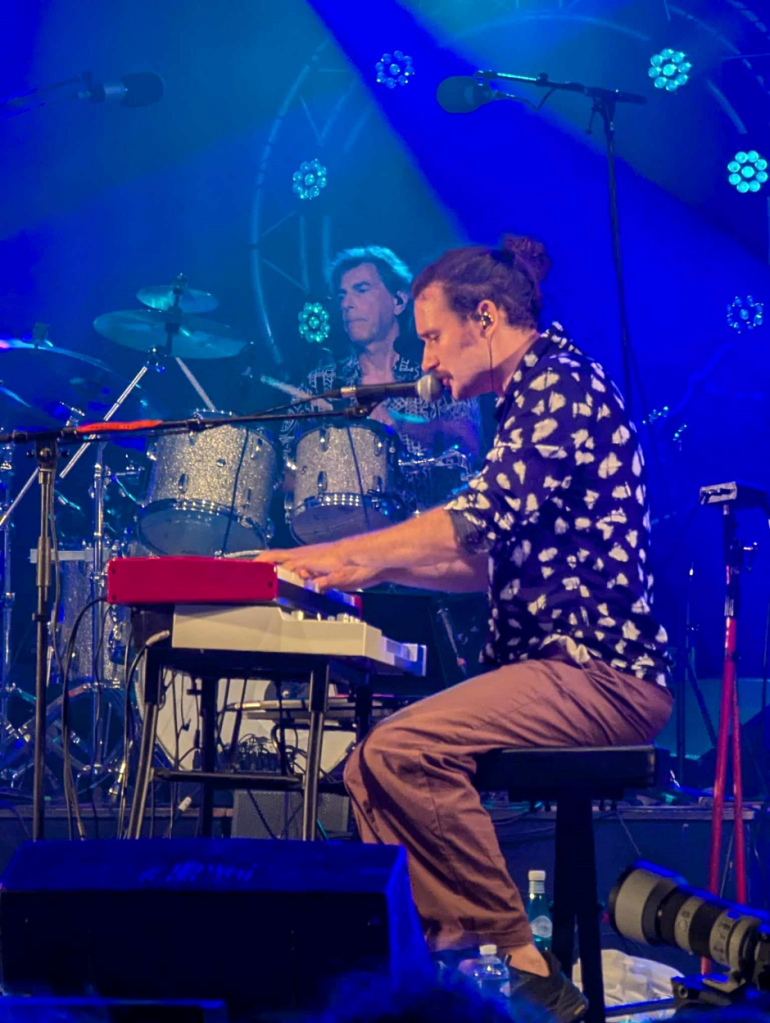
Ryan Stevenson’s words just before he launched into the band’s last piece ‘Toxicity’ from the acclaimed ‘Dominion’ album. A little tongue in cheek perhaps, but the crowd would have found it hard to disagree after 90 minutes of being pummelled by the most gloriously intricate, intense keyboard heavy compositions by a very tight four piece who finally found the audience they deserved by the seaside on the West Coast of France.
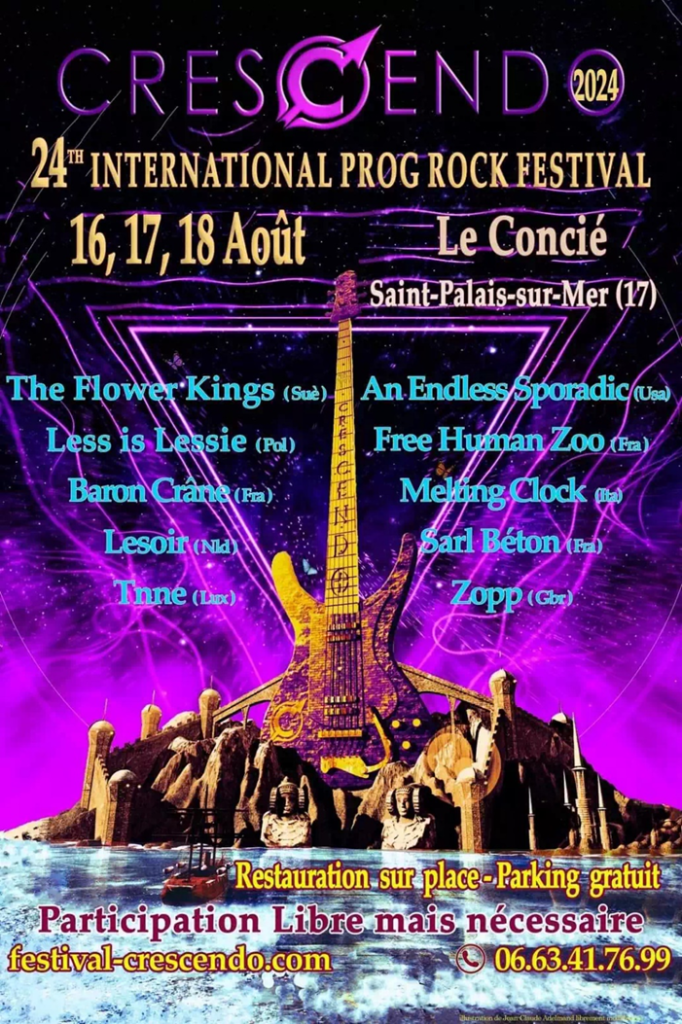
Zopp were playing on the middle evening of Crescendo – a progressive rock festival, in its twenty-fourth incarnation, which takes place over 3 evenings each August under the moonlit skies of the Atlantic in Palais-sur-Mer, north of Bordeaux on the west coast of France. Remarkably, it is free, testament presumably to a fairly far-sighted cultural funding mechanism within the town. It’s contained within a small fenced area between main road and seashore, and you could quite easily drive past it unaware (there was no signage and remarkably little fuss – some people had clearly travelled a distance to be there, but others had literally wandered in on spec). It starts each evening at 5pm, late enough to miss the often oppressive day time heat but also for the last band or two to perform their sets under the stars. The audience is in the upper hundreds (although one stall holder said previous years had been busier), and there are an impressive array of stalls, selling both refreshments (coffees for 1 Euro) augmented by more specific music-related offerings – including one for the French progressive rock fanzine Highlander (whose current issue features Zopp), booths for each of the day’s bands selling merch, and various well stocked second hand record stores.

Just 11 bands span the 3 days’ performances, allowing for lengthy sets. Soundchecks take place during the day, meaning that gaps between each set are minimal. The bands chosen to play appear to vary each year, and looking at the display wall featuring posters for all the editions of the festival, there seems to be little overlap between years. There is clearly a deliberate policy to extend invitations far and wide, with no Frankocentric approach – there were appearances for example by The Flower Kings (Sweden), Lesoire (Netherlands), TNNE (Luxembourg) and An Endless Sporadic (USA). The genre of progressive rock is indeed a broad church, if the bands on display are anything to go by – we saw all 3 bands on Friday who ranged from the messy, funky trio of Baron Crane (France), the pristine, slow anthems of Less is Lessie (Poland) and the grandiose operatic tones of Melting Clock.
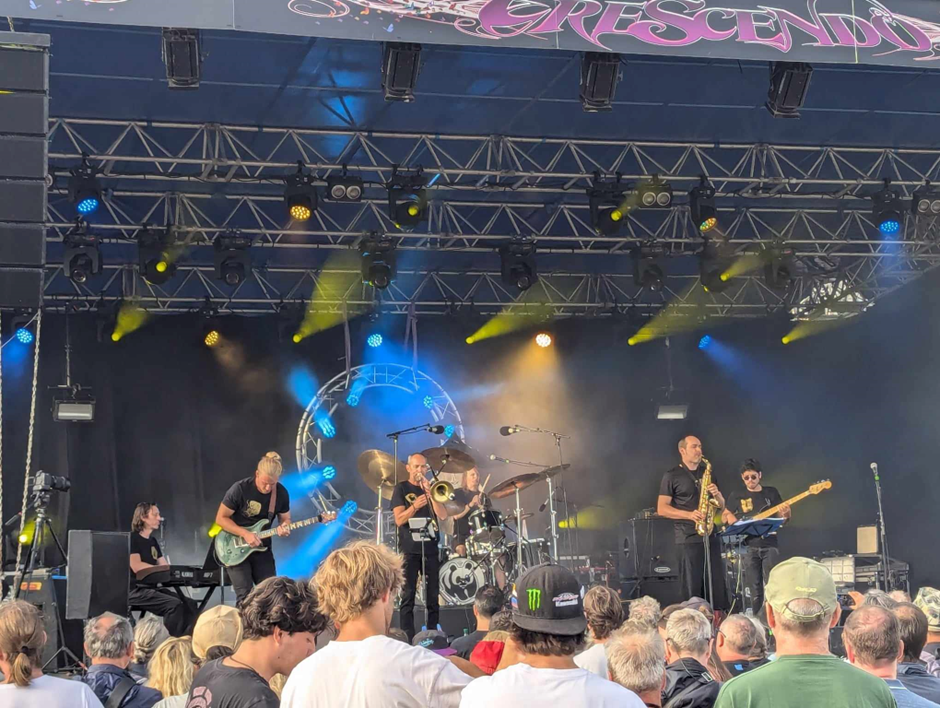
All had their merits, none entirely grabbed me, but I’d been looking forward to seeing Free Human Zoo on Saturday, who I realised in the days leading up to the festival had a connection to music covered in these pages: guitarist Alexis Delva is the son of Jean-Max Delva and Emmanuelle Lionet, the duo behind Anaid, the unusual French band who for a while featured Hugh Hopper on bass (as well as, on occasion Sophia Domancich, Patrice Meyer and, later, Rick Biddulph in the late Eighties and early Nineties. Jean-Max turns out to be one of the curators of the festival, and having been so generous with his thoughts for the Hugh Hopper biography a few years back, it was a lovely moment to meet both him and Emmanuelle briefly before the Zopp set. Free Human Zoo, meanwhile, are a Zeuhlish (even down to the black T-shirts) band from Paris, all pounding bass, staccato keyboard motifs and female voice, but augmented unusually by trombone and soprano sax, as well as the blistering guitar work of the highly talented Delva. There was a lightness of touch in their compositions which softened the initial dark overtones. Highly recommended.
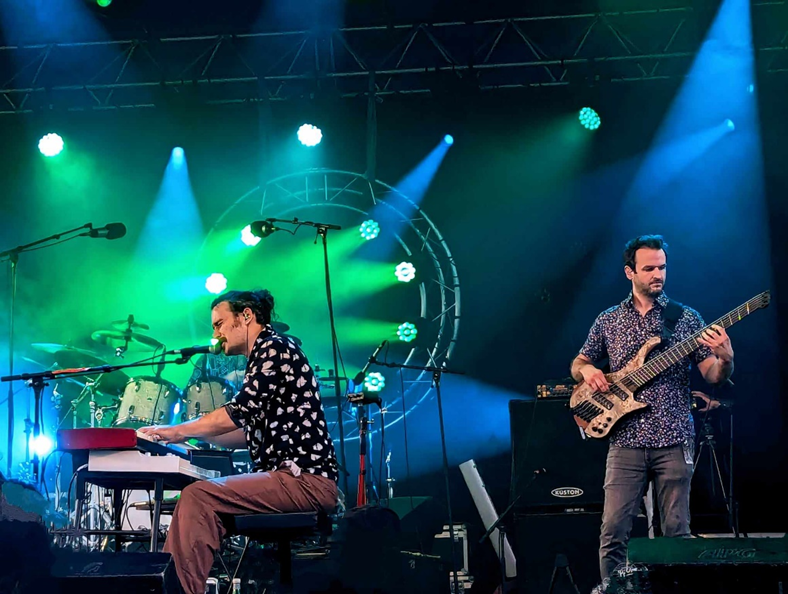
And so to Zopp. This was, I would think, by far the highest profile gig of their embryonic career of a gigging band (still less than a year), and the band seemed more excited than nervous. Ryan Stevenson sits centre stage, with a microphone and couple of banks of equipment in front of him emulating the full gamut of Canterbury keyboard sounds. Unlike the first gig I saw him place he is sideways on to the audience rather than facing them, presumably because it’s better for interaction with his band. It still seems a refreshingly unusual to see the leader of a band playing keyboards.
I’d been introduced to a member of the audience by Jean-Max, who was standing next to another punter of advanced years who was also, like me, wearing a ‘Camembert Electrique’ T-shirt – the first fan talked to me eloquently about seeing Soft Machine, Caravan and Gong at the Amougies Festival in 1969 (he didn’t look old enough!) then professed his excitement at getting to see Zopp (‘this guy is Mike Ratledge, Dave Stewart and Dave Sinclair all rolled into one’). Quite a billing to live up to! But the comparisons are far from implausible: Stevenson possesses much of the fluency of the former, and some of the range and technique of the second, and the lyricism of the latter – it’s uncanny hearing such familiar sounds unfold in front of you.
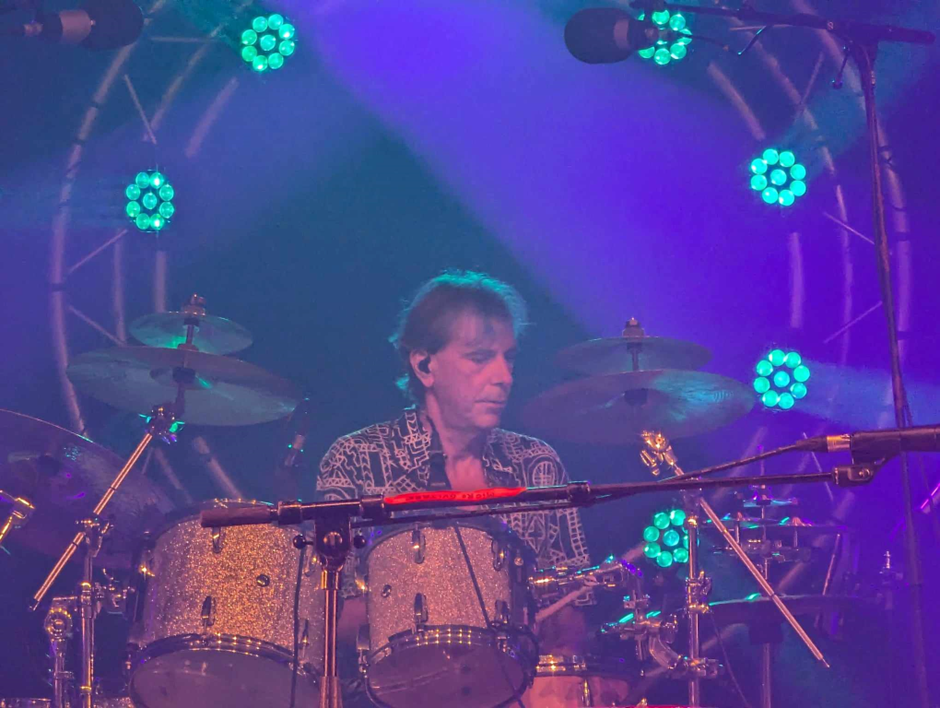
It’s also been a mild stroke of genius to expand the project into band format: Stevenson still composes all material, and recorded most of the first two album’s instrumentation alone, with only Italian Andrea Monetti a mainstay alongside him on providing a real drumbeat. Yet on stage this band is one of total cohesion – with the contrasting sights of the seemingly unflappable Ashley Raynor on 6-string bass, effortlessly working his way around Stevenson’s fiendish compositions, whilst the much more animated Richard Lucas on guitar is attentiveness itself, adding a lick here, a solo there, aping the lead keyboard lines with utter synchronicity to the vibe of the project – I suspect he doesn’t quite appreciate what an important cog he is to the band, although his confidence visibly grew as the audience response became obvious. Monetti sits partly hidden by an extensive kit – he is a powerhouse, but deft enough to provide the perfect foil to the ever-changing music.
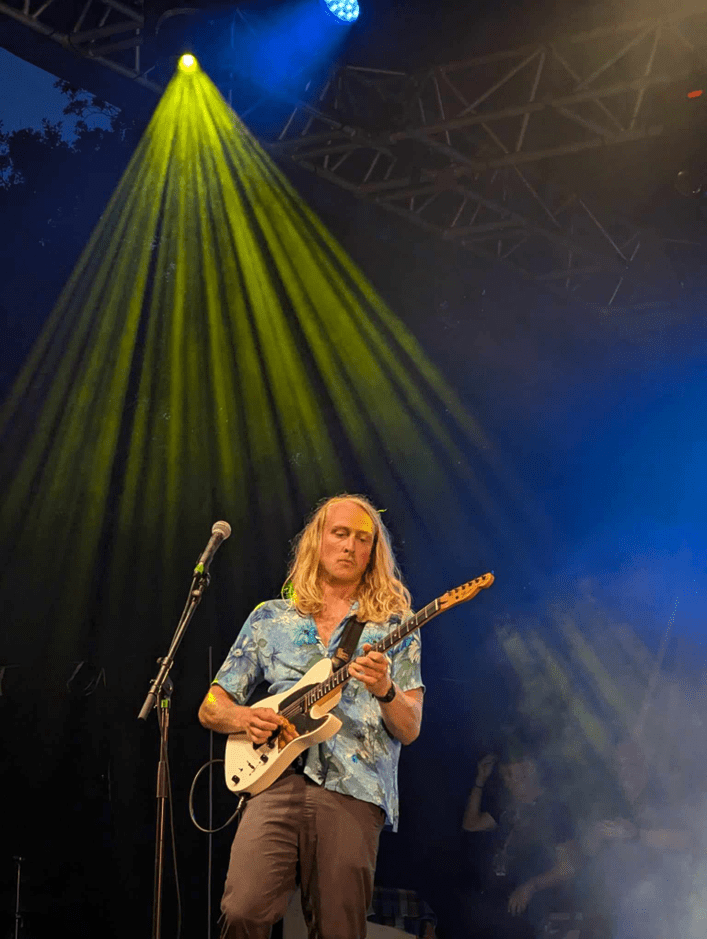
We’d been promised an extensive set with some surprises and the performance didn’t disappoint – the band started with probably their most acclaimed piece ‘You’, where time seems to stand still in the aching middle section in what is fast becoming a iconic part of the neo-Canterbury canon. The instrumental first album was represented by superb renditions of its best 3 tracks, the fanfarish opener ‘Before The Light’, with memorably its Oldfeldian cyclical guitar theme at its conclusion, the rousing concluder ‘The Nobel Shirker’, and, wonderfully, the track ‘V’, probably my own favourite from the first album, as the staccato keyboard rhythms hang almost like a reverb for the melodies to circle around. The band also resurrected ‘Sellenra’ for the album, a radically reworked version with a hint of drum ‘n’ bass rhythms as well as ‘Echoes’ style keyboards. From ‘Dominion’, in addition to ‘You’ and ‘Toxicity’, there was ‘Uppmarksamhet’, which, as I’d seen live previously, extends from its album incarnation to a gloriously gentle improvisational groove, showing another interesting facet of a band who generally concentrate on interpreting Stevenson’s tight scores.

There were also two new tracks, so new in fact that Stevenson was struggling during our chat the next day to given them definitive names (he settled on ‘Living Man’, another ‘epic’; and ‘Intuition Made It’ ( also known as ‘After the Light’) a surprisingly confident encore for an early airing, including a tasty guitar/keyboard motif as its intro – they are still apparently in stages of development and Ryan alluded to both third and fourth albums being in production – lucky us! Both, like ‘You’ and ‘Toxicity’ interweave vocals. When I first heard ‘Dominion’ I wasn’t entirely sure about this element: after all, when you’ve struck gold with a range of compositions seemingly melding the best of Stewart, Campbell and Gowen, why change a winning formula? But that voice, with its clean, precise delivery has become integral to the band’s signature sound (aided by similarly delivered backing harmonies from Lucas above or below the melody). I’ve seen comparisons with Richard Sinclair, but that’s perhaps a little unfair (aside from the burbling introduction to ‘The Noble Shirker’): the clarity is there for sure, but Stevenson’s voice is much more imploring, almost strident. Either way, vocal lines are weaved in and out of the ‘epics’ so easily that they’ve become the new DNA of the band’s sound, it’s another meticulously manicured and integral facet of a very fine band, and I’m sure, for all Zopp’s avowed Canterbury influences, this will stretch their audience further afield.
It’s so difficult to be subjective when you feel so personally invested in a performance (this was the longest distance I’d ever travelled specifically to see a band) but I got the impression from the outpouring of cheers, whoops and general excitement around me that Zopp had gone down as well as anyone at Crescendo. I might not regard myself as a natural progressive rock fan in all its multifarious manifestations, but if Zopp represent the genre then I’m probably all in! And mid set a fellow audience member caught my eye when I glanced behind me – the Amougies veteran was beaming from ear to ear …

All things Zopp can be found at https://zopp.bandcamp.com/
Ryan Stevenson will be interviewed for the Facelift blog as part of the Canterbury 2.0 series
 The Canterbury scene(zine) continued....
4 thoughts on “Zopp at Crescendo Festival, St Palais-sur-Mer, 18 August 2024”