A lot of music autobiographies have passed my way in recent years relating to musicians with direct or peripheral connections to the Canterbury scene. They seem to fall into a variety of categories: the ghostwritten and mass produced (Karl Jenkins), the unexpectedly confessional (Mike Oldfield), biography as creative writing artform (Carol Grimes), the humorous and self-deprecating (Bill MacCormick) and the riotous (Pam Windo). When I got news over the summer via Burning Shed of the fact that Jakko M Jakszyk (guitarist, vocalist and composer) was publishing his own autobiography, locating a copy became essential: as well as being a friend to Facelift over the years in its various guises, Jakko’s life has been so utterly extraordinary, within and without music, that there was always going to be one hell of a tale to tell.
‘Who’s The Boy With The Lovely Hair’, the title a poignant nod to the last words said to him by Camille, his adopted mother, is essentially a story with three different strands.
The first is probably what will attract most readers of this blog – Jakko’s tortuous route through the fandom of – and ultimately performing with – musicians written about on these pages, which included close relationships with Dave Stewart and Pip Pyle; interactions with Bill Bruford and Allan Holdsworth; members of Henry Cow; and we can include by extension both his solo work and ultimately becoming Robert Fripp’s henchman in the last (to date) incarnation of King Crimson.
The second thread is the parallel universe which has satisfied other creative urges and one suspects largely funded the first: the acting, the voiceover work, work as a producer, as commissioned composer, and a quite extraordinary body of work which has crossed over, directly with artists as varied as Ray Davies, Al Murray, Lenny Henry, Nigel Planer, Sam Brown, Tom Robinson, Danny Thompson, Tony Hawkes. Or slightly more tangential connections en route with Neil Sedaka, Cliff Richard, Chris de Burgh, Uri Geller… and Michael Jackson…!
But it is the third component which makes Jakko’s story (and ultimately this book) so utterly compelling: its personal backdrop. Jakko has always been disarmingly honest in interviews about his complex personal situation. But even though this has also permeated some of his musical output too (the autobiographical pieces ‘The Road To Ballina’, originally commissioned for Radio 3, as well as tracks and liner notes within solo albums such as ‘Mustard Gas and Roses’, ‘The Bruised Romantic Glee Club’ and ‘Secrets and Lies’), there is still so much more to say in what is clearly an ongoing process. For those of you not familiar with the story: Jakko’s upbringing was as something of a child prodigy in terms of music, acting and even football; whilst at the same time grappling with a complicated family background: brought up north of London by adoptive parents from Poland and France respectively, and learning of his ‘real’ parentage by an acclaimed Irish singer and an unidentified American serviceman.
‘My adoptive parents came from different cultures and from a different time, almost…. At times, they may as well have come from a different planet’. Somehow the stifling and seemingly anachronistic circumstances of his upbringing didn’t seem to quell either his spirit, or temper his precociousness (he admits at one point to having been ‘bloody unbearable’) – even as a mid teen in the mid Seventies he managed attendance at various seminal gigs, often as a lone wolf – (one of the book’s highlights is the story of him being stranded after a Henry Cow gig and being picked up and taken back home by the band). The unearthing of further details throughout the book is extraordinary, and it is only Jakko’s known willingness to share this information that perhaps softens a voyeuristic guilt in the reader in wanting him to return to this particular narrative in amongst other unlikely revelations. Yes, so he encounters Michael Jackson in a studio; OK, he hangs out with Gene Simmons; sure, he seems to be on friendship terms with most of the Comic Strip and Young Ones; and he even once told Pete Waterman to ‘fuck off’. But when do we get back to the narrative about tracking down sibling X over in the States?
The book is engagingly written, with humour, some self-deprecation and clarity of direction, all resonant of erstwhile mentor Dave Stewart; and compels all the more because of its confessional element – for the most part Jakko doesn’t complain about his vicissitudes overly, although he certainly marvels at their frequent occurrences, and is all too aware of quite what an unfathomable life he has endured which extends well beyond his musical world. For example, there is an extraordinary diversion at one point in which he has a prolonged exchange of views with Millwall Football Club on the subject of racism.
There are uplifting moments: the reconciliation with his adopted father, and the discovery of new siblings, but this is no inexorable advance to a fairy tale conclusion: the deception close to home alluded to in tracks such ‘No One Left To Lie To’ on ‘Bruised Romantic Glee Club’, or even more tellingly through the title of his last solo album ‘Secrets and Lies’, is laid unsentimentally bare. And, having diligently concealed the identities of previous partners in earlier parts of the book, the gloves come off rather in later chapters… in detailing the breakdown of his marriage, his fractured dealings with one erstwhile member of King Crimson, and eventually the deterioration of his relationship with most of the members of his ‘found’ family. There is a sense indeed that all of the latter processes are still ongoing, and therefore the tone is still more than a little raw..
This is in strict contrast to the almost exultant progress of Jakko within the ranks of King Crimson-related projects, from Seventies fandom (he even reveals that his childhood dog was named ‘Fripp’), through membership of the 21st Schizoid Band from 2002 (with ex Crimson members), through to eventually meeting the aforementioned Robert Fripp, working initially with him on the ‘Scarcity of Miracles’ album, until becoming, as was apparent on the recent King Crimson documentary ‘In The Court of the Crimson King’, a favoured right hand man within the core Crimson band. Subsequent accounts of increasingly lavish gigs abroad with the band might start to blur into one another after a while (in the same manner as the celebrity connections also do), but one senses that both have helped provide a well-deserved sense of self-validation in direct contrast to the tribulations of his early musical career.
Readers of Facelift in its various guises will know that I am a sucker for Jakko’s solo work: and even though I knew that all of his first three albums had been almost farcically derailed at various junctures in the Eighties, the full details finally emerge here. So does the backdrop to his wonderful Seventies band 64 Spoons; the almost mythical Rapid Eye Movement (with Dave Stewart, Pip Pyle and Rick Biddulph); his key role in Dave Stewart’s early solo work; Dizrhythmia; and his brief but eventful journey with Level 42.
As I write, social media posts inform me that Jakko continues to inhabit a peculiar hybrid world: on the one hand he is currently in Italy with old compadre from The Lodge, John Greaves (alongside Annie Whitehead, Annie Barbazza and Mel Collins) – I am sure this will be critically well received there but might otherwise pass largely under the radar. On the other hand the autobiography itself is being publicised through a series of interviews with premier film critic Mark Kermode, whilst the launch itself on 11 October at West Hampstead Arts Club will be curated by acclaimed comedian Stewart Lee. The Jakko rollercoaster story continues apace… and there will undoubtedly be further bumps en route….
Thanks to Jakko for sharing an early version of the book and for permission to use some of the images contained within it for this piece
In part one of the Zopp interview Ryan Stevenson talked to Facelift about his own musical backgrouund and influences, and the events which led up to the recording of the first Zopp album. In this second and concluding part he moves on to talk about the ‘Dominion’ album, taking the music out on the road with band Zopp, and future plans for the project.
Ryan Stevenson
Ryan: ‘Dominion’ was more of a confidence boost. Every human being is based upon confidence and if you don’t receive feedback you don’t know how good your stuff is, do you really? So I had great reviews from the first album and it gave me that confidence. I finished the first release in April 2020, and as soon as these reviews came in, I was like ‘this is cool, I’m doing something good here’ and I remember writing ‘You’ (the album’s superb opener and probably Zopp’s defining piece) very early on, that was one of the first things, where the staccato piano came in, and then the whole track – that came about really quickly that song. And I was basically again just trying to write the best thing I could do incorporating the Canterbury thing but I wanted it to be more psychedelic.
I mention this word psychedelic, but not many people… maybe it’s not turned out psychedelic! That was the idea with ‘Dominion’ with the album cover, to have something that was a bit more of a ‘summer’ album. The first one felt a bit cold I think, although again we’re talking in abstract terms.
I’m really proud of the ‘Toxicity’ track (this is the track which both concludes ‘Dominion’ and also ends live sets) – there was like a puzzle, I was trying to work out this long song and so I worked hard on that – there are still elements from the first album in there. If you know a band called Tame Impala, an Australian band, they’re some sort of modern pop music but with a lot of psychedelic guitars and I was very much into that, still am, and I was trying to incorporate that into the music for ‘Dominion’: washed out guitars, delays on the guitars and you hear that on ‘Toxicity’ and ‘You’ quite a lot but then again there’s the Zappa element with ‘Reality Tunnels’ and this complex stuff and ‘Bushnell Keeler’ (where Ryan had written much of the track on midi) and I suppose a very Canterbury piano ballad thing like ‘Wetiko Approaching’, the shorter song before ‘Toxicity’.
But again for me the album flows well – I heard it a few days ago, a couple of songs and it still sounds all right. Again nothing is perfect, but a more confident album, and I tried the vocals too.
Dominion
Indeed, ‘Dominion’’s greatest departure in comparison to Zopp’s debut album is that introduction of Ryan’s own voice, and the surprise 18 months on is perhaps that we hadn’t it before. My initial feeling on hearing it was that it was a clear attempt to widen the project’s audience to a wider prog crowd, but it has become such an essential part of Zopp’s sound (integral but not pervasive) that it’s becoming difficult to separate it from the band’s overall identity.
The earliest memory I have (of wanting to use vocals), is having an instrumental version of the song ‘You’, rehearsing it with Andrea and then me hearing vocal lines. So again it was intuitive, it was like, ‘let’s try this’. Originally the vocal line was a saxophone melody (the saxophone was another element I wanted to use a lot more like in jazz) – so you can hear that on ‘Toxicity’ and a few others.
Zopp captured live at Danfest. Pictured: Ashley Raynor
I’m not a keyboard player, it sounds really modest but I’m not a keyboard player, not a singer. I’m just trying to make music that I want to hear. I think voices just become a part of the identity, even if they’re not like trained singers, it’s just becomes part of that sound, part of the palette. I try to get a blend of instrumental and vocal stuff, so it’s not all one format for every song.
I read one comparison online with the vocals of Richard Sinclair, which seemed to set the bar unnecessarily high. Ryan’s voice is certainly not as fulsome, but it does have that range, clarity, and works particularly well in harmony (he has found an admirable foil live with guitarist and backing vocalist Richard Lucas). Inadvertently, perhaps, he has also stumbled on the ‘Canterbury’ vocalists’ formula of being oneself, a tradition which dates back to Richard Sinclair’s Wilde Flowers demo of ‘A Certain Kind’, where he sang Hugh Hopper’s pop tune with choirboy rigidity, because that what was truest to his experiences up to that point.
On this third album I’m trying to sing how I sing. I’m trying to hear how I would sing, not trying to ape anyone per se, and I think that is again trying to be genuine.
That said, he’s not impartial to a touch of burbling Wyattesque scat singing as is heard live for the intro to ‘The Noble Shirker’.
You probably heard during Crescendo I did a bit of a scat thing – again that’s just an element that I thought would sound great and again I can’t help that! Who’s doing that type of singing? Not many people!
I asked Ryan about his lyrical inspirations for the brief number of tracks that have appeared under the Zopp name so far, primarily ‘You’ and ‘Toxicity’ and on the surface at least these appear to represent the ‘release’ he has found in forsaking a relatively mainstream, even dystopian existence, to pursue his musical calling.
It’s all about my own experiences and in life – not trying to be sci-fi – not trying to be too fantasy. It’s more about existential things. I have had a lot of very unusual experiences, like spiritual experiences. The last few years have been very profound and I tried to write about that: things like synchronicities (meaningful coincidences), reality manifestation realisations, and basically believing in yourself to change your reality. For example ‘You’ is a basic song about – it’s about many things – it’s about being an individual and the importance of being an individual and being who you are, not trying to be part of the crowd. (‘There’s a victory in knowing who I really am’ is just one lyric in ‘You’). As you picked up upon, being introverted in a positive way, being comfortable in your own skin and understanding who you are as a person. Those type of lyrics are very introspective – I’m not trying to discuss politics or anything like that per se, it’s more about my personal experience…
The Zopp project to date has been largely a one-man band with Ryan composing all pieces and playing the majority of instruments himself (the notable exception being drumming from good friend Andrea Moneta, an Italian expat who now lives in Derbyshire). This means that behind the dominant keyboards you hear on all Zopp tracks, the bass and guitar elements are also ones recorded by Ryan. But in 2023 tentative plans took hold to put Zopp into a live context, and a number of gigs have materialised since, two of which (the initial gig at The Sumac in Ryan’s home town of Nottingham and their most recent at Crescendo festival in France), I was lucky enough to attend and review. I asked Ryan what the criteria had been for various musicians joining the live band and he talked us through his connections and a little history of each member, starting with Moneta, with whom the connection goes back further.
Andrea Moneta
The obvious criteria is can you play this song?! Can you handle the odd time signatures because when I’m writing this stuff I’m not thinking in terms of the time signature or how one part is offbeat – these are very unusual things which somebody with a musical training can read in the music by listening.
I met Andrea through an ad in 2017, a Gumtree ad. Andrea has done many things, he’s probably played the most professional gigs – I think he’s even played with or he shared the stage with Tony Levin the bass player (from King Crimson). He toured America with a bluegrass musicians, and many shows with his band ‘Leviathan’ who played a lot in the 80s – some sort of neo progressive Genesis sounding Italian music
It was the same with Ashley (Raynor, on bass), he also replied to an ad. He used to do functions, weddings and stuff like that so he’s got a lot of live experience. As many people have said he is a very natural guy on stage – he just very looks very comfortable and he can learn these complex lines so kudos to him.
Richard (Lucas, guitar, backing vocals) I knew through a friend and got him on board. He’s more from a soul and funk background. Richard is good in the sense that he’s open-minded musically – he knows what’s good and bad, he’s got an open mind.
Richard Lucas
Rob Milne is the sax and flute player who played with us for Danfest and who has performed with Guranfoe. Miles Noble is going to play with us hopefully for the next two shows, at least, and he’s involved in many projects, but we had a rehearsal yesterday and he’s a very good fit, he’s an amazing player.
As noted in both Zopp live reviews on Facelift, the band appear to have seamlessly taken a studio project into the live arena both in terms of sympathetic personnel and some tweaking of arrangements. The clearest manifestation of this is the extension of ‘Uppmärksamhet’ from ‘Dominion’, a reflective piece which has developed a new element, the improvisational extension ‘Prospectiv’.
I’ve always had an affinity with Scandinavia for some reason – I’ve been there many times, I like a lot of the prog music there too like Dungen and Anekdoten. Uppmärksamhet means ‘attention’ in Swedish, paying attention, and I just wanted a song that had that title. It was sort of a link with the first album with ‘Sellanra’. I liked the version on the ‘Danfest’ recording – we did a really nice version of that and then I basically split it into two with ‘Perspectiv’ (being the improvised element). I like those two a lot, we do that a lot, people say that’s one of the highlights of the show – the jam in the middle, so we carried on doing that…
As a band I wanted more improvisation so on ‘You ‘ there were more solos in the middle, there’s just room with that bassline in the middle, so probably that idea came early when we had a band together the Zopp band. I think Tom Penaguin (the French multi-instrumentalist who was interviewed at the start of the Canterbury 2.0 series, who Ryan originally put me in touch with) mentioned, because he saw the clip at Danfest – he said ‘it be good if there was a break in this’ – so now there’s a break in the middle with Ashley where the riff is in 7/4 and I told him to play in 7/8, so that’s like a break in the middle of the song which I’ve incorporated. So things happen organically I suppose, or ideas develop – that’s the great thing about the band format, and that has helped me to write for the third album (the band have already performed live a number of new pieces which will appear on future projects) in a healthy sense because you hear the new songs in a live format, and you hear what works and what doesn’t work. And I think that’s very healthy again and it helps the understanding from a different perspective.
Zopp at Crescendo Festival, August 2024
Ryan is also expanding his familiarity with improvisation in other ways.
I’ve joined a band – it’s called the Nottingham Soul and Jazz Collective – we turn up every few weeks and we just get together and the songs are very jazz in the sense that you’ve got a theme at the start, and then it’s free for all in the middle, everybody’s jamming and then we return to the theme at the end. That’s sort of the loose format and that would be a good experience for me to develop as a musician I think. I’m on keyboards – I’d love to play something else than keyboards, because I think I’m a better bass player or even better guitarist than a keyboard player but I’m happy to play keyboards..
Which leads us on to future projects. When we spoke in France Ryan made free reference to both ‘third’ and possibly ‘fourth’ Zopp albums.
I’m writing the third album – there are three songs I really like from it. There’s one that we played for the encore (at Crescendo) and I really really like that song – I think that’s going to be called ‘Intuition Made It’. Again, the intuition thing again is powerful. It’s a bit poppy but it’s got proggy bits in and complicated bits – so that’s an eight minute song. There’s another song called ‘Bizarro’ – actually the album is going to be called ‘Bizarro’ too – but this is a really good instrumental song which gives me goosebumps actually listening to the demo in the car, and I know I’m on to something good when I get the goosebumps. So the Canterbury people will love that because it sounds like Soft Machine but it’s got the Zopp take on it. And there’s a song my dad wrote when I was a kid, that he said sounds like Greenslade but to me it sounds more Zappa, a bit like ‘Hot Rats’, simple but very melodic so I’ve reinterpreted that in my own way and that’ll be on the record.
And then there’s the ‘Living Man’ song which I’m still trying to perfect. We’ve been playing that for a year and I’m still not happy with the bit in the middle. I find it cheesy and it sounds very prog rocky, you know very cliched, but the guys in the band love it and I don’t really resonate with it.
Yesterday the band were like ‘no, we’re not going to change this because we got a gig next month’. That’s fine, I respect that but it doesn’t feel right yet – and this sounds really pretentious but I really am being sincere – I’m trying to make the best thing that innately, intuitively feels complete. That’s what an artist is. One of my idols is David Lynch, the American director, the avantgarde post modern, whatever you want to call him. Not just in his art, but who he is in interviews is a big inspiration – the thing is done when it feels complete, and that can drive you mad, insane, because I really am trying to do that with everything. I could make an album quickly, but it would be crap. Andrea yesterday said that the ‘Living Man’ song is the best thing I’ve ever done. I was like ‘thank you, but it just doesn’t feel right’. I know that is the main thing, if I’m not happy with it, it can’t be on the album. I do raise the bar high for myself which is good.
And then there’s other little pieces now which I’m working on every day to try and finish and then we’re hopefully going to record the drums next year sometime.
The fourth one is called Zomm and we recorded the drums for that two years ago now, and that’s the stuff I wrote before Zopp in 2015-17, so this was a band that I had and it broke up but I wrote a lot of music for it. We’ve got a Venn diagram here of Magma and Mr Bungle (an American experimental rock band) – avant garde dark weird doom stuff!
I’ve recorded most of the gigs with Zopp so they’re going to be released eventually, either bandcamp or maybe another CD so people get that fresh perspective on the live format versus the studio.
Finally, one of the primary themes within the whole Canterbury 2.0 series in Facelift has been to ask musicians their thoughts on how they see themselves fitting (if at all) within a wider Canterbury scene.
Ryan Stevenson (centre) with Maureen Piercy and Tom Penaguin, Crescendo Festival (photo Pascal Sauriat)
This is an important question. A neo-Canterbury movement? In one sense yes, in another sense no – that sounds contradictory! The DNA of some of these bands I observe and acknowledge is being carried forward with Tom Penaguin’s music, with my music and with many other bands you’ve interviewed such as Amoeba Split. I acknowledge that, and it’s true, and I don’t hide that fact.
But when I’m making music I’m not thinking, ‘I’ve got to be a part of a scene’.
So there’s two different perspectives, two different ways of looking at it when I make music. As I’ve said, I’m trying to please myself all the time to make an album that I want to listen to. That’s it. But I don’t want to be boxed in or continue making the same album forever. Those elements are always going to be in Zopp, whether that’s the weird melodies, the fuzz organ, some scatting like Wyatt, these things will always sort of be in there somehow. But I’m going to try and shake it up, which might upset people, and that’s fine because fans go, some come in. I try not to think too much about it.
But even talking about it still helps promote the (original) music and it’s a romantic thing about a scene and I get that, I totally get it. And I love it too because this legacy is important in one respect, because otherwise these bands would just be forgotten.
Thanks to Ryan for his ongoing support for Facelift and related projects and for all the wonderful music he produces.
Zopp’s bandcamp page is at https://zopp.bandcamp.com/ where you can also buy the first two studio albums, T-shirts and merchandise and rare artefacts such as gig posters, early demo versions.
Of all the artists interviewed for the ‘Canterbury 2.0’ series, Zopp are the probably the only ones who have apparently appeared from nowhere, made an instant impression based on impeccable and clearly recognisable musical credentials (Egg, Khan, Hatfield and the North and National Health are all clear reference points), and are now starting to bring their wares to a wider audience in the progressive music field.
Ryan Stevenson
Zopp is the ongoing project of one Ryan Stevenson, a 33 year old from Nottingham, a multi-instrumentalist who has provided practically all the components bar drums on their two studio albums to date, but is also masterminding an inspired transition to live performances with his very conducive band. Since the considerable impact of Zopp’s first album in 2020, I’ve kept in touch with Ryan on a regular basis, as well as witnessing his band’s first gig in Nottingham in November 2023, and its most recent gig, arguably its finest hour, at the Crescendo Festival in France in August 2024, where we spoke at length informally the day after. This piece takes information from all those sources, as well as a 2 hour interview over Zoom earlier this month…
Ryan is a compelling character: his command of a range of instruments and production techniques is matched by a thorough approach towards the challenges of getting his music out to its growing audience in a changing musical landscape. He refutes the term perfectionist, but meticulous he certainly is. He acknowledges the introverted nature required to spend the requisite number of hours putting together albums of such musical and sonic complexity as Zopp’s first two releases. And yet he exudes a natural self-confidence and managed an easy rapport with the crowd at Crescendo (where he made a virtue of his lack of native French). This belied his somewhat mysterious presence on stage, where, side on to his audience, he often appeared to be inexorably navigating his band smoothly through new waters.
As will be revealed within the interview, Ryan acknowledges and even courts Canterbury comparisons, but provides compelling evidence that this should neither define or limit the band’s ongoing appeal and development.
I firstly asked Ryan about his own musical upbringing and influences.
Ryan Stevenson: In terms of playing music really I’m completely self-taught, I’ve never been to a music class, never studied music. I still am a bit of an autodidact, completely self-taught. Music appeared in my life when I was maybe 13 or 14 . ‘Sound of Muzak’ by Porcupine Tree was one of those watershed moments – I really resonated with that. I remember the exact moment my dad played it for me. He was into a lot of progressive rock stuff and the Canterbury scene too. My dad had them all, he still has them, Hatfield and the North records – he wasn’t a Caravan fan – but he was really into National Health and I heard some stuff from Egg and I loved it.
I got into wanting to make music. Something I think changed in the psyche or makeup. Previously I was into sport, I played cricket a lot and stuff like that, and then music came along and it became a very integral part of my identity.
The prog rock thing, I was soaking it up – Prog archives… I was just like ‘what’s Captain Beefheart’? and I remember doing a pastiche of ‘Trout Mask Replica’, recording weird stuff in my bedroom, having a whale of a time. Such a beautiful time in my life, it’s like a kid, a toddler that plays with a plastic candy wrapper and that they’re just engrossed in something that might seem banal, the novelty of the experience, it’s so beautiful.
Zopp, live 2024
So how did this manifest itself in terms of actually playing?
My dad had a keyboard, a Yamaha workstation, where he composed music himself. So I get something from my dad, maybe genetically. He’s been a self-taught musician himself too but I’ve taken it to another level. Within maybe a year, maybe within a few months of me listening to Egg I started to play on the keyboard, not knowing anything, (I still don’t know much!) and then same with guitar. If you have a guitar lying around – just you gravitate towards playing it.
I felt very quickly I wanted to make my own music and that’s always stayed with me. I’ve never been a massive consumer of music – I’ve always wanted to contribute my own, just to be creative. Human beings are very creative beings – I wanted to be lost in a sound world, it’s like an advanced form of playing, composing music and I was fortunate that when I was 15 or 16 my dad saw this in me and he bought me a multitrack recorder, a 16 track so I could overdub in my bedroom and record.
It’s an archetype, but I think I’m an archetype of being somebody that’s not necessarily interested in learning an instrument per se, it’s more about ‘how do I make an album?’, and I remember even at school thinking of album titles in my head and track sequences, imaginary things – that’s the archetype of who I am. I just want to make albums – a producer is probably the best word to describe if I’m going to be honest. So I’ve always had that, maybe from 14,15,16, that age, It was very powerful and then with the Zopp stuff, I wrote a lot of that in 2010 (when Ryan was still in his late teens).
I bought a bass guitar off a guy at College, again 16, 17 years old and had keyboards at home and a guitar and I’d just be overdubbing and making music, and some of the early stuff was very Canterbury-like. My dad had a fuzz organ, like a distorted organ sound and one of the first things I made was this Egg pastiche, which I still remember in my head actually. It’s never ended up on a record, compositionally it was a bit boring maybe, but I think it’s in you, something clicks at an age and you just want to make music and that’s my archetype I think…
When I studied at college I took some music technology classes and then an A level in it, and I got used to using Protools so I’m a modern musician in that sense.
I asked Ryan what it was about Egg in particular that struck him at that tender age, as well as an ongoing admiration for the work of Mont Campbell, whose writing re-emerged in possibly even more uncompromising fashion later within National Health. It seems particularly remarkable, given that he does not read music, that Ryan should be drawn towards, and eventually emulate through his own complex pieces, the music of the most compositionally complex of the Canterbury genre’s musicians.
Mont ‘Dirk’ Campbell, as interviewed by Facelift back in 1998
He’s a genius, an underrated genius and it’s just the way it is, isn’t it, those people that make genius compositions never get the deserved praise. I did reach out to Mont Campbell to get him to play on ‘Dominion’ but he told me that he had sold his French horns in 1975!
I don’t read music. I think I’m lazy in that sense but also I don’t need to. Obviously with a band, starting the Zopp band, I’ve had to communicate ideas to people. Andrea who drums in Zopp, he can read music, he’s taught formally but no I can’t read music, but those guys did didn’t they? Mont Campbell obviously studied the French horn, Dave Stewart (read music) and that probably allowed them to compose music to a high level of complexity. But for me being in the 21st Century I have the luxury of using a computer to overdub ideas conveniently, so the studio is almost like an instrument in a sense.
For me music is abstract, and it’s getting the ideas down from here (my head) into the material world, so the quickest way of doing that is using technology for me. If you think about it, midi is a form of musical notation in a way, you’re notating the notes on a grid, with a keyboard on the side, so in a sense like in the old days you could write on the staff and write notes but you couldn’t actually hear it unless you got musicians to play it. I can hear the notes in real time by doing that and that was an interesting exercise, but if I’m not using midi it’s a case of layering 10 seconds of a riff down, say something like ‘Before the Llight’ (sings intro) and then add more to it and then it incrementally ends up as a song.
We spoke a bit more about Mont Campbell’s unique compositional work. In our early communications back in 2020 Ryan had introduced the band as a ‘UK Canterbury prog group in the style of Egg and National Health’, and but then expressed surprise that I’d picked up on the track ‘Sanger’ being redolent of the latter band’s extraordinary retrospective album ‘Missing Pieces’, one track in particular…
‘Agrippa’! (from National Health’s ‘Missing Pieces’ retrospective album). Jesus Christ! I don’t know how that hasn’t had the praise, that’s what turns me on musically speaking. I don’t know how long ‘Agrippa’ is, it is maybe it’s seven minutes or something is it? It just seems to flow… In progressive rock they (often) stitch ideas together. I was listening to Stravinsky the other day and he also stitched things together, but there’s this flow with (Mont Campbell’s) compositions and there’s that beauty, that sort of ethereal-like beauty about it and with the complexity and the intelligence behind it and it’s just very tasteful, it’s very hard to put into words. It’s the same with one of the shorter tracks off ‘Missing Pieces’ – it’s got a really strange title ‘Croquette For Electronic Beating Group’.
Zopp’s defining characteristic is complex instrumental-based pieces whose sound is dominated by those Canterburyesque keyboard tones and whose compositions show much of the same complexity. Ryan admitted to being less familiar with the work of Dave Sinclair (with Caravan) but also eulogised about another Canterbury keyboard maestro.
Ashley Raynor, Ryan Stevenson
I resonate with Mike Ratledge a lot – I’m not as good as him technically speaking but I resonate highly with his take on the instrument – the speed and the aggression, but from a very civilized Oxbridge approach!
Someone like Steven Wilson would explain, that he might come up with a song and he thinks it’s very unique and somebody goes ‘it sounds like Pink Floyd’! But it’s in your musical DNA somehow. People are just going to keep on saying ‘wow, it sounds just like Mike Ratledge’, it depends if I’d use something different from the fuzz organ sound in the future, but… I love those sounds and there’s not much music that I’m hearing with those sounds done in an organic way today. So that’s why I’m making this; it’s a very pure intention, I want to hear this music because I don’t hear this music today and you know that’s why artists should be making music so that they can hear the stuff in their head.
You don’t do it from an egoic point of view, you do it because you really want to make it for your own entertainment, it’s entertainment for me. You do it for yourself first and then you give it to the world, you make a bit of money off it and if people give you compliments that’s a bonus!
We moved on to specifically talking about some of the music that Zopp have produced in their short recording life. Ryan talked first about the genesis of Zopp as a project
I wrote a lot of Zopp music between 2010 and 2014/5 between the age of 19 and 25ish, and then I just parked it to one side for a while, then basically I fell out with this band – I’d played in bands for a bit. And then there was a moment when I was 27, I was working in marketing, like a pretty decent job and then I thought fuck this, I just really want to make this album, so that’s when I got Andrea on board and I really committed to making the album (which eventually appeared as ‘Zopp’ in 2020) and since then there’s been a lot of learning. When you’re making an album there’s so much learning from even when Andrea got in the room, and the dynamic between me and him and playing the songs through the PA speaker, the demos and ‘oh the song is too fast, we got to slow it down’…. Again it shows that working with people gives you that fresh perspective.
The first Zopp album, released 2020
Their first album was entirely instrumental, a startling debut which was described by Facelift thus: ‘‘Zopp’ is almost a lost album in the Egg canon, albeit imbued with a fresh energy without some of that band’s austere and self-consciously classical reference points.’ ‘Whilst Stevenson acknowledges Mont Campbell as a reference point in conversation, and even more obviously so Dave Stewart in sound, there is a lightness of touch more in common with the expanded instrumentation of Hatfield and the North, the comparisons helped by the fact that Stevenson doubles (or triples) on guitar and bass respectively’. Ryan concurs but is keen to acknowledge a wider range of components:
So as I alluded to when talking about National Health’s ‘Missing Pieces’ record, it was this Zappa/Stravinsky/National Health thing – it’s like a Venn Diagram I always resonated with – that sort of crossover, and so basically I wanted to make an album that was in line with that ethos really. So the first album was a distillation of many of those elements, probably more explicitly an ode to the Canterbury thing, and again I’ll admit that. There are really good compositions on there that I’m still really proud of. Sonically – as you’ll probably find with a lot of artists, they want to go back and change things, and are still learning a lot in that, but the first album is really all about the sequence for me, getting a nice musical journey, with different landscapes and musical rooms.
So there’s some darker moments on the first one, but there’s still a lot of the good things about this music, there’s a lot of Easter eggs in there, there’s stuff under the surface- even some rhythmical bits were taken from black metal – like really dark music – so on the surface it’s Canterbury but there’s a lot things from my personality – not just Canterbury . But I suppose it’s chapter one in the music and most of it, 70% of it, was written when I was in my early 20s and late teens.
And that includes ‘Before The Light’, ‘Noble Shirker’, ‘V’. (all three have survived to the band’s current playlist). I think I wrote ‘V’ when I was 22 – that’s a long time ago. ‘Zero’ was an early track and ‘Eternal Return’ and ‘Being And Time’, those two tracks were written during the Zohmm period (this is a reference to the band that Ryan had pre-Zopp, alluded to above, more of which later) – it was this darker music.
So, the Zappa thing, the Canterbury thing, there’s also a band called Jaga Jazzist, a Norwegian band that I was really into, and that inspired a lot of ‘The Noble Shirker’ because they have so many elements in their music, you hear like sequencers, sax, guitars, synths etc. The start of ‘The Noble Shirker’ was inspired by the start of (Soft Machine’s) ‘Out Bloody Rageous’, where I looped a couple of Hohner pianets and me and Andy (Tillison) used some DJ software to manipulate the sound – some weird stereo effect. The end of ‘The Noble Shirker’ does sound a bit like the end of ‘Moon in June’ – but that wasn’t conscious! In your review actually you’re talking about the Soft Machine staccato bit at the end of the noble Shirker, just the organ chord carrying on – that didn’t come from that – but I know what you mean!
We also talked about the brief contribution of current Soft Machinist Theo Travis on the first album.
I was working with (progressive musician) Andy Tillison on the album. Theo is in The Tangent too. Apparently Theo owed Andy a favour so he played flute, he sent the song to Theo, the song ‘V’, which is one of my favourites (described by Facelift at the time thus: ‘Bass sounds wander around underneath keyboards which alternately ripple or fanfare stridently … in search of that perfect countermelody’). I like that song a lot and he played flute on it. Unfortunately I didn’t want the flute to be too loud in the mix so on the song it’s a bit buried really, he wasn’t showcased really . He did some flute loops, you probably hear on the song – I don’t know what technology he was using but manipulating the flute at the end of the song.
Although Ryan met Theo briefly at the time (this would have been in 2019), their paths have not crossed since, although this might be rectified at the forthcoming HRH Prog festival in Great Yarmouth, where both bands play on the Saturday. We also talked about the contributions of Caroline Joy Clarke on the first album, providing plaintive wordless vocals in the style of another familiar Canterburyesque identifier:
The Northettes thing was an element I’ve always liked – I mean you can’t really beat Barbara Gaskin and the other Northettes (Amanda Parsons and Ann Rosenthal) – did you hear the recent separated AI tracks of just their voices? – I heard it and it sounds amazing isolated, it was so pitch perfect.
In Part Two of the Zopp piece we move on to talking about the ‘Dominion’ album, Zopp’s emergence as a live band in 2023, news of two upcoming albums, and Ryan’s thoughts on the ‘neo-Canterbury’ tag.
When I contacted Carla Diratz, singer with Precis Aimant, The Archers of Sorrow, The Electric Suite and of course the wonderful Diratz project itself, about my wish to speak to her as part of the ‘Canterbury 2.0’ project, interviewing a number of international musicians who have claimed (or had thrust up on them) a Canterbury scene influence, her response was this…
“Please keep in mind that I had no intention of being considered a Canterburian singer…, which I am pretty sure I am not!”
… accompanied by a winking emoji. And yet here we are a few months later, courtesy of a unscheduled visit to her current hometown, Uzès in the Gard region of France where we shared dinner and wine, followed by a precious two hours of interview time in a nearby cafe. Her work alongside Dave Newhouse of the Muffins (most notably with their collaboration on a project named, appropriately enough, Diratz), and latterly Martin Archer of Discus Music (with The Archers of Sorrow) is what might have brought her to Facelift readers’ attention, but this is only really scratching the surface of her story.
I think I first became aware of Carla Diratz some time in 2017 through her knowledgeable posts on a variety of Canterbury-related Facebook groups. Did I know she was a musician at this point? I’m not sure, but from this time began my exposure to a trickle of music which was always startling. Carla’s voice is her extraordinary calling card, a gravelled, raw, emotive statement where word-perfect English lyrics (Carla teaches English), delivered in heavily accented Parisian blues exclamations, enriches a number of deeply varied projects, from the stark duo of The Electric Suite, to the exploratory electronica of Baikal, via the alternately progressive and blues-based excusions of The Archers of Sorrow to the clean or improvised sounds of Diratz. We didn’t get to talk about all of these projects but what follows should be a helpful introduction to her musical world….
I first asked Carla about her initial exposure to music:
CD: The first concert I attended as a kid, I was 14 and a half, was Otis Redding in Paris. Did it have an influence? (she laughs) I think so, I think it did!
I was absolutely crazy about it. All those years I’m living in Paris, I’m like 14/15 and I’m getting two things in my ears all the time, the whole thing from Motown and Stax from the States, and the Kinks and the Animals and Spencer Davis group from you guys (in the UK).
I guess my first influence, the music that really made the difference to me was probably Renaissance, the band. At the same time I was listening to Taste (with Rory Gallagher), it was the two things I was into when I was like 17/18. I bought their LPs on the same day in a shop in the Champs Elysée.
And then I went to California (in 1970) and the first concert I attended at The Forum in LA was Led Zeppelin. 50-60000 people, which was very different from France or Europe. It was really fantastic – with John Bonham on drums.
I went to California because I wanted to explore, and so I ended up as a kind of au pair and I spent lots of time on the beach smoking joints and going to concerts. One day, John Mayall (who had just died when we spoke) was playing next to me on the beach.
So was Carla born into a musical family, then?
Not really. My father was a photographer for French TV in Paris. And so he took us, my mom and I, to many things to watch when he was working. So by the age of like 10 I had already seen on stage Edith Piaf, Jacques Brel, everybody, and my mom spoke seven languages fluently. (My family) is Armenian (we talked for a while about our mutual love of Didier Malherbe’s playing of the dudouk, the native Armenian wind instrument which is fashioned from apricot wood), from Turkey and my grandfather (Etienne Diratz) was some kind of a diplomat or something in Constantinople on my mother’s side. So she said she spoke ONLY seven because my grandfather spoke 14! So I was brought into a very open culture with all kinds of different people and artists and writers and plumbers (?) and all kind of people. My parents are fantastic, I want the same ones next time! They were extremely modern – if there would be one word for them, even though they were very different, it’s ‘modernity’. My parents were modernity – they didn’t play it, they didn’t want to be it, they WERE modern people even though they were they were old, they were already 43 when I was born, which at the time was rare.
So how does an attachment to the Canterbury scene fall into this? Carla relates the story of how she first heard Soft Machine’s ‘Third’.
I think I had heard of Soft Machine in my Parisian years like 68/69 through some friends who knew somebody who knew Gong….
But the first time (I heard ‘Third’) it changed my life, it was a night in Germany in an apartment and I hear something coming from the room next door to the kitchen, and I’m getting up and I’m going and I just can’t leave the place and I’m just like: there is everything, there is absolutely everything in there, like a music that talks to the mind, definitely, the body, definitely and the soul or something, and I just LOVE it and I just love Mike Ratledge, I love him, I want to meet him, bring him to me!
I finally saw them on stage but not with Robert, with Phil Howard in the autumn of 71 in Frankfurt – great great great concert and I loved Hugh playing like (she apes his angular bass playing style) – these first notes (sings bass line of ‘Slightly All The Time’) – I know everything by heart, I know all this music by heart and my daughter does too now, because she was raised with that!
However, since Carla had no musical lessons as a child, I was curious as to how her musicality, and her singing emerged.
(It’s) probably because I was dancing a lot when I was 14/15 to all the music I mentioned: Motown, Stax, and the English music. I was dancing a lot and when you dance you automatically sing what you’re dancing. That’s why I’m a singer, if I am a singer which I’m not even 100% sure I am! Would I call myself a singer or a vocalist? Maybe vocalist is better…
So how did this first manifest itself in terms of performing?
I went back to Germany in 75 (Carla had lived there for a while in 1972) for some reason and I met an American guy, Jerry Rubin, who was playing in a club in Germany and I’m going ‘oh you must be Californian? Of course he was and we started living together, actually we stayed together for 3 years on the road, touring, busking and playing in clubs and once he said ‘maybe you could sing with me, if you like’, and I’m going ‘sure why not’, and that’s how it began… It was folk – Californian folk songs he wrote, and Neil Young numbers. On that day when we met we realised we had been at the same concert in LA in 71 – they were sitting behind us and we had smoked their joints all night and we recognised each other because of specific reasons.
But aside from an ad hoc role with German band Vom Mal in the Seventies (I kind of “managed” them by accident … and would play some bass or keys when at home in the huge house we all lived in near Paris. I was not playing with them … just having fun trying stuff…), her first real excursion into music per se was with a project called Change, a perfect (and accessible) vehicle for Carla’s blues voice.
My first band was Change in 78. We recorded but it came to nothing. It’s only a cassette with four or five tracks – 2 are on YouTube. It’s been heard thousands of times. It’s really good, it’s really good, I love it I and that’s the point.
We had such a good time, we did a concert in Paris in a place near Place Clichy and through some total mystery the room was full and there were people waiting outside, we couldn’t get in and we did six encores!
A delving on Carla’s Youtube channel (compiled by daughter Iris) shows a surprising depth of material preserved in one format or another through the late Seventies to the early Noughties as the Diratz voice bent itself to the requirements of the blues, new wave, acid jazz and electronica. Many projects were low key and probably caused few commercial ripples, all are nonetheless ‘out there’ and almost all are uncompromising vehicles for the Diratz talent. There is an extraordinary TV performance with punkish outfit Triac, https://www.youtube.com/watch?v=1DU_d_lt0M0contrasting with the relatively mellow grooves of a track called ‘Angel’ with guitarist Remi Bernard and flautist Mary Cherney; or the laid back ‘Honey’
Elsewhere there are remnants of a tape recorded with guitarist Armand Miralles under the name Charnel – abrasive and punky fare which Carla describes as ‘Rock Indus Experimental (by and large…). Armand was a former member of a French Experimental (prog) band called Heratius with Robert Diaz’
There are also undocumented projects such as Strave with master drummer Serge Bringolf (who may be familiar to readers of these pages as being the only other musician used on the ‘Somewhere in France’ sessions in November 1983 recorded by Richard Sinclair and Hugh Hopper). Carla describes Strave as ‘Zeuhl style, heavy drumming and vocals, flute and brass, bass, guitar … If Magma-Vander had not existed Bringolf could have been the guy …’ And as I write this, Carla has just sent through an extraordinary improvised piece from 2012 under the umbrella title of the Art Ensemble of Belleville. All of these videos will be found at the Youtube channel linked at the end of this piece.
There were also other commissions unconnected to music, including a notable assignment in the world of advertising, rubbing shoulders with Sophia Loren: in 1980 I was for real sitting next to her for a commercial at the Opera House in Paris (for Lux soap)…but soon after the shooting, for some reason, she broke the contract … so the commercial was never shown.” The picture of Carla at that shoot, however, survives…
Lux Soap commercial, 1980
Carla admitted that in more recent times perhaps her favourite project was with Corentin Coupe, the musician with whom she recorded ‘The Electric Suite’, an extraordinary mini-album whose only components are her stark, imploring voice shown in its sharpest relief, and Corentin’s enveloping bass accompaniment. The duo describe the resultant set of songs as ‘post-rock’, but that barely does it justice – imagine an anguished campfire session with electric bass chords rather than acoustic guitar providing the backdrop. An excellent representation of the duo is here:
I talked with him yesterday. We’re very close – a very good pal. He lives about 2 hours away from here. The Electric Suite became No White of Moon (the name of one of the tracks on the mini album) because we added a guitar player and a drummer, but it was the compositions, or way of thinking (which made it special) because it was becoming really good, people wanted us, but in 2014 that band I loved so much, No White of Moon ended up disbanded because one of the guys was a teacher for an elementary school and didn’t want to lose his job, didn’t want to take vacations (shethumps table in frustration). I love that guy but I’m still mad at him because it was my favourite band of all times, No White of Moon, I still miss it. We were playing the exact sound I wanted to hear, the exact sound….
Indirectly, however, this break up led to a key moment in Carla’s history in recent years, a connection with Dave Newhouse of the American Canterbury/RIO band the Muffins
One day as I was trying to digest this, I made a post, posting an old live thing of No White Of Moon and I saw myself write ‘my EX beloved band’ because I always wrote ‘my beloved band’, when I posted something about that band on Facebook and that day instead of writing as usual ‘my beloved band’ I wrote ‘my ex beloved band’ – two letters…
Immediately I received a message from Dave Newhouse, whom I had never talked with. And he said, ‘oh I’m so sorry Carla, I love that band’ and I’m going ‘yeah, I’m feeling so bad’ and we had a small exchange and then 10 minutes later he said ‘would you sing on my next record?’, and I immediately said yes. I was crying my heart out, and then he sent me the music and I recorded it in Paris – it was a piece called ‘A Bout du Souffle’ (a striking introduction to the band’s work, with hip hop drum rhythms, Newhouse’s simply doomy keyboard motif and Bret Hart’s strident guitar and Newhouse’s reeds cutting sharply across it).
It was the first time of my life I recorded something for somebody on the other side of world. He loved it so much. He said ‘I’m crying, it’s so beautiful, would you do another one?’, and then another one, then a fourth one and when we got to the fifth I think he said ‘okay Carla I think we’re going to be making a whole record together!’
Rightly so, perhaps, the music of Diratz is for me the best representation of Carla’s work as well as the most Canterburyesque. In the Facelift review at the time I wrote that Carla’s voice: ‘a deep, sonorous expression of raw emotion, would be statement enough in isolation…’, but it was an apparent chemistry with Newhouse’s stripped down keyboards in particular (other tracks teamed her more directly and freely with guitarist Bret Hart) which were most startling.
One of the standout tracks on the Diratz album was ‘Bataclan’, a paean to the gig goers who were subject to a mass shooting at the Parisian venue of the same name in 2015.
Dave said ‘I want you to know I wrote (the music to ‘Bataclan’) on the night it happened’. He sent it to me and I said ‘listen Dave I want to do it, I want to write some lyrics and I want to sing it because I think it’s going to help me heal’. 2015 was shit (for me) – it was the end of my of my band in Montpellier, and then there was Charlie Hebdo and Bataclan, not far from where I lived and when he said ‘yes please be my guest’ I wrote the lyrics and then I sang it and then Mark (Stanley) did that beautiful guitar. I felt very disturbed and still do (about the Bataclan atrocities)… the killing on that night occurred not far from the area where both my daughter and I lived (in Paris North East).
lyrics to ‘Bataclan’
And so we got into Diratz. At the time it was not called Diratz – it was just the record I was making with Dave and Bret (Hart) and then one day Dave asked me would you mind if we called that record Diratz. ‘Would I mind?!!!!’ I thought of my mom immediately because it was my mom’s maiden name so I thought of her, I was really proud of that name and I was very touched naturally, and he said because I really love that word, that’s why….
And then when we we’re finishing the record and Jaki (Liebzeit) died. Bret knew how much I loved Can and Jaki, and sent me some music and said – ‘I just did that now and there are no drums on it’, which is the clever thing to do. So immediately, on the same night he died, I was able to write my feelings about that loss – it’s huge for me, just like it had been with Kevin Ayers, just like it had been with Daevid Allen. I mean there are some people that you just don’t want them to die – that’s it, period, and Jaki was among them. So that’s why we finished up that record with ‘Song for Jaki’.
A few months later, partly because of the very positive reaction Diratz had generated, Carla found herself returning to the States.
It was my idea – there were personal reasons, let’s say, but I felt it’d be good for me to go back to the States for a little bit and meet these guys I made that beautiful record with. Dave found a gig because he has a connection with Orion Studios and then we decided to go to see Bret in North Carolina, so we did the road trip together – we were scatting or whistling the whole ‘Third’ album, but Bret didn’t find any gigs so I just went there for one gig.
Even if a more extensive tour didn’t materialise on this particular trip, there was an unexpected bonus:
I recorded a whole record with Mark Stanley! (Stanley was an additional guitarist on the Diratz album, contributing some of the album’s most memorable moments). I went to his house to stay with him and every day we did two or three songs per day – crazy!
For this album, ‘Double Dreaming’ Carla identifies taking a full involvement in the composition process, located as she was in situ as the pieces took shape, and her contribution is apparent: this is a diverse set of pieces where Stanley provides a range of instrumentation including backbeats both real and automated, electric and acoustic guitars, synth and piano. The title track, with its reverbed guitar, recalls the Durutti Column’s ‘Never Known’, there are two lofi pieces to conclude the album featuring piano and voice, the first of which almost conjure up images of Keith Tippett, and Carla cements her position as a noted polyglot with the beautiful Spanish guitar-backed ‘Ather Kinder’ (in German). The album is still available direct from Mark (links at the bottom of the article)
Personal tensions within the Diratz project meant that a second Diratz album sadly did not materialise, but Carla has continued to contribute to other Dave Newhouse-related projects under the umbrella title of Manna Mirage (the spoken word piece ‘Alchemist In the Parlour’ on is set primarily against Newhouse’s bass clarinet, whilst Newhouse describes ‘World Song’ from ‘Man Out Of Time’ as a lost track from a potential second Diratz album, its subject being the emergence from pandemic isolation). Whilst Carla is typically self-effacing about the obvious musical bond between her and Newhouse, she does acknowledge his importance in her subsequent musical pathway…
I love it. And all that happened afterwards for me in terms of recordings, it’s all because of him. If there hadn’t been Diratz there wouldn’t be any of this. So every time I get great compliments for what I do I always say thanks Dave Newhouse – I owe him a lot!
Carla’s attitude towards her stunning work with Diratz, it would appear, is symptomatic of how she sees her work generally. Perhaps the one moment of tension in our interview was when I challenged her apparent reluctance to accept her own defining role within music she has contributed to. The prevailing narrative (which I believe goes beyond mere modesty) is that her musical career has been a series of coincidences, an accident almost…
I am a person with absolutely no ambition – ever. I know it’s hard to believe. What I mean is I know nothing about music – I don’t read, I can try music but I know nothing – when I hear people talk about you sevenths or thirds, I have no idea what that is, and maybe I don’t want to know!
I’m like a sponge, I have no preconceptions of anything, I just like it, I’m happy I like it and (my general attitude is ) what am I going to do on that? It’s so exciting, for example the work that I did with Guy Segers (the Univers Zero bassist whose multi-collaborative project The Eclectic Maybe Band has called upon Carla a couple of times for vocal contributions). I love it very much the album, ‘Reflections in a Moebius Ring Mirror’, I sing a lot on that track on that one a lot and I really enjoyed it – there is a long piece called ‘Spreading An Invisible Stream’. (available at https://discusmusic.bandcamp.com/album/reflection-in-a-moebius-ring-mirror-83cd-2019)
I asked Carla if she could truly divorce herself from her own contributions to projects such as Diratz and the Archers of Sorrow, given that she had been sought out, given free rein to add her own songlines and lyrics, and she explained the process.
It’s not me writing that music. I do nothing. I write lyrics. I receive the music whatever it might be. This was the case with Diratz. The only exceptions might be these: ‘Precis Aimant’, I did with Pascal Vaucel in Paris, and the album I did with Mark Stanley in Maryland.
With Dave (Newhouse) or Bret (Hart) or Martin (Archer) they send the music to me and then I write the vocals in my sitting room, I’m adapting my voice and my singing to the music. The sound is not my choice of music. I love it, so it’s okay and I have no problem adapting. With recordings I rehearse at home, I get used to the lyrics, the music and then I’m writing down: where do I start, where do I stop, where do I leave that, because the musicians need to have the space to play. And then usually in the recording session it’s so easy, it goes so fast, I’m the one that’s surprised. I don’t have to be thinking I could maybe be doing better than this, because it’s not a question of better or bad or worse – I don’t know what the question is! It fits, it’s in the moment, and it sounds right, you know when it’s right.
I try to be a professional – if I’m going to be doing this on Tuesday from such time to such time then in the meantime, from the moment I decide to do that on a particular day I’m kind of boiling already, and I can’t wait to be there with the earphones, my pen and my little book and that’s my favourite part – really it is.
The Precis Aimant project with French guitarist Pascal Vaucel, which took place in 2019, was another duo project whose minimalism exposes the Diratz voice in sufficient silhouette: Vaucel adds a range of instrumentation ranging from steady drumbeats to wild guitar soloing, which I described at the time as flitting between ‘brutal or eloquent… adding enough additional layers with drum tracks and bottom heavy treatments to make this album sound like the work of a band’. But it also surprisingly, in the one track to deviate from jointly performed works, continued a deep love of the work of Robert Wyatt, captured in an unique rendition of ‘Sea Song’. Her connection with Robert, as she told me, had manifested itself already many years earlier.
I met him in ‘75 in Paris when he played with Henry Cow at the Champs Elysee. On stage there was Robert in the wheelchair … and Dagmar. Oh my god, what a concert that was! I was at that fantastic concert and then I don’t know how (I never know how! things just happen in my life!) But suddenly I was backstage at the Theatre de Champs Elysée, the backstage being a little patio, and Robert Wyatt is there, so, being a Soft Machine fan, what do you do? What did I do? I went down on the ground to be at the same height – I sat down on my knees and he’s just there, you know Robert and I just remember taking his both hands, and kissing them – poor Robert! And I’m just going ‘oh man I love you so much – I mean thank you so much’ and probably crying like I’m doing now, and he’s probably a bit confused and wondering ‘who’s that girl?’!
By 2015 I had made good friends on Facebook who was very close to Robert at that time – her name is Andrea Gotskind Hamad. When I was going to join up with Diratz, we met in person in Baltimore for the concert at Orion, March 2018. She suggested we do a cover of ‘Sea Song’, she thought I could do that very well, and Robert had liked our record “DIRATZ” she had sent him … But neither Dave Newhouse or I felt like doing it … it seemed a lot of work for a result that might not be as good as it deserved …
Later on that year when in Paris with Pascal Vaucel, we planned on making a record together, the idea rose again mainly because Andrea during my stay in the US had talked to me again and again about it, she really insisted… (bless her !).
Carla Diratz/Pascal Vaucel
The funny thing is Pascal did not know that song … but he sure knew how to make an arrangement that I felt very comfortable with and there we were! … I think it worked right away… one take ! And Andrea loved it and sent it to Robert who replied to her : “Andrea it’s amazing ! Please thank them for their originality AND conscientiousness – so tricky, that, getting it right and making it your own at the same time “. I wrote at the time: ‘Tackling a piece which is almost the holy grail of Canterbury tracks is courageous in itself… the Diratz/Vaucel version is less diplomatic: gravel voice and heartfelt delivery chill the bones a little, and the scatted coda, which for me in its original form is perhaps the most beautiful two minutes in musical history, is here performed with a hint of menace. It is the most unique re-interpretation to date’.
Also, when Andrea sent the Diratz record to Robert she told him ‘you know, she’s that girl who kissed your hands at the Champs Elysee!’ And then she wrote to me she says ‘okay don’t worry he doesn’t remember!’.
Carla has been a regular contributor to albums on the Discus Music label: The Eclectic Maybe Band and of course two albums she is co-credited for (Carla Diratz and the Archers of Sorrow). I asked Carla how this connection had come about, particularly for the Archers of Sorrow, music I described on this blog at the time as ‘testing, progressive music refusing to adhere to any known category’, whilst Discus itself places it within its growing library of ‘improg’ releases. But I also sought the thoughts of Martin Archer on the recent Discus tour in the UK as to how the project’s music had changed over its two releases, ‘The Scale’ and ‘Blue Stitches’.
Carla: Martin had some views on me a long time ago because of Diratz – he had written to me once saying ‘someday I want to make a record with you’ and then after 2 years he said, ‘okay I’m a bit slow but now I’m ready’ and that’s how we made ‘The Scale’. Martin takes up the story: ‘We would have been chatting, probably about Julie Tippetts (who also has an enduring and ongoing connection with the Discus label) and I think Carla made some complimentary remark about those albums. I enjoy working with singers probably more than anything else, so probably on Messenger I said to Carla, ‘hey why don’t we make you an album because we’ve obviously got a lot of in common in what we like’. I loved the way she was fitting into Guy Segers stuff with the Eclectic Maybe Band and I could imagine the kind of thing that we might do. Carla: we were already playing on the same tunes with Guy Segers who is also on Discus.
Martin: I started to think that the stuff that I might do for Carla was a bit abstract maybe, and it needed a bit more structure and grit in there, so I suggested to Nick Robinson (the guitarist from Das Rad) that he come in as a writing partner – that we each write half of the album. Within about three months we’d put together all the music for ‘The Scale’ with synth bass and drum machine just as placeholders, and Carla really liked that. The stuff that Nick came up with which was more conventional song based, but had quite a strong kind of Krautrock edge to it because that’s where our heads were at with Das Rad. Whereas my stuff on ‘The Scale’, those little ‘etudes’, the quite aggressive abstract stuff, I thought her vocal delivery is really going to be able to dig into that.
Just from a cost point of view, it had to be a remote relationship, I’ve never actually met Carla, we talk on the phone very occasionally, usually it’s just email and Messenger. We just started and we didn’t stop until we’d got 70 minutes of Carla music, so she was putting her vocals on and then we got Dave Sturt (of Gong) and Adam Fairclough in the studio to actually put the bass and drums on to the album last of all. Which of course you shouldn’t really do but that that’s the way around we did it.
The biggest surprise I got was that the very first thing we did – the studio (in France) hadn’t picked up on the fact that I’d sent files at 48 khz and they’d put them onto their system at 44.1 khz and it speeded the track up so everything came back faster than I’d made – but it was better!
Martin also has his own take on what Carla brings to a project, and describes her impact lucidly.
It’s the character, it’s the fact that she’s singing and her lyrics are not some kind of abstract flow, its lyrics are about being Carla and her life, from things she’s done and her experience, and I think that comes through in the gravitas of her delivery. It is a case that the words, the melodies, the vocal structure, the vocal arrangements are by her – I don’t move her stuff around – I don’t do anything to it, what she sends me is what we do. That music wouldn’t be interesting without the vocal arrangements. It’s the focal point but it’s like the background has been painted first. Imagine someone painted the Mona Lisa and someone had sent Leonardo da Vinci just the background, the trees and the river – oh that’s nice, now what am I going to put in the middle – oh, I’ll paint this woman. So that’s how important vocal performances are…
Carla: everybody was very proud of ‘The Scale’, very proud of it. I was thrilled to hear that Julie Tippetts loved my voice on the song ‘Sono dove’ too!
I asked if ‘The Scale’ had been so named because of sheer scope of the project.
Carla: no, one of the tracks I wrote is called ‘The Scale’ and Martin decided to take that picture (a monochrome photograph of Carla which forms the cover), he chose the title – I only chose the name of the band which I’m very proud of – The Archers of Sorrow, it was such a brilliant idea!
‘Blue Stitches’, the second album by the Archers of Sorrow, is a very different album from ‘The Scale’. Carla relates it back to the positive reaction, even to this day, of her Seventies band Changes.
Carla: I mean, having talked with people, they said ‘oh God it was so good what you did’, and after all this progressive music I’ve made these last years, I’d like to go back to more like blues rock, almost traditional… At some point I wrote a statement on Facebook one evening, saying what I would like to do, is go back to blues rock and do it with a band. I meant with a band I can hug after the rehearsals! Unfortunately Martin read it, and all he read was – ‘oh I want to do some blues’ and then he wrote, ‘hey I want to make a record’ and that was it… I think I told Martin I’d be delighted to make a record but it’s not exactly what I meant!
recording for the Archers of Sorrow
Martin: I just picked up on a very casual remark that Carla made on a message saying ‘it’s a time of the Blues – if I ever make another record it will be a blues record’. So I thought about it for a little while, not very long – probably a day! We actually recorded, we did all the tracking for ‘Blue Stitches’ live in the studio: guitar, bass, drums and organ. The only people who didn’t play at the time were me and Charlotte (Keefe, trumpet). We asked Adam Fairhall to come in on organ. The tracks obviously resonated with Carla.
Martin: The actual starting point for ‘Blue Stitches’ was Carla recording herself singing and playing keyboard on her phone and she sent me you know four 90 second MP3s. It didn’t matter that that it was a rough performance, these would punctuate the album (in the same way that the ‘etudes’ had on ‘The Scale’) and be key moments on the album and of course Sturt and Fairclough and Fairhall loved doing those in the studio after their initial surprise!
Some of the cast of ‘Blue Stitches’ captured back in Sheffield. From left to right: Martin Archer, Nick Robinson, Adam Fairhall , Adam Fairclough, Dave Sturt
Carla: It was a little difficult for ‘Blue Stitches’ because my voice was really in a bad shape – I had really damaged my voice. So I called Martin, and I explained to him because I wanted him to hear me and I said, ‘we have a problem Martin’ and he said ‘I don’t want to hear – I’m sure it’s going to be okay’. But I do like the last record in spite of problems with my voice – and I even had some anxiety for the first time in my life, but we still recorded three tracks per session. One session is like four hours, three tracks each and having tea in the meantime and smoking a cigarette of course!
When we met, Carla had just recorded a promotional video for ‘Blue Stitches’ in Uzes – this can be seen here:
My final question to Carla was regarding a remarkable song called ‘Ode To The Weak’, which although not her most recent work, is one of the more arresting contributions Carla has penned in the last few years. As with many of Carla’s pieces it is a testament to her ability to instantly capture a ‘moment’ in championing the downtrodden in society, – this was captured in situ during a concert with Italian progressive band Mezz Gacano:
“I could swim mountains
I could climb on waves
I could carve up skies
or lacerate the universe
I could slit in the finest slices
a thousand years old tree
or bite into a rock
or even be a rock that speaks
Strength is an old slut
and will is her pimp
I worship the weak
I worship the weak
The delicate and candid soul, heart and brains
The low is the pillow for my head to rest“
(lyrics, ‘Ode to the Weak’)
Carla: This was on the occasion of doing a concert at the end of December of 2018 in Palermo/Sicily with the band Mezz Gacano, and observing all kinds of refugees hanging out on the streets in the cold, in misery and indifference … selling little things (lighters etc) that nobody would buy … it broke my heart and that’s how I ended up writing those lyrics and putting up a track for the band on the night of the concert.
at home in Uzès
My thanks to Carla for her warm welcome to me and my family in the South of France, where she is currently writing her memoirs, which are sure to uncover far more many aspects of her life’s work than are covered in this piece alone. Watch out for news of future projects on the Facelift Facebook group
Amoeba Split with Richard Sinclair, Taller de Músicos, Gijón (Spain). April 2024 From left to right: Iago Mouriño (keys), Richard Sinclair (guitar), Fernando Lamas (drums), Alberto Villarroya (bass), Pablo Añón (sax), Dubi Baamonde (flute) and Ricardo Castro (keys).
Half a dozen or so years ago, the excellent Canterbury Soundwaves/Canterbury sans Frontieres podcast, hosted by the equally excellent Professor Raphael Appleblossom aka author Matt Watkins, had a habit of intersplicing Canterbury-influenced music in between the more recognisable Canterbury fare such as Soft Machine, Hatfield and the North and Gong. Nestled within one of the episodes was a track from ‘Second Split’ by a band called Amoeba Split which, for all its Spanish geographical origins, seemed instantly appropriate to place within the broader Canterbury genre. It was the first music I’d heard by the band, and I was instantly impressed.
Somewhat further down the line, with a very fine third album ‘Quiet Euphoria’ recently under their belts, as well as a series of gigs and a limited edition single with Richard Sinclair also just released, there appears to be no better time to speak to the band, or more particularly their bass player and bandleader Alberto Villarroya, from his base in A Coruña. Before getting into the minutae of the band’s history and Alberto’s own musical influences we had to talk about that collaboration with Richard.
Alberto Villarroya: Richard is the voice par excellence of Canterbury, one of a kind and also a great bass player. He has the honour not only of having been with Robert Wyatt in the group that originated the style, The Wilde Flowers, but also of having played in almost all its great bands (Caravan, Hatfield and the North and Camel). He’s said in many interviews that he regards himself as an ‘entertainer’, but the truth is that he is a true icon, a benchmark for electric bass and certainly currently the last active legend of Canterbury.
Our Richard Sinclair collaboration was born from a beautiful combination of chance and good luck. Richard is quite active on social media, and in mid-2023 we contacted him just to tell him that we were passionate about his work. He suggested we start a conversation via video conference, and when he asked us what we were working on, we told him that we were preparing our fourth studio album. At that time we told him that it would be a dream if he could participate in the recording, to which he happily agreed. So, we recorded two of our own songs in our studio in A Coruña and Richard added vocals and guitar from his studio in Martina Franca in Italy.
These two tracks, titled “Almost Cloudless” and “Bread for Today”, are the ones we released in September 2024 on a 45 rpm vinyl single, available on Bandcamp (https:// amoebasplit.bandcamp.com/album/almost-cloudless-bread-for-today-richard-sinclairsingle).
But the collaboration didn’t end there, as the option of doing a short tour in April 2024 in the north of Spain came up. Once again Richard agreed to play with us, and the concerts were a resounding success, with a full house at every venue we went to perform. The audience couldn’t believe they were seeing Richard in person, and many people even wondered if it was true that he was playing in Spain after 20 years without returning to these shores. The truth is that they were really emotional concerts in which we alternated songs from Amoeba Split with songs from his time with Caravan and Hatfield & The North. And in the process we were able to record the concerts in full in audio and video for a possible future recording in case anyone is interested in releasing them one day.
At the moment the idea is to continue collaborating with Richard for as long as we can, of course in the studio, but above all, if possible performing with him live. Everything will depend on whether some promoter or concert organiser is willing to organise a tour, either in Spain or in the rest of Europe: it would be great because we have already seen that it is very worthwhile and that the response from the public is frankly enthusiastic. If there is any promoter interested, you can write to us at amoebasplit@hotmail.com and we will be happy to help you!
Amoeba Split as a band dates from late 2001 and are based in A Coruña, a coastal town in the northwest of the autonomous province of Galicia in Spain. I asked Alberto a few more details about the band’s origins and how they have developed over time.
Alberto Villarroya (bass), Palacio de la Ópera, A Coruña (Spain). Finisterrae Prog Festival, July 2011
Our influences began mainly with British bands from the 70s, such as King Crimson, Soft Machine or Caravan, although we have always focused on a musical context within progressive jazz-rock. It was with the passage of time that various experts considered us to be a “Canterbury Sound” band, a label that is more or less appropriate, although not entirely accurate. At the beginning, the core of Amoeba Split was Ricardo Castro on keyboards, Fernando Lamas on drums and myself on electric bass and guitars. When we recorded our first album, “Dance of the Goodbyes”, the group was complemented by the inclusion of Pablo Añón on saxophone and María Toro on flute and vocals.
The band recorded a self-produced demo in February 2003 which is available at https://amoebasplit.bandcamp.com/album/demo-2003 However it was not until 2010 that their debut album “Dance of the Goodbyes” (which included reworked versions of the demo’s three tracks) eventually appeared. An initial impression from both releases is that the band are a worthy successor to prog/folk bands of the late 1960s: Catapilla spring to mind, as does some of the work of Julie Tippetts, thanks to Toro’s vocals. And yet even at this stage there are tell-tale signs of a Canterbury influence: “Turbulent Matrix” has Jimmy Hastings-like flute and a bossa nova finale; “Blessed Water” incorporates fuzz bass, “Qwerty” manages to be almost throwaway in its brevity but recalls the intricate scoring of Phil Miller’s “Underdub”. Plus the band incorporate a track named “Dedicated To Us, But We Weren’t Listening”.
Album cover, Dance of the Goodbyes
“Dance of the Goodbyes” is the work that probably covered the greatest variety of styles. There are compositions like “Blessed Water” or “Perfumed Garden” that are very close to Italian symphonic rock, but at the same time the album also includes tracks like “Turbulent matrix”, “Qwerty” or “Dedicated to Us, But we weren’t Listening” that are almost jazz-rock songs.
That last track title came about from a running joke we had during rehearsals for the album about the Matching Mole songs “Dedicated to Hugh, but you weren’t listening” and the Soft Machine song “Dedicated to you but you weren’t listening”. Although musically it doesn’t sound like either of them, we thought it was a fun title to start the album with. In the case of “Flight to Nowhere”, the 24-minute closing track on the album, we set out to build an old-fashioned suite, with numerous sections, rhythm changes and different tonalities, and that’s why in the end it ended up being essentially a classic symphonic-prog rock song.
But it’s the only album that has vocal tracks, with a female voice that reminded some people of Annette Peacock, which makes it a rarity in our discography. Even today “Dance of the Goodbyes” is our most valued and remembered album for the fans of the group. It is curious that this album has already been reissued on five occasions, the last one in 2023 on double CD, with the original album remastered and the 2003 demo released officially for the first time (https://amoebasplit.bandcamp.com/album/dance-of-the-goodbyes)
“Dance of the Goodbyes” was very well received by critics and the public and was nominated by the Italian website Progawards as “Best progressive rock debut album of 2010”. After this, in 2011 we participated in the prestigious “Finisterrae Prog Festival”, performing alongside celebrities such as Al Di Meola, Neal Morse and Jan Akkerman.
In 2013/4, the band recorded “Second Split”. The music was by now entirely instrumental, much more varied, less meandering, and very carefully constructed with a myriad of different ideas to draw on. The sound appears to be much organic in terms of its instruments used (trumpet, sax and flute are within the core sound whilst ‘Those Fading Hours’ memorably incorporates violin against a keyboard motif and dreamy atmosphere that wouldn’t have been out of place on Soft Machine’s “Third”). There’s an even more overt Canterbury reference in the title of the 5th track, “Backwards All the Time”.
By “Second Split”, María Toro was no longer with the group, but we added Dubi Baamonde on flute and saxophone and Rubén Salvador on trumpet and flugelhorn. This gave us more possibilities on a sound level and much more body and weight to the group.
“Second Split,” (eventually released in June 2016 by the Mexican label Azafrán Media) resembles much more the typical jazz-rock of groups like Nucleus or the Soft Machine septet (from the “Third” era), since we included a complete horn section (tenor sax, alto sax, trumpet and flute). Some critics also found references in this album to Chicago or Blood, Sweat and Tears, which I totally agree with, since they are bands that I love. All the compositions are measured to the millimeter, as well as the arrangements, but curiously I think that a freedom and a fluidity prevails nonetheless, which greatly benefits the final result. The album is also full of different harmonies and rhythm changes, with many ideas, and it is so melodic that almost all the songs are singable, even the solos of the respective instruments can be hummed!
Amoeba Split, Sala Mardigras, A Coruña (Spain). December 2017 From left to right: Iago Mouriño (-hiding- keys), Fernando Lamas (drums), Alberto Villarroya (bass), Ricardo Castro (keys) and Pablo Añón (sax).
There are many songs with different atmospheres. For example, “Clockwise”, which opens the album, has three small parts linked together, and the same goes for “About life memories and yesteryears”. Something I want to highlight about this album is that there are some songs that are not very “expected” in relation to the ones mentioned above, such as “Book of Days” (recorded with a string quartet) or “Those Fading Hours”, a song that hovers in a very suggestive way and ends unexpectedly. In short, in my opinion “Second Split” is a very complete album, almost without flaws, and without a doubt it is a significant step forward with respect to “Dance of the Goodbyes”.
After the release of “Second Split” we returned to the stage to perform the album live.
Album cover, Second Split
“Quiet Euphoria” was recorded in 2021 and released on the AMarxe label in 2023. For me, it is the crowning glory (to date at least) of the band’s output – the scope of the band appears to be widening even further with an apparent desire to incorporate additional instruments to add to their expanding vision, whether it be the vibraphone of Israel Arranz, or in particular the incursions of Hammond organs. I’m reminded so much of vintage era Soft Machine from 68-71, whether it’s a hint of “Esther’s Nose Job” (from the keyboard motif underpinned by fuzz bass on “Inner Driving Force”); the “Virtually”-like suspension of ‘No Time For Lullabies’; or the contrast between bass, flute and bass clarinet a la “Kings and Queens” on “Thrown to the Lions”.
For “Quiet Euphoria”, Iago Mouriño joined us on Hammond and mini-moog, a phenomenal musician who is contributing a lot to the band.
I think “Quiet Euphoria” is perhaps the most mature and balanced of our three studio albums, possibly because it was written and recorded in a short period of time. It has a drive and determination that can only be achieved by a very cohesive band performing live. “Quiet Euphoria” takes up some aspects of “Second Split”, but finds new paths that we hadn’t taken before. For example, the title track is indebted to the ambient fuzz bass sound used in Soft Machine’s “Fifth”, but adding vibraphone, a wind section and a frankly inspired drum kit. “Inner Driving Force” is a song with a great exchange of solos between Hammond and trumpet, very similar to what we usually do live. I think that here we captured in the studio part of the crazy energy that we reach in our concerts. In general, all the songs are of very high quality, and also the mixing and editing done by our technician Ezequiel Orol is superb. As a composition, I would highlight “Shaping Shadows” for the constant changes in harmony and rhythm that we make, all in a very fluid way, as well as “Thrown to the Lions”, perhaps the most Canterbury-like song on the album because it includes Elton Dean-type solos and flute passages reminiscent of Jimmy Hastings, highlighted by bass clarinet. That said, I personally prefer the last song, “No Time for Lullabies”, because it is the most risky thing we have ever done in the studio. It is a guided improvisation that draws at times from elements of contemporary music, free jazz and electronic music: it is truly avant-garde and is a precursor to the next album we will release.
Album cover, Quiet Euphoria
Alberto gave me his thoughts on a number of wider musical subjects, some of the discussion on which will appear at a later date in an academic paper, but I thought it was worth passing on a little of Alberto’s own musical background, as well as the context of Amoeba Split within a Spanish, European and wider international musical context, particularly in relation to ‘Canterbury’ music.
I am 48 years old and I have no formal musical training: my academic musical studies on harmony, melody or composition are non-existent; that is, I have no knowledge of music theory. I base everything on my instinct about what I consider most appropriate for each part or section of the song, and I do not have any specific methodology beyond trial and error. I do not think I will ever study music theory, since it might condition me or restrict the final result, but perhaps I am wrong; in any case, at the moment the tools I have for what I intend to do are sufficient. I consider myself to have a good ear and generally my first ideas are the ones that come out on top: if I try to arrange a fragment or a melody too much, the result is usually negative. In my case, my intuition about what is effective or not at any given moment works quite well. If a theme is too difficult for me, which is not usually the case, I abandon it and start a new composition.
Regardless of the group or albums that influence me, I have always focused on complete works rather than their parts, individual themes or specific instruments, which has given me a very broad vision to approach the composition of a work musical as a whole. In any case, not having had any musical training, all these influences, rather than serving me on a theoretical level, have served to influence me on an aesthetic level: the role played by the instruments, the charm of analogue sound and, above all, honesty in the artistic approach. This last point is key for me: that the final musical work that an artist conveys is not contrived or artificial. That is why Amoeba Split’s albums are above all honest, they may have their own virtues and limitations, but in the end they are authentic.
Specific influences on the music of Alberto and Amoeba Split will be apparent: Alberto elaborated on the development of his listening in teenage years from various types of rock music through to progressive music, identifying Jethro Tull, King Crimson and Zappa as having particular impact, whilst also recounting a story familiar to all Canterbury fans of discovering different bands within the genre by making connections between its different strands. In Alberto’s case this happened initially with the first two Soft Machine albums; the Virgin sampler album “V”; Caravan; then from Khan to Hillage to Gong; from Egg to Hatfield to National Health. Of course, in Spain this exploration was far from straightforward.
It was complicated since digital music distribution did not exist at the time (in the mid-90s) and access to this type of albums in Spain was frankly complicated.
Alberto Villarroya (bass)Taller de Músicos, Gijón (Spain). April 2024 Photo: Pablo Roces Albalá
In Spain there is no coverage of any kind of minimally innovative music. Some music journalists do acknowledge progressive rock as a style from times past that had a certain impact in the 70s, but these references are completely anecdotal. We must not forget that progressive rock arrived in Spain late in the late 70s with groups such as Triana, Crack, Iceberg, Imán or Fusioon, and that after a short period of time they ceased to exist, many of them recording only a couple of albums at most.
Although our musical influences are very varied, it is evident that the Canterbury scene has had a lot to do with Amoeba Split’s musical approach, and of course we do not hide its influence. (But more generally) historically Canterbury has not had any impact on Spanish bands, perhaps because the very special and differentiating approach of this music has not been understood, or perhaps because it has not been internalised or adequately adapted to the idiosyncrasy of our country.
The only reference I can think of is the now defunct group Planeta Imaginario, but the truth is that there has never been any tradition of this sound in Spain, neither in the past nor today. Amoeba Split are of course completely unknown, and even in our own city we receive very little support. We don’t seem to exist even after a career of more than 20 years despite the impact we have had outside our borders. It’s sad, but I suppose the same thing happens to the rest of the bands in the genre for playing a type of music that is not very popular or directly anti-commercial.
It is curious that Bandcamp Daily has recently confirmed that there is a new movement called “Neo-Canterbury”, which suggests that there is in fact a Canterbury movement beyond England, although I think it’s a journalistic label to categorise a series of British bands rather than a musical movement consolidated worldwide. Nevertheless I’m proud to be labelled with such bands, and it’s a joy to see that the style is alive and has many followers.
Amoeba Split, Taller de Músicos, Gijón (Spain). April 2024 From left to right: Iago Mouriño (keys), Richard Sinclair (bass), Fernando Lamas (drums), Alberto Villarroya (guitar), Pablo Añón (sax), Dubi Baamonde (flute) and Ricardo Castro (keys). Photo: Pablo Roces Albalá
Aside from the plans to continue collaborations with Richard Sinclair, I asked Alberto what those future plans would involve.
Among our most immediate plans are to finish our fourth studio album as soon as possible, but before I would like to mention our what will actually be our next album, which we will release on vinyl only, called “Todos los Animales son Iguales”. It is a completely free improvisation based on George Orwell’s book “Animal Farm” for which we did not do any prior rehearsals, beyond indicating thematic segments and brief melodic lines. What makes this album unique is that it was recorded entirely live in a small jazz room in A Coruña and has no editing or subsequent arrangements. It was almost a miracle that the recording turned out so well because of how risky the idea was. We are very proud of the result and I would almost say that it is our best album to date. We hope that the public will too!
Amoeba Split, Jazz Filloa, A Coruña (Spain). December 2019 recording “Todos los Animales son Iguales”From left to right: Iago Mouriño (-hiding- keys), Fernando Lamas (drums), Alberto Villarroya (bass), Pablo Añón (sax), Dubi Baamonde (flute) and Ricardo Castro (keys) Photo: Nacho Baamonde
To finish, for those who are interested in following us, I recommend consulting our website http://www.amoebasplit.com, available in both Spanish and English, where we periodically announce all the news about concerts, new albums and other information about Amoeba Split. Although several of our works are out of print, you can still get the rest of our albums at the group’s official Amoeba Split Discogs address, in order to directly support the band.
This Celestial Engine and Das Rad are in the middle of undertaking a short northern tour, masterminded by Martin Archer, who runs the innovative Discus Music record labels whose roster includes a number of musicians we’ve written about in Facelift over the years, such as Keith Tippett, Orphy Robinson, Elaine di Falco, Carla Diratz, Mark Hewins and Alex Maguire.
I wasn’t going to review their gig at the Golden Lion in Todmorden – it was a ‘night off’ from writing, a chance to saunter down the road, have a few pints and generally soak up the vibes; there was no metaphoric pen and paper at the ready to jot down track names or make observations.
And yet a couple of things struck me today. Firstly, as with all memorable gigs, if you’re still mulling over the night’s events throughout the next day and marvelling at its excellence, it’s probably a good idea to get your thoughts down in some format. Secondly, tomorrow is Bandcamp Friday, the day when the streaming platform waives its fees in supporting independent labels and artists, a life support machine to the likes of Discus, whose music sales and associated live performances appear to only attract the inquisitive, the open-minded and the road less travelled. Memories of these gigs ought to be captured…
I was at the Lion for the second time in a fortnight to see a current Gong member in an environment away from the mother band, but it’s a total contrast to Kavus Torabi’s solo set reviewed here. On this occasion it’s bass player Dave Sturt who is appearing as part of a trio calling themselves This Celestial Engine, more of which later.
Das Rad
Firstly though there is Das Rad, something of a flagship group for Discus, more rockier than most on the label and having just released a really excellent 5th album, ‘Funfair’. Das Rad describe themselves as ‘improg’ and this neatly encapsulates their apparent indescribability: searching, expansive, brooding, veering between the razor sharp (propelled by excellent drummer Steve Dinsdale) and the downright messy, melding crashing guitar, the occasional sharp sax incursion and various electronica. The newest element however, is vocalist Peter Rophone, magnificently clear of voice and operating high up on the register (he reminds me a little of Jakko Jakszyk in that regard) but somewhat incongruously hidden behind a pinstrip suit, John Cooper Clarke style, with starred sunglasses and a mobile multi-coloured lighting unit which he used to illuminate various aspects of his and others’ contributions. I’ve mentioned elsewhere that I was questioning at the Crescendo Festival whether I was a natural prog fan, given my slight bristling at the more sanitised fayre produced there, but if Das Rad do sit within that rather broad church, then I’ll happily continue my allegiance.
Dave Sturt, Ted Parsons – This Celestial Engine
This Celestial Engine also very much fit into an improg category, despite their backgrounds. This is a trio who, unlikely as it may sound, met and now convene in Oslo (Roy Powell is English and studied in Manchester but now resides in Norway; Ted Parsons is an American drummer who lives in Oslo too, and Dave Sturt has his own connections with the city.) Much is made online about their diverse musical backgrounds – Powell is a Royal Northern College of Music graduate but is clearly a jazzer – he’s played with John Marshall amongst other luminaries including Bill Laswell; Parsons has a history with alternative and industrial bands such as Godflesh, Killing Joke and Swans; and Dave Sturt we know not just from Gong but from Jade Warrior, work with Theo Travis and a number of Discus collaborations which include The Archers of Sorrow alongside soon-to-be published interviewee Carla Diratz. Their excellent debut album on Discus shows how the trio make sense of their influences collectively, and live I have to say their personal chemistry was apparent: Parsons is a very tight, often minimal, but very inventive drummer setting a crisp tempo; Powell was a revelation, a genuine virtuoso gliding effortlessly around the piano; and Dave Sturt revealed so many facets of his bass playing hidden in contributing to the greater good in Gong, adopting an almost zen-like pose which belied the complexity of what he was playing. The music has structure for sure, but I suspect it is largely not imposed in advance – pieces developed organically with obvious empathy between each member – aided by some of the cleanest sound production I’ve heard.
This Celestial Engine
The tragedy, is of course, that there are so few people to see them do it all – Archer has deliberately chosen intimate venues to showcase music from two excellent bands which give the lie to the idea that improvised and experimental jazz cannot be accessible – and yet there were still plenty of spare seats. And that is ultimately why this review got written after a ‘night off’ – this Discus Music showcase deserves your support on its last couple of nights in Sheffield and Derby respectively, and if you can’t make the gigs, you should certainly listen to and support the label’s roster online at https://discusmusic.bandcamp.com/


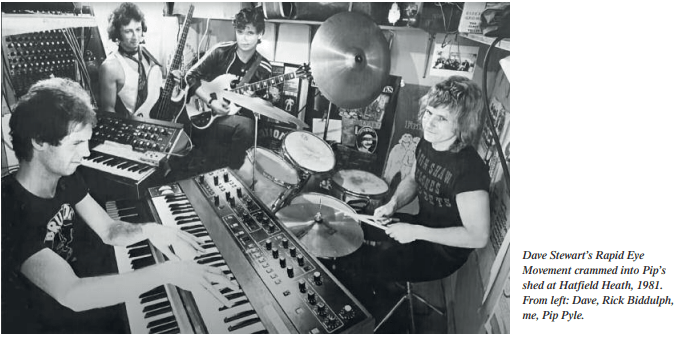

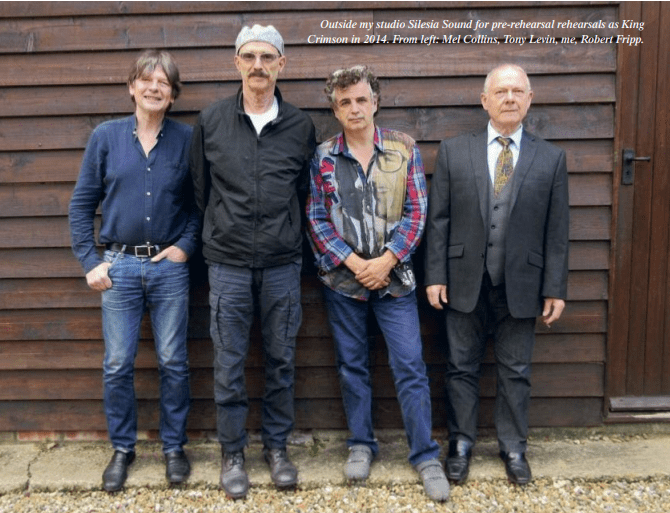

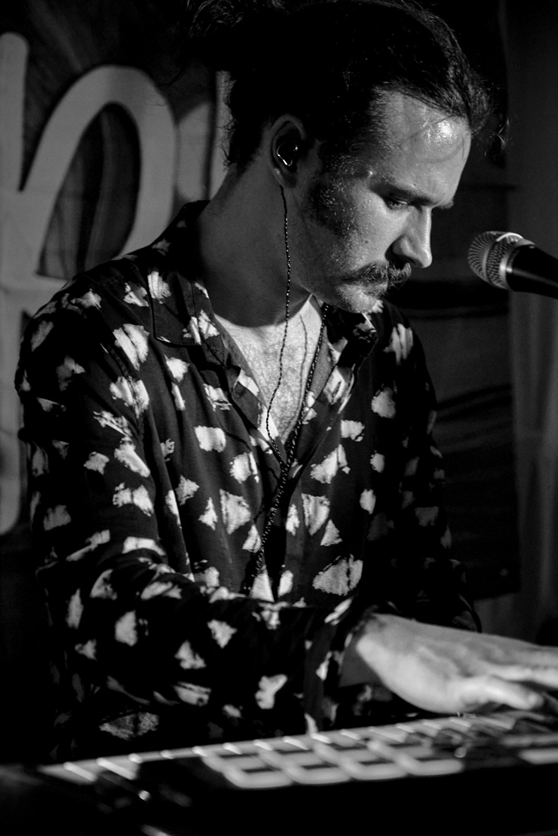
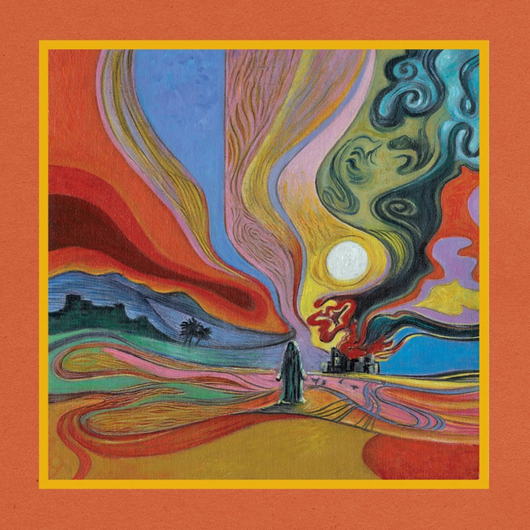
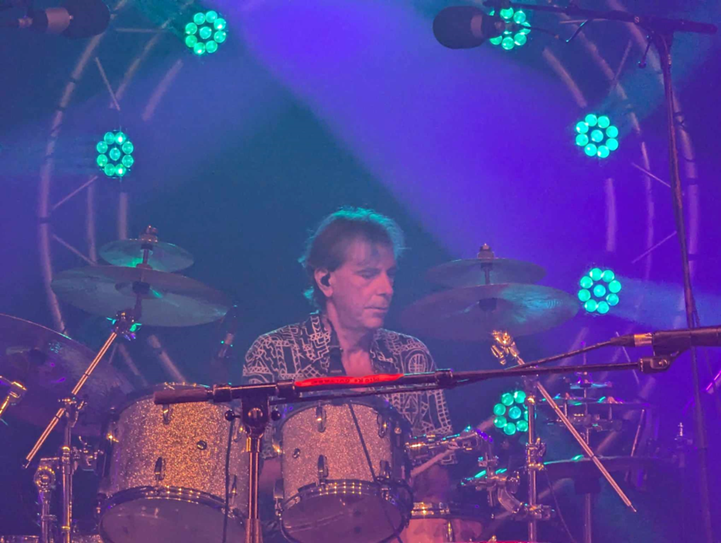
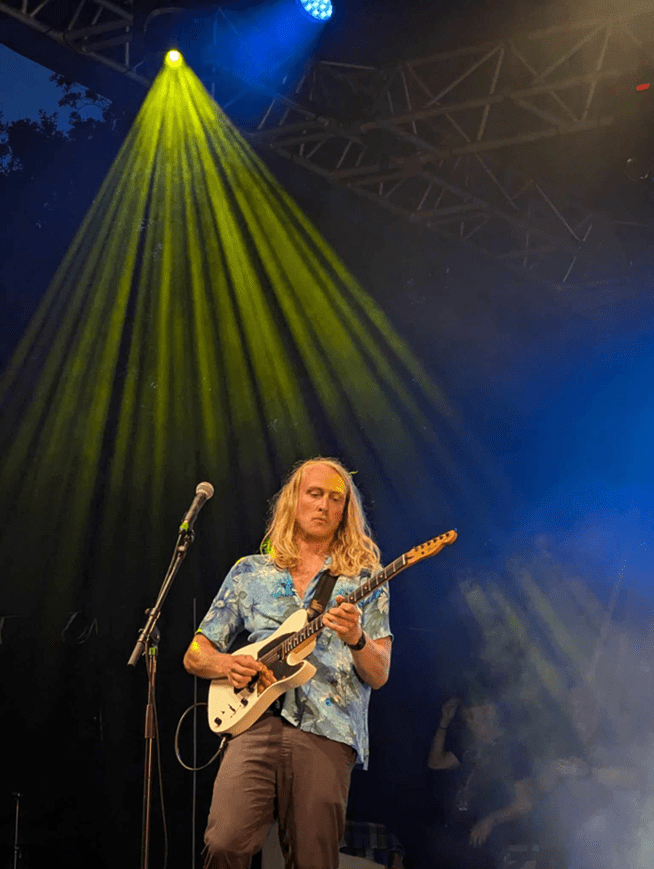
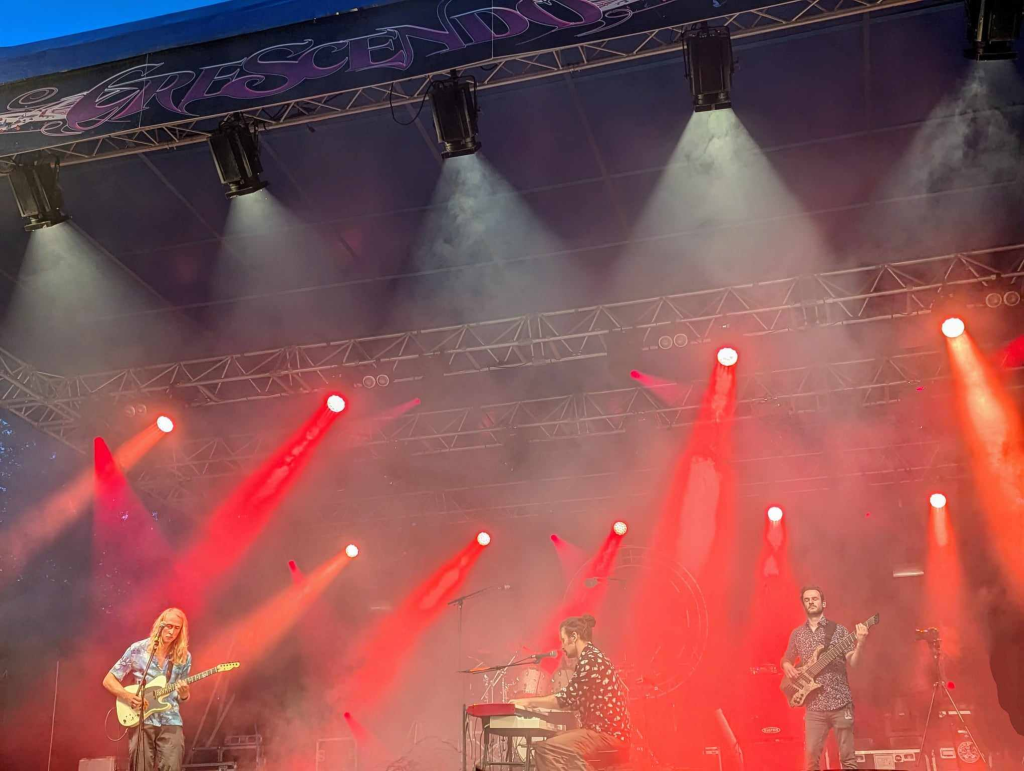
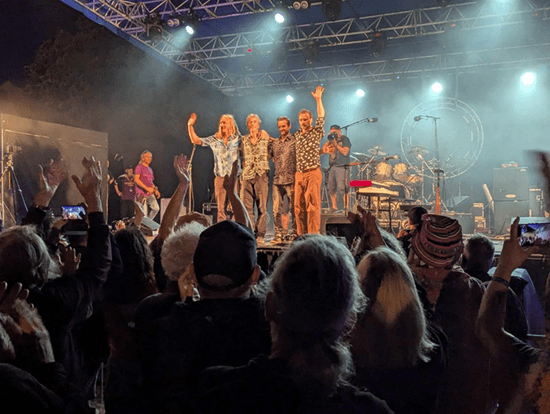
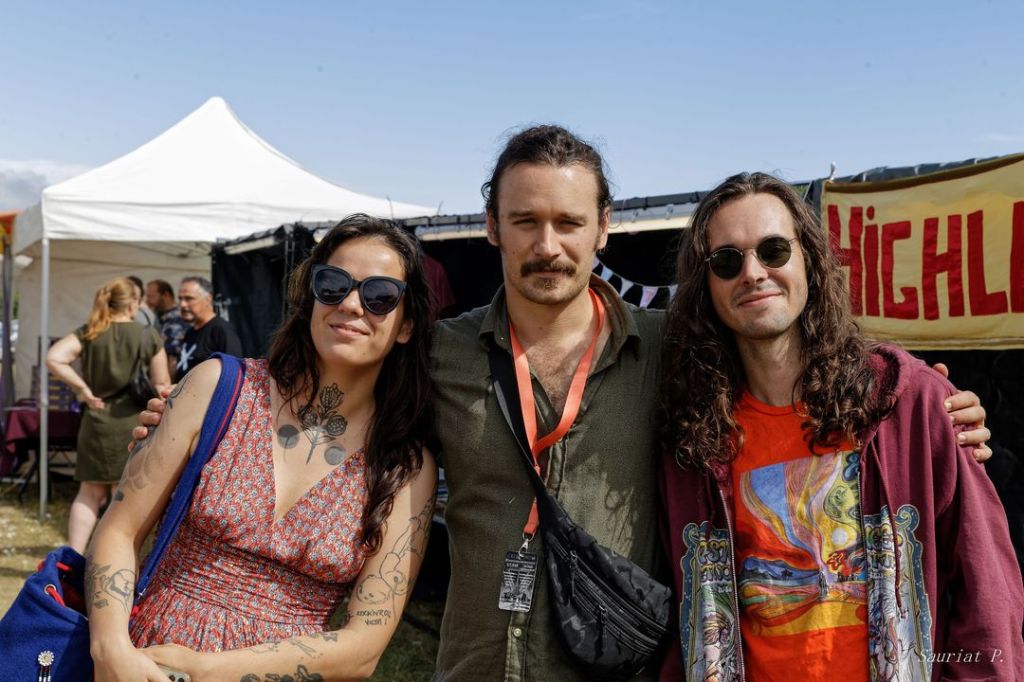
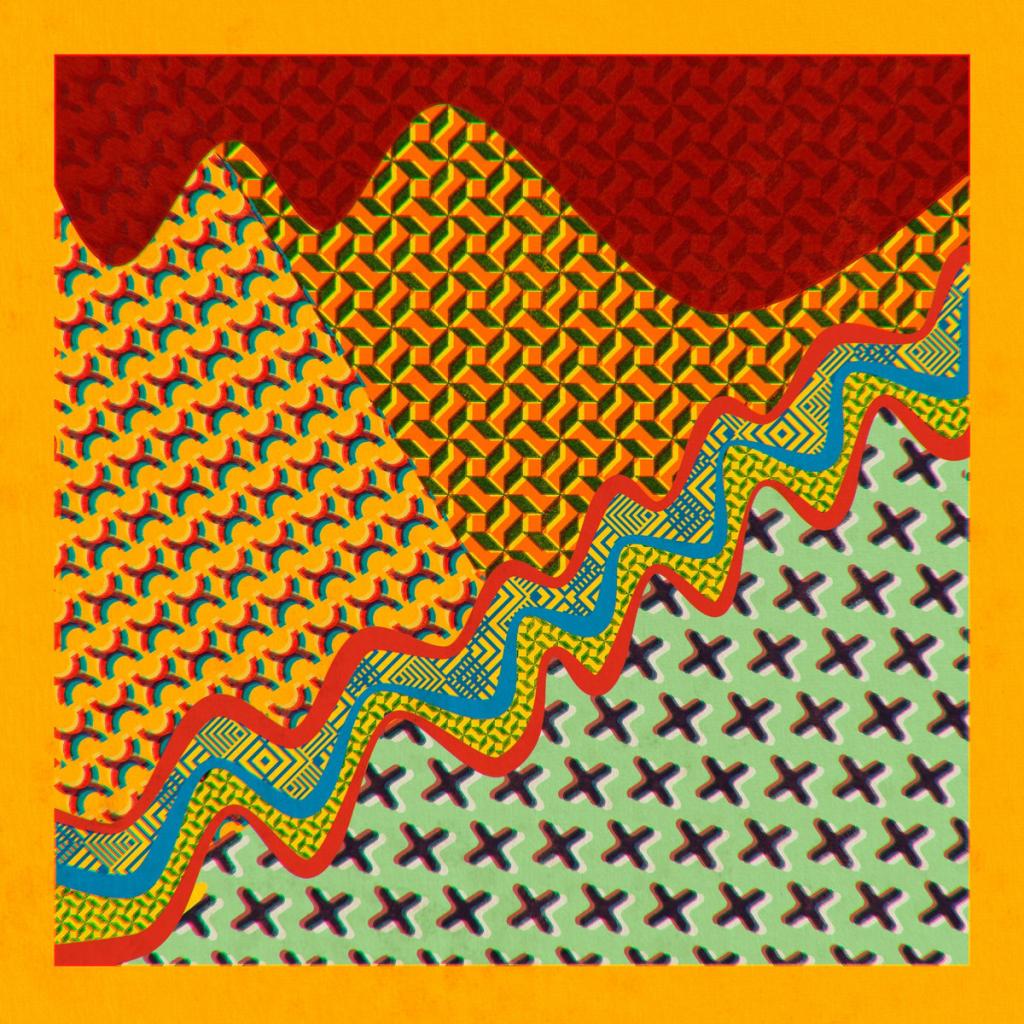
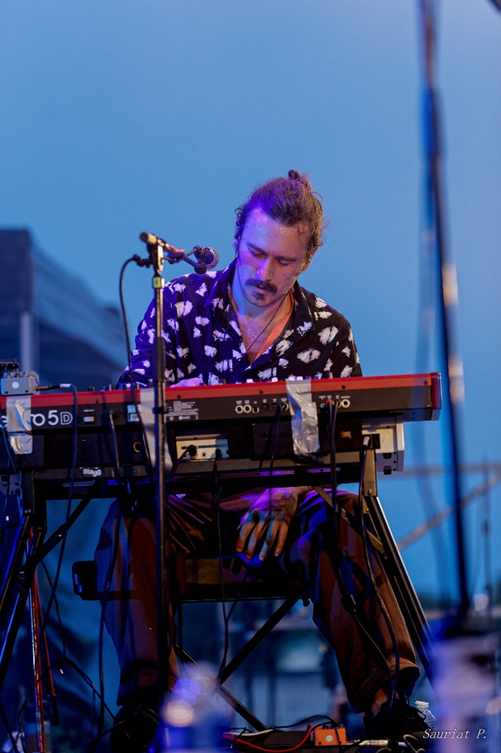
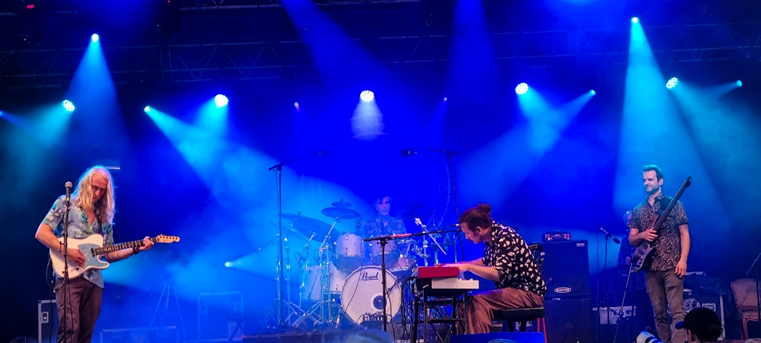
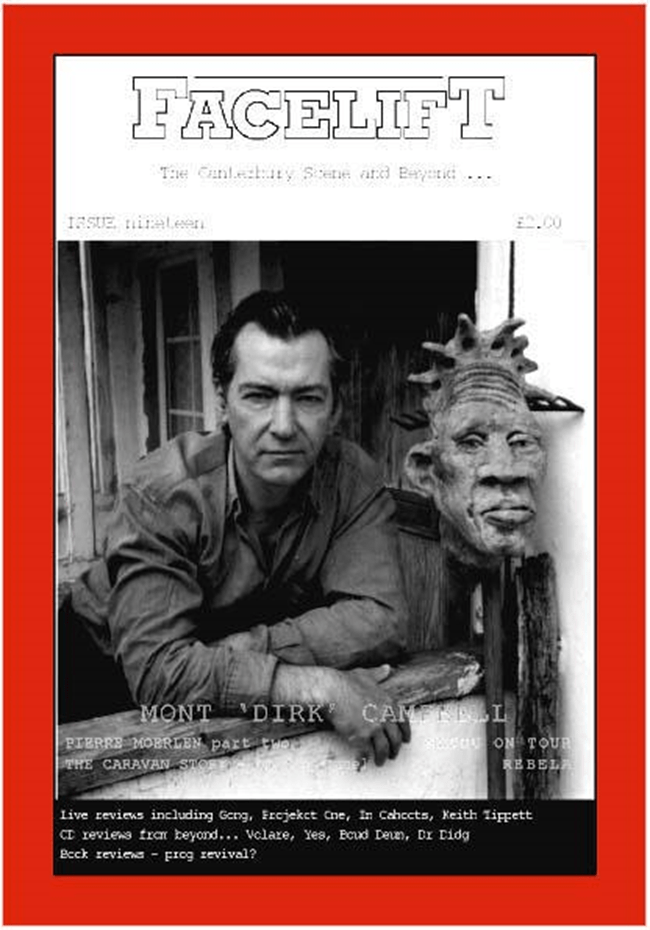
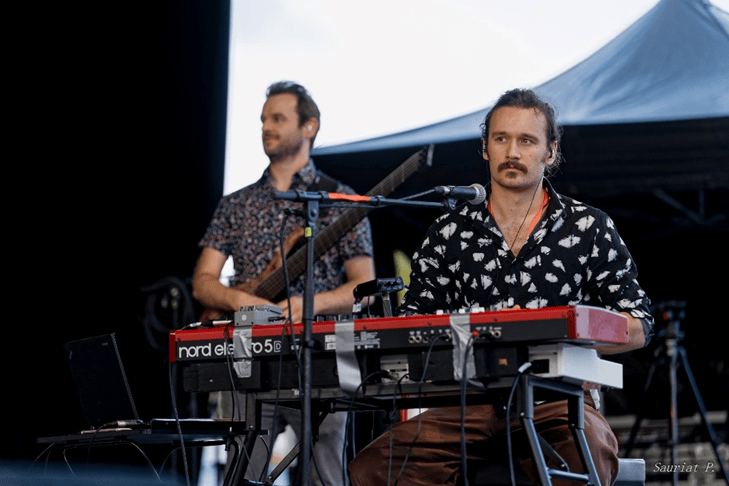
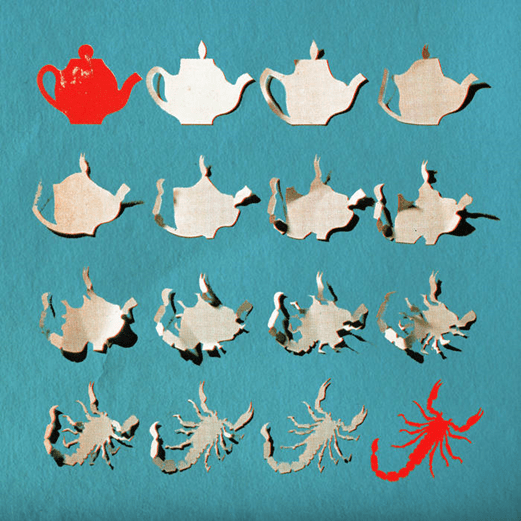
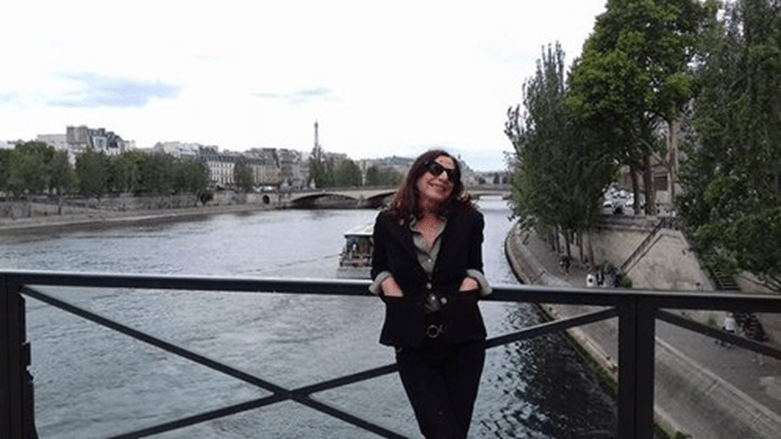

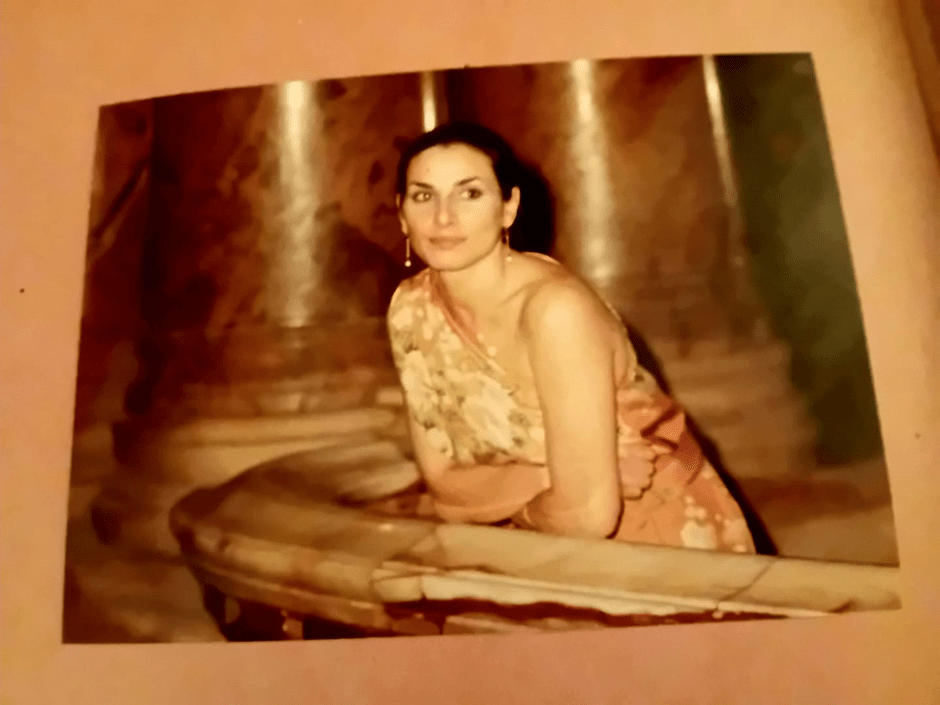


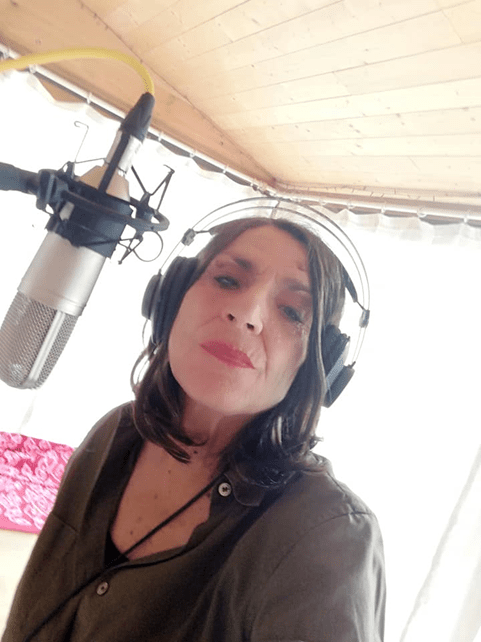
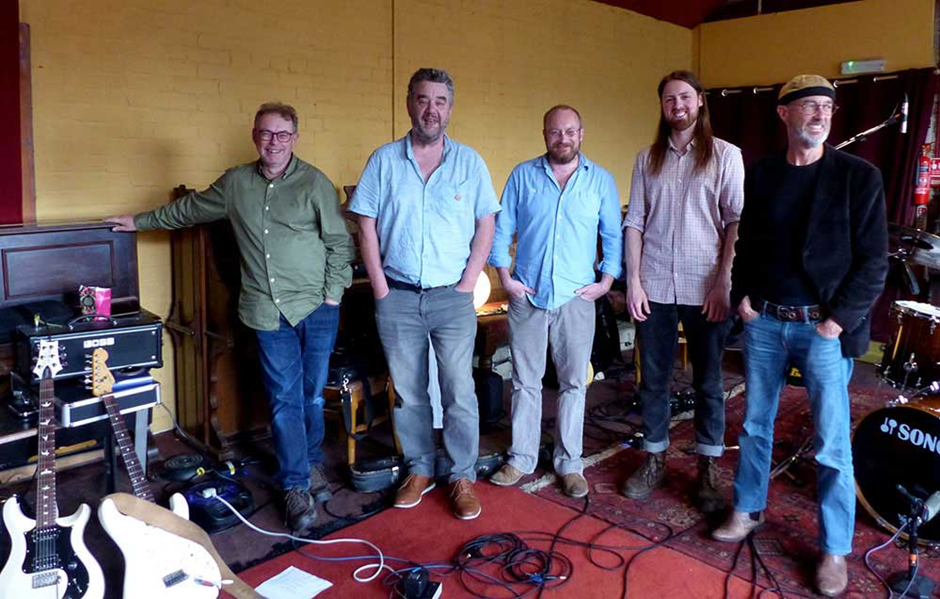
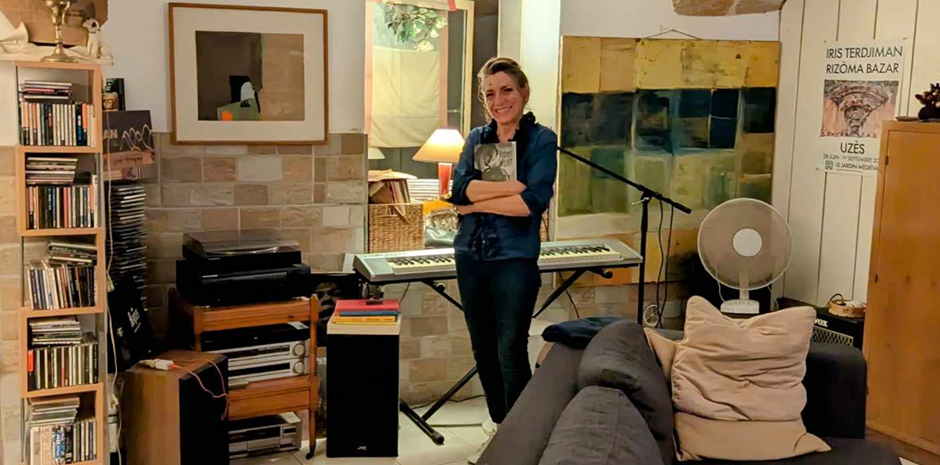

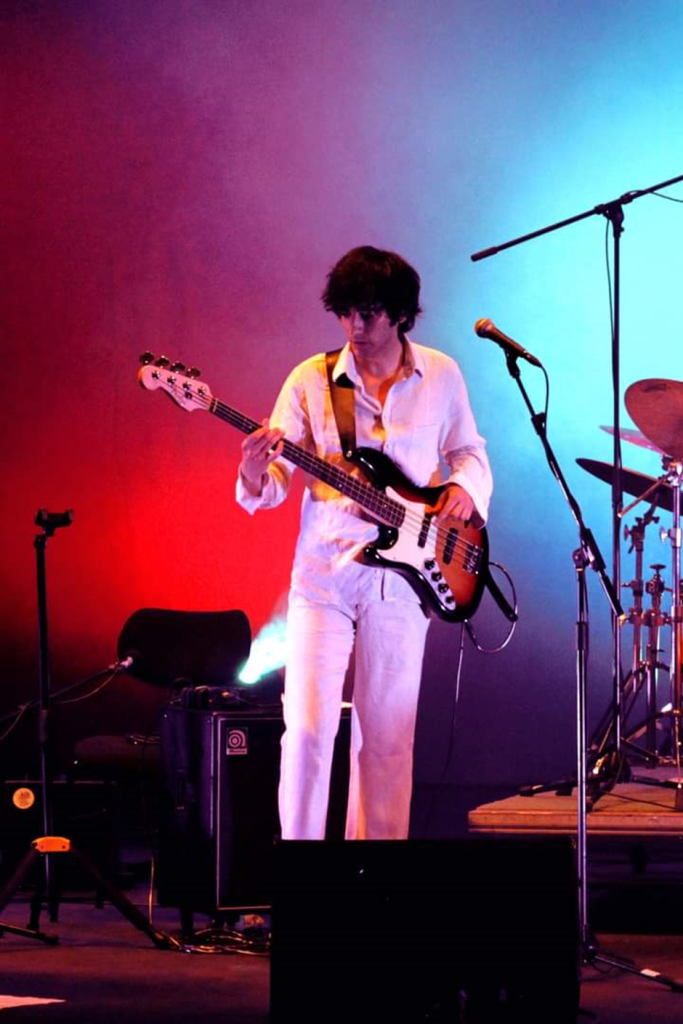
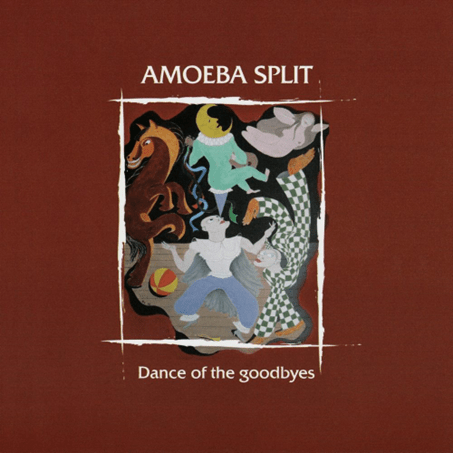
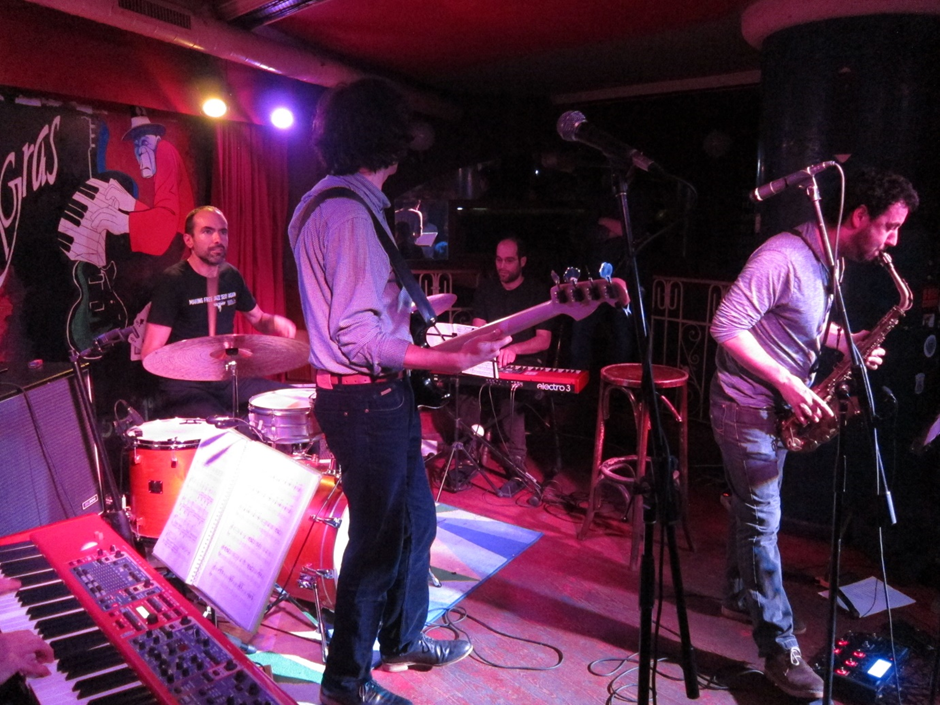


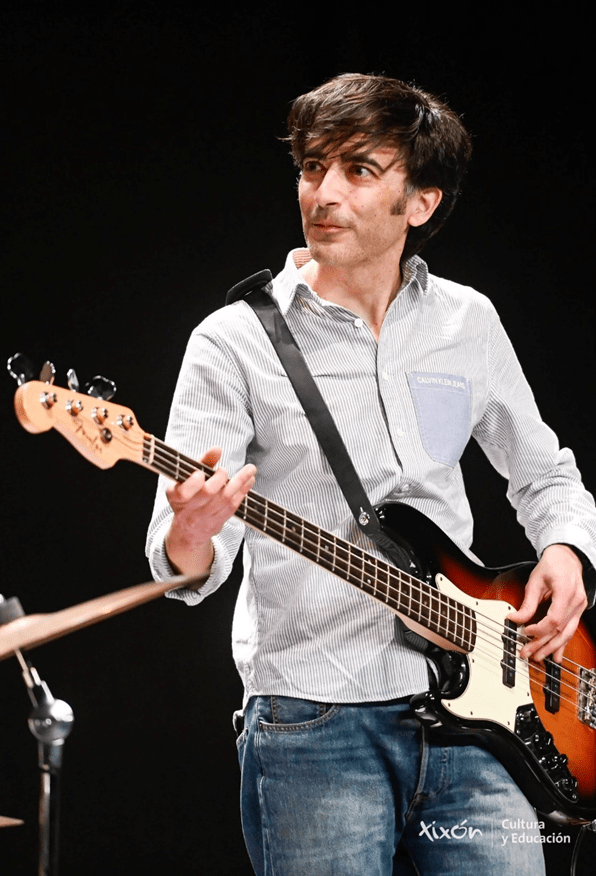


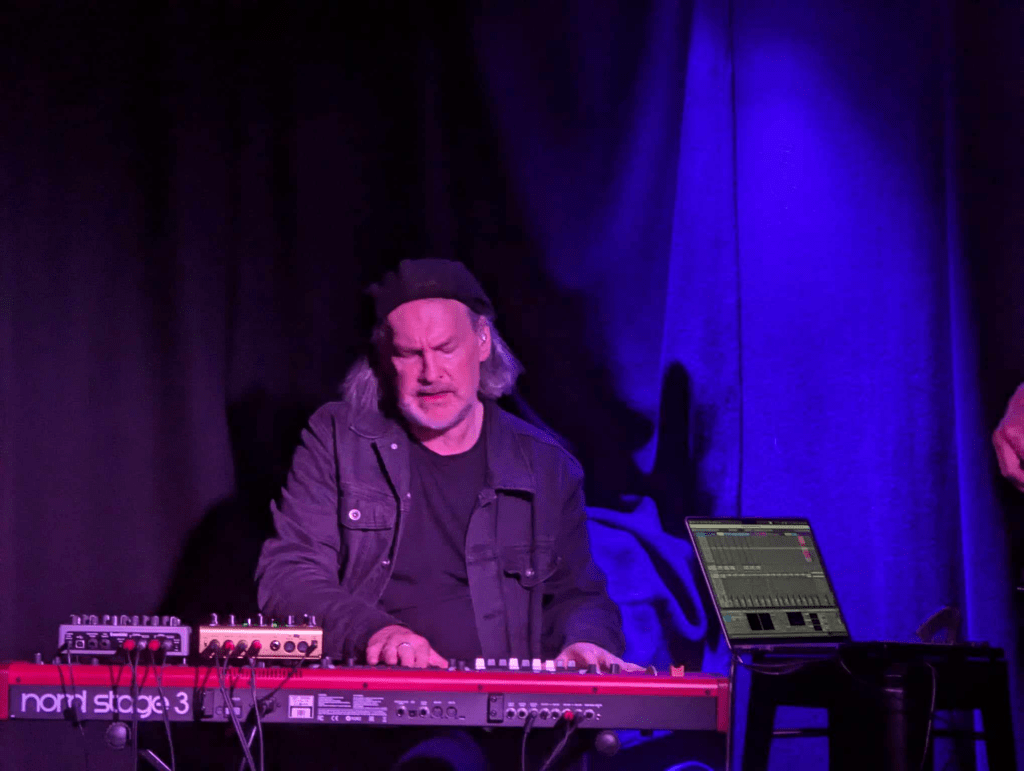
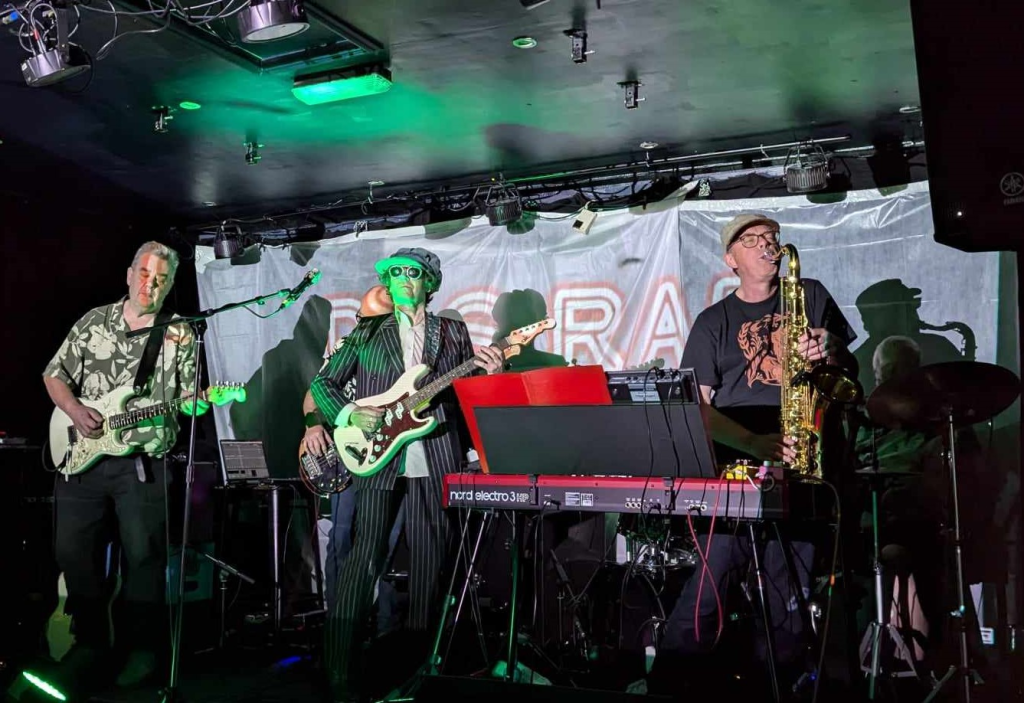
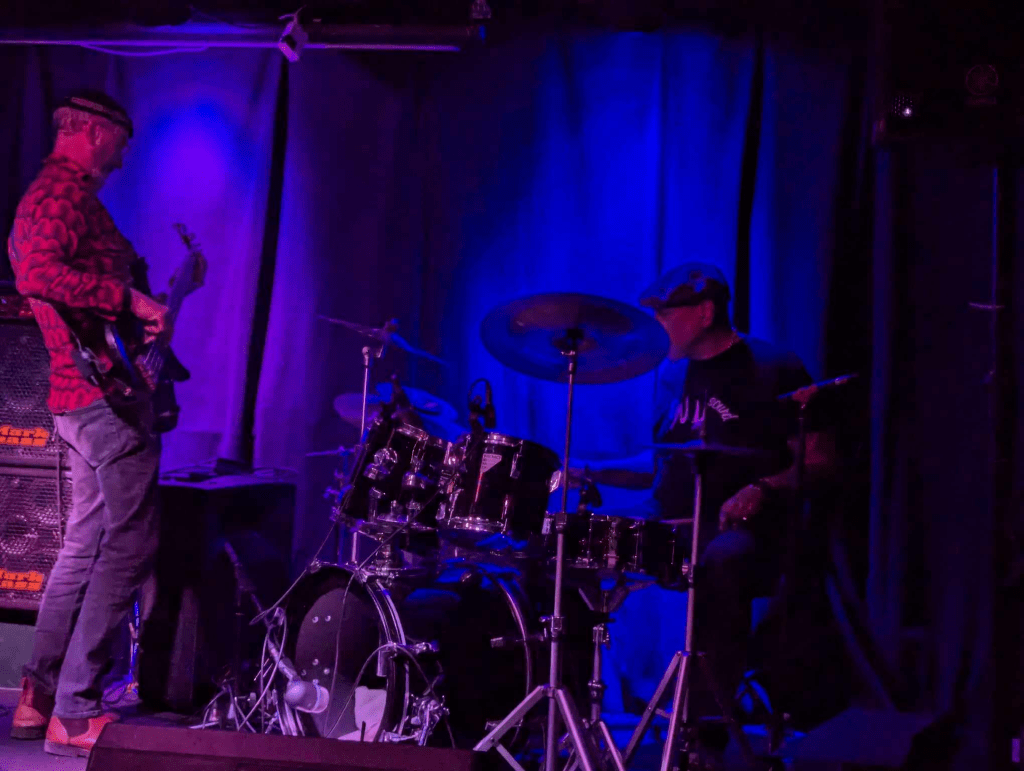
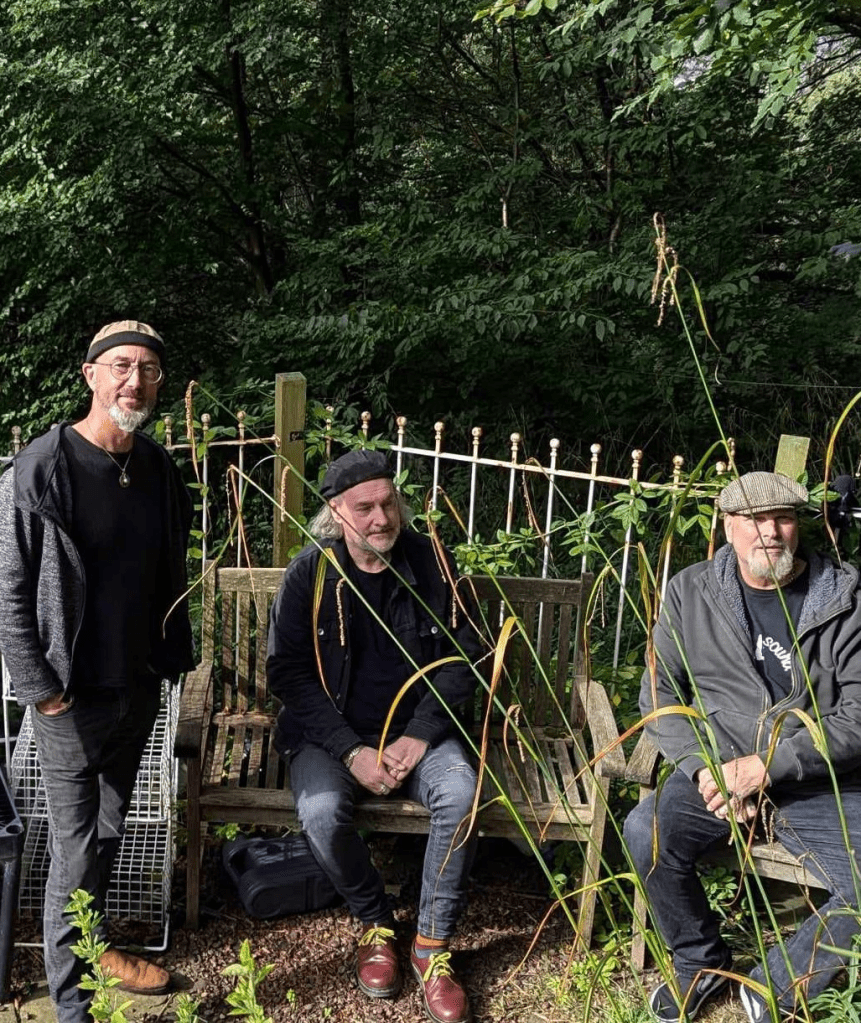
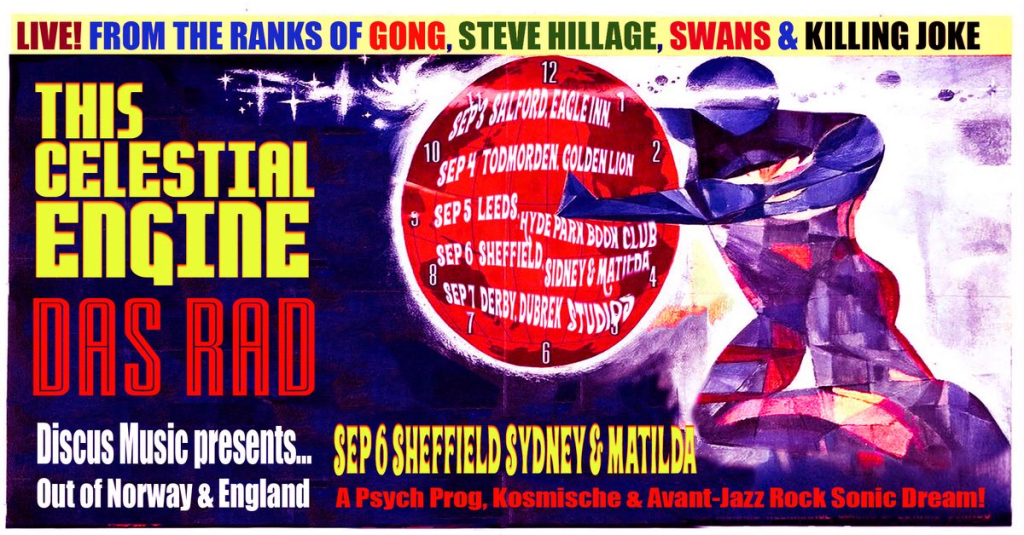
 The Canterbury scene(zine) continued....