
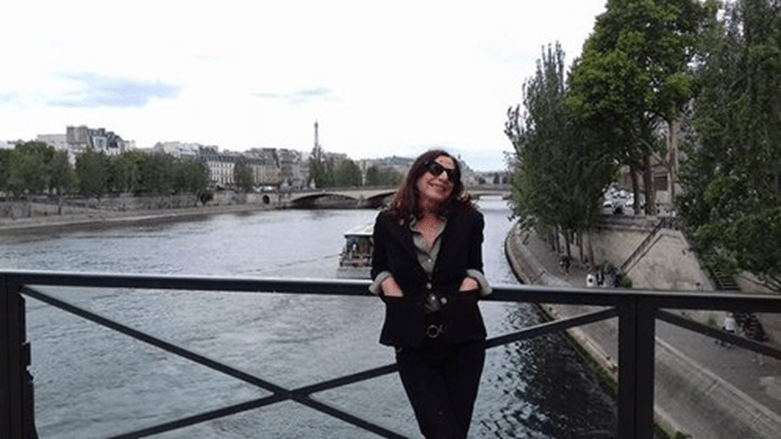
When I contacted Carla Diratz, singer with Precis Aimant, The Archers of Sorrow, The Electric Suite and of course the wonderful Diratz project itself, about my wish to speak to her as part of the ‘Canterbury 2.0’ project, interviewing a number of international musicians who have claimed (or had thrust up on them) a Canterbury scene influence, her response was this…
“Please keep in mind that I had no intention of being considered a Canterburian singer…, which I am pretty sure I am not!”
… accompanied by a winking emoji. And yet here we are a few months later, courtesy of a unscheduled visit to her current hometown, Uzès in the Gard region of France where we shared dinner and wine, followed by a precious two hours of interview time in a nearby cafe. Her work alongside Dave Newhouse of the Muffins (most notably with their collaboration on a project named, appropriately enough, Diratz), and latterly Martin Archer of Discus Music (with The Archers of Sorrow) is what might have brought her to Facelift readers’ attention, but this is only really scratching the surface of her story.
I think I first became aware of Carla Diratz some time in 2017 through her knowledgeable posts on a variety of Canterbury-related Facebook groups. Did I know she was a musician at this point? I’m not sure, but from this time began my exposure to a trickle of music which was always startling. Carla’s voice is her extraordinary calling card, a gravelled, raw, emotive statement where word-perfect English lyrics (Carla teaches English), delivered in heavily accented Parisian blues exclamations, enriches a number of deeply varied projects, from the stark duo of The Electric Suite, to the exploratory electronica of Baikal, via the alternately progressive and blues-based excusions of The Archers of Sorrow to the clean or improvised sounds of Diratz. We didn’t get to talk about all of these projects but what follows should be a helpful introduction to her musical world….
I first asked Carla about her initial exposure to music:
CD: The first concert I attended as a kid, I was 14 and a half, was Otis Redding in Paris. Did it have an influence? (she laughs) I think so, I think it did!
I was absolutely crazy about it. All those years I’m living in Paris, I’m like 14/15 and I’m getting two things in my ears all the time, the whole thing from Motown and Stax from the States, and the Kinks and the Animals and Spencer Davis group from you guys (in the UK).
I guess my first influence, the music that really made the difference to me was probably Renaissance, the band. At the same time I was listening to Taste (with Rory Gallagher), it was the two things I was into when I was like 17/18. I bought their LPs on the same day in a shop in the Champs Elysée.
And then I went to California (in 1970) and the first concert I attended at The Forum in LA was Led Zeppelin. 50-60000 people, which was very different from France or Europe. It was really fantastic – with John Bonham on drums.
I went to California because I wanted to explore, and so I ended up as a kind of au pair and I spent lots of time on the beach smoking joints and going to concerts. One day, John Mayall (who had just died when we spoke) was playing next to me on the beach.
So was Carla born into a musical family, then?
Not really. My father was a photographer for French TV in Paris. And so he took us, my mom and I, to many things to watch when he was working. So by the age of like 10 I had already seen on stage Edith Piaf, Jacques Brel, everybody, and my mom spoke seven languages fluently. (My family) is Armenian (we talked for a while about our mutual love of Didier Malherbe’s playing of the dudouk, the native Armenian wind instrument which is fashioned from apricot wood), from Turkey and my grandfather (Etienne Diratz) was some kind of a diplomat or something in Constantinople on my mother’s side. So she said she spoke ONLY seven because my grandfather spoke 14! So I was brought into a very open culture with all kinds of different people and artists and writers and plumbers (?) and all kind of people. My parents are fantastic, I want the same ones next time! They were extremely modern – if there would be one word for them, even though they were very different, it’s ‘modernity’. My parents were modernity – they didn’t play it, they didn’t want to be it, they WERE modern people even though they were they were old, they were already 43 when I was born, which at the time was rare.
So how does an attachment to the Canterbury scene fall into this? Carla relates the story of how she first heard Soft Machine’s ‘Third’.
I think I had heard of Soft Machine in my Parisian years like 68/69 through some friends who knew somebody who knew Gong….
But the first time (I heard ‘Third’) it changed my life, it was a night in Germany in an apartment and I hear something coming from the room next door to the kitchen, and I’m getting up and I’m going and I just can’t leave the place and I’m just like: there is everything, there is absolutely everything in there, like a music that talks to the mind, definitely, the body, definitely and the soul or something, and I just LOVE it and I just love Mike Ratledge, I love him, I want to meet him, bring him to me!
I finally saw them on stage but not with Robert, with Phil Howard in the autumn of 71 in Frankfurt – great great great concert and I loved Hugh playing like (she apes his angular bass playing style) – these first notes (sings bass line of ‘Slightly All The Time’) – I know everything by heart, I know all this music by heart and my daughter does too now, because she was raised with that!

However, since Carla had no musical lessons as a child, I was curious as to how her musicality, and her singing emerged.
(It’s) probably because I was dancing a lot when I was 14/15 to all the music I mentioned: Motown, Stax, and the English music. I was dancing a lot and when you dance you automatically sing what you’re dancing. That’s why I’m a singer, if I am a singer which I’m not even 100% sure I am! Would I call myself a singer or a vocalist? Maybe vocalist is better…
So how did this first manifest itself in terms of performing?
I went back to Germany in 75 (Carla had lived there for a while in 1972) for some reason and I met an American guy, Jerry Rubin, who was playing in a club in Germany and I’m going ‘oh you must be Californian? Of course he was and we started living together, actually we stayed together for 3 years on the road, touring, busking and playing in clubs and once he said ‘maybe you could sing with me, if you like’, and I’m going ‘sure why not’, and that’s how it began… It was folk – Californian folk songs he wrote, and Neil Young numbers. On that day when we met we realised we had been at the same concert in LA in 71 – they were sitting behind us and we had smoked their joints all night and we recognised each other because of specific reasons.
But aside from an ad hoc role with German band Vom Mal in the Seventies (I kind of “managed” them by accident … and would play some bass or keys when at home in the huge house we all lived in near Paris. I was not playing with them … just having fun trying stuff…), her first real excursion into music per se was with a project called Change, a perfect (and accessible) vehicle for Carla’s blues voice.
My first band was Change in 78. We recorded but it came to nothing. It’s only a cassette with four or five tracks – 2 are on YouTube. It’s been heard thousands of times. It’s really good, it’s really good, I love it I and that’s the point.
We had such a good time, we did a concert in Paris in a place near Place Clichy and through some total mystery the room was full and there were people waiting outside, we couldn’t get in and we did six encores!
A delving on Carla’s Youtube channel (compiled by daughter Iris) shows a surprising depth of material preserved in one format or another through the late Seventies to the early Noughties as the Diratz voice bent itself to the requirements of the blues, new wave, acid jazz and electronica. Many projects were low key and probably caused few commercial ripples, all are nonetheless ‘out there’ and almost all are uncompromising vehicles for the Diratz talent. There is an extraordinary TV performance with punkish outfit Triac, https://www.youtube.com/watch?v=1DU_d_lt0M0 contrasting with the relatively mellow grooves of a track called ‘Angel’ with guitarist Remi Bernard and flautist Mary Cherney; or the laid back ‘Honey’
Elsewhere there are remnants of a tape recorded with guitarist Armand Miralles under the name Charnel – abrasive and punky fare which Carla describes as ‘Rock Indus Experimental (by and large…). Armand was a former member of a French Experimental (prog) band called Heratius with Robert Diaz’
There are also undocumented projects such as Strave with master drummer Serge Bringolf (who may be familiar to readers of these pages as being the only other musician used on the ‘Somewhere in France’ sessions in November 1983 recorded by Richard Sinclair and Hugh Hopper). Carla describes Strave as ‘Zeuhl style, heavy drumming and vocals, flute and brass, bass, guitar … If Magma-Vander had not existed Bringolf could have been the guy …’ And as I write this, Carla has just sent through an extraordinary improvised piece from 2012 under the umbrella title of the Art Ensemble of Belleville. All of these videos will be found at the Youtube channel linked at the end of this piece.
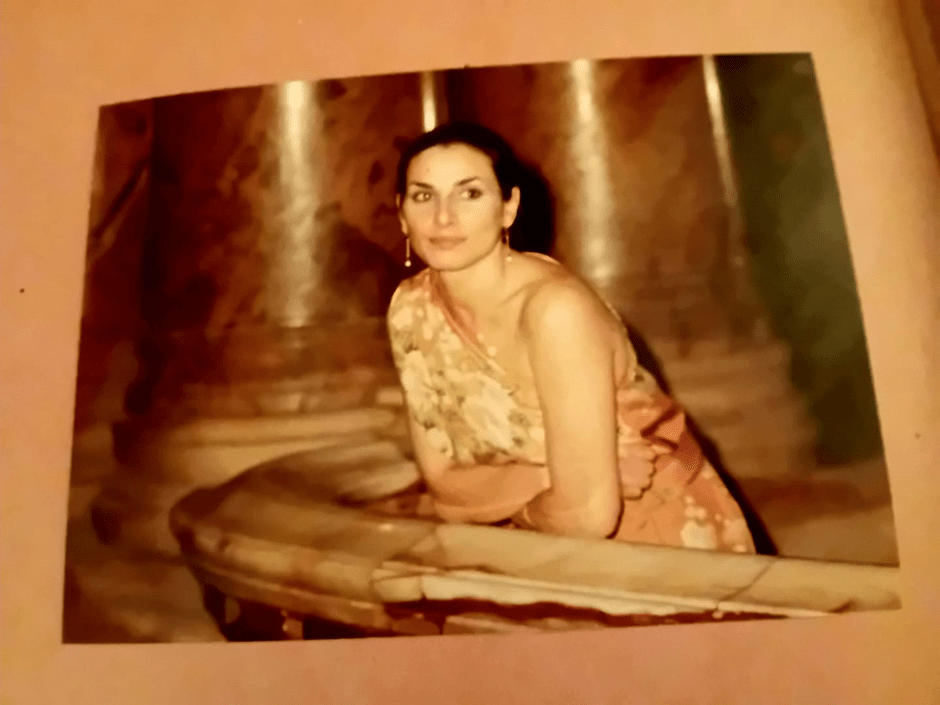
There were also other commissions unconnected to music, including a notable assignment in the world of advertising, rubbing shoulders with Sophia Loren: in 1980 I was for real sitting next to her for a commercial at the Opera House in Paris (for Lux soap)…but soon after the shooting, for some reason, she broke the contract … so the commercial was never shown.” The picture of Carla at that shoot, however, survives…
Carla admitted that in more recent times perhaps her favourite project was with Corentin Coupe, the musician with whom she recorded ‘The Electric Suite’, an extraordinary mini-album whose only components are her stark, imploring voice shown in its sharpest relief, and Corentin’s enveloping bass accompaniment. The duo describe the resultant set of songs as ‘post-rock’, but that barely does it justice – imagine an anguished campfire session with electric bass chords rather than acoustic guitar providing the backdrop. An excellent representation of the duo is here:
I talked with him yesterday. We’re very close – a very good pal. He lives about 2 hours away from here. The Electric Suite became No White of Moon (the name of one of the tracks on the mini album) because we added a guitar player and a drummer, but it was the compositions, or way of thinking (which made it special) because it was becoming really good, people wanted us, but in 2014 that band I loved so much, No White of Moon ended up disbanded because one of the guys was a teacher for an elementary school and didn’t want to lose his job, didn’t want to take vacations (she thumps table in frustration). I love that guy but I’m still mad at him because it was my favourite band of all times, No White of Moon, I still miss it. We were playing the exact sound I wanted to hear, the exact sound….
Indirectly, however, this break up led to a key moment in Carla’s history in recent years, a connection with Dave Newhouse of the American Canterbury/RIO band the Muffins
One day as I was trying to digest this, I made a post, posting an old live thing of No White Of Moon and I saw myself write ‘my EX beloved band’ because I always wrote ‘my beloved band’, when I posted something about that band on Facebook and that day instead of writing as usual ‘my beloved band’ I wrote ‘my ex beloved band’ – two letters…
Immediately I received a message from Dave Newhouse, whom I had never talked with. And he said, ‘oh I’m so sorry Carla, I love that band’ and I’m going ‘yeah, I’m feeling so bad’ and we had a small exchange and then 10 minutes later he said ‘would you sing on my next record?’, and I immediately said yes. I was crying my heart out, and then he sent me the music and I recorded it in Paris – it was a piece called ‘A Bout du Souffle’ (a striking introduction to the band’s work, with hip hop drum rhythms, Newhouse’s simply doomy keyboard motif and Bret Hart’s strident guitar and Newhouse’s reeds cutting sharply across it).
It was the first time of my life I recorded something for somebody on the other side of world. He loved it so much. He said ‘I’m crying, it’s so beautiful, would you do another one?’, and then another one, then a fourth one and when we got to the fifth I think he said ‘okay Carla I think we’re going to be making a whole record together!’
Rightly so, perhaps, the music of Diratz is for me the best representation of Carla’s work as well as the most Canterburyesque. In the Facelift review at the time I wrote that Carla’s voice: ‘a deep, sonorous expression of raw emotion, would be statement enough in isolation…’, but it was an apparent chemistry with Newhouse’s stripped down keyboards in particular (other tracks teamed her more directly and freely with guitarist Bret Hart) which were most startling.
One of the standout tracks on the Diratz album was ‘Bataclan’, a paean to the gig goers who were subject to a mass shooting at the Parisian venue of the same name in 2015.
Dave said ‘I want you to know I wrote (the music to ‘Bataclan’) on the night it happened’. He sent it to me and I said ‘listen Dave I want to do it, I want to write some lyrics and I want to sing it because I think it’s going to help me heal’. 2015 was shit (for me) – it was the end of my of my band in Montpellier, and then there was Charlie Hebdo and Bataclan, not far from where I lived and when he said ‘yes please be my guest’ I wrote the lyrics and then I sang it and then Mark (Stanley) did that beautiful guitar. I felt very disturbed and still do (about the Bataclan atrocities)… the killing on that night occurred not far from the area where both my daughter and I lived (in Paris North East).

And so we got into Diratz. At the time it was not called Diratz – it was just the record I was making with Dave and Bret (Hart) and then one day Dave asked me would you mind if we called that record Diratz. ‘Would I mind?!!!!’ I thought of my mom immediately because it was my mom’s maiden name so I thought of her, I was really proud of that name and I was very touched naturally, and he said because I really love that word, that’s why….
And then when we we’re finishing the record and Jaki (Liebzeit) died. Bret knew how much I loved Can and Jaki, and sent me some music and said – ‘I just did that now and there are no drums on it’, which is the clever thing to do. So immediately, on the same night he died, I was able to write my feelings about that loss – it’s huge for me, just like it had been with Kevin Ayers, just like it had been with Daevid Allen. I mean there are some people that you just don’t want them to die – that’s it, period, and Jaki was among them. So that’s why we finished up that record with ‘Song for Jaki’.
A few months later, partly because of the very positive reaction Diratz had generated, Carla found herself returning to the States.
It was my idea – there were personal reasons, let’s say, but I felt it’d be good for me to go back to the States for a little bit and meet these guys I made that beautiful record with. Dave found a gig because he has a connection with Orion Studios and then we decided to go to see Bret in North Carolina, so we did the road trip together – we were scatting or whistling the whole ‘Third’ album, but Bret didn’t find any gigs so I just went there for one gig.
Even if a more extensive tour didn’t materialise on this particular trip, there was an unexpected bonus:
I recorded a whole record with Mark Stanley! (Stanley was an additional guitarist on the Diratz album, contributing some of the album’s most memorable moments). I went to his house to stay with him and every day we did two or three songs per day – crazy!
For this album, ‘Double Dreaming’ Carla identifies taking a full involvement in the composition process, located as she was in situ as the pieces took shape, and her contribution is apparent: this is a diverse set of pieces where Stanley provides a range of instrumentation including backbeats both real and automated, electric and acoustic guitars, synth and piano. The title track, with its reverbed guitar, recalls the Durutti Column’s ‘Never Known’, there are two lofi pieces to conclude the album featuring piano and voice, the first of which almost conjure up images of Keith Tippett, and Carla cements her position as a noted polyglot with the beautiful Spanish guitar-backed ‘Ather Kinder’ (in German). The album is still available direct from Mark (links at the bottom of the article)
Personal tensions within the Diratz project meant that a second Diratz album sadly did not materialise, but Carla has continued to contribute to other Dave Newhouse-related projects under the umbrella title of Manna Mirage (the spoken word piece ‘Alchemist In the Parlour’ on is set primarily against Newhouse’s bass clarinet, whilst Newhouse describes ‘World Song’ from ‘Man Out Of Time’ as a lost track from a potential second Diratz album, its subject being the emergence from pandemic isolation). Whilst Carla is typically self-effacing about the obvious musical bond between her and Newhouse, she does acknowledge his importance in her subsequent musical pathway…
I love it. And all that happened afterwards for me in terms of recordings, it’s all because of him. If there hadn’t been Diratz there wouldn’t be any of this. So every time I get great compliments for what I do I always say thanks Dave Newhouse – I owe him a lot!
Carla’s attitude towards her stunning work with Diratz, it would appear, is symptomatic of how she sees her work generally. Perhaps the one moment of tension in our interview was when I challenged her apparent reluctance to accept her own defining role within music she has contributed to. The prevailing narrative (which I believe goes beyond mere modesty) is that her musical career has been a series of coincidences, an accident almost…
I am a person with absolutely no ambition – ever. I know it’s hard to believe. What I mean is I know nothing about music – I don’t read, I can try music but I know nothing – when I hear people talk about you sevenths or thirds, I have no idea what that is, and maybe I don’t want to know!
I’m like a sponge, I have no preconceptions of anything, I just like it, I’m happy I like it and (my general attitude is ) what am I going to do on that? It’s so exciting, for example the work that I did with Guy Segers (the Univers Zero bassist whose multi-collaborative project The Eclectic Maybe Band has called upon Carla a couple of times for vocal contributions). I love it very much the album, ‘Reflections in a Moebius Ring Mirror’, I sing a lot on that track on that one a lot and I really enjoyed it – there is a long piece called ‘Spreading An Invisible Stream’. (available at https://discusmusic.bandcamp.com/album/reflection-in-a-moebius-ring-mirror-83cd-2019)
I asked Carla if she could truly divorce herself from her own contributions to projects such as Diratz and the Archers of Sorrow, given that she had been sought out, given free rein to add her own songlines and lyrics, and she explained the process.
It’s not me writing that music. I do nothing. I write lyrics. I receive the music whatever it might be. This was the case with Diratz. The only exceptions might be these: ‘Precis Aimant’, I did with Pascal Vaucel in Paris, and the album I did with Mark Stanley in Maryland.
With Dave (Newhouse) or Bret (Hart) or Martin (Archer) they send the music to me and then I write the vocals in my sitting room, I’m adapting my voice and my singing to the music. The sound is not my choice of music. I love it, so it’s okay and I have no problem adapting. With recordings I rehearse at home, I get used to the lyrics, the music and then I’m writing down: where do I start, where do I stop, where do I leave that, because the musicians need to have the space to play. And then usually in the recording session it’s so easy, it goes so fast, I’m the one that’s surprised. I don’t have to be thinking I could maybe be doing better than this, because it’s not a question of better or bad or worse – I don’t know what the question is! It fits, it’s in the moment, and it sounds right, you know when it’s right.
I try to be a professional – if I’m going to be doing this on Tuesday from such time to such time then in the meantime, from the moment I decide to do that on a particular day I’m kind of boiling already, and I can’t wait to be there with the earphones, my pen and my little book and that’s my favourite part – really it is.
The Precis Aimant project with French guitarist Pascal Vaucel, which took place in 2019, was another duo project whose minimalism exposes the Diratz voice in sufficient silhouette: Vaucel adds a range of instrumentation ranging from steady drumbeats to wild guitar soloing, which I described at the time as flitting between ‘brutal or eloquent… adding enough additional layers with drum tracks and bottom heavy treatments to make this album sound like the work of a band’. But it also surprisingly, in the one track to deviate from jointly performed works, continued a deep love of the work of Robert Wyatt, captured in an unique rendition of ‘Sea Song’. Her connection with Robert, as she told me, had manifested itself already many years earlier.
I met him in ‘75 in Paris when he played with Henry Cow at the Champs Elysee. On stage there was Robert in the wheelchair … and Dagmar. Oh my god, what a concert that was! I was at that fantastic concert and then I don’t know how (I never know how! things just happen in my life!) But suddenly I was backstage at the Theatre de Champs Elysée, the backstage being a little patio, and Robert Wyatt is there, so, being a Soft Machine fan, what do you do? What did I do? I went down on the ground to be at the same height – I sat down on my knees and he’s just there, you know Robert and I just remember taking his both hands, and kissing them – poor Robert! And I’m just going ‘oh man I love you so much – I mean thank you so much’ and probably crying like I’m doing now, and he’s probably a bit confused and wondering ‘who’s that girl?’!
By 2015 I had made good friends on Facebook who was very close to Robert at that time – her name is Andrea Gotskind Hamad. When I was going to join up with Diratz, we met in person in Baltimore for the concert at Orion, March 2018. She suggested we do a cover of ‘Sea Song’, she thought I could do that very well, and Robert had liked our record “DIRATZ” she had sent him … But neither Dave Newhouse or I felt like doing it … it seemed a lot of work for a result that might not be as good as it deserved …
Later on that year when in Paris with Pascal Vaucel, we planned on making a record together, the idea rose again mainly because Andrea during my stay in the US had talked to me again and again about it, she really insisted… (bless her !).

The funny thing is Pascal did not know that song … but he sure knew how to make an arrangement that I felt very comfortable with and there we were! … I think it worked right away… one take ! And Andrea loved it and sent it to Robert who replied to her : “Andrea it’s amazing ! Please thank them for their originality AND conscientiousness – so tricky, that, getting it right and making it your own at the same time “. I wrote at the time: ‘Tackling a piece which is almost the holy grail of Canterbury tracks is courageous in itself… the Diratz/Vaucel version is less diplomatic: gravel voice and heartfelt delivery chill the bones a little, and the scatted coda, which for me in its original form is perhaps the most beautiful two minutes in musical history, is here performed with a hint of menace. It is the most unique re-interpretation to date’.
Also, when Andrea sent the Diratz record to Robert she told him ‘you know, she’s that girl who kissed your hands at the Champs Elysee!’ And then she wrote to me she says ‘okay don’t worry he doesn’t remember!’.
Carla has been a regular contributor to albums on the Discus Music label: The Eclectic Maybe Band and of course two albums she is co-credited for (Carla Diratz and the Archers of Sorrow). I asked Carla how this connection had come about, particularly for the Archers of Sorrow, music I described on this blog at the time as ‘testing, progressive music refusing to adhere to any known category’, whilst Discus itself places it within its growing library of ‘improg’ releases. But I also sought the thoughts of Martin Archer on the recent Discus tour in the UK as to how the project’s music had changed over its two releases, ‘The Scale’ and ‘Blue Stitches’.
Carla: Martin had some views on me a long time ago because of Diratz – he had written to me once saying ‘someday I want to make a record with you’ and then after 2 years he said, ‘okay I’m a bit slow but now I’m ready’ and that’s how we made ‘The Scale’. Martin takes up the story: ‘We would have been chatting, probably about Julie Tippetts (who also has an enduring and ongoing connection with the Discus label) and I think Carla made some complimentary remark about those albums. I enjoy working with singers probably more than anything else, so probably on Messenger I said to Carla, ‘hey why don’t we make you an album because we’ve obviously got a lot of in common in what we like’. I loved the way she was fitting into Guy Segers stuff with the Eclectic Maybe Band and I could imagine the kind of thing that we might do. Carla: we were already playing on the same tunes with Guy Segers who is also on Discus.
Martin: I started to think that the stuff that I might do for Carla was a bit abstract maybe, and it needed a bit more structure and grit in there, so I suggested to Nick Robinson (the guitarist from Das Rad) that he come in as a writing partner – that we each write half of the album. Within about three months we’d put together all the music for ‘The Scale’ with synth bass and drum machine just as placeholders, and Carla really liked that. The stuff that Nick came up with which was more conventional song based, but had quite a strong kind of Krautrock edge to it because that’s where our heads were at with Das Rad. Whereas my stuff on ‘The Scale’, those little ‘etudes’, the quite aggressive abstract stuff, I thought her vocal delivery is really going to be able to dig into that.
Just from a cost point of view, it had to be a remote relationship, I’ve never actually met Carla, we talk on the phone very occasionally, usually it’s just email and Messenger. We just started and we didn’t stop until we’d got 70 minutes of Carla music, so she was putting her vocals on and then we got Dave Sturt (of Gong) and Adam Fairclough in the studio to actually put the bass and drums on to the album last of all. Which of course you shouldn’t really do but that that’s the way around we did it.
The biggest surprise I got was that the very first thing we did – the studio (in France) hadn’t picked up on the fact that I’d sent files at 48 khz and they’d put them onto their system at 44.1 khz and it speeded the track up so everything came back faster than I’d made – but it was better!

Martin also has his own take on what Carla brings to a project, and describes her impact lucidly.
It’s the character, it’s the fact that she’s singing and her lyrics are not some kind of abstract flow, its lyrics are about being Carla and her life, from things she’s done and her experience, and I think that comes through in the gravitas of her delivery. It is a case that the words, the melodies, the vocal structure, the vocal arrangements are by her – I don’t move her stuff around – I don’t do anything to it, what she sends me is what we do. That music wouldn’t be interesting without the vocal arrangements. It’s the focal point but it’s like the background has been painted first. Imagine someone painted the Mona Lisa and someone had sent Leonardo da Vinci just the background, the trees and the river – oh that’s nice, now what am I going to put in the middle – oh, I’ll paint this woman. So that’s how important vocal performances are…
Carla: everybody was very proud of ‘The Scale’, very proud of it. I was thrilled to hear that Julie Tippetts loved my voice on the song ‘Sono dove’ too!
I asked if ‘The Scale’ had been so named because of sheer scope of the project.
Carla: no, one of the tracks I wrote is called ‘The Scale’ and Martin decided to take that picture (a monochrome photograph of Carla which forms the cover), he chose the title – I only chose the name of the band which I’m very proud of – The Archers of Sorrow, it was such a brilliant idea!
‘Blue Stitches’, the second album by the Archers of Sorrow, is a very different album from ‘The Scale’. Carla relates it back to the positive reaction, even to this day, of her Seventies band Changes.
Carla: I mean, having talked with people, they said ‘oh God it was so good what you did’, and after all this progressive music I’ve made these last years, I’d like to go back to more like blues rock, almost traditional… At some point I wrote a statement on Facebook one evening, saying what I would like to do, is go back to blues rock and do it with a band. I meant with a band I can hug after the rehearsals! Unfortunately Martin read it, and all he read was – ‘oh I want to do some blues’ and then he wrote, ‘hey I want to make a record’ and that was it… I think I told Martin I’d be delighted to make a record but it’s not exactly what I meant!
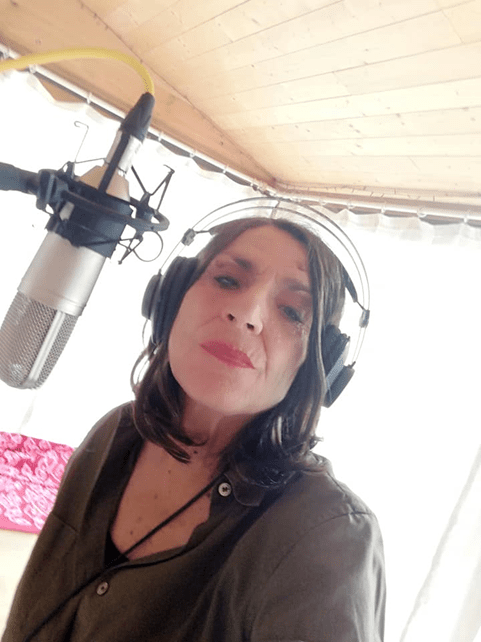
Martin: I just picked up on a very casual remark that Carla made on a message saying ‘it’s a time of the Blues – if I ever make another record it will be a blues record’. So I thought about it for a little while, not very long – probably a day! We actually recorded, we did all the tracking for ‘Blue Stitches’ live in the studio: guitar, bass, drums and organ. The only people who didn’t play at the time were me and Charlotte (Keefe, trumpet). We asked Adam Fairhall to come in on organ. The tracks obviously resonated with Carla.
Martin: The actual starting point for ‘Blue Stitches’ was Carla recording herself singing and playing keyboard on her phone and she sent me you know four 90 second MP3s. It didn’t matter that that it was a rough performance, these would punctuate the album (in the same way that the ‘etudes’ had on ‘The Scale’) and be key moments on the album and of course Sturt and Fairclough and Fairhall loved doing those in the studio after their initial surprise!
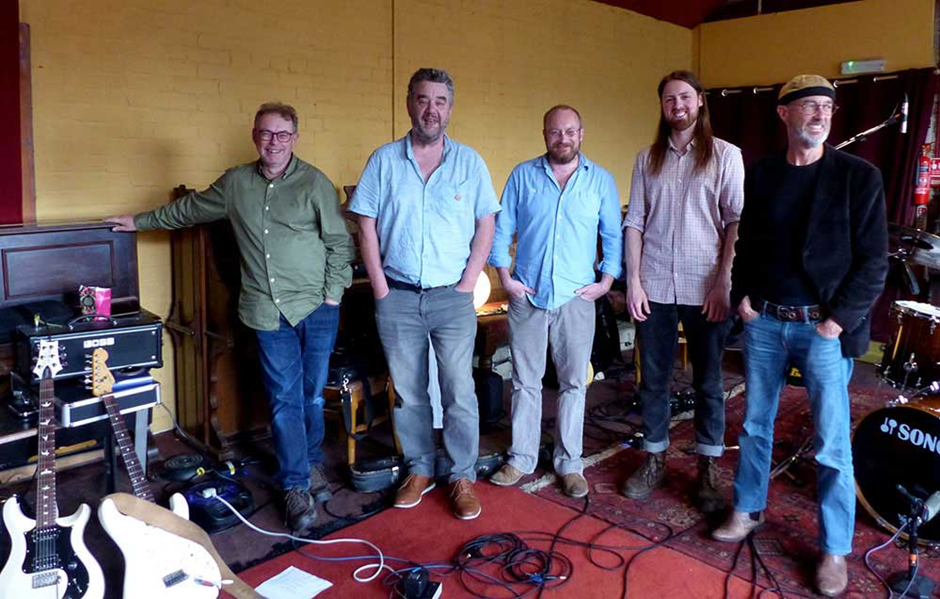
Carla: It was a little difficult for ‘Blue Stitches’ because my voice was really in a bad shape – I had really damaged my voice. So I called Martin, and I explained to him because I wanted him to hear me and I said, ‘we have a problem Martin’ and he said ‘I don’t want to hear – I’m sure it’s going to be okay’. But I do like the last record in spite of problems with my voice – and I even had some anxiety for the first time in my life, but we still recorded three tracks per session. One session is like four hours, three tracks each and having tea in the meantime and smoking a cigarette of course!
When we met, Carla had just recorded a promotional video for ‘Blue Stitches’ in Uzes – this can be seen here:
My final question to Carla was regarding a remarkable song called ‘Ode To The Weak’, which although not her most recent work, is one of the more arresting contributions Carla has penned in the last few years. As with many of Carla’s pieces it is a testament to her ability to instantly capture a ‘moment’ in championing the downtrodden in society, – this was captured in situ during a concert with Italian progressive band Mezz Gacano:
“I could swim mountains
I could climb on waves
I could carve up skies
or lacerate the universe
I could slit in the finest slices
a thousand years old tree
or bite into a rock
or even be a rock that speaks
Strength is an old slut
and will is her pimp
I worship the weak
I worship the weak
The delicate and candid soul, heart and brains
The low is the pillow for my head to rest“
(lyrics, ‘Ode to the Weak’)
Carla: This was on the occasion of doing a concert at the end of December of 2018 in Palermo/Sicily with the band Mezz Gacano, and observing all kinds of refugees hanging out on the streets in the cold, in misery and indifference … selling little things (lighters etc) that nobody would buy … it broke my heart and that’s how I ended up writing those lyrics and putting up a track for the band on the night of the concert.
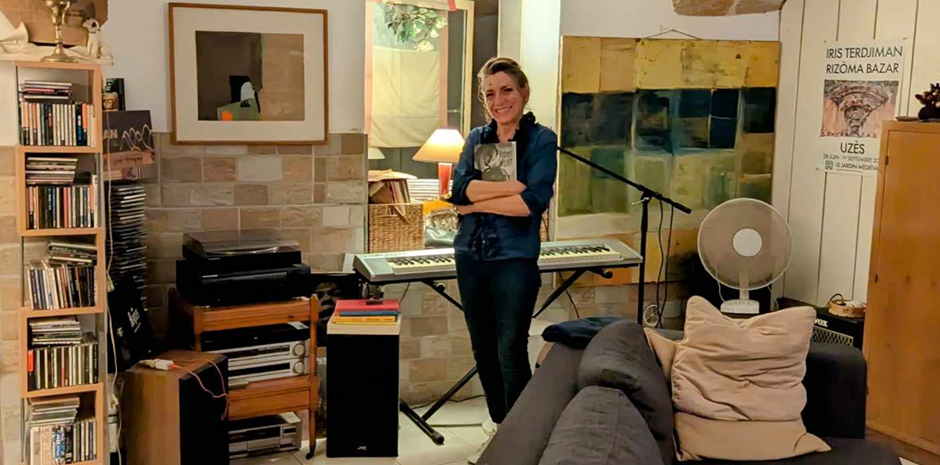
My thanks to Carla for her warm welcome to me and my family in the South of France, where she is currently writing her memoirs, which are sure to uncover far more many aspects of her life’s work than are covered in this piece alone. Watch out for news of future projects on the Facelift Facebook group
Links to key albums mentioned in this interview
The Electric Suite https://carla-diratz.bandcamp.com/album/the-electric-suite
Double Dreaming https://markstanley1.bandcamp.com/album/double-dreaming
Diratz https://davenewhouse.bandcamp.com/album/diratz
The Scale https://discusmusic.bandcamp.com/album/the-scale-124cd-2021
Blue Stitches https://discusmusic.bandcamp.com/album/blue-stitches-169cd-2024
Mezz Gacano https://sasimerecords.bandcamp.com/album/bukowski-never-did-this
A selection of Carla Diratz videos are available on a Youtube channel here: https://www.youtube.com/@TheHappynihil
My thanks to Martin Archer of Discus Music for additional thoughts, quotes and information contained in this interview
For other interviews in the Canterbury 2.0 series, please click here
 The Canterbury scene(zine) continued....
Fascinating and insightful read Phil but only what I would expect from you and Carla, all the hallmarks of what a good blog should be and great links to the music. I’ve been waiting for this and as I’d hoped, you took us with you.
Exemption clause- I listen to so few women but the ones I do I might cherish even more than the blokes, the artists and bands running through my veins. It’s exciting when you discover a female vocalist that does just that, with The Scale. I have a real soft spot for it. ‘The nature of a child’ makes me fill up, a lump in the throat, evocative and so well put together. ‘Menhir et germissements’ is almost ‘I’ll have you for breakfast’ spat out. Guttural, pure mincemeat. I don’t need to understand it.
All her works are due respect for what is often undefinable and exposes one to so many elements in all their glory. That in itself shows breadth and edge. A rustic charm to her persona. A taste for defiance. Perfectly imperfect, an almost, kind of, fractured allure. And you get the feeling she’s almost unknowing of her real worth. To top it all you’re a Parisienne, damn you Carla. A chanson, but effortlessly rough cut, no mould fits.
Singular.
Hats off to the artists who have worked with Carla Diratz to date. It can’t be easy finding a multi-lingual voice with so much edge you dare never polish it through fear it might lose its patina. Crank it up, but just enough, not seismic, watch that voice, you don’t want to crack that family heirloom on the dresser, Granny might never forgive you.
LikeLiked by 1 person