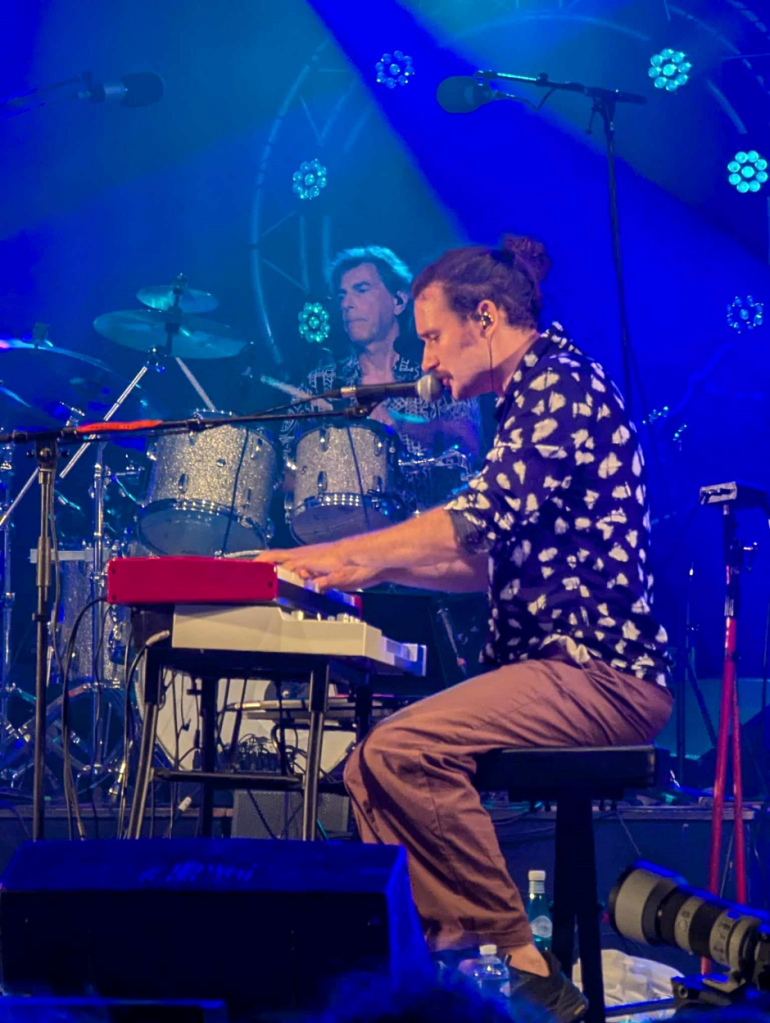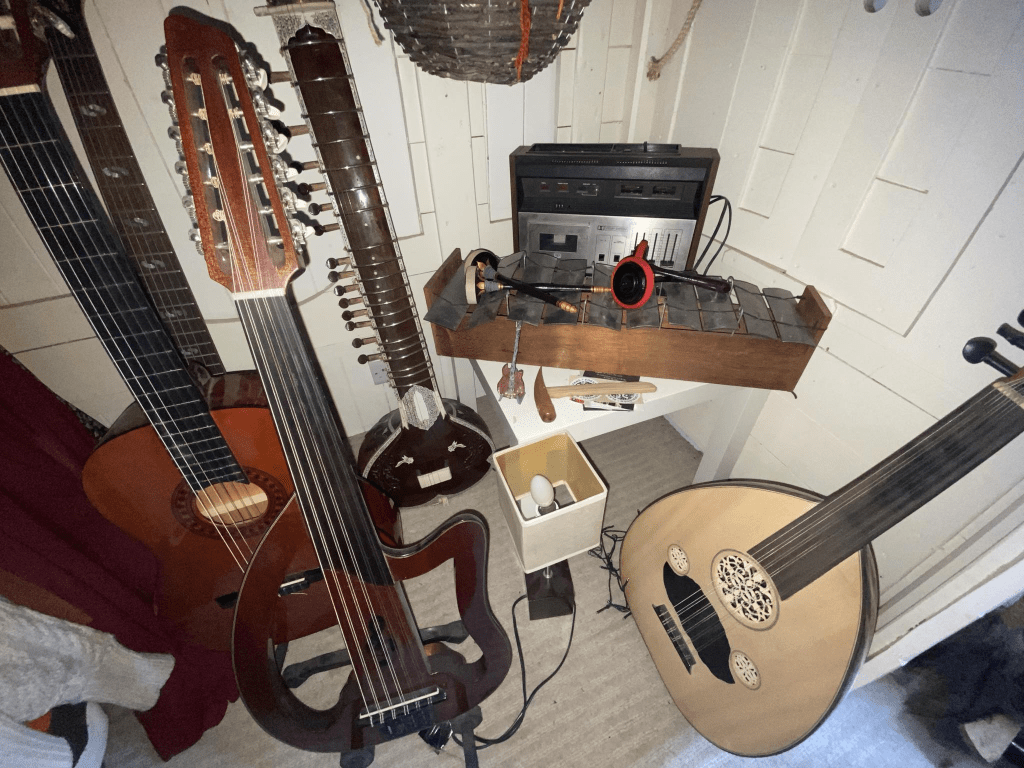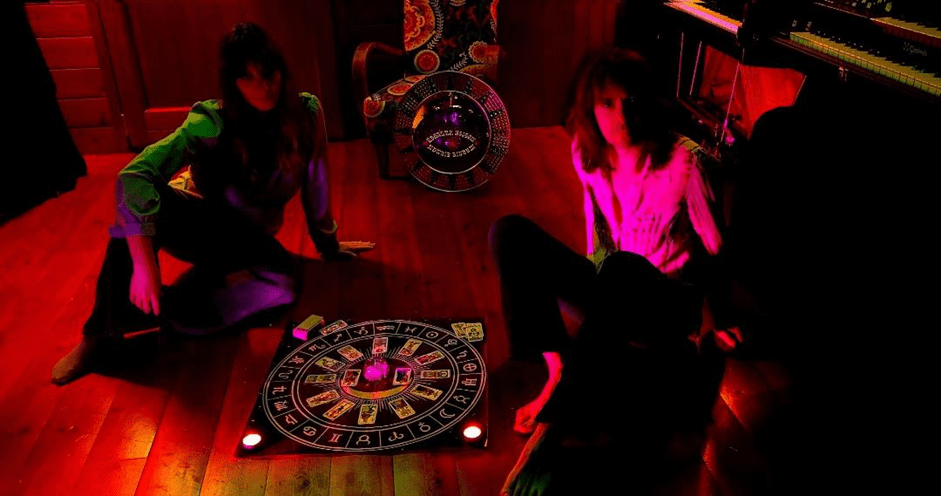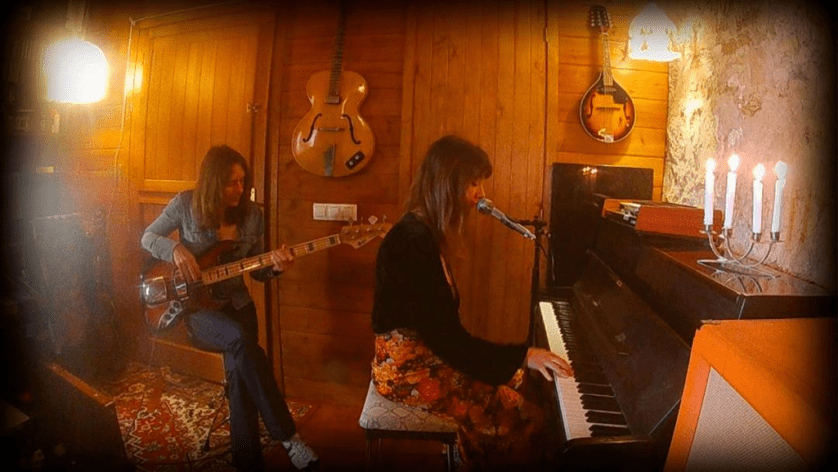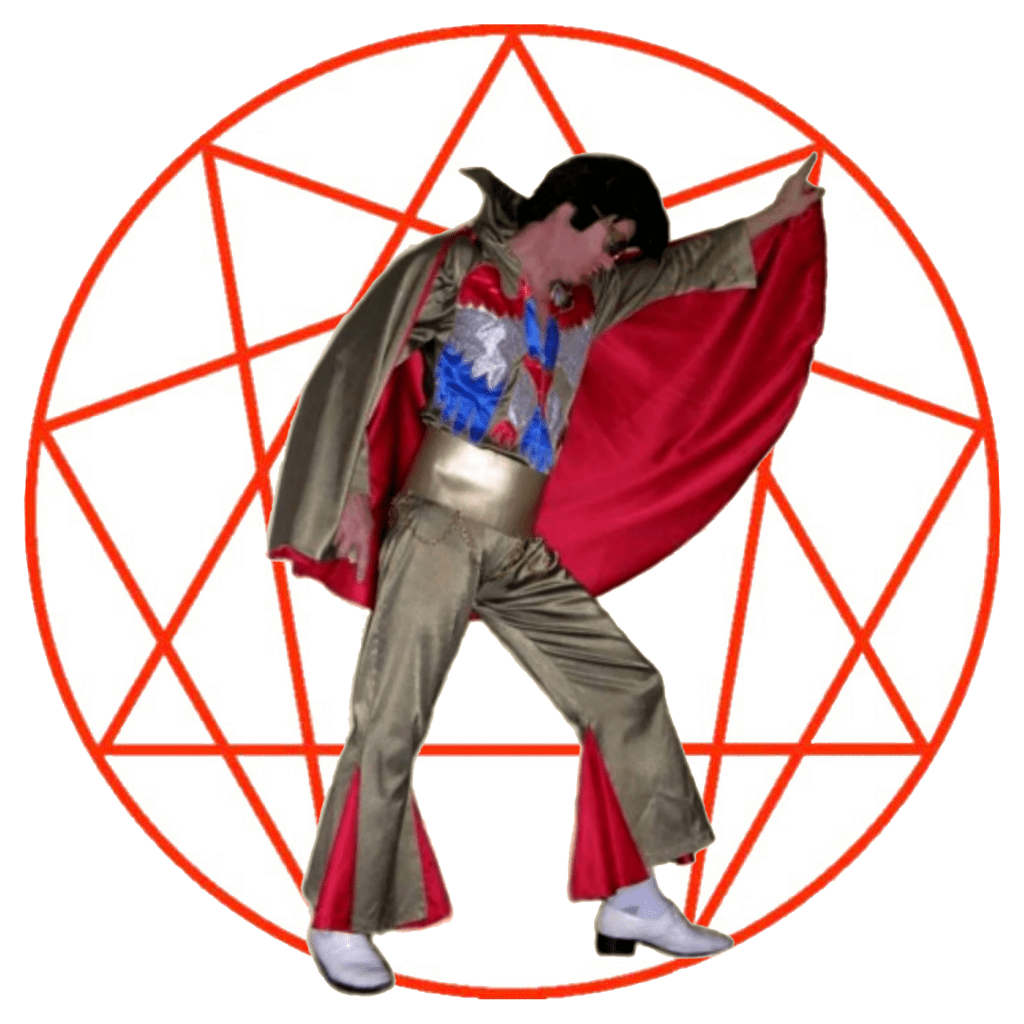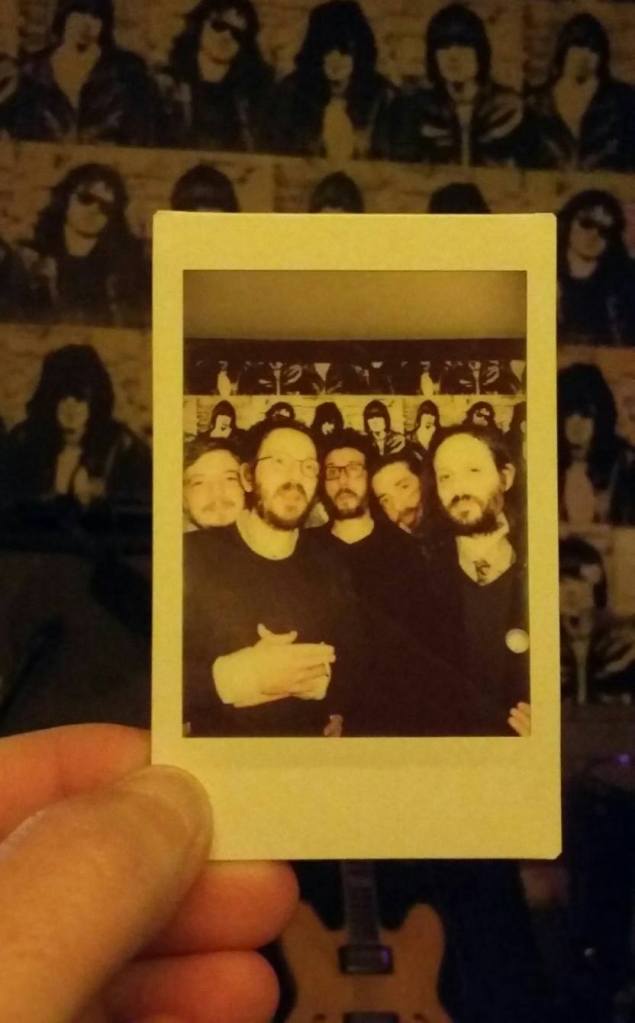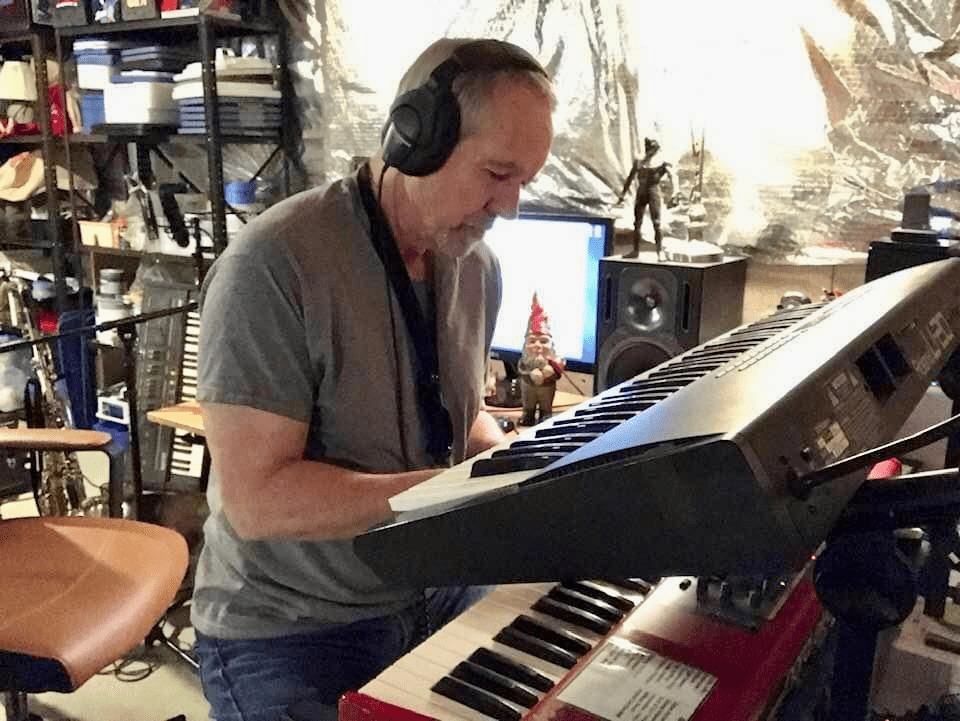
Canterbury 2.9 Dave Newhouse (The Muffins) – Part Two

Part 1 of the interview here

The Muffins were partly lured back together in the mid 1990s by the prospect of putting together a single track for ‘Unsettled Scores’, a unique double album on Cuneiform Records, the label set up by a key figure within the band’s history, honorary Muffin Steve Feigenbaum. Steve also plays on 2 of the 4 tracks on ‘Manna/Mirage’, and has consistently provided a platform for original and re-released Muffins albums on Cuneiform, and their distribution through his mail order outlet Wayside, including early material aired which can be found on ‘Chronometers’, as well as the recent box set)

Dave Newhouse: Steve was /  is a friend, first and foremost. He saw us from the very beginning and always supported us and made sure to get the word around. He was also a musician, and so when the record label started (Random Radar Records), Steve was an important part of it. Later, when Steve launched his own label, Cuneiform Records, he brought us on board with him.
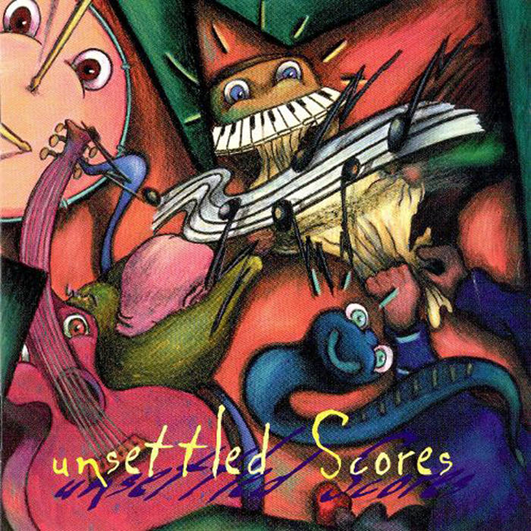
I believe that (‘Unsettled Scores’) was Steve Feigenbaum’s idea where Cuneiform artists would perform music by other Cuneiform artists.

Steve told me in 2020 during research for the Hugh Hopper biography (Hugh covered a Dr Nerve track for the project, whilst no less than 3 Cuneiform artists contributed covered Hopper tunes) that the initial impetus came via CW Vrtacek of Forever Einstein who had suggested a 94 second cover of a Birdsongs of the Mesozoic track to kickstart the project).

It was a great idea. I remember hearing Forever Einstein’s track “She Wears Her Dead Mother’s Hat” and thinking that that would be a good one for the newly reformed Muffins to record. It was actually the first thing the reformed band recorded since getting back together.

From their ‘Unsettled Scores’ endeavours (in the spirit of the project a Muffins piece ‘Hobart Got Burned’ had been covered itself by Kit Watkins​/ and Coco Roussel of Happy The Man) the band moved on to record their album, ‘Bandwidth’. I put it to Dave that in many ways this seemed like the band’s most accessible studio album. Billy Swann’s bass is very much to the fore, the album swings along and in many way it is much more like Dave’s own later Manna/Mirage material. I asked whether the music’s changing nature was reflective of the band’s change in circumstances, different from the ‘house’ vibe of ‘Chronometers’ and ‘Manna/Mirage’ and the ‘local’ downtown feel of ‘185’.
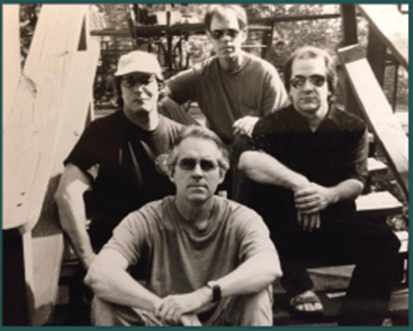
The Muffins – from ‘Baker’s Dozen’

Yes, we were no longer living together, so the compositions had to reflect that. I don’t think it was a conscious effort to return to type (‘Manna/Mirage’), it was just something that we naturally gravitated toward.

In the early Noughties the band played what would be the first few of what would become more their gigging norm: festivals showcasing progressive and adventurous music. Their first of three performances at ProgDay was in 2001, whilst the band were invited to play at Nearfest in 2005 (this is the 13th CD – constituting that ‘Baker’s Dozen’ –of the recent box set), and also the RIO festival in France in 2009. I wondered if the band had been invited to play at the original Rock in Opposition incarnations in France in 1978, where fellow ‘Gravity’ contributors Samla Mammas Manna had appeared, as well as Stormy Six, Etron Fou Leloublan, Stormy Six and Henry Cow themselves.

No, I don’t believe so. We weren’t considered for any overseas RIO festivals until our second regrouping. (In relation to band’s festival appearances) Yes, we were never really a club band (although we tried for years and DID end up playing in some nice club venues), but the festival circuit seemed to be better suited for what we wanted to do. And the like-minded audiences were there, so we met them there.
If the band was to continue to produce new music together, there would be the need for periods of intense rehearsal as members were dispersed across three different states. This was one of the factors leading to the ‘Muffin Summer Camps’ which became a regular feature of the band’s activity in the 2000s.

The Muffin Summer Camps at Tom’s house in Virginia came out of necessity; we needed a place to rehearse 24/7 for at least a week just to get into shape for the festivals that we were starting to play. They were also ideal for writing and rehearsing new material for the next albums. It was the closest thing we got to what resembled the old ‘Buba Flirf’ group house. It was Paul who somehow got in touch with Marshall Allen in Philadelphia and invited him down to DC to record with us over at Paul’s house (Allen, appears, alongside fellow Sun Ra Arkestra member Knoel Scott) on a further Muffins album ‘Double Negative’)
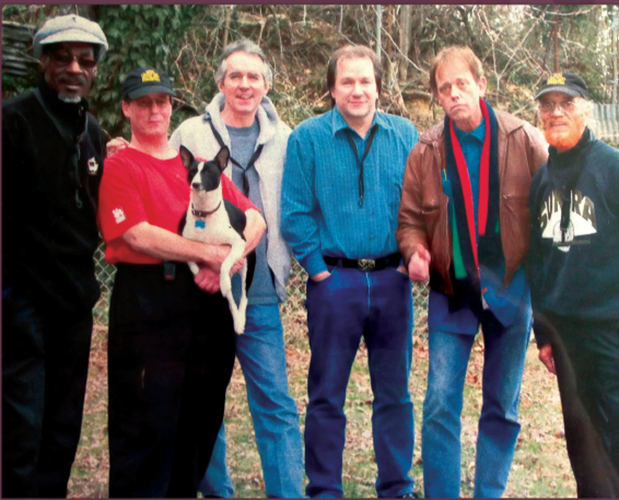
Knoel Scott, Paul Sears, Dave Newhouse, Tom Scott, Billy Swann, Marshall Allen

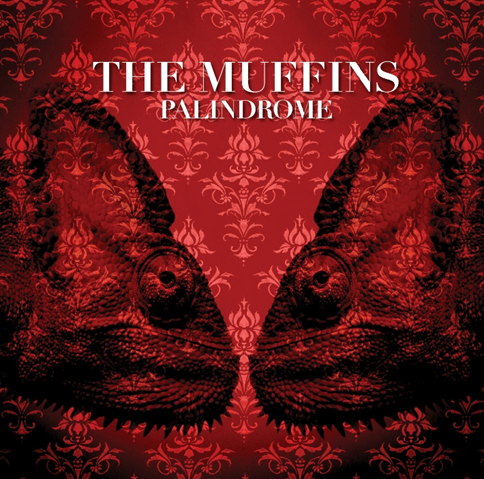
‘Palindrome’ was our second to last album (the last album being ‘Mother Tongue’). When we were trying out some ideas for the title, Tom’s wife Susan mistook one of our original titles ‘Conundrum’ for ‘Palindrome’. We decided that ‘Palindrome’ sounded better. We had high hopes for this one; a French label (Musea) had expressed interest in putting it out. We agreed, signed the contract, and got no money for it. Very disappointing. We returned to self-releasing our last album ‘Mother Tongue’. You can hear the entire ‘Palindrome’ album on the ‘Baker’s Dozen’ Muffins box set.
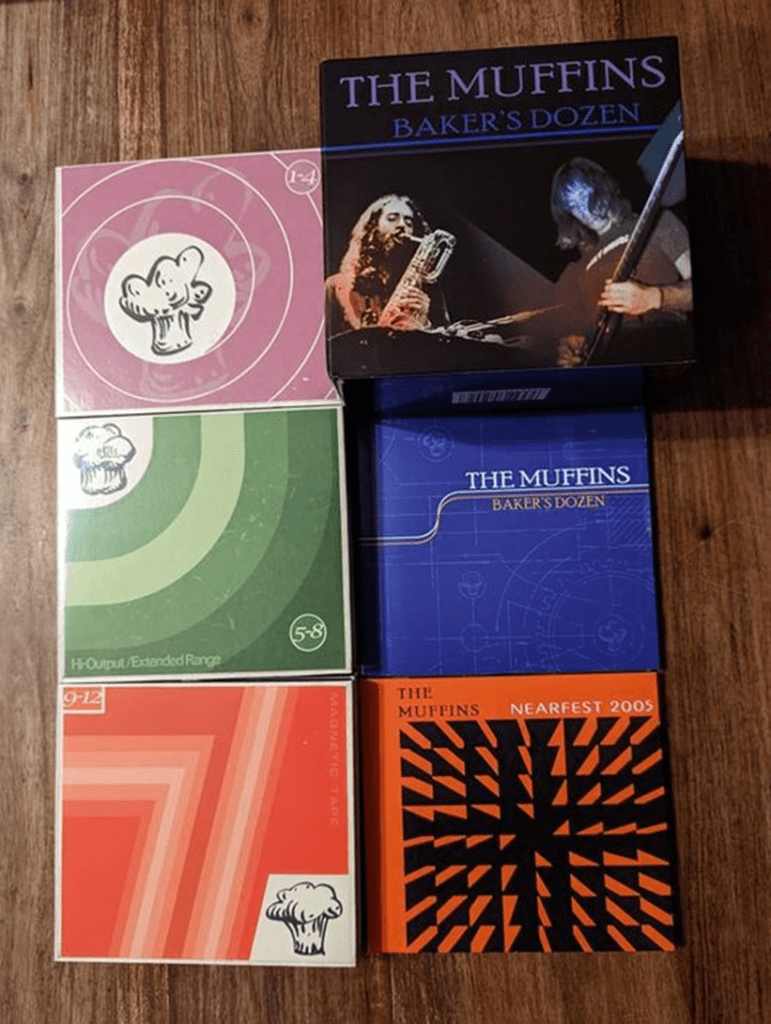
The Muffins’ Box set is an extraordinary document of largely unreleased material from the entirety of the band’s existence: unheard studio recordings and live documents of the band in their various guises, as well as 76 pages of personal accounts, photographs and other artefacts.

I will be forever grateful to Paul Sears for being the original instigator for getting the box set moving in the first place and to Steve Feigenbaum for choosing all of the live and studio tracks that would eventually be included on it; I especially appreciate how he (Steve) focused on the live energy of the band as well as the humour that we tried to get across. And of course, it could not have happened without Ian Beabout’s expert mixing and mastering as well as Eric Kearn’s graphics on both the box and CD / DVD covers and booklet. And a pat on the back to me, if I may – I wrote the text in the booklet which ended up taking up many many months of research and calls and emails in order to get it right. ‘Baker’s Dozen’ is a product of a lot of love and hard work from everyone involved. It is a true labour of love.
We lost Billy Swann this year. Utterly heart-breaking. He was my big ‘brother’. For awhile, it was just him and me at the Muffin ‘Buba Flirf’ house until the rest of the band joined us, and Billy and I really bonded at that time. We never had an argument, we never got upset with one another, I always knew I could rely on Billy to talk things over with; he was calm and reasonable and always a bit more mature than me. I’ve said for years that Billy was the heart and soul of The Muffins. We all had our parts to play in the band, but Billy was its spiritual nucleus. 
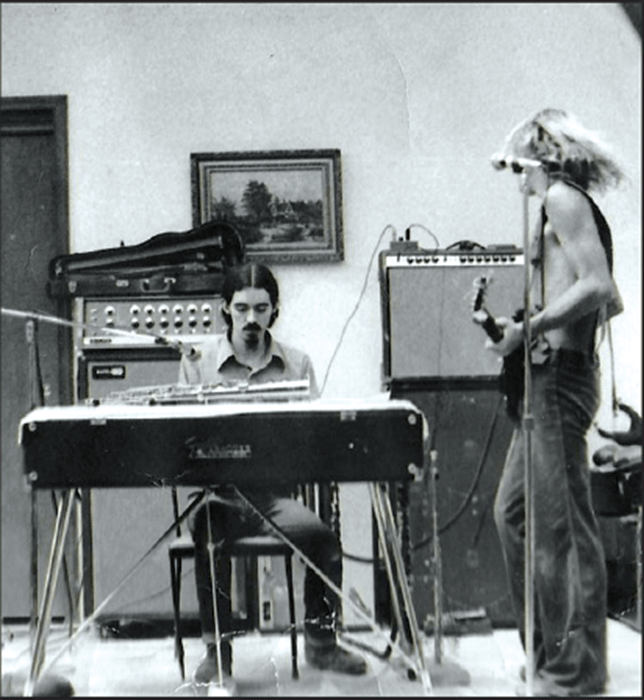
Dave Newhouse with Billy Swann – from ‘Baker’s Dozen’

Since the final break up of the Muffins, Dave has devoted much of his attention to putting out a superb quintet of albums under the umbrella title of Manna/Mirage – they are arguably not as compositionally dense as Muffins work, but not only do they give a greater voice to Dave’s stripped down keyboards sound (as well as multiple sax lines such as on the memorable ‘Catawumpus’ ), but they also allow Dave’s Canterburian, RIO and Zeuhlish influences to be heard more clearly; as well as providing an outlet for some inspired guest appearances: including members of the Muffins; Univers Zero’s Guy Segers; Fred Frith, violinist Forrest Fang; the wonderful Rich O’Meara on tuned percussion; and the vocals of Carla Diratz.

Well, my ‘Manna/Mirage’ solo albums (I hated borrowing the title of the studio ‘band’ from our first album, but I thought just using my own name, no one would know who that was. I thought it would give listeners a necessary Muffins connection) came from a split that Tom Scott and I had; we were working on a Muffins album that we wanted to be mainly a big band recording. So Tom recorded some of his songs at his studio and I recorded some of my songs at my studio. When we started listening to the album, I noticed that Tom’s tracks and my tracks sounded to me like they came from completely separate bands. They just did not blend. I suggested to Tom that we produce two separate solo albums and then come back later for a true Muffins album. And so Tom’s tracks became an album he called ‘4S’d: Man Or Muffin’ and my tracks became my first ‘Manna/Mirage’ album ‘Blue Dogs’.
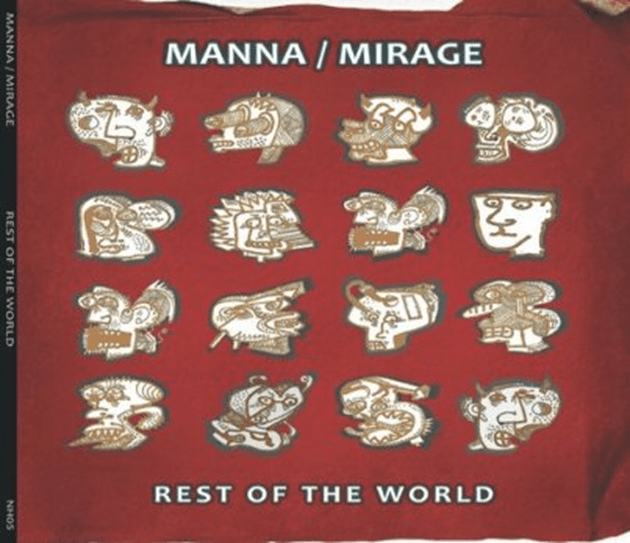
I asked Dave about a couple of specific tracks with clear Canterbury references, ‘Canterbury Bells’ and ‘Mini Hugh’ (the latter from ‘Rest of the World’)

‘Canterbury Bells’ was the first piece I recorded for my first Manna/Mirage solo album ‘Blue Dogs’ and ended up being the first track on the album. My son George is playing drums because the song needed a solid Ringo-style of consistent rock drumming that George can really deliver. Very few of my songs have titles until after I’ve recorded them and listened back, and then the titles just present themselves to me (something to do with those damn Muses who, to this day, will not leave me alone). When I listened back to this one, it sounded very Canterbury to me (I also wanted to get across to my listeners that I was continuing along previous Canterbury roads), and the word ‘Canterbury’ of course refers to Canterbury Cathedral, and so ‘Bells’ was added on. I may have also read somewhere where someone was enjoying hearing the bells ringing from Canterbury Cathedral. 

‘Mini-Hugh’ I wanted to reflect my love and respect for Hugh Hopper. Hope it did him justice. And of course I had to incorporate Guy Segers, who is himself a big Hugh Hopper fan and who can get those super low Hopper fuzz tones on bass. I also tried to replicate a Soft Machine sound with my Mike Ratledge Fender Rhodes playing and my Elton Dean sax noodlings. 

And a big shoutout to Mike Potter, who has mixed and mastered all of my solo albums. Those albums sound as good as they are because he is the master at his craft. 

This doesn’t’ even cover various low-key projects which Dave does little to promote or push, being seemingly happy to press a few hundred copies and watch them inevitably find their ways to good homes – these include ‘Daughter of Paris’, an experimental pair of pieces which constitute a project started at the times of the Muffins 80s/90s work and was completed by Dave during Covid, as well as the ‘Moon X’ projects with Jerry King (and son George Newhouse on drums), a multi-faceted outfit just about to release their fourth album, promoted through obscure mid 20th century sci-fi imagery whilst Moon Men’s album ‘Uncomfortable Space Probe’ was described in Facelift as a ‘seismic romp’
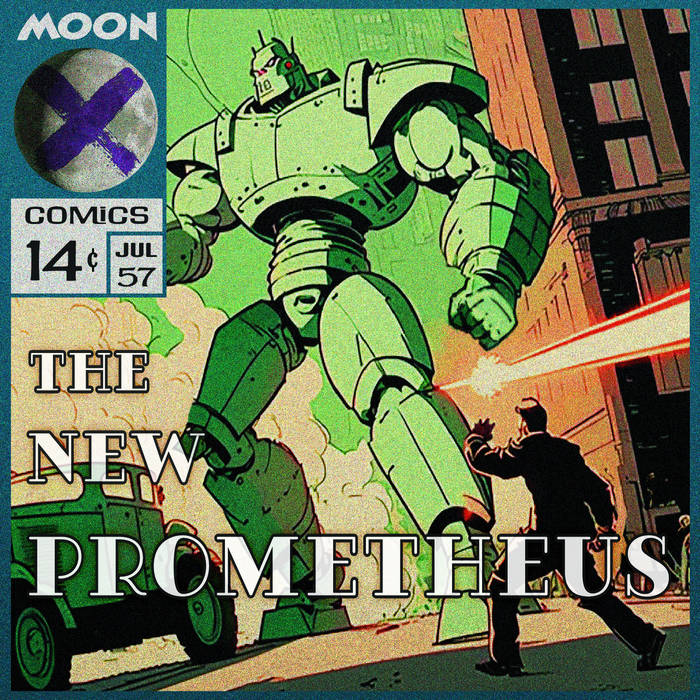
MOON X came out of the breakup of another band that Jerry King and I were in called Moon Men. We so enjoyed working together on Moon Men that we decided to keep the momentum going with a new project that we called ‘MOON X’. We added my son George Newhouse on drums and kept the band as a trio. Jerry and I seem to have a really good telepathy working together.

 I also had to ask about the Diratz project, a three-way collaboration (with inspired additions including guitarist Mark Stanley) between Dave, guitarist Bret Hart and French singer Carla Diratz. The album was reviewed in Facelift here and I spoke at length about the project with Carla earlier in this interview series here:
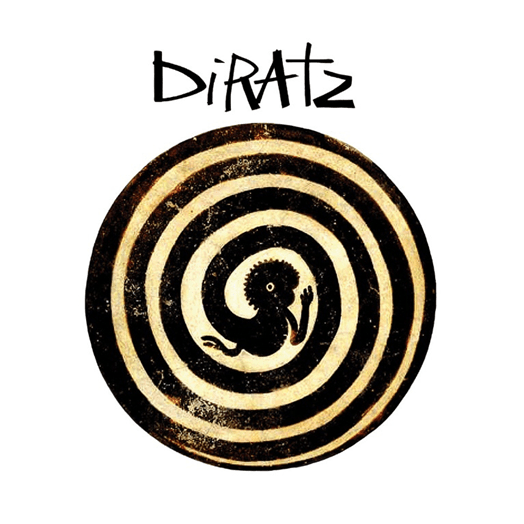
I’ve always been interested in songwriting, and when I first heard Carla’s voice on Facebook (I believe it was a song from her former band No White of Moon), her voice just struck me as so unique and powerful. I got in touch with her via the Internet, sent her my stem tracks for a song, asked her if she could come up with a singing melody and some lyrics, and she agreed to do it. The final product was amazing, so we decided to continue on with an album. It was a dream come true when she was able to fly over here from France. We had one good  show at Orion in Baltimore, Maryland. We’ve recorded two other songs together since that album, but we did not continue. I wish we could have kept it going. I think that first ‘DIRATZ’ album is very special in some intangible way. It is mysteriously magical to me.

In the process of researching this article I also stumbled upon a unique version of Soft Machine’s ‘Box 25/4 Lid’ (recorded alongside another regular collaborator, Italian musician Luciano Margorani), which of course introduced Hugh Hopper to the listening public as both a composer and bass player. 

I’ve always liked this crazy song from the first Soft Machine album and jumped at the opportunity to record a version of it. The time signature is complex, and the way it repeats itself into oblivion is fascinating to me. It sounds like a whacky bossa nova. 

I asked Dave what his musical plans were moving forward and commented on his apparently prolific nature both in terms of recording new material but also unearthing archive recordings – I wondered if this had accelerated in particular when Dave finally retired from teaching a few years back.

Throughout my teaching career, I was still writing and recording music for The Muffins, even finding time off from work to go play overseas in Italy and France. So, retirement hasn’t changed any of that; I still write and record the same as always. I haven’t experienced any kind of particular freedom in that area. I just literally can’t stop doing music. I HAVE, since I’ve retired, started painting. I’m an abstract expressionist. You can see my work on Threads and Instagram. My ID is ndnewhouse.:
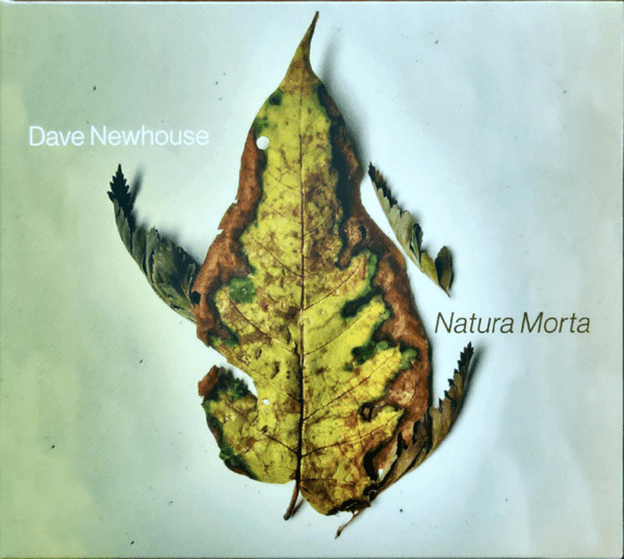
My solo ‘Manna/Mirage’ project has ended, but I’m continuing putting out solo albums under just my name. Thus, ‘Natura Morta’ is by Dave Newhouse. I have a new one coming out in May (?) titled ‘Soli’,  which is just me playing all the instruments on it. I’ve always wanted to try a ‘McCartney’ to see if I could do it.

I’m also working on an album of improvisations that I’m calling ‘Improvika’ with some of the great improvisers out there that I’ve met on Social Media, primarily Facebook. I’m also in a studio-only band with my old friend and former Muffins bandmate Micheal Bass called ‘The Swell Brothers’ – we have two albums out on Bandcamp and are presently working on our third. And MOON X is getting ready to release our third album (a vinyl release, actually!) titled ‘Rocket to the Moon’. We will begin work on the fourth album soon.

And finally I asked Dave about his particular relationship (if any) with the Canterbury musical genre.

I never tried to emulate the Canterbury sound, it was just natural to me. It was a familiar kind of music to me ever since I first heard it. It’s like I just walked into the Canterbury meeting room and joined the club.
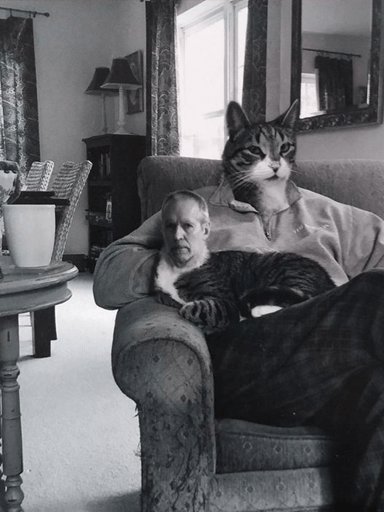
Dave with regular companion Monty

Links

Dave’s solo material is at: davenewhouse.bandcamp.com

The Muffins box set ‘Baker’s Dozen’ is available at https://cuneiformrecords.bandcamp.com/album/bakers-dozen

You can purchase other Muffins albums on Cuneiform – Manna/MirageChronometers185Double Negative

Thanks to Dave, The Muffins and Steve Feigenbaum of Cuneiform Records for the use of quotes and imagery from ‘Baker’s Dozen’

For other interviews in the Canterbury 2.0 series, please click here
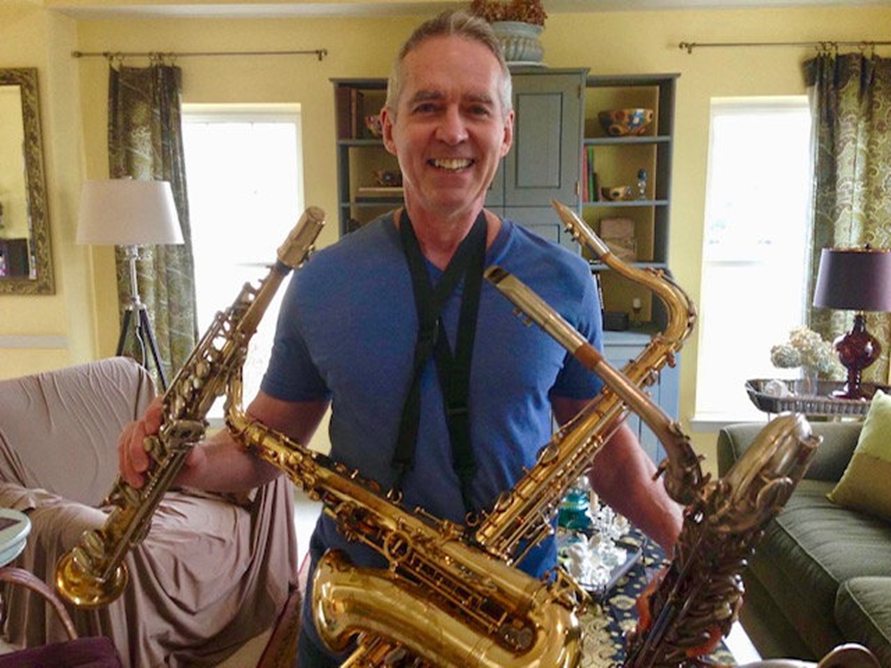
Canterbury 2.9 – Dave Newhouse (The Muffins)

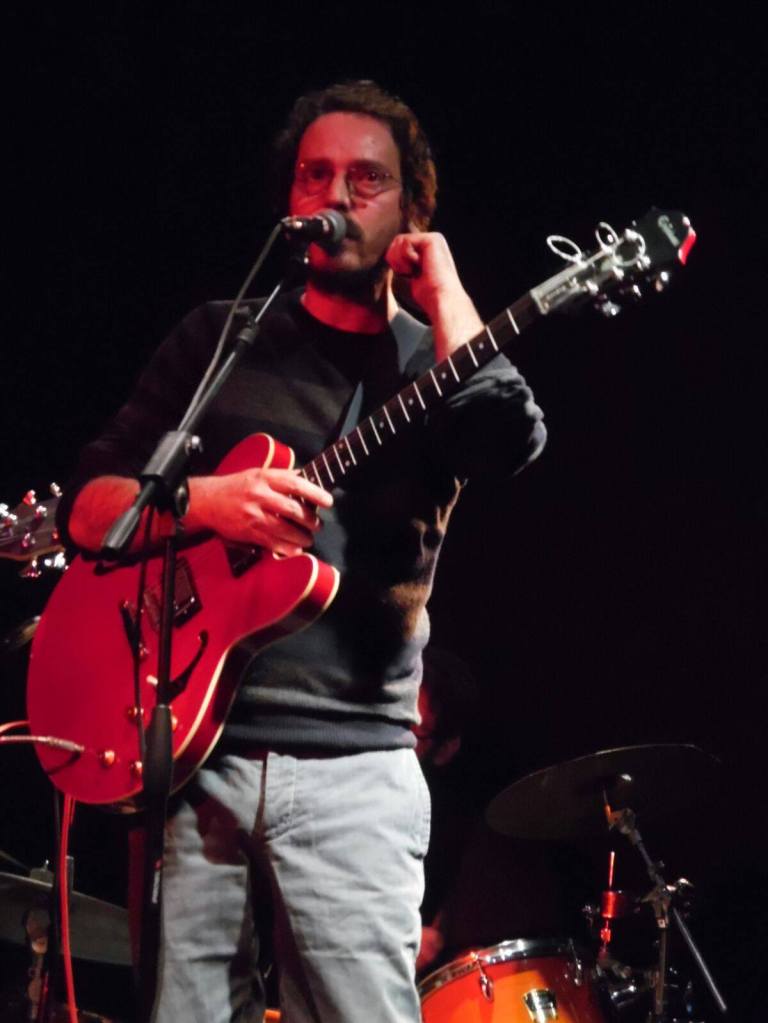
To put Dave Newhouse within this series of interviews at all is probably a little incongruous. He’s best known for his critical role as saxophonist, keyboard player and composer within the iconic American band, The Muffins, who are very much an entity in their own right with recorded output spanning four decades. This was  most recently celebrated with a gargantuan box set ‘Baker’s Dozen’ on Cuneiform Records, which adds to rather than anthologises their considerable existing output.

But beyond this, Dave is simply a prolific musician and continues to produce music apace: there have been 5 albums from his solo project Manna/Mirage, 3 from Moon X (with a fourth imminent) and an increasing number of diverse solo projects in recent years. He also is a regular guest on albums from other musicians interviewed within this series, most notably Homunculus Res. Plus of course he was an essential component in the Diratz album, already eulogised heavily over within the Canterbury 2.0 series.

It’s fair to say that the reason his interview comes so late in this series is that there was just so damned much to listen to (and I’m still not sure I entirely did it justice) before interview questions could be adequately formulated. And if he’s ‘neo-Canterbury’ at all (Dave admits in the interview that he quite enjoyed the tag ‘Americanterbury’), then he should probably be ‘Canterbury 1.2’ rather than ‘2.9’ simply because The Muffins were one of the pioneers in taking forward Canterbury-imbued music as early as the mid Seventies.

We started, as is always the case, by discussing Dave’s own musical upbringing, both in terms of early playing as well as listening influences:

I started playing clarinet when I was in 4th Grade, so I would have been 8 years old? We had a music instructor who would come around and take us out of our classrooms mostly to play woodwind instruments, and teach us all the basics. Oddly enough, at the end of the first year, she discovered that I had been playing clarinet completely backwards, in other words my left hand (top) was on the bottom and my right hand (bottom) was on the top. She was amazed that I could even play that way. Needless to say, I had to relearn how to play clarinet over the summer with correct hand placement, which I did.

from ‘Baker’s Dozen’

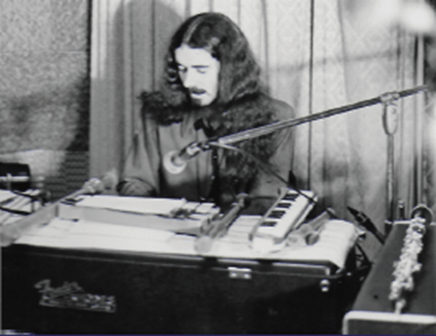
Around this same time, my parents had gotten a spinnet piano which I immediately and completely commandeered. I was not given any piano lessons and so taught myself by ear all of my favourite songs at the time; “Baby Elephant Walk” by Henry Mancini, “The Look of Love” by Burt Bacharach and Hal David, and “Sunny” by Bobby Heb, to name a few.

from ‘Baker’s Dozen’

Also around this time, we got season tickets to a theatre in the round called Shady Grove Theater where they had touring companies come in and perform all the great American Musicals. (I would later see Jethro Tull’s first American tour there as well as The Mahavishnu Orchestra. And Iron Butterfly!) Shady Grove is where I fell in love with the American Musical Songbook, which probably explains a lot of my own musical compositional style. I remember seeing “Guys and Dolls”, “Camelot”, “You’re A Good Man, Charlie Brown”, “South Pacific” (The Muffins did a funny song early on we called  “South Specific”), and “The King and I”.

So, by Junior High School I’d decided that the saxophone was way cooler than the clarinet, so I switched over to tenor sax, which I played all through Junior High School and High School, including the Marching Band and the Pep Band. My dad had played alto sax in HIS High School. In fact, it was his Conn alto that I first played in The Muffins. But by the end of  High School, rock music was rearing its tempting head and bands like King Crimson, Chicago, Van der Graaf Generator, and The Mothers of Invention were demonstrating that woodwinds could be used successfully in rock music. I was off on a whole new journey.

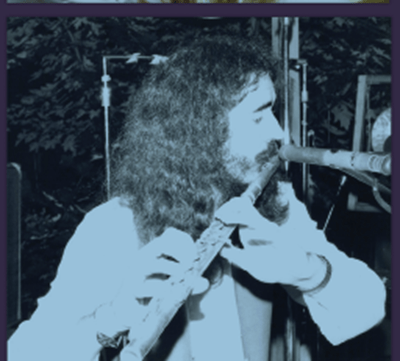
Woodwind training stopped for me after High School. Any other progress I made on woodwinds, specifically flute, were self-taught. But it was our daily intense Muffin practice that made my woodwind playing better than it should have been. 

So how did this set Dave off on the path towards creating his own music?

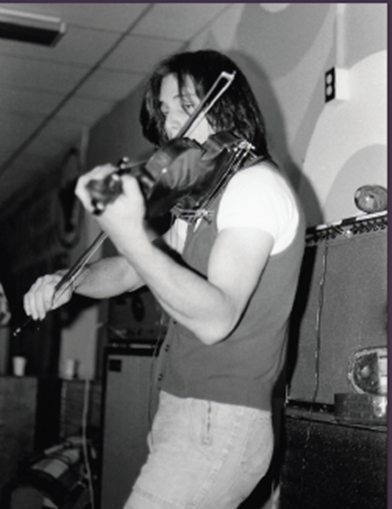
I was in a Doors style band in High School, but didn’t really start taking band life seriously until I met Michael Zentner (guitar and violin) and we started an 8 piece early prog band around 1971 called Tunc. We played out live a few times and rehearsed for about a solid year until the band imploded. That’s when we went looking for other musicians for another band. Thankfully we found Billy Swann (bass) and so started The Muffins.

I was interested in Dave’s own exposure to Canterbury scene music as his own musical tastes were developing, but he places this as one of a number of influences:

Our friend, John Paige (who would later start Random Radar Records with us) had a Canterbury-heavy radio show on WGTB at Georgetown University in Washington DC that we (The Muffins) would religiously tune in to on Sunday nights. It was John who introduced us to a lot of what would become Canterbury. Of course, I already had the first three Soft Machine albums by that time and was a total big nerd fan. I remember the first time I heard Soft Machine ‘Volume II’ (I had bought it from a record bin on the boardwalk at the beach in Ocean City), I thought “Well, this sounds extremely familiar to me, like I’ve found my old friends.”

I heard the first Soft Machine album first, and I knew right away that I was listening to something very different than what was already out there. It wasn’t until I heard Soft Machine ‘Volume II’ that a Canterbury sound really started to emerge for me. By Soft Machine ‘Third’, I had sussed out the Canterbury chords that Mike Ratledge was playing and I absorbed the whole Canterbury sound and began replicating it in my own writing. Although, it sounded very natural to me, like somewhere I already belonged. 

The term ‘Canterbury’ had not been coined yet. I think John was just referencing what that kind of music has now turned into. At the time, we just knew that we were emulating all of our British rock heroes – Hatfield and The North, Soft Machine, Robert Wyatt, Egg, Gong, etc. In fact, it was John Paige’s radio show on WGTB that introduced us to all of this great music. Not connected to the Canterbury sound, but The Muffins were also heavily into jazz improvisation at the time, i.e. Sun Ra and Art Ensemble.

And so to the Muffins. Here follows a brief synopsis of the Muffins story, which is  articulated far more eloquently and in extraordinary detail within the 60+ page set of reminiscences from musicians and associates within the ‘Baker’s Dozen’ box set, the written elements collated by Dave himself. The Muffins were a band that with very much their own take on progressive music. They emerged initially as a home spun collective of adventurous musical individuals (captured on the Cuneiform release ‘Chronometers’ of unreleased demos from 1975/6 which features both a lengthy 20 minute eponymous opus and numerous often madcap shorter pieces). A key term which resonates from the Baker’s Dozen box set liner notes about this era is ‘compositional humour’. The music evolved through to their Canterburyesque, keyboard-heavy debut ‘Manna/Mirage’, by which point the band settled on their core lineup of Newhouse (woodwind/keyboards, Tom Scott (woodwind), Paul Sears (drums) and Billy Swann (bass), although in reality each member played numerous instruments and further guests added to the palette of sounds.

The Muffins: Tom Scott, Billy Swann, Paul Sears, Dave Newhouse – from ‘Baker’s Dozen’

Later there would be the discordancy of ‘185’, the brassy swing of ‘Bandwidth’ and numerous later albums (‘Double Negative’, ‘Palindrome’, ‘Mother Tongue’) recorded in a variety of circumstances as the band came to terms with the dispersal of its members around the country. In the box set Tom Scott memorably describes his introduction to hearing the then-members of the Muffins – Newhouse, Swann and Mike Apperiti  (Michael Zentner, the band’s guitarist was not present) as ‘some crazy shit. There’s melody. There’s all these interweaving time signatures and the compositions are very linear… commercially this a dead duck’. He joined regardless, and remained an ever-present within the band. Dave explains the band’s ethos:

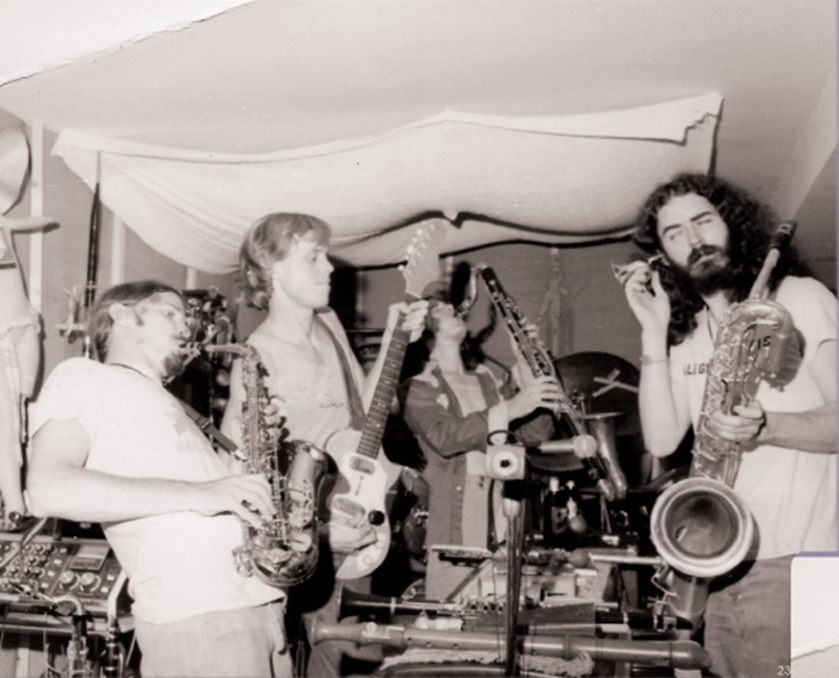
We never thought about our marketability. We just wanted to keep making our own original music. The fans and the following just sought us out. And yes, we played many places where there was either no audience or just one or two people. But we still played (we were persistent), and the audiences started to get a little bigger. And when we couldn’t find gigs in the area, we put on our own backyard concerts behind our Buba Flirf house. Many of those concerts were recorded and you can hear them on my Bandcamp page and in The Muffins ‘Baker’s Dozen’ box.

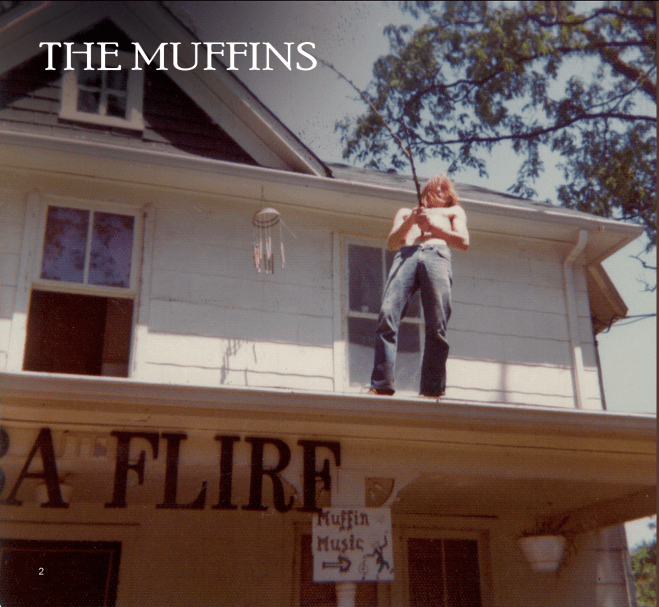
Billy Swann at ‘Buba Flirf’, from ‘Baker’s Dozen’

Much of the early story of the Muffins centres around the incomprehensibly-named ‘Buba Flirf’, the first of two houses the band lived in together, with a practice room soundproofed by discarded carpets and egg cartons. I asked whether ‘Buba Flirf’ was a question of moving an existing band into a communal house to provide a vessel for their musical skills to develop together – or whether it was more a case of a band emerging from a group of like-minded friends living together.  

We definitely wanted a band and the house in Gaithersburg, which would later be called the ‘Buba Flirf’ house after some large plastic advertising letters that Billy nailed to the front of the roof of the front porch, just happened to become available. It became the meeting place, the magnet around which we all congregated.

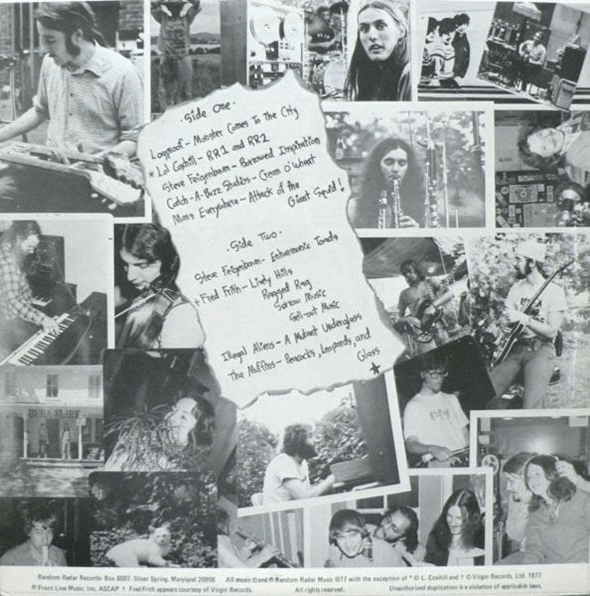
‘Buba Flirf’ was not only the home for the band, it became the epicentre of a productive self-contained entity, centred around the band, making a virtue of their lack of apparent marketability to self-promote. Members supported themselves through various jobs but remained relatively impoverished. The band distributed postcards at gigs which they encouraged attendees to return to them, thereby generating an informal database of fans, the basis of a core following which remained loyal to the end. When the band moved out to a second house in Rockville, they launched Random Radar Records (alongside Steve Feigenbaum, a key part of the story, and a number of Muffins associates) partly to distribute the band’s work – the label’s first ‘sampler’ also included tracks from Fred Frith (unreleased tracks from ‘Guitar Solos 2’) and Lol Coxhill. I wondered whether this was an unconscious precursor to the independent models of production and distribution adopted by Chris Cutler and Recommended Records later that decade.

The first Random Radar Records release

Once we decided to produce our own albums, the postcards (which spearheaded our first mailing list once they were mailed back to us), the albums themselves, etc. were never a political decision but rather a decision of necessity; we could not get a real label to become interested in us, so we just had to do it ourselves. Also, at that moment, there was a big DIY movement in the Independent Music culture (much like there still is today – with Bandcamp) that we latched onto.

In fact there was already evidence of cross-pollination between members of the Muffins and Henry Cow by the mid to late Seventies.

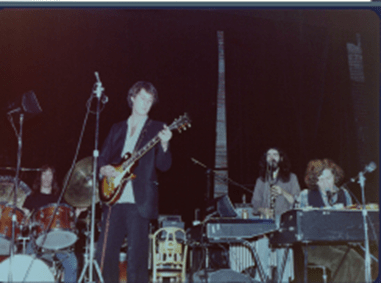
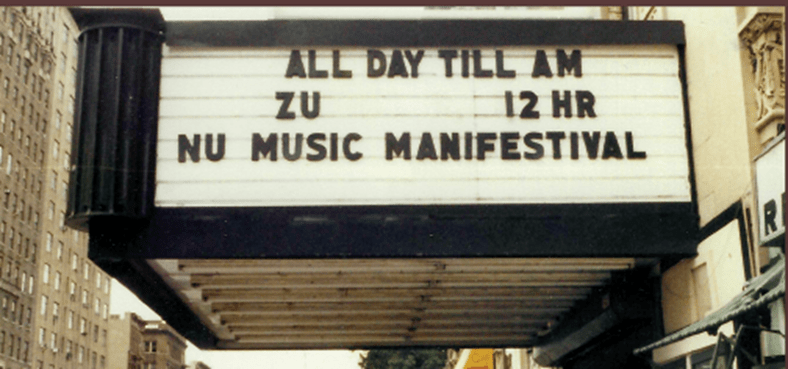
Michael Zentner (an early guitarist with the Muffins) flew over to GB with a reel-to-reel of our music and stayed with Chris Cutler  – Mike was so gutsy. The Cows and their engineers heard the tape and were impressed that there was an American band that was making a similar music. (Someone once called us ‘AmeriCanterbury’, which I like a lot.) I think we may have started corresponding with Fred in particular. When Fred came over to the U.S. and saw us perform at the ZU Festival in New York in 1978, we were blessed to include him as a fan. I think word got around that we were starting this new label, Random Radar Records, and so John Paige was able to get some tracks from Fred and Lol Coxhill included on our first record, which was a sampler of many musicians.

Michael Zentner – from ‘Baker’s Dozen’

There was also more direct contact with RIO musicians at the Zu Manifestival, in November 1978, a 12 hour festival in New York organised by Giorgio Gomelsky (the record producer and manager associated with Soft Machine, Gong and Magma). Fred Frith, Chris Cutler, John Greaves and Peter Blegvad all performed (the latter two stayed with the band), as did an embryonic version of New York Gong with Daevid Allen and Gilli Smyth. The Muffins also found themselves on the bill and Paul Sears did the sound for the festival.

The Zu Manifestival: Paul Sears, Peter Blegvad, Dave Newhouse, John Greaves – from ‘Baker’s Dozen’

Yes, this was the first time I had met any of my British musical heroes. And yes, this was on a whole other scale (HUGE) of gigs that we had ever played before. I remember it as a wild ride – so many different and varied bands performing! The new New York sound (No New York) was quite refreshing to us. It was no holds barred.

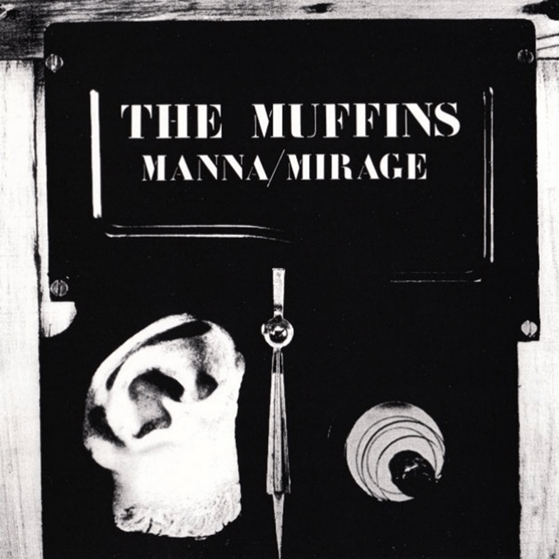
In the meantime, The Muffins had recorded their debut album ‘Manna/Mirage’, an album whose eventual CD re-release on Cuneiform Records in 1990 was my introduction to the band, and was subject to a cursory review in Facelift issue 9 where I commented on the ‘unnerving’ number of Canterbury reference points.

Billy Swann came up with the title. I can still see him sitting in the living room pitching the idea to us. The way he described it, the ‘Manna’ is the treasure that should be dropping down to us from the heavens, but the ‘Mirage’ part is the contrasting nature of it, is ‘Manna’ what will be coming to us or is it all a ‘Mirage’? And yes, I guess you could say that my own ‘Manna/Mirage’ solo albums (more of which later) were a natural extension of that first album.

With the album released through Random Radar Records, the band were at the centre of efforts of getting the record out to the world.

I think a lot of it was just word of mouth. We did the boxing and mailing ourselves. ‘Manna/Mirage’ was a solid on-going album that we wanted to keep in existence for as long as possible.

The band also released ‘Air Fiction’, an improvisational release, in 1979 on Random Radar, whilst ‘Open City’ appeared as a CD through Cuneiform in 1994, but is actually a re-release, with additional tracks, of an vinyl album whose material dates back to 1977-80. Steve Feigenbaum describes it as a ‘goodbye loveletter’ to a band he had never expected to reappear.

‘Air Fiction’ was a one-off, we wanted it to be a limited product of just 1,000 copies that would never be repressed again. It was just a fun idea to try.  ‘Open City’ was released was an afterthought, as it were, after our first breakup. We still had a last demo tape that we had recorded at our Portree Band House (where ‘Manna/Mirage’ was recorded) as well as a couple of outtakes from our Fred Frith ‘Gravity’ recordings from Tom’s studio. This is the classic quartet, released in 1994.

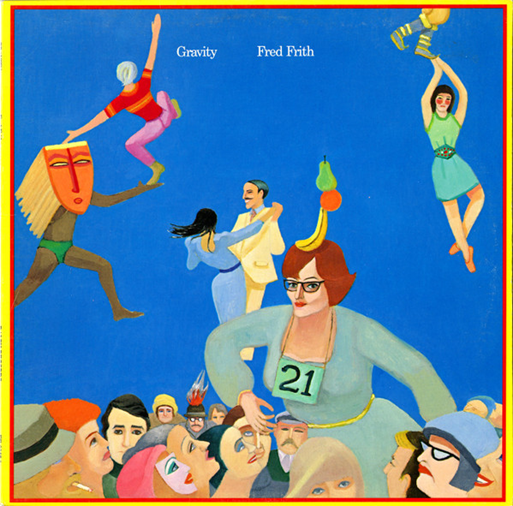
Eventually, in 1979  there would be a direct collaboration between the Muffins and Fred Frith, on Fred’s album ‘Gravity’, an outstanding album of dissonant but accessible folk-tinged experimentation which gave separate sides to Fred’s collaborations with, on the one hand, madcap Swedish progressives Samlas Mammas Manna, and on the other that of the Muffins. Dave contributes saxophone throughout the second half of the album but also plays organ on an extraordinary grating version of ‘Dancing in the Streets’

Lovely memories. Fred was so nice and forthcoming. He stayed with us at our houses – by this time we had moved to another group house together where we ended up recording ‘Manna/Mirage’. Tom Scott had a separate house with his wife that had a recording studio in the basement. It was there that we recorded our side of ‘Gravity’. I remember Fred having so much fun, like a kid in a candy shop. I also remember going out to the movies with him. I think we saw “The Elephant Man” and one of Richard Pryor’s live show movies, both of which he thoroughly enjoyed.

The Muffins took advantage of their new found connection with Fred Frith to record their second album ‘185’ in 1980, a manic, brassy, discordant project (Paul Sears describes the music in the box set liner notes as ‘angular and aggressive … the hairier the better’). It is fun, but not in a whimsical way a la Hatfield and the North. ‘185’ seems much sharper, dissonant and harsher than previous releases – and I suggested to Dave that its hints at faux folk could make it almost a companion album to ‘Gravity’.

Fred didn’t try to influence our sound in any way, he just wanted to get the best performances on tape as possible. The reason the album sounds the way it does comes from the writing; we all wanted to get away from the keyboard-based framework that had propelled us on ‘Manna/Mirage’. We had by this time been heavily influenced by Henry Cow, most notably “In Praise of Learning” as well as Etron Fou, Magma, and the new Post Punk / No New York sound, etc. We wanted a more stripped down honest sound, based more around horns, bass, and drums rather than a keyboard.

I hadn’t realised until the recent release of ‘Free Dirt’, a double CD of live performances from 1982-6, that Dave Newhouse had also taken a key role in early incarnations of Skeleton Crew, the utterly unique project put together by Fred Frith and Tom Cora. Whilst the latter is best known for his abrasive cello work,  both musicians played a multitude of instruments on stage, often simultaneously – and even sang, on a chaotic improvised melange of surprisingly accessible tracks. In the band’s first line-up Dave helped oil the wheels by contributing his own range of multi-instrumentation, including bass clarinet, saxophones and keyboards.

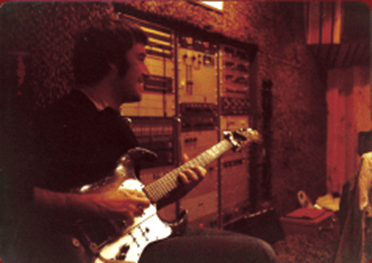
Fred Frith – Muffins sessions – from ‘Baker’s Dozen’

Fond fond memories of touring with that first iteration of Skeleton Crew. Tom Cora welcomed me with open arms into his loft in NYC where we rehearsed for a few weeks. The band we toured with, V-Effect, were all so nice and fun to be with. My only regret was not writing / composing for that group, which I’m sure was one of the reasons Fred asked me to join in the first place. But truth-be-told, I was burned out compositionally from a decade of writing all original music for The Muffins. I think I needed a break and to be just a band member for a while. But I do regret not writing any music for that group. As far as not continuing with them, I had just met Anne (my now wife) and I was ready to start a life with her and a career (a real job) where I finally made some money. And so I became a teacher.

Dave took a break from music as both he and other band members dispersed into different parts of their lives.

I went back to college after I left that first iteration of Skeleton Crew with Fred Frith and Tom Cora and got my degree in education. Then my girlfriend at the time (now my wife – Anne Hage), and I moved out to Albuquerque, New Mexico where she got a job as a teacher. I finished my classes there at the University and then also started teaching there. We stayed there for 5 years and eventually moved back to the East Coast to be nearer our family. It was in New Mexico where I started my cassette series of archival recordings called ‘Hand Systems Tapes’, the first of the Muffins ‘Secret Signals’ albums (there were 3 total, they’ve since become CDs) as well as other band offshoots from those halcyon days of yore.

We loved it there. When we moved back to the East Coast, Paul (Sears) got in touch with me and told me that he had been hearing on the internet that we still had lots of fans out there who were asking about us. Paul is the one who started us off on the second forming of the band by telling us all that we were working on a new album titled “Bandwidth”. We said, oh, okay.

In Part Two of this feature, Dave takes us through how the Muffins’ story developed through the Nineties until their eventual split, and talks extensively about his prolific solo output.

Links

Dave’s solo material is at: davenewhouse.bandcamp.com

The Muffins box set ‘Baker’s Dozen’ is available at https://cuneiformrecords.bandcamp.com/album/bakers-dozen

You can purchase other Muffins albums on Cuneiform – Manna/Mirage, Chronometers, 185, Double Negative

Thanks to Dave, The Muffins and Steve Feigenbaum of Cuneiform Records for the use of of quotes and imagery from ‘Baker’s Dozen’

For other interviews in the Canterbury 2.0 series, please click here
Canterbury 2.0 – a series of interviews examining a second international generation of Canterbury scene music

In May 2024, Facelift began a series of features with a number of international musicians who despite having no geographical connections with Canterbury, have become associated with its musical genre. This phenomenon has been variously described as ‘neo-Canterbury‘ or in some quarters ‘Canterbury 2.0‘. All musicians featured have released albums in 2024. Some of the interviews below stretch to several parts. This is an ongoing series and the intention is to interview a minimum of a dozen bands and musicians.

Canterbury 2.1 – Tom Penaguin (France)

Canterbury 2.2 – Lunophone (Ireland/Italy)

Canterbury 2.3 – Fabio Golfetti (Brazil)

Canterbury 2.4 – Amoeba Split (Spain)

Canterbury 2.5 – Carla Diratz (France)

Canterbury 2.6 – Zopp (UK)

Canterbury 2.7 – Homunculus Res (Italy)

Canterbury 2.8 – Magick Brother Mystic Sister (Spain)

Canterbury 2.9 – Dave Newhouse – The Muffins (USA)

Canterbury 2.10 – Needlepoint (Norway)

Canterbury 2.8 – Magick Brother Mystic Sister part 2

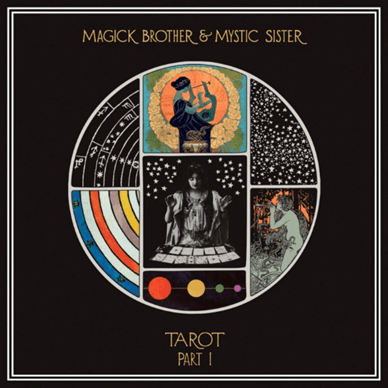
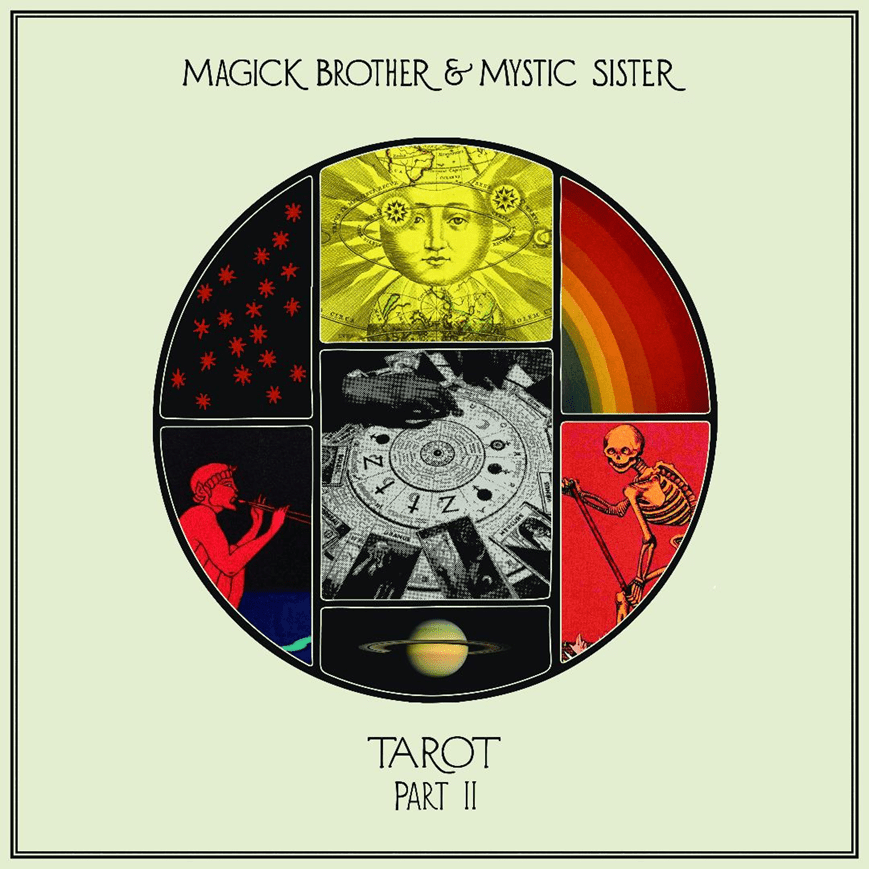
In the first part of the interview with Eva Muntada and Xavi Sandoval, the two main protagonists in Barcelona band Magick Brother Mystic Sister, we talked about their visits in Canterbury in 2000 and 2002 which sparked much of their interest in music covered in these pages, along with details of the long road towards creating their first album, which was released in 2020. In this second part we talk about the band as a live act, the ‘Tarot’ project which has spanned two separate albums, the first released earlier this year, and the second which is just about to make its appearance, as well as their part in unearthing a slice of Gong history from 1973.

After a four year gap, Magick Brother Mystic Sister re-emerged earlier this year with Tarot 1, the first part of companion albums covering interpretations of the meanings of the 22 major cards in a tarot deck. The music has changed too, with the pieces aired on the first volume of Tarot being by and large more reflective and dream-like than material on their debut album.

Xavi: This album can be seen as if it were a card reading and by some kind of cosmic chance these songs have appeared. We have tried to convey them as best as possible. The Tarot can be seen as a collection of knowledge from the ancient world. It has served and will continue to be a source of inspiration for countless artists. This has been our small contribution to give our thanks to all Tarot lovers.

Thinking about it, a lot of things have changed: the working method, the fact that the compositions were made during the pandemic had a lot of influence… but at the same time it gave us a few very valuable months to try things out in the studio…

It has also been a challenge to create the Tarot concept with 22 songs, having to adhere to certain parameters regarding their meaning or the length of the songs… Although many ideas on Tarot part 1 also come from improvisations, others were prepared beforehand in a more concrete direction. Of course, the change in the formation also influences this. Alex is a very powerful drummer with a new energy that is much needed on this album.

In this Tarot card we wanted each Arcanum to have its own focus, following the characteristics of each figure a little, but also letting yourself go without limits. Some ideas were quite old and we didn’t want to leave them behind so we took them up again with a new energy, maybe it has more of a krautrock, electronic music or acid folk feel to it…

Eva: I remember a pretty dark time during Covid and we weren’t at that exciting point of the beginning of the first album, that one took us too long and we wanted to recover other influences. Entering the world of Tarot requires very deep introspective work so the music took over.

There is also a change in focus in terms of instrumentation and the musicians involved. Whilst tracks such as ‘The Chariot’ and ‘The Justice’ in particular recall the overt Canterbury influences of  of the first album, the music elsewhere is more introspective, and the focus of the gloriously anachronistic music has moved from bossa nova, weaving flute and Dave Sinclair keyboard sounds to a more dreamlike 60s folky feel. It also introduces the sitar of Tony Jagwal, most spectacularly on ‘The Hierophant’.

Xavi: In the previous formation, drums, bass and keyboard, and perhaps because of the type of composition, the flute had a lot of space for solos.

The change of components and the entry of Tony Jagwar allowed us to give way to new sounds, to open up to new ideas, to be more expansive and not stay in the same formula.

Tony is a highly virtuosic sitarist and guitarist as you will hear in the second part.

We have also used synthesizer sounds more and I have been able to develop more acoustic guitars, mandolin, space guitars… in other types of compositions.

During the course of our conversation back in 2020, Eva told me the story of her’s and Xavi’s role in unearthing an unusual Gong video dating back to 1973. Eva told me that their connection with Daevid Allen continued after the Canterbury Sound festival in 2000.

Eva: We saw Gong on other occasions, once at a concert in Huesca (near Zaragoza in Spain in 2001). Daevid asked us if we had a car to go on tour with them and help the light technician, unfortunately the car was not ours and we had to return it, too bad. We met Gilli Smith, a woman with such kind energy, wise and lovely.

We learned of the existence of a lost film of a Gong concert at Montserrat Abbey in the early 70’s through a friend of ours who had previously been a monk. Daevid called him “Brother Francis” and he was the person who opened the door to the Monastery for them

Eva sent me the email thread from 2006 she had exchanged with Daevid which showed the exchange of information ‘… One day chatting about music with Francesc, he
explained an anecdote from his youth, when he was a monk at the Montserrat Monastery. Once a very special girl called Maggie Thompson knocked on the monastery’s door and started to talk him about a band very interested in the goddess and the black virgin, and to discover the theluric and mystic centre of Montserrat. They really wanted to play at the monastery. And yes! We realised that it only could have been you, the Gong Family!.. After some years looking for it, Francesc has found a copy of it that you might not have. We have it now, and we think it belongs to you’ (excerpts from email from Eva to Daevid Allen, 2006)

We obtained the film to send to Daevid… It is the film that was released on DVD…

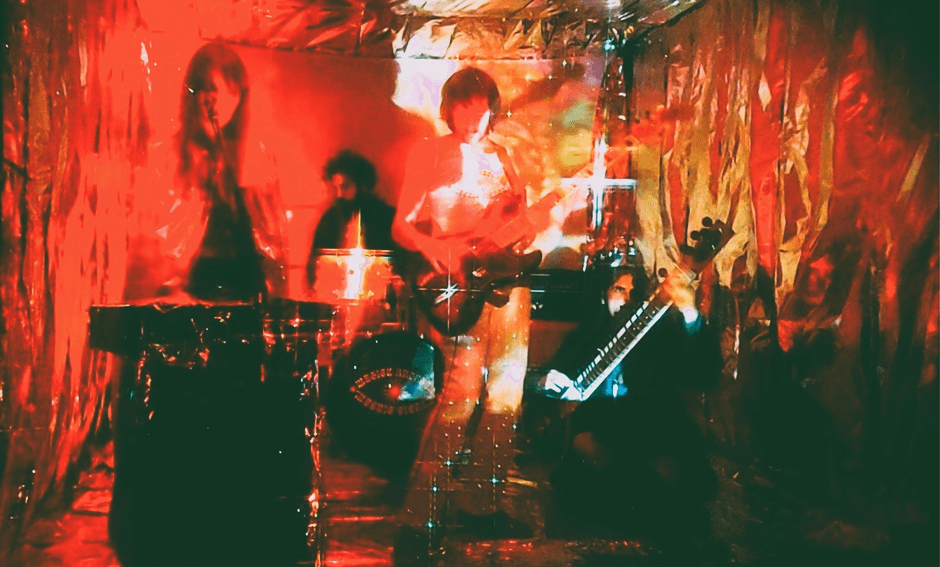
I asked about the band’s live identity, as there is very little (although nevertheless stunning) evidence of the band playing live online, and this led to discussion of the music’s audience:

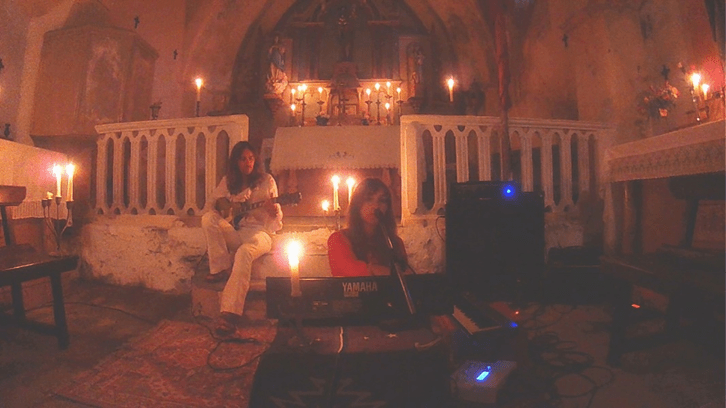
Eva: We have done concerts in a little church  were we rehearsed and made small creations with other musicians, violinists, classical guitarists, etc. Although we have worked on playing songs live, for the most part we are a studio group. In Barcelona you must pay to play which complicates things a lot.

Xavi: When the first album came out there were a lot of (COVID) restrictions and although it was a shame, we learned that for us it is more important to do concerts that have something special and to play in the best possible conditions (I don’t mean just economic ones) since this music is complex to perform live, it requires time and rehearsals and lately we have dedicated that time more to creation, recording, publishing, with everything that entails today… But it is very possible that a live presentation of the Tarot will be made.

Eva: I think (our audience) is also international, thanks to social networks and the globalized world. Perhaps it also counts that in other countries there is a musical culture where this type of initiatives are appreciated in a different way, but here they also follow us, and we are very grateful to all those who listen to us, I think that everywhere there are those oases of people that you get to know and connect with.

We also talked, as this article is part of the Facelift’s ‘Canterbury 2.0’ series, as to how the band felt about being afforded such a tag, and whether it fairly reflected their own influences.

Xavi: I remember the first time I heard Caravan’s ‘In the Land of Grey and Pink’ at a friend’s house, although we already knew something about Soft Machine, Egg, Gong, Arthur Brown and King Crimson… but that album introduced us even more to this style.

Eva: I remember going into a record store and seeing the cover of Soft Machine, it really caught my attention, I bought it and that’s where it started… In the same store they told me about Caravan… On another occasion, a Gong song was playing in a nightclub and I went to the DJ to ask him what it was. More or less at the same time I went to an after-party where Xavi played records, when we weren’t together yet, I was really struck by the selection, Tim Blake, Steve Hillage, etc…

Albums like ‘The Crazy World of Arthur Brown’, ‘You’ by Gong, ‘Third’ by Soft Machine were initiation albums for us and the beginning from which we began to discover more and more..

Xavi: We connect in a very deep way… because of the experiences we have lived following these groups, their stories, their members, for years it has been the soundtrack that has accompanied us.

Eva: We have played some of their songs and we learned a lot studying them and so many others. But the influence is evident in the techniques, the bars, the tempos, the sounds, the harmonies etc.

Xavi: There are many factors but I suppose it was a natural evolution from listening to British bands from the 60s to ending up with the Canterbury sound. There are incredible common elements, very virtuosic drums and bass, long solos and intertwined passages, the 7/4 time signatures and polyrhythms, the sense of humour, pataphysical, the use of the organ and mellotron with distortion, the flute and the saxophone, Steve Hillage style delay guitars or the influence of John Coltrane, the flexible and modal harmonies, all loaded with imagination and cosmic utopias.

Eva: Those who know this style will always defend it as a great moment in progressive music. In Barcelona many of these groups were very popular in the 70s and were a great influence on bands here. Many of them, like Kevin Ayers, spent their time in Ibiza and Mallorca and had a very direct relationship here, in concerts and even appearing on some music programmes on public television in Spain, so from what we know they were valued here although obviously not everything they deserved, perhaps because they were part of a counterculture environment and the political situation that existed here.

Finally, having not yet heard Tarot 2 (the plan was always to release the albums almost simultaneously, but in fact the latter is now more likely to appear now in November 2024) I asked how this latest release would take things forward:

Eva: It will follow the line of Tarot 1 because the relationship with the cards is maintained and we will play with that symbiosis, perhaps part 2 will be more lunar and there will be ambient passages, folk, space rock, or a kind of Hindu raga, but there will also be something more in the Canterbury style, lately we have been classified as a style … dreamprog … and I think it is quite accurate!

The band’s debut album can be listened to and purchased here: https://magicbrothermysticsister.bandcamp.com/album/magick-brother-mystic-sister-2

Tarot 1 is available here: https://magicbrothermysticsister.bandcamp.com/album/tarot-part-i and here https://www.soundeffect-records.gr/tarot-pt-i

Tarot 2 is available for pre-order here: https://magicbrothermysticsister.bandcamp.com/album/tarot-part-ii

Watch Magick Brother Mystic Sister videos here: https://www.youtube.com/channel/UC8I5vUBFWFX6wh0Q0cXPNdg

For other interviews in the Canterbury 2.0 series, please click here
Canterbury 2.7 – Homunculus Res part 2

In the second part of our interview with Homunculus Res we discussed later albums released by the band, before moving on to talk about more general themes such as how the band went about composition, live performances, and Homunculus Res’ place within the wider Canterbury diaspora. You can read part 1 of the interview here

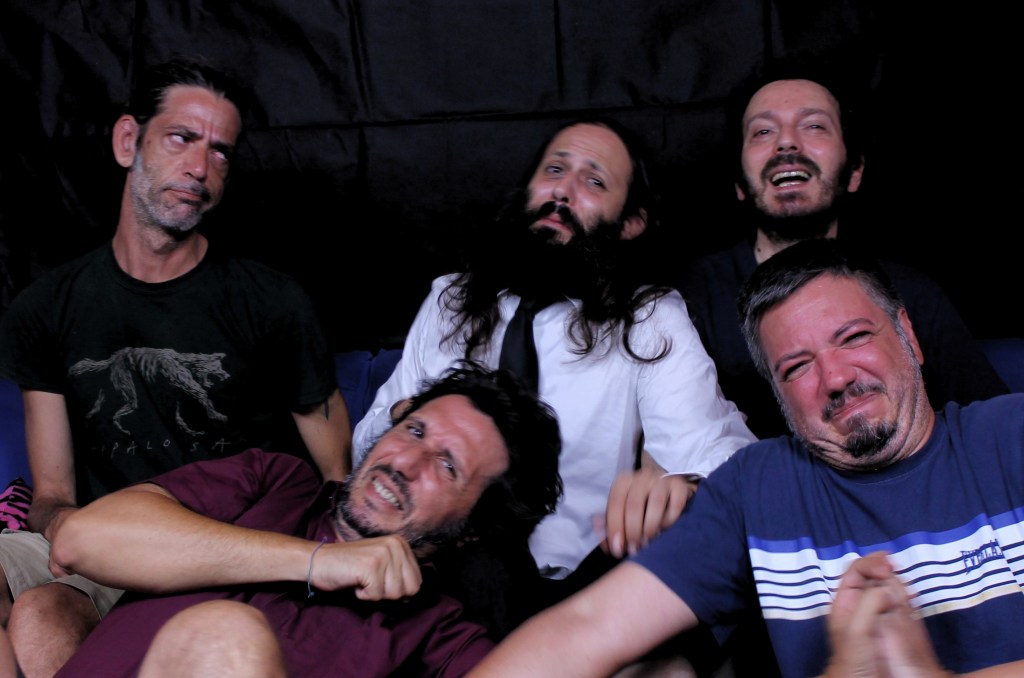
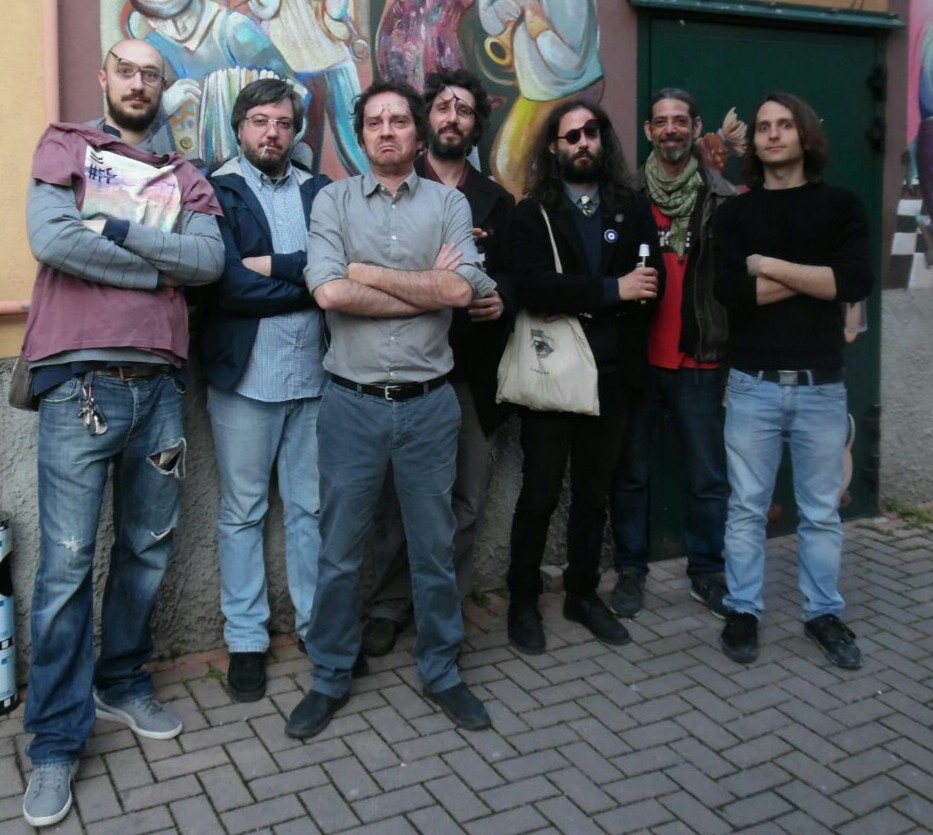
Homunculus Res 2020 – back row: Daniele Crisci, Davide di Giovanni, Dario d’Alessandro; front row: Daniele Di Giovanni, Mauro Turdo 2020

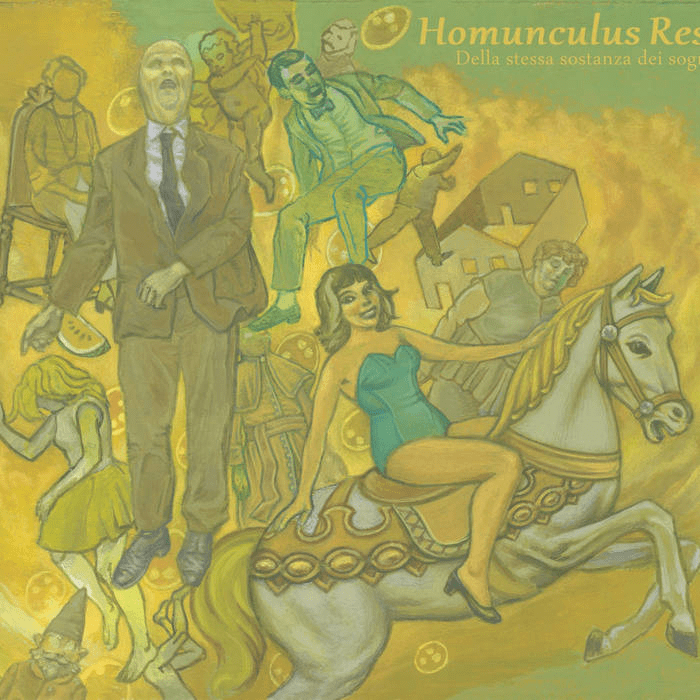
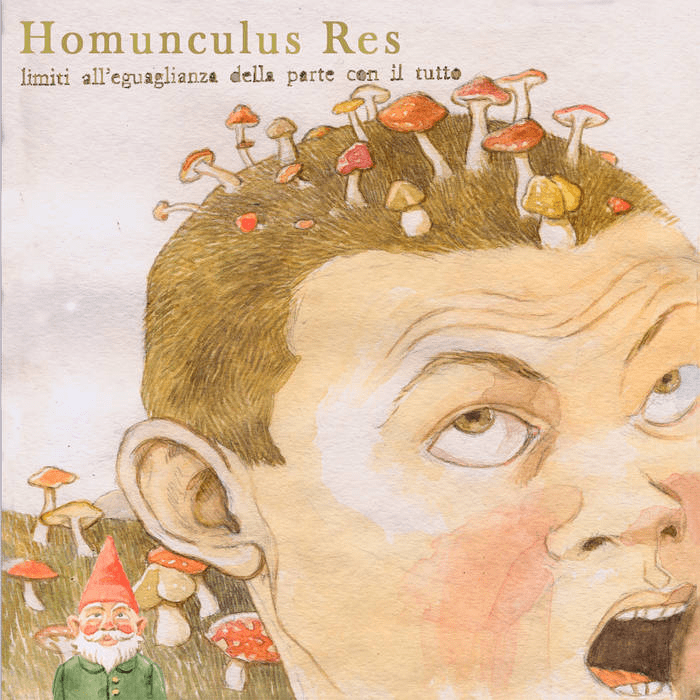
Dario d’Alessandro: After having dealt with the body and nature, with the third album ‘Della stessa sostanza dei sogni’ I decided to deal with the oneiric (relating to dreams) and the psychological aspect of the homunculus. Each song covers the world of dreams. Dreams are mentioned in every single song. These cover: the dream as a desire for love (“Faccio una pazzia”, ​​”Non sogno più”); nightmares (“Mentre dormi”, “Denti cadenti”); a revealing dream to win the lottery (“La cabala”); or as a premonition – which contains cultural prejudices (“Bianco supremo”); the dream as a comfortable place compared to reality (“Dopamine”); ways to help sleep (“Rimedi ancestrali”); and finally the cryptic dream that hides unresolved feelings (“La casa dei sogni”).

I used the image of a horse in the first three pieces just as a device to create connections. I was probably influenced by the white horse, foretelling death, in David Lynch’s ‘Twin Peaks’. However, Dario pointed out that the first track ‘La Cabala’ is actually not the Italian for horse, which is ‘Cavalla’ – ‘Cabala’ is an Italian term relating to the interpretation of dreams that correspond to numbers to play in the lottery. – Cabala also being a reference to the Jewish cabala, Qabalah or Kabbalah – a set of esoteric and mystical teachings typical of Rabbinic Judaism).

We chose a brighter overall sound than before . The best way to represent the dream, its immateriality and wonder, was the pop format. It is our ‘pop’ album, with light songs, and much more space for lyrics. It is true that the musical aspects are more subordinate to the song, even if there is no lack of large instrumental parts.

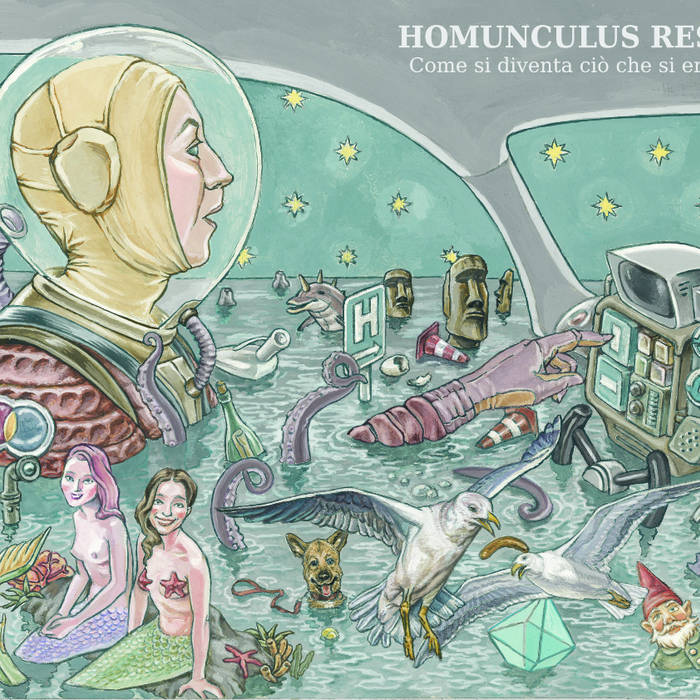
Dario also explains the increasing use of external musicians, as guests beyond the core Homunculus line-up, which had started on the previous album ‘Come si diventa ciò che si era

Dave Newhouse (The Muffins), as well as Aldo De Scalzi (Picchio dal Pozzo), the Leddi brothers (Stormy Six, Mamma non piangere) and Steve Kretzmer (Rascal Reporters) were all great musicians of the recent past, who inspired us, who showed trust in us and enthusiasm. We are grateful to them. Just as we are grateful to all the musicians of today who have collaborated with us. The list is long, but I must mention Petter Herbertsson (Testbild!), Rocco Lomonaco (Breznev Fun Club), Regal Worm, Alco Frisbass, Paolo Botta (Ske, Yugen, who also took care of mixing a couple of times), Alan Strawbridge (Schnauser), Giovanni Parmeggiani (Accordo dei Contrari) and Sterbus.

We simply got in touch because of mutual respect. In particular Dave Newhouse was an enthusiastic collaborator, he played a lot of parts on two of our albums using many different instruments, flooding our songs with extreme elegance. For me it was a wonderful experience since ‘Ospedale Civico’ is inspired by ‘The Adventures of Captain Boomerang’ (from the Muffins’ first album ‘Manna Mirage’), for me a masterpiece of the entire twentieth century!

I had the pleasure of playing on the first pieces that Steve Kretzmer (of Rascal Reporters) composed with organ after a long period of creative pause, it was 2017, and I followed the evolution of the two Redux volumes and the album ‘The Strainge case of Steve’. I also painted two covers for Rascal Reporters, it was during this period that I met James Strain who took on all the work, from playing to mixing. (Dario and James collaborated most recently on the Lunophone album, released earlier this year, and the subject of an earlier Canterbury 2.0 interview (link))

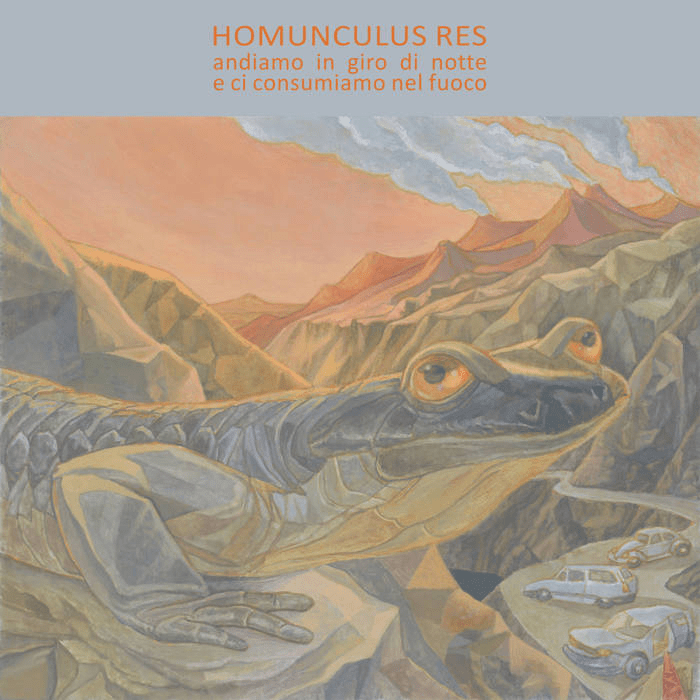
‘Andiamo in giro di notte e ci consumiamo nel fuoco’, Homunculus Res’ fourth album was my own entry point into Homunculus Res in 2020 and arguably remains their defining statement. It appears to be their most coherent musical statement: the tracks are punchier, the ballads are sweeter, it is an album of consummate compositions. In the review in Facelift at the time, I remarked upon the convoluted changes of direction, the blazing fuzz sounds, the mediaeval feel but also the serenading of the listener through its wide-eyed innocence, before concluding that the band were as ‘mad as a box of frogs’. For all of this, in relation to the first 2 albums at least, there appears to be less of a deliberate attempt to throw the listener off track.

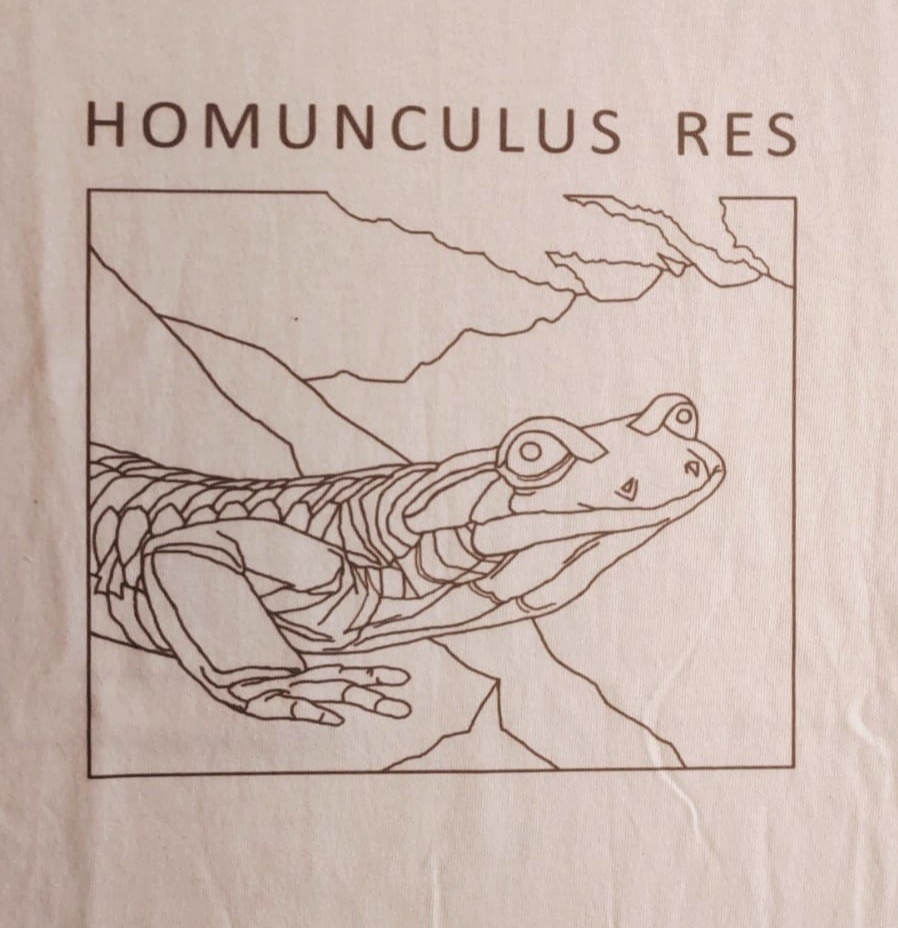
Yes, it’s exactly as you say. I think the fourth album is stylistically the most complete. We’d reached the perfect balance between experimentation and accessibility. Even if the provocative aspect was less present, I believe that this one, like the other albums, has in itself a whole layering of meanings, some more evident than others. And I think it has its own crypticism starting from the lizard on the cover that, with a fleeting and enigmatic look, stares at the viewer/listener, stops on a stone (it is our ‘rock’ album) in a suffocating post-apocalyptic background.

The album title is taken from the Guy Debord film, a medieval riddle applied to consumer society: we go around at night and we consume ourselves in fire. Consumerism consumes the consumer. In the first piece ‘Lucciole per Lanterne’, this is made explicit through the firefly (the solution to the riddle) attracted by the light of the lamp until it gets so close that it burns. In the song, the firefly is also a reference to prostitution and it is the light that speaks, it invites her towards itself.

All the songs in the first part of the album, up to ‘La Spia’, deal with the consumption of material goods. This includes ‘Il Carrozzone’ where we speak as a group: we have become rich with music and we buy the most expensive things while despising the poor, whilst ‘Supermercato’ is a bizarre dialogue with a supermarket clerk.

I mentioned in the introduction to the first part of this interview that ‘Supermercato’’s coda contained a rendition of first part of the piece rendered backwards, immaculately performed by the baroque sounds of French horn, oboe and viola . Dario is amused by the fact that no-one has ever spotted this even though he subsequently made a posting of the entire album played backwards on Youtube, which I saw and commented on at the time as being hilariously abstract, but it turns out was published just to give us all a bit more of a hint as to the coda’s origins. You heard it here first!

We continued on the album with ‘Buco Nero’, the black hole that devours everything, like Pere Ubu’s belly. And ended with ‘La Spia’, that is, the signal that lights up in a car when there is a problem (another reference to fire/light). It is a song about planned obsolescence. (This is the piece referred to in the Facelift review as containing ‘wideeyed whatsitallaboutery’, assuming as I did at the time that it referred to some sort of existential confusion about existence, which in a roundabout way I suppose it is.)

The second part of the album is more cryptic in its meanings. It goes from the salamander on the cover, a mythical animal that crosses the fire, indifferent and solitary, to deliberations on Pythagoras and metaphysical cosmogony; the song ‘Tetraktis’ is dedicated to the number 4, as the album is the fourth one. To arrive at the Kubrickian shining (‘La Luccicanza’) and the verbal violence of the last piece. The references to “Lullabye Letter” (in ‘Supermercato’) and “Hey Jude” (in ‘La Luccicanza’) are absolutely intentional.

I can’t remember quite how I got the impression that Homunculus Res’s fifth album ‘Ecco l’impero dei doppi sensi’ might well be their last, whether it was some throwaway remark from Dario, or just the overall mood of the album, which appears more philosophical, more stately, a project which feels it has reached a level of maturity. Dario remains cryptic on the subject.

The meaning (of the album) is not the end of the group, but the end of everything(!) Literally, so it is probably the most philosophical album. I am pleased that its solemn aspect comes out despite the catchiness of the music.

I agree that it follows the state of grace of the previous one, but the songs are deliberately simpler and more direct (apart from the album’s finale where the sounds precipitate into an increasingly frayed and shapeless sonic mix towards entropy).

cover for Ecco l’impero dei doppi sensi

Dario pointed me towards the press release which he made for ‘Ecco l’impero dei doppi sensi‘, which he told me he regarded as an ‘exhaustive’ statement on what he hoped the album would achieve. Here it is printed in full:

<<After the ruminations on the human condition, through metaphors of the natural elements [earth water air fire], the Sicilian band inevitably arrive at transcendence, always in an inexorably nihilistic perspective and with the usual humour that here becomes darker and in some cases even absent.

Every reference to humans, society, history, is avoided as much as possible. All meanings tend to be abstract. The theme is a continuous digression on the intangible: quintessence, absence, ether, cosmic and interior void, limits of language and the universe, destroyed and recomposed monads, memories of the future, senses, non-sense, double meanings, rhetorical figures, numbers; these are suggestions that often recur in the songs.

We’ve become accustomed to songs with wide instrumental spaces, with their particular progressive melodic pop-rock style with irregular structures, which here becomes even more dry and essential, even if there is no lack of episodes of instrumental richness that reach paroxysm, thanks to the various exceptional musicians, Italian and foreign, who participate with wind instruments, voices, exotic and ancient instruments. There are many references to the number 5, not least the length of the album being fifty minutes.

There is no desire to communicate anything or, rather: there is the desire not to communicate anything – even while doing so.

Homunculus Res have nothing to say, and in fact they do not say it.>>

The music of the song “Viaggio astrale di una polpetta” (the astral journey of a meatball) was written by Davide Di Giovanni and is dedicated to the death of his beloved cat, lovingly called by him with nicknames including Polpetta (meatball). For me, it was a pretext to write a text inherent to the concept of the album (“recomposed monad / unity in form”).

The piece is very funny and in some sections it contains this kind of bizarre ancient folk – plus a quote from Camel.

With Dario being the chief songwriter and main driving force behind the band, as was outlined in part 1 of this interview,  I was curious as to how his compositions took shape…

From the second album onwards, when we established ourselves as a quintet with the entry of Mauro Turdo on melodic guitar and Daniele Crisci on bass, I’ve always thought of a theme and a consequentiality between the albums, a continuum. So the theme, and the topics I want to talk about, influences the way I write the songs, for example I want a certain atmosphere of the song, more or less cheerful, more or less complicated to accommodate what will be the actual lyrics. These always come last, when the song is defined, and are modelled around the various accents of the music.

Usually I bring the pieces to the rehearsal room already quite structured, with an idea of ​​the arrangements for each instrument.

First of all I have to relate to the drummer, with him we decide the rhythmic progression and the bar lengths, then he is free to fill in as he wants. However, if there are accents that I cannot do without, these have to be respected. In the meantime, the others, perhaps with notes or chords to refer to, begin to familiarise themselves with the piece.

The same goes for Davide’s pieces, but it often happens that he records almost all the instruments for his pieces. For my pieces also interprets the chords and always inserts nice connections or cheerful rhythms and counterpoints. All the keyboard solos are written by him.

Davide Di Giovanni

Daniele Crisci and Mauro Turdo have perhaps the most demanding tasks because, in most cases, they have to follow the most obligatory, written melodies.

The experience of forced confinement due to Covid was not a big shock for me. I continued to write songs and record. And I continued to collaborate remotely with other musicians. So my way of making music did not suffer any major shocks. Homunculus Res even managed to play live in December 2020 for an online prog festival in Japan. By contract we cannot show the video until December 2025!

We moved on to talking about how Homunculus Res materialised in a live context

We do few live performances, an average of one or two a year. The more time passes, the less we perform, because each of the 5 of us has his own work commitments, family commitments and commitments with parallel musical groups or long-distance collaborations. And also nobody calls us! However, we have met at least once a week for 14 years, maybe just to talk, or listen to music, or plan something, or play board games.

There are videos online (which give an indication of what Homunculus Res are like live). We play like a rock quintet and often have a friend to guest on wind instruments, for example. The songs with complex arrangements, like those on the second and third albums, are reduced to this rock formula. So we are more fundamental on stage.

We have played mainly in Palermo and Sicily. Twice we were invited to play in Milan, more than a thousand kilometers from here. We have played on both large stages and small clubs with average audiences of over a hundred people.

One of the motivations for the Canterbury 2.0 series of interviews has been to seek the views of musicians, particularly in climes a good distance from Canterbury itself, to assess the nature of what Canterbury music is, and how it is perceived in their country. Some of this will appear in a PhD project, due to be completed in 2025, but it felt appropriate to include here too. Dario is uniquely placed to judge this, both as a fan of the genre, but also because he has been particularly proactive (like Dave Newhouse of the The Muffins) in seeking out other similarly influenced musicians for guest work or collaborations.

The first Hatfield and the North record had a profound effect on me at 16 or 17, but I didn’t know about the connections between the musicians and the so-called scene. For me it was a progressive jazz rock record, a rare find among the records I knew. A few years later I discovered Soft Machine and Robert Wyatt and I began to feel the connections, the common taste. I used to read alternative rock magazines and the Canterbury scene was never mentioned. At the end of the 90s, thanks to magazines that did retrospectives of 70s groups and thanks to friends and music catalogs and above all the spread of the internet, I delved into everything.

In addition to the usual names of the “scene”, some of which I have already mentioned, I had fun and was amazed to discover the “minor” ones or those that can be grouped together or those of the second wave of the late 70s and early 80s such as Supersister, The Ghoulies, Moving Gelatine Plates, The Stubbs, Supply Demand & Curve, Cos, Nanu Urwerk, Grits, Master Cylinder, Massimo Giuntoli, French TV, Radio Piece III, Volaré etc.

Dario d’Alessandro

I think that the traits that can be recognised and that were certainly born from those few English musicians at the end of the 60s are a certain elegance and lightness of composition that is jazzy and psychedelic and progressive. Warm and soft sounds and a lot of musical and textual intelligence and irony.

My understanding is that the Canterbury scene or sound is perceived benevolently in Italy, but only by a few people, as a gem – something for connoisseurs. And this is quite transversal among listeners and critics. The Italian press, more or less independent, since there was punk and post punk, has shown maximum contempt for progressive rock, but the most enlightened have distinguished the Canterbury sound as something precious and refined. A few books are dedicated to it. However, it seems to me that the term “canterburyan” has returned to music magazines and blogs in general – apart from those specialized in both prog and Canterbury or Rock in opposition and “other” music. I think that the greatest credit goes to Wyatt’s ‘Rock Bottom’, an album appreciated by many, which has overcome the limits of the niche and has acted as a portal to delve into the scene.

I can only be happy if critics and listeners include us in the neo-Canterbury genre. For us it is the main influence and it came out naturally, if there is some wink or citation, these are happily accepted. When we met we were super fans of Soft Machine, Hatfield and Egg. I am also happy that there is a sort of community of musicians scattered in Europe, the Americas and Japan who renew this type of music, as you are demonstrating with this series of interviews.

Given that later Homunculus Res albums in particular showcase guest appearances by members of a number of the projects mentioned above, I wondered if Dario had reciprocated in terms of his own collaborations and credits. In addition to the collaborations with James Strain and Steve Kretzmer of Rascal Reporters, discussed elsewhere, he mentioned the following:

I played on some records by Maisie, an Italian pop group. I produced with my phantom label Budella Records an album for Calogero Incandela (a name taken at random from a phone book), a “melancomic” singer-songwriter friend of mine from a town in Palermo, -all the Homunculus Res play on it. (https://www.discogs.com/label/1110952-Budella-Records?page=1)

I also played a small synth part on a record by Sterbus, a delightful Roman duo who are fans of Cardiacs, and who are present on two of our albums.

I have collaborated and still collaborate with Luciano Margorani, founder of the duo LA1919, a rock in opposition duo from Milan in the 90s. I sang and played keyboards on several of his albums and during the pandemic we made an entire album remotely! and I’m also more than happy with my parts on one of his albums released last year, I wrote all the lyrics and played keyboards.

I haven’t done anything since the Lunophone album came out, it’s been a hot and lazy summer that hasn’t encouraged me to do anything. A few days ago I started writing songs again, I’ve done three so far. And I think it’s my usual style, a little sweet, dissonant and complicated. And a few days ago I got involved in a very interesting project that I can’t talk about at the moment!

Huge thanks to Dario d’Alessandro for his hugely informative and detailed responses to my interview questions

Albums covered in this article

Homunculus Res

Della stessa sostanza dei sogni – https://homunculusres.bandcamp.com/album/della-stessa-sostanza-dei-sogni

Andiamo in giro di notte e ci consumiamo nel fuoco – https://homunculusres.bandcamp.com/album/andiamo-in-giro-di-notte-e-ci-consumiamo-nel-fuoco

Ecco l’impero dei doppi sensi – https://homunculusres.bandcamp.com/album/ecco-limpero-dei-doppi-sensi

with Luciano Margorani

Luciano Margorani – Dario d’Alessandro https://lucianomargorani1.bandcamp.com/album/luciano-margorani-dario-dalessandro-album-2021

Diece Pezzi Facili – https://lucianomargorani1.bandcamp.com/album/dieci-pezzi-facili-by-luciano-margorani-dario-dalessandro-fabrizio-carriero-album-2023
guesting with Rascal Reporters

The Strainge Case of Steve – https://rascalreporters.bandcamp.com/album/the-strainge-case-of-steve-2

Part one of the interview can be found here:

For other interviews in the Canterbury 2.0 series, please click here
Canterbury 2.8 – Magick Brother Mystic Sister

Eva Muntada; Xavi Sandoval

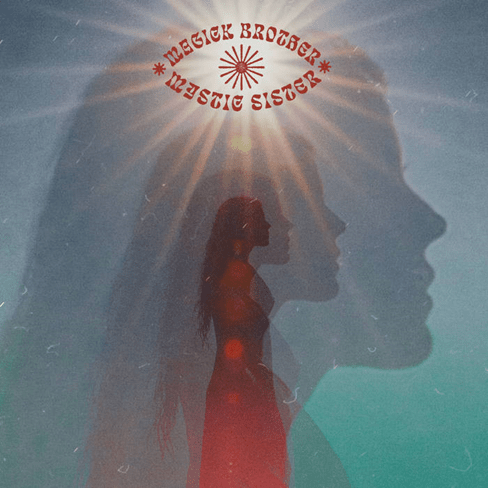
Magick Brother Mystic Sister are a project from Barcelona in Spain who by monicker alone should immediately attract your attention. Sharing a name with the first ever Gong album, they’ve managed to maintain, in between producing 2 very fine albums to date (with a third imminent) a certain mystery to both their music and their origins: videos online often mask identities, often through use of external video footage or simply through the blurring of images. Is there a connection to Gong? How long have they been in existence? How are they perceived in homeland Catalonia? Whilst some of that mystique undoubtedly will remain, hopefully what lies within the 8th interview in the Canterbury 2.0 series will at least give some insight into this very fine band.

After some initial contact with the band when they released their brilliant first album ‘Magick Brother Mystic Sister’, I recently reconnected with the band’s two main protagonists: Eva Muntada (keyboards/vocals) and Xavi Sandoval (bass/guitar) and asked, as I always do, of their own musical origins. I got a suitably cryptic response:

Eva: That would lead us to write a book and for now it would be better if our music told the story…

Xavi: We have always felt connected to music, it is almost part of us, then over time there have been many projects in which you learn, where you try, you succeed. or you’re wrong… Until you find your way, and it is during that process that you develop as a musician. For our part, this is the music that counts now, it is the one we managed to publish and show abroad, so we will continue with more!

However, previous correspondence with Eva back in May 2020 at the time of the release of their first album had at least revealed an active interest in music covered in these pages, stretching back to two Canterbury Sound festivals in the very early 2000s, and goes a long way to explaining the myriad of familiar styles which cropped up on their first album: a whole range of Canterbury keyboard sounds, fuzz bass, bossa nova rhythms, flute and even glissando guitar. Eva and Xavi, the constants in the Magick Brother Mystic Sister continuum, take up the story:

Eva: The first (Canterbury Sound) festival was in 2000, we already knew many of the groups that played and that’s why we went. We were already fans and the lineup was irresistible, so we took a plane from Barcelona to London and then a train to a hill near Canterbury.

The concert was held in a huge English garden surrounded by fields of fruit trees and statues…the atmosphere could not have been better…

Just as we arrived in the morning, Arthur Brown began to compere the show and he started singing some songs from Crazy World of… to the audience and we were immediately amazed.

There weren’t too many people, we think it was the first edition. The rest of the lineup was Gong, Caravan, Man and Colosseum. We saw Caravan later on another occasion, once when they played in Spain.

We didn’t know Colosseum at this point, although we recognised the singer Chris Farlowe and it was an incredible concert along with Man’s, and when we returned to Barcelona we bought the Colosseum albums.

Canterbury Sound festival 2000

The festival closed with Caravan playing songs from ‘In the land of grey and pink’. We remember that the music sounded like the record, ‘Nine Feet Underground’ sounded incredible in that environment.

The Gong performance was fantastic. They wore their space-glam outfits…, Gilli in a blue dress and a silver cape representing the spirit of Selene. The atmosphere at the festival was very relaxed, totally natural, so we went to thank them for their music, to have them sign our records … We were able to speak to Daevid Allen – he was surprised that we had travelled here, a young couple from Barcelona. He told us, “you come from Barcelona to listen to this music, you are crazy but we love crazy people, we are all crazy!”. At that time we longed to have a band ourselves and it was something of a  pilgrimage, a great opportunity to see these great masters and learn a little.

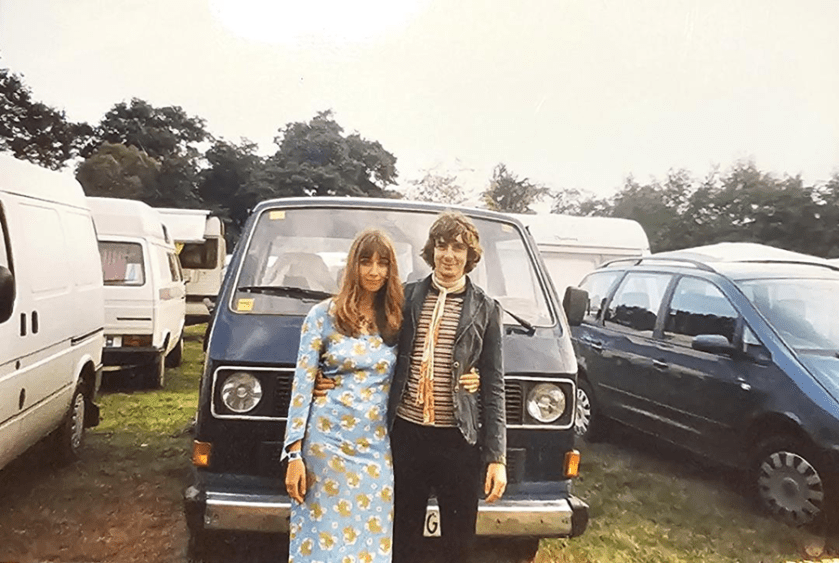
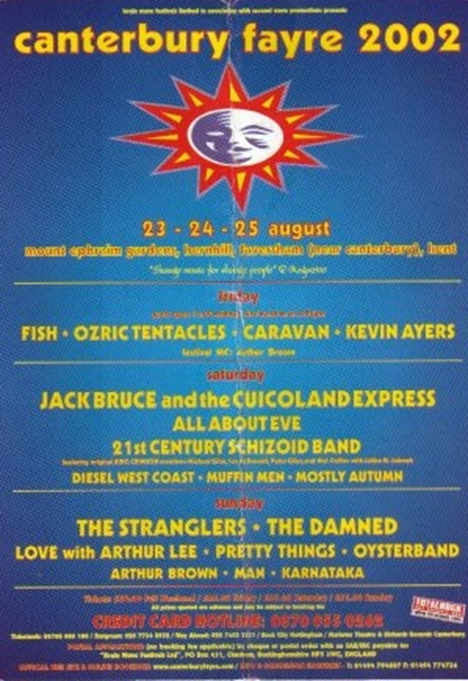
There was another edition in 2002 (by which time it had been rebranded as the Canterbury Fayre), it was much bigger and had fenced areas and lasted 3 days. This time we went with friends from Barcelona in a Volkswagen van emulating the hippie dream.

We met a lot of interesting people, the lineup was already spectacular with bands from other styles as well… Pretty Things, Electric Prunes, Arthur Lee & Love, Jack Bruce, Nick Turner’s Space Ritual, Kevin Ayers, Ozric Tentacles, The Stranglers, Man, Arthur Brown, they were all fantastic with memorable moments, but the one that impressed us the most was the 21st Century Schizoid band, the line-up from King Crimson’s first album (minus Robert Fripp). We will always remember Ian Mc Donald’s flute solos on ‘Epitaph’ or ‘I Talk to the Wind’. Listening to all those songs was going beyond the pale…

The couple would renew their acquaintance with Daevid Allen a few years later in an unexpected manner, revealed further on in this feature, but we moved on to talk about the duo’s own music, starting with their own musical backgrounds:

Xavi: our training is somewhere between classical and self-taught. At home we listened to some pretty good music, my father liked rock and roll and flamenco so I grew up listening to the classics Elvis, Chuck Berry, Eddie Cochran, etc. and then Paco de Lucia…

Eva: In my childhood at my grandparents’ house we listened to classical music, Bach, Mozart, Albinoni, Debussy and I played the piano they had there. And with my parents we always listened to rock music: Neil Young, Magna Carta, Supertramp, Mike Oldfield and many more… then I also tried to play that music on the piano when my grandparents were not there… Those moments have always stayed with me.

I asked about their choice of the name Magick Brother Mystic Sister

Eva: To choose a name was very difficult. At the time the band consisted of two couples (Eva and Xavi, but also flautist Maya Fernandez and drummer Marc Tena) and reflecting the inspirational effect of Gong on myself and Xavi, we decided on this name. We are aware we are not like Gong band but we love their spirit.

We  discovered that Magick Brother Mystic Sister suits us (although the name is a little long!) because it describes our music and our interests in magic and mysticism quite well, and on the other hand we are big fans of Gong and it is the title of their first album. Also, we wanted a name that contained two genders or complementary duality that would transmit that magical union that sometimes occurs between people.

I asked if Gong had given its blessing for use of the name

Xavi: No, because I think Daevid died before we released the album.

In reality the nature of the music displayed on the band’s brilliant first album takes influences from many more sources than just Gong. As I wrote in my review at the time in 2020 ‘the band they bear most resemblance to is probably Caravan circa ‘If I Could Do It All Over Again’, courtesy of a deliciously dated Sixties vibe, flute solos to die for and bossanova-flecked rhythms…’ The band also acknowledge influences from Ash Ra Tempel and Popol Vuh in particular.

Eva: We’ve always had a special connection to the Canterbury sound and when we started playing in a quartet format we turned to that spirit. This mix of jazz rock with flute, typical of the Canterbury sound, came naturally.

Xavi: The compositions were mainly from Eva and I, but we all participated because although many times the starting point was the bass lines, it was the improvisation that led us to choose the most interesting arrangements, to then polish the details for a while…

Eva: Actually we had been together since 2013. Songs like ‘Les Vampires’, ‘Instructions for Judgement Visions’, ‘Utopia’ or ‘Yogi Tea’ are originally that old. We recorded the album between 2016 and 2017 mostly, and some parts at the end of 2018. There were  many songs that remained unreleased.

Xavi: We started with keyboard arrangements from which we improvised until we found a good bass and drum base, so that the mellotron and flute could then flow in.

Eva: Normally  we played bass, drums, keyboards and flute initially and added the guitars at the recording.

Maya (joined us) on flute for Xavi’s original idea of putting music to the Tarot and she brought her partner Marc, an old friend music producer and jazz lover. We loved doing versions of Soft Machine, Skin Alley and Jethro Tull in concert,  and really enjoyed making improvisations with them. Playing in a group opened up new possibilities and the album was part of the result.

We recorded it at home. We live near the Park Güell in Barcelona where we have a cabin with a recording homestudio. From our studio we can see the amusement park and the Tibidabo mountain (The magic mountain of Barcelona). It’s a very inspiring sight.

Magick Brother Mystic Sister: Eva Muntada, Maya Fernandez, Marc Tena, Xavi Sandoval

In Part 2 of this feature, Eva and Xavi go on to talk about their latest album Tarot 1, tell the story behind their part in the unearthing of a long lost Gong video from 1973, and talk in more depth about their love for Canterbury music.

The band’s debut album can be listened to and purchased here: https://magicbrothermysticsister.bandcamp.com/album/magick-brother-mystic-sister-2

Tarot 1 is available here: https://magicbrothermysticsister.bandcamp.com/album/tarot-part-i and here https://www.soundeffect-records.gr/tarot-pt-i

Watch Magick Brother Mystic Sister videos here: https://www.youtube.com/channel/UC8I5vUBFWFX6wh0Q0cXPNdg

For other interviews in the Canterbury 2.0 series, please click here
Canterbury 2.7 – Homunculus Res

It’s probably fitting that of all the interviews carried out for the Canterbury 2.0 series to date, it is the one with Dario d’Alessandro of Sicilian band Homunculus Res which has provided the most intrigue. A band that, for all that their overt musical Canterbury influences, can appear to be so innately bizarre that there was almost a sense of relief within Dario’s emails that someone had taken time out to try and understand some of the riddles within their music.
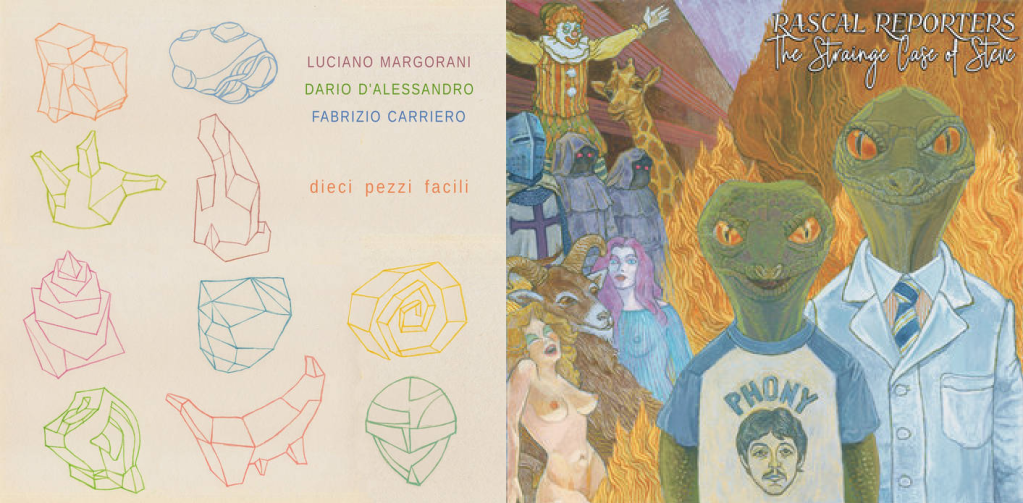
Homunculus Res 2018 (Paolo Botta, Mauro Turdo, Dario d’Alessandro, Daniele di Giovanni, Davide di Giovanni, Daniele Crisci, Giorgio Trombino)

Dario had already spoken to Facelift earlier this year about his latest project, Lunophone, a duo with Rascal Reporters’ James Strain, but it’s fair to say that my original curiosity was all about Homunculus Res, a project stretching back to 2010 with, to date, 5 albums under their belt.

The concept of the homunculus itself, a tiny but proportioned human being contained within sperm cells,  is rooted within the context of 16th century alchemy. Given this somewhat abstract starting point, as well as the band’s lyrics being in Italian, I for one have always concentrated on the Homunculus Res’ ludicrous switches of musical direction, analogue keyboard sounds, and d’Alessandro’s voice which possesses an almost demonic innocence.

And yet if I tell you that, for example, that one of the band’s most memorable pieces, ‘Supermercato’ (which contains a quote from Soft Machine’s ‘Lullabye Letter’) is in fact a palindrome (its string quartet coda is actually a perfectly played performance of the first part of the piece played backwards), it gives you some idea of the as yet unfathomed depths of the band’s psyche.

Towards the end of this summer I had the chance to speak to Dario via email for a second time, this time covering a much wider range of topics. We were able to cover his own musical roots, influences and the circumstances which led up to the Homunculus Res project, before moving on to talk in detail about each of its 5 albums.
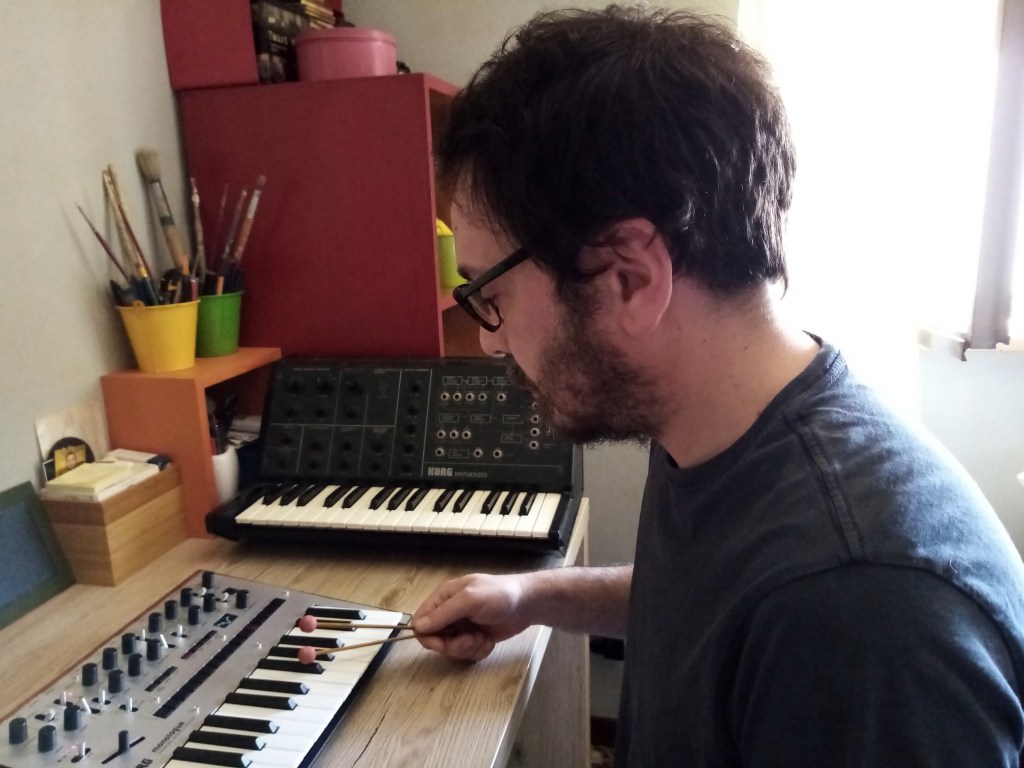
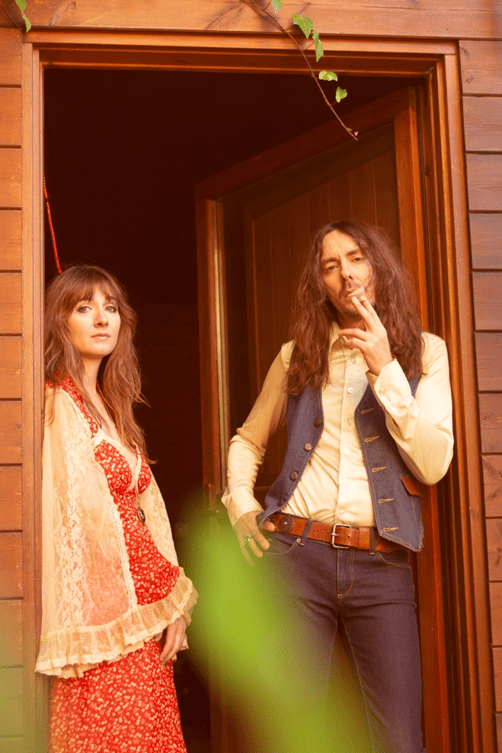
Dario d’Alessandro

Dario d’Alessandro: I was born in ’72. My city, which I love and hate, is Palermo, in Sicily. An ideal place for those with artistic and humanistic interests because you are surrounded by history, beauty and decadence. I studied art and I (still) work in this field. Music has been a great passion since I was a child, when I put records on the turntable at my parents’ house. There were all the Beatles albums, including dozens of 45s, then classical music and American and Italian pop records.
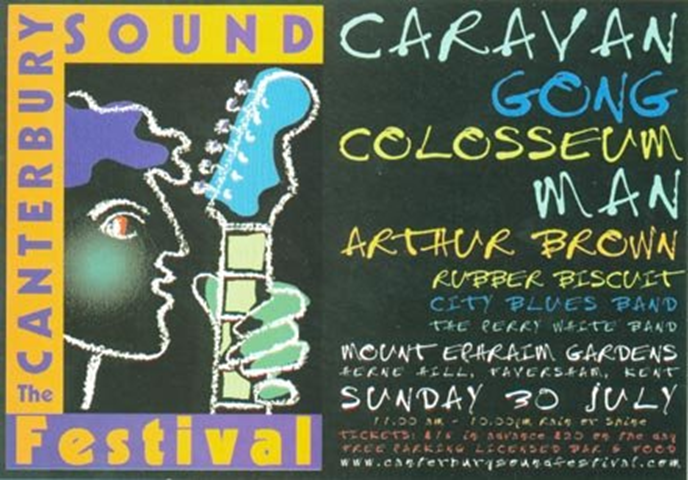
My first instrument was a fabulous Farfisa Commander, with two keyboards, when I was 10, I think. My parents took me to lessons, but I don’t know why, the teacher unnerved me. I never studied music, like many kids I tried to learn the chords of the songs by ear following the vinyl or the cassette.

At 15 – 16 I listened to everything, from new wave to progressive rock to heavy metal. I started singing with small groups of friends in high school and started playing the guitar, even the bass when I could. But I didn’t continue.

The (prog) albums I listened to were those that the older brothers/friends, parents and especially teachers at art school had introduced me to. Among those, I was particularly struck by the first one by Hatfield & the North. This was different, it had an incredible beauty, sophisticated, never heard in progressive rock, at least by me as a young fan of Genesis, ELP etc. An album that I never stopped listening to and loving.

Like so many other kids that play for themselves sing songs with friends, I learned the riffs of rock songs that were then called “alternative”. The desire to start recording came around the age of 25-26. I made sound collages and tried to play over them, so the hi-fi system recorded from a makeshift microphone a tape sent by another tape player plus the part played over it, this could be repeated creating a brutal lo-fi. A few years later, with a small four-track tape, my partner Francesca and I – (we are still together!) started making slightly cleaner pieces, but always ultra homemade and always with pre-recorded bases. These experiments and demos flowed into an album entitled “Meat balls flying underground” under the name Mutable, published in 2001 by Snowdonia. A situationist thing, let’s say. This project led us to meet and hang out with several friends from the Palermo underground, who helped us and with whom we created a great musical and human understanding.

Immediately after, microcomputers arrived with little programs for recording and simulating instruments. It became easier to make music. We did several crazy things that I will put online sooner or later, created without pretension, just for fun.
In 2002 I, Davide Mezzatesta (of Mezz Gacano, a great avant prog band), Federico Cardaci and Domenico Salamone (both of Airfish, a historic industrial art rock band) founded Otopodo, a jazz-rock-punk improvisation group. You can find some material on Bandcamp (d’Alessandro operates under the pseudonym of McCoy Timer). This band was a training ground for me to play live. We played a few concerts.

In the meantime I was writing pieces and crystallising them on a piano roll  as midi and therefore as notes on a tempo track. I was making electronic rhythm bases over which to dub guitar, bass, keyboard, voice and noises. And I had accumulated several demos. I had also suggested a first version of “Rifondazione Unghie” (which would later appear on the first Homunculus Res album) to Otopodo and we even played it live in 2009 for my last concert with them.

Also in 2009, the drummer Daniele Di Giovanni and I met through mutual friends and jokingly decided to start a prog group. His brother Davide immediately joined us on keyboards. Domenico, whom I mentioned earlier, was added on bass. From the following year onwards we met more and more regularly for rehearsals and a few pieces became dozens. Homunculus Rex was born (the name changed slightly at the time of the release of the first album, so as not to be confused with an unknown Californian group of the same name).


Our first live performance was in September 2010 and quite a few songs were already arranged how we recorded them on the first album.

I asked about Dario’s apparent obsession with the homunculus concept.

This is about all the esoteric junk I had read, and a way to make fun of it. I also read Goethe’s beautiful ‘Faust’ and got the idea from there. But it is portrayed in a mocking way, like a deformed and grotesque lens on the human being. Plus I wanted the grandiloquence of progressive rock: as a portrayal of the little man who rose from his smallness and insignificance to king.


The band is the extension of my ideas, but the particular human and musical alchemy with my companions gives the peculiar Homunculus Res sound brand. In each album there are also one or two pieces composed by the multi-instrumentalist Davide.

All subsequent Homunuculus Res albums would contain a grand concept, a depiction of the homunculus in a particular environment, but the first album  ‘Limiti all’eguaglianza della Parte con il Tutto’, as well as being an extraordinarily diverse musical statement (there are 18 tracks, 10 of which are less than 3 minutes long), had its own agenda.

The first album is the wild fruits of two years of experiments and fun, especially with irregular rhythms. Perhaps it should be considered album zero, a hotbed of mostly bizarre ideas, a happy exploration, a delirium, even. However, it contains some of the most representative stylistic features for us. We certainly enjoyed the idea of ​​doing something unpredictable and cheerfully provocative. Even if it is not conceived as a whole, but as a sum of parts, it has its own internal stylistic coherence. The title of the album (a Beckett quote) might also refer to this fragmentation, as well as the difficulty of the individual (homunculus) in relating to society and nature and, for those who believe in it, to the spiritual.

Homunculus Res’ first album, released 2013

Our material was in fact fast accumulating and needed an outlet  – there was even a first germ of ‘Ospedale Civico’ (the band’s opus from the second album) that we decided to postpone until later. The first version of the album, already partially skimmed by us, lasted more than an hour and, in addition to the arranged and finished pieces, contained jokes, parodies, improvisations, noises, small schizoid fragments, so it was intentionally more chaotic and disorienting. Our producer Marcello Marinone of the excellent Altrock label thinned out the material telling us that the listeners would be too disoriented and would lose the main pieces as they were dispersed in the general flow (that was maybe our crazy, perhaps self-destructive initial intention).

Dario had told me in a previous email that Limiti all’eguaglianza della Parte con il Tutto contained a ‘desire to explore irregular rhythms (with the help of mathematical tricks: Fibonacci series, triangular structures, enneagrams, palindromic pieces) and to expose the themes in a situationist form’. I’d asked for a bit of clarification on this but wasn’t quite prepared for the detail of the response. I was familiar with the ideas of palindromes being words or numbers which read the same forwards and backwards, Fibonacci as a numbers sequence (where the last two digits are continually added together to form a new one), and also the fact that ‘Enneagram’ was a track by Egg (!) but Dario gave me the full lowdown on the compositional makeup of several of the tracks and their roots. I had thought of picking out a few salient examples, but the level of complexity behind what, on the surface appear to be often jaunty, throwaway, relatively accessible ‘songs’, is absurd to the extreme and deserves to be documented.

As we delved deeper into our friendship, drummer Daniele and I fantasised about golden sections, complex geometries, palindromes, paradoxes, Möbius strips. Here are specific examples:

‘Culturismo Ballo Organizzare’ is one of the pieces inspired by the Fibonacci sequence. It is suggested by the numbers (1 1 2 3 5 8) pronounced in the first section (like progressively more intense gymnastic exercises) and settles in the central part (Ballo), deliberately composed in 13/8. The third part (‘Organizzare’) is a compendium of the entire album, a sort of summary in which fragments of all the songs that follow are mentioned and stitched together, practically self-quotations with the addition of a quote from the Beatles that appears several times.


‘ΔU’, which in physics represents the variation of internal energy in a thermodynamic system, is the title of one of our songs vaguely inspired by the idea of ​​the Western God. The structure of the song is in fact pyramidal. (The initial idea was to use triangular numbers, then abandoned in favor of increasing odd numbers.) So we have 3 bars of 3, 5 of 5, 7 of 7, 9 of 9, (11 and 13 are missing, I don’t remember why!), then a whole series of 15 or 5×3, which however are not 15 in total, in fact the piece goes haywire, towards shapeless chaos.

‘χΦ’, which is read ‘Per Fidia’, meaning dedicated to Phidias, the Greek sculptor and architect to whom Fibonacci dedicated his study on the golden section, is another song inspired by this fascinating topic. Unlike “Culturismo Ballo Organizzare”, this is a piece with a much more rigorous structure. Positioned in the center of the album, the song lasts 89 seconds (F11) and is divided into 55 bars (F10) of 4/4. By setting the metronome to 147 bpm we obtained a bar/pattern of 0.618 seconds, that is Phi, the number of Phidias, the golden ratio (89 divided by 55). The song has another peculiarity: it is a perfect palindrome (try to invert it and you will find that it is the same the other way around). The voice sings the verses backwards (“isoc aizini” etc.) and is inverted in the second mirror part, restoring the comprehensibility of the words (“alla rovescia” etc.). Some instruments are also inverted both in the “straight” part and in the backward part, always in the name of Perfidy.

“Centoquarantaduemilaottocentocinquantasette” (142.857) is a stylistic exercise, a piece that aims to represent in some way the Enneagram, a symbol introduced by Gurdjieff, not in its mystical or psychological meanings, but simply in its form and internal succession of numbers, in order to obtain strange rhythmic passages that amused us a lot. So we have a first representation in which this sequence manifests itself in all its clarity: a note/percussion, then 4, 2 etc. in unison. In the second part these values ​​are set in a rhythmic flow of 10/8, breaking it up. You can see this figure behind our Elvis impersonator logo, as a sort of crown, as the King (rex) of rock, or as a 9-based clock with the 1 indicated, as the number 1 of rock, but also as a representation of the schizophrenic man of the twenty-first century, a parody of Leonardo’s Vitruvian man. The song also refers to Egg’s ‘Enneagram’, which lasts 9 minutes and 9 seconds.

Homunculus Elvis!

There are other more distant numerological references or quirks within other tracks on the album – these include references to the randomness (or ‘stochastic’ nature) of love, whilst the phenomenon of crop circles are tackled on ‘Cerchio nel Grano’

We do a version of ‘Sintagma’ live which is doubled in length, the second half is a mirror of the first, with parts of the piece where chords and riffs proceed in the opposite direction (this is captured on a compilation album available at https://www.discogs.com/it/release/9425841-Various-No-Palermo)

Crop circles are complex geometric figures and animate the conspiracy of the character who speaks. ‘Cerchio nel Grano’ also contains quotes from two great Italian singer-songwriters, Lucio Battisti and Fabrizio De Andrè, plus a ridiculous TV presenter of pseudoscientific popular programs, Giacobbo.

All these numerological references fit well with the (joking) alchemical concept of the homunculus.

We moved on to talking about the second album Come si diventa ciò che si era

Homunculus Res’ second album, released 2015

The second album is the first one that was conceived and designed as a concept, a complete and concluded work and not a sum of its parts. It follows the adventures of  the homunculus who comes out of the safety of the ampoule and faces the world like any other man. And the world of men is characterised by pain and illness.

The theme is quite delicate and probably reflects some of my negative experiences (not dissimilar to anyone else’s), but it is treated with unreasonable lightness – something fatalistic that we can only accept and laugh about for its inevitability.

The cruelty of the world is expressed in the song ‘Vesica Piscis’ (an ancient Marian symbol). The characters in the song go to the sea to breathe healthy air and during the journey they see ferocious seagulls that attack and devour smaller birds. Or in the song ‘Dogface’ (which I wrote way back in 2003 or 2004) in which a dog is abandoned by its owner, whilst ‘Happiness’ (‘La Felicità’) is portrayed as being something unknown, like a term to look up in the dictionary.


“Doppiofondo del Barile” is a preview of the ‘Ospedale Civico’ suite – it was the first piece that was composed and it is around this the whole album revolves – and shares the same refrain (“Se ti senti mal devi andar all’ospedal” – “if you feel bad / you have to go to the hospital”). It is not autobiographical, it is as if someone suggested and described a song to a producer which was scraping the bottom of the barrel having had all previous proposals rejected, but finding that there is a false bottom. ‘S invertita’ is another self-quote from ‘Ospedale Civico’, the same melody played in a different way.

Undoubtedly ‘Ospedale Civico’ itself is the most ambitious and complex piece we have done. I remember with joy the amused astonishment of my companions when, every time we saw for rehearsal, I brought an extra section to attach to the previous ones. It had to be big and full of different environments, like a hospital in which to get lost, like a Dantean purgatory.

There are certainly references to National Health and Egg’s “A Visit To Newport Hospital” (my brain exploded when I first heard it). So it’s definitely a statement of intent and revelation of influences. Furthermore, one of the reasons it is so long, is to answer frequent criticisms of the pieces of the first album being too short.


‘Belacqua’ is a character from Dante’s Divine Comedy, taken up by Beckett. He finds himself suspended in the ante purgatory for his indolence, having not repented, which could be interpreted as wisdom. He does not do good or evil. ‘Opodeldoc’ is a medicinal ointment invented by Paracelsus (the inventor of the homunculus term, also the title of a National Health track), so as not to miss references to alchemy.

Come si diventa ciò che si era is also notable not just for the full-time involvement of guitarist Mauro Turdo, but for the increasing appearance of guest musicians outside of the core band. These include Dave Newhouse, who memorably adds bass clarinet to ‘Ospedale Civico’, Aldo de Scalzi of Picchio dal Pozzo, Alco Frisbass… plus Steve Kretzmer of Rascal Reporters

After asking permission to publish a small tribute for the death of Steve Gore of the Rascal Reporters on our first album, I got in touch with the other Steve (Kretzmer), who gave me one of the many unfinished pieces of the group dating back to ’75. This was a very complex piece lasting 10 minutes, we only set the beginning to music. The unreleased Rascal Reporter songs were completed later by my friend and collaborator James Strain

The Rascal Reporters are my favourite group, I put them next to Hatfield and the Beatles and Picchio dal Pozzo in my personal Olympus. When I heard ‘Happy Accidents’ for the first time I was very excited and in disbelief, it was the music I always wanted to listen to, a mystical revelation, a miracle!

In part 2 of the interview, Dario moves on to talk about a further 3 Homunculus Res albums, his thoughts about placing the band within a ‘neo-Canterbury’ context, and details his involvement in other projects.

You’ll find links below to the first two Homunculus Res albums talked about in the article:

Limiti All’Eguaglianza Della Parte Con Il Tutto https://homunculusres.bandcamp.com/album/limiti-alleguaglianza-della-parte-con-il-tutto-2

Come Si Diventa Ciò Che Si Era https://homunculusres.bandcamp.com/album/come-si-diventa-ci-che-si-era

For other interviews in the Canterbury 2.0 series, please click here