
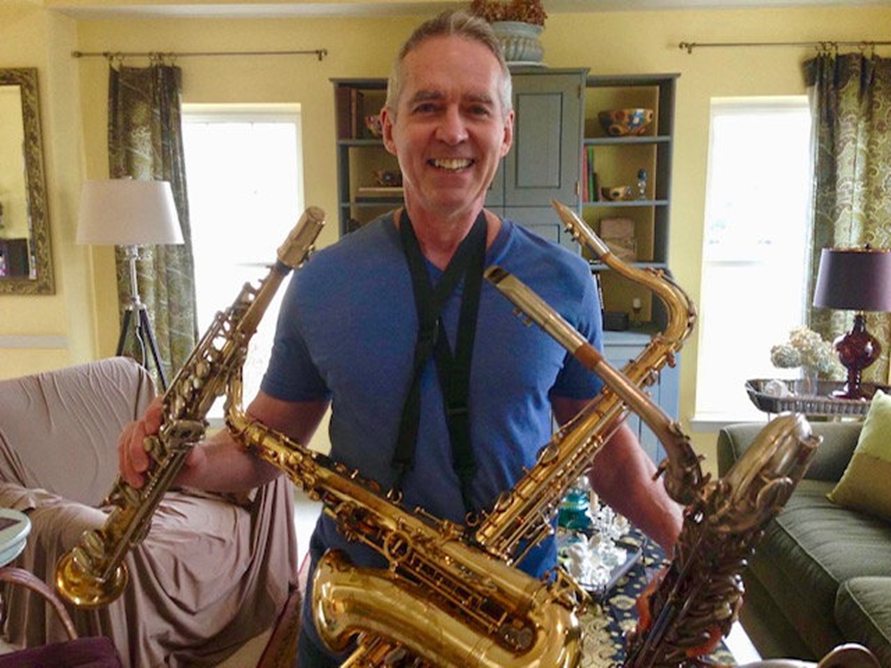
To put Dave Newhouse within this series of interviews at all is probably a little incongruous. He’s best known for his critical role as saxophonist, keyboard player and composer within the iconic American band, The Muffins, who are very much an entity in their own right with recorded output spanning four decades. This was most recently celebrated with a gargantuan box set ‘Baker’s Dozen’ on Cuneiform Records, which adds to rather than anthologises their considerable existing output.
But beyond this, Dave is simply a prolific musician and continues to produce music apace: there have been 5 albums from his solo project Manna/Mirage, 3 from Moon X (with a fourth imminent) and an increasing number of diverse solo projects in recent years. He also is a regular guest on albums from other musicians interviewed within this series, most notably Homunculus Res. Plus of course he was an essential component in the Diratz album, already eulogised heavily over within the Canterbury 2.0 series.
It’s fair to say that the reason his interview comes so late in this series is that there was just so damned much to listen to (and I’m still not sure I entirely did it justice) before interview questions could be adequately formulated. And if he’s ‘neo-Canterbury’ at all (Dave admits in the interview that he quite enjoyed the tag ‘Americanterbury’), then he should probably be ‘Canterbury 1.2’ rather than ‘2.9’ simply because The Muffins were one of the pioneers in taking forward Canterbury-imbued music as early as the mid Seventies.
We started, as is always the case, by discussing Dave’s own musical upbringing, both in terms of early playing as well as listening influences:
I started playing clarinet when I was in 4th Grade, so I would have been 8 years old? We had a music instructor who would come around and take us out of our classrooms mostly to play woodwind instruments, and teach us all the basics. Oddly enough, at the end of the first year, she discovered that I had been playing clarinet completely backwards, in other words my left hand (top) was on the bottom and my right hand (bottom) was on the top. She was amazed that I could even play that way. Needless to say, I had to relearn how to play clarinet over the summer with correct hand placement, which I did.
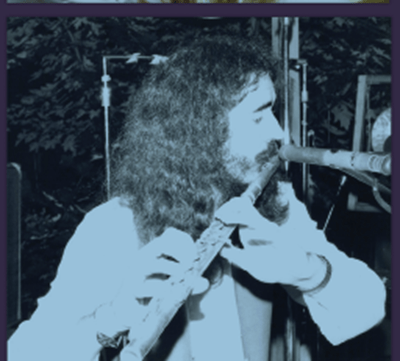
Around this same time, my parents had gotten a spinnet piano which I immediately and completely commandeered. I was not given any piano lessons and so taught myself by ear all of my favourite songs at the time; “Baby Elephant Walk” by Henry Mancini, “The Look of Love” by Burt Bacharach and Hal David, and “Sunny” by Bobby Heb, to name a few.
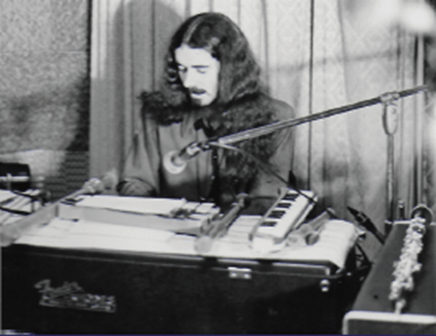
Also around this time, we got season tickets to a theatre in the round called Shady Grove Theater where they had touring companies come in and perform all the great American Musicals. (I would later see Jethro Tull’s first American tour there as well as The Mahavishnu Orchestra. And Iron Butterfly!) Shady Grove is where I fell in love with the American Musical Songbook, which probably explains a lot of my own musical compositional style. I remember seeing “Guys and Dolls”, “Camelot”, “You’re A Good Man, Charlie Brown”, “South Pacific” (The Muffins did a funny song early on we called “South Specific”), and “The King and I”.
So, by Junior High School I’d decided that the saxophone was way cooler than the clarinet, so I switched over to tenor sax, which I played all through Junior High School and High School, including the Marching Band and the Pep Band. My dad had played alto sax in HIS High School. In fact, it was his Conn alto that I first played in The Muffins. But by the end of High School, rock music was rearing its tempting head and bands like King Crimson, Chicago, Van der Graaf Generator, and The Mothers of Invention were demonstrating that woodwinds could be used successfully in rock music. I was off on a whole new journey.
Woodwind training stopped for me after High School. Any other progress I made on woodwinds, specifically flute, were self-taught. But it was our daily intense Muffin practice that made my woodwind playing better than it should have been.
So how did this set Dave off on the path towards creating his own music?
I was in a Doors style band in High School, but didn’t really start taking band life seriously until I met Michael Zentner (guitar and violin) and we started an 8 piece early prog band around 1971 called Tunc. We played out live a few times and rehearsed for about a solid year until the band imploded. That’s when we went looking for other musicians for another band. Thankfully we found Billy Swann (bass) and so started The Muffins.
I was interested in Dave’s own exposure to Canterbury scene music as his own musical tastes were developing, but he places this as one of a number of influences:
Our friend, John Paige (who would later start Random Radar Records with us) had a Canterbury-heavy radio show on WGTB at Georgetown University in Washington DC that we (The Muffins) would religiously tune in to on Sunday nights. It was John who introduced us to a lot of what would become Canterbury. Of course, I already had the first three Soft Machine albums by that time and was a total big nerd fan. I remember the first time I heard Soft Machine ‘Volume II’ (I had bought it from a record bin on the boardwalk at the beach in Ocean City), I thought “Well, this sounds extremely familiar to me, like I’ve found my old friends.”
I heard the first Soft Machine album first, and I knew right away that I was listening to something very different than what was already out there. It wasn’t until I heard Soft Machine ‘Volume II’ that a Canterbury sound really started to emerge for me. By Soft Machine ‘Third’, I had sussed out the Canterbury chords that Mike Ratledge was playing and I absorbed the whole Canterbury sound and began replicating it in my own writing. Although, it sounded very natural to me, like somewhere I already belonged.
The term ‘Canterbury’ had not been coined yet. I think John was just referencing what that kind of music has now turned into. At the time, we just knew that we were emulating all of our British rock heroes – Hatfield and The North, Soft Machine, Robert Wyatt, Egg, Gong, etc. In fact, it was John Paige’s radio show on WGTB that introduced us to all of this great music. Not connected to the Canterbury sound, but The Muffins were also heavily into jazz improvisation at the time, i.e. Sun Ra and Art Ensemble.
And so to the Muffins. Here follows a brief synopsis of the Muffins story, which is articulated far more eloquently and in extraordinary detail within the 60+ page set of reminiscences from musicians and associates within the ‘Baker’s Dozen’ box set, the written elements collated by Dave himself. The Muffins were a band that with very much their own take on progressive music. They emerged initially as a home spun collective of adventurous musical individuals (captured on the Cuneiform release ‘Chronometers’ of unreleased demos from 1975/6 which features both a lengthy 20 minute eponymous opus and numerous often madcap shorter pieces). A key term which resonates from the Baker’s Dozen box set liner notes about this era is ‘compositional humour’. The music evolved through to their Canterburyesque, keyboard-heavy debut ‘Manna/Mirage’, by which point the band settled on their core lineup of Newhouse (woodwind/keyboards, Tom Scott (woodwind), Paul Sears (drums) and Billy Swann (bass), although in reality each member played numerous instruments and further guests added to the palette of sounds.
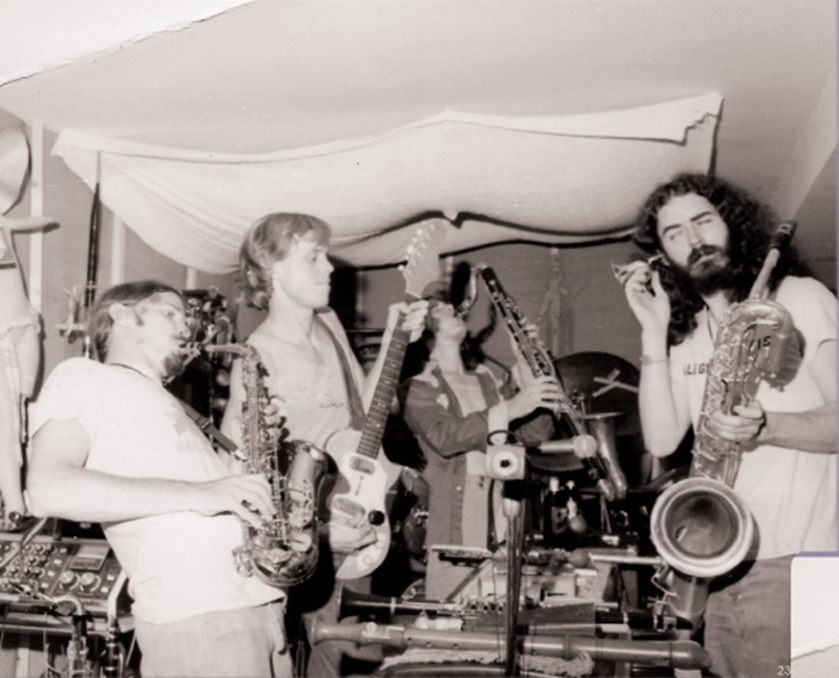
Later there would be the discordancy of ‘185’, the brassy swing of ‘Bandwidth’ and numerous later albums (‘Double Negative’, ‘Palindrome’, ‘Mother Tongue’) recorded in a variety of circumstances as the band came to terms with the dispersal of its members around the country. In the box set Tom Scott memorably describes his introduction to hearing the then-members of the Muffins – Newhouse, Swann and Mike Apperiti (Michael Zentner, the band’s guitarist was not present) as ‘some crazy shit. There’s melody. There’s all these interweaving time signatures and the compositions are very linear… commercially this a dead duck’. He joined regardless, and remained an ever-present within the band. Dave explains the band’s ethos:
We never thought about our marketability. We just wanted to keep making our own original music. The fans and the following just sought us out. And yes, we played many places where there was either no audience or just one or two people. But we still played (we were persistent), and the audiences started to get a little bigger. And when we couldn’t find gigs in the area, we put on our own backyard concerts behind our Buba Flirf house. Many of those concerts were recorded and you can hear them on my Bandcamp page and in The Muffins ‘Baker’s Dozen’ box.
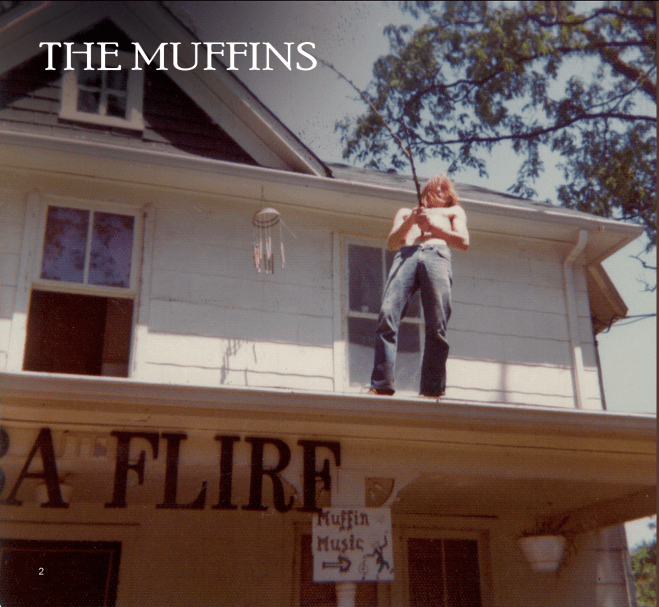
Much of the early story of the Muffins centres around the incomprehensibly-named ‘Buba Flirf’, the first of two houses the band lived in together, with a practice room soundproofed by discarded carpets and egg cartons. I asked whether ‘Buba Flirf’ was a question of moving an existing band into a communal house to provide a vessel for their musical skills to develop together – or whether it was more a case of a band emerging from a group of like-minded friends living together.
We definitely wanted a band and the house in Gaithersburg, which would later be called the ‘Buba Flirf’ house after some large plastic advertising letters that Billy nailed to the front of the roof of the front porch, just happened to become available. It became the meeting place, the magnet around which we all congregated.
‘Buba Flirf’ was not only the home for the band, it became the epicentre of a productive self-contained entity, centred around the band, making a virtue of their lack of apparent marketability to self-promote. Members supported themselves through various jobs but remained relatively impoverished. The band distributed postcards at gigs which they encouraged attendees to return to them, thereby generating an informal database of fans, the basis of a core following which remained loyal to the end. When the band moved out to a second house in Rockville, they launched Random Radar Records (alongside Steve Feigenbaum, a key part of the story, and a number of Muffins associates) partly to distribute the band’s work – the label’s first ‘sampler’ also included tracks from Fred Frith (unreleased tracks from ‘Guitar Solos 2’) and Lol Coxhill. I wondered whether this was an unconscious precursor to the independent models of production and distribution adopted by Chris Cutler and Recommended Records later that decade.
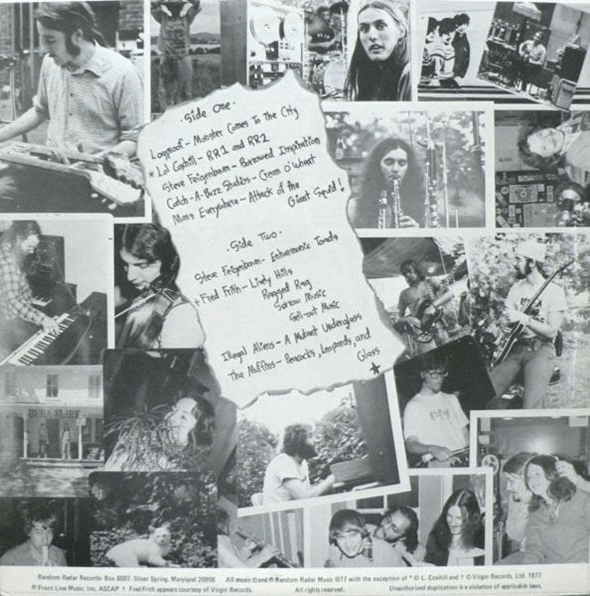
Once we decided to produce our own albums, the postcards (which spearheaded our first mailing list once they were mailed back to us), the albums themselves, etc. were never a political decision but rather a decision of necessity; we could not get a real label to become interested in us, so we just had to do it ourselves. Also, at that moment, there was a big DIY movement in the Independent Music culture (much like there still is today – with Bandcamp) that we latched onto.
In fact there was already evidence of cross-pollination between members of the Muffins and Henry Cow by the mid to late Seventies.
Michael Zentner (an early guitarist with the Muffins) flew over to GB with a reel-to-reel of our music and stayed with Chris Cutler – Mike was so gutsy. The Cows and their engineers heard the tape and were impressed that there was an American band that was making a similar music. (Someone once called us ‘AmeriCanterbury’, which I like a lot.) I think we may have started corresponding with Fred in particular. When Fred came over to the U.S. and saw us perform at the ZU Festival in New York in 1978, we were blessed to include him as a fan. I think word got around that we were starting this new label, Random Radar Records, and so John Paige was able to get some tracks from Fred and Lol Coxhill included on our first record, which was a sampler of many musicians.
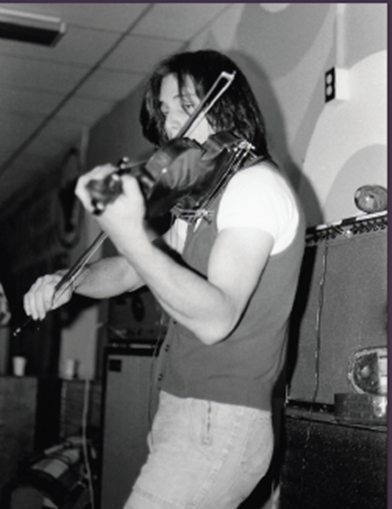
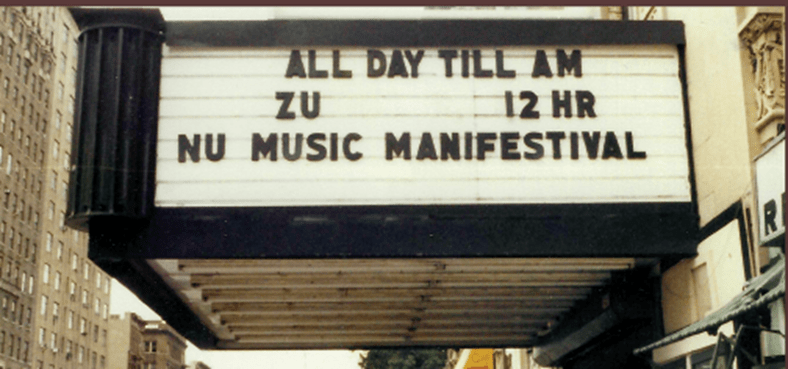
There was also more direct contact with RIO musicians at the Zu Manifestival, in November 1978, a 12 hour festival in New York organised by Giorgio Gomelsky (the record producer and manager associated with Soft Machine, Gong and Magma). Fred Frith, Chris Cutler, John Greaves and Peter Blegvad all performed (the latter two stayed with the band), as did an embryonic version of New York Gong with Daevid Allen and Gilli Smyth. The Muffins also found themselves on the bill and Paul Sears did the sound for the festival.
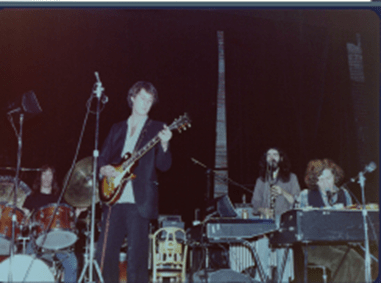
Yes, this was the first time I had met any of my British musical heroes. And yes, this was on a whole other scale (HUGE) of gigs that we had ever played before. I remember it as a wild ride – so many different and varied bands performing! The new New York sound (No New York) was quite refreshing to us. It was no holds barred.
In the meantime, The Muffins had recorded their debut album ‘Manna/Mirage’, an album whose eventual CD re-release on Cuneiform Records in 1990 was my introduction to the band, and was subject to a cursory review in Facelift issue 9 where I commented on the ‘unnerving’ number of Canterbury reference points.
Billy Swann came up with the title. I can still see him sitting in the living room pitching the idea to us. The way he described it, the ‘Manna’ is the treasure that should be dropping down to us from the heavens, but the ‘Mirage’ part is the contrasting nature of it, is ‘Manna’ what will be coming to us or is it all a ‘Mirage’? And yes, I guess you could say that my own ‘Manna/Mirage’ solo albums (more of which later) were a natural extension of that first album.
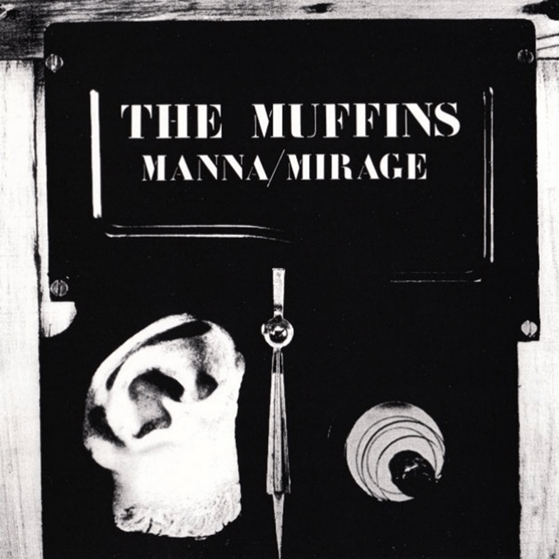
With the album released through Random Radar Records, the band were at the centre of efforts of getting the record out to the world.
I think a lot of it was just word of mouth. We did the boxing and mailing ourselves. ‘Manna/Mirage’ was a solid on-going album that we wanted to keep in existence for as long as possible.
The band also released ‘Air Fiction’, an improvisational release, in 1979 on Random Radar, whilst ‘Open City’ appeared as a CD through Cuneiform in 1994, but is actually a re-release, with additional tracks, of an vinyl album whose material dates back to 1977-80. Steve Feigenbaum describes it as a ‘goodbye loveletter’ to a band he had never expected to reappear.
‘Air Fiction’ was a one-off, we wanted it to be a limited product of just 1,000 copies that would never be repressed again. It was just a fun idea to try. ‘Open City’ was released was an afterthought, as it were, after our first breakup. We still had a last demo tape that we had recorded at our Portree Band House (where ‘Manna/Mirage’ was recorded) as well as a couple of outtakes from our Fred Frith ‘Gravity’ recordings from Tom’s studio. This is the classic quartet, released in 1994.
Eventually, in 1979 there would be a direct collaboration between the Muffins and Fred Frith, on Fred’s album ‘Gravity’, an outstanding album of dissonant but accessible folk-tinged experimentation which gave separate sides to Fred’s collaborations with, on the one hand, madcap Swedish progressives Samlas Mammas Manna, and on the other that of the Muffins. Dave contributes saxophone throughout the second half of the album but also plays organ on an extraordinary grating version of ‘Dancing in the Streets’
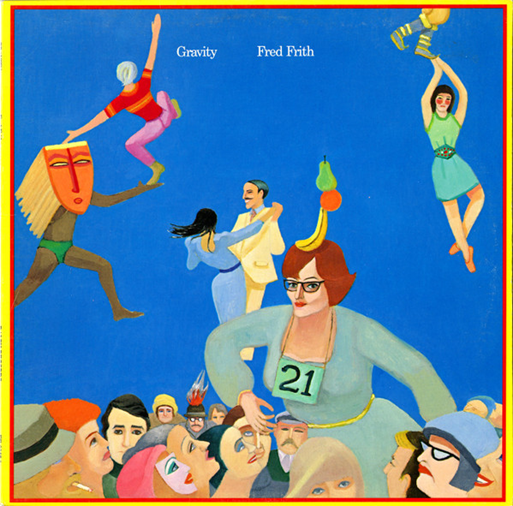
Lovely memories. Fred was so nice and forthcoming. He stayed with us at our houses – by this time we had moved to another group house together where we ended up recording ‘Manna/Mirage’. Tom Scott had a separate house with his wife that had a recording studio in the basement. It was there that we recorded our side of ‘Gravity’. I remember Fred having so much fun, like a kid in a candy shop. I also remember going out to the movies with him. I think we saw “The Elephant Man” and one of Richard Pryor’s live show movies, both of which he thoroughly enjoyed.
The Muffins took advantage of their new found connection with Fred Frith to record their second album ‘185’ in 1980, a manic, brassy, discordant project (Paul Sears describes the music in the box set liner notes as ‘angular and aggressive … the hairier the better’). It is fun, but not in a whimsical way a la Hatfield and the North. ‘185’ seems much sharper, dissonant and harsher than previous releases – and I suggested to Dave that its hints at faux folk could make it almost a companion album to ‘Gravity’.
Fred didn’t try to influence our sound in any way, he just wanted to get the best performances on tape as possible. The reason the album sounds the way it does comes from the writing; we all wanted to get away from the keyboard-based framework that had propelled us on ‘Manna/Mirage’. We had by this time been heavily influenced by Henry Cow, most notably “In Praise of Learning” as well as Etron Fou, Magma, and the new Post Punk / No New York sound, etc. We wanted a more stripped down honest sound, based more around horns, bass, and drums rather than a keyboard.
I hadn’t realised until the recent release of ‘Free Dirt’, a double CD of live performances from 1982-6, that Dave Newhouse had also taken a key role in early incarnations of Skeleton Crew, the utterly unique project put together by Fred Frith and Tom Cora. Whilst the latter is best known for his abrasive cello work, both musicians played a multitude of instruments on stage, often simultaneously – and even sang, on a chaotic improvised melange of surprisingly accessible tracks. In the band’s first line-up Dave helped oil the wheels by contributing his own range of multi-instrumentation, including bass clarinet, saxophones and keyboards.
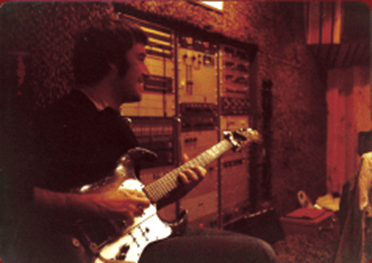
Fond fond memories of touring with that first iteration of Skeleton Crew. Tom Cora welcomed me with open arms into his loft in NYC where we rehearsed for a few weeks. The band we toured with, V-Effect, were all so nice and fun to be with. My only regret was not writing / composing for that group, which I’m sure was one of the reasons Fred asked me to join in the first place. But truth-be-told, I was burned out compositionally from a decade of writing all original music for The Muffins. I think I needed a break and to be just a band member for a while. But I do regret not writing any music for that group. As far as not continuing with them, I had just met Anne (my now wife) and I was ready to start a life with her and a career (a real job) where I finally made some money. And so I became a teacher.
Dave took a break from music as both he and other band members dispersed into different parts of their lives.
I went back to college after I left that first iteration of Skeleton Crew with Fred Frith and Tom Cora and got my degree in education. Then my girlfriend at the time (now my wife – Anne Hage), and I moved out to Albuquerque, New Mexico where she got a job as a teacher. I finished my classes there at the University and then also started teaching there. We stayed there for 5 years and eventually moved back to the East Coast to be nearer our family. It was in New Mexico where I started my cassette series of archival recordings called ‘Hand Systems Tapes’, the first of the Muffins ‘Secret Signals’ albums (there were 3 total, they’ve since become CDs) as well as other band offshoots from those halcyon days of yore.
We loved it there. When we moved back to the East Coast, Paul (Sears) got in touch with me and told me that he had been hearing on the internet that we still had lots of fans out there who were asking about us. Paul is the one who started us off on the second forming of the band by telling us all that we were working on a new album titled “Bandwidth”. We said, oh, okay.…
In Part Two of this feature, Dave takes us through how the Muffins’ story developed through the Nineties until their eventual split, and talks extensively about his prolific solo output.
Links
Dave’s solo material is at: davenewhouse.bandcamp.com
The Muffins box set ‘Baker’s Dozen’ is available at https://cuneiformrecords.bandcamp.com/album/bakers-dozen
You can purchase other Muffins albums on Cuneiform – Manna/Mirage, Chronometers, 185, Double Negative
Thanks to Dave, The Muffins and Steve Feigenbaum of Cuneiform Records for the use of of quotes and imagery from ‘Baker’s Dozen’
For other interviews in the Canterbury 2.0 series, please click here
 The Canterbury scene(zine) continued....
2 thoughts on “Canterbury 2.9 – Dave Newhouse (The Muffins)”