
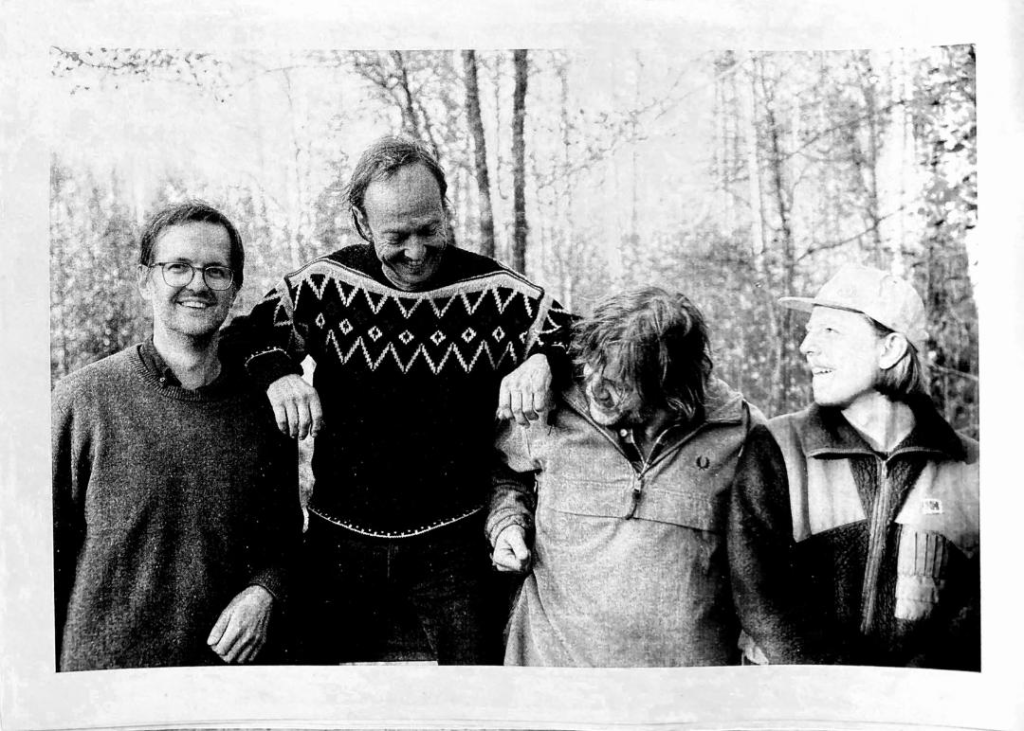
Some are born in Canterbury, some achieve Canterbury status and some have Canterbury thrust upon them… Horrendous misquotes aside, in amongst this series of interviews, Needlepoint of Norway are in the unique position of ending up being associated by some with a music scene they had no prior knowledge of. I first became aware of the band through an article called ‘You Can’t Bury Canterbury’, a bandcamp-related piece which showcases pieces by many of the musicians featured here (Zopp, Amoeba Split, Homunculus Res, Magick Brother Mystic Sister), others I’m very familiar with (Magic Bus, The Wrong Object, Alco Frisbass) and a number of additional bands I am not.
When I first contacted Bjorn a year or so ago, having binge-listened on their then latest album ‘Walking Up That Valley’, he was at pains to point out that his own musical heritage owed nothing to Caravan or any other related band, whilst being sympathetic enough to the project to send me the band’s entire back catalogue and agree to an interview which has materialised over the last month or so. In the meantime Needlepoint’s 6th and 7th album have appeared: the first a live album ‘In Concert’, the most recent the band’s latest studio album ‘Remnants of Light’ which introduces two new members of the band.
So, if as will become clear, Bjorn, the band’s main songwriter, guitarist and vocalist was not at all conversant with music from the Canterbury genre, then what is the story behind his own musical upbringing?
I was born 30th of January 1958, in Skien, a quite small town a couple of hours’ drive south from Oslo. My first instrument was classical piano. I loved Bach, and was a very romantic interpreter of his music. I also played flute for a number of years, before I ended up in a small bedroom at my grandparents’ house where a guitar was hanging on the wall. I was a bit bored when all the grown ups in the house took long rests after supper…so I took it down…and that summer I learned a lot of chords….and was sold! After that, nobody ever had to ask me to practice…the guitar went with me everywhere!
My father played piano quite badly… both he and my mother loved singing. Norwegian songs, but some very old standards too…like ‘A Nightingale Sang in Berkeley Square’. My uncle and his son played these songs well, and my brother ended up as a well known jazz piano player. He was three years older than me, and listened to Fleetwood Mac, Jimi Hendrix…and then turned towards Chick Corea, Paul Bley and Keith Jarrett.
When I started to listen to music on my own, my sister’s boyfriend, Roger, already had tons of LPs. Gentle Giant, Yes, Back Door, Zappa… I liked all of it, but ELP was what I really loved! I remember that I told my mother that,…whatever happens…ELP will always be my favourite band. But after a while I joined a jazz band with much older guys in it, and Wes Montgomery and Pat Metheny sort of kicked Greg Lake’s wonderful voice out of my head for a long long time.
There’s a been a common theme that’s been emerging through the Canterbury 2.0 series. Many of artists playing the music we follow on this page have often largely self-taught, even in some cases not having a working knowledge of music notation. Bjorn certainly bucked the trend in this regard:
I went to the “Jazzlinja” on Trøndelag Musikkonservatorium in Trondheim. The first class ever for that discipline. I had my own bands with others from that school, and joined other ones too. When I was finished there I found that many of my friends, like Nils Petter Molvær, flew away and had incredible careers, while I was left on the carpet in my living room trying to get off the ground. I didn’t really take off. But after a while I started my own band NUKU (‘Det Absolutte Nullpunkt’ was a CD I made with that band) and we had some nice gigs. I also started a band with my brother, Out To Lunch, and that was a quite popular band for a while in the Nineties.
One day I met a drummer called Harald Skullerud, and we made a duo record called ‘Gloria’, named after a wonderful old acoustic guitar with Gloria written on it. It’s a record I’m proud of, and I have received many letters from people being comforted by the sound of that one! Then two other albums with Harald followed…’A Day With No Plans At All’ and ‘Sidewalk View’. All of them instrumentals.
So how did Needlepoint come about?
I met Nikolai (Hængsle)! A meeting that changed my musical course completely! Or rather …I met Thomas Strønen first, and he suggested we ask Nikolai to join the band we were planning to put together. At that time all my music gear was digital! A lot of expensive TC Electronic stuff. But working with Nikolai kind of awakened stuff from before jazz took me away. I had a pedal I thought was called Shin Ol. Shin Ol? Nikolai asked…and he told me it was a Shin Ei Fy6, an extremely cool pedal from 65 or something. So I turned it on for this band!
The first Needlepoint album, released in 2010, was called ‘The Woods Are Not What They Seem’, recorded by this core trio. It is probably best described as blues-based rock and is instrumental. There is a groove, a funk underpinning the music, but still with the occasional hint (on ‘Trapdoor’, for example) that there might be a desire to expand the music further, if as yet no vocals. Bjorn had told me in a previous conversation that Ry Cooder had been a particular hero of his.
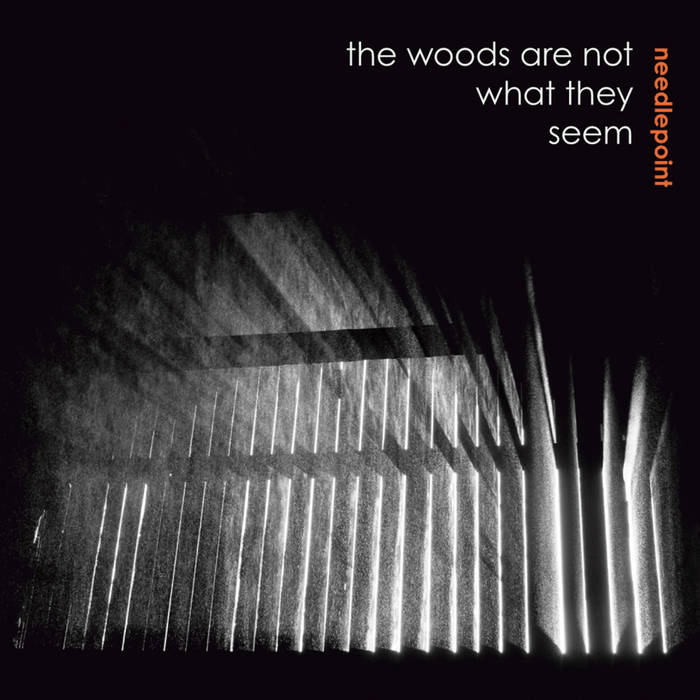
Before Needlepoint was put together, I did not sing at all, my fuzz pedals had got dusty! And as you say…Ry Cooder was absolutely a musician I liked a lot. I also liked Bill Frisell, and since we are both melodic players, I tried hard not to walk in his footsteps. Stealing others’ specialities is something I quite early on tried to avoid. Without knowing, my way of playing was close to his. He was bending the neck of his SG, and I had got my first guitar with Floyd Rose, and found a way using the bridge that gave me quite a unique sound…I thought. Until I heard Bill Frisell on an album for the first time with Arild Andersen. I got sooo sad, but immediately I let go of that way of playing, and started finding myself another way…
With the album, it was such fun to plug in those pedals. I also used and am still using a pedal called Tube Zipper (Electro Harmonix). There is a filter inside it, and when I turned a certain knob, quite apart from the tone on the guitar it produces random bird chirping sounds! I played a lot of long guitar solos…my longest ever..) But, back to that first album. I must say I wasn’t inspired by anything else than the energy I got from suddenly being a part of this band…but of course…inside me all the music I had ever listened to was resonating.
The band’s second album ‘ Outside the Screen’, recorded in 2011, starts to take something of a new direction, with vocals and keyboard added, and unlike later albums appears to be more a collection of different styles. I asked if this album was more of a collection of separate written pieces rather than a grander concept?
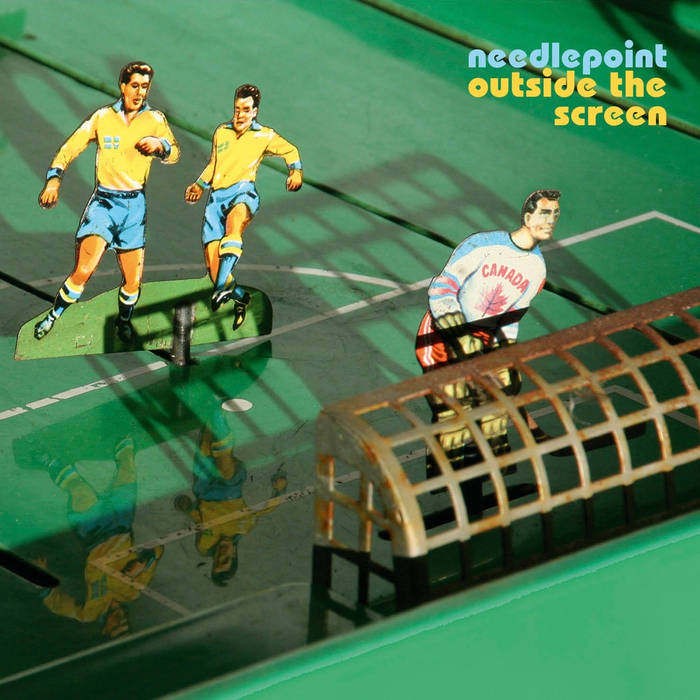
We’d almost finished recording ‘Outside the Screen’ when I asked Nikolai: ‘Why am I only making instrumental music when nowadays I am mostly listening to vocal based music?’ And then we decided I had to start singing! We found places to replace guitar-played melodies with vocals, and sort of turned an instrumental album into an album with vocals in it. During this process David joined us as a studio musician, colouring the music in his beautiful way.
‘David’ is David Wallumrød, credited with clavinet, upright piano, Hammond organ and autoharp. There was an immediate change in sound, particularly with the adding of Hammond. There is also a new lightness and humour within the mix (shown on tracks such as ‘Johnny the Player’), as well as the first real evidence of more of a dreamy vibe on ‘Tree on a Hill’, and ‘If I Turned Left’, and the detached beauty of ‘Siikup Sinaani‘, all of which contrasted with the crashing guitars of ‘Snoring Husband’ (I didn’t ask Bjorn if this was an autobiographical reference!) Needlepoint were extending their range as well as their repertoire.
It was the third album ‘Aimless Mary’, from 2015, however, which constituted, for this fan at least, their own great leap forward. From start to finish this is something of a masterpiece, from the Stevie Wonder-like funk meanderings of ‘Fear’, via the hard electric piano groove of ‘Why’, all the way through to the daydream-like imagery of ‘Imaginary Plane’. (‘Light as a bird and easy for an angel to carry/ Leaning back in your chair, as if you’re up in the air’) In between times there is the stuttering trance of ‘Soaring’, the exquisite duelling guitars of ‘Shattered into memories’ (which descends into a most unexpected Van der Graaf-like dirge); as well as the melancholy of the title track. This is an album rich not just in a new level of composition and realisation, but also in its vocal and lyrical content…
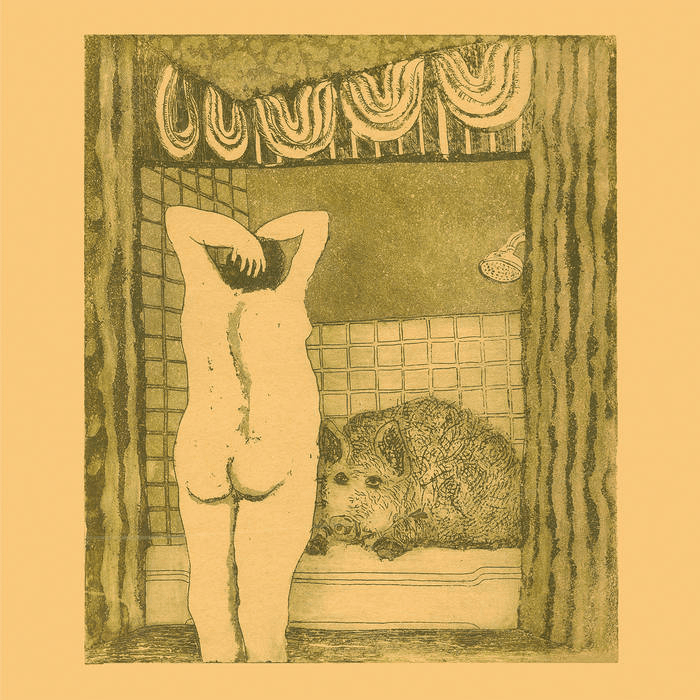
This was the first album were I knew I was going to sing before starting to making it. So now I had to write lyrics beforehand….very difficult I thought, but something that has turned into a pleasure for me more recently.
I have always followed a romantic route playing piano or classical guitar. And in the beginning the songs I made were so sweet, or romantic, that they were difficult for my fellow jazz musicians to play. To me it is completely impossible to write music with a heart intent on trying to be someone else. I have many influences in life …Joni Mitchell, Paul Simon, John Coltrane, Wes Montgomery, ELP, old Irish songs or Norwegian folk tunes are just a few, but when I get up, I make myself a cup of coffe…maybe light a candle.. and take my guitar, and just let the first chord start a melody. It’s very funny sometimes to go back to my mobile-recordings and check out how much of a song is based on those spontaneous recordings. Sometimes they’re just the same. But of course…behind what every composer composes…there are others…
I think ‘Aimless Mary’ is the album where Nikolai really was able to start to turn this band into something he for a long time had wanted. His friend Olaf (Olsen) joined the band (on drums). David was already a member of the band, and this gave him freedom to influence our sound even more than before.
I wrote the songs, also the instrumental parts and also some riffs…but I had no clue that we were moving into a kind of musical sound that would turn prog rock-loving listeners towards us. I think HE did, though!
I wondered whether with the follow up album ‘The Diary of Robert Reverie’, recorded in 2017, that there was a deliberate attempt to tap into Caravan vibes with the cartoon-like imagery of the title track:
“Robert is a strange old man
Living on a farm alone
Sleeping in the barn.
With cows around him all night long”
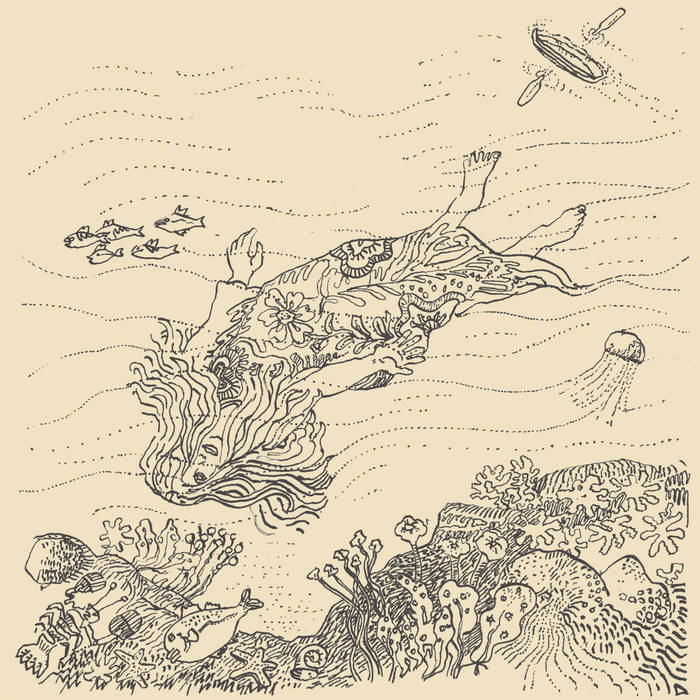
It’s so nice that I have learned what Canterbury is, and Caravan is also something I learned about after ‘Aimless Mary’. Is there an Aimless Mary in one of the Caravan songs too?
Caravan is often mentioned as an influence, but the truth is…I’m sorry to say…I never listened to their music. Not because I didn’t like it; just because no one ever played their music for me when I was young.
The reason albums turn out different from each other is that we have to deal with the material that shows up in the process of composing it, that in their different ways inspire the cooperation between Nikolai and me. So when a tune becomes long, it’s just because the song happened to have so many nice things inside it in the original spontaneous recording that we didn’t want to take anything away!
‘Reverie’ is perhaps more diverse, but less grand than its predecessor, with less of a larger group sound. For example, the predominant elements on ‘In My Field Of View’ are guitar and hand percussion, whilst ‘Will It Turn Silent’ is one of a number of gentle ballads and there is a languid pastoral feel to ‘Grasshoppers’. ‘In The Sea’ could almost be a ‘Whiter Shade of Pale’ type exultation whilst ‘Shadow in the Corner’ could be a sequel to the previous album’s musings of ‘Imaginary Plane’. Overall, ‘The Diary of Robert Reverie’ takes Needlepoint’s mellow charisma to extremis.
In 2020 Needlepoint recorded their fifth album ‘Walking Up That Valley’. Like ‘Aimless Mary’ is another coherent classic, a return to whole-band complexity. If ‘Rules of a Madman’ was the first track that introduced me to the band with a Richard Sinclair-like ditty, delivered a la Pye Hastings, kooky in its time signatures; there is arguably finer music elsewhere on the album: ‘I Offered You The Moon’ is wonderful – outrageous fuzz bass contrasting with gentle melody, ‘Where The Ocean Meets The Sky’ is a masterpiece with a change of direction typical of the band at its heart. The album features Bjorn contributing notable extra instrumentation, including violin, cello and flute. The title track is a 10 minute opus, which likes all the best Caravan tracks, flits between dreamy introspection to bass-driven playful grooves but also features some of the best of Bjorn’s wonderfully fluid guitar lines.
Our desire is only to make as good an album as possible from the sources in my simple mobile-recordings. I think you should ask Nikolai the same questions one day and he would remember the process much better than me, and differently too! I guess we put together different ideas into one long composition in that title track. I remember we used to call that long instrumental melody “Long Song”, and I also guess Nikolai had something in his mind when we ended up putting this part in the middle of everything!! These questions made me think that maybe I should find all of the different original mobile-recordings in one place? Good plan!
Before talking about the two albums which have come out this year, I asked Bjorn about the band as a live entity, and what sort of audience it attracts:
I think there are very many different people listening to our music. We have been embraced by people who love prog music, and are thankful for that. But we are not a band that tries to make prog music. I didn’t know I was making prog or Canterbury at all!…I just continue to write my instrumental stuff like I did when I was an instrumental jazz musician, and when I started to sing some years ago, these things were mixed together…and maybe that is a kind of recipe for prog? At least…with Nikolai’s help it is, I guess!! But there are other kinds of people listening too. People who are very interested in the lyrics and think our concerts are kind of poetic too, which touches me to hear.
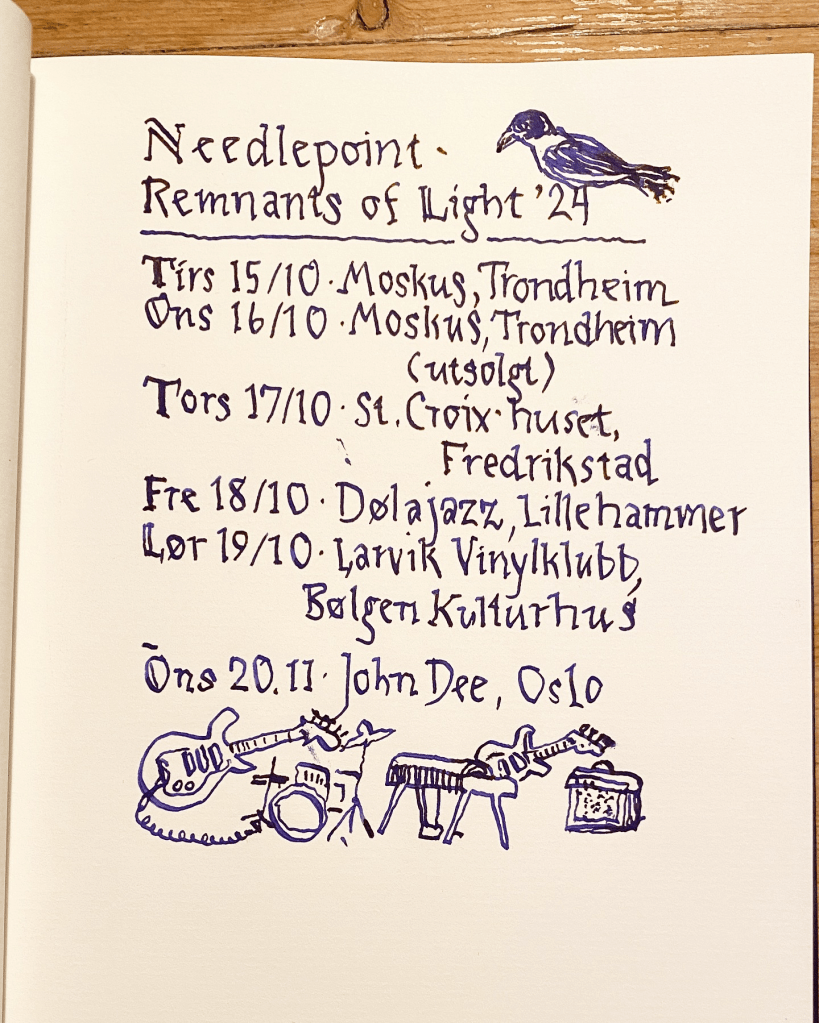
We tour for a couple of weeks, maybe three each year, and we have not been abroad a lot. I know many people from different parts of the world would like us to come, so we’d better hurry up I guess!! I would like to play abroad…yes! But we are a bit too grown up to play for nothing. There are kids to be taken care of and to feed here and there!
In terms of venues…we love the smaller ones, but we also play festivals with larger capacities; but I love to have the audience as close as possible, so I can smell what kind of toothpaste they use!
We do not have loads of followers. But yes, some have come from Germany, Netherlands, Italy, even from USA to hear us…but that doesn’t happen often. But in Norway there are people who have seen us many times, yes.
I guess we are more energetic when we play live. The solos can last longer, but we never really betray the shape of the songs…we just bend them in different directions! I mean, how can you stop Erlend when he is on fire behind his Rhodes?!!
Earlier this year, there appeared a budget priced live album on Stickman Records, ‘In Concert’. This is a curiously presented collage of excerpts from the band’s live perofrmances, and Needlepoint afficionados will recognise snippets from the various studio albums spliced together within two long pieces: ‘Trying To Relax’ parts 1 and 2.
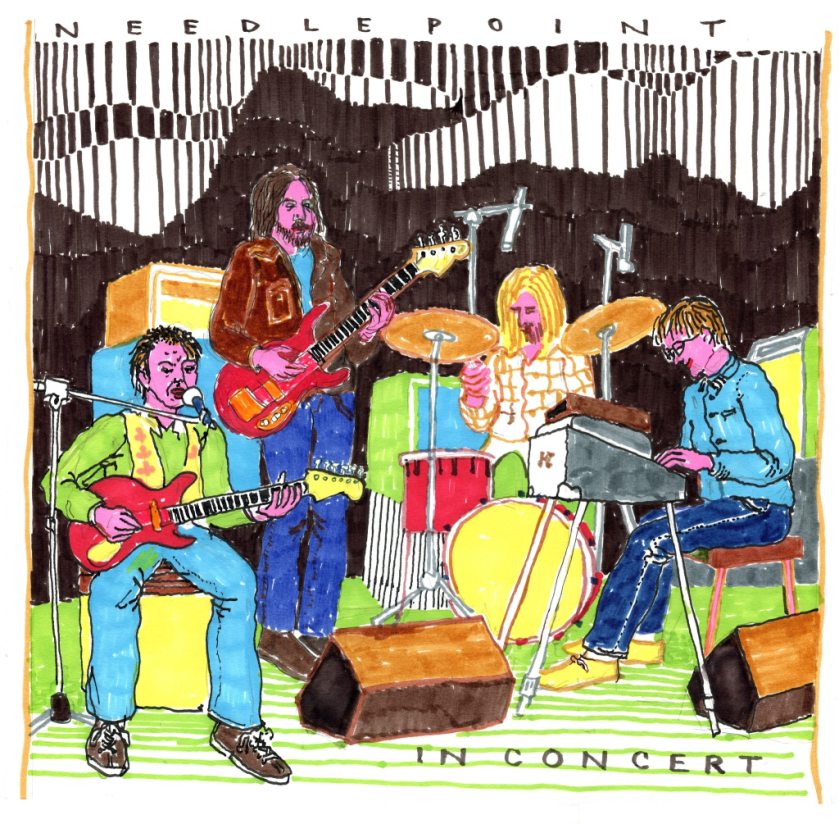
The live album is really Nikolai’s work, with assistance from Olaf. It was a sweet way to say goodbye to Olaf with this album! The recordings are from a few concerts on a tour a couple of years ago, and I know Nikolai had productions like “Bitches Brew” in his mind when allowing himself to put parts of those concerts together in exciting ways. I think the record demonstrates a little in relation to what you asked earlier…it shows the difference between a studio album and live concerts.
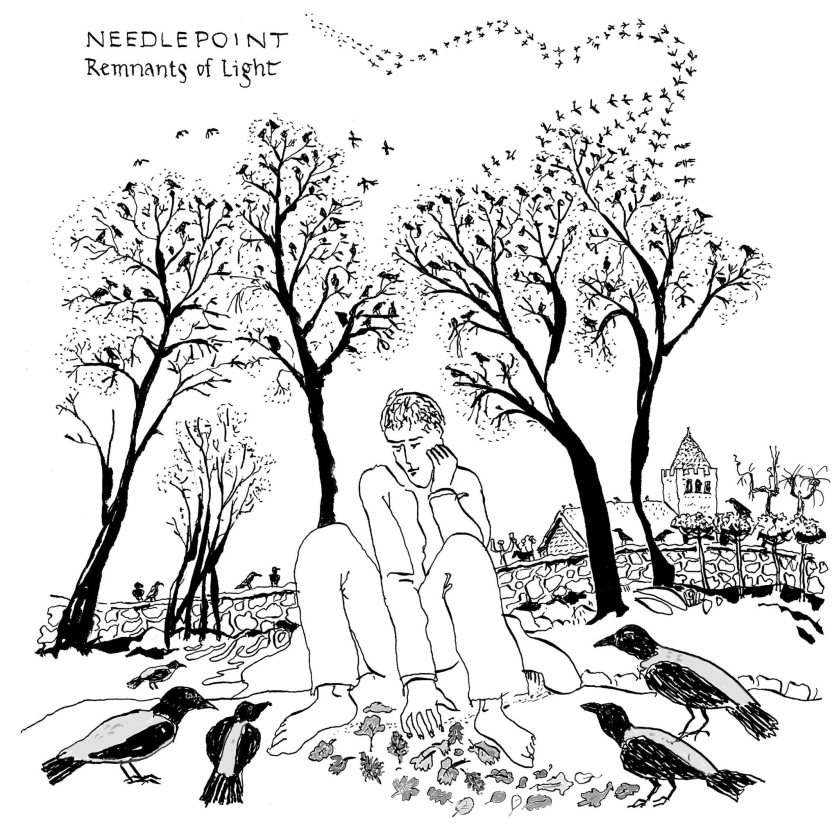
Finally, we talked about the latest album ‘Remnants of Light’, which was released in October, featuring two new musicians Amongst many strong tracks there are familiar sounds – the title track encapsulates the best of the band’s mellow introspection; ‘Head In The Sand’ marches straight ahead Pye Hastings style; whilst arguably the finest piece, the glorious ‘Where You Two Once Held Hands’ could be a strummed Sixties anthem.
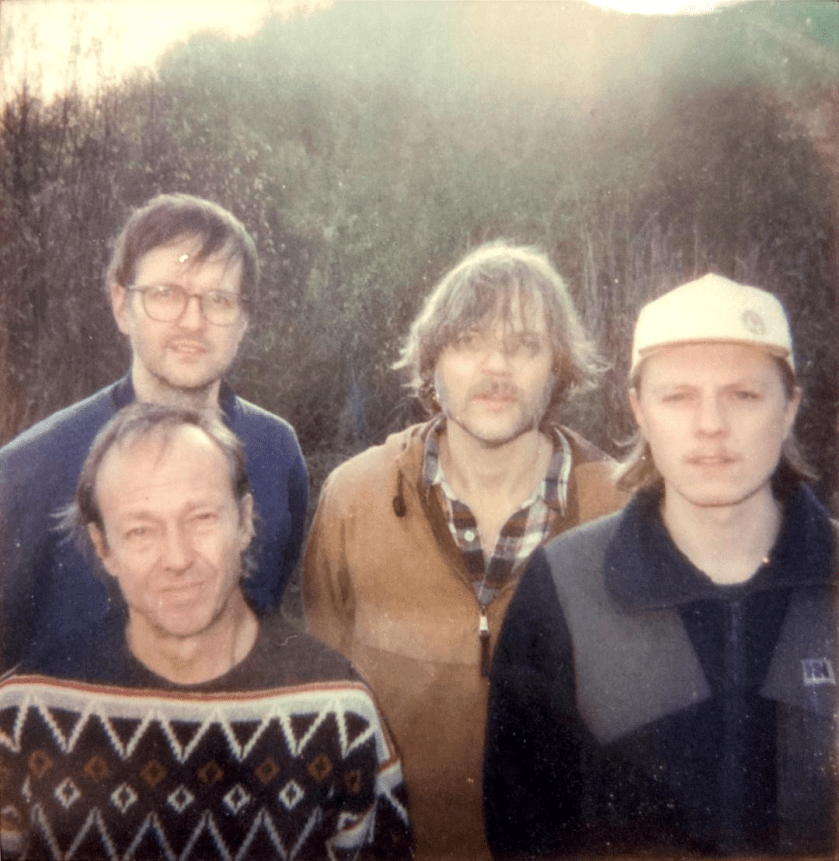
We just released a new album called “Remnants of Light”. It was so nice making a studio album with Erlend (Slettevoll – keyboards) and our new, young incredible drummer Ola Øverby. This is an album with nine songs, and I’m very happy that on one of them, the main part is written and sung by Nikolai! For the first time! After the release we had a wonderful 5 days tour in Norway.
I think this has been the nicest period for me with the band! As for the future: just carrying on! I will just continue, hoping that new songs will usher in the mornings and evenings, my favourite times for working. And I really hope we’ll manage to find new places and new people to play for…including outside Norway…
All of the band’s studio albums are available at https://needlepoint.bandcamp.com/
‘In Concert’ is available at https://www.stickman-records.com/shop/needlepoint-in-concert/
 The Canterbury scene(zine) continued....
2 thoughts on “Canterbury 2.10 – Needlepoint”