Gong at the New Century Hall – Photo: Phil Filby Howitt
As readers of Facelift will know, I’ve been immersed over the last week in putting together a selection of pieces looking deep into the curation of Gong’s latest album ‘Bright Spirit’, and one of the recurring themes is that it marks the beginning of the end of a particular cycle for the band.
Photos: Georgina Filby Howitt
Although the cycle is still some way from its conclusion (luckily the band have a series of tours and festivals to complete before the year’s end) there was still a sense of release, with the shackles being off for the latest gig as part of their co-headlining tour with highly entertaining ravey-spacerock-infathomables Henge. Possibly it was the febrile atmosphere within the Manchester’s New Century Hall, a cavernous, buzzy venue, created the band’s hometown crowd, dominated by tie dyes, wild beards, deelyboppers and illuminated mushroomed accoutrements, not to mention a certain joie de vivre.
Kavus Torabi – Photo: Phil Filby Howitt
Gong were opening tonight, at the incongruously random (and early) start time of 6.50pm, and if Kavus told Facelift in his interview in January that one of the features of joint tours was to ‘pick your best champions’ for your shortened set, then firstly, they got their selection spot on, and secondly, it still didn’t feel particularly truncated, with the band’s performance extending to an hour and a quarter.
Dave Sturt – Photo: Phil Filby Howitt
The repertoire somehow managed to incorporate this current band’s greatest hits whilst the best bits of ‘Bright Spirit’ infiltrated appropriately: the uncoiling snakes of saxophonist Ian East heralding the quite startling eastern-inflected riff of ‘Dream of Mine’, whilst, as promised ‘Mantivule’, the ‘dotting’ instrumental so reminiscent of System 7 and Ozric Tentacles has made its first appearances on this tour, Kavus Torabi’s repeating motif setting off all sorts of responses from around the band.
‘Rejoice!’, I was informed to my right, had been on the point of retirement the previous summer at Manchester PsychFest, but here it was again, benefitting from yet further new angles on the dual solos from Kavus and fellow guitarist Fabio Golfetti. ‘Tiny Galaxies’ too, purveyed its own Sixties sounds, drenched in vast swirling swathes of sound.
Ian East through the deelyboppers – Photo: Phil Filby Howitt
My notes throughout this gig are punctuated by words such as ‘joyous’, ‘upbeat’, ‘celebration’, and indeed the gait of the band was infectious: Dave Sturt beaming throughout, his head often raised to the roof in exultation; Fabio the rock, creating the bedrock of sound on glissando; Kavus a bundle of energy, circling constantly the vast stage, circuiting behind the drum kit, popping up on either side of his sidemen at will. Ian East felt like a maestro tonight, with so many telling incursions as counterpoint or full-throated solos. With such a vast stage, drummer Cheb Nettles was unusually exposed, giving full visibility not just to his highly dextrous, powerful drumming, but an insight into the passion behind his own screaming, high end backing vocals. A colossus.
Highlight of the evening for me was an astonishingly vibrant ‘My Sawtooth Wake’, which, since becoming aware of secrets of the track’s origins (it is inspired by the story of revelatory madness of the 1960s lone British sailor Donald Crowhurst) has added, for me, a whole new layer of significances: it’s pounding, unremitting rhythms; its undulating, rocky tempos; even the brief hint of a seagull’s call from saxophone.
Fabio Golfetti – Photo: Phil Filby Howitt
‘The Wonderment’, the band’s latest single, recalls Steve Hillage’s ‘Rainbow Dome Music’, not just through its oscillating keyboard bedrock, but the glissando which underpins it, whilst soprano sax and lead guitar solo beautifully.
Gong at the New Century Hall – Photo: Phil Filby Howitt
And yet there’s still time for the band’s new/old epic: the previous album’s ‘Lunar Invocation’, (with Kavus’ exhortative vocals against a minimal backdrop which allows Dave Sturt’s bass to find its own meandering voice) melding into ‘Master Builder’ with its usual riot of incantation, incessant rhythm and stop-start conclusion. ‘Stars in Heaven’ rounds things off in grandiose style. There’s a sense that the crowd have been subjected to enough of a wealth of experiences and emotions for the entire weekend… but for many of tonight’s crowd it’s merely an aperitif for the somewhat different, but equally arresting Henge. The tables turn in Liverpool tonight where the running order changes once more…
In Parts 1and 2 we talked to Gong about the placing of their new project ‘Bright Spirit’ within a new trilogy of albums, as well as some of the components, musical and lyrical of the current Gong band. In the final part of this interview feature, conducted back in January, we talk about a few external things: touring with Henge, playing at the annual Kozfest, and what band members get up to musically away from the band.
Henge
Gong have just started on the second part of a tour date process which seems them paired with galactic space-nutters Henge, in a similar arrangement to previous billings with Ozric Tentacles, whose ‘joint’ tours with Gong saw the bands alternating opening and concluding slots. Unfortunately I missed the autumn tour, which introduced the bands’ audiences to each other (and their music), but it means that Gong themselves have had time to reflect on the experience of touring with a somewhat different outfit
Dave: It was very interesting. Very different to the Ozrics too – it’s like a pick and mix musically. Different tracks are inspired by different eras of dance music – with this overall space theme. I think that because we’re kind of presenting different things. With us, it’s obviously more of a musical mystical experience. And with them, it’s like a fun dancing event in a way. But they’re great musicians and the music’s not simple. And they’re really really good in what they do. And the physical effort, the bass player and the drummer wearing bloody masks and all of those costumes are like made of really heavy like curtain material. So they come off drenched in sweat and those masks are really heavy. Their bass player is a lovely guy – but he says he can’t see – the eyes are up here somewhere. Luckily, there’s a few slots that appear. So, he can sort of see about this much, you know, his keyboard and his bass. He can’t see the audience!
Ian: The tour with Henge went very well, we all get on nicely and have some shared interests and a sense of humour. It’s really nice to do the joint tours, it makes the shows more of an event and we all get to play to new listeners.
Kavus: it’s really good fun touring with them. They have a different audience – more than when we were touring with Ozrics, where I think there is a big crossover. As with the Ozrics tour, I think it’s worked. It’s worked regardless of who goes first and last. It’s a different energy, but whether we’re openers or whether we’re closers, it still works on a purely sort of practical level. Watching how Henge operate as a band, as a self-run collective, I mean they make us look like absolute fucking amateurs really. I mean, we are a self-run, self-managed collective, but when you see how Henge do it and you see how they’ve got this locked down and like us, they’ve been the same lineup for about 10 years and just seeing the way they do it, it’s like just really learning.
On a previous joint tour: Gong with Saskia Maxwell of Ozric Tentacles – Photo: Phil Filby Howitt
We’re none of us businessmen, neither are they, but they’ve really got it locked down. So that’s been the big eye opener. But no, I love touring with another band. I love the camaraderie of it. I like that you have to then shorten the set. I like that in a way it’s a bit more, not exactly ‘put forward your best champion’, but you’re creating a different set and you are sort of trying to create a set for what you think their audience is going to be or something that’s going to appeal to everyone.
We’ve got some more dates with them and I think we’ll change things up again. I still think we need to tweak it a bit more. So, over the course of 2026, I think we we’ll have a new set with stuff from the new album. We have to tweak it because I want to be able to feel as strongly about the set we’re going to be doing this year as I did about the one we were doing when we were touring with ‘Unending Ascending’.
Kozfest
2026 will once again see Gong headline Kozfest, that little slice of space-rock infused psychedelia now in its new home in the stunning surrounds of Builth Wells in deepest mid-Wales after over a decade in various locations in Devon. Kozfest is steeped enough in Gonglore that it has a main Daevid Allen stage: Soft Machine, System 7 and Here and Now have all headlined there; whilst associated bands such as Kangaroo Moon, the Invisible Opera Company of Tibet, the Glissando Guitar Orchestra have also been regulars at the festival.
Fabio: We’ve played twice as Gong, first time still with the great Kosmik Ken. I didn’t know that he had my albums before I joined Gong! I feel Kozfest is like a small Gong Uncon in a campsite, a gathering of people that know each other like a big family. Although Gong nowadays sound a bit different from the legacy of bands connected to classic Gong, Here & Now, etc, I believe the spirit of this music is still alive with a festival like Kozfest.
Kavus: It’s amazing that Paul (Woodwright) is keeping this scene alive and bringing in lots of new blood into the thing. I think he’s doing he’s doing the Lord’s work with Kozfest, not just Paul, Snake and lots of other people involved as well. It’s such a good vibe there and I’ve always been welcome. I mean, there was one year – I think it was 2022 – I played with five different bands, solo, I played with the Utopia Strong, I played with Gong, I played as part of Sonic Trip Project, I played as the Glissando Guitar Orchestra. I love being involved in whatever capacity I can there.
Dave: Paul’s really great. I’m really impressed that he does it. I’ve done it various times with different bands. Kangaroo Moon – I love Mark Robson – he’s got a very good left hand so he does a lot of the bass normally. Graeme Clark was one of the other people I played at Kozfest with. We had a trio, me, him, and Pete Fairclough on drums which we did a couple of times.
Kavus: we’ve played in different locations. In Axminster and in North Devon near Uffculme and now where it is in Wales. It’s become it’s great for Gong to play there. Kozfest was the first show we played after lockdown in 2021. That was really really key. I feel like that one performance there at Kozfest really opened the doors to everything that Gong has been in the last three years that have followed it. We turned into a different band at that performance. I think it was having those two years of not being able to do it and just how important it was to do it. Something changed in that performance and I could trace that right back to that performance in 21. Actually, my first one was Knifeworld when it was right up on that muddy hill.
Kavus and Fabio with the Glissando Guitar Orchestra, Kozfest, 2021 – Photo: Phil Filby Howitt
At the moment, I’m only booked for Gong, but I’m always happy just to jump up with anyone. I love playing. I’m a much better performer than I am a punter, especially now I don’t drink. I just don’t know what to do with myself. I’d much rather be playing!
Solo projects
As outlined in a feature in Facelift back in 2018, the current Gong band are a multi-talented lot with all members with various fingers in other pies. All compose music away from Gong.
2025 saw Kavus Torabi cement his place as the hardest-gigging man in prog, with touring dates not just with Gong, but with The Utopia Strong, Cardiacs and with Rosalie Cunningham, plus a number of solo gigs.
Dave Sturt has recently been performing in a Jaco Pastorius role in a project called Mysterious Travellers, as he also works on the follow up to his multi-layered first solo album ‘Dreams and Absurdities’. He is also recording a second album with the astonishing trio This Celestial Engine and also collaborating with poet Mark Gwynne Jones.
Fabio Golfetti, meanwhile was putting the final touches to his latest solo album ‘Seven Keys’ when we spoke, possibly his strongest solo album yet, which is now out (copies will be available from GAS on tour), alongside son Gabriel and fellow Stratus Luna prodigy Giovanni Lenti, whilst continuing to perform the occasional gig with seminal Brazilian trio Violeta de Outono: ‘as I’m continuously flying from Brazil to the UK and vice-versa, I’m always putting my mind into different projects. For example, when I’m in the UK, I’m almost 100% Gongmode, but of course I can do some remote work with my other projects when there’s time. Same when I’m in Brazil, I take the opportunity to do the best I can, recording, rehearsing every week with my friends of Violeta de Outono, even if we don’t have any gig, just to see each other and have dinner together.’
Ian East has a regularly gigging jazz trio and quartet in East Kent (‘my favourite musical activity when I’m not touring’), as well as involvement in the Balkantics (‘London’s original and best Balkan brass band’), and is also working on a second solo album: ‘I’m releasing my 2nd solo album this year, I’m thinking of it as the second half of ‘Inner Paths’ so that together they could become a double album. I’m using the same instrumentation, the same approach to composition and recording.’
As for Cheb Nettles, my lips remained sealed…
You should find copies of albums by Gong’s band members on the merch stall on their current UK tour, which resumes tonight in Birmingham. Alternatively:
We finished off Part 1 of the interview with Gong about their new album with Kavus Torabi and Fabio Golfetti talking about the second single from ‘Bright Spirit’, namely the glissando guitar-heavy track ‘The Wonderment’. What follows in part 2 is, in the musicians’ own words, a consideration of some of the musical components which make up the Gong sound.
Glissando guitar
As part of the interview with Fabio Golfetti for the Canterbury 2.0 features on Facelift back in 2023-24, we talked at length about the glissando guitar, the textural technique inherited from Daevid Allen which has permeated, largely uninterrupted, into the history of Gong and its wider family. A treasured personal memory is the following of Gong’s performance at Kozfest in 2022 of both Fabio and Kavus featuring with the Glissando Guitar orchestra on the traditional Sunday noon performance. I asked them both about the role of this patent ingredient within the overall Gong sound
Fabio Golfetti – photo: Phil Filby Howitt
Fabio: Once when we were rehearsing with Steve Hillage for his tours, I was checking the arrangements as to where I should play guitar and where the gliss would be, and I asked him: “where would you play the gliss in these tracks?”, and he said: “I play gliss in all tracks!!!” So the gliss is a powerful sound weapon, it has the ability to transform the mood of a song in many ways. So as we have two guitars in the band, I recorded glissando everywhere I felt it deserved.
Kavus: For the uninitiated, glissando guitar is the bowing of a guitar with a metal rod and it was developed by Daevid Allen having seen Syd Barrett do it with a Zippo lighter. He developed it. Steve Hillage then took that and went even further. I’m not calling anyone out here, but both Steve Hillage and Daevid Allen said, and I quite agree, that Fabio is the best glissando player they’ve ever heard. I think Fabio’s glissando playing is extraordinary. So, there is no point in me playing glissando on the records. I do a bit live. I do it in Utopia Strong quite a lot and I do it on my solo stuff, but you know when it comes to recording glissando, no one does it like Fabio. He’s really gone deep into it and has this extraordinary understanding of that technique.
It gives us a sound that no one else has. It’s instantly recognisable as Gong. And it does tie us in with the classic sound of Gong. Of course it’s a beautiful sound. It’s like the sound of angels singing.
In terms of it in the band I mean I know Fabio loves playing glissando and generally speaking when it comes to the riff side of things I’ve kind of got that locked down. You know I’ve always played riffs. So I think Fabio loves doing the gliss and I love the sound of it and it gives us it gives us a great way to work because you because it does take up sonically quite a lot of bandwidth. So it means just Fabio doing the gliss will affect how we arrange the music around it.
Saxes and woodwind
Ian East – Photo: Phil Filby Howitt
The music of this 5-piece is characterised not just by the sonic landscape embedded by the glissando guitar but through its sheer intricacy in adding additional lines to existing melodies and riffs produced by the band’s two guitarists. Much of this is down to the effervescent work of the highly underrated sax and flute player Ian East, who explains the process:
Ian: If, for example, I play along with an existing guitar part I begin by doubling it, then drop some notes out (so I can breathe!) and so that the phrase can flow nicely on my instrument, then I’ll add some harmonies and then maybe counter melodies, or a combination of all these things.
Then when we record I’ll decide which horn should play which part and then maybe add some more instruments if it feels that the song needs more weight at that point or a different flavour (the cooking analogy is a nice way to think about this for me!). Or if I write the part myself the process is much the same as above.
Multi-part harmonies
Kavus Torabi, Dave Sturt, Cheb Nettles, Fabio Golfetti – Gong’s four-pronged harmonisers – Photo: Phil Filby Howitt
Whilst the glissando is an indelible part of the Gong sound past and present, one feature the current Gong have made their own, is the extraordinary use of vocals, extending to three or four part harmonies. Their accuracy and impact of this on stage is stunning.
Kavus: We discovered this when Daevid was still alive when we first started touring this. We did a version of ‘I’ve been Stoned Before’ but we did it as a barbershop style rather than just me singing it, because we wanted to do something different and it was just great to do. So on that first tour we were doing this barber shop. And that’s when we realised that “hang on a minute, our voices sound nice together!” All of us really like harmony vocals. And we have we have very capable singers: Cheb is always the high voice because he can reach up there but more often than not, Cheb is the arranger because he just has such an ear for this. Gong has never really done this before. You almost only ever really have the top line of Daevid. You don’t even get even just one harmony – Gilli was doing Space Whisper and Daevid was doing the topline, but this is something we all like doing. What’s really good is that this is something we can actually pull off live, especially now with the technical side of things with in-ear monitoring. We’re able to really buzz in with one another and pull this off live. And while we won’t deliberately put in harmonies arbitrarily, I love it and I love not having to lead the thing. I love just being part of the choir!
The lyrical path of the new Gong trilogy
Much consideration, or at least attention, has been given to the lyrics of Daevid Allen which propel a mythology started back in the 1960s through until his death in 2015. Less-examined is Kavus’ own lyrical path through the Gong albums since he took on the role of lead singer.
Kavus: Well, just to quickly touch on why we think of it as being a trilogy is that ‘Rejoice! I’m Dead’ was very much our response to losing Daevid and trying to keep elements of Daevid in there. Obviously we had Didier, and old Gong in there on ‘Model Village’ and a bit of Steve Hillage on there, and Graeme Clark played some violin and we used some recordings of Daevid and we also had bits of songs that Daevid had written and a couple of his lyrics. It was a transition. Whereas ‘Universe also Collapses’ was really when it felt like it became “okay this is our Gong”. That’s why I think of this as being the start of the cycle in terms of lyrics for that.
I suppose over all three albums I’m trying to, in a poetic and hopefully non-specific way, to talk about my understanding of existence and I think a big one for ‘The Universe Collapses’ was this idea, I’m not alone in this, that everything is happening at once. Everything is happening in an instance and just this single moment and time and space is an illusion. Although that said, ‘My Sawtooth Wake’ was inspired by a guy called Crowhurst. He was a sailor, a British sailor. In fact, I was talking to Peter Hammill of all people about it. He’s a big Crowhurstian as well. So, it was inspired by that, but I wanted it to feel like a sort of spell or a ritual. It wasn’t exclusively about that, but it has this like spell-like ritual quality as well, but it was also about just the idea of drowning and dying and accepting one’s death as well.
But then ‘Unending Ascending’ became more being in praise of the moon goddess and keeping with what Daevid had told me that Gong should always be going upwards. It should always feel like it was something propulsive. And I think I think with this album I’ve been touching on, in ‘Eternal Hand’, talking about fate; talking about dreams in ‘Dream of Mine’ and ‘Fragrance of Paradise’. I’d sort of say it’s my first love song, but really it’s the first blatant love song to the universal goddess to all women, to the universe, to the feminine power – whatever you want to call it.
I think over the course of these three albums it’s been for me a realisation of something I’ve been thinking about most of my life and it’s been coming more and more together for me. I started to really articulate this a bit better when I wrote that memoir ‘Medical Grade Music’ with Steve Davis a few years ago. I think when you write something down, be it text or lyrics, once you start articulating something, writing it down, you realise things about it that you didn’t perhaps realise when they were just going around your head as circular thoughts. And what will often happen, and I know I’m not the only person to say this, is that your you’ll write words and they’ll seem like the right words, but maybe afterwards you’ll read them back six months or a year later and go, “Oh, I know what that was about there”. It’s almost like a memory of the future, or you were able to articulate something that you didn’t quite think you were doing when you were writing it. And I think I’d from a young age been really obsessed with death. Death had been a big big obsession for me. And coming to terms with, making peace with mortality has always been throughout my life, the number one project of being alive is to make peace with mortality.
And for a long time, I was an atheist. I’m not now. I had a Salvia Divinorium inspired mystical experience in my mid-30s which absolutely just dissolved all atheism and that was it. I’d made my peace with mortality and then felt it was my responsibility in a way to be able to try and write about that, if anything for my pre-35 year-old self that was terrified of the inevitability of losing this fleshy avatar. And you’ll hear me go on about it every single gig we do. I’ll just remind people of this: don’t worry about death – it’s no big deal because I’m telling the pre-enlightened me this as well. It’s because I would have loved to have said to the terrified 12-year-old me, look, don’t worry, you will figure this shit out!
And so I’d always had a thing about the things that seemed to have this kind of charge which was dreams. There seem to be something in dreams. There’s something to them. I think that there is something more than just playing out a little film, because you can feel sadness or anger or happiness or laughter in a dream. And that’s very real. You know, when you feel sadness in a dream or when you feel anger in a dream, that’s real anger, it’s not like pretend. And when you’re visited by a friend who either you haven’t seen for ages or a dead friend in a dream, it’s like you’re with them again. Let me talk about Tim Smith from Cardiacs, losing him. Even though I think about him every day and even though I can remember what it was like hanging out with him and what his voice was like, it’s not until he appears in a dream that you’re like, “Oh, no, it was this. It was this thing.” And there’s another dimension to it that you your memory will not give you. So I can’t say what there is to dreams, but there’s something to them. And the same thing with psychedelics and with music, when you get music that absolutely glows with a fluorescence, you’re going, well, there’s something to this. There’s more to the wider thing of art. There’s more than mere entertainment. And I started to realise this whole thing about like time only happening at once and that we are merely atrophying vessels of time. And it’s good that we are because we get to experience memory and music and we get to enjoy a narrative that if we were just in that single moment where time doesn’t exist we wouldn’t do.
So music can be experienced only through these atrophying decaying bodies. And that’s why death is inevitable and death is as just as natural as birth and not something to be frightened of. I’m really really rambling here, but I’m starting to see over the course of doing these Gong albums and writing that book I’m starting to make more and more of a connection between these dreams, all these things that had a charge to me that really attracted me. Dreams, music, art, death, time, consciousness, they’re all part of the same thing. There’s something to them, I think. I can’t necessarily articulate this. Well, I can’t at all articulate it in a scientific way. And I can’t particularly articulate it in any kind of great philosophical ways. I’m just some stoned goofball musician with a guitar. But I am at least able to articulate it with some poetic lyrics and some music.
We thought around the time we were coming up with Unending Ascending, I think we started to see that we should we should we should make our trilogy. Part of that second album was already having three symbols on the cover. The stars, the moon, and the water. So we saw ‘The Universe Also Collapses’ as the stars. We saw ‘Unending Ascending’ as the moon with the lunar invocation on it and we see this one as the water. And those are themes that have been going through all of them: ‘My Sawtooth Wake’ about drowning, and there have been lyrical themes hence calling it ‘Bright Spirit’ because there’s been this thing of spirit bright or bright spirit going through Gong. We’re working with themes – it’s definitely seeing this as a cycle and now with this taking a little break in taking a year off in 27. It is part of that. At least at this point I feel like we’ve said everything that we can say with this current dynamic that we have… which isn’t to say that we’re not going to say something different…
In Part 3 of this interview feature the band chat about life touring with Henge, the annual psychedelic dream festival that is Kozfest, and plans with current and future solo projects
Was it entirely coincidence that the latest chapters of the Soft Machine and Gong dynasties emerged on the 13th day in March, the same date that founder member Daevid Allen died in 2015? Is it therefore any surprise that in both cases the current bands are making a case for the strongest representations of their respective recent line-ups?
In January I carried out interviews with Gong and Soft Machine in January for Prog and Record Collector magazines respectively. But members of both bands were so generous with their time and honesty about not just their latest albums, but a number of other topics, that it seemed an excellent opportunity to share some of their additional thoughts in more depth over a few separate posts on the Facelift blog.
Facelift will shortly be publishing an interview with Soft Machine about their latest album ‘Thirteen’, but in the meantime let’s delve a little deeper into Gong’s new album ‘Bright Spirit’, which appears to herald a bit of a pause for breath after a frenetic decade of touring and recording. All members of the band spoke to me back in January (with the exception of the legendarily incommunicado Cheb Nettles) providing an opportunity for me to ask Gong where they thought they had got to with the release of their latest album.
This line-up, who seemingly an aeon ago emerged from the embers of the last Daevid Allen line up of the band, are looking ahead to the conclusion of their latest joint tour with electronic madhatters Henge, plus a number of further summer European and UK dates. This multi-talented troupe of Dave Sturt (bass/vocals), Ian East (saxes and flute), Fabio Golfetti (guitar/vocals), Kavus Torabi (guitar and lead vocals) and Cheb Nettles (drums/vocals) will return, for a while at least, to their various solo and other band projects in 2027. It’s a line-up that now stands as the band’s most stable incarnation, and in ‘Bright Spirit’, puts together a seemingly more reflective, holistic album than previous ones, providing a perfect excuse for us all to take stock.
If ‘Rejoice! I’m Dead’, the first post-Daevid album, made a virtue of its members’ formidable and diverse talents, both performative and compositionally, in moving towards the band’s new reality, then ‘The Universe Also Collapses’ was grandiose, containing the epic ‘Forever Reocurring’ , the highly charged ‘My Sawtooth Wake’ and the startling ‘The Elemental’, whilst ‘Unending Ascending’ alternated between spiky riffing, Sixties-drenched psychedelic pop and the ‘Selenish’ implorations of ‘Ship of Ishtar’.
The latest project was not without its vicissitudes. Back in the spring of 2025, there were rumblings that the creative process had started to stall a little, or at least was starting to wilt under the pressure of deadlines. More of which below. But given ‘Bright Spirit’s’ rocky incarnation, it’s surprisingly at ease with itself, a coherent statement, almost a reverie of sorts, and, after the striking statements of the first two tracks, underpinned sonically by glissando guitar. It all adds up to a sense of completion of this particular cycle, a new trilogy perhaps?
Gong at Allendale Village Hall, 2025
Kavus: my feelings towards it are bound to be completely inescapably tied up with the creation of it and how we made it and what I was thinking at the time of writing it so it’s kind of interesting to hear how it’s perceived when you haven’t been inside that that globe of craziness!
Dave: in 2024 we were doing a lot including the East Coast in America and then a massive six week European tour. We had Christmas and then we had a few months off but catching up on everything. We kind of exchanged ideas beforehand because we knew we didn’t have a lot of time.
Kavus: On ‘Unending Ascending’ some stuff came together really quickly. For ‘My Guitar is a Spaceship’, Cheb just started playing a beat. I came up with the riff and then about an hour later we pretty much had that tune as you hear it now but with different words. We managed to tour around Europe most of the stuff that appeared on the last album. We were pretty sure of how we wanted the songs to go and they were really under our skin. The recording process was very easy.
With ‘Bright Spirit’, we didn’t have that luxury. We got a month or so off to write and then we’re back in the studio again. And in that month or so, I went through some sort of interesting changes. I quit drinking before the European tour. I had turned into a raging alcoholic. No easy way of saying it. And so then I found myself in January sober um at home
I wrote ‘Fragrance of Paradise’ actually that was a tune I’d written ages ago, but finally got it over the line, but I wrote ‘Dream of Mine’ and a few other bits and pieces at the beginning of the year.
Dave: The writing sessions were quite intense and we spend days and days working on something and then decided it wasn’t and do something else. There was a lot of toing and froing. It’s always interesting the way these things develop because they always change as soon as the kernel of an idea is there and it’s just like everyone throws in ideas and then it develops through the recording as well.
Kavus: when we got back together (in early 2025), it was like, I just need a break from Gong. But we couldn’t have a break. We had this deadline. We had to do this. And as things were getting closer and closer to getting this in rehearsal and working the stuff out, it just got really fraught because we had to make a good album. I feel like everything that we do, everything I do anyway has to be better in some way or at least deeper than the thing I’ve done before. We were having to make decisions about the songwriting or about the song structures that were maybe made under pressure rather than under consideration.
Fabio: I feel that this album is like a conclusion of what we developed during these 10 years, a kind of resume of the creative process of this incarnation of Gong. Each song has its own world and connects to the ‘stone foundation’ of Gong (using Jonny Greene’s words). It seems like a wrap of ideas that we’ve been putting together and developing until this moment. It seems that it is time to turn the page and move forward to the next era.
Looking at the material that we recorded, I was very confident that it would result in a good album, and for me this album has more aspects that are closer to my personal taste in music, more meditative, melodic, and some bits reflecting the Gong of the old days, of which I’m still a fan.
I believe we called this a trilogy, first because Gong had a trilogy (in the Seventies) and this would be a kind of honouring the past, but also because this is the third album that we moulded our version of Gong starting with ‘The Universe Also Collapses’. We consider ‘Rejoice! I’m Dead’ as a transition, although it has some seeds of what we developed, we just brought individual ideas that were developed collectively. From ‘The Universe Also Collapses’, we decided to create music all together in the rehearsal room.
Dave: it is definitely the sum of these five musicians, but our experiences include being part of Gong, some of us more than others. I mean I’ve been in it 16 years since I got involved in April 2009. And then Ian was in 6 months after me… And then Fabio’s been steeped in it for longer than even though he wasn’t in the band until later, and Kavus as well was you know as a teenager really into Gong. When I joined Gong it was never like I had to do what Mike (Howlett) had played before. It was all about you. You didn’t have to be a Gong person – you have to bring something to it. When we did the ‘I See You’ album (the last with Daevid), it was a case of everyone being asked to bring ideas.
Dave Sturt, Sheffield, 2023
Fabio: I feel it’s more like a conclusion than a change of direction, I believe it’s an exploration of everything we’ve done, now let’s move to other territories!
Kavus: I would love this idea of being able to perform the entire trilogy back to back as one big thing even if it was just for a one off or two or three things, do ‘Universal Collapses’, ‘Unending Ascending’ and ‘Bright Spirit’, do it all as one thing. I like the challenge of that. We used to open with ‘Forever Reoccuring’ a lot. And it would end with with ‘Eternal Hand’. Maybe we do it like Magma did and do like a little interval between. I don’t know. I mean, I like the idea, why not? I think we could pretty much play all of it live.
Bright Spirit: An album guide
Gong performed ‘Dream of Mine’ and ‘Stars in Heaven’ during their autumn tour with Henge, and, at the time of interview were hoping to incorporate more tracks from ‘Bright Spirit’ into their spring set. Here the band talk through some of the tracks on the album. Whilst what follows is not an exhaustive guide to the riches of ‘Bright Spirit’, it does collate some of the band’s thoughts on individual tracks, starting with the extraordinary ‘Dream of Mine’:
Dream of Mine
Dave: it started with a riff from Kavus which he’d been playing for a while and there was one day I got to the rehearsal studio and he was playing that riff and I said “it wasn’t bad that!” – we were rehearsing for some gigs I think at that point. I said it’s got a real kind of Turkish vibe and because Ian is well versed in all that, I said it could be really good to kind of get Ian to like overblow it on the soprano and really push that eastern thing. That riff that was the root of it and then it kind of developed. I’ve never really talked to Kavus about whether he considers it to have an Iranian connection but he’s always for choosing strange intervals. They might have just appeared under his fingers..
Fabio: During the composition process, after Kavus brought the ‘Dream of Mine’ riff, a complementary “Egyptian” phrase came to my mind, which I called Anubis guitar!
Ian: this is a very interesting track for me. The process began with Kavus playing that riff he’d composed when we were writing together, and it immediately reminded me of the flavour of the music I play at Arabic and Balkan weddings. In those cultures there is a beautiful joyous celebratory dance music that usually accompanies the arrival of the married couple. It’s very exhilarating to experience both as a listener and a performer. The air is electric. I used to play Zourna (aka Mizmar) at weddings sometimes and this is the instrument you hear me play at the beginning of this track. I’m using the flavour and feel of that music with a similar Makam style of improvisation. Also the drums you hear at the beginning are the Davuls (aka Tapan) I bought in Turkey years ago that are also played in this wedding music. Cheb and I laid down those parts based on a drum pattern Cheb wrote to fit Kavus’ riff. It was a lot of fun! And yes we opened the gigs last November with this track although on drum kit and soprano.
Ian East, Leeds Brudenell, 2024
Kavus: I wrote the whole tune at Christmas. The previous Christmas at my girlfriend’s house in Newquay. I just brought my guitar down knowing that and I wrote the whole tune then.
I’ve always loved those sort of eastern sounding riffs. It would probably be a little bit of a reach to say that there’s a sort of Persian or Iranian influence there, but why not? I have always loved that, going right back to, for example, hearing things like ‘Stargazer’ by Rainbow when I was a kid, it was just like the best thing I’d ever heard. I always love that harmonic minor sort of stuff. It’s a funny ass riff and it’s one of those ones that when I came up with it, I thought there’s something here.
But what I wanted to say about that tune is that there’s a bit in the middle which we refer to as the payoff – the payoff bit where for me it’s as if certainly the rock side of – obviously I’ve got Utopia Strong stuff, my solo stuff but in terms of rock music, which is everything I’ve been doing since I really picked up a guitar, that payoff kind of condenses everything I’ve been trying to do rockwise my entire life as a as a singer and a composer and a player into that one little section. And I was so adamant about this, like no, “this is the payoff”. It has to go like this. It’s got this singing over this mad bit of guitar playing. And Cheb wrote the harmonies on top of it. Lyrics: ‘ You really got to keep your secret closer’. When I heard the final mixback of it because we had to and froed – “this needs to go up. This needs to go down”. When I heard the mixback, I actually started crying. And that’s what I meant: if I get hit by lightning tomorrow that one little bit of payoff that is what I’ve been trying to articulate musically for the last 50 years or whatever. I was very happy about that, not that anyone would even know. I can sleep easy now. Cheb was a tub thumper on that one. He was like, “Yeah, come on!’ So, I was really glad when it got made.
Mantivule
Fabio: ‘Mantivule’ came from just Kavus playing around with rhythmic delays, a classic Steve Hillage style echoed in many artists, like Manuel Göttsching, Steffe, Ed Wynne… also myself..
Kavus: it was actually one or two things we’ve not done before. One – it was an instrumental, and two – it was using the dotting technique. Do you know about dotting? So what dotting is when you play with a delay, but you play against it. So you’ve got the way that say for example Brian May would use a delay where he kind of plays with it. So it sounds like a big orchestra, but if you play against it, you sort of bounce against, I think you’re like playing in triplets against it. Steve Hillage uses it a lot. Steffe uses it. Ed Wynne uses it a great deal, you know, and I remember reading an interview with Ed Wynne probably from the 90s talking about dotting and he says, “Yeah, it turns you as a guitar player into a human sequencer”, which is a great way of putting it. And I’ve always done bits of dotting right back to my old metal space rock band. But in a way it is, for want of a better word, a space rock cliche or a trope. So we we’d never actually done it before with Gong, but I had that kind of dissonant dotty thing and in band practice turned into this thing and it was one of those ones where I was just like “ah fuck it. Let’s do it. Let’s do it”. I know it’s almost a bit of a Gong/ space rock/ Steve Hillage cliche but we’ve never done it and I love dotting. So let’s do our dotting track.
Kavus Torabi, Sheffield, 2023
Fabio: On ‘Mantivule’, the chord progression of course is the echo classic Gong which instantly deserved a gliss. Being a big Steve fan, during the overdubs at home, I thought… hum my hands were itching to squeeze a “snake guitar solo” in this part (before the break) and I did. Later Kavus found a place for his solo too, so I was imagining how his approach would be.
Kavus: ‘Mantivule’ is just a made up word. I had an idea for a song title, ‘Mantivule’s Blacklist’. I’ve got some weird compulsive obsession to make up band names and song titles. And ‘Mantivule’s Blacklist’ was just one that had been around for ages. So it was a working title. It was called that for ages and I was trying to think of a better name for it and I couldn’t come up with one and then Ian at the last moment said ‘I don’t like blacklist – it doesn’t sound very Gong’. Point taken. So we just called it ‘Mantivule’ and I like the mystery – what is Mantivule? Who is Mantivule? Is it is it an adjective? Is it a verb?
It’s one we want to play live. But what is so good about the way that that song ended up is that when I came up with it originally, I was hearing my part as being not exactly the top line, but I was hearing everything as relating to what was happening with the dotting thing which keeps going through the whole track. It’s changing meter, but I keep going. But as the song developed recording wise, that dotting thing just became much more just the foundation and the parts that got built up on top of it. And in fact, hats off to everyone, but especially Ian. Ian started composing these hooks and these melodies on top of it. I stopped listening to what my part is doing, listening to it as a whole, it’s like there’s no way that any one of us individually, I think no way one person could have composed this track, this is truly a band composition, and you can hear all five members’ different takes. I think Cheb’s drumming is just ridiculous – he’s done like these mad roto overdubs and everybody’s just bringing their own flavour to it. And it ends up being this thing.
I think that this more than anything we’ve ever done is the sound of all five of us, just making this strange thing there. There are harmonic decisions and melodic decisions I would never have come up with. And I love it. It’s really exciting and it’s extremely psychedelic because you just can’t hear where’s the focus here? You listen to the drums and bass it’s doing that thing, but then you listen to what Fabio is doing and it’s mental. So it’s a real surprise to me that one.
I wanted to put ‘Mantivule’ as the first single! I thought that will really fuck with people because they won’t be expecting this, you know, a seven or eight minute instrumental!
Stars in Heaven
Kavus: Cheb wrote the bulk of what became ‘Stars in Heaven’. He’s a much more articulate singer than me. So much of what we do comes from him. So many of other people’s parts are written by Cheb. In this band, so many of the arrangements are written by him as well. ‘Stars in Heaven’ was the first one to really get together mixwise. And I thought, this is the obvious choice for a single.
Eternal Hand
Fabio: ‘Eternal Hand’ was an improvisation over an orchestral glissando loop and a guitar arpeggio.
Kavus: ‘Eternal Hand’ we’d already written around the time of the last album, the bulk of it. We felt it was too similar to ‘Asleep Do We Lay?’ So on the last album, that one got shelved. And then Cheb brought in what became ‘Choose Your Goddess’, which is very very different indeed. Thank God he did. It’s such a different vibe. So we said, “Oh, well that one’s for the next album.”
The Wonderment
Kavus: On the last album, the first single we dropped was ‘Tiny Galaxies’. I absolutely love that tune. It’s a kind of 60s sounding poppy tune. And it’s like, people are going to be like, oh, what’s happened to Gong? Are we really going to drop the 60s sounding poppy tune? But there it was. So once we got ‘Stars In Heaven’ out (the first single from ‘Bright Spirit’), I said, “Guys, given how eclectic the album is, I think we should drop ‘The Wonderment’ next”, because they were going, “Oh, maybe we do a radio edit. We maybe we’ll do a radio edit of ‘Dream of Mine’”. Let’s just do ‘the Wonderment’! Because I honestly think people aren’t used to hearing this side of what we do. And we’ve never done anything like that before. And I certainly didn’t do it to placate the people who say, “Oh, there’s no synth in Gong anymore.” It was just that I had this synth and I just wanted to play it all over the new record because I love it. I feel like it’s actually it wasn’t a cynical move but I do feel like already now people have heard it and gone “oh, so Gong are doing stuff like this as well” and while I don’t think it necessarily sounds like old Gong, I mean Fabio sounds probably more like something like Ashra Tempel, once you get Ian involved and Ian playing … and of course with the gliss – so that was based completely on a glissando slide.
Fabio: ‘The Wonderment’ was constructed over my glissando sequence, which I recorded in just one take at the end of the sessions, because I felt that we should have a pure gliss track.
Kavus: We recorded the basic sort of, for one of a better word, rock tracks. Then we did a couple of interludes and one interlude was just this little tune that Cheb had written. We played a variation on the middle bit of ‘Stars in Heaven’ but with a different feel. So we just played that for four minutes and just got a recording of us playing that. And then Fabio said, “Look, I’ve come up with this gliss cycle. Maybe we could use it as an interlude.” So he played this gliss cycle for about 4 minutes. When I was having my meltdown in April 25, I had to put down what became ‘Stars in Heaven’ because I just was getting nowhere with the melody and the words. I couldn’t get the words right. I’ve got pages and pages, this book behind me where I’m just trying to get the right words. I couldn’t do it. And so I thought, well, I need to need to use my time productively – I’ll see if I can do anything with this gliss cycle. A couple of years ago I got given this little monophonic synth called an Arturia Microbrute and it’s all over the new last Utopia Strong album, the first album I’ve played synth on with them, and it’s all over my forthcoming solo album. And it’s all over this Gong album.
So when I look back on this period of my life, that’s when I first got that got given that Microbrute. And so I heard this gliss cycle and I just came up with this synth sequence to go over it which I recorded and thought that’s quite nice. I just left it on the drive. I don’t think I uploaded it or anything. And then after we got back from America and we’re looking at the album, I listened back to it with fresh ears and straight away I heard that vocal melody, “Spirit Bright”. So I sang that vocal melody down. Then I harmonised it. And then it was like, “Oh, hang on. This kind of sounds like a song now.” We’d got the first half which is like instrumental. Then we’d got this bit of singing. I’d just bought this Telecaster and it’s like, “Oh, maybe I’ll do a maybe I could do a solo at the end.” I played it to Fabio because it was his his gliss cycle. I said, “Fab, I’ve made a song out of it. Maybe you won’t like it. What do you think?” And Fabio got it straight away and said, “This is exactly the kind of thing I’m into. This is like this sounds like Ashra Tempel”. So, we uploaded it and Dave put his ebow bass on it. Cheb put some percussion swells and then Ian played some sax and played along a bit with some of my melodies at the end.
And the next thing, because it wasn’t like pulling teeth, this song came out of nowhere really, and I started going, “man, this is my new favourite!”, because it was just so unexpected.
In Parts 2 and 3 of the interview, the band consider their approach to vocals, the glissando guitar, lyrics and talk about Henge, Kozfest and their future solo projects
This was a rare treat – an evening of excellent music hosted over the other side of the Pennines in Sheffield, ‘A Night of Prog’ but with a distinctly Canterburyesque hue: Needlepoint and Zopp were two bands I’d interviewed as part of PhD research last year, and the extended delvings into their histories are printed as part of the Canterbury 2.0 series here and here, as well as within the recent Progarticle that was based on this project.
Needlepoint
In fact, the bands tonight were part of a rarified 3 progged attack: Norwich’s Guranfoe, who I think had performed in full alongside Needlepoint the previous night in London, appeared in very stripped down form to start off the evening’s events: just two guitarists, one a highly fluent guest soloist who graced the later performances of the other bands with somewhat conspicuous, angular bodypopping in front of the stage, but on stage exchanged some highly intricate duo lines with his partner Whether these were adapted pieces from the Guaranfoe repertoire, I’m not sure, but it was polished and enjoyable interplay, I suspect somewhat curtailed because of the evening’s slightly delayed start.
Guranfoe-lite
Zopp came next. This is the fourth time I’ve seen them, and each performance brings new insights and experiences. A set pared down to an hour meant some compromises, even more so when you are showcasing lengthy new material: I’ve heard the opener ‘Intuition Made It’ in a couple of guises now, and possibly snippets of the very lengthy ‘Endless Decrees’ too: this has evolved into something of an epic, and luckily by the time the band reached this penultimate track, some of the wonky sound had resolved itself, with guitar and bass in full sonic glory.
Ryan StevensonMyles Noble
In the meantime, it was Ryan Stevenson’s trademark Stewartesque keyboard sounds which dominated; each solo silhouetted. The classics all got an airing: Before the Light from the first album; Toxicity and You from the second, the latter’s staccato intro played by saxophonist Myles Noble on a portable keyboard. Uppmarksamhet was sadly truncated before its wonderful improvised stretch out. All tracks were excellent, ‘You’ in particular, but the excitement of the new material, all stop-start sections, Stevenson’s increasingly confident vocals, wonderful bass lines and admirable precision is what will remain in the memory.
Ashley Raynor, Richard Lucas, Andrea Moneta
Stretched out across stage in an elongated front line, with Andrea Moneta’s extensive kit behind them, and a nest of leads stretching in all directions, Zopp’s kit would take some untangling before Needlepoint arrived on stage. The Norwegian band, who have just released their seventh album ‘Remnants of Light’, had made their UK debut only the night before, and were hotly anticipated. Their set-up was a relative contrast, a circle of intimacy with singer Bjorn Klakegg seated stage left, guitar cushioned on knee, one shoe off, the epitome of calm; fresh-faced drummer Ola Øverby with stripped down jazz kit, at the rear; bass player Nikolai Haengsle the only one standing, energetically powering through his lines to the left – he’s been an ever-present with the band since their inception; and the studious Erlend Slettevoll on Rhodes opposite. There was a personal, living room vibe to their performance, the understanding between the players unspoken and obvious.
Bjorn Klakegg
Needlepoint’s calling card on record is their dreamy, pastoral vocal style; live there are some elements of this, but it is largely superseded by the most incredible grooves the band produce: one couldn’t take one’s eyes off the mesmeric performance of Øverby , fingers half way up both drum sticks, feeling every microbeat; whilst Slettevoll, head down, was economy in motion: every lick a considered refinement. I couldn’t give you an exhaustive breakdown of the tracks they played, even though I recognised all: this was very much a continuous stream of superbly executed music: on the hand as tight as it is possible to be in terms of a secure, unyielding base; on the other loose enough for all the players, including Klakegg’s own fluid guitar work, to add their own personal touches. I did spot in there ‘Web of Worry’, the magnificent ‘Soaring’, my own personal favourite ‘When The Ocean Meets The Sky’, the Stevie Wonder-like ‘Why’, and an unexpected highlight ‘The Diary of Robert Reverie’, the jaunty Caravan-esque title track from the band’s 4th album which tonight took on the guise of a hard-headed groove. We’d talked a couple of years ago at Facelift HQ about heading out to Norway to see Needlepoint perform, so enamoured were we of their back catalogue. Their brief visit to these shores has only reinforced that desire – it was an extraordinary performance.
‘It’s fucking fantastic, this’. These words rang out somewhat incongruously to my left in amongst the dying notes of Led Bib’s opening track, resonating around a hushed, packed Puzzle Inn. But looking around me, I could see little disagreement.
Mark Holub
Promoting their new album ‘Hotel Puplik’, Led Bib were playing the Puzzle as part of a short UK tour, an intimate venue, a proper old boozer, with its monthly jazz gigs, characterised by a pass-the-hat policy rather than entrance fee, augmented by this unscheduled Monday night performance, one of the finest I’ve seen in recent years. I’d most recently been at the Puzzle for a superb Gary Boyle gig where post-gig he related some slightly scurrilous stories about the Bilzen festival back in 1969 that he’d played at with Brian Auger (alongside Soft Machine). Since then Chris Martin had dropped in for a solo set a few weeks previously, prior to a few dates in somewhat larger arenas with Coldplay.
I’ve seen a number of the Led Bib’s members in the past few years as hired hands within Jack Hues’ extended bands, most memorably performing ‘Facelift’, in appropriate septet mode at the Westgate Hall in Canterbury alongside two of Syd Arthur’s Magill brothers, plus pianist Sam Bailey. But this was the first time I’d heard the band as a single entity. 5 albums in and I’m regretting that.
Chris Williams, Liran Donin
The band are a Mercury-nominated outfit, recently reduced to a four piece containing two saxophonists, electric bass and drummer. Instrumentation is minimal – Mark Holub, (who makes the announcements, or at least spoke wryly between sets), deftly operates on a basic kit with Cutler-like omnipresence, and the two reed players play solely baritone and alto respectively. One might worry about the ‘middle’ vacated by their erstwhile keyboard player – but great washes of echoed sounds often permeates between the opposing saxes Chris Williams and Pete Grogan – think a less manicured Delta Saxophone Quartet. Their collective collages are as much a part of the palette as the presence of the astonishing Liran Donin – often using the bass as a lead instrument: high up on the fret board crafting melody, or grinding out memorably dexterous rhythms.
Pete Grogan
This is music of high pedigree: improvised material played with sensitivity, freedom and tempo but never losing sight of a pre-ordained core: whether returning to the root of a driving bass theme or etching out anthemic lines between the saxophonists. There are folky hints here, North African rhythms even. It’s jazz, but not as you know it.
I was apparently one of only of a handful of lucky people to hear ‘Acid Funk’ back in early July, courtesy of the band <<NUKLI>> inadvertently pre-releasing their new album on Bandcamp, and my unseemly haste to hear the latest output from one of my favourite bands bore fruit before the band realised their mistake and took it back down again pending its 1 August release. It’s been on permanent play ever since.
‘Acid Funk’ seems to have finally bucked my own personal trend of missing out on << NUKLI >>. In the 90s they were on the roster of Delerium Records, that peerless psychedelic label which introduced me to the likes of Kava Kava, Porcupine Tree and the Dead Flowers, but released their first album ‘The Time Factory’ round about the time I was packing in Facelift as a fanzine. Then, when I started going to Kozfest in the mid 2010s, I somehow conspired to miss the band for at least three editions despite being otherwise sucked into that festival’s wall to wall trippy bombardment.
On the fourth occasion, nursing a migraine from hell after a long drive down to Devon, the band’s warm sounds and beautiful instrumental harmony coaxed me inevitably out of my tent to the safe haven of the festival’s Daevid Allen stage. I’ve been hooked ever since.
<<NUKLI>> are a trio spearheaded by Kev Hegan (guitar and vocals) and Mark Huxley (bass), both of whom are regulars with the Glissando Guitar Orchestra, but trace their roots back to the 1980s. Their brand of space rock is uplifting, positive and not a little folky, and perfect in a small festival environment. They are joined on drums by recent recruit Paul Maguire, who brings an energetic, high-end accompaniment to a tightly-grooved mix. Via annual Kozfest encounters in subsequent years (the band’s delicious late night <<NUKLITE>> alter ego, featuring pared down, semi-acoustic performances in Wally’s tent, uniquely captures the vibe of the festival), I’ve come to grow and love their outstanding ‘There Is Another Way’ release (2019), an album with nary a duff moment, blues-flecked breaks, gentle wig-outs and glorious ambience. The band have subtly weaved new material into their sets (some have appeared on live albums) so that ‘Acid Funk’ is not such much an outpouring of new material as a sonic document of what has already been honed live. And it’s mighty fine…
There’s one track which Kev Hegan, live, describes as their ‘prog rock’ number (it could be either the opener ‘Tomorrow People’ or the ‘The Kings Hat’). It’s a description that struck me as slightly self-deprecating but not entirely wide of the mark in terms of how pieces evolve: there is no pomposity here, no overblown performance, but instead the term progressive amply describes a mode of composition that sees the band move easily from theme to theme within each track, with some obvious highlights emerging: that might be the minor-key cascading riff on ‘Dancing In The Moment’, or the recurrent wah-wah solos on ‘World of Light’. One gets the impression that pieces might have germinated via lengthy jams between the three musicians – certainly the vibe between Hegan and Huxley is almost telepathic, so sensitive are the changes and developments within each piece.
Ultimately though the band are at their finest during an epic 4 piece suite in the latter part of the album. There is the glorious stasis of both ‘Afrika’ and ‘Indiah’, each of which are underpinned by memorable bass lines. Their proponent, Mark Huxley reminds me a little on stage of Hugh Hopper: an imposing, implacable figure, masked behind glasses and facial hair, with a certain knowing detachment, generating a fat, enveloping sound which permeates into the soul; the economy of effort at odds with its impact.
Hegan, meanwhile cuts a more animated counterpoint, engagingly flitting between snatches of vocals to provide a variety of guitar roles: subtle licks, atmospherics and free soloing which build up a rich sound. It is here that the alchemy of the band becomes clear: the overall sonic palette is way beyond what should be reasonably produced by a three piece. ‘Afrika’ and ‘Indiah’, each with their respective ethnic undertones, are spliced either side of ‘Acid Funk’, which does what it says on the tin, a spaced out groove a la Mike Howlett with Gong or House of Thandoy. ‘Indiah’, a new tune to me, may well be the album’s highlight, with just a hint of the Ozrics’ recently restituted tune ‘Ayurvedic’, before wending its way down, all sitar atmospherics, into the concluding piece ‘Good Times’. Enjoy <<NUKLI>> in all their guises if you manage to get to Kozfest’s new location in mid Wales, or check them out at their free album launch. For if <<NUKLI>> are indeed prog rock, they might just be its best kept secret.
https://nukli.bandcamp.com/ – don’t forget that this Friday 1 August 2025 is Bandcamp Friday where all fees go directly to the artist
Ever wondered what ‘For Richard’ or ‘Nine Feet Underground’ might sound like unplugged? Wonder no more. Pye Hastings, Geoffrey Richardson and Mark Walker are re-arranging songs from the Caravan catalogue and playing them as an acoustic trio.
Last night at the Sound Lounge in Sutton was, according to them, their second outing as a trio. I’m pretty certain it was their third (after The Firkin Frog in Herne Bay, 10th November 2024 and Trading Boundaries, Sheffield Green/Uckfield, Sussex, 23rd March 2025). Maybe the north Kent gig was only a toe-in-the-water tester? Anyway, two wonderful sets with a beer break in between (the venue was rammed and it was virtually impossible to move or get to the bar when the trio were playing – great for listening, not so good for ageing bladders). I’d be guessing at 150 plus fans?
I’d first heard an acoustic version of ‘Smoking Gun’ on a YouTube clip recorded at the pub in Faversham/Herne Bay and liked it immediately, then sometime later a version of ‘Ride’, I think it was, with a raga-style intro. The original ‘Ride’ has always been a favourite, ‘Smoking Gun’ much less so. Probably like for many fans, the early albums are indispensable, then it’s the law of diminishing marginal returns with a few pearls here and there. Times and styles change and musicians need to make a living but those AOR/MTV-style later albums generally leave me cold but the songs resurrected acoustically last night are all, without exception, winners. ‘I’ll Be There For You’, ‘Farewell My Old Friend’, ‘If Better Days Are To Come’ moved me almost to tears.
Of course you won’t get those powerful ‘Pearl and Dean’ explosions on the old favourites nor the labial Grumbly Grimblies (their hands were full at the time) but neither will you miss them. Geoffrey Richardson on viola does a splendid job building up to all the climaxes. ‘Love To Love You’ had a wonderful Latino feel. Even catchier and as up-lifting than the original.
First Set: I’ll Be There For You, Dead Man Walking, Grey And Pink, Golf Girl, Smoking Gun, Love To Love You, Spare A Thought, For Richard, Place Of My Own.
Second Set: Who Do You Think You Are, Farewell My Old Friend, Every Precious Little Thing, The Dog The Dog, If Better Days Are To Come, Cold As Ice, Best Thing In My Life, Chance Of A Lifetime, Backwards/A Hunting We Shall Go, Nine Feet Underground.
Encore: I’m On My Way
I’m unclear in my mind (and they probably aren’t either) whether they are Caravan Acoustic or Acoustic Caravan. I get the impression it doesn’t matter that much. Highly recommended if you get a chance.
Gong in their many guises: Ian East, Kavus Torabi, Cheb Nettles, Dave Sturt, Fabio Golfetti
This may just be Gong’s natural audience. A packed out village hall with a mixture of the Gong curious and those travelling from afar; innovative and enthusiastic promotion (thanks Phil Ogg); campervans lined up opposite the venue on the approach to a local school; punters streaming in garbed in multifarious T-shirts including those of the greater spotted Camembert variety; Jonny restored to the GAS merch stall; Kavus Torabi excitedly pacing the venue pre-gig; Dave Sturt beaming and relaxed; Fabio Golfetti tired but in good spirits after his mammoth flight from Brazil where he’d been playing with his band Violeta de Outono; and friendly door staff with nary a wrist band, inkstamp, searches or herding in sight.
Kavus Torabi
Yet Gong are far from strangers to these parts on the roof top of England, close to the Cumbrian/Northumbrian border. The band played one of their last gigs with Daevid Allen in nearby Alston in 2012, by which time practically all current members of the band were in situ; whilst we ourselves had witnessed a gig right here in Allendale with the current line-up four years later (our kids had stayed behind in Alston cooking lemon curd tarts with our friend Tracy – 9 years on, all are in attendance). There’s an affinity for the band around these parts which means that the Tat for Tibet bus festooned with original Daevid Allen artwork, which makes its annual appearances at Kozfest and Glastonbury, is moored close by, whilst there’s a memorial in a park back over in Alston for a local character known universally as ‘Teapot’.
Ian East
The familiarity extended to the tracks aired tonight – despite talk of new material in the offing, there were no new songs, as the band honed a set list on this brief UK mini-tour (York, Huddersfield and Liverpool were the other dates – Bristol is to come in June) before setting off on the second leg of a US tour which started in 2024, this time visiting its West Coast. Drawing almost exclusively from the 3 post-Daevid Gong albums, the band continue to perform meticulously crafted and powerful material. Racing through ‘My Guitar is a Spaceship’ and ‘All Clocks Reset’ from the latest album ‘Unending Ascending’, spliced either side of the rumbustious ‘Kapital’, and followed by the trademark title track from the first post-Daevid Album ‘Rejoice! I’m Dead’, this is high octane, driving stuff, and Kavus was probably only half joking when he suggested that the frivolity would have to stop at that point…
Fabio Golfetti
But if the sixties-drenched ‘Tiny Galaxies’ calmed things down a little, they were quickly ramped up once more by the tribal ‘My Sawtooth Wake’, drummer Cheb Nettles hammering out a hypnotic beat. And on to the main event: an extraordinary segued 35 minutes or so starting with the exquisite ‘Through Restless Seas I Come’, the Selenish invocation ‘Ship of Ishtar’ and samples of Daevid’s voice before eventually erupting into the familiar sounds of ‘Master Builder’, a brief but exultant nod to the band’s legacy. Perhaps the suspense is held a little too long here: there are so many other vignettes within a very strong recent repertoire also deserving of attention, but it’s fair to say the audience were transfixed. Then on to a triumphant conclusion with ‘Choose Your Goddess Now’ and an encore of ‘Insert Your Own Prophecy’.
Dave Sturt
Each gig throws up its own unique memories based on set list, sound mix or the venue itself. For me I’ll take away the spine-chilling crystal clear four part vocal harmony which greeted us on ‘Spaceship’; or maybe Kavus seemingly having the audience in his pocket as he extended his long arms imploringly in their direction, wide eyes seemingly agog at what was unfolding. Maybe it was Dave Sturt and Fabio Golfetti (the latter predominantly on glissando) underpinning everything sonically and rhythmically from their stations stage right, seemingly in their own trances. A transition in the ‘Restless’/’Ishtar’ medley completely floored me whilst I was subconsciously processing news of a sad event from earlier in the week – perhaps something bigger shifted here too, as at the end of the gig I spotted a punter cutting short a fag break outside, driven in by the first, welcome, rain for a month – he was grinning as water dripped out of the creases in his trilby. But the prevailing memory tonight was the saxophone of Ian East, alternately barking or crooning on tenor and soprano, high up in the mix (as he always should be), his uncompromising solos giving the band’s sound a wonderful authority. Another wonderful evening. US audiences are in for a treat.
Gong’s ‘I See You’, the last Gong album with Daevid Allen has just received a 10th anniversary remix and release – available here
Twango, who promoted this gig (and many others in the North East) will host The Utopia Strong at Allendale on October 23rd this year. https://www.facebook.com/Twangogg/
Fabio Golfetti has recently released a 20th anniversary edition of the Violeta de Outono album ‘Ilhas’, available here:
Facelift’s interviews with Fabio are published on the blog here:
And details of both Gong’s forthcoming US tour plus a UK autumn tour with Henge are below:
Another year and another new chapter in the history of Soft Machine as the band launch their 2025 dates with a Tuesday night gig at a favourite stomping ground, the Band on the Wall in Manchester. The amount of social media ads about this had made me think that this mini-UK tour might be slightly going under the radar, but the place appears pretty full, filled seats stretching so far back that the merch stall is relocated upstairs, and genuine roars greeting the band as they power their way through a repertoire both new and old.
John Etheridge
We’re treated to no less than 4 ‘world premieres’ – tracks that will soon take their place in what will be the third studio album since the band became Soft Machine again rather than Soft Machine Legacy, and shows that the growing coherence of this lineup as both a compositional and performing act is palpable: Theo Travis’ ‘Seven Hours’ continues some of the impressionistic free work seen on ‘Other Doors’ before finally settling on a more etched out theme; ‘Green Books’, possibly the highpoint of the evening has a funked out guitar and bass intro from John Etheridge (its author), and Fred Baker, which returns throughout the pieces, as does a strong angular line played in unison by Etheridge and Travis (on tenor sax). The second set opener ‘Open Road’ sees Travis bestride the stage, knees bent, in an extended, fulsome tenor rant – I’ve seen him many times over the years, both with Gong and Soft Machine, but for me this might well have been the most commanding performance from him I’ve witnessed.
Fred Baker
In between times, there is the usual handpicked blend of band standards and newer pieces: ‘Facelift’ opens proceedings with impressionistic noises and rumblings before carving out those all too familiar riffs in a sadly truncated rendering; ‘Burden of Proof’, a title track from those Legacy day albums is another unexpected highlight, a fluid swingalong which morphs into guitar and sax call and response. There are Etheridge’s beautiful ballad pieces ‘Heart Off Guard’ and ‘Stars Apart’ from the last 2 albums; Asaf Sirkis’ thunderous assault on his drum kit before and during the otherwise tranquil ‘Tales of Taliesin’, him otherwise being a figure of zen-like precision throughout; and Fred Baker’s showpieces: the vintage renditions of ‘Joy of a Toy’ and, briefly,‘1030 Returns to Bedroom’, a cacophonous outpouring of fuzz bass. Hugh Hopper’s ‘Kings and Queens’, always a highlight, enjoys yet another re-interpretation: this piece has the ability to suspend time for a moment, and yet, normally, dominated by Travis’ looped flute, tonight appears to have gained a glorious 4-way improvisational section where each member subtly interweave.
Asaf Sirkis
Perhaps the only surprise of the evening was the lack of a Mike Ratledge-penned setpiece: ‘Slightly All The Time’ and ‘Out-Bloody-Rageous’ have received recent reworkings by the band, who have also provided re-interpretations of more tranquil pieces such as ‘Chloe and the Pirates’ and ‘The Man Who Waved At Trains’. Perhaps this omission was the rawness of recent events: most if not all of the band had attended Ratledge’s funeral a few days previously, which was alluded to within Etheridge’s between-piece monologues – his repartee is as undiminished as the fluidity of his soloing. What we did get as a first encore is the fourth new piece, dedicated to the original Soft Machine’s last surviving member: ‘Waltz for Robert’, a plaintive Asaf Sirkis piece with a beautiful Baker bass solo, before the a more rumbustious second encore of ‘Grapehound’ (Grey Pound – geddit?) saw the crowd off into the Manchester evening.
Theo Travis
One thing that strikes me about this Soft Machine is that this version always sounds remarkably fresh: their sound is heavy enough to easily sit outside other technically adept but sometimes musically insipid areas of jazz fusion. As a fellow gig-goer commented, they play with a joy and energy which doesn’t detract from their expertise. It’s a very fine evening’s music all told.
Soft Machine play another 6 UK gigs in March, starting with Kinross tonight before heading out to Scandinavia in May. Full gig details below:
Soft Machine at Amougies, photographer Guy le Querrec
How do you begin to pen a tribute to someone who has been such an essential part of your musical listening for 40 years? Keyboard player Mike Ratledge died yesterday after a short illness, leaving a huge musical legacy. Whilst he had essentially stepped back from the Soft Machine by 1976, as the then last original member, his body of work prior to that with the band was considerable with today’s discography spanning in excess of 20 live releases to accompany a dozen or so studio recordings. Classically trained on piano, his poise had been evident even from the Soft Machine’s earliest demos (‘That’s How Much I Need You Now’ from ‘Jet Propelled Photographs’), and was arguably captured most eloquently on the 1969 version of ‘Memories’ (on ‘Wilde Flowers – Tales of Canterbury’). At the other end of the scale was the extraordinary complexity of his written pieces (the starkest example being perhaps ‘Teeth’ from ‘4’). Much has also been written elsewhere over the years about the fluidity of his soloing technique on the Lowrey organ being born from technical issues requiring a continuous stream of notes to be played – either way his style became a trademark adopted by subsequent Soft Machine-influenced bands.
Perhaps his crowning glory is the Soft Machine ‘Third’ album, my own introduction to the group. In fact it would have been Ratledge’s extraordinarily nihilistic intro to ‘Facelift’ that greeted me on a scratchy library-borrowed version of the band’s groundbreaking double album, complete with its minimalist cover. The band members morosely stare into space inside the cover, Ratledge typically impassive behind dark shades and moustache, and the ambience is framed by the record’s antiquated, yet somehow timeless sound quality. For all the collective alchemy of the band’s four members, each adding a unique component, be it Robert Wyatt’s defiant ‘Moon in June’, Elton Dean’s distant solos or the Hopper glue that bound the project together, it is perhaps Ratledge’s album more than anyone’s: two definitive compositions in ‘Slightly All The Time’ and ‘Out-Bloody-Rageous’, as well as sculpting that detached ambience which prevails throughout.
Personnel, musical styles and group dynamics changed thereafter, but Ratledge remained a constant until after the ‘Bundles’ album in 1975. Thereafter he was consistent in wanting to put his Soft Machine days behind him, both in terms of his music, and the chronicling of his output – his move into library music and world of advertising in the late Seventies was only occasionally interrupted – by the disquieting and underrated ‘Riddles of the Sphinx’ soundtrack for example, or a programming credit on the hugely commercially successful classical piece ‘Adiemus’. Even prior to this, during the Karl Jenkins’ axis of the Soft Machine, personal interviews had reduced to a trickle. In the 1990s Facelift somewhat disingenuously claimed a Mike Ratledge interview when Mike King was carrying out research for his Wyatt biography Wrong Movements – in reality this was little more than details of a conversation the two Mikes had had, the most telling quote being ‘I’ve buried my past’. Rob Chapman’s quotes from Mike for a Mojo Soft Machine article in 1997 represent a rare contemporary insight into former pursuits.
As I never got to meet Mike personally, I’ll post here some thoughts from someone who most certainly did: his fellow classmate at Simon Langton Grammar School and first musical collaborator, Brian Hopper. Some of their musical experiments together, sampled for the Canterburied Sounds CDs represent the first known Ratledge recordings, and as Brian told me: “Mike Ratledge’s household was very studious, – his father was a headmaster. Mike was quite an intellectual even at that stage, a very serious individual but very willing to take part in all sorts of multimedia things we did, photography and tape recordings. He was just exploring things in the same way that I was but maybe on a slightly different level. I think probably his father had an interest in technologically up to date things, which Mike seemed to have quite exclusive use of. Mike was one of the brightest people I’ve ever known. He challenged me all the time but it was stimulating nonetheless, he would never let you get away with half an argument – you always had to justify what you said! Obviously that laid the foundation for what he did later on musically.“
“He has left a great legacy of musical compositions and musical performances which were often radical especially with his ‘stream of consciousness’ solo technique of keyboard playing, but also his compositions often featured very lyrical themes as well as complex rhythmical patterns. He will be greatly missed.“
As for his musical impact outside of the ‘Canterbury’ bubble, I’ll leave the last word to one of a number of fans who encountered the music of the early Soft Machine, and had their lives changed forever: Jeff Sherman of US progressive trio Glass who witnessed the full glory of the band’s sound in 1968.
“Seattle Center Coliseum was packed with people. This was like Hendrix’s homecoming. We’re in there and before Soft Machine play, they douse the lights – it was pitch black, and we hear this rumble. I mean, it literally was shaking. It was Mike Ratledge doing the bass pedal intro to ‘Why Are We Sleeping’. We can see they had this thing called the revolving stage, a round stage, and it’s backlit, but we can’t see the members. And we see this guy, somebody climbing over the amps to get on the drum set with just a vest and a hat on. And Mike’s playing the bass pedals. And the lights still haven’t come on. And then we hear this voice – Kevin steps up to the mic and says, this is called ‘The Rise and Fall of the American Empire’. Then there’s like a little laughter. And he goes. ‘We’re not kidding’. And then boom, they launched into it. The lights come on. You couldn’t have had more impact on us. They sounded like nobody we would have ever heard before. They looked like nobody we would ever heard before…. They were freaking loud – hell! But where we were sitting it was just perfect – it is not hyperbole to say that moment literally changed our lives…’
Mike Ratledge 06 May 1943 — 05 February 2025
(thanks to Jeff Sherman of Glass and Brian Hopper for providing quotes for this article)
The first gig of the year for Zopp, and after the euphoria of seeing them wow the Crescendo audience outdoors on the West Coast of France, it’s back to the bread and butter of local East Midlands gigging. The Dubrek is a complex of recording studios located almost in the shadow of Derby cathedral, a bright, vibrant venue which was pretty much full to see a double header of fine local bands. The evening was promoted by Greenhouse Jam who apparently present a monthly hub for innovative improvised music at the venue. Halta D are a five piece playing upbeat instrumental jazz fusion with more than a hint of funk, performing pieces I think largely authored by guitarist Richard Belfitt, underpinned by a warm bass groove, textural drumming and plenty of nuance from the other two band members, one of whom flipped between the saxophone, flute and some quite wacky keyboard sounds, the other a player of quite extraordinary poise who provided enough moments of casual virtuosity for Ryan of Zopp to later admit to (somewhat unwarranted) inferiority!
Halta D
Zopp had already set their stall out for the evening with a large banner backdrop and Andrea Moneta’s prog drum setup both bearing the band’s name (Andrea told us it was in fact his smaller kit, but it still seemed to straddle the stage), and it struck me that after seeing their exploratory debut gig at the Sumac as well as their French exploits, that we were likely to see an extended set. And so it proved: those lured to see the band for the first time having only heard their two studio releases to date (and one audience member appeared to have travelled from South Korea), would have been treated to pretty much half an album of new material, as Ryan Stevenson continues to tweak a couple of extended unreleased tracks: the driving opener ‘Intuition Made It’ plus ‘Living Man’ (which includes a new section entitled ‘Endless Decrees’ – ‘it’s about 16 minutes long but don’t tell anyone!’, quoth Ryan).
Myles Noble/Ashley Raynor
‘Living Man’, as one would expect in any self-respecting prog epic, manages to incorporate the full gamut of styles: of screaming keyboards, grandiose stretched out sections, and elements of tranquil ambience – the band were joined tonight throughout on saxophone by Myles Noble, who was also the evening’s compere (and promoter?). Noble’s slightly larger than life appearance, in green boiler suit, and presence as compere (and promoter?) belied a real sense of sensitivity to the music – he subtly adds an extra dimension to band’s sound in a way I wasn’t expecting.
Richard Lucas/Ryan Stevenson
The band raced through an extensive repertoire, with almost imperceptible refinements to familiar favourites: the spellbinding ‘You’ seems to have added a new bass part from Ashley Raynor, with Noble and guitarist Richard Lucas also inheriting a subtly different unison line towards the piece’s conclusion. The improvised section in the Uppmarksamler/Perspectiw track seems to stretch out more evocatively on each hearing, and the band provided their usual rousing versions of ‘Before The Light’ and the somewhat trippier ‘V’. The one surprise was the performance of ‘Being and Time’ from the first Zopp album, and if there was an advance apology for its melancholic nature, it was unnecessary, with Lucas eking out some fine most Phil Miller-like statements of melancholy.
The stage setup was slightly different to previous gigs: Stevenson was off stage right somewhat in the gloom, reflective perhaps of him wanting a slightly lower profile after admitting to losing his voice the previous day (it bore up well regardless). And strangely enough, the band’s trademark saturated Dave Stewartesque keyboard sound seemed to follow suit, its magnificence only fully audible during moments of isolation. Visually the stage was dominated by Moneta’s compelling drumming: my two previous Zopp gigs have seen him somewhat obscured by other band members from my particular vantage point and it was nice to see him stretch out fully.
Ryan told me later that there is a full 50 minutes or so of the third album pretty much ready to go, and this, alongside news of a number of upcoming gigs, both locally and at the Gouveia festival in Portugal has to be one of the best reasons to look forward to 2025 unfolding.
One of the things people told me they liked about Faceliftthe fanzine in the 1990s was the ‘… and beyond’ part of the magazine – a regular section which reviewed music which couldn’t easily be put under the ‘Canterbury scene’ umbrella. I ended up on the mailing list for a number of very supportive record labels, including Cuneiform, Delerium and Voiceprint, reviewed a lot of albums from their rosters and ended up hearing some quite marvellous music I wouldn’t otherwise have been exposed to. Ultimately though, this part of the fanzine became a bit of a millstone – finding space and time to include those reviews arguably took Facelift away from its unique position of covering Canterbury music. It was one of many factors that meant that things ground to a halt in 1998.
25 years on and Facelift the blog and Facebook group has tried to maintain the same Canterbury-centric approach, although, like everyone else out there, I have much wider tastes than what is contained within its pages alone. So, as we draw towards the end of 2024 I thought it was high time to share some of the non-Canterbury highlights for me this year. I just didn’t feel I could justify entirely avoid talking about them. The criteria for selection: well, I’ve listened to them more than any other albums, Canterbury included, in 2024: my daughter, for example, immediately identified what they would be, based on her (and other household members’) subjection to their various virtues!
5. Sykofant
An unexpected addition to the growing collection of Norwegian progressive music I have in my collection came back in the spring from a band calling themselves Sykofant. This suitably hirsute guitar-based fourpiece purvey a whole host of extended, epic compositions of heavy, folkloric intensity . Imploring vocals imbued with just a hint of growling menace (‘Suddenly I walk among the gods’), crashed guitars and enough changes in direction and style to keep this listener enthralled, this is good rollicking stuff, with chugging riffs, hints of Rush in its compositional complexity, alternately rasping and soaring solos, and the odd mellow vocal melody a la Porcupine Tree.
The last two minutes of ‘Forgotten Paths’, ushered in a by a brief mediaeval burst of mandolin, no less, are based on a mere three chords, etched through with funked, thrashy strumming and power chords (and are actually a mirror for the opening few bars of the album, as those, who like me have the CD on repeat, will recognise) and are amongst the finest passages of music I can recall this year or any other.
Dog Unit are one of two bands in this list who’ve had a video session on the fine State 51 Conspiracy platform, which is an excellent introduction to their work, but who actually came to my attention thanks to a recommendation from a good friend with entirely different musical interests to my own.
They’re an instrumental four piece of 2 guitars, bass and drums providing grooving, slightly hypnotic pieces propelled along by the prominent, bouncy drumbeat of Lucy Jamieson. On stage the 2 guitarists are seated opposite each other, alternately supporting the themes of one another with clearly marked out lines of their own, a bass which rolls along rather nicely, and arguably the star of the piece, Jamieson, whose undeviating motorik rhythms provide the visual and sonic focal point for the band. I hear elements of post-rock here (they’re like a slightly more upbeat version of Tortoise at times), early Foals-ish too in places, but also throw in some funk licks a la The Egg, plus occasional stop start rhythms to keep you on your toes (‘We Can Still Win This’).
The band’s music is so fundamentally simple, and the musicians’ presence on stage so understated that you could almost imagine yourself getting up there on stage with them to add an extra line or two. If you did, however, you’d have to don a regulation issue boiler suit bearing the band’s name! Hypnotic, grooving, slightly warped stuff from which the ambience and glorious bass line of ‘Consistent Effort’ is the highlight.
Late contender chez Facelift for crashing the Bandcamp server through repeated listening, is Actionfredag. Apparently a Norwegian supergroup of sorts – they appear to have attracted a ‘Canterbury’ tag, which if valid, constitutes just one facet of a varied palette of influences. From the charging bass line and angular two note guitar motifs of the opener – ‘Pönk på Svenska’, to the anthemic, open-throated vocal (and violin) theme of ‘En behagelig durakkord som sier noe om hvordan det er å se uten å bli sett’, this is memorable and high class music throughout.
If indeed Canterbury is at play, then it’s probably within the National Health-like jumpiness of ‘Jesus i min bod’ or the Samla-like complexity and unison lines of ‘Ensomhet er bare en følelse’ or even the Underdubbish jazzy guitar/keyboard lines of ‘Tobias’. But frankly I was just glad to turn off my Canterbury antennae for a moment and enjoy the music for what it is: an undulating, foottapping ride where the core band of guitar, (heavy) bass and keyboards, and drums are augmented by flute, harp, woodwind, tuned percussion and strings. Complexity and cacophony are very fine bedfellows in the hands of Actionfredag, and I’m looking forwarded to jumping into a second album which has also appeared on bandcamp.
Whenever I’m asked who my favourite guitarist is (which to be fair, isn’t very often), it’s expected that I might roll out Phil Miller, Steve Hillage or Allan Holdsworth for consideration. And indeed that might be the case. But undoubtedly the guitarist I listen to most of all is Frenchman Frederic L’Epee. Frederic came to my attention back in the Facelift fanzine days when Cuneiform Records sent me a series of albums from his wonderful quartet Philharmonie, with its intricately intertwining guitars and an uplifting semi-classical vibe of almost religious portent. He went on to form the somewhat heavier Yang, associated with much harder riffing and a funkier vibe, whilst at the same time putting out a series of digital-only solo guitar releases which veer between sound experimentation of varying accessibilities and the most deliciously gentle orchestrations. Whilst L’Epee’s calling card is his Frippian motifs (as well as early use of what are now ubiquitous loopers), for me he produces music that is much more beautiful: it sets out to elevate first and foremost, not just to discordantly wrench the heart strings.
All of which gives only a brief backdrop to ‘Rejoice!’. After 3 entirely instrumental albums, Yang took a slight diversion with their previous album ‘Designed For Disaster’, introducing a female vocalist and despite some undoubted highpoints (‘Flower You’ has a set of guitar themes to die for); but it felt slightly like a hybrid approach. ‘Rejoice!’ takes things to a much more logical conclusion: new vocalist Carla Kihstedt is entirely integrated (fellow guitarist Laurent James sings too), and this rather lengthy album, whilst varied in style, feels like a much more coherent statement.
‘Step Inside’, and the title track ‘Rejoice’ enjoy the discordant, heavy riffing I’d associate core Yang with. ‘Concretion’ too, but it’s the latter which starts to subtly weave the album’s web, Philharmonie style, with some wonderfully subtle reflective guitar interplay. ‘Entanglement’ and ‘Berceuse For the Guilty’ incorporate vocals into this intoxicating mix: the former, in which Kihlstedt sings in French, is a lesson in building tension until the main guitar theme finally breaks through.
These particular pieces involved such heavy repeated playing that it took me an age to reach the later extended tracks, most particularly the epic closer, ‘The Final Day’ whose first 5 minutes build through a succession of separate but complementary guitar themes, eventually bridging via a hypnotic, almost Zeuhlian chant to a crescendo which thereafter refuses to relent. It’s a fitting conclusion to a very fine album.
I can’t tell you how many hours I have spent listening to Yang’s particular alchemy over the last few years: the telepathy between the guitars of L’Epee and James is apparent; the intricate rhythms handled with precision, subtlety and power by Voloda Brice; not to mention Nico Gomez, who is amongst the most melodic bass players I’ve heard.
Frankly I had to get this review out (and it what was triggered all the other ones in this piece) as I’m getting rather tired of inflicting it in its entirety on myself and others around me – it’s that good…
Plantoid came to my attention thanks to a video posted by Dario of Homunculus Res of a 20 minute section, performed live, also on the State 51 platform: a jazzed up segment featuring the ultra-tight, intricate head-nodding versions of ‘Wander Wonder’ and ‘Insomniac’ with a stellar performance from vocalist Chloe Spence.
Dave Newhouse of the Muffins commented when I posted this “Man! I watched that whole thing! Amazingballs! Big Wow! Like Indie Pop but with some fusion and then really strange time signatures,”, and when you consider that musically this is just a brief sample of their considerable wares, the sum of the album ‘Terrapath’’s parts is simply astonishing: at times they do crash through indiestyle, but elsewhere guitarist Tom Coyne solos with the angular dexterity of a Patrice Meyer or Allan Holdsworth; bass player Bernardo Larisch chin juts a la Mike Howlett ; the drummer Louis Bradshaw is impressively omnipresent, and in the middle of it all is Spence, not just playing the rhythm guitar which underpins the whole thing but a compelling vocal presence too, all the way from the gentle Moloko-like intro ‘Is That You’ to the utterly bonkers ‘Dog’s Life’, which manages to jump effortlessly between any number of razor sharp, super tight rhythms whilst Spence croons beautifically above. Probably my track of the year from most certainly my album of the year.
Some are born in Canterbury, some achieve Canterbury status and some have Canterbury thrust upon them… Horrendous misquotes aside, in amongst this series of interviews, Needlepoint of Norway are in the unique position of ending up being associated by some with a music scene they had no prior knowledge of. I first became aware of the band through an article called ‘You Can’t Bury Canterbury’, a bandcamp-related piece which showcases pieces by many of the musicians featured here (Zopp, Amoeba Split, Homunculus Res, Magick Brother Mystic Sister), others I’m very familiar with (Magic Bus, The Wrong Object, Alco Frisbass) and a number of additional bands I am not.
When I first contacted Bjorn a year or so ago, having binge-listened on their then latest album ‘Walking Up That Valley’, he was at pains to point out that his own musical heritage owed nothing to Caravan or any other related band, whilst being sympathetic enough to the project to send me the band’s entire back catalogue and agree to an interview which has materialised over the last month or so. In the meantime Needlepoint’s 6th and 7th album have appeared: the first a live album ‘In Concert’, the most recent the band’s latest studio album ‘Remnants of Light’ which introduces two new members of the band.
So, if as will become clear, Bjorn, the band’s main songwriter, guitarist and vocalist was not at all conversant with music from the Canterbury genre, then what is the story behind his own musical upbringing?
I was born 30th of January 1958, in Skien, a quite small town a couple of hours’ drive south from Oslo. My first instrument was classical piano. I loved Bach, and was a very romantic interpreter of his music. I also played flute for a number of years, before I ended up in a small bedroom at my grandparents’ house where a guitar was hanging on the wall. I was a bit bored when all the grown ups in the house took long rests after supper…so I took it down…and that summer I learned a lot of chords….and was sold! After that, nobody ever had to ask me to practice…the guitar went with me everywhere!
My father played piano quite badly… both he and my mother loved singing. Norwegian songs, but some very old standards too…like ‘A Nightingale Sang in Berkeley Square’. My uncle and his son played these songs well, and my brother ended up as a well known jazz piano player. He was three years older than me, and listened to Fleetwood Mac, Jimi Hendrix…and then turned towards Chick Corea, Paul Bley and Keith Jarrett.
When I started to listen to music on my own, my sister’s boyfriend, Roger, already had tons of LPs. Gentle Giant, Yes, Back Door, Zappa… I liked all of it, but ELP was what I really loved! I remember that I told my mother that,…whatever happens…ELP will always be my favourite band. But after a while I joined a jazz band with much older guys in it, and Wes Montgomery and Pat Metheny sort of kicked Greg Lake’s wonderful voice out of my head for a long long time.
There’s a been a common theme that’s been emerging through the Canterbury 2.0 series. Many of artists playing the music we follow on this page have often largely self-taught, even in some cases not having a working knowledge of music notation. Bjorn certainly bucked the trend in this regard:
I went to the “Jazzlinja” on Trøndelag Musikkonservatorium in Trondheim. The first class ever for that discipline. I had my own bands with others from that school, and joined other ones too. When I was finished there I found that many of my friends, like Nils Petter Molvær, flew away and had incredible careers, while I was left on the carpet in my living room trying to get off the ground. I didn’t really take off. But after a while I started my own band NUKU (‘Det Absolutte Nullpunkt’ was a CD I made with that band) and we had some nice gigs. I also started a band with my brother, Out To Lunch, and that was a quite popular band for a while in the Nineties.
One day I met a drummer called Harald Skullerud, and we made a duo recordcalled ‘Gloria’, named after a wonderful old acoustic guitar with Gloria written on it. It’s a record I’m proud of, and I have received many letters from people being comforted by the sound of that one! Then two other albums with Harald followed…’A Day With No Plans At All’ and ‘Sidewalk View’. All of them instrumentals.
So how did Needlepoint come about?
I met Nikolai (Hængsle)! A meeting that changed my musical course completely! Or rather …I met Thomas Strønen first, and he suggested we ask Nikolai to join the band we were planning to put together. At that time all my music gear was digital! A lot of expensive TC Electronic stuff. But working with Nikolai kind of awakened stuff from before jazz took me away. I had a pedal I thought was called Shin Ol. Shin Ol? Nikolai asked…and he told me it was a Shin Ei Fy6, an extremely cool pedal from 65 or something. So I turned it on for this band!
The first Needlepoint album, released in 2010, was called ‘The Woods Are Not What They Seem’, recorded by this core trio. It is probably best described as blues-based rock and is instrumental. There is a groove, a funk underpinning the music, but still with the occasional hint (on ‘Trapdoor’, for example) that there might be a desire to expand the music further, if as yet no vocals. Bjorn had told me in a previous conversation that Ry Cooder had been a particular hero of his.
Before Needlepoint was put together, I did not sing at all, my fuzz pedals had got dusty! And as you say…Ry Cooder was absolutely a musician I liked a lot. I also liked Bill Frisell, and since we are both melodic players, I tried hard not to walk in his footsteps. Stealing others’ specialities is something I quite early on tried to avoid. Without knowing, my way of playing was close to his. He was bending the neck of his SG, and I had got my first guitar with Floyd Rose, and found a way using the bridge that gave me quite a unique sound…I thought. Until I heard Bill Frisell on an album for the first time with Arild Andersen. I got sooo sad, but immediately I let go of that way of playing, and started finding myself another way…
With the album, it was such fun to plug in those pedals. I also used and am still using a pedal called Tube Zipper (Electro Harmonix). There is a filter inside it, and when I turned a certain knob, quite apart from the tone on the guitar it produces random bird chirping sounds! I played a lot of long guitar solos…my longest ever..) But, back to that first album. I must say I wasn’t inspired by anything else than the energy I got from suddenly being a part of this band…but of course…inside me all the music I had ever listened to was resonating.
The band’s second album ‘ Outside the Screen’, recorded in 2011, starts to take something of a new direction, with vocals and keyboard added, and unlike later albums appears to be more a collection of different styles. I asked if this album was more of a collection of separate written pieces rather than a grander concept?
We’d almost finished recording ‘Outside the Screen’ when I asked Nikolai: ‘Why am I only making instrumental music when nowadays I am mostly listening to vocal based music?’ And then we decided I had to start singing! We found places to replace guitar-played melodies with vocals, and sort of turned an instrumental album into an album with vocals in it. During this process David joined us as a studio musician, colouring the music in his beautiful way.
‘David’ is David Wallumrød, credited with clavinet, upright piano, Hammond organ and autoharp. There was an immediate change in sound, particularly with the adding of Hammond. There is also a new lightness and humour within the mix (shown on tracks such as ‘Johnny the Player’), as well as the first real evidence of more of a dreamy vibe on ‘Tree on a Hill’, and ‘If I Turned Left’, and the detached beauty of ‘Siikup Sinaani‘, all of which contrasted with the crashing guitars of ‘Snoring Husband’ (I didn’t ask Bjorn if this was an autobiographical reference!) Needlepoint were extending their range as well as their repertoire.
It was the third album ‘Aimless Mary’, from 2015, however, which constituted, for this fan at least, their own great leap forward. From start to finish this is something of a masterpiece, from the Stevie Wonder-like funk meanderings of ‘Fear’, via the hard electric piano groove of ‘Why’, all the way through to the daydream-like imagery of ‘Imaginary Plane’. (‘Light as a bird and easy for an angel to carry/ Leaning back in your chair, as if you’re up in the air’) In between times there is the stuttering trance of ‘Soaring’, the exquisite duelling guitars of ‘Shattered into memories’ (which descends into a most unexpected Van der Graaf-like dirge); as well as the melancholy of the title track. This is an album rich not just in a new level of composition and realisation, but also in its vocal and lyrical content…
This was the first album were I knew I was going to sing before starting to making it. So now I had to write lyrics beforehand….very difficult I thought, but something that has turned into a pleasure for me more recently.
I have always followed a romantic route playing piano or classical guitar. And in the beginning the songs I made were so sweet, or romantic, that they were difficult for my fellow jazz musicians to play. To me it is completely impossible to write music with a heart intent on trying to be someone else. I have many influences in life …Joni Mitchell, Paul Simon, John Coltrane, Wes Montgomery, ELP, old Irish songs or Norwegian folk tunes are just a few, but when I get up, I make myself a cup of coffe…maybe light a candle.. and take my guitar, and just let the first chord start a melody. It’s very funny sometimes to go back to my mobile-recordings andcheck out how much of a song is based on those spontaneous recordings. Sometimes they’re just the same. But of course…behind what every composer composes…there are others…
I think ‘Aimless Mary’ is the album where Nikolai really was able to start to turn this band into something he for a long time had wanted. His friend Olaf (Olsen) joined the band (on drums). David was already a member of the band, and this gave him freedom to influence our sound even more than before.
I wrote the songs, also the instrumental parts and also some riffs…but I had no cluethat we were moving into a kind of musical sound that would turn prog rock-loving listeners towards us. I think HE did, though!
I wondered whether with the follow up album ‘The Diary of Robert Reverie’, recorded in 2017, that there was a deliberate attempt to tap into Caravan vibes with the cartoon-like imagery of the title track:
“Robert is a strange old man
Living on a farm alone
Sleeping in the barn.
With cows around him all night long”
It’s so nice that I have learned what Canterbury is, and Caravan is also something I learned about after ‘Aimless Mary’. Is there an Aimless Mary in one of the Caravan songs too?
Caravan is often mentioned as an influence, but the truth is…I’m sorry to say…I never listened to their music. Not because I didn’t like it; just because no one ever played their music for me when I was young.
The reason albums turn out different from each other is that we have to deal with the material that shows up in the process of composing it, that in their different ways inspire the cooperation between Nikolai and me. So when a tune becomes long, it’s just because the song happened to have so many nice things inside it in the original spontaneous recording that we didn’t want to take anything away!
‘Reverie’ is perhaps more diverse, but less grand than its predecessor, with less of a larger group sound. For example, the predominant elements on ‘In My Field Of View’ are guitar and hand percussion, whilst ‘Will It Turn Silent’ is one of a number of gentle ballads and there is a languid pastoral feel to ‘Grasshoppers’. ‘In The Sea’ could almost be a ‘Whiter Shade of Pale’ type exultation whilst ‘Shadow in the Corner’ could be a sequel to the previous album’s musings of ‘Imaginary Plane’. Overall, ‘The Diary of Robert Reverie’ takes Needlepoint’s mellow charisma to extremis.
In 2020 Needlepoint recorded their fifth album ‘Walking Up That Valley’. Like ‘Aimless Mary’ is another coherent classic, a return to whole-band complexity. If ‘Rules of a Madman’ was the first track that introduced me to the band with a Richard Sinclair-like ditty, delivered a la Pye Hastings, kooky in its time signatures; there is arguably finer music elsewhere on the album: ‘I Offered You The Moon’ is wonderful – outrageous fuzz bass contrasting with gentle melody, ‘Where The Ocean Meets The Sky’ is a masterpiece with a change of direction typical of the band at its heart. The album features Bjorn contributing notable extra instrumentation, including violin, cello and flute. The title track is a 10 minute opus, which likes all the best Caravan tracks, flits between dreamy introspection to bass-driven playful grooves but also features some of the best of Bjorn’s wonderfully fluid guitar lines.
Our desire is only to make as good an album as possible from the sources in my simple mobile-recordings. I think you should ask Nikolai the same questions one day and he would remember the process much better than me, and differently too! I guess we put together different ideas into one long composition in that title track. I remember we used to call that long instrumental melody “Long Song”, and I also guess Nikolai had something in his mind when we ended up putting this part in the middle of everything!! These questions made me think that maybe I should find all of the different original mobile-recordings in one place? Good plan!
Before talking about the two albums which have come out this year, I asked Bjorn about the band as a live entity, and what sort of audience it attracts:
I think there are very many different people listening to our music. We have been embraced by people who love prog music, and are thankful for that. But we are not a band that tries to make prog music. I didn’t know I was making prog or Canterbury at all!…I just continue to write my instrumental stuff like I did when I was an instrumental jazz musician, and when I started to sing some years ago, these things were mixed together…and maybe that is a kind of recipe for prog? At least…with Nikolai’s help it is, I guess!! But there are other kinds of people listening too. People who are very interested in the lyrics and think our concerts are kind of poetic too, which touches me to hear.
We tour for a couple of weeks, maybe three eachyear, and we have not been abroad a lot. I know many people from different parts of the world would like us to come, so we’d better hurry up I guess!! I would like to playabroad…yes! But we are a bit too grown up to play for nothing. There are kids to be taken care of and to feed here and there!
In terms of venues…we love the smaller ones, but we also play festivals with larger capacities; but I love to have the audience as close as possible, so I can smell what kind of toothpaste they use!
We do not have loads of followers. But yes, some have come from Germany, Netherlands, Italy, even from USA to hear us…but that doesn’t happen often. But in Norway there are people who have seen us many times, yes.
I guess we are more energetic when we play live. The solos can last longer, but we never really betray the shape of the songs…we just bend them in different directions! I mean, how can you stop Erlend when he is on fire behind his Rhodes?!!
Earlier this year, there appeared a budget priced live album on Stickman Records, ‘In Concert’. This is a curiously presented collage of excerpts from the band’s live perofrmances, and Needlepoint afficionados will recognise snippets from the various studio albums spliced together within two long pieces: ‘Trying To Relax’ parts 1 and 2.
The live album is really Nikolai’s work, with assistance from Olaf. It was a sweet way to say goodbye to Olaf with this album! The recordings are from a few concerts on a tour a couple of years ago, and I know Nikolai had productions like “Bitches Brew” in his mind when allowing himself to put parts of those concerts together in exciting ways. I think the record demonstrates a little in relation to what you asked earlier…it shows the difference between a studio album and live concerts.
Finally, we talked about the latest album ‘Remnants of Light’, which was released in October, featuring two new musicians Amongst many strong tracks there are familiar sounds – the title track encapsulates the best of the band’s mellow introspection; ‘Head In The Sand’ marches straight ahead Pye Hastings style; whilst arguably the finest piece, the glorious ‘Where You Two Once Held Hands’ could be a strummed Sixties anthem.
We just released a new album called “Remnants of Light”. It was so nice making a studio album with Erlend (Slettevoll – keyboards) and our new, young incredible drummer Ola Øverby. This is an album with nine songs, and I’m very happy that on one of them, the main part is written and sung by Nikolai! For the first time! After the release we had a wonderful 5 days tour in Norway.
I think this has been the nicest period for me with the band! As for the future: just carrying on! I will just continue, hoping that new songs will usher in the mornings and evenings, my favourite times for working. And I really hope we’ll manage to find new places and new people to play for…including outside Norway…
The Muffins were partly lured back together in the mid 1990s by the prospect of putting together a single track for ‘Unsettled Scores’, a unique double album on Cuneiform Records, the label set up by a key figure within the band’s history, honorary Muffin Steve Feigenbaum. Steve also plays on 2 of the 4 tracks on ‘Manna/Mirage’, and has consistently provided a platform for original and re-released Muffins albums on Cuneiform, and their distribution through his mail order outlet Wayside, including early material aired which can be found on ‘Chronometers’, as well as the recent box set)
Dave Newhouse:Steve was / is a friend, first and foremost. He saw us from the very beginning and always supported us and made sure to get the word around. He was also a musician, and so when the record label started (Random Radar Records), Steve was an important part of it. Later, when Steve launched his own label, Cuneiform Records, he brought us on board with him.
I believe that (‘Unsettled Scores’) was Steve Feigenbaum’s idea where Cuneiform artists would perform music by other Cuneiform artists.
Steve told me in 2020 during research for the Hugh Hopper biography (Hugh covered a Dr Nerve track for the project, whilst no less than 3 Cuneiform artists contributed covered Hopper tunes) that the initial impetus came via CW Vrtacek of Forever Einstein who had suggested a 94 second cover of a Birdsongs of the Mesozoic track to kickstart the project).
It was a great idea. I remember hearing Forever Einstein’s track “She Wears Her Dead Mother’s Hat” and thinking that that would be a good one for the newly reformed Muffins to record. It was actually the first thing the reformed band recorded since getting back together.
From their ‘Unsettled Scores’ endeavours (in the spirit of the project a Muffins piece ‘Hobart Got Burned’ had been covered itself by Kit Watkins/ and Coco Roussel of Happy The Man) the band moved on to record their album, ‘Bandwidth’. I put it to Dave that in many ways this seemed like the band’s most accessible studio album. Billy Swann’s bass is very much to the fore, the album swings along and in many way it is much more like Dave’s own later Manna/Mirage material. I asked whether the music’s changing nature was reflective of the band’s change in circumstances, different from the ‘house’ vibe of ‘Chronometers’ and ‘Manna/Mirage’ and the ‘local’ downtown feel of ‘185’.
The Muffins – from ‘Baker’s Dozen’
Yes, we were no longer living together, so the compositions had to reflect that. I don’t think it was a conscious effort to return to type (‘Manna/Mirage’), it was just something that we naturally gravitated toward.
In the early Noughties the band played what would be the first few of what would become more their gigging norm: festivals showcasing progressive and adventurous music. Their first of three performances at ProgDay was in 2001, whilst the band were invited to play at Nearfest in 2005 (this is the 13th CD – constituting that ‘Baker’s Dozen’ –of the recent box set), and also the RIO festival in France in 2009. I wondered if the band had been invited to play at the original Rock in Opposition incarnations in France in 1978, where fellow ‘Gravity’ contributors Samla Mammas Manna had appeared, as well as Stormy Six, Etron Fou Leloublan, Stormy Six and Henry Cow themselves.
No, I don’t believe so. We weren’t considered for any overseas RIO festivals until our second regrouping. (In relation to band’s festival appearances) Yes, we were never really a club band (although we tried for years and DID end up playing in some nice club venues), but the festival circuit seemed to be better suited for what we wanted to do. And the like-minded audiences were there, so we met them there.
If the band was to continue to produce new music together, there would be the need for periods of intense rehearsal as members were dispersed across three different states. This was one of the factors leading to the ‘Muffin Summer Camps’ which became a regular feature of the band’s activity in the 2000s.
The Muffin Summer Camps at Tom’s house in Virginia came out of necessity; we needed a place to rehearse 24/7 for at least a week just to get into shape for the festivals that we were starting to play. They were also ideal for writing and rehearsing new material for the next albums. It was the closest thing we got to what resembled the old ‘Buba Flirf’ group house. It was Paul who somehow got in touch with Marshall Allen in Philadelphia and invited him down to DC to record with us over at Paul’s house (Allen, appears, alongside fellow Sun Ra Arkestra member Knoel Scott) on a further Muffins album ‘Double Negative’)
Knoel Scott, Paul Sears, Dave Newhouse, Tom Scott, Billy Swann, Marshall Allen
‘Palindrome’ was our second to last album (the last album being ‘Mother Tongue’). When we were trying out some ideas for the title, Tom’s wife Susan mistook one of our original titles ‘Conundrum’ for ‘Palindrome’. We decided that ‘Palindrome’ sounded better. We had high hopes for this one; a French label (Musea) had expressed interest in putting it out. We agreed, signed the contract, and got no money for it. Very disappointing. We returned to self-releasing our last album ‘Mother Tongue’. You can hear the entire ‘Palindrome’ album on the ‘Baker’s Dozen’ Muffins box set.
The Muffins’ Box set is an extraordinary document of largely unreleased material from the entirety of the band’s existence: unheard studio recordings and live documents of the band in their various guises, as well as 76 pages of personal accounts, photographs and other artefacts.
I will be forever grateful to Paul Sears for being the original instigator for getting the box set moving in the first place and to Steve Feigenbaum for choosing all of the live and studio tracks that would eventually be included on it; I especially appreciate how he (Steve) focused on the live energy of the band as well as the humour that we tried to get across. And of course, it could not have happened without Ian Beabout’s expert mixing and mastering as well as Eric Kearn’s graphics on both the box and CD / DVD covers and booklet. And a pat on the back to me, if I may – I wrote the text in the booklet which ended up taking up many many months of research and calls and emails in order to get it right. ‘Baker’s Dozen’ is a product of a lot of love and hard work from everyone involved. It is a true labour of love.
We lost Billy Swann this year. Utterly heart-breaking. He was my big ‘brother’. For awhile, it was just him and me at the Muffin ‘Buba Flirf’ house until the rest of the band joined us, and Billy and I really bonded at that time. We never had an argument, we never got upset with one another, I always knew I could rely on Billy to talk things over with; he was calm and reasonable and always a bit more mature than me. I’ve said for years that Billy was the heart and soul of The Muffins. We all had our parts to play in the band, but Billy was its spiritual nucleus.
Dave Newhouse with Billy Swann – from ‘Baker’s Dozen’
Since the final break up of the Muffins, Dave has devoted much of his attention to putting out a superb quintet of albums under the umbrella title of Manna/Mirage – they are arguably not as compositionally dense as Muffins work, but not only do they give a greater voice to Dave’s stripped down keyboards sound (as well as multiple sax lines such as on the memorable ‘Catawumpus’ ), but they also allow Dave’s Canterburian, RIO and Zeuhlish influences to be heard more clearly; as well as providing an outlet for some inspired guest appearances: including members of the Muffins; Univers Zero’s Guy Segers; Fred Frith, violinist Forrest Fang; the wonderful Rich O’Meara on tuned percussion; and the vocals of Carla Diratz.
Well, my ‘Manna/Mirage’ solo albums (I hated borrowing the title of the studio ‘band’ from our first album, but I thought just using my own name, no one would know who that was. I thought it would give listeners a necessary Muffins connection) came from a split that Tom Scott and I had; we were working on a Muffins album that we wanted to be mainly a big band recording. So Tom recorded some of his songs at his studio and I recorded some of my songs at my studio. When we started listening to the album, I noticed that Tom’s tracks and my tracks sounded to me like they came from completely separate bands. They just did not blend. I suggested to Tom that we produce two separate solo albums and then come back later for a true Muffins album. And so Tom’s tracks became an album he called ‘4S’d: Man Or Muffin’ and my tracks became my first ‘Manna/Mirage’ album ‘Blue Dogs’.
I asked Dave about a couple of specific tracks with clear Canterbury references, ‘Canterbury Bells’ and ‘Mini Hugh’ (the latter from ‘Rest of the World’)
‘Canterbury Bells’ was the first piece I recorded for my first Manna/Mirage solo album ‘Blue Dogs’ and ended up being the first track on the album. My son George is playing drums because the song needed a solid Ringo-style of consistent rock drumming that George can really deliver. Very few of my songs have titles until after I’ve recorded them and listened back, and then the titles just present themselves to me (something to do with those damn Muses who, to this day, will not leave me alone). When I listened back to this one, it sounded very Canterbury to me (I also wanted to get across to my listeners that I was continuing along previous Canterbury roads), and the word ‘Canterbury’ of course refers to Canterbury Cathedral, and so ‘Bells’ was added on. I may have also read somewhere where someone was enjoying hearing the bells ringing from Canterbury Cathedral.
‘Mini-Hugh’ I wanted to reflect my love and respect for Hugh Hopper. Hope it did him justice. And of course I had to incorporate Guy Segers, who is himself a big Hugh Hopper fan and who can get those super low Hopper fuzz tones on bass. I also tried to replicate a Soft Machine sound with my Mike Ratledge Fender Rhodes playing and my Elton Dean sax noodlings.
And a big shoutout to Mike Potter, who has mixed and mastered all of my solo albums. Those albums sound as good as they are because he is the master at his craft.
This doesn’t’ even cover various low-key projects which Dave does little to promote or push, being seemingly happy to press a few hundred copies and watch them inevitably find their ways to good homes – these include ‘Daughter of Paris’, an experimental pair of pieces which constitute a project started at the times of the Muffins 80s/90s work and was completed by Dave during Covid, as well as the ‘Moon X’ projects with Jerry King (and son George Newhouse on drums), a multi-faceted outfit just about to release their fourth album, promoted through obscure mid 20th century sci-fi imagery whilst Moon Men’s album ‘Uncomfortable Space Probe’ was described in Facelift as a ‘seismic romp’
MOON X came out of the breakup of another band that Jerry King and I were in called Moon Men. We so enjoyed working together on Moon Men that we decided to keep the momentum going with a new project that we called ‘MOON X’. We added my son George Newhouse on drums and kept the band as a trio. Jerry and I seem to have a really good telepathy working together.
I also had to ask about the Diratz project, a three-way collaboration (with inspired additions including guitarist Mark Stanley) between Dave, guitarist Bret Hart and French singer Carla Diratz. The album was reviewed in Facelift here and I spoke at length about the project with Carla earlier in this interview series here:
I’ve always been interested in songwriting, and when I first heard Carla’s voice on Facebook (I believe it was a song from her former band No White of Moon), her voice just struck me as so unique and powerful. I got in touch with her via the Internet, sent her my stem tracks for a song, asked her if she could come up with a singing melody and some lyrics, and she agreed to do it. The final product was amazing, so we decided to continue on with an album. It was a dream come true when she was able to fly over here from France. We had one good show at Orion in Baltimore, Maryland. We’ve recorded two other songs together since that album, but we did not continue. I wish we could have kept it going. I think that first ‘DIRATZ’ album is very special in some intangible way. It is mysteriously magical to me.
In the process of researching this article I also stumbled upon a unique version of Soft Machine’s ‘Box 25/4 Lid’ (recorded alongside another regular collaborator, Italian musician Luciano Margorani), which of course introduced Hugh Hopper to the listening public as both a composer and bass player.
I’ve always liked this crazy song from the first Soft Machine album and jumped at the opportunity to record a version of it. The time signature is complex, and the way it repeats itself into oblivion is fascinating to me. It sounds like a whacky bossa nova.
I asked Dave what his musical plans were moving forward and commented on his apparently prolific nature both in terms of recording new material but also unearthing archive recordings – I wondered if this had accelerated in particular when Dave finally retired from teaching a few years back.
Throughout my teaching career, I was still writing and recording music for The Muffins, even finding time off from work to go play overseas in Italy and France. So, retirement hasn’t changed any of that; I still write and record the same as always. I haven’t experienced any kind of particular freedom in that area. I just literally can’t stop doing music. I HAVE, since I’ve retired, started painting. I’m an abstract expressionist. You can see my work on Threads and Instagram. My ID is ndnewhouse.:
My solo ‘Manna/Mirage’ project has ended, but I’m continuing putting out solo albums under just my name. Thus, ‘Natura Morta’ is by Dave Newhouse. I have a new one coming out in May (?) titled ‘Soli’, which is just me playing all the instruments on it. I’ve always wanted to try a ‘McCartney’ to see if I could do it.
I’m also working on an album of improvisations that I’m calling ‘Improvika’ with some of the great improvisers out there that I’ve met on Social Media, primarily Facebook. I’m also in a studio-only band with my old friend and former Muffins bandmate Micheal Bass called ‘The Swell Brothers’ – we have two albums out on Bandcamp and are presently working on our third. And MOON X is getting ready to release our third album (a vinyl release, actually!) titled ‘Rocket to the Moon’. We will begin work on the fourth album soon.
And finally I asked Dave about his particular relationship (if any) with the Canterbury musical genre.
I never tried to emulate the Canterbury sound, it was just natural to me. It was a familiar kind of music to me ever since I first heard it. It’s like I just walked into the Canterbury meeting room and joined the club.
To put Dave Newhouse within this series of interviews at all is probably a little incongruous. He’s best known for his critical role as saxophonist, keyboard player and composer within the iconic American band, The Muffins, who are very much an entity in their own right with recorded output spanning four decades. This was most recently celebrated with a gargantuan box set ‘Baker’s Dozen’ on Cuneiform Records, which adds to rather than anthologises their considerable existing output.
But beyond this, Dave is simply a prolific musician and continues to produce music apace: there have been 5 albums from his solo project Manna/Mirage, 3 from Moon X (with a fourth imminent) and an increasing number of diverse solo projects in recent years. He also is a regular guest on albums from other musicians interviewed within this series, most notably Homunculus Res. Plus of course he was an essential component in the Diratz album, already eulogised heavily over within the Canterbury 2.0 series.
It’s fair to say that the reason his interview comes so late in this series is that there was just so damned much to listen to (and I’m still not sure I entirely did it justice) before interview questions could be adequately formulated. And if he’s ‘neo-Canterbury’ at all (Dave admits in the interview that he quite enjoyed the tag ‘Americanterbury’), then he should probably be ‘Canterbury 1.2’ rather than ‘2.9’ simply because The Muffins were one of the pioneers in taking forward Canterbury-imbued music as early as the mid Seventies.
We started, as is always the case, by discussing Dave’s own musical upbringing, both in terms of early playing as well as listening influences:
I started playing clarinet when I was in 4th Grade, so I would have been 8 years old? We had a music instructor who would come around and take us out of our classrooms mostly to play woodwind instruments, and teach us all the basics. Oddly enough, at the end of the first year, she discovered that I had been playing clarinet completely backwards, in other words my left hand (top) was on the bottom and my right hand (bottom) was on the top. She was amazed that I could even play that way. Needless to say, I had to relearn how to play clarinet over the summer with correct hand placement, which I did.
from ‘Baker’s Dozen’
Around this same time, my parents had gotten a spinnet piano which I immediately and completely commandeered. I was not given any piano lessons and so taught myself by ear all of my favourite songs at the time; “Baby Elephant Walk” by Henry Mancini, “The Look of Love” by Burt Bacharach and Hal David, and “Sunny” by Bobby Heb, to name a few.
from ‘Baker’s Dozen’
Also around this time, we got season tickets to a theatre in the round called Shady Grove Theater where they had touring companies come in and perform all the great American Musicals. (I would later see Jethro Tull’s first American tour there as well as The Mahavishnu Orchestra. And Iron Butterfly!) Shady Grove is where I fell in love with the American Musical Songbook, which probably explains a lot of my own musical compositional style. I remember seeing “Guys and Dolls”, “Camelot”, “You’re A Good Man, Charlie Brown”, “South Pacific” (The Muffins did a funny song early on we called “South Specific”), and “The King and I”.
So, by Junior High School I’d decided that the saxophone was way cooler than the clarinet, so I switched over to tenor sax, which I played all through Junior High School and High School, including the Marching Band and the Pep Band. My dad had played alto sax in HIS High School. In fact, it was his Conn alto that I first played in The Muffins. But by the end of High School, rock music was rearing its tempting head and bands like King Crimson, Chicago, Van der Graaf Generator, and The Mothers of Invention were demonstrating that woodwinds could be used successfully in rock music. I was off on a whole new journey.
Woodwind training stopped for me after High School. Any other progress I made on woodwinds, specifically flute, were self-taught. But it was our daily intense Muffin practice that made my woodwind playing better than it should have been.
So how did this set Dave off on the path towards creating his own music?
I was in a Doors style band in High School, but didn’t really start taking band life seriously until I met Michael Zentner (guitar and violin) and we started an 8 piece early prog band around 1971 called Tunc. We played out live a few times and rehearsed for about a solid year until the band imploded. That’s when we went looking for other musicians for another band. Thankfully we found Billy Swann (bass) and so started The Muffins.
I was interested in Dave’s own exposure to Canterbury scene music as his own musical tastes were developing, but he places this as one of a number of influences:
Our friend, John Paige (who would later start Random Radar Records with us) had a Canterbury-heavy radio show on WGTB at Georgetown University in Washington DC that we (The Muffins) would religiously tune in to on Sunday nights. It was John who introduced us to a lot of what would become Canterbury. Of course, I already had the first three Soft Machine albums by that time and was a total big nerd fan. I remember the first time I heard Soft Machine ‘Volume II’ (I had bought it from a record bin on the boardwalk at the beach in Ocean City), I thought “Well, this sounds extremely familiar to me, like I’ve found my old friends.”
I heard the first Soft Machine album first, and I knew right away that I was listening to something very different than what was already out there. It wasn’t until I heard Soft Machine ‘Volume II’ that a Canterbury sound really started to emerge for me. By Soft Machine ‘Third’, I had sussed out the Canterbury chords that Mike Ratledge was playing and I absorbed the whole Canterbury sound and began replicating it in my own writing. Although, it sounded very natural to me, like somewhere I already belonged.
The term ‘Canterbury’ had not been coined yet. I think John was just referencing what that kind of music has now turned into. At the time, we just knew that we were emulating all of our British rock heroes – Hatfield and The North, Soft Machine, Robert Wyatt, Egg, Gong, etc. In fact, it was John Paige’s radio show on WGTB that introduced us to all of this great music. Not connected to the Canterbury sound, but The Muffins were also heavily into jazz improvisation at the time, i.e. Sun Ra and Art Ensemble.
And so to the Muffins. Here follows a brief synopsis of the Muffins story, which is articulated far more eloquently and in extraordinary detail within the 60+ page set of reminiscences from musicians and associates within the ‘Baker’s Dozen’ box set, the written elements collated by Dave himself. The Muffins were a band that with very much their own take on progressive music. They emerged initially as a home spun collective of adventurous musical individuals (captured on the Cuneiform release ‘Chronometers’ of unreleased demos from 1975/6 which features both a lengthy 20 minute eponymous opus and numerous often madcap shorter pieces). A key term which resonates from the Baker’s Dozen box set liner notes about this era is ‘compositional humour’. The music evolved through to their Canterburyesque, keyboard-heavy debut ‘Manna/Mirage’, by which point the band settled on their core lineup of Newhouse (woodwind/keyboards, Tom Scott (woodwind), Paul Sears (drums) and Billy Swann (bass), although in reality each member played numerous instruments and further guests added to the palette of sounds.
The Muffins: Tom Scott, Billy Swann, Paul Sears, Dave Newhouse – from ‘Baker’s Dozen’
Later there would be the discordancy of ‘185’, the brassy swing of ‘Bandwidth’ and numerous later albums (‘Double Negative’, ‘Palindrome’, ‘Mother Tongue’) recorded in a variety of circumstances as the band came to terms with the dispersal of its members around the country. In the box set Tom Scott memorably describes his introduction to hearing the then-members of the Muffins – Newhouse, Swann and Mike Apperiti (Michael Zentner, the band’s guitarist was not present) as ‘some crazy shit. There’s melody. There’s all these interweaving time signatures and the compositions are very linear… commercially this a dead duck’. He joined regardless, and remained an ever-present within the band. Dave explains the band’s ethos:
We never thought about our marketability. We just wanted to keep making our own original music. The fans and the following just sought us out. And yes, we played many places where there was either no audience or just one or two people. But we still played (we were persistent), and the audiences started to get a little bigger. And when we couldn’t find gigs in the area, we put on our own backyard concerts behind our Buba Flirf house. Many of those concerts were recorded and you can hear them on my Bandcamp page and in The Muffins ‘Baker’s Dozen’ box.
Billy Swann at ‘Buba Flirf’, from ‘Baker’s Dozen’
Much of the early story of the Muffins centres around the incomprehensibly-named ‘Buba Flirf’, the first of two houses the band lived in together, with a practice room soundproofed by discarded carpets and egg cartons. I asked whether ‘Buba Flirf’ was a question of moving an existing band into a communal house to provide a vessel for their musical skills to develop together – or whether it was more a case of a band emerging from a group of like-minded friends living together.
We definitely wanted a band and the house in Gaithersburg, which would later be called the ‘Buba Flirf’ house after some large plastic advertising letters that Billy nailed to the front of the roof of the front porch, just happened to become available. It became the meeting place, the magnet around which we all congregated.
‘Buba Flirf’ was not only the home for the band, it became the epicentre of a productive self-contained entity, centred around the band, making a virtue of their lack of apparent marketability to self-promote. Members supported themselves through various jobs but remained relatively impoverished. The band distributed postcards at gigs which they encouraged attendees to return to them, thereby generating an informal database of fans, the basis of a core following which remained loyal to the end. When the band moved out to a second house in Rockville, they launched Random Radar Records (alongside Steve Feigenbaum, a key part of the story, and a number of Muffins associates) partly to distribute the band’s work – the label’s first ‘sampler’ also included tracks from Fred Frith (unreleased tracks from ‘Guitar Solos 2’) and Lol Coxhill. I wondered whether this was an unconscious precursor to the independent models of production and distribution adopted by Chris Cutler and Recommended Records later that decade.
The first Random Radar Records release
Once we decided to produce our own albums, the postcards (which spearheaded our first mailing list once they were mailed back to us), the albums themselves, etc. were never a political decision but rather a decision of necessity; we could not get a real label to become interested in us, so we just had to do it ourselves. Also, at that moment, there was a big DIY movement in the Independent Music culture (much like there still is today – with Bandcamp) that we latched onto.
In fact there was already evidence of cross-pollination between members of the Muffins and Henry Cow by the mid to late Seventies.
Michael Zentner (an early guitarist with the Muffins) flew over to GB with a reel-to-reel of our music and stayed with Chris Cutler – Mike was so gutsy. The Cows and their engineers heard the tape and were impressed that there was an American band that was making a similar music. (Someone once called us ‘AmeriCanterbury’, which I like a lot.) I think we may have started corresponding with Fred in particular. When Fred came over to the U.S. and saw us perform at the ZU Festival in New York in 1978, we were blessed to include him as a fan. I think word got around that we were starting this new label, Random Radar Records, and so John Paige was able to get some tracks from Fred and Lol Coxhill included on our first record, which was a sampler of many musicians.
Michael Zentner – from ‘Baker’s Dozen’
There was also more direct contact with RIO musicians at the Zu Manifestival, in November 1978, a 12 hour festival in New York organised by Giorgio Gomelsky (the record producer and manager associated with Soft Machine, Gong and Magma). Fred Frith, Chris Cutler, John Greaves and Peter Blegvad all performed (the latter two stayed with the band), as did an embryonic version of New York Gong with Daevid Allen and Gilli Smyth. The Muffins also found themselves on the bill and Paul Sears did the sound for the festival.
The Zu Manifestival: Paul Sears, Peter Blegvad, Dave Newhouse, John Greaves – from ‘Baker’s Dozen’
Yes, this was the first time I had met any of my British musical heroes. And yes, this was on a whole other scale (HUGE) of gigs that we had ever played before. I remember it as a wild ride – so many different and varied bands performing! The new New York sound (No New York) was quite refreshing to us. It was no holds barred.
In the meantime, The Muffins had recorded their debut album ‘Manna/Mirage’, an album whose eventual CD re-release on Cuneiform Records in 1990 was my introduction to the band, and was subject to a cursory review in Facelift issue 9 where I commented on the ‘unnerving’ number of Canterbury reference points.
Billy Swann came up with the title. I can still see him sitting in the living room pitching the idea to us. The way he described it, the ‘Manna’ is the treasure that should be dropping down to us from the heavens, but the ‘Mirage’ part is the contrasting nature of it, is ‘Manna’ what will be coming to us or is it all a ‘Mirage’? And yes, I guess you could say that my own ‘Manna/Mirage’ solo albums (more of which later) were a natural extension of that first album.
With the album released through Random Radar Records, the band were at the centre of efforts of getting the record out to the world.
I think a lot of it was just word of mouth. We did the boxing and mailing ourselves. ‘Manna/Mirage’ was a solid on-going album that we wanted to keep in existence for as long as possible.
The band also released ‘Air Fiction’, an improvisational release, in 1979 on Random Radar, whilst ‘Open City’ appeared as a CD through Cuneiform in 1994, but is actually a re-release, with additional tracks, of an vinyl album whose material dates back to 1977-80. Steve Feigenbaum describes it as a ‘goodbye loveletter’ to a band he had never expected to reappear.
‘Air Fiction’ was a one-off, we wanted it to be a limited product of just 1,000 copies that would never be repressed again. It was just a fun idea to try. ‘Open City’ was released was an afterthought, as it were, after our first breakup. We still had a last demo tape that we had recorded at our Portree Band House (where ‘Manna/Mirage’ was recorded) as well as a couple of outtakes from our Fred Frith ‘Gravity’ recordings from Tom’s studio. This is the classic quartet, released in 1994.
Eventually, in 1979 there would be a direct collaboration between the Muffins and Fred Frith, on Fred’s album ‘Gravity’, an outstanding album of dissonant but accessible folk-tinged experimentation which gave separate sides to Fred’s collaborations with, on the one hand, madcap Swedish progressives Samlas Mammas Manna, and on the other that of the Muffins. Dave contributes saxophone throughout the second half of the album but also plays organ on an extraordinary grating version of ‘Dancing in the Streets’
Lovely memories. Fred was so nice and forthcoming. He stayed with us at our houses – by this time we had moved to another group house together where we ended up recording ‘Manna/Mirage’. Tom Scott had a separate house with his wife that had a recording studio in the basement. It was there that we recorded our side of ‘Gravity’. I remember Fred having so much fun, like a kid in a candy shop. I also remember going out to the movies with him. I think we saw “The Elephant Man” and one of Richard Pryor’s live show movies, both of which he thoroughly enjoyed.
The Muffins took advantage of their new found connection with Fred Frith to record their second album ‘185’ in 1980, a manic, brassy, discordant project (Paul Sears describes the music in the box set liner notes as ‘angular and aggressive … the hairier the better’). It is fun, but not in a whimsical way a la Hatfield and the North. ‘185’ seems much sharper, dissonant and harsher than previous releases – and I suggested to Dave that its hints at faux folk could make it almost a companion album to ‘Gravity’.
Fred didn’t try to influence our sound in any way, he just wanted to get the best performances on tape as possible. The reason the album sounds the way it does comes from the writing; we all wanted to get away from the keyboard-based framework that had propelled us on ‘Manna/Mirage’. We had by this time been heavily influenced by Henry Cow, most notably “In Praise of Learning” as well as Etron Fou, Magma, and the new Post Punk / No New York sound, etc. We wanted a more stripped down honest sound, based more around horns, bass, and drums rather than a keyboard.
I hadn’t realised until the recent release of ‘Free Dirt’, a double CD of live performances from 1982-6, that Dave Newhouse had also taken a key role in early incarnations of Skeleton Crew, the utterly unique project put together by Fred Frith and Tom Cora. Whilst the latter is best known for his abrasive cello work, both musicians played a multitude of instruments on stage, often simultaneously – and even sang, on a chaotic improvised melange of surprisingly accessible tracks. In the band’s first line-up Dave helped oil the wheels by contributing his own range of multi-instrumentation, including bass clarinet, saxophones and keyboards.
Fred Frith – Muffins sessions – from ‘Baker’s Dozen’
Fond fond memories of touring with that first iteration of Skeleton Crew. Tom Cora welcomed me with open arms into his loft in NYC where we rehearsed for a few weeks. The band we toured with, V-Effect, were all so nice and fun to be with. My only regret was not writing / composing for that group, which I’m sure was one of the reasons Fred asked me to join in the first place. But truth-be-told, I was burned out compositionally from a decade of writing all original music for The Muffins. I think I needed a break and to be just a band member for a while. But I do regret not writing any music for that group. As far as not continuing with them, I had just met Anne (my now wife) and I was ready to start a life with her and a career (a real job) where I finally made some money. And so I became a teacher.
Dave took a break from music as both he and other band members dispersed into different parts of their lives.
I went back to college after I left that first iteration of Skeleton Crew with Fred Frith and Tom Cora and got my degree in education. Then my girlfriend at the time (now my wife – Anne Hage), and I moved out to Albuquerque, New Mexico where she got a job as a teacher. I finished my classes there at the University and then also started teaching there. We stayed there for 5 years and eventually moved back to the East Coast to be nearer our family. It was in New Mexico where I started my cassette series of archival recordings called ‘Hand Systems Tapes’, the first of the Muffins ‘Secret Signals’ albums (there were 3 total, they’ve since become CDs) as well as other band offshoots from those halcyon days of yore.
We loved it there. When we moved back to the East Coast, Paul (Sears) got in touch with me and told me that he had been hearing on the internet that we still had lots of fans out there who were asking about us. Paul is the one who started us off on the second forming of the band by telling us all that we were working on a new album titled “Bandwidth”. We said, oh, okay.…
In Part Two of this feature, Dave takes us through how the Muffins’ story developed through the Nineties until their eventual split, and talks extensively about his prolific solo output.
In May 2024, Facelift began a series of features with a number of international musicians who despite having no geographical connections with Canterbury, have become associated with its musical genre. This phenomenon has been variously described as ‘neo-Canterbury‘ or in some quarters ‘Canterbury 2.0‘. All musicians featured have released albums in 2024. Some of the interviews below stretch to several parts. This is an ongoing series and the intention is to interview a minimum of a dozen bands and musicians.
In the first part of the interview with Eva Muntada and Xavi Sandoval, the two main protagonists in Barcelona band Magick Brother Mystic Sister, we talked about their visits in Canterbury in 2000 and 2002 which sparked much of their interest in music covered in these pages, along with details of the long road towards creating their first album, which was released in 2020. In this second part we talk about the band as a live act, the ‘Tarot’ project which has spanned two separate albums, the first released earlier this year, and the second which is just about to make its appearance, as well as their part in unearthing a slice of Gong history from 1973.
After a four year gap, Magick Brother Mystic Sister re-emerged earlier this year with Tarot 1, the first part of companion albums covering interpretations of the meanings of the 22 major cards in a tarot deck. The music has changed too, with the pieces aired on the first volume of Tarot being by and large more reflective and dream-like than material on their debut album.
Xavi: This album can be seen as if it were a card reading and by some kind of cosmic chance these songs have appeared. We have tried to convey them as best as possible. The Tarot can be seen as a collection of knowledge from the ancient world. It has served and will continue to be a source of inspiration for countless artists. This has been our small contribution to give our thanks to all Tarot lovers.
Thinking about it, a lot of things have changed: the working method, the fact that the compositions were made during the pandemic had a lot of influence… but at the same time it gave us a few very valuable months to try things out in the studio…
It has also been a challenge to create the Tarot concept with 22 songs, having to adhere to certain parameters regarding their meaning or the length of the songs… Although many ideas on Tarot part 1 also come from improvisations, others were prepared beforehand in a more concrete direction. Of course, the change in the formation also influences this. Alex is a very powerful drummer with a new energy that is much needed on this album.
In this Tarot card we wanted each Arcanum to have its own focus, following the characteristics of each figure a little, but also letting yourself go without limits. Some ideas were quite old and we didn’t want to leave them behind so we took them up again with a new energy, maybe it has more of a krautrock, electronic music or acid folk feel to it…
Eva: I remember a pretty dark time during Covid and we weren’t at that exciting point of the beginning of the first album, that one took us too long and we wanted to recover other influences. Entering the world of Tarot requires very deep introspective work so the music took over.
There is also a change in focus in terms of instrumentation and the musicians involved. Whilst tracks such as ‘The Chariot’ and ‘The Justice’ in particular recall the overt Canterbury influences of of the first album, the music elsewhere is more introspective, and the focus of the gloriously anachronistic music has moved from bossa nova, weaving flute and Dave Sinclair keyboard sounds to a more dreamlike 60s folky feel. It also introduces the sitar of Tony Jagwal, most spectacularly on ‘The Hierophant’.
Xavi: In the previous formation, drums, bass and keyboard, and perhaps because of the type of composition, the flute had a lot of space for solos.
The change of components and the entry of Tony Jagwar allowed us to give way to new sounds, to open up to new ideas, to be more expansive and not stay in the same formula.
Tony is a highly virtuosic sitarist and guitarist as you will hear in the second part.
We have also used synthesizer sounds more and I have been able to develop more acoustic guitars, mandolin, space guitars… in other types of compositions.
During the course of our conversation back in 2020, Eva told me the story of her’s and Xavi’s role in unearthing an unusual Gong video dating back to 1973. Eva told me that their connection with Daevid Allen continued after the Canterbury Sound festival in 2000.
Eva: We saw Gong on other occasions, once at a concert in Huesca (near Zaragoza in Spain in 2001). Daevid asked us if we had a car to go on tour with them and help the light technician, unfortunately the car was not ours and we had to return it, too bad. We met Gilli Smith, a woman with such kind energy, wise and lovely.
We learned of the existence of a lost film of a Gong concert at Montserrat Abbey in the early 70’s through a friend of ours who had previously been a monk. Daevid called him “Brother Francis” and he was the person who opened the door to the Monastery for them
Eva sent me the email thread from 2006 she had exchanged with Daevid which showed the exchange of information ‘… One day chatting about music with Francesc, he explained an anecdote from his youth, when he was a monk at the Montserrat Monastery. Once a very special girl called Maggie Thompson knocked on the monastery’s door and started to talk him about a band very interested in the goddess and the black virgin, and to discover the theluric and mystic centre of Montserrat. They really wanted to play at the monastery. And yes! We realised that it only could have been you, the Gong Family!.. After some years looking for it, Francesc has found a copy of it that you might not have. We have it now, and we think it belongs to you’ (excerpts from email from Eva to Daevid Allen, 2006)
We obtained the film to send to Daevid… It is the film that was released on DVD…
I asked about the band’s live identity, as there is very little (although nevertheless stunning) evidence of the band playing live online, and this led to discussion of the music’s audience:
Eva: We have done concerts in a little church were we rehearsed and made small creations with other musicians, violinists, classical guitarists, etc. Although we have worked on playing songs live, for the most part we are a studio group. In Barcelona you must pay to play which complicates things a lot.
Xavi: When the first album came out there were a lot of (COVID) restrictions and although it was a shame, we learned that for us it is more important to do concerts that have something special and to play in the best possible conditions (I don’t mean just economic ones) since this music is complex to perform live, it requires time and rehearsals and lately we have dedicated that time more to creation, recording, publishing, with everything that entails today… But it is very possible that a live presentation of the Tarot will be made.
Eva: I think (our audience) is also international, thanks to social networks and the globalized world. Perhaps it also counts that in other countries there is a musical culture where this type of initiatives are appreciated in a different way, but here they also follow us, and we are very grateful to all those who listen to us, I think that everywhere there are those oases of people that you get to know and connect with.
We also talked, as this article is part of the Facelift’s ‘Canterbury 2.0’ series, as to how the band felt about being afforded such a tag, and whether it fairly reflected their own influences.
Xavi: I remember the first time I heard Caravan’s ‘In the Land of Grey and Pink’ at a friend’s house, although we already knew something about Soft Machine, Egg, Gong, Arthur Brown and King Crimson… but that album introduced us even more to this style.
Eva: I remember going into a record store and seeing the cover of Soft Machine, it really caught my attention, I bought it and that’s where it started… In the same store they told me about Caravan… On another occasion, a Gong song was playing in a nightclub and I went to the DJ to ask him what it was. More or less at the same time I went to an after-party where Xavi played records, when we weren’t together yet, I was really struck by the selection, Tim Blake, Steve Hillage, etc…
Albums like ‘The Crazy World of Arthur Brown’, ‘You’ by Gong, ‘Third’ by Soft Machine were initiation albums for us and the beginning from which we began to discover more and more..
Xavi: We connect in a very deep way… because of the experiences we have lived following these groups, their stories, their members, for years it has been the soundtrack that has accompanied us.
Eva: We have played some of their songs and we learned a lot studying them and so many others. But the influence is evident in the techniques, the bars, the tempos, the sounds, the harmonies etc.
Xavi: There are many factors but I suppose it was a natural evolution from listening to British bands from the 60s to ending up with the Canterbury sound. There are incredible common elements, very virtuosic drums and bass, long solos and intertwined passages, the 7/4 time signatures and polyrhythms, the sense of humour, pataphysical, the use of the organ and mellotron with distortion, the flute and the saxophone, Steve Hillage style delay guitars or the influence of John Coltrane, the flexible and modal harmonies, all loaded with imagination and cosmic utopias.
Eva: Those who know this style will always defend it as a great moment in progressive music. In Barcelona many of these groups were very popular in the 70s and were a great influence on bands here. Many of them, like Kevin Ayers, spent their time in Ibiza and Mallorca and had a very direct relationship here, in concerts and even appearing on some music programmes on public television in Spain, so from what we know they were valued here although obviously not everything they deserved, perhaps because they were part of a counterculture environment and the political situation that existed here.
Finally, having not yet heard Tarot 2 (the plan was always to release the albums almost simultaneously, but in fact the latter is now more likely to appear now in November 2024) I asked how this latest release would take things forward:
Eva: It will follow the line of Tarot 1 because the relationship with the cards is maintained and we will play with that symbiosis, perhaps part 2 will be more lunar and there will be ambient passages, folk, space rock, or a kind of Hindu raga, but there will also be something more in the Canterbury style, lately we have been classified as a style … dreamprog … and I think it is quite accurate!
In the second part of our interview with Homunculus Res we discussed later albums released by the band, before moving on to talk about more general themes such as how the band went about composition, live performances, and Homunculus Res’ place within the wider Canterbury diaspora.You can read part 1 of the interview here
Homunculus Res 2020 – back row: Daniele Crisci, Davide di Giovanni, Dario d’Alessandro; front row: Daniele Di Giovanni, Mauro Turdo 2020
Dario d’Alessandro: After having dealt with the body and nature, with the third album ‘Della stessa sostanza dei sogni’ I decided to deal with the oneiric (relating to dreams) and the psychological aspect of the homunculus. Each song covers the world of dreams. Dreams are mentioned in every single song. These cover: the dream as a desire for love (“Faccio una pazzia”, ”Non sogno più”); nightmares (“Mentre dormi”, “Denti cadenti”); a revealing dream to win the lottery (“La cabala”); or as a premonition – which contains cultural prejudices (“Bianco supremo”); the dream as a comfortable place compared to reality (“Dopamine”); ways to help sleep (“Rimedi ancestrali”); and finally the cryptic dream that hides unresolved feelings (“La casa dei sogni”).
I used the image of a horse in the first three pieces just as a device to create connections. I was probably influenced by the white horse, foretelling death, in David Lynch’s ‘Twin Peaks’. However, Dario pointed out that the first track ‘La Cabala’ is actually not the Italian for horse, which is ‘Cavalla’ – ‘Cabala’ is an Italian term relating to the interpretation of dreams that correspond to numbers to play in the lottery. – Cabala also being a reference to the Jewish cabala, Qabalah or Kabbalah – a set of esoteric and mystical teachings typical of Rabbinic Judaism).
We chose a brighter overall sound than before . The best way to represent the dream, its immateriality and wonder, was the pop format. It is our ‘pop’ album, with light songs, and much more space for lyrics. It is true that the musical aspects are more subordinate to the song, even if there is no lack of large instrumental parts.
Dario also explains the increasing use of external musicians, as guests beyond the core Homunculus line-up, which had started on the previous album ‘Come si diventa ciò che si era’
Dave Newhouse (The Muffins), as well as Aldo De Scalzi (Picchio dal Pozzo), the Leddi brothers (Stormy Six, Mamma non piangere) and Steve Kretzmer (Rascal Reporters) were all great musicians of the recent past, who inspired us, who showed trust in us and enthusiasm. We are grateful to them. Just as we are grateful to all the musicians of today who have collaborated with us. The list is long, but I must mention Petter Herbertsson (Testbild!), Rocco Lomonaco (Breznev Fun Club), Regal Worm, Alco Frisbass, Paolo Botta (Ske, Yugen, who also took care of mixing a couple of times), Alan Strawbridge (Schnauser), Giovanni Parmeggiani (Accordo dei Contrari) and Sterbus.
We simply got in touch because of mutual respect. In particular Dave Newhouse was an enthusiastic collaborator, he played a lot of parts on two of our albums using many different instruments, flooding our songs with extreme elegance. For me it was a wonderful experience since ‘Ospedale Civico’ is inspired by ‘The Adventures of Captain Boomerang’ (from the Muffins’ first album ‘Manna Mirage’), for me a masterpiece of the entire twentieth century!
I had the pleasure of playing on the first pieces that Steve Kretzmer (of Rascal Reporters) composed with organ after a long period of creative pause, it was 2017, and I followed the evolution of the two Redux volumes and the album ‘The Strainge case of Steve’. I also painted two covers for Rascal Reporters, it was during this period that I met James Strain who took on all the work, from playing to mixing. (Dario and James collaborated most recently on the Lunophone album, released earlier this year, and the subject of an earlier Canterbury 2.0 interview (link))
‘Andiamo in giro di notte e ci consumiamo nel fuoco’, Homunculus Res’ fourth album was myown entry point into Homunculus Res in 2020 and arguably remains their defining statement. It appears to be their most coherent musical statement: the tracks are punchier, the ballads are sweeter, it is an album of consummate compositions. In the review in Facelift at the time, I remarked upon the convoluted changes of direction, the blazing fuzz sounds, the mediaeval feel but also the serenading of the listener through its wide-eyed innocence, before concluding that the band were as ‘mad as a box of frogs’. For all of this, in relation to the first 2 albums at least, there appears to be less of a deliberate attempt to throw the listener off track.
Yes, it’s exactly as you say. I think the fourth album is stylistically the most complete. We’d reached the perfect balance between experimentation and accessibility. Even if the provocative aspect was less present, I believe that this one, like the other albums, has in itself a whole layering of meanings, some more evident than others. And I think it has its own crypticism starting from the lizard on the cover that, with a fleeting and enigmatic look, stares at the viewer/listener, stops on a stone (it is our ‘rock’ album) in a suffocating post-apocalyptic background.
The album title is taken from the Guy Debord film, a medieval riddle applied to consumer society: we go around at night and we consume ourselves in fire. Consumerism consumes the consumer. In the first piece ‘Lucciole per Lanterne’, this is made explicit through the firefly (the solution to the riddle) attracted by the light of the lamp until it gets so close that it burns. In the song, the firefly is also a reference to prostitution and it is the light that speaks, it invites her towards itself.
All the songs in the first part of the album, up to ‘La Spia’, deal with the consumption of material goods. This includes ‘Il Carrozzone’ where we speak as a group: we have become rich with music and we buy the most expensive things while despising the poor, whilst ‘Supermercato’ is a bizarre dialogue with a supermarket clerk.
I mentioned in the introduction to the first part of this interview that ‘Supermercato’’s coda contained a rendition of first part of the piece rendered backwards, immaculately performed by the baroque sounds of French horn, oboe and viola . Dario is amused by the fact that no-one has ever spotted this even though he subsequently made a posting of the entire album played backwards on Youtube, which I saw and commented on at the time as being hilariously abstract, but it turns out was published just to give us all a bit more of a hint as to the coda’s origins. You heard it here first!
We continued on the album with ‘Buco Nero’, the black hole that devours everything, like Pere Ubu’s belly. And ended with ‘La Spia’, that is, the signal that lights up in a car when there is a problem (another reference to fire/light). It is a song about planned obsolescence. (This is the piece referred to in the Facelift review as containing ‘wideeyed whatsitallaboutery’, assuming as I did at the time that it referred to some sort of existential confusion about existence, which in a roundabout way I suppose it is.)
The second part of the album is more cryptic in its meanings. It goes from the salamander on the cover, a mythical animal that crosses the fire, indifferent and solitary, to deliberations on Pythagoras and metaphysical cosmogony; the song ‘Tetraktis’ is dedicated to the number 4, as the album is the fourth one. To arrive at the Kubrickian shining (‘La Luccicanza’) and the verbal violence of the last piece. The references to “Lullabye Letter” (in ‘Supermercato’) and “Hey Jude” (in ‘La Luccicanza’) are absolutely intentional.
I can’t remember quite how I got the impression that Homunculus Res’s fifth album ‘Ecco l’impero dei doppi sensi’ might well be their last, whether it was some throwaway remark from Dario, or just the overall mood of the album, which appears more philosophical, more stately, a project which feels it has reached a level of maturity. Dario remains cryptic on the subject.
The meaning (of the album) is not the end of the group, but the end of everything(!) Literally, so it is probably the most philosophical album. I am pleased that its solemn aspect comes out despite the catchiness of the music.
I agree that it follows the state of grace of the previous one, but the songs are deliberately simpler and more direct (apart from the album’s finale where the sounds precipitate into an increasingly frayed and shapeless sonic mix towards entropy).
cover for Ecco l’impero dei doppi sensi
Dario pointed me towards the press release which he made for ‘Ecco l’impero dei doppi sensi‘, which he told me he regarded as an ‘exhaustive’ statement on what he hoped the album would achieve. Here it is printed in full:
<<After the ruminations on the human condition, through metaphors of the natural elements [earth water air fire], the Sicilian band inevitably arrive at transcendence, always in an inexorably nihilistic perspective and with the usual humour that here becomes darker and in some cases even absent.
Every reference to humans, society, history, is avoided as much as possible. All meanings tend to be abstract. The theme is a continuous digression on the intangible: quintessence, absence, ether, cosmic and interior void, limits of language and the universe, destroyed and recomposed monads, memories of the future, senses, non-sense, double meanings, rhetorical figures, numbers; these are suggestions that often recur in the songs.
We’ve become accustomed to songs with wide instrumental spaces, with their particular progressive melodic pop-rock style with irregular structures, which here becomes even more dry and essential, even if there is no lack of episodes of instrumental richness that reach paroxysm, thanks to the various exceptional musicians, Italian and foreign, who participate with wind instruments, voices, exotic and ancient instruments. There are many references to the number 5, not least the length of the album being fifty minutes.
There is no desire to communicate anything or, rather: there is the desire not to communicate anything – even while doing so.
Homunculus Res have nothing to say, and in fact they do not say it.>>
The music of the song “Viaggio astrale di una polpetta” (the astral journey of a meatball) was written by Davide Di Giovanni and is dedicated to the death of his beloved cat, lovingly called by him with nicknames including Polpetta (meatball). For me, it was a pretext to write a text inherent to the concept of the album (“recomposed monad / unity in form”).
The piece is very funny and in some sections it contains this kind of bizarre ancient folk – plus a quote from Camel.
With Dario being the chief songwriter and main driving force behind the band, as was outlined in part 1 of this interview, I was curious as to how his compositions took shape…
From the second album onwards, when we established ourselves as a quintet with the entry of Mauro Turdo on melodic guitar and Daniele Crisci on bass, I’ve always thought of a theme and a consequentiality between the albums, a continuum. So the theme, and the topics I want to talk about, influences the way I write the songs, for example I want a certain atmosphere of the song, more or less cheerful, more or less complicated to accommodate what will be the actual lyrics. These always come last, when the song is defined, and are modelled around the various accents of the music.
Usually I bring the pieces to the rehearsal room already quite structured, with an idea of the arrangements for each instrument.
First of all I have to relate to the drummer, with him we decide the rhythmic progression and the bar lengths, then he is free to fill in as he wants. However, if there are accents that I cannot do without, these have to be respected. In the meantime, the others, perhaps with notes or chords to refer to, begin to familiarise themselves with the piece.
The same goes for Davide’s pieces, but it often happens that he records almost all the instruments for his pieces. For my pieces also interprets the chords and always inserts nice connections or cheerful rhythms and counterpoints. All the keyboard solos are written by him.
Davide Di Giovanni
Daniele Crisci and Mauro Turdo have perhaps the most demanding tasks because, in most cases, they have to follow the most obligatory, written melodies.
The experience of forced confinement due to Covid was not a big shock for me. I continued to write songs and record. And I continued to collaborate remotely with other musicians. So my way of making music did not suffer any major shocks. Homunculus Res even managed to play live in December 2020 for an online prog festival in Japan. By contract we cannot show the video until December 2025!
We moved on to talking about how Homunculus Res materialised in a live context
We do few live performances, an average of one or two a year. The more time passes, the less we perform, because each of the 5 of us has his own work commitments, family commitments and commitments with parallel musical groups or long-distance collaborations. And also nobody calls us! However, we have met at least once a week for 14 years, maybe just to talk, or listen to music, or plan something, or play board games.
There are videos online (which give an indication of what Homunculus Res are like live). We play like a rock quintet and often have a friend to guest on wind instruments, for example. The songs with complex arrangements, like those on the second and third albums, are reduced to this rock formula. So we are more fundamental on stage.
We have played mainly in Palermo and Sicily. Twice we were invited to play in Milan, more than a thousand kilometers from here. We have played on both large stages and small clubs with average audiences of over a hundred people.
One of the motivations for the Canterbury 2.0 series of interviews has been to seek the views of musicians, particularly in climes a good distance from Canterbury itself, to assess the nature of what Canterbury music is, and how it is perceived in their country. Some of this will appear in a PhD project, due to be completed in 2025, but it felt appropriate to include here too. Dario is uniquely placed to judge this, both as a fan of the genre, but also because he has been particularly proactive (like Dave Newhouse of the The Muffins) in seeking out other similarly influenced musicians for guest work or collaborations.
The first Hatfield and the North record had a profound effect on me at 16 or 17, but I didn’t know about the connections between the musicians and the so-called scene. For me it was a progressive jazz rock record, a rare find among the records I knew. A few years later I discovered Soft Machine and Robert Wyatt and I began to feel the connections, the common taste. I used to read alternative rock magazines and the Canterbury scene was never mentioned. At the end of the 90s, thanks to magazines that did retrospectives of 70s groups and thanks to friends and music catalogs and above all the spread of the internet, I delved into everything.
In addition to the usual names of the “scene”, some of which I have already mentioned, I had fun and was amazed to discover the “minor” ones or those that can be grouped together or those of the second wave of the late 70s and early 80s such as Supersister, The Ghoulies, Moving Gelatine Plates, The Stubbs, Supply Demand & Curve, Cos, Nanu Urwerk, Grits, Master Cylinder, Massimo Giuntoli, French TV, Radio Piece III, Volaré etc.
Dario d’Alessandro
I think that the traits that can be recognised and that were certainly born from those few English musicians at the end of the 60s are a certain elegance and lightness of composition that is jazzy and psychedelic and progressive. Warm and soft sounds and a lot of musical and textual intelligence and irony.
My understanding is that the Canterbury scene or sound is perceived benevolently in Italy, but only by a few people, as a gem – something for connoisseurs. And this is quite transversal among listeners and critics. The Italian press, more or less independent, since there was punk and post punk, has shown maximum contempt for progressive rock, but the most enlightened have distinguished the Canterbury sound as something precious and refined. A few books are dedicated to it. However, it seems to me that the term “canterburyan” has returned to music magazines and blogs in general – apart from those specialized in both prog and Canterbury or Rock in opposition and “other” music. I think that the greatest credit goes to Wyatt’s ‘Rock Bottom’, an album appreciated by many, which has overcome the limits of the niche and has acted as a portal to delve into the scene.
I can only be happy if critics and listeners include us in the neo-Canterbury genre. For us it is the main influence and it came out naturally, if there is some wink or citation, these are happily accepted. When we met we were super fans of Soft Machine, Hatfield and Egg. I am also happy that there is a sort of community of musicians scattered in Europe, the Americas and Japan who renew this type of music, as you are demonstrating with this series of interviews.
Given that later Homunculus Res albums in particular showcase guest appearances by members of a number of the projects mentioned above, I wondered if Dario had reciprocated in terms of his own collaborations and credits. In addition to the collaborations with James Strain and Steve Kretzmer of Rascal Reporters, discussed elsewhere, he mentioned the following:
I played on some records by Maisie, an Italian pop group. I produced with my phantom label Budella Records an album for Calogero Incandela (a name taken at random from a phone book), a “melancomic” singer-songwriter friend of mine from a town in Palermo, -all the Homunculus Res play on it. (https://www.discogs.com/label/1110952-Budella-Records?page=1)
I also played a small synth part on a record by Sterbus, a delightful Roman duo who are fans of Cardiacs, and who are present on two of our albums.
I have collaborated and still collaborate with Luciano Margorani, founder of the duo LA1919, a rock in opposition duo from Milan in the 90s. I sang and played keyboards on several of his albums and during the pandemic we made an entire album remotely! and I’m also more than happy with my parts on one of his albums released last year, I wrote all the lyrics and played keyboards.
I haven’t done anything since the Lunophone album came out, it’s been a hot and lazy summer that hasn’t encouraged me to do anything. A few days ago I started writing songs again, I’ve done three so far. And I think it’s my usual style, a little sweet, dissonant and complicated. And a few days ago I got involved in a very interesting project that I can’t talk about at the moment!
Huge thanks to Dario d’Alessandro for his hugely informative and detailed responses to my interview questions
Magick Brother Mystic Sister are a project from Barcelona in Spain who by monicker alone should immediately attract your attention. Sharing a name with the first ever Gong album, they’ve managed to maintain, in between producing 2 very fine albums to date (with a third imminent) a certain mystery to both their music and their origins: videos online often mask identities, often through use of external video footage or simply through the blurring of images. Is there a connection to Gong? How long have they been in existence? How are they perceived in homeland Catalonia? Whilst some of that mystique undoubtedly will remain, hopefully what lies within the 8th interview in the Canterbury 2.0 series will at least give some insight into this very fine band.
After some initial contact with the band when they released their brilliant first album ‘Magick Brother Mystic Sister’, I recently reconnected with the band’s two main protagonists: Eva Muntada (keyboards/vocals) and Xavi Sandoval (bass/guitar) and asked, as I always do, of their own musical origins. I got a suitably cryptic response:
Eva: That would lead us to write a book and for now it would be better if our music told the story…
Xavi: We have always felt connected to music, it is almost part of us, then over time there have been many projects in which you learn, where you try, you succeed. or you’re wrong… Until you find your way, and it is during that process that you develop as a musician. For our part, this is the music that counts now, it is the one we managed to publish and show abroad, so we will continue with more!
However, previous correspondence with Eva back in May 2020 at the time of the release of their first album had at least revealed an active interest in music covered in these pages, stretching back to two Canterbury Sound festivals in the very early 2000s, and goes a long way to explaining the myriad of familiar styles which cropped up on their first album: a whole range of Canterbury keyboard sounds, fuzz bass, bossa nova rhythms, flute and even glissando guitar. Eva and Xavi, the constants in the Magick Brother Mystic Sister continuum, take up the story:
Eva: The first (Canterbury Sound) festival was in 2000, we already knew many of the groups that played and that’s why we went. We were already fans and the lineup was irresistible, so we took a plane from Barcelona to London and then a train to a hill near Canterbury.
The concert was held in a huge English garden surrounded by fields of fruit trees and statues…the atmosphere could not have been better…
Just as we arrived in the morning, Arthur Brown began to compere the show and he started singing some songs from Crazy World of… to the audience and we were immediately amazed.
There weren’t too many people, we think it was the first edition. The rest of the lineup was Gong, Caravan, Man and Colosseum. We saw Caravan later on another occasion, once when they played in Spain.
We didn’t know Colosseum at this point, although we recognised the singer Chris Farlowe and it was an incredible concert along with Man’s, and when we returned to Barcelona we bought the Colosseum albums.
Canterbury Sound festival 2000
The festival closed with Caravan playing songs from ‘In the land of grey and pink’. We remember that the music sounded like the record, ‘Nine Feet Underground’ sounded incredible in that environment.
The Gong performance was fantastic. They wore their space-glam outfits…, Gilli in a blue dress and a silver cape representing the spirit of Selene. The atmosphere at the festival was very relaxed, totally natural, so we went to thank them for their music, to have them sign our records … We were able to speak to Daevid Allen – he was surprised that we had travelled here, a young couple from Barcelona. He told us, “you come from Barcelona to listen to this music, you are crazy but we love crazy people, we are all crazy!”. At that time we longed to have a band ourselves and it was something of a pilgrimage, a great opportunity to see these great masters and learn a little.
There was another edition in 2002 (by which time it had been rebranded as the Canterbury Fayre), it was much bigger and had fenced areas and lasted 3 days. This time we went with friends from Barcelona in a Volkswagen van emulating the hippie dream.
We met a lot of interesting people, the lineup was already spectacular with bands from other styles as well… Pretty Things, Electric Prunes, Arthur Lee & Love, Jack Bruce, Nick Turner’s Space Ritual, Kevin Ayers, Ozric Tentacles, The Stranglers, Man, Arthur Brown, they were all fantastic with memorable moments, but the one that impressed us the most was the 21st Century Schizoid band, the line-up from King Crimson’s first album (minus Robert Fripp). We will always remember Ian Mc Donald’s flute solos on ‘Epitaph’ or ‘I Talk to the Wind’. Listening to all those songs was going beyond the pale…
The couple would renew their acquaintance with Daevid Allen a few years later in an unexpected manner, revealed further on in this feature, but we moved on to talk about the duo’s own music, starting with their own musical backgrounds:
Xavi: our training is somewhere between classical and self-taught. At home we listened to some pretty good music, my father liked rock and roll and flamenco so I grew up listening to the classics Elvis, Chuck Berry, Eddie Cochran, etc. and then Paco de Lucia…
Eva: In my childhood at my grandparents’ house we listened to classical music, Bach, Mozart, Albinoni, Debussy and I played the piano they had there. And with my parents we always listened to rock music: Neil Young, Magna Carta, Supertramp, Mike Oldfield and many more… then I also tried to play that music on the piano when my grandparents were not there… Those moments have always stayed with me.
I asked about their choice of the name Magick Brother Mystic Sister
Eva: To choose a name was very difficult. At the time the band consisted of two couples (Eva and Xavi, but also flautist Maya Fernandez and drummer Marc Tena) and reflecting the inspirational effect of Gong on myself and Xavi, we decided on this name. We are aware we are not like Gong band but we love their spirit.
We discovered that Magick Brother Mystic Sister suits us (although the name is a little long!) because it describes our music and our interests in magic and mysticism quite well, and on the other hand we are big fans of Gong and it is the title of their first album. Also, we wanted a name that contained two genders or complementary duality that would transmit that magical union that sometimes occurs between people.
I asked if Gong had given its blessing for use of the name
Xavi: No, because I think Daevid died before we released the album.
In reality the nature of the music displayed on the band’s brilliant first album takes influences from many more sources than just Gong. As I wrote in my review at the time in 2020 ‘the band they bear most resemblance to is probably Caravan circa ‘If I Could Do It All Over Again’, courtesy of a deliciously dated Sixties vibe, flute solos to die for and bossanova-flecked rhythms…’ The band also acknowledge influences from Ash Ra Tempel and Popol Vuh in particular.
Eva: We’ve always had a special connection to the Canterbury sound and when we started playing in a quartet format we turned to that spirit. This mix of jazz rock with flute, typical of the Canterbury sound, came naturally.
Xavi: The compositions were mainly from Eva and I, but we all participated because although many times the starting point was the bass lines, it was the improvisation that led us to choose the most interesting arrangements, to then polish the details for a while…
Eva: Actually we had been together since 2013. Songs like ‘Les Vampires’, ‘Instructions for Judgement Visions’, ‘Utopia’ or ‘Yogi Tea’ are originally that old. We recorded the album between 2016 and 2017 mostly, and some parts at the end of 2018. There were many songs that remained unreleased.
Xavi: We started with keyboard arrangements from which we improvised until we found a good bass and drum base, so that the mellotron and flute could then flow in.
Eva: Normally we played bass, drums, keyboards and flute initially and added the guitars at the recording.
Maya (joined us) on flute for Xavi’s original idea of putting music to the Tarot and she brought her partner Marc, an old friend music producer and jazz lover. We loved doing versions of Soft Machine, Skin Alley and Jethro Tull in concert, and really enjoyed making improvisations with them. Playing in a group opened up new possibilities and the album was part of the result.
We recorded it at home. We live near the Park Güell in Barcelona where we have a cabin with a recording homestudio. From our studio we can see the amusement park and the Tibidabo mountain (The magic mountain of Barcelona). It’s a very inspiring sight.
Magick Brother Mystic Sister: Eva Muntada, Maya Fernandez, Marc Tena, Xavi Sandoval
In Part 2 of this feature, Eva and Xavi go on to talk about their latest album Tarot 1, tell the story behind their part in the unearthing of a long lost Gong video from 1973, and talk in more depth about their love for Canterbury music.

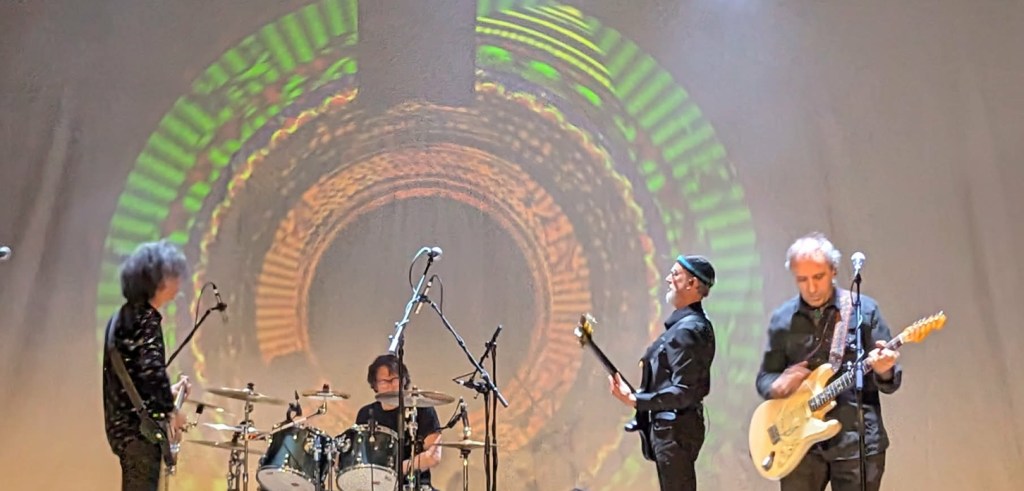
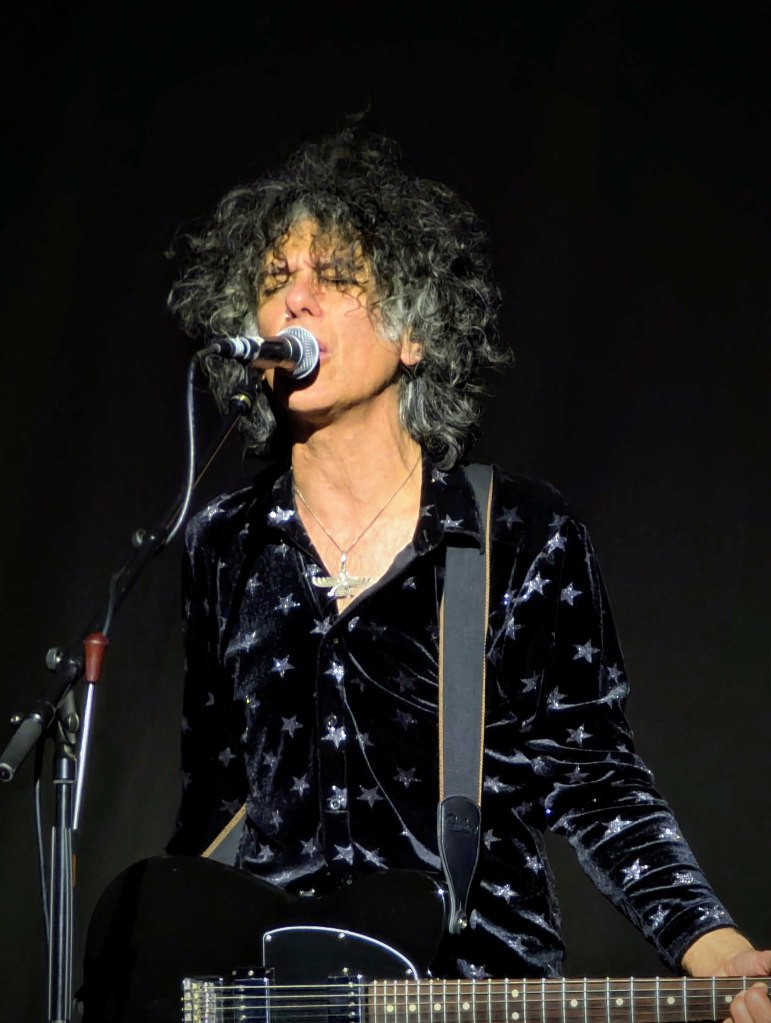
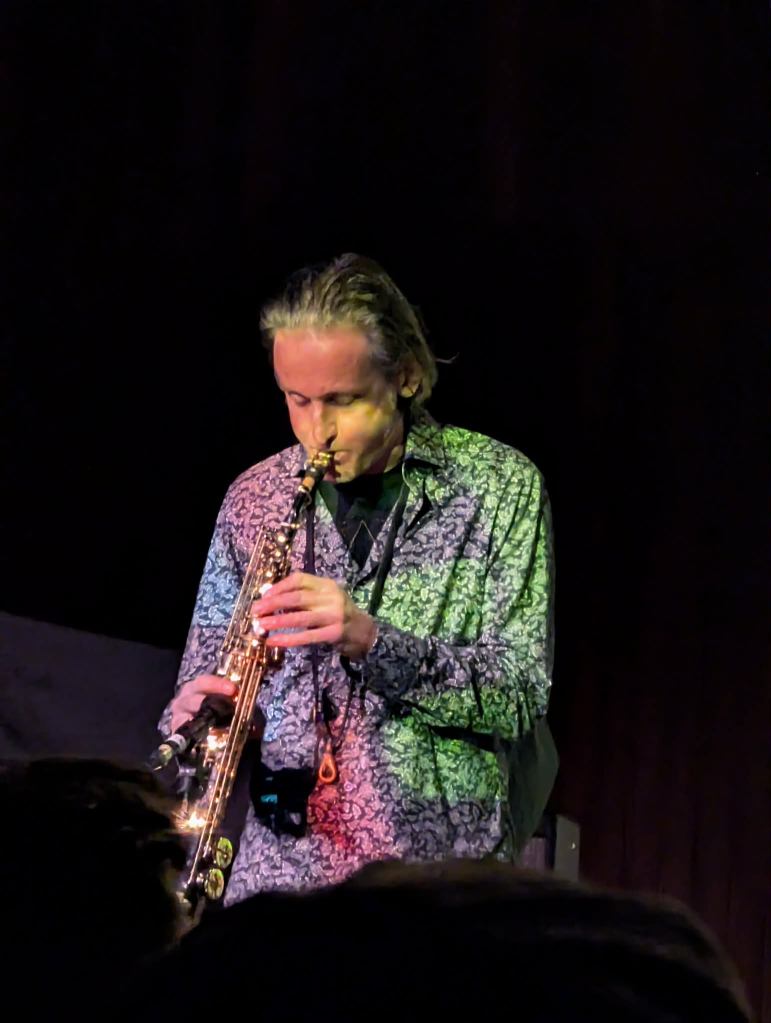
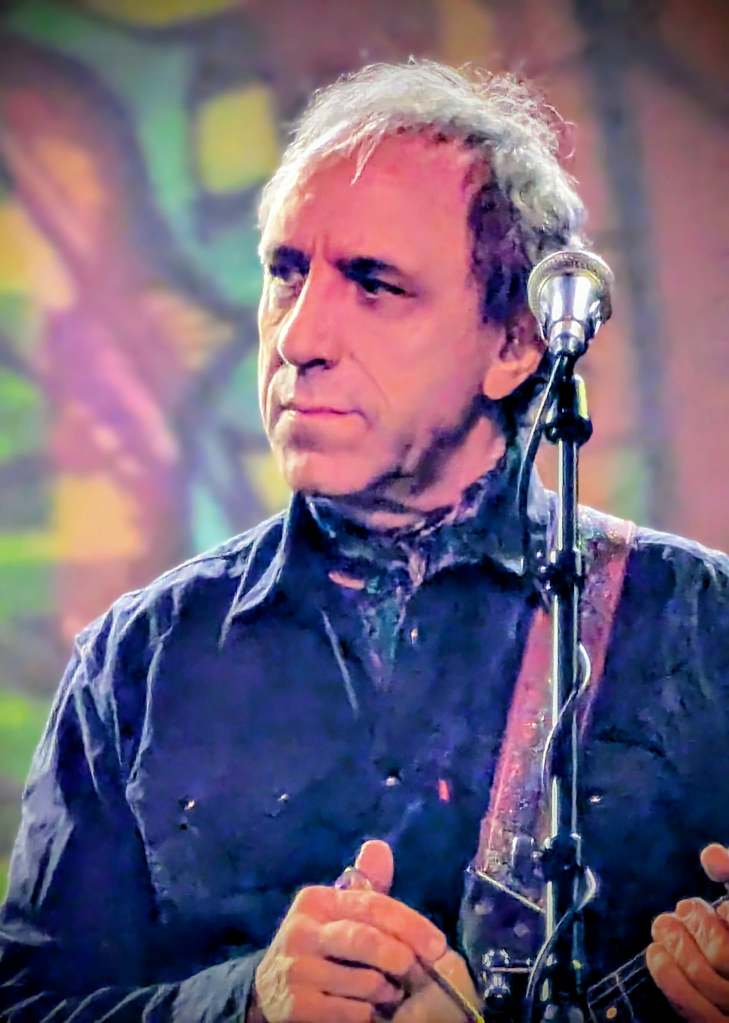
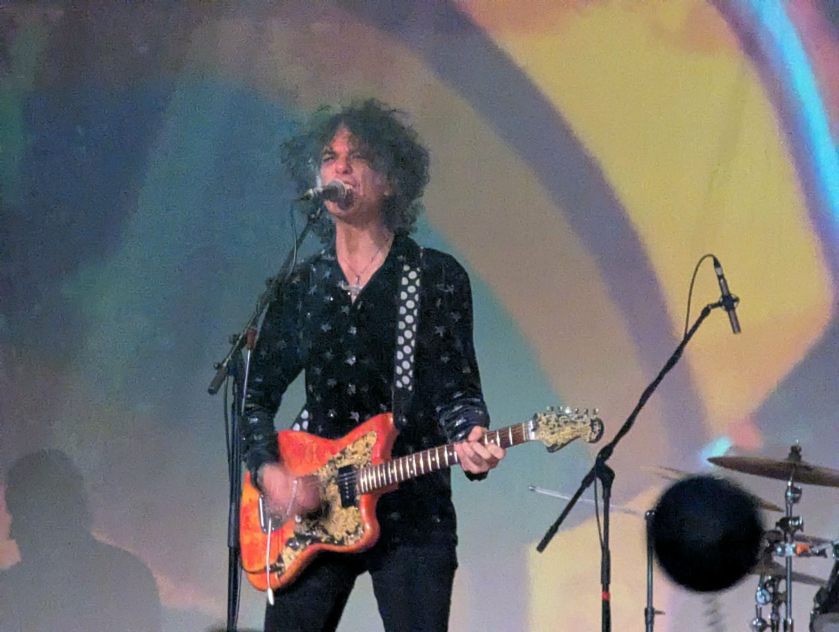
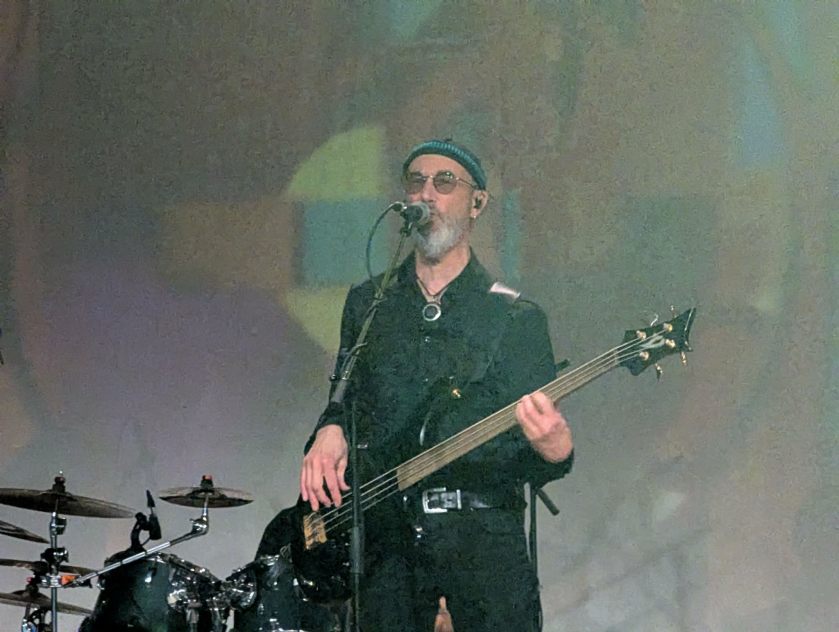
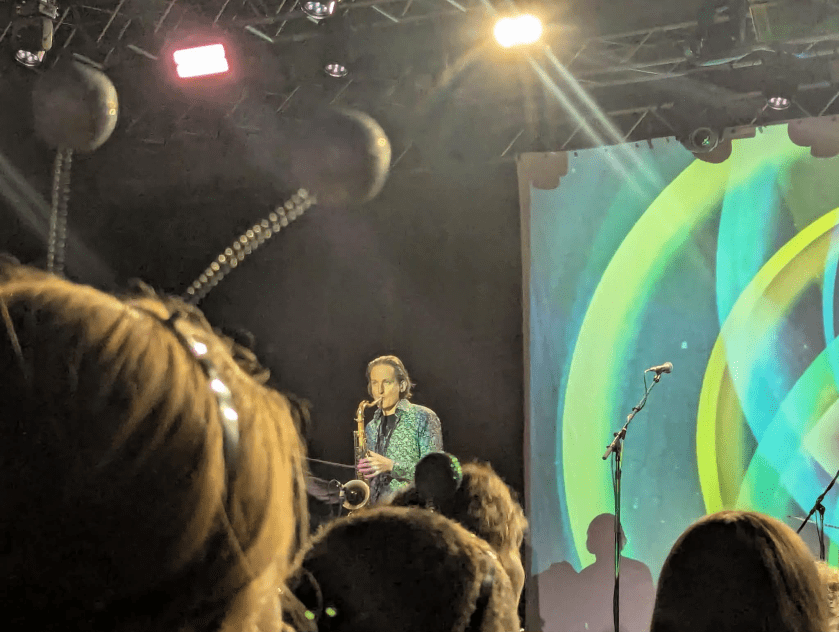
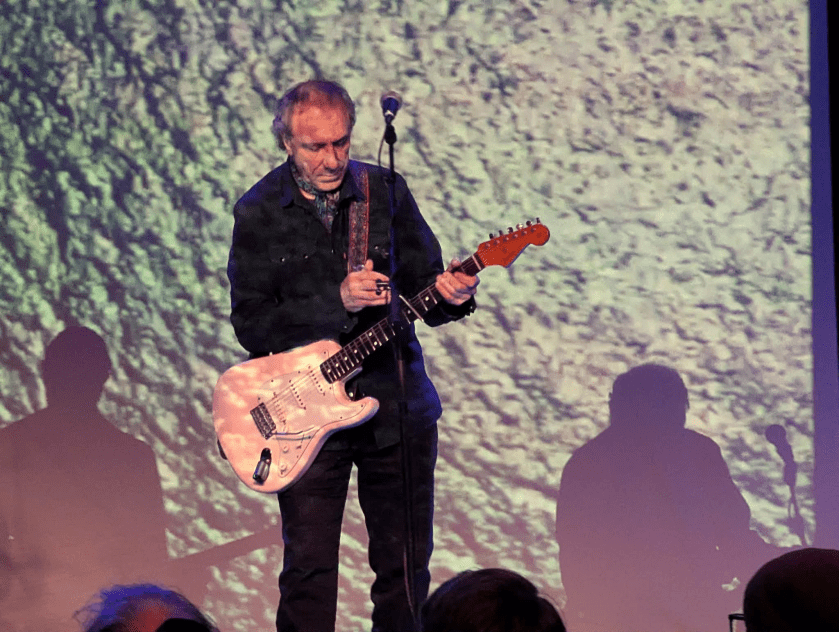
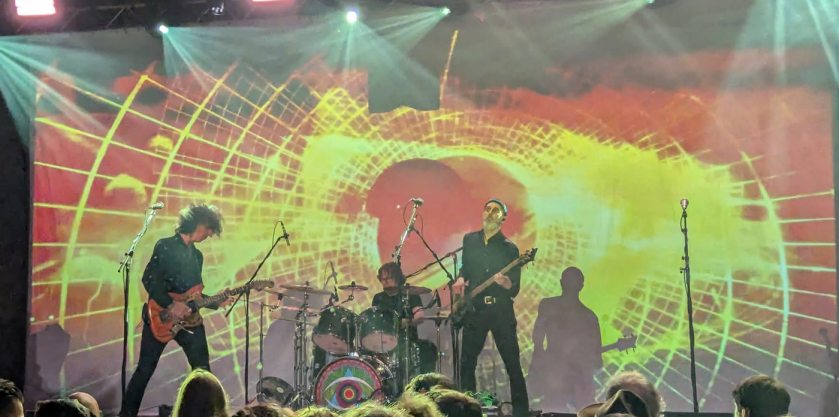
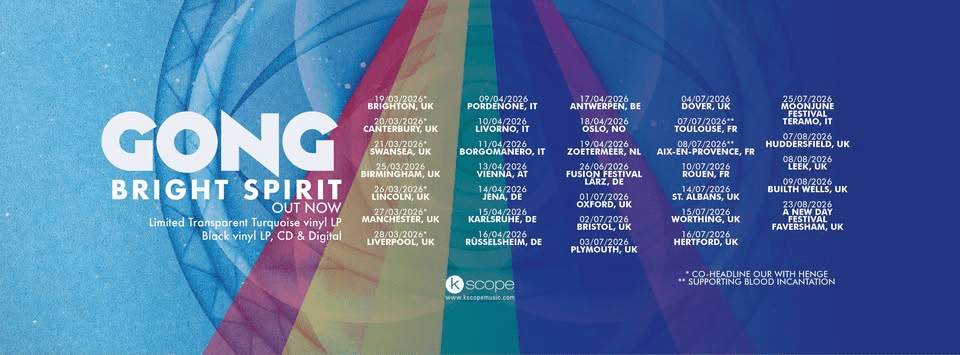
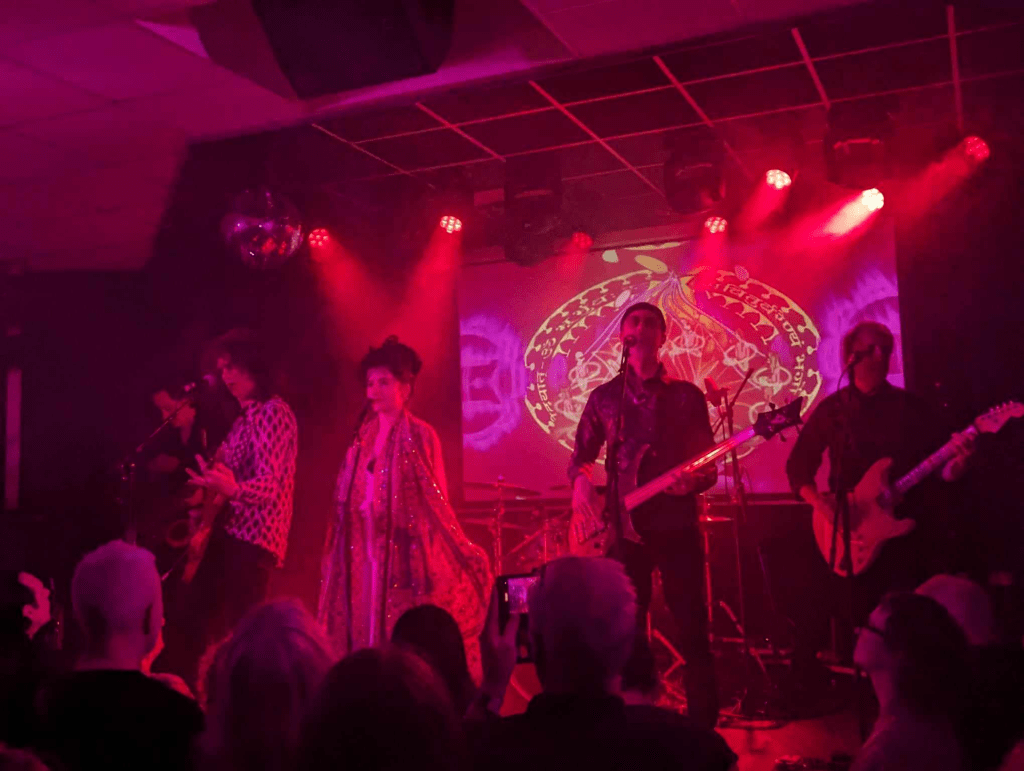

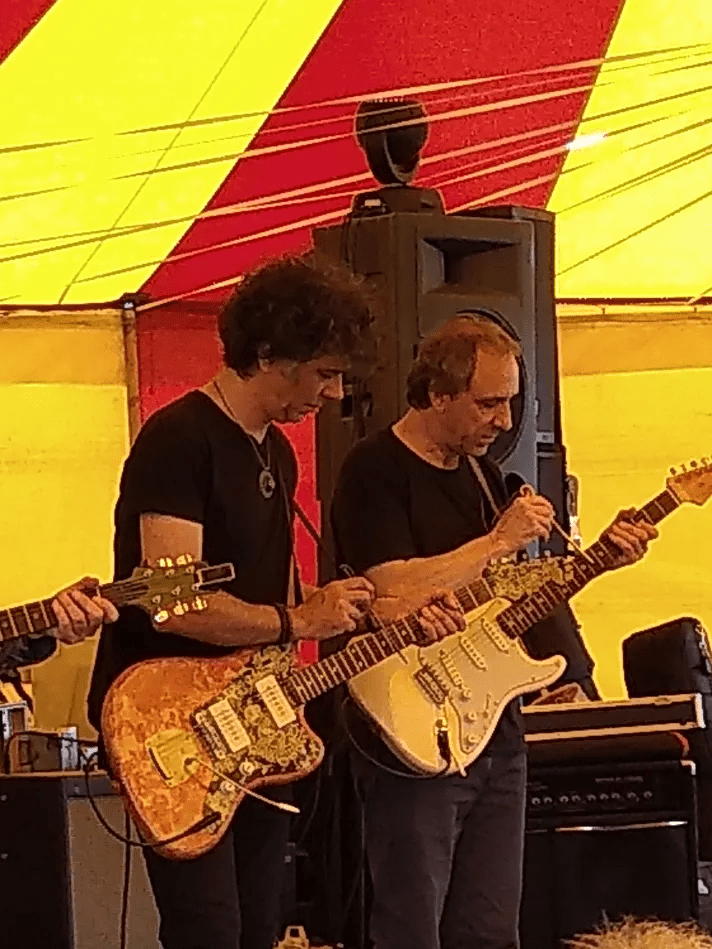
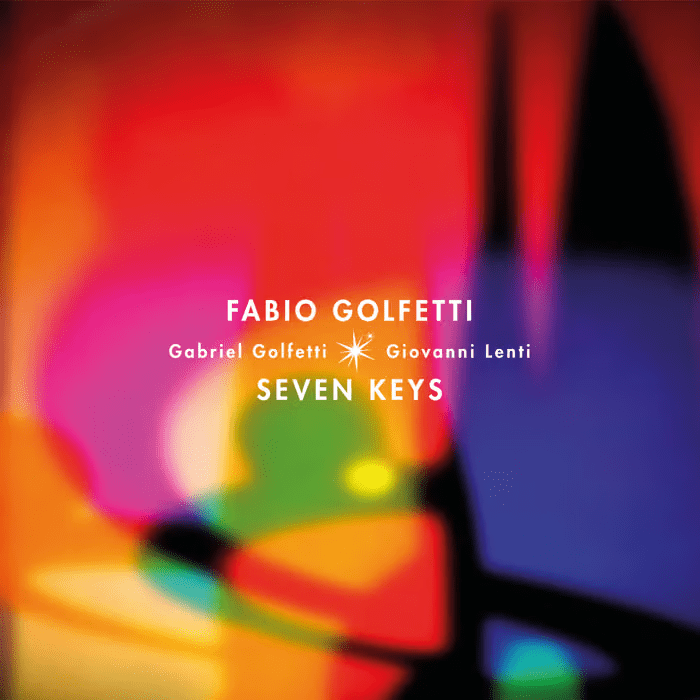
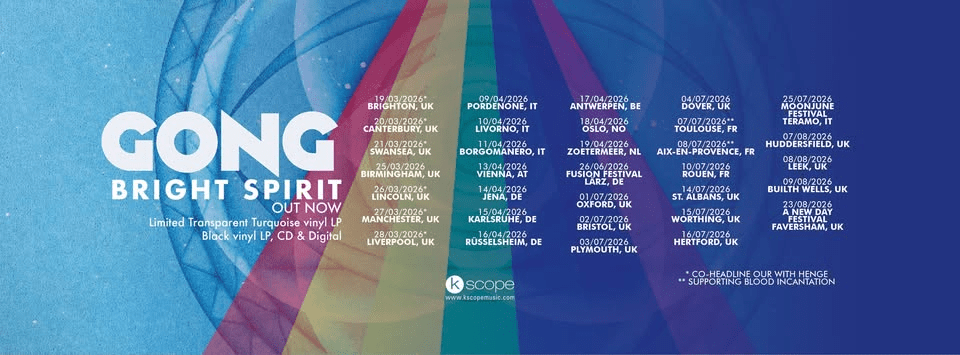
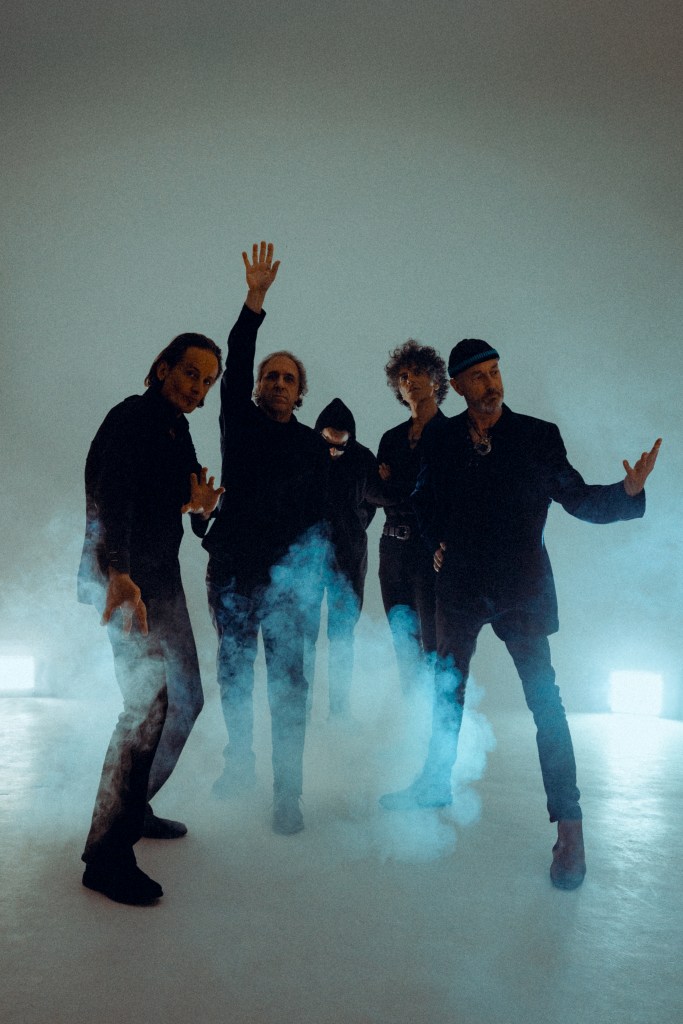
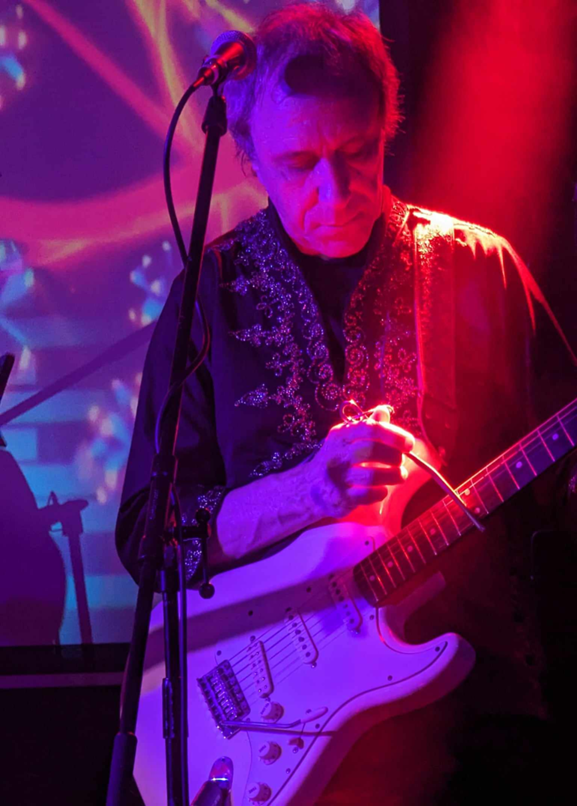
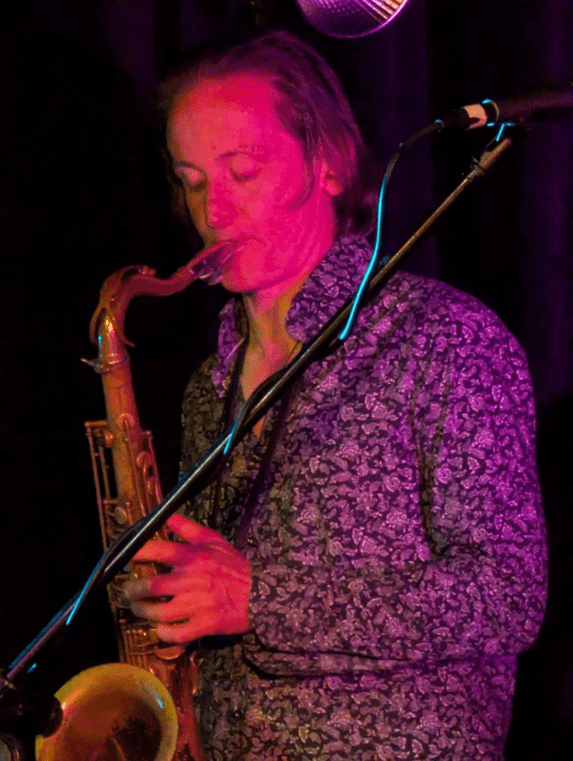
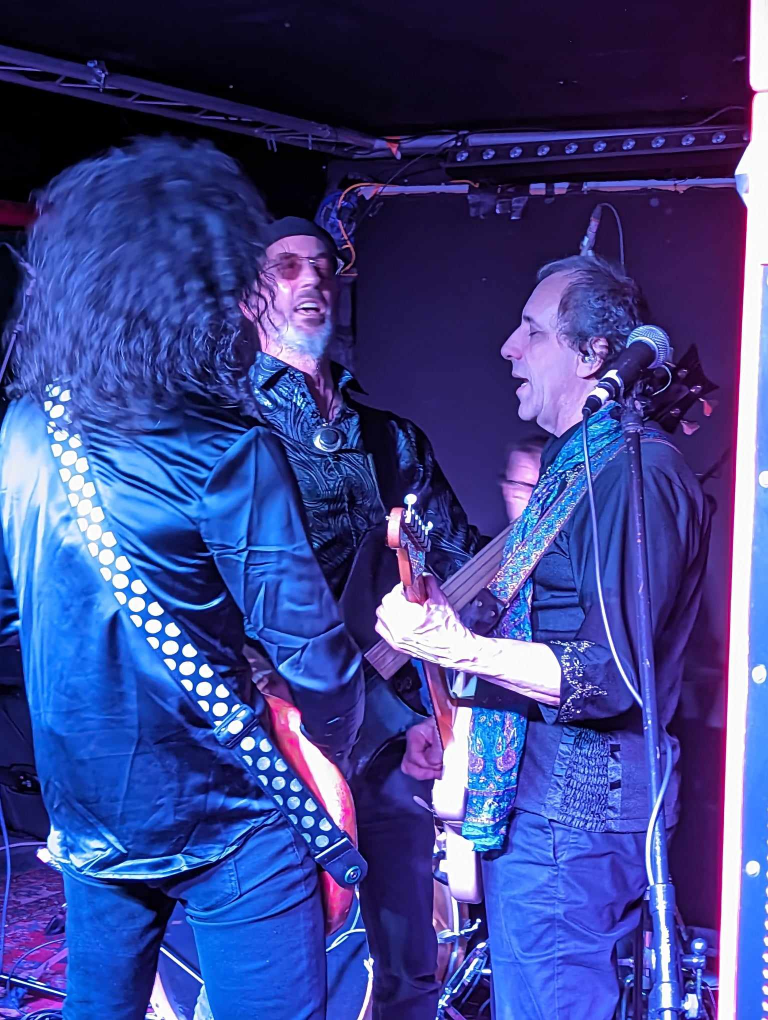
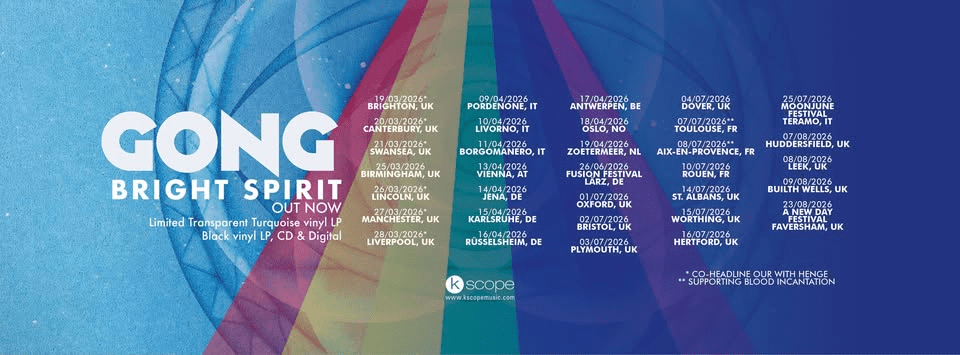
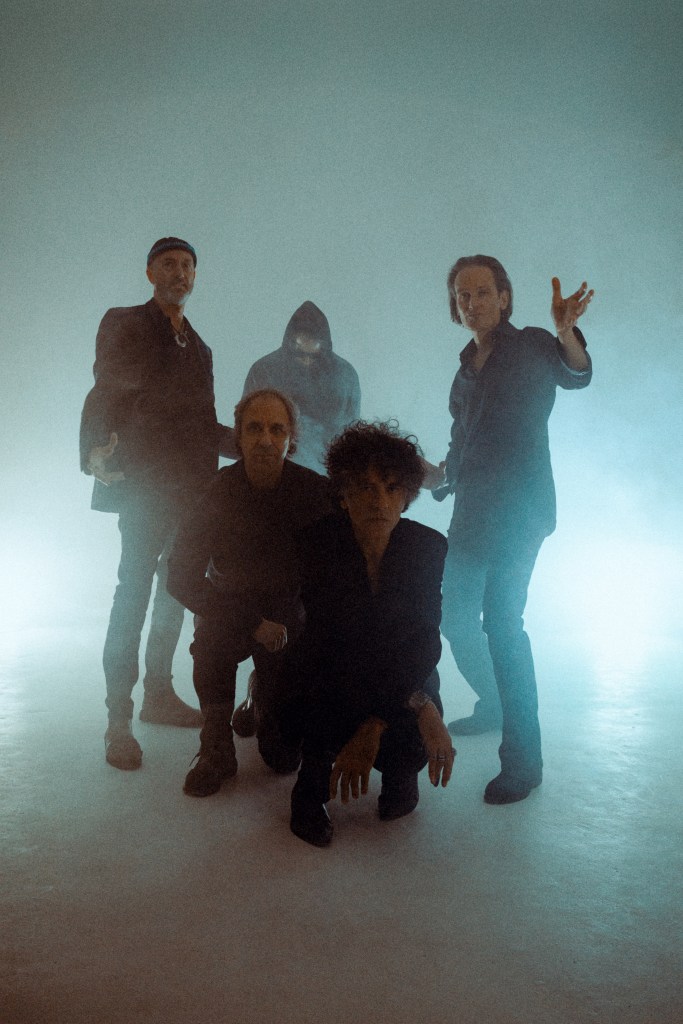
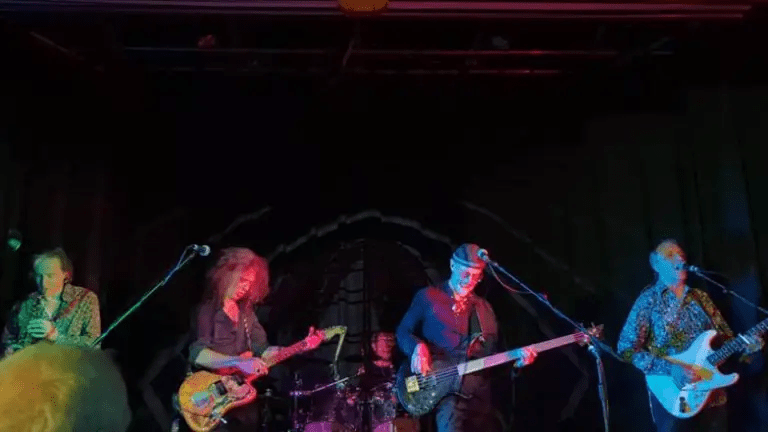
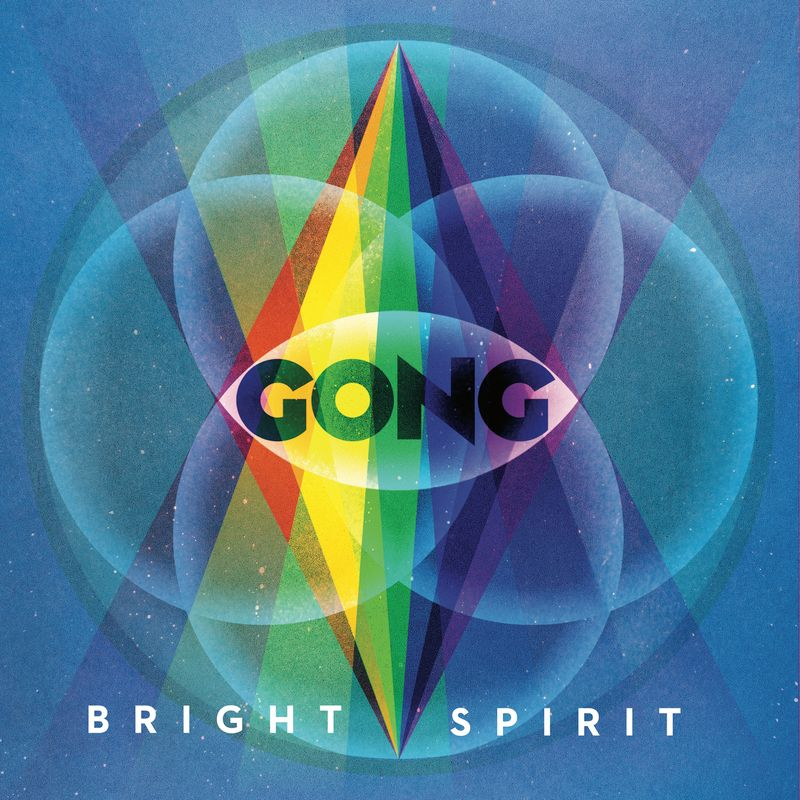
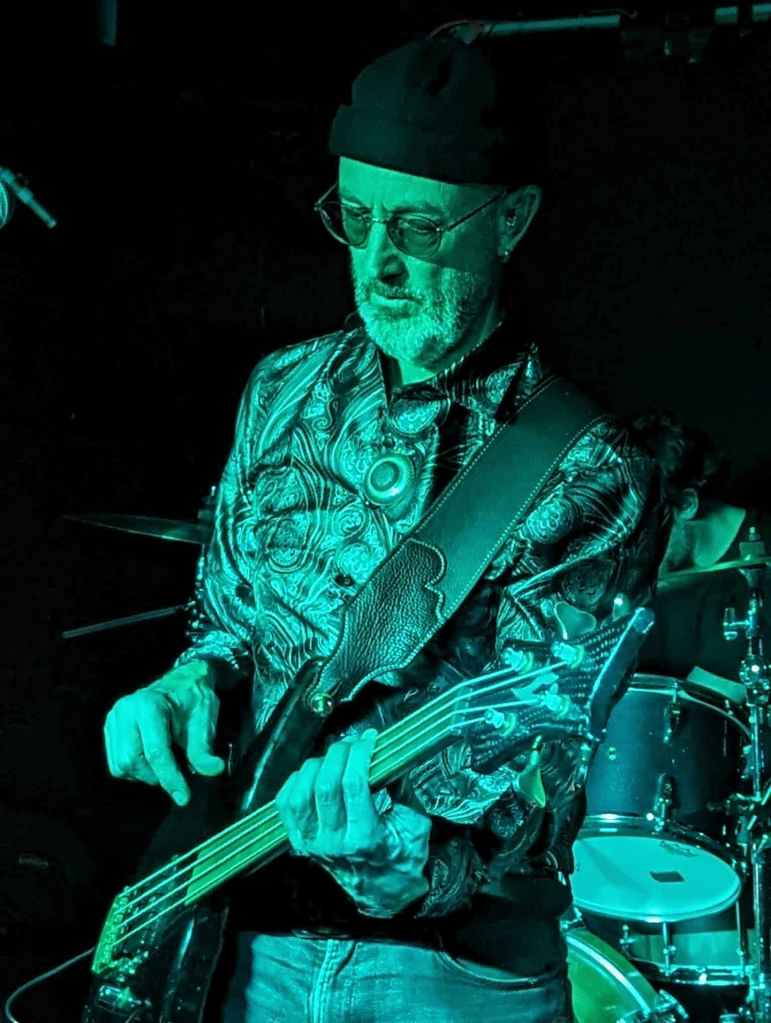
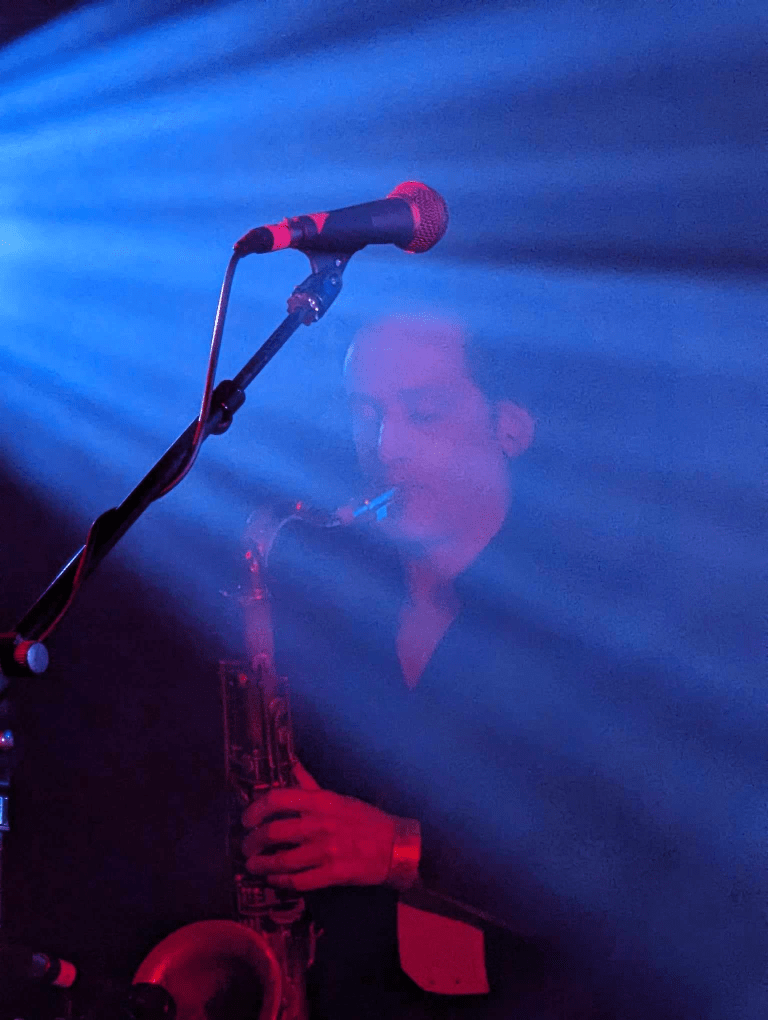
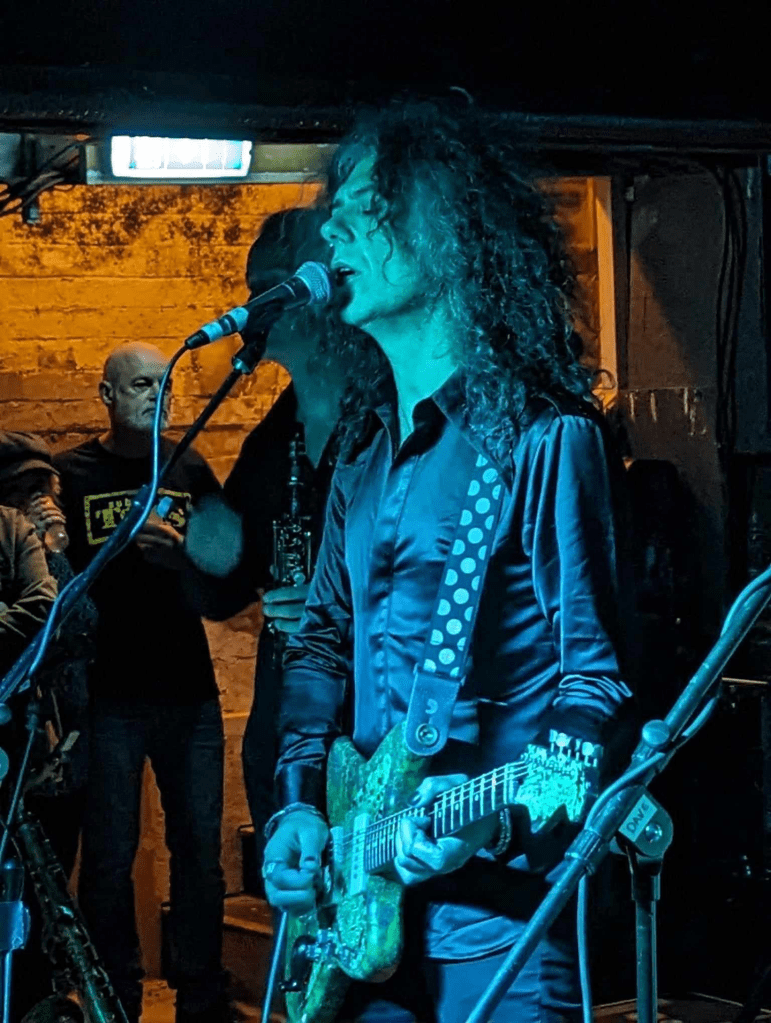
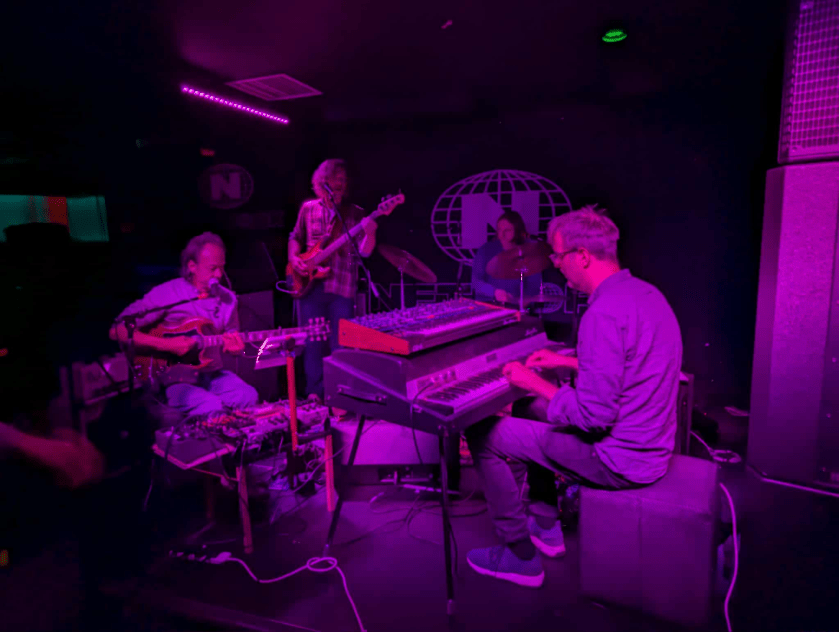
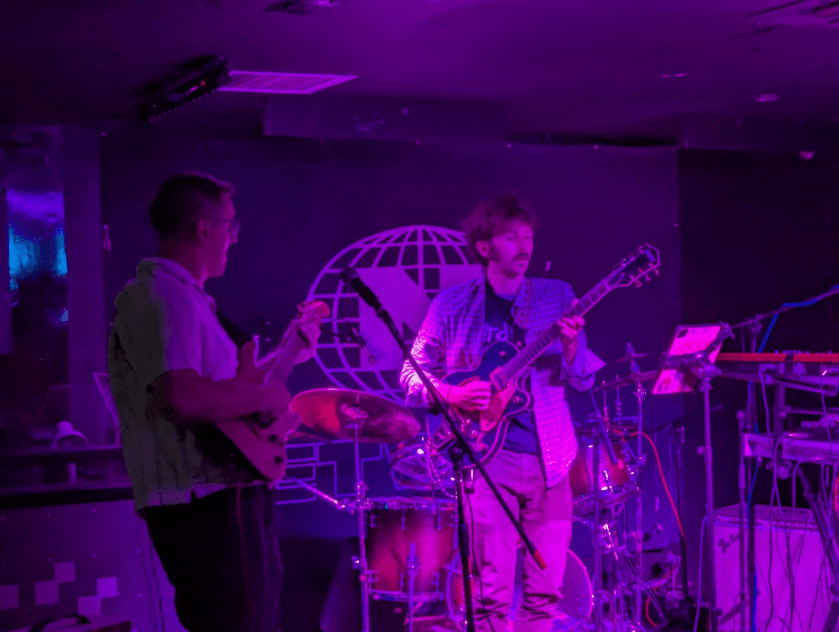
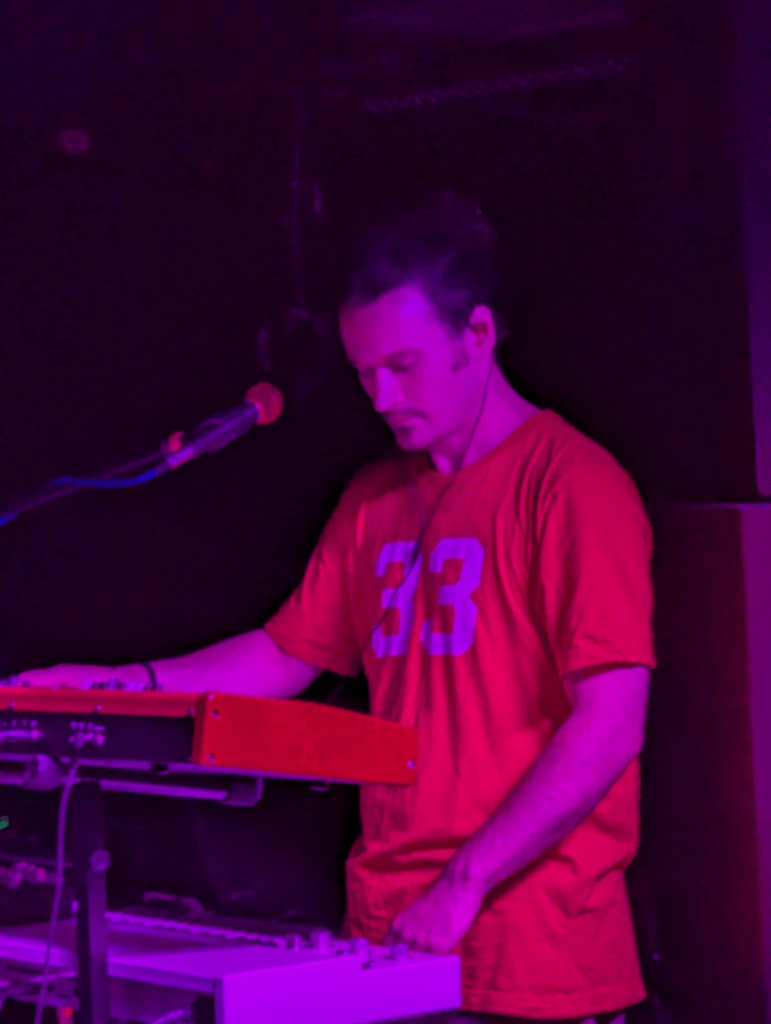
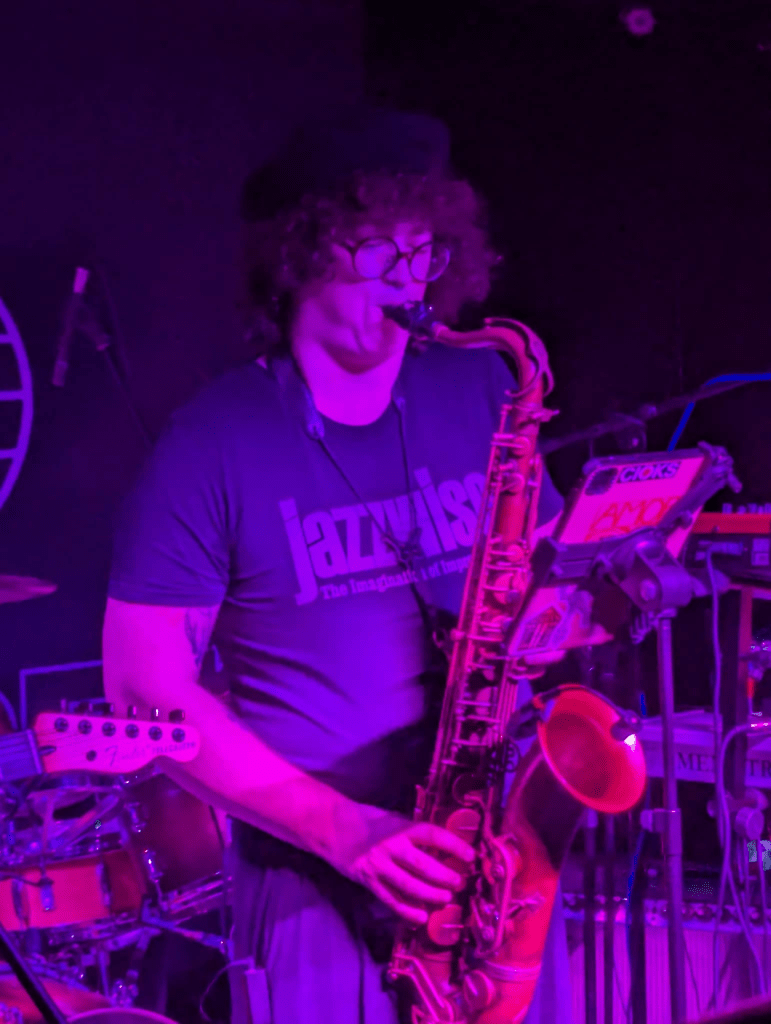
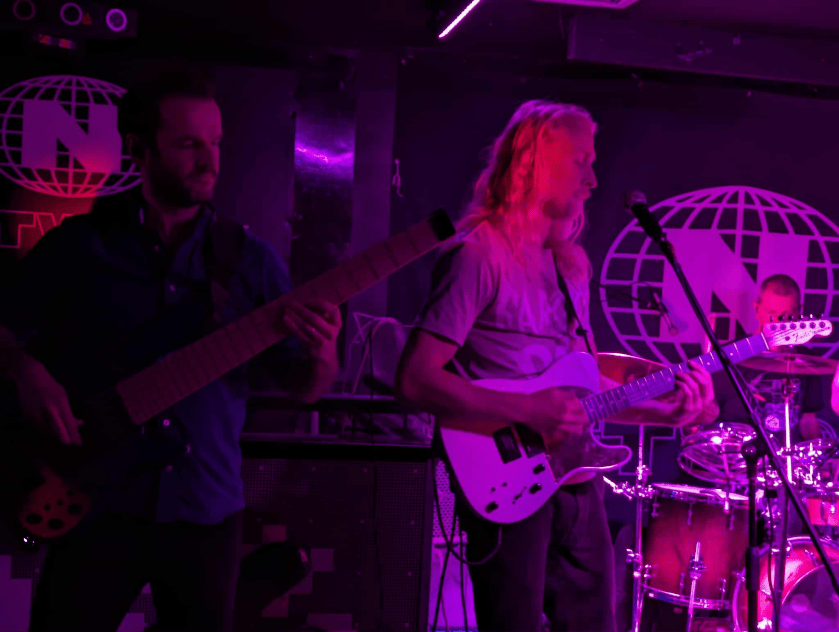
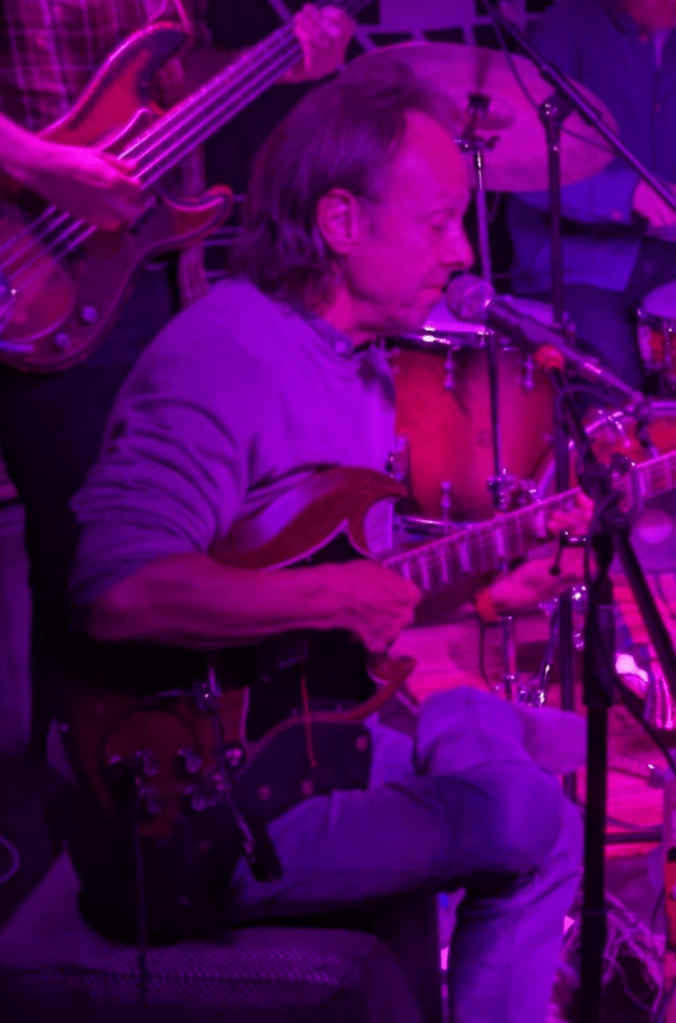
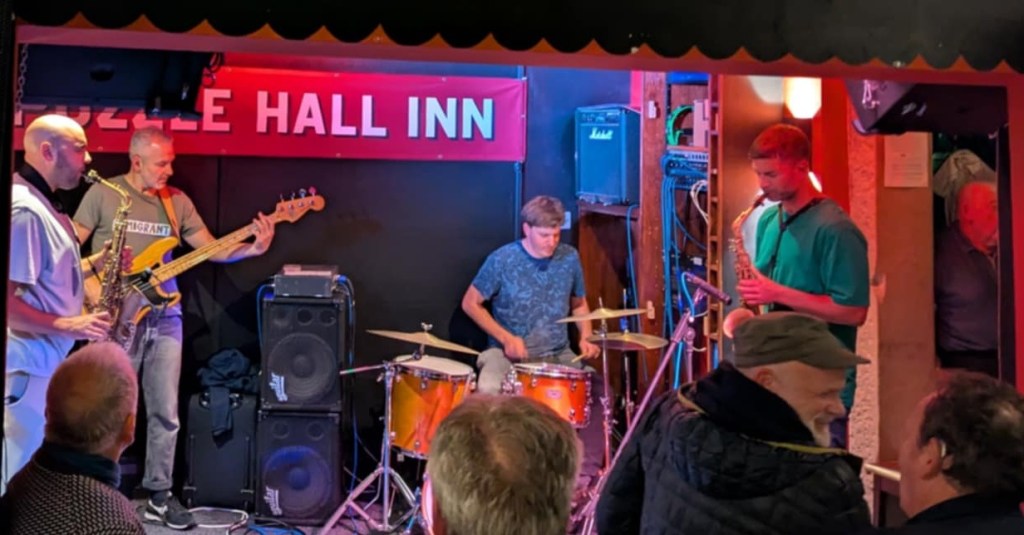
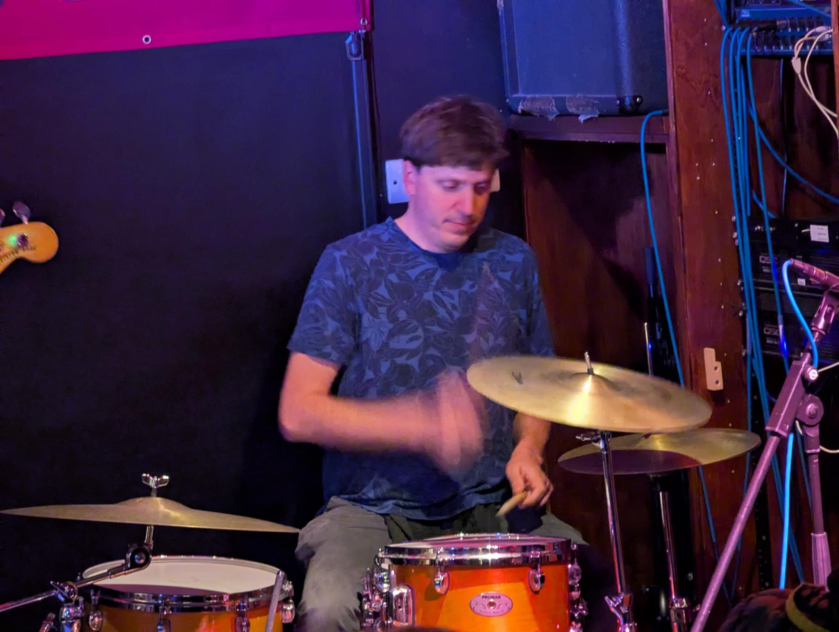
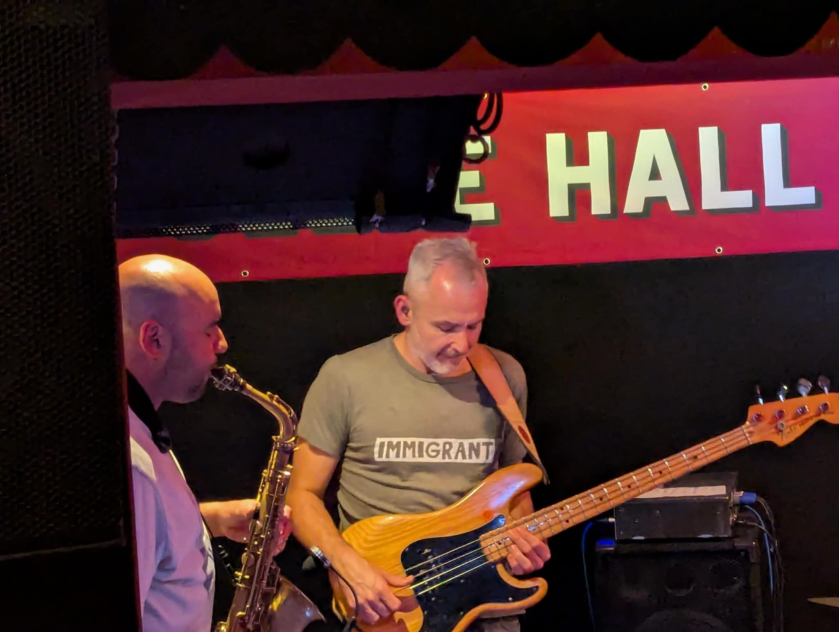
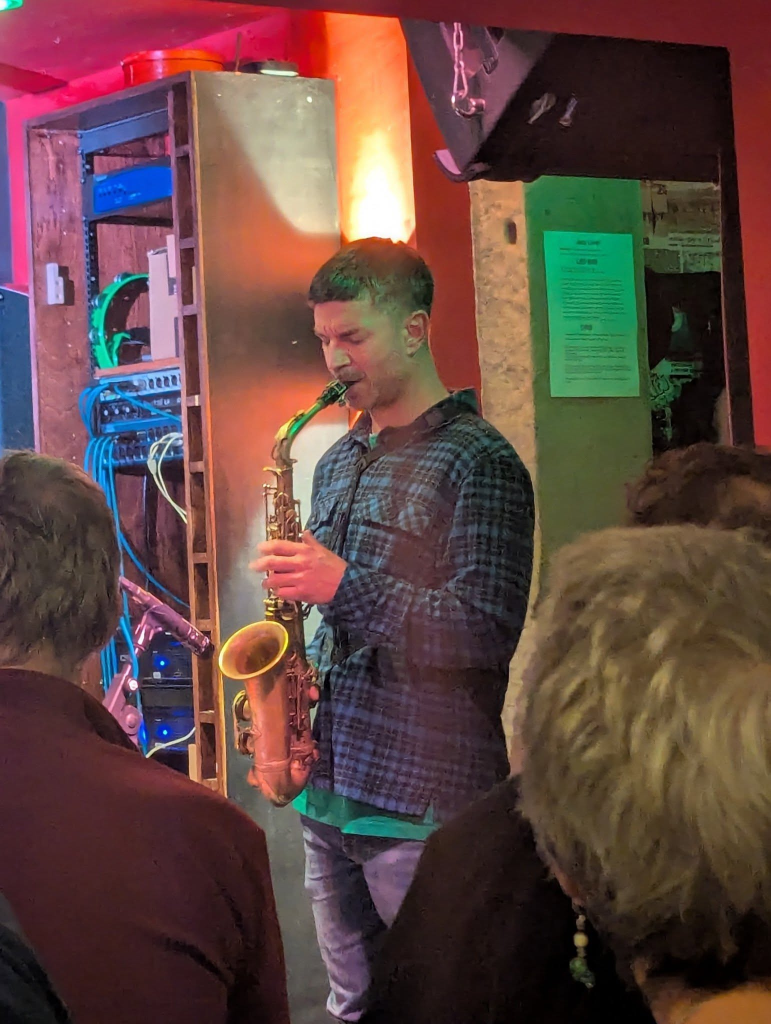
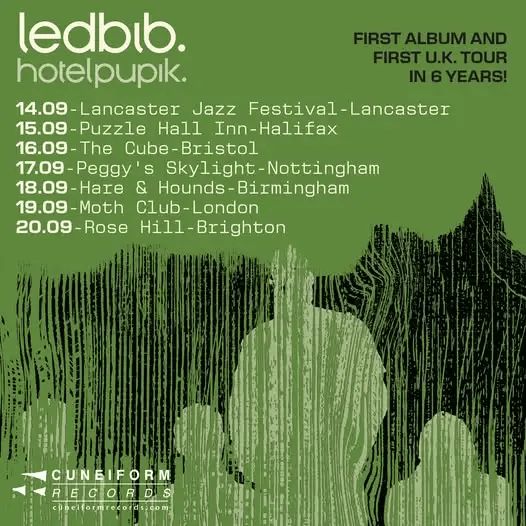
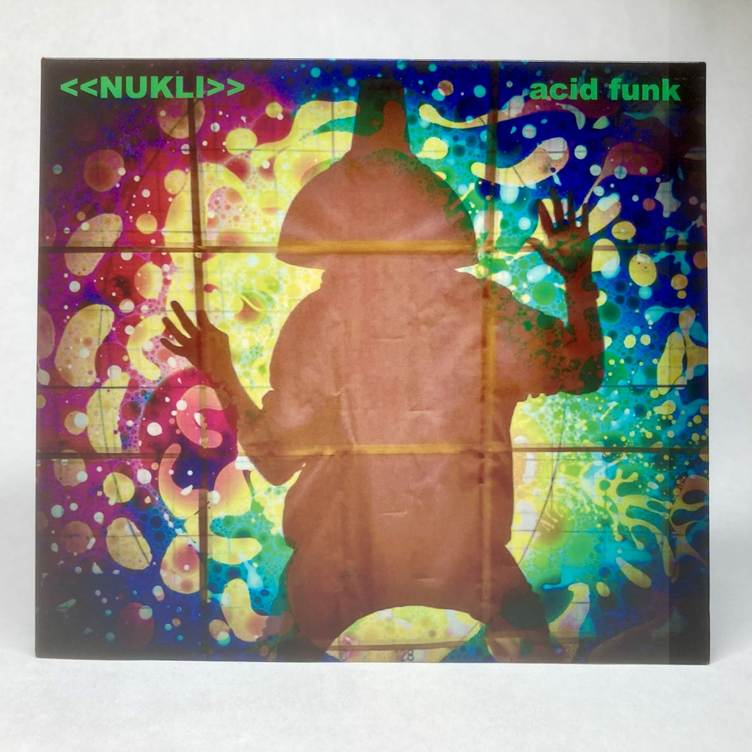
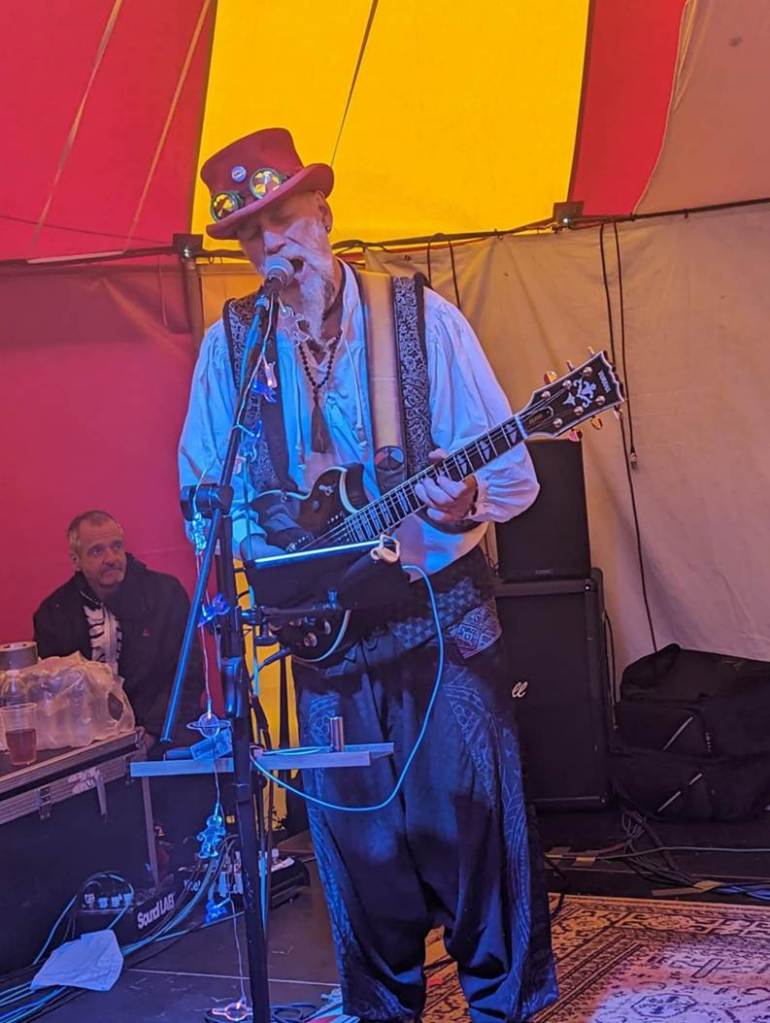
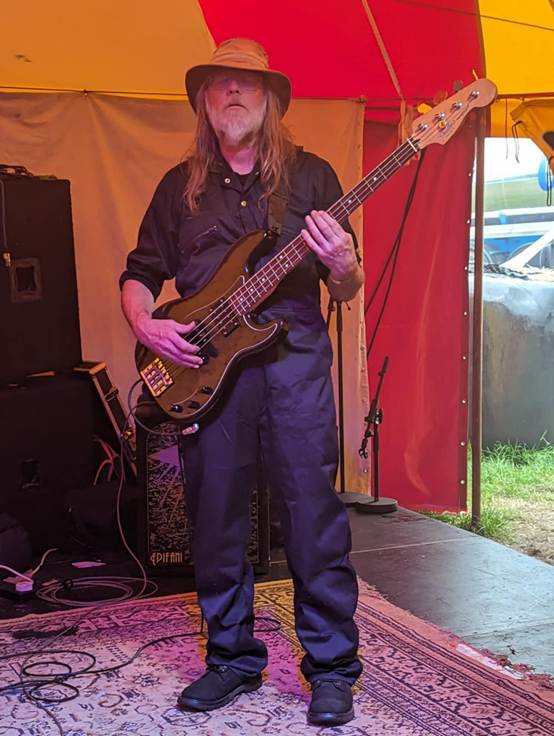
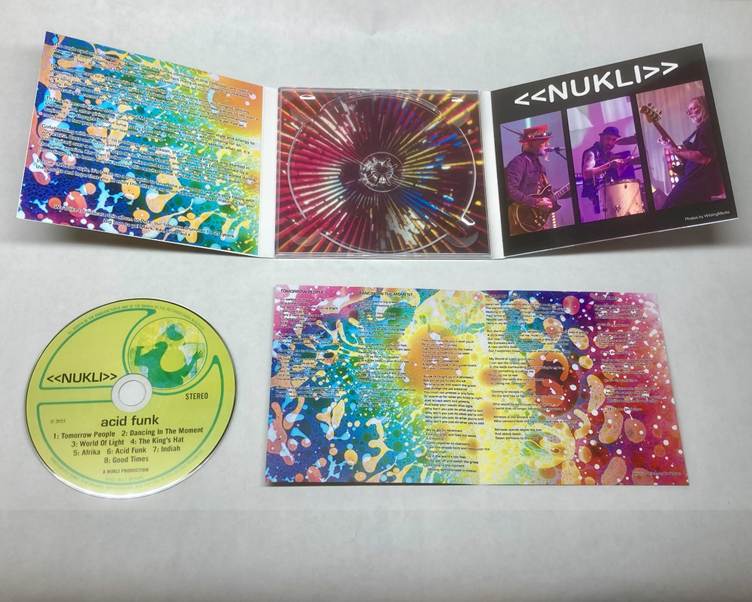
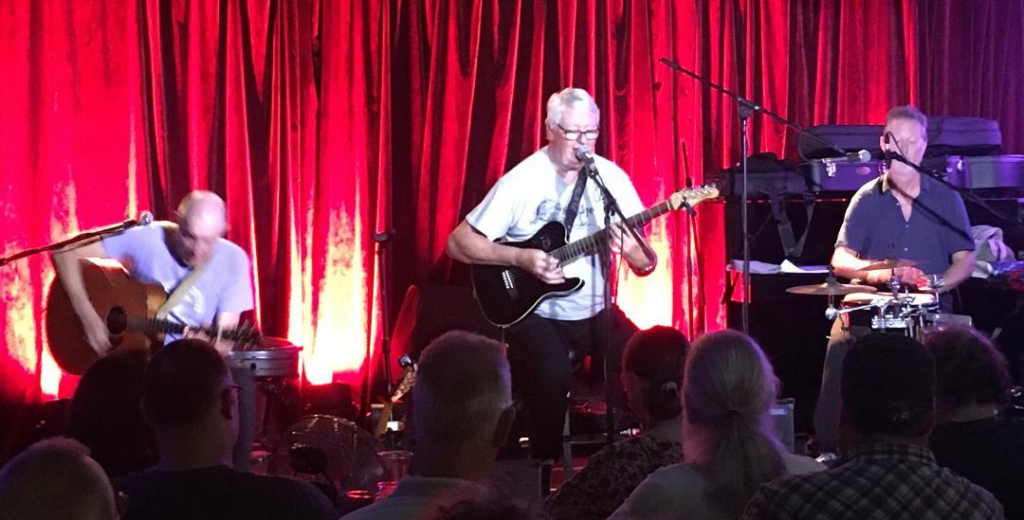
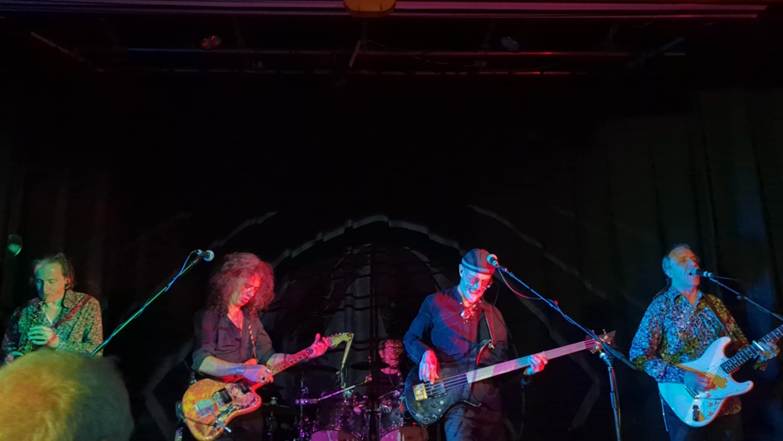
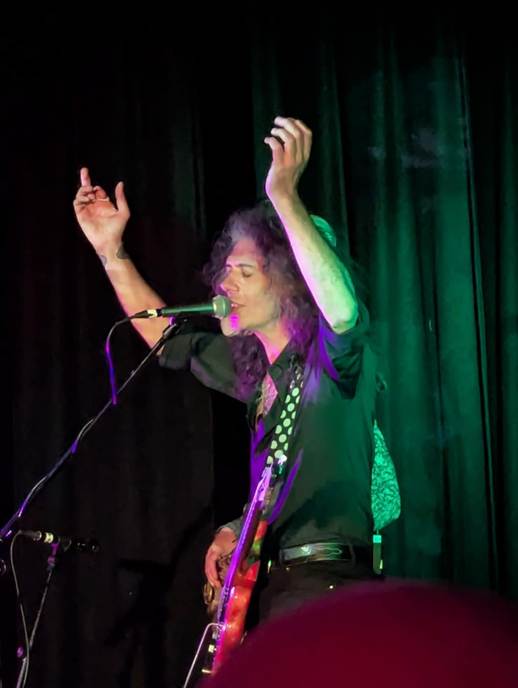
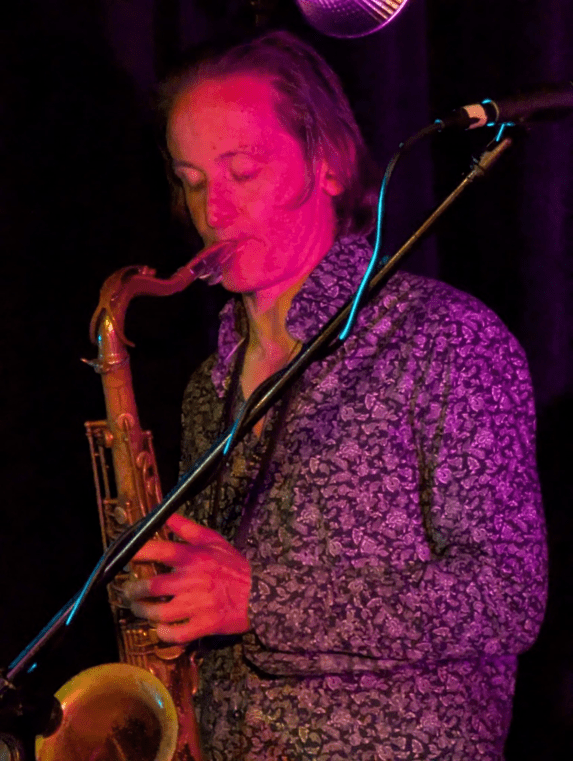
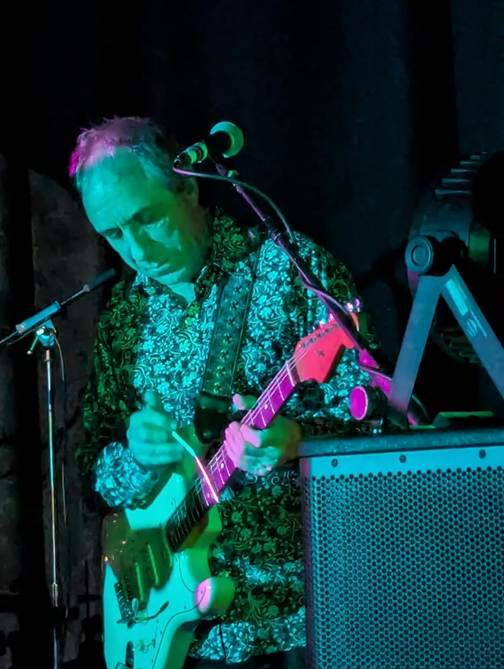
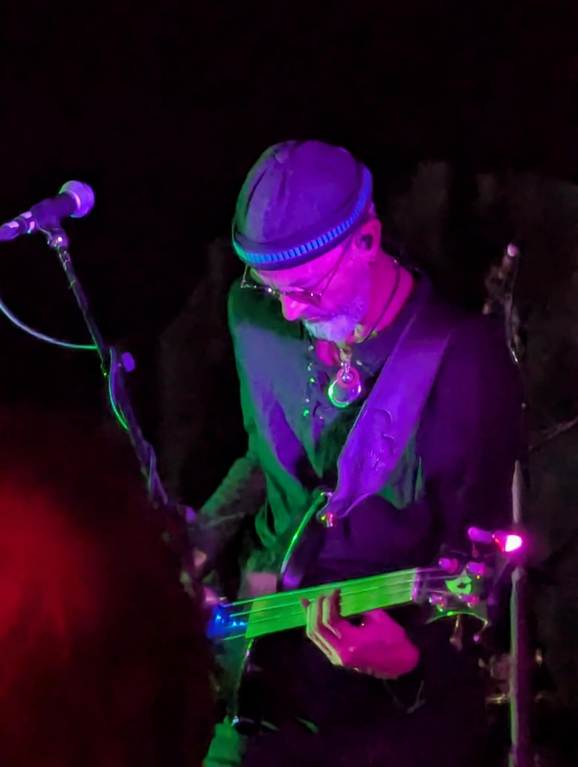
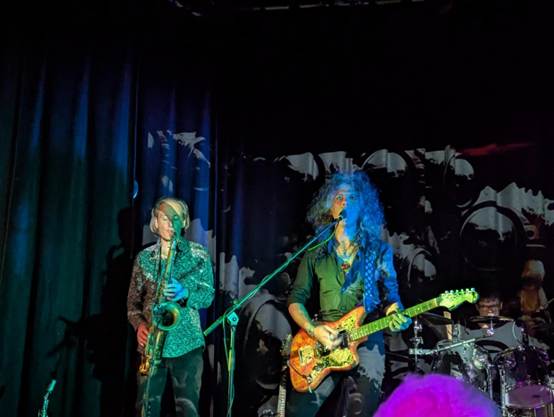
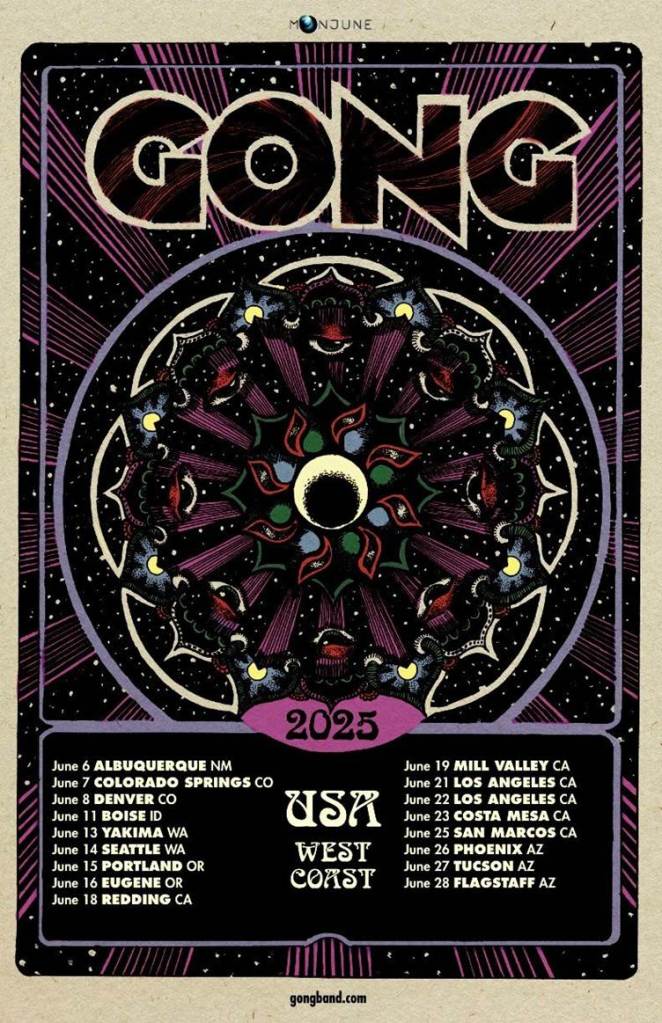
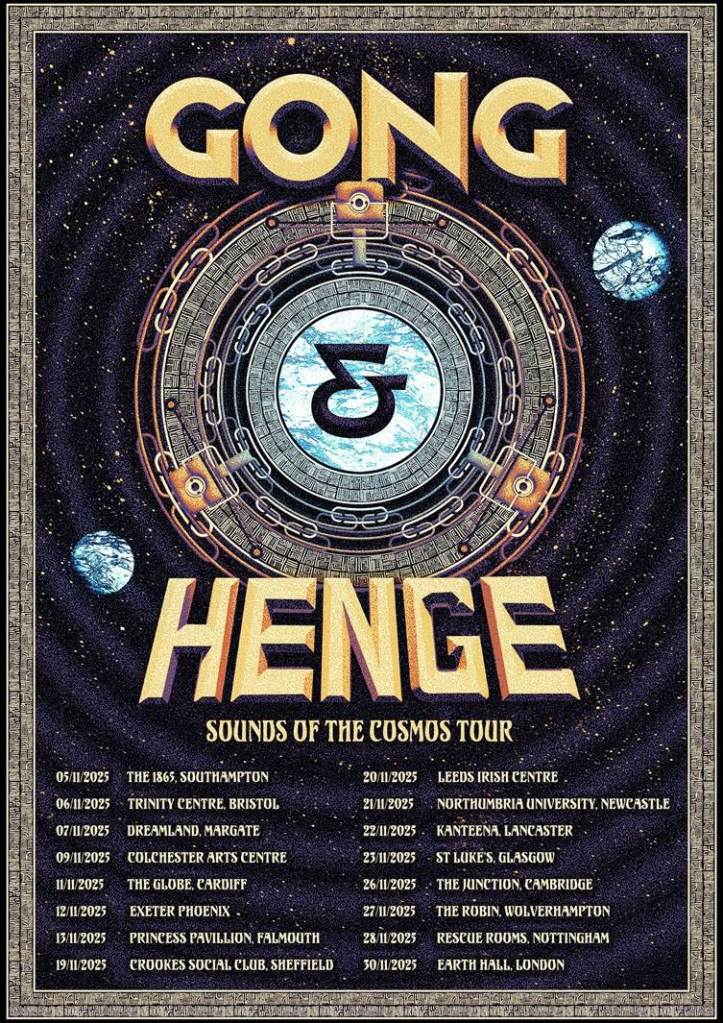
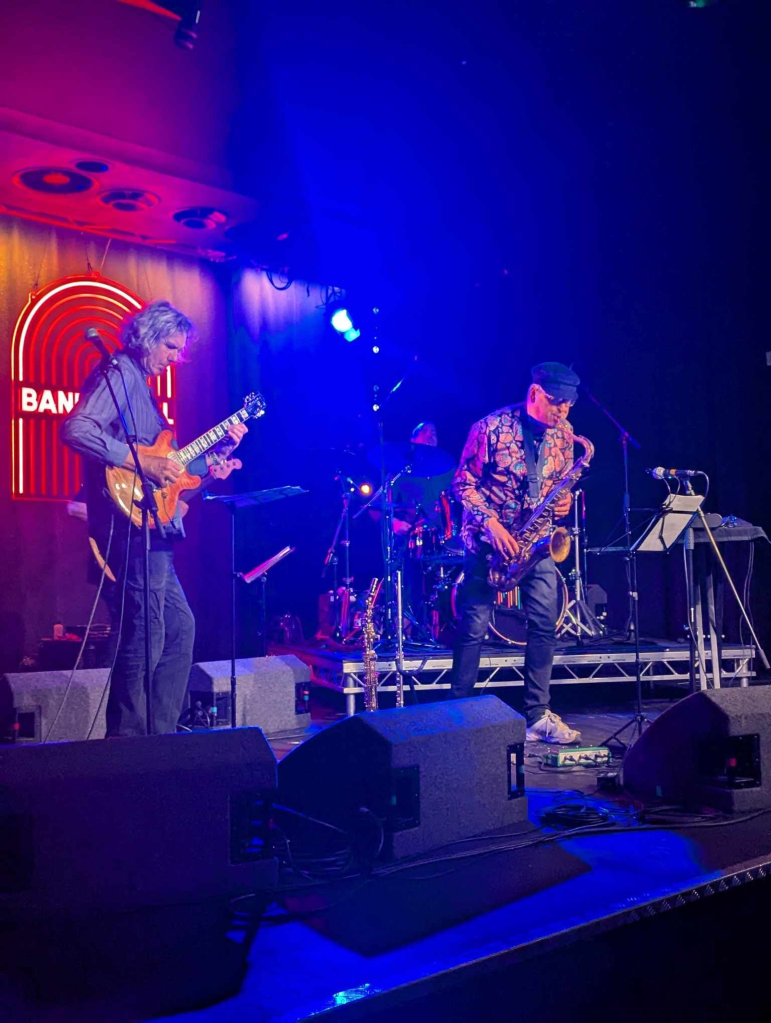
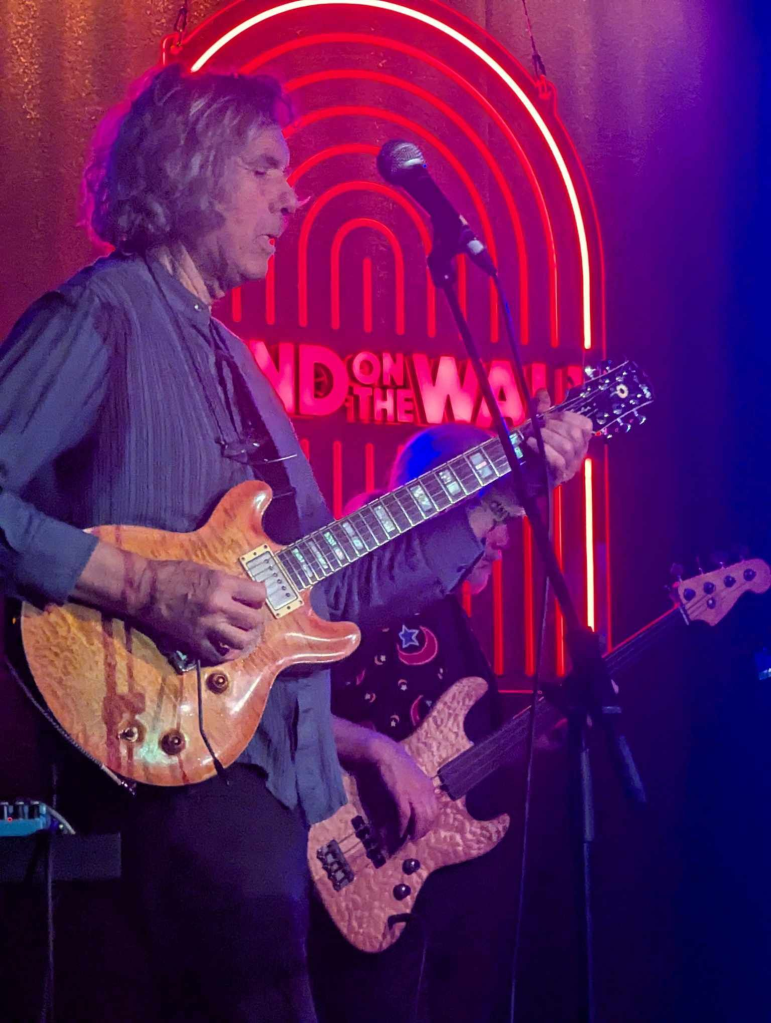
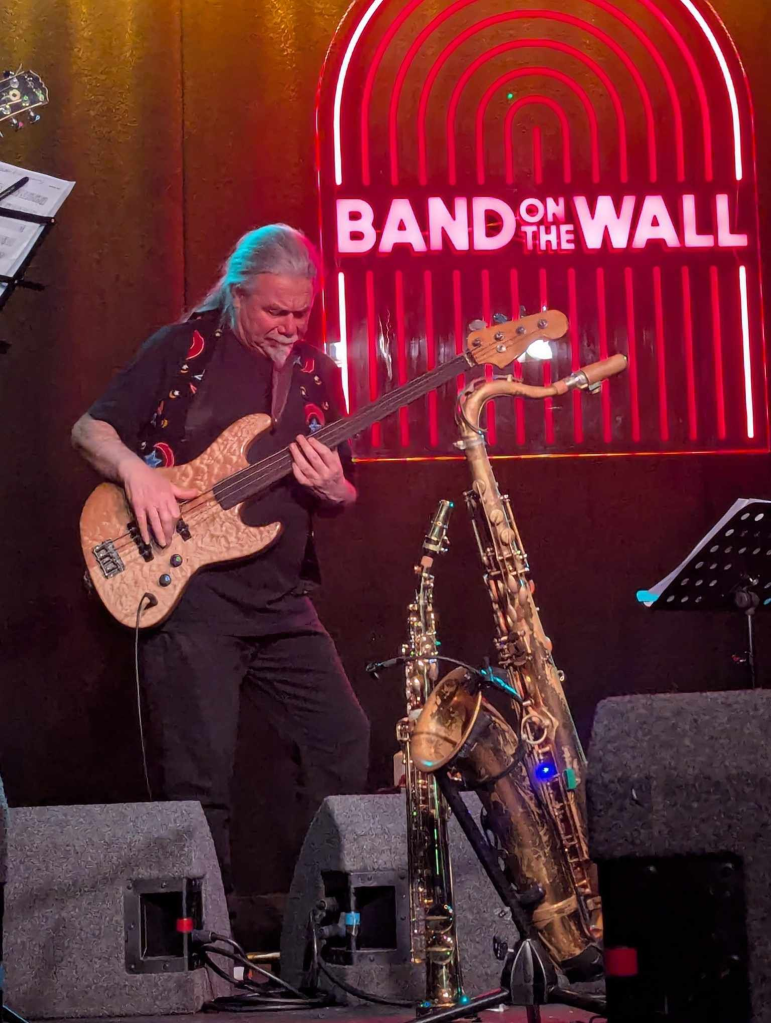
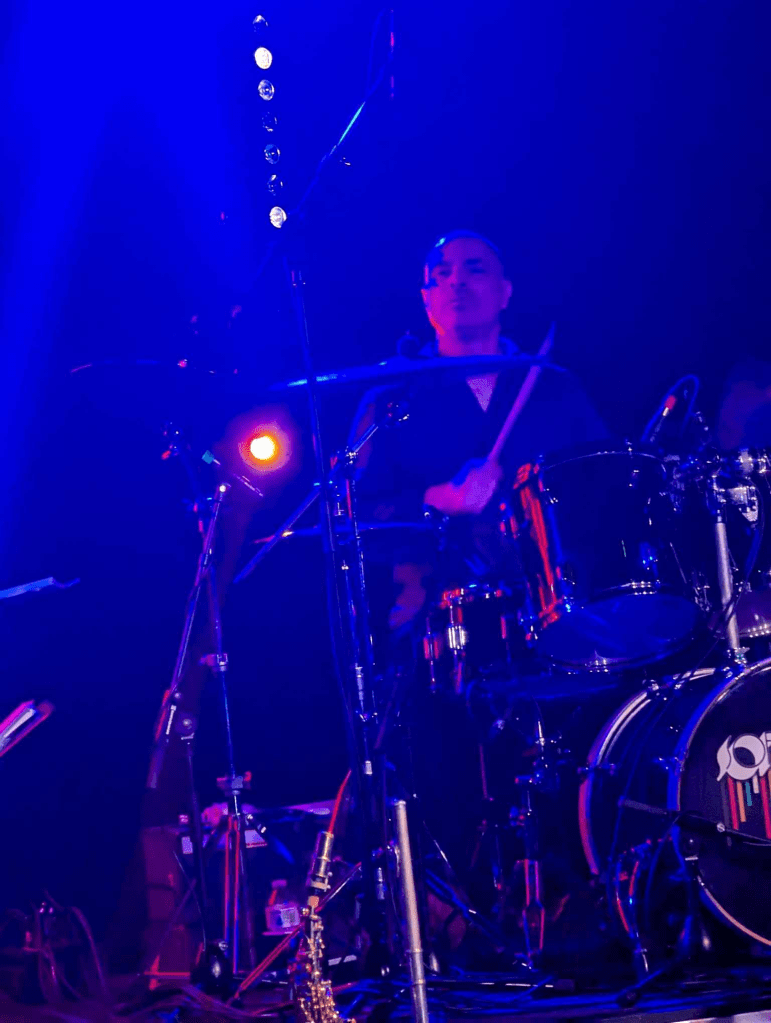
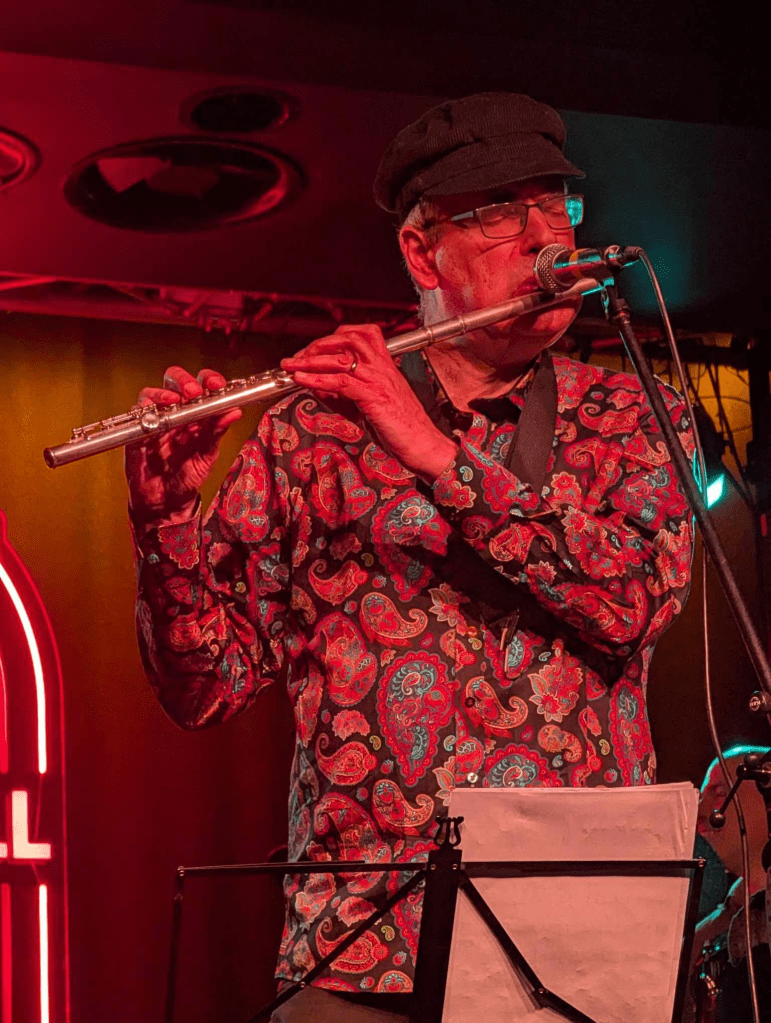
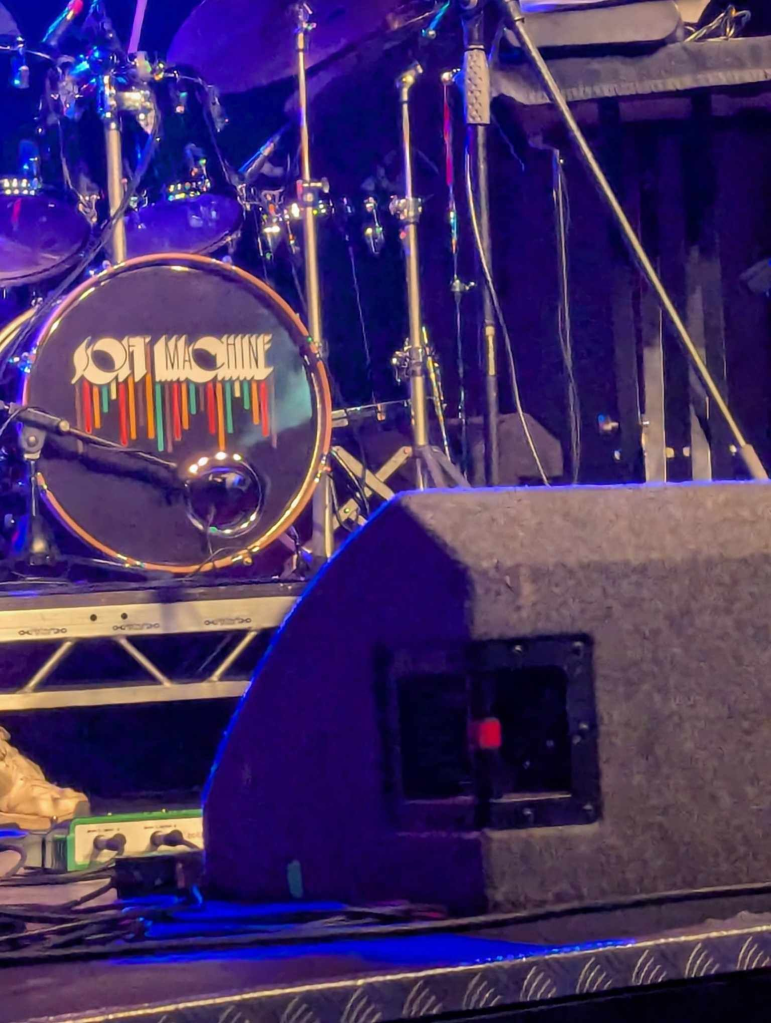
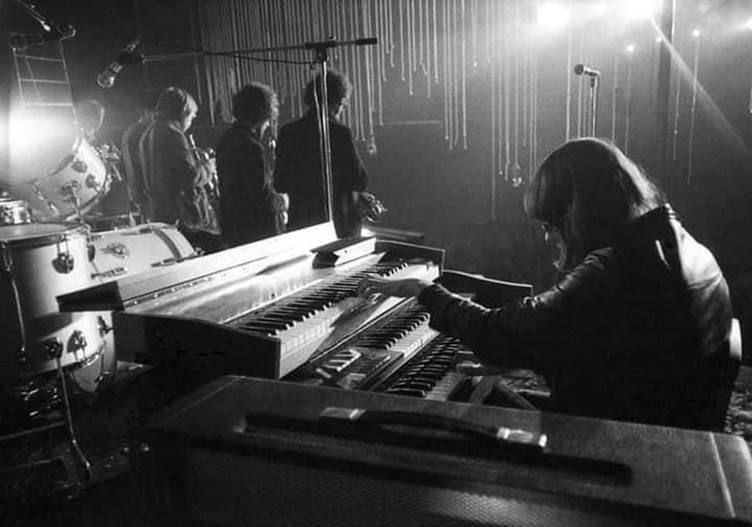
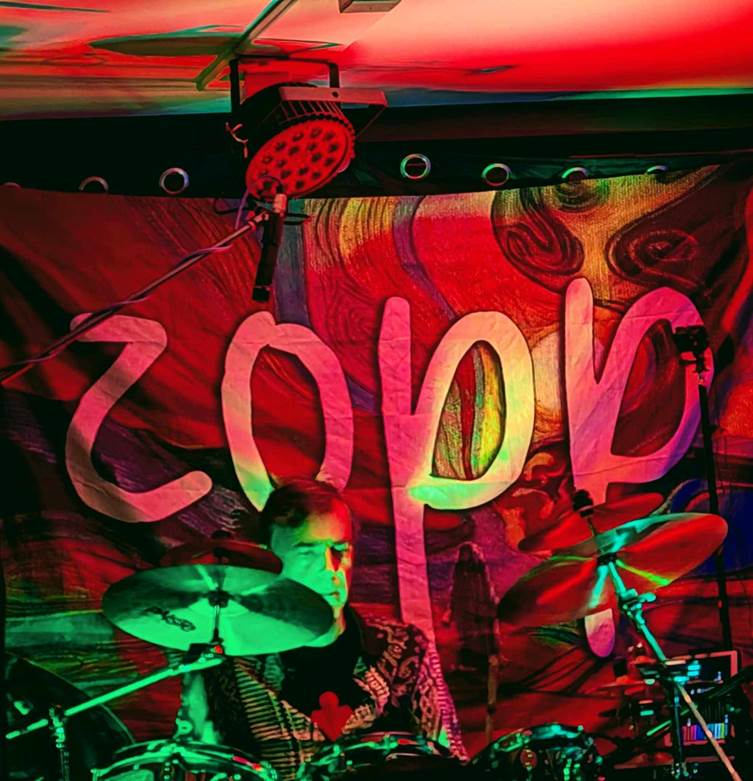
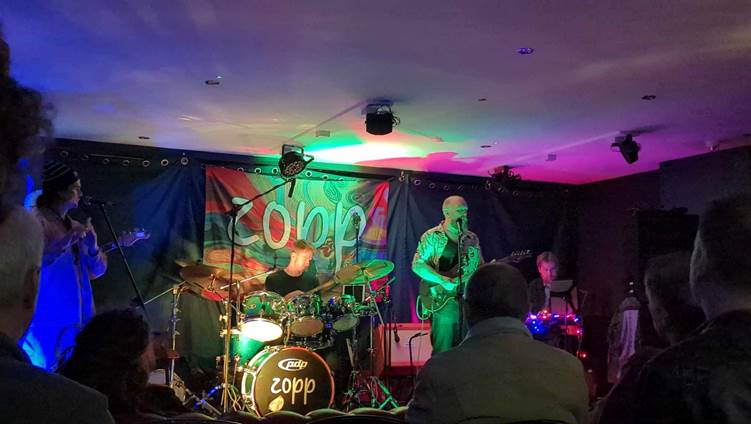
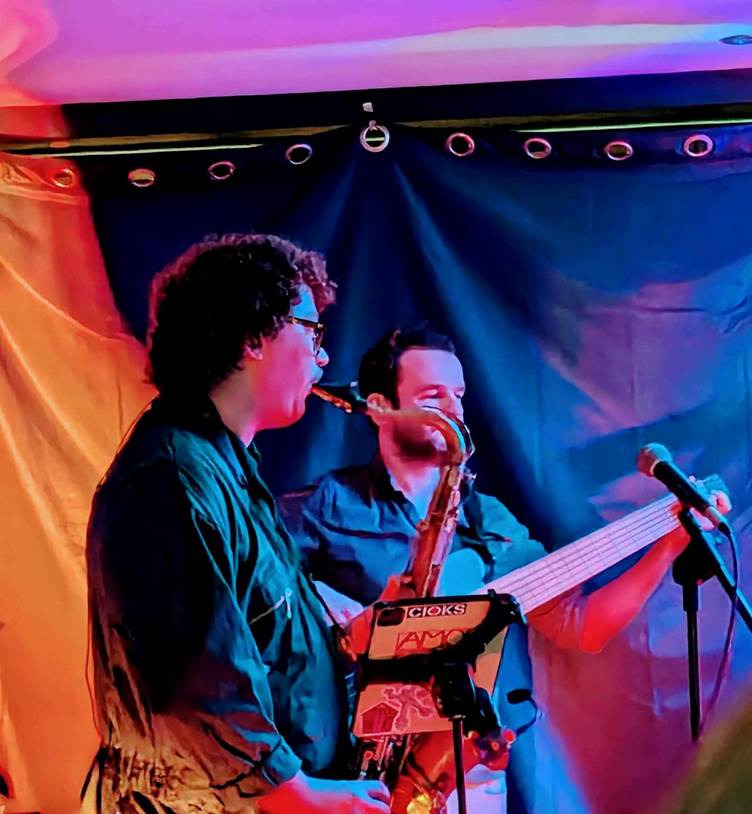
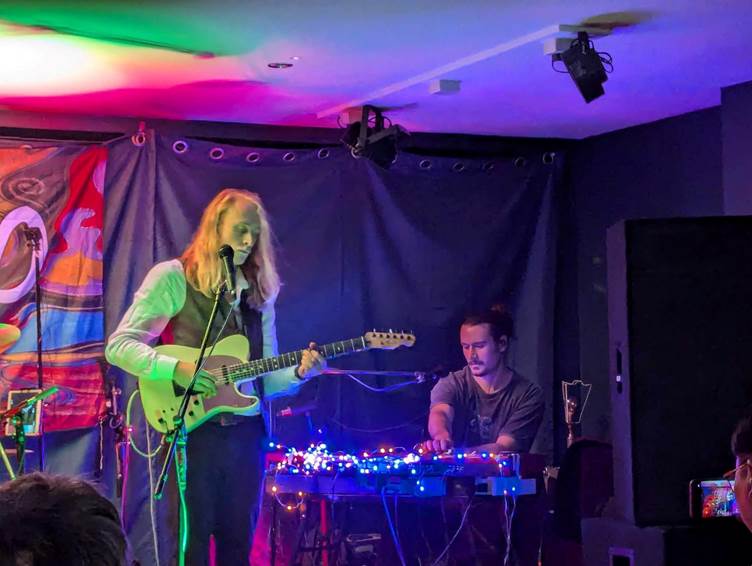
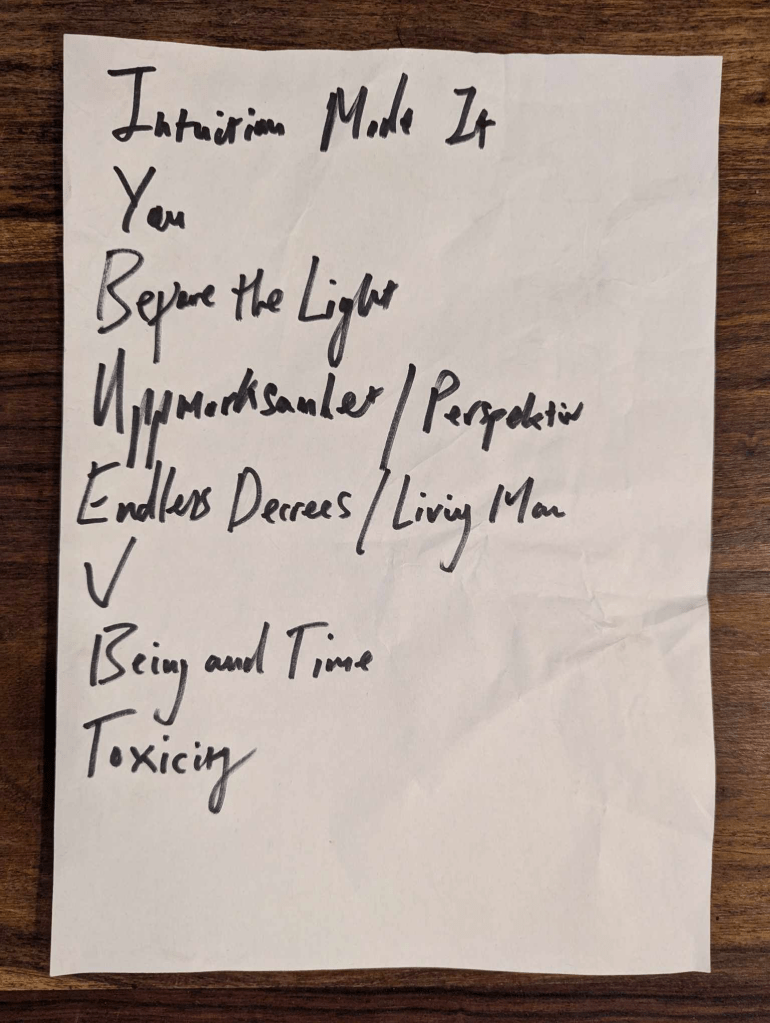


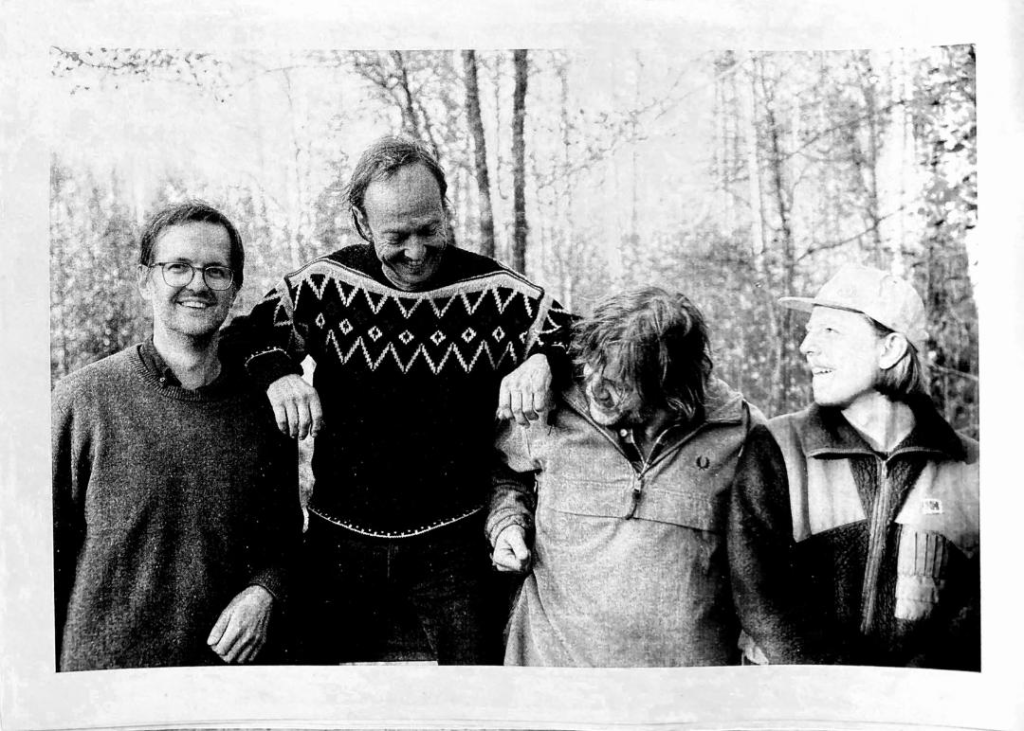
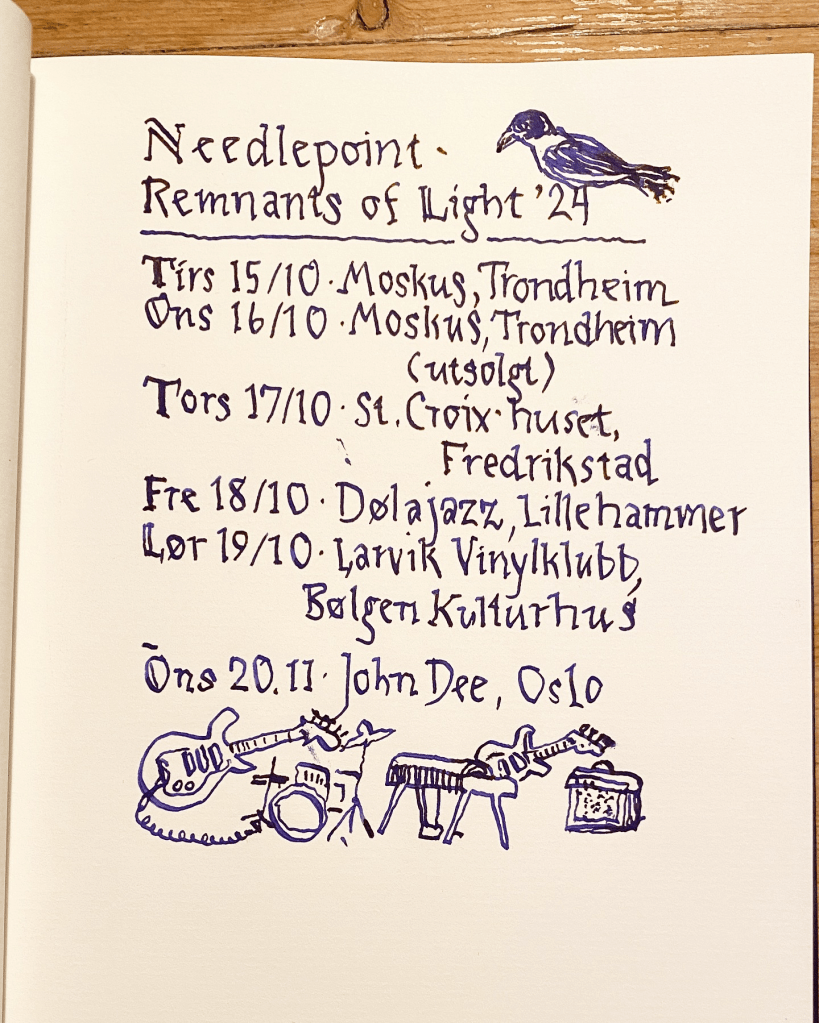
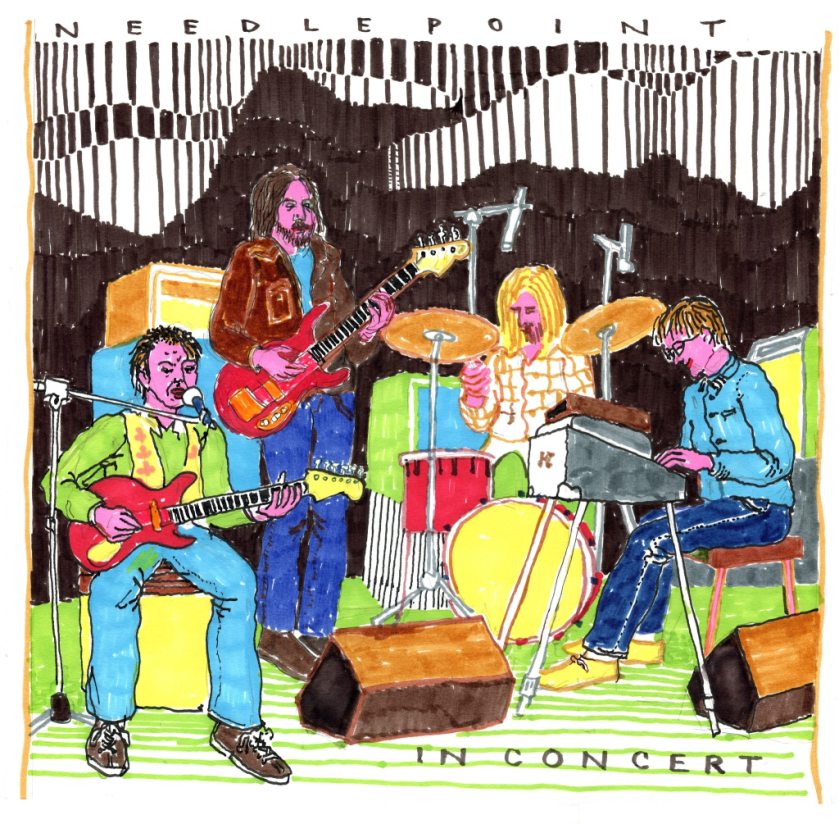
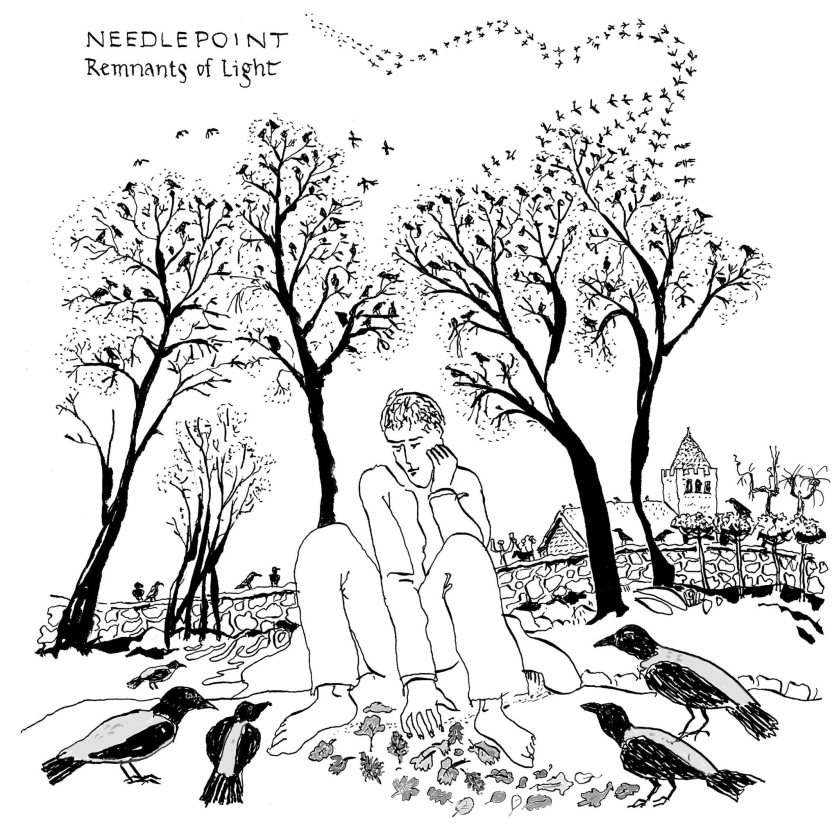
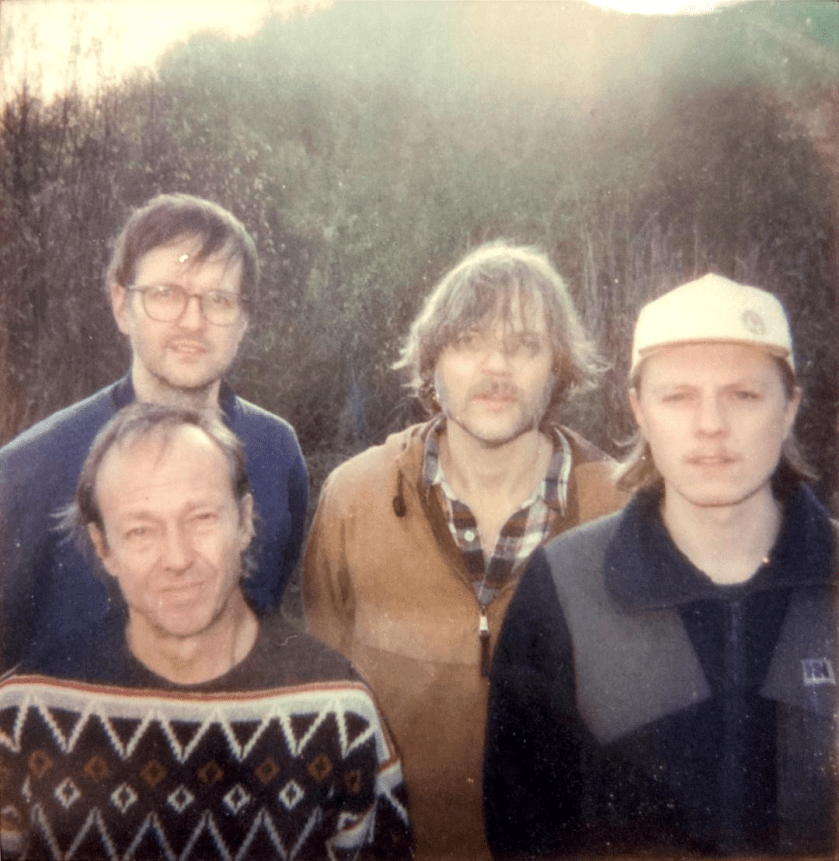
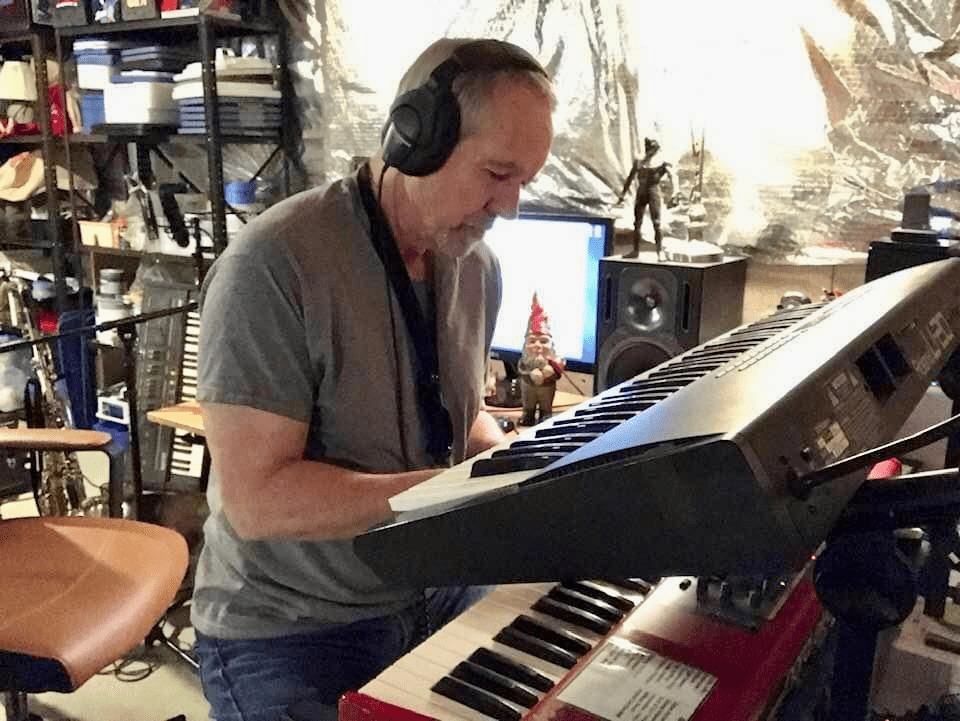
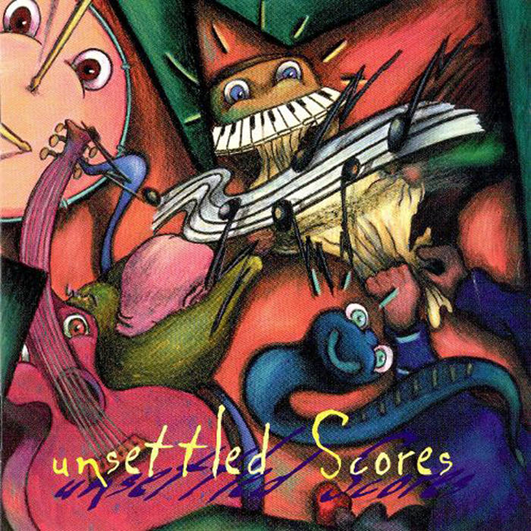
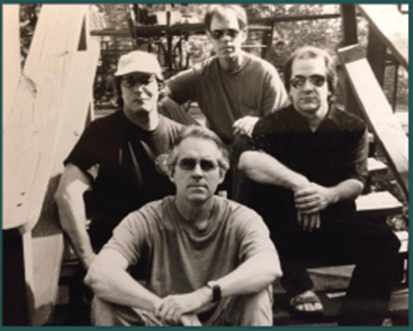
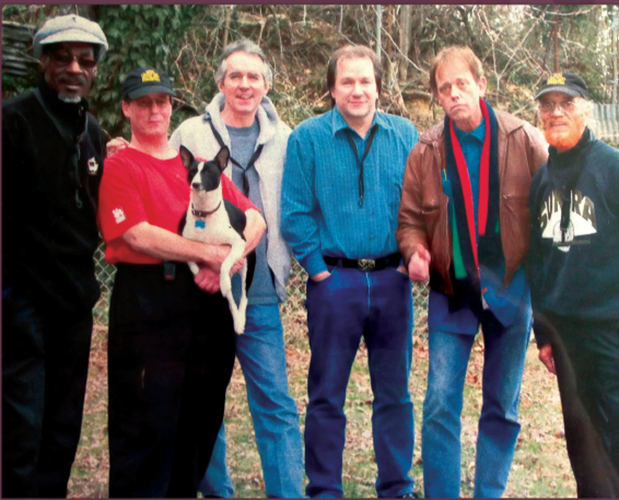
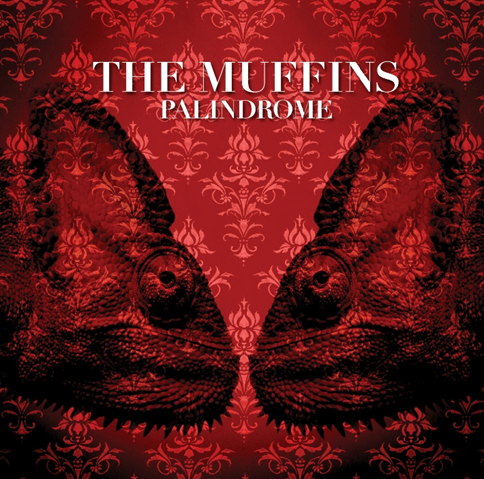
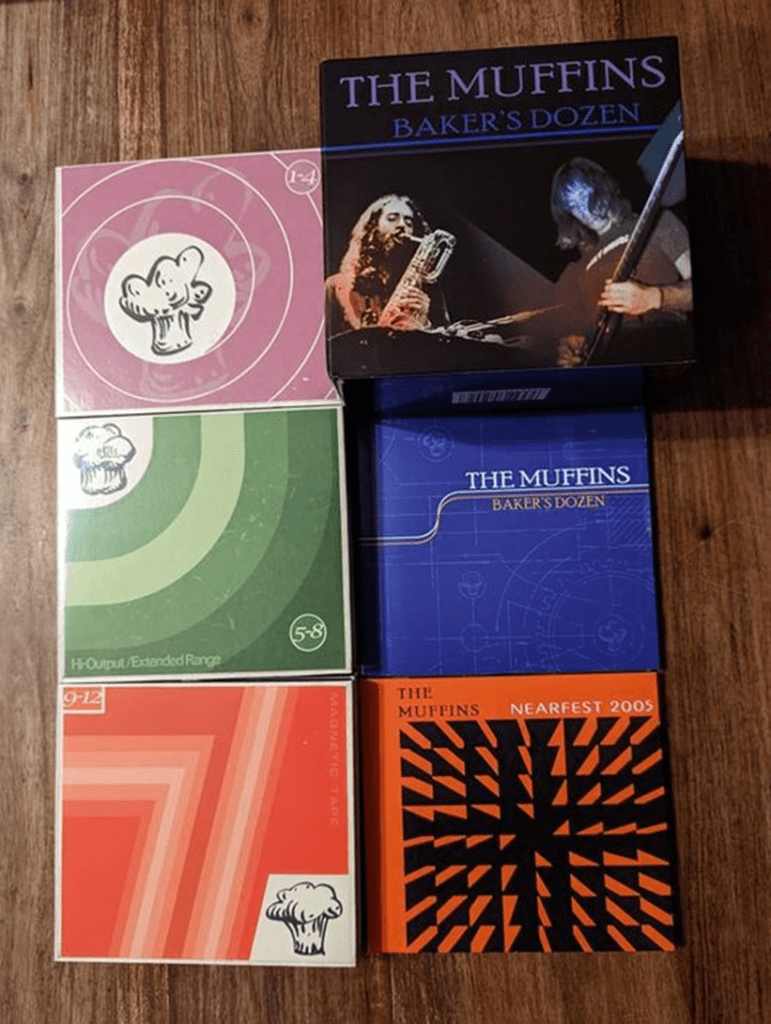
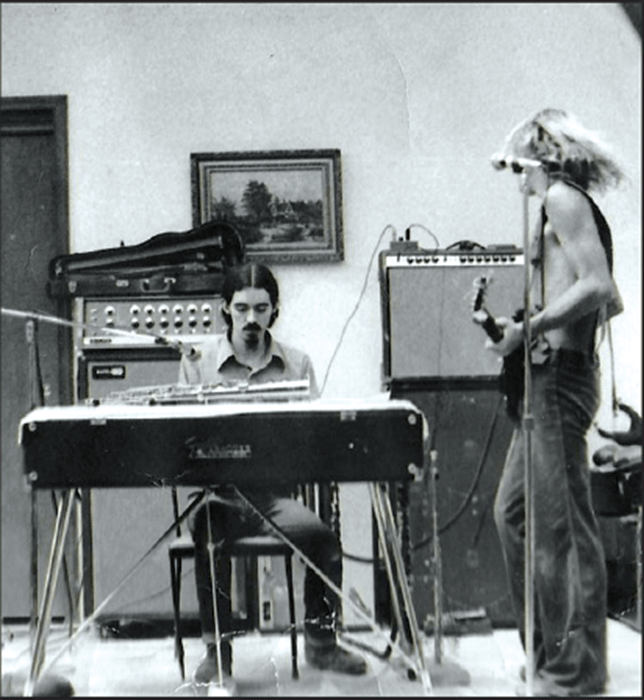
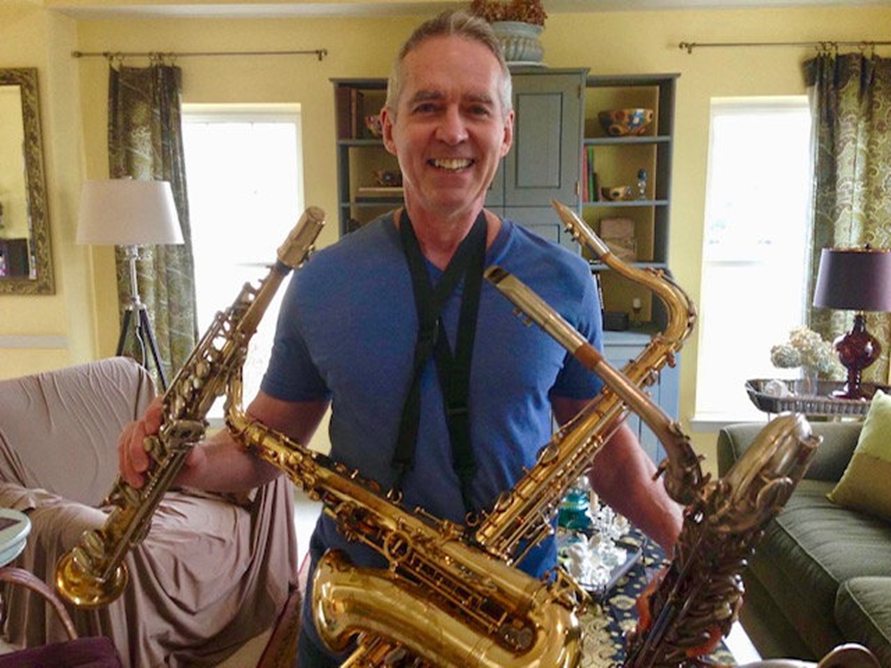
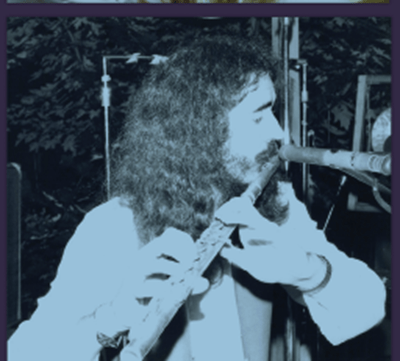
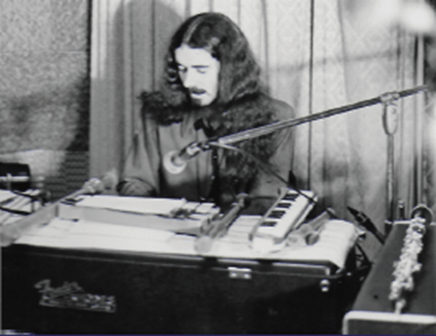
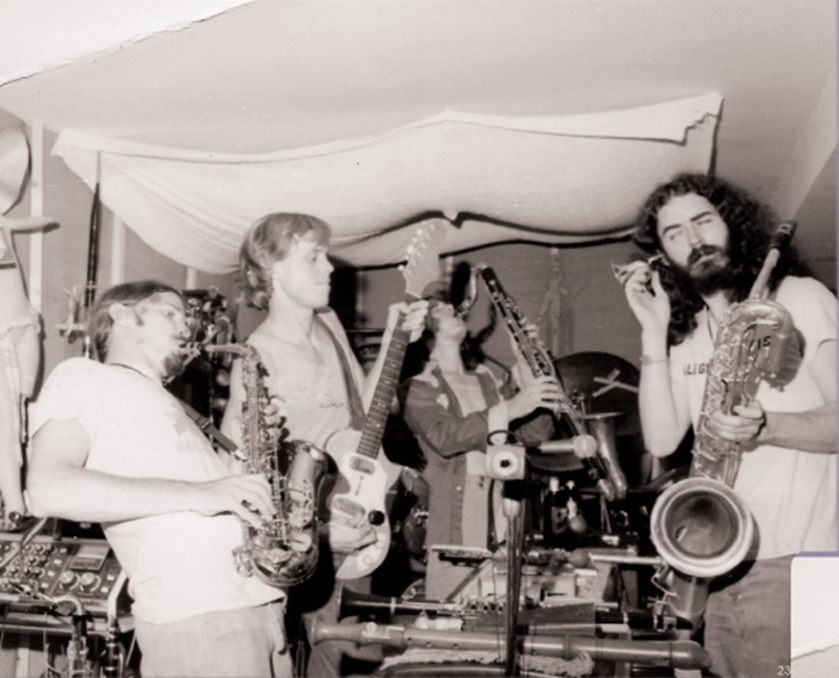
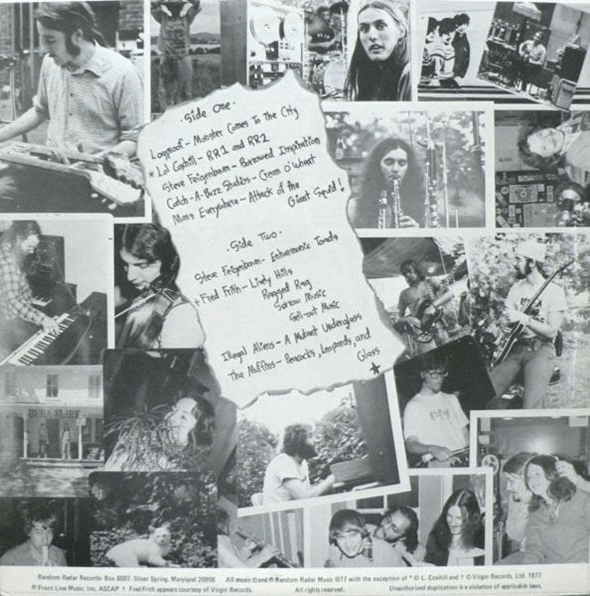
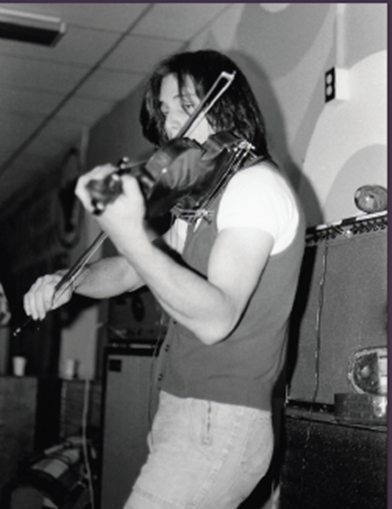
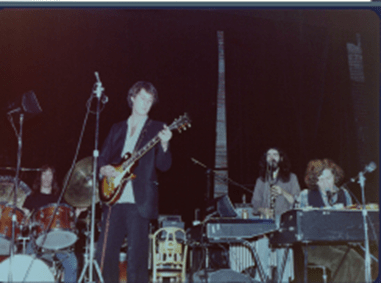
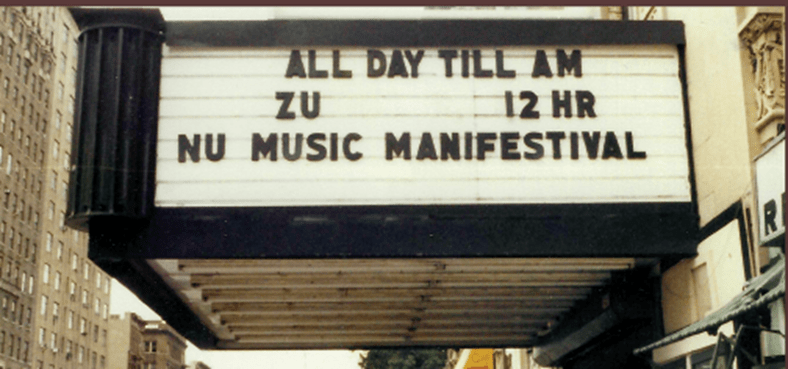
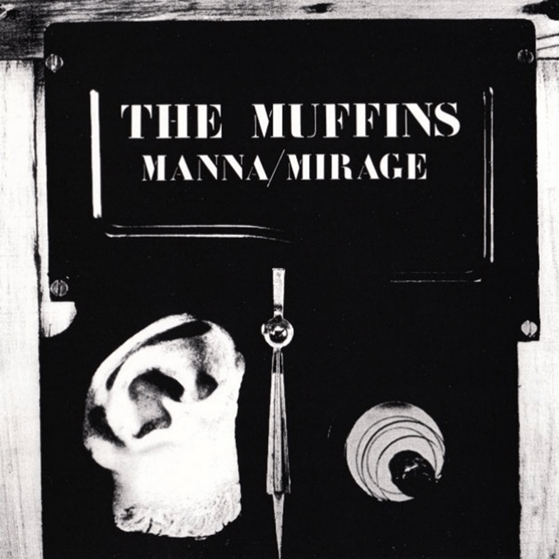
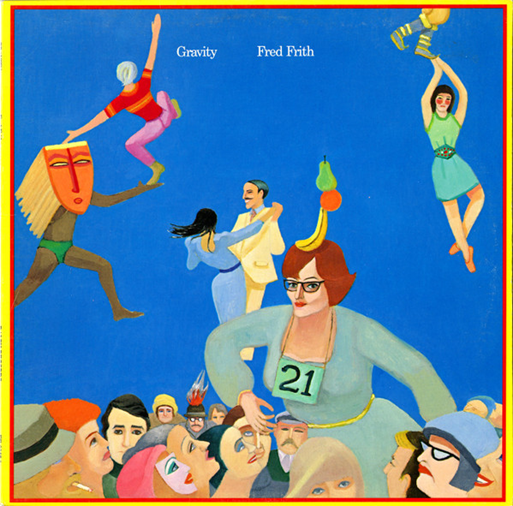
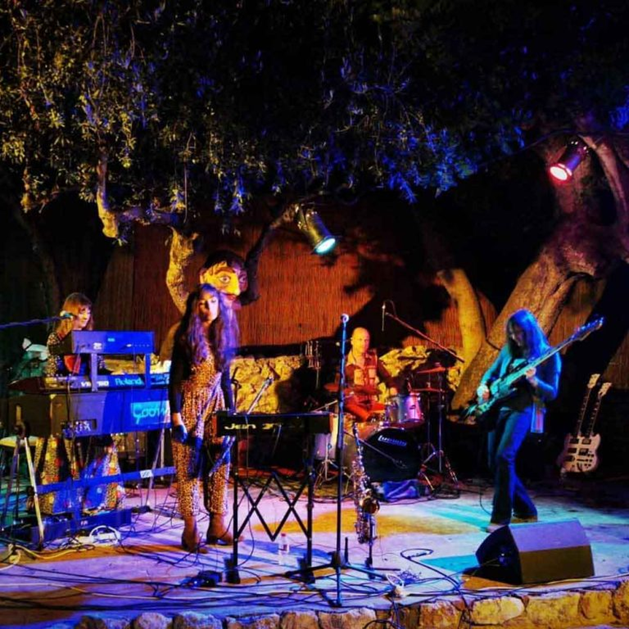
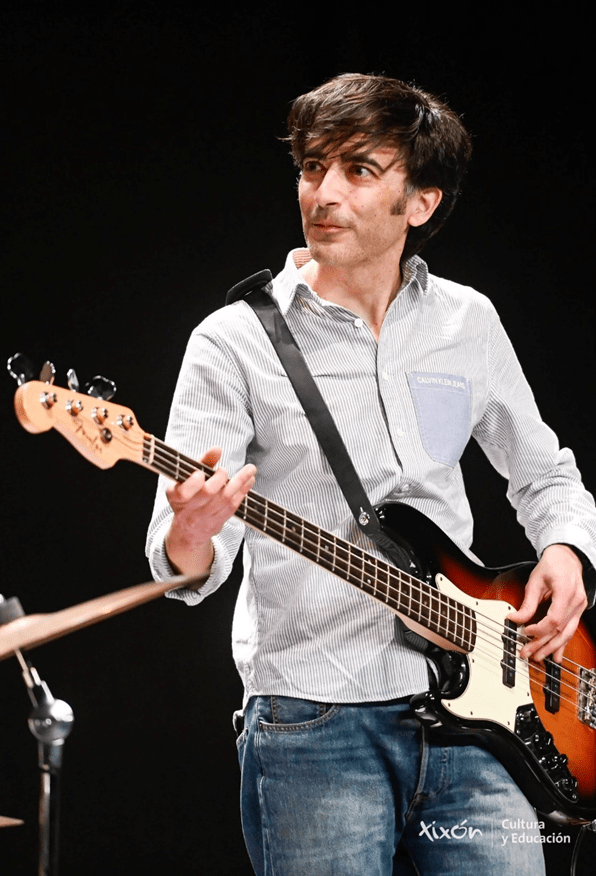
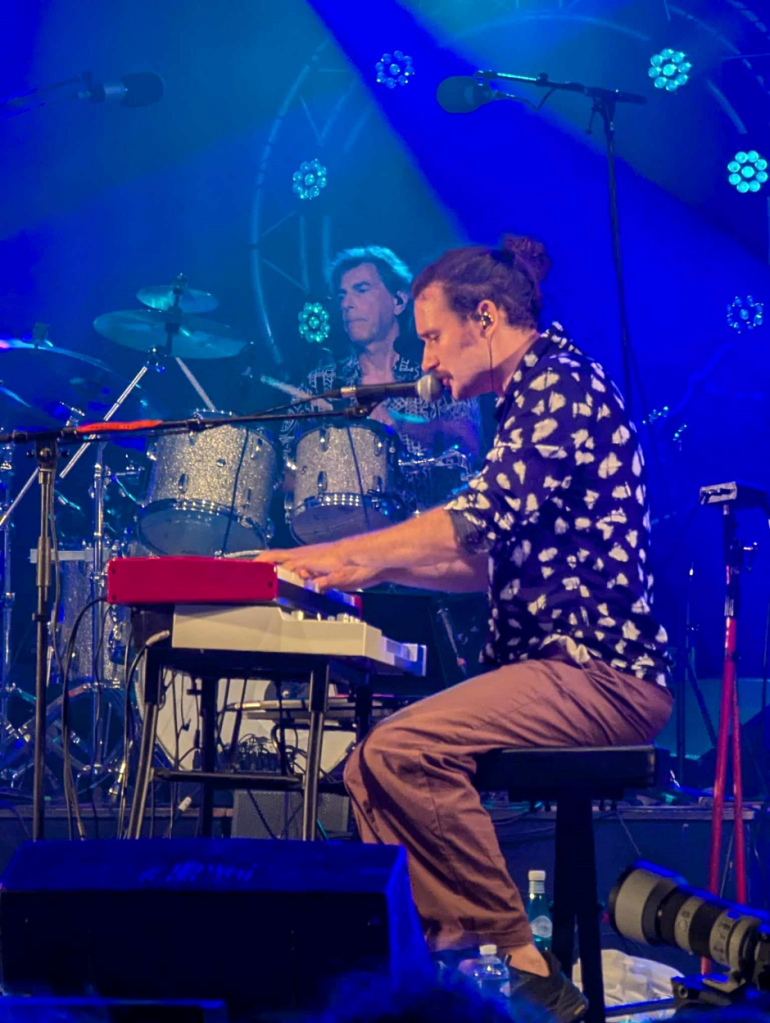

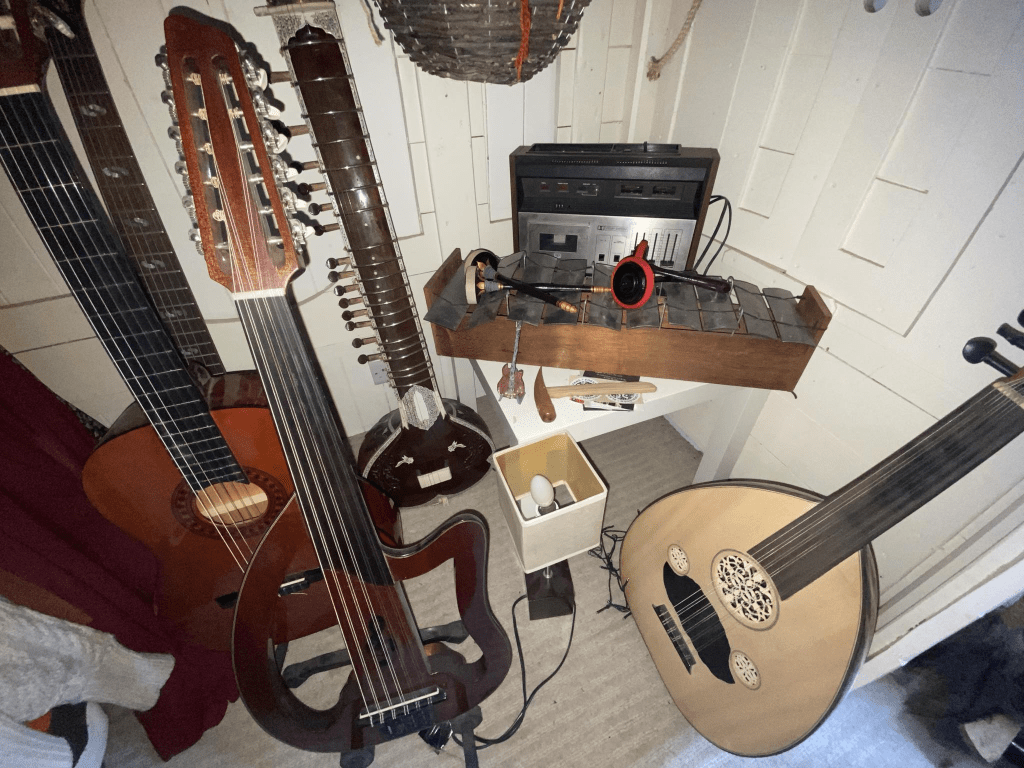
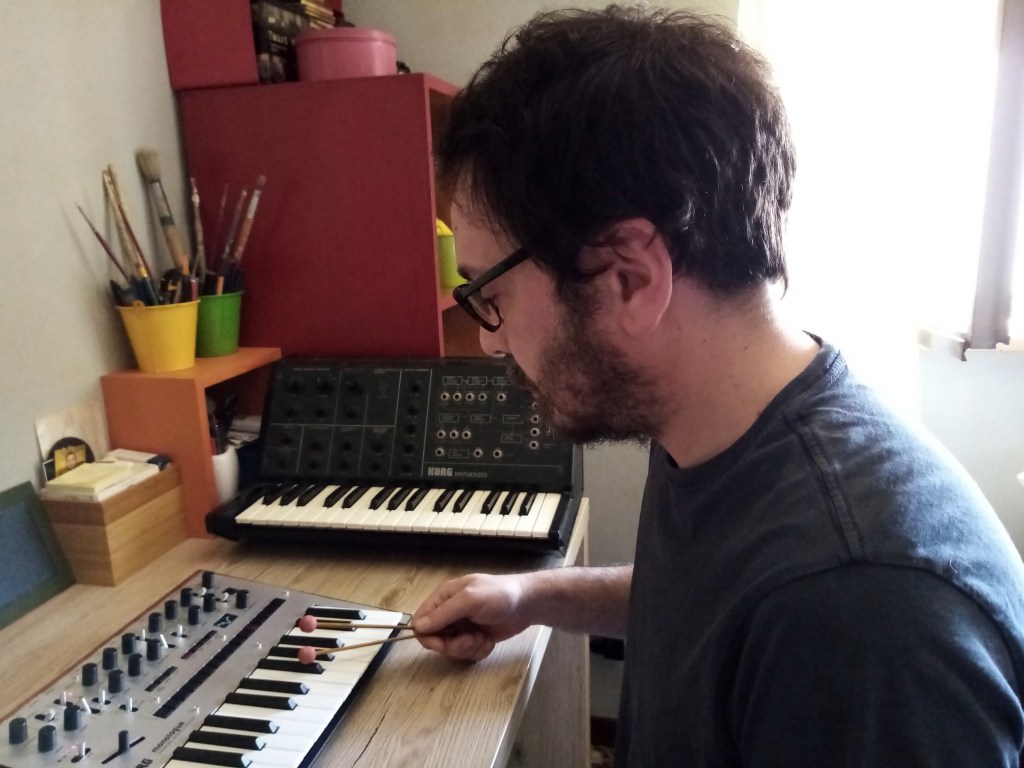
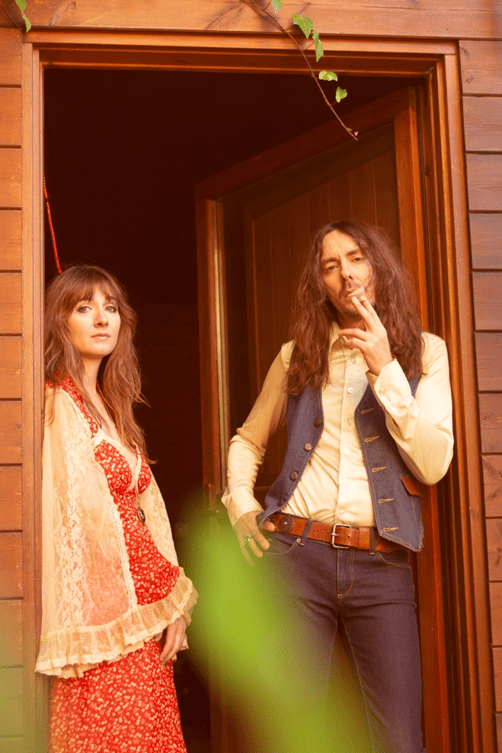
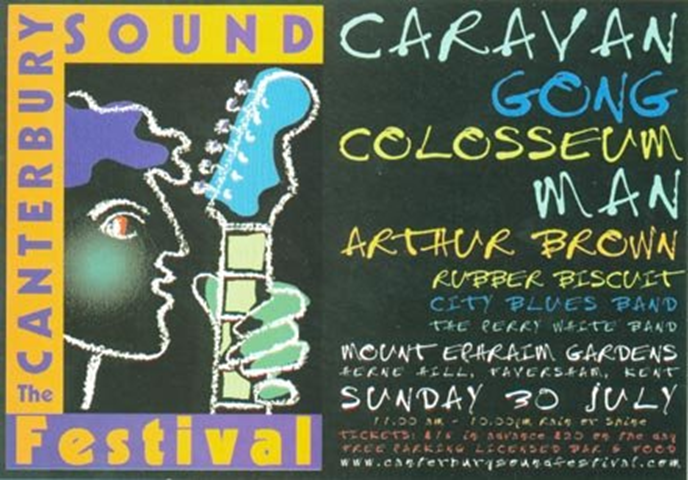
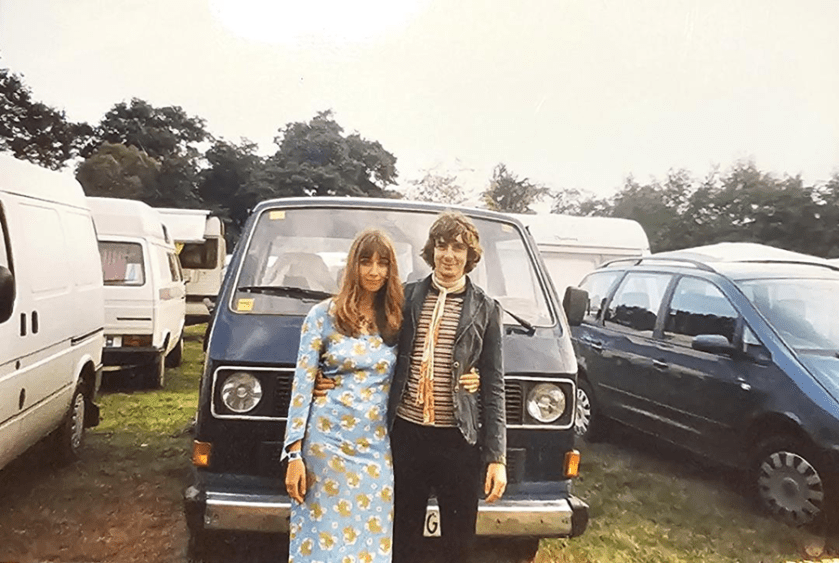
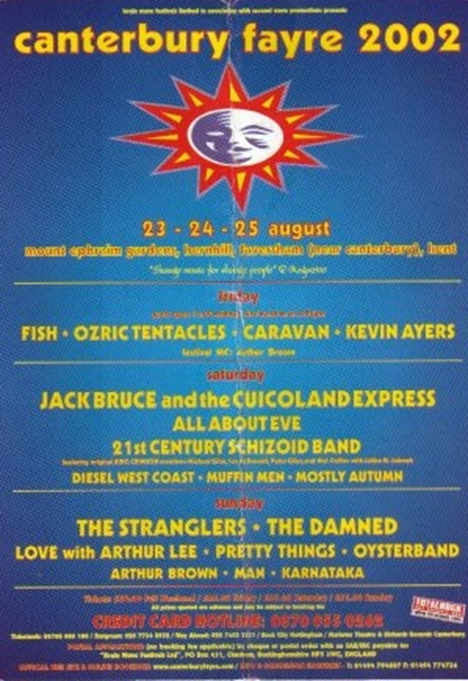
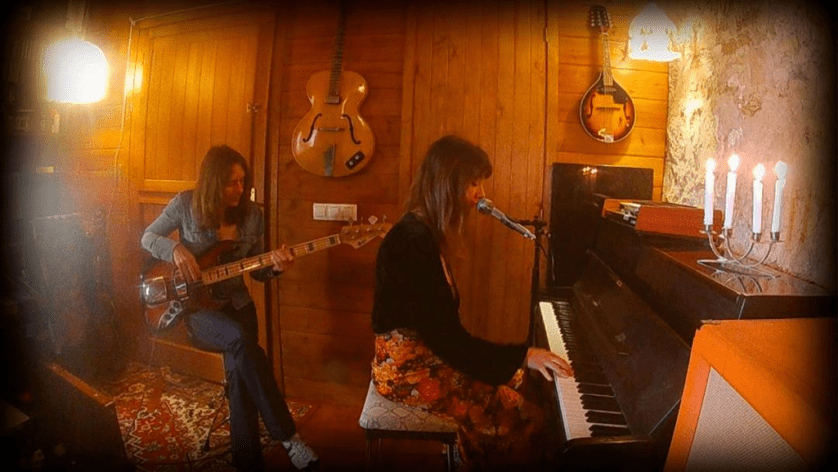
 The Canterbury scene(zine) continued....