
In the first part of Facelift’s interview with Soft Machine, band members took us through their new album ‘Thirteen’ track by track. In part two, they talk about the current status of the Soft Machine band and the creative processes that led towards the album.
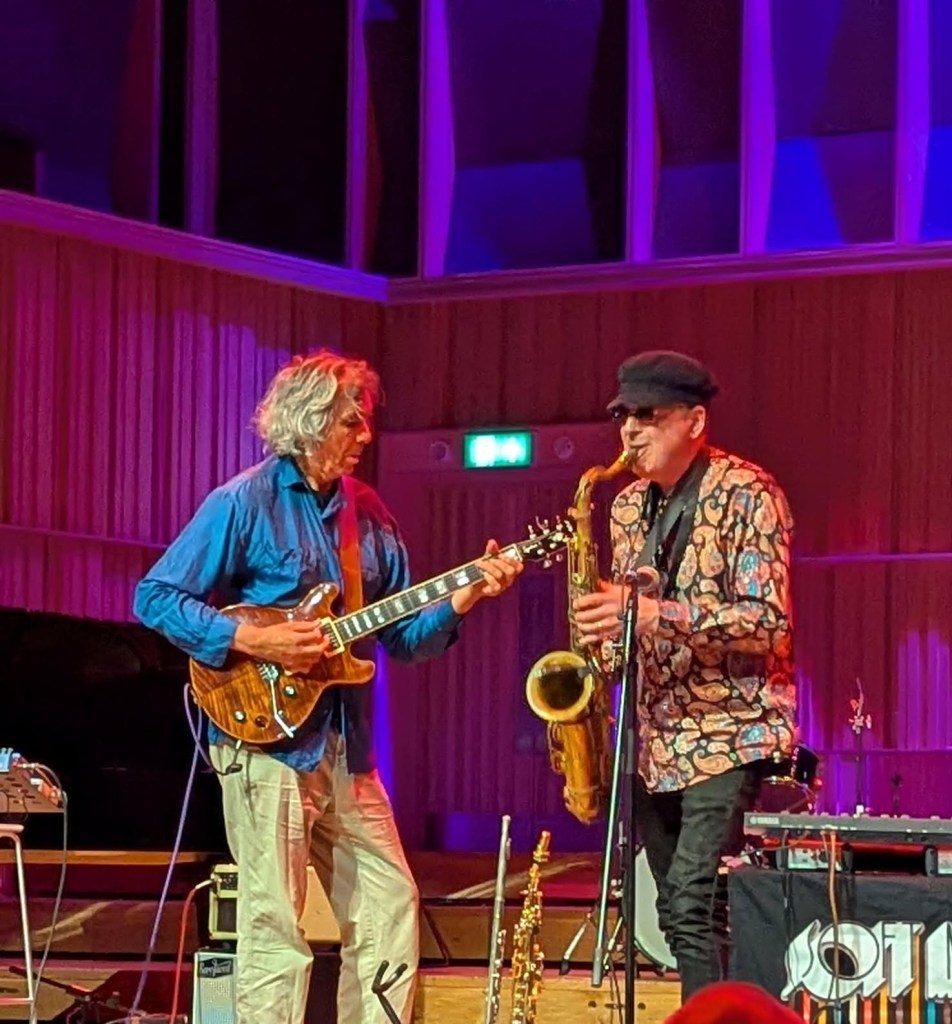
Soft Machine Now
Theo: One of the things Sid Smith mentions in his sleevenotes is something John Marshall used to say, which is that whenever new people join the band there was this feeling that the music begins here. And this is why the Soft Machine eras, when people try and join it all up and say well “this isn’t like Kevin Ayers songs”, it was never intended – they’re almost like different chapters, different bands. OK, there was a Mike Ratledge connection right up to ‘75 but they were very much different chapters. There was this approach which I think possibly was something of the era, which was “no we’re looking forward – everything looks forward”, and new people if they bring stuff, then the music begins here.
Elton (Dean) was very much of that world and I think Hugh (Hopper) was of that world and I think it’s probably fair to say that when I joined, because I’m such a fan of music from ‘66 to ‘75, I was interested in the past stuff and quite keen to bring back some of the older tunes and also incorporate some of the older Soft Machine ways if you like, like bringing in more of the fuzz bass or on the last album ‘Fell to Earth’ was quite Syd Barretty in a way. I really liked the fact Soft Machine was bang in the middle of all that and wanted to bring it back – it wasn’t a retro thing but it was a kind of broadening..
Soft Machine, as you, know covers so many bases, and has done so in all its different periods. One of the joys and excitements is dipping into the flavours of different periods from Daevid, who I knew obviously very well through Gong, to the more kind of Robert Wyatt-focused thing with whimsy, to the whole fusion and combinations of stuff.
John: I think, on this album and in the band we’ve got elements that are in the common domain and we’ve got elements that aren’t. And I think that’s the essence – you can’t if people don’t get anything to hook on to. But if you’re too much in the mainstream it’s just tedious.
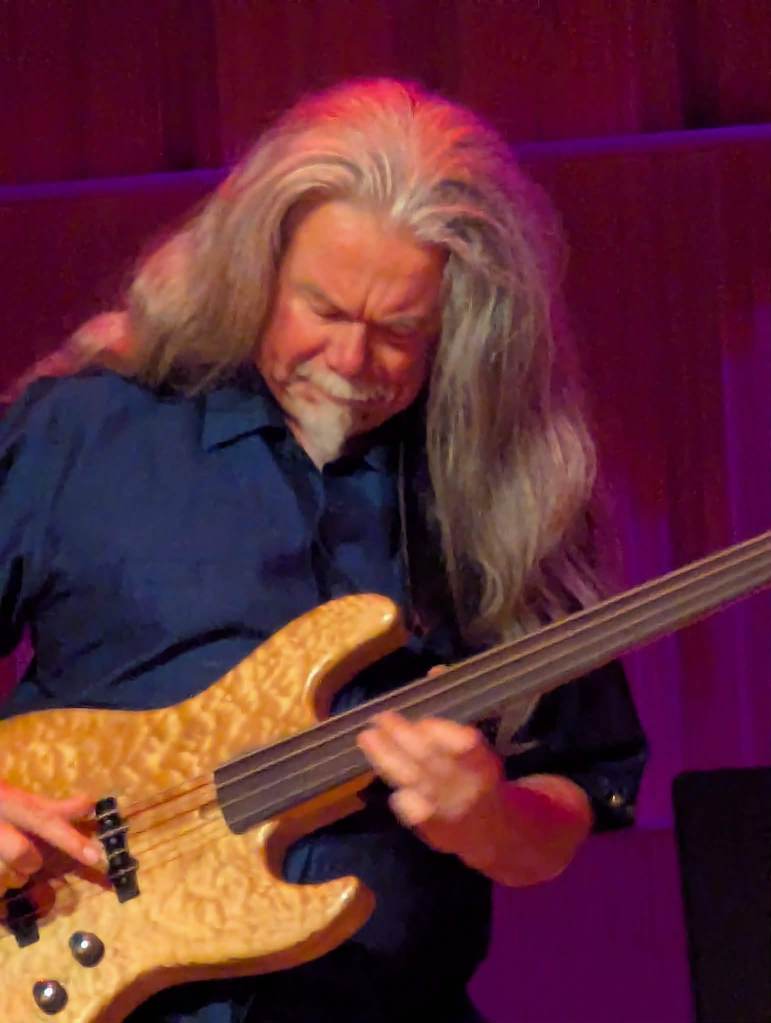
There’s a few things that I always think of when you talk about the history of Soft Machine. First of all, like any band of that era, the Soft Machine went through tons of changes between say ’66 and ‘67 when it was born. When I joined in ‘75 and onward there were big changes very regularly. It was a critic who said, and I really picked up on this at the time, he said, “each iteration of Soft Machine had its own value and quite a high value, most of them, but it bore no resemblance to the iteration that followed”. So each bit of Soft Machine stands pretty well on its own. If you think of my era with (Karl) Jenkins, (John) Marshall and (Roy) Babbington, it really has hardly anything to do with Kevin Ayers. There’s some continuity there but I used to imagine, I used to think of it like the Politburo or something, or politics where the new government comes in and goes ‘the old government was crap’ so when I was in Soft Machine, the kind of Robert Wyatt/Kevin Ayers era was absolutely taboo to even talk about.
So I think what we did – it started with in 2004 when we got back together, thanks to Leonardo Pavkovic, who always needs a mention because he put something back together again, and so he put Elton Dean, John Marshall, Hugh Hopper and myself in a room basically and it sort of turned out okay. People who couldn’t stand each other back in the day found that actually they were they were okay, that they could get on. What I’d say has developed in the last 20 years is that the Soft Machine we have now reflects a lot of those eras – unself-consciously but I think we pick up on a lot of the stuff and certainly in my sense it’s nothing to do with museum curation or research really. So if we see something like ‘Joy of a Toy’ or if we do some of our improvisations which really refer to the early UFO kind of Syd Barrett-cum-Robert Wyatt days, and then of course we quite often play Ratledge tunes or something that refers to the ‘Third’ era when we do ‘Facelift’.
We do them in our own way and of course you have to – what’s very important to remember is Soft Machine was basically a keyboard and saxophone band (although Theo plays quite a lot of keyboard now). But basically when we reformed in 2004/5 I was filling the role of the keyboard player so it meant that every time we played a tune it would sound different anyway.
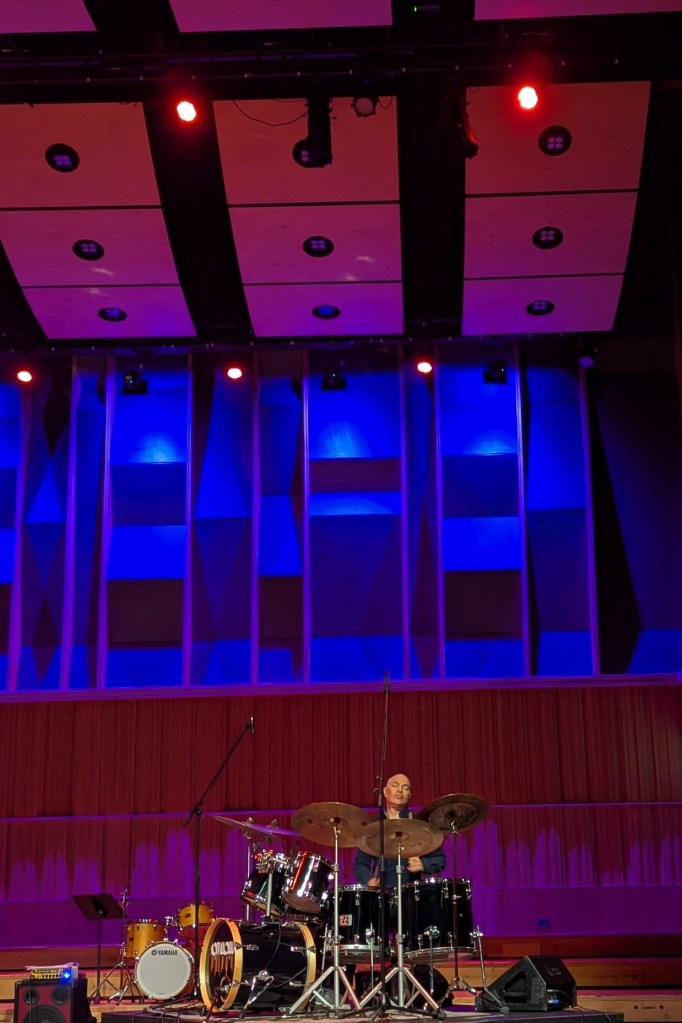
That’s very important for me – not to try and sound like the past, but the spirit – and there definitely is a spirit of Soft Machine – it’s a very strong feeling I have when I’m playing with the band. I feel like a different person than when I’m playing in other contexts. It may be just me tapping into my 26–year old self or something. I just feel differently. The intensity of the work is different and the commitment of everybody’s playing is different and I really think it’s a sort of spirit of place, spirit of Soft Machine. It really kind of is there and it’s one of the reasons why I’ve continued. It’s nothing to do with historical loyalty.
You’ve seen the gigs – they’re not that big time, nobody’s going “oh it’s Soft Machine at the Albert Hall, I’m going to go and see Kevin Ayers and Robert Wyatt”. Everyone knows what’s going on. But there’s something about the spirit of Soft Machine which really informs me when I’m in the band and I think perhaps informs the others. Certainly all the years that John Marshall was in and we’d get substitute drummers in. A lot of them I know quite well from other contexts, but they’d just play their arses off! And I thought, “there’s something about the atmosphere of our band that people feel liberated”. They’d go hell for leather! There is a kind of restraint and then you get with Soft Machine: “Hey, here we go!” Same thing with my playing. I don’t play in any way like I play with the Soft Machine in other things!
One comment I put to all the band was that once they changed their name to Soft Machine from Soft Machine Legacy before the ‘Hidden Details’ album, it was like a releasing of the shackles – perhaps invoking a responsibility to live up to their new shortened name
John: It’s all unconscious. It really shouldn’t have been called ‘legacy’ from the start as there was Elton Dean, myself, Hugh Hopper, and John Marshall (all former Soft Machine members). A lot of the promoters in Europe just dropped the Legacy thing. But when we officially we weren’t the Legacy anymore it did sort of somehow concentrate the atmosphere. Certainly since then I think it has coagulated an atmosphere around the band. The problem with Legacy was like, “is this a tribute band or something?” If you’re playing in the small theatres in Britain, every other band will be a tribute band anyway. They’re going, “Oh, it’s a tribute to Soft Machine”. We get reasonable, nice size audiences. Nothing amazing. And I’m okay with that because I quite understand the original guys aren’t there. I mean, I’m there from the 70s. It was, in 2005: Elton, Hugh, John, but now it’s just me.
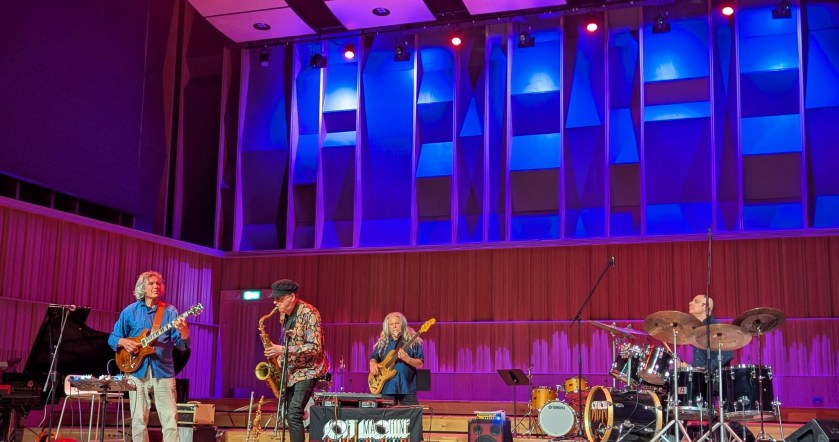
I’m perfectly happy that audiences are compact because I’m doing it selfishly. I just want to play. I want to play this music in this band. I’ve found it really satisfying the last few years.
‘Thirteen’ is the best album I’ve been on and this is the best band I’ve ever been in… Soft Machine. Which is not bad after 55 years in the business!
Thirteen – the lowdown
‘Thirteen’ has gained plaudits as a major statement, an album of scale and complexity, or put simply, the best music the band have produced at least since the project was resurrected as Soft Machine Legacy in the mid 2000s.
Theo: to be honest it was an ambition of mine for about a year – knowing what Asaf and Fred can do, I thought, “I reckon we can make the best Soft Machine album since ‘Third’”. There’s a lot of great Soft Machine albums, but obviously ‘Third’ is the one. Talk about setting yourself a challenge!
It’s good to set yourself a challenge because you try a bit harder! It was a kind of quiet first time vision: let’s try and make something that’s as good as that. So with this album, and I’d probably include the last album too – and looking back at the Soft Machine catalog, I’m conscious of wanting to kind of kind of incorporate it or at least make a lineal connection, so this album feels very contemporary.
It was recorded very cleanly. Some things were on a click track, but having ‘Daevid’s Special Cuppa’, the whole flavour of that track is, probably more ‘67 Floyd than early Soft Machine. Having the fuzz bass is definitely a Hugh Hopper thing. Having the electronics is definitely a Mike Ratledge thing. It’s almost like, well, this is Soft Machine. Soft Machine is this whole very broad musical world and anything in the whole broad musical Soft Machine is Soft Machine. Therefore, it’s quite good to mine those areas: and what other bands do contemporary electronica, psychedelic glissando and full on kicking fusion and pre-improv! And it’s almost like there’s a license or permission to do it because it’s Soft Machine and there’s an awareness of where Soft Machine comes from, and the Soft Machine musical worlds – plural – that are there to bring forward into the modern day. I see it as a continuum. Yes, it’s a new thing and we’re all of today, but Soft Machine is a continuum and I think it’s a good thing to be aware of that and link its history into today.
Fred: I think this album for me has got the whole spirit of the past. I kind of went back and looked at everything, early things. I thought how much I actually liked that kind of real creative spirit. There’s that idea that some people never wanted to play the old stuff but I really like everything from each era. ‘Softs’ and then ‘Bundles’– John and Allan’s guitar was really good, but there’s those mid jazz rock things bits in between too on ‘4’ and everything else.
John: We took it to Andrew Tulloch who’s our sound guy and does the mixing and the mastering and he’s extremely finicky. So he managed to make it sound pretty clean and sort of precise, as if it’s been put together sort of quite carefully. But the recording process for us is really quick. Apart from ‘The Longest Night’ where we did that in sections. That was a composition of Theo’s I think he’d had around for a long time.
Fred: It was just about getting the right spirit – it’s like the atmosphere of the recording studio has actually gone down and changed things. Rew (Lemer, son of keyboard player Pete) is a great engineer – I’ve known him since he was young. I think everything: the compositions, the balance of material, the improvisation – I think we’ve really got something special to give people. It’s not done on a giant budget now. We just get on with it. We’re probably over budget! But I’m so pleased it’s come out and it’s getting a good response in all sorts of different areas. It’s not a tribute band. That’s the thing I always feel: that they’re looking on the other side: Elton and Hugh and everybody – we’re keeping the music happening….
Thirteen – the album cover
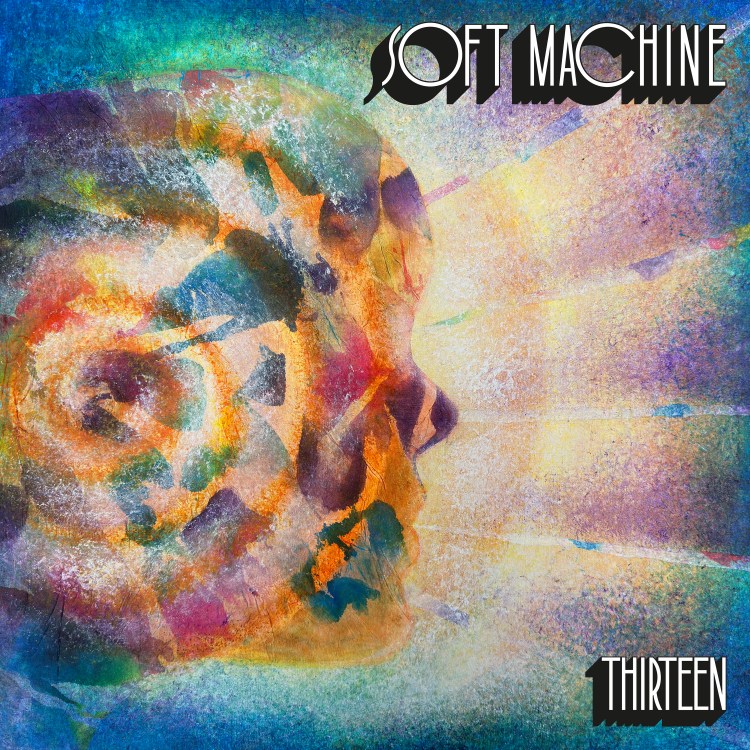
Theo: I was very keen on getting a good cover and I tried a few things and then had an idea which was a silhouette and slightly psychedelic feel. I spoke to someone and they said “look we know this artist, Esra Kizir Gokcen”, an established professional painter. She writes and is involved in music, “why don’t you see if she would you commission her to do something along this style but in her own way”.
We did that and she actually gave a couple of ideas, sort of drafts if you like, and we chose one and then she went on and did the real thing and I think it excelled. It was basically everything I wanted, which was, a kind of colourful nod to 1967, but not too obviously trying to be psychedelic, trying to be contemporary. I like the silhouette thing. Yes, there’s a nod to Soft Machine ‘7’, but that one’s square and boxy, and this one painted, the colours are beautiful, and it’s all paint on canvas. And there’s a kind of slight air of mystery. Obviously you don’t see the face but a lot of the Soft Machine albums including wheels and everything on ‘Volume 1’, but the strange thing on front of Soft machine ‘Volume Two’ and the body on Soft machine ‘6’ and ‘7’ and because the title Soft Machine comes from the William Burroughs book which means that the human body. Sometimes it’s nice to have a kind of directional connection and so I wanted to do that. And sometimes if you get a cover that’s hits the mark, the music clicks in with the cover.
Thirteen – the choice of album title
The album’s accompanying press release makes much of the title’s name, well beyond it being simply a resurrection of the Soft Machine’s numbering of their albums. The original Soft Machine run was 13 years (1966-78), and the album was released on 13 March, which had its own resonance…
Theo: chronologically the title came relatively late. So all the music was written and I think recorded, possibly even mixed before we decided on the album title.
13 is an interesting one because the first thing people say is ‘unlucky for some’ and then I looked into it. I spoke to someone else about the number 13. They went, “Oh, yes, but in other cultures it’s a number of rebirth.” And then it was a kind of coincidence that there are 13 tracks on the album. And then it was a coincidence that ‘The Longest Night’ was the longest track probably for 50 years at 13 minutes.
And then I thought, okay, well, if you’re going to call it ‘Thirteen’, it’s quite a bold statement because people go, “Oh, you can’t, that’s classic Soft Machine.” And again, thinking about that, well, the last two albums that were numbers, were ‘6’ and ‘7’. Which add to 13! And then I looked up, Daevid Allen, it’s quite a thing having him on it after 60 years. And his birth and death dates were 13th of January and 13th of March. And I mentioned all this to John. He went, “Oh, that’s it. That’s it.” So, we’ve called it that.
And I do feel again it’s a kind of ambitious thing. I feel it needs to be needs to be good enough to justify, reclaim, a bit like you said, the Soft Machine name but if we’re going to start reclaiming the numbers, this has got to be something and I feel this is…
In Part 3 of the interview we explore how each of the current members of Soft Machine joined the band, revisit a recent American tour, and talk in depth about the phenomenal rhythm section of Asaf Sirkis and Fred Baker
 The Canterbury scene(zine) continued....