20 albums that changed your life – Part 2


In 1985 I moved to Manchester from my sleepy backwater in Derbyshire and became so engrossed by the buzz of the city, the music, the culture that I forgot to leave for the next 13 years. Manchester in the Seventies, Eighties and Nineties was all about a thriving gigging scene, and I certainly partook of this aspect hungrily, but just as (if not more) important was my own musical ‘education’, provided in a very large part by an extraordinary record library.

manchester record library.png


The Manchester University Precinct was open to the general public and at the time, lent out primarily vinyl (with a few cassettes). You could see it as at that time the physical embodiment of today’s scratch and sniff streaming culture – I’d leave there every few days with a bundle of records under my arm, take back to my university digs, transfer to cassette and peruse at my leisure. When I spoke at the Canterbury Sound day last October, I put together a collage of those albums which were purely the ‘Canterbury’ element of what I borrowed – an extraordinary collection in its own right. But I also explored existing interests such as King Crimson, Hammill/VdGG, Jethro Tull, explored some lesser known prog diversions and had my first delvings into contemporary British jazz. If I went down a few cul de sacs, so be it, at least I knew a bit more. I can’t stress how much of a privilege it was to have all of this music at ones fingertips – it shaped not only the next 3 or 4 years but opened up avenues for so many more…

thid

I can’t remember when I got hold of Third, but I am guessing it was within a couple of months of arriving in Manchester. It had been borrowed on the back of the Daevid Allen/Soft Machine connection – I was already a converted Gongfreak thanks to ‘You’, ‘Angel’s Egg’ and both ’77 live compilations. But ‘Third’ was something entirely different – austere cover, muted production, flattened sounds – this was ‘serious’ music. My best friend from school had gone off to work in Stockton on Tees for a year – I visited him during a week off, and without transport or much brass and in a freezing cold house, have an abiding memory of being huddled in front of a cassette player playing ‘Third’ on repeat. I didn’t initially ‘understand’ ‘Facelift’ as its dissonance was neither the primeval screams of Van der Graaf nor the considered deconstruction of Fripp, and ‘Moon In June’ was entirely outside my comprehension at first in terms of what vocalists were meant to ‘do’, but I was soon converted. Reams have been written about ‘Third’ elsewhere, not least by myself, but I can still pick it up any time I like, immerse myself in it and still be totally enthralled – my number one album still.

over

I’d arrived in Manchester with Peter Hammill’s ‘Enter K’ on cassette, and after having already tracked down most of the VdGG albums previously, I could have been excused in believing that the Hammill solo ego was an inferior parallel project. The first few albums I heard, all mid-Seventies VdGG-fallow period (‘Silent Corner’, ‘Chameleon’, ‘In Camera’) quickly started to suggest more depths, but ‘Over’ from slightly later on bowled me over. This is a ‘concept album’ in as much as all its songs (‘Autumn Song’ excepted) are on the same theme – the utterly consuming break-up of a relationship and I totally tuned into its vibe years before I could truly emphasise with its content (when I did, I found the album unlistenable). It also benefits from a higher than normal quotient of guitar-backed songs, for me, Hammill at his finest: ‘Alice’, ‘(On Tuesdays She Used To Do) Yoga’ and the totally nihilistic ‘Betrayed’. Every song on ‘Over’ is a minor masterpiece, from the punky opener ‘Crying Wolf’ through to the sliver of hope offered by ‘Lost and Found’, set as the morning after to the VdGG track ‘La Rossa’, where the author had contemplated the consummation of a platonic friendship. For years ‘Over’ was my favourite album, it’s still very high up there, and a delight to hear ‘Yoga’ performed live just a month or so ago.

larks tongues

The appearance of ‘Larks Tongues In Aspic’ may not be a surprise to anyone with a smattering of knowledge about music in the progressive/experimental sphere. I’d heard Crimson first at school, when a classmate with elder siblings old enough to have witnessed the 70s prog explosion first hand had recommended. Having bought ‘Three of a Perfect Pair’, at that point a new release from local record emporium ‘Hudson’s’, I’d been a bit perplexed – was this prog? It seemed more ‘new wave’ to me, and even wilfully weird – for the moment I only really ‘got’ ‘Industry’, a precursor to later interest in the likes of Bourbonese Qualk and 23 Skidoo, who were part of the ‘industrial’ wave of the Eighties. But at least it got me going: most of the rest followed quickly from a new resource (see below), favourites being ‘Discipline’ and the wonderfully experimental ‘Starless and Bible Black’ but the best was ‘Larks Tongues’, brimming with tightly orchestrated dissonance, killer riffs and beautiful melodies. A toss up between ‘Easy Money’, with its unparalleled guitar solo and ‘Part 2’ for the highpoint. Another credit too for Bill Bruford, who would continue to figure a lot in future playlists.

3 albums

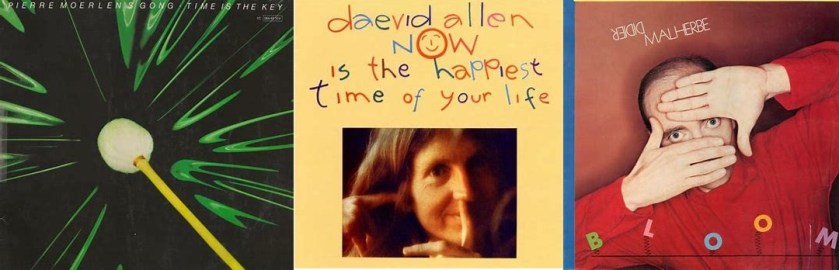
Perhaps the germination of ideas for the fanzine Facelift came not just with ‘Third’ which opens with a track of that name, but the next three albums which form the next choice. All are roughly contemporary releases following the break up of the classic Trilogy era Gong line-up – one could also include Gong’s ‘Gazeuse!’, Steve Hillage’s ‘Green’ and Tim Blake’s ‘Crystal Machine’. I’d shared a room for a year at University with Joe (more of whom later) and we’d driven each other mad with our polar musical tastes. We’d then gone off to pick fruit together in Herefordshire in the summer of ’86 and on a tinny cassette player played around the nightly campfire I think I probably further drove him (and others) even more bonkers. ‘Now Is The Happiest Time of Your Life’ is simply the hipp(i)est album there could be: three classic 3/4 time signature ballads from the Allen acoustic guitar: ‘Why Do We Treat Ourselves Like We Do’, ‘Only Make Love If You Want To’ and ‘Deia Goddess’ – the latter identifying Allen’s Majorcan residence, whilst elsewhere there is much evidence of the Allen buffoonery masking more serious messages (the biting ‘Poet for Sale’) and an early drone based track (‘I Am’) with glissando and space whisper. Masterful stuff before things got darker with ‘N’Existe Pas’, ‘Playbax’ and before they completely unravelled at the start of the Eighties. ‘Time Is The Key’ is the second album going under the name of Pierre Moerlen’s Gong, and it reflects more of a solo project, with the superb side long suite on Side 1  an orgy of tuned percussion with Moerlen working his way through the extended kit semi-orchestral style. Spliced in the middle of it all is the wonderful pseudo-muzak piece ‘Supermarket’ with its mindboggling dexterity, whilst ‘Ard Na Greine’ and ‘Fairie Steps’ are just beautiful melodies. Side Two is more funked up and shows the other side of Moerlen’s compositional style, even fitting in a completely incongruous (but memorable) Allan Holdsworth solo on ‘Arabesque’. This was my introduction to a whole genre of music involving Moerlen, various other ‘Strasbourgeois’ and offshoots from the likes of Bon Lozaga, Gongzilla et al which has endured until this day (two of my reviews this year could broadly fit into this category).

Bloom’ on the other hand is just an album of pure joy. Best described as unfettered funked up jazz fusion, Didier Malherbe wouldn’t have known that he wouldn’t release another solo album for a further 10 years but he makes this one count. Didier’s Indian and South American influences are well documented, and later the doudouk would dominate his performing repertoire, but for the moment this is just deliciously groovy Gallic electro jazz with Didier soloing gloriously on tenor sax. An album I’d return to over and over if I needed a mood boost. Probably deserving an entry in their own right, Didier’s Hadouk Trio in the Noughties became pretty much my favourite band, with a series of stunning albums corrupting the jazz genre through exotic instrumentation, Didier primarily with the Armenian wind instrument doudouk, the genius Loy Ehrlich through kora, hajouj and multiple stringed and keyed instruments, and my introduction to the hang via Steve Shehan. One of my proudest moments is helping to bring Didier and Loy over to perform to a sell out crowd in Hebden Bridge in 2011.

tantric obstacles

And so to Ozric Tentacles. Derivative and samey? Or for me one of the most inventive, prolific and hearteningly underground projects of the last 30 or more years. Another housemate in Manchester arrived one evening with a vinyl copy of ‘Pungent Effulgent’, which had just been released back in 2009, and I also remember the good chaps at Decoy Records, Manchester’s pioneering jazz and roots record shop before the bomb, raving about the fact that they’d found a band whose main man Ed Wynne was Steve Hillage and Tim Blake rolled into one. After the clean-cut production of ‘Pungent’ I remember being profoundly disappointed the first time I saw them live at the Treworgey Tree Fayre in Cornwall in 1989 (and that festival is a whole other story), but later could put this down to the nature of the beast (both the stage they were playing on, the temporary Wango Riley’s, actually the back of a truck, and Ozrics’ notoriously free live sets at the time). My interest continued to escalate however, firstly the classic ‘Erpland’ double album and countless subsequent gigs in the next couple of years, and secondly the Ozric cassettes, of which ‘Tantric Obstacles’ forms a part. Back in Decoy records, I’d been made aware of a 6-tape collection of pre-Pungent recordings, with brightly covered, photocopied covers and inlays, each filling 90 minutes or so of wildly diverse sounds and influences. Licking my wounds after a relationship break up in a bedsit in South Manchester, the £24 for the set was a small fortune (I was paying only £25 a week in rent and struggled to muster even that) but I took the plunge, and using a cassette machine of just as poor sonic quality as the recordings themselves, took about 6 months to emerge out of the other side. It also corresponded to a time when I really got stuck into producing Facelift, with issues 2 and 3 appearing during that time, and the Ozrics provided the musical nutrition. An interview for the mainstream newspaper I was working for followed (a bizarre experience with the band getting slowly stoned during the interview whilst watching ‘Blind Date’ in their dressing room), I’ve bought everything they’ve done since, and was even witness to a sort of reunion last year at Kozfest – periodically I’ll dig out an album then slowly work my way through their entire catalogue.  Of the 6 cassettes, ‘Sliding Gliding Worlds’ is probably the most diverse and best produced but I struggled to get beyond the punchy ‘Tantric Obstacles’ particularly one guitar passage in ‘Sniffing Dog’, for many a month.

20 albums that changed your life – part 1

Skilfully combining the ’10 albums which changed your life’ meme with the one  which identifies ‘Your top 20 albums’ and ignoring the bit about ‘no need to comment’, here’s a somewhat self-indulgent blog doing what it says on the tin. Albums listed in chronological order of hearing them. Expect a few surprises if you make it that far…

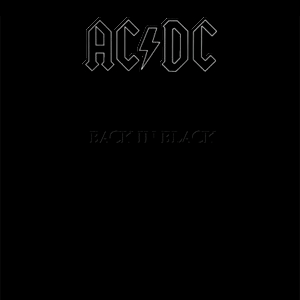
ACDC_Back_in_Black

Whilst I grew up in a very musical household with 3 piano players (I was the odd one out) it didn’t mean I was exposed to a particularly wide range of musical influences – until the age of 10 my musical diet was classical music spiced up occasionally by my father’s wonderful jazz records. In the Seventies chart music didn’t permeate into your life in the same way that it would do in subsequent years: there was little music played in supermarkets, and we didn’t watch commercial TV so didn’t pick up stuff through adverts. My musical education changed when I got my first ‘wireless’ – a plastic blue number which spent many nights under the pillow listening to Radio Luxembourg and overseas cricket commentary. I was lucky enough to reach the age of 10 in November 1976, and quickly my musical palate leant towards chart punk, a few prog infiltrations (such as Yes, ELP and Genesis) and some of the better disco soul-spin offs such as Donna Summer and Diana Ross. Then on to new wave and the mod stuff, The Police and eventually heavy metal, which to this hormonal pre-pubescent rather struck the spot. I remember my sister presenting the ‘Rock and Roll Ain’t Noise Pollution’ single by AC/DC on Christmas day to my appalled parents and defiling the family record player with its screamed vocals and turgid guitar chords. ‘Hells Bells’ was the ‘B’ side, both taken from ‘Back in Black’, which my best mate got in his Christmas stocking and became the our sole playlist for a while…

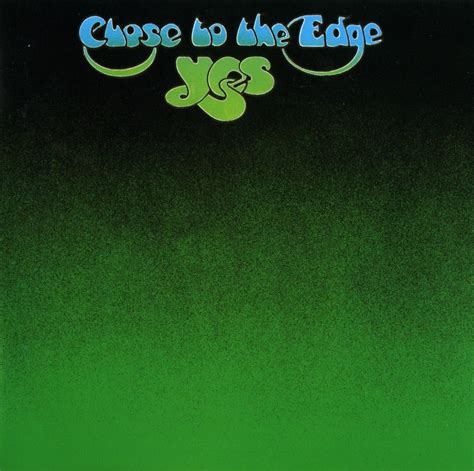
close to the edge.jpg

As heavy metal became my new religion, I naturally gravitated towards the only radio program I could find which played it – Tommy Vance’s ‘Friday Rock Show’ on Radio 1. Each year a Christmas special (a sort of HM alternative to John Peel’s Festival 50) listed fans’ Top 10 tracks, and in amongst the heavier stuff like AC/DC and Black Sabbath (more of which later) was a whole host of lengthy prog classics from the likes of Pink Floyd, Genesis, Rush.. and Yes. I loved ‘Awaken’ so much that it set me on the road to track down everything by the band over the next few years, and a highlight was certainly ‘Close to the Edge’, which also happened to be a record owned by my sister. I marvelled at the obtuse guitar lines in its title track intro and silly vocal interventions, the funky stuff on ‘Siberian Khatru’ and the general pseudo-classical composition. For a few years I was more into Yes than I have been any other band before or since – I experienced the highs of finding out in 1983 that they were to reform, and the crushing reality that was ‘90125’. I even used to have dreams at night of hearing entirely new albums, only to wake up to find that the whole thing had been illusory. Times and tastes move on but I do return to this album still (and of course continued to write about Bill Bruford in several different contexts).

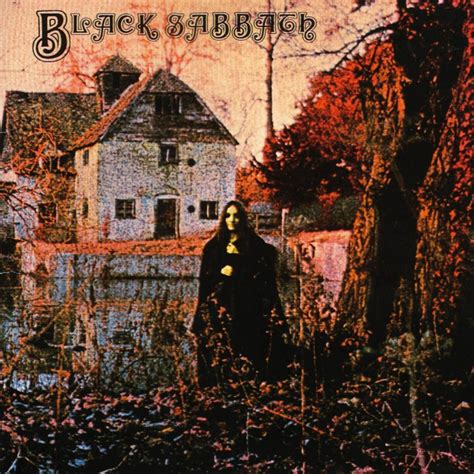
black sabbath.jpg

Around the time when heavy metal had me in its filthy grasp, the same friend who had a copy of ‘Back In Black’ also introduced me to Black Sabbath’s ‘Mob Rules’. Fine stuff in its own right, but the local library, which just happened to be at the other end of our road back in Matlock had further albums I could dive into. Black Sabbath’s eponymous debut remains a classic – it’s so different from anything else they did subsequently, not least because they were still shaking off their blues and jazz roots and hadn’t yet found that winning ‘formula’ of ‘Paranoid’. And, in common with so many records from the turn of decade, this blend of ideas is breathtaking and so fresh. Rambling bass solos, unique guitar soloing, feedback and the sheer unconvention of it all – plus the chill (as in scary) factor of the opening track. And then there’s ‘The Wizard’ – a joyous harmonica-fuelled romp… Never tire of listening to any of this album – the unreleased material from this album are also a joy, from the bonus track ‘Wicked World’ to the extra guitar bits in an extended version of ‘Warning’. Hard to believe this was all apparently laid down on the way to catch a ferry to France.

vdgg

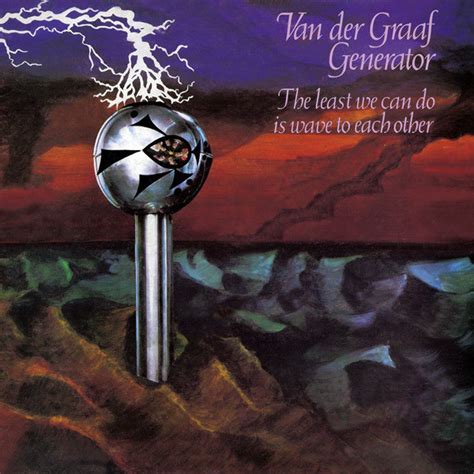
I’m proud to say that Van Der Graaf Generator’s second album was only the third LP I ever bought (the first two being AC/DC’s bluesy ‘Powerage’ and (ahem) an album by Rose Tattoo. I’d been waiting to explore VdGG for a while after hearing on a regular basis a most untypical VdGG track ‘Theme One’ as a signature tune on the Rock Show’s ‘Friday Night Connection’ segment. The same show often broadcast old BBC sessions, often somewhat incongruously in amongst the general metalfest vibe. One such session was from Van der Graaf and included a rather startling ‘After The Flood’ which introduced me to Peter Hammill’s intense, self-indulgent style, half-crooned, half-growled and backed by intricately scored but very much NOT pseudo-classical music. I can’t remember much else about that session, but on the album ‘The Least We Can Do Is Wave To Each Other’ itself I quickly migrated beyond ‘Flood’ and the VdGG anthem ‘Refugees’ to for me, infinitely more iconic tunes: ‘Darkness 11/11’, which still, I reckon has the world’s greatest single note solo (on Hugh Banton’s keyboards) and ‘White Hammer’, a gothic exploration of the Spanish Inquisition, no less, with its thrilling ‘galumphing’ coda concluded by David Jackson’s screaming saxes. Life has never been quite the same since…

camembert

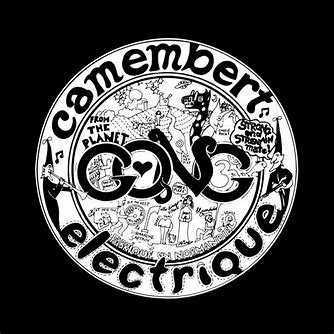
At 18, and on the point of leaving home for university, I ended up spending a couple of weeks at my grandparents in Nottinghamshire whilst my parents were away in France. I was just killing time really, but with my musical tastes warping away to the more experimental end of the prog spectrum, I was already buying vinyl in spades, and Nottingham had quite an amazing record shop (I think it may actually have been called ‘Amazing Records’) to the extent that I think I even had some sort of loyalty card there. Feeling relatively flush after a summer working on fruit farms, I took my hard earned brass down the shop and emerged with 2 pieces of vinyl: Gong’s ‘Magick Brother, Mystick Sister’ and ‘Camembert Electrique’ and a tape of Peter Hammill’s ‘Enter K’. I’d heard snippets of ‘Camembert’ at school (as detailed in my sleevenotes to one of the ‘Canterburied Sounds ‘ compilations) but the reality was even weirder than I remembered – almost 50 years on from its release it remains one of the most innovative albums there has ever been – it must have been mindblowing at the time: spacewhisper, glissando guitar and the most incredible spiky rhythms accentuated by Pip Pyle’s razorsharp drumming. In the early 90s I felt so privileged to hear the majority of this album performed by a crack Gong line-up including original performers Pip Pyle, Didier Malherbe and Daevid Allen. For many years ‘You’ took over as my fave Gong album as the perfect psychedelic funked out space jam album (!) but ‘Camembert’ is the one I always return to. Check out the alternative GAS release ‘Camembert Eclectique’, in particular ‘Big City Energy’ and ‘Hyp Hypnotise You’ for possibly even more bonkers evidence of an earlier line-up of this band…


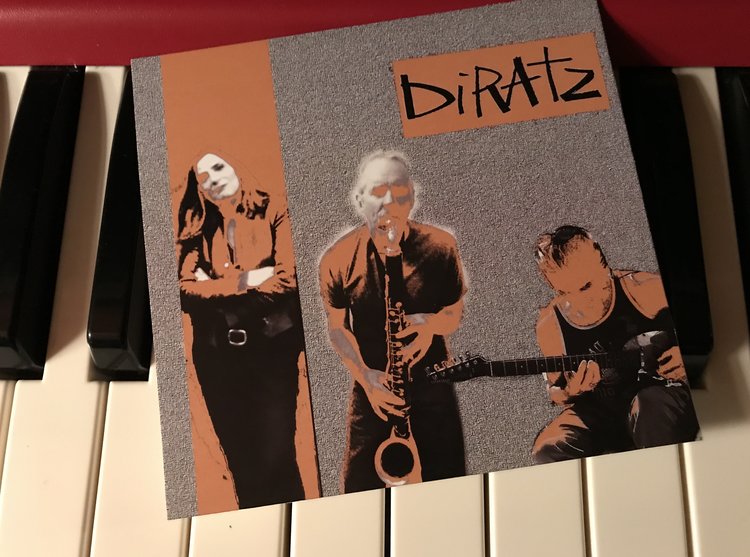
Diratz – album review

diratz 2.jpg

Back in the days of Facelift magazine in the Nineties, things got to the happy stage where review CDs (which were a new medium then) started arriving through the door at the rate of around one a week. It was a golden period for releases. During one memorable period “Missing Pieces”, “Singing The Bruise”, “Somewhere in France”, “Hadouk” “Parallel”, plus the first CD reissues of “Hoppertunity Box” and “Caravan” appeared in close succession. All of those albums are classics, other releases from time to time less so, and often the task for the reviewer is to find an angle, a hook, a ‘way in’ to a collection of music that doesn’t immediately grab you.

Then occasionally a record comes along unexpectedly which completely blows your socks off within the first few bars, and the only struggle is to try and analyse quite why it moves you so much. So it is with ‘Diratz’, a remarkable collaboration between Dave Newhouse, he of American RIO band The Muffins, guitarist Bret Hart and an extraordinary French singer called Carla Diratz. This project, recorded on alternate sides of the Atlantic, proved to be such a meeting of minds that it has been quickly followed by North American gigs with an expanded line-up, and you can see why – it just ‘works’.

diratz 3

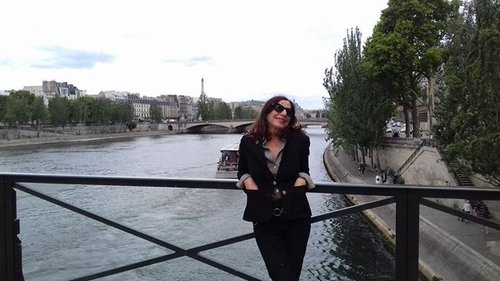
Carla Diratz’s remarkable voice, a deep, sonorous expression of raw emotion, would be statement enough in isolation. Indeed a cursory search of her previous work brings up evidence of a quite startling project called The Electric Suite (with Corentin Coupe), where her voice is backed only by bass guitar.  But this new project, recognising her impact to the extent that the project and album title bear her surname alone, benefits from musicianship to back it up which is in its own way is just as breathtaking. In truth the music on this album falls very much into one of two categories. The first is the rambling and free compositions which allow the voice to twist down somewhat experimental avenues, backed by impressionistic soundscapes – these are the collaborations attributed to her and guitarist Hart, best of which is the album closers ‘The Old Suzanne’, accompanied by clarinet and  ‘Song For Jaki’, a heartfelt tribute to Jaki Liebzeit of Can. Secondly there are the Newhouse/Diratz songs, which are much more tightly composed and melodic, whilst still maintaining that element of danger and progression. I much prefer the latter – in fact each of three of four such pieces could be described as stunning.

I’m sure I’m not alone in being immediately sold on track 6, ‘Random Nights’, the song which helped publicise the album here, where a romping off-kilter piano rhythm underpins both aching vocals and a repetitive and strident guitar call-out. The way Diratz double tracks her vocal lines early in the track in an almost primeval manner is quite Hammillesque. I was drawn next to the second track ‘A Bout De Souffle’ where Hart’s angular guitar underpins probably the most eloquent vocals on the album.  Punchy drumming from Newhouse junior (son George) and the use of multi-reed chords from father Dave are also highpoints.  Dave Newhouse’s keyboard work with the Muffins always had at its core trademark Softs Third-era keyboard cycles, and the best moments of this album provide these as the backdrop to vocals in a way which seems so completely made to match. In that respect the track ‘Bataclan’, based around the aftermath of the 2015 French nightclub bombing, geographically and emotionally close to home for the Paris-based Diratz, is the one that continues to eat into me on repeated listening. Starting off underpinned by a piano theme resonant of the start of the ‘Rivmic Melodies’ suite, Newhouse’s role switches to one of those memorable cyclical themes before spreading out to provide a lovely sustained organ sound. This track is exemplary in so many ways – principally from the beautiful plaintive solo lines from guest guitarist Mark Stanley, through to Newhouse’s accompanying keys and the heart-wrenching lyrics of Diratz. The anguish at the futility of the bloodshed is set in stark contrast against the simplicity of the accompaniment, with the guitar treatments by Hart providing a disquieting counterpoint.  This is just one example of the evocative lyrical imagery of Diratz – the inlay accompanying the CD itself could almost be a collection of poems in its own right.

diratz 1.jpg

To categorise this music is difficult and probably rather missing the point. I’ve heard mention of the aforementioned Rock in Opposition movement in some quarters, and it’s fair to say that hearing poignant English lyrics delivered in a striking foreign accent, backed by fluent, innovative and somewhat obtuse accompaniment put me in mind of the Art Bears (and no criticism there). But in truth I was reminded just as much in terms of impact of the likes of Portishead and Moloko in somewhat different musical genres in that it takes a classic jazz/blues voice and places it in such a subversive musical context that the overall effect is mesmerising. At its frequent peaks, this project is a real find – let’s hope this transatlantic collaboration finds the legs and the support to produce more of its searching music…

http://www.mannamirage.com/diratz


Gong Expresso – Decadence – album review

gong expresso album banner

The Soften the Glare album, reviewed here back in February, was practically the first thing I’d heard from ex-Gongzilla members since the mid 1990s and proved to be  a power packed trio accentuating in extremis the heavy funk vibes of that band through guitarist Bon Lozaga. And so it was something of a nice surprise to simultaneously discover the current musical whereabouts of Bon’s longtime musical partner, Hansford Rowe, in a release from a band calling themselves Gong Expresso.

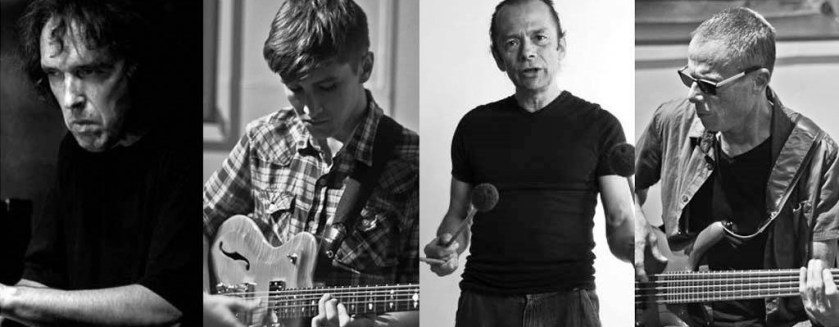
Gong Expresso turn out to be a four-piece reuniting Rowe with percussionist Benoit Moerlen and drummer Francois Causse. And if the pixie-heads who constitute your average Gong fan might feel that the use of the ‘Gong’ moniker stretches the historical link a little too far, there’s no doubt that the band’s right to use the name Gong Expresso at least is inalienable. After all the Expresso II album, back in 1977 was recorded by a core line-up of these three musicians alongside Benoit’s brother Pierre, plus Mireille Bauer. It’s also true that Pierre Moerlen, in 1977, booked all gigs for his version of Gong under the name Gong-Expresso. In fact, even back as far as 1976 the musicians who had inherited the Gong name following the departure of Allen, Smyth, Hillage, Blake et al were fielding questions about the legitimacy of using it. Didier’s own take on it back then, as revealed an interview with Aymeric Leroy in 2005 taken from his book ‘L’Ecole de Canterbury’ justifies it thus: “I thought that, should Gong no longer be about Planet Gong, we’d need to find another concept. The word ‘gong’ had another meaning – a percussion instrument. So I thought we’d make music that would be gong-esque, but on a purely musical level.” And so a whole parallel strand of music under the Gong umbrella emerged and has continued to evolve. Until Pierre Moerlen died in 2005, albums under his name continued to appear involving multiple percussionists and funky keyboard work, and even since, perhaps confusingly, a wholly separate outfit from Gong Expresso. called PMGong, continue to perform in France, rather splendidly as it turns out (here they are, performing the track ‘Expresso‘). Presumably they include members of that last Pierre Moerlen line-up.

gong expresso band banner.jpg

On hearing that the fourth member of Gong Expresso was something of a young turk (of such vintage that he could be the son or even grandson of any of the players!), I expected Gong Expresso to continue in the same heavy vein as Gongzilla. Nothing could be further from the truth: ‘Decadence’ is an album of such delicious subtlety that a greater contrast with Soften the Glare could be harder to find.  Instead we find stately tempos, gentle inflections from all instruments and a real devotion to creating a mood rather than an ostentatious display of technique.  Julien Sandiford turns out to be a jazz guitarist of exquisite touch.

The album sets the tone with the superb title track which may be the release’s highlight. The band have crafted a melody worthy of Didier Malherbe’s best lines with Hadouk. A delightful initial guitar theme is embellished with a lick here and there and strummed backdrop, before a rolling bass line, progressive chords and electric lines propel the piece forwards. There’s even a brief dual line between Sandiford and Benoit which recalls the cyclical themes of brother Pierre.

This track sets the bar high. ‘Toumani’, which you’ll find as a sampler on the Gong Expresso website, maintains the dreamy, laid-back approach, with vibraphone soloing  from Benoit Moerlen which is more Gary Burton than Gong – hints of the Burton/Swallow album ‘Hotel Hello’ here in its passive, reflective mood. This ambience is repeated in slightly cheesier style in ‘Frevo’, which swings along bossa nova style, backed by Francois Causse’s hand percussion. The trademark PMG style, repetition of a tuned percussion theme with other instruments falling into line and then deviating, is probably only really apparent on ‘Eastern Platinum’, a marginally more driving piece.

gong expresso banner.png

With Benoit Moerlen’s role in this band to provide much of the accompanying ambience – there are few solos – much of the lead work falls to Canadian guitarist Sandiford, who chooses his notes with the utmost care and precision. His calling card appears to be his restatement of melodies to add a few apposite extra notes to fill the acres of space that exist in each piece. But Rowe also takes the lead in places, notably with aquatic effects on the excellent ‘The Importance of Common Things’.

This is an album of surprising eloquence, hidden depths and overall one of delicious reflection.  It would appear the Rowe/Sandiford collaboration emerged from a trio they perform in together called HR3, which could well be my next port of call.


The Relatives & Phil Miller – Virtually

relatives front cover

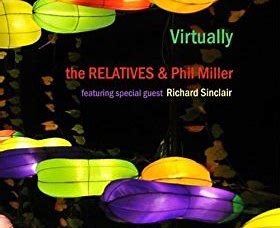
Somewhat belatedly, this review relates to an album from 2013 by a band called the Relatives. This release is of particular note because it is the last recorded output of Phil Miller who joined the band in 2010, did a series of gigs with them, and was invited to collaborate on a series of recordings which saw the light of day in 2013 as Virtually (presumably so monikered because Miller’s contributions were recorded up in London).

In fact there are other Canterbury connections here and one particularly notable surprise. You might already be familiar with the latter if you’ve heard ‘On My Mind’ through its Youtube airing, which has been linked through various Facebook groups. It features Richard Sinclair on vocals – but more on this later. Probably more notable overall is the involvement of Jack Monck, bassist with Delivery, and collaborator over the years with the likes of Geoff Leigh and Fred Frith and briefly, with Syd Barrett’s last live outfit, the ill-fated Stars. Monck shares songwriting credits with saxophonist, flautist and piano player Marc Hadley, who many of you will remember as the man penning the authoritative review of Aymeric Leroy’s ‘L’ecole de Canterbury’ on this blog a couple of months back, and also Willemjan Droog, the keyboard player who provides the original link with Phil Miller from the late Eighties. Damian Rodd completes the line-up on drums, although there are numerous other guest appearances throughout the project.

hadley.jpg

Marc Hadley

For me this is very much an album of two halves. Whilst uniformly excellent in terms of its playing standards and production throughout, much of the first part of the record stays on relatively safe ground, with a series of original jazzy or rhythm and blues tunes, the best of which is undoubtedly  the catchy  opener ‘Going Down’, where Monck takes the lead vocal as he does on 4 of the 8 tunes. Also notable is the sole track by Droog, the self-explanatory ‘Stately Waltz’ and ‘When’, which, with its multiple horn lines, at times evokes how an In Cahoots band may have sounded like with vocals!

monck.jpg

Jack Monck

But there’s a perceptible shift in mood and tempo as the band launch into track 5,  ‘Spaghetti’, a superb instrumental written by Marc Hadley. Here he shifts to flute and is central to a piece which meanders through its intricate melodies before stretching out memorably into harder passages underpinning the solos. There are elements of Short Wave here (it also reminded me of National Health’s DS Al Coda recording). Whilst Phil Miller is credited on guitar throughout the album, much of his work up until this point has been to add textures or chords to the general ambience. Here he steps up a gear to contribute several solos, starting initially in tranquillity before reverting in hotly anticipated style to his trademark tortured eloquence twice over.

droog.jpg

Willemjan Droog

Even better is ‘New Dawn’, a funked up Monck track where the author’s voice is dampened down to deliver a fine vocal line. This grooves like no other piece on ‘Virtually’, with some memorable punctuation from Hadley’s sax and Mike Brown’s trombone and highly effective snapped-off drumming from Rodd. There are some nice guitar and keyboard licks here too. The evocative lyrical imagery (‘New Dawn’ has a somewhat Orwellian feel) adds to the drive and slight disquiet of the music. This one is worth the album’s cover price alone.

In contrasting style is the final piece of the release, the aforementioned ‘On My Mind’, essentially a vehicle written for Richard Sinclair by Marc Hadley, but containing much more besides. This ballad could almost be seen as a follow-up to Pip Pyle’s wonderful ‘Seven Sisters’, another custom-built song which also suited Sinclair’s very  deliberately-delivered crooning. Unusually, Sinclair’s voice is backed here in part by vocal counter melodies in its later sections, and the voice of Angeline Morrison  is a real bonus. Add to that the lovely piano accompaniment AND the most eloquent tenor sax by Hadley and this constitutes a treat which rounds off the album in slightly unexpected style.

So, plenty to savour here. This album is probably catholic enough in approach to not suit everyone’s tastes all of the time but has more than enough fine moments and appearances by key personnel to make it an essential part of your Canterbury collection.


Virtually’ is available direct from Jack Monck at jack.monck@hotmail.com at a cost of £10. You can also buy from www.relativesrecords.com or Burning Shed.


Peter Hammill – Stoller Hall, Manchester – 25 April 2018

Peter Hammill is very definitely not a ‘Canterbury Scene’ artist, so you might wonder what a review about him is doing here. Well, please indulge me: he was one of my musical great loves around the time I started a Canterbury scene fanzine – and the Hammill/VdGG fanzine ‘Pilgrims’ was a major influence on me doing so. If you scratch hard enough you might find some links via Guy Evans’ involvement in Mother Gong, Jakko’s appearance on a Long Hello album, Hammill producing a Random Hold album (featuring Bill MacCormick). But that’s not really the point – for me, a Hammill appearance cannot pass by without some sort of comment…

It’s been a long time since I saw a Peter Hammill solo gig. A couple of triumphant Van der Graaf Generator concerts a decade or so ago, around the time that band still had their classic 4 piece line-up, was as close as it got, contrasting with a time in the Nineties when Peter Hammill tours seemed to come around every couple of years. The ageing process, serious illness and I suspect a related slowing in the creative juices, means that Peter Hammill performances are relatively few and far between these days. I almost didn’t go to the gig at the Stoller Hall, a new custom-built concert venue at the Chetham school of music, near Victoria Station in the heart of Manchester, mainly for fear of being disappointed. Hammill gigs are notoriously error-strewn, a bit of a rollercoaster and it’s always slightly amused me that many of his concerts take place at places of musical excellence (such as the Royal Northern College of Music or the Royal Festival Hall). This artist, for all of his many virtues, might struggle to get a gig with too many bands on the basis of his instrumental prowess alone, such is his often approximate mastery of piano and guitar.

Hammill’s physical appearance was something of a shock – a testament to passing years, mainly – dressed in flowing shirt and trousers, both Egyptian cotton white, he cut a ghostly, pallid figure on stage, contrasting with the jet black of grand piano and guitar, with his almost skeletal frame barely impacting on the expanse of the stage and the vastness of the auditorium above. But the voice remained remarkably strong, perhaps not quite with the range of yore, but not lacking in volume or its fabled intensity.

He rattled through a setlist of 17 songs, almost without pausing for breath – there’s less of the slightly kooky banter these days between tracks, even whilst stopping to tune his guitar, and the audience respectively kept its counsel – solo gigs in the past were always punctuated by smartass interjections from the crowd, the fanbase being, like the artist himself, a fairly eclectic, intense lot.

I’d been emailed on the day by an old schoolfriend who attended the Glasgow gig a few days previously – he mentioned 6 highlight tunes (and one which was not). Incredibly, not a single one of these was performed in Manchester, testament to a vast repertoire to draw on, and an ability to recreate them. And there is some ‘re-creation’ going on here – whilst the lyrics remain secure, aided by assorted sheets of paper alongside piano and guitar, Hammill takes liberties with his piano accompaniments, often trying out a fill here or there, deciding whether it works, and then reining things back in if they start to stray off course. On the guitar, it almost appears at times as if he’s revisited old tunes, can’t quite work out the chords he used, and then uses an approximation. At times this is jarring, elsewhere it adds to a sense of innovation. For all that, he felt more fluent on the piano than I remember, and a saving grace was the wonderful sound quality throughout.

Starting with the VdGG classic ‘My Room’, ideal for solo performance, any doubts that Hammill still ‘has it’ were quickly dispelled. The trademark raising of the shoulders as he reaches for the high notes, the alternately sweet and growled delivery, the falling away of the voice at the end of each line – these are all things to cherish. The choice of songs for me was quite inspired – a brilliant ‘Primo On the Parapet’ (a highlight from later albums); two tracks from ‘Over’, for me the apogee of his solo output, with “(On Tuesdays She Used To Do) Yoga” an evocative highlight; two fantastic renditions from the adventurous early 70s albums “Slender Threads” and “Mousetrap”; plus stuff from ‘my’ era as a listener, “Too Many of My Yesterdays” and “A Way Out”, always a mixed blessing with its stark main musical theme sometimes undermined by lyrical cliché. Whilst listening to one of the 2 K Group era tracks, ‘Happy Hour’, again subverted by those slightly out of kilter chords, I was reminded of quite how off the wall even his solo material is – complex, ever-changing themes showing the genius of the man. This was one of many tunes which lyrically referred to performances, either theatrical, circus or musical – the common theme of the night for me.

There were also three tracks (I think) from the latest album ‘From the Trees’, which sounded strong, pared down in terms of vocal range to suit the limits of Hammill’s voice and well worth further exploration. At times whilst straining at the upper end of the musical scale I wanted him to succumb to delivering notes through his wonderful, tender falsetto voice or alternatively really let rip with a scream, but he saved the latter for the final notes of Train Time to bring the concert to a chilling end, standing ovation and all.


A tribute to Mick West 1/4/1968-30/3/2018

mick funeral shot.jpg

It speaks volumes of the man and his impact on music in Hebden Bridge that I heard Mick West (aka Michael Linden West) far before I ever saw him or got to know him. In the summer of 1999, having just moved to the Nutclough, I started to hear the most marvellous live music performed from an adjacent house’s cellar. Lengthy, spiky Balkan instrumentals, played at breakneck speed by a cast of many with audibly consummate musicianship – I never got to hear them play in the flesh, nor get their name, but it didn’t surprise me to find out later that they were one of the many outfits Mick was playing with. Mick must have been involved in scores of bands over the years but most of the onesI got to hear him with seemed to have slightly bonkers names: Beastfish, Abrasive Pheasantsthe Electric Brains – all suggesting punk sensibilities to go with his effortless command of a range of instruments and styles.

I got to know Mick at the weekly Open Mic Nights at the Stubbings in the mid-2000s , a glowering, moody presence (or at least that’s how he liked to portray himself), who combined an off-the-wall choice of songs with superb delivery and a wicked sense of humour. I discovered that in amongst his encyclopaedic musical interests we both had a compulsive obsession for all things to do with the Canterbury music scene, Gong and Van der Graaf Generator. So much so, that although we never exchanged many words at the time, on more than one occasion I’d be completely disarmed by a track he plucked out of nowhere to perform, which would have meant little to anyone present except me. On one occasion it was Daevid Allen’s ‘I Am A Freud’ (original here), a satire on psychiatry, transposed from its original fairground organ to Mick’s acoustic guitar and containing the memorable line ‘It’s rather naughty to be forty and still not sold’; the other Peter Hammill’s ‘Time For A Change’, (original here) where Mick’s falsetto acted out the role of a headmaster asking a little boy what he wanted to be when he ‘grew up’. I can still remember the shivers going down my spine.


DSC04926.JPG

Beastfish, 2017 – Mick West is far right

Mick performed at mine and Georgina’s engagement do in 2006 – making light of a haphazardly arranged musical evening to croon away over a dodgy PA with his usual blend of soulful singing and crazed tunes, with his trademark cover of ‘Poisoning the Pigeons in the Park’ taking centrestage. Returning to the tapes of these earlier this week, I realised he’d also performed equally inappropriate material including the theme tune to Prisoner Cell Block H, plus another Tom Lehrer tune extolling the perils of marriage! They brought the house down… He later performed a duet (on violin) with old friend and collaborator Paul Weatherhead. In what seems now doubly poignant, another performer that night was Josh Phillips, a good friend of Mick (they recorded music together as the Tropes), who tragically died, also way too young, a couple of weeks later.

Lots of things make me smile when I think about Mick – Saz’s ‘glam’ party on the Nutclough in 2005 when half of the Hebden menfolk turned up in drag – I have an indelible memory of Mick fast asleep in a chair in the early hours, his ‘skirt’ ridden up around his knees. Or when he recounted the tale of confiding to a fellow Hebdenite about being worried that he displayed many of traits of Asperger’s syndrome, only to be approached the next week by a friend concerned that he’d been given an Asbo, the Hebden rumourmill having gone into overdrive. His self-appointed ‘office’ at Marcos cafe where he’d enjoy a morning (or afternoon) coffee. Or at the height of the Happy Slapping fad – when tagged by a few strangers in Hebden, Mick, being blissfully unaware of the meme, had taken it at face value and slapped back even harder!

photo 2017 by Pam West

mick west beastfish hpinkMick was an understated musical genius – there will be many musical projects I simply didn’t hear about from his many years as a performer – I saw him mostly as keyboard player with the Electric Brains, performing in a variety of guises with the Ukrainians  (for whom he is credited with playing mandolin, guitar, piano, trumpet, duda, oud, cello and euphonium!) and heard more recently that he’d worked with Damo Suzuki from Can, and allegedly turned down a job as bassist with New Model Army. When I did finally did get to see him again it was with the wonderful Beastfish at Kozfest down in Devon, reviewed here. In fact he was due to play with them again over Easter in Glastonbury. He was so versatile and creative.

I didn’t get to know Mick as much as I’d have liked to – other people I know had that real privilege. There were always plans to swap more tapes, books, and go to gigs together that due to my own disorganisation didn’t materialise. But we’d chatted recently and were equally excited about him playing at Kozfest again this year. He had a clever, sardonic wit that showed not just in conversation or when performing but also in his postings on a variety of forums and social media outlets under a series of pseudonyms – showing a wry, generous, self-deprecating humour that was very much the antithesis of today’s keyboard warrior. As has been said elsewhere, you’d struggle to find anyone with a bad word to say about him. Mick, you will be missed in so many ways…

mick west photo.jpg

Mick in Abrasive Pheasant mode

posted by Phil Howitt, April 2018

‘L’École de Canterbury’ by Aymeric Leroy – a review by Marc Hadley

Note from Phil Howitt: One of the reasons that the Facelift blog has gone a bit quiet since Christmas is that I’ve been in the privileged position of helping to fine-tune the translation of Aymeric Leroy’s definitive Canterbury scene history ‘L’école de Canterbury’. This magnificent 700-page plus book has been out in French since 2016 – there are advanced plans now to publish an English language version in the not too distant future.
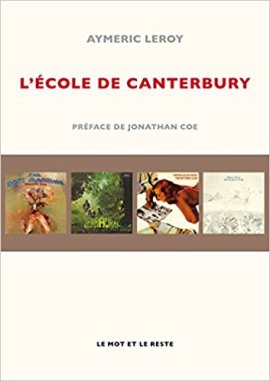
L'ecole cover

In the meantime, I’ve had some really nice correspondence with Marc Hadley, who offers his own lengthy thoughts on the French version of the book below. Marc will be familiar to many blog readers as one of the last musicians to work with Phil Miller (with the Relatives) but is also an esteemed ethnomusicologist!

Marc would welcome feedback (via the blog) on his review, the book and the themes discussed in both.

All images reproduced here are taken from ‘L’école de Canterbury’ with kind permission

‘L’école de Canterbury’ is currently available to buy here


L’École de Canterbury -Aymeric Leroy  -Review by Marc Hadley


Clarification: the review text is the French edition, but the author plans to publish an English version soon. I might anticipate that the English edition emerges with revisions and tweaks.

This eagerly-awaited book- the first all-embracing account of what some people call “The Canterbury Scene”- is highly ambitious in its scope. Most works of this type focus on a single band or artist, and document or comment on their career trajectory and legacy. “L’École de Canterbury” presents the history of an entire subset of English 1960’s/70’s “Art Music” and follows a “musical tree” from its roots (Daevid Allen, Robert Wyatt, The Wilde Flowers) and original trunk (the prototype Soft Machine manifested by Allen, Wyatt, Ayers and Ratledge) to its evolving system of stems, branches and interweaving twigs and leaves. It’s a weighty volume and represents the culmination of years of research; a secure work of history founded on authentic and cite-able sources; and can credibly claim to be a work of Musicology into the bargain.
wyatt

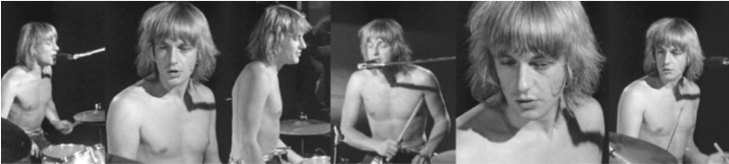
Robert Wyatt

Aymeric Leroy’s oeuvre is subtly provocative from the title and the jacket artwork onward. He has chosen to define the entity known as “The Canterbury Scene” by using the word “School”, as in a ‘school of thought’, a creative cluster such as The Bloomsbury Group and The Pre-Raphaelites. Historically, it has been quite normal within Musicology to highlight certain traditions or sub-traditions in places or times where key individuals formed a creative hub whose influence then spread and evolved via its disciples. However, Leroy is possibly the first author to assert such a status for the music and musicians who have until now been informally categorised as “The Canterbury Scene.” Some of those involved in it have denied there actually was a “scene” at all. Other music ‘consumers’ and critics have commented that the ‘Canterbury’ label is arbitrary and lazy (coined by the Music press) as the geographical connection of the principal actors to the Cathedral City is marginal, and the notion of a clear stylistic musical kinship between bands like Caravan, Gong and Soft Machine is impossible to sustain.
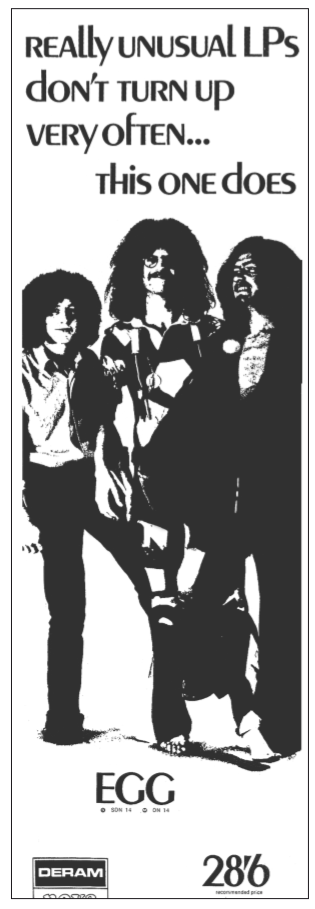
egg.png

The controversy is sustained by the book’s jacket artwork: a panel of four album covers. Leroy is running a set of flags up the pole atop his castle keep. He asserts a catalogue of works that constitute the artistic cannon of Canterbury (a subject over which debate still rages on Canterburian internet chat forums.) Furthermore, the selection implies that Soft Machine’s “Volume Two”, Caravan’s “if I could do it all over again”, Hatfield & The North’s “Rotter’s Club” and Robert Wyatt’s “Rock Bottom” are the School’s finest achievements.


I happen to largely agree with Leroy’s aesthetic choices; and I agree that all the material (personal biographies, interviews, commentaries, critiques, studio and radio broadcasts, song lyrics) and the legacy of songs and pieces that withstand the test of time generally supports his thesis that there exists this distinct musical School at work in the UK’s “counterculture” between 1960-82. Furthermore, some individuals and time periods within the development of The School were particularly significant. We learn that places like Cambridge, France, The Netherlands, Hertfordshire and London made their formative contributions to the flowering of the movement just as potently as Canterbury: but the cathedral city has become a “brand” that we’re stuck with.


Leroy clearly appreciates and explicitly articulates the social construction of the Canterbury School in justifying a corporate identity for these musicians and musical auteurs. Particularly interesting is the light shone on apparently disparate stories; crucially, we see that the connections between bands like Gong, Matching Mole, Delivery and Hatfield & The North were not exclusively musical, but arose via friendships- the musicians we are reading about so often preferred to play with or recruit people they knew. Thanks to the insights provided by “L’Ecole de Canterbury”, I begin to understand why as a teenager I was instinctively following Gong, The Hatfields, Caravan, Kevin Ayers, The Soft Machine… and why these acts were often sharing the billing at the gigs I attended.


Trying to draw concrete links between the different musical works purely via assertion of musical similarities (which would have to be backed up by complex analysis and score extracts) would be a much less successful enterprise; yes, there are a number of common musical traits that one might try to list and demonstrate, but beyond citing “use of distortion on organ and bass guitar”…” complex time signatures”…”use of the voice as an instrument” and so on, the arguments can become too tenuous: many of these  simply can’t be inferred across the whole diverse Canterbury stage, and while some are demonstrably present there, they are also present within Prog Rock and early British ‘Fusion jazz’. A future discussion theme must surely be, “which of the commonly-cited musical traits are indisputably unique to “Canterbury”?


This oeuvre will be the primary source for historical record and critical evaluations of the music in the decades to come. Perhaps its main achievement is to have provided a reliable set of musical biographies of the bands and artists set within a well-researched chronology. Those who love this music must offer Mr Leroy a vote of thanks- he has been the first to accomplish what would have been a daunting task for any musical author or musicologist.


It is of course somewhat frustrating that the Canterbury story has had to wait so long to be told, and rather revealing that the author (who has in the past been the main archivist of the genre via his ‘Calyx’ website) is not English- perhaps the quirkiness, humour, inventiveness, originality, and self-deprecating nature of the music are things that are more appreciated by cultural outsiders. It’s true that Canterbury music was sustained commercially by international interest- if it had depended on domestic record sales and gig fees alone, the Canterbury Scholars would have starved to death.
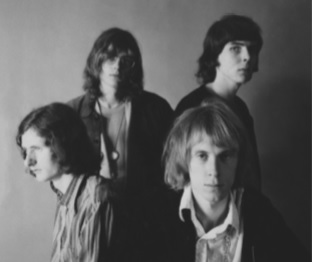
caravan

Caravan

A propos of the commercial aspect of “The School”, it is highly relevant from a historical viewpoint that we learn more about the interplay between Art and Enterprise, as economic and commercial factors undeniably impact upon the music as constructed not only by the authors and players but also by the entrepreneurs involved in its production and marketing. Leroy does for the first time provide us with an overview of these relationships- for example, the relationship between Richard Branson’s Virgin Records and artists such as Gong, Robert Wyatt and Hatfield and the North. In my own research I have noted that it is quite difficult to retrieve sales data for the records made by the artists and bands;  it would be most interesting to see an appendix included within future editions showing the sales volumes for particular releases, illustrating what numbers of albums were sold during the seminal development period (1966- 1980?) and how the listenership subsequently expanded (or not) following the advent of the CD format. Anecdotal: during a telephone conversation I had with Richard Sinclair in 2013, he told me that “The Land of Grey & Pink” had since its release nearly 40 years ago sold 3 million copies- but yet he personally had never gained significant financial benefit.


In this edition Leroy addresses a readership who are versed in the jargon of the (French) Rock and Jazz ‘scene.’ But of course, we should probably assume for the future that regardless of in which language the majority of readers engage with this book, it will tend to attract the kind of people who know what a ‘Jam’ or a ‘quarter inch jack’ is. In general, his account is valuably enhanced by inclusion of reviews published as the works were being performed and recordings commercially released. There is a recurring pattern; mostly, the Melody Maker’s Steve Lake is quoted as a supportive voice, and Ian Macdonald of the NME frequently sounds a dismissive note [this is a pity- I have come across some well-written and authoritative reviews of ‘Canterbury’ recordings by Jazz critics.] Alongside these are more often than not a digest of the main French rock critics too.
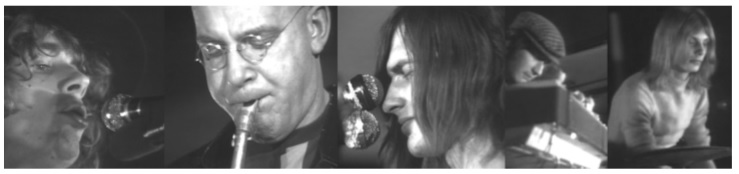
whole world

Kevin Ayers and the Whole World

A degree of ‘Franco-centricity’ lives in the centrepiece of Leroy’s chronicle- the portion of the 1974 chapter covering Robert Wyatt’s “Rock Bottom”. A certain intensity and engagement with the subject in the writing here that tells us that for him, Wyatt is the most significant player in the whole saga, and that Rock Bottom is “one of the most profoundly original works of its time.” So, he goes to some trouble to translate English phrases such “to hit rock bottom”, “the last straw” or “the straw that broke the camel’s back” into their French equivalents.


Thanks to this commentary, I’m struck by the textual aspect of the album, whose lyrics draw upon the uniquely English weirdness articulated by Lewis Carroll and Edward Lear. Words are used randomly, chosen as much for their sound as anything else- but the ‘nonsense’ of words or phrases somehow conveys new or alternative meanings through odd juxtapositions. Wyatt is drawing on his experience of vocal improvisation and walking a path first trodden by American “Beat Poets” (one thinks of Ginsberg, or Kerouac’s evocations of improvisatory Jazz poetry,) but also on the European Art experimentations of Dada and Surrealism. The words respond to or feed the unsettlingly odd musical atmospheres of the album. The Canterburian musicians who accompany Wyatt are well-versed in sympathetic improvisation, thus their contributions all reinforce the vision and the musical achievement.


The synergy between words and music heard in ‘Rock Bottom’ is quite exceptional within the “Canterbury Cannon. Leroy rightly highlights the contributions of Alfreda Benge; this is right, but commentators could take this further. There is a predominance of male voices and, dare I say it, a very “male” form of music-making in this genre, but Alfie brings something into the album mix here which makes it stand out: her background as a visual artist has a potency, but more simply, she brings an intuitive femininity into the music. Another rare example of this introduction of “otherness” into the soundscape is Dave Stewart’s use of the Northettes in his arrangements for both Hatfield and the North albums. And as a request posed to future scholars of this field, might I ask for more female voices to be added to the pool of recollections that are used to colour in the personal and social context for the music and those who were involved in it?


However, as someone of dual heritage struggling with erudite vocabulary and sentence constructions on almost every page as I read through the work, I found myself addressing an issue that has long puzzled me: how did the idiosyncrasies of English culture and language as manifested by “Canterbury” even cross The Channel?
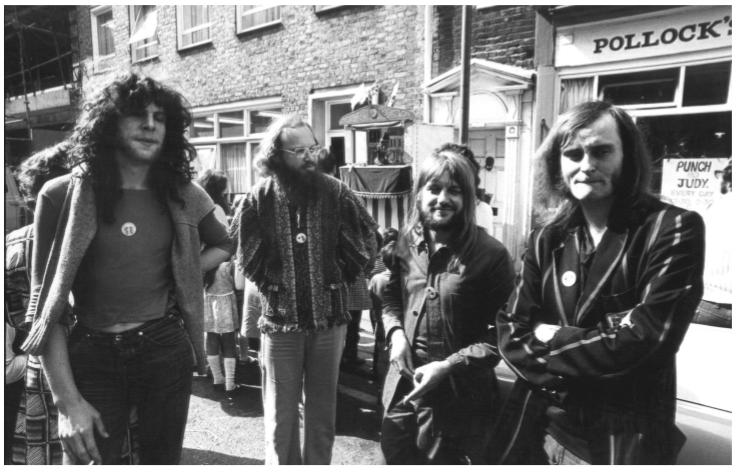
matching mole.png

Matching Mole

Take the case of Leroy’s detailed commentary on Hatfield & the North’s second album… the whole idea of “The Rotter’s Club” is peculiarly rooted in certain British educational cultures (‘Public School’, or ‘Grammar School’ as beautifully evoked by Jonathan Coe’s novel of the same name) and there can be no exact French equivalent. It takes a rather neat exposition by Pip Pyle (in a few sentences drawn from an interview) to explain the concept in French (or indeed, a form that any non- ‘Anglo’ could understand.) However, when we reach Leroy’s description of the introduction to Dave Stewart’s “Lumps” (again, the relationship between ‘lumps’ and ‘mumps’ necessitates a skilful linguistic autopsy) we find a familiar simile deployed: “The first few seconds… are the musical equivalent of an elephant in a china shop”(un magazin de porcelaine). I got his meaning immediately- here is one of many colloquialisms that English and French share across the apparent geographical and historical divides: the minor difference being that china shop destructions in Britain are usually committed by bulls.


And if I may continue to play the French riff (which will probably be in 11/8 time using a Lydian augmented scale) I would highlight another overlooked aspect of the Canterburian heritage that is authoritatively covered in this book: the French role in the development of what is usually considered quintessentially English music. We learn of the early Soft Machine expeditions to the Cote D’Azur and other touring and broadcast opportunities within France- the quartet got their first taste of fame over the Channel, at a point when they were struggling to get a paid gig in a pub in their homeland. UK immigration officials changed History by refusing to let the (Australian) Allen back into Dover, unwittingly instigating future outbreaks of Gong-ism throughout the Universities of The British Isles, and the induction of a number of significant French musicians (Malherbe, Moerlen, Bauer etc) into the Orchestre Invisible De Thibet. Many of us feasted on Camembert Electrique, and in the 21st century we discovered a wealth of French TV recordings of Hatfield and The North, Caravan and Matching Mole that still survive- without them and You-Tube, there would be scant video record of these landmark artists.

Another theme that would form an interesting future discussion topic could be that that “Canterbury” was the only English Rock/crossover music genre in which home-grown musicians mingled with European players (although clearly in other genres there was and is a clear mingling of Brits with Americans.) At the same time, I find myself writing about this sub-genre of British ‘popular music’ at a time when issues of the UK’s connection or disconnection with


Europe- and, behind that, issues of identities and autonomy with the UK’s constituent nationalities- have become a very live and bitterly-contested arena. In this context, there are voices who assert markers of “Englishness” or “otherness” without themselves having a clear or coherent notion of what “English” means either historically or culturally. I might therefore urge my fellow-citizens to take more of an interest in The Canterbury Scene than they have previously, for here may lie an art-form that is, alongside some of its “Prog-Rock” cousins, unusually and very particularly ‘English.’ Or is it?
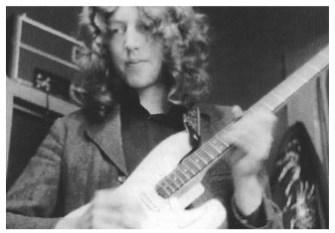
hillage


Steve Hillage

I think there is certainly a problem that the English themselves need to address in the course of time: why hasn’t this chronicle been attempted by any native journalist, scholar or musician? Might it be because, for various reasons, there would have been no money in it… a perception that such a work wouldn’t attract a wide enough readership? And if not, why not? The Island race have missed a trick here…in any study of an “Arts & Humanities” topic, there are assets that an ‘outsider’ perspective brings to the table, but there are also insights that are best supplied by ‘insiders.’ Sure, Leroy has tried hard to address this by providing a wealth of interview material with the main actors, but I think when a writer is offering critical assessments, an insider perspective really helps.


From an insider musical and cultural perspective, there are some aspects of this creative school that could have been covered in more depth. Leroy does bring a lot of detail about the British Jazz scene of the 1960’s and 70’s into the narrative– inevitable, given that so many of the musicians involved in “The Canterbury Scene” were recruited from the ranks of Britain’s brightest and best jazz players.
5

We should also remember that at least two British Jazz musicians– John McLaughlin and Dave Holland-  played a central role in the US Jazz fusion movement, and influenced a particular set of emerging UK guitarists and electric bassists. Allen, Wyatt, Elton Dean and others were immensely inspired by the “free” periods of John Coltrane, Ornette Coleman and Albert Ayler. Phil Miller’s inspiration for “Underdubs” was the intricate and complex melodic invention of Charlie Parker themes like ‘Donna Lee.


There was a strong and demonstrable influence on these players (and on the musical ‘authors’ such as Allen, Wyatt, Ratledge, Richard Sinclair, Phil Miller, Pip Pyle) from American Jazz. Some names are mentioned- obviously Miles Davis, for example. But I know that Pyle was greatly inspired by Tony Williams…that Miles albums like “In a silent way” and “Bitches’ Brew”, and others by Chick Corea or Herbie Hancock can be heard reflected in moods, grooves and textures in passages from “Third”, “Matching Mole”, “Hatfield and the North.” To be fair, in one of the later chapters journalist Steve Lake is quoted pointing out the crucial influence of Tony Williams’ “Lifetime” and other seminal US jazz figures- but here, Leroy is relying on prominent Music critics, not his own knowledge of Jazz.


At the same time, there was an equally important strand of ‘Canterbury’ drawing on “Classical” sources and Art Music of the 20th century. The influence of Stravinsky looms large if we listen, but also read first-hand accounts of Wyatt and Pyle’s youthful listening (in my conversations with Phil Miller, he cited his deep interest in Bartok and Bach), but there are only a few references to Stravinsky et al in Leroy’s commentary. This can be forgiven if we consider that much has already been written on the general subject of UK “Prog Rock” and its use of classical models of deep structure, arrangements and instrumentation- for example, “Rocking The Classics” by Edward Macan details such appropriations by Genesis and Yes, but also cites Egg and Dave Stewart.


Richard Sinclair was a cathedral chorister, and Mike Ratledge was an organ scholar- but the subliminal influences of world-renowned British choral and organ music traditions are not discussed, even though many commentators have felt a certain ecclesiastical flavour in “Canterburian” music (however, those distinctly Baroque inflexions also occur throughout UK Prog Rock.) Via the music of Egg, Mont Campbell (who was himself studying formal composition and was the grandson of British composer Martin Shaw) was something of a mentor to Dave Stewart, whose writing and arrangements brought a wealth of complex ideas into the early 1970’s sound stage and of course into the Canterbury canon via Hatfield & the North and National Health. It is worth noting that Martin Shaw had an involvement in the restoration of Purcell’s repertoire to public performance in the early 20th century and its renewed popularity- and was also a professional church organist.

My own instinct as a musicologist is to compare certain miniature choral interludes within Hatfield & The North’s pieces with the lyricism of Vaughan-Williams’ “On Wenlock Edge”- suffused as that work is by a Ravel-inspired modal harmonic texture that we now characterise also as “Jazzy.”

Gonggong.png
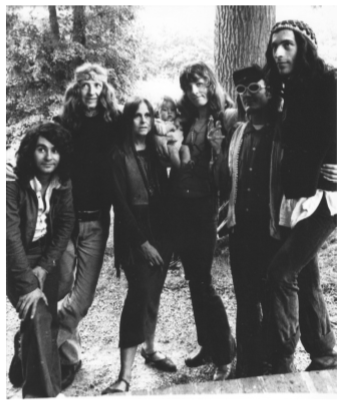
If I have any other complaints these might include a few sins of omission in placing some of the music and lyrical material within a broader cultural context of the UK that I remember growing up in (that being the period during which most of the work was released.)  This placing of a musical trajectory within contemporary social and political contexts is accomplished particularly well in “Out-Bloody-Rageous”, Graham Bennet’s 2005 biography of The Soft Machine. I would have liked more commentary on the correspondences to the acid surrealism of Terry Gilliam and various references via lyrics and song titles to Monty Python sketches…not to mention the kaleidoscope of other icons or objects of scorn referenced within the Joycean stream of consciousness that is Pip Pyle’s  “Fitter Stoke has a bath.”


There is a lack of discussion of the nurturing role of the major British poet and novelist Robert Graves,  whose home in Deya, Majorca, played an important role in these Canterbury Tales- early on, when the young Robert Ellidge stayed there (Wyatt’s parents were personal friends)…and where Daevid Allen also formed a part of that unconventional Balearic “salon”…in that Mediterranean setting, we can well surmise that Allen and Graves would have shared enthusiastic dialogue on the subject of pagan mythologies, Gods and specially Goddesses. Deya was where Allen retreated when “Gong went wrong”, and spawned his beautiful but melancholy solo album,”Good Morning.” And finally, after the Hatfield & the North split in 1975, Richard Sinclair went to Daevid’s place in Deya to hide and recuperate.


The events and developments described are covered across a time period of almost 20 years. The assembly of all the material must have posed a formidable task. Leroy chooses to organise it in a chronological way; this is perfectly logical and provides the reader with a narrative to follow. This is such a wide-ranging and ambitious project in both concept and execution that any further complaint seems churlish- HOWEVER!- the book as a work of reference is somewhat “clunky”. There isn’t a thematic overview or a way of easily browsing the content via “categorical” headings- rather, the chapters simply cover the events of the years onward from 1960. There is no easy way to view what each chapter deals with, other than refer to the indexes at the end of the book (Bands, Musicians and Albums are indexed, by name.)


This musical commentary and collective biography is the beginning of a process of evaluation of Canterbury Music. There are a lot of themes still to be examined, in formats that have a much more open architecture and adopt more lateral terms of reference than the work presented here by Mr Leroy. That said, we cannot take him to task for omissions: the book as published runs to over 700 pages with appendices. Had Aymeric cast his net any wider, we would be dealing with a huge two-volume tome.  Unquestionably, thanks to his dogged research, meticulous archiving and sheer hard work and persistence (knowing full well that writing a book on a subject like this cannot possibly generate an appropriate financial reward for the amount of time involved) the foundations of future appreciation and scholarship are now in place. Bravo, Aymeric- formidable!

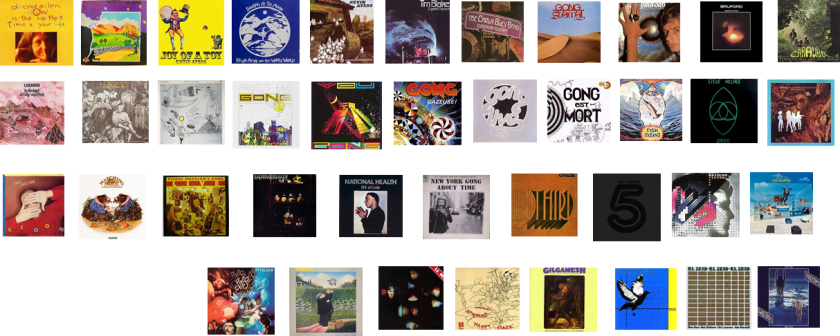
 

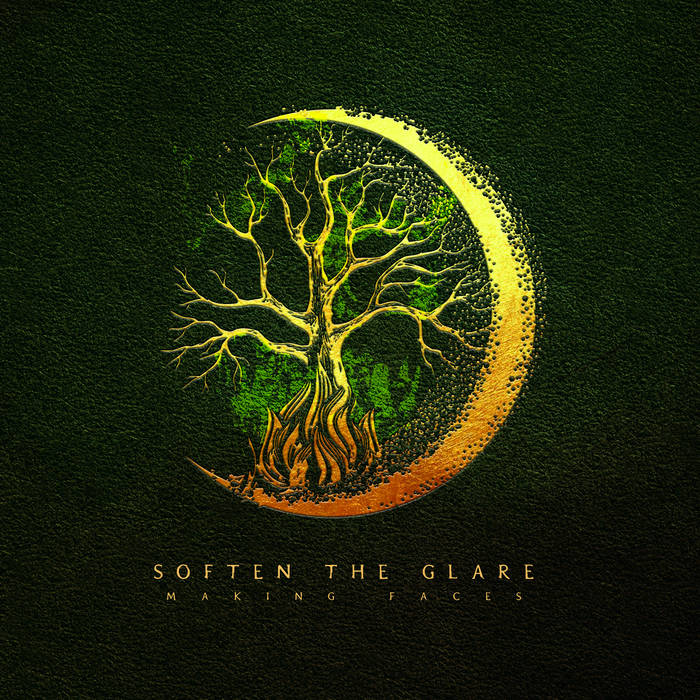
Soften the Glare (featuring Bon Lozaga) – ‘Making Faces’

One of the real perks of running Facelift Magazine back in the Nineties was having carte blanche to follow the paths of various bands and their musicians and often ending up somewhere entirely unexpected. Judging by social media posts in today’s fangroups, a decent percentage of Canterbury purists might well have been appalled by this divergence as the fanzine consequently gave column inches to the free jazz noodlings of the likes of Keith Tippett’s Mujician or the ambient/techno wigouts of the Orb. Really for me it was mainly taking the opportunity to appropriate some very fine music into the magazine whilst sharing the joy of following those links.


soften the glare.jpg

Somewhere along this route, I was privileged enough to get on the mailing list of LoLo records, a label set up by Bon Lozaga and Jim Loretangeli over in the States. As any Gong student will know, after Daevid Allen left the mother ship in 1975, the leadership, personnel and ultimately direction of the Gong band metamorphosed through various instrumental phases via Steve Hillage and Didier Malherbe’s stewardship, before ending up as a ‘Strasbourgeois’ orgy of tuned percussion led by Pierre Moerlen, the last one standing from the ‘Trilogy’ line-ups. The Pierre Moerlen strand continued until around 1981, adding his name as a prefix to the Gong name and under this monicker he continued to release sporadic albums over the next couple of decades until his untimely death in 2004.

Pierre Moerlen’s accomplices during this period varied, but certain key personnel kept popping up: principally bassist Hansford Rowe, but also brother Benoit (also on tuned percussion) and Mireille Bauer.  Allan Holdsworth too added his signature soloing, not least on ‘Expresso’ from ‘Gazeuse’ and ‘Soli’ from ‘Expresso II’. With Mike Oldfield and the Stones’ Mick Taylor also cropping up on PMG albums, one could perhaps be excused in not seeing beyond the guitar of these stellar turns. So it was probably not until a brief flurry of albums on the LoLo label between 1993 and 1996 that I began to fully appreciate the work of Lozaga, who in terms of Gong appeared as early as ‘Expresso II’ but also appears as an integral part of ‘Live’, ‘Time is the Key’ and ‘Leave It Open’, primarily on rhythm guitar.

If you’ve come across any of the LoLo records, they’re most likely to be the ones which came out under the name Gongzilla, in particular ‘Suffer’ and ‘Thrive’. Both were percussive-heavy, heroically guitar-riffed and very fine indeed, reuniting the likes of Lozaga, Rowe, Holdsworth, and Benoit Moerlen. For me, however, I probably spent even more time listening to the two ‘solo’ Bon albums ‘Full Circle – Coming Home’ and ‘To the Bone’ – two highly polished guitar trio albums (with Rowe and drummer Vic Stevens)  showing subtlety and expression alongside the expected driving rhythms. Both served to show what a very fine composer and soloist Lozaga is. I remember noting at the time in Facelift 16 that often Lozaga “takes Allan Holdsworth’s style, slows it down and manufactures it into something (even) more eloquent” – bold words indeed in retrospect! He also had an equal hand in the much more reflective ‘Project Lo’ (with label co-founder Jim Loretangeli) – an album which also never strayed too far from the CD player in around 1994.

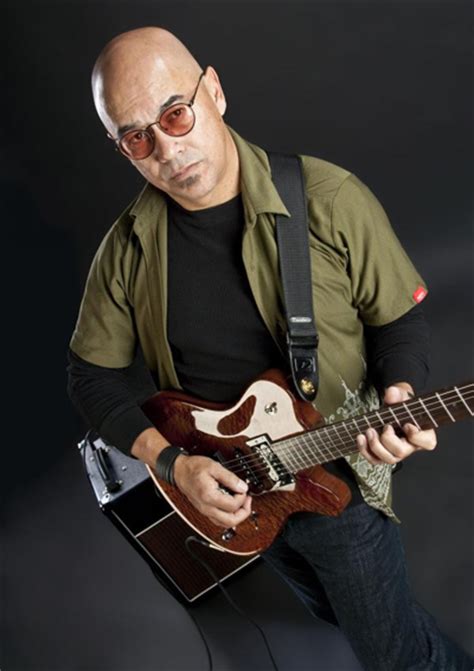
bon lozaga                     Bon Lozaga

And so a gap for me (in so many ways) through the Noughties, until, picking up on some old threads, or more likely revisiting those 2 Bon albums, I came across and sourced a third (or possibly fourth) solo album ‘Traces of Chaos’ in early 2017 (it had been released in 2016). This album possibly even trumped the other two, from the superb Hendrix-inspired pastiche “Gypsy King” (featuring credible Hendrixesque sounds, sampled spoken word recordings and a most unexpected flute solo outro), to the Mahavishnu cover ‘Can’t Stand the Funk’, to many sublime originals, most notably ‘Say What You Mean’, with its utterly beautiful melody closing the album out in a stately manner. However, nestled in amongst what is essentially an album which is easy on the ears (in a positive way) are a couple of almost incongruously brutal numbers called ‘Controlled Chaos’ and ‘Schoulars Bend’. Both of these took some of the thunderous drive of Gongzilla and metalled it out even more, in a high-powered trio format incorporating bassist Ryan Martinie and drummer Mitch Hull.

Which brings us to Soften the Glare. ‘Controlled Chaos’ in particular turns out to have been a spoiler for ‘Making Faces’, the debut album by the band, On the face of it Soften the Glare could be seen as being predominantly a vehicle for the rather talented Martinie – it’s him doing the press interviews, stripping down to a pair of shorts for most of a burgeoning video archive, and generally strutting his stuff in both sonically and visually. Whilst it’s true that Lozaga definitely solos for the band less than for albums under his own name, that shouldn’t belittle his impact.  The band’s calling card is the rolling out of his consistently filthy riffs, delivered nonetheless in a pristine manner which should not be a surprise to anyone who heard the superbly production values of the Gongzilla albums.

stg trio pic.jpgTrue, it’s Martinie’s hammerblow bass which provides the intros and driving forces to 2 of the showpieces of the album ‘Mission Possible’ and ‘What Chandra Sees’, but elsewhere there are some quite ridiculously complex compositions – ‘Turn Around’ or ‘March of the Cephalopods’, in particular. The latter is videoed here and is mighty impressive, grin-inducing in its sheer bloody-mindedness and might win you over straight away, but if not, head for ‘Segue’. ‘Segue’ appears to be a cover of sorts of ‘Into The Sun’, from Bon’s first solo album ‘Full Circle – Coming Home’ but if you are expecting the beautiful central guitar melody, one of that album’s highlights, prepare to see it obliterated by an equally memorable but quite unseemly riff. This shows the band’s other side – gorgeous lush sounds, subtle moments, just waiting to be ripped apart by those killer guitar chords. Bon even pulls out one of his meticulously crafted solos here.
I’m still working through this album and appreciating its many virtues – the funked down and discordant rhythms of ‘Happy Weird’; ‘or Conscious  Sense of the Present’, with tuned percussion effects – this should probably have been given the name of the next track ‘All Mixed Up’ as it jumps through a variety of different grooves, including some quite cheese-curling Casiotone melodies. But on the whole this album is a tremendous, powerpacked romp which I’m happy to say was my first purchase of 2018. I hope the rest of the year is as much fun…

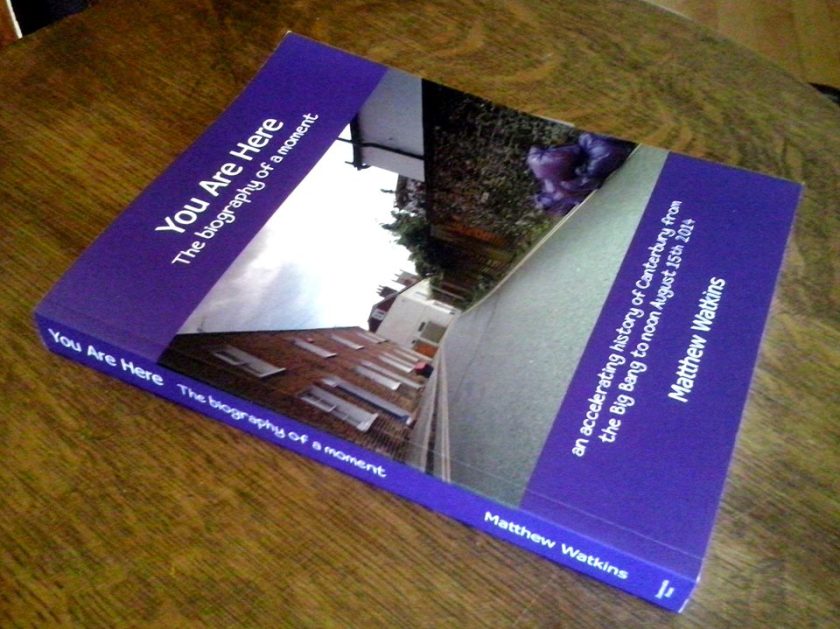
You are Here – an accelerating history of Canterbury… by Matthew Watkins

I got hold of this remarkable book at the Canterbury sound event back in October (as well as meeting its author, Matt Watkins). Having finally had chance to sit down and read through ‘You Are Here’ I should say that it’s every bit as mind-blowing and informative as I had hoped.

you are here 2.jpg

The premise of the book is both unique and bizarre but at the same time guaranteed to draw in any regular readers of this blog. Matt Watkins is, as readers should already know, a champion of Canterbury scene music, as evidenced through monthly podcasts Canterbury sans Frontieres and Canterbury Soundwaves. I also got the impression at the Canterbury Sound event, when he (reluctantly) delivered his talk at the end of the day regarding the development of an interactive ‘Canterbury scene’ Google Map, that he could well be the glue which binds together a modern-day Canterbury music scene within the city. But even that doesn’t really tell the whole story – he is at the same time both a doctor in mathematics and simultaneously immersed in counter-culture throughout the city (and I expect, beyond). He somehow manages to blend the two  – for example whilst searching on Youtube late one night for a Lapis Lazuli live performance of their wonderful opus ‘Alien’ online a month or so ago, I happened across a most unexpected 30 minute presentation of Matt delivering a talk, in a club, about, ermm…. aliens – this started from the point of view of examining historical media perceptions of aliens right and continued at some pace through to alternative perceptions of reality, Terence McKenna et al (at which point I beat a retreat to bed, my mind fried).

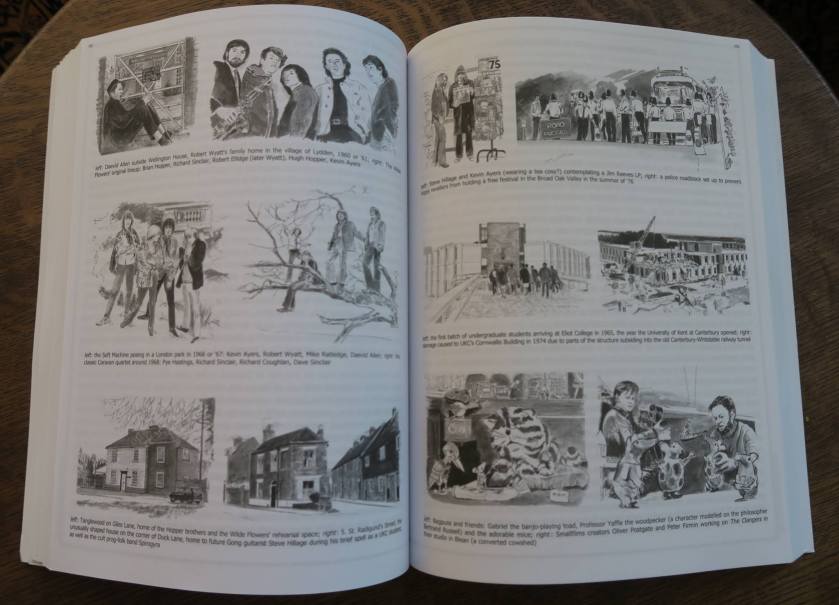
Anyway, I digress. ‘You are Here’ is essentially a study of Canterbury from the year dot to a specified date and time in August 2014. True to his mathematical roots, Matt constructs a perfect spiral timeline (the book’s byline is  ‘an accelerating history’), with segments devoted to each time frame varying from two-page spreads down to graphic-novel-type panels, several per page. Initially this means that the timeframes are large (the first being 14 billion to 11 billion BC), but then incrementally shrink (e.g. 1109 to 1292 in medieval times, 1867 – 1897 in the 19th century), to segments of hours, then minutes, then seconds as the book reaches its rather frenzied conclusion.

you are here.jpg

What this means for the reader is that what starts out as essentially a superb historical document from the Roman era forward, setting out the premise for Canterbury being a totally critical centrepoint for religious and political machinations within England, inevitably becomes something else, as time ‘speeds up’ . From a purely ‘sceneist’ point of view, the segment of time devoted to seminal Canterbury musical activity, let’s say between 1960 and 1972, is condensed to a mere 3 pages. The accelerating nature of the timeframes means that roughly half of the book is devoted to Canterbury in the new millennium, which by extension means that it’s an autobiographical account of life in the city. Matt’s own personal interests and perspectives become relevant here. There’s a fair amount of commentary, or at least noting, of counter-culture,  streetlife, local politics, corporate machinations, and their impact on the local environment, alongside the prevailing themes of history and religion, and in that regard the latter half of the book put me in mind of CJ Stone’s excellent ‘Fierce Dancing’ book, another example of where an account of (counter) culture was to some extent overtaken by the process itself. For those of you who are students of ‘modern’ Canterbury music, the likes of Syd Arthur, Lapis Lazuli and other of the many innovative musicians that are carrying the torch forward in such an inspired fashion, the extended sections afforded to the era from 2010 onwards allows for many references and a myriad of information regarding their activities – all good news…

you are here ayers and hillage.jpg

And so, what until, let’s say the 1990s, is largely a fascinating historical document, is overtaken by an exploration of the minutiae of one community’s day to day life, and then to being a progression to one person’s conscious thoughts, before ending up as an extremely scientific description of how the sound of a church bell is transmitted across milliseconds of time.

Baffled? Well, all I can say is the piece is a remarkably cogent project that manages to tick many diverse boxes: meticulously researched ancient to mediaeval history, an account of social development through the 19th and 20th centuries, cultural changes in the 21st and latterly a chronicle of one person’s inner thoughts as the reader is hurtled in a rather panicked fashion towards an uncertain conclusion. There’s even a Daevid Allen-like vision at the book’s denouement, which although somewhat incongruous in amongst the general scientific dissection of the closing chapters, adds a further unexpected twist.

Utterly unique, this book is also embellished throughout by beautiful line drawings of many of the key historical events described in the book, some the recreations of artists’ impressions and photographs, as well as, I think some completely original material. Some of these (the musically related ones of the likes of Steve Hillage, Kevin Ayers, Caravan and the Wilde Flowers) you might have seen reproduced already as part of the sparse publicity surrounding the book launch (it’s not officially out until February). The illustrations are largely from Carol J Watkins, who also happens to be Matt’s mother. There are also a series of appendices giving a key date timeline, maps charting the changing topography of the city, and a list of important musical events and releases.


Details of how to get the book (pre-release copies) are at http://youareherebook.com/ – dive in before the official launch date in February!

Soft Machine – Band on the Wall, Manchester – 23 November 2017

Even though this band has been touring for a number of years as ‘Soft Machine Legacy’ there’s an undeniable frisson in going along to see a band called simply Soft Machine for the first time in your life, having pored over their various incarnations from a distance only, for much of the last 30 years.


softsSoft Machine, who dropped the ‘Legacy’ part of their name a couple of years back, these days consist of 3 Seventies veterans (John Etheridge, Roy Babbington and John Marshall) as well as Theo Travis, Legacy member for a decade but also Gong’s post-Didier saxophonist in the Nineties. Understandably the setlist takes as its starting point the mid-Seventies jazz crossover material, most particularly the ‘Softs’ album, but liberally samples music from the Soft Machine discography from  ‘Third’ onwards, as well as showcasing strong newer material from the Legacy albums.
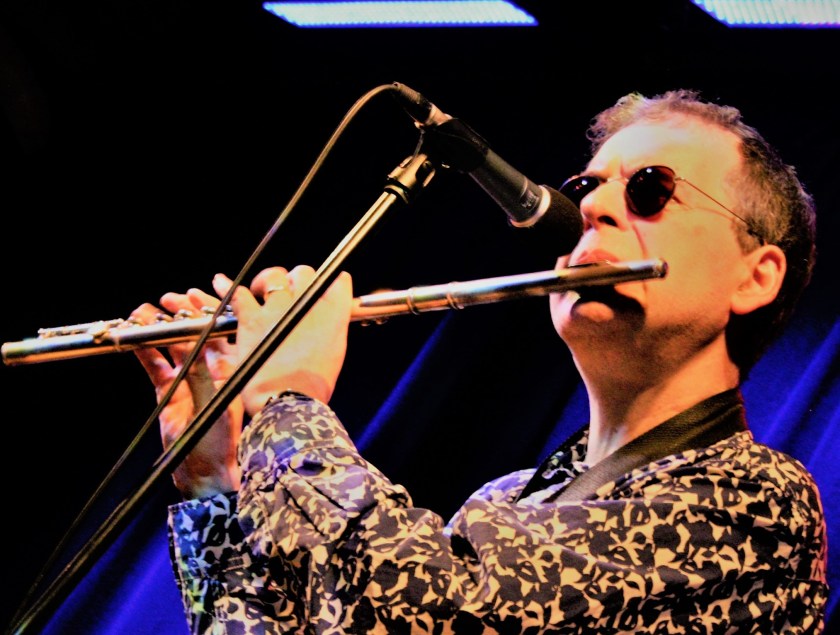
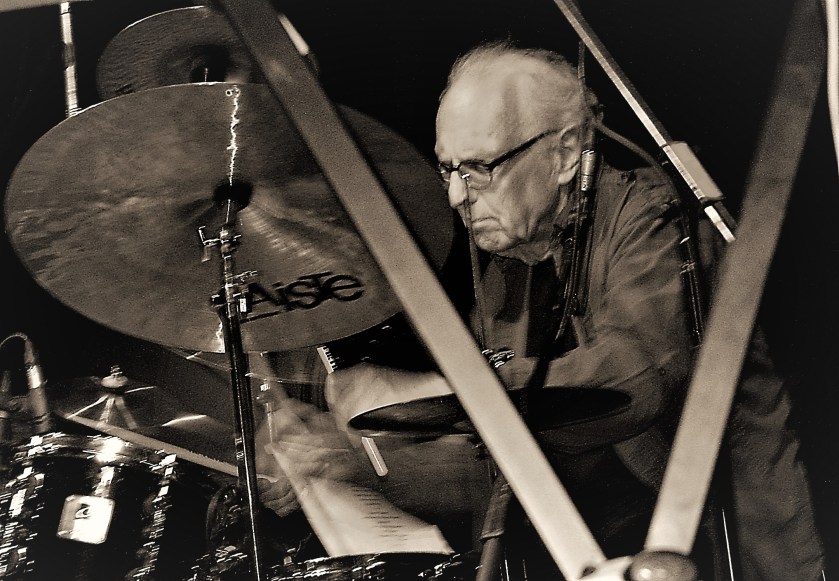
The band played two extensive sets, the first interrupted by a brief (and thankfully not serious) medical emergency in amongst the crowd , and worked their way through ‘Bundles’ (the track), and a lovely ‘Song of Aeolus’ from ‘Softs’, interspersed with tracks from more recent Legacy material from ‘Steam’, the superb ‘Voyage Beyond Seven’ from the ‘Burden of Proof’ album, and a very fine set-closer from ‘Live Adventures’.

John Etheridge looked surprisingly youthful, grinning toothfully through an unruly mop of hair, and constantly engaging in languid banter with the crowd and other band members. John Marshall, hidden behind his compact drum kit was mesmerisingly tight, a master technician. Roy Babbington grooved away in acres of space over on the right hand side of the stage, and Theo Travis, alternating between tenor and soprano saxes, flute and keyboards, provided much of the texture for the band one way or another. He has an almost chameleon-like quality to meld into whatever genre he’s doing – stepping into pseudo-Ratledge keyboard meanderings in places, taking up keyboard lines on his flute on others, or brassing out on tenor sax. It’s hard to equate this sometimes with his existence as a mainstay in the somewhat more frivolous Gong all those years ago – he’s just a consummate performer all-round.

theo.JPG

Theo Travis – photo Simon Kerry

The main focal point, however, was undoubtedly Etheridge, his fluidity undiminished through the years, and whilst ‘Aeolus’, to these ears’ might have benefitted from him sustaining his notes a little more on this anthemic guitar track, some of his unfettered soloing elsewhere was truly mindboggling. He even threw in an observation about Karl Jenkins’ tunes requiring him to replace upper parts of his fretboard on a couple of the pieces performed tonight.

If the first half of the set perhaps saw the band continuing to assert its new identity, the second half unashamedly played to its legacy. Starting with another ‘Softs’ album anthem ‘The Tale of Taliesin’ and continuing later with ‘Out of Season’, the band also tackled Bundles’ ‘The Man Who Waved At Trains’, with Travis operating solely on keyboards, before screaming into the highlight of the night – ‘Gesolreut’. Introduced through an outraged and dissonant guitar line, this was a highly funked up version punctuated by saxophone squawks. It brought the house down.

john.JPG

John Marshall – photo Simon Kerry

I never thought I’d get to see ‘Outbloodyrageous’ from the iconic ‘Third’ album performed live. It’s surely part of the Crown Jewels of the Canterbury scene, and if nothing for me would quite match the rendition on ‘Third’ or the recently unveiled video here,  this version was mighty fine, the Dobson/Dean duo line tackled dextrously on soprano sax and guitar. The only problem that this version, introduced via sampled keyboard loops from Theo Travis, ended far too soon! Would love to hear a full rendition…

The finale was a medley of material from various sources (including ‘Seven’), featuring solos from John Marshall and Roy Babbington and ridiculously prodigious call and response lines from guitar and sax to end the gig on a high. Except that a half-hearted attempt to leave the stage prior to an encore proved fruitless, and soon the band were kicking into ‘Hazard Profile’. The instantly recognisable main theme (let us not forget based around the riff from the Nucleus track ‘Song For The Bearded Lady’ featuring John Marshall and in later incarnations Roy Babbington) morphed into the guitar solo section – with a twist. Allan Holdsworth’s original guitar lines were swiftly forgotten as thunderous, dirty bass lines from Babbington underpinned a most unEtheridge atonal guitar solo – as Theo Travis struggled to rein the piece back in with keyboards. A marvellous conclusion to a fine gig.

One last thought: there’s been a lot of heated debate on music forums about whether this band should go out under the name Soft Machine – for me it’s all a bit too precious. Soft Machine’s music has always been a broad church, taking a route no doubt unintended at its inception, but no less worthy for that. For the many of us unlucky enough not to see the genesis of the band (or indeed any live incarnation until now) our views don’t have to be coloured by chronology: my own personal listening was started by the albums of ‘Third’ ‘5’, ‘Seven’, ‘Bundles’ and ‘Softs’, and I love pretty much all of them, even though the latter 3 are streets apart from Volumes 1, 2  or ‘Jet Propelled Photographs’. Who am I or anyone else to tell 3 Soft Machine stalwarts from the early Seventies that they shouldn’t perform as a band called Soft Machine playing Soft Machine tracks that they in many cases wrote or performed as Soft Machine members 40 years ago! And if the use of the name adds a few extra bums on seats (tonight was sold out), supports the musicians we love, and incentivises them to carry on, then why should any of us be complaining?


Caravan – Bury Met Arts Centre – 18 November 2017

Despite it being only 20 or so miles down the road, it’s been a good couple of decades since I’ve been to the Met Arts Centre at Bury, or come to that, Bury itself. The last time was to see and interview Didier Malherbe on his second visit to the town with guitarist Pierre Bensusan. At least that’s my excuse in failing to find the venue easily, despite the fact that in the early 90s I delivered there every other week, and saw numerous gigs there too. It took a while to realise that the various bouncers, taxi drivers and other unsuspects who we’d asked for guidance were very kindly all directing us towards the ‘Metro’ – the tram system that takes everyone OUT of Bury. The penny finally dropped  when we made our final wrong turn and descended an escalator towards the tram platform itself.

caravan met

Caravan: Geoffrey Richardson, Mark Walker, Pye Hastings, Jim Leverton, Jan Schelhaas

Meanwhile over the other side of the bus terminus Caravan were starting a set which would last almost 2 hours. I’d also not seen them for over 20 years, lost a little track of what they’re up to, but was intrigued to find that they were not only embarking on an 8-date tour of England, but had comfortably sold out the gig in Met, a beautiful old municipal building split into elevated seating and a large standing area in front of it.

This band features sole original member Pye Hastings; multi-instrumentalist Geoffrey Richardson, (who pointed out that he had been with the band a mere 46 years, on and off); keyboard player Jan Schelhaas, stalwart of late Seventies line-ups; Jim Leverton, ever present on bass since the mid-Nineties; and Mark Walker, filling the drummer’s seat since the death of Richard Coughlan.

As we were catching our breath, the band raced through a few old standards including ‘Land of Grey and Pink’ and ‘Golf Girl’ but for me really found their feet when starting to stretch out instrumentally – their version of ‘Love in Your Eye’ from ‘Waterloo Lily’ was quite inspired, the first time I’ve heard it live, and segued into the groove from ‘For Richard’, the first to really get the crowd moving.  The Caravan crowd is an interesting one: whilst I expect to see more earnest jazzheads at the Soft Machine on Thursday, and Gong attract a patent collection of tripped out bohos (myself included), Caravan audiences occupy a safer middle ground: middle aged couples, old rockers sporting a range of band T-shirts encompassing everything from the Stranglers to AC/DC, and small groups just out for a good night out (and providing an annoyingly noisy backdrop over the quieter numbers).

And so this set the tone for the night: a real mix of old and new tunes, ballads and extended grooves. I’d never seen Geoffrey Richardson perform before with the band – my Caravan education, like many, started with listening to the classic first three albums on LP, but for me also continued with then seeing that same quartet of Sinclair/Sinclair/Hastings/Coughlan reform in the early 90s for live gigs. So forgive me for not previously having a first-hand appreciation how Geoffrey became the focal point for the band both sonically and visually in the mid-Seventies. Tonight he was impossible to take one’s eyes off: effortlessly switching from viola, to lead guitar, to flute, to penny whistle, to mandolin – always beautiful understated interjections before moving on fluidly to the next passage. Even that doesn’t tell the whole story – amongst the most memorable moments for me were his viola picking on, I think, ‘Nightmare’, a solo on the spoons, or providing extra percussion elsewhere on a cowbell!

caravan2.jpg

I’d been so mesmerised by the prowess shown by Geoffrey that I was almost oblivious to the talents of bass and keyboards, but increasingly as the night wore on their talents came to the fore: Schelhaas moving beyond the expected recreation of Dave Sinclair’s sublime solo lines on the ‘classics’ to a real honky-tonk vibe, whilst Leverton, solid as a rock, produced a lovely rounded bass tone to provide the ballast on the extended numbers in particular. Drummer Mark Walker provided a vibrant presence behind the sticks with added backing vocals – here was a man clearly enjoying himself!

I reckon on reflection that the band performed a total of 5 tracks from the new album ‘Paradise Filter’ – best for me was the surprising menace of ‘Dead Man Walking’, whilst ‘Farewell My Old Friend’, written in memory of Richard Coughlan, felt personally poignant in a week when I found out about the sudden death of a friend. Other tracks returned to the band’s apparently perennial financial bad-luck (‘Fingers in the Till’) and, perhaps more flippantly, medical tribulations (‘Trust Me I’m A Doctor’). But probably the best was saved to (almost) last with a superb and unexpected version of the aforementioned ‘Nightmare’ plus the rousing finale ‘9ft Underground’ – as good as ever.

It was mentioned that Caravan are a mere 6 months away from collectively celebrating their 50th birthday – it all started at the Beehive in Canterbury, the location of which was pointed out to me in my trip down there last month. Plans are afoot for a celebration – watch this space (or more accurately https://officialcaravan.co.uk/) – but in the meantime try to catch one of their remaining gigs this tour.


(Thanks to Geoffrey Richardson for enabling me to get to this gig after a bout of personal incompetence!)

God Song – a Phil Miller tribute by Henk Weltevreden – as read at Phil’s funeral (27 October 2017)

(Musician, author and good friend of Phil Miller, Henk Weltevreden read out this lovely touching tribute at Phil’s funeral on 27th of October 2017. It’s reproduced here with the kind permission of Henk, and Phil’s widow Herm)

God Song – After Life

phil miller funeralHere’s a fairytale, for you Phil, a little creative act from my side, as a Thank you So Much, for all you gave me, in my life, your sounds, and for a warm, a very warm friendship. Here are some words. For you only.
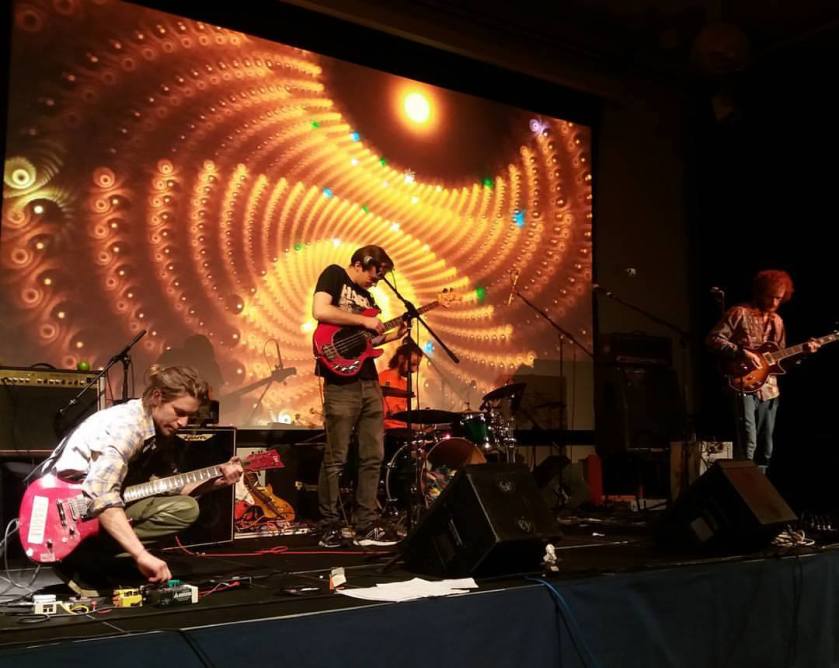
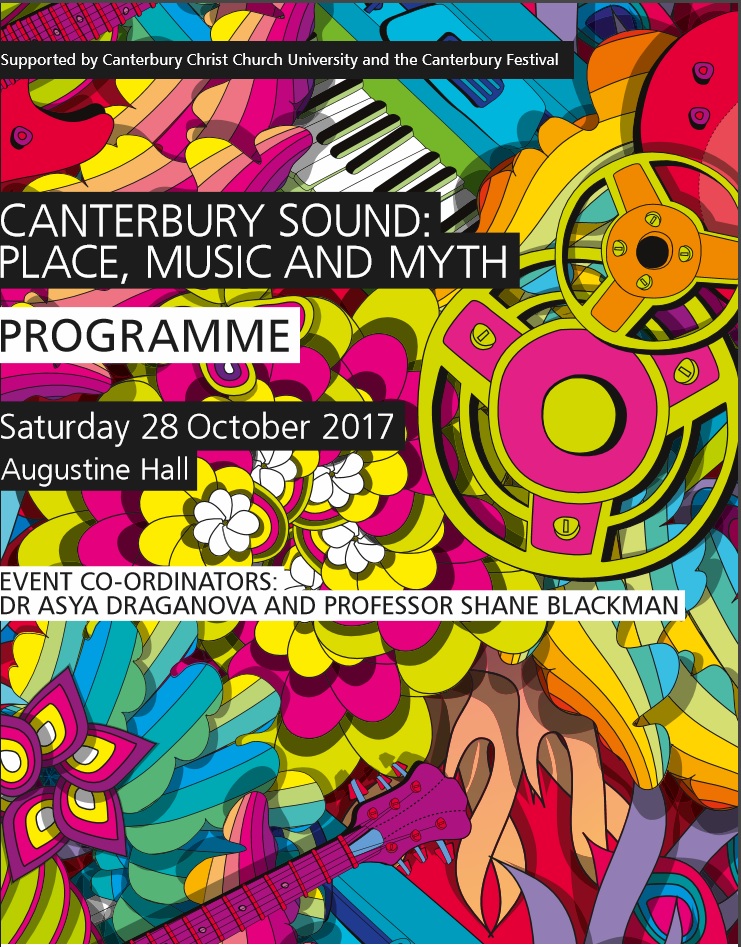
We met when I was 16, that’s 50 years ago. You’re my number 1 longterm friend, for ever. We played Gary Burton music, one of your favourites at that time. Some years later I gave a Hatfield record to Gary Burton personally, in Boston. He smiled. Quite often life shows a cycle. Sometimes life is linear because I’m convinced that the biggest luck for you is Herm.

Some years later, we shared a room, staying at Daevid Allen’s home in Sens, during an early Hatfield tour of France. Over hours of conversation, you analysed the creation of your songs Calyx and Underdub, how it came about. We agreed, for a big part, it is by coincidence.

Tomorrow, at the end of the afternoon, you will be walking in a heavenly atmosphere, strolling on a beautiful road, flowers, perfume, left and right a country side full of weed, free bags of it, all over the place. You’re holding your guitar, it’s a country without carnet papers, no work for Benj here, no passport needed, no wifi, no income tax. But, you’re a bit nervous, because you have to hold and show a stamped certificate proving it was you Philip Paul Brisco Miller who wrote God Song.

 What on Earth are you doing, God?

Is this some sort of joke you’re playing?

Is it ‘cos we didn’t pray?

Are you just hot air, breathing over us and over all?

Is it fun watching us all?

Where’s your son? We want him again!

Dear Phil, I know you wonder, you doubt, will He, the Big Man be furious?

And then, all of a sudden, you see a bar. Right there, along that road.

There’s Pip, waving at you, cheerful, holding a triple times five Belgium beer. Also Hugh is there, mister Hopper, and Elton, Lindsay Cooper, brother Steve, Daevid Allen, Kevin Ayers, Alan Gowen, and of course Lol.

Pip is yelling ‘hurray! Phil! Here! Where is Benji?’

‘Oh well,’ Phil says, ‘he is still too busy, maybe next year, or another ten-twenty years from now. Who knows. God knows. Chance mate. It’s all chance.’

Pip is smiling, having a great time, free drinks.

Pip’s thinking God Song:

‘And next time, you send your boy down there
Give him a wife and a sexy daughter

Someone we can understand.’

Hugh Hopper points at the counter. ‘There Phil, that’s where they check your documents. This here, it’s only a waystation. And, more important, if you want to get on, along the road, you have to choose only the single happiest memory of your life, all other memories will be gone, forgotten. And then you vanish to whatever unknown state of existence…’

Phil is doubting, he likes this bar here.

Elton looks a bit angry. Too much memories.

‘I don’t wanna enter that door,’ he mumurs, ‘stupid  Brexit. It’s also boring here, bloody Heaven,  I want a Hexit, out of here.’

Phil is hiding his certificate about God Song, slighty nervous. All of a sudden he regrets he has no carnet papers. Where is Benj?!

Pip takes a gulp, smiles and points at his selfmade poster behind the bar. It says:

God is dead, but just to be sure, I hate him.

Dear Phil

It does matter anyway

We’ll meet again some other day

The time has come to leave you

There’ll will be a way to reach you.


Henk Weltevreden (27th of October 2017)

Canterbury Sound: Place, Music and Myth, Christ Church University, Canterbury, 28 October 2017

It’s taken nearly a week to post something up about this amazing event, but then it’s taken nearly a week to surface from quite a whirlwind few days down south.

After around 25 years of correspondence, I finally got to meet Aymeric Leroy, author of the Calyx website, Big Bang progressive fanzines, moderator of the What’s Rattlin’ Newsgroup, and more recently author of the ‘L’Ecole de Canterbury’ biography. We met at Phil Miller’s funeral in Plaistow on Friday, chatted at the wake, where he kindly introduced me to many of my heroes, and shared a car down to Canterbury later that evening where he was kind enough not to comment too harshly on my lack of nous about directions! Aymeric’s encyclopaedic knowledge of Canterbury music (and beyond…) is not just confined to carefully filed reams of information – it is matched by instant recall of dates, places and anecdotes which sometimes make me feel like a half-arsed amateur!

lapis lazuli

Lapis Lazuli – photo: Asya Draganova

We’d been brought together as fellow speakers at the Canterbury Sound event, an event hosted by Christ Church University in the city, and curated by leading university academics Dr Asya Draganova and Professor Shane Blackman. The whole-day event consisted of a series of talks, including ones from Aymeric about Calyx and his book, my own about the genesis and development of Facelift, and other more academic perspectives from speakers jetting in from places as far flung as the US and Australia. My favourite slots were the insights provided by musicians Geoff Richardson (who came to settle in Canterbury in 1972) and Brian Hopper (who was already there!) and guitarist Jack Hues (a current practitioner). Talks and general discussion (all speakers also contributed to an ongoing ‘panel’ fielding questions from the floor) centred about what exactly the Canterbury scene/sound was, whether it had occurred as a result of local and cultural factors, and how it matched other geographically-based scenes. I’m not sure that the panel really came to any firm conclusions, but maybe that wasn’t the point. Personally, I liked most Geoff’s perspective that he was a ‘moth drawn to the flame’ of Canterbury, a phenomenon that I have observed so many times both in terms of musicians relocating geographically, but perhaps even more so metaphorically its many fans.

canterbury soundAny doubt that the flame is being kept alive was dispersed by the utterly memorable music which punctuated the day, initially with Jack Hues and the quartet, augmented for the most part by lengthy spoken word sections. The music was alternately sparse, atmospheric and driven, backed by the rhythm section of the very fine Led Bib. I would love to hear more of this. Koloto, a local composer followed in the afternoon with a set of electronic soundscapes, before the conference venue was cleared for the evening’s main performances.
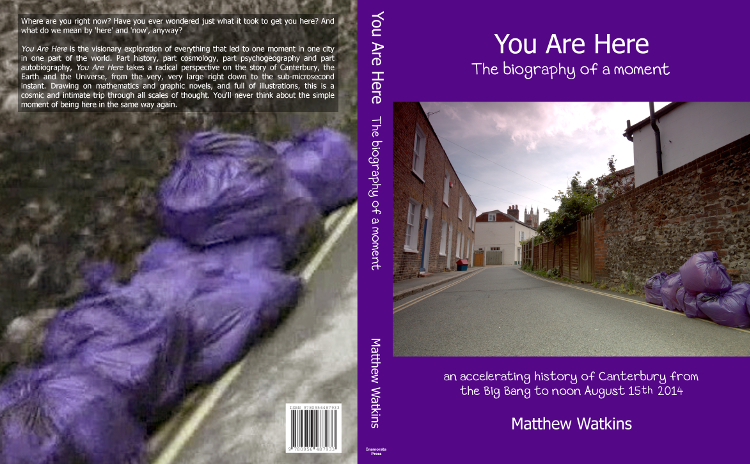
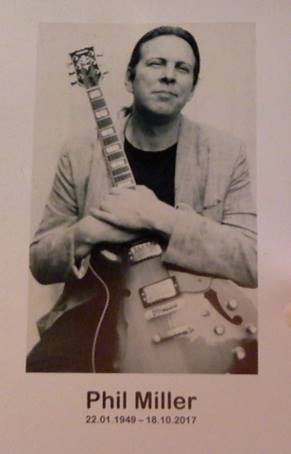
With their unfathomable name, freakish promo photo and the eloquence of drummer Adam Brodigan who provided an insight into the local music scene in one of the later talks, a sense of anticipation built up for local band Lapis Lazuli, who for me were the revelation of the entire day. Extended but extremely tightly-knit compositions (‘Reich’ and ‘School’) from their superb ‘Wrong Meeting’ album, bought on the spot, revealed a power-driven quartet consisting of two guitars, bass and drums, producing intricate, funky compositions. The great thing about bands that you’re often instantly sold on is that you can’t accurately compare them to anyone else, because, they’re … um… unique. That’s how I felt about Syd Arthur when I first heard their folk-infused early stuff – but Lapis Lazuli are spikier, grungier and rarely staying in one spot long enough for the audience to settle in their groove, before they move on to the next meticulously scored passage. During Adam’s earlier words, he described the evolution of gig venues and clubs in recent years from smoke-filled dens of iniquity to a much cleaner environment where psychedelic stimulation had to come from the music alone, and how Lapis Lazuli aimed to take you there. Such was the mind-bending nature of the music that they certainly got (me) there tonight.

Headliners and equally anticipated were Soup Songs, the jazzy outfit performing the songs of (and thoroughly approved of by) Robert Wyatt. I’d never seen this much-vaunted band before and quite aside from the sheer privilege of hearing for the first time, live performances of iconic tracks such as ‘Sea Song’, (possibly my all-time favourite track, complete with the heart-rending coda played out by Annie Whitehead’s trombone), and ‘O Caroline’, here was a band that genuinely grooved. Backed by an all-star rhythm section of Tim Harries and Liam Genockey, names familiar to most Canterburyfiles in different contexts, and an all-female frontline of Whitehead, Sarah Jane Morris and singer/guitarist Jennifer Maidman, this was a classy, gutsy performance. Whilst the main soloists were Steve Lodder on keyboards and Mark Lockhart (sax); Geoff Richardson was invited on stage for several memorable viola interventions, whilst Brian Hopper stole the night with an extended sax solo on ‘Soup Song’ itself. A fitting way to end a memorable day from one of the founders of it all…

matt watkins

Postscript: The event provided an opportunity to display some of my old newspaper clipping archives which Aymeric had brought back from France, alongside no less than 7 different Canterbury family trees. Last thoughts regard the publication of ‘You Are Here’ by Matt Watkins, author of the Canterbury sans Frontieres soundblog. A full review to follow when this whirlwind week stops and I can start to dive properly into his unique and beautifully illustrated book. Matt gave a short talk starting to plot the geographically significant points of Canterbury mythdom through an interactive Google Map – this was the part of the day that perhaps unwittingly drew the most audience participation, and was presented with a wryness which added to the delivery. More on the book soon…

The funeral of Phil Miller, 27 October 2017

Posting publicly about a funeral feels  slightly odd, but it seems remiss not  to mark the passing of Phil Miller, a giant of the Canterbury scene, with as many respectful words  as this forum will allow.

phil miller funeral

Whilst hardly claiming to know Phil well personally, I was lucky enough to meet him enough times to feel that I could at least pay my respects, and so my travel plans to get down to Canterbury for the Sound event the day after were hastily re-arranged on hearing that Phil’s funeral would be held in Plaistow last Friday.

The crematorium service was a simple one, presented by a neighbour (and apologies for not catching the name) with both a sensitivity for Phil’s qualities both personally and as a musician. Whilst the service was topped and tailed with extracts from Phil and Fred Baker’s beautifully gentle album ‘Double Up’, the centrepiece of the ceremony was a series of speeches, including an opening from Aymeric Leroy, providing something of a tribute to Phil’s musical pedigree. A series of more personal thoughts and reminiscences followed from many of Phil’s friends and collaborators such as Hatfieldist Alex McGuire, Caravan guitarist Doug Boyle, bassist Jack Monck (who accompanied Phil at the start and end of his musical career with Delivery and the Relatives); and musical soulmate Fred Baker. Mark Hewins gave a very moving off the cuff speech, whilst musician and author Henk Weltewreden read his own bitter-sweet and very funny piece based around the lyrics to Phil’s ‘God Song’. The prevailing themes of the speeches were Phil’s loving gift of music; the meticulous nature of his playing and composing, his striving for the perfectly fine-tuned arrangement in both him and others; his fierce loyalty; and  his enduring love with Herm.

The wake was a beautifully informal affair at St Barnabas Hall in Dalston, with fine food downstairs and a succession of musicians playing the best of Phil’s music upstairs, such as ‘Underdub’, ‘God Song’, ‘Above and Below’ and ‘It Didn’t Matter Anyway’. I lost some of the detail of the particular denominations who played whilst chatting to various guests including the likes of Bill MacCormick, Yumi Hara, Geoff Leigh and Rick Biddulph, but there were combinations of In Cahoots musicians including Jim Dvorak and Pete Lemer; a fabulous reprise of a Miller/Baker duo number with Fred taking Phil Miller’s guitar line whilst Jack Monck played bass; Phil’s most recent collaborator Marc Hadley on  sax; Theo Travis on flute; Mark Hewins on guitar and many many more. I felt very privileged to have been there – the mood was sombre but Phil’s spirit prevailed….

Acid Mothers Temple and the Melting Paraiso UFO – Hebden Bridge Trades Club 20 October 2017

Acid Mothers Temple are nearing the end of their annual autumnal attack on broad-minded European gigging venues and once again played the Trades in Hebden Bridge, host over the years to numerous Gong-related musicians, if not yet Gong themselves.

acid mothersThe ‘Mothers’ are a Japanese collective with around 20 years history behind them, and Daevid Allen collaborated extensively with their guitarist and leader Kawabata Makoto in the Noughties (including the album ‘Acid Motherhood’ which went out under the Gong name in 2003.) Their style is an all-pervasive assault on the senses with an unbelievably loud and dense sound, smoke machines and a visual presence which is unparalleled – for starters you’re unlikely to see quite as much hair on one stage!
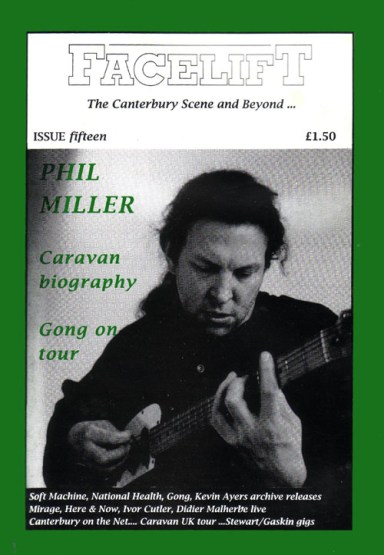
Whilst in particular guitarist Makoto and high-octane drummer Satoshima Nani  flail around like whirling dervishes, frontman Higashi Hiroshi, an extraordinarily striking figure with long white hair and beard, maintains a zen-like presence up front as he peddles sonic effects including a state of the art theremin .

The band are renowned for their wigged out appropriations of iconic musical anthems both psychedelic and beyond, and I remember when I saw them for the first time in 2015 spending the first 20 minutes of the gig with my jaw dropping to the floor as they performed a track which I assume was ‘Son of a Bitches Brew’. I wasn’t entirely sure I liked it, but it was clear enough I’d never heard anything quite like it before.

Tonight as they launched into their first track, I was delighted to realise that it was Black Sabbath’s ‘The Wizard’, here treated with cacophonous layer upon layer of sound as a backdrop, and punctuated with gusto by Hiroshi on harmonica.

Gong’s ‘Flying Teacup’ riff followed, an extended workout around a single bass-line, and later we had the Om Riff sandwiched in between renderings of long-time Acid Mothers’ centrepiece ‘Pink Lady Lemonade’.

I couldn’t tell you the couple of tracks beyond this, but to be honest, that helped, as without a recognisable theme to hook into, I succumbed to the frenzied trance most of the rest of the audience had been wound up into. The sound is messy, high-energy and all-encompassing – all musicians, particularly lead guitar, the brilliant bass of ‘S/T aka Wolf’ and drums rattling along at breakneck speed, but even this, (with additional layers provided by second guitarist Mitsuko Tabata and effects) is further backed up by sheets of sound from backing tapes. It’s an astonishing spectacle. I think the crowd were too stunned to holler for an encore, most repairing to outside for a recupatory fag as the band quietly packed up, shifted a few T-shirts, and were waved off at the door as they made tracks for their next gig north of the border.

Phil Miller

The very sad news emerged yesterday that guitarist Phil Miller had died after a long illness. I wanted to pay tribute here to Phil’s unique talents – both as a guitarist and a songwriter.

issue 15 cover copy

His CV almost reads like a wishlist of  seminal Canterbury bands: first Delivery (with, amongst others Roy Babbington, Pip Pyle and Lol Coxhill), then Matching Mole, followed by Hatfield and the North and National Health. He later spent 30 years fronting his own band In Cahoots, itself a stomping ground for many of the scene’s key players: Elton Dean, Pip Pyle, Richard Sinclair, Hugh Hopper amongst them. He also briefly co-led Short Wave with Pyle, Hopper and Didier Malherbe and had a unique duo with equally dextrous long term collaborator Fred Baker. He was an understated giant within the scene and whilst his trademark calling card was those tortured electric solos, he was a fine rhythm guitarist and a brilliant songwriter – two of the scene’s anthemic pieces, Matching Mole’s God Song and Hatfields’ Calyx were his.

I saw Phil perform on many occasions, and looking back at a feature which was published in the nascent Facelift website where I asked regular contributors  to identify their top 5 gigs, Phil Miller appeared in the nearly everyone’s lists in various guises (and three times in mine! ) in the Hatfields, National Health or most notably In Cahoots. My own favourite gigs included the ones below:

  • In Cahoots at the Band on the Wall – my first live exposure to ‘Canterbury scene’ musicians – I remember being astonished that his first solo album (‘Cutting Both Ways’) managed to garner so many of my heroes, but then to see them live with a line-up that also included so many of my heroes, hitherto just names on record sleeves or recognisable musical styles through my speakers completely blew my mind. The idea of seeing Phil Miller, Pip Pyle, Hugh Hopper and Elton Dean all on the same stage was almost incomprehensible as a Canterbury novice – I was sold for life.
  • In Cahoots again, this time as part of one of very many memorable Sonic Relief showcases at the Brixton Fridge. Sonic Relief tapped into a brief moment in time when progressive music, particularly at the psychedelic end, started to become an acceptable musical format again at the start of the 90s – billings included Gong, Caravan, Ozric Tentacles, The Orb and Tim Blake. In Cahoots were the support act for Caravan on one fine evening – was this their biggest ever audience? So heartwarming to see their music watched and appreciated by a large, lively crowd.
  • The Miller/Baker duo, not just for a gig we put on in Manchester (more below) in 1993, but as part of an extraordinary double header with Mark Hewins and Hugh Hopper at the Vortex in Islington.
  • And finally, with Short Wave, a Canterbury supergroup if ever there was one and whose album we reviewed here Having witnessed a superb gig down in Chester, we saw them in their element at Gong 25, where for us anorakked Canterbury aficionados, they represented an unofficial highlight.

Phil managed to combine an understated personality with a quite towering stage presence – I won’t be the only one who associates his meticulously constructed guitar lines with his pained expressions as he eked out another gut-twisting solo from a seemingly bottomless well. I must have met Phil on half a dozen occasions, but it’s probably testament to our mutual shyness and reserve that I couldn’t ever remember what we talked about… Nick Loebner got much further than I with an excellent interview for Facelift here

In the autumn of 1993 a few Manchester friends (Martin Wakeling, editor of the Kevin Ayers fanzine ‘Why Are We Sleeping’, regular Facelift scribe Nick Loebner and my long-term gigging partner ‘Long’ Dave Wragg) and I concocted a plan to bring Phil and In Cahoots bass player Fred Baker to Manchester for a duo gig – this on the back of their superb album Double Up which saw them perform Miller classics such ‘Calyx’ and ‘Underdub’ alongside many fabulous new compositions for double guitar or guitar/bass. We managed to procure a venue for nothing, got lots of free publicity in the arts/entertainment magazine Up Town I then worked for, got a preview in a rival magazine City life, listings in the Guardian and sold tickets in the legendary and supportive Manchester jazz/roots record shop Decoy. Phil and Fred had kindly agreed to bring their own PA.

miller & bakerWe then sat back and waited for the tickets to sell. It was a long wait. The venue, although on the circuit for rock music, was a bit off the beaten track, set back in the gloom from Piccadilly station. Charlie, who owned the Star and Garter, had given us the venue for nothing, no doubt intending to make his money back on drinks. His generosity didn’t extend to heating, because in his eyes the hordes of people we’d promised him would warm up the large room we were using with body heat.
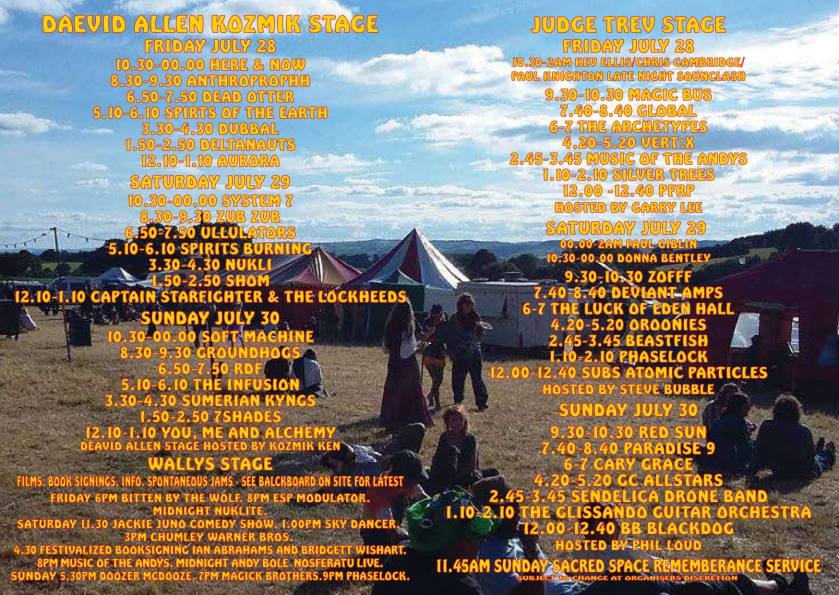
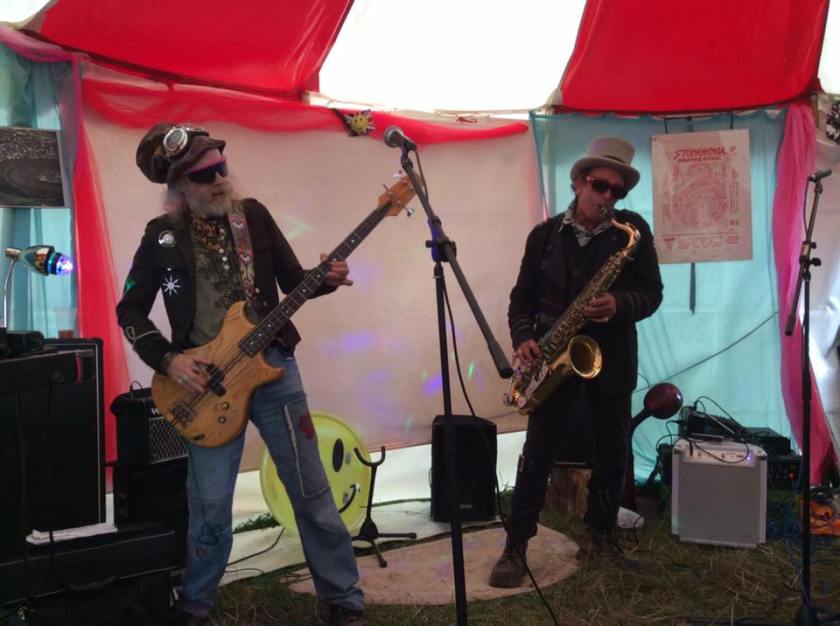
I reckon we packed in about 50 punters. It was a magical night – I caught one chap crying in the toilets because he’d finally got to hear ‘Calyx’ live. Phil and Fred played beautifully with their almost telepathic understanding. A testament to Phil in that he offered to take a cut on his and Fred’s tiny appearance fee because of the low turn out.  We of course refused – it was a privilege to have him performing for a few select aficionados, but indicative of the everyday travails of innovatory British jazz musicians.

I can’t remember the last time I saw him – I don’t live in Manchester any more and have fewer opportunities to go to London, and I suspect gigs were getting thinner and thinner on the ground. ‘Conspiracy Theories’, admittedly a few years back, was right up there with the best of his output and showed him still in his element as a unique songwriter and guitar voice.

Phil was a colossus within the scene – he’ll be sorely missed.

Canterbury Sound Festival – Sat October 28th

Really excited to have been invited to take part in a day dedicated to the Canterbury ‘Sound’ at Augustine House, Canterbury – it’s a day and evening event of discussions dedicated to the music we’re all fans of, and featuring music from Canterbury both past and present.

Canterbury Sound image

Full ticket price details here: and full content details below:

As Aymeric Leroy, (who has run the Calyx website, What’s Rattlin forum group, and has also recently published a book ‘L’Ecole de Canterbury’), is bringing my old Canterbury archive (which extends to half a car boot load) back over the UK, I hope to be displaying some tasty snippets at the event, as well as selling some fanzines. Hope to see you there!

DAYTIME PROGRAMME
10:30-10:50 Welcome; health and safety notices; event concept and programme for the day to be presented by Asya Draganova
10:50 – 11:20 Coffee break and introducing the Archive, Music, and Book Stalls
11:20 – 12:50 Panel 1: “Canterbury Sound” myths and realities

Talks from: Professor Andy Bennett, Geoffrey Richardson, Brian Hopper, Jack Hues, Professor Murray Smith a discussion panel

12:50 – 13:00 Comfort break

13:00 – 13:45 Performance: Jack Hues and the Quartet

13:45 – 14:30 Lunch

14:30 – 16:00 Panel 2: Archives and futures of the online and offline “Canterbury Sound”

Talks from Aymeric Leroy, Phil Howitt, Asya Draganova and Shane Blackman, Matt Watkins, and Alan Payne + discussion panel

16:00 – 16:10 Comfort break

16:10 – 16:50 Performance by Koloto

16:50 – 17:00 Comfort break

17:00 – 18:00 Fan forum: mapping the spaces and places of the “Canterbury Sound” with the participation of audiences

EVENING PROGRAMME

19:00 – 22:00: Lapis Lazuli and SoupSongs performances: a musical dialogue within the “Canterbury Sound”

Magic Bus – Phillip The Egg

A chap who came to our door the other day asked me where I got my green sackcloth Nepalese  shirt from, and I explained that my wardrobe was largely topped up at festivals where I shamelessly bulk-bought band-related T-shirts and hippy clothing in the same way that others might visit TKMaxx in search of bargains. I compared it to the way that at same said festivals I always come away with some new music to follow based on some unexpected treat in a tent somewhere. Like the t-shirts  it keeps me going through a winter or several until I irreparably damage them.

Over the years this has seen me get into bands as diverse as Asian Dub Foundation (a Brighton 3-dayer, if I remember, where our tent got nicked and I got food poisoning from a Vietnamese noodle bar);  Subgiant (wondrous South Coast electronic dub), the Egg (classic festival grooves), and possibly best of all LaXula (Spanish gypsy music with a hint of burlesque). Last year at Kozfest it was Andy Bole. This year it could well be Magic Bus. And I’m beginning to wonder how they escaped my clutches for so long.


The marvellous video posted here shows the Magic Bus band in their full glory. Subtract the nattily turned out lead guitarist and the band could have been directly parachuted from the late 60s into the studio, and the music follows suit. In amongst the swathes of screaming guitar or the pounding reggae beats which pervade Kozfest, Magic Bus at Judge Trev’s stage were an altogether much more gentle affair. The Caravan comparisons are almost a given: strummed rhythm guitar and flowery vocals, an intense longhair hunched and rocking over a screaming keyboard which appears to be the main soloing instrument, and soaring flute lines recalling Jimmy Hastings. But there’s more at work here: on ‘Phillip the Egg’ alone, the band work their way through numerous sub-sections, shifts in tempo and mood to provide a really tightly scored composition stretched over many minutes. There’s even a spot of Van der Graaf ‘galumphing’ to increase the heart rate. Great stuff, can’t tell you much more at present on the basis of a short (frequently revisited) video and a late night gig at Kozfest. I can tell you though that the rest of their latest album sounds bloody marvellous too, but I’ve already outstayed my welcome streaming it on bandcamp so I’ll waste no more time and buy myself a copy forthwith…

Kozfest 2017

Friday 28 July – Sunday 30 July, Bobby’s Farm, Uffculme, Devon

kozfest timings

For the unitiated, Kozfest is a unique festival set in the rolling hills of the Devon countryside. In the big picture of festivaldom, it’s a tiny speck, limited to 500 punters but blessed by up to 300 performers, many of whom have direct or indirect links to musicians covered by Facelift magazine over the years, particularly at the psychedelic end of the scene.  Unlike last year’s sun-drenched bake-out, this was a muddy affair, not quite Glastonbury but enough to dampen the campers’ spirits a little, if not deterring musically from another feast.

The festival is almost like a private party, except that firstly you can invite yourself (if you get hold of tickets in time) and secondly that you might not know anyone – (at least at first). It’s unique because at any set time you can look to either side of you realise that you’re surrounded by people you’ve spoken to around your tent or at the various stalls, or musicians you’ve been watching. There’s no distinguishing between punters and performers in terms of egos at least, it’s all one happy colourful family. The place is festooned with memorably coiffeured, dressed or chisel-featured characters – it’s almost inevitable that the bloke in the cape and goggles in front of you in the pizza queue is going to pop up on a stage at some point – it’s just a question of when. Kozmic Ken, who gives the name to the festival, bumbles around the festival amiably, presenting the bands on the main stage and dispensing good vibes to all.spiral navigators

Spiral Navigators – photo Annie Roberts

With Here and Now, System 7 (Steve Hillage/Miquette Giraudy) and Soft Machine headlining the 3 nights respectively, it seems strange to report that I only saw Here and Now, but I was visiting the festival, as one does, very much in punter rather than band bucketlist mode. Plus with two young children in tow, energies were flagging when the final band came on each evening at 10.30pm. More about those three headlining bands later.

For all the undoubted kudos for Kozfest of attracting the headliners, which ensures a steady build up of anticipation throughout the day, much of the vibe of the festival is exploring a few musical connections, delving into something entirely new, or witnessing a spontaneous happening. The musical onslaught is relentless – it’s possible but probably not advisable to see every band on the main billings through drifting sheeplike from one stage to another. The festival layout is inspired: within its tiny acreage, the entire event is spread over only two fields – a flat one at the bottom for motorhomes, cars and a few tents, and a sloping one above leading to a flat platform at the top in which is contained the entire gamut of facilities: 4 or 5 food stalls, the Tat for Tibet quartermasters stores, Gong’s GAS merchandise tent, and various other small arts/crafts/clothes concerns. At either end of the platform is a marquee – the Daevid Allen stage a larger, more functional, white-sided marquees with official merchandise at the back; and the Judge Trev stage – smaller, more atmospheric with its red interior setting a more atmospheric feel for the bands within. DSC04922The scheduling is pure genius – bands play their 1 hour sets in one tent whilst the following band in the other tent do their soundcheck. There’s a 10 minute overlap where two bands will be playing simultaneously, which also means that most bands start off with a very small audience only for half the festival to drift in to populate the tent after 10 minutes or so. Browse the photos on the Kozfest Facebook pages and you could be forgiven for thinking that the festival is populated by a load of untogether stoner types – and in terms of us punters that might have a ring of truth, but in terms of organisation this is as tightly scheduled as anything I’ve seen – bands arrived and left the stage on the dot, and not just to meet the midnight curfew. At the Judge Trev stage the meticulous nature of the timings was particularly evident with soundchecks punctuated with shouts of “5 minutes”, “2 minutes” barked out in the preamble to a band coming on. One band (Magic Bus) were hauled off stage for starting 4 minutes too early! It’s possible to spend 12 hours meandering between each stage without a break and have constant music piped into your ears – and we certainly dipped into this mode of operation at times, but at the same time with two small children to entertain we also managed to engineer a weird parallel universe:  a sort of soundcheck crawl where we arrived in an empty marquee as bands finished to allow the kids to run free in the open spaces as the rain beat down outside. I now know lots about how sound engineers set up their rig, as well as being the proud patentor of a new children’s game where the participants attempt to throw soggy rolled up socks into a pair of open wellington boots.

If Kozfest 2016, was for me at least, savouring not just the new Gong incarnation, but finding Gong emigrees such as Steffe, Mike Howlett and Graham Clark popping up in a variety of new contexts, then 2017 was very much about the wider Ozric Tentacles family.

Whilst I managed to miss the Oroonies and Zub Zub, (both with Ozrics connections), I’d identified that the band I really wanted to see at Kozfest was the Ullulators, a band led by original Ozrics guitarist Gavin Griffiths. Familiar with their early cassette tape (Share a Clam), the superb official release Flaming Khaos LP and having streamed their recent comeback album, their highly polished blend of reggae beats, electronica and Ozricsesque guitar work was an undoubted highlight of the festival – slick, spacey and utterly compelling. Added spice was given by the fact that we’d already spotted Ed Wynne, the Ozrics main man and guitarist around site – anticipation grew as he moved towards  side stage and was then seen twiddling with an amp ready to come on. Outstanding versions of ‘Gunk Rock’ and ‘Special Brew’ preceded him appearing on stage for the last two numbers: with Gavin and Ed on guitars Tig on drums, Joie Hinton on synths and I think Paul Hankin on congas, this was pretty close to an original Ozrics line up. The icing on the cake was the announcement at the end of the set that Ed and associated musicians would be appearing on the final morning at midday for ‘an hour long jam’. Given that we’d also seen ‘Jumping’ John the flute player also on site, could this be a bona fide Ozrics reunion?

ullulators

Ullulators with guest Ed Wynne – photo – Annie Roberts

Anyway, in the meantime other matters: lots to report on the Here and Now axis. The band have just altered their lineup twice over with a new guitarist (Andy ) and drummer replacing Slim and Woody who were nevertheless on site with Beastfish (more later). First time since the late 80s/early 90s that I’ve seen the band without guitarist Steffe, and I’d probably not appreciated before quite how the (for now dormant) axis between him and Keith Missile works in terms of songs. That early 90s lineup was quite ska-based in sound, and worthy as it was, I do seem to regularly remember hanging on in there for the rollout of ‘Floating Anarchy’ or ‘Opium For the People’. Tonight’s session was a mixture of those old 80s/90s tunes on the one hand, and more spaced out stuff on the other. No prizes for guessing which I preferred, and it was admittedly excellent – Keith is such an outstanding purveyor of bass grooves. This lineup has two keyboards, with Mark Robson joined by the other Andy, both also sing. The sound suffered a bit live, which meant that the clear talents of the lead guitarist were somewhat unheard – a shame.

DSC04926

Beastfish

The Here and Now set was the finale of a Friday which also saw two of its members also perform in the Music of the Andys (!), joined on stage by Mark Robson’s didgeridoo. Much more memorable for me was the aforementioned Beastfish. I’d heard about this lot because fellow Hebdenite and multi-instrumentalist Mick West plays keyboards with them, and they also feature recent Here and Now members Slim Verhoef (guitar) and Woody (drums). A few Youtube videos had revealed some polished  instrumental work and off-the-wall vocals, but that doesn’t tell the half of it – Beastfish are a quite extraordinary outfit  – tight and extremely intricate compositions forming the backdrop to a quite mesmerising spoken word performance. A quick chat with the frontman afterwards revealed that the tracks are individual poems performed with considerable charisma and stage presence.  Shades of the punk poets of the 80s or the Fall here (although their music was never so finely honed), others suggested Robert Calvert or the Stranglers – it was that good.

Graham Clark (Gong Maison violinist and Magick Brother) was on site but we managed to miss him performing – Andy Bole too, one of our highlights from last year – his excellent Rainbow Crow (looped bouzouki layers) album must be heard – he was performing an improvised backdrop to Nosferatu in the Wally Hope stage (actually a tipi no bigger than our own tent! – ‘bands’ popped up there all weekend). The Glissando Guitar Orchestra, a collection of 8 or 10 purveyors of the art, performed a series of Daevid Allen’s mediational drones – quite a spectacle, but also missed by us this time. What we did see and enjoyed were Red Sun, an Italian power trio of guitar/bass/drums pounding out riffs with a hint of Violeta de Outono (Fabio Golfetti’s Brazilian band), the slightly warped (post-rock) sounds of the Sendelica Drone orchestra; a shit hot young guitarist with the Cream-like Deltanauts. The Deviant Amps, another trio somewhat more  unconstructed than Red Sun, and led by festival co-organiser Paul Woodwright (bass player Subs appears on the Sentient live album) were as usual, tremendous value – check out some fine videos here; Magic Bus headlined on the Judge Trev stage on one night and were a gently complex treat – proggy vibes with more than a hint of Caravan. Shom were, as last year, excellent. Lots more lost somewhere in the festival mix and so many bands missed who I heard were excellent.

Glissando Guitar Orchestra/Sendelica Drone Band- photos – Annie Roberts

Now, returning to the two other big headliners, heard from a distance back at the tent. System 7, Steve Hillage & Miquette Giraudy’s dancebeat act pumped out the rhythms at the back end of Saturday night. I’ve seen this duo numerous times over the years, less so recently, but you know what you’re going to be getting. Saw them memorably at the Trades Club in Hebden a few years back for one of the their Sunday ‘chillout’ sessions, where Steve ran through a number of trademark Gong/solo sounds/riffs from the 70s, explaining their origins, before then breaking into Mirror System, the ‘ambient’ alterego of System 7. Even on a Sunday lunchtime that inevitably morphed into a techno wigout, and from our fireside pitch in the lower field at Kozfest this was very much the order of the evening. Good fun inside the tent, one assumes.

system 7

System 7 (Steve Hillage/Miquette Giraudy) – photo – Annie Roberts

The Soft Machine have recently finally dropped their ‘Legacy’ monicker, but essentially are the same settled lineup of ex Softs members (John Marshall, Roy Babbington, John Etheridge) plus ex Gong sax player Theo Travis. It’s actually quite weird seeing the name Soft Machine on a gig line-up and I did wonder when the last time a band under that name played a festival – mid 70s? When I found out that Soft Machine were headlining Kozfest, I did wonder how they’d go down – their sound is almost incongruous in the mix of grungy, spacey rock which pervades 90% of Kozfest’s lineup, consisting as it does of a jazz-rock pastiche of tracks from the 70s. Again from our firepit I could hear ‘Facelift’, stuff from ‘Softs’, probably material from ‘Six’ and ‘Seven’ that I’m less familiar with, and a brief medley involving the riff from ‘Hazard Profile’ as an endpoint. Good reception, clearly audible exceptional musicianship from 4 master craftsman and although I was a bit gutted not to see them, asking around the site, few people had them as their festival highlights, due to the nature of the music, I reckon.

DSC04933

Ed Wynne

Finally, back to that Ed Wynne appearance – midday on Sunday saw the larger Daevid Allen tent packed out for an impromptu gig. Joie Hinton was this year’s Mike Howlett, popping up on stage for his umpteenth performance on keyboards, Ed’s son Silas was also on keyboards, and the band alternated between 2 bassists both of whom we’d seen in other bands, the more dubby sounds coming from the Ullulators’ rhythm man, the more funky grooves from quite an extraordinary young man called Tom (I think). Unlike last year’s improvised sets by PsiGong (Mike Howlett) and Sentient (Steffe), highly adventurous but occasionally patchy fusion, the music here by Ed and co was supremely polished – the archetypal space jam – for a scratch outfit there was barely a bum note or wasted chord. Christened ‘Ozfest’ by Kozmic Ken, this was wonderful stuff which hopefully has been captured by somebody, and maybe a portend of Ozrics and Kozfests to come…