Facelift will shortly start publishing extracts from a number of interviews concentrating on a ‘new wave’ of ‘Canterbury’ artists: musicians largely living outside of the United Kingdom who have been tagged with (or have tagged themselves) as belonging to the Canterbury music scene, some intentionally, some not. I saw this phenomenon tagged (I can’t remember where, so please let me know if it was you!) as Canterbury 2.0, which I quite like, although I reckon we might be up to the 5th or 6th iteration by now!
It is hoped over the next few months to publish interviews with the likes of Alberto Villaroya (Amoeba Split), Eva Muntada (Magick Brother Mystic Sister), Ryan Stevenson (Zopp), Bjorn Klakegg (Needlepoint), Dave Newhouse of the Muffins (whose story of course starts much earlier), Carla Diratz (Diratz, Archers of Sorrow), Fabio Golfetti (Violeta de Outono and of course Gong), James Strain (Rascal Reporters) and Dario D’Alessandro (Homunculus Res).
Core questions will be about their current projects; their influences; what they regard as the Canterbury scene (and how they see themselves fitting into it, if at all); and experiences of being a Canterbury fan outside of the UK; plus of course a bit about their own musical history.
This list is far from exhaustive and may yet change/expand.
The impetus for this is partly for a research project I am doing at Canterbury Christ Church University on a range of topics relating to the Canterbury scene, but separate to this it seemed like a very good excuse to find out more about a number of musicians who works I admire, who very much fit within the scope of the Facelift blog. Who knows, maybe information from within these interviews might find a home within a publication of some sort in the future.
The order in which these interviews have arrived is purely coincidental – so for example within the first 4 interviews I’ve already carried out: Fabio Golfetti of Gong is someone I’ve been in contact with for, we think, 30 years and have talked regularly over the last 8 about doing something of this nature, but I’ve only just finally managed to pin him down! In contrast my interview with James Strain, about his work on the Lunophone project with Dario D’Alessandro, occurred completely unexpectedly when he contacted me last week having just realised he’d been in the town I live in the previous weekend on a visit from his native Ireland, and a chat in Messenger developed into a hour-long conversation.
The first article in the series will be an interview with extraordinary young French multi-instrumentalist Tom Penaguin, but prior to that, the first thing I will do here is point you in the direction of some of the musicians mentioned above – all have agreed in principle to pass on a few thoughts, so it seems a good starting point to introduce you to their music.
This was a last minute dash up the M62 over the Pennines to the Brudenell Social Club in Leeds to capture some of the embers of the Last Blast tour, the final installment of the Gong/Ozric Tentacles double headliner bills of the last few years. This time around the bands have alternated headline slots rather than play gigs in blocks where one band will always go on last for several consecutive dates. Tonight saw Gong going second, although set times seem to clock in at around 90 minutes per band, whichever way the order falls.
The first thing to say is that I’d heard great things about the Brudenell and it was thoroughly merited. Situated within a vibrant multi-ethnic part of Leeds, it is surrounded by Turkish eateries, Indian supermarkets and more traditional looking boozers, with youth milling around everywhere, but itself is a brightly illuminated complex, set back from the road and with several bars and lounges. The bands played in a smallish, relatively intimate room with standing room stretching out in front of the band in a crescent shape, with people further back slightly elevated – views of the stage were good from all vantage points. The gig was sold out but it didn’t feel overpacked. Gong and the Ozrics both had fairly extensive merchandise stalls with the usual vintage fayre and special tour T-shirts – it was difficult to work out who most people had come to see – perhaps Gong as the GAS stall always seemed teeming.
Saskia Maxwell
Ozric Tentacles have changed lineup since the last time I saw them. Vinny Shillito, who I think was the bassist on the Ed Wynne tour a few years ago provides a rather brooding presence at the back of the stage, and the new drummer is Pat Garvey. But beyond this the core of the band remains mainman Ed, on guitar and keyboards, and his son Silas on additional keyboards, although Saskia Maxwell is present for the majority of the performance, largely on flute.
Ed Wynne
My last two viewings of the Ozrics were slightly one-dimensional, firstly a stripped down ‘electronics’ set where the band was essentially cut down to Silas and Ed, and largely memorable for Ed’s soloing over classic Ozrics tunes from the 1990s, whilst the Sheffield gig on the first ‘joint’ tour, we saw from a distance whilst chatting to Gong who’d just come off stage. My view here was much more up close and personal, to Ed in particular, and it struck me that this might just be the most I’ve ever actually ‘heard’ his guitar playing. I remember the first time I saw Ozric Tentacles, at the legendary Treworgey Tree Fayre in Cornwall, in 1989 and being crushingly disappointed at the difference between the pristine, multi-faceted styles of their studio albums and the muddy thrash of live performances aired. That’s something of an oversimplification – the Treworgey gig was something of an impromptu jam on the ramshackle Wango Riley truck stage, and later gigs in the early 90s showed much more faithful reinterpretations of tracks from Pungent Effulgent and Erpland. It was just that at those gigs the sound was so dense and the guitar so treated that often the intricacies were lost.
Silas Wynne
Tonight was different. The slightly dead sound in the Brudenell, whilst unforgiving, allows each component of the music to be heard in isolation, and served to show what a phenomenal guitar player Ed Wynne is. There was definitely also a desire to step away from the most thrashy stuff – whilst classics like ‘Eternal Wheel’ were aired, the highlights were magnificent performances of atmospheric pieces from either end of the timescale: the title track of the band’s latest album ‘Lotus Unfolding’ and a great ‘lost’ track from ‘Pungent Effulgent’, namely ‘Ayurvedic’, which genuinely had me in tears. Both had common components: Ed’s crystal clear guitar and Saskia’s gorgeous flute lines. The classic ‘Sniffing Dogs’ from ‘Tantric Obstacles’ was another highlight, and at times appeared like a genuine jam – Silas showing unexpected dexterity and jazzy touches on electric piano – the band just seemed to respond to each other in a lovely languid manner – nothing rushed – capturing an almost laid back feel to their ‘support slot’. I’d have been happy to see the set conclude here, but two final tracks, the first with its weird sound effects, and ‘Sploosh’ the almost anthemic ravey piece from the early 90s ratcheted things up again somewhat incongruously to conclude, the bass player now centre stage leering somewhat oddly at the audience.
Dave Sturt
And so to Gong. I’ll keep this part relatively brief as I believe I’ve published up to 10 gig reviews relating to them since I saw them for the first time in this (re)incarnation back in 2016. The band performed 5 tracks from the latest album ‘Unending Ascending’ – including the superb opener ‘My Guitar is a Spaceship’, their wide-eyed riffy romp, and the concluder ‘Choose Your Goddess Now’, a bombardment of bewildering strobelights, heart-pulling melodies and brassy counterpunch. Elsewhere we had ‘Tiny Galaxies’ and ‘All Clocks Reset’, as well as the pummeling set-definer ‘My Sawtooth Wake’ from Forever Recurring, ‘Kapita’ and ‘Rejoice!’.
Ian East
Somehow within all this chaos the band managed to fit in three epic pieces of largely contemplative, transportative material which seemed to suspend the crowd in a state of abeyance, set against glissando backdrops and the shimmering light show. After almost 3 hours of being on your feet, pulled from pillar to post by the various crescendos and crashes of both bands, there’s a slightly unreal quality to all of this – the atmosphere enhanced by the reappearance of Saskia Maskell in a sheer white gown adding further to the ethereality. The band performed ‘Through Restless Seas’, ‘Ship of Ishtar’ and the IAO chant before finally releasing the shackles with the cacophony of ‘Master Builder’.
Fabio Golfetti
Hats off to the Brudenell for delivering such a balanced sound mix – the band might have come away with an abiding memory of a brief couple of moments when the sound dropped completely, leaving Ian East and Cheb Nettles temporarily exposed on sax and drums, right at the culmination of possibly Kavus Torabi’s finest ‘Rejoice!’ guitar solo yet; but otherwise the balance was perfect: one got to make sense of East’s fine and underrated contributions throughout, and the vocal harmonies between up to 5 members of the band (including Saskia) were delivered with astonishing clarity.
Kavus Torabi
The band now conclude their tour north of the border this weekend, before heading off to South America and then returning for the summer festival season amidst talk of new album recordings.
This is the third annual competition commemorating the life of Phil Miller, open to students at Birmingham’s prestigious music institution, funded by generous donation from Phil Miller’s widow Herm Mew, who has also bequeathed Phil’s archive to the university.
The Phil Miller Legacy Band: Marcus Coats, Fred T Baker, Jamie Mcleish, Kyle Welch, Grace Conner, Henry Hanson, Ben Kempner, Kefan Hu (not visible), Jim Bashford
This event continues to evolve: last year it was memorable for a number of highly interpretive, largely solo performances, with extra treats thrown in for for good measure, with performances of Phil’s music through a trio led by Fred Baker; tonight the evening kicked off with the Phil Miller Legacy band, a group of whom Fred, Phil Miller’s long-time right hand man and musical kingpin of this event, identified as first and second year students. This is something that he was particularly excited about as, under his tutelage, it means that the band can grow during the lifespan of its contributors’ studies.
Henry Hanson
Over the course of around 45 minutes, the band, underpinned by Baker on guitar, featured a very impressive frontline of sax, trumpet and voice, augmented by piano/keyboards (Marcus Coats), a second guitar (Jamie Mcleish), bass (Kyle Welch) and drums (Kefan Hu) and worked through 3 pieces. I understand the musicians here are students on the Conservatoire’s jazz course, and the interpretations reflected that: themes were stated and restated, before the band went along the frontline trading solos, moving on to piano and both guitarists. The opener ‘No More Mister Nice Guy’ is from Miller’s bluesiest album (‘Out of the Blue’ ) since Delivery and a casual observer might not appreciate the full gamut of his quirky compositional style from this opener, but it was a good vehicle for the band’s soloing talents, Henry Hanson in particular on trumpet.
Grace Conner
For ‘Calyx’ we were into more iconic Canterbury territory, introduced by Baker’s atmospheric guitar effects – but the joy of this piece was the fulsome vocal performance of Grace Conner. With clear, rounded vocal sounds and an impressive range, she started off the piece with the ‘lost’ lyrics ‘Poetry in Motion’ but beyond this it was her improvised scatting which really embellished the piece.
Ben Kempner
‘Delta Borderline’ finished things off, a hugely enjoyable blow through this most counter-intuitive of Miller pieces: the brass messy and cacophonous, and the soprano sax of Ben Kempner solo cutting across it abrasively and providing my personal highlight of the entire evening. Jim Bashford provided extra precision to this piece on a second drum kit.
Fred Baker
Fred concluded the first half with two short pieces on acoustic guitar: ‘Nowadays a Silhouette’ – in my thoughts in the last few days for a number of reasons: Billie Bottle’s new interpretation on church organ, as well as its original format being that long lost Canterbury album ‘Before A Word Is Said’; as well as ‘Lock In’ from the second Miller/Baker duo album ‘Double Up 2’. This format sees Fred Baker in one of his conducive manifestations: intimate and dexterous.
James Cony / Joseph HilesOlly Millington / Jude Edson
And so into the main event: the Phil Miller Guitar Prize. Last year there were 5 entrants: 4 of whom were solo performers on either guitar or bass. Performances had been impressionistic: with much use of loopery and effects. Tonight’s versions were much tighter and much closer to the originals – and all were duos: James Cony and Joseph Hiles, last year’s winners, set the bar high with a beautiful rendition of ‘Calyx’, written for 2 complementary guitars. Ollie Millington and Jude Edson meanwhile interpretated ‘Second Sight’, and, like the original, saw the guitar chords giving space for some wonderful bass solo work, somewhat faithful to Baker’s original performance.
Ben Lawrence / Tom Winter Aedan Lang / Kyle Welch
The third duo of Ben Lawrence and Tom Winter broke the mold in featuring a somewhat subdued saxophone alongside guitar in interpreting ‘Phrygian Blues’, before a very strong final rendition of ‘Eastern Region’ from Kyle Welch and Aedan Lang on bass and guitar – from a low-key beginning, the interplay between the two instruments was impressive and cohesive, and only the siting of a field recorder on my table stopped me from whooping my approval.
Final results:
1st: James Cony / Joseph Hiles
2nd: Aedan Lang / Kyle Welch
Joint 3rd: Ben Lawrence / Tom Winter / Olly Millington / Jude Edson
Nan True’s Hole!
In true Phil Miller Guitar Prize style, the traditional set ender is a whole stage rendition of ‘Nan True’s Hole’, where most of the original band, plus associated competition entrants, converge on stage for this most exultant of celebrations: one dirty riff extending over 11 minutes with solos galore – a rousing finale.
One final word: last year the walls of the jazz venue were festooned with Herm’s wonderful portraits of Phil Miller: tonight there was an exhibition of artefacts donated by her to Birmingham City University, curated by Pedro Cravinho. Some are presented below.
There is a hope that this event will continue to grow with the Legacy band potentially supporting Soft Machine on site at some point in the future – there is little doubt that this event is not only keeping Phil’s legacy alive, but providing an unusual and appreciated focus for many of the Conservatoire’s highly talented students – this is neither easy nor easily found material and it’s a joy to hear Phil’s music in a new and enduring context.
The evening’s events were taped and will hopefully be available on the Legacy site in due course.
I was leafing through some old Facelifts last week and came across something I’d written in 1991 about my travels around the UK seeing various gigs – totting them up it would appear that I saw a dozen concerts that year, all enabled by the excitement of a pretty vibrant resurgence in music round then, as well as access for the first time in my life to my own transport.
33 years on and I seem to be having something of a musical second adolescence both in terms of music available to see, and a new-found energy to facilitate witnessing it: Soft Machine in Manchester last Monday, London this weekend, and the forthcoming Phil Miller Guitar Prize this in Birmingham. The London occasion was a much awaited gig by Abstract Concrete, the culmination of a 3 day residency by Charles Hayward at Café Oto. This feels especially resonant at the moment: Charles spoke to me in 2022 for the Hugh Hopper biography; I’m helping proof read the forthcoming autobiography of his erstwhile Quiet Sun bandmate Bill MacCormick, and the Abstract Concrete debut album, in November last year, was probably my musical highlight of 2023.
It was also a chance for a first visit to Café Oto, a venue a couple of miles away from where I was staying in North London, and host to an always interesting array of experimental and jazz artists. Ticket prices are cheap, there’s a community feel to the entire place which extends to rows of bookshelves and record racks, with seating laid out crescent-shaped in front of the performers, a grand piano stage left, good beer and a decent capacity which seemed just about at its limits for the Saturday performance (Friday’s event, which also included performers such as Evan Parker and Pat Thomas had sold out).
Even with all seats taken, and plenty of others milling around in front of the bar on arrival, the first person we saw on arrival was … Charles Hayward. He cut a dapper, trim figure, and even whilst keeping a close eye on events unfolding he seemed relaxed and happy to engage – he talked about the success of the recent European tour (10 dates in 11 days, all seemingly sold out) and his contentment with the project as well as the Oto residency.
Charles Hayward on piano – Begin Anywhere
First up, after a short welcome, was Charles’ own performance on vocals and piano. I’d resisted the temptation to ask him whether or not he was going to play ‘Wrongrong’, the seminal Quiet Sun piece which Bill MacCormick regards as the band’s crowning glory – what we got instead was half a dozen or so intense ‘songs’. It’s perhaps a lazy way of saying that both are nothing like I have heard elsewhere, but a comparison might be Peter Hammill – neither are virtuosos on piano, and neither has a conventional voice, but both envelop you in their own off-kilter delivery and intensity – pieces take unexpected directions and after the opening piece I was quickly transfixed. I’m determined to check out the album, which I believe is this one here: https://godunknownrecords.bandcamp.com/album/begin-anywhere
Benjamin Duvall was next up. I’d spotted his bright green trombone laid out on stage whilst talking with Charles, and he’d confirmed that it belonged to the second performer, without elaborating. Duvall’s performance was extraordinary – what started and ended as a poem of sorts, narrating a walk around parts Merseyside, his story talked of assembling props of discarded cans, bottles and more on metal fences and other post-industrial architecture, positioned to catch the wind and produce sounds, with Duvall aping both the physical placement of those objects on stage, and triggering the associated samples on computer and the occasional trombone sound. It built up an extraordinarily beautiful library of sounds – as I was stood back somewhere near the bar and still completely mesmerized, I can only imagine its impact on those seated front of stage.
Agathe Max
The main event was Abstract Concrete. Charles talked with enthusiasm about the project in his interview – which was matched by my own and others’ reception to the band – it is a hugely appealing sound which just has the capacity to grab you and implant various irreconcilable earworms.
Yoni Silver
His band are a mishmash of organic and manufactured sounds (haunting viola, cheesy keyboards, bouncing bass, abrasive guitar) from a multinational collection of very fine musicians ranging in age from its septugenerian leader right down to a rather callow looking bass player and yet purvey an ultra-tight, joyful barrage of deceptive simplicity, all driven by Hayward’s vocals and utterly compelling drumming delivery.
Otto Willberg, Roberto Sassi
The band performed their album faithfully, in its entirety and in album order, only deviating to stretch out gloriously beyond the normal conclusion of ‘Sad Bogbrush’, and, I suspect going a little off piste during ‘The Day The Earth Stood Still’, where Hayward’s stop-start marshalling of his troops was arresting. There were two new tunes too, which Charles was excited to share – following that same tight blend of accessible melody and dissonance. He was asked at the gig what influenced him, and rather than revert to the fascinating story he told me about his father’s jazz influences in our interview, he made much of taking ideas at present from what is around him, even down to everyday relationships and occurrences. I think he was also trying to tell me earlier on that these two tracks might be the genesis of a new album – fingers crossed this is the case….
Manchester’s iconic Band on the Wall is a familiar stomping ground for the musicians who make up Soft Machine. John Etheridge and Fred Baker can trace their collaborations together back to 1981 (when Baker must have been a mere slip of a thing) whilst Theo Travis attended many of the same Thursday night jazz gigs as myself in the mid Eighties as a Manchester music student. These days the venue is restored, expanded and spruced up rather, but retains the intimacy and high quality sound, and seems to spark an elevated quality of performance from most bands whose tours pass through here.
This is the first UK tour since the release of the second studio album of the re-incarnated Soft Machine, Other Doors, and drummer Asaf Sirkis, installed at a time when the late John Marshall’s health was in serious decline, is now fully integrated – few have Marshall’s sheer dominance of the drum kit, but Sirkis is precision personified, subtle too, and if you’ve watched the reels online of him playing, eyes closed, in a state of trance, then tonight he gave a different impression, a heads-up embodiment of enjoyment from a man, who, in a nice twist, was playing the John Marshall kit which has passed on to Softs tour manager Nick Utteridge. He excelled particularly on the duo with Etheridge, ‘Tales of Taliesin’ whilst the later solo ‘Middlebrow’ saw him in full flow.
Asaf Sirkis
Fred Baker on bass is a colossus – navigating effortlessly through the Softs disparate repertoire new and old, but finding time to fit in a number of displays of virtuosity: his recreation of Kevin Ayers’ ‘Joy of a Toy’ and the preposterous fuzz-bass intro (complete with kickstart) of ‘Gesolreut’, possibly this band’s calling card.
Fred Baker
Theo Travis cuts an authoritative figure front and centre stage. He is the glue that binds the band together these days, providing ballast and subtlety on the keyboard, sharp intrusions on tenor (his solo on Hidden Details was outstanding), ethereal loopery on flute (Kings and Queens was once again heartstopping) and remains amongst my favourite performers on the soprano.
Theo Travis
As for Etheridge, time does not diminish his skillset. Seated as we were on the front row, slightly stage right, we got the full impact of his guitar work both visually and sonically. I’ve talked before about his contrasting modes of breakneck fluidity and simple emotive themes, but that does him an injustice. Sometimes he takes a Soft Machine tune from pre-1974 and makes you forget it never had a guitar line, so adept are his arrangements, either thematically or as a backdrop to bass, sax or flute. Elsewhere his tones are skillfully corrosive – a manicured chaos of effects and flying fingerwork.
John Etheridge
I’ll include the setlist below, but one thing that struck me was the sheer extent of this performance – the band could have been well justified downing tools at the end of a first set which was notable for both its length and intensity. New pieces were aired: Harry Beckett’s ‘Dew At Dawn’, a lighter, most un-Softs-like piece with reggae inflections, an extraordinary improvised piece called ‘Visitor at the Window’ – with mellotron sounds and serpentine sleazy jazz touches; ‘Fell To Earth’, a hugely enjoyable mélange of Sixties cacophony, complete with quotes from, I think, ‘A Nightingale Sang in Berkeley Square’ and ‘Purple Haze’; whilst the truncated version of ‘Slightly All the Time’ was a joy (and was later augmented by ‘Backwards/Noisette’ for the encore). This version of Soft Machine liberally sprinkle in new and old material, and there are no dud moments here (one of the highlights for me was an unexpected reappearance of ‘Burden of Proof’ from the ‘Legacy’ days, for example). But there is a certain pride in drawing on reinterpretations from each of the previous albums. Tonight’s surprise was a brief but welcome outing for ‘1030 Returns to Bedroom’, the first time I believe ‘Volume 2’ has been revisited. An extended version of this would be most welcome. And I haven’t even mentioned Etheridge’s solo guitar piece, which I sincerely hope someone captured, a very loose ‘Hazard Profile’ or this band’s sublime version of ‘Penny Hitch’. Or that the fact that the whole evening started with a certain track called ‘Facelift’.
There are hopes that a live performance from this tour might get recorded for future consumption – in the meantime I satisfied myself with my first Soft Machine vinyl for around 40 years, a T-shirt, and a heady chat with bandmembers clearly buzzing from the rarified atmosphere. Things are alive and well in Soft Machine land…
Setlist
Facelift
Burden of Proof
Dew at Dawn
Fell to Earth
Tale of Taliesin
Guitar solo
The Stars Apart
14 Hour Dream
Penny Hitch
Other Doors
The Visitors at the Window
Slightly All the Time
Kings and Queens
1030 Returns to Bedroom/Middlebrow/Hidden Details/Hazard Profile
In advance of his imminent European tour AND a 3 day residency at Cafe Oto, here is an interview with Charles Hayward talking about his roots, Quiet Sun and his latest project, the superb Abstract Concrete, who conclude his Oto residency on 24th February 2024.
One of my earliest correspondents for the Hugh Hopper biography had tipped me off that an interview with Charles would be extremely good value. He collaborated with Hugh on the Numero D’Vol, Clear Frame and Oh Moscow! projects as well as a number of tracks withLisa Klossner which have only recently come to light. He’s best known to me musically as one of the extraordinary quartet that started out in the late Sixties as Quiet Sun, and who recorded the peerless album ‘Mainstream’, a number of years later – a classic of the genre. Seventies and Eighties projects included This Heat and Camberwell Now and he has continued as a fearless innovator until the present day.
Interviewed via Zoom back in September 2022, Charles proved to be energetic, erudite and slightly off the wall – as indeed is his persona as a musician, and one might suggest that the two facets intertwine fairly seamlessly.
In conversation, September 2022
Our conversation started, as, interviews often do, with a chat about current projects, and Charles took me, with some enthusiasm, through his then freshly completely recordings with an outfit he calls Abstract Concrete, whose story he set out below. It is only a year later, with their stunning first album released, that much of what he related starts to acquire its relevant context.
CH: the big thing for me is I’ve got this new group called Abstract Concrete. And we’ve just finished the album. We’ve played only three gigs so far, but the response has been amazing.
(The band are) all pretty much half my age, which is good. And none of them have got British passports, which is also good. And most of them are playing instruments for which they’re not known for playing. So all of it’s sort of up in the air and fantastic.
There’s a guy called Otto Willberg who plays double bass and improvised music, but he’s playing electric bass with us. And Yoni Silver who plays bass clarinet but he’s playing keyboards with us. And a woman called Agathe Max, who’s on the DIY scene and she plays violin usually, but she plays viola with us. And Roberto Sassi, who’s a guitar player – and he’s playing guitar with us. And I’m playing drums and singing.
If fans of Charles’ work are familiar with improvised, uncompromising soundscapes of varying accessibility, they might be surprised to hear a somewhat melodic, upbeat selection of songs, with Charles as lead vocalist, which only veers into the obtusely dissonant as an secondary tactic. Those songs, and Charles’ catchy lead lines, (delivered in the unmistakable South London drawl Quiet Sun fans will recognise from ‘Wrongrong’), are sure to stay in your head well beyond the album’s conclusion… Pinpoint driving drumming, warm bass and simple but memorable guitar rhythms and keyboard motifs undercut each track, but it’s the soaring viola accompaniments and Charles’ vocals that will resonate for the longest.
There’s a jaunty ska-like feel to the album’s outstanding concluding track ‘Tomorrow’s World’ where Hayward plaintively demands ‘are we there yet?’, and a boss nova vibe to the unfathomably titled but rather lush ‘Sad Bogbrush’. The extended hymn-like ‘The Day The Earth Stood Still’ is almost a paean to former musics, Daevid Allen ‘Death of Rock’ style’; whilst ‘Ventriloquist/ Dummy’ takes a bonkers diversion as a Hayward tackles both vocal parts, the latter a somewhat deranged falsetto. But nothing tops the beautifully constructed opener ‘Almost Touch’ whose state of grace is punctured by a frequent picking up of pace. A word on how the material originated:
We’ve got a set – we (first) played the set unselfconsciously, and then we played the set again, unselfconsciously. And then we recorded the album and all of them come in at about 55 minutes. That’s pretty much exactly what we’re doing. And there’s hardly any improvisation at all, but a lot of it’s generated from improvisation
Abstract Concrete
PH: So you performed it once and then revisited it and it built from that?
Well, yeah, I’d come in with an idea that’s so loose that the only way to get moving from that very loose idea is out into some sort of improvisation and then go back and stop and go – that needs to shift up a tone now. So let’s carry what we’ve just done. And meanwhile I was adding words at the same time. So a lot of time the words come out of the sound, as opposed to being a thing that you impose on the sound later. It’s just like the words have come out from the process of rehearsing.
PH: And are these people you’ve played with before?
I played a little bit with Yoni and Roberto before. I’ve known the other two’s playing for a while, but I’ve never played with them until we started (Abstract Concrete). But because of lockdown, everything got stretched right out. So in fact, even though we’re on our 4th gig, we’ve been working on it for two and a half years or something like that. So the effect of that is we go in and play live and we’re super rehearsed, but we’ve also a huge amount of bottled up energy. So this is the best of both worlds., I love improvising music where you don’t know what it is you’re gonna do, but if you do know what it is you want to do then you might as well REALLY know what it is you’re gonna do.
For all its origins, these appear, to an outsider at least, to be highly structured pieces: generally clocking in at 6 or 7 minutes, introduced with bass and drums and maybe a lick of guitar or keyboards, and adding extra layers of instrumentation before Charles’ voice eventually cuts through with soundbite lyric. Aided by super clean production, the effect is often stunning…
PH: You say it evolved through lockdown? Did this evolve remotely then?
no, we’re talking about huge hunks of not getting a chance to rehearse. And only rehearsing, very distanced. And when we did rehearse and all that stuff, we went through the formalities of whatever was being imposed at the time. But that’s why it’s taken so long. But it’s also meant that I could go away and write the words, in relation to the rehearsal tapes and stuff like that.
Abstract Concrete released their first album (eponymously titled) in November 2023. Included amongst the usual amalgam of artefacts one finds on bandcamp are no less than 51 copies of a rather special vinyl edition. As the publicity says:
“Encased in concrete, must be broken to be heard/ Includes lyrics booklet and CD/ Designed and made in the award-winning state51 Atelier/ [NB: Each special edition will be made to order so shipping will take longer]”
the concrete edition!
Charles also recently popped up last year supporting Godspeed! You Black Emperor on some dates on their UK tour. I saw Godspeed! up in Manchester, a decidedly un-intimate experience dogged by poor sound quality in the cavernous Academy barn. More positive reports came back from London, where Charles was the accompanying act – when I asked a friend who’d attended to describe Charles’ act, he rather succinctly summarised it thus: “enthusiastic extemporised drum routines against a dark electronic score with vocal utterances and chanting”. At the time of the interview Charles was just gearing up for it:
PH: It would be really interesting to hear this . So is (Abstract Contract) what you are doing in supporting Godspeed?
No, unfortunately. I mean, we wouldn’t have got any money for ourselves at all if the fee that they’re giving me for my solo had been spread among the five of us. But we WOULD have done that because it would have been really advantageous to the group to play two nights supporting Godspeed.
But instead I’ve got this weird system which incidentally relates back to Hugh. Insofar as I was, hugely inspired and sort of shaken up, by especially ‘Minitrue’ and ‘Miniplenty’ (from Hugh’s first solo album ‘1984’) and I read an interview where he laid out the ideas inside it, and so some of those ideas I sort of let bed down inside my own thinking. So even though the record came out in whenever it was – ‘73, I sort of manifested my version of it sometime around ’95, although I’d been using tapes and this weird overlapping – so I was in rhythm when I did those tapes. Now I’m in a different rhythm, but I’m gonna let these two things coexist and see what happens.
So anyway, I’ve developed this system of three electronic streams. None of which have any coordinated relationship with the other two. And which have no common pulse. And I provide the common pulse with the drums, and I provide a sense of structure with the vocals. And I bring these rhythmically randomised things in with foot pedals at the drum kit in blocks. So I, you know, I spend a lot of time working out what notes I can play to go with this bit of the song that won’t clash with the melody that I’m singing. So it’s a very, very weird, ambiguous thought I have to go in to get this result to come out the other end. That’s what I’m doing with Godspeed! You Black Emperor.
When I was in This Heat, what we always looked for as a support act was one person who didn’t use too many mic lines. And basically that’s what I am – I think I’m being employed partly on that level, although I can hear a certain mood equivalent between Godspeed! you Black Emperor and (This Heat’s) ‘Deceit’. Even though our thinking was very lyric based and their (Godspeed’s) thing is mostly instrumental as far as I understand. I can feel the mood in what they do. And they seem, they seem to be very enthusiastic about me being the support.
We went back to Charles’ roots and I asked him whether his path had crossed with the early Soft Machine band, as schoolmate Bill MacCormick has gone on record as being a frequent visitor to the Dulwich household of Honor Wyatt which, at the time, housed the Soft Machine. I asked him whether early Soft Machine and its ilk was ‘his bag’ (of tastes).
My ‘bag’ had been severely, severely ruptured very, very early on in my life. I was very, very, lucky. My father had been a prisoner of war and he joined the army and gone to war, (and was) obliged to listen to British dance music, because that’s all there was, Victor Silvester and stuff like that. And then he had the misfortune to become a prisoner of war. And other people who were also prisoners of war were American GIs.
He gave me a resume. The white guys were arseholes. The black guys were fucking fantastic. ‘So what do you mean, Dad?’ ‘The white guys – all they ever did was boast about how their Red Cross was superior to our one.’ (adopts American accent) ‘ You guys ain’t got chewing gum. What, you only got one roll of lavatory paper’, you know, all that sort of stuff. Whereas the black guys were like, hey, ‘do you want to hear this?’ and calling my dad over and saying look, ‘listen to Count Basie’.
So my dad got turned on to good jazz before I was born, so I was born into a house where Teddy Wilson, Ella Fitzgerald, Duke, Count Basie were just like normal figures. And not only were they normal figures, they were very high cultural artists. They were given a lot of respect from my dad. And so my ears had been opened up quite young and then I heard The Who doing ‘Anyway, anyhow, anywhere’. And that was like, OK, Dad, I’m going off down this road now. You do your very deep, beautiful extended bebop improvisation stuff. I’m gonna listen to this stuff that’s like noise from aeroplanes landing. There’s something else happening and it’s electric.
But when I was eight, I played a duet with a thunderstorm. On the piano, and the whole atmosphere was – it didn’t stop me from doing what I wanted to try doing.
PH: Were you formally taught then?
I was formally taught piano from the age of about 4 to the age of about 10. And I had two very small bouts of drum lessons. One when I was about 11 for about a year. And then another one when I was 16. Which was only for 9 hours, 3/3 hour sessions with this maniac called Max Abrams, who was one of the nastiest people … really a nasty guy, but I said to my dad, look, I don’t want to do this anymore. This guy’s an arsehole.
But later on when I wanted to play and learn to … I needed to play a very clean drum roll. And it was like years after I’d seen Max Abrams and I’d been doing all this sort of Dutch European Free Jazz tiddly bomp stuff. You know, anti technique stuff. And then I got into a thing where I needed to play a very clean roll and I just vibed on this teacher. And there it was. There was this whole thing. This guy was a really good teacher.
And then there was the Camberwell Music Library just down the road from where I lived. And somebody in there was super super hip – it was amazing. Somebody there was just fantastic. And so there were little files where you could get your Monteverdi and your Beethoven, which I loved listening to. But there was a series of shelves. With record racks – and you could go through the record rack and it had, rubbing shoulders with each other. Stockhausen and Ornette Coleman, for instance. And Bartok. So it was basically 20th century, but real 20th century, all of the 20th century, you know.
So all I ever had to buy – the missing thing in there was rock music and I’d have to buy that for myself. I was astounded they didn’t have the United States of America in the rack and all this stuff, so I’d have to go and buy that. But everything else, I was going twice a week to this record library, getting 3 records out. Listening like a maniac. Going back on the Saturday and doing the same thing. Just going round and round. So when I heard the Soft Machine, it was …. I’d already seen Hendrix like five times and I was completely inside music by the time I heard the Soft Machine. It was a shock, but it wasn’t that much of a shock.
And drummers who sing. You know, we’re a very rare breed. There’s Clem Curtis out of the Searchers. There was Ringo. Back then, that was about it. Yeah. And then there was Robert (Wyatt). And I wanted to do that, so I was just interested in watching people who could do that.
PH: The Quiet Sun album – I don’t know how much of an accurate reflection the album is (of the band) because I know the album came later. It’s almost like a hard edged Soft Machine to me. It’s just astonishingly brilliant, ‘Mainstream’. Was it consciously taking Soft Machine as its main influence?
Quiet Sun
I think it’s consciously moving away from Soft Machine as its main influence. You talked about that hard edged thing. There’s a deluxe version of the Quiet Sun album which has got the demos. And the demos are much more watercolouring and for me and they’re very Soft Machine.
But by the time we got there was a four year period between the splitting up of the band and the recording of the album. And in that time Phil had gone into Roxy Music and played in a very sort of like technicolor, sort of big clear obvious way. A bit like an acrylic paint or something. And Bill had been with Matching Mole. And I was doing my weird sort of underground thing. And the music had moved on. In fact, there’s sections on the album that weren’t really ever played. They weren’t played live. They were sort of like new amendments to the material. And also you’re making a record and you think, ‘oh this bit here goes into that bit there, but then we find that part one isn’t working so well, so we’ll just keep to part one’, which is what happened to the last track on side one ‘RFD’, that originally had a much more rhythmic follow up piece.
Perhaps it would be nice at some point to delve in a bit further to Charles’ time with Quiet Sun, or his brief excursion with Gong, although Bill MacCormick’s forthcoming autobiography ‘Tales of a bass impostor’ will deal extensively with the former. You’ll also have to wait for the Hugh Hopper biography to hear what Charles had to say about working alongside Hugh in Oh Moscow! or various other projects including Clear Frame and Charles’ Out of Body Orchestra, which Hugh appeared with. There are also snippets relating to Acid Mothers Temple which it would be nice to publish somewhere. Watch this space!
3 day residency at Cafe Oto, London – 22-24 February
Cafe Oto host a 3 day Charles Hayward residency between Thursday 22 and Saturday 24 February.
Thursday 22 February – Zigzag + Swirl supported by Lello and daylight bulb
Zigzag+swirl is a solo set of drums, voice, zigzag and swirl, songs in quantum funk, never the same twice, no click, no fixed zero point; forget concepts, this music does not exist in its own orbit it is completed by ears, minds, bodies, the interplay between intent and perception. From This Heat to now: Forward Music!
Charles Hayward – At Times Like These
Friday 23 February – Albert Newton (Pat Thomas, John Edwards, Charles Hayward) supported by Evan Parker/Tomas Challenger. Charles will also perform Invisible Songs – “a sequence of songs and soundfields with extreme minimal attitude”
Albert Newton was initially a quartet comprising Harry Beckett trumpet, Pat Thomas keyboards, John Edwards double bass and Charles Hayward drums. This strong music continues and develop across a wide range of audiences and spaces including palatial cultural cathedrals, social dance events and scruffy South London pubs, a conscious strategy to break divisions put in place by an avante garde elite eager to maintain a cultural schism that confirms an avante garde elite. Since the death of Harry Beckett in 2010, the group remain a trio, leaving intriguing and mysterious gaps in the music, working its way slowly back from a ‘music of absence’ towards a place of resistance and communal joy live in the moment: verve, groove, conviction and strength
Albert Newton
24 February – Abstract Concrete, supported by Benjamin D Duvall.
A little insight into my world as an slightly confused Canterbury enthusiast…
Short Wave: Pip Pyle, Hugh Hopper, Phil Miller, Didier Malherbe … with unknown intruder. Photo: Herm Mew
Just before Christmas, I was contacted by Canterbury scene biographer Aymeric Leroy, who amongst all his other contributions to the genre, regularly provides material from Phil Miller’s archives for posting on the Phil Miller Legacy website. The latest post was another slice of audio from the mid Nineties of Short Wave, the Canterbury ‘supergroup’ of the early Nineties who consisted of Miller, Hugh Hopper, Pip Pyle and Didier Malherbe, performing a blend of largely original compositions for the band.
Aymeric attached three black and white photographs taken by Herm Mew, Phil’s widow and champion of his considerable legacy. All of them are clearly of the band, but the top one, of somewhat lesser quality, contained a mysterious (and almost invisible) fifth figure, silhouetted between Mssrs Miller and Malherbe. Could it be me, he wondered?
Short Wave: Pip Pyle, Didier Malherbe, Hugh Hopper, Phil Miller. Photo: Herm Mew
The first thing to say is that, if it was, I had no recollection of attending any such gig, never mind posing with several of my heroes, which one would like to think I might have kept in my subconscious. Although I had met Hugh previously when interviewing him at the Going Going/Gong gig at Brixton Fridge in 1990, and was in touch with post with Pip Pyle, I don’t think I’d ever met the latter, and later chats with Phil Miller would not have happened until I helped promote a duo gig with Fred Baker in October 1993. My first interview with Didier Malherbe would have to wait until 1998.
Short Wave: Pip Pyle, Didier Malherbe, Hugh Hopper, Phil Miller. Photo: Herm Mew
Perhaps, I thought, the photographs were snapshots from Gong 25, in October 1994 which I definitely DID attend, and at which the band performed on both days. I remember writing in my review of the events in Facelift 14 about finding myself at front of stage, alongside other Facelift scribes yawping at this collection of talents, and regarding their performance as being, in many ways, the highlight of the 2 days’ events.
Short Wave in concert. Photo: Herm Mew
But looking back at a treasured picture of myself at Gong 25 alongside various Canterbury-related luminaries (including Hugh, elder brother Brian, Voiceprint Records head honcho Rob Ayling, guitarist Mark Hewins (later of course, to join Gong), Wyatt biographer Mike King, GAS co-ordinator Jonny Greene and more), the pictures didn’t entirely match up. For Gong 25, Hugh was wearing a unbuttoned lumberjackish shirt which looked similar, but not conclusively the same as the one on the 3 photographs, although as the event lasted for 2 days it could have been taken on a different day there.
Gong 25: Rob Ayling (Voiceprint), Peter Hartl, Mike King (author of Wrong Movements), Phil Howitt, Nick Loebner, Mark Hewins, Brian Hopper, Hugh Hopper, Jonny Greene (Gong Appreciation Society) – photo Harald Luss
On the set of 3 black and white photos, Hugh is holding a copy of Facelift 11 (complete with cover picture of Pip Pyle) – this would have been somewhat out of date by Gong 25, as it was published in September 93 and Gong 25 took place a year later, when the current Facelift issue was no.13. Facelift 11 had also included my review of the Short Wave album (below)
Review of ‘Short Wave Live’, Facelift issue 11
And what about the mysterious silhouetted figure in the black and white photograph – he has short hair (as I did for a brief moment in time in the early Nineties), prominent ears and is of medium height, but appears to have a slightly curlier barnet than the one on the Gong 25 pic. One might question my sanity in not being able to recognize a picture of myself, but a certain amount of faceblindness also tends to blur the issue…
Herm then told me that, although these were certainly her photographs, she hadn’t attended Gong 25, so the 3 photos couldn’t be from that event, but that the band had previously undertaken a short British tour in 1993. Could I maybe have attended a gig then? If so, I certainly couldn’t remember it… Ignoring the most basic of research essentials, i.e. the information in front of oneself, I checked back at Aymeric’s Calyx timeline and looked at the section on Short Wave gigs on 1993. There were British gigs, certainly, but the ones listed: Canterbury, Whitstable, Brentwood and London were ones for sure I had not attended.
A quick cross-check to Hugh Hopper’s own timeline, published in various places when Hugh was alive (and very much the spine for my research for his biography), and a further date popped up: The Midlands Arts Centre, Birmingham on 27 November 1993. Could I have attended this and could this be the source of the pictures?
extract from Hugh Hopper’s ‘timeline’
I have to admit to starting to detect a few stirrings of memory here – perhaps I did have a very vague recollection of a Short Wave gig, but I think I had always conflated this with another ‘supergroup’ gig I’d seen around the same time, in this case in Chester for Richard Sinclair’s band RSVP, where he was accompanied by Didier, Pip and guitarist Patrice Meyer in June 1994. That gig has recently popped up online at https://richardsinclairsongs.bandcamp.com/album/telfords-warehouse
If I had attended the Midlands Arts Centre, it would certainly have been with my old gigging partner ‘Long Dave’, as I was without a vehicle between early 1993-99 – but Dave is unfortunately no longer with us to confirm or otherwise. Another cross-check to old issues of Facelift reveals that there is a review of Short Wave in Facelift 12, but it is not written by myself, and it is of the gig in London. Then, looking back on the Gong 25 review in Facelift 14, it mentions that I’d seen the band at the Midlands Arts Centre the previous year. Conclusive proof of my attendance at least? And, of course, if I’d looked a little more closely at Aymeric’s latest Short Wave post, I would see that the gig from which the audio was taken was in fact the one and the same Birmingham gig, where I was in attendance, Hugh would have had his copy of Facelift 11, and I may have been grabbed for (or solicited) a rare photo op.
Extract from Facelift issue 14 – review of Short Wave at Gong 25
All of which appears to point towards the picture being me. But will probably only be conclusively confirmed by someone who recognises the bar the band are posing in front of. But this still doesn’t entirely explain why I can remember practically nothing about it! One thing’s for sure – for future interviews for the Hugh Hopper biography and other projects, when I try to forensically extract information from musicians about events that happened up to 60 years ago, I’ll try to be a little more forgiving – memories are a fickle thing…
Gong are a few dates into their latest tour with Ozric Tentacles, resurrecting a double headlining tour from last year (as well as obvious close musical links over the years) and will continue through until early December before resuming again in the spring. There’s been a lovely bond between the two groups that has seen singer, dancer and multi-instrumentalist Saskia Maxwell flit between bands and I’m hoping to catch them both on their finest form in Liverpool on 2 December.
Kavus Torabi
In the meantime, a sole Gong gig popped up at short notice in Sheffield. The back story is this: the Sheffield O2 arena, where I saw the two bands last year (see here) has been affected by the crumbling concrete phenomenon which closed so many schools in the autumn (wracked by Raac, if you like) – the dual gig therefore cancelled, leaving a hole in the schedule after the previous night’s concert at the Ritz in Manchester. I got wind of a possible Sheffield replacement on the band’s excellent Radio 6 session the previous Monday https://www.bbc.co.uk/programmes/m001s2pb, where it appeared that Gong had negotiated a short-notice slot at a venue called Sidney and Matilda’s.
Dave Sturt
Sidney and Matilda’s turns out to be a rather friendly setup, with a basement hall accommodating around 150 punters, whilst at ground level there’s a roomy bar with sofas, Jonny’s GAS merchandise stall and a covered outside area enabled the usual likely looking types to mingle. The vibe was suitably earthy without the dinginess and sticky floors of the O2 – Gong had sold out the new venue almost immediately and there was an expectant vibe downstairs. No room for the light show unfortunately, and the nature of the standing room only was such that you were reliant on not being behind anyone taller to get a decent view of the band – ceilings were low enough that you could touch them with an outstretched hand, or park your drink on a steel girder above your head, this being steeltown, after all… The only way to really get a decent view was to get fully the front, which I duly did, to ongoing detriment of my right earlug…
Fabio Golfetti
The attraction of seeing Gong alone is that you get a much wider repertoire of the band’s current wares. These are the first live performances of the recently released album ‘Unending Descending’, which completes a trilogy of post-Daevid Allen releases. The first impression is that the band might be simplifying their approach a little: after the complex mass of styles of ‘Rejoice! I’m Dead’ and the stately opuses of ‘Forever Recurring’, their latest work is much punchier with the sixties drench of ‘Tiny Galaxies’ and the hard riffing of ‘My Guitar is a Spaceship’ (‘possibly the most Gong title ever’, as quoted Marc Riley on the recent BBC session).
Ian East
Fabio Golfetti told me afterwards that the band had rehearsed practically all of the tracks from ‘Unending’ prior to the tour, and the advantage of this ‘solo’ concert was that they were able to air freely from it: highlights for me were the insane guitar interplay between Golfetti and Kavus Torabi on ‘All Clocks Reset’, as well as the truly marvellous ‘Choose Your Goddess’, which is quickly climbing the ranks within the pantheon of great Gong tracks: based on the same ‘Fohat-on-speed’ template of pounding drums and bass set vs glissando as ‘My Sawtooth Wake’, on ‘Goddess’ a memorable vocal line is peppered by startling interjections from sax and lead guitar – the accumulating tension perhaps being the unending ascending rush alluded to in the album’s title.
The likes of ‘Kapital’ and ‘Rejoice!’ and ‘My Sawtooth Wake’ and set closer ‘Insert Yr Prophecy’ are now engrained enough in the band’s setlists to be expected listening and merge seamlessly with the few remaining ‘standards’ – ‘Master Builder gained its usual mindboggling airing, preceded with a new ‘invocation’ from the latest album, at which point, even with one’s right ear obliterated by the speakerstack, time just seemed to stand still for a moment; whilst the encore, with a bit of gas still left in the tank, was an extended version of ‘You Can’t Kill Me’, complete with improvised middle section. Kavus Torabi maintained his usual easy rapport with the crowd – whilst I’ve never seen him not enamoured of his audience (and a quip about hating the O2 Sheffield anyway was an easy gain), there was a genuine buzz around the band, most notably from Dave Sturt on bass. Even though the sound was nowhere near as crisp as at the BBC, for once the balance seemed perfect between the instruments, to the benefit in particular of Ian East over stage left on saxophone. And, as I was close enough to the stage to be able to practically touch the guitar pedals, I got a bloody good view of Cheb Nettles, and can confirm he does indeed exist… although for some reason my camera never quite captured him…
It’s scarcely believable that, despite having released two highly accomplished albums, this is Zopp’s first ever gig. The band burst into our consciousnesses with their debut album in 2020 (reviewed at https://canterburyscene.com/2020/03/19/zopp-zopp-bad-elephant-music/), with a Dave Stewartesque assault of familiar keyboard sounds and such complexity that its closest compositional equivalent was probably National Health’s ‘Missing Pieces’ (Zopp’s leader, Ryan Stevenson admitted at the time that Mont Campbell was just as much an influence). ‘Dominion’ followed in 2023, a somewhat more accessible album, with the surprise addition of Stevenson’s clear, sharp vocals, and what we have here is a band moving slowly towards the forefront of neo-progressive rock.
So – why a first gig only now? Well, Zopp are essentially the brainchild of multi-instrumentalist Stevenson (his forte are those keyboards but he also plays guitar and bass), with assistance from Italian emigree drummer Andrea Moneta. Stevenson’s considerable and multi-faceted output can be achieved largely in a studio, Mike Oldfield style… But a recent active pursuit of gigs has yielded a few forthcoming dates at festivals and this was essentially a try-out, a free gig in one of the more extraordinary venues I’ve come across.
The Sumac Centre is situated in a residential area of Basford, Nottingham, set back from a road of terraced houses, but in such an incongruous location that I’d already driven past it twice before locating it. On November the 4th, half the city was festooned in fireworks, police cars racing to some flashpoint somewhere down the road, and for some reason pavements everywhere strewn with discarded and trashed Borisbikes. A couple of lads emerging, bottles clutched to their chests from a neighbouring off-licence, looked at me askance when I asked directions for the Sumac Centre, which when eventually located turned out to be a gloriously alternative oasis: more extended living room than hall, anarchist literature everywhere, a bar staffed by volunteers serving ale, cups of tea and veggie samosas, and perhaps 50 or so people scattered around in various vantage points around and behind tables used normally, I am guessing, as a café. Support band Cows Hit Bingo were an excellently sharp, tight outfit purveying the sort of extended grooves I’d expect at Kozfest, and Zopp emerged, after some slightly confusing soundchecking against the broadcast of their ‘Dominion’ album as a rather youthful looking four piece: Stevenson centrestage with vocal mike over the top of the dual rack which produced those trademark ‘Canterbury’ organ sounds on his Nord Electro, as well as a lesser used Mellotron; Moneta slightly out of sight on drums, and the two ‘new’ members: Richard Lucas on electric guitar and backing vocals; and Ashley Raynor on six string electric bass.
Ashley Raynor
The first thing to say is that the extended instrumentation gives the overall sound a much more rounded feel – there is a clinicality to the first album in particular which, although integral to that project’s identity and impact, is smoothed over within the context of a live band: firstly Raynor adds some ballast (as well as warmth and dexterity) to the bottom end of the mix, whilst Lucas was excellent, with wah-wah effects and fluid soloing as well as taking Stevenson’s original album lines – his exposure suffered for around twenty minutes in the middle of the set of being too low in the balance: partly inevitable because of the understandable pervasive nature of a keyboard-dominant band but I suspect other gremlins may have been at work. Drummer Moneta holds things together, as he has for both albums, a rock solid base for all the whirring wheels around him, as well as providing deftness of touch where required.
Andrea Moneta, Ryan Stevenson
A set of something like 70 minutes materialised as 7 tracks, which tells you something else about where the band are heading stylistically: two, the relatively straight ‘Return After Light’ and the more expansive ‘Living Man’ were truncated introductions to what will be extended pieces on the forthcoming third Zopp album: the latter set its stall out with its pounding bass introduction, imploring vocals throughout, and jumping between any number of ideas (but always returning to those resonant keyboard themes). Undoubtedly this is more ‘progressive’ than just its Canterburyesque components, but if anyone is in any doubt as to those core influences, then ‘Return After Light’, like the set-closer ‘Toxicity’ is never too far away from an intricate Stewart-like solo.
Zopp: Richard Lucas, Andrea Moneta, Ryan Stevenson, Ashley Raynor
The band managed, in their first 20 minutes to air probably my favourite two Zopp tracks: ‘Before The Light’, which announced the band on their debut with its blaring fanfares; and ‘You’, which could be the band’s defining work to date. In amongst the predominantly hard driving themes apparent through this (and indeed most of Zopp’s work) it is the slightly more considered section about 5 minutes into ‘You’, with oscillating Egg-like motifs and some of the best of Stevenson’s vocal works (augmented here with a second voice from Lucas) which is a showstopping moment – time seems to stand still for a moment a la Khan’s ‘Hollow Stone’, before keyboards take the piece off once more. ‘Uppmärksamhet’ takes this moment of poise even further – a beautiful reflective piece in its original form (and here too live), the band took the time to extend this out into a major psychedelic jam which may well have been the highlight of the evening.
The band, the announcer, and I suspect much of the audience exchanged knowing looks and comments about the ‘proggy’ aspects of the set: the length of the pieces and their complex themes – there is a residual attitude which requires the need to be apologetic for anything compositionally adventurous, even amongst a band of Zopp’s relative youth – but music of this quality and ambition really should be celebrated. Those exposed to Zopp’s music, and not just in these pages, tend to be hugely enthusiastic about what they are hearing – I hope that in the not too distant future this will extend to the larger audiences and venues they deserve. But what a privilege to be there at the start!
This interview was carried out in November 2020 in the early stages of research for the Hugh Hopper biography and is published here for the first time in memory of John Marshall, who died yesterday.
John Marshall with Soft Machine – taken from Switzerland 1974 – (Cuneiform Records)
John Marshall: My memory is extraordinarily patchy. Especially these days. That’s a warning!
Phil Howitt: Hugh was very kind enough to produce a sort of a calendar of all the gigs he could remember ever doing, so he left this legacy of a very detailed timeline of all the gigs and all the recordings. It’s not complete, but I would imagine it’s 95% there. So in terms of the specifics, I already have them, but just as important are the thoughts and the memories and anything that comes to mind. I’m really interested in ‘1984’ and what you can remember of that.
JM: There’s a black hole there ’cause I’ve not heard it in years, probably since it was mixed. I tend to check out recordings to see if they are acceptable to be released or when you have to make choices and things. And generally that’s it.
Let’s see. I joined (Soft Machine) in ‘72 wasn’t it? And I was playing with Jack Bruce. And it was interesting. Jack rang up one morning. I think it was in December of ‘71 or something like that. Or the beginning of the year ‘72. Or his manager did, saying that the band was folding and Jack was going off to the States with Leslie West and Corky Laing and so that was it, which was a shame because he was a fairly exceptional bass player. And I have this thing about bass players – the relationship with the drums and bass is very special, and I’ve been lucky because of looking at the people I have played with – it’s fantastic. The great thing is that they are all different and it’s wonderful, so that happened that morning with the phone call and then in the evening when I went along there was a drum clinic. By Carl Palmer for Paiste someone like that and that was in Gerard Street, over a pub and after that I went on to Ronnies – it was the habit to hang out at Ronnies until late.
And it turned out that Sean Murphy, who was the manager of Softs, came up to me and said ‘do you want to come and play with Softs?’, so I thought either you’re very well informed or you’re just taking a chance, because it was the same day, so I thought OK, why not. I knew nothing about the band. I heard them very briefly when they played at Ronnies, one time I heard them so I just got the general idea of what sort of stuff they were doing because I would have known Elton because of his work with Keith Tippett. I knew Elton from the jazz scene anyway but I don’t think we would have played together.
So, Sean said, we’re thinking of changing drummers but he didn’t say any more than that. It was quite an experience, so I said, OK why don’t we get together for rehearsal and we’ll see how it works out, I had a vague idea of what sort of area they were in, although Ian Carr was upset that I didn’t eventually go back to Nucleus. I thought, whatever happens, try something new, go for something different that I haven’t done before, and so I went along to the first rehearsal and blimey it was like going into a refrigerator, the relations in the band – the atmosphere in the band was in a bad way. Basically it was Elton and Phil on one side and Mike and Hugh the other, it was all about Elton and Phil wanting to play jazz free the uncompromising free stuff and Mike and Hugh were feeling kind of excluded. We did this rehearsal, this play, and I thought fine, afterwards Hugh said to me ‘that’s great, it’s nice to have someone who listens to what we play!’.
And I thought, that’s a strange thing to say, I thought that’s what everyone does! But then they said, we’re part way through an album and we’d like you to do some different tracks, would you like to do them, so I said OK and they sent me some of what they had already done, and I must admit it sounded pretty good to me what they had already done, it was a bit puzzling…
PH: did they already have recordings of the tracks which you ended up on with Phil playing on them?
JM: I don’t know, that’s an interesting question. That I don’t know.
PH: So when you said they sent you the music, are you literally talking about the sheet music?
JM: It would have been sheet music if they sent anything. It was how it was always done, you got a lead sheet and that’s what I was used to doing and I preferred that way really because it leaves it open – you come up with your own interpretation, that for me whatever had gone on before, if I’m going to get involved in it, then the music starts now… There seems to have been too much history in that band to do much else than think about the present.
I would have thought that my attitude would have been the music starts here, I don’t want to do a version of what happened before or deliberately do something different, I just want to play the music as it comes. Probably there was a discussion about what was going to happen, I honestly don’t remember.
In general I’ve always taken the attitude – we’re here, this is the music, and it’s what we do with that is the important thing now.
PH: you mention relationships with bass players, how did Hugh strike you then? I am assuming that he’s not similar to most of the bass players you’d played with
pic courtesy of Cuneiform Records from the 2023 release
JM: True. First of all, of course he was already part of that music so I just went along and dealt with what was happening then and then the music had been developed with him as part of it, so it all fitted perfectly, so I thought my first job was to get inside the music and see what we were doing.
He was a one-off, everybody is. The things that bass players are after in those days were a little bit different. It takes a while to appreciate people for what they do rather than what everybody else is doing and I came more and more to appreciate how important he was to the music, and how it was a reflection on him too. I’ve always looked on it as one of the pleasures and challenges of playing with people is developing a strong relationship with them and so that means trying to adapt to what they are doing or finding a way that works. Some people are OK with that and other people are more, no how I want to do it is this way and if it’s like that then I’m not interested. I don’t take that approach.
PH: so you say he was a one off – what made him different?
JM: It’s very difficult to say, isn’t it? Because you identify how people play with how they are. I mean he wasn’t interested in that sort of very technical high energy, way of playing and. It just fitted with they were doing.
The main thing is you know when you sort of join a project like this is to find a way of doing it that makes sense and so you can be true to how you want to play and everybody feels that comfortable. That is typically true of bass and drums, I think because if that’s not working, then you might as well forget it.
It became slightly problematic when Karl joined really because Karl is an extraordinary, fantastic musician and you know we’d played together an awful lot, and we were very good friends. In fact it was discussed when we discussed who would replace Elton. Someone who could do both, But I said because I’m sort of party free as it were – we were very good friends and we worked a lot. If we assume that I would vote for him anyway, I thought that the decision really had to come from Hugh and Mike. So that’s how that happened. Gradually, you know, this sort of chasm started to open. It didn’t start to open, it was already there. I didn’t take much notice of it at first but it gradually became obvious. It wasn’t a relationship made in heaven.
PH: You’re talking Karl and Hugh here?
JM: Yeah, yeah sure. I think basically just everybody got on with it, it was a relatively uncommunicative band and when we weren’t actually doing gigs we didn’t hang out. I mean Karl and I did because we had other projects that we were doing together
PH: what else were you working on together?
JM: he was always doing stuff. At that time we were still sharing a flat together and I think he had his own little projects. This is where I feel a bit guilty because I can’t remember. We were and still are very good friends and worked on various things together over the years.
PH: How did Karl joining the band change the music then, apart from the personal dynamics?
JM: he was a very interesting combination of very structured stuff because the original bust up if you like with Phil and Elton was structured versus free, and Karl was much more structured in the sense that the groove was one or two chord things but they were definitely compositions but it always seemed to me that the strength of this stuff was that he came up with these things, these very strong statements but there was loads of room to do what you like in them. During that period I was doing so many other things, particularly in Europe on the European scene so in that sense I was the Soft Machine drummer but I was doing other things. If it had been the only thing I was doing it would have had much more effect. Mainly it was turn up and drum and we would play music and see how it worked out.
PH: It’s curious looking at Hugh’s timeline because later on it was completely different but 72/73/74 he’s playing with Soft Machine and only Soft Machine whereas it sounds like you were much more a jazz drummer in terms of doing different things.
JM: and a lot of it was on the European scene more than in Britain so I was doing all those things and eventually with Eberhard Weber, and Arild Andersen – you note bass players and those are the relationships I value. I assumed that everybody else was on the same page which they were but to different intensities.
PH: so there’s the ‘1984’ album but also there’s the ‘1983’ track on Six, both of which suggest that Hugh’s own musical interests are starting to move away from working with Soft Machine, working with the band. Do you remember that?
alternative covers for Hugh Hopper’s 1984 (CBS/Mantra/Cuneiform) on which John Marshall guested
JM: I do remember thinking ‘1984’ sessions, I thought wow, this is a record for a major company it’s being given a pretty free hand in terms of what Hugh had. I just have that vague memory of it being much freer than I would normally expect going to Advision which was I think the studio we always used to use. That was interesting from that point of view and it was playing with people that I knew of but hadn’t played with. The ‘1983’ thing was a kind of freeish thing just one thing on that album. It’s a double album isn’t it. I haven’t heard these for years. I’ve heard everything I’ve played, why would I want to listen to any more of it! I enjoyed the difference – there’s no reason why everything should be the same style and the danger of course is that you get someone like who is such a strong personality musically as Karl is it’s good to have input from others like Mike and Hugh just to level it up as it were.
PH: do you have any memories at all – I’ve heard or read things of Hugh working with Hugh working with tape loops, which I assume you would have come across. Or possibly a gig in Hamburg when Hugh came on to play a version of ‘1983’ on his own.
JM: Was Hugh just doing a solo thing?
PH: I was talking to Gary Boyle about this. Because Hugh had left the band and Roy was on bass. And Hugh had been asked to perform on his own as one of four sets. Soft Machine played two, Linda Hoyle one. And Hugh did one with tape loops going around the stage.
JM: They were massive! I remember that because it was literally around the stage, I don’t know how long they were in terms of yards (or metres, it was Hamburg!). And of course Linda would have been there that would have been through Karl, he had been doing things with her, I might have been involved. There’s an awful lot in the discographies where I am listed and other more commercial things.
PH: There’s then this big gap after Hugh has left Soft Machine. I think I asked you about a one off gig in 99 with Hugh, Elton and Keith Tippett. Does that ring any bells at all
JM: no. Where was it?
PH: Augustusburg. I presume that is Germany or Austria.
JM: It’s sad with Keith dying, because in the last few years we’d been doing things with him again. Keeping in touch with Julie who is a very exceptional woman actually and she is absolutely destroyed by this because they were so close. Augustusburg rings a bell but I don’t know why. Was it the band with Keith guesting?
PH: there are other no related gigs, other than the fact that it was Hugh, Elton and you, maybe this was the start of Soft Works. It was September 1999 and not connected to any other gigs at all.
JM: I’ll try and find a diary for then. It could have been a festival, and in the middle of a tour which was happening, and add on Keith as special guest.
Soft Works – Abracadabra/Abracadabra in Osaka (Moonjune)
PH: and then moving on to Soft Works
JM: I got a phone call. As far as I was concerned Soft Machine had finished and everybody was getting on with what they were getting on with and I was quite busy doing things especially on the continent and Elton rang up and said there’s a guy, a friend of his in New York called Leonardo (Pavkovic) and he wants to put Soft Machine together again. So I said, as with recordings when they are done, they’re done, and with groups, when they’re done they’re done because they are of their times. Best of luck with it but I don’t think I’m too interested.
I thought about it for a little while and the other main reason as you’ve pointed out I had played with all of the others and I reckoned they were very stylistically … especially Allan, it didn’t seem to be a goer to me musically. So I said I didn’t think I was interested. But then I thought about it and I thought, well, sometimes successful collaborations come out of very unlikely collaborations, things which on paper shouldn’t work. There’s nothing much to lose here. Whatever happens I get to play with people I like playing with. If it doesn’t take off it doesn’t take off. Nothing negative about that. So I rang back and said I’ll do it.
We went ahead and did it. We kind of sorted the music out so everyone got a chance to play to their strengths. And it came out and I think it came out surprisingly well considering the differences in the players.
photo by Geoff Dennison
I don’t know what would have happened if Allan hadn’t decided not to go on with it. But perhaps it was better like that. Allan is a complete one off. I’ve played with him a lot and loved it but he has a very special way of playing which basically he should be in charge of, because of his personality. I’m not saying he shouldn’t play with somebody else, I’m not saying that at all but he is best when he is doing his thing and when he left he said he wasn’t interested in doing it and the history of the Soft Machine from the Seventies started again as it were, John (Etheridge) was up for doing it which was great actually, he’s a super player … and person. And that’s the other thing – I think it always comes with age, when you’re younger you want to change the world maybe, and you’re much more hardline sometimes and when you’re older you just enjoy playing.
PH: Most of the people in that band had played with each other already. There were two pairs that didn’t. You would have played with everyone, but the two pairs would have been Elton and Allan and Hugh and Allan. I’m curious at how Hugh and Allan would have got on both musically and personally.
JM: I think personally it wasn’t a problem. That’s exactly the question I asked myself because it seemed to me that their styles were completely different. And that was the cause of my doubt, whether it was a goer musically. Because there’s a whole side of Allan’s playing that Hugh was not interested in, technically if nothing else. That sort of high energy stuff we both enjoyed doing but I said, if Hugh’s not particularly interested in that sort of thing, let’s just do that as a duo sort of thing. And he called it Madame Vintage or something. So basically it was making the group represent what the people did, because they were always on home ground and not standing there or sitting there, saying I like the next one, waiting for the previous one to finish. And in that regards it was a mature band and I enjoyed that. Allan is a total one off all the way round almost from every angle. I liked him dearly and I liked his music and it was a good thing to do. And the fact that it was shortlived, well that’s how things are.
PH: And when things moved on to John joining or rejoining, things were a lot more sort of musically harmonious.
John Marshall with Soft Works – photo from Soft Works – Abracadabra (Moonjune)
JM: yes, well there was never any friction or anything. We were all kind of on the same page in terms of musical interests and the way we liked to play and everybody’s sort of interested in making it work as a group. It worked out well, it’s still going!
PH: you were asking me about the chronology and it was John coming in, and then Theo (Travis) replacing Elton when Elton died and then Roy (Babbington) coming in after Hugh died. I think you had a connection with Theo, was it your idea to bring Theo into Soft Machine Legacy
JM: that’s a good question because I can’t remember. It just seemed so natural. We had played together (on the Marshall Travis Wood album). Had he already played with John?
PH: I think he had.
JM: When someone leaves, you need to get someone new in, it’s how you feel about them, in terms of personality, it’s not like you’ve got play like the guy before, it seemed to be a natural… As well as that you want someone who can bring somebody different as well. That’s the very important thing, just replacing someone with the same kind of function is shortsighted. Also I’m not sure if he was doing much keyboards but that’s worked out, it’s always helpful if you can get someone who can write interesting material, it just holds everything together.
John Etheridge/John Marshall with Soft Machine – photo Geoff Dennison
PH: I’ve seen since you recorded the last album I’ve seen you 5 or 6 times. Am interested – did you feel it made a difference when you dropped the Legacy bit and become Soft Machine again? It’s almost like you went up a gear when that happened.
JM: I didn’t take much notice of it. It always struck me that it was clumsy, the Legacy thing because we were Soft Machine but I assume there was some toes that didn’t need to be trodden on. I never liked the Legacy thing, it implies you’re doing a version of impersonation or tribute band or something. It was us! It all dates back it goes right back to when Robert left really because there was a review in a German music magazine, a long one, but the guy went on all the time about the fact that it wasn’t the original band. It’s 50 years ago. I know what people are saying but the music speaks for itself.
PH: (in my opinion) it completely misses the point. It’s been wonderful seeing you perform.
JM: It’s been very enjoyable. It’s partly through age. You don’t need sharp elbows any more. We can just enjoy playing. It’s been great and of course this particular line up is fantastic. It’s a Rolls Royce in terms of how we play. We just play what comes next and we all get on. We are very lucky….
John Marshall, Band on the Wall, Manchester, 2017 – picture Simon Kerry
Thanks to Geoff Dennison and Simon Kerry for use of photos of John playing with Soft Machine
Thanks to Steve Feigenbaum (Cuneiform Records) and Leonardo Pavkovic (Moonjune Records) for use of images from Soft Machine/Soft Machine Legacy releases
Readers on the various Canterbury scene Facebook groups will know that its fans are a notoriously fickle bunch when it comes to the legitimacy of bands using names associated with the genre. Are Gong a valid entity without Daevid Allen? Should Soft Machine be allowed to use the name if they have no band members from the Sixties? Should Geoffrey Richardson be considered a new member of Caravan since he only joined in 1972 etc etc…. So, how will fare a project amalgamating the names of two bands of rich Canterbury resonance, put together by clear connoisseurs of their music, performing almost entirely interpretations of Canterbury ‘classics’? Such is the lot of Hatfield and the Health, a band of barely a year or so’s visible presence and veterans of a mere 5 gigs.
Hatfield and the Health, The Piper, St Leonards by the Sea, 5 July 2023. Photo: Phil Howitt
The first thing to say is that the reception since their launch has been universally positive, and the audiences, for a niche enclave of a niche musical movement, relatively buoyant. Conceived in lockdown (and largely facilitated because of it) this band of highly accomplished jazz musicians played two well received gigs last year in London, and have followed it up this year with another three, the last of which I witnessed at the Piper in St Leonard’s On Sea in Sussex. The band’s live performances are perhaps limited less by their appeal than the fact that keyboard player Eric Baumgartner lives over in the States, but the results remain none the less polished for all the band members’ lack of geographical proximity to one another.
Hatfield and the Health, as the name might suggest, play a set largely consisting of Hatfield and the North and National Health tracks alongside those by Matching Mole and Caravan, and consist of the classic instrumentation (bass, guitar, keyboards, drums) of all four bands, here crucially augmented by a variety of wind instruments from Karen Sharp. Bass player Simon Thorpe is the natural frontman, and in addition to replicating effortlessly a whole host of meandering basslines, sings a significantly large number of classic ‘songs’ from the Richard Sinclair canon, including ‘Winter Wine’, ‘Share It’, ‘Golf Girl’ and ‘Halfway Between Heaven and Earth’ as well as National Health’s ‘Binoculars’ and Matching Mole’s ’O Caroline’. A confident enough statement given that Richard Sinclair’s voice is arguably unsurpassable, but these tracks are beautifully and tightly performed and provide an instant hook-in for the Canterbury converted.
Yet lest one think that this the band will be song-led and therefore Canterbury-‘lite’, these tracks provide perhaps just the icing on the cake of a quite virtuosic airing of a wider repertoire of extended pieces, as their set list amply demonstrates. And whilst Hatfield and the North represents for many uberfans the ultimate expression of Canterbury musical values (with the interpretations here receiving a hearty thumbs up from all concerned), it was for me the renditions of National Health material, all of which I was seeing performed live for the first time, which really hit the high notes. What is extraordinary about this band is that they manage to execute the scores impeccably (the litmus test for me was the faultless interplay between keyboard and guitar on some fiendishly complex dual lines), whilst somehow adding an element of freedom. This is personified by the extra ‘voice’ of Karen Sharp, who flits between saxophones, bass clarinet and flute, at times bolstering the themes, but more often soloing fluently; but also the sheer joy of the keyboard performance, with Baumgartner remaining faithful to original scores whilst somehow managing to inject an extra jazzy looseness to proceedings.
If guitarist Ridout and drummer Allum were more hidden from view, that was certainly more representative of their visual impact than a sonic one: Allum confided to me later his deep appreciation of Pip Pyle’s talents, and displays the same tight yet innovative approach: and for all his effortless mastery of the lines, Ridout is quite the most understated guitarist I think I’ve seen – a sort of Miller sans facial histrionics – I was highly impressed. Early tracks at St Leonards’ were dogged by sound problems with a lack of vocal oomph and some ringing bass drum booms beyond the control of the band, but arguably this only served to accentuate quite how good they sounded once the dust settled. And in any case, the audience got an encore of ‘Let’s Eat Real Soon’, the track most affected by the sound imbalance, as a bonus!
Eric Baumgartner– photos Phil Howitt
I was fortunate enough to chat at length to drummer Nick Allum at the end of the St Leonards’ gig and I’ve spoken to him, Simon and Eric since about some of the background to the band.
Nick: ‘Simon, Eric and I started Hatfield and the Health — probably 10 years after I had the idea for it! In 2010 I was working with Jonathan Coe (author of the novel The Rotters’ Club, and more recently captured in a musical capacity with the release of ‘Suspended Moment: The Music Of Jonathan Coe’ on the British Progressive Jazz label) on a High Llamas project and told him about the idea, but it took another decade before we found a way to do it.”
Simon: “I didn’t actually meet Eric until a few years ago, though I think we’d spoken on the phone. We hit it off immediately, and when Covid lockdowns came, the three of us decided to have a go at recording some Hatfield songs (file-sharing across the pond). It was such fun, and by the time we’d done four or so, we thought we should try and play them live. Mark (Ridout – guitar) and Karen (Sharp – reeds) are two of my favourite people and musicians, and I thought of them as the first choice for the project, so I was delighted that they both agreed.” Nick: “Mark and Karen didn’t know the music but are established jazz players on the circuit who play with Simon on various projects”. Sharp has won numerous British Jazz Awards and has worked extensively with Nikki Iles and Dave Green amongst others. Ridout also has a wide-ranging jazz pedigree including work alongside Jimmy Smith and Eddie Parker. Nick: “They agreed to take part last year and now love this music too.” On the recent London gigs the band were bolstered further by trombonist Dave Wallace.
So what of the clear Canterbury passion of the main protagonists?
Nick: “Simon was in my class at school and we formed our first band together in 1976. We discovered Canterbury music a year or so later and have always loved it.” Simon: “My relationship with Canterbury (very much in parallel with Nick’s) started when we ‘discovered’ Dave Stewart via the first Bruford album, ‘Feels Good To Me’ with (Allan) Holdsworth of course, whom we’d heard on ‘Bundles’. Nick’s friend Terry Francis (who came to our recent Lexington gig) is a few years older than us and introduced us to a lot of great music including Crimson, Softs, Mahavishnu, and then Hatfield and National Health. There was something about the harmony, the tunes, the rhythms and the lyrics (ie pretty much everything!) about the Hatfield and National Health stuff that we particularly fell in love with.”
Simon Thorpe/Nick Allum – photo: Phil Howitt
Simon: “We were playing in a band between ‘77 and ‘81 which was a kind of a prog project, though we hadn’t really yet got the musical skills… (or keyboards!) to make a success of it, and of course punk and the New Wave cleared prog away for a time.”
Nick: “Our claim to fame as audience members is that we were some of the few people to see Rapid Eye Movement, with Dave Stewart, Pip Pyle, Jakko and Rick Biddulph.” Simon: “They were great while it lasted. A kind of nod to the New Wave. I think that was where I first heard XTC’s ‘Mekkanik Dancing’. We covered that one too. And Dave Stewart had cut his hair by then!”. Nick: “Simon and I have a history of obscure Canterbury related covers. In 1981 we played a gig where we covered two songs by 64 Spoons. I sent the recording to Jakko after I met him at a Hatfield gig at the Borderline in 2006 and he was quite shocked!” These two tracks were the poignant yet hilarious faux-ballad ‘Tails in the Sky’ alongside ‘Ladies Don’t Have Willies’, a lesser known Spoons 7”: Nick: “a friend who had lived in Wembley had seen the Spoons in pub gigs there and he had the single. Dave Stewart also wrote me a reference for my application to Berklee College, on the basis of a very National Health sounding composition I sent him on a cassette in 1980.”
Karen Sharp/Mark Ridout – photo: Phil Howitt
Which takes us on to the connection with Eric Baumgartner. Nick: “I studied with Eric at Berklee. We met in autumn 1981. Eric is a music educator who has written books of piano arrangements for Hal Leonard and others. He does a lot of theatre work and is also in successful tribute bands out of Atlanta GA featuring (the music of) Yacht Rock, Steely Dan and Stevie Wonder, amongst others. Eric: “I am originally from Cleveland, Ohio (but now in Atlanta, Georgia). I met Nick in 1981 at Berklee College of Music in Boston. We became fast friends and eventually roommates. I was already a big fan of progressive rock but it was Nick who turned me on to many of the so-called Canterbury acts. I was particularly struck by Dave Stewart’s projects (Egg, Hatfields, National Health). I had known him through Bruford but had no idea about his earlier works. I loved it all. Post-Berklee Nick moved back to the UK and we would occasionally see each other on my travels there. Although I had heard all about Simon through Nick, we did not meet until 2016 at Nick’s wedding. We, and our spouses, hit it off immediately and we’re all now dear friends. This project is particularly special for me in that after 40 years it’s the first chance Nick and I have had to share the same stage together!”
Nick: “My background is that I returned from Berklee in 1983 and worked for what was then the National Jazz Centre as a community music educator. I was involved in the jazz scene and started a band ‘Dwarf Steps’ that was Courtney Pine’s first jazz outfit. I then played in indie bands the Apartments, The Triffids and mainly Fatima Mansions. I continued to play with singer songwriter Cathal Coughlan until his untimely death in 2022.”
Simon: “By the mid-late 80s I was getting into jazz more than jazz-rock, and when I started playing (double) bass it all started falling into place for me and I was getting quite a bit of work, so I was very happy to be regularly gigging, and soon was playing with some excellent players, including many of my Canterbury-related idols like Trevor Tomkins, Phil Lee, and a couple of times, Jimmy Hastings. And without all the masses of equipment and the volume of rock gigs!”
One of the more extraordinary moments of the evening was the incursion on stage of a previously unseen figure, dressed all in black, looking threateningly at the audience before launching into a stream of apparently unfathomable dadaesque poetry, which eventually crystallised itself the familiar strains of – ‘Is it numinousness, numinescence or numinosity?’ – Peter Blegvad’s curious paean to the properties of milk on National Health’s ‘Squarer For Maud’. Nick: ‘(this was) Arretta Baumgartner… the Director of Education at the Center for Puppetry Arts in Atlanta – (she) is a Jim Henson-trainee puppeteer and thespian.’.
Eric: “My wife’s segment was a little afterthought shortly before the trip. We hadn’t even had time to rehearse it before our first gig. She had just performed a sound poetry piece with a friend of hers and I thought it would be neat to have her do an excerpt. This led me to adding a taste of Slapp Happy ‘Some Questions About Hats’and then into the Blegvad spoken word bit for ‘Squarer for Maud’. The first bit was excerpts from the Ur Sonata (Kurt Schwitters).Fun stuff! The others were quite happy to have her join us which I greatly appreciated
Arretta Baumgartner at The Piper: Photo courtesy of Greg Heath
I was curious as to how Eric had prepared for the gigs, being at such a distance from the other members of the band. Eric: “Collectively this band has only ever had 3 rehearsals! One before last year’s gigs and two this year. We obviously have to carefully plan things out through emails, audio, charts, etc. It is frustrating in that we know there’s no substitute for getting our reps in as a band. We feel ourselves getting tighter (but looser if you know what I mean) in our gigs and can imagine how comfortable it would be if we could perform together regularly. As it is, you saw us all depending on our charts for a good portion of the show. It IS tricky music after all. I programmed the f**k out of my Nord at home! I then upload the programs and download to the hired Nord in the UK. It would be easier with 2 keyboards but we can’t afford to hire two! But I had great fun trying to replicate the sounds. I absolutely adore the sound of Dave Stewart’s Rhodes and was pretty happy with my results. Likewise his fuzz organ on bits like the solo in Let’s Eat. This goes for Dave Sinclair as well. What wonderful sounds he had! I tried to do them justice.”
As for future plans, the band are clearly keen to keep the project moving forward. One of the features of the London gigs has been attendance by various inquisitive associates of the scene such as Amanda Parsons and Neil Murray; whilst down in Sussex I was flanked by Nic Sinclair, marvelling at Baumgartner’s interpretation of his father Dave’s ‘Disassociation’; the godfather of Canterbury music himself, Brian Hopper; and Wizards of Twiddly drummer Andy Delamere who’d trumped my own 600 mile round trip to be there. The band have had contact with Richard Sinclair over in Italy; Nick Allum has expressed an interest in exploring some of Alan Gowen’s composed material; and perhaps most enticingly of all, the band unveiled a composition of their own in St Leonards, ‘Together and Apart’ – a Thorpe-penned, genre-aware ditty, combining musical quirkiness with trademark throwaway lyrics referencing a nearby pub! A knowing but not unappealing glimpse into the future perhaps…
This somewhat unexpected musical pairing brought Porcupine Tree and Magma to Manchester’s Castlefield Bowl on a blindingly bright Thursday evening for what appears to be each band’s sole UK gig of the summer, despite having both played on bills previously in Switzerland. It was part of Manchester’s ‘Sounds of the City’ season, an increasingly popular summer diversion in a number of UK cities, and here located in an area steeped in history. The temporary stage is literally placed above the end of a terminal canal lock and looked down upon by the old Roman fort which was excavated in the late Eighties, ironically around the time that Porcupine Tree were emerging at the forefront of that era’s new wave of psychedelia. Much has happened since to their sound, their style and their audience since then, before arriving at today’s semi-stadial extravaganza, but more of that later…
For me at least, this was very much an equal double header, with an opportunity to see an astonishingly vibrant Magma band a year or so on from an intimate Band on the Wall gig in the same city which I’d rate somewhere towards the top of my gigging experiences of the last 40 years. This unique French ensemble were often compared and contrasted to Gong in the early Seventies, both in terms of musician origin, their peddling of an often unfathomable mythology, and a rich juxtaposition of musical styles, but Magma’s was always a more self-consciously serious approach than Gong, and Britain saw little of them between the mid Seventies and relatively recently.
Magma
The current line-up is an extraordinary 11-strong posse, with the emphasis very much on a communal vocal element (8 of the band sing, 6 exclusively so), and their very carefully manicured arrangements of classics from the Magma canon is quite something to behold. The band had an hour to perform, and that of course, that meant just 3 tracks – the last starting almost 40 minutes out. It’s something of a statement of intent when your opener is the gorgeous ‘Hhai!’, a vehicle for drummer and band leader Christian Vander’s impassioned vocal lines, with drumsticks temporarily set aside, delivered in pure Kobaian, Vander’s patent language which he uses to embellish and propel the music.
Christian Vander
Second up was ‘KA1’ from the Köhntarkösz Anteria album, ideally suited for this line-up, an upbeat and mesmeric invocation with wafer thin guitar themes accentuating the mass vocal lines. And then onto ‘Mëkanïk Dëstruktïẁ Kömmandöh’, the band’s trademark 1973 composition. Connoisseurs of the band’s original studio piece, or Seventies’ Youtube performances will identify with this track as a heavy, hypnotic, imploring groove – in the hands of its mass choral airing here it takes on a different lifeform.
Jimmy Top/Stella Vander
Simon Goubert, who I spoke to in research for the Hugh Hopper biography in his role as Soft Bounds’ drummer, is one of two keyboard players for the band and provides the iconic backdrop throughout; Jimmy Top, son of Magma stalwart Jannik, the rumbling bass; and Vander himself the tight, expressive drumming, but centrepiece is that all-consuming choir. This is mesmeric, trance-like music – one might focus on lead singer Hervé Aknin’s deep-voiced gesturing, or Vander himself once again taking vocal centrestage with minimal backdrop, but a special word for Lora Yma Perso, the diminutive singer who stands somewhere stage right in amongst the ensemble. Magma run a notoriously tight ship, with apparently nothing left unscored, but as the atmosphere builds later on in the piece, live performances of MDK have seen her given increasing licence to release the tension with an extraordinary passage of diva-ish exclamations, none more so than tonight – this is goosebump material for sure.
Lora Yma Perso/Caroline Indjein/Simon Goubert
Given the estimated capacity of this outdoor arena is 8000, and a 6:30pm start meaning that gig-goers continued to filter in until around 8pm, Magma certainly didn’t get the best of the crowd, nor perhaps the sound (there are so many individual components to throw into the sound mix, which echoed sometimes hollowly around the amphitheater), but the atmosphere in front of stage was clearly electric – Simon Goubert later described it as ‘intense’.
And so back to Porcupine Tree. My own relationship with the band’s music has been somewhat inconsistent. Facelift was lucky enough to receive mailouts from the much-missed Delerium label in the early 90s, when the band sat somewhat incongruously alongside the likes of Kava Kava, Dead Flowers and Nukli. I say incongruously because whilst Delerium pushed hard the sounds of the psychedelic underground, Porcupine Tree always seemed to be destined for higher things. For all later accusations of them producing almost psychedelia by numbers (witness the epic ‘Voyage 34’, sampling Pink Floyd guitar riffs and Van der Graaf flute loops), blessed with Steven Wilson’s clear knowledge of what had gone before, and a certain amount of production polish, it was nonetheless high class music, and even delvings into ‘Dark Side’ type proggy fluff circa ‘The Sky Moves Sideways’ was often saved by the inclusion of at least one classy guitar ballad (such as ‘Stars Die’), per album… Facelift reviewed a number of further albums, which were often saved by those ballads as well as some memorably spiky riffs such as on ‘Signify’, but then as the magazine folded, so did my exposure to their music.
It took ‘In Absentia’, a near faultless album based lyrically on a questionable obsession with serial murder as well as a revitalisation of Wilson’s guitar approach underpinned by some gloriously chugging riffs to spark my interest again, as the band upgraded various venue sizes to leave them well beyond the tiny lecture theatre I saw them with in Salford University in the very early days, or even Megadog co-billings later that in the Nineties, as the band positioned themselves as advanced progressive musicians railing in a seemingly post-adolescent manner against the system. A few more albums, then a hiatus whilst Wilson pursued solo projects and an increasingly lucrative position as the go-to remasterer of classic prog albums, including ‘In The Land Of Grey and Pink’ before this slightly surprising re-emergence with a new album ‘Closure/Continuation’ last year.
Porcupine Tree
So, how would Porcupine Tree re-emerge? Firstly, the unfortunate withdrawal of bass player Nate Navarro meant that existing bass lines were piped through the mix, leaving the overall sound lacking a little clarity, and, presumably a physical void on stage as Gavin Harrison set up with a preposterously large kit stage right. Richard Barbieri was seated back left, providing largely textured keyboards, leaving the main visual and musical impact both to Wilson and fellow guitarist John Wesley who takes backing vocals as well as often impressively taking Wilson’s studio lines, be they solo or rhythmic . The band command the space well and as the natural light faded, the startling dystopian images of the film show behind them were brought more sharply into focus. Wilson admitted that this two hour set would be something of a more mellow diversion than normal, and that was reflected in several new numbers I didn’t recognise, as well as elements of ones I did such as ‘Mellotron Scratch’ and ‘I Drive the Hearse’.
What I can tell you is that new track ‘Culling the Herd’, with its grinding guitar riff against the visual backdrop of rabid wolves, was right up to standard, and that the band worked through a number of staples including a rousing opener of ‘Blackest Eyes’, an upbeat ‘Sound of Muzak’ or dipping into slightly unexpected territory such as the otherworldly metronomic strumming of ‘Last Chance To Evacuate Planet Earth Before It Is Recycled’.
Steven Wilson
But, soporific as the summer evening might have been, there was always a sense of waiting for the performance to explode with some stellar classics and that finally arrived with two tracks – firstly ‘Anaesthesize’, the hymn-like opus from ‘Fear of a Blank Planet’ which flits in and out of all-out sonic assault; and ‘Sleep Together’ from the same album, a track I neither particularly rated or remembered beyond its slightly turgid album outing, tonight unexpectedly transformed into the disturbing, menacing highpoint of their performance – a deserving set ender. Which only left what turned out to be 3 encores: a mellow one (‘Collapse the Light Into Earth’), a rocky crowdpleaser (‘Halo’) and perhaps, inevitably, the band’s calling card ‘Trains’. The Castlefield Basin is uniquely placed with a railway viaduct towering over stage left and, whether by design or otherwise this brief rendition of the track coincided with the loudest cheers of the night as a series of trains passed in either direction as band and audience turned their heads to acclaim them – a moment of joyful synchronicity to end the night…
Having missed Soft Machine’s two North West gigs over Easter, this one-off performance at the Leeds Jazz Festival was my first chance this year to see the band, in a rather unique space, the City Variety halls, once home to the Good Old Days, and retaining much of its olde-worlde charm, tucked away off the main drag on a busy Bank Holiday weekend Friday.
With a new album, the forthcoming ‘Other Doors’ recorded but not yet released (the compere flashed its rather fetching album cover from the stage), there’s a sense of waiting to see what the future will bring after the excellent ‘Hidden Details’ album saw a real musical rejuvenation of the band. Fred Baker and Asaf Sirkis are the ‘new’ rhythm section (although both are far from being strangers to the band), on the announcement of the retirements, post ‘Other Doors’, of stalwarts Roy Babbington and John Marshall. Fred appears throughout the new album, and his virtuosity we know all about on these pages, Asaf less so… First things first – he fits in superbly, with precision and a real sharpness, and although hidden from view from my own vantage point, he has a genuine ‘presence’ sonically, without ever dominating proceedings. I’m really looking forward to seeing more of him.
With over two sets of at least an hour each, the band ran through a blend of old and new: tracks are carefully selected from the back catalogue not for their iconic status, but for how they blend into the narrative of the night’s performance – so, you’ll get Penny Hitch from ‘Seven’ easing the audience in with a warm, enveloping vibe, before the newbie title track ‘Other Doors’ rips things up with the spikiness best associated with later Soft Machine Legacy and current Soft Machine music. ‘Visitors at the Window’ was one of two lengthy improv-based pieces showcased from the new album: its spooked intro, with scratchy percussion, rumbling bass and mellotron sounds from Theo Travis built into a somewhat beastly crescendo.
Theo Travis
‘Tales from Taliesin’ calmed things a little, at least for a while, until John Etheridge’s frantic solo, set only against a drum backbeat provided the night’s first transporative moment. Theo Travis’s superb stretched-out ’14 hour dream’, for me a most un-Soft Machine like track (and revealed tonight to be inspired by tales of the 1967 bash at the Ally Pally) was the obvious first set closer, but in fact was gazumped by one further fling – in a moment of genuine hilarity, Etheridge and Travis were already grinning from ear to ear at a ridiculously adept bass intro to ‘Gesolreut’, before Fred Baker decided to take it up a notch with an outrageous fuzz overtone.
Fred Baker
Set Two started up with the title track from ‘Bundles’, with outstanding soprano sax from Theo Travis. ‘Fell To Earth’ is the second lengthy improv, a messy mélange of styles and themes, finally concluding with a riff not unlike one of Daevid Allen’s sixties guitar motifs. John Etheridge, who had maintained his trademark droll commentary between tracks – an early comment about missing a ‘B natural’ could easily have been as much a recognition of a persistent insect buzzing above the musician’s heads as a rare bum note – now settled into what is always a highlight: the achingly beautiful twin ballads ‘One Glove’ and ‘Broken Hill’ – proof that whilst fretboard virtuosity can drop the jaw, it’s those simple, beautiful manicured themes that really wrench the gut. The same goes for possibly the most eloquent performance of Hugh Hopper’s ‘Kings and Queens’ I’ve heard, all floating flute and warm bass angles, which might have been the earliest track from the repertoire we’d here, were it not for the stripped down version of ‘Out-bloody-rageous’, with nods to both Mike Ratledge and author of the book of the same name, Graham Bennett. My only gripe here is that throughout the band’s second set the sax in particular appeared way too low in the mix – whilst this allowed some superb rhythm guitar to be showcased, as well as accentuating some quite astonishing bass work, some of the impact of the intricate guitar/sax dual lines were lost to the audience.
I’d been waiting for a rendition of the excellent ‘Hidden Details’ track, and was not disappointed with the set-closer, although an added twist was that rather than finishing with the album’s astonishing guitar solo, the piece instead morphed into the bridge of ‘Hazard Profile’, an unexpected treat. The band barely made it off stage before the encore, which initially seemed to be intent to send the audience on their way in something of a reverie, thanks to a rendition of ‘Out of Season’ from ‘Softs’, but actually graduated onto ‘Grapehound’ from the first Soft Machine Legacy album, a jaunty, upbeat finale.
John Etheridge
The final memorable image of the night – following a visit to the merchandise stall and chats with all the band – was hovering around the venue considering a further drink, only to witness a vision of John Etheridge heading off, guitar slung over shoulder on a warm balmy evening, into the feral Leeds nightscape..
The Phil Miller guitar prize is an annual competition at the Birmingham Conservatoire, conceived by Phil’s partner Herm alongside Conservatoire tutor (and long-time Phil collaborator) Fred Baker, with Conservatoire students competing for a £1000 prize and performing Phil’s pieces to an audience in the intimate Eastside jazz venue. This was the second edition of the competition: due to COVID and Fred’s touring commitments with the Soft Machine, for whom he is now a full member, the event has had a slightly wonky history, but looks to be a permanent inclusion on the calendar, testament to Herm’s desire to maintain a lasting legacy of Phil in the public eye (Phil’s scores have also been donated to the institution for students to peruse).
Portraits of Phil Miller by Herm Mew
The evening’s events started off with a performance of initially solo guitar from Fred, morphing into a three piece with bass player Mickey O’Brien and ‘new’ drummer Jim Bashford (Jim confided later that he’d been a student of Fred’s back in, I think, the Nineties). Fred started with ‘Calyx’ and moved via the first of the night’s three tracks from ‘Out of the Blue’ into the mini-band set, with performances of the classic Eighties numbers ‘Eastern Region’ and ‘Above and Below’ before finishing with a wild version of ‘Delta Borderline’.
Fred Baker
If I’d had any doubts as to who the competitors for the award might be, a cursory glance around the audience revealed them, as a number of knowing grins appeared from some identifiably younger faces in the room as Fred worked his way through a number of effects boxes and flying excursions around the frets. Highlights for me were a beautiful placid introduction to ‘Above and Below’ and the pulverizing thrust and counterthrust of ‘Delta Borderline’ – a tune Fred admitted that him and Phil had codenamed ‘Brain Damage’, such are its convoluted counterrhythms. He also let slip that he’d missed practicing the guitar whilst on tour with Soft Machine on bass, and there was a certain amount of letting rip here as a consequence! There are plans to perform Phil Miller material with this trio, and an initial thought was that this prequel to the main event might have set the bar rather high!
The Fred Baker Trio: Fred Baker, Jim Bashford, Mickey O’Brien
After a short break, the student performances began, each taking what appeared to be around 10 minute segments of various parts of the Miller repertoire. The nature of the music surprised me: this was almost an antidote to the Phil Miller memorial gigs in London in 2019, where a cast of many hammered out tightly scored compositions in the various denominations of musicians who’d been associated with Phil through his career. Tonight’s performances were largely singular and highly interpretative – at times almost only nodding to their original sources, but all reflecting facets of Phil’s playing or compositions in one form or another. It was uniformly excellent and at times quite breathtaking.
Adam Roberts
Alfie Dean
Oliver Canham opened up with a very impressionistic version of ‘Phrygian Blues’, in many ways the most adventurous of tonight’s performances with great use of dynamics and a real creative feel, ending with a lovely looped outro which faded beautifully around the room; Alfie Dean performed a lengthy version of ‘Truly Yours’ with incredible poise and sensitivity; Adam Roberts, tonight’s only student bass player produced an adventurous rendition of ‘God Song’, in two parts, the first a relatively straight picking out of the melody, the second soloing beautifully to a looped backdrop. Timothy Alan in performing an interpretation of ‘Green and Purple’ eked out a series of guitar lines so quintessentially Phil – no single note was wasted – that I was quite transported (and forgot to photograph the performer). It also somewhat brought the house down and one might have felt, in one’s own subjective way, that this rendition could not be topped. But the eventual winners, the only duo (Joseph Hiles and James Coni) stole the show with their mesmeric ‘Digging In’, with intertwining acoustic guitars trading themes.
foreground are eventual winners of the Phil Miller Guitar Prize 2023: Joseph Hiles and James Coni
As tonight’s events were all filmed from front of stage, there is a hope that this music might all appear on the Legacy site for you to make your own judgements, but what was without question was the joyous release of all performers getting stuck into a concluding ‘Nan True’s Hole’ alongside Fred and drummer Jim, the 6 guitar players all taking it in turn to solo, concluding with Fred. As with the memorial gigs at the Vortex, a glorious way to send us all on our way.
Nan True’s Hole! The Phil Miller Guitar Prize Collective
A few concluding thoughts: great to be able to chat to Fred and Herm and Lynette (who were all so instrumental in organisign those memorial gigs) and to meet Mickey and Jim who I’ll hopefully see again with the Fred Baker Trio. Great also to bump into an old Facelift writer – Martin Mycock, who produced many a fine piece in the magazine’s early days – we worked out we’d not met since convening at a Richard Sinclair RSVP gig in Chester in the Nineties. The walls were dominated by Herm’s 10 portraits of Phil – the miniatures you will have seen as part of the promotional stuff for this concert are extraordinarily almost photographic in their nature, but tonight was a chance to see them in their full glory, I would estimate each is over a metre in length; also it was lovely to hear Phil’s music piped through the wires before, after and between sets, a real treat. But the main thing I would say is to encourage any fans of Phil’s work to make it to the next Guitar Prize night – this was a night of unexpectedly high craftmanship and innovation towards the work of one of our scene’s giants.
There’s a whole wave of unreleased material of fabulous vintage being unearthed across at Jazz in Britain and ‘Penumbra II’, in addition to being of clear interest to readers of this blog, might be one of the best yet. Dating from a lost radio broadcast from 1971, not long before Karl Jenkins jumped ship from Nucleus to join Soft Machine, this is a suite in three parts cumulatively clocking in at 30 minutes, (the length of a contemporary radio broadcast at that time). And it contains both musical styles and personnel common to both groups around this time, albeit that Jenkins somewhat turns the tables in that as bandleader and composer, Ian Carr (here on flugelhorn) is one of his subordinates (rather than vice versa as things were in Nucleus).
Chris Spedding
As detailed in Aymeric Leroy’s typically thorough and incisive sleevenotes, this session was so buried in Jenkins’ memory banks that he hadn’t been able to recall it in a conversation for the ‘L’Ecole de Canterbury book’ around 20 years ago (that was rectified for a more recent conversation specifically for this release, snippets of which appear within the 16 page booklet) – that’s perhaps surprising given the coherence and significance of this excellent performance. The 10-piece collective performing ‘Penumbra II’ is peppered with familiar names: Jenkins, Roy Babbington, John Marshall, Ray Warleigh and Alan Skidmore all had, or would have connections with Soft Machine; Dave MacRae would go on to play with Matching Mole; Brian Smith and Chris Spedding also appeared with Nucleus. Whilst the opening movement, a 4 minute introduction, is really just a scene setter, the centrepiece is the wonderful second movement, particularly once it breaks out of a beautiful Macrae-led piano trio melody (on which Roy Babbington plays double bass). Babbington switches to electric bass and the piece is built around his admirably metronomic groove as the various band members whirl around him. Star of the show may well be the deft licks of guitarist Spedding but there are wonderful crescendos, strident blares, muted responses and exultant solos from the 4 strong brass section, as well as hints of later, more exotic Nucleus grooves, thanks to the augmentation of Frank Ricotti’s marimba and congas to Marshall’s backbeat. This ambience of this piece is reminiscent of the wonderful laid-back detachment of 1970’s ‘Elastic Rock’, held in glorious suspension whilst tension rises slowly, is released, then builds again…
John Marshall
Whilst the highlight is undoubtedly this 19 minute second movement, the third movement will be instantly familiar to Soft Machinists, with a somewhat different version of what would become ‘Fanfare’ on Soft Machine ‘6’. At the risk of alienating a significant number of people here, I’ve always regarded the 6/7 era as a slightly muted affair, where for all the notable underpinning themes, the soloing sometimes seemed strangely soulless, stripped of the unpredictability of its predecessors, with ‘Fanfare’, with its flattened saxophone theme the embodiment of that approach. If that is indeed the case, then the version here is its antithesis: a multi-faceted blast with fluid soloing and upbeat interjections all around the room – its conclusion might be somewhat messy but is symptomatic of a rather joyous addition to our collections.
It was whilst in Canterbury itself at the start of October (starting a separate project, details of which I will share soon…) that I got a message from Steve Hillage clearing up another of my queries about the Steam Radio Tapes sessions on which both himself and Hugh played.
Meanwhile, on the Glass bandcamp website and the Phil Miller Legacy site, one of the most important Canterbury releases for years, namely the Canterburied in Seattle recordings, was appearing (a second even longer set of recordings would follow later in October), important for showcasing largely unreleased live collaborations and guest appearances at the Progman Festivals of 2002 and 2003 by the likes of Richard Sinclair, Phil Miller, Elton Dean, Pip Pyle, Fred Baker etc etc, and of course Hugh Hopper. Hugh appears extensively on the second set at https://therealglass.bandcamp.com/album/progman-2003-complete in an all star pop band, and in the first https://therealglass.bandcamp.com/album/canterburied-in-seattle-2002 memorably playing with Hughscore on ‘Was A Friend’, as well as a cut down version of Softworks performing ‘Ratlift’, but in truth these releases are just wonderful audio documents of latter day Canterbury music in action…
On my return from Canterbury I received some in depth thoughts from Matt Howarth, the American comic artist – Matt told me the story about how he had interviewed Hugh for his Sonic Curiosity http://www.soniccuriosity.com/scindex.htm website in 2001 and this had led, at least in part, to the ‘Stolen Hour’ CD-R release on Burning Shed – the second of Hugh’s fabulous Noughties jazzloops albums both of which have been remastered and will be released in March 2023 – https://www.cherryred.co.uk/product/hugh-hopper-jazzloops-the-stolen-hour/
There was also an email in my intray from drummer Laurie Allan, who I’d contacted about his various musical connections with Hugh, an exchange which was friendly enough but with little further detail..
Driving back from a second trip to Canterbury I’d started listening in depth to Caravan’s ‘All Over You Too’, which features a cameo appearance from Hugh on ‘Ride’. I’d already spoken a little to both Pye and Julian Gordon Hastings about this a while ago, but it struck me that Doug Boyle, whose imprint is all over the reworkings of classic Caravan material here, might have some thoughts – and indeed he did!
Doug Boyle – taken from Doug’s Facebook site, pic Carolyn Longstaff
On the same trip I spent 2 or 3 hours in the company of Brian Hopper in a sunlit back street of Hastings – a chance to catch up chat for the first time since the Phil Miller memorial concert in 2019.
Brian Hopper (left) pictured in Hastings
I woke up one morning in November to the most unexpected birthday treat, an email from near namesake Phil Howard, a drummer so elusive that he appeared to have disappeared off the face of the earth for the last 47 years. Phil gave me a few cryptic and pointed comments about the music business before disappearing back into the ether again!
Shortly after this, I got the lowdown from American multi-instrumentalist and composer Dave Willey on his ‘Immeasurable Currents’ album – Hugh made contributions to 4 of the tracks on this album having been blown away by Dave’s ‘Hamster Theatre’ band at Progman in 2002, although the CD would only see the light of day in the years after Hugh’s death. Immeasurable Currents is still available here: https://altrockproductions.bandcamp.com/album/immeasurable-currents
In the very early 1990s, when I was first in touch with Hugh Hopper, he passed on an A4 sheet (long since lost) of people I should contact in the early stages to help with development of the Facelift fanzine. One name on there was Steve Lake, who I recognized immediately as being the Melody Maker journalist who wrote a lot of seminal articles on Canterbury scene artists in the mid Seventies. I never pursued this particular line of enquiry at the time, but tracked Steve down via ECM records in November, sent him a series of questions and then sat back in amazement as I received, over the next few weeks, a set of beautifully considered and written responses, alongside scans of correspondence which shuttled between Hugh and Steve during the 70s, 80s and 90s. A real coup!
An important initial contact at the start of research in 2020 was Tim Bowness – Tim, in his capacity as Burning Shed co-supremo, was responsible for the release of various CD-Rs involving Hugh (including Jazzloops and The Stolen Hour), but also performed live with Hugh at at least one of the Burning Shed showcases in Norwich, as well as including Hugh as a collaborator on his solo album ‘My Hotel Year’. We talked about all this and more during an extensive interview in mid November. One further bit of news right at the end of the year was the news that Jazzloops and The Stolen Hour would be re-released on Cherry Red Records in March 2023 at budget price.
Tim Bowness
At the end of November I had a lovely exchange of emails with Herm Mew, who I’ve met over the years a number of times as she often travelled with husband Phil Miller to gigs. Herm had already agreed to let me publish a wonderful painting she did of Short Wave in the garden at home, with Hugh in the foreground, but we talked in a bit more detail about the interweaving of her life with that of Hugh and others both in Canterbury growing up, but also in the late Sixties in London through to Hugh and Phil’s musical interactions. Herm is instrumental of course, in the Phil Miller Legacy project which amongst other things has posted many recordings which involved both Hugh and Phil here https://philmillerthelegacy.com/music/
And to round the year off, probably the most famous interviewee yet: thanks to a few connections facilitated by Pam Windo, I got the chance to speak to Pink Floyd drummer Nick Mason – the context being mainly, once again, Gary Windo’s ‘Steam Radio Tapes’ sessions – we spoke largely about the use of the embryonic Britannia Row Studios to host these.
Nick Mason
Where will 2023 take us? It feels like the vast majority of interviews for the book are now done, although in theory there could be as many as a further 50 people I’d like to speak to! There are inevitably some avenues for research which won’t go any further but I continue to be amazed at how generous Hugh’s collaborators, be they fellow musicians, record label owners, friends etc etc are with their time and thoughts, even though I am often asking about things which happened in excess of 50 years ago. Please keep looking at the Facelift Facebook page for more updates in 2023 and put a few pennies by for when the book eventually comes along!
… in which we sum up the research which took place between June and September 2022 for the forthcoming biography of Hugh Hopper to be entitled ‘Dedicated To You But You Weren’t Listening’ (to be published by Jazz in Britain).
June saw the release of ‘Branes, the album Glass member Jeff Sherman did as a distant collaboration with Hugh, to go alongside the various contributions Hugh had made to three separate Glass releases – all are available at https://therealglass.bandcamp.com/ . Jeff spoke to me at length about various work he had done with Hugh in an interview we did in 2021. In June I also had the first of 4 exchanges with people who had taken part in Gary Windo’s ‘Steam Radio Tapes’ sessions between 1976 and 78 at Britannia Row studios – this one with guitarist Richard Brunton, who had also appeared on the ‘Hoppertunity Box’ album.
Things were winding down a bit for the summer break, but in July I managed to eke out a few words from Veryan Weston about the Oh Moscow gigs in Russia in 1991. And then right at the end of the month I was privileged to get the much anticipated semi-tome from Kramer, musical maverick and Shimmy Disc at https://shimmy-disc.net/ . Kramer has much to say about the two duo albums he did with Hugh: ‘A Remark Hugh Made’ and ‘Huge’, as well as the shortlived supergroup ‘Brainville’ (with Kramer, Hugh, Daevid Allen and Pip Pyle), and there had been a suggestion that he might hold this back for his own memoir (which will certainly be a blast!), but almost overnight he was kind enough to pen and give me 15 or so pages of text about these and the never-intended-for-release ‘Still Alive in 95’ album recorded during Hugh’s first trip to Japan.
Staying with the Japanese connection, July also saw the release of a 6-CD box set on Esoteric Records of Stomu Yamash’ta material, including the 2 CDs which Hugh Hopper played a full part in, ‘Freedom is Frightening’ and the film soundtrack ‘One by One’.
Back to phone calls and Zoom for August and after a chance posting on Facelift the month kicked off with an interview with ‘Kip’ Stewart, who grew up with Robert Wyatt, Daevid Allen and the Hoppers in Kent and had some entertaining stories of the very early days… And then a lengthy conversation with drummer Charles Hayward, who talked me through his involvement with Hugh for Clear Frame, Numero d’Vol, the Triklops project (with Lisa Klossner) and other even lesser known projects. A very illuminating couple of hours.
Charles Hayward
It was round about this point when news came through of the sad death of another drummer (and interviewee for the book) Trevor Tomkins..
September also saw the latest in a series of email snippets from American musician Virginia Tate – her unfinished and unreleased album with Hugh: ‘V’ remains one of the unheard mysteries of Hugh’s later output, although enticing written contributions about the project continue to arrive periodically. Electronic experimentalist Bernard Wostheinrich sent me a few thoughts about a Burning Shed showcase gig he did with Hugh in 2002 in Norwich, whilst an email to flautist/saxophonist Jimmy Hastings brought a friendly response in relation to involvement in Soft Machine’s Third and Fourth albums but, as would reasonably be expected, few specifics. This became something of a familiar theme as the year progressed …!
Bernard Wostheinrich
Another Schnittpunkte snippet following communication with Belgian guitarist Gilbert Isbin, this produced some details of a concert he did with Hugh in 2005, as well as a fabulous audio document here:
In late September I received a phone call from guitarist Gary Boyle; we’d spoken a couple of times in the last 2 years about the Hugh project, as well as an interview a little further back for the Isotope at the BBC release on Hux Records. The last time we’d spoken, it was in still during lockdown and I implored Gary to let me know if he played any gigs post-COVID (we live in the same sliver of Pennine countryside). True to his word, he did and my thoughts of his pop up gig at the Puzzle Hall Inn in Sowerby Bridge (where I had a chance to meet and chat for the first time – with some hilarious tales of Bilschen in 1969). Review of his concert here: https://canterburyscene.com/2022/09/30/the-gary-boyle-band-puzzle-hall-inn-29-september-2022/
March kicked off with an entertaining hour in the virtual company of Johnny Atkinson, chanteur extraordinaire whose band Hugh played with – Johnny appears singing vocals on several tracks on Hugh’s albums ‘Odd Friends’ and ‘Parabolic Versions’ but has made more recent albums here: https://johnnyatkinson.bandcamp.com/music
Eddy Moust was another of those lesser known names (to me) who had cropped up on Hugh’s timeline, a bit of delving revealed him to be a Belgian guitarist still active on the scene, and he sent me a few lines about his one off gig in a Dutch library with Hugh in 1985!
Eddy Moust
In the middle of the month Richard Sinclair popped up from nowhere for what turned out to be the 50th ‘live’ interview for the book, adding a few thoughts to the story he’d given me a couple of years previously – he has proven to be increasingly active with gigs in the second half of the year in Italy, which is great to see.
Richard Sinclair in conversation!
One of the great unexplained items on the Hugh Hopper discography, which I’d compiled early on in the research process (and which is constantly being added to) is the ‘Mind Capsule’ album, an excellent heavy riffing guitar project from Rob Sadowski over in the States, featuring a monstrously foot-tapping version of ‘Facelift’ including a guest appearance from Hugh himself. A series of email exchanges elicited the full story behind this release, as well, as later in the year two physical copies of the album, one of which I was able to give personally to Hugh’s brother Brian.
Mid March saw a series of lengthy email exchanges with keyboard player Steve Franklin. I saw Steve play alongside Hugh with In Cahoots in 1987, as the ‘odd one out’ amongst a lineup of Canterbury luminaries: Phil Miller, Pip Pyle, Elton Dean and Hugh, but of course he also collaborated with Hugh on both the excellent Numero d’Vol and Conglomerate projects, as well as a near miss for the North and South outfit which went up to Scotland in 1995. Steve got stuck in Bali during COVID and was still there when we communicated!
In Cahoots circa 1987: Steve Franklin far left
Another enticing entry in the timeline was a ‘Childhood Vigil’ at Canterbury Cathedral in 1990 with few further details, and I had a series of exchanges with Pam Mudge-Wood about this event which managed to combine appearances from various luminaries who may have included Richard Sinclair, Andy Ward, Peter Lemer and Ralph Steadman!
The end of the month saw me dipping my toes into researching another series of European musicians of whom I knew little. First of these was saxophonist Peter Ponzol who played alongside Hugh, Elton Dean and Joe Gallivan in Germany in March 1984.
Peter Ponzol
All of this digging into unfamiliar names and places got me thinking – Hugh had an entry in his timeline for November 1994 saying simply ‘dubbing fuzz bass on Morcheeba’. Could this by any chance be ‘the’ Morcheeba, the trip hop outfit that came to the world’s attention in the wake of Portishead, Tricky etc. The dates implied that if Hugh had indeed done a session with Morcheeba, it would precede even the own band’s document of when they first became active. I tracked down Morcheeba’s record label Fly Agaric, who turned out to be run by Ross Godfrey, one of the two brothers who founded the band, and after a couple of promising emails, we ended up speaking – the session did indeed turn out to be a long-lost, day long session for a single track in a neighbouring studio to the Spice Girls, also recording a debut single. Both bands failed to secure a recording deal!
Morcheeba
A brief break from researching, off to see Soft Machine at the Band on the Wall, where we saw former bandmates of Hugh’s Theo Travis, Fred Baker and John Etheridge play a rejuvenated gig with Nic France including Hugh’s ‘Kings and Queens’ before opening up April with the first 4 way interview – myself versus two members of the Delta Saxophone Quartet, namely Pete Whyman and Chris Caldwell, alongside occasional interventions from previous interviewee Frank van der Kooij. We covered the story of the Deltas commissioning composers to interpret classic Soft Machine tracks (many composed by Hugh) for the 2007 ‘Dedicated To You’ album at https://www.deltasax.com/. Myself and Chris went off piste whilst waiting for the others to join the Zoom call when Chris went into the story of the three saxophonists visiting North Korea … more on this at a later date…
Sax appeal: clockwise from top left: Pete Whyman, Frank vd Kooij, Phil Howitt, Chris Caldwell
At the other end of April, to mark Hugh’s birthday we saw the first digital appearance of another track by Far Cry, the trio of Hopper, Hewins and singer Lisa Klossner, this one ‘So Sorry’ https://lisasklossner.bandcamp.com/track/so-sorry
Further delvings into the German/Austrian hinterlands via communication with musicians who had played with Hugh in pop up bands at the Rudersdorf Schnittpunkt festivals in 2005 and 2007, namely drummer Wolfgang Reisinger and guitarist Armin Pokorn who both gave me thoughts about brief appearances with Hugh: sadly Wolfgang passed away later in the year.
An update on the Hugh Hopper biography, ‘Dedicated To You But You Weren’t Listening’, to be published by Jazz in Britain. More to be published in the next few days!
Lots more research in 2022 with no less than 45 interviews or contacts with various musicians who collaborated with Hugh over the years. There were a few dead ends, and other exchanges were no more than a couple of sentences exchanged by email about fleeting collaborations, but there were plenty of extensive interviews too over Zoom extending to a couple of hours. A number of recordings which included Hugh performances also appeared in 2022, whilst the Facelift blog included a number of reviews of gigs involving people who have worked with Hugh over the years. I’ll include details of all of these things in my round-up below…
The year started with an exchange of messages with guitarist Fred Frith, my interest piqued because of a one off concert in New York in 2006 alongside Chris Cutler. Fred told me not just about this but also of Hugh’s influence on his bass playing, and of reviewing, anonymously, Hugh’s work, for a British music paper.
Fred Frith
A day later, I received the first of a series of emails from Julian Raphael. Julian, who now lives in New Zealand was the co-ordinator of the Maridadi Singers, a Canterbury vocal collective who Hugh recorded a couple of tracks with for a limited release CD of the project in 2000. As some of Julian’s original files are now corrupted or lost, we managed to piece together the complete album thanks to the help of pianist Frances Knight, who composed the track ‘Singing My Way Free’, which Hugh contributes bass to.
The Maridadi Singers
Next up was a long anticipated conversation with Steve Feigenbaum, head honcho at Cuneiform Records and Wayside Music, personally responsible for producing and distributing high quality releases of a huge portion of the HH discography over the years. We talked about everything from his involvement in putting out the first Phil Miller album ‘Cutting Both Ways’ all the way through to Steve gaining the rights to release the (then) forthcoming Soft Machine 3 disc album ‘Facelift France and Holland’, and there is a fabulous story of how a well known rapper unwittingly helped support Hugh financially in his final days…
Steve Feigenbaum
Orphy Robinson, the renowned jazz vibraphone player and percussionist gave me an entertaining interview in early January about his work with Clear Frame, the free outfit which combined the talents of himself, Hugh, Lol Coxhill and Charles Hayward, (as well as, from a distance, Robert Wyatt).
Orphy Robinson
To finish off the month, one of the best and most informative interviews of the entire project: Hugh’s right hand man on so many of his European projects in the 80s, 90s and Noughties: the unique guitarist Patrice Meyer: Patrice spoke with love, insight and humour about his lengthy association with Hugh.
Patrice Meyer
In January there also appeared the latest of a number of Hugh related recordings from the Phil Miller Legacy website. This one, although not personally featuring him, is poignant as it contains footage of a benefit gig held to support him and his family at a critical time not long before his death – it also features many of the members of projects he was working on in his final years. https://philmillerthelegacy.com/videos/hugh-hoppers-benefit-concert-2008/
Many of the people reading this will be aware that there were a number of websites over the years containing Hugh’s ‘timeline’ of recording sessions and gigs (one of which is still contained in part on the Calyx website here: http://www.calyx-canterbury.fr/bands/chrono/hopper.html) and will know that this remarkable document contains a number of anomalies and question marks about projects, in part as some of the 1970s dates were assembled long after the event. One such query was regarding a Stomu Yamasht’a gig in 1974 at the Drury Lane Theatre with an extended lineup. I contacted singer Maxine Nightingale, who performed at this gig, and trumpeter Henry Lowther, (who may have done), but neither could recall any specifics. Meanwhile minimalist composer Terry Riley was contacted over in the States, as I was curious as to whether his path crossed with that of Hugh on his visit to Paris to see Daevid Allen in the early Sixties – although interaction between Terry and Daevid is well documented, it would appear that Terry had left Paris by the time Hugh arrived on the scene. Terry was kind enough to reply to confirm this, and also left complimentary comments on Hugh’s bass playing with Soft Machine.
Terry Riley
February started off with a lengthy interview over the ether with Norwegian (but for many years resident in the UK musician and head of Compendium Records) Frode Holm – Frode told me the story of the label from record store to Oslo and London offices, the release of the ‘Hoppertunity Box’ and ‘Cruel But Fair’ albums and background to the subsequent Hopper Dean Tippett Gallivan tour of Scandinavia.
Frode Holm
During the 90s I was lucky enough to be on the mailing list for Carbon 7 records in Belgium, and more recently have come across the work of Univers Zero bass player Guy Segers, including some excellent Hopper-inspired bass playing on Mini Hugh for Dave Newhouse https://guysegers1.bandcamp.com/track/mini-hugh-dave-newhouse-2016-06-24 Guy talked to me about Hugh’s influence on his own playing, as well as his involvement, as a promoter or audience member, for various Cahoots, Equip Out, Short Wave, Mashu and Hugh Hopper Band gigs in the Low Countries in the Eighties and Nineties.
Guy Segers
In early February, the third of a trio of previously unreleased albums by the Cortex, the three piece combining the talents of Hugh Hopper, guitarist Mark Hewins and saxophonist Frank van der Kooij, appeared on Mark Hewins’ bandcamp platform here: https://markhewins.bandcamp.com/album/the-cortex-tr3o
Next interview off the rank was fellow bassist Fred Baker. Fred succeeded Hugh in both In Cahoots, and, after a long gap, in Soft Machine Legacy/Soft Machine, but for the purposes of the biography we mainly talked about the Progman concerts in Seattle in 2002/3 where both musicians appeared, indeed, alongside each other… As this interview also coincided with the release of the ‘lost’ Miller/Baker album ‘Double Up 2’ and Fred officially joining the Soft Machine, Facelift published parts of the interview here: https://canterburyscene.com/2022/03/18/an-interview-with-fred-thelonious-baker-for-the-launch-of-phil-miller-fred-baker-double-up-2/
Fred Baker
Another little diversion in February was managing to track down Austrian trombonist Radu Malfatti to talk about his involvement on the Soft Heap album in 1978. Radu could remember little about the recording session other than the origins of the track ‘Fara’ which he appeared on.
The release of ‘Facelift France and Holland’ in March seemed particularly relevant as on the 21st of the previous month I had a short but illuminating interview over the phone with none other than Lyn Dobson, stalwart of Soft Machine septet, quintet and occasionally quartet lineups from 1969 and 1970. Lyn gave me his own version of events…
A couple of days later came the first chance to see a former collaborator of Hugh’s in action, as Guy Evans (who played with Hugh in Mother Gong) took his customary seat behind the drums to play for Van der Graaf Generator at the Bridgewater Hall in Manchester. Guy had given me his thoughts last year about those Oxes Cross sessions. The gig is reviewed here https://canterburyscene.com/2022/02/23/van-der-graaf-generator-bridgewater-hall-manchester-22-02-22/
Guy Evans
Right at the end of the month, the prolific Greek drummer Chris Stassinopoulos, who performed alongside Hugh on one of his last live appearances (in Athens in 2008) gave me his thoughts on that concert (which also featured David Cross).
I suspect the idea for this tour has been brewing for a while since Gong toured with Ozric Tentacles’ main man Ed Wynne as support a few years back. Two heavyweights of the psychedelic genre, whose paths have run in parallel, occasionally intertwining, since the early 1990s when the Ozrics reached their critical and commercial peak at a time when Gong were just reinventing themselves for the umpteenth time on Daevid Allen’s return to the UK. Both bands have undergone significant changes since: the Ozrics jettisoning many of their original members to focus around a core ‘family’ group, whilst still maintaining a prolific output; Gong ploughing on through the Steffe/Howlett, Theo Travis, and 2032 eras and latterly carving out a convincing new identity in the post-Daevid era, based around probably their most stable ever lineup.
Kavus Torabi
This whistletop criss-crossing of the country is knowingly labelled as a ‘Joint’ tour, complete with ripped-off roach poster and retro artwork. The band share equal billing in a nightly 3 hour assault on the senses: Gong open up for the first part of the tour, they will ‘headline’ later on…. It’s difficult to assess which band most of the audience are here for: the crowd are colourful, often wizened, possibly a more straightened-out version of themselves from 30 years ago (or perhaps not), but the fan-base I suspect is broadly similar. Familiar faces are everywhere, not least from the Kozfest diaspora – we chat to Snake, co-organiser of that fine festival, and it turns out he’s from the neighbouring town to where I grew up, I should have spotted the Derbyshire drawl…
Fabio Golfetti
The tour is largely using the ‘O2’ franchise of ‘Academies’, and we ummed and aahed deciding which venue to attend: across the next couple of weekends the Liverpool, Leeds, Sheffield and Manchester gigs are all within 90 minutes drive; none are within an hour. We plumped for Sheffield: Leeds was sold out long ago, we’d caught Gong and the Steve Hillage band in Liverpool and Manchester’s Academy, based on a recent trip to see Godspeed You! Black Emperor remains a sticky, muffly, impersonal barn. In fact most of these complexes have multiple stages and given the relatively small numbers here tonight (in the low hundreds), there’s a good chance that, as with tonight’s gig, you will get to see the bands in a slightly more intimate setting, which in the case of Manchester will help enormously. Tonight’s venue was a curiously arranged but not entirely unappealing room: on arrival the audience area almost seemed like a corridor between door and seated bar area, merchandise store off to left of stage next to the toilets, low ceilings adding to a sense of confinement. It did mean that everyone could get relatively close to the stage, but the band later expressed disappointment that there was too little room to set up their (normally mindblowing) light show. Overall sound was decent enough although the Gong mix was somewhat lopsided, more of which later…
Dave Sturt
Gong are in the process of putting down tracks for the eagerly awaited third studio album from this formation, it feels like it’s been a long, COVID-induced break in transmission since the last, although there have been plenty of gigs in the meantime, honing the set and confirming the band’s self-confidence in the very strong material they have written since 2016. If you’d just emerged from a 1990s or 1970s fug, you’d certainly recognize the Gong vibe even if you weren’t conversant with the material. Familiar recent paths are trodden: three quarters of ‘The Universal Also Collapses’, with the reflective opus of ‘Forever Reoccuring’ as its opener, the snappy ‘If Never I’m and Ever You’ to follow, and best of all the manic, tribal ‘My Sawtooth Wake’, where in amongst a tightly curated rhythmic romp, Fabio Golfetti’s glissando seemed to be woollier and slightly more sinister than normal, whilst Ian East added wild, Windo-esque saxophone to add to a sense of nihilism. The previous album, ‘Rejoice I’m Dead’ was well represented too: Daevid’s legacy track ‘Kapital’ receiving its customary rousing outing, alongside ‘Rejoice!’ itself, from its spiky call and response intro all the way through to the exultant guitar centrepieces. I might bore myself somewhat in continuously raving about the Kavus Torabi guitar solo on this track, but if I could bottle up all the different versions of it, I’d happily spend an hour or two comparing their merits: it’s a breakneck but tortured exploration of the fretboard, like a Phil Miller on speed, where every note is fleetingly considered for its gut-wrenching impact before flying off elsewhere.
Ian East
On to the more unexpected, which as a Gongspotter is what I really came to see: three newbies (apparently there were even more unearthed on the summer European gigs): ‘Tiny Galaxies’, ‘My Guitar is a Spaceship’ and ‘O Arcturus’ . I’ll fully reserve judgement until I hear in their full sonic glory on release but all sounded strong: I recall some Magick Brotherish early Gong vibes (with flute), some anthemic multi-vocal parts, plenty of gear shifts, some unexpected time changes, lots of crashing guitar chords, grins all round… normal service maintained, really.
And then finally, the oldies: ‘Selene’ was briefly hinted at as the intro to ‘O Arcturus’ whilst the requisite ‘Master Builder’, was as transformative as ever, aided on its long build by the unexpected appearance on stage of Saskia Maxwell (she of Silas and Saskia, who we saw as support to Ozrics Electronica a few months back). Although aware she is a talented multi-instrumentalist (keyboards, guitar, flute, and possessing a fine voice), her main impact here was as a dancer positioned somewhere centre stage, a somewhat evocative moment as, I think, the first female presence with the band since Gilli Smyth’s passing.
‘Master Builder’ with Saskia Maxwell
One slight gripe is that of a few of the recent times I’ve seen Gong, that the sound mix has been a bit askew. Perhaps I’m greedy in wanting to hear equally all of Ian East’s sax breaks, Dave Sturt’s thundering bass, Cheb Nettles’ razor sharp drumming, Fabio’s glissando washes and Kavus’s incisive guitar work but it appears a struggle to find that perfect mix. Lead guitar was low in the mix tonight whereas on other occasions sax has been practically inaudible. The set concluded, as it often does, with the euphoric ‘Insert Yr Own Prophecy’. I would have been happy to slink off home, somewhat exhausted at this stage, but of course, we were only half way into proceedings.
Ozric Tentacles: Ed, Brandi and Silas Wynne
Gong’s band members (except of course their elusive drummer) emerged during the second half of the gig in dribs and drabs to watch the Ozrics from the vantage point of the merchandise stall, itself festooned with a range of new products: some fabulous new Flying Teapot T-shirts, the ‘Joint Tour’ merchandise, Ozrics T’s, badges, albums including the Steve Hillage Glastonbury 1979 CD, vinyl, all the fun of the fayre in fact. What came through from the recent Ozric Tentacles Electronics tour was Ed Wynne’s desire to move back to the halcyon days of output from the mid-Eighties onwards, albeit stripped down to a two piece with limited ‘live’ additions. But tonight here Ed (predominantly on guitar) and son Silas were joined by the familiar face of Brandi (on bass), intermittently by Saskia on keyboards and flute, and throughout by an energetic young Swedish drummer whose name I missed. Whilst I am probably parlant with every track the Ozrics have ever released, the names of them blur, particularly as the catalogue extended through the Nineties and Noughties. However what I can tell you is that the band tonight aired many of the classics from ‘Pungent Effulgent’ and ‘Erpland’: ‘0-1’, ‘Kick Muck’, ‘The Eternal Wheel’, ‘White Rhino Tea’ et al, as well as choice cuts from the wonderful early cassettes which preceeded them: ‘Sliding Gliding Worlds’, ‘Sniffing Dog’ etc. If later, more recent Ozrics material, although worthy enough, often morphed into a multi-layered, slightly indistinct blend of electronica, with Ed’s guitar breaks disappearing reedily into the general overall sound, this outfit not only provides definition between its various live components but crucially provides the platform for the band’s most valuable asset: Ed’s glorious guitar work. Kavus confided on stage and afterwards that Ozrics music was his way into spacerock at the end of the Eighties, and that mirrors my own listening experience after the long dark of the previous decade. …After 3 hours of music of pulversing and pulsating music, good company and a fair bit of gyrating to the music, we were spat out in the Sheffield night in a heady state, whilst the bands were already packing up to head onwards to their next port of call or, as Dave Sturt put it earlier today, to ‘levitate Liverpool’…


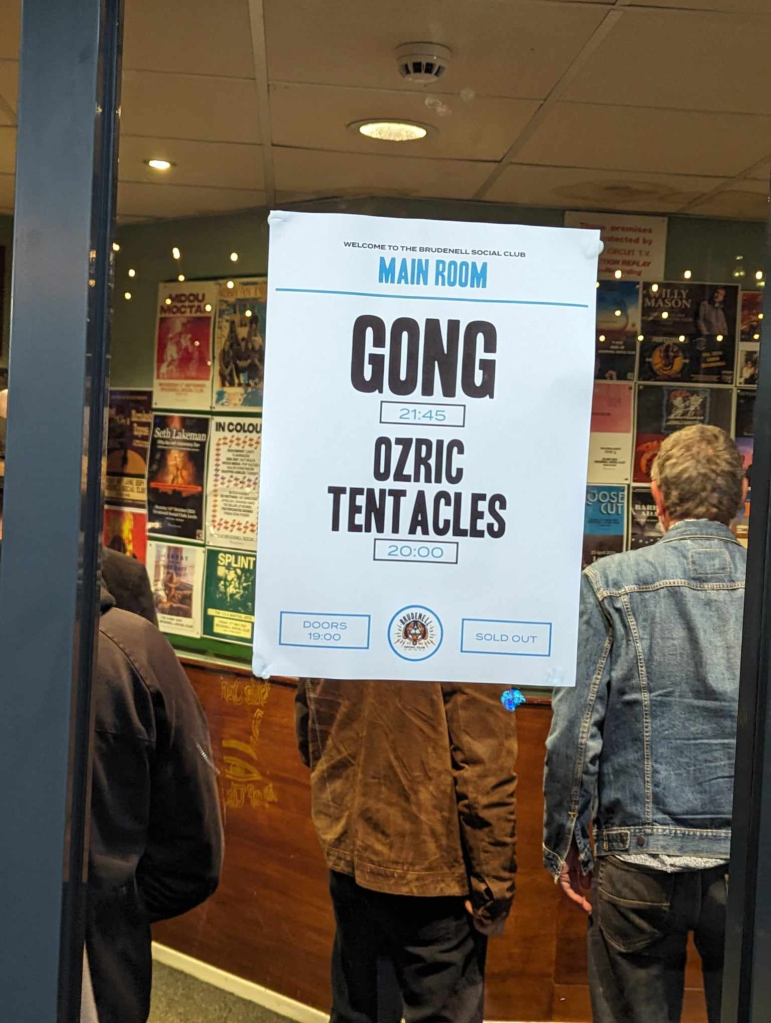

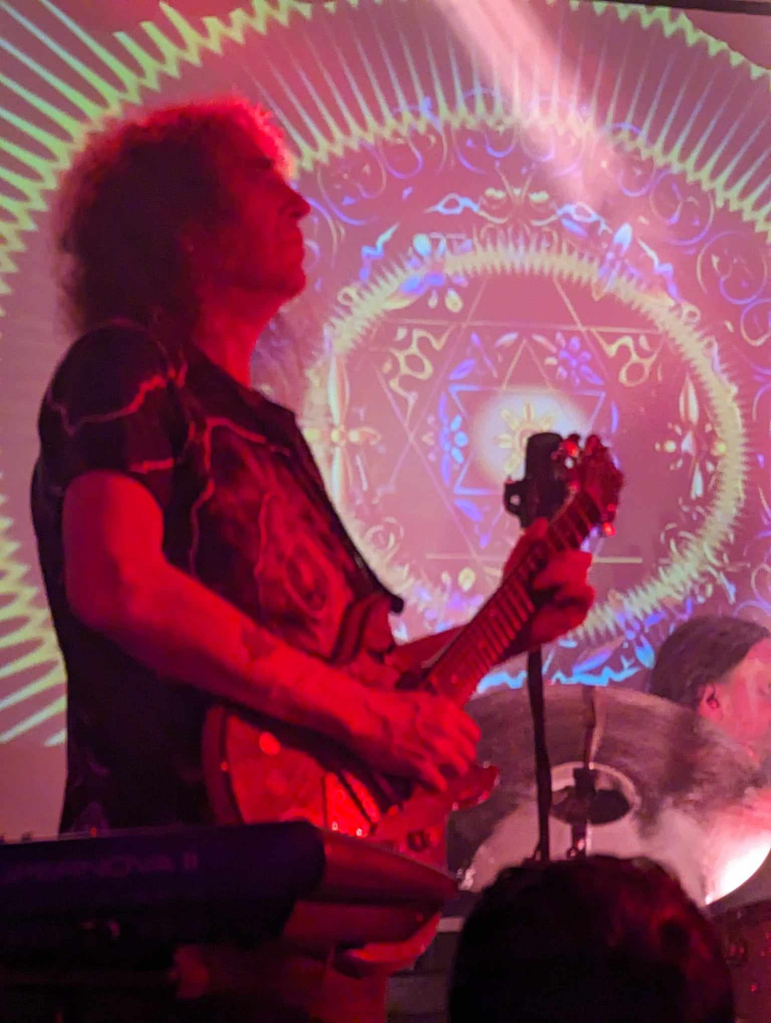

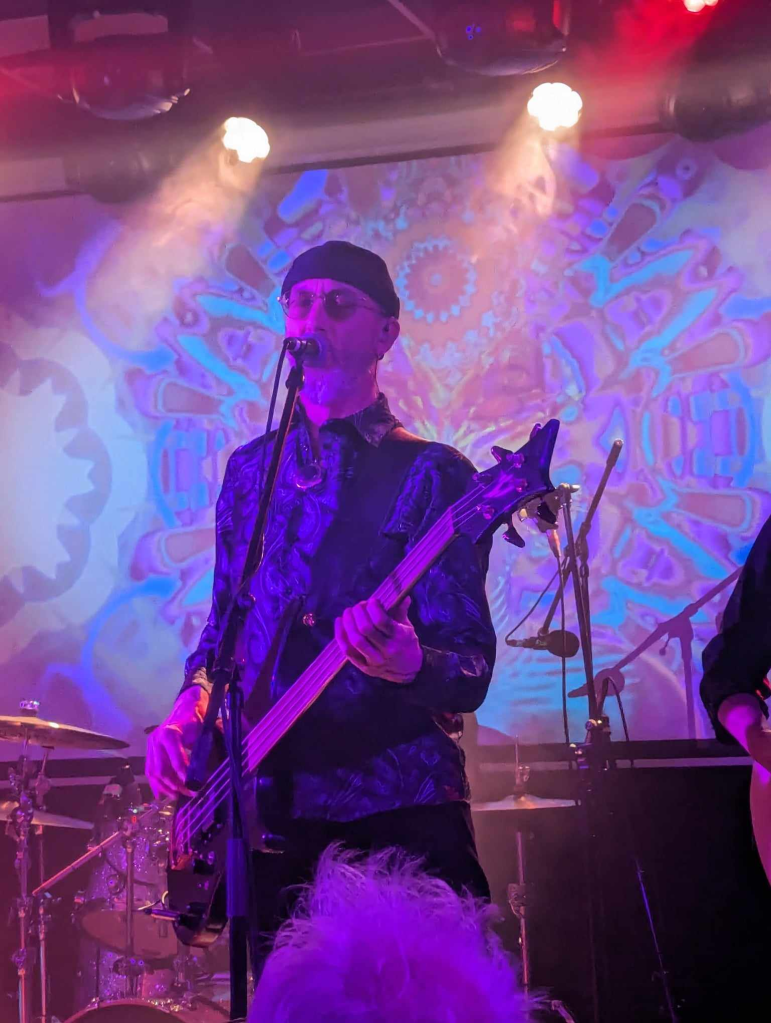


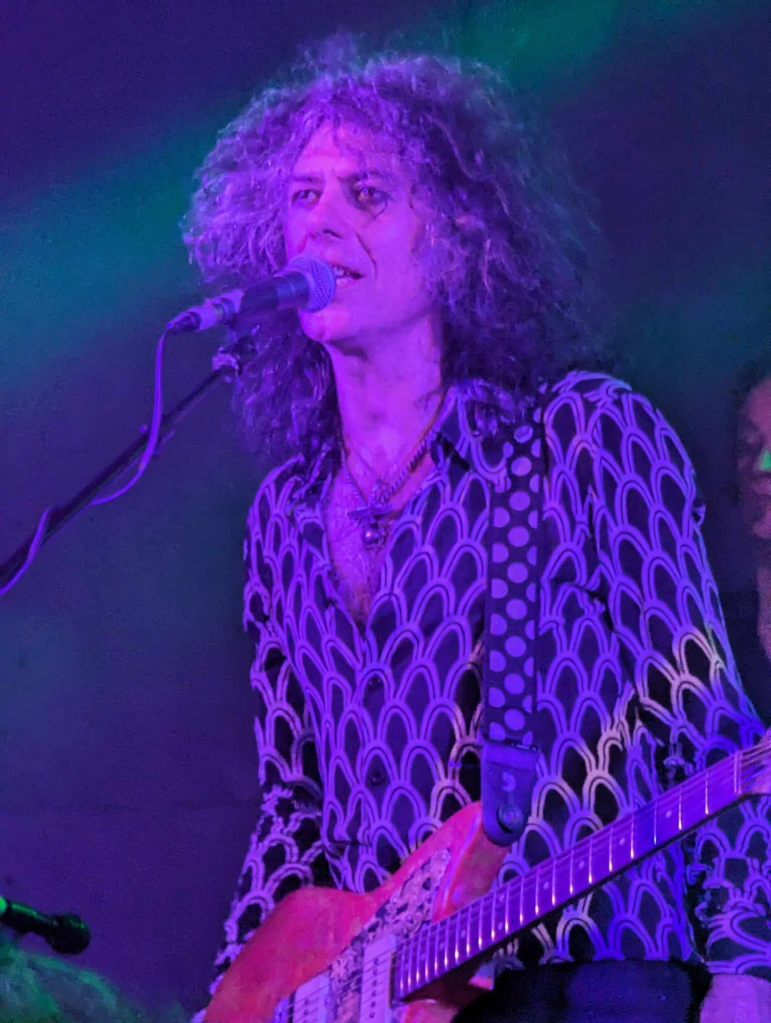
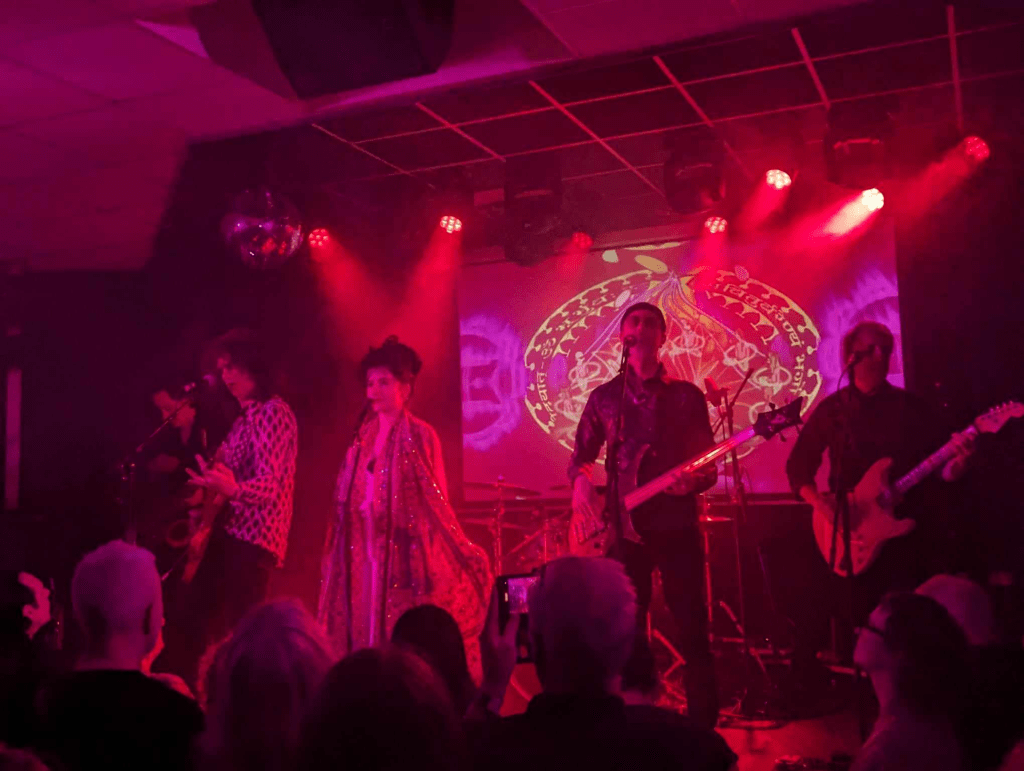


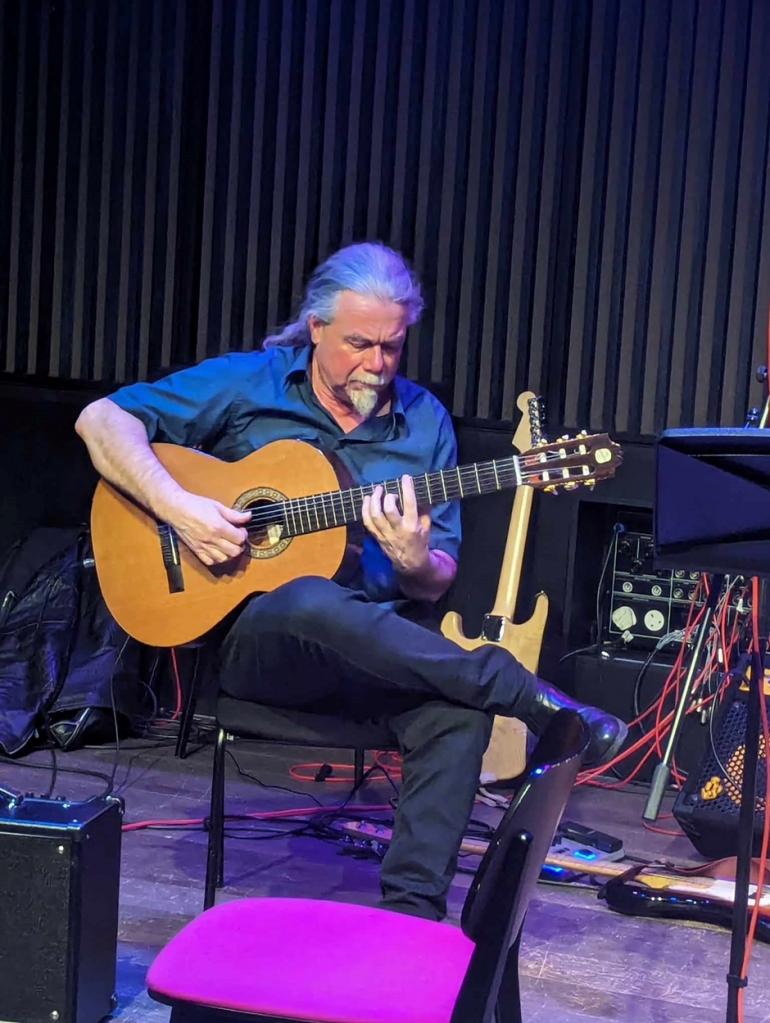


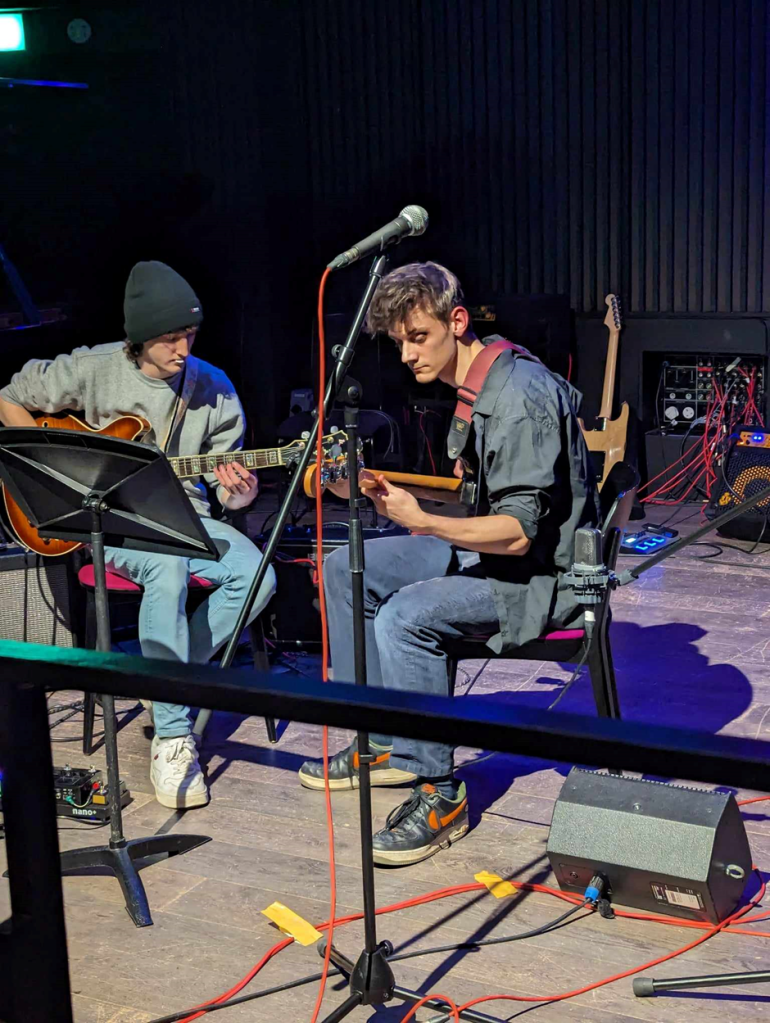
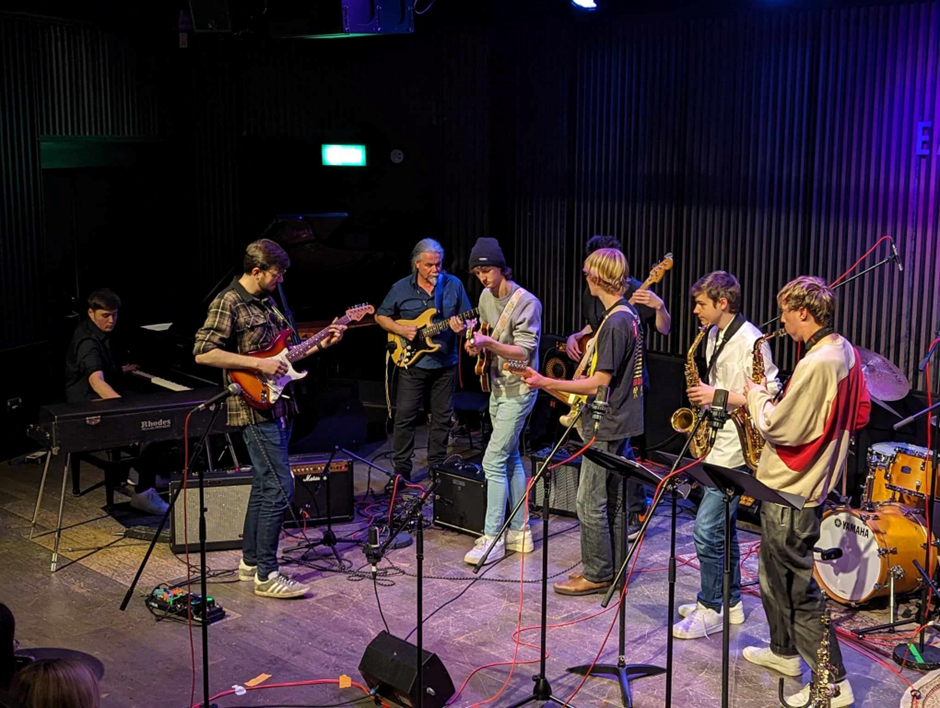

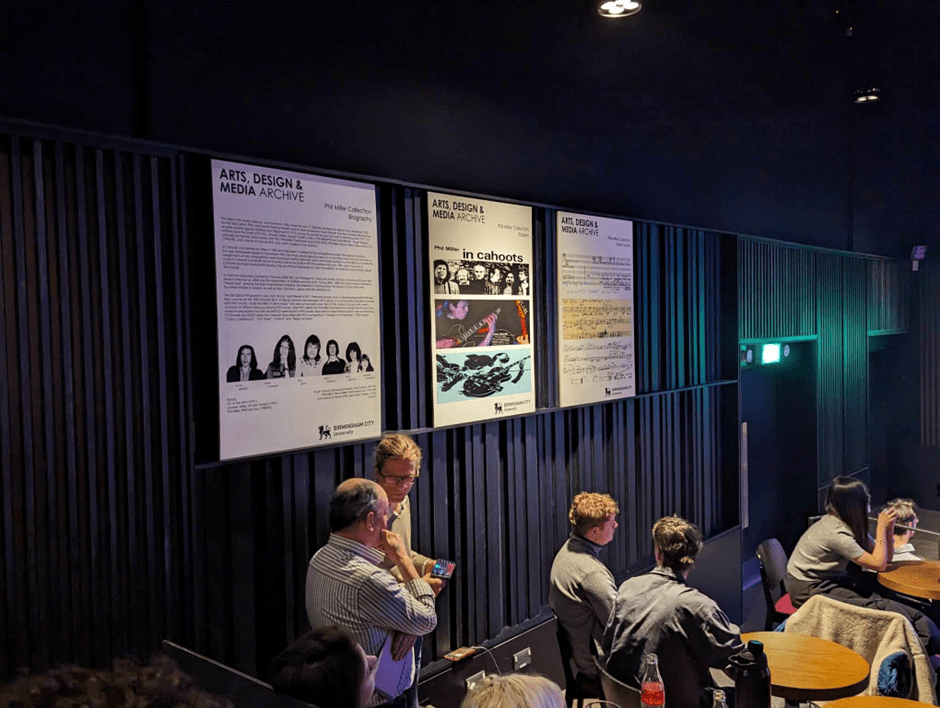
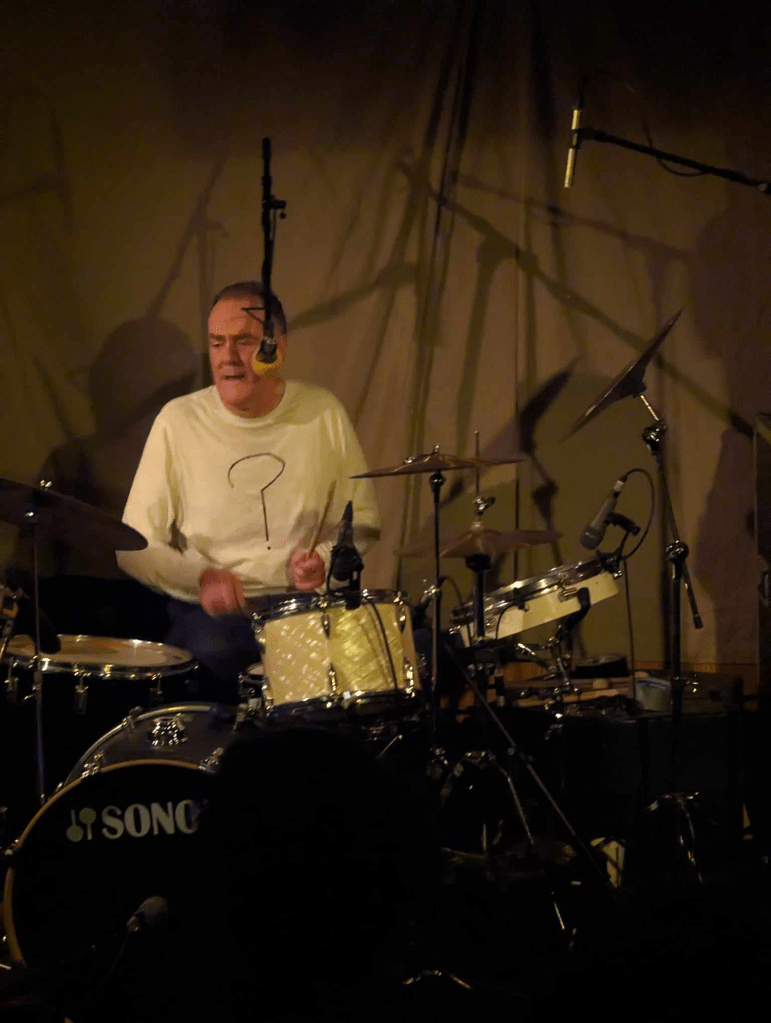

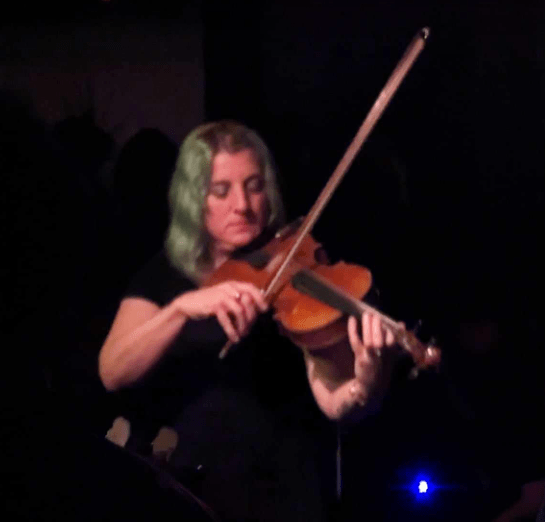

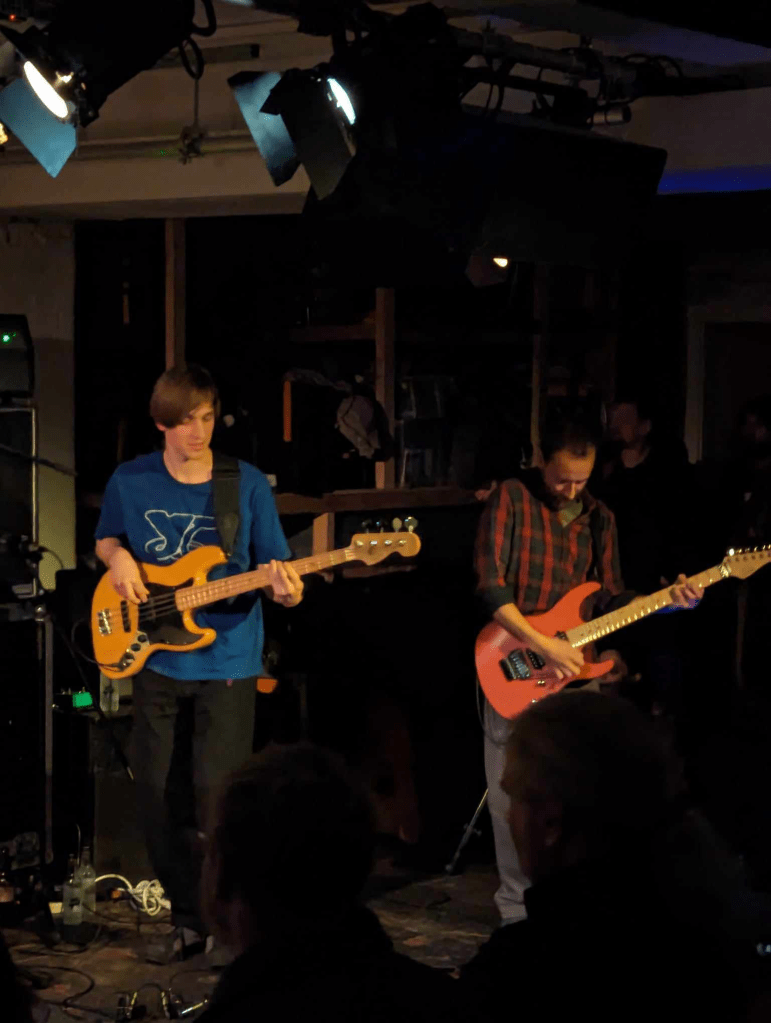

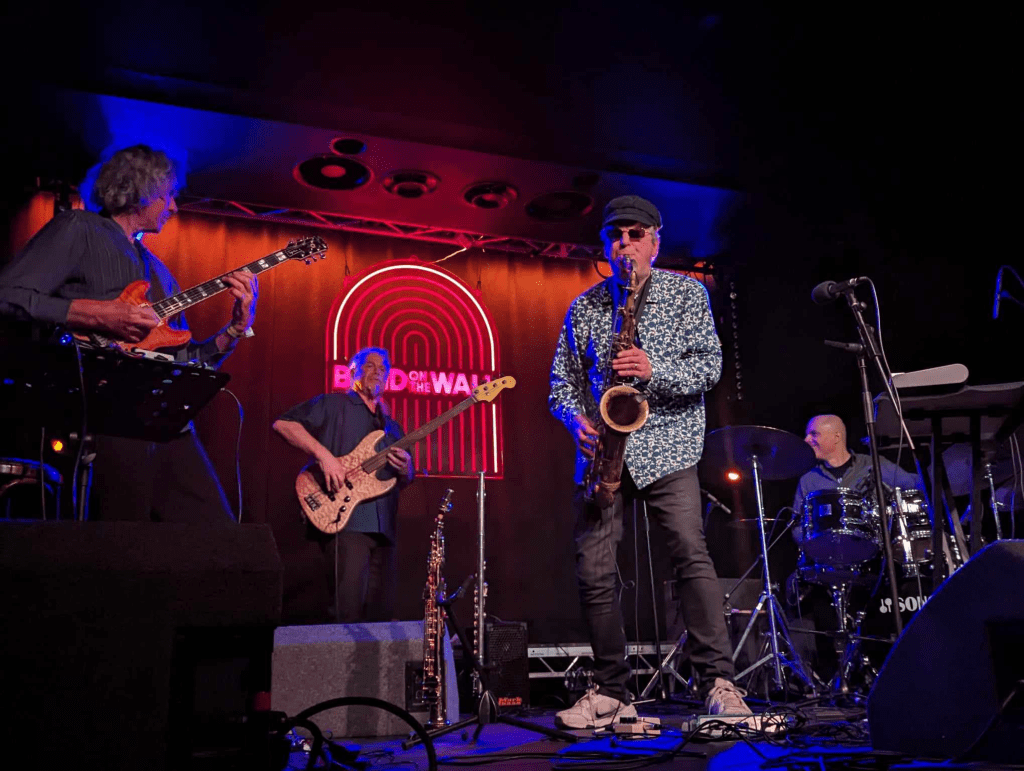
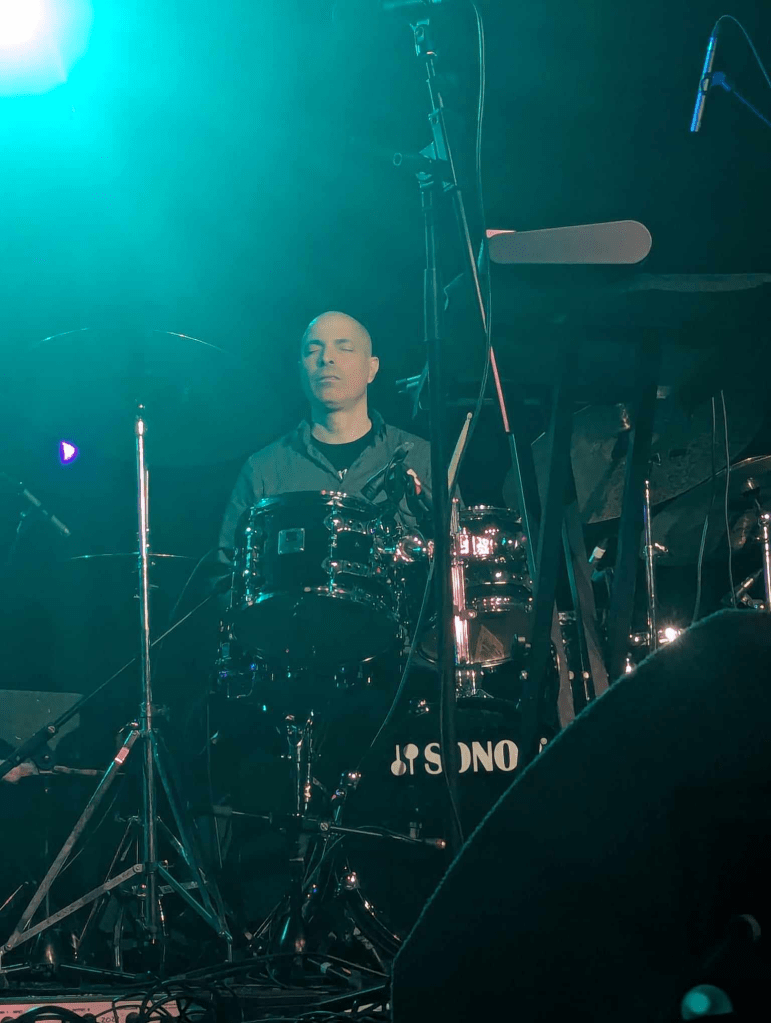


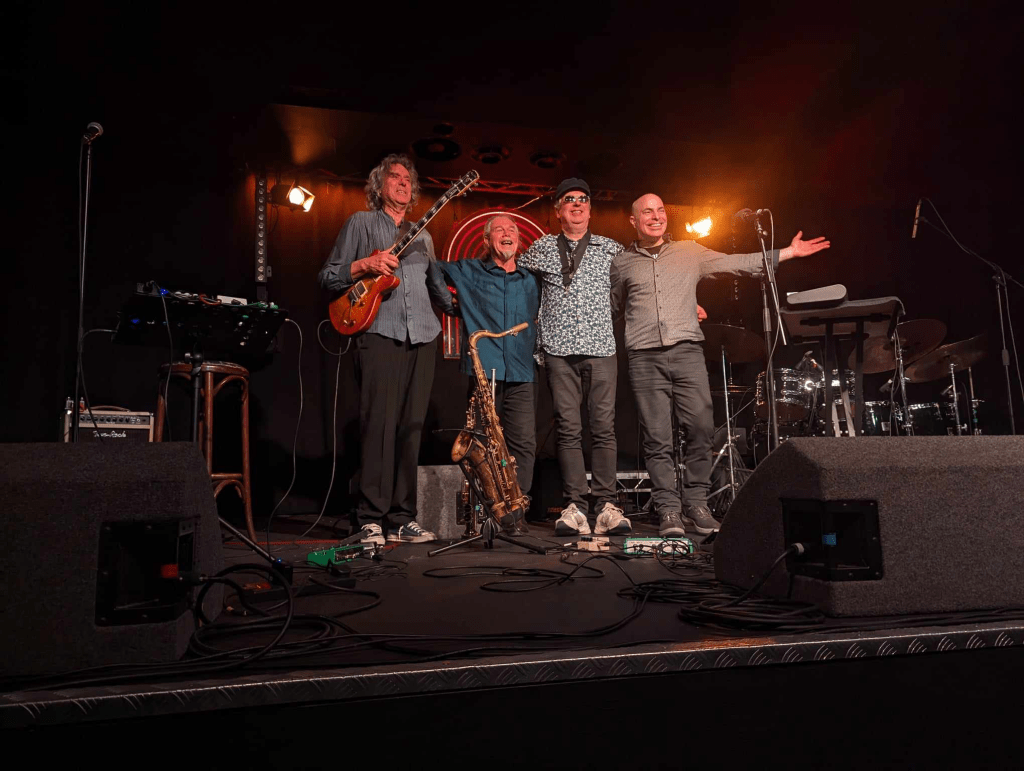


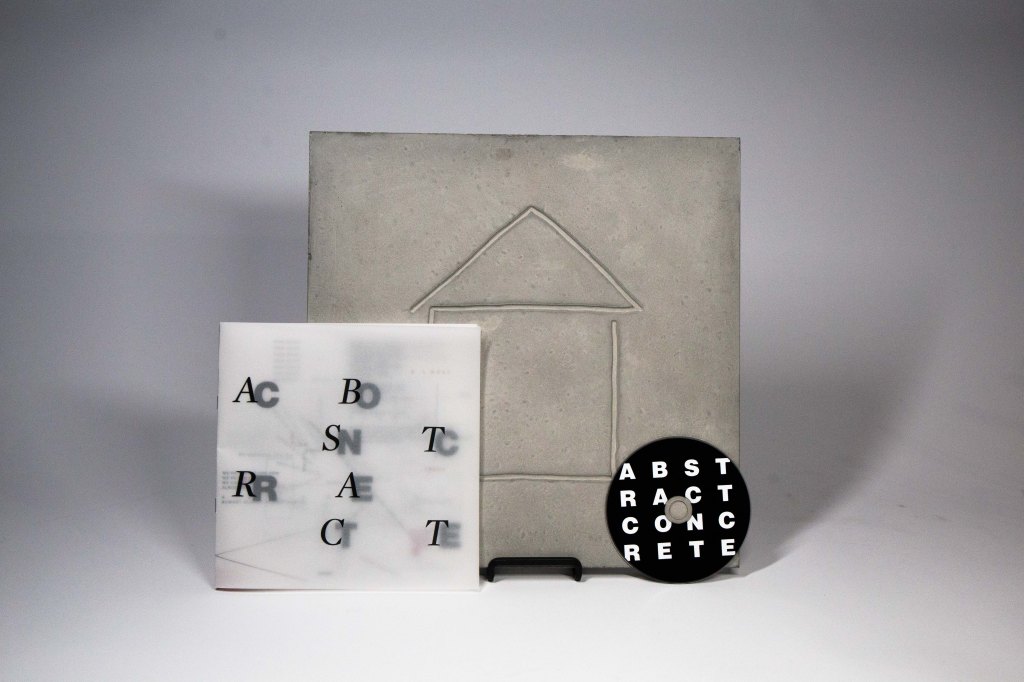


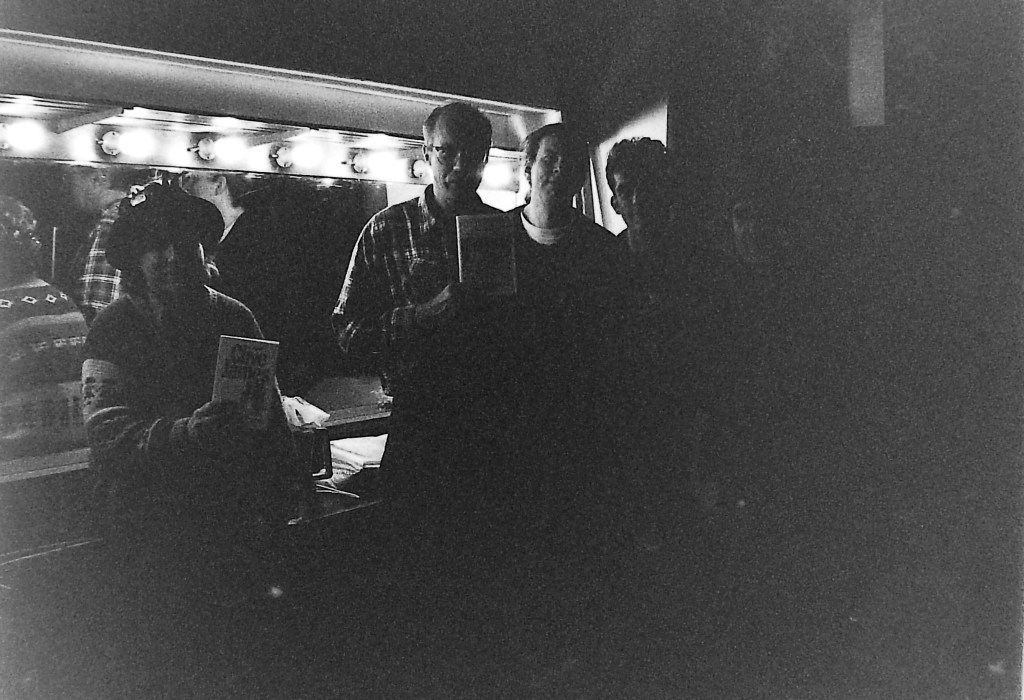
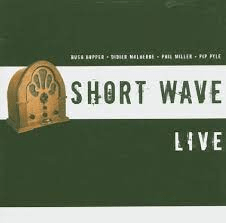
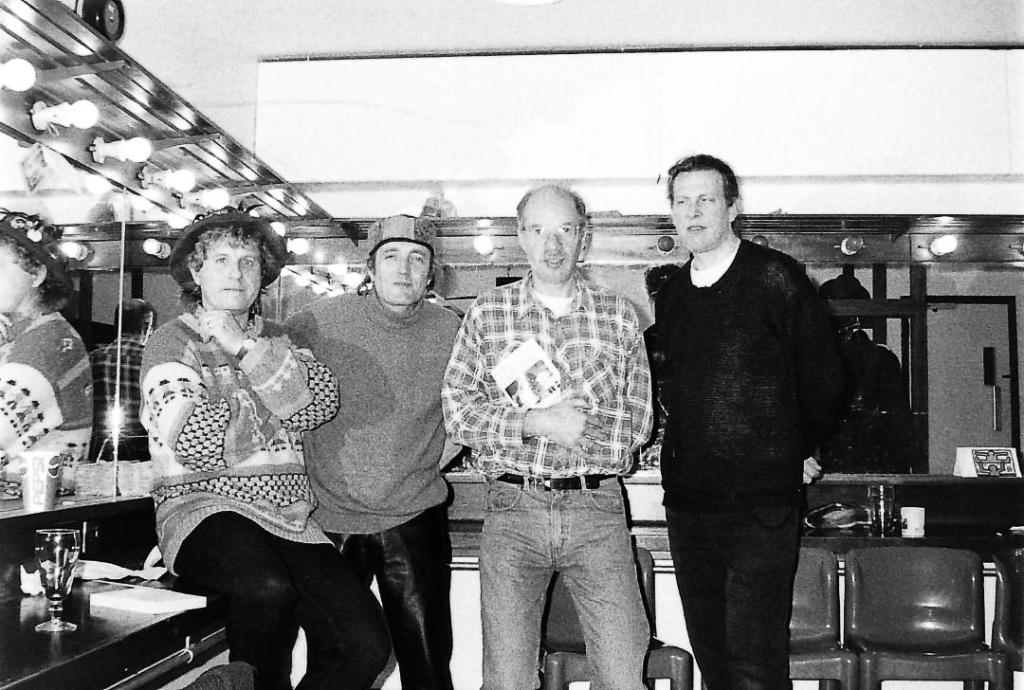
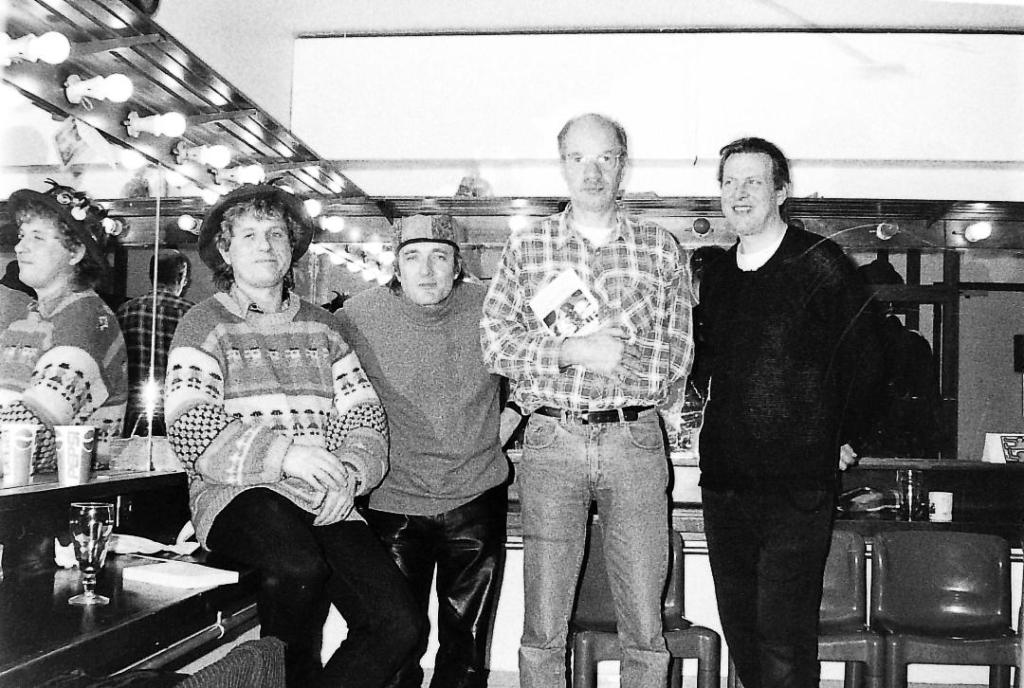
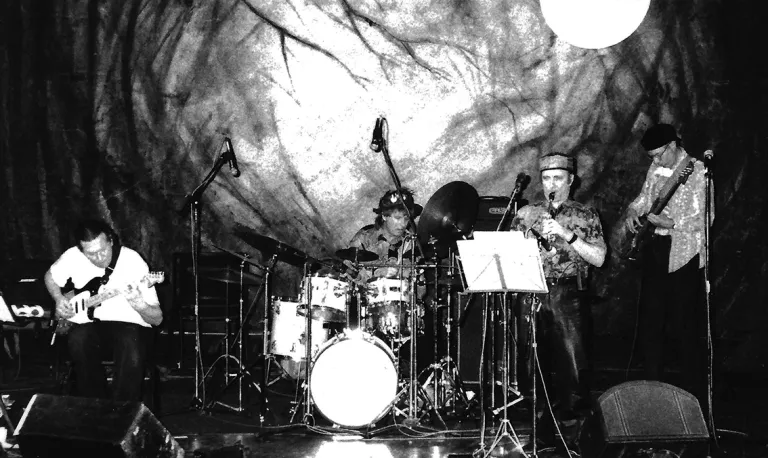
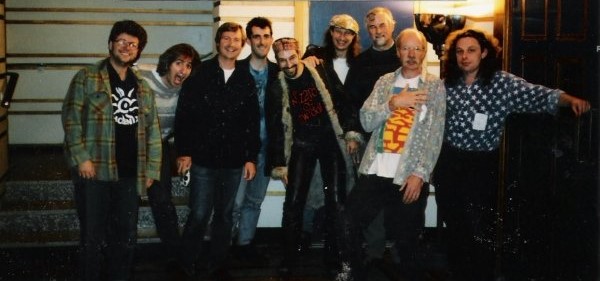
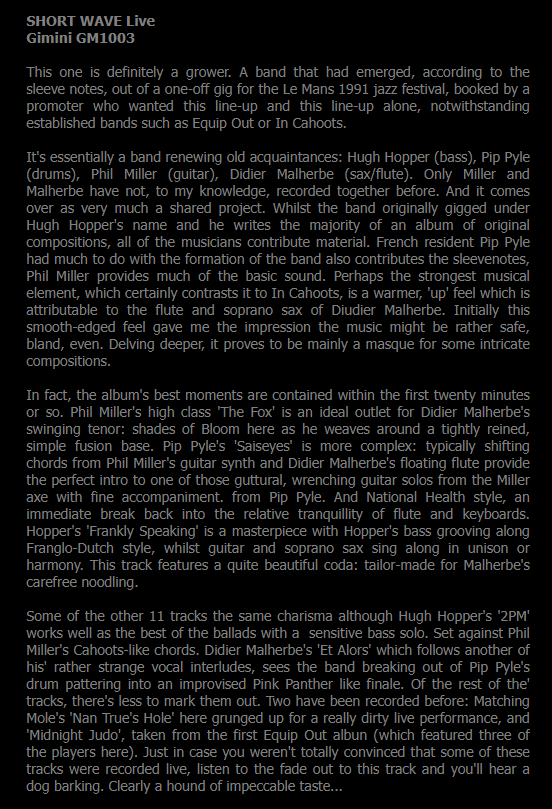
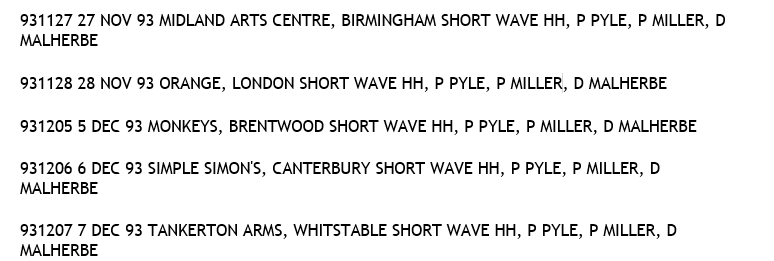
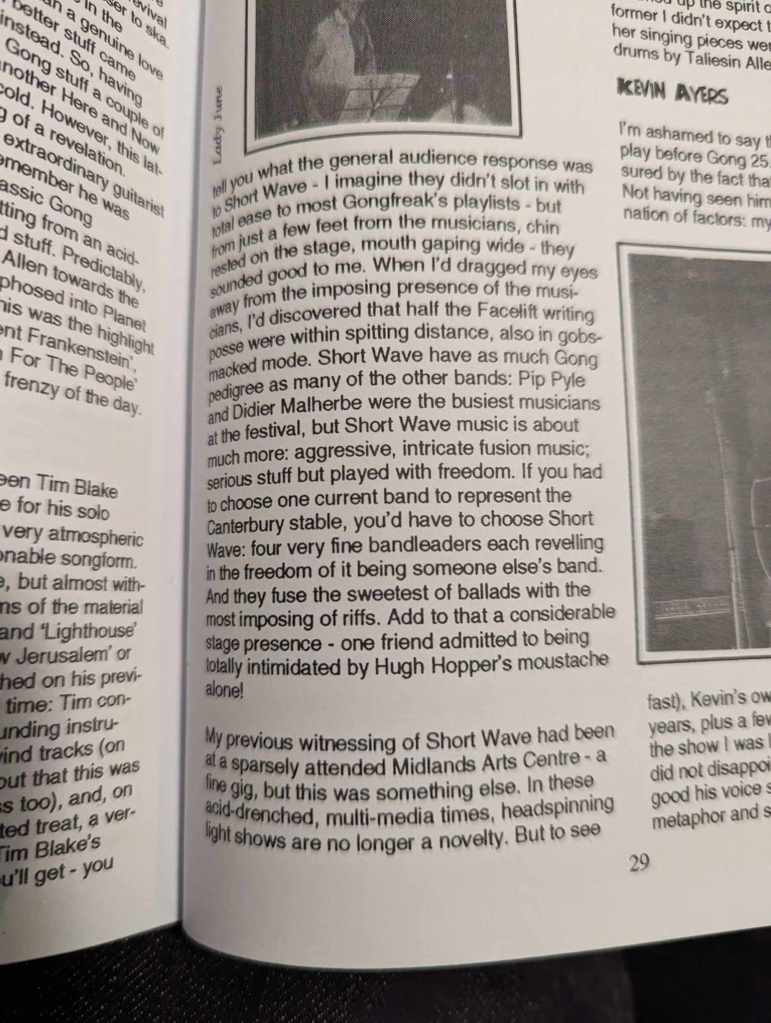
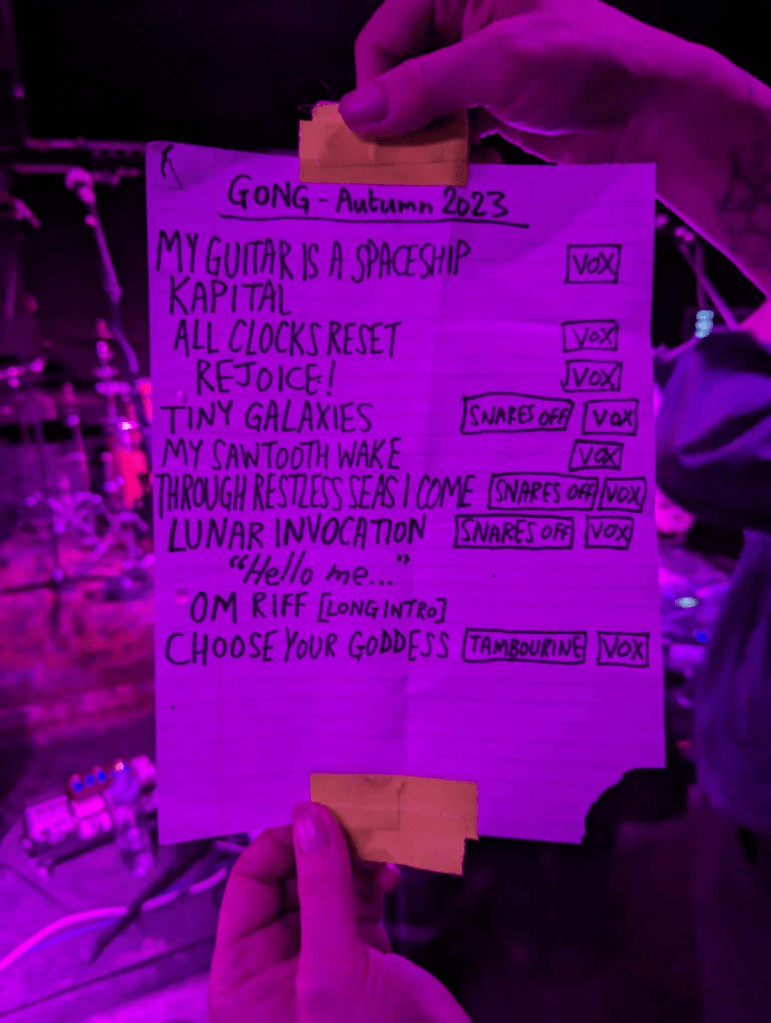

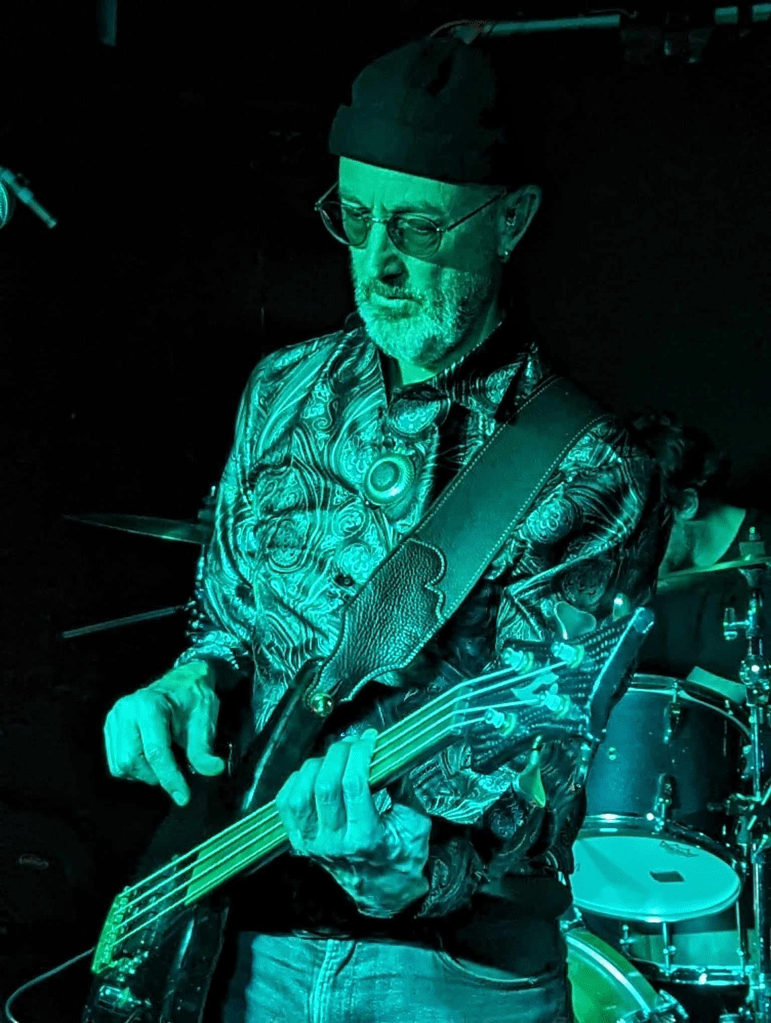


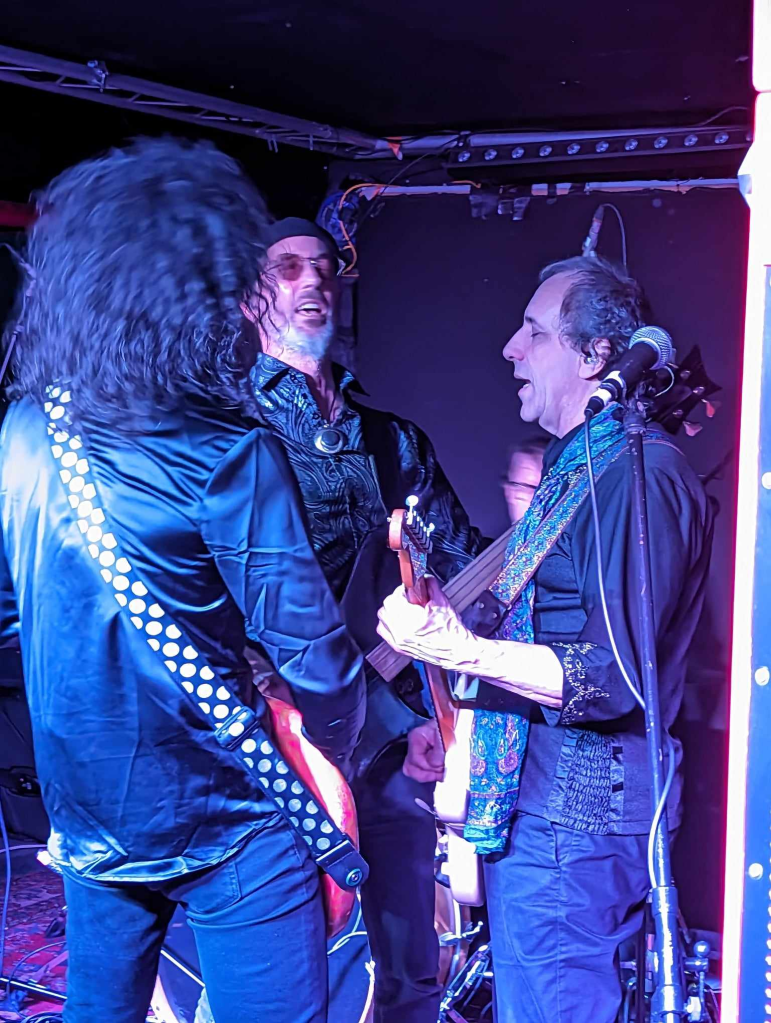
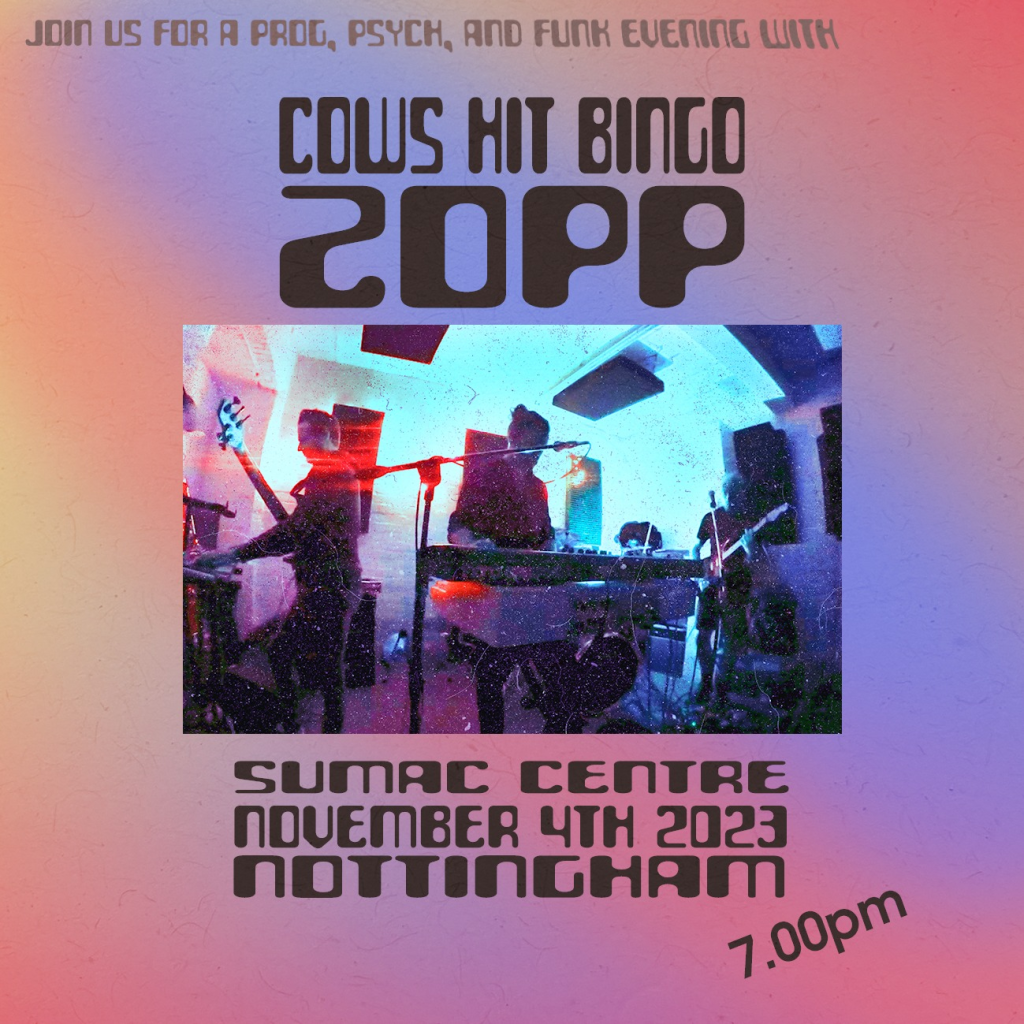

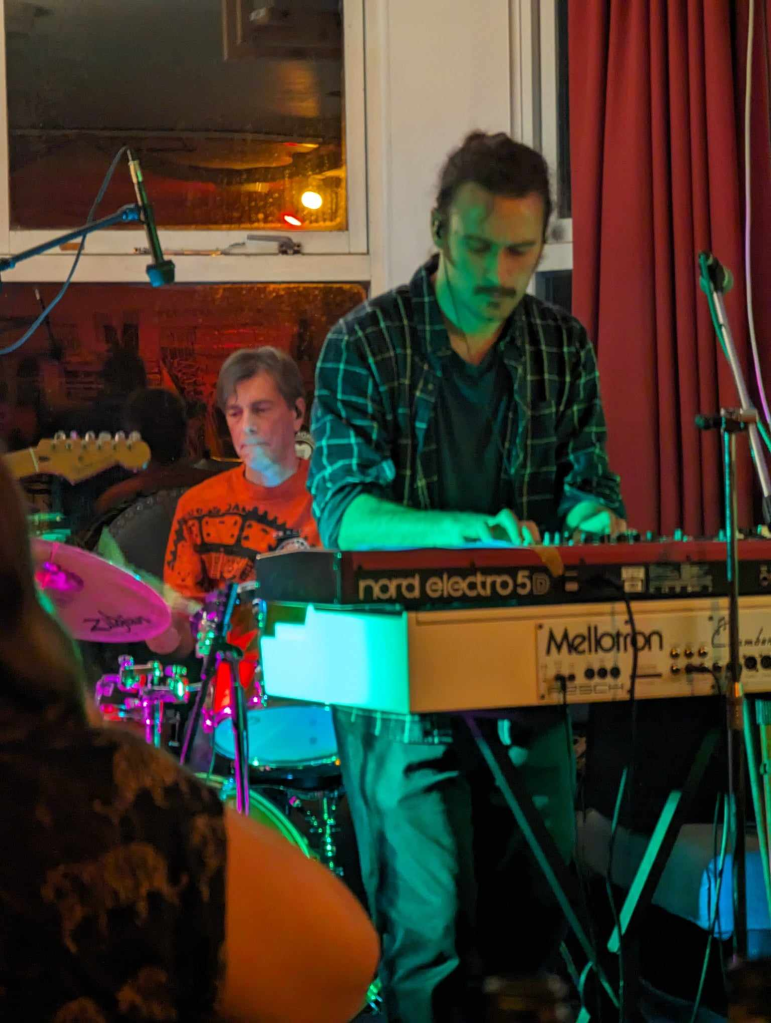
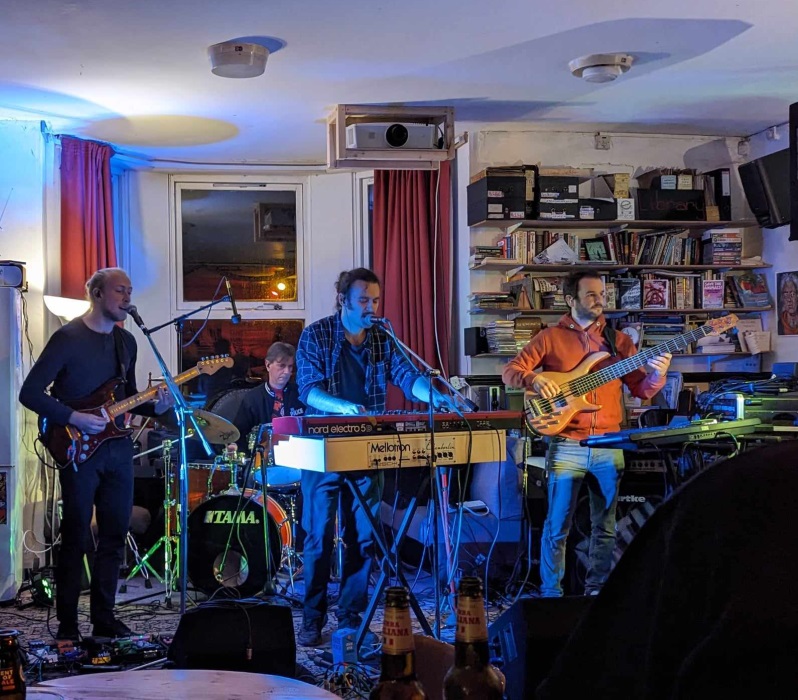
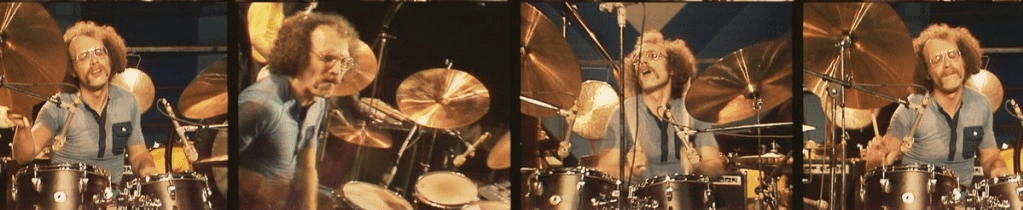

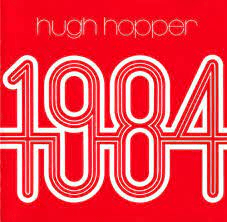
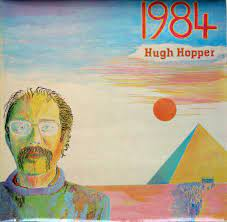

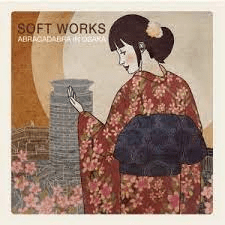
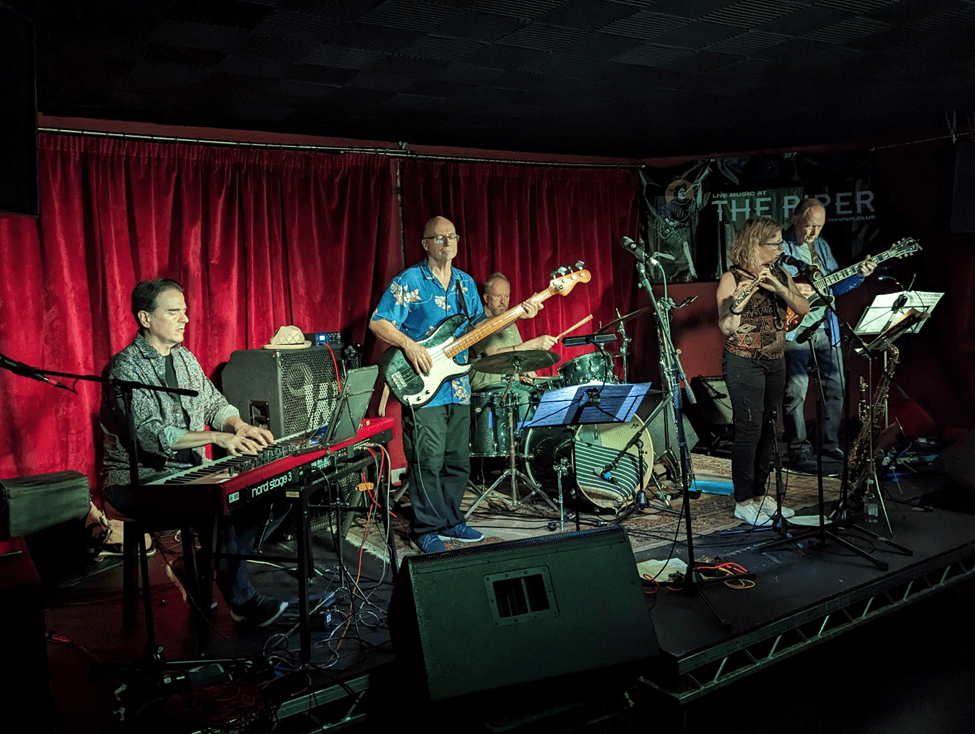
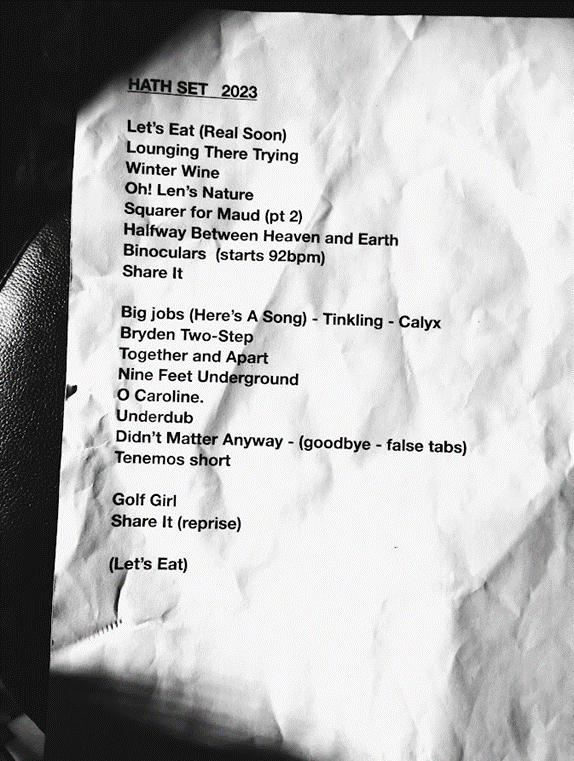

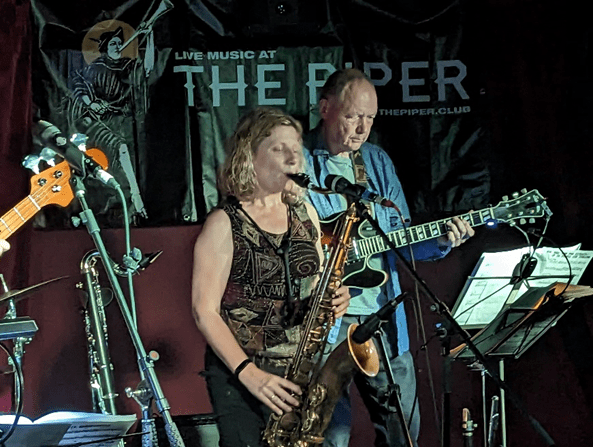

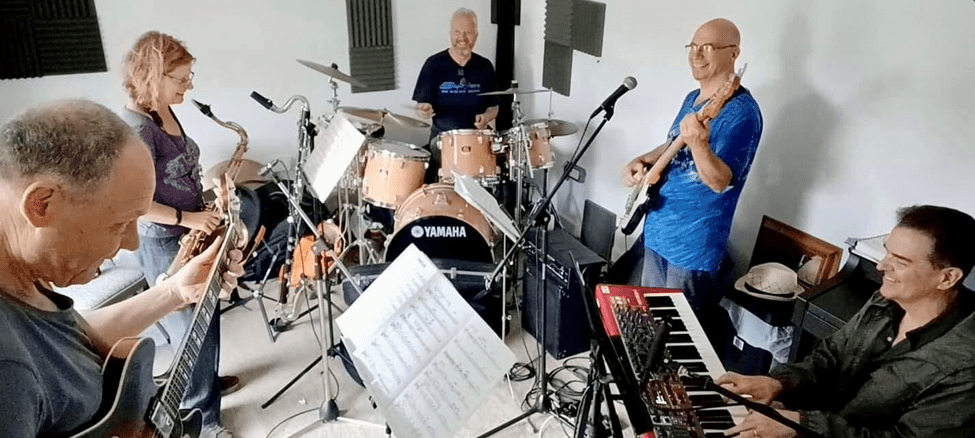
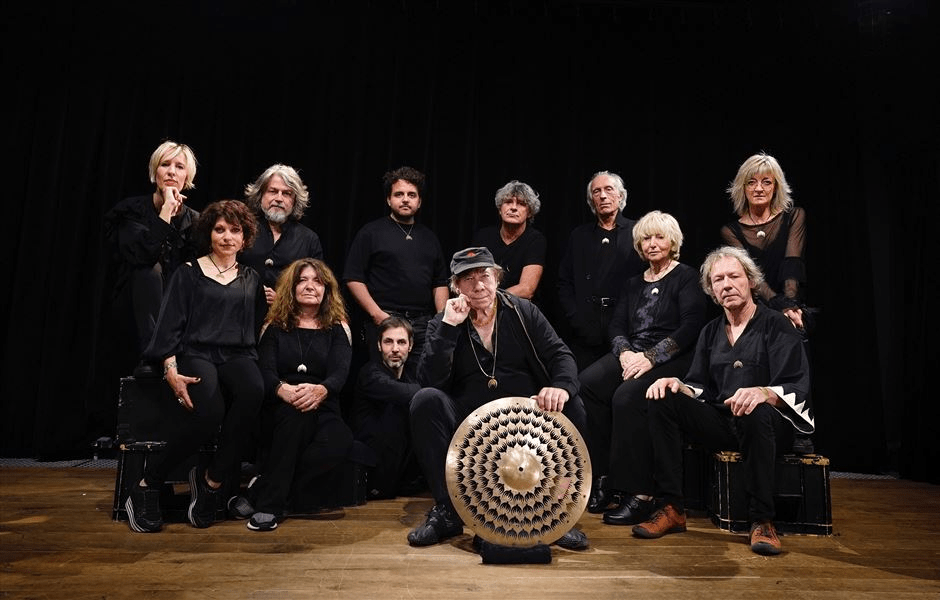
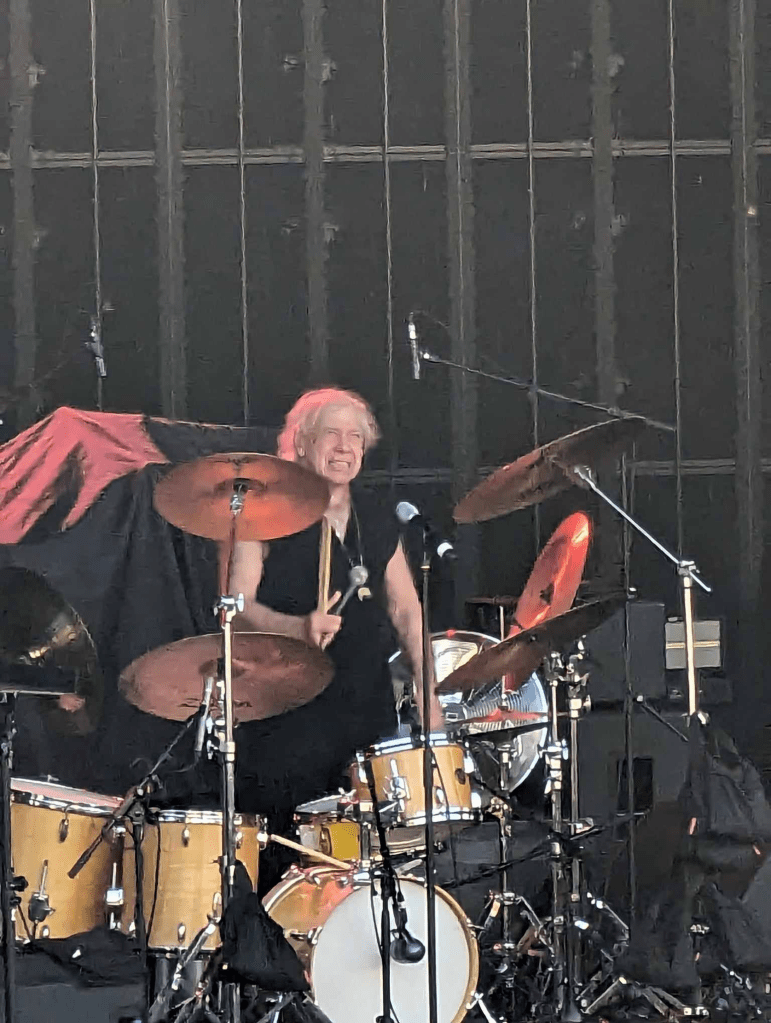
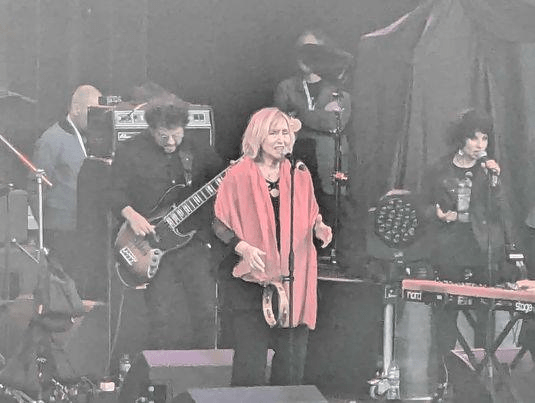
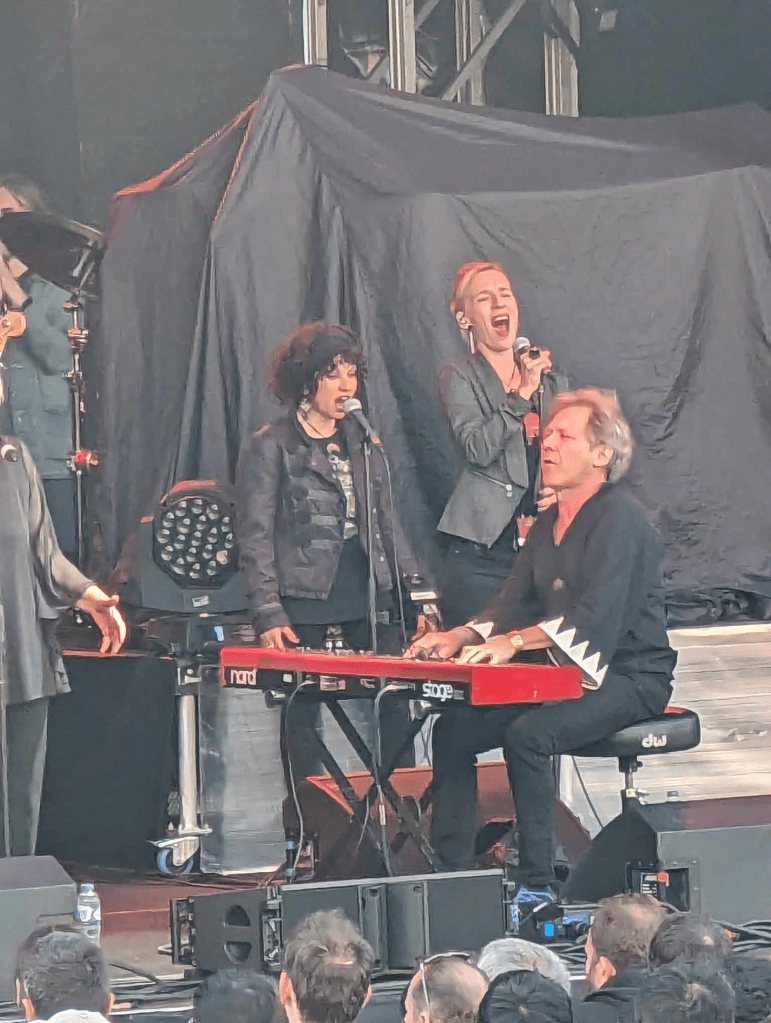
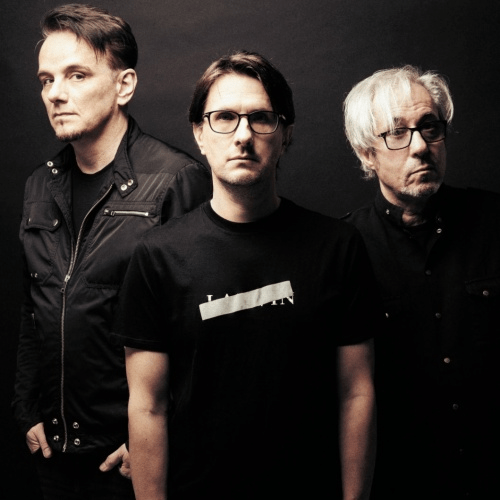


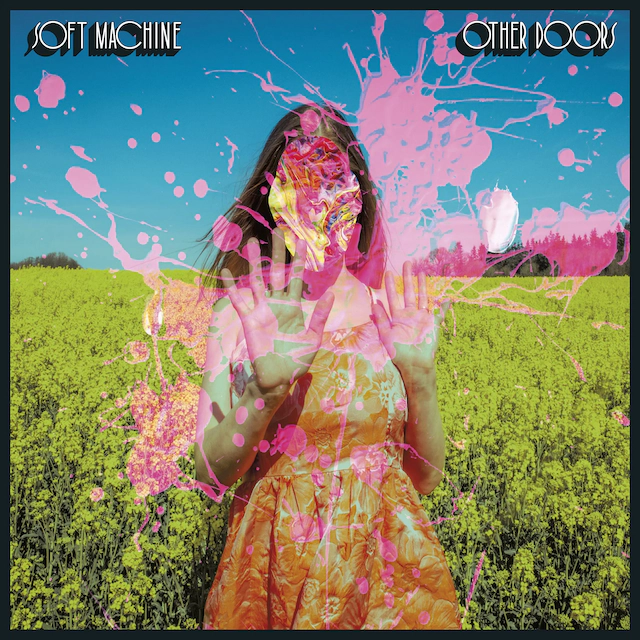

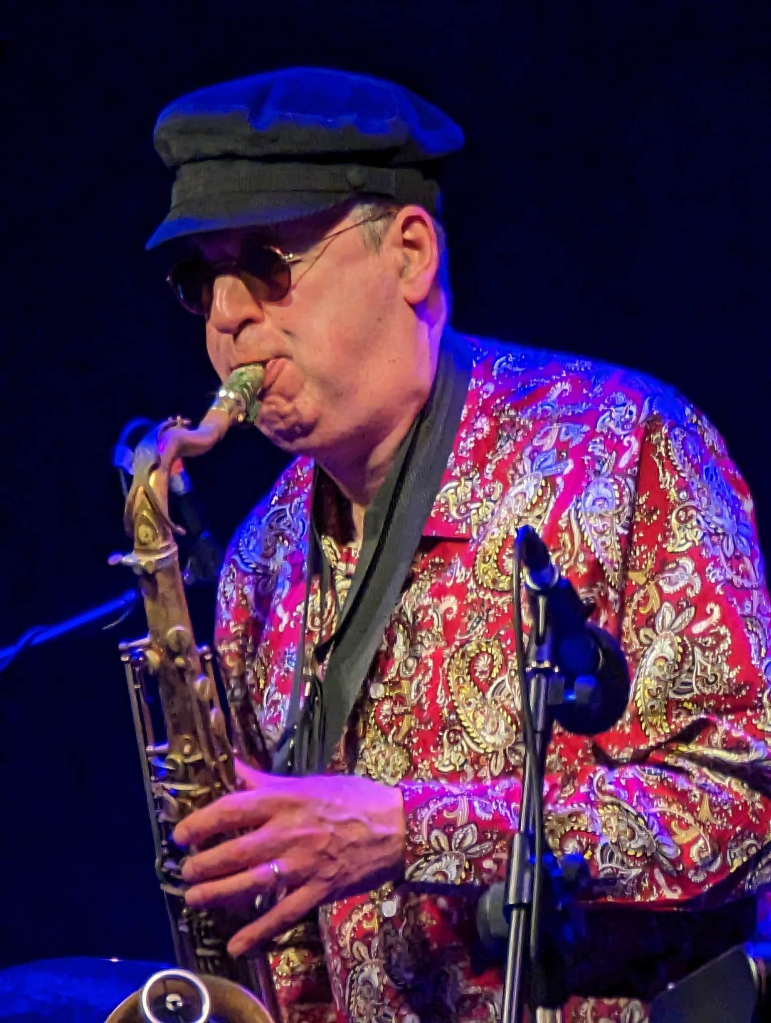
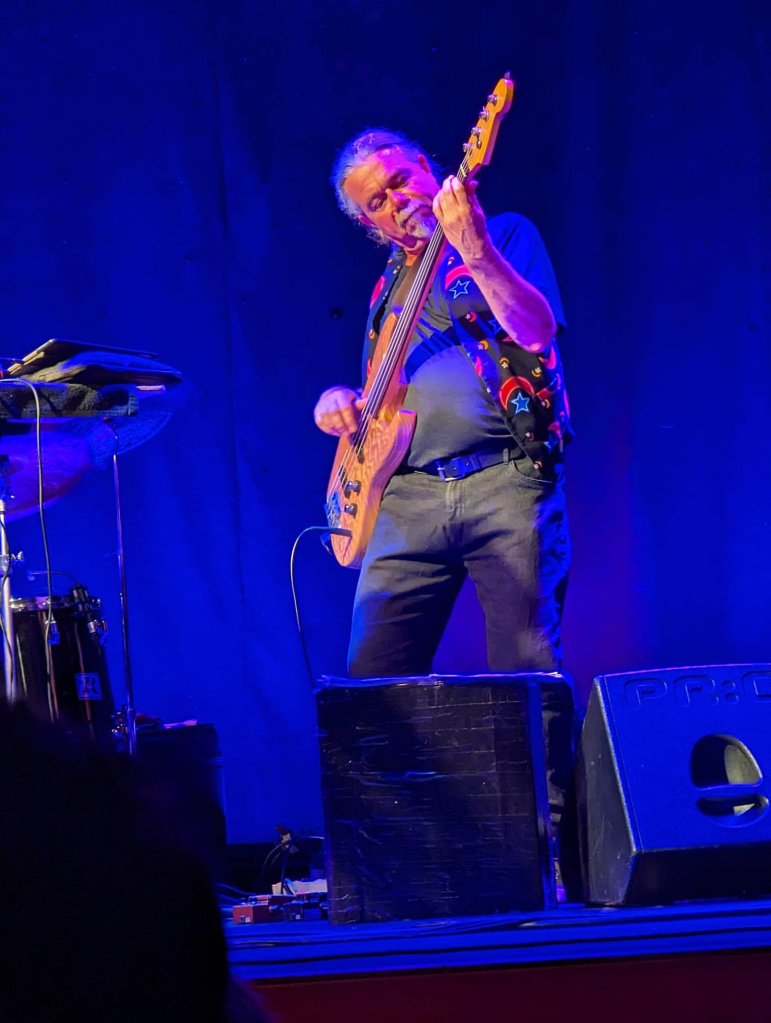
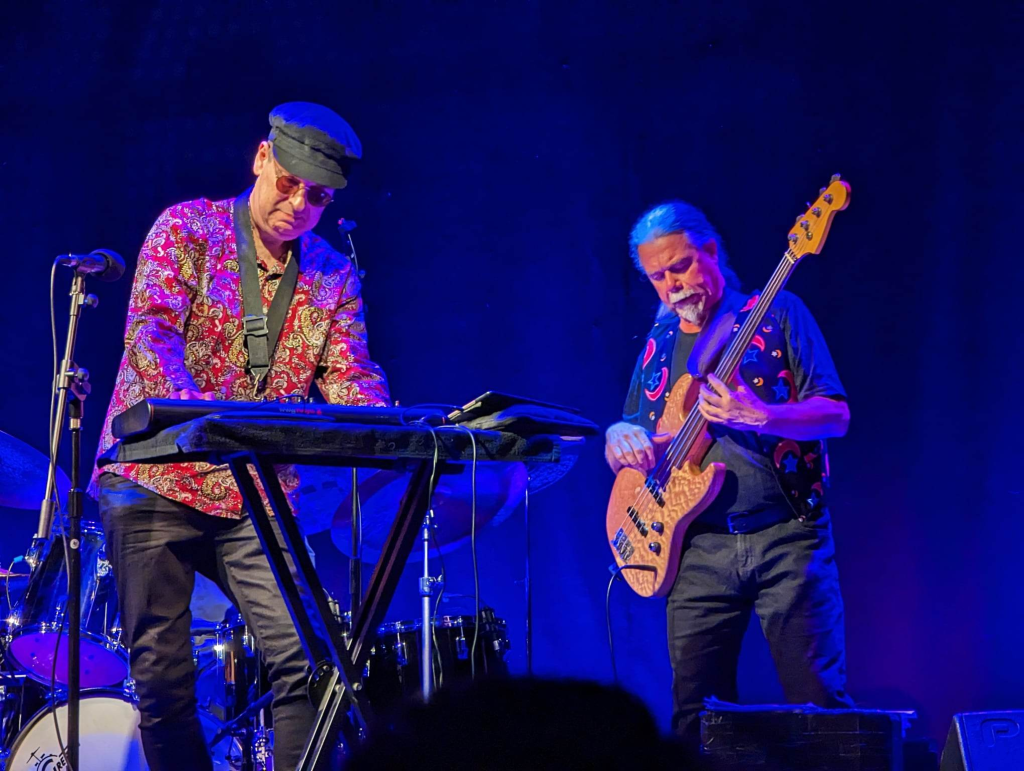

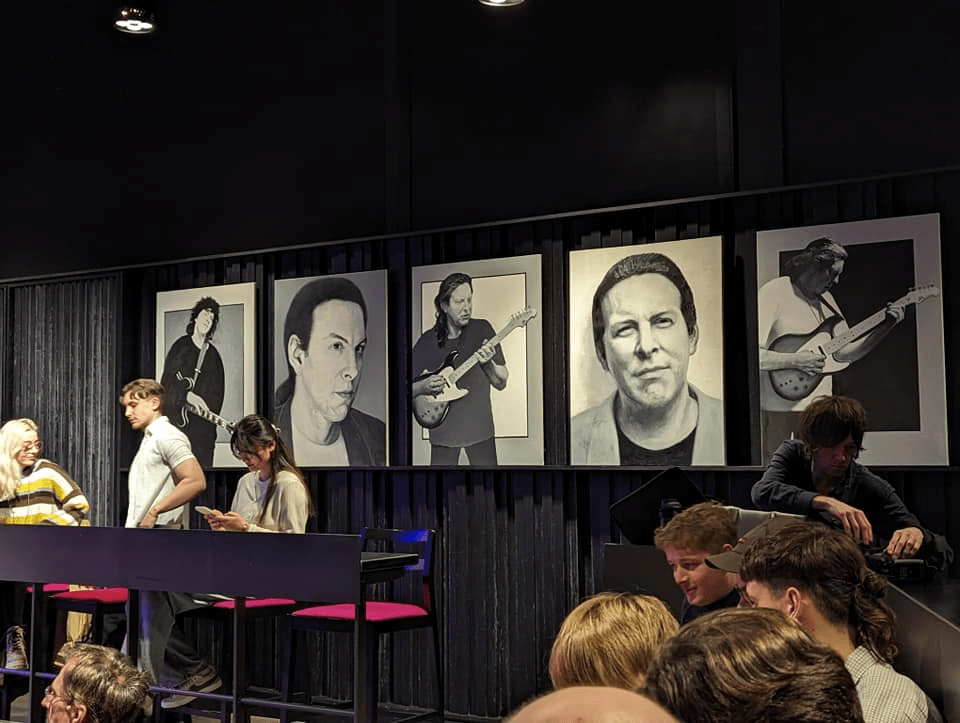
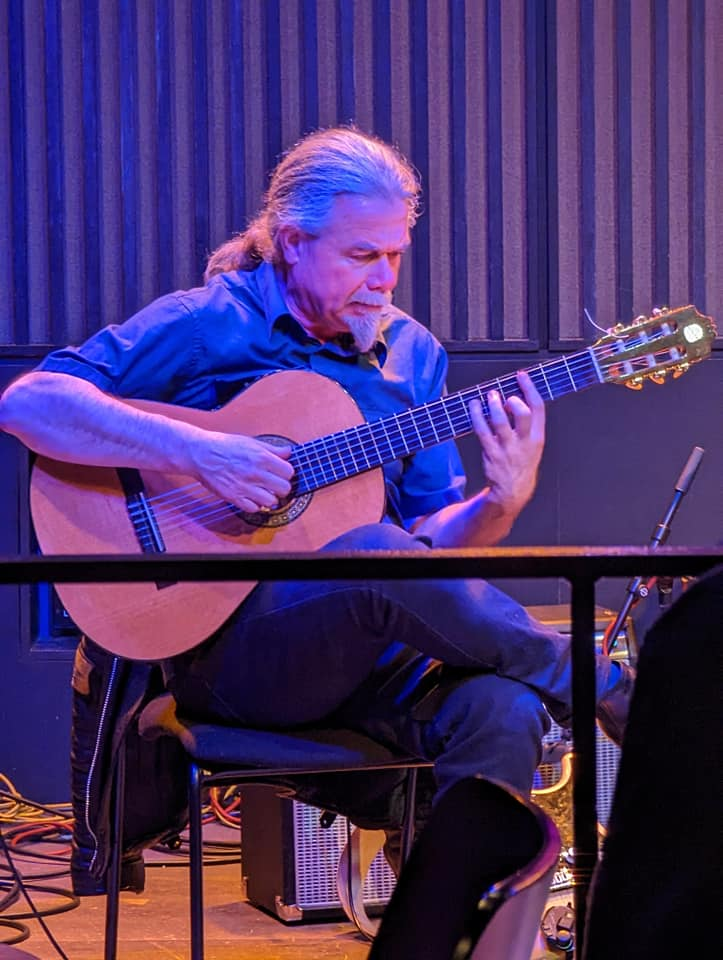






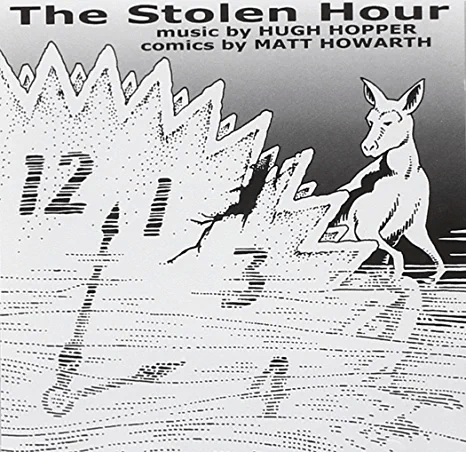
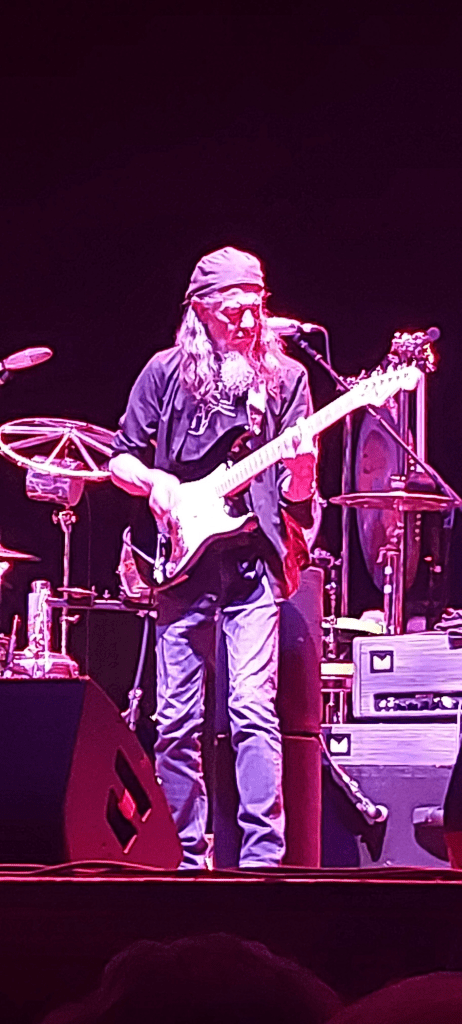


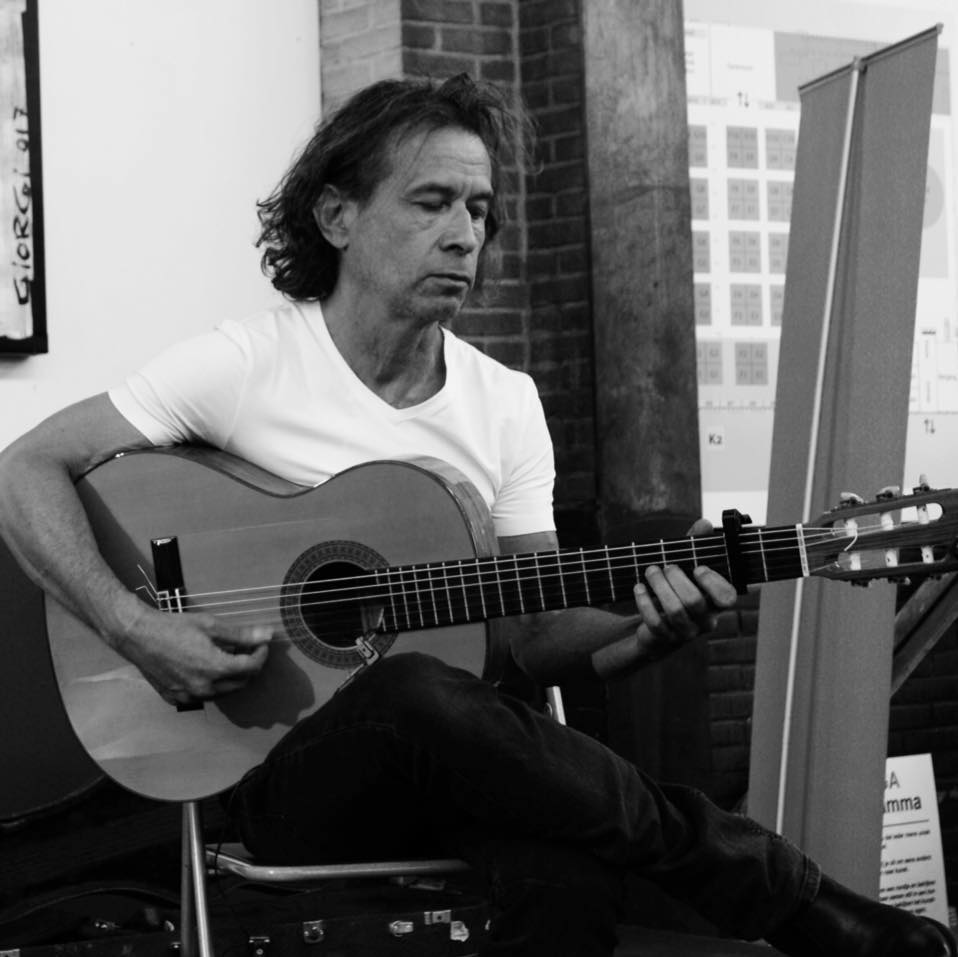


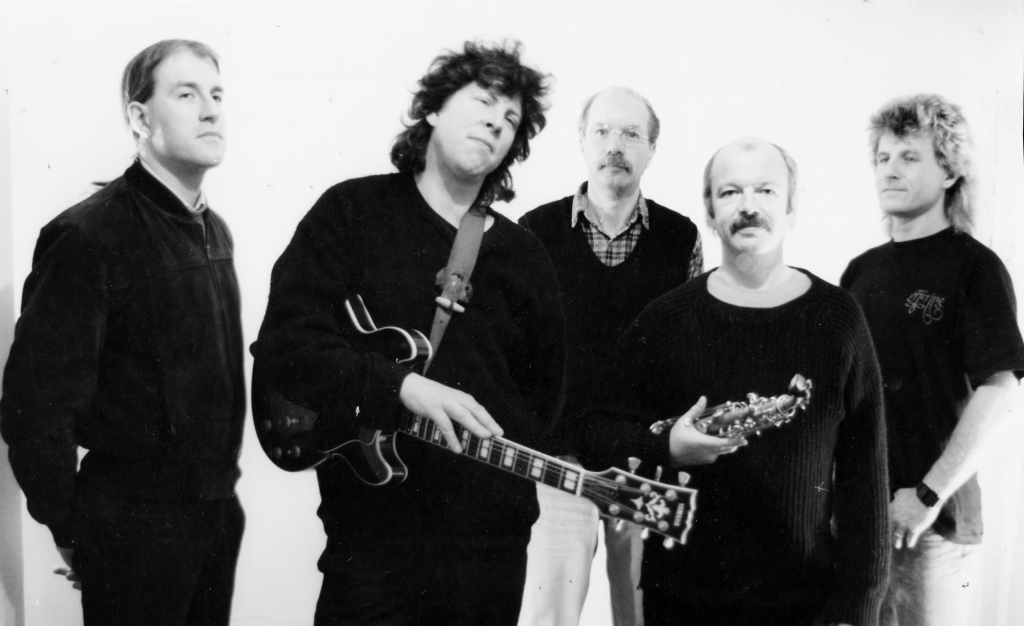
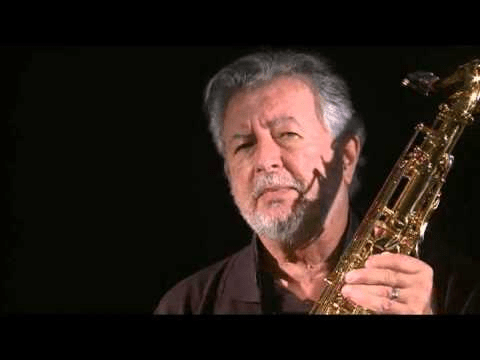


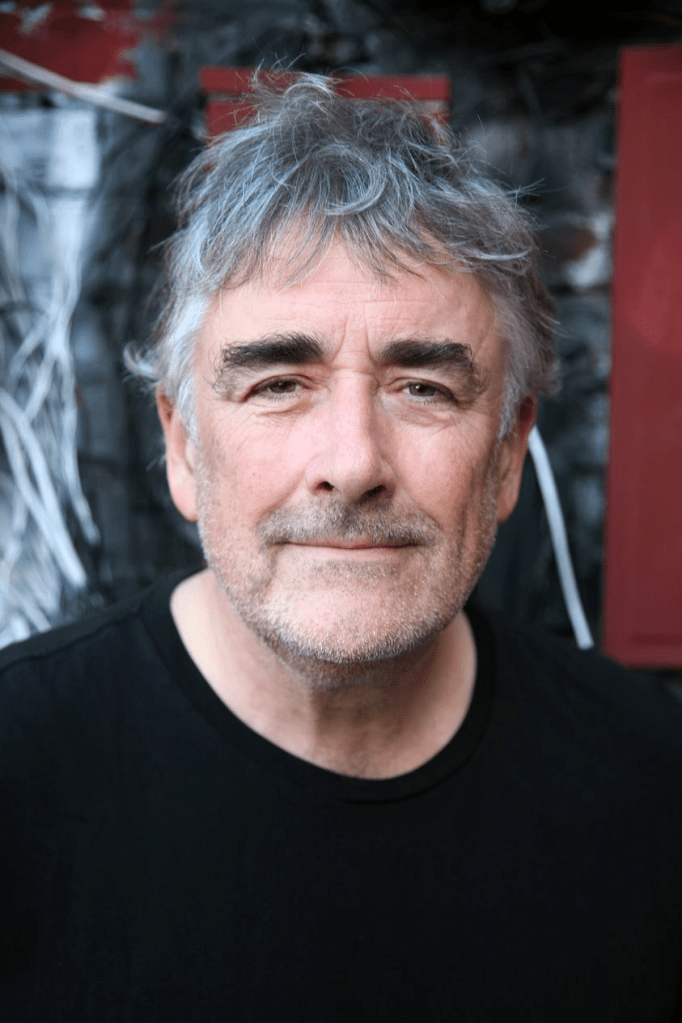


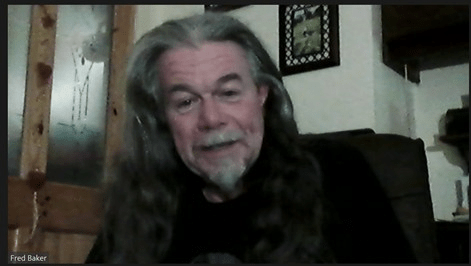

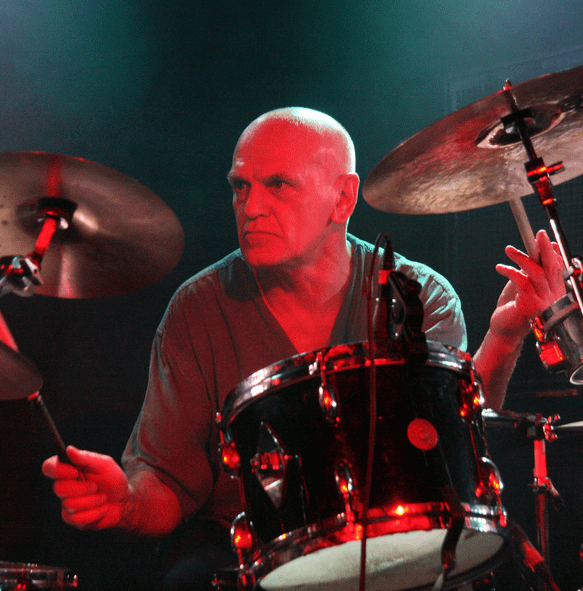
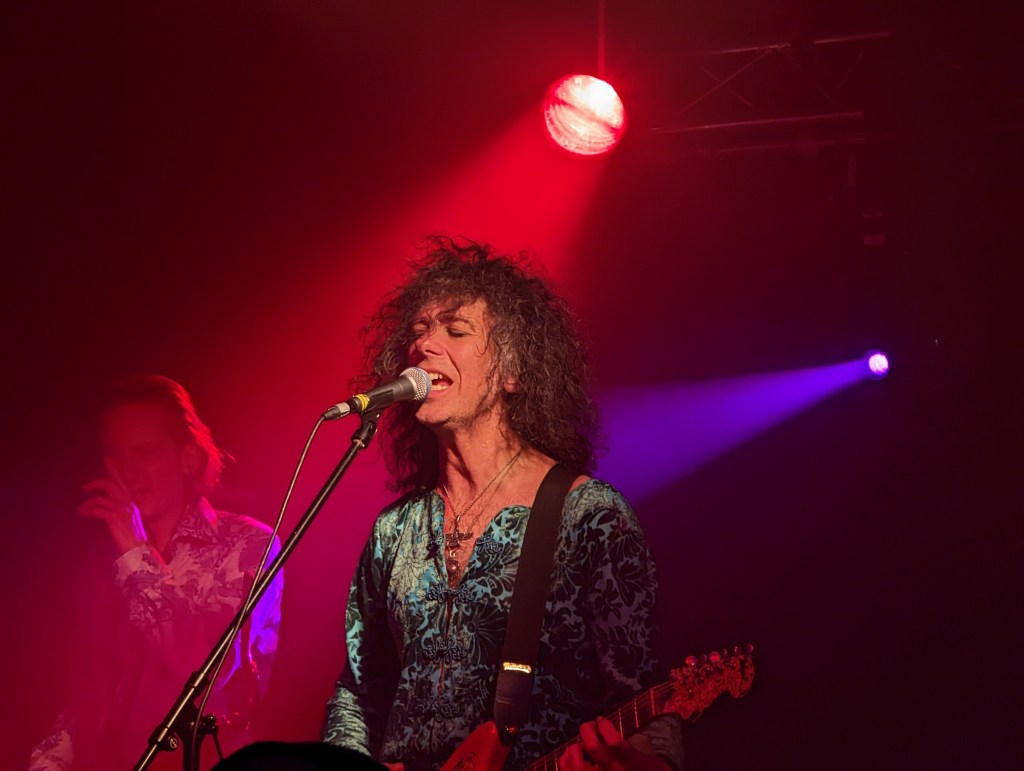
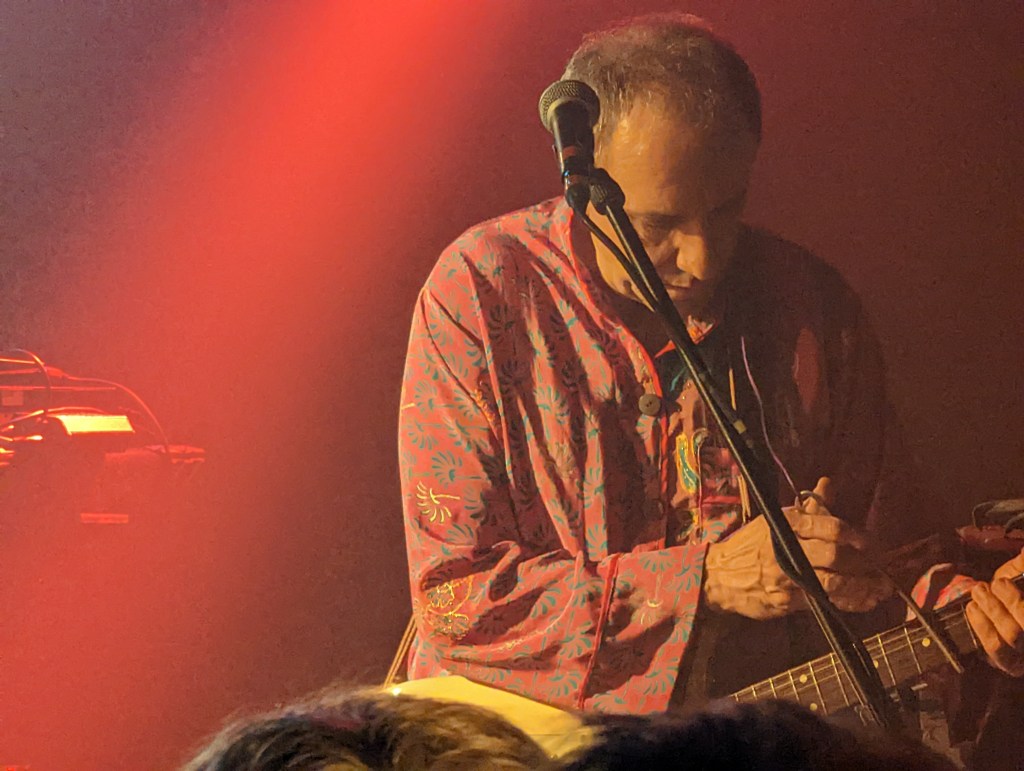


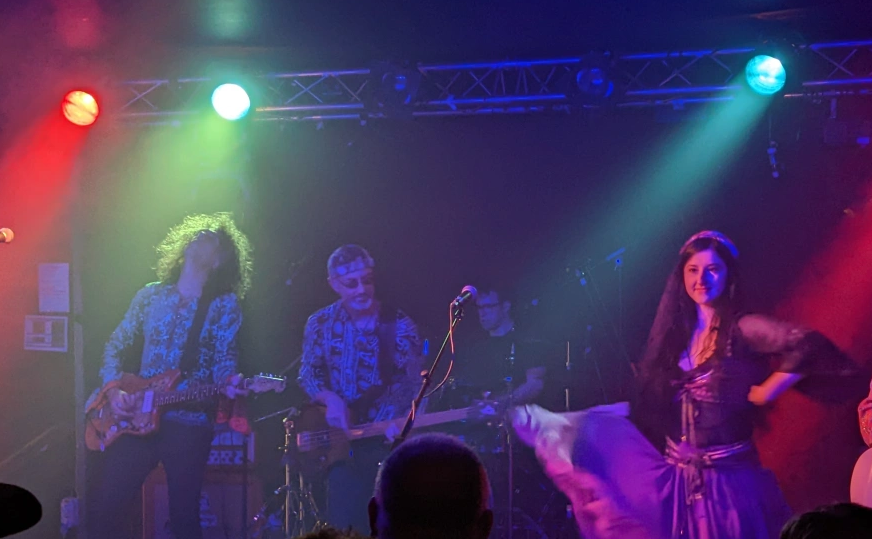


 The Canterbury scene(zine) continued....