Canterbury 2.5 – an interview with Carla Diratz

When I contacted Carla Diratz, singer with Precis Aimant, The Archers of Sorrow, The Electric Suite and of course the wonderful Diratz project itself, about my wish to speak to her as part of the ‘Canterbury 2.0’ project, interviewing a number of international musicians who have claimed (or had thrust up on them) a Canterbury scene influence, her response was this…

“Please keep in mind that I had no intention of being considered a Canterburian singer…, which I am pretty sure I am not!”

accompanied by a winking emoji. And yet here we are a few months later, courtesy of a unscheduled visit to her current hometown, Uzès in the Gard region of France where we shared dinner and wine, followed by a precious two hours of interview time in a nearby cafe. Her work alongside Dave Newhouse of the Muffins (most notably with their collaboration on a project named, appropriately enough, Diratz), and latterly Martin Archer of Discus Music (with The Archers of Sorrow) is what might have brought her to Facelift readers’ attention, but this is only really scratching the surface of her story.

I think I first became aware of Carla Diratz some time in 2017 through her knowledgeable posts on a variety of Canterbury-related Facebook groups. Did I know she was a musician at this point? I’m not sure, but from this time began my exposure to a trickle of music which was always startling. Carla’s voice is her extraordinary calling card, a gravelled, raw, emotive statement where word-perfect English lyrics (Carla teaches English), delivered in heavily accented Parisian blues exclamations, enriches a number of deeply varied projects, from the stark duo of The Electric Suite, to the exploratory electronica of Baikal, via the alternately progressive and blues-based excusions of The Archers of Sorrow to the clean or improvised sounds of Diratz. We didn’t get to talk about all of these projects but what follows should be a helpful introduction to her musical world….

I first asked Carla about her initial exposure to music:

CD: The first concert I attended as a kid, I was 14 and a half, was Otis Redding in Paris. Did it have an influence? (she laughs) I think so, I think it did! 

I was absolutely crazy about it. All those years I’m living in Paris, I’m like 14/15 and I’m getting two things in my ears all the time, the whole thing from Motown and Stax from the States, and the Kinks and the Animals and Spencer Davis group from you guys (in the UK).

I guess my first influence, the music that really made the difference to me was probably Renaissance, the band. At the same time I was listening to Taste (with Rory Gallagher), it was the two things I was into when I was like 17/18. I bought their LPs on the same day in a shop in the Champs Elysée.

And then I went to California (in 1970) and the first concert I attended at The Forum in LA was Led Zeppelin.  50-60000 people,  which was very different from France or Europe. It was really fantastic – with John Bonham on drums.              

I went to California because I wanted to explore, and so I ended up as a kind of au pair and I spent lots of time on the beach smoking joints and going to concerts. One day,  John Mayall (who had just died when we spoke)  was playing next to me on the beach.

So was Carla born into a musical family, then?

Not really. My father was a photographer for French TV in Paris. And so he took us, my mom and I, to many things to watch when he was working. So by the age of like 10 I had already seen on stage Edith Piaf, Jacques Brel, everybody, and my mom spoke seven languages fluently. (My family) is Armenian (we talked for a while about our mutual love of Didier Malherbe’s playing of the dudouk, the native Armenian wind instrument which is fashioned from apricot wood), from Turkey and my grandfather (Etienne Diratz) was some kind of a diplomat or something in Constantinople on my  mother’s side. So she said she spoke ONLY seven because my grandfather spoke 14! So I was brought into a very open culture with all kinds of different people and artists and writers and plumbers (?) and all kind of people. My parents are fantastic, I want the same ones next time! They were extremely modern – if there would be one word for them, even though they were very different, it’s ‘modernity’. My parents were modernity –  they didn’t play it, they didn’t want to be it, they WERE modern people even though they were they were old, they were already 43 when I was born, which at the time was rare.

So how does an attachment to the Canterbury scene fall into this? Carla relates the story of how she first heard Soft Machine’s ‘Third’.

I think I had heard of Soft Machine in my Parisian years like 68/69 through some friends who knew somebody who knew Gong….

But the first time (I heard ‘Third’) it changed my life, it was a night in Germany in an apartment and I hear something coming from the room next door to the kitchen, and I’m getting up and I’m going and I just can’t leave the place and I’m just like: there is everything, there is absolutely everything in there, like a music that talks to the mind, definitely, the body, definitely and the soul or something, and I just LOVE it and I just love Mike Ratledge, I love him, I want to meet him, bring him to me!

I finally saw them on stage but not with Robert, with Phil Howard in the autumn of 71 in Frankfurt – great great great concert and I loved Hugh playing like (she apes his angular bass playing style) – these first notes (sings bass line of ‘Slightly All The Time’) – I know everything by heart, I know all this music by heart and my daughter does too now, because she was raised with that!

However, since Carla had no musical lessons as a child, I was curious as to how her musicality, and her singing emerged.

(It’s) probably because I was dancing a lot when I was 14/15 to all the music I mentioned: Motown, Stax, and the English music. I was dancing a lot and when you dance you automatically sing what you’re dancing. That’s why I’m a singer, if I am a singer which I’m not even 100% sure I am! Would I call myself a singer or a vocalist? Maybe vocalist is better…

So how did this first manifest itself in terms of performing?

I went back to Germany in 75 (Carla had lived there for a while in 1972) for some reason and I met an American guy, Jerry Rubin, who was playing in a club in Germany and I’m going ‘oh you must be Californian? Of course he was and we started living together, actually we stayed together for 3 years on the road, touring, busking and playing in clubs and once he said ‘maybe you could sing with me, if you like’, and I’m going ‘sure why not’, and that’s how it began… It was folk – Californian folk songs he wrote, and Neil Young numbers. On that day when we met we realised we had been at the same concert in LA in 71 – they were sitting behind us and we had smoked their joints all night and we recognised each other because of specific reasons.

But aside from an ad hoc role with German band Vom Mal in the Seventies (I kind of “managed” them by accident … and would play some bass or keys when at home in the huge house we all lived in near Paris. I was not playing with them … just having fun trying stuff…), her first real excursion into music per se was with a project called Change, a perfect (and accessible) vehicle for Carla’s blues voice.  

My first band was Change in 78. We recorded but it came to nothing. It’s only a cassette with four or five tracks – 2 are on YouTube. It’s been heard thousands of times. It’s really good, it’s really good, I love it I and that’s the point.

We had such a good time, we did a concert in Paris in a place near Place Clichy and through some total mystery the room was full and there were people waiting outside, we couldn’t get in and we did six encores!

A delving on Carla’s Youtube channel (compiled by daughter Iris) shows a surprising depth of material preserved in one format or another through the late Seventies to the early Noughties as the Diratz voice bent itself to the requirements of the blues, new wave, acid jazz and electronica. Many projects were low key and probably caused few commercial ripples, all are nonetheless ‘out there’ and almost all are uncompromising vehicles for the Diratz talent. There is an extraordinary TV performance with punkish outfit Triac, https://www.youtube.com/watch?v=1DU_d_lt0M0 contrasting with the relatively mellow grooves of a track called ‘Angel’ with guitarist Remi Bernard and flautist Mary Cherney; or the laid back ‘Honey’

Elsewhere there are remnants of a tape recorded with guitarist Armand Miralles under the name Charnel – abrasive and punky fare  which Carla describes as ‘Rock Indus Experimental (by and large…). Armand was a former member of a French Experimental (prog) band called Heratius with Robert Diaz’

There are also undocumented projects such as Strave with master drummer Serge Bringolf (who may be familiar to readers of these pages as being the only other musician used on the ‘Somewhere in France’ sessions in November 1983 recorded by Richard Sinclair and Hugh Hopper). Carla describes Strave as ‘Zeuhl style, heavy drumming and vocals, flute and brass, bass, guitar … If Magma-Vander had not existed Bringolf could have been the guy …’  And as I write this, Carla has just sent through an extraordinary improvised piece from 2012 under the umbrella title of the Art Ensemble of Belleville. All of these videos will be found at the Youtube channel linked at the end of this piece.

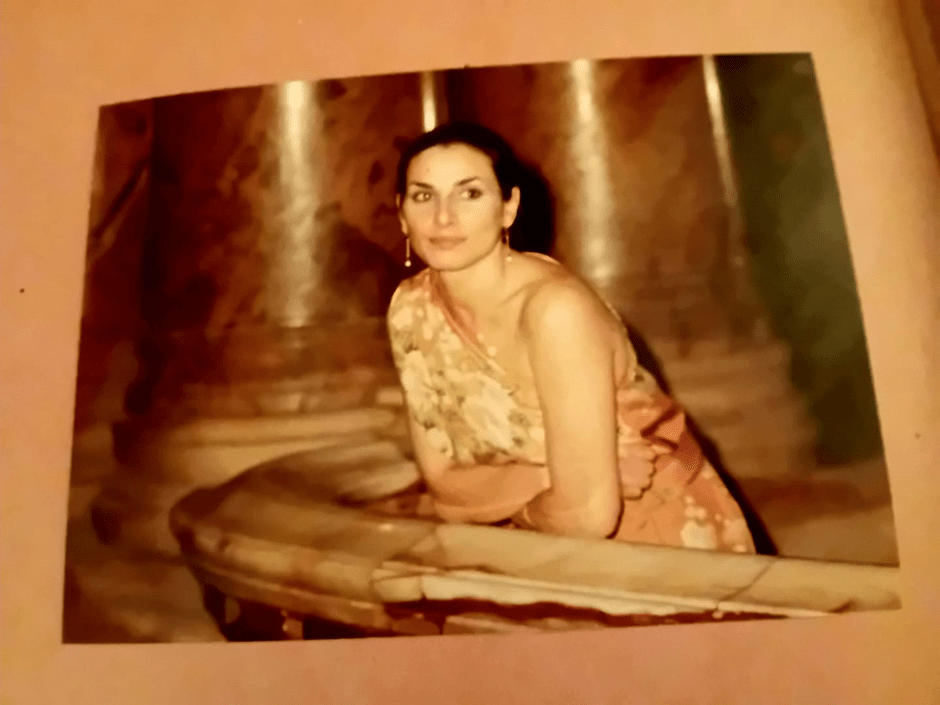
There were also other commissions unconnected to music, including a notable assignment in the world of advertising, rubbing shoulders with Sophia Loren: in 1980 I was for real sitting next to her  for a commercial at the Opera House in Paris (for Lux soap)…but soon after the shooting, for some reason, she broke the contract … so the commercial was never shown.” The picture of Carla at that shoot, however, survives…

Lux Soap commercial, 1980

Carla admitted that in more recent times perhaps her favourite project was with Corentin Coupe, the musician with whom she recorded ‘The Electric Suite’, an extraordinary mini-album whose only components are her stark, imploring voice shown in its sharpest relief, and Corentin’s enveloping bass accompaniment. The duo describe the resultant set of songs as ‘post-rock’, but that barely does it justice – imagine an anguished campfire session with electric bass chords rather than acoustic guitar providing the backdrop. An excellent representation of the duo is here:

I talked with him yesterday. We’re very close – a very good pal. He lives about 2 hours away from here. The Electric Suite became No White of Moon (the name of one of the tracks on the mini album) because we added a guitar player and a drummer, but it was the compositions, or way of thinking (which made it special) because it was becoming really good, people wanted us, but in 2014 that band I loved so much, No White of Moon ended up disbanded because one of the guys was a teacher for an elementary school and didn’t want to lose his job, didn’t want to take vacations (she thumps table in frustration). I love that guy but I’m still mad at him because it was my favourite band of all times, No White of Moon, I still miss it. We were playing the exact sound I wanted to hear, the exact sound….

Indirectly, however, this break up led to a key moment in Carla’s history in recent years, a connection with Dave Newhouse of the American Canterbury/RIO band the Muffins

One day as I was trying to digest this, I made a post, posting an old live thing of No White Of Moon and I saw myself write ‘my EX beloved band’ because I always wrote ‘my beloved band’, when I posted something about that band on Facebook and that day instead of writing as usual ‘my beloved band’ I wrote ‘my ex beloved band’ – two letters…

Immediately I received a message from Dave Newhouse, whom I had never talked with. And he said, ‘oh I’m so sorry Carla, I love that band’ and I’m going ‘yeah, I’m feeling so bad’ and we had a small exchange and then 10 minutes later he said ‘would you sing on my next record?’, and I immediately said yes. I was crying my heart out,  and then he sent me the music and I recorded it in Paris – it was a piece called ‘A Bout du Souffle’ (a striking introduction to the band’s work, with hip hop drum rhythms, Newhouse’s simply doomy keyboard motif and Bret Hart’s strident guitar and Newhouse’s reeds cutting sharply across it).

It was the first time of my life I recorded something for somebody on the other side of world. He loved it so much. He said ‘I’m crying, it’s so beautiful, would you do another one?’, and then another one, then a fourth one and when we got to the fifth I think he said ‘okay Carla I think we’re going to be making a whole record together!’

Rightly so, perhaps, the music of Diratz is for me the best representation of Carla’s work as well as the most Canterburyesque. In the Facelift review at the time I wrote that Carla’s voice: ‘a deep, sonorous expression of raw emotion, would be statement enough in isolation…’, but it was an apparent chemistry with Newhouse’s stripped down keyboards in particular (other tracks teamed her more directly and freely with guitarist Bret Hart) which were most startling.  

One of the standout  tracks on the Diratz album was ‘Bataclan’, a paean to the gig goers who were subject to a mass shooting at the Parisian venue of the same name in 2015.

Dave said ‘I want you to know I wrote (the music to ‘Bataclan’) on the night it happened’. He sent it to me and I said ‘listen Dave I want to do it, I want to write some lyrics and I want to sing it because I think it’s going to help me heal’. 2015 was shit (for me) – it was the end of my of my band in Montpellier,  and then there was Charlie Hebdo and Bataclan, not far from where I lived and when he said ‘yes please be my guest’ I wrote the lyrics and then I sang it and then Mark (Stanley) did that beautiful guitar. I felt very disturbed and still do (about the Bataclan atrocities)… the killing on that night occurred not far from the area where both my daughter and I lived (in Paris North East).

lyrics to ‘Bataclan’

And so we got into Diratz. At the time it was not called Diratz – it was just the record I  was making with Dave and Bret (Hart) and then one day Dave asked me would you mind if we called that record Diratz.  ‘Would I mind?!!!!’ I thought of my mom immediately because it was my mom’s maiden name so I thought of her, I was really proud of that name and I was very touched naturally, and he said because I really love that word, that’s why….

And then when we we’re finishing the record and Jaki (Liebzeit) died. Bret knew how much I loved Can and Jaki, and sent me some music and said – ‘I just did that now and there are no drums on it’, which is the clever thing to do. So immediately, on the same night he died, I was able to write my feelings about that loss – it’s huge for me, just like it had been with Kevin Ayers, just like it had been with Daevid Allen. I mean there are some people that you just don’t want them to die – that’s it, period, and Jaki was among them. So that’s why we finished up that record with ‘Song for Jaki’.

A few months later, partly because of the very positive reaction Diratz had generated, Carla found herself returning to the States.

It was my idea – there were personal reasons, let’s say, but I felt it’d be good for me to go back to the States for a little bit and meet these guys I made that beautiful record with. Dave found a gig because he has a connection with Orion Studios and then we decided to go to see Bret in North Carolina, so we did the road trip together – we were scatting or whistling the whole ‘Third’ album, but Bret didn’t find any gigs so I just went there for one gig.

Even if a more extensive tour didn’t materialise on this particular trip, there was an unexpected bonus:

I recorded a whole record with Mark Stanley! (Stanley was an additional guitarist on the Diratz album, contributing some of the album’s most memorable moments). I went to his house to stay with him and every day we did two or three songs per day – crazy!

For this album, ‘Double Dreaming’ Carla identifies taking a full involvement in the composition process, located as she was in situ as the pieces took shape, and her contribution is apparent: this is a diverse set of pieces where Stanley provides a range of instrumentation including backbeats both real and automated, electric and acoustic guitars, synth and piano. The title track, with its reverbed guitar, recalls the Durutti Column’s ‘Never Known’, there are two lofi pieces to conclude the album featuring piano and voice, the first of which almost conjure up images of Keith Tippett, and Carla cements her position as a noted polyglot with the beautiful Spanish guitar-backed ‘Ather Kinder’ (in German). The album is still available direct from Mark (links at the bottom of the article)

Personal tensions within the Diratz project meant that a second Diratz album sadly did not materialise, but Carla has continued to contribute to other Dave Newhouse-related projects under the umbrella title of Manna Mirage (the spoken word piece ‘Alchemist In the Parlour’ on is set primarily against Newhouse’s bass clarinet, whilst Newhouse describes ‘World Song’ from ‘Man Out Of Time’ as a lost track from a potential second Diratz album, its subject being the emergence from pandemic isolation). Whilst Carla is typically self-effacing about the obvious musical bond between her and Newhouse, she does acknowledge his importance in her subsequent musical pathway…

I love it. And all  that happened afterwards for me in terms of recordings, it’s all because of him. If there hadn’t been Diratz there wouldn’t be any of this. So every time I get great compliments for what I do I always say thanks Dave Newhouse – I owe him a lot!

Carla’s attitude towards her stunning work with Diratz, it would appear, is symptomatic of how she sees her work generally. Perhaps the one moment of tension in our interview was when I challenged her apparent reluctance to accept her own defining role within music she has contributed to. The prevailing narrative (which I believe goes beyond mere modesty)  is that her musical career has been a series of coincidences, an accident almost…

I am a person with absolutely no ambition – ever. I know it’s hard to believe. What I mean is  I know nothing about music – I don’t read, I can try music but  I know nothing – when I hear people talk about you sevenths or thirds,  I have no idea what that is, and maybe I don’t want to know!

I’m like a sponge, I have no preconceptions of anything, I just like it, I’m happy I like it and (my general attitude is ) what am I going to do on that?  It’s so exciting, for example the work that I did with Guy Segers (the Univers Zero bassist whose multi-collaborative project The Eclectic Maybe Band has called upon Carla a couple of times for vocal contributions).  I love it very much the album, ‘Reflections in a Moebius Ring Mirror’,  I sing a lot on that track on that one a lot and I really enjoyed it – there is a long piece called ‘Spreading An Invisible Stream’. (available at https://discusmusic.bandcamp.com/album/reflection-in-a-moebius-ring-mirror-83cd-2019)

I asked Carla if she could truly divorce herself from her own contributions to projects such as Diratz and the Archers of Sorrow, given that she had been sought out, given free rein to add her own songlines and lyrics, and she explained the process.

It’s not me writing that music. I do nothing.  I write lyrics. I receive the music whatever it might be. This was the case with Diratz. The only exceptions  might be these: ‘Precis Aimant’, I did with Pascal Vaucel in Paris, and the album I did with Mark Stanley in Maryland.

With Dave (Newhouse) or Bret (Hart) or Martin (Archer) they  send the music to me and then I write the vocals in my sitting room, I’m adapting my voice and my singing to the music. The sound is not my choice of music. I love it, so it’s okay and I have no problem adapting. With recordings I rehearse at home, I get used to the lyrics, the music and then I’m writing down: where do I start, where do I stop, where do I leave that, because the musicians need to have the space to play. And then usually in the recording session it’s so easy, it goes so fast, I’m the one that’s surprised. I don’t have to be thinking I could maybe be doing better than this, because it’s not a question of better or bad or worse – I don’t know what the question is! It fits, it’s in the moment, and it sounds right, you know when it’s right.

I try to be a professional – if I’m going to be doing this on Tuesday from such time to such time then in the meantime, from the moment I decide to do that on a particular day I’m kind of boiling already, and I can’t wait to be there with the earphones, my pen and my little book and that’s my favourite part – really it is.

The Precis Aimant project with French guitarist Pascal Vaucel, which took place in 2019, was another duo project whose minimalism exposes the Diratz voice in sufficient silhouette: Vaucel adds a range of instrumentation ranging from steady drumbeats to wild guitar soloing, which I described at the time as flitting between ‘brutal or eloquent…  adding enough additional layers with drum tracks and bottom heavy treatments to make this album sound like the work of a band’. But it also surprisingly, in the one track to deviate from jointly performed works, continued a deep love of the work of Robert Wyatt, captured in an unique rendition of ‘Sea Song’. Her connection with Robert, as she told me, had manifested itself already many years earlier.

I met him in ‘75 in Paris when he played with Henry Cow at the Champs Elysee. On stage there was Robert in the wheelchair … and Dagmar. Oh my god, what a concert that was! I was at that fantastic concert and then I don’t know how (I never know how! things just happen in my life!) But suddenly I was backstage at the Theatre de Champs Elysée, the backstage being a little patio, and Robert Wyatt is there, so, being a Soft Machine fan, what do you do? What did I do? I went down on the ground to be at the same height – I sat down on my knees and he’s just there, you know Robert and I just remember taking his both hands, and kissing them – poor Robert! And I’m just going ‘oh man I love you so much – I mean thank you so much’ and probably crying like I’m doing now, and he’s probably a bit confused and wondering ‘who’s that girl?’!

By 2015 I had made good friends on Facebook who was very close to Robert at that time – her name is Andrea Gotskind Hamad. When I was going to join up with Diratz, we met in person in Baltimore for the concert at Orion, March 2018. She suggested we do a cover of ‘Sea Song’, she thought I could do that very well, and Robert had liked our record “DIRATZ” she had sent him … But neither Dave Newhouse or I felt like doing it … it seemed a lot of work for a result that might not be as good as it deserved …

Later on that year when in Paris with Pascal Vaucel, we planned on making a record together, the idea rose again mainly because Andrea during my stay in the US had talked to me again and again about it, she really insisted… (bless her !).

Carla Diratz/Pascal Vaucel

The funny thing is Pascal did not know that song … but he sure knew how to make an arrangement that I felt very comfortable with and there we were! … I think it worked right away… one take ! And Andrea loved it and sent it to Robert who replied to her : “Andrea it’s amazing ! Please thank them for their originality AND conscientiousness – so tricky, that, getting it right and making it your own at the same time “. I wrote at the time: ‘Tackling a piece which is almost the holy grail of Canterbury tracks is courageous in itself… the Diratz/Vaucel version is less diplomatic: gravel voice and heartfelt delivery chill the bones a little, and the scatted coda, which for me in its original form is perhaps the most beautiful two minutes in musical history, is here performed with a hint of menace. It is the most unique re-interpretation to date’.

Also, when Andrea sent the Diratz record to Robert she told him ‘you know, she’s that girl who kissed your hands at the Champs Elysee!’ And then she wrote to me she says ‘okay don’t worry he doesn’t remember!’.

Carla has been a regular contributor to albums on the Discus Music label: The Eclectic Maybe Band and of course two albums she is co-credited for (Carla Diratz and the Archers of Sorrow). I asked Carla how this connection had come about, particularly for the Archers of Sorrow, music I described on this blog at the time as ‘testing, progressive music refusing to adhere to any known category’, whilst Discus itself places it within its growing library of ‘improg’ releases. But I also sought the thoughts of Martin Archer on the recent Discus tour in the UK as to how the project’s music had changed over its two releases, ‘The Scale’ and ‘Blue Stitches’.

Carla: Martin had some views on me a long time ago because of Diratz –  he had written to me once saying ‘someday I want to make a record with you’ and then after 2 years he said, ‘okay I’m a bit slow but now I’m ready’ and that’s how we made ‘The Scale’.  Martin takes up the story: ‘We would have been chatting, probably about Julie Tippetts (who also has an enduring and ongoing connection with the Discus label) and I think Carla made some complimentary remark about those albums. I enjoy working with singers probably more than anything else, so probably on Messenger I said to Carla, ‘hey why don’t we make you an album because we’ve obviously got a lot of in common in what we like’. I  loved the way she was fitting into Guy Segers stuff with the Eclectic Maybe Band and I could imagine the kind of thing that we might do. Carla: we were already playing on the same tunes with Guy Segers who is also on Discus.

Martin: I started to think that the stuff that I might do for Carla was a bit abstract maybe, and it needed a bit more structure and grit in there, so I suggested to Nick Robinson (the guitarist from Das Rad) that he come in as a writing partner – that we each write half of the album. Within about three months we’d put together all the music for ‘The Scale’ with synth bass and drum machine just as placeholders, and Carla really liked that. The stuff that Nick came up with which was more conventional song based, but had quite a strong kind of Krautrock edge to it because that’s where our heads were at with Das Rad. Whereas my stuff on ‘The Scale’, those little ‘etudes’, the quite aggressive abstract stuff, I thought her vocal delivery is really going to be able to dig into that.

Just from a cost point of view, it had to be a remote relationship, I’ve never actually met Carla, we talk on the phone very occasionally,  usually it’s just email and Messenger. We just started and we didn’t stop until we’d got 70 minutes of Carla music, so she was putting her vocals on and  then we got Dave Sturt (of Gong) and Adam Fairclough in the studio to actually put the bass and drums on to the album last of all.  Which of course you shouldn’t really do but that that’s the way around we did it.

The biggest surprise I got was that the very first thing we did – the studio (in France) hadn’t picked up on the fact that I’d sent files at 48 khz and they’d put them onto their system at 44.1 khz and it speeded the track up so everything came back faster than I’d made – but it was better! 

Martin also has his own take on what Carla brings to a project, and describes her impact lucidly.

It’s the character, it’s the fact that she’s singing and her lyrics are not some kind of abstract flow, its lyrics are about being Carla and her life, from things she’s done and her experience, and I think that comes through in the gravitas of her delivery. It is a case that the words, the melodies, the vocal structure, the vocal arrangements are by her – I don’t move her stuff around – I don’t do anything to it, what she sends me is what we do. That music wouldn’t be interesting without the vocal arrangements. It’s the focal point but it’s like the background has been painted first. Imagine someone painted the Mona Lisa and someone had sent Leonardo da Vinci just the background, the trees and the river – oh that’s nice, now what am I going to put in the middle – oh, I’ll paint this woman. So that’s how important vocal performances are…

Carla: everybody was very proud of ‘The Scale’,  very proud of it. I was thrilled to hear that Julie Tippetts loved my voice on the song ‘Sono dove’ too!

I asked if ‘The Scale’ had been so named because of sheer scope of the project.

Carla: no, one of the tracks I wrote is called ‘The Scale’ and Martin decided to take that picture (a monochrome photograph of Carla which forms the cover), he chose the title –  I only chose the name of the band which I’m very proud of – The Archers of Sorrow,  it was such a brilliant idea!

‘Blue Stitches’, the second album by the Archers of Sorrow, is a very different album from ‘The Scale’. Carla relates it back to the positive reaction, even to this day, of her Seventies band Changes.

Carla: I mean, having talked with people, they said ‘oh God it was so good what you did’, and after all this progressive music I’ve made these last years, I’d like to go back to more like blues rock, almost traditional… At some point I wrote a statement on Facebook one evening, saying what I would like to do, is go back to blues rock and do it with a band. I meant with a band I can hug after the rehearsals! Unfortunately Martin read it, and all he read was – ‘oh I want to do some blues’ and then he wrote, ‘hey I want to make a record’ and that was it… I think I told Martin I’d be delighted to make a record but it’s not exactly what I meant!

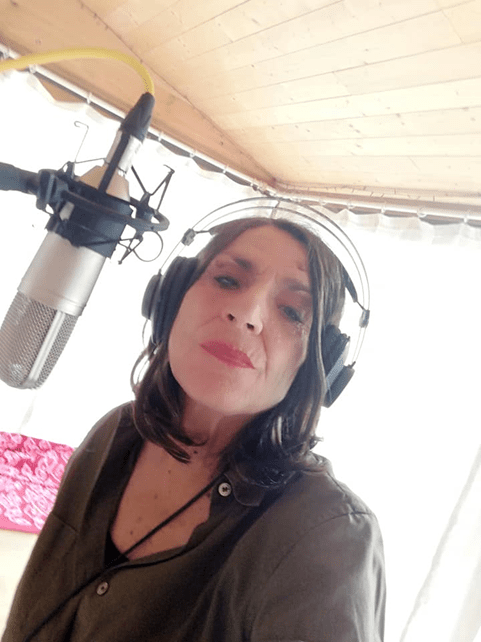
recording for the Archers of Sorrow

Martin: I just picked up on a very casual remark that Carla made on a message saying ‘it’s a time of the Blues – if I ever make another record it will be a blues record’. So I thought about it for a little while, not very long – probably a day! We actually recorded, we did all the tracking for ‘Blue Stitches’ live in the studio: guitar, bass, drums and organ. The only people who didn’t play at the time were me and Charlotte (Keefe, trumpet). We asked Adam Fairhall to come in on organ. The tracks obviously resonated with Carla.

Martin: The actual starting point for ‘Blue Stitches’ was Carla recording herself singing and playing keyboard on her phone and she sent me you know four 90 second MP3s. It didn’t matter that that it was a rough performance,  these would punctuate the album (in the same way that the ‘etudes’ had on ‘The Scale’) and be key moments on the album and of course Sturt and Fairclough and Fairhall  loved doing those in the studio after their initial surprise!

Some of the cast of ‘Blue Stitches’ captured back in Sheffield. From left to right: Martin Archer, Nick Robinson, Adam Fairhall , Adam Fairclough, Dave Sturt

Carla: It was a little difficult for ‘Blue Stitches’ because my voice was really in a bad shape – I had really damaged my voice. So I called Martin, and I explained to him because I wanted him to hear me and I said, ‘we have a problem Martin’ and he said ‘I don’t want to hear – I’m sure it’s going to be okay’. But I do like the last record in spite of problems with my voice – and I even had some anxiety for the first time in my life, but we still recorded three tracks per session. One session is like four hours, three tracks each and having tea in the meantime and smoking a cigarette of course!

When we met, Carla had just recorded a promotional video for ‘Blue Stitches’ in Uzes  – this can be seen here:

My final question to Carla was regarding a remarkable song called ‘Ode To The Weak’, which although not her most recent work,  is one of the more arresting contributions Carla has penned in the last few years. As with many of Carla’s pieces it is a testament to her ability to instantly capture a ‘moment’ in championing the downtrodden in society,  – this was captured in situ during a concert with Italian progressive band Mezz Gacano:

“I could swim mountains

I could climb on waves

I could carve up skies

or lacerate the universe

I could slit in the finest slices

a thousand years old tree

or bite into a rock

or even be a rock that speaks

Strength is an old slut

and will is her pimp

I worship the weak

I worship the weak

The delicate and candid soul, heart and brains

The low is the pillow for my head to rest

(lyrics, ‘Ode to the Weak’)

Carla: This was on the occasion of doing a concert at the end of December of 2018 in Palermo/Sicily  with the band Mezz Gacano, and observing all kinds of refugees hanging out on the streets in the cold, in misery and indifference … selling little things (lighters etc) that nobody would buy … it broke my heart and that’s how I ended up writing those lyrics and putting up a track for the band on the night of the concert.

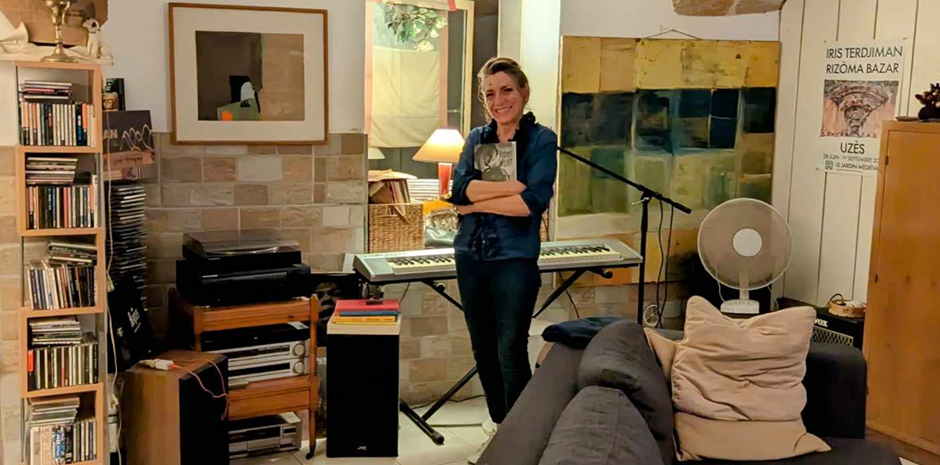
at home in Uzès

My thanks to Carla for her warm welcome to me and my family in the South of France, where she is currently writing her memoirs, which are sure to uncover far more many aspects of her life’s work than are covered in this piece alone. Watch out for news of future projects on the Facelift Facebook group

Links to key albums mentioned in this interview

 The Electric Suite https://carla-diratz.bandcamp.com/album/the-electric-suite

Double Dreaming https://markstanley1.bandcamp.com/album/double-dreaming

Diratz https://davenewhouse.bandcamp.com/album/diratz

The Scale https://discusmusic.bandcamp.com/album/the-scale-124cd-2021

Blue Stitches https://discusmusic.bandcamp.com/album/blue-stitches-169cd-2024

Mezz Gacano  https://sasimerecords.bandcamp.com/album/bukowski-never-did-this

A selection of Carla Diratz videos are available on a Youtube channel here: https://www.youtube.com/@TheHappynihil

My thanks to Martin Archer of Discus Music for additional thoughts, quotes and information contained in this interview

For other interviews in the Canterbury 2.0 series, please click here

Canterbury 2.4 – Amoeba Split – an interview with Alberto Villarroya

Amoeba Split with Richard Sinclair, Taller de Músicos, Gijón (Spain). April 2024 From left to right: Iago Mouriño (keys), Richard Sinclair (guitar), Fernando Lamas (drums), Alberto Villarroya (bass), Pablo Añón (sax), Dubi Baamonde (flute) and Ricardo Castro (keys).

Half a dozen or so years ago, the excellent Canterbury Soundwaves/Canterbury sans Frontieres podcast, hosted by the equally excellent Professor Raphael Appleblossom aka author Matt Watkins, had a habit of intersplicing Canterbury-influenced music in between the more recognisable Canterbury fare such as Soft Machine, Hatfield and the North and Gong. Nestled within one of the episodes was a track from ‘Second Split’ by a band called Amoeba Split which, for all its Spanish geographical origins, seemed instantly appropriate to place within the broader Canterbury genre. It was the first music I’d heard by the band, and I was instantly impressed.

Somewhat further down the line, with a very fine third album ‘Quiet Euphoria’ recently under their belts, as well as a series of gigs and a limited edition single with Richard Sinclair also just released, there appears to be no better time to speak to the band, or more particularly their bass player and bandleader Alberto Villarroya, from his base in A Coruña. Before getting into the minutae of the band’s history and Alberto’s own musical influences we had to talk about that collaboration with Richard.

Alberto Villarroya: Richard is the voice par excellence of Canterbury, one of a kind and also a great bass player. He has the honour not only of having been with Robert Wyatt in the group that originated the style, The Wilde Flowers, but also of having played in almost all its great bands (Caravan, Hatfield and the North and Camel). He’s said in many interviews that he regards himself as an ‘entertainer’, but the truth is that he is a true icon, a benchmark for electric bass and certainly currently the last active legend of Canterbury.

Our Richard Sinclair collaboration was born from a beautiful combination of chance and good luck. Richard is quite active on social media, and in mid-2023 we contacted him just to tell him that we were passionate about his work. He suggested we start a conversation via video conference, and when he asked us what we were working on, we told him that we were preparing our fourth studio album. At that time we told him that it would be a dream if he could participate in the recording, to which he happily agreed. So, we recorded two of our own songs in our studio in A Coruña and Richard added vocals and guitar from his studio in Martina Franca in Italy.

These two tracks, titled “Almost Cloudless” and “Bread for Today”, are the ones we released in September 2024 on a 45 rpm vinyl single, available on Bandcamp (https:// amoebasplit.bandcamp.com/album/almost-cloudless-bread-for-today-richard-sinclairsingle).

But the collaboration didn’t end there, as the option of doing a short tour in April 2024 in the north of Spain came up. Once again Richard agreed to play with us, and the concerts were a resounding success, with a full house at every venue we went to perform. The audience couldn’t believe they were seeing Richard in person, and many people even wondered if it was true that he was playing in Spain after 20 years without returning to these shores. The truth is that they were really emotional concerts in which we alternated songs from Amoeba Split with songs from his time with Caravan and Hatfield & The North. And in the process we were able to record the concerts in full in audio and video for a possible future recording in case anyone is interested in releasing them one day.

At the moment the idea is to continue collaborating with Richard for as long as we can, of course in the studio, but above all, if possible performing with him live. Everything will depend on whether some promoter or concert organiser is willing to organise a tour, either in Spain or in the rest of Europe: it would be great because we have already seen that it is very worthwhile and that the response from the public is frankly enthusiastic. If there is any promoter interested, you can write to us at amoebasplit@hotmail.com and we will be happy to help you!

Amoeba Split as a band dates from late 2001 and are based in A Coruña, a coastal town in the northwest of the autonomous province of Galicia in Spain. I asked Alberto a few more details about the band’s origins and how they have developed over time.

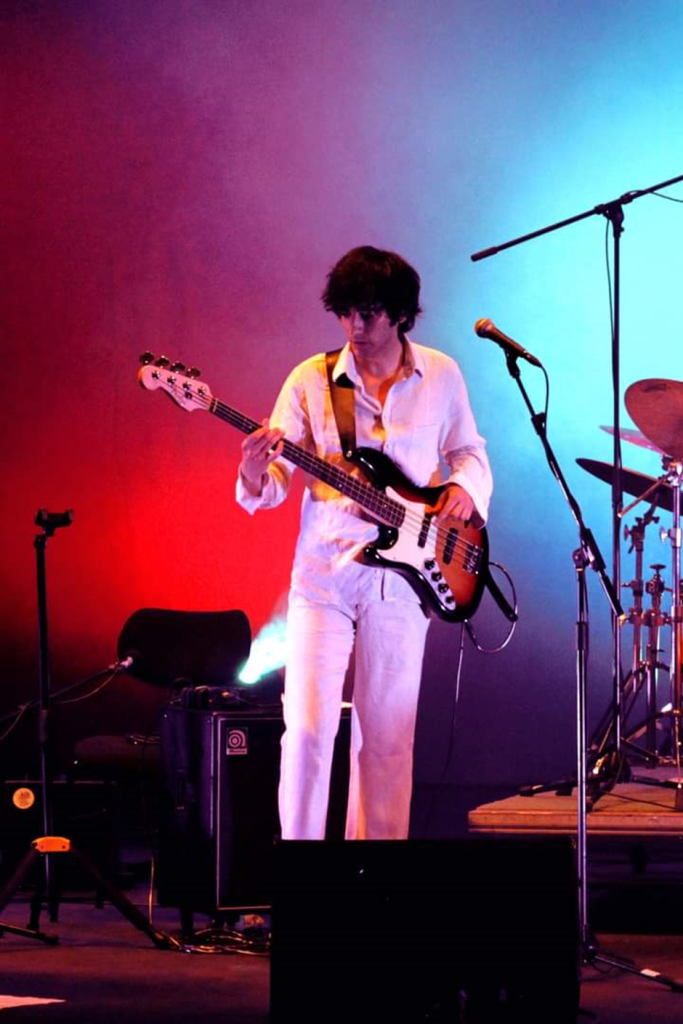
Alberto Villarroya (bass), Palacio de la Ópera, A Coruña (Spain). Finisterrae Prog Festival, July 2011

Our influences began mainly with British bands from the 70s, such as King Crimson, Soft Machine or Caravan, although we have always focused on a musical context within progressive jazz-rock. It was with the passage of time that various experts considered us to be a “Canterbury Sound” band, a label that is more or less appropriate, although not entirely accurate. At the beginning, the core of Amoeba Split was Ricardo Castro on keyboards, Fernando Lamas on drums and myself on electric bass and guitars. When we recorded our first album, “Dance of the Goodbyes”, the group was complemented by the inclusion of Pablo Añón on saxophone and María Toro on flute and vocals.

The band recorded a self-produced demo in February 2003 which is available at https://amoebasplit.bandcamp.com/album/demo-2003  However it was not until 2010 that their debut album “Dance of the Goodbyes” (which included reworked versions of the demo’s three tracks) eventually appeared. An initial impression from both releases is that the band are a worthy successor to prog/folk bands of the late 1960s:  Catapilla spring to mind, as does some of the work of Julie Tippetts, thanks to Toro’s vocals. And yet even at this stage there are tell-tale signs of a Canterbury influence: “Turbulent Matrix” has Jimmy Hastings-like flute and a bossa nova finale; “Blessed Water” incorporates fuzz bass, “Qwerty” manages to be almost throwaway in its brevity but recalls the intricate scoring of Phil Miller’s “Underdub”. Plus the band incorporate a track named “Dedicated To Us, But We Weren’t Listening”.

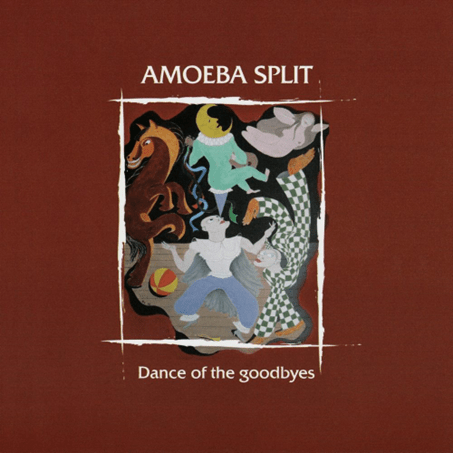
Album cover, Dance of the Goodbyes

“Dance of the Goodbyes” is the work that probably covered the greatest variety of styles. There are compositions like “Blessed Water” or “Perfumed Garden” that are very close to Italian symphonic rock, but at the same time the album also includes tracks like “Turbulent matrix”, “Qwerty” or “Dedicated to Us, But we weren’t Listening” that are almost jazz-rock songs.

That last track title came about from a running joke we had during rehearsals for the album about the Matching Mole songs “Dedicated to Hugh, but you weren’t listening” and the Soft Machine song “Dedicated to you but you weren’t listening”. Although musically it doesn’t sound like either of them, we thought it was a fun title to start the album with. In the case of “Flight to Nowhere”, the 24-minute closing track on the album, we set out to build an old-fashioned suite, with numerous sections, rhythm changes and different tonalities, and that’s why in the end it ended up being essentially a classic symphonic-prog rock song.

But it’s the only album that has vocal tracks, with a female voice that reminded some people of Annette Peacock, which makes it a rarity in our discography. Even today “Dance of the Goodbyes” is our most valued and remembered album for the fans of the group. It is curious that this album has already been reissued on five occasions, the last one in 2023 on double CD, with the original album remastered and the 2003 demo released officially for the first time (https://amoebasplit.bandcamp.com/album/dance-of-the-goodbyes)

“Dance of the Goodbyes” was very well received by critics and the public and was nominated by the Italian website Progawards as “Best progressive rock debut album of 2010”. After this, in 2011 we participated in the prestigious “Finisterrae Prog Festival”, performing alongside celebrities such as Al Di Meola, Neal Morse and Jan Akkerman.

In 2013/4, the band recorded “Second Split”. The music was by now entirely instrumental, much more varied, less meandering, and very carefully constructed with a myriad of different ideas to draw on. The sound appears to be much organic in terms of its instruments used (trumpet, sax and flute are within the core sound whilst ‘Those Fading Hours’ memorably incorporates violin against a keyboard motif and dreamy atmosphere that wouldn’t have been out of place on Soft Machine’s “Third”). There’s an even more overt Canterbury reference in the title of the 5th track, “Backwards All the Time”.

By “Second Split”, María Toro was no longer with the group, but we added Dubi Baamonde on flute and saxophone and Rubén Salvador on trumpet and flugelhorn. This gave us more possibilities on a sound level and much more body and weight to the group.

“Second Split,” (eventually released in June 2016 by the Mexican label Azafrán Media) resembles much more the typical jazz-rock of groups like Nucleus or the Soft Machine septet (from the “Third” era), since we included a complete horn section (tenor sax, alto sax, trumpet and flute). Some critics also found references in this album to Chicago or Blood, Sweat and Tears, which I totally agree with, since they are bands that I love. All the compositions are measured to the millimeter, as well as the arrangements, but curiously I think that a freedom and a fluidity prevails nonetheless, which greatly benefits the final result. The album is also full of different harmonies and rhythm changes, with many ideas, and it is so melodic that almost all the songs are singable, even the solos of the respective instruments can be hummed!

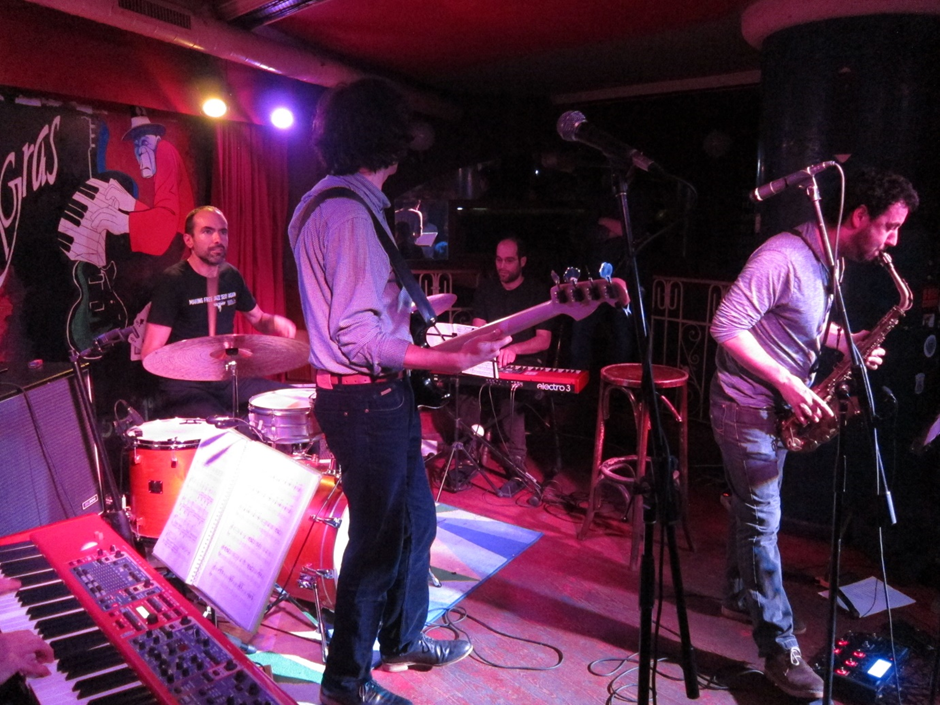
Amoeba Split,  Sala Mardigras, A Coruña (Spain). December 2017
From left to right: Iago Mouriño (-hiding- keys), Fernando Lamas (drums), Alberto Villarroya (bass), Ricardo Castro (keys) and Pablo Añón (sax).

There are many songs with different atmospheres. For example, “Clockwise”, which opens the album, has three small parts linked together, and the same goes for “About life memories and yesteryears”. Something I want to highlight about this album is that there are some songs that are not very “expected” in relation to the ones mentioned above, such as “Book of Days” (recorded with a string quartet) or “Those Fading Hours”, a song that hovers in a very suggestive way and ends unexpectedly. In short, in my opinion “Second Split” is a very complete album, almost without flaws, and without a doubt it is a significant step forward with respect to “Dance of the Goodbyes”.

After the release of “Second Split” we returned to the stage to perform the album live.

Album cover, Second Split

Quiet Euphoria” was recorded in 2021 and released on the AMarxe label in 2023. For me, it is the crowning glory (to date at least) of the band’s output – the scope of the band appears to be widening even further with an apparent desire to incorporate additional instruments to add to their expanding vision, whether it be the vibraphone of Israel Arranz, or in particular the incursions of Hammond organs. I’m reminded so much of vintage era Soft Machine from 68-71, whether it’s a hint of “Esther’s Nose Job” (from the keyboard motif underpinned by fuzz bass on “Inner Driving Force”); the “Virtually”-like suspension of ‘No Time For Lullabies’; or the contrast between bass, flute and bass clarinet a la “Kings and Queens” on “Thrown to the Lions”. 

For “Quiet Euphoria”, Iago Mouriño joined us on Hammond and mini-moog, a phenomenal musician who is contributing a lot to the band.

I think “Quiet Euphoria” is perhaps the most mature and balanced of our three studio albums, possibly because it was written and recorded in a short period of time. It has a drive and determination that can only be achieved by a very cohesive band performing live. “Quiet Euphoria” takes up some aspects of “Second Split”, but finds new paths that we hadn’t taken before. For example, the title track is indebted to the ambient fuzz bass sound used in Soft Machine’s “Fifth”, but adding vibraphone, a wind section and a frankly inspired drum kit. “Inner Driving Force” is a song with a great exchange of solos between Hammond and trumpet, very similar to what we usually do live. I think that here we captured in the studio part of the crazy energy that we reach in our concerts. In general, all the songs are of very high quality, and also the mixing and editing done by our technician Ezequiel Orol is superb. As a composition, I would highlight “Shaping Shadows” for the constant changes in harmony and rhythm that we make, all in a very fluid way, as well as “Thrown to the Lions”, perhaps the most Canterbury-like song on the album because it includes Elton Dean-type solos and flute passages reminiscent of Jimmy Hastings, highlighted by bass clarinet. That said, I personally prefer the last song, “No Time for Lullabies”, because it is the most risky thing we have ever done in the studio. It is a guided improvisation that draws at times from elements of contemporary music, free jazz and electronic music: it is truly avant-garde and is a precursor to the next album we will release.

Album cover, Quiet Euphoria

Alberto gave me his thoughts on a number of wider musical subjects, some of the discussion on which will appear at a later date in an academic paper, but I thought it was worth passing on a little of Alberto’s own musical background, as well as the context of Amoeba Split within a Spanish, European and wider international musical context, particularly in relation to ‘Canterbury’ music.

I am 48 years old and I have no formal musical training: my academic musical studies on harmony, melody or composition are non-existent; that is, I have no knowledge of music theory. I base everything on my instinct about what I consider most appropriate for each part or section of the song, and I do not have any specific methodology beyond trial and error. I do not think I will ever study music theory, since it might condition me or restrict the final result, but perhaps I am wrong; in any case, at the moment the tools I have for what I intend to do are sufficient. I consider myself to have a good ear and generally my first ideas are the ones that come out on top: if I try to arrange a fragment or a melody too much, the result is usually negative. In my case, my intuition about what is effective or not at any given moment works quite well. If a theme is too difficult for me, which is not usually the case, I abandon it and start a new composition.

Regardless of the group or albums that influence me, I have always focused on complete works rather than their parts, individual themes or specific instruments, which has given me a very broad vision to approach the composition of a work musical as a whole. In any case, not having had any musical training, all these influences, rather than serving me on a theoretical level, have served to influence me on an aesthetic level: the role played by the instruments, the charm of analogue sound and, above all, honesty in the artistic approach. This last point is key for me: that the final musical work that an artist conveys is not contrived or artificial. That is why Amoeba Split’s albums are above all honest, they may have their own virtues and limitations, but in the end they are authentic.

Specific influences on the music of Alberto and Amoeba Split will be apparent: Alberto elaborated on the development of his listening in teenage years from various types of rock music through to progressive music, identifying Jethro Tull, King Crimson and Zappa as having particular impact, whilst also recounting a story familiar to all Canterbury fans of discovering different bands within the genre by making connections between its different strands. In Alberto’s case this happened initially with the first two Soft Machine albums; the Virgin sampler album “V”; Caravan; then from Khan to Hillage to Gong; from Egg to Hatfield to National Health. Of course, in Spain this exploration was far from straightforward.

It was complicated since digital music distribution did not exist at the time (in the mid-90s) and access to this type of albums in Spain was frankly complicated. 

Alberto Villarroya (bass) Taller de Músicos, Gijón (Spain). April 2024 Photo: Pablo Roces Albalá

In Spain there is no coverage of any kind of minimally innovative music. Some music journalists do acknowledge progressive rock as a style from times past that had a certain impact in the 70s, but these references are completely anecdotal. We must not forget that progressive rock arrived in Spain late in the late 70s with groups such as Triana, Crack, Iceberg, Imán or Fusioon, and that after a short period of time they ceased to exist, many of them recording only a couple of albums at most.

Although our musical influences are very varied, it is evident that the Canterbury scene has had a lot to do with Amoeba Split’s musical approach, and of course we do not hide its influence. (But more generally) historically Canterbury has not had any impact on Spanish bands, perhaps because the very special and differentiating approach of this music has not been understood, or perhaps because it has not been internalised or adequately adapted to the idiosyncrasy of our country.

The only reference I can think of is the now defunct group Planeta Imaginario, but the truth is that there has never been any tradition of this sound in Spain, neither in the past nor today. Amoeba Split are of course completely unknown, and even in our own city we receive very little support. We don’t seem to exist even after a career of more than 20 years despite the impact we have had outside our borders. It’s sad, but I suppose the same thing happens to the rest of the bands in the genre for playing a type of music that is not very popular or directly anti-commercial.

It is curious that Bandcamp Daily has recently confirmed that there is a new movement called “Neo-Canterbury”, which suggests that there is in fact a Canterbury movement beyond England, although I think it’s a journalistic label to categorise a series of British bands rather than a musical movement consolidated worldwide. Nevertheless I’m proud to be labelled with such bands, and it’s a joy to see that the style is alive and has many followers.

Amoeba Split,  Taller de Músicos, Gijón (Spain). April 2024
From left to right: Iago Mouriño (keys), Richard Sinclair (bass), Fernando Lamas (drums), Alberto Villarroya (guitar), Pablo Añón (sax), Dubi Baamonde (flute) and Ricardo Castro (keys).
Photo: Pablo Roces Albalá

Aside from the plans to continue collaborations with Richard Sinclair, I asked Alberto what those future plans would involve.

Among our most immediate plans are to finish our fourth studio album as soon as possible, but before I would like to mention our what will actually be our next  album, which we will release on vinyl only, called “Todos los Animales son Iguales”. It is a completely free improvisation based on George Orwell’s book “Animal Farm” for which we did not do any prior rehearsals, beyond indicating thematic segments and brief melodic lines. What makes this album unique is that it was recorded entirely live in a small jazz room in A Coruña and has no editing or subsequent arrangements. It was almost a miracle that the recording turned out so well because of how risky the idea was. We are very proud of the result and I would almost say that it is our best album to date. We hope that the public will too!

Amoeba Split, Jazz Filloa, A Coruña (Spain). December 2019 recording “Todos los Animales son Iguales” From left to right: Iago Mouriño (-hiding- keys), Fernando Lamas (drums), Alberto Villarroya (bass), Pablo Añón (sax), Dubi Baamonde (flute) and Ricardo Castro (keys) 
Photo: Nacho Baamonde

To finish, for those who are interested in following us, I recommend consulting our website http://www.amoebasplit.com, available in both Spanish and English, where we periodically announce all the news about concerts, new albums and other information about Amoeba Split. Although several of our works are out of print, you can still get the rest of our albums at the group’s official Amoeba Split Discogs address, in order to directly support the band.

Cover for single recorded with Richard Sinclair

www.amoebasplit.com

https://amoebasplit.bandcamp.com/

https://amoebasplit.bandcamp.com/album/almost-cloudless-bread-for-today-richard-sinclair-single

https://amarxe.bandcamp.com/album/quiet-euphoria

For other interviews in the Canterbury 2.0 series, please click here

Das Rad/This Celestial Engine, Golden Lion Todmorden, 4 Sep 2024

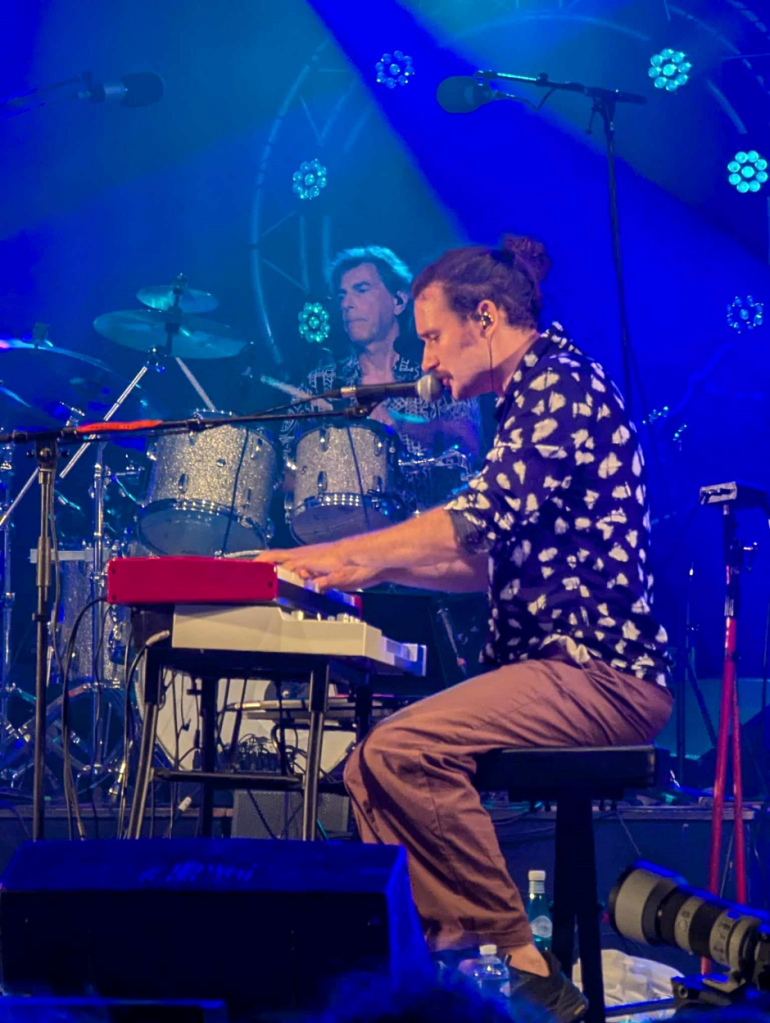
Roy Powell, This Celestial Engine

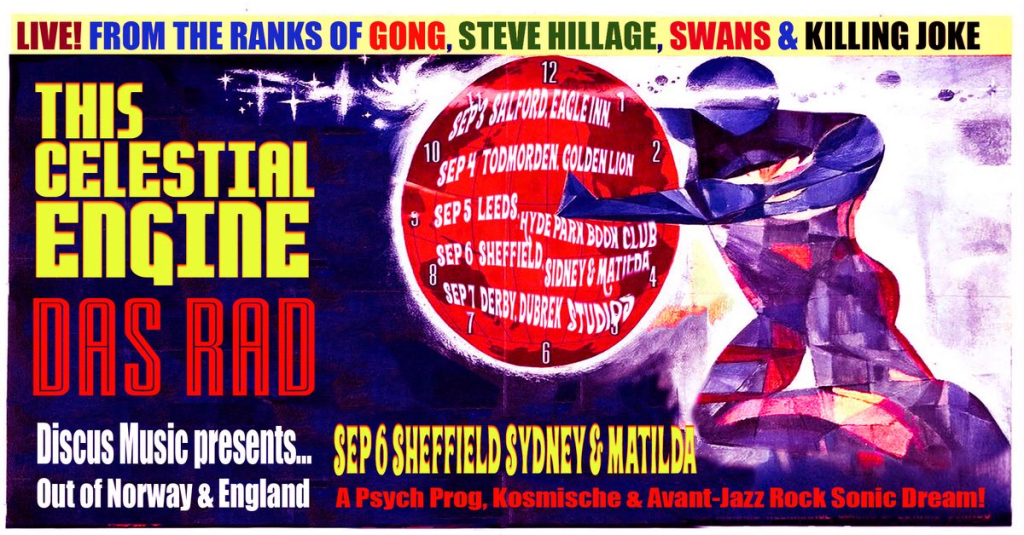
This Celestial Engine and Das Rad are in the middle of undertaking a short northern tour, masterminded by Martin Archer, who runs the innovative Discus Music record labels whose roster includes a number of musicians we’ve written about in Facelift over the years, such as Keith Tippett, Orphy Robinson, Elaine di Falco, Carla Diratz, Mark Hewins and Alex Maguire.

I wasn’t going to review their gig at the Golden Lion in Todmorden – it was a ‘night off’ from writing, a chance to saunter down the road, have a few pints and generally soak up the vibes; there was no metaphoric pen and paper at the ready to jot down track names or make observations.

And yet a couple of things struck me today. Firstly, as with all memorable gigs, if you’re still mulling over the night’s events throughout the next day and marvelling at its excellence, it’s probably a good idea to get your thoughts down in some format. Secondly, tomorrow is Bandcamp Friday, the day when the streaming platform waives its fees in supporting independent labels and artists, a life support machine to the likes of Discus, whose music sales and associated live performances appear to only attract the inquisitive, the open-minded and the road less travelled. Memories of these gigs ought to be captured…

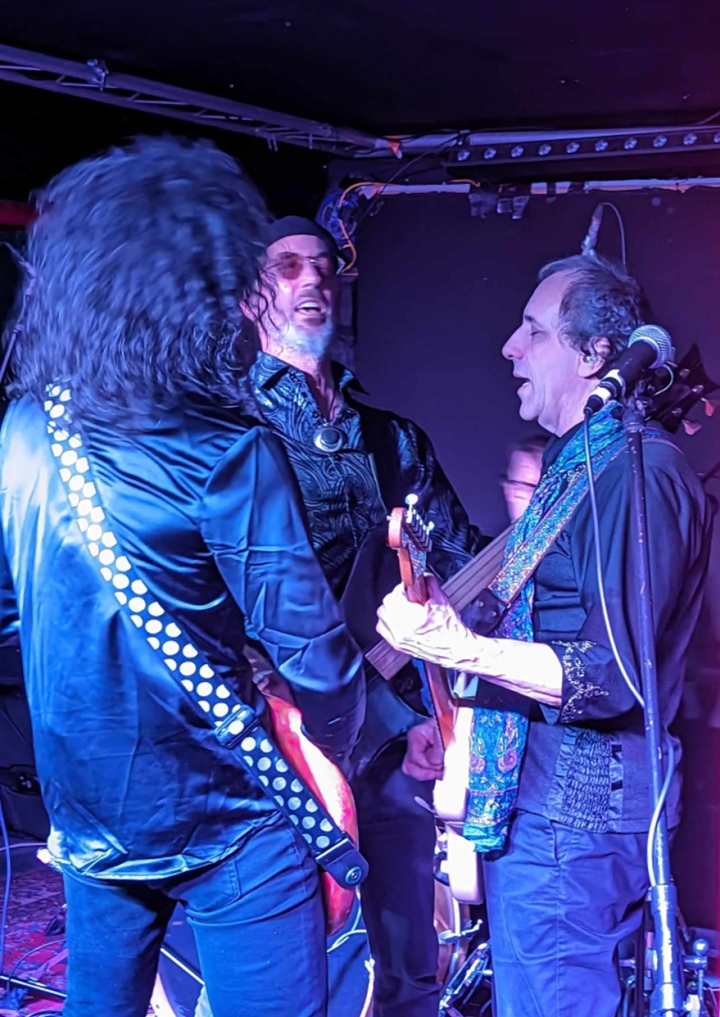
I was at the Lion for the second time in a fortnight to see a current Gong member in an  environment away from the mother band, but it’s a total contrast to Kavus Torabi’s solo set reviewed here. On this occasion it’s bass player Dave Sturt who is appearing as part of a trio calling themselves This Celestial Engine, more of which later.

Das Rad

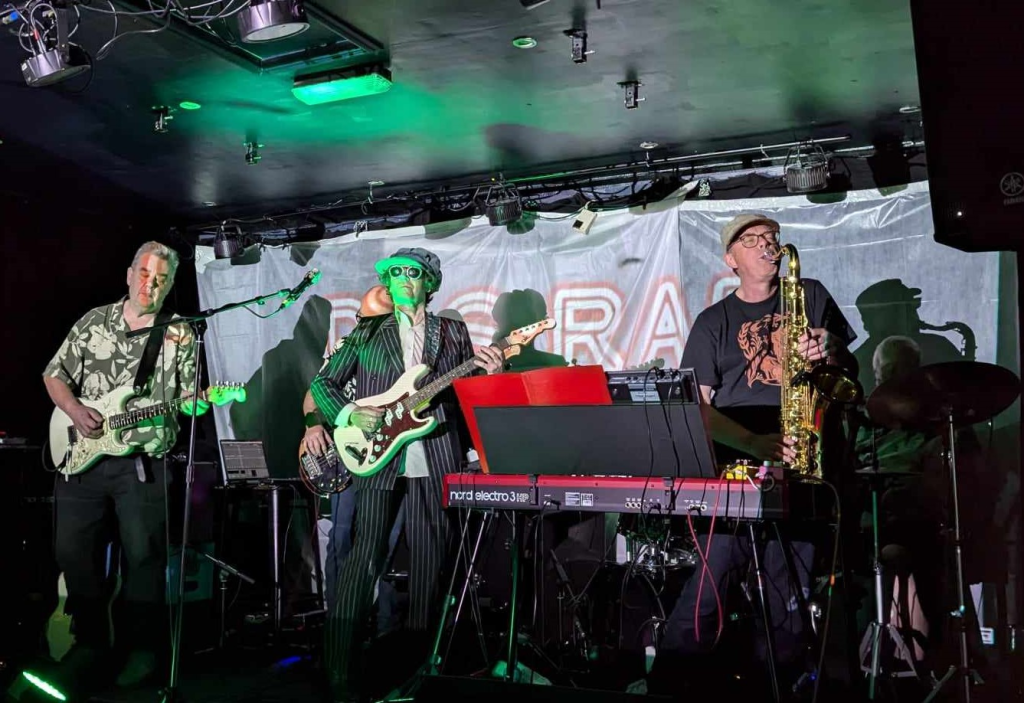
Firstly though there is Das Rad, something of a flagship group for Discus, more rockier than most on the label and having just released a really excellent 5th album, ‘Funfair’. Das Rad describe themselves as ‘improg’ and this neatly encapsulates their apparent indescribability: searching, expansive, brooding, veering between the razor sharp (propelled by excellent drummer Steve Dinsdale) and the downright messy, melding crashing guitar, the occasional sharp sax incursion and various electronica. The newest element however, is vocalist Peter Rophone, magnificently clear of voice and operating high up on the register (he reminds me a little of Jakko Jakszyk in that regard) but somewhat incongruously hidden behind a pinstrip suit, John Cooper Clarke style, with starred sunglasses and a mobile multi-coloured lighting unit which he used to illuminate various aspects of his and others’ contributions. I’ve mentioned elsewhere that I was questioning at the Crescendo Festival whether I was a natural prog fan, given my  slight bristling at the more sanitised fayre produced there, but if Das Rad do sit within that rather broad church, then I’ll happily continue my allegiance.

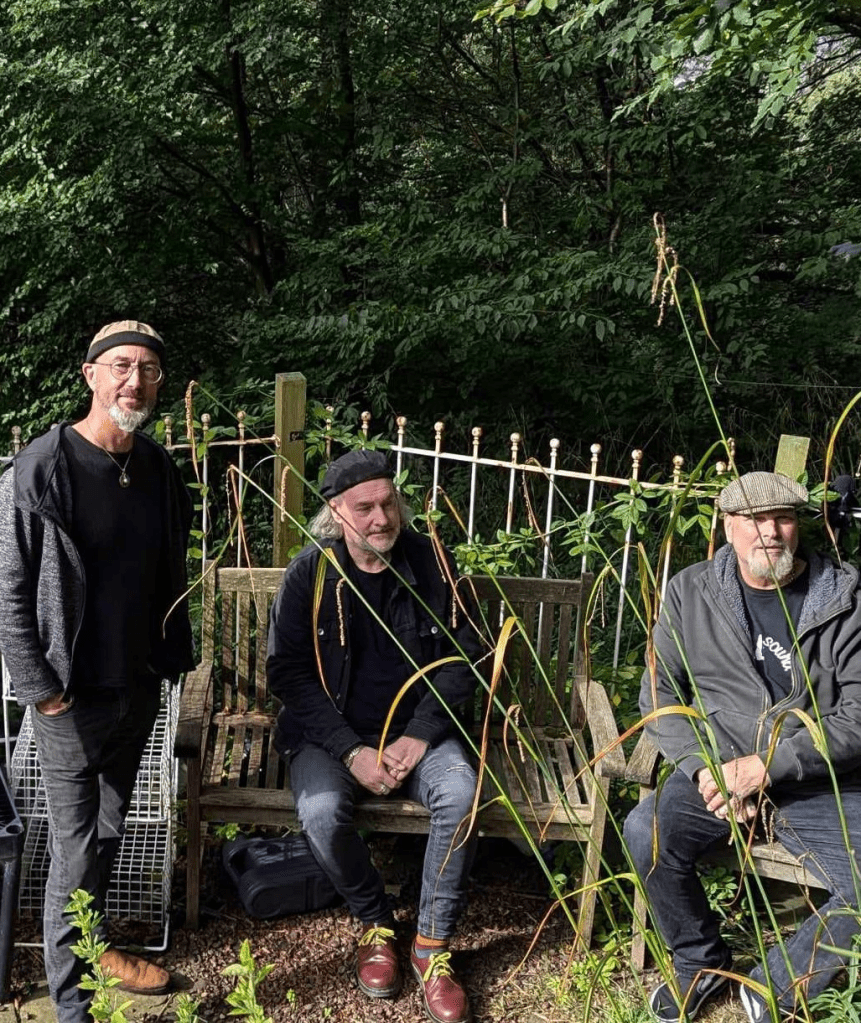
Dave Sturt, Ted Parsons – This Celestial Engine

This Celestial Engine also very much fit into an improg category, despite their backgrounds. This is a trio who, unlikely as it may sound, met and now convene in Oslo (Roy Powell is English and studied in Manchester but now resides in Norway; Ted Parsons is an American drummer who lives in Oslo too, and Dave Sturt has his own connections with the city.) Much is made online about their diverse musical backgrounds – Powell is a Royal Northern College of Music graduate but is clearly a jazzer – he’s played with John Marshall amongst other luminaries including Bill Laswell; Parsons has a history with alternative and industrial bands such as Godflesh, Killing Joke and Swans; and Dave Sturt we know not just from Gong but from Jade Warrior, work with Theo Travis and a number of Discus collaborations which include The Archers of Sorrow alongside soon-to-be published interviewee Carla Diratz. Their excellent debut album on Discus shows how the trio make sense of their influences collectively, and live I have to say their personal chemistry was apparent: Parsons is a very tight, often minimal, but very inventive drummer setting a crisp tempo; Powell was a revelation, a genuine virtuoso gliding effortlessly around the piano; and Dave Sturt revealed so many facets of his bass playing hidden in contributing to the greater good in Gong, adopting an almost zen-like pose which belied the complexity of what he was playing. The music has structure for sure, but I suspect it is largely not imposed in advance – pieces developed organically with obvious empathy between each member – aided by some of the cleanest sound production I’ve heard.

This Celestial Engine

The tragedy, is of course, that there are so few people to see them do it all – Archer has deliberately chosen intimate venues to showcase music from two excellent bands which give the lie to the idea that improvised and experimental jazz cannot be accessible  – and yet there were still plenty of spare seats. And that is ultimately why this review got written after a ‘night off’ – this Discus Music showcase deserves your support on its last couple of nights in Sheffield and Derby respectively, and if you can’t make the gigs, you should certainly listen to and support the label’s roster online at https://discusmusic.bandcamp.com/

This Celestial Engine – https://discusmusic.bandcamp.com/album/this-celestial-engine-166cd-2024

Das Rad – Funfair – https://discusmusic.bandcamp.com/album/funfair-180cd-2024

Kavus Torabi, Golden Lion, Todmorden 26 August 2024

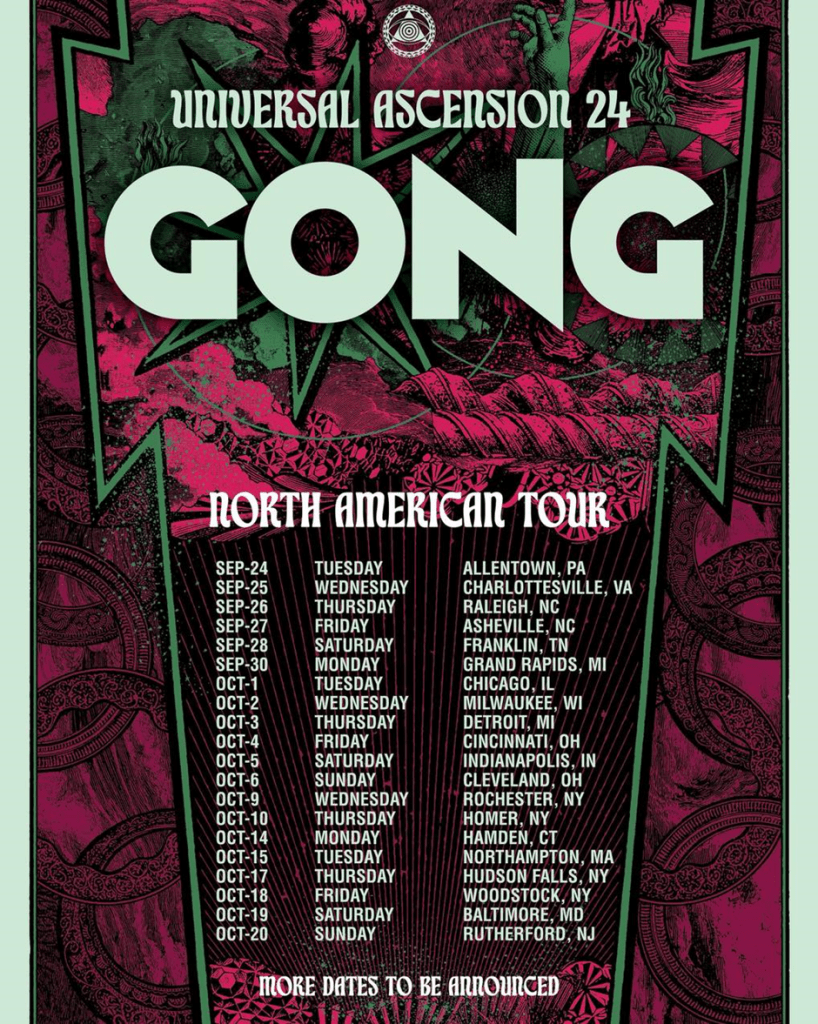
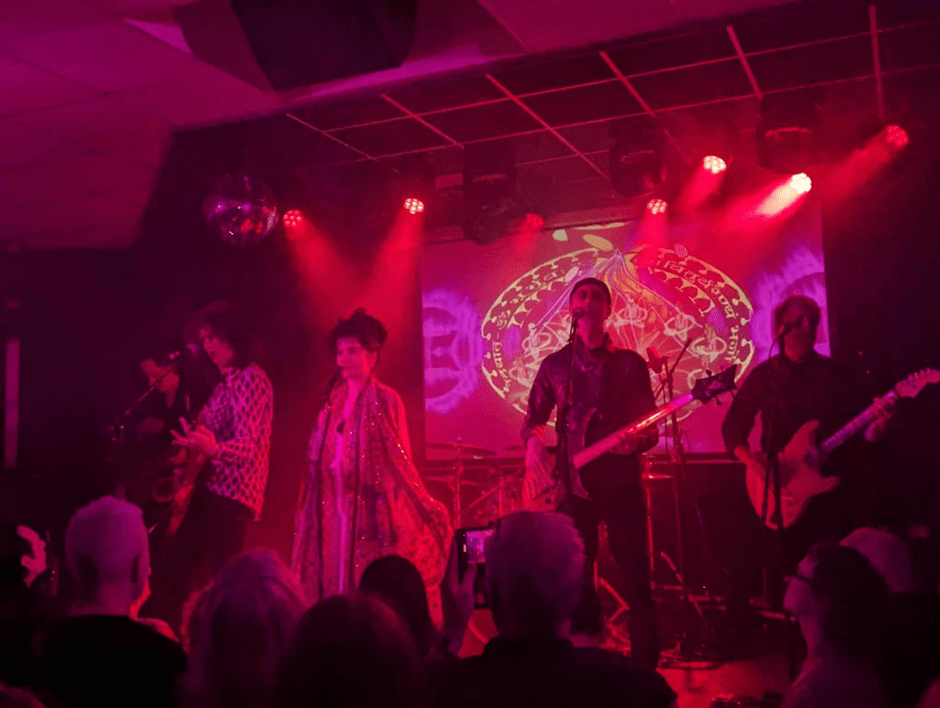
Kavus Torabi might have had his busiest ever musical year, but it shows no signs yet of abating. A hectic schedule with Gong (soon to set off again on  a US tour), gigs with The Utopia Strong, touring with Miranda Sex Garden and now this, a significant series of solo gigs which saw him landing once again just down the road in Todmorden, scene of a triumphant gig with The Utopia Strong a few years back.

Much has happened since then. Kavus’ changing personal circumstances are captured in somewhat heartfelt manner on his second solo album ‘The Banishing’, a collection, as was ‘Hip To The Jag’ of acutely portrayed songs backed by harmonium, guitar (or both). It’s the first time I’ve seen him perform his solo act, its resonance amplified by the fact that it was Kavus performing from his (former) living room which was my first experience of live gig streaming, broadcast as it was at the dystopian height of the first COVID lockdown.

The solo set is intense and intimate. A quite bewildering series of effects boards covers the stage, but as these rest at eye level for those of us seated front of stage, it helps to provide a visual explanation of the sounds as they build up before us. There is the Selenish choir of the opening track, all multi-tracked vocals, whilst elsewhere songs are backed by waves of harmonium or loops of guitar arpeggios. The songs are stark and bittersweet. Highlights are ‘Push The Faders’, (‘I write sad songs with happy chords’, explains Kavus), the mesmeric guitarloops of ‘Heart the Same’, or the affirmatory ‘You Break My Fall’, whilst perhaps the most striking piece was an old Knifeworld number ‘The Skulls We Buried Have Regrown Their Eyes’, with its author effortlessly moving around the fretboard Frippian style whilst his voice soars above.

It’s difficult to gauge the crowd: normally ‘Camembert’ T-shirts give the game away, but on this Bank Holiday Monday the audience seemed a bit more difficult to pin down: old hippies certainly, some sharper dressed younger types, and definitely the odd Cardiacs emigree. Any reverie induced by Kavus’ more absorbing pieces was broken a little by a little inter-song banter, and in particular from one left of stage mobile ringtone, luckily only heard between tracks, although the fact that the call was eventually answered (somewhat loudly) mid-patter led to some sharp intakes of breaths around me: Kavus was relatively implacable but I witnessed for the start of the next track what could be the first ever instance of passive aggressive harmonium – its volume seemed to rise almost instantly!

This blip aside, it was a memorably immersive gig. Kavus was keen to emphasise once again that the Golden Lion remained his favourite British pub (he’s visited here in a number of guises in recent years), and proceeded to play 2 encores, a ‘prog epic’ and a ‘short pop’ number, in his own words. Neither were anything of the sort, of course, which rather sums up his own eclectic songwriting and particularly personal appeal.

The Banishing is available at https://kavustorabi.bandcamp.com/album/the-banishing

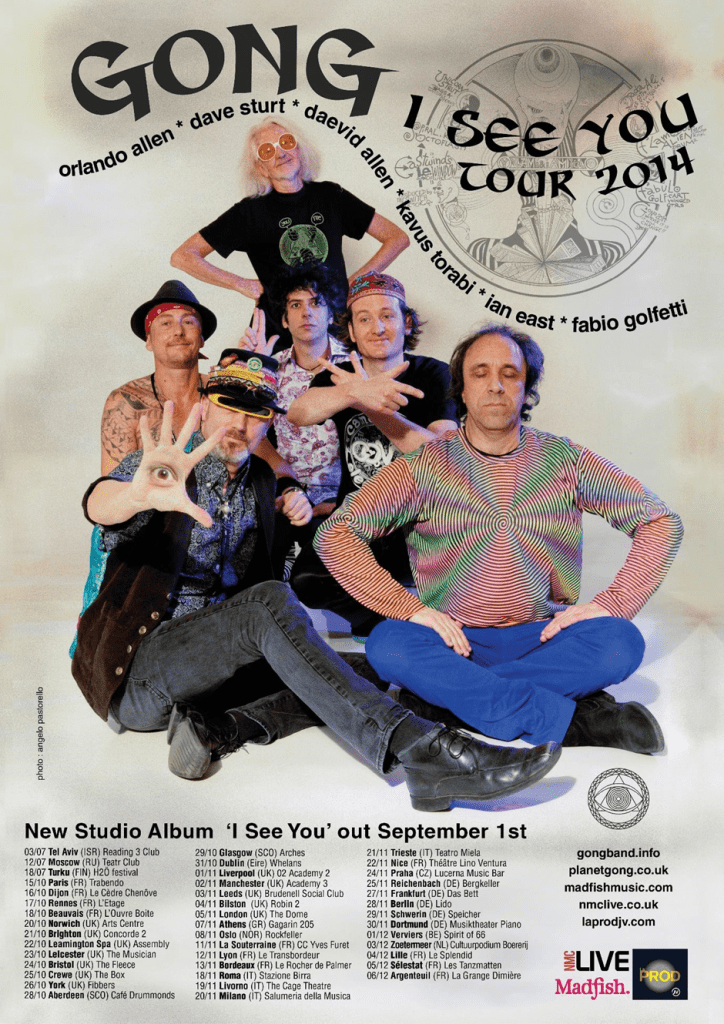
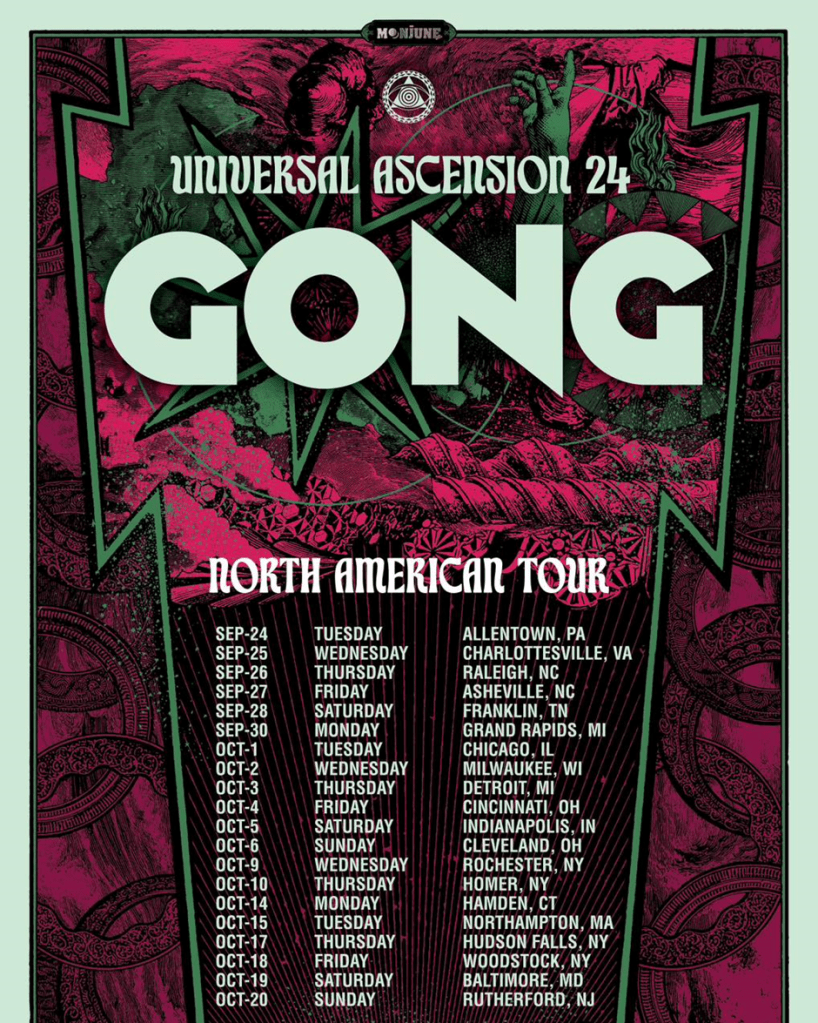
Gong tour dates in the United States available here:

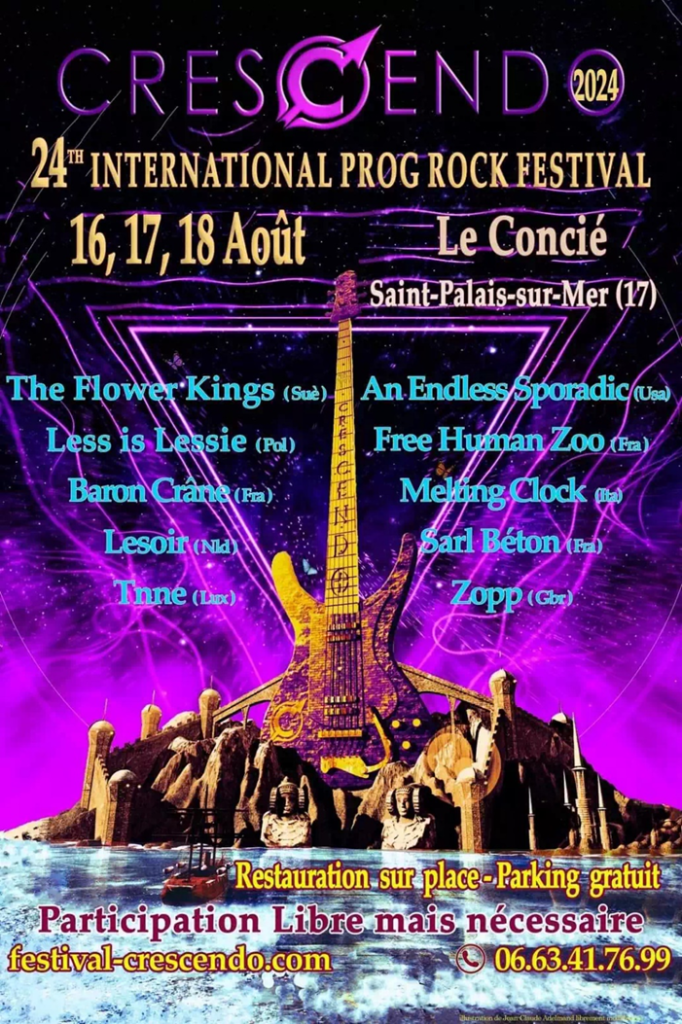
Zopp at Crescendo Festival, St Palais-sur-Mer, 18 August 2024

‘Here’s another epic. We only provide epics. That’s what we do!’.

Andrea Monetti/Ryan Stevenson

Ryan Stevenson’s words just before he launched into the band’s last piece ‘Toxicity’ from the acclaimed ‘Dominion’ album. A little tongue in cheek perhaps, but the crowd would have found it hard to disagree after 90 minutes of being pummelled by the most gloriously intricate, intense keyboard heavy compositions by a very tight four piece who finally found the audience they deserved by the seaside on the West Coast of France.

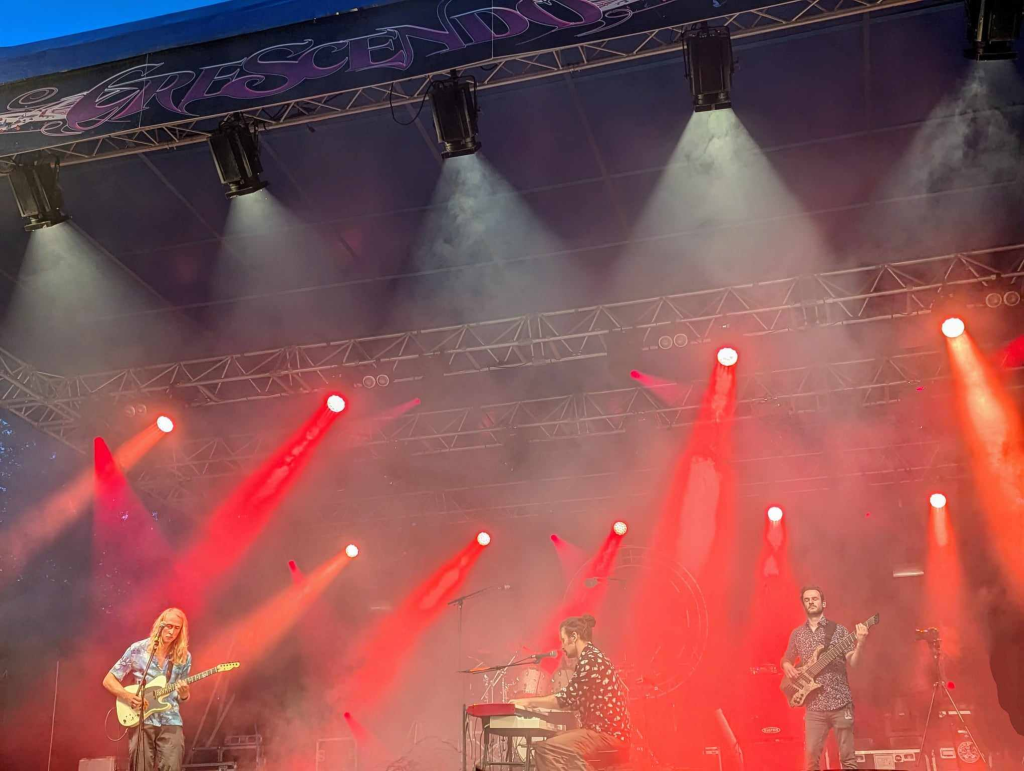
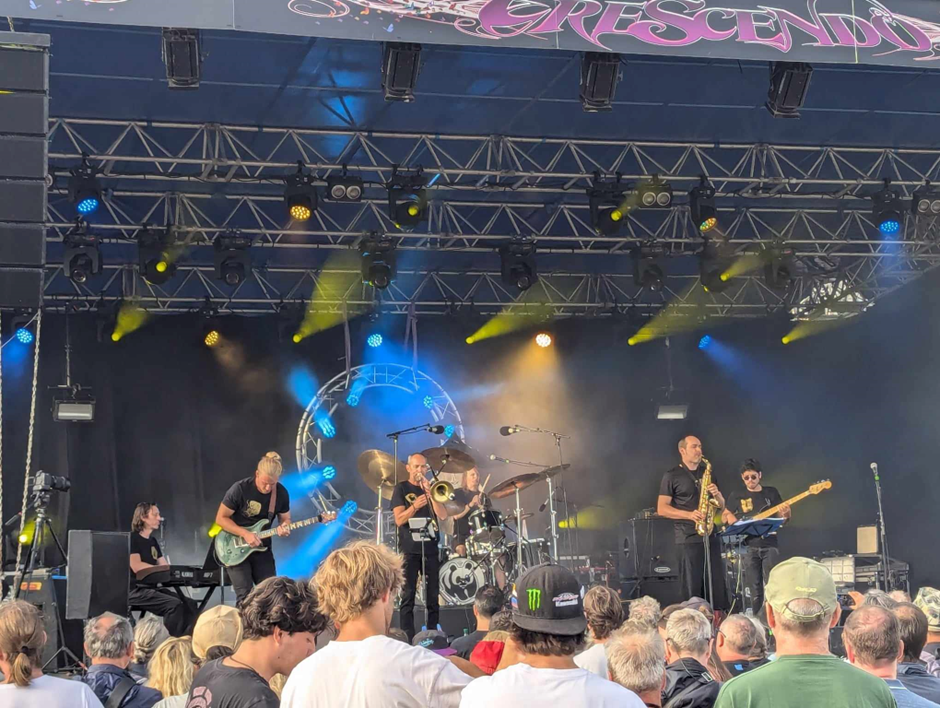
Zopp were playing on the middle evening of Crescendo – a progressive rock festival, in its twenty-fourth incarnation, which takes place over 3 evenings each August under the moonlit skies of the Atlantic in Palais-sur-Mer, north of Bordeaux on the west coast of France. Remarkably, it is free, testament presumably to a fairly far-sighted cultural funding mechanism within the town. It’s contained within a small fenced area between main road and seashore, and you could quite easily drive past it unaware (there was no signage and remarkably little fuss – some people had clearly travelled a distance to be there, but others had literally wandered in on spec). It starts each evening at 5pm, late enough to miss the often oppressive day time heat but also for the last band or two to perform their sets under the stars. The audience is in the upper hundreds (although one stall holder said previous years had been busier), and there are an impressive array of stalls, selling both refreshments (coffees for 1 Euro) augmented by more specific music-related offerings – including one for the French progressive rock fanzine Highlander (whose current issue features Zopp), booths for each of the day’s bands selling merch, and various well stocked second hand record stores.

Just 11 bands span the 3 days’ performances, allowing for lengthy sets. Soundchecks take place during the day, meaning that gaps between each set are minimal. The bands chosen to play appear to vary each year, and looking at the display wall featuring posters for all the editions of the festival, there seems to be little overlap between years. There is clearly a deliberate policy to extend invitations far and wide, with no Frankocentric approach – there were appearances for example by The Flower Kings (Sweden), Lesoire (Netherlands), TNNE (Luxembourg) and An Endless Sporadic (USA). The genre of progressive rock is indeed a broad church, if the bands on display are anything to go by – we saw all 3 bands on Friday who ranged from the messy, funky trio of Baron Crane (France), the pristine, slow anthems of Less is Lessie (Poland) and the grandiose operatic tones of Melting Clock.

Free Human Zoo

All had their merits, none entirely grabbed me, but I’d been looking forward to seeing Free Human Zoo on Saturday, who I realised in the days leading up to the festival had a connection to music covered in these pages: guitarist Alexis Delva is the son of Jean-Max Delva and Emmanuelle Lionet, the duo behind Anaid, the unusual French band who for a while featured Hugh Hopper on bass (as well as, on occasion Sophia Domancich, Patrice Meyer and, later, Rick Biddulph in the late Eighties and early Nineties. Jean-Max turns out to be one of the curators of the festival, and having been so generous with his thoughts for the Hugh Hopper biography a few years back, it was a lovely moment to meet both him and Emmanuelle briefly before the Zopp set. Free Human Zoo, meanwhile, are a Zeuhlish (even down to the black T-shirts) band from Paris, all pounding bass, staccato keyboard motifs and female voice, but augmented unusually by trombone and soprano sax, as well as the blistering guitar work of the highly talented Delva. There was a lightness of touch in their compositions which softened the initial dark overtones. Highly recommended.

And so to Zopp. This was, I would think, by far the highest profile gig of their embryonic career of a gigging band (still less than a year), and the band seemed more excited than nervous. Ryan Stevenson sits centre stage, with a microphone and couple of banks of equipment in front of him emulating the full gamut of Canterbury keyboard sounds. Unlike the first gig I saw him place he is sideways on to the audience rather than facing them, presumably because it’s better for interaction with his band. It still seems a refreshingly unusual to see the leader of a band playing keyboards.

 I’d been introduced to a member of the audience by Jean-Max, who was standing next to another punter of advanced years who was also, like me, wearing a ‘Camembert Electrique’ T-shirt – the first fan talked to me eloquently about seeing Soft Machine, Caravan and Gong at the Amougies Festival in 1969 (he didn’t look old enough!) then professed his excitement at getting to see Zopp (‘this guy is Mike Ratledge, Dave Stewart and Dave Sinclair all rolled into one’). Quite a billing to live up to! But the comparisons are far from implausible: Stevenson possesses much of the fluency of the former, and some of the range and technique of the second, and the lyricism of the latter – it’s uncanny hearing such familiar sounds unfold in front of you.

Andrea Monetti

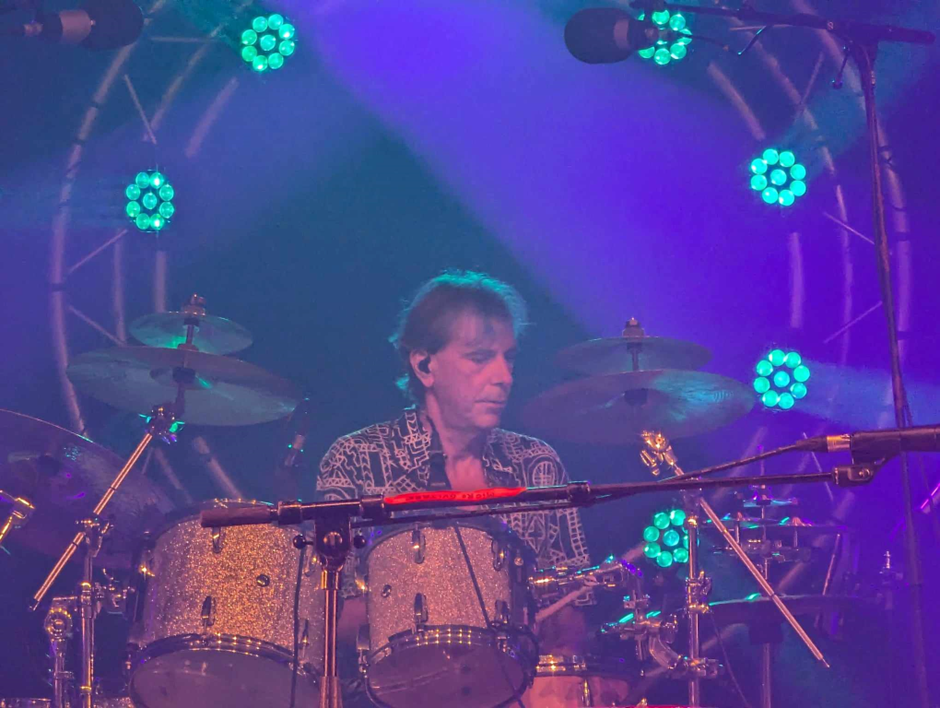
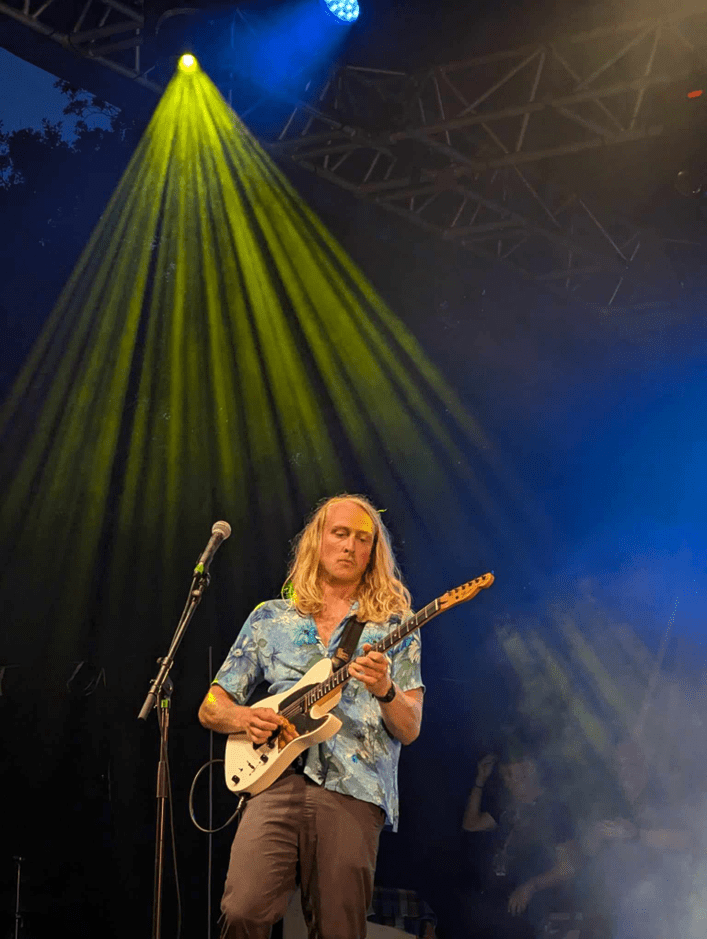
It’s also been a mild stroke of genius to expand the project into band format: Stevenson still composes all material, and recorded most of the first two album’s instrumentation alone, with only Italian Andrea Monetti a mainstay alongside him on providing a real drumbeat. Yet on stage this band is one of total cohesion –  with the contrasting sights of the seemingly unflappable Ashley Raynor on 6-string bass, effortlessly working his way around Stevenson’s fiendish compositions, whilst the much more animated Richard Lucas on guitar is attentiveness itself, adding a lick here, a solo there, aping the lead keyboard lines with utter synchronicity to the vibe of the project – I suspect he doesn’t quite appreciate what an important cog he is to the band, although his confidence visibly grew as the audience response became obvious. Monetti sits partly hidden by an extensive kit – he is a powerhouse, but deft enough to provide the perfect foil to the ever-changing music.

Richard Lucas

We’d been promised an extensive set with some surprises and the performance didn’t disappoint – the band started with probably their most acclaimed piece ‘You’, where time seems to stand still in the aching middle section in what is fast becoming a iconic part of the neo-Canterbury canon. The instrumental first album was represented by superb renditions of its best 3 tracks, the fanfarish opener ‘Before The Light’, with memorably its Oldfeldian cyclical guitar theme at its conclusion, the rousing concluder ‘The Nobel Shirker’, and, wonderfully, the track ‘V’, probably my own favourite from the first album, as the staccato keyboard rhythms hang almost like a reverb for the melodies to circle around. The band also resurrected ‘Sellenra’ for the album, a radically reworked version with a hint of drum ‘n’ bass rhythms as well as ‘Echoes’ style keyboards. From ‘Dominion’, in addition to ‘You’ and ‘Toxicity’, there was ‘Uppmarksamhet’, which, as I’d seen live previously, extends from its album incarnation to a gloriously gentle improvisational groove, showing another interesting facet of a band who generally concentrate on interpreting Stevenson’s tight scores.

Richard Lucas/Ryan Stevenson

There were also two new tracks, so new in fact that Stevenson was struggling during our chat the next day to given them definitive names (he settled on ‘Living Man’,   another ‘epic’; and ‘Intuition Made It’  ( also known as ‘After the Light’) a surprisingly confident encore for an early airing, including a tasty guitar/keyboard motif as its intro – they are still apparently in stages of development and Ryan alluded to both third and fourth albums being in production – lucky us! Both, like ‘You’ and ‘Toxicity’ interweave vocals. When I first heard ‘Dominion’ I wasn’t entirely sure about this element: after all, when you’ve struck gold with a range of compositions seemingly melding the best of Stewart, Campbell and Gowen, why change a winning formula? But that voice, with its clean, precise delivery has become integral to the band’s signature sound (aided by similarly delivered backing harmonies from Lucas above or below the melody). I’ve seen comparisons with Richard Sinclair, but that’s perhaps a little unfair (aside from the burbling introduction to ‘The Noble Shirker’): the clarity is there for sure, but Stevenson’s voice is much more imploring, almost strident. Either way, vocal lines are weaved in and out of the ‘epics’ so easily that they’ve become the new DNA of the band’s sound, it’s another meticulously manicured and integral facet of a very fine band, and I’m sure, for all Zopp’s avowed Canterbury influences, this will stretch their audience further afield.

Ryan Stevenson/Ashley Raynor

It’s so difficult to be subjective when you feel so personally invested in a performance (this was the longest distance I’d ever travelled specifically to see a band) but I got the impression from the outpouring of cheers, whoops and general excitement around me that Zopp had gone down as well as anyone at Crescendo. I might not regard myself as a natural progressive rock fan in all its multifarious manifestations, but if Zopp represent the genre then I’m probably all in! And mid set a fellow audience member caught my eye when I glanced behind me – the Amougies veteran was beaming from ear to ear …

Zopp

All things Zopp can be found at https://zopp.bandcamp.com/

Ryan Stevenson will be interviewed for the Facelift blog as part of the Canterbury 2.0 series

The ‘Out There’ Festival, Ceauce, Normandy, 1996

I’m currently staying near Royan on the west coast of France, specifically to see Crescendo, an international progressive rock festival which, amazingly provides free music for any who venture to see it (or stumble upon it, as had some spectators last night, for the opening of this 3-evening event). At the end of a 4 week stint travelling round France with family, we’ve primarily ended up here because it’s a chance to see Zopp but being at a festival in France got me reminiscing: the last time I saw music back in France was at a very different music festival.

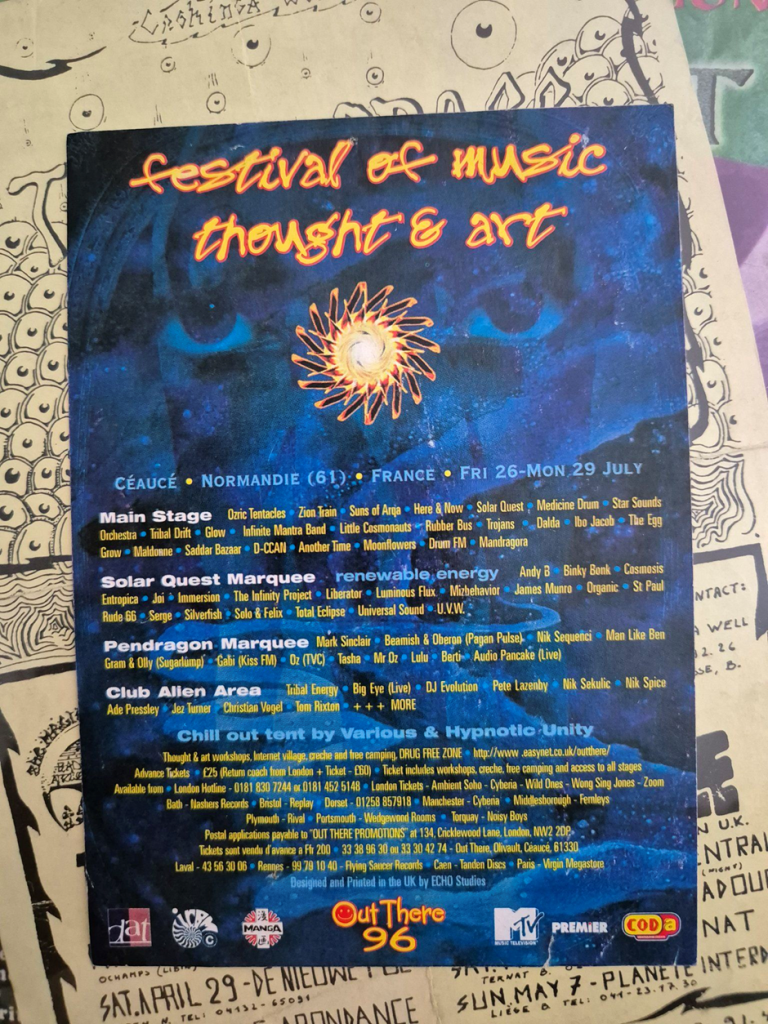
‘Out There’ was a 3 day event which took place in Ceauce at the bottom end of Normandy in 1996 (and I believe had had other incarnations in previous years). I’d been drawn there by the billing of various personal festie favourites such as Ozric Tentacles and Here and Now and had taken the rather unlikely decision to cycle there directly from the previous week’s WOMAD festival, then at its riverside site in Reading, at the last of 5 consecutive visits there from 1992 onwards. I’d gone to WOMAD with a number of Manchester friends, as much to see the Whirlygig ambient dub sideshows featuring the likes of Banco de Gaia, Time Shard, Tribal Drift etc, as the undoubtedly excellent main world music events, which I’d probably appreciate a lot more now… WOMAD at that site was great – there were regular trips to the Thames through the festival fence for a dip (probably somewhat unwisely, given now-known pollution levels), and at one point you could have campfires on site, but gradually this wilder side of site got reined in, no doubt not helped by a friend who at a previous edition had had a flip out at the increasing pruriousness of the audience, downed the best part of a bottle of whisky and left a Black Sabbath tape on repeat booming from his hire van. Other skinter members of the group shared tickets through an elaborate exchange scheme where wristbands could be loosened once inside the inner security enclosure and shuttled back to others back in camp – the most innovative variation of this was where the orange bands, secured by a metal tag, was syndicated (successfully)  through the use of a long strip of carrot peeling bound together with tinfoil!

For this edition I’d arrived at Reading on train with my bike, had had the foresight to pack a passport and on Monday afternoon had left site bound for the south coast and beyond it to France. A camp overnight somewhere in the UK, probably near the ferryport of Portsmouth and by Tuesday daytime I was making my way down through France, finding the familiar rhythm of my regular bike trips away at that time: where the only pressures of the day were to navigate in roughly the right direction, stay hydrated, pick up a baguette, cheese and tomatoes en route for lunch, maybe quaff a patisserie (purely for energy, of course), and find some fresh veg to fry up alongside some rice in the billy tins on a small camping gaz stove for dinner. And of course be able to pitch up somewhere in the evening, probably camped at that town’s economically priced ‘municipal’ campsite.

I think I’d picked up details of the Out There festival from a newsletter somewhere on the internet, I can vaguely recall some brief information in courier font downloaded and printed, probably from a computer at work, and stuffed somewhere in the bike panniers for when it was needed. I do remember avoiding main thoroughfares and very much pootling down Normandy’s D and C roads and ending up eventually somewhere very much ‘a la campagna’, probably on Thursday afternoon. The price of the festival seemed ridiculously cheap, perhaps 30 pounds or 300 francs (one of the first things that struck me was that you could pay in either currency, more of which later…) and there was a designated camping area – I locked my bike up to a tree, pitched my tent and had a good look around.

The site was pretty big and several things became obvious. Firstly, even though it was only Thursday evening, the organisers seemed to be expecting far more punters than appeared likely to arrive – there were food and clothes stores galore in particular with practically no-one in attendance. Secondly, the predominance of dance tents (with only 1 outdoor live music stage) and the various signage around the site (along with the dual currency policy) illuminated the fact that this was very much a London ravers’ away day event. Thirdly, the ‘freeer’ aspect of the festival seemed to be mainly evident that this point through the presence of a large pack of untethered dogs running hectically through site, presumably mainly interested in the one which was on heat – her owner somewhat disengagedly chucked a bucket of water on it when it got irretrievably ‘attached’ to its suitor. And then the whole process repeated itself.

I spent the Thursday evening wandering around site, had pitched up in a fairly quiet spot and so got a reasonable amount of sleep, then awaited Friday’s events with anticipation. There must have been programmes or at least billboards knocking around as I knew the Ozrics were headlining that day with Here and Now the day after. The area in front of the main stage was vast: so much so that when some of the afternoon bands were playing it seemed like I was witnessing almost a personal performance – I felt bad for the musicians at the lack of apparent interest. Keith Bailey from Here and Now recalls ‘it was on a weird, spongey feeling reclaimed waste tip as I recall – like a sprung dance floor underfoot ‘. Watching one band during Friday afternoon I remember looking behind me and seeing Ozric Tentacles having an impromptu game of football of notably good quality (it was only many years later I found out about ‘Jumping’ John’s sporting prowess – he apparently had trials with Queens Park Rangers). The music was pretty good, although I can’t tell you whether I saw Mandragora or not, who I would certainly have been aware of, but I do remember a most glorious Ozrics performance, set against wonderfully clear night skies, with what may have been a full moon illuminating proceedings. I associate this performance and line-up with the marvellous extended Arabic wig-out ‘Vibuthi’ from ‘Become The Other’, Jon Egan’s flute weaving up and down in front of him, and Ed Wynne’s blistering guitar solos. For me this was probably the last great Ozric Tentacles line-up in a perfect setting.

My other main memory of this night was of the on-site circus – it was called Baobab and even as a seasoned circus-goer was like nothing else I’ve witnessed before or since – from memory, I think it was partly opened to the elements, unlike the enclosed tents one normally views performances within, was based around a fairly monstrous and quite trippy alien invasion theme and featured the heavy use of motorbikes – it was anarchic and an assault on a multitude of senses.

I think the circus probably followed at the conclusion of the live music for the evening, and for me probably seemed like a reasonable way to bring down the curtain on a pretty full day – when you are travelling on your own days seem so much longer, with every thought and experience amplified. What I found however, on returning back to base, was that my tent had become the epicentre of an entire circle of London ravers, just ‘coming up’ and about to embark on their own evening of frivolity. No issue with their intentions, their attitudes (they seemed friendly enough) but the vibe was not for me, and somewhat freaked out I slunk off next morning, long before any of them resurfaced, in the direction of Brittany. A little myopic perhaps, as I’d end up missing Here and Now, plus a band I’d subsequently grow to adore (The Egg), but the time was right for me.

A couple of postscripts: whilst travelling through one town on the way to my next port of call, I popped into a local music shop, discovered and purchased a CD by Rachid Taha, featuring lavish credits to Steve Hillage – ‘Ole Ole’ became a favourite album on my return to the United Kingdom and a nice bridge between his solo guitar work and his newer work with System 7. Secondly, on a campsite in Brittany, I met some fellow cyclists, one of whom slipped me my first smoke of the trip and talked to me enthusiastically at length about a book called ‘Fierce Dancing’ by journalist and author CJ Stone, a fabulous autobiographical piece which starts off searching for the underground, and ends up almost accidentally in a confluence of rave culture and the road protest movement. Stylistically it remains a major influence on my own writings and coincidentally Chris now lives in Whitstable, birthplace and place of death of Hugh Hopper, whose biography I am currently researching. I’ve also recently been made aware of some of Hugh’s own cycling diaries (we talked about some of his trips the last time I saw him at the Marsden Jazz Festival with Soft Machine Legacy) and so, although I didn’t make any notes whilst in Normandy (I did on later cycling trips) it’s good to be able to recall some of the details now so clearly.

Thanks to Keith Bailey and Mark Curtis for supplying memories and those elusive details of dates, location and artwork!

Canterbury 2.3 – Fabio Golfetti interview Part 5– Gong

The final section of the Fabio Golfetti interview will look at his involvement with Gong, how he came to join the band, changes in circumstances as Daevid Allen became ill and how the current line-up has evolved.

Introduction

Part One – Formative Years

Part Two – Violeta de Outono

Part Three – Invisible Opera Company of Tibet

Part Four – The Glissando Guitar

I asked Fabio about how he came to join Gong and how the current line-up (with Dave Sturt on bass, Kavus Torabi (guitar/vocals), Ian East (sax/flute), Cheb Nettles (drums) and Fabio himself) had evolved.

Joining Gong

Mike Howlett left the band after they toured the ‘2032’ album. Theo Travis was the saxophone player and he said, ‘I have my friend Dave (Sturt) that can replace him’ – Dave and Theo had worked together on the Cipher album ‘One Who Whispers’ with Daevid guesting on glissando. The same happened to Theo – he had to leave in the middle of a tour and he said ’I have a friend’ which was Ian East.

And they kept going until Daevid decided to reform the band, turn back to his roots, play more gigs in small venues, and also bring his son Orlando to play.

Daevid and me became friends after Daevid came to Brazil in 1992 (see previous section). We kept in touch. For some reason in one of my communications, in 1998, I said, ‘if you need a guitarist I am available’. He replied that for the next tour they already had a guitarist, which was Mark Hewins.

For the ‘2032’  tour Gong played in big venues arranged by Steve’s manager, Dan Silver of Value Added Talent. There was a lot of love between Steve and Daevid and they had a very good relationship, but at some point Daevid decided to make a new band, and thought about Orlando (his and Gilli Smyth’s son). This was in 2011 and he asked me whether I could join – he said ‘the tour will be next year, would there be a problem if you have to be away from your family for 2 or 3 months. Gabriel (Fabio’s son) was 11, so it would not be a problem, Victoria (his daughter) was older. He said, ‘You will have a lot of fun. I will guarantee your money’. At the end of the tour, Daevid paid us but he didn’t take any money, he took a loss. I said ‘this is not right’. ‘No, this is my project’, he paid us, I don’t remember how much, but this was his project, and he was happy. Most of the time he only played because he wanted to continue. I wrote him a letter, but he said, end of story…. So I officially joined Gong in 2012, although some people consider 2007 (The Gong Global Family) to be a Gong thing because it was a time when Gong didn’t play.

So Daevid started reforming the band, which is why he invited me to come but on the other hand I wasn’t his first choice, his first choice was Adrian Belew from King Crimson, but when he talked about budgets it never happened because it was impossible to play for very little money considering all the costs involved.

The first time I had met Gilli (Smyth) was at the Gong Unconvention. I loved Gilli. It was kind of special for me because the first time I met Orlando was in the Gong Unconvention (in Amsterdam, 2006) and his girlfriend was a girl from Venezuela and I’m from Brazil. Daevid said ‘you must meet my daughter in-law,  she’s from South America too’ so Gilli was very warm with me. On the tour in 2012, many times I came down for breakfast and Gilli was always up.

The first time I saw Fabio play (although we didn’t meet on that particular occasion) was in 2012 when the band played at the Band on the Wall in Manchester.

Gilli was due to play but she didn’t. Gilli started the tour in France and in one of the those early shows in trying to get out of the van she broke her ankle or some similar injury. So she had to stop the tour and stayed with Luc Pilmeyer (Gong fan and webhost for the Didier Malherbe website) – she was staying in his house in Belgium for two weeks at least and then when we came to London to finish the tour I think Gilli joined a few gigs with us. Gilli did her last gig with Gong in Tokyo, Japan at the end of the 2012 tour.

Daevid’s illness

We did a last show in Brazil in 2014 – the last Daevid gig with Gong was in Sao Paulo, in a very small club, the Na Mata Cafe, 10 March). I arranged that gig at the last minute because a gig in Santiago, Chile was cancelled, and to fill the date I contacted a friend,  who was the owner of the venue. On a Monday normally it is not open but we did a gig for 100 people maybe – it was most almost like a private party. It was announced three days before. And then we all left and Daevid I think flew direct to Australia.  The rest of the band, Kavus , Ian (East) and then Dave (Sturt) came back to the UK. Orlando also flew with Daevid. We were working on the album ‘I See You’. We had finished the recording but we were working on the mixes to release at the end of the year. With the album there was a big plan, a tour of about 50 to 60 dates in many places across Europe including the UK and we had a plan to release the album in September, I think, just before the tour started. Everything was planned for a big Gong return with a new album. Daevid knew that this would be his last album because he said, ‘I have a very big composition called ‘Thank you’ ‘which should be the last composition on the album.’ He did a kind of a thank you for everything he passed during all his career.

original tour poster 2014

So probably this was going to be his last tour too. But he’d gone back to Australia and we had Glastonbury to play and then he wrote , ‘I don’t have very good news because I fell on the veranda outside my house in the garden, I fell and I broke my (collar bone) and I don’t know if I can play guitar for Glastonbury. But now as we have Kavus playing guitar we have three guitars, so I can just play the glissando, so let’s see.’ He put a kind of (support) to keep things in place but this caused friction on his skin and because Daevid had a certain skin sensitivity, (he had a lot of problems with the sun because was very white), there was a problem – it wasn’t healing because of the friction.

And then he went to a doctor and discovered that underneath there was a kind of skin cancer which became worse and then discovered that the cancer was in a part of the neck – so he needed surgery. He had to remove all his hair on one side. So we were starting to think that the tour wasn’t happening, but we still had the album to finish. He was up to doing this, even with this all this treatment – he had chemotherapy – and more than one surgery. So was he recording his bits even when he was ill, and he was doing more work, with Orlando doing the mixing.

So before he discovered the cancer he was up to doing this last tour but then as his illness progressed this was the point that he wrote us a few emails. So we started pulling out of all the dates because without Daevid … But his attitude was that  you have to do it ….

I suggested this idea to continue the tour might  have been because there was some sort of business contract which required fulfilling. Fabio disagreed..

Daevid said ‘you have to do it because you are Gong’. Gong had had a similar situation (when Daevid quit the band in the Seventies) and the band carried on, ‘so you have to carry on because I put this band together. The first thing that was suggested was that maybe we could try a singer – and mentioned some names like Tim Hall (the singer in the UK Invisible Opera Company of Tibet), but then it was so confusing with his health situation that he stopped communicating. So what happened at the end is that he persuaded us to do the gigs and we did the tour but only two dates in the UK. There were six or seven gigs in France.

At the time there was still a hope that Daevid would recover – this was in October/November and Daevid was still was in treatment. The album was released in November.

But I remember when we played in London we had a message on the phone and during the show we talked with Daevid direct from Australia! We stopped the show to chat to Daevid online! The gig was at the Garage in London, a kind of celebration because Steve Hillage came to play, Mike Howlett came to play, Keith the Bass came to play, Theo Travis came to play, Mark Robson…  so we had a lot of Gong family supporting that version of Gong and we had a very nice gig. At the end we did a big jam with everybody on stage. We played ‘Fohat’ which is the one that’s possible with three basses! Mike, Keith the bass, and  Dave Sturt.

amended tour poster 2014

All the gigs went very well, the audience was very receptive to us but we weren’t sure if we should continue without Daevid. We just did these gigs because we were asked to, but Kavus was unsure whether he should continue as a front man for the band.  But then there was a gap until Daevid wrote to us – it was in December or January 2015. Then we received an email he said, ‘well I did everything that I could, I tried all the therapies, I had a lot of operations, I did everything but the cancer has now come back very strong and the doctor has said I only have 6 months. But he died two months later because he said ‘I will stop all medicines, I will stop everything because if I only have 6 months there’s no point for me to make this longer’ and then he died in March of 2015.

Post-Daevid Gong

I don’t remember if  we had any gigs  in 2015 but I think this was the point that we decided to continue the band because he had written in this letter that we should continue. We didn’t know if it was feasible to make it happen because I’m in Brazil and we all had different projects but then we decided to try to put an album together which was ‘Rejoice! I’m Dead!’ I don’t remember exactly how we started the album because we had individual ideas. We have a rule in this new Gong that none of us have to come with a finished song – that’s the new rule but at that point we only had a few ideas.

The first track on the album was based one of my Violeta tracks that was a demo of one of the Violeta albums. I don’t remember what I called that track in Violeta but it became  ‘Thanks George’ because of George Harrison – the lyrics I wrote were based on George Harrison’s lyrics on that song ‘Inner Light’ – it has short lyrics that say ‘without going out of my door I can know the ways of Heaven’ (sic) – I think it wasn’t on any Beatles album, I think it is a B side of a single. So I had that track and also another one with many temporary names that became ‘Model Village’ after Dave’s intro and middle part which he also had previously, and his lyrics –  it was one of my tracks that was recorded with Violeta but not released.

I pointed out that there was also ‘Kapital’, the spiky revved up track which the band still play live, which had had some input from Daevid before he died.

FB: ‘Kapital’ is a similar story. Daevid had a demo – it was the first part of the song, a kind of blues demo just playing with the guitars, no drums, nothing. He played the guitar and during this process of trying to find some ideas I got the second part of the song, through Cheb Nettles’ suggestion of joining both ideas. This part I found in my 80’s demos, from Lux times, and for me is was much more inspired by New York Gong or ‘Playbax 80’ (the solo Daevid Allen album which used snippets of the New York Gong album ‘About Time’ as its basis). New York Gong is good but ‘Playbax’ is one of the my main albums because Daevid did a lot of loops.

live version of Kapital from the ‘Pulsing Signals’ album

There’s plenty of Daevid in the album, samples of his voice, and poems, including the title of the album that came from one of his poems. Other tracks have the seeds of what we are doing now, in ‘Unspeakable Stands Revealed’ you can hear Kavus riffs which were the start of the song, the combination of sax and gliss which recalls the Gong vibe and identity of the 70’s. In ‘Insert Yr Own Prophecy’, which was a track by Cheb, it demonstrates how great he is as a singer and composer. We all started making use of our personal sonic arsenal, Dave with his EBow ambient fretless bass made a lot of unique inputs with unusual sounds.

Gong fans

I asked Fabio about what his perception was of how Gong fans had accepted himself and others within the current line-up as a legitimate continuation of the Gong story

What was interesting was back in Sao Paulo a couple of weeks ago. We were booked to play in Chile and I said to the promoter, ‘well let’s try to make Sao Paulo’, because to go to Chile you have to stop in Sao Paulo – it seems there are few or no direct flights from London to Santiago.  And we did that show – it was in a very beautiful place called Casa Rockambole – I knew the place but had never been inside.  The promoters were 28 to 30, my daughter’s age. What was interesting is that they have connections with lot of young people and these people they were not coming to see (the Seventies) Gong or Steve Hillage – they want to come just because of the legend.  There is a legacy in the name of this band. Same when you play in China for example, we played for an audience in their 20s and 30s keen for new experiences. When you play all these different places, people go just because of what they read in magazines and now the internet. But they’re not expecting to see Daevid – in the Sun Ra band for example there will be not be Sun Ra or John Gilmore but the band are still carrying on the legacy with Marshall Allen (who turned 100 this year).

It’s a matter of opinion. You might have a friend that is interested in what Gong was in the 70s but now the 70s is 50 years ago! The name is still Gong – it is a different band but we have a bit of its spirit because we all learned with Daevid, we all played with Daevid Allen. We are not trying to be Gong as it was, we are trying to continue music and develop music with the name of Gong. Musically I think we are far away from what they did before but also we are not doing a kind of tribute – we are not deceiving anyone doing this music, we are just being ourselves. Kavus is not similar to Daevid Allen in the way that he sings, his voice and everything, and I believe this is one factor that Daevid considered in leading this band in a new direction.

But I have been a fan of this scene since I was 14. I like the trilogy (‘Flying Teapot’, ‘Angel’s Egg’, ‘You’), I was inspired by this Gong philosophy. I’m not sure when Dave and Ian had a connection with Gong philosophy before, nor Cheb. But when Ian plays his saxes it’s instantaneously Gong, Cheb could play Pierre’s parts perfectly, Dave is an amazing bassist that could be in any incarnation,  Kavus is a Gong fan, but, the same as Tim Smith (Cardiacs), loves the ‘Om Riff’ because of the riff itself, as he says: the best riff ever written! But this Gong has nothing to do with the mythology (although we love it), without Daevid Allen it is not the thing to do to continue (or perform) the trilogy.

On the  ‘I See You’ album, we were a bit shy because well – we had Daevid the master –  we composed with him – so that album has tracks from everybody, but we gradually became more confident in our abilities to make music. I think Daevid Allen would be supportive to continue the direction are going. We can’t stay the same, life is changing constantly, it’s never the same..

It’s difficult to please all fans because a fan likes that one thing – they don’t want changes , they dig their heels in. But when you see a music act more like an artist you are much more open to evolution. Even King Crimson evolves from the first album to the last album – they are completely different bands – well there’s one member because Robert Fripp was the main guy, but even Pink Floyd carried on when Syd Barrett left.

I just don’t think you can please people all the time. You’re the creativity, you’re the inventors, they take it or they leave it and some people will never be pleased.

One thing that I’m thinking and I always discuss this with the band is that the many people who saw Gong in the’ 70s don’t come to gigs anymore, some are now older than me,  only the true old fans come.  So now I think if we have this mission to continue this band and we accept this challenge to do so, I think we should make this band our band to a new generation too.

Gong at Sidney and Matilda, Sheffield, 2023 – Kavus Torabi, Dave Sturt, Fabio Golfetti. Photographer: Phil Howitt
Revisiting ‘I See You’

Fabio had mentioned to me earlier in our conversation that the band were working on a remixing of the last Daevid Allen solo album ‘I See You’

It is the 10 year anniversary of ‘I See You’. The process of the album was a bit chaotic –  we were in three different continents and Daevid was ill, Orlando was under a lot of pressure. We thought that we could remix the tracks for this anniversary special edition. We asked Orlando recently to send me the backup of the files, the sessions, he sent me a hard drive with the sessions.

I like the ‘I See You’ album, the songs. For me it was an honour to make an album with Daevid Allen – we had done that album in Brazil before (The Gong Global Family), but this one we composed and created. But we all were a bit shy of what we could do with Daevid Allen, because he’s a genius. The first track, ‘I See You’ was one of the indicators – we went to the studio in Brazil, my friend’s studio, and said ‘let’s try to make some recordings as we are all together’, the same studio we recorded with Violeta, the MOSH Studios of Oswaldo Malagutti Jr. (famous in Brazil with his band Pholhas in the ’70s). And then Orlando started playing on drums, a jam with Dave on bass. We only had drums and bass – like a free jam. Daevid took that thing to his place (in Australia and created an amazing track over that drums/bass. So that was quite intimidating! He did everything with the glissando, it was amazing. But we understood that we should all contribute in some way. On ‘Eternal Wheel’ again I had a Violeta track I had never used, I have some demos of that track and in the studio we played the track and jammed. Orlando edited  and wrote the lyrics. We recorded the album and it came to the mixing process, it was very complicated, Daevid was too ill to give his input.

We recorded two extra tracks that were unfinished and weren’t published, a version of ‘Change The World’ (from the Magick Brother Mystic Sister album) and ‘What A Revolution That Will Be’ which was decided to be left off because of “inappropriate” lyrics.

We had this idea to remix the album as if it was a previous version of the album, to have a special approach, different from the original mix, something similar to the Beatles ‘Let It Be Naked’, without the strings, without less post-production. When Yes released the 30th and 40th anniversary albums, at the end of the CDs they put extra tracks, what they called ‘run throughs’. I really enjoyed them, they went to the studio and just played live with no overdubs. It was very good to hear those tracks in their early incarnations. So we will (for ‘I See You’) use everything that was in the tape but the mix will be rougher, but with a good sound. We have already sent all of the tracks to Frank Byng, the producer/sound engineer that has been doing our recording since ‘The Universe Also Collapses’.  He’s doing an amazing job. I think it will end up being released in late 2024/early 2025.

We also will release a special edition of the album ‘Unending Ascending’ with bonus live tracks from the last tour.

Fabio also mentioned that the band were preparing to record a new studio album and he regarded this as the third in a series which had started with ‘The Universe Also Collapses’, with ‘Rejoice! I’m Dead!’ standing apart somewhat as Gong members had contributed individual tracks, whereas ‘Universe’ and ‘Unending Ascending’ had been more of a collaborative effort. Fabio talked a little about both of the latter two albums

On the album ‘The Universe Also Collapses’, we had already started developing our own sound. I think this album has a lot to please the old fans and the new. Side One features a long twenty minute track, our ‘Close To The Edge'(!) and has a lot of what we have been distilling in the last few years, lots of ambient gliss loops, big angular riffs, complex horn arrangements, powerful drums and bass. 

We all felt confident about this album and were very happy with it – we felt it reflected the potential of this band. It was at the time when we had decided to create all music collectively (apart from the lyrics which Kavus took care of – I think it’s much better to sing what you write, I think it’s a much truer reflection of your writing).

The interaction of ideas always leads to something new, Kavus can suggest a riff, then Ian plays the opposite of what Kavus had in mind, Dave looks on with his producer’s eyes, and this creates something unexpected and original.

I like the last song on the album, ‘The Elemental’. For me it was a step towards making this version of Gong closer to pop music, even with the discordant middle part, which is cool. It came from the first chord sequence that Kavus brought to the first day of writing sessions in the studio. We played ‘Elemental’ a few times at the beginning. When we released the track, it should have been the promo, single. And we have a video clip for that but Kavus didn’t feel comfortable singing this track live, some tracks work best in the studio.

‘The Elemental’ single

I commented that ‘Unending Ascending’ had seemed more punchy, a selection of often sharper, shorter pieces than this line-up had recorded previously

When we decided on a new album, we already knew that would be a continuation of what we started in ‘The Universe Also Collapses’. But this time we opted to make an album of short songs. The album called Unending Ascending revealed to us that we could do our trilogy, a bit more loose and abstract than a linear story, but something that has a lead line connecting. We have the same team working, Frank Byng of Snorkel Studio, our producer/engineer, Steve Mitchell of 57 Design who has redesigned the current Gong logo and created all imagery identity and the personnel from Snapper (Gong’s record label) that have been very supportive too.

Two of the singles from the album appeared very quickly, during a rehearsal Kavus started the riff of ‘My Guitar Is A Spaceship’. In a few minutes we’d already written the main part of the song singing funny nonsense lyrics. At some point Kavus said, can you imagine us playing this riff at Glastonbury Festival? Two days later Jasper (Jones) of Fruit Salad Lights, our lighting engineer, rang us asking if we could play at the Glade Stage in Glastonbury 2022 (he normally does the light show for that stage). It was magic!

The other song ‘Tiny Galaxies’ had shape just after I played three chords with a Leslie simulator, very 60’s and Kavus instantly played a spacey sound that he discovered on his new pedal.

Cheb always contributes many riffs, on this album the powerful riff of ‘Choose You Goddess’ is his contribution.

Some of the highlights in this album that I could mention are Ian’s parts, including the flute that appeared more on this album than previous ones. Or Kavus’ voice , the way he sings in combination with the vocal harmonies is one of the characteristics of this Gong. And one interesting track is ‘Ship Of Ishtar’, a kind of sound sculpture, where we had lots of space to put our personal preferences, Dave’s EBow bass, my ambient gliss loops, Kavus’ lydian melodies, Ian’s meditative flute and Cheb’s incidental drums. Saskia Maxwell is guesting on this track, an idea that appeared during the Gong/Ozric Tentacles tours recently, when Saskia joined us on stage. 

Gong at Leeds Brudenell 2024: Ian East, Kavus Torabi, Saskia Maxwell, Dave Sturt, Fabio Golfetti (hidden – Cheb Nettles) Photographer: Phil Howitt
Future Gong projects

Finally I asked Fabio about the band’s touring work with Steve Hillage and also about future projects

This line up had the honour to perform as the Steve Hillage Band, in 2019 and 2023. Steve & Miquette recruited us to perform a series of shows playing music from his classic albums, ‘Fish Rising’, ‘L’, ‘Motivation Radio’ and ‘Green’. It was a fantastic experience to see these two amazing artists at work. We played in many nice places, including Loreley in Germany, where they used to do Rockpalast, memorable gigs at Shepherd’s Bush Empire and Friars Aylesbury, and also recently at a festival in Poland where we had the pleasure to meet Nick Mason in person. Nick is a very sweet person and has a long connection with Gong/Steve, producing ‘Shamal’, ‘Green’, as well as, of course, ‘Rock Bottom’ by Robert Wyatt.

Gong are going to have a pretty intense next three years touring the UK, Europe, the Americas, and sometime hopefully we will go back to Asia. At the moment many Gong projects are lined up: tour in North America in September/October, Europe in November/December, and possibly a return to the US in the Spring of 2025. We will release a Special Edition of ‘Unending Ascending’ with live bonus tracks from the last tour, we are working on the anniversary edition of ‘I See You’, and start writing new material for the next studio album to be released in 2025.

On the solo side, I’m writing a new album following the previous album ‘Songs & Visions’, which for me is a return to my formative years in the 70’s, when I started listening to contemporary music and jazz, especially ECM, with plenty of atmospheric and organic sounds.

Thanks to Fabio for being such a willing, informative and engaging interviewee and for providing the exhaustive discography below which spans a career now stretching back over 40 years.

Gong play their first extensive tour of the United States for a number of years, starting in September.

Fabio Golfetti Discography and bandcamp links

https://fabiogolfetti.bandcamp.com/

https://violetadeoutono.bandcamp.com/

https://invisivelrecords.bandcamp.com/

Solo and with Invisible Opera Company of Tibet

1989: Ópera Invisível – Numa Pessoa Só – Single (Wop Bop)
1993: Glissando Spirit (Low Life / Voiceprint)
1994: Glissando Spirit Live / Live at Brittania Cafe (Voiceprint)
1996: Cosmic Dance Co. (Nova Sampa)
2010: UFO Planante (w/ Invisible Opera Company of Tibet) (Voiceprint)
2022: Songs & Visions (Music Magick)

Violeta de Outono

1986: Violeta de Outono – EP (Wop Bop)
1987: Violeta de Outono – LP (RCA)
1988: The Early Years – EP (Wop Bop)
1989: Em Toda Parte (BMG)
1995: Eclipse (Record Runner)
1999: Mulher Na Montanha (Voiceprint)
2001: Live at Rio ArtRock Festival ‘97 – CD/DVD (Rock Symphony)
2005: Ilhas (Voiceprint)
2006: Violeta de Outono & Orquestra – DVD (Voiceprint)
2007: Volume 7 (Voiceprint)
2009: Seventh Brings Return – A Tribute to Syd Barrett – DVD (Voiceprint)
2011: Theatro Municipal, São Paulo, 03.05.2009 – DVD (Voiceprint)
2012: Espectro (Voiceprint)
2016: Spaces (Voiceprint)
2020: Dia Eterno (Music Magick)
2022: Outro Lado – CD (Music Magick / Voice Music)

Gong

2009: Gong Global Family – Live in Brazil 2007(Voiceprint)
2014: I See You (Snapper / Madfish)
2016: Rejoice! I’m Dead! (Snapper / Madfish)
2019: The Universe Also Collapses (Snapper / KScope)
2022: Pulsing Signals – Live (Snapper / KScope)
2023: Unending Ascending (Snapper / KScope)

Lux Æterna – Gabriel Golfetti

2021: Lux Æterna : Dream (Music Magick)

Other artists

1983: Zero – Heróis/100% Paixão – Single (CBS)
1984: May East – Caim e Abel – Remota Batucada (EMI)
1986: Kafka – Tribos da Noite – Musikanervosa (Baratos Afins)
1990: Dialeto – Vermelha – Will Exist Forever (Faunus)
1992: IRA! – Um Dia Como Hoje – Meninos da Rua Paulo (Warner)
1994: Angel’s Breath (w/ Suba – Mitar Subotic) (Imago Records)
1994: Taciana – Janela dos Sonhos (Natasha Japan)
1995: Concreteness – Squinting Look – Pircórócócó (Banguela)
1996: Barella & Frippi – Danza – Alvos Móveis (Suck my Disc)
2000: IRA! – Ao Vivo MTV (Abril Music)
2001: Pacto Social – Final do Mês – Cantar /Protestar (CD You)
2002: Momento 68 – On/Off – Tecnologia (Voiceprint)
2002: Jupiter Apple – … So You Leave the Hall – Hisscivilization (Voiceprint)
2007: Torture Squad – Hellbound – Hellbound (Wacken)
2008: Daevid Allen And The Glissando Guitar Orchestrae – The Seven Drones (Dakini Records)
2008: Arco Duo – In Space Rock (Voiceprint)
2010: 48 Horas – Cidades – Cidades (48 Horas)
2013: Spirits Burning & Clearlight – Healthy Music In Large Doses (Gonzo)
2014: Kaiambá – Made in Brazil (New Music / Green Tree)
2015: Dr Fantástico – Sweet Opium Music (Voiceprint)
2015: Spirits Burning – Tripping With The Royal Family – Starhawk (Gonzo)
2015: Dave Sturt – Unique & Irreplaceable – Dreams and Absurdities (Esoteric Antenna)
2017: Vespas Mandarinas – Carranca e Expresso (Deck)
2021: The Frame Of Life – w/ Renato Mello (Music Magick)
2021: Alex Antunes & Death Disco Machine – Acaba Lá Com Isso (Ultra Gash)
2024: Frame Of Life – 2 – w/ Renato Mello (Music Magick)

For other interviews in the Canterbury 2.0 series, please click here

Canterbury 2.3 – Fabio Golfetti interview Part 4– the glissando guitar

Introduction

Part One – Formative Years

Part Two – Violeta de Outono

Part Three – Invisible Opera Company of Tibet

Part Five – Gong

Fans of Gong since 2012 will have become accustomed to seeing guitarist Fabio Golfetti standing stage right with the band, frequently adding texture to the band’s sound through his use of glissando, an open string guitar sound generated by the use of a metallic object sawing across one or more strings of the guitar against a range of  amplified effects. The technique is considered to have been pioneered (or at the very least radically advanced) by Daevid Allen and has been adopted by a number of guitarists both within and outside the Gong family. This section of Facelift’s interview with Fabio looks at his ongoing love affair with glissando guitar.

With Gong, Leeds Brudenell, March 2024. Photographer: Phil Howitt

Fabio explains his fascination with the technique:

When I discovered Gong, I always looked at the album credits and said, what does this mean, ‘glissando’? And I couldn’t understand the sound. On ‘Angels Egg’, the sound that was in ‘Inner Temple’, it is amazing.

So I listened to this glissando guitar. Glissando is an Italian word, or at least Latin. I know that it means when you go from one note to another without a gap, you pass through all frequencies from one note to another. The master of glissando was Gyorgi Ligetti. You know, the soundtrack from ‘2001 Space Odyssey’, the track that has a vocal was one of his compositions although he wasn’t the composer for the film.  Also there’s a famous composition called ‘Atmospheres’ by the name of the character who went to Jupiter, I forget his first name. This was also by him.  Gyorgi is a Romanian name, Ligeti sounds Italian. And he was one of the inventors of this glissandi, he also composed a piece actually called ‘Glissandi’. I like the word. In 1981, I got a magazine called Guitar Player, there was an interview with Steve Hillage, and there was a picture of Steve holding something and it was the first time I saw a picture that could give me a hint. I still have this interview as a photocopy.

Stevie describes how he does the glissando, how he uses the metal bar. He doesn’t describe the equipment exactly but he mentions the harmoniser, the digital accessory that was very popular at the time to create harmony with the notes but it was more interesting, it has more capability – and he mentioned that he used the harmoniser and the echo and it sounds like a ‘choir of angels’. When I had the pedals, I took a screwdriver that I had at home and tried to do this and discovered that it worked, how it sounded and then I understood the sound behind ‘Inner Temple’.

from Guitar Player 1981

When you play the violin you play notes and then you gliss from one to other. Glissando is similar to a slide guitar but played with the right hand. I started using a screwdriver but you can start with any metal bar just to see the sound and then you can find your own. You have to damp the strings – sometimes you can stroke the string but you must be careful not to break the strings. I will give another hint: if you have a screwdriver it’s straight but if it’s lightly bent it’s easier because if it’s straight you press too many strings at once.

On ‘Fohat Digs Holes In Space’ (from ‘Camembert Electrique’) you can hear the gliss guitar when Daevid moves (the metallic object), but ‘Inner Temple’ is different, it sounds like a  keyboard or Mellotron, but then I understood that  on ‘Camembert’ it was more rough, it is very well recorded, but it is also more distorted.

So I discovered the glissando and alleluia, I started exploring this. The glissando sound was dark in the beginning with Gong because Daevid played with the Telecaster, which is a very noisy guitar and when you play the high strings they don’t have much volume and when you play the lower strings it is much more dark. This is why in my version of ‘Tomorrow Never Knows’ (which launched Violeta de Outono) I only played low strings, also with my Tele. When Daevid had a Gibson Les Paul he improved his technique, certainly from ‘Flying Teapot’ or ‘Angel’s Egg’.

Glissando Guitar Orchestra, Gong Uncon 2006. Photographer: Edneia Golfetti

The first thing I remember Daevid mentioning about the Invisible Opera happening, he mentioned a café cellar in Paris in 1968. I met Francis Linon (the ‘Switch Doctor’ credited on many Gong albums), a couple of times with Magma. And he said ‘oh, I invented the glissando!’ He said, ‘I put an echo on Daevid’s guitar and Gilli’s voice so instantly it became the space whisper and the glissando’ and so he is part of this combination in 1968 when they played La Vielle Grille –  there is a video. So possibly Francis was part of the story too.

But are you aware of ‘Bananamoon’ – a bootleg that was released in France with unreleased pieces of his previous band- there is a rehearsal of (them) playing ‘Why are we sleeping’ and Daevid playing without an echo. You can hear a raw glissando. It is a very bad recording. But he said he saw that Syd Barrett did this exploration and then he found the gynaecological instruments that he saw in a friend’s house.

Daevid Allen / Bananamoon Band – Je Ne Fum’ Pas Des Bananes

But I think that maybe this act that was in Paris in 1968, maybe was the birth of the glissando which they called the Atlantean voices of Gilli, and Daevid doing this glissando. But also they finished their career on ‘I See You’ with this track, they did this recording they called ‘Shakti Yoni and Dingo Virgin’ because this is the seed of this music, and it is really interesting because it is contemporary, avant garde, improvising, very unique – I think they invented something.

So I started with my own glissando, and then I improved the glissando with my own research and I started to discover how to improve the sound, and I am very into technology, pedals, so I went deep into this. Sometimes when I go to sleep, one of my exercises is to think about sounds in my mind, pedals and effects! So I played glissando with Violeta right from the start with ‘Tomorrow Never Knows’, but I had a band in my university years called Lux too – I have a recording of this and you will hear a lot of Gong in it.

Kavus Torabi and Fabio Golfetti with the Glissando Guitar Orchestra, Kozfest 2021. Photographer: Phil Howitt

In Part three we talked about how Fabio became involved in the first performance of the Glissando Guitar Orchestra at the Gong Unconvention in Amsterdam in November 2006. It should be noted that this project has continued ever since, and makes an annual appearance opening proceedings on Sunday mornings at Kozfest. a small festival in Devon. The orchestra has a flexible line-up and in 2021 included both Fabio and Kavus Torabi as both were on site with Gong headlining the Daevid Allen stage the previous night.

The Glissando Guitar Orchestra will play Lewes on 9 November 2024 on a bill which also contains Steve Hillage’s ‘Mirror System’, as well as performances from Dark Zen Kollectiv, Nukli, Jah Buddha, Bob Hedger and Deviant Amps, all of whom  all provide members for the current Orchestra line-up.

Fabio’s glissando playing has been embedded in his playing throughout all of his projects over the last 40 years. In Part 5, the  last section of this interview, we will look at how he came to be involved with Gong in 2012 and how the band has progressed since that time.

Part Five – Gong

For other interviews in the Canterbury 2.0 series, please click here
Canterbury 2.3 – Fabio Golfetti interview Part 3– The Invisible Opera Company of Tibet and the Daevid Allen connection

Part 3 of the interview with Fabio Golfetti concentrates on how a distant connection with the Gong family built over the years through connections with the Gong Appreciation Society, communication with Daevid Allen about the use of the Invisible Opera Company of Tibet monicker, to eventual collaborations with the man himself in a variety of guises, including playing of a central part in the first Glissando Guitar orchestra.

Introduction

Part One – Formative Years

Part Two – Violeta de Outono

Part Four – The Glissando Guitar

Part Five – Gong

I had a contract with Violeta with BMG – RCA in fact, a big company who gave us a big advance to buy instruments to do things. The record label were very rich at that time, (they are still rich) and that was the first time I came to UK, in 1987, in September or October. I came to UK and I bought my Telecaster, in London, in a famous shop called Andy’s on Denmark Street – many artists went there – that was a great guitar.

When I came back to Sao Paulo at the end of 1987 in November, I received a letter from GAS. I don’t know who was running GAS at that time, it was probably Rob (Ayling – later to found Voiceprint Records). Rob sent me a letter saying, ‘we’re going to do a workshop with Daevid’, because they’d (Daevid and partner Wandana Bruce) become experts in breathing therapy. In Australia in the preceding years he’d joined some people that worked with alternative therapies and one of those was breathing therapy.  I was invited to participate in this Workshop because I was on a  list of guests.

GAS letter, 1987 – received both by myself in Manchester and Fabio in Brazil!

Daevid wanted to come back to UK to perform, so the idea was to do the workshop to pay his costs for coming from Australia and back to the UK. Now it’s so easy to come and go but at the time it was more expensive and complicated.

But I had just spent my money flying to UK in October, and coming back to Brazil in November, and then I received this letter to come in January so it was impossible. After that Daevid Allen come back to UK and then he started doing just his solo stuff.

I was fascinated with idea of the Invisible Opera Company, the idea of connecting people, Gong types of people, in different places and you don’t have to show your real identity and then a friend of mine called May East moved to England and then she married one of the main guys in the Findhorn Foundation (an alternative community in the North East of Scotland) called Craig Gibsone. This was in around 1989 and she wrote to me one day, ‘oh I’m here in Findhorn, I’m recording an album and I will put together an album with a guy called Mark Jenkins. And I remembered the guy that you like, Daevid Allen of Gong, he also will be releasing an album here with Mark Jenkins. It is called ‘Stroking the tail of the bird’’. She asked me if I would like her to talk to Daevid because she knew I wanted to try to use the idea of Invisible Opera in Brazil. I said it would be amazing if I could use this name in Brazil. I knew that Daevid used this name. In fact I have all the GAS newsletters and in 1985 Daevid published this newsletter which mentioned invisible Opera Company in Australia but I think it was just an idea then, it might have been called the Nuclear Mystery Temple (at that point).

In 1989 I released a flexi disk. I used the Invisibles’ name but in Portuguese – Opera Invisivel. Then, after May contacted Daevid, Daevid said I could do this  but he asked me to send some music, some cassettes for him to listen to what I was doing.

Opera Invisivel – Numa Pessoa So, released on flexi-disc, 1989, Wop Bop

I received a letter, a letter written like a piece of art, this was in the early 1990’s. He said, ‘I have no objection to you using the name Invisible Opera because as you said it is a kind of connection’. I don’t know how many letters I wrote to GAS (in the preceding years) but he had probably read (all) my letters because they must have been in the GAS office after he arrived in 1988.

I talked to Fabio about the fact that when he sent me material across from Brazil in the 1990s, that not only was the music resonant of that of Gong, but even the accompanying artwork was clearly influenced by Daevid Allen.

I think the idea of Gong and GAS was fascinating for me –  I tried to reproduce something similar in my world of Brazilian connections with Violeta and then when Daevid Allen allowed me to be part of the Gong as Invisible Opera then I started to use some imagery that was more connected to the Gong family.

I asked Fabio if he had any personal connection to the idea of an Invisible Opera Company of Tibet beyond its association with Gong music.

I have an  interest in the Oriental Asian culture of China and Tibet because I had a girlfriend at that time for seven years and she also helped me to write some of my letters because she was an English teacher. She was born in Shanghai – they speak English in Shanghai but then I had also had this interest in Oriental philosophy. When I saw Invisible Opera Company of Tibet, it was for me a name that was very interesting because I like Tibetan culture. But for me it’s more complicated than that. I started with the title Invisible Opera title with the drone idea, that type of music, as I’d always been interested in spiritual and meditational aspect of like, and music is connected to this directly. I saw a point where I could focus my music in a spiritual way.

Fabio pulled out a cassette from a box recently acquired from Holland containing a couple of dozen GAS tapes, the mail order artefacts produced by the Gong Appreciation Society – this one was the ‘Nuclear Mystery Temple: Drones’ tape which referenced Daevid’s impending return to the United Kingdom at the end of the 1980s:

This is the cassette that inspired me to start the Invisible Opera Company of Tibet in Brazil.

But then (around this time)  I travelled through Asia. I had a proper job working for the Mayor as an architect for poor people in the suburbs of Sao Paulo, helping people build their own houses– it was the first time the left wing party had a mayor of Sao Paulo. What they did was they went to Sao Paulo university and got the professors to try to give help with buildings for poor people in the city. First they went to the teachers and the teachers went to the students and I was connected because I accepted to be part of this big team of people that tried to bring better conditions for people who worked in the poor areas. So I had a proper job. I was never a big speaker guy, I’m a bit shy, but I had to do a lot of speaking to poor people about how to live in better conditions. I have this job until 1993. I had a day job, and then at night time I went to my small studio producing music for Invisible Opera, not so much Violeta, and then when I had to quit this job because they changed the mayor and the project was disassembled, they stopped all these social projects because the (new) mayor wanted to do this stuff. So I lost my job – I knew this would happen, Edneia (Fabio’s wife) had a nice job at this time. I had good insurance money for 4 years. We could have bought a property or maybe we could travel. We decided to travel for 3 months in Asia, We didn’t have kids at this time.

I did a tour of places that I wanted to go and see, because I am very interested in cultural history, at that time I wanted to make a connection between musical and cultures and food. I read a lot of esoteric books, philosophy, these connections of all the cultures. We decided to fly to Asia, go to Bali, then to Thailand, Nepal and India.

I went to Bali because of the Balinese gamelan, I had re-created this on the computer, so let’s go to see this music live, and how they do this.

Bali is incredible, you probably travelled to the same places I did. I stayed in a hotel in Legian, near Kuta, it was so cheap. I stayed days in Bali, watching the Balinese gamelan, then we flew to Thailand.  Thailand was very interesting but they are more protective, we are just tourists there but we cannot dip into anything musically.

We stayed in Nepal for a bigger part of the trip, in Kathmandu, which was the best experience for me of the trip because stayed inside a Tibetan monastery. I have an interest in Tibetan culture, a friend of mine who is a Buddhist, the sister of May East, Kitty, Christina Pinheiro, she said if you go to Kathmandu you can stay in the same Gompa (temple) that I did because they have a place to host people that go there to study and a retreat, and you can stay there, it’s very cheap, even if you don’t go to do study, you can stay there because they need money. Kathmandu has more Hindu culture and the very poor, they have a very tough life but it is better than India. But they have a difficult life, and recently they had an earthquake which destroyed many of these beautiful buildings, and some of those buildings don’t exist any more.

Then we stayed outside of Kathmandu in a place called Boudhanath where there is an area where there was a big Stupa, the big temple, the round temple with the Buddha eyes in the top and the temple is a Mandala if you see it from the top, it is a 3D representation of a Mandala

So we stayed at this temple, because when Tibet was invaded by China, all the Buddhists fled to India or Nepal, especially Kathmandu

Kathmandu (May 1993, photographer: Edneia Golfetti)

It was very interesting because we were staying inside this temple, and at 3 in the morning the Buddhists started the ritual, the horns, this Tibetan music, and the cymbals, and what is interesting is that you are in a very quiet area, no cars, it is protected by a wall, maybe mediaeval, but you could hear noise in the air, the bells, every time, in Buddhism they have different rituals in different parts of the day, you could hear noise all the time.

So when I went back to Brazil I didn’t have a job, so I stayed in a room for one month with all my ideas, and then I did this Glissando Spirit album. I went to my Atari computer and tried to compose everything I saw in this trip, on the computer, this Balinese Gamelan, all these droney things, of course they are all connected, and also to the music I was hearing at the time, all this electronic music like the Orb.

Solo gig for release of Glissando Spirit, 1993

In fact we came to London after coming back from Nepal. I didn’t stop in India because India was too complicated at that time, so I changed my flights and spent extra time in Nepal. Then we flew to London and I went to the record shop, I think it was Tower Records and I bought a lot of records by the Orb. Then I had the idea to do something similar to this trancey music, it was something I was already doing but I improved this.  It was very nice to do the trip, it is amazing when you do something like this it opens your mind for the rest of your life. In Nepal it was quite shocking for me because of the instruments. Some of the Buddhist instruments are made from human bones, they take the femur and turn it into a trumpet,  they cut the skull to make a shaker! Because the Buddhists believe in reincarnation they regard it as a shell, so they do this just for you to remember these things. So I was in a shop and a skull was a tambourine, and this is normal there. If I took it to Brazil then it would be somebody’s head.

My friend Kitti goes to Nepal every year, she has a teacher there, and she always brings me things, she brings spices and Tibetan tea! and once she bought me a statue of a temple and inside there is a mantra in a paper, and maybe there are some ashes in here of someone because it is a sort of relic. This is a bit weird. But I was very fascinated with the Tibetan culture, this mind control, I did meditation for a couple of years, but after having children I have to decide to focus on other things.

So what is the Invisible Opera Company of Tibet? It is a universal concept originated by Daevid Allen, which according to Fabio’s own website is ‘a code name’ – which, in the man’s words, is best described as “an international ideological/ spiritual/ aesthetic communications network for artists of all kinds… who share the common vision of warm hearted, pan-stylistic, inclusive art forms which serve the drive towards conscious evolution”. 

In more practical terms this equates to a number of bands around the world taking on the name: in Australia, with Russell Hibbs (an album under the IOCOT name was released on Voiceprint in 1991); a United Kingdom outfit which emerged in 1992 and has only recently disbanded, led by Brian Abbott; and an American outfit of whom much less is known, and who have no apparent direct connection to other incarnations.

On the Planet Gong it states that ‘in the 1980s Daevid used this concept to bind together a group of flexible personnel, chosen for their ability to channel a quality of music beyond their own normal capabilities’. 

Brian Abbott told me back in 2019 for the Facelift blog– “I believe it’s always been a part of Daevid’s mythology and the whole Gong story. According to Daevid’s  ‘Gong Dreaming 2’  book The Invisible Opera Company of Tibet are a group of ethereal lamas through which the Octave Doctors broadcast their music. They are said to reside in a cave high in the Himalayas.”, although perhaps the most comprehensive attempt at explanation comes on a website here:

https://www.ukfestivalguides.com/artists/invisible-opera-company-of-tibet/

Fabio himself refers back to a text that Daevid wrote as a commentary

I had a small notebook like this size from that time when I wrote all the concepts – something along the lines of ‘why invisible? – because they don’t have bodies’, ‘why invisible opera? – because they don’t like ballet’, ‘why Tibet? Because the Dalai Lama travels by Qantas’… this referred to the physics concept of quantum physics – remember a book called the Tao of physics, they started discovering all this taoism of the Chinese principles were very connected with new discoveries in physics. Daevid always liked to (capture) everything.

We couldn’t find this original text but Fabio forwarded something he found in his own extensive archive of Gong and related material.

Invisible Opera ‘explanation’, GAS Mag, 1988

So the first thing I understood about Invisible Opera Company was exactly was what you can read in those notes. Daevid opened a kind of a portal – the Invisible Opera Company of Tibet for some reason – because he wanted to connect people in different places –he was in Australia and then he connected with people in UK like Brian Abbott who still carries the Invisible Opera spirit (the UK version of the band only concluded in 2023) and he he created a version of Invisible Opera that started in Australia with Russel Hibbs. But then I felt that I could be part of this concept of an Invisible Opera network because I like Gong music and I make music that maybe fits in to this spirit of Gong. I stayed in touch with Russell by letters in the 1990’s and I met Brian Abbott personally with Jonny Greene in the early 2000’s and the first time we played together was doing a gliss session at Nigel Shaw’s studio. My style is not exactly what Gong did in the 70s because if you listen to the music I play more naturally, it is much more Syd Barrett, more Pink Floyd than Gong, not the humour of Gong but I’m very passionate about the glissando, this for me was my instant connection with a way to play guitar.

And I also discovered glissando – I had been a Gong fan since I was 15 but there is always a question about what you really like and what you can be. I like John McLaughlin, but I would never be a John McLaughlin level musician, and I’m not interested in being John McLaughlin but the connection with Gong was with this concept of opening a kind of network through which we can exchange ideas. In fact I was already doing this with my friends in Brazil, with Renato (Mello) and also with May East. She was also was part of it because she was a famous musician she played in a very famous 80s band called Gang 90, a popular band in Brazil who did TV shows. She wanted to move from the pop scene to more new age music – she was more interested in following a spiritual path in music in the 90s. My Invisible Opera was a connection of these people in Brazil with me because she was my friend and we have a connection greater than just music.

I tried to create this Invisible Opera concept in Brazil in Sao Paulo because of my friends and my connection to what Daevid was doing with the drones. Things became clearer to my mind when I read Daevid Allen’s notes for a GAS tape.  I received a cassette in 1985 (from GAS)  called the Voice of Om. There was a drone, there were songs and there was a type of meditative music. This was my main catalyst in creating something similar, or at least something in this direction. I became fascinated with drone music and the way the music interacts with the body.

GAS Tape: Nuclear Mystery Temple Drones, 1985

I’m interested in Indian music and Tibetan music, although Tibetan music itself is actually a bit different. Popular Tibetan music might be much more like Chinese music but ritual Tibetan music is a bit monstrous – it’s not music that you can stay meditating and relaxing like Indian music that you focus your consciousness on. Tibetan ritual music is much more atonal,  not pleasant, and maybe in the Tibetan Buddhist ritual this make sense because they are part of the readings they call pujas like a big ritual that lasts hours.

So then I just tried to use this Invisible Opera Company concept by channelling this idea of creating music in this direction, a bit of new age music. I put a credit in French – ‘Opera Invisible’ – to acknowledge the inspiration.

So what was your direct connection with Daevid?

FB: I received a letter from Daevid and we stayed in touch for a while by letter, this was in 1991 before the internet. And then May (East) moved from the pop/rock scene into ecological and New Age causes. She came to the UK and became part of the Gaia Foundation before going to Findhorn. She stayed in London a couple of times where she met Mark Jenkins. She went to Findhorn I think in 1991. Then in Brazil in 1992, in Rio and in the capital Brasilia there was a big ecological summit they called Rio 92 or Eco-92 or Earth Summit. May was working on this, and it was connected to various governments, and she told me ‘I would like to invite Daevid to come to play with you in Brasilia –  Daevid has worked as an activist (artivist) in this area.’

Daevid wrote me a letter saying, ‘it would be good if I can come, me and maybe Mark Robson (Kangaroo Moon)’ (too) because they were playing together. I didn’t know how I would be involved because at the time I was playing with Renato (Mello) but I went to another friend, RH Jackson (Jack) who was working on the programming of the album and then talked with Daevid. Because of the budget they didn’t get enough money to pay for flights, so Daevid said, ‘I’ll go anyway without any money – and they provided the hotel and he came to meet.

In fact we didn’t play exactly together. I played a set and he came to my set and from where I stopped he continued the set because we didn’t have time to improvise to do this thing – it was a bit complicated. So I did a set with my friend – I played some of my music with electronics – the thing I  was doing with my Invisible Opera version and he came with his ‘Twelve Selves’ set.

Review of Daevid Allen’s appearance in Brazil, Rock Brigade, 1992

Daevid came on stage and he created this big drone with the audience. He had been doing ‘Twelve Selves’ in small clubs for 50 people and suddenly he ended up playing with this festival for more than 1,000 people – it was a big theatre.  Daevid started his set and he jumped from the stage to the first row and started with other people, and made a massive circle with hundreds of people doing the circle and started singing one note –  it’s an F –  the first note of the drone, and everybody sang  – almost a thousand people singing this note.  I pressed the playback tape and then he started playing the glissando over the people’s singing.  I don’t believe he did this show to a bigger audience than this – it was remarkable.

Jack, Fabio and Daevid in Brasilia, 1992 (photographer: unknown)

He’d travelled for the show from San Francisco and he’d bought a small guitar tuner there. It was a digital tuner, a new one and after the show someone stole the tuner. Now Daevid – he wasn’t a rich man, he lived in a very limited way. The next day he was going home and I had a digital tuner and so I wrapped it inside my whiskey velvet bags and I didn’t see Daevid because he was leaving early so I said to someone ‘can you do me a favour, wrap this in a packet and give this to Daevid but tell him not to open it because he probably will not accept’. When he opened he saw it was my tuner and he wrote me a big letter just to say thanks about. This is one of the things that solidified our relationship.

Meanwhile, Fabio’s use of the Invisible Opera Company of Tibet monicker began in earnest. A cassette jointly credited to Fabio and the Invisible Opera Company of Tibet appeared as ‘The Eternal Voice’ in 1991, a meditative piece heavy on glissando, Chinese inflections through synthesiser and guitar, and additionally input from May East and Renato Mello, with just a couple of gentle vocal pieces. ‘Cosmic Dance Co’, followed in 1992, and is even more reflective, very much building on Daevid Allen’s drone influences. But it wasn’t until 1993 that Fabio started to frame the Invisible Opera Company of Tibet into a broader, more formulated context with the ‘Glissando Spirit’ project. This initially was a series of tracks purely performed by Fabio, in his words using ‘aspects of oriental music and space-rock performed on guitars and synthesizers (including drum machines)’: This was later revisited, with welcome additional instrumentation from drummer Claudio Souza and saxophonist Renato Mello for a Voiceprint release in 1996. However, in the meantime the ‘Britannia Café’ cassette had appeared, my own introduction to the Brazilian arm of the Invisibles and as such still my own main reference point. As I wrote in my review, ‘this IOCOT use many of the classic Gong sounds (glissando guitar, discordant sax, spiritual acoustic works, tuned percussive sounds) and incorporate the into their own forward-looking music. At times it’s almost like listening to a new Gong album…’ It also mentions the liberal ‘quotes’ from New York Gong, Soft Machine, and even The Orb adding to that sense of almost eery familiarity.

That recording, we played that gig in an old cinema in Sao Paulo on a Thursday night, midnight, it was freezing, unusually, 10 degrees for us is very cold. And we had just 80 people in the gig in a big cinema. So the sound guy said to me, ‘we have just 80 people –  I can never make a good mix – it is too empty, the sound is not good in any situation, would you like me to mix live for the recording’. I said, ‘do a recording, maybe we can use it later’. It wasn’t what the people heard, it was more what he heard on his headphones. I think it was the best decision.

I had an instant connection with Renato – we have a kind of chemistry. I know we could never sound like Gong because technically if you look to Gong, Pierre Moerlen drumming, Didier playing saxophone, you will never find anyone like this. Renato Mello (the saxophonist), he very much looks to Elton Dean, and John Coltrane, his sound is – he is not a professional, but for me he has a big talent and his older brother was the one that introduced us to this music, me and him.

Opera Invisivel,  Renato, Fabio, Nelson, 1991 (photographer: Zico)

I had some press when I released the album, because I did promotion in normal newspapers and they mentioned that I had received reviews in England. This is an important story for us, for a Brazilian musician to have recognition overseas. Voiceprint did a very good job at restoration, it was by a guy called Dallas Simpson, in Yorkshire.

Just to complete the Invisibles story (for the moment at least), in 2010 Fabio sent me a copy of a newly completed album ‘UFO Planante’, the title itself a nod back towards Fabio’s first band Lux. The ambitious scope of this album is immediately apparent: around 2 hours of music, which although based, like the core Violeta project, around a trio of musicians (Gabriel Costa on bass and Fred Barley on drums) it shows clear progression from the Glissando Spirit into a fully coherent group artefact – the album’s opener ‘First Contact’ is a alternatively effusive and pulsating rambling 27 minute psychedelic jam. The album overall may be Fabio’s finest moment, recalling the warmth, groove and space of Gong’s Trilogy-era instrumentals, with some glorious guitar work on lead, rhythm and glissando throughout.

UFO Planante, 2010

Returning to Fabio’s relationship with the wider Gong family, Fabio talks more about how his relationship with Daevid developed during the Noughties.

Daevid he told me that he had an idea for a Glissando Guitar Orchestra and that I would  be the first person he contacted. I remember seeing from Jonny (Greene, from GAS) that he was doing a Gong reunion in 2005 in Glastonbury. And so I wrote and said ‘I know you are doing this Gong reunion, do you think it would be worth me joining you?’ And Jonny said ‘maybe, but wait for next year because we will be organising a big Gong reunion in 2006.’ And so the Glissando Orchestra performed in Amsterdam in 2006. It was very good to meet everybody. There were 10 guitarists.  I didn’t know exactly what was going to happen because the Gong Unconvention was 3 days in Amsterdam, all the Gong family, and for me it was the first time meeting everybody. We met with Gong in Colour Sound, a big warehouse where they provided the light show. There was one bus for the artists, one bus for the crew, and a big trailer for the equipment, and we all met there and went to the Hook of Holland – it was a long ferry journey during the night and I was very sick, it was November.

So we did this gig with the Glissando Orchestra. What Daevid did was this: it was (led by) me and Daevid. He said to me, you should be the main glissando, you should stay in the centre – oh no! – He put me in the centre. I was very shy. It was Steve (Hillage), Steffe (Sharpstrings) , Brian (Abbott), Harry Williamson – he was there recording. There was Makoto (from Acid Mothers Temple), Josh Pollock (from University of Errors) the other guy was Jerry Bewley who was there with Kangaroo Moon. There was another guitarist, Steve (Higgins, from House of Thandoy) – he died recently

The Glissando Guitar Orchestra, Gong Unconvention, Amsterdam 2006 (photographer unknown)

In fact it was improvised – he took all the guitars in the party, and then there was a friend of Daevid called Mic Cosmic, who conducted the glissando. We played the 7 drones, starting with C, for 7 minutes each. So Mic hit a Tibetan bell and we started and hit it again  every time we were to change key. It was recorded and was the first ever Glissando Guitar Orchestra performance.

Fabio’s central role within the first performance of the Glissando Guitar Orchestra would lead to further collaborations with Daevid, this time on Fabio’s home turf:

Gong Global Family 2007, Brazil

I had a very good relationship with Daevid, sometimes he was like a father for me, very protective in some ways. In 2007 I was in contact with my friends from Invisible Opera and one of them. Gabriel Costa, told me about a big festival 3 hours from Sao Paulo, the Festival Contato at the University of Sao Carlos and one of the promoters, Mauricio Martucci asked me if Daevid could come. They wanted to ask Daevid to play and asked if I could provide a support band for him to play what he wanted. So I asked Daevid, ‘do you want to come, I can arrange the musicians from Invisible Opera to play here’ and he said yes, but he wanted to bring someone, possibly because he was a bit insecure to play things by himself, so he decided to bring Josh Pollock who he was playing with at the time with the University of Errors. Michael Clare (the University of Errors bass player) also came by himself, not to play, but as he was here, we did a gig with the University of Errors playing before us with Fred (Barley) on drums, our drummer.

So it was the first time we played as Gong. Daevid said, let’s call this Gong Global Family. There was no Gong (band) at the time. We recorded the gig and Daevid loved that album, I gave that album to Rob Ayling to release (Gong Global Family – Live in Brazil, 2007, Voiceprint)

So in 2007 we spent a week together. Daevid was a very soft person, very interesting. The first I had met him in 1992 he was 50, so he wasn’t very young. Maybe when he was very young he was more punchy, but at that time after doing this meditation, this rebirthing, this kind of new age, maybe it changed him a bit.

Gong Global family, Brazil 2007, photographer: Angelo Pastorello

But now 5 years (sic) after he’s gone – it’s like some (of his impact is) disappearing. Nobody talks much about him.  In our bubble sometimes we mention Daevid Allen but it’s something that passed so fast.  I think in history you have some remarkable personalities of people who stay alive, in books or whatever…  I think Daevid Allen was so important …

Fabio’s collaborations with Daevid would culminate in him joining Gong in 2012, which will be covered in the final section of these interviews. In the part 4 of the interview, however, Fabio talks more about his love affair with the glissando guitar…

Part Four – The Glissando Guitar

The music of the Invisible Opera Company of Tibet (Tropical Version) is available at https://fabiogolfetti.bandcamp.com/

For other interviews in the Canterbury 2.0 series, please click here

Canterbury 2.3 – Fabio Golfetti interview Part 2– Violeta de Outono

Introduction

Part One – Formative Years

Part Three – Invisible Opera Company of Tibet

Part Four – The Glissando Guitar

Part Five – Gong

Violeta de Outono have been playing in Brazil for almost 40 years, and have recorded a dozen or so ‘core’ albums (the picture is slightly muddied by Fabio’s extensive restoration of early material, live performances, special projects including orchestral interpretation of their works, and reworkings of their classic material). But as we hinted at in the previous episode, Violeta de Outono evolved from a number of other bands in Sao Paulo in the early Eighties.

Fabio Golfetti with Violeta de Outono (photographer unknown)

I had a band called Lux (in 1981/2), then we changed the name to AMT-1, because it is an abbreviation of one of those things in the film 2001: A Space Odyssey, and then for the third time we changed the name of the band, because when we changed a member we changed the name of the band, so we changed the name to Ultimato when Claudio Souza joined. This was the band in which we started to develop the sound of no wave, the mix of punk and jazz, we were more instrumental, this was in 1982. After this the band became Zero, because we decided if we were instrumental, we wouldn’t get anywhere, and we needed a vocalist to become more popular, and play in different places, and then we found the singer for Zero.

We wanted to see what could happen as we were inexperienced. The drummer Claudio (Souza) had been with me since Ultimato, then we continued with Zero, then we started doing Violeta de Outono in parallel. By then I was already playing glissando, I already had the equipment to play glissando properly, and the first thing we played with Violeta was ‘Tomorrow Never Knows’. We wanted to play psychedelic music, and decided to play this simple song I could play on the gliss. I always say, that with the Beatles, if you go to ‘The White Album’ you can see all the styles of rock on this album. ‘Tomorrow Never Knows’ was actually on the previous album but it defined a style. If you have ‘Helter Skelter’ you have a band that can play music in this style. So I decided that ‘Tomorrow Never Knows’ was the style of band I wanted.

The two friends that I started the band with (Claudio Souza and Angelo Pastorello) were friends from our teenage years and they never became professional musicians. We became a professional band but only for three years in the first era of the band. We didn’t make money enough to survive, so Angelo continued with photography and the drummer Claudio has a company selling stones for floors – granite marble. 

I formed Lux with my friend I was 20 years old and when I formed this band me and Claudio the drummer we said, well let’s go back and try to learn music, like try to learn how to write a pop tune, and try to write a song. This is how I found my friend the bass player Angelo – he wasn’t a musician, he’s a photographer, but I said,  ‘Angelo can you just play two notes on the bass – just play!’ –  so I gave the bass to him – we borrowed a bass and he just started to make this most simple thing and this was good because then we start learning again how to how to make music.

Violeta was a very healthy band because me, Angelo and Claudio, this three piece band, we formed because of our friendship. I read one Robert Fripp article saying that for a band to exist there are three ingredients: money, friendship and good music – so you need to have two of these to make a band be successful. For example you make a lot of money and you are friends but you play shitty music – that’s one scenario.  The other one – you play good music, you make a lot of money but you hate each other!

But with Angelo and Claudio we were very good friends from our teenage years so the band – we like the music we play, and we have a very good friendship, so if we make money it’s okay but it’s not necessary. We still meet every week when I’m in Sao Paulo, to play, jam, and eat pizza!

Violeta de Outono, 1985 (photographer: Massarico)

The opening track on the first album, ‘Outono’ (Portuguese for autumn) also did much to set out a benchmark for future material by the trio – a simple strident guitar motif based around 2 notes which ushers in a thundering bassline. Fabio gives the back story to the origin’s of the band’s name.

An interesting story is the lyrics, I grabbed the lyrics from Chinese poetry – that poem, defines the style of the lyrics I wrote – the Chinese write a lot about exile from their Homeland and the poem is about exile in autumn. This is a very old poem from the 12 century translated by my girlfriend Irene Sinnecker. As this method went well I felt I was on the right direction and then I discovered the way to write – normally I write the songs and the lyrics I always write after. I have a melody in my head and then I start – normally I use  disconnected words. Sometimes we do this the same way with Gong – we create a melody and then we start singing anything just to feel the words. It develops from there.

reproduced from https://au-magazine.com/

Another clue as to the origins to the band’s name is from the scan shown above

When I was at the library of the Architectural School, I discovered this article in a nice Japanese magazine called AU . Violeta Autumn is the name of an American architect, and I was very interested in discovering more about it, because we already had the Violeta de Outono name. Now I can find her!

I’ve always been interested in what impact Violeta de Outono had in their homeland – whilst practically unknown in the United Kingdom they are often mentioned, in their own publicity at least, as being movers and shakers in the independent Brazilian music scene. But I’d always got the sense from talking to Fabio that when Violeta started, they reached a large audience relatively quickly and so I asked about how this process came about.

FG: it’s interesting because normally when we play – if we play too many gigs in the same area then sometimes people will not come, but normally if we play in Sao Paulo for example then after a year without playing we have around 500 to 600 people, which is good.

But what is interesting is the renewal: it’s people that heard about the name of the band, some young people. The same happens with Gong. It is not something pre-determined, it is natural and spontaneous.

We were in the right place at the right time. We spent one year (before) playing privately, in rehearsal rooms, because we weren’t confident about playing live and Angelo was learning to play the bass. We composed most of the first album in this first year in 1984, and we continued into 1985. At the end of 1985 my friend Nelson who played with me in Zero, he also had a project and he said he had a date for us to play in Sao Paulo, in a basement, a very nice place, it was for underground music in Sao Paulo for avant garde music. The venue was Lira Paulistana (a name from a famous Brazilian writer, Mario de Andrade), a cult venue where many avant-garde jazz/ experimental artists played, and they opened for the emergent Paulistano (from Sao Paulo city) rock bands. When we played there it was on the 12th December 1985, it seems that we were one of the last bands playing there before they closed.

(This gig is captured at https://invisivelrecords.bandcamp.com/album/lira-paulistana-12121985)

We didn’t have a name at this point, but we decided to use these words, Violeta and Outono. Outono means autumn, Violeta because of the light, the colour. Autumn, all the lyrics were all based on this melancholic Chinese thing. But also autumn we all liked, maybe it was because it was the season I was born.

The gig was for about 100 people, a very small place, but there was a journalist for the main rock magazine called Bizz, and she liked what we did, and she said, I will write a review, I want it to be a feature, and we went to the studio of this big magazine, it was related to a big pub chain in Brazil.

Parallel to this I had an idea around the same time in December (1984).  We were rehearsing in a room, a bedroom, in a friend’s house, it was not a studio, it was just a room with a lot of books, we rented the place and we put our stuff in there. So there’s a drum here, a guitar facing, and a bass here, it is a tiny room. So I had my cassette recorder, an Akai, and I had a very good microphone my friend Nelson lent me, a stereo mic – it captures stereo in a very nice way. Due to my inexperience and based on my intuition, I placed the microphone at a certain height, it is almost between the kick and snare so it captures the guitar on one side, the drums on the other side, the bass in the centre.

original video for Dia Eterno

So I captured this live rehearsal. We did a demo, I overdubbed the vocals with my reel to reel. It was recorded with empathy, we could hear the guitar, drums and bass, and then I overdubbed the vocals with lots of echo, I had this echo pedal. It was just after the gig, and before we released the interview. I sent it to a big radio station with an alternative network which was trying to find an audience for these new trends. They had a good signal – a big area in Sao Paulo and a bit outside. It was called 89FM, which still exists as Radio Rock.

So when we sent the music to this radio, there was one of the guys there who loved the songs. And we were lucky to record in the way we had done, because when you put this in the radio system, because they have a big valve amplifier, and a big compressor, you find that if you have music that has few instruments, like the Police, then they sound big, the drums sound big, so because of this low technology when it was amplified on the radio, it sounds amazing, like these old 60s bands because it was recorded not in a dry studio, a live room, so it sounds amazing on the radio.

So on this radio, with a very big reach, in one month we became popular, they started playing 4 of our songs, they alternated, played more than once in a day, and after a few weeks we were popular on the radio on one of the emergent radio stations. Then we had a gig in March. The radio play  happened January to February, and all the people came and we had a big audience of 600, there was another band, it was a kind of festival, but people already knew our songs, they sing them together, this was after only  3 months! This is why I say we were in the right place. It was spontaneous. Then I realised I had discovered the way to record the jazz drums, if you look at the Dave Brubeck quartet, there is a video of them playing Take Five, if you look at the drums you will see that they put the microphone in the same position!

I believe in intuition, I don’t know what the scientific explanation is, but I think you should trust your instincts.

Nowadays when I record an album I try not to have more than 3 takes. After the third one, for safety, after it becomes more mechanical, you lose the musicality. When you go to intuition you have the best result

So how did things evolve with the band from here?

FG: the first gig was in March, and then the word started to spread. We started connections to magazines, newspapers and these people spread the name of the band and we had a contract with an independent label. The label was Wop Bop, a small record collector shop that decided to start a label, I think maybe I still have 3 copies of this release. We went to the studio and recorded 3 songs because they wanted to do an EP and we said, ‘Violeta has different aspects, let’s do a pop song, ‘Outono’, because it’s very poppy, another song with more instrumental parts, and then we choose a Gongish one, 7 minutes in which I play a lot of gliss, ‘Reflexos da Noite’. That song is very Gonglike, there is a long section like ‘Inner Temple’ with glissando, not well recorded.

(This EP is still available to hear at https://violetadeoutono.com/music/violeta-de-outono-ep/)

Just after recording, we played a lot, in 1986-87, we played maybe 40 gigs, for a band in Brazil this is quite unusual, it is complicated because it is a big country. Gigs were more like for 300-400 people but because we were a new band we were invited to play festivals, radio festivals. We even played in a festival for 4000 people in Rio with all the famous bands in Brazil, As our songs were broadcast on the radio in Sao Paulo, very quickly they spread also into Rio where all the labels were based. The equivalent of 89Fm was Radio Fluminense. Following the example of 89Fm in Sao Paulo, they played our songs and to celebrate their anniversary they organized a big festival in a sports ballroom with bands that already had a big audience, and we were invited because we were considered a promising band, like the youngest child!

Violeta de Outono, 1986 (photographer: Bob Wolfenson)

Most of the bands were 2 years younger than us, because we started with Zero but then we decided to start again, so we were older than most of the bands of my generation

In Brazil at that time there was a very popular rock scene, Rock in Rio (the biggest Brazilian festival, which still exists today)  or Hollywood Rock (which existed between 1988 and 1996) – ‘The festival was cancelled when the Brazilian government prohibited tobacco and alcohol companies from sponsoring cultural and sporting events’) Record labels saw they could make a lot of money, this is why they invested in bands like us.

When I first heard Violeta de Outono, which arrived at Facelift HQ on cassette at some point in the early 1990s, it appeared to be slightly outside my sphere of usual listening. Tracks were short, punchy, stripped down in terms of sound. It had obviously been sent to me because of the Gong connection, and I could hear the glissando, and I could hear the Gong references, but there were other clear influences there, most notably early Pink Floyd, most certainly the Beatles, even elements of Caravan. But in other respects it was almost indie. I was living in Manchester at the time and could hear almost an Oasis-like edge. I wondered if that was deliberate?

Well, we didn’t know about Oasis. It was still the 80s. I like Oasis, but didn’t know about them until 1995, just after my daughter were born. We listened to them a lot, also Kula Shaker. At that time in Brazil there was the birth of MTV, MTV never played British bands, only the American grunge bands, like Pearl Jam, which dominated Brazilian coverage. Oasis played in Brazil in 1998. But Violeta were definitely considered more indie than prog. The band became prog rock after by ‘Volume 7’ like a classic 70s and, but in the beginning they called us a ‘grey psychedelic’ band, it’s not flowery, but more like Syd Barrett’s ‘Pipers At The Gate of Dawn’, Pink Floyd were more grey than colourful. Here and Now was also a big reference point for Violeta because we all loved ‘Give and Take’, Here and Now is closer to what we can do, the songwriting, and the way we played.

Violeta was connected to Gong aside from the glissando because of the first Gong album, ‘Magick Brother’, in fact we did a recreation of ‘Pretty Miss Titty’ (Lírio de Vidro (Glass Lily)) and on our demo we included part of ‘Prostitute Poem’.

I felt with Violeta de Outono that  I had a band, I should work with the material the band were able to produce. The band had a very good chemistry, because when we played we could understand what musically everyone could contribute. I like the drummer Claudio    he’s never dedicated his life to being a professional drummer, but when we play we have an interaction. At the Invisible Opera live at the Britannia, he played – we have an instant connection so this is about what I like, we have a kind of chemistry, but I know we could never sound like Gong because technically if you look to Gong, Pierre Moerlen drumming, Didier playing saxophone, you will never find anyone like this. Renato (Mello – from the Invisible Opera Company of Tibet) he very much looks to Elton Dean and John Coltrane. He is also not a full-time musician but for me he has a big talent, and his older brother was the one that introduced us both to this music.

So for Violeta I thought we should do the music with the skills everybody had, playing this simple organic music, and I was trying to learn how to create chords to create a proper song.

Violeta de Outono, 1985 (photographer: Duda Oliveira)

Despite the fact that we talked for half a dozen hours, and much of that conversation appears in various guises in this set of articles, I realised in retrospect that we hadn’t talked in depth about the development of Violeta de Outono or dissected their many fine albums, so here’s a brief guide as to their development:

Their debut album ‘Violeta de Outono’ (1987) is the album which captured my listening attention back in the early Nineties and set the groundwork for most of the subsequent work for the next few years – these are accessible rock tunes with simple guitar riffs or motifs, occasional eastern inflections, punchy, exposed bass lines and clean drum accompaniment, overlayed with an understated, slightly dreamy vocal delivery. There are plenty of semi-recognisable musical motifs: ‘Declinio de Maio’ recalls Richard Sinclair’s falling vocal line on ‘Winter Wine’; ‘Luz’ or ‘Sombras Flutantes’ revisit the atmosphere and menace of Pink Floyd’s ‘Ummagumma’ excursions, and ‘Noturno Deserto’ inserts those gamelan influences picked up via Fabio’s interest in Asian cultures (further complemented by a trip to Bali). And of course, there is the telltale use of glissando, most notably on the concluding cover of ‘Tomorrow Never Knows’, the most obvious nod to Fabio’s own Beatles influences.

‘Em Tode Parte’ (1989) follows a similar template to the first album if the end result is not quite as striking: there is even more overt reference to some of the band’s influences as Soft Machine’s ‘Joy of a Toy’ is quoted on the opening track ‘Rinoceronte na Montanha de Geleia’, whilst the ‘Flying Teacup’ chant is channelled on ‘Aqui e Agora’. A highlight however, might however be the very Beatlesesque title track, or the ethereal Indian vibes of ‘Terra Distante’.

The third album ‘Mulher na Montanha’ very much constitutes a return to form with its bass-heavy, riffy, driving songs – from the slide guitar on the opening title track with staccato batterie, through to two magnificent pulsing tracks in ‘Outro Lado’ and ‘Crème Gelado, Desculpe’. In many ways this album constitutes perhaps the full realisation of this line-up’s ambitions, complete with a number of raga-like pieces (‘Sonho’, ‘Ilusao’) to acknowledge the link also with Daevid Allen’s post Gong solo work. ‘Espelhos Planos’, meanwhile is notable for containing the original slide guitar riff from Gong’s ‘The Thing That Should Be’, which launched their post-Daevid Allen album ‘Rejoice! I’m Dead’. In fact this album was originally a collection of demos the band presented to BMG – much of the material was eventually recorded as ‘Outro Lado’ (see later).

Cover for Ilhas, 2005

‘Ilhas’, from 2005, contains the most overt references to Fabio and the band’s influences, partly through its titles: ‘Echoes’, ‘Mahavishnu’ and the opener ‘Linguas de Gato em Gelatina’ (Google translate this for a very clear reference point!), but also within the music itself (‘Blues’ hints at Pink Floyd’s ‘Money’ and ‘Mahavishnu’ and ‘Cartas’ Gong’s towards  ‘And You Tried So Hard’).  Less ambiguous is the superb ‘Eclipse’, a gloriously augmented interpretation of the bass line from Gong’s ‘Fohat Digs Holes In Space’, where Fabio’s evocative Gilmouresque guitar chords, pristineness personified, add a whole new dimension to the original. ‘Ilhas’ also sees  the first appearance of Fabio’s beautiful ballad ‘Jupiter’.

‘Volume 7’ and ‘Espectro’, released in 2007 and 2012 respectively, provided a tangible change of direction for the band.

Live studio recording, MOSH, 2013

Recruiting Gabriel Costa on bass and critically, for their new sound, Fernando Cardoso on keyboards ( Jose Luiz Dinola  had also joined on drums for the ‘Espectro’ album), these are the albums Fabio alluded to as satisfying his proggy alter ego: expanded pieces, more extravagant arrangements, with room for exquisite soloing on Hammond organ, more expansive basslines, and overall a more stretched-out method of composition not seen since AMT. Track names such as ‘Caravana’ are indicative of a wider brief than the trio version of the band, and allow Fabio chance to explore more jazzy, progressive territory both as a rhythm and lead guitarist with a hint in many places of bands such as Khan. These are both very fine albums, augmented in 2016 by ‘Spaces’, before Fabio called time on this expanded version of the band.

One should also mention Outro Lado, released in 2022 a celebration of the reformation of the original three piece of the band – these are reworked versions of many of the best of the Violeta early repertoire.

A full discography including all Violeta releases will be included in a later part of this interview series but all things Fabio can be found at http://www.fabiogolfetti.com

In part 3 of this interview series with Fabio, we explore Fabio’s relationship with the Gong network of bands, his own Brazilian interpretation of the Invisible Opera Company of Tibet concept, and how his slowly forging of an enduring relationship with Daevid Allen.

Part Three – Invisible Opera Company of Tibet


For other interviews in the Canterbury 2.0 series, please click here
Canterbury 2.3 – Fabio Golfetti interview Part 1– The Formative Years

for an introduction to this series of features on Fabio, click here

Part Two – Violeta de Outono

Part Three – Invisible Opera Company of Tibet

Part Four – The Glissando Guitar

Part Five – Gong

Fabio Golfetti with AMT-1 – 1982 (photographer: Zico)

Fabio Golfetti will be best known to readers of this blog as the guitarist with Gong since 2012, but he has an association with a whole host of music written about here, not just as a collaborator with Daevid Allen since 1992, but also as a purveyor of music with clear Canterbury and Gong influences stretching back to his first bands in the early 1980s. A key part of the first parts of our conversations were to establish how on earth music of this ilk permeated into his consciousness in Brazil in the 1970s.

Fabio Golfetti, as his surname suggests, is of Italian extraction, and the collaborations of both himself and son Gabriel (Stratus Luna) with others with Italian-sounding names, had led me to believe that they might be part of an expat community. In fact the Golfetti family has had roots in Brazil since the late Nineteenth century:

Fabio Golfetti: I think Sao Paulo is the biggest Italian community outside Italy. There were two immigration waves into Brazil by Italians. The first was after Italian unification (in the 1870s). In fact Garibaldi lived in Brazil, weirdly.  But then the Italians came to work on the land, they were mostly farmers. This is why in the south east of Brazil there are a lot of Italians, because of the climate. The climate there is more similar to the European below the tropics.

So my father’s family were already in Brazil before the First World War. The other part of the family came after the war, a lot of Italians tried to go to North America but it was more complicated, but there are a lot of American Italian people in New York and Chicago, the mafioso, there are a lot of stories about this.

Some of my mum’s family went to New York, I probably have family but I lost contact.

So which part of Italy did Fabio’s family originate from?

My father is from Tuscany, in Livorno, which is on the coast, I’ve never been there, they say it is a very beautiful place. My mother is from the south, a region called Calabria, but my grandmother, there is a weird story, she has Albanian ancestry, and she spoke a completely different dialect. She lived with us when my grandfather died, she came to live with us.

And she had a lot of words that are very weird, like Greek, she dressed like a Greek, she had a lot of superstitions, when there was a thunderstorm, she went to her room, like in Asterix, where they have a fear of the sky falling on their heads, I think my grandmother thought the same! But I didn’t have much chance to talk to my grandmother because she died when I was 12, but probably she had a lot of interesting stories.

But my other grandmother lived until she was 90 – she died when I was 25, she had a lot of stories, she saw Halley’s Comet, for example. They tried to move back to Italy.

Lux / AMT performing in 1982 at Architectural School in Sao Paulo (photographer: Zico)

So does Fabio regard himself as Brazilian or Italian?

I feel like a Brazilian. But in fact most Brazilians, especially in my area, now maybe it is different, but my generation are mostly of European descent, many are Portuguese, Spanish, Italians and Germans. When I lived in Sao Paulo, in the beginning I lived in a more central area. My parents moved to a place that I lived until I was 18, it was the German area, it appeared like you were in a European place. It was an emptier area, and we lived in a modest family house, many houses were similar – there were a lot of people around and we all played together, football – there was an integration, all races, no difference between the children. In Brazil we have never had a problem with racism, only more recently, because people need to militate about this maybe because of the propaganda on the internet.

So did Fabio grow up in a musical household?

My father loved music, he loved jazz, he was a very happy person, but nobody (in the house) played any instruments. My father listened to classical jazz like Benny Goodman and other things from this era, I think he stopped at Miles Davis. He listened to only jazz, Brazilian music not so much. Lots of jazz from the late Fifties. He listened to the generation 10 years before him. Like me – in the Eighties I was in my twenties, it was the time I could express myself as a musician, but I was into the music of the Seventies.

So what sort of music was Fabio listening to himself?

When I was 13, I had a cousin older than me, very left wing, radical, we lived together until I was 6, they lived on the ground floor, we lived on the upper floor, I have a very good relationship with this cousin, he was 6 years older than me, when I was 13, I went many times to his house, and he had all these albums, the first album he showed me was Pink Floyd’s ‘Meddle’, Led Zeppelin ‘3’, Rolling Stones, the Beatles not so much. He preferred the Rolling Stones, he said the Beatles was more children’s music. Rolling Stones was more aggressive.

My cousin introduced me to rock music, if you want to know my first albums, I can tell you my first 5. Alice Cooper’s ‘School’s Out’, The Hollies, (I don’t know why I ended up with the Hollies) – ‘Distant Light’, there is a famous song called ‘Long Cool Woman (in a Black Dress)’, this song was playing on the radio when I was 12/13, the third album – I had the Who album, a Ten Years After album, Alvin Lee and the Company.

I had a big stereo. I had complaints from everybody!

Then I started buying, or my father bought them for me. At university I started doing little jobs and I started buying vinyl, most I still have. I have kept 400 albums.

When me and Renato (Mello – later of the Invisible Opera Company of Tibet) got into Soft Machine it really changed our lives. We only had a cassette with ‘Moon in June’ on one side and ‘Slightly All The Time’ on the other side – only these two tracks. I think we were 14, and at the time I only listened to Yes, Genesis, a little bit of ‘Selling England by the Pound’, Gentle Giant. Van der Graaf  Generator I started to listen to later with a friend, but then suddenly we knew about the Soft Machine which was odd music compared to this classic prog. For some reason this caught us in a way that we said, ‘wow, this is the best music’, because we were moving towards jazz a little bit at that time.  I didn’t know about Canterbury or anything related but then one day a friend of mine said well ‘you know Soft Machine ‘Third’?’ Did you listen to Soft Machine ‘One’, it’s completely different!.’ It’s another band and then I found a copy of Soft Machine ‘one’ and then I was, not a shock but I said wow, what is that, it’s more like the ‘Piper at the gates of Dawn’. This  was when I was 15 to 16, in 1975.

I put it to Fabio, that like myself, he was coming to Canterbury music somewhat after the event.

In 1975 I was on holidays with my family, my Dad and my Mom in a place very far away from everything at a beach between Sao Paulo and Rio. We heard some short wave radio from Rio because at that time FM was wasn’t going to this places and they played (Steve Hillage’s) ‘Fish Rising’. I recorded it on a cassette but I couldn’t hear the name of the artist but I had the recording of this amazing music. I didn’t know about Gong at that time.

But then my friend Angelo (Pastorello) from Violeta had a rock encyclopedia and he looked up Soft Machine and Soft Machine mentioned Daevid Allen, and then that was the link – Daevid Allen, ‘oh he formed Gong’, but there was no album with Daevid Allen and then it was a mystery.  Then I tried to hear Daevid Allen anyway. Angelo’s uncle was a famous doctor in psychiatry in Brazil in Sao Paulo, and he went to France and he brought the ‘Angel’s Egg’ album – it was 1976 and then it was for me and Angelo a kind of shocking music because we never heard anything, sounds like that, that with that synthesiser. And then that caught me, Gong – that sound, that music

This came from Soft Machine but it’s more complex than Soft Machine, this is amazing music… The boss of my father was a French guy, a Gong fan. When my father said, ‘oh he’s going to France, do you want to ask him for an album?’ and he bought me Soft Machine ‘Volume One’ and ‘Two’ and ‘Camembert Electrique’ – he bought these three albums.

When I listened to ‘Camembert’  this changed everything. This was 76-77  –  I started earning money at university in 78 and 79 I started working. One day I went to the record shop there was a big import of albums and I saw the gong trilogy – all these albums had appeared on the shelves of the record shop. I bought Angels Egg, I bought You, I bought all these albums.

Was this in Sao Paulo?

FG: this is in Sao Paulo,  there was a very big shop called Museu do Disco  – it was like a record Museum and they did lot of importing. Caravan I discovered later, again from reading this English book called encyclopedia of rock-  It was A4 with plenty of biographies – it was not that complex, but was enough for me to start tracing the path of Gong because of Soft Machine and then I discovered Kevin Ayers and Robert Wyatt.

Fabio Golfetti, Faculdade de Arquitetura, University of Sao Paulo,1978 (photographer: Zico)

So what was it about the Canterbury scene that appealed to Fabio?

FG: Robert Wyatt mainly, because the first album that I listened was ‘Rock Bottom’, my father brought it me from France in 1980, and when I listened, I think ‘wow this is a kind of Soft Machine continuation because there the second track (‘A Last Straw’) sounds to me like it’s ‘Slightly All The Time’ with Hugh Hopper. Because when you are a fan you want to hear the same. I had an instant connection. I liked instantaneously Robert Wyatt’s voice so when I found Caravan in a shop I bought the first Caravan album with Pye Hastings singing like Robert – they have almost the same type of voice. I was in love because it also has a guitar!

And then what I decided to do which was interesting was because of Gong I ended up writing to Charly Records. And then they sent me a lot of information, catalogues, they sent me a Daevid Allen  biography, written on a typewriter. I still  have all of this.

Surely buying from Charly was incredibly expensive

No, vinyl cost £4 at the time. The problem was Brazil has always had a protective trade system, so you have to pay a lot of import tax to buy. At the time in the early 80s, even in Seventies, to send money outside of the country was too complicated, especially in small amounts. Today, it’s no problem, you can use a credit card, Paypal, so I did a lot of tricks to try and send money. One of the tricks was to take a letter, inside the letter I put some cash wrapped in carbon paper, because an Xray will not catch it exactly. The other problems was to find pounds – I remember sending US dollars..

So what about Fabio’s own musical background? We spoke previously about him starting to play the guitar only at 15, but at what age did the my first band happen?

I started playing acoustic guitar with an aunt at the age of 13, she taught me the very basics. Then when I was 14 I switched to Renato’s older brother, Odilon Mello Jr., who was a virtuoso of Brazilian music , from whom I learned how to listen and trained my ears to grab a song. He was an intuitive musician which gave me the ability to understand complex harmonies without knowing theory.  Right after Odilon I met a classical guitarist and contemporary composer Luiz Henrique de Bragança, and with him I was trained to play Renaissance and Baroque music and Contemporary, like Dowland, Bach, Vivaldi, Leo Brouwer. I learned more about understanding music, theory and concepts than properly becoming a classical guitarist. He was a person that could cross the music of Gyorgi Ligeti and Debussy with Archie Shepp and Jimi Hendrix. I had lessons with him for 2 years. Afterwards, I bought my first electric guitar in 1978 and then I was at university, meeting new people and forming bands.

At 19 I had my first recording and was in a proper band. At university we were more into Brazilian culture, we were more in an art school, we wanted to create music as art so we had some improvised elements. When I was 19, I loved Sun Ra, loved Soft Machine, some Brazilian avant-garde artists, all this crazy music.. But I didn’t have the ability to play that music and we tried to play music that we couldn’t play! There was a big wave of jazz, in Sao Paulo especially, because the Montreux Jazz Festival happened in Sao Paulo in 1978-79, and all these big artists came to play this festival. It was amazing to see these people like Chick Corea, Dizzy Gillespie and George Duke.

Nelson Coelho, Fabio Golfetti, 1979 (photographer: Zico)

It was very hard to be like all those musicians – we didn’t have the instruments or the technique to play this important stuff! This is why I decided to do Violeta de Outono later, starting from the basics. 

A number of early musical explorations have appeared in recent years on Fabio’s Invisivel label, these include projects such as:

 Lux from 1981/82, evidence of which is captured on bandcamp (https://invisivelrecords.bandcamp.com/album/lux)  a rambling, effects-laden series of explorations where Fabio played for the first time alongside fellow guitarist Nelson Coelho;

Cover for the Lux album, released posthumously on Bandcamp

AMT, from 1983 (https://invisivelrecords.bandcamp.com/album/amt-1) , which was much more structured, jazzy and musically ambitious and featured Fabio’s long-term friend and collaborator Renato Mello on saxophone, again alongside Coelho;

Ultimato, also from 1983 https://invisivelrecords.bandcamp.com/album/ultimato – was a stripped down, spiky no-wave outfit recalling the dissonance of Daevid Allen’s Playbax project from his time in the United States in the early 1980s;

There was also  Zero (from 1984), who, on the surface at least appeared to be a much more overt attempt to crack the airwaves: fronted by a different lead singer and powered by crisp, contemporary drumbeats – Fabio was nothing if not prolific during these university years – I asked him if the band name Zero was a deliberate reference towards the ‘Zero the Hero’ of Gong mythology.

We had a band called Zero –  it was more pop (music) but was still quite complex.  I don’t remember exactly how the name appeared but my friend the singer in Zero (Guilherme Isnard) was interested in using of a logo of barcodes. Barcodes were a new thing at the time. So he designed a logo with a bar code.  I liked Zero the Hero and we had this barcode so we both agreed in different ways.

Fabio’s time at university, of course, may have been an opportunity to hone his music skills, but ultimately his studies (he did a 5 year architecture course) were his priority. He did, however, find an innovative way to blend both:

Nelson (Coelho, the guitarist) my friend, was in a team with me. We met in 1978 at The Architectural School in Sao Paulo. We played together in our early bands in the University until the end of the band Zero that we all left in early 1985. We continued to play in projects like Stereotrips, and he joined me in one incarnation of Invisible Opera. I’ve guested with his band Dialeto (https://dialeto.bandcamp.com/album/pandelirium) several times, including producing his albums.

drawings, Faculdade de Arquitetura, late Seventies

The utopian idea of Planet Gong inspired us to do a project, a small village, based on this surreal idea of Gong as an imaginary planet. At the last stage at university you have to present something, but this was the previous year. In the 4th year we had an opportunity to plan a village with a lot of elements inspired by the Gong mythology. Of course we didn’t have the pot head pixies (!)  but we combined these ideas with those of Asterix, the village in France. We incorporated concepts of high technology and sustainability to build an economical system in the world which has village connections. The planning and design of the city is very inspired by psychological communication and telepathy. , We made an advanced technological village, inspired by Gong, but also old concepts of village community, like Asterix where you live surrounded by nature.

drawings, Faculdade de Arquitetura, late Seventies

Fabio took me through some images he still has on his phone of the project.

FG: it was an utopian idea. I was really inspired by this Gong trilogy, people living in a community, this vision of a better world. Look, this is one of the drawings of the village, with a Bananamoon Observatory, to catch  telepathic waves, this is the top of the houses, a type of organic integrated system. We chose a site, it was a real site in the hills. The designs consisted of houses but also common places. It wasn’t a physical project, it was only ideas. I drew this in watercolours. Architecture, it is different from art, it has an art but the way you draw is symbolic, to pass an idea.

drawings, Faculdade de Arquitetura, late Seventies

In the next part of the interview, Fabio talks more about the events which led to the formation of Violeta de Outono, the band which he is best known for in Brazil as well as the history of that particular band, now well into their fourth decade of existence.


Part Two – Violeta de Outono

For other interviews in the Canterbury 2.0 series, please click here

Canterbury 2.3 – Fabio Golfetti – an introduction

An interview with Fabio Golfetti – May 2024 – the backstory

Part One – Formative Years

Part Two – Violeta de Outono

Part Three – Invisible Opera Company of Tibet

Part Four – The Glissando Guitar

Part Five – Gong

Fabio Golfetti 2007 (photograph: Angelo Pastorello)

Over the next couple of weeks I will be publishing, as part of the Canterbury 2.0 series (an exploration of largely international musicians who have been influenced by Canterbury scene music), a multi part series on Fabio Golfetti.

Fabio is a Brazilian guitarist who has been a member of Gong for the last 12 years, but who prior (as well as alongside his time in Gong) has devoted the last 40 or so years of his life to projects very much within the compass of these pages, not least as bandleader with Violeta de Outono and the Invisible Opera Company of Tibet (Tropical Version). His association with Daevid Allen had also stretched back 20 years prior to Daevid inviting him to join Gong in 2012.

A little background to this interview and its origins. At some during the first iterations of Facelift the fanzine, probably in the very early 90s, I received my first ever correspondence from Brazil. Memories are sketchy, but I am guessing the package contained a single cassette, entitled Violeta de Outono, and the music performed by what turned out to be a guitar-based trio was bite-sized, punchy, stripped down, and I wasn’t entirely sure where it fitted into what I was writing for Facelift. There were clear Beatles influences, early Pink Floyd too, but also something more akin to the contemporary indie sounds coming out of the city I was living in at the time, Manchester. It slowly ate into me, I found myself listening to it more and more and picking up on more obvious references: the glissando guitar, hints at Gong and Caravan… Then further correspondence followed – there were more cassettes, a flexidisc entitled Opera Invisivel, and packs of promotional material including some very Daevid Allenesque artwork, a Pete Frame-style family tree – I was hooked!

The first Violeta de Outono album, released on LP and cassette in 1987

One of the many pieces of music Fabio sent me in around 1995 really made me sit up and listen – it was another cassette, this time of the band Invisible Opera Company of Tibet performing live a set of eerily familiar music (‘Live At Brittania Café’). I raved about it in Facelift issue 15 (a review which started with the sentence ‘Good vibes know no geographical limits’, which could almost be the byword for the Canterbury 2.0 set of interviews Facelift is currently publishing.

Review of ‘Live At Britannia Café’, Facelift issue 15

This review which ended up as the album’s sleevenotes when it appeared on CD through Voiceprint in 2004, by which time Facelift was dormant and myself and Fabio had lost touch… But that release triggered new correspondence, and we’ve been back in touch ever since. Fabio joined Gong in 2012, initially with the band still led by Daevid Allen and Gilli Smyth, recording ‘I See You’, and then he has become a key member of the current line-up which has carried the torch for Gong fans following the death of both Allen and Smyth.

Cover for the Britannia Café CD release, 2004

I finally met Fabio in 2016, at my first ever Kozfest, appropriately enough just inside that festival’s Daevid Allen stage, and we grabbed a quick chat. That’s been a tradition we’ve continued after the dozen of so subsequent Gong gigs I’ve been to – which has encompassed gigs in northern powerhouse venues in Manchester, Liverpool, Leeds and Sheffield, as well as more unusual locations – a Northumberland village hall in Allendale, the ‘Perfumed Garden’ at Beatherder, back at Kozfest and a few miles down the road in Hebden Bridge.

There’s a bit of personal significance for me here: the 2016 Kozfest catalysed me to start writing again after a 18 year break, and the first ever Facelift blog article mused about, amongst other things, Fabio’s version of the Beatles’ ‘Tomorrow Never Knows’, which not only, as we will see, launched the career of Violeta de Outono, but, at the time of that blog article was exactly 50 years since the original.

Since joining Gong, Fabio’s movements have become increasingly complex with him flitting backwards and forwards between Brazil and the United Kingdom (and wherever the band’s gigs might take them). The band recorded that initial album with Daevid Allen before carrying forward the Gong torch with a further 3 studio albums with further live performances also catalogued (some released, some pending); they have been the backing musicians for Steve Hillage’s highly successful resurrection of his 1970s band; Fabio also works as a producer (including for the astonishing Brazilian progressive rock band Stratus Luna, which includes his highly talented son Gabriel); whilst continuing projects with Violeta de Outono, the Invisible Opera Company of Tibet and solo work with Renato Mello (‘Frame of Life’ volumes 1 and 2), and son Gabriel (Lux Æterna), plus further solo work of his own.

Whenever we met, we always talked about spending time undertaking a proper interview, which would encompass his career with Violeta, The Invisibles, the Gong Global Family, solo work, his love affair with the glissando guitar; and a new lease of life with the resurrected Gong; but also upbringing, musical influences, and the realities of being a Canterbury/Gong fan and musician in Brazil in the 1970s.

This became reality in May 2024 when Fabio stayed with us for 24 hours in our home in West Yorkshire. He demonstrated the art of glissando guitar for our son, Joe; and performed a number of songs for our daughter, Ella, including her favourite Violeta track ‘Jupiter’. As for the interview, well we just let the tape machine roll, forgot all about it and what transpired was around 8 hours of conversation which has been distilled into a few separate sections: Fabio’s upbringing, his musical education and first steps in the music business; the stories behind his major projects Violeta de Outono and the Invisible Opera Company of Tibet; his study and love of the art of glissando guitar; and his relationship with Daevid Allen that helped to shape the last dozen or so years spent with Gong. We hope you’ll enjoy what he has to say…

The author with Fabio Golfetti, Todmorden May 2024

For Part 1 of the interview click here

Canterbury 2.2 – An interview with Lunophone

June 21 sees the release of Surroundings, the first album by Lunophone, a pan-European collaboration by two musicians associated separately with a new wave of Canterbury-influenced music: Dario d’Alessandro of Italian band Homunculus Res, and James Strain of Rascal Reporters, the American project dating back to the Seventies who recently took on board James from his base in Ireland and released an album ‘The Strainge Case of Steve’ on Cuneiform Records

This is a meeting of disparate minds with some common musical language: Homunculus are renowned for their short, snappy, poppy tunes of frequent obtuse changes of direction;  Rascal Reporters for extended, keyboard-based instrumental pieces, with frequent and convoluted changes of time signature.

Lunophone’s debut album ‘Surroundings’, released on AltRock records (label home to a number of neo-Canterbury-related bands such as Homunculus Res, Alco Frisbass and Loomings), consists of 12 pieces alternatively composed by d’Alessandro and Strain, each clocking in at between 2 and 6 minutes, with the two musicians contributing all instrumentation between them, in addition to d’Alessandro’s vocals. Composition titles rather give away the authorship of each individual piece away as they flip between Italian and Gaelic sounding names. It’s fair to say that the resulting music is a fairly accurate meeting between the two approaches, with the emphasis on both intricacy AND accessibility.

I asked the project’s two members a bit about their routes towards the Lunophone project:

James Strain, Dario d’Alessandro

Dario D’Alessandro: James and I have a crazy shared passion for Rascal Reporters, one of my all-time favourite bands.

I had contacted Steve Kretzmer, half of the Rascal Reporters duo, and Brian Donohoe, custodian of the band’s monstrous archive with recordings dating back to 1975 when the two were in high school, to ask their permission to publish a small tribute on the first album of my band Homunculus Res.

James Strain: I actually just found Rascal Reporters on ProgArchives and checked them out because I saw that Kerman (of the 5UUs) featured on Happy Accidents and I became OBSESSED with them. I kept seeing mention of albums and songs by them that I could no longer find anywhere online so I got in touch (with Steve) on Facebook. I learned that he was starting to make new music but he had a bad MIDI keyboard to work with, so I traded a new MIDI keyboard with velocity sensitive keys for a copy of their music archives. When I was exploring that, just as a fan, I started playing around with some unfinished tracks and, for fun, I put drums on an unfinished Steve Kretzmer piece (which we eventually released as ‘Improv Cost Me My Job’). I was initially just going to do a remix project or something sampling Rascal Reporters tracks into hip hop beats but ended up being invited to join the band.

Dario was involved with Rascal Reporters before I even got involved. He was working with Steve (Kretzmer) on some of the tracks he was doing just before I joined. Dario had done versions of some ‘Happy Accident’ sections (the album which was reviewed by Alan Terrill in Facelift Issue 2 all the way back in 1989!) and ‘Egg Soup’ by Steve Kretzmer on the Homunculus Res albums as well, so it was through that that I got to know Dario and Homunculus Res as well. We got to know each other more through working on the full Rascal Reporters album and then when Homunculus were doing their fifth album, he asked me to mix and master it. So through the process of doing that we found that we had an effective and efficient working relationship in terms of being able to communicate clearly with each other over email and get our ideas across to each other, and I think we’re both just people who are able to write and create music fairly quickly and we thought it would be fun to just try out making some stuff together and explore some different kind of ideas together.

Dario: I think I met James in 2018, when, together with Kimara Sajn, Dave Newhouse (The Muffins) and Guy Segers (Univers Zero), I collaborated on Steve Kretzmer’s first pieces he wrote for organ after a long period of inactivity, which then ended in the great comeback ‘The Strainge Case of Steve’ (named partly in reference to the surname of their new member, as well as the fact that the original incarnation of Rascal Reporters included 2 Steves: Kretzmer and the late Steve Gore) including the single ‘Unknowable’, an extremely fun and avant-garde song.


In that period James became increasingly interested in Rascal Reporters until he took charge of making the album that Steve Kretzmer had in mind, thanks to his exceptional skills as a multi-instrumentalist and sound engineer. So we often talked about the album and listened to the tracks I made for Unknowable and others recorded in the meantime.

James played bass on one of our pieces released in 2020. But the collaboration with James, now an actual member of Rascal Reporters, and Steve continued through two covers painted by me for two albums: ‘Redux vol 2’ and ‘The Strainge Case of Steve’.

Rascal Reporters: The Strainge Case of Steve


James also played on another piece of ours  and above all he masterfully took care of the mixing and mastering of our latest album ‘ Ecco l’impero dei doppi sensi ‘ released in 2023.

Homunculus Res: Ecco l’impero dei doppi sensi

So how did the Lunophone collaboration come about?

Dario: Communication between us was good despite my basic English – we probably understood each other quickly because we have common musical tastes and sensibilities.

James: I was quite excited to try to make something that was more, Canterbury on the nose. Homunculus Res music is quite clearly Canterbury and I was excited to be involved in making something that was very much a Canterbury type thing. Every time I heard that Homunculus were working on a new album I’d always ask Dario if I could do a guest appearance or play something. So on the last two Res albums I did little guest spots.

Dario: Once the work was finished (on ‘Ecco l’impero dei doppi sensi’), we expressed the desire to collaborate together in the future. Towards the half of October of that year (2023), given that my band and I were taking a period in which we wanted to start playing some of our old repertoire again (there are quite a few in ten years of activity) instead of creating new ones, I thought of venting my creativity by suggesting to James that we do something together. So I sent him a song with keyboards, vocals and guitars recorded by me at my house – this song eventually was called ‘Lunaria’ (the opening track on the album).


James: Rascal Reporters had really been the first prog music I produced (James told me how he had initially started off with turntables with mixers, discovered sampling and then slowly built up his playing and compositional abilities from hip hop with his project Auxiliary Phoenix, into jazz fusion both live and in the studio) but I’d had good practice by accompanying Steve Gore and Kretzmer compositions with the Redux projects before I started writing my own songs for the band. I’d initially thought I’d just be an accompanying musician for Steve Kretzmer’s compositions so when he entrusted me to write my own for it, it was a real moment!! I had a lot of fear I’d be that new musician in an old band that everyone says just doesn’t live up to their predecessors!

So the Lunophone album was my first like proper attempt at understanding Canterbury from a compositional point of view I think. the tracks ‘Cioch Charraige’ and ‘Aduantas’ are really conscious attempts to make Canterbury styled music. For my tracks on the Rascal Reporters album it only really came up in relation to sound selection (fuzz organs, lead guitar tones etc). I think a big part of those (2 Lunophone tracks) was some sort of Gilgamesh influence. I wrote the chords on a guitar because that’s how I write, but then played them with a Rhodes sound. So I started with chord progressions with 3-4 notes, no 5ths in the chords usually. I’m not a very analytical composer, I do not write or read music, so sometimes it’s just stabs in the dark but I get a certain vibe from the Canterbury chords that pushed me that way.

Drum setup, Thomastown, Kilkenny, June 2024

There’s no doubt that Strain has fully embraced his reference points: when listening through the album and making notes for this piece, I’d inadvertently jotted down the simple legend ‘Gilgamesh’ against both ‘Aduantas’ and ‘Cioch Charraige’ – testament to the introspective guitar noodling, the gentle wordless vocals, the subtle Gowenesque progressions, and the warm, undulating bass which all recall that band, as does a further Strain composition ‘Uchtog Mhoillithe’, a gentlish wordless love song embellished by d’Alessandro’s  Richard Sinclair-esque burblings. However, arguably Strain’s strongest statement is the extraordinarily arresting ‘Dahlbda’- with gamelan keyboard sounds and other eastern inflections – a discordant backdrop of busy, scattered drum rhythms, fuzzed up sounds from bass and eventually a microtonal electric oud solo from Strain which  masks a ‘Backwards’ like theme from piano. But, Homunculus-style, ‘Dahlbda’ flits effortlessly through any number of themes, its fuzz sounds contrasting with just a hint of Celtic jiggery.            

Dario: the pieces came together quite quickly and we continued to send each other tracks to play on. My contributions are on vocals, keyboards, guitars and some percussion. This led me to sing on all the songs. James doesn’t sing, but on the other hand he plays a lot of instruments, including Middle Eastern and African instruments.

The Strain(ge) stringed studio, Thomastown, Kilkenny, 17 Jun 2024

We adopted this method of composition and decided to maintain the authorship of the respective compositions even if obviously each of us created melodies and arrangements on the other’s pieces.

James: I never write chords and melody together so I usually start with chords and rhythm. A big element of the Canterbury sound that I love and tried to incorporate in these was the clean lead guitar tone. Once I’ve got the chords laid down anyway, then I tend to write a melody to it with the clean guitar tone. I try to make it intricate but also with a catchiness, something hummable or singable, something Richard Sinclair could sing – haha!

Lunophone is definitely a different approach for me compositionally. In Rascal Reporters I really go for the through composed approach, avant garde and non-repeating, and I like to try to make the rhythms very off kilter. I like a lot of changes in the songs I’ve written for Rascal Reporters, whereas in Lunophone I’ve been taking a bit of a more ‘traditional’ approach.

I feel like Rascal Reporters is heavily Canterbury influenced for sure, and there are tunes that would be canterbury tunes, but overall is more RIO / avant prog. I guess I feel like in Lunophone I’m trying to not ‘shake the listener off’ as much. for example in Rascal Reporters I might not want any two bars in a row to be in the same time signature. I want it to feel like each bar is as long as it feels like it needs to be, whereas in Lunophone I’m happy to say ‘okay this whole SECTION is in 9/8 or 7/8’ etc.

Dario: I had the same compositional approach that I have with my band, in the sense that I usually prepare a demo and propose it first of all to my drummer. In fact, my pieces for Lunophone sound a lot like Homunculus. The contrast is that Lunophone is an exquisitely studio album, we had fun experimenting and playing many parts.

D’Alessandro’s pieces typically follow the Homunculus template, of contrasting driving, blaring keyboard sounds with fragile, often multi-tracked vocal harmonies, no more so than on ‘Aduantas’; but his own piece de resistance is undoubtedly ‘Zuppa La Sera’, which fades into a gloriously upbeat bossa nova series of noodly keyboard motifs, topped off with playful vocals which may or may not (depending on your understanding of Italian) mask some hidden meaning, it being, after all, a continuation of the ‘soup’ theme visited by both Reporters and Homunculus.

Dario: It must be said that I wanted to infuse the project from a starting point of vague ideas relating to the moon, plants and minerals. This is also reflected in the graphics for the album. The lyrical content of my songs and those I made for James are quite ambiguous and elusive, as I am wont to do. There is always a certain symbolism and something unsaid that hovers in the words. A soup can symbolise life. A monologue can be addressed to someone or to oneself, it could be sincere or false. I enjoy making words or concepts return in different pieces. I often mention the moon in different songs for example. In the songs there is both an abstract and concrete aspect. In addition to the moon (its visibility and otherwise, its detached nature) and the food (soups, fruits, pasta) which perhaps represents the life cycle, I inserted images of cities: railway stations, electricity poles, roads, billboards, cars.

Dario d’Alessandro


The name (Lunophone) suggests the idea of sounds coming from the moon, as if it were a reflection of what we do here on earth, or as communication outside our human dimension. I think the term sounds good and is easily understandable for an international audience. I also think it reflects the nature of its moody and eccentric music.


The listener should be able to distinguish between our two styles and understand how they work together. And in my opinion the two approaches combine well, the album is stylistically very compact and flows as a single entity. But it’s also likely that we influenced each other as the pieces came out.
The thing that surprised us was the speed with which we did everything, from my first demo in mid-October 2023 to the final mastering in mid-April 2024. This was also possible thanks to James’ skills in the studio, which made things happen quickly.

Album credits

Dario D’Alessandro: vocals & lyrics (1-12), electric guitar (1, 3, 5, 7, 9, 11), classical guitar (2, 7), synthesizers (1-9, 11), piano (7), glockenspiel (7-8), tambourine (11), artwork & layout

James Strain: bass (1-12), drums (1-12), electric guitar (1-2, 4-12), fretless guitar (4, 7, 12), electric oud (4), sitar (4), piano (4, 6, 8, Rhodes (2, 6, 10), fuzz organ (1, 9, 10), synthesizers (3, 7, 8, 10), MIDI orchestra (2, 4, 12), gamelan gangsa (4), Nuvo DooD (6, 7), percussion (1, 4, 6, 7, 12), mixing & mastering

Lunophone: Surroundings is available at https://store.maracash.com/product_info.php?products_id=844

https://altrockproductions.bandcamp.com/

It is planned to interview Dario at a later date for the ‘Canterbury 2.0’ project about Homunculus Res

For other interviews in the Canterbury 2.0 series, please click here
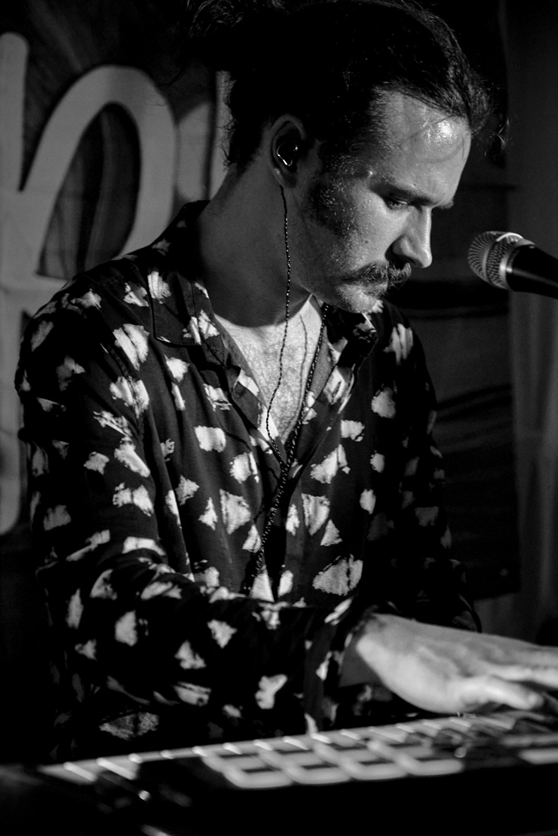
Canterbury 2.1 – Tom Penaguin (part 2)

for part 1 of this interview go here

photo: Maureen Piercy

The album Tom Penaguin is an entirely instrumental project of 5 pieces, bringing keyboards much more to the fore than Tom’s previously heard material on Youtube videos and is an album of complex, often introspective composition. There’s a lightness of touch in place, almost an instrumental whimsy which reminds me Hatfield and the North and Gilgamesh, but there are also overt references to other Canterbury bands in other places, most specifically on the extraordinary Aborted Long Piece No 2. The latter sits slightly incongruously in the centre of the album, a brief slice of madness which progresses from the faux-classical organ sounds (so Egg-like) to a preposterously crazed minute or so of aural battery, mixing endless unreasonable timing changes with  relentless fuzz effects to organ and bass. Tom, however, overall sees a closer alignment to National Health:

 I wanted (the album) to feel like it would fit amidst the Canterbury Scene of the Seventies, and the album’s structure is reminiscent of a National Health album where the theme from the beginning is repeated at the end. That’s the kind of coherence I was looking for, and I think it gives the album an entry and exit point.

I shaped the whole album to something similar to what they did back then, with the slow intro, a “main theme” used at the beginning and at the very end of the album, things like that. I think it’s one of the best way to write a coherent album, it gives the listener some time to get into the whole thing, and allows them to go back to “real life” smoothly.

Egg is also a strong influence, I think of it as a great writing tool/skill set. When I’m trying things on keyboards, I often end up with a small pattern that I’m trying to either break or to play in the most difficult way possible. The rest of the instrumentation needs to leave space for it though, otherwise there’d be too much information at a given time, so it ends up with drum, bass, and 2 keyboards max playing intricate patterns, which sounds a bit like Egg, but I haven’t found an alternative to this result yet (and I’m quite ok with that).

photo: Maureen Piercy

So how did the ‘Canterbury’ project come about?

This all comes from a 16 track tape recorder I bought in 2020, I wanted to try what could be done with analogue gear only, including recording and mixing, and I came up with Housefly Leg. It was a real pain to record it alone without any computer or digital stuff… then I bought a Fender Rhodes, a keyboard I was dreaming about for quite a while, and I realised that I was ready and set to try to record the Canterbury album I wanted to do for so long. It took me quite a while to write the B side, a lot of trial and error, but I did it without digging too much into my old compositions, as I’ve evolved a lot musically since. So almost everything is fresh! I re-recorded Housefly Leg, the whole album was recorded using a computer only as a tape recorder with very few digital effects, everything else was done with analogue gear from mixing desk to spring reverb unit.

I finished it in mid 2023, then went to the Black Box studio (where we recorded our last Djiin album) to have it mastered. Then, Maureen, my girlfriend and the photographer responsible for the design of the whole album, sent a message to Ryan from Zopp. We talked a lot, he taught me a lot of things on what to expect as a solo musician in the prog music industry, and I began contacting labels that I thought could be interested, along bands that I thought were in the same musical realms as myself.

Dario from Homunculus Res gave me the lead for àMARXE, and it’s Rafa that was willing to take the most risks regarding the album. I’m glad I trusted him, his work is flawless and we are on the same wavelength, plus I get to be published by a label that also have work from Juzz, Amoeba Split, Love Beat Oracle and Rascal Reporters!

photo: Maureen Piercy

I noted other semi-recognisable approaches within the album: attempts to carve out anthemic themes akin to ‘Tenemos Roads’ on ‘Housefly Leg’, which is followed by a wonderfully effusive bass solo, the latest in a tradition stretching back all the way to Caravan’s ‘For Richard’  via National Health’s ‘Borogroves’. I also noticed that the dual guitar/keyboard lines remind me in places of Khan, as well as Tom’s work elsewhere, particularly on those early Youtube videos being reminiscent of Steve Hillage, although Tom is ambivalent in terms of his guitar influences..

I never really tried bass solos before, I came up with the one from housefly leg on the spot. The chord sequence is very open, so for each chord there is 4 or 5 different bass notes that can give a different meaning to the thing. Guitar-wise I’ve never been too influenced by the Canterbury scene so it’s hard for me to pinpoint a guitar player. I’ve been mostly influenced by Zappa, McLaughlin, Akkerman and Holdsworth, but I sound like none of them because I’m only interested in a fragment of their skillset.

So what of Tom’s other work? His Youtube channel is a pastiche of original compositions, some with clear Canterbury reference points, which are detailed below, others not. There are also medleys of material from bands such as King Crimson, Zappa, Focus and Pink Floyd, all in their own right feats of performance and compilation, as Tom synchronises his talents on a number of instruments. Tom outlines the method:

The process is quite similar between the videos and the album. For the album I wrote everything on computer using virtual instruments. Once I have something that seems ok, I try to play live drums over it. If I’m having fun playing drums, I’ll keep what I have written, if not I’ll erase things and write stuff again. Once I’m pleased with what I wrote, I can begin laying down the drum tracks over the virtual instruments, and then I erase the virtual instruments and I record the real instruments. Once everything is done I’ll take my time to record the solo parts.

I picked out a few choice videos for Tom to comment on – links are also included here. Galaxy on Tape, for example, has a curious, almost educational introduction as Tom takes us through the process of creating a tape loop, before launching into a joyful blissed out sun-god guitar solo.

Galaxy on Tape: I think I had Gong in mind at the time. I wanted to have a synth loop somehow, but didn’t have any synth at the time and I didn’t want to do it digitally. That was a good excuse to do a tape collage loop I think! The loop was then sped up and blended with an organ into a wah pedal and a Fulltone Octafuzz. The wah allowed me to imitate a VCF while the Octafuzz, being an analog octave up pedal that don’t like being fed 2 notes at once, allowed me to emulate a ring modulator. On Galaxy on Tape 2 I had just bought the 8 track tape recorder with its matching mixing desk that you see in the video and I wanted to try it before going into something more challenging musically. I think it’s still influenced by Gong!

Tom’s version of ‘Teeth’ is somewhat impressionistic, messy interpretations of a single riff from the original Soft Machine track, whilst ‘Master Builder’ is a relatively faithful version of  Gong’s seminal ‘Om Riff’.

Tom: ‘For Teeth/Master Builder: honestly, like most of the other covers I did, I just wanted to play that song, and I videotaped it to put in on Youtube.

Typewriter in D: this is a blend between me buying a cheap typewriter, and discovering Kamasi Washington.

There are also a number of additional solo projects Tom has published on Bandcamp, often semi-anonymised, such as Captain Blind Chameleon, which in eschewing keyboards AND featuring multi-tracked vocals is an instrumental diversion, stripped down and heavy. It remains perversely possibly my favourite material amongst his work, despite it being aeons away from his ‘debut’ solo album.

(With) Captain Blind Chameleon I wanted to see how far I could push the concept of very gentle vocal harmonies over a very riff-oriented stoner instrumentation. It was also the perfect excuse to blend prog ideas to a genre that can sound a bit dull when it is too centered on the heavy, bold sound and not enough on the musical content. I have a half written Captain Blind Chameleon vol.2, but it’s more kraut-stoner, there’s no lyrics yet, and I’m not in the mood to work on it currently…

Tom also has had membership, on a more equal footing, with other musicians, such as his first band The Moonrains (who covered pop prog material by the likes of ELO and the Beatles) but more recently his current work with Djiin, which whom is he currently on tour with in Germany.

I had a few projects that never went that far until I joined Djiin in 2017. I joined the band as a bassist, since the one they had previously suddenly went to Poland. I switched to guitar a few months later. Then Allan (Djiin’s drummer) offered me to join Orgöne, a band that he had recently joined, as a keyboard player.

I’m still currently playing guitar in Djiin, but I left Orgöne a few years ago because I thought we were not playing live as much as we should have, and we were a bit stuck while writing what would have been the second album. We recorded it but quickly scrapped everything because we thought about it too much I think. 2 years ago I tried to build my own band, Pramanta, oriented into prog and fusion. We had quite a bit of viable material but I was struggling with the power trio formula, and Claudia, the bassist, left to go back to Spain, so that band was over. I’m trying again with the same drummer, Baptiste, and this time we’ll try to find a keyboard player. We’re currently writing stuff, we just need to find the people that would enjoy playing that.

Finally, given the excitement about his debut solo album, what are the plans for the future?

I’m writing the next album! But there might be something related before that, I don’t want to say too much about it for now.

Thanks to Tom for being so generous with his time, and as eloquent an interviewee as he is a musician!

Tom Penaguin is available on AMarxe records here:

part one of this interview is here

look out for further interviews in this series with the likes of Dario d’Alessandro (Homunculus Res), James Stain (Rascal Reporters), Carla Diratz (Diratz), Dave Newhouse (The Muffins), Eva Muntada (Magick Brother Mystic Sister), Bjorn Klakegg (Needlepoint), Ryan Stevenson (Zopp), Alberto Villaroya (Ameoba Split)

For other interviews in the Canterbury 2.0 series, please click here
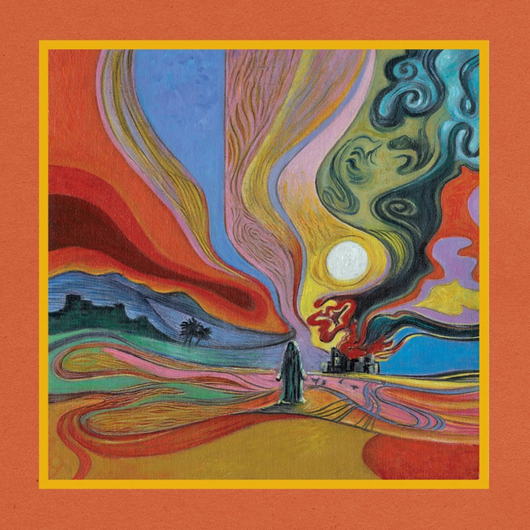
Canterbury 2.1 – Tom Penaguin (part 1)

Update: part 2 of this interview is here

The first interview for the Canterbury 2.0 series is, oddly enough, with the one musician on the list with whose work I was blissfully unaware of only 6 months ago. Just before Christmas last year, Ryan Stevenson of Zopp, who will be interviewed later in this series, mentioned the following in a Messenger exchange: “There’s a young French guy called Tom Penaguin who sent me his album asking for record deal advice. It’s AMAZING!”

He wasn’t joking. Tom was kind enough send on some samples of what would eventually end up as the album Tom Penaguin, an instantly recognisable blend of Canterburyesque elements, but just as instructive was dipping into an extraordinary array of Youtube videos chronicling Tom’s development from being a fresh-faced 16 year old all the way through to the present day.

Click here to watch the album being mastered

Tom’s calling card is his multi-screened performances where he takes ALL instruments: a dexterous, almost manic drummer; a fluid Hillagesque guitarist; an equally malleable manipulator of the bass: but also not afraid to use keyboards in a variety of roles; innovatively using tape machines to create looped backgrounds; and even on occasion turning his hand to vocals.

All are done with seemingly effortless command, culminating in the album on Amarxe Records that you really should now have before you, a Canterburyesque masterpiece of sorts which dons particular hats to the Dave Stewartesque lineage of Egg, Khan, Hatfield and the North and National Health.

So, before diving into the specifics of that album, let’s examine the long route towards it. Tom, who lives in Western France, is still only 28, and pays the bills through a job working on lathes for farming machinery rather than the  prolific musicianship on display here. So how did one so young get to this level of virtuosity and insight so quickly across such a range of instruments and styles?

(My parents) both played a little bit of guitar when they were young, but I never saw them play regularly. But the acoustic guitars were there so I had the chance to try an adult-sized instrument when I was very young!

As far as I can remember, I’ve always been playing music in a way or another. When I was very young I used to sing “false English” while banging things with sticks or playing with a toy guitar. One day my father even built me a small drum kit with some empty paint buckets and a jerrycan. I began taking guitar and music theory lessons when I was 5 or 6, in a rural music school. I quit the music theory lessons 4 years later as I was not very interested, but I continued guitar lessons for a few years before switching to a country/bluegrass guitar teacher for another 2 or 3 years. When I was in middle school, I used to come back from school and put on either the Who or Led Zeppelin on my bedroom’s hifi for me to spend hours trying to play over it. When I (finally) discovered Zappa, I spent 2 years only listening to his music and trying to play over it. That was the period where I learnt the most.

When I was 6 years old, my parents bought me a vintage organ, an Eko Super Junior A from the seventies. I kept it for a few years before giving it to one of my cousins. Years later, when I was 14 and had suddenly gained an interest into vintage keyboards, I took it back and repaired it since it had sustained a bit of damage (a few broken keys and a chewed up power cord). Then I bought a Hohner Pianet T and I learned how to play on the spot, by trying to imitate what I liked to hear at the time.

I always wanted to play drums, but my parents were reluctant to the idea of having a loud drum kit in the house, so I had to wait around my 15 or 16 birthday to be able to buy a very cheap drum kit that was immediately placed in the garage, far from the house. Same thing, I learned on the spot, by playing over The Who, Henry Cow, Soft Machine, Zappa.

I never tried to actively learn how to play bass, I came to it with the approach of a guitarist. I also never bought one, the 2 basses I own are from a good friend of mine that forgot them in my room (and he was left handed too).

I’ve been writing and recording solo music for quite a while. When I was around 12 years old, my uncle gave me a 4 track cassette tape recorder, and I was immediately hooked. I moved to computers and big reel to reel tape recorders since, but I always had solo projects in a corner of my mind.

photo: Maureen Piercy

I asked Tom what sort of music he was exposed to growing up and how it influenced his own compositional work?

I was exposed to The Doors, Santana, Dire Strait, Eric Clapton, Satriani, Rita Mitsouko… none of it had a real influence on my compositional work. The only thing that had a real influence was that my mother sometime played Zappa’s Yo Mama in the car while going to middle school, that’s what got me into wanting to hear what else was available from that man, and all that I learnt from him.

So what about his own personal connection to Canterbury scene music, and how did it manifest itself?

I think I became aware of the Canterbury scene through the gear they used. I’ve always been fascinated by two things, music and mechanical things, so you can imagine my excitement when I discovered that some keyboards blended both of those aspects! I quickly began to look for bands that used them, because I loved the sound of those instruments, and as I was looking for bands that used Hohner Pianets, I found out about Soft Machine and Egg, but in general this search made me aware and passionate about most of the prog acts of the 70s.

It came a little bit later than the rest of the prog scene. I was around 14 years old when I found out about Genesis, King Crimson yes etc, then Zappa, then the RIO/Canterbury scene around 16 or 17. Very often, the line between jazz fusion and prog is a bit blurred, like with the later albums from Gong, Soft Machine, or focus in general, so I got into that at the same time (I’m currently digging into the MPS repertoire with people like Volker Kriegel, Jasper Van’t Hof, Joachim Kühn etc.. amazing German jazz rock).

I don’t know where this comes from, but I’ve always been very curious about the individuals inside a band. If I really enjoy something, I’ll try to find what bands also included those same musicians, to see which one of them carried the vibe I really liked at the beginning. This went extremely fast with the Canterbury scene, as every musician of the scene played in almost every band. Then I found out that there was a “Canterbury” label glued to almost all my favourite bands, so I dug even further.

photo: Maureen Piercy

So what does Tom regard as the essential components of the Canterbury sound?

The first thing that pops up to me is the fuzzy organ and fuzzy bass sound. I think that originates from Soft Machine touring with Jimi Hendrix. What’s funny to me is that I’m pretty sure Dave Stewart, Hugh Hopper and Mike Ratledge all used a Shaftesbury Duo Fuzz, which happens to be a rebranded Shin-Ei Duo Fuzz, inspired by the Univox Super Fuzz. Those fuzzes are very harsh sounding but work very well with the mellow tone of a Hammond or Lowrey organ. Tim Hodgkinson used a Marshall Supa Fuzz (I asked him directly a while ago), and I’m pretty sure it was placed after the reverb tank of his Farfisa Compact, allowing the tail of the reverb to be distorted as well. I don’t know where the wah pedal comes from, maybe from Hendrix or from an attempt to tame the bright fuzz, but it was also used extensively on organ sounds. It also allows a bit of evolving texture during slow progressing chord parts, since Leslie cabinets were rarely used.

Regarding the compositions, it ranges from psychedelic influences to classical and jazz. What I think is the most interesting thing is that the classical influences are digested in a very different way than “mainstream” progressive music and Italian prog in particular. Here the influences come from modern composers ranging from Stravinsky to Holst, where most of the other prog bands used baroque, classical or romantic influences. Mont Campbell in particular seemed to be very fond of the first two Messian modes (mainly the whole-tone and octatonic modes) which were also used by Stravinsky, Debussy, Ravel… This use of particular modes combined with asymmetrical metrics gives a very mathematical feeling to the music, in a good way.

The lyrics remain very joyful, at times even funny or pataphysical. It feels to me like those lyrics are an excuse to sing, that the song was not built around it. They are always wonderfully written and sung with ease around a very difficult and ever-changing melody line. Henry Cow lyrics were different though, but I think this comes from the RIO side of the music.

More tomorrow as Tom talks extensively about his album, and we also delve into some of his extraordinary Youtube videos.

Tom Penaguin is available on AMarxe records here:

For other interviews in the Canterbury 2.0 series, please click here
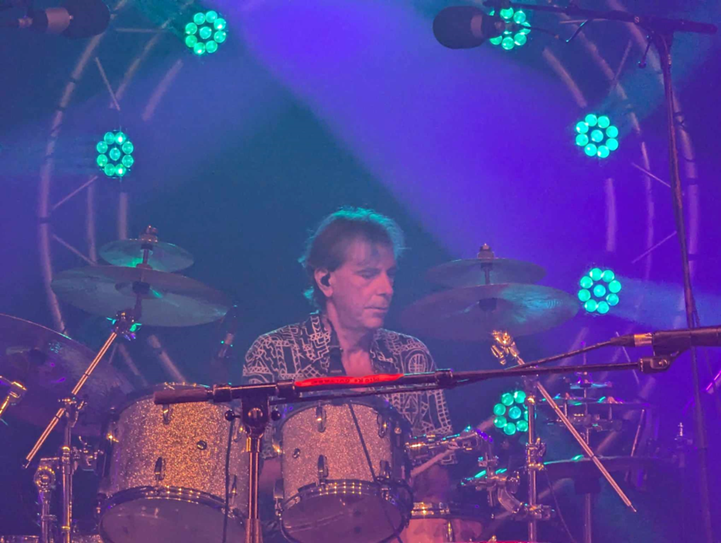
Forthcoming interviews on the Facelift blog! – Canterbury 2.0?

Facelift will shortly start publishing extracts from a number of interviews concentrating on a ‘new wave’ of ‘Canterbury’ artists: musicians largely living outside of the United Kingdom who have been tagged with (or have tagged themselves) as belonging to the Canterbury music scene, some intentionally, some not. I saw this phenomenon tagged (I can’t remember where, so please let me know if it was you!) as Canterbury 2.0, which I quite like, although I reckon we might be up to the 5th or 6th iteration by now!

It is hoped over the next few months to publish interviews with the likes of Alberto Villaroya (Amoeba Split), Eva Muntada (Magick Brother Mystic Sister), Ryan Stevenson (Zopp), Bjorn Klakegg (Needlepoint), Dave Newhouse of the Muffins (whose story of course starts much earlier), Carla Diratz (Diratz, Archers of Sorrow), Fabio Golfetti (Violeta de Outono and of course Gong), James Strain (Rascal Reporters) and Dario D’Alessandro (Homunculus Res).

Core questions will be about their current projects; their influences; what they regard as the Canterbury scene (and how they see themselves fitting into it, if at all); and experiences of being a Canterbury fan outside of the UK; plus of course a bit about their own musical history.

This list is far from exhaustive and may yet change/expand.

The impetus for this is partly for a research project I am doing at Canterbury Christ Church University on a range of topics relating to the Canterbury scene, but separate to this it seemed like a very good excuse to find out more about a number of musicians who works I admire, who very much fit within the scope of the Facelift blog. Who knows, maybe information from within these interviews might find a home within a publication of some sort in the future.

The order in  which these interviews have arrived is purely coincidental – so for example within the first 4 interviews I’ve already carried out: Fabio Golfetti of Gong is someone I’ve been in contact with for, we think, 30 years and have talked regularly over the last 8 about doing something of this nature, but I’ve only just finally managed to pin him down! In contrast my interview with James Strain, about his work on the Lunophone project with Dario D’Alessandro, occurred completely unexpectedly when he contacted me last week having just realised he’d been in the town I live in the previous weekend on a visit from his native Ireland, and a chat in Messenger developed into a hour-long conversation.

The first article in the series will be an interview with extraordinary young French multi-instrumentalist Tom Penaguin, but prior to that, the first thing I will do here is point you in the direction of some of the musicians mentioned above – all have agreed in principle to pass on a few thoughts, so it seems a good starting point to introduce you to their music.

In alphabetical order:

Dario d’Alessandrohttps://homunculusres.bandcamp.com/album/ecco-limpero-dei-doppi-sensi

Carla Diratzhttps://discusmusic.bandcamp.com/album/blue-stitches-169cd-2024

Fabio Golfetti https://fabiogolfetti.bandcamp.com/

Bjorn Klakegghttps://needlepoint.bandcamp.com/album/walking-up-that-valley

Eva Muntadahttps://magicbrothermysticsister.bandcamp.com/album/tarot-part-i

Dave Newhousehttps://davenewhouse.bandcamp.com/

Tom Penaguinhttps://amarxe.bandcamp.com/album/tom-penaguin

Ryan Stevenson https://zopp.bandcamp.com/

James Strainhttps://rascalreporters.bandcamp.com/

Alberto Villaroyahttps://amoebasplit.bandcamp.com/

Gong/Ozric Tentacles – Leeds Brudenell – 20 March 2024

This was a last minute dash up the M62 over the Pennines to the Brudenell Social Club in Leeds to capture some of the embers of the Last Blast tour, the final installment of the Gong/Ozric Tentacles double headliner bills of the last few years. This time around the bands have alternated headline slots rather than play gigs in blocks where one band will always go on last for several consecutive dates. Tonight saw Gong going second, although set times seem to clock in at around 90 minutes per band, whichever way the order falls.
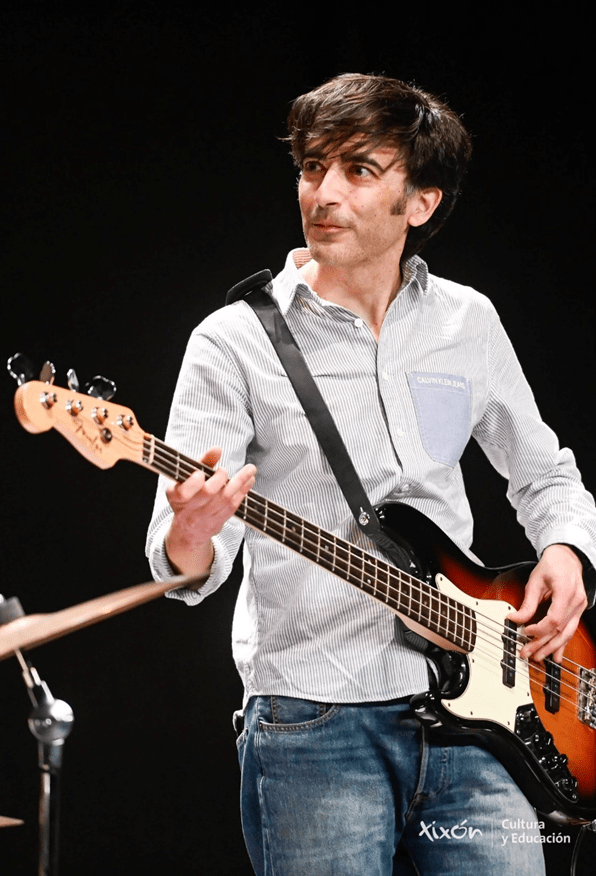
The first thing to say is that I’d heard great things about the Brudenell and it was thoroughly merited. Situated within a vibrant multi-ethnic part of Leeds, it is surrounded by Turkish eateries, Indian supermarkets and more traditional looking boozers, with youth milling around everywhere, but itself is a brightly illuminated complex, set back from the road and with several bars and lounges. The bands played in a smallish, relatively intimate room with standing room stretching out in front of the band in a crescent shape, with people further back slightly elevated – views of the stage were good from all vantage points. The gig was sold out but it didn’t feel overpacked. Gong and the Ozrics both had fairly extensive merchandise stalls with the usual vintage fayre and special tour T-shirts  – it was difficult to work out who most people had come to see – perhaps Gong as the GAS stall always seemed teeming.

Saskia Maxwell

Ozric Tentacles have changed lineup since the last time I saw them. Vinny Shillito, who I think was the bassist on the Ed Wynne tour a few years ago provides a rather brooding presence at the back of the stage, and the new drummer is Pat Garvey. But beyond this the core of the band remains mainman Ed, on guitar and keyboards, and his son Silas on additional keyboards, although Saskia Maxwell is present for the majority of the performance, largely on flute.

Ed Wynne

My last two viewings of the Ozrics were slightly one-dimensional, firstly a stripped down ‘electronics’ set where the band was essentially cut down to Silas and Ed, and largely memorable for Ed’s soloing over classic Ozrics tunes from the 1990s, whilst the Sheffield gig on the first ‘joint’ tour, we saw from a distance whilst chatting to Gong who’d just come off stage. My view here was much more up close and personal, to Ed in particular, and it struck me that this might just be the most I’ve ever actually ‘heard’ his guitar playing. I remember the first time I saw Ozric Tentacles, at the legendary Treworgey Tree Fayre in Cornwall, in 1989 and being crushingly disappointed at the difference between the pristine, multi-faceted styles of their studio albums and the muddy thrash of live performances aired. That’s something of an oversimplification – the Treworgey gig was something of an impromptu jam on the ramshackle Wango Riley truck stage, and later gigs in the early 90s showed much more faithful reinterpretations of tracks from Pungent Effulgent and Erpland. It was just that at those gigs the sound was so dense and the guitar so treated that often the intricacies were lost.
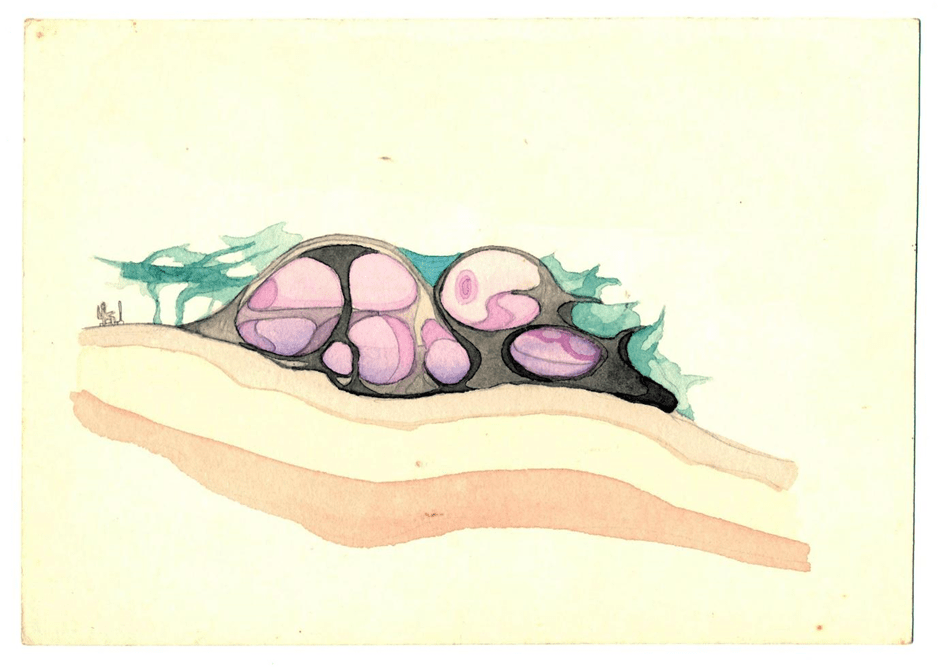
Silas Wynne

Tonight was different. The slightly dead sound in the Brudenell, whilst unforgiving, allows each component of the music to be heard in isolation, and served to show what a phenomenal guitar player Ed Wynne is. There was definitely also a desire to step away from the most thrashy stuff – whilst classics like ‘Eternal Wheel’ were aired, the highlights were magnificent performances of atmospheric pieces from either end of the timescale: the title track of the band’s latest album ‘Lotus Unfolding’ and a great ‘lost’ track from ‘Pungent Effulgent’, namely ‘Ayurvedic’, which genuinely had me in tears. Both had common components: Ed’s crystal clear guitar and Saskia’s gorgeous flute lines. The classic ‘Sniffing Dogs’ from ‘Tantric Obstacles’ was another highlight, and at times appeared like a genuine jam – Silas showing unexpected dexterity and jazzy touches on electric piano – the band just seemed to respond to each other in a lovely languid manner – nothing rushed – capturing an almost laid back feel to their ‘support slot’. I’d have been happy to see the set conclude here, but two final tracks, the first with its weird sound effects, and ‘Sploosh’ the almost anthemic ravey piece from the early 90s ratcheted things up again somewhat incongruously to conclude, the bass player now centre stage leering somewhat oddly at the audience.
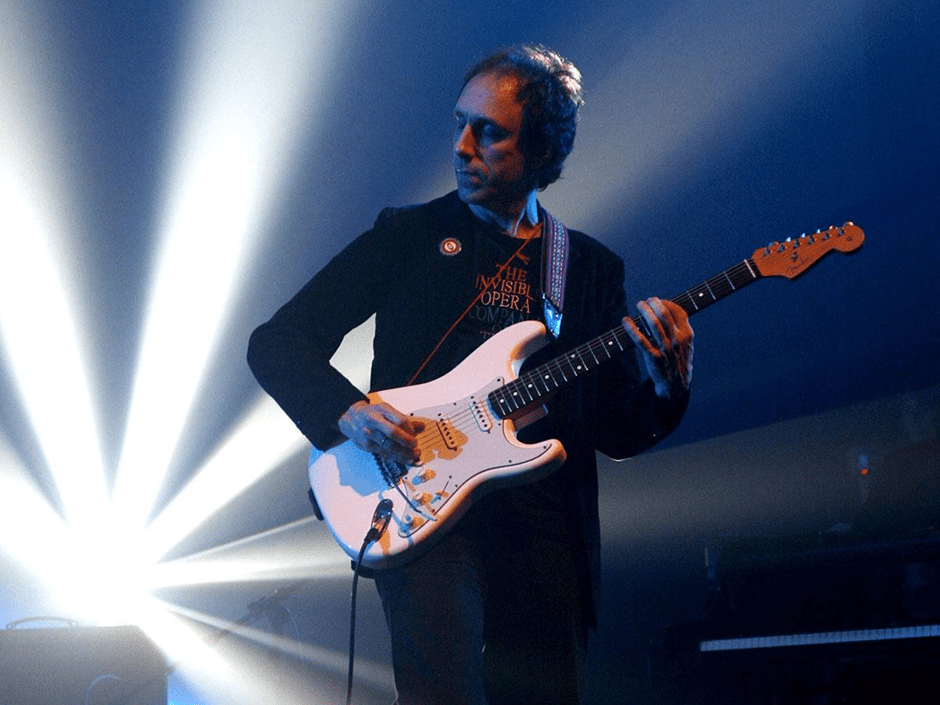
Dave Sturt

And so to Gong. I’ll keep this part relatively brief as I believe I’ve published up to 10 gig reviews relating to them since I saw them for the first time in this (re)incarnation back in 2016. The band performed 5 tracks from the latest album ‘Unending Ascending’ – including the superb opener ‘My Guitar is a Spaceship’, their wide-eyed riffy romp, and the concluder ‘Choose Your Goddess Now’, a bombardment of bewildering strobelights, heart-pulling melodies and brassy counterpunch. Elsewhere we had ‘Tiny Galaxies’ and ‘All Clocks Reset’, as well as the pummeling set-definer ‘My Sawtooth Wake’ from Forever Recurring,  ‘Kapita’ and ‘Rejoice!’.

Ian East

Somehow within all this chaos the band managed to fit in three epic pieces of largely contemplative,  transportative material which seemed to suspend the crowd in a state of abeyance, set against glissando backdrops and the shimmering light show. After almost 3 hours of being on your feet, pulled from pillar to post by the various crescendos and crashes of both bands, there’s a slightly unreal quality to all of this – the atmosphere enhanced by the reappearance of Saskia Maskell in a sheer white gown adding further to the ethereality. The band performed ‘Through Restless Seas’, ‘Ship of Ishtar’ and the IAO chant before finally releasing the shackles with the cacophony of ‘Master Builder’.

Fabio Golfetti

Hats off to the Brudenell for delivering such a balanced sound mix – the band might have come away with an abiding memory of a brief couple of moments when the sound dropped completely, leaving Ian East and Cheb Nettles temporarily exposed on sax and drums, right at the culmination of possibly Kavus Torabi’s finest ‘Rejoice!’ guitar solo yet; but otherwise the balance was perfect: one got to make sense of East’s fine and underrated contributions throughout, and the vocal harmonies between up to 5 members of the band (including Saskia) were delivered with astonishing clarity.

Kavus Torabi

The band now conclude their tour north of the border this weekend, before heading off to South America and then returning for the summer festival season amidst talk of new album recordings.

Gong with Saskia Maxwell

Phil Miller Guitar Prize – Birmingham Conservatoire 29 February 2024

This is the third annual competition commemorating the life of Phil Miller, open to students at Birmingham’s prestigious music institution, funded by generous donation from Phil Miller’s widow Herm Mew, who has also bequeathed Phil’s archive to the university.

The Phil Miller Legacy Band: Marcus Coats, Fred T Baker, Jamie Mcleish, Kyle Welch, Grace Conner, Henry Hanson, Ben Kempner, Kefan Hu (not visible), Jim Bashford

This event continues to evolve: last year it was memorable for a number of highly interpretive, largely solo performances, with extra treats thrown in for for good measure, with performances of Phil’s music through a trio led by Fred Baker; tonight the evening kicked off with the Phil Miller Legacy band, a group of whom Fred, Phil Miller’s long-time right hand man and musical kingpin of this event, identified as first and second year students. This is something that he was particularly excited about as, under his tutelage, it means that the band can grow during the lifespan of its contributors’ studies.

Henry Hanson

Over the course of around 45 minutes, the band, underpinned by Baker on guitar, featured a very impressive frontline of sax, trumpet and voice, augmented by piano/keyboards (Marcus Coats), a second guitar (Jamie Mcleish), bass (Kyle Welch) and drums (Kefan Hu) and worked through 3 pieces. I understand the musicians here are students on the Conservatoire’s jazz course, and the interpretations reflected that: themes were stated and restated, before the band went along the frontline trading solos, moving on to piano and both guitarists. The opener ‘No More Mister Nice Guy’ is from Miller’s bluesiest album (‘Out of the Blue’ ) since Delivery and a casual observer might not appreciate the full gamut of his quirky compositional style from this opener, but it was a good vehicle for the band’s soloing talents, Henry Hanson in particular on trumpet.

Grace Conner

For ‘Calyx’ we were into more iconic Canterbury territory, introduced by Baker’s atmospheric guitar effects – but the joy of this piece was the fulsome vocal performance of Grace Conner. With clear, rounded vocal sounds and an impressive range, she started off the piece with the ‘lost’ lyrics ‘Poetry in Motion’ but beyond this it was her improvised scatting which really embellished the piece.

Ben Kempner

‘Delta Borderline’ finished things off, a hugely enjoyable blow through this most counter-intuitive of Miller pieces: the brass messy and cacophonous, and the soprano sax of Ben Kempner solo cutting across it abrasively and providing my personal highlight of the entire evening. Jim Bashford provided extra precision to this piece on a second drum kit.

Fred Baker

Fred concluded the first half with two short pieces on acoustic guitar: ‘Nowadays a Silhouette’ – in my thoughts in the last few days for a number of reasons: Billie Bottle’s new interpretation on church organ, as well as its original format being that long lost Canterbury album ‘Before A Word Is Said’; as well as ‘Lock In’ from the second Miller/Baker duo album ‘Double Up 2’. This format sees Fred Baker in one of his conducive manifestations: intimate and dexterous.

James Cony / Joseph Hiles
Olly Millington / Jude Edson

And so into the main event: the Phil Miller Guitar Prize. Last year there were 5 entrants: 4 of whom were solo performers on either guitar or bass. Performances had been impressionistic: with much use of loopery and effects. Tonight’s versions were much tighter and much closer to the originals – and all were duos: James Cony and Joseph Hiles, last year’s winners,  set the bar high with a beautiful rendition of ‘Calyx’, written for 2 complementary guitars. Ollie Millington and Jude Edson meanwhile interpretated ‘Second Sight’, and, like the original, saw the guitar chords giving space for some wonderful bass solo work, somewhat faithful to Baker’s original performance.

Ben Lawrence / Tom Winter
Aedan Lang / Kyle Welch

The third duo of Ben Lawrence and Tom Winter broke the mold in featuring a somewhat subdued saxophone alongside guitar in interpreting ‘Phrygian Blues’, before a very strong final rendition of ‘Eastern Region’ from Kyle Welch and Aedan Lang on bass and guitar – from a low-key beginning, the interplay between the two instruments was impressive and cohesive, and only the siting of a field recorder on my table stopped me from whooping my approval.

Final results:

1st: James Cony / Joseph Hiles

2nd: Aedan Lang / Kyle Welch

Joint 3rd: Ben Lawrence / Tom Winter / Olly Millington / Jude Edson

Nan True’s Hole!

In true Phil Miller Guitar Prize style, the traditional set ender is a whole stage rendition of ‘Nan True’s Hole’, where most of the original band, plus associated competition entrants, converge on stage for this most exultant of celebrations: one dirty riff extending over 11 minutes with solos galore – a rousing finale.

One final word: last year the walls of the jazz venue were festooned with Herm’s wonderful portraits of Phil Miller: tonight there was an exhibition of artefacts donated by her to Birmingham City University, curated by Pedro Cravinho. Some are presented below.

There is a hope that this event will continue to grow with the Legacy band potentially supporting Soft Machine on site at some point in the future – there is little doubt that this event is not only keeping Phil’s legacy alive, but providing an unusual and appreciated focus for many of the Conservatoire’s highly talented students – this is neither easy nor easily found material and it’s a joy to hear Phil’s music in a new and enduring context.

The evening’s events were taped and will hopefully be available on the Legacy site in due course.        

Please visit the Legacy site at https://philmillerthelegacy.com/

Abstract Concrete – Cafe Oto – 24 February 2024

Charles Hayward with Abstract Concrete

I was leafing through some old Facelifts last week and came across something I’d written in 1991 about my travels around the UK seeing various gigs – totting them up it would appear that I saw a dozen concerts that year, all enabled by the excitement of a pretty vibrant resurgence in music round then, as well as access for the first time in my life to my own transport.

33 years on and I seem to be having something of a musical second adolescence both in terms of music available to see, and a new-found energy to facilitate witnessing it: Soft Machine in Manchester last Monday, London this weekend, and the forthcoming Phil Miller Guitar Prize this in Birmingham. The London occasion was a much awaited gig by Abstract Concrete, the culmination of a 3 day residency by Charles Hayward at Café Oto. This feels especially resonant at the moment: Charles spoke to me in 2022 for the Hugh Hopper biography; I’m helping proof read the forthcoming autobiography of his erstwhile Quiet Sun bandmate Bill MacCormick, and the Abstract Concrete debut album, in November last year, was probably my musical highlight of 2023.

It was also a chance for a first visit to Café Oto, a venue a couple of miles away from where I was staying in North London, and host to an always interesting array of experimental and jazz artists. Ticket prices are cheap, there’s a community feel to the entire place which extends to rows of bookshelves and record racks, with seating laid out crescent-shaped in front of the performers, a grand piano stage left, good beer and a decent capacity which seemed just about at its limits for the Saturday performance (Friday’s event, which also included performers such as Evan Parker and Pat Thomas had sold out).

Even with all seats taken, and plenty of others milling around in front of the bar on arrival, the first person we saw on arrival was … Charles Hayward. He cut a dapper, trim figure, and even whilst keeping a close eye on events unfolding he seemed relaxed and happy to engage – he talked about the success of the recent European tour (10 dates in 11 days, all seemingly sold out) and his contentment with the project as well as the Oto residency.

Charles Hayward on piano – Begin Anywhere

First up, after a short welcome, was Charles’ own performance on vocals and piano. I’d resisted the temptation to ask him whether or not he was going to play ‘Wrongrong’, the seminal Quiet Sun piece which Bill MacCormick regards as the band’s crowning glory – what we got instead was half a dozen or so intense ‘songs’. It’s perhaps a lazy way of saying that both are nothing like I have heard elsewhere, but a comparison might be Peter Hammill – neither are virtuosos on piano, and neither has a conventional voice, but both envelop you in their own off-kilter delivery and intensity – pieces take unexpected directions and after the opening piece I was quickly transfixed. I’m determined to check out the album, which I believe is this one here: https://godunknownrecords.bandcamp.com/album/begin-anywhere

Benjamin Duvall was next up. I’d spotted his bright green trombone laid out on stage whilst talking with Charles, and he’d confirmed that it belonged to the second performer, without elaborating. Duvall’s performance was extraordinary – what started and ended as a poem of sorts, narrating a walk around parts Merseyside, his story talked of assembling props of discarded cans, bottles and more on metal fences and other post-industrial architecture, positioned to catch the wind and produce sounds, with Duvall aping both the physical placement of those objects on stage, and triggering the associated samples on computer and the occasional trombone sound. It built up an extraordinarily beautiful library of sounds – as I was stood back somewhere near the bar and still completely mesmerized, I can only imagine its impact on those seated front of stage.

Agathe Max

The main event was Abstract Concrete. Charles talked with enthusiasm about the project in his interview – which was matched by my own and others’ reception to the band – it is a hugely appealing sound which just has the capacity to grab you and implant various irreconcilable earworms.

Yoni Silver

His band are a mishmash of organic and manufactured sounds (haunting viola, cheesy keyboards, bouncing bass, abrasive guitar) from a multinational collection of very fine musicians ranging in age from its septugenerian leader right down to a rather callow looking bass player and yet purvey an ultra-tight, joyful barrage of deceptive simplicity, all driven by Hayward’s vocals and utterly compelling drumming delivery.

Otto Willberg, Roberto Sassi

The band performed their album faithfully, in its entirety and in album order, only deviating to stretch out gloriously beyond the normal conclusion of ‘Sad Bogbrush’, and, I suspect going a little off piste during ‘The Day The Earth Stood Still’, where Hayward’s stop-start marshalling of his troops was arresting. There were two new tunes too, which Charles was excited to share – following that same tight blend of accessible melody and dissonance. He was asked at the gig what influenced him, and rather than revert to the fascinating story he told me about his father’s jazz influences in our interview, he made much of taking ideas at present from what is around him, even down to everyday relationships and occurrences. I think he was also trying to tell me earlier on that these two tracks might be the genesis of a new album – fingers crossed this is the case….

Soft Machine – Band on the Wall, Manchester 19 February 2024

Manchester’s iconic Band on the Wall is a familiar stomping ground for the musicians who make up Soft Machine. John Etheridge and Fred Baker can trace their collaborations together back to 1981 (when Baker must have been a mere slip of a thing) whilst Theo Travis attended many of the same Thursday night jazz gigs as myself in the mid Eighties as a Manchester music student. These days the venue is restored, expanded and spruced up rather, but retains the intimacy and high quality sound, and seems to spark an elevated quality of performance from most bands whose tours pass through here.

This is the first UK tour since the release of the second studio album of the re-incarnated Soft Machine, Other Doors, and drummer Asaf Sirkis, installed at a time when the late John Marshall’s health was in serious decline, is now fully integrated – few have Marshall’s sheer dominance of the drum kit, but Sirkis is precision personified, subtle too, and if you’ve watched the reels online of him playing, eyes closed, in a state of trance, then tonight he gave a different impression, a heads-up embodiment of enjoyment from a man, who, in a nice twist, was playing the John Marshall kit which has passed on to Softs tour manager Nick Utteridge. He excelled particularly on the duo with Etheridge, ‘Tales of Taliesin’ whilst the later solo ‘Middlebrow’ saw him in full flow.

Asaf Sirkis

Fred Baker on bass is a colossus – navigating effortlessly through the Softs disparate repertoire new and old, but finding time to fit in a number of displays of virtuosity: his recreation of Kevin Ayers’ ‘Joy of a Toy’ and the preposterous fuzz-bass intro (complete with kickstart) of ‘Gesolreut’, possibly this band’s calling card.

Fred Baker

Theo Travis cuts an authoritative figure front and centre stage. He is the glue that binds the band together these days, providing ballast and subtlety on the keyboard, sharp intrusions on tenor (his solo on Hidden Details was outstanding), ethereal loopery on flute (Kings and Queens was once again heartstopping) and remains amongst my favourite performers on the soprano.

Theo Travis

As for Etheridge, time does not diminish his skillset. Seated as we were on the front row, slightly stage right, we got the full impact of his guitar work both visually and sonically. I’ve talked before about his contrasting modes of breakneck fluidity and simple emotive themes, but that does him an injustice. Sometimes he takes a Soft Machine tune from pre-1974 and makes you forget it never had a guitar line, so adept are his arrangements, either thematically or as a backdrop to bass, sax or flute. Elsewhere his tones are skillfully corrosive – a manicured chaos of effects and flying fingerwork.

John Etheridge

I’ll include the setlist below, but one thing that struck me was the sheer extent of this performance – the band could have been well justified downing tools at the end of a first set which was notable for both its length and intensity. New pieces were aired: Harry Beckett’s ‘Dew At Dawn’, a lighter, most un-Softs-like piece with reggae inflections, an extraordinary improvised piece called ‘Visitor at the Window’ – with mellotron sounds and serpentine sleazy jazz touches; ‘Fell To Earth’, a hugely enjoyable mélange of Sixties cacophony, complete with quotes from, I think, ‘A Nightingale Sang in Berkeley Square’ and ‘Purple Haze’; whilst the truncated version of ‘Slightly All the Time’ was a joy (and was later augmented by ‘Backwards/Noisette’ for the encore). This version of Soft Machine liberally sprinkle in new and old material, and there are no dud moments here (one of the highlights for me was an unexpected reappearance of ‘Burden of Proof’ from the ‘Legacy’ days, for example). But there is a certain pride in drawing on reinterpretations from each of the previous albums. Tonight’s surprise was a brief but welcome outing for ‘1030 Returns to Bedroom’, the first time I believe ‘Volume 2’ has been revisited. An extended version of this would be most welcome. And I haven’t even mentioned Etheridge’s solo guitar piece, which I sincerely hope someone captured, a very loose ‘Hazard Profile’ or this band’s sublime version of ‘Penny Hitch’. Or that the fact that the whole evening started with a certain track called ‘Facelift’.

There are hopes that a live performance from this tour might get recorded for future consumption – in the meantime I satisfied myself with my first Soft Machine vinyl for around 40 years, a T-shirt, and a heady chat with bandmembers clearly buzzing from the rarified atmosphere. Things are alive and well in Soft Machine land…

Setlist

Facelift

Burden of Proof

Dew at Dawn

Fell to Earth

Tale of Taliesin

Guitar solo

The Stars Apart

14 Hour Dream

Penny Hitch

Other Doors

The Visitors at the Window

Slightly All the Time

Kings and Queens

1030 Returns to Bedroom/Middlebrow/Hidden Details/Hazard Profile

Backwards/Noisette

Soft Machine official band page https://softmachine-moonjune.bandcamp.com/?fbclid=IwAR325MzcITCKveOD054N-DWqSSa2zmSu6htokDMikACZ5vS6P1_xM7NLb3A

Soft Machine single available at https://myonlydesirerecords.bandcamp.com/album/the-dew-at-dawn-slightly-slightly-all-the-time

Soft Machine live dates at https://www.softmachine.org/touring/on-tour