Blog

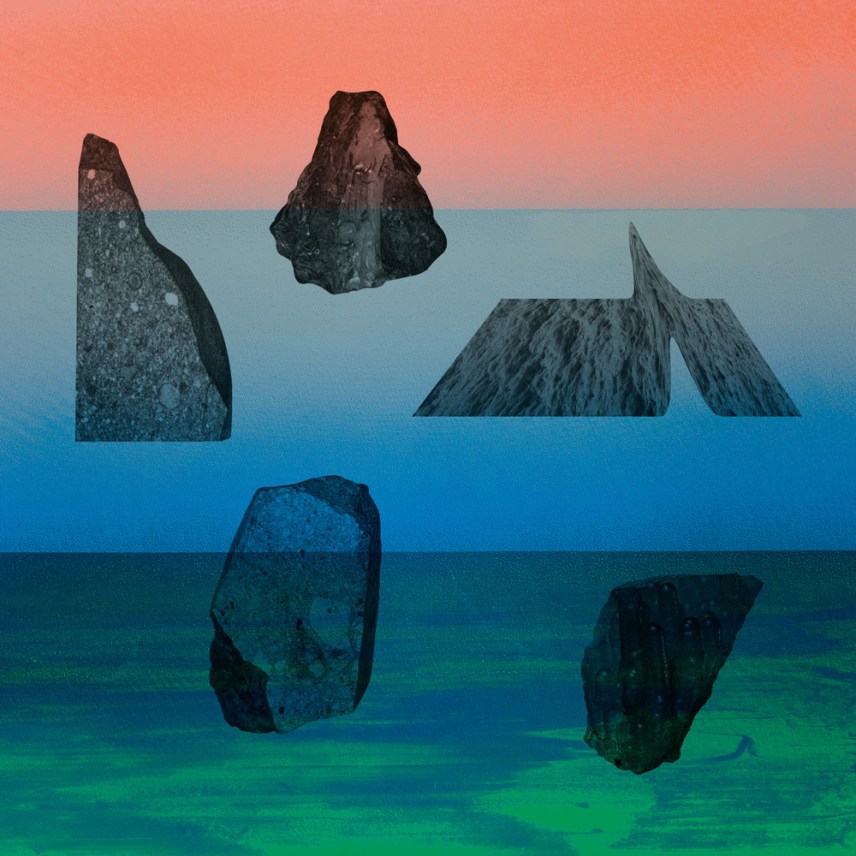
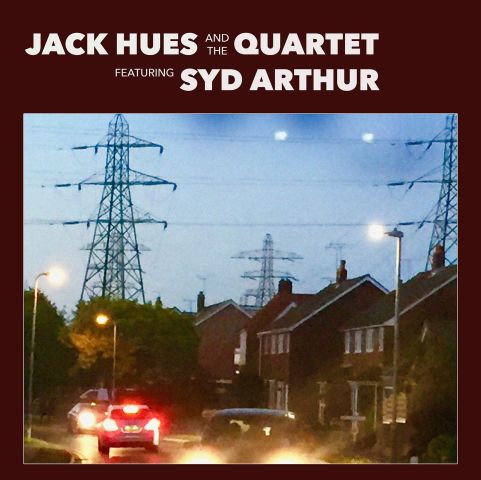
The Quartet ft. Syd Arthur – Nobody’s Fault But My Own (Dawn Chorus Recording Company

a9S5xfiG.jpgThis unexpected release emanates from two different strands of current Canterbury music and also appears in an unexpected format – 21 minutes of spontaneous composition on vinyl. I’d heard of (and eventually heard) a version of ‘Facelift’ performed by this outfit doing the rounds, but confusingly credited (at least in part) to Syd Arthur. For all their wonderful repertoire, complex compositions, psychedelic credentials and a nod to the classic carefree feel of early Caravan I would not have associated Syd Arthur with the kind of extended workout afforded to either that track or what we have here.

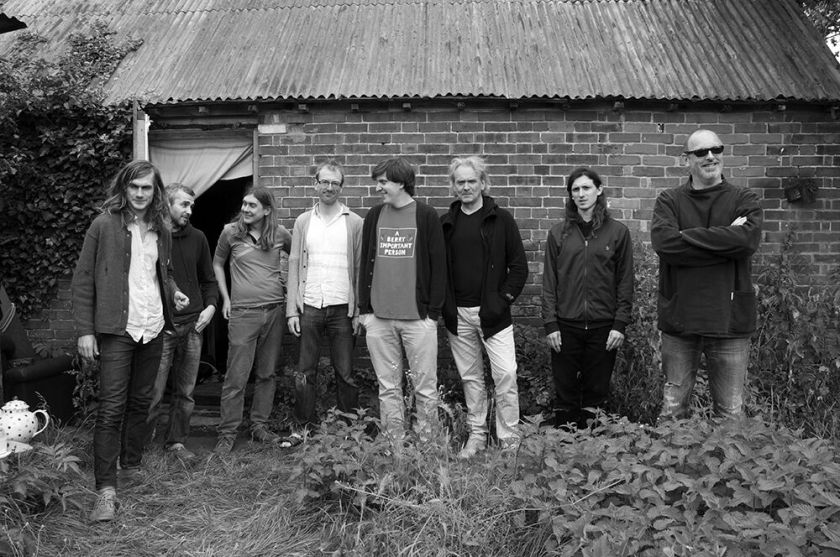
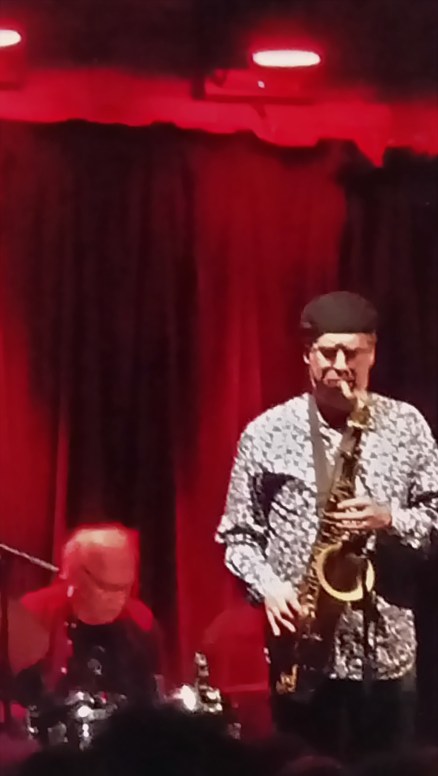
‘Nobody’s Fault But My Own’ turns out to a release spliced together from several takes of the same piece performed by The Quartet (Jack Hues’ outfit with Sam Bailey and the rhythm section of Led Bib, who I saw the Canterbury Sound event in 2017); all of Syd Arthur minus Raven Bush; and saxophonist Paul Booth (from the last incarnation of In Cahoots). There are certainly common calling cards to the original ‘Facelift’ in as much as this is stretched out exploratory multi-instrumental work, but this is languid as much as it is dissonant, with Hues taking the clear lead on guitar. Being neither familiar with Beck nor his track covered I am taking what I hear pretty much as heard, and whilst clear themes shine through this is an accessible, occasionally bluesy free blow with multiple layers of instrumentation contributing towards a rich slightly dreamy atmosphere (although Bailey’s ‘Meddle’-style keyboards, gone slightly haywire briefly cut through the ambience)

cw0zLzqA.jpg

Interestingly, as I sat down to write this brief review, news came through of a set of gigs by the expanded Quartet with a lineup of Mark Holub – Drums;  Liran Donin – Double Bass; Sam Bailey – Keys; Jack Hues – Guitar; Liam Magill – Guitar/Synth; Joel Magill – Electric Bass; Josh Magill – Drums Chris Williams – Sax to perform ‘Nobody’s Fault’, ‘Facelift’ and as Joel puts it ‘devling into some newly re-worked stuff’ (I’ll go with the typo!).

Gigs are at April 10th – Crofters Rights, Bristol April 11th – St Pancras OId Church, London April 12th – St Thomas Hall, Canterbury. Tickets at https://www.songkick.com/artists/930261-syd-arthur?fbclid=IwAR3sc7x-hF-fPVxZiPn-zpkUJlebbo6EqffPqat-4blDN-8DkoQQmrW-E7U

Nobody’s Fault But My Own is available at https://jackhuesthequartetftsydarthur.bandcamp.com/

Manna Mirage: Rest of the World (New House Music NH05) Moon Men: Uncomfortable Space Probe (BHH 2018)

dave newhouse cat.jpg

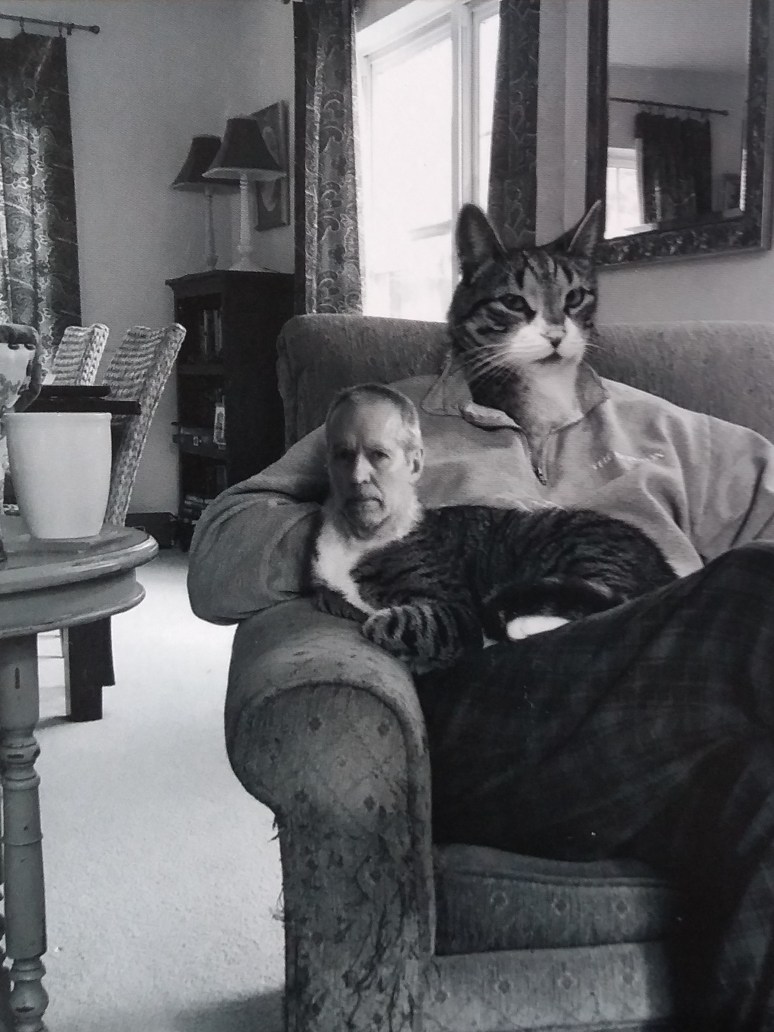
Around this time last year I penned a few lines about a remarkable CD from Diratz, a collaboration predominantly between the French singer of that name (Carla), and American musicians Dave Newhouse and Bret Hart. Unwittingly the 4 tracks I identified as particularly outstanding were the ones from the pen of Newhouse, who will be familiar to many here as the leading light in The Muffins, that American branch of the Canterbury and RIO scenes who recorded numerous albums in the Seventies and Noughties.

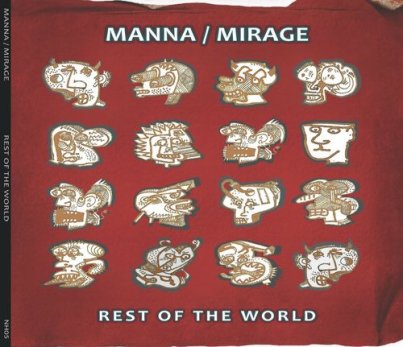
Two releases here highlight his current works, the first band taking its name from a Muffins album which I reviewed (briefly) back in Facelift issue 11. ‘Rest of the World’ is an almost instantly recognisable blend of styles familiar to readers of the this blog. ‘Catawumpus’ a piece originally intended to be recorded by the Muffins, sets the scene with a Windo-esque multiple-horn fanfare, descending into ever more cacophony before a doomy keyboard note increasingly cuts through Van der Graaf style. ‘ Mini Hugh’, a clear reference to a certain Canterbury giant blends his amiable, shifting bass sounds at the start of the piece with some classic fuzz sounds at the end (courtesy of Guy Segers) but also features with some ‘Facelift-esque’ woodwind sounds as Newhouse’s sax alternately expresses or noodles, Elton Dean style, alongisde some Ratledge-esque keyboard atmospherics.

Rest+of+the+World.jpg

‘Zed He Said’ was apparently written for Robert Wyatt, and this track is very much in the vein of ‘Maryan’ from ‘Schleep’ with a wonderful melody sung by Michele King, simply stark keyboard backing and some sympathetic guitar accompaniment . ‘Alchemist In the Parlour’ is a made to measure collaboration between bass clarinet and the voice of Carla Diratz, interspersed with some very Art Bears-ish faux folk lines as the obtuse Diratz voice narrates, somewhere between Peter Blegvad’s surrealism and Finlay Quaye’s deadpan delivery.

Yet the centrepoint of the album for me is ’30 Degrees of Freedom’ where an engulfing piano intro, underpinned by fuzz bass and cymbals, descends into a piano theme almost from ‘Rivmic Melodies’. The sounds that cut across that are so elephantine you feel they must be played by a trombone (in fact they are from the guitar of Mark Stanley) one of many highlights for this track alone.

It’s no mistake that I’ve written more for this album than any other single release here – it’s a very fine album whose depths extend right through to the final piece ‘That Awful Sky’ whose disquieting ambience, composed but not performed on by Newhouse closes things out. This is a very fine album, grab whilst you can as I believe it’s almost sold out!


moon men.jpg

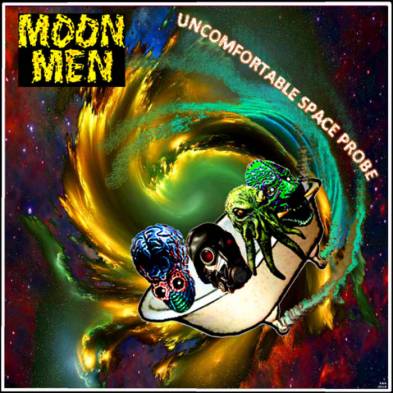
Moon Men represents another facet of Dave Newhouse’s prolific output, this time on a more equal footing with 3 other musicians (Hart, Wim Jungwirth, Jerry King) and often delving into much darker places in a seismic romp through 13 short tracks. From the Materialesque funk of ‘Phat Caravan’, all heavy bass and starkly focussed drumming, ‘Moon Men Luv’ I believe may be a reference to Hugh Hopper’s classic ‘1984’ piece ‘’, certainly it has the same stripped down dissonant sax groove that will have you, as with so many other tracks on this album, tapping a foot or wiggling a hip in appreciation, another case in point being the sleazy ‘Kai Ching Tai Ching’. Other tracks are deliberately not so light on their feet. The accordion-based ‘Anti Matter Handshake’ appears to deliberately point towards Skeleton Crew (with whom Newhouse guested in the Eighties) with its obtuse percussive effects, whilst elsewhere Newhouse in particular is keen to release his inner Zeuhl: ‘Dark They Were’  ‘Billzilla 94’ , and in particular ‘Pulsar’ with its moody, slowly building keyboards.

Whilst things loosen up even further towards the end of the album with some much freer riffing, apparently more in tune with the band’s first release (which I haven’t heard) the overall feeling of ‘Uncomfortable Space Probe’ is one of tremendous fun, powered throughout by a particularly monstrous bass sound, plucking effects and unexpected instrumentation into the mix at will.

http://www.mannamirage.com/

https://bhhstuff.bandcamp.com/album/moon-men-ii-uncomfortable-space-probe-digital

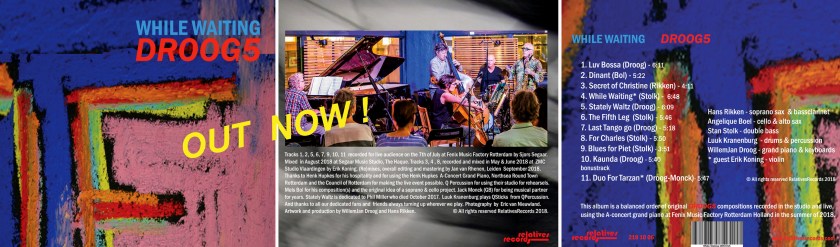
Droog5: While Waiting (Relatives Records 218 10 06)

promo while waiting.jpgWillemJan Droog is a Dutch keyboard player with a long association with Phil Miller, the most recent evidence of which was with the Relatives, the band which also featured Jack Monck (of Delivery) and Marc Hadley. The band recorded ‘Virtually’, reviewed here, the last recorded work committed to disc by Phil.

At the recent Phil Miller commemorative gig in London, Jack and Marc appeared on stage as part of the various denominations performing Phil’s music, whilst I was lucky enough to be sat next to WillemJan watching events unfold. He told me about his involvement with the Miller/Baker duo who he accompanied during Dutch gigs in the Nineties. Meanwhile, his band Droog5 have just released their  album ‘While Waiting’, and frankly, it’s a delight.

droog5 live 1

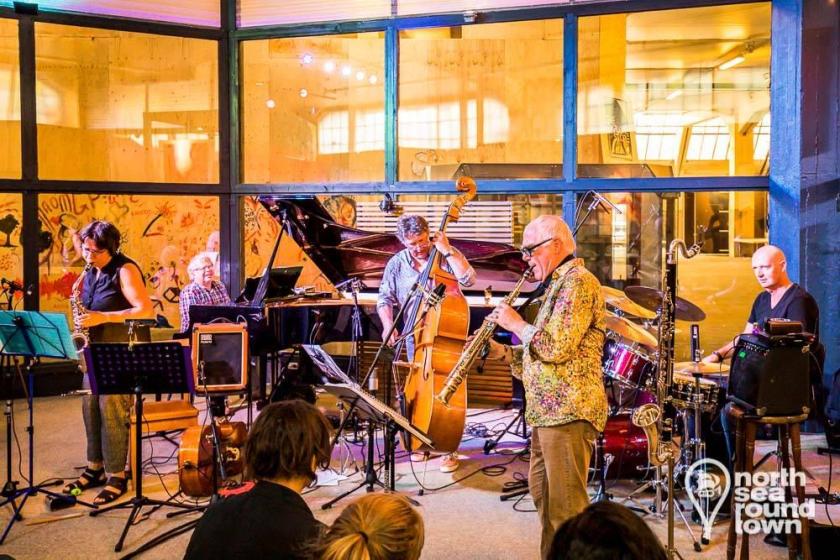
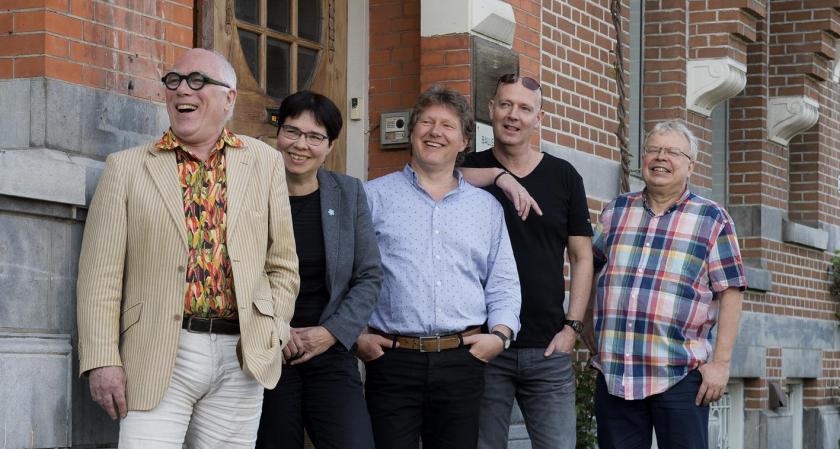
‘While Waiting’ is an album of intricate acoustic jazz featuring drums, standup bass, soprano sax or bass clarinet, and cello (plus occasional violin) alongside the piano of the bandleader. Whilst styles flit from Cuban jazz (on ‘Luv Bossa’) to Celtic influenced jaunts to a more Balkan feel elsewhere, interspersed with more straightforward ballads, these changes serve only to convey a rich ongoing narrative – in calling on compositions from four of its members it simply opens up a range of opportunities for the band to show a really natural cohesion to back up some wonderful inventive compositions, performed with zest. Case in point is ‘Dinant’, where an undulating folk melody written by Angelique Boel and etched out by soprano saxophone would steal the show were it not for the sonorous tones of piano, bass and Boel’s cello underpinning it so heartbreakingly. Those familiar with the Relatives’ album ‘Virtually’ will recognise the track WillemJan wrote for it, ‘Stately Waltz’, and it benefits from the more organic instrumentation here.  Other highlights are ‘Last Tango’, an Twenties-style romp which unexpectedly changes tack into Latin jazz half way through, and ‘For Charles’, where author Stan Stolk’s jarring double bass line eventually gives way to  wonderfully serpentine soprano sax work from Hans Rikken.

droog5 promo

‘While Waiting’ is uniformly excellent, mixing memorable compositions with fine musicianship. Well worth checking out at http://www.relativesrecords.com  Incidentally  a bonus track, ‘Duo for Tarzan’ featuring guest violinist Erik Koning, is a piece co-authored by Droog and Jack Monck, presumably another track dating back to Relatives days.

Visit http://www.relativesrecords.com which includes a band history, and a CD shop including various collaborations by Relatives band members with Phil Miller, Pip Pyle and Laurie Allan.

Andy Bole: The Glorious Event; Of Blue Splendour; Bonfire Radicals; Rainbow Crow

andy-bole-pic

Andy Bole: photo Harry Collison

A couple of times I’ve come away from Kozfest, that beautifully anachronistic ‘psychedelic dream festival’ in the West Country with Andy Bole’s low-key performances being amongst the highlights. I was somewhat off the scene when his name started appearing on the Planet Gong website in the Noughties as a frequent support act to Gong, and in fact his relationship to Daevid Allen goes back as far as the mid-Seventies. Each time I’ve seen him I’ve marvelled at his dronish, looped soundscapes based around guitar and bouzouki, as things of rare beauty, and many aspects of a complex musical identity are represented by the four albums listed here.

glorious event.jpg

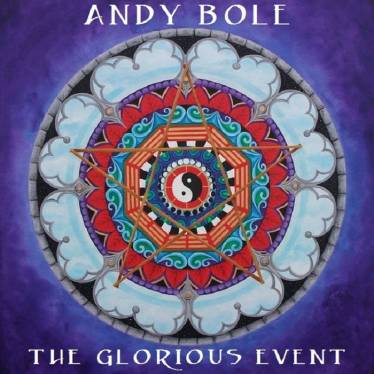
‘The Glorious Event’, released in 2014, is a collection of 6 tracks taken from live performances including one of the Gong Uncons (which I’m still kicking myself for missing) and mixes tracks of pure atmospherics with those of gentle beats. The opener ‘Echolands’ is a dronish piece extending to almost 24 minutes with Hillage-esque licks on a piece which is almost an extension of ‘A Sprinkling of Clouds. This really comes into its own with some wonderful glissando work. ‘Mother Earth’ adds unexpected folk vocals, well versed but slightly incongruous in the overall mix, whilst tracks 3 and 4 return to more familiar bouzouki territory, the first  a short beaty piece backed by bass and drums and wailed background vocals, the second ‘Solanum’, a superb lengthier, more reflective piece based initially solely around one instrument but backed by sitarrish sounds.  ‘The Cry of the Swan’ continues the subtle plucking at your heart strings, this time on guitar. The album is rounded off by the superb title track where mournful strings are increasingly underpinned by a steady bass line and minimal drum.

blue splendour.jpg

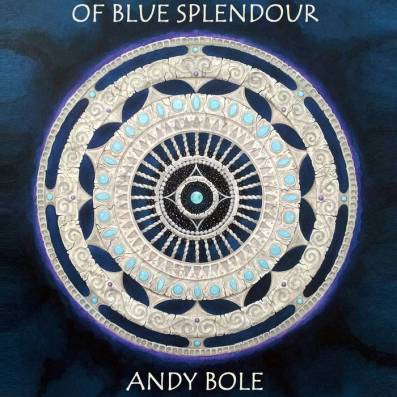
‘Of Blue Splendour’ has a more coherent feel, probably as a result of its conception rather it being limited to one style. Shorter purely acoustic pieces such as ‘Hold to my Unchanging Hand’, ‘9/8 Thing’ and ‘Fradley Junction’ or even the crooned campfire closer ‘Flags’ do not compromise an extremely assured identity. The chief element however is a set of extended pieces such as the contemplative opener featuring rich sonorous viola and the glissando of Daevid Allen. The stripped down bouzouki no 3 on ‘As Splendid as the Moon’, which appears as though it could extend through the entire piece eventually melds into gentle beat-backed hypnosis featuring multiple sliding guitars and constitutes the album’s first major highlight. The well-named ‘Gem Palace’, initially building on ethereal gliss work from Andy, extends out into a lovely keyboard loop and eventually the eloquent saxophone of Gong’s of Ian East. The only pricking of the bubble is the strident, angular, almost Miller-esque guitar of ‘Turn Six Degrees’ where top notes cut through a menacing backdrop of guitars and effects, nevertheless a fine moment.

bonfire radicals.jpg

Bonfire Radicals are an entirely different kettle of fish. In blending double bass, whistle, clarinet , fiddle and three female voices in a predominantly acoustic mix this is upbeat rousing music undoubtedly seen at its finest in a packed pub room or festival tent. Along the way it combines elements of Celtic jiggery and Balkan buffoonery, alongside folky balladeering such as ‘Lucy Hampton’s Wedding Day’ . Best here is ‘Fizzle Sticker’, with its brooding bowed bass before extending out into a fine jig. Author as on many tracks is Trevor Lines, who may be familiar to Facelift readers as bandleader of various jazz outfits in the Midlands. Andy Bole’s role within the band is on 12 string guitar and he also composes ‘Malo’ an almost mediaevallish romp, but overall this is very much a different string to his bow. Well worth catching live, I suspect.

rainbow crow.jpg

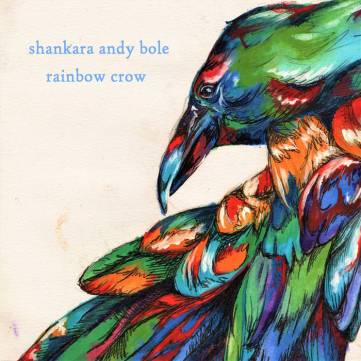
Finally, ‘Rainbow Crow’ was the album I picked up in the aftermath of that Kozfest performance and probably remains my favourite, as it’s closely aligned to the tone of both Andy Bole performances I’ve seen. These are solo, often multi-layered pieces of length and depth – to say they are drones (a la Daevid Allen) is perhaps a one-dimensional description as they contain beautiful soloing as well as a backdrop of a meditative, hypnotic intensity whether using electric guitar, glissando or bouzouki to set out their main themes. Each colour of the rainbow is represented by a ‘crow’, best of which is ‘Green Crow’, a sublime 14-minute opus.  I struggle to fully analyse why this album (and indeed Andy Bole’s music in general) is so evocatively beautiful, but ultimately I’m not sure I want to – perhaps it’s best to just pull up a chair and enjoy.

https://andybole.bandcamp.com/

http://www.andybole.co.uk

Andy’s latest album Inner Temple, featuring Brian Abbott of the Invisible Opera Company of Tibet, and violinist Sally Minchin, is available here https://andybole.bandcamp.com/album/inner-temple


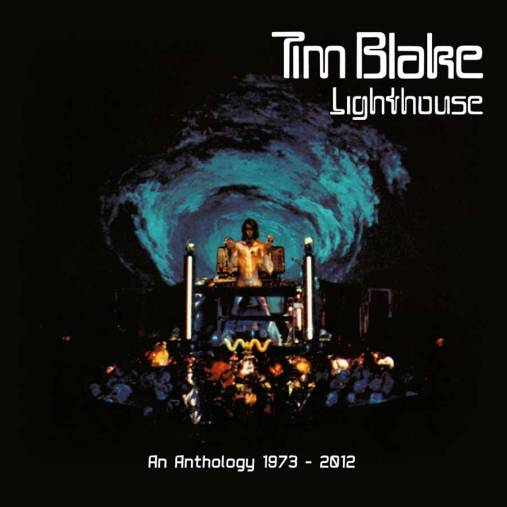
Tim Blake: Lighthouse – An Anthology 1973-2012 (Esoteric ECLEC 42651)

TIM-BLAKE-Lighthouse

I was lucky enough to witness Tim Blake at the start of his career’s second incarnation in the early Nineties, when a Sonic Relief gig in London featuring his third solo album ‘Magick’ (and later appearances back in the Gong fold) found him a new audience twenty years on from his integral role in the Gong trilogy band. Subsequent work has been occasional, with three full albums of new material having appeared but live performances more likely to be with his ‘other’ band, Hawkwind, with whom he appears to have enjoyed a rather more harmonious relationship than with Gong. With a fairly major accident in the Noughties now behind him, it’s good to see his four and a half decades of often groundbreaking output gain some recognition with this box set from Esoteric.

‘Lighthouse’ is an anthology from the entire Tim Blake pantheon, a 3-CD set selection from work with Gong, Hawkwind and 5 solo albums, plus a DVD of a live solo performance from 1979, and extensive liner notes from Hawkwind-head Ian Abrahams, including extracts from interviews. You can take this release in a couple of ways: as an introduction to his work, for which it serves extremely well, as, for example ‘Octave Doctors/Crystal Machine’, ‘The Other Side of the Sky’ and most critically, his perennial tour de force, ‘A Sprinkling of Clouds’ are all present from the Gong era;  or as a completists’ essential, as CD3 includes a selection of previous unreleased (and really interesting) material. There are also various curios throughout, for example a 1976 single from the Saratoga Space Messengers called ‘Surf’, a Hawkwindesque ditty complete with vocals apparently recorded before a brief window originally intended for the recording of a solo album disappeared for good.

Track selections are obviously subjective, and it’s testament to the strength of Tim’s first solo album ‘Crystal Machine’ that although the choices made here: ‘Midnight’ (a staggeringly other-worldly piece); and the reflective ‘Synthese Intemporel’ do not drain the well in terms of this album’s huge impact – as a compiler I’d have found a way of squeezing in the subtle funkiness of ‘Metro Child’ and ‘Last Ride of the Boogie Child’. Open to less debate is the selection of the title track from ‘New Jerusalem’, Tim’s second great opus (after ‘A Sprinkling of Clouds’). ‘Lighthouse’, originally also from that album, a staple of the Hawkwind repertoire once he’d joined the band, is aired in a live incarnation, as are a solo piece ‘Prelude’ and ‘What’s Gonna Win the War’ from the band’s ‘Levitation’ album. I’d have been tempted to also include ‘Song For A New Age’, from ‘New Jerusalem’ most un-Blakelike sonically with its strummed guitars, but one of his finest songs and vocal performances.

‘Magick’, which I remember well (I had cassette samplers and even a T-shirt from that particular album launch) is represented by ‘A Return to the Clouds’ (you can guess the reference) – hearing this again took me back to the days of seeing Tim on stage, brandishing his slung-on keyboard as a surrogate lead guitar, and the love song ‘Waiting for Nati’. Personally I’d have also gone for the inclusion of the mystical ‘Ohm-Gliding’ as the stand-out track from ‘Magick’, alongside the evocative multi-layered ‘A Magick Circle’.

The rest of the anthology is new to me, with selections from 2001’s ‘Tide of the Century’, 2002’s ‘Caldea Music II’ and the more recent ‘Noggi Tar’ completing CD2. Best selections here are the hypnotic drive of ‘Byzantium Dancing’, the swirling and driving tones of ‘Jacuzzi Surfing’, and the slow-building embrace of ‘Floating’, whilst ‘Absent Friends’ sets out the author in extended keyboard-hero mode, making sense of the ‘Noggi Tar’ (think about it) album title. The last track of this CD is a live performance of ‘Byzance’ an extended groove featuring some lovely piano touches.

CD3 is the ‘unreleased’ section of the anthology and it is clear almost immediately that for these compositions there is no attempt to garner any semblance of poppish appeal that would apply to projects from ‘New Jersualem’ onwards. Instead this is embryonic, weird, atmospheric noise experimentation that to me has not only historical interest as the ‘birth of the Crystal Machine’ (no dates are given, but the inference is that this emanates from pre-solo album times, possibly even pre-Gong involvement) but is coherent, innovative material in its own right as loop upon loop creates material which is alternately disquieting and reassuring. ‘The Forgotten Tapes’ (again not dated) are a further 3 tracks, including the extended ‘Oming In’ very much sounding like the base for the swirls on ‘Master Builder’ and all the more evocative for that, and a closer ‘Metro Poly Train’, which is a working version of the ‘Boogie Child’ track I’d yearned for on CD1. Cracking stuff.

The DVD is taken from a solo French concert from April 1979 when Tim Blake was promoting ‘New Jerusalem’ and all 4 tracks shown are taken from that album, separated by brief snippets of an interview (in French).  Flanked by banks of synthesisers and illuminated by various lasers this is a faithful reproduction of the album as well as a visual demonstration of his live showmanship. A historical document indeed!

Phil Miller – A Life in Music – Celebration Concerts at the Vortex, London 6 January 2019

text by Phil Howitt

photos by Sean Kelly
phil miller commem pic

portrait of Phil by Herm

This January would have seen the 70th birthday of Phil Miller, who sadly died in October 2017. Since Phil’s death his widow Herm, her son Kyle and fellow guitarist Doug Boyle have connected very personally with Phil’s many fans through the Phil Miller legacy website, which has developed as a truly altruistic project – with a genuine desire to reunite Phil’s fans with his music through a myriad of freely available official and unofficial releases – a true legacy from Herm to us all.

But whilst a collection of musicians assembled at his funeral, and performed an impromptu series of Phil’s pieces at his wake, there had been rumblings for some of something more formal: a commemorative concert taking place in London as a memorial to his musical footprint. News emerged in the autumn of musicians from Phil’s immediate and distant path coming together to perform pieces from his songwriting repertoire, be it Delivery, Matching Mole, Hatfield and the North, National Health, Short Wave and a considerable body of solo work with and without his own band In Cahoots.The genuine warmth towards Phil as a person felt by his fellow musicians, as well as a recognition of his wonderful talents as a guitarist and composer had all led to this major undertaking, with no less than 20 musicians appearing, stretching from the final Relatives and In Cahoots collaborations all the way back to surviving members of Delivery, assembled to give tribute to Phil’s extensive body of work. Particular thanks should go out at this point for Alex and Lynette Maguire who were instrumental in organising the music and musicians involved.
vortex pic.jpg

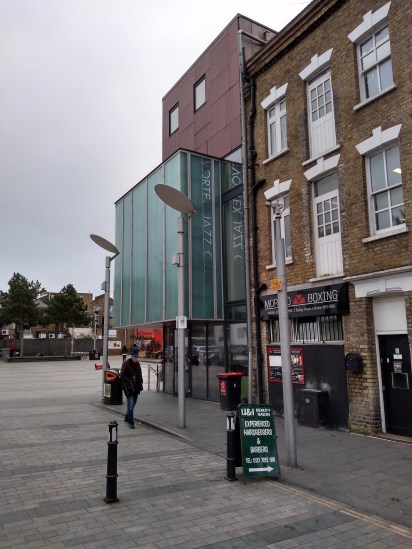
The venue was the Vortex in North London, regular stomping ground for Phil and related musicians since the 1980s (and not far from his house), although the last time I had visited this venue (to see Phil duo with Fred Baker, alongside another pair, Hugh Hopper and Mark Hewins, the latter concert captured partly on the ‘Adreamor’ album) was back in 1994 when the Vortex was a more ‘pubby’ venue based on the high street in Stoke Newington. The ‘new’ Vortex is more custom-built, although no larger, with the unenviable task of catering for a crowd which could have been sold out several times over, in a tiny seated venue which needed to also accommodate a small army of performers.

Lucky enough to sneak into the gig room ahead of the queuing punters, and shepherded by Herm upstairs to see the last of the soundchecks, it was clear that this was to be no ordinary day. A main room, flanked by a small bar, consisted of perhaps 15 or so tables with 4 or 5 seats, each with personalised namecards. There was minimal standing room near the bar and this would also need to accommodate any musicians that weren’t performing at that point, although a dressing room next door, with music piped through would also serve that purpose. Various musicians came and went to do last minute checks for their performances, with Benji Lefevre running a tight ship in attempting to shuttle the various denominations of bands to and from the stage, check the overall sound with the in-house engineer Ali, allow for some last minute adjustments and keep the whole schedule moving. Whilst musicians had convened the previous day for rehearsals in their various denominations, many faces were taut with the tension of a few trips into the semi-unknown – new versions of tracks, different line-ups, limited practice and the anticipation of what was ahead. Aymeric Leroy, the event’s compere, was debating whether he’d squeeze into a tiny space stage left apportioned to him for announcements. Downstairs a café was serving food and more drinks – I managed to sneak in quick chats with Roy Babbington, Mark Hewins and Marc Hadley and Rick Biddulph upstairs before wandering down below and bumping into Brian Hopper (who wasn’t personally performing), before getting sandwiched between John Etheridge and Jakko discussing Allan Holdsworth – a genuine muso’s moment…

set list.jpg

Rejoining the queue outside and speaking to a few old Facelift subscribers, it was becoming clear that the gig wasn’t going to start right on time because of the sheer logistics of squeezing all of the punters onto to their allocated tables. Commemorative T-shirts were displayed and sold in the café, and as we filed slowly upstairs Herm was dispensing complimentary copies of Phil’s last CD ‘Mind Over Matter’, to the uninitiated – a lovely, personal touch.

Once upstairs I navigated my way to my seat, passing tables festooned with cards containing familiar names, before settling somewhere on a table next to WillemJan Droog (keyboard player for Phil’s last band the Relatives); next to the good of friend of Facelift (and mine), Nick Loebner, with wife Mandy; and sandwiched between two old subscribers who I met for the first time, who had possibly made the longest journeys: Joerg Reinicke from German and Ake Forsgren from Sweden. In a wonderful convivial atmosphere, aided by the sheer proximity of one’s fellow fans, there was little prospect of getting back up to the bar, and so we settled back to enjoy the show. And what a show it was…
roy babbington sk.jpg

Roy Babbington

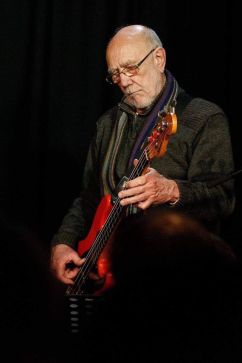
As the order of play was also a chronological reflection of Phil’s own discography, things kicked off with Delivery. Carol Grimes had been scheduled to appear to perform two tracks she had originally sung on ‘Fools Meeting’ but illness meant a last minute change, and so the album’s title track and ‘Miserable Man’ were performed instrumentally, for the first set with Roy Babbington on bass. Augmented by Alex Maguire on keyboards, Paul Dufour on drums and the sax of Simon Picard, the prevailing memory of this mini-set was the tortured guitar of Mark Hewins carving out the melody of ‘Miserable Man’ in tandem with Picard. It’s worth noting that that Delivery’s other bass player Jack Monck was also present almost half a century on from the original recordings and would take his place in a second rendition later of both pieces later – in the sound check earlier I’d somewhat naively asked Roy about the last time he’d played ‘Miserable Man’ and he’d deadpanned back the answer ‘Yesterday’ (in rehearsals!) before admitting that prior to that it had been nigh on 50 years.

john greaves sk.jpg

John Greaves - "God Song"

Matching Mole was represented by a real treat: a solo performance on vocals and piano of ‘God Song’ from John Greaves. I’d only seen John Greaves for the first time recently with the Lindsay Cooper tribute concerts of Henry Cow and been amazed by his vocal presence – here, his interpretation of arguably Phil’s finest song was spinetingling, unique and apparently a precursor for a version to be released on his own forthcoming album ‘Life Size’. If I wondered at one point whether the lyrics had gone a bit awry, then John came to the same conclusion and started things back up again. It didn’t detract from a highly personal tribute and his own 60 second coda of ‘The Price You Pay’ brought the house down.

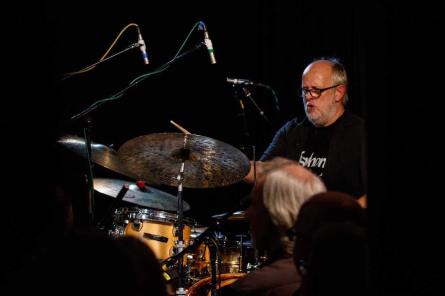
Phil’s work with Hatfield and the North was perfectly presented through ‘Underdub’, almost a big band version of the Phil & Fred (Baker) version on ‘Double Up’, with dual guitars (Baker joined by Doug Boyle), keyboards once again by Alex Maguire, and bass provided by Michael O’Brien. But, if that weren’t enough, the guitar melody was accentuated by not one but two flutes, those of Soft Machinist Theo Travis, and Marc Hadley, he of the Relatives. Not only did Travis provide a wonderfully florid solo, but the flautists’ duel at the conclusion of the piece provided for a memorable outro. This was also my first view of the quite outstanding work of drummer Mark Fletcher, a source of astonishing energy and presence throughout the day.
mark fletcher sk.jpg

Mark Fletcher

In between each track Aymeric gave us a few words of wisdom, fulfilling the dual purpose of not only providing some contextual history for each track alongside each musician’s connection to it, but also covering the gaps whilst band members came and left the stage. Aymeric mixed his own peerless and instantly recalled knowledge with the odd wry comment – the perfect host. If you were struggling to place a particular track within the Canterbury pantheon, then no matter, for Aymeric provided the background with knobs on…
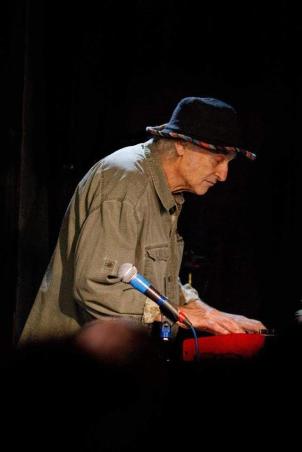
peter lemer sk.jpg

Pete Lemer

The National Health era was catered for by a beautiful rendition of ‘Nowadays a Silhouette’, originally recorded for the ‘Before A Word Is Said’ album but performed by the band during the Alan Gowen era. Elements of this piece stopped me in my tracks, so beautiful was Simon Picard’s soprano sax melody early in the piece and his cascading notes to finish, whilst Pete Lemer, stooped over his keyboard, with wizardly hat, appeared almost as an alchemist, coaxing Gowenesque sounds to propel the piece along whilst John Etheridge this time stepped into Phil’s shoes, providing the most Milleresque guitar sounds heard all night. The rolling fretless work of Fred Baker and Paul Dufour’s drums completed my highlight of the first set.
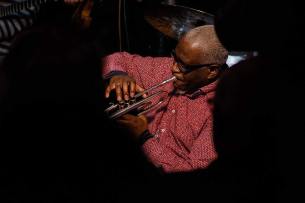
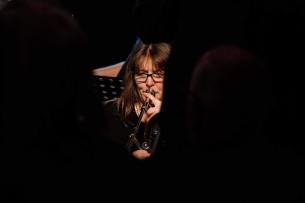
kevin davey sk.jpg     gail brand sk.jpg

Kevin Davy, Sarah Gail Brand

‘Above and Below’ continued the ‘Before’ compositions, although this resonates chiefly with me as an In Cahoots staple as well as the classic opener to ‘Double Up’. Today’s version however, sounded like neither, the first of the ‘big band’ numbers that incorporated, alongside Baker, Boyle, Maguire, Fletcher and O’Brien,  the sax of Simon Picard plus Jim Dvorak and Kevin Davy (both on trumpet) and trombonist Sarah Gail Brand. This brassed out version was propelled along by busy, driven drumming, with Doug Boyle taking the main guitar solo before some rousing tenor work.

A pared down band (Maguire, Brand, Baker, Fletcher and Rick Biddulph) then tackled ‘Calyx’ with the second vocal surprise of the night, as Jakko M Jakszyk, fresh from his heroics as King Crimson lead vocalist, took the stage. He was a last minute replacement for Carol Grimes, having originally hoped to take part in the event. From a raucous trombone intro, the piece eventually settled the main theme with Jakko initially scatting, then moving on to the rarely heard lyrics for this seminal Miller tune. As the compere Aymeric pointed out, the appearance together on stage of Biddulph (on guitar) and Jakko  re-united half of the semi-mythical Eighties band Rapid Eye Movement!
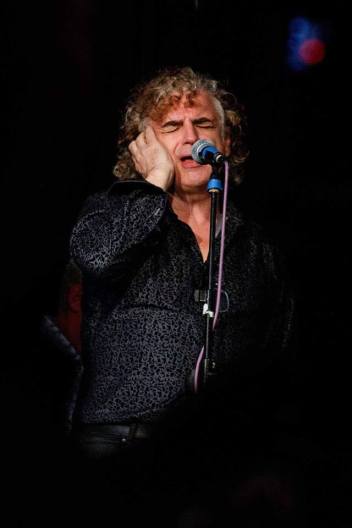
jakko sk.jpg

Jakko

Set 1 finished with the ‘Hat Medley’, actually a segue of ‘Aigrette’ and ‘Lything and Gracing’, taking us back to Hatfield and the North, with latterday Hatfield member Alex Maguire again joined by dual guitars (this time Boyle and a first appearance from Patrice Meyer), Fletcher and Baker. If this review frequently veers towards descriptions of piano and drums, it is because my view of the centre of the stage was largely obscured by a pillar and the main video camera, which means that often the brass players and guitarists in particular was limited. What I can tell you is that the subtle guitar licks on this track were from Meyer, and that at one point the piece dissolved into some superb semi-classical piano virtuosity. Another rousing set-ender.

Wow! And we were only half way through (or a quarter if you had tickets for both sets). What follows regarding the second half of the concert is more concise, largely because this part of the show was ultimately more homogenous, being predominantly a collection of In Cahoots pieces. As such, featuring regular Cahoots members, and given their relatively recent vintage, the music was often more practiced and  polished. I also have to confess that my initial marvelling at the setlist and a desire to dissect it in all its glories was replaced by a fairly deep contentment as I settled back in my seat to fully enjoy the show.

Set 2 kicked off with ‘Eastern Region’, with a rhythm section of Michael O’Brien on bass, Fred Baker on guitar and Mark Fletcher on drums  – this first two have recently formed a band with drummer Nick Twyman which intends to perform Phil’s music to continue a live legacy. Doug Boyle provided lead after an initial dual line with Baker. ‘Second Sight’ added Jim Dvorak, Simon Picard, Marc Hadley on flute and the guitar of John Etheridge on guitar, fluidity personified – it also featured a wonderful moment as Pete Lemer brought the piece to a halt, grinning ‘too fast’ as various negotiations opened up within the band as to how to resume. ‘Truly Yours’, benefitted from a grandiose, stately orchestration adding even more blowing with Kevin Davy and wonderful soprano soloing from Theo Travis.

theo travis doug boyle sk.jpg

Theo Travis & Patrice Meyer

And.. another highlight, as a largely unheard Phil Miller piece, “Folk Dance’ was aired. This funky, twiddly, jazzy piece, with fiendishly difficult dual melodies, was bowled along by Paul Dufour’s prominent drumming, and featured a real contrast: an angular, lyrical, grating guitar solo from the hands of Etheridge, and a more understated one from the flying hands of Patrice Meyer, expertly showing the other more subtle Miller hand. This track also featured a heartfelt bass solo from the hands of Jack Monck and a more rumbustious one from the alto of Marc Hadley – these two and Dufour have a shared history of the only previous performances of this track in 2017, in a band called Jack Monck and friends.

‘Green and Purple’ finished things off, with a cacophonous start led by Theo Travis, keyboard effects from Pete Lemer – this track I remember being one of the highlights of the very first gig I saw Phil Miller play (with In Cahoots back in 87) and so felt particularly resonant. Except of course that this wasn’t the finish – not even of the first concert as a good 15 musicians made their way stagewards for the first grand finale, inevitably ‘Nan’s True Hole’, with full brass, rumbustious riffing and Alex Maguire in the audience conducting a most unique singalong with spare drumstick.

alex maguire and co sk.jpg

Patrice Meyer, Alex Maguire, Fred Baker, Doug Boyle

Unfortunately the realities of needing to be back up North for work the next morning, and the fact that things were running a little late, meant that I had to take the decision to leave the Vortex after the first set of concerts. I had to temper the fact that I’d seen all of the performing musicians at least once, delivering the majority of the setlist, with the fact that in particular the second set had been so damned fine that I wanted to do it all over again. Add to the mix that there were at least 3 additional pieces waiting to be performed. But my main regret was that I’d be have been able to soak up more of a unique atmosphere, with musicians and audience mingling almost as one in a celebratory atmosphere. I was understandably loath to leave.

News was that the second set, as you might expect, had a few surprises. Further pieces from the In Cahoots repertoire were aired (‘Delta Borderline’ and ‘Your Root 2’). Short Wave’s ‘The Fox’ (which I’d heard at the soundcheck) also appeared,  and apparently practically everyone ended up on stage this time for the finale of ‘Nan’s True Hole’, a singing John Greaves included. As more than one attendee  said afterwards, this was quite a blast…

Postscript: those who missed the concerts will be delighted to know that entire performance (which probably extended to 5 hours) was professionally filmed with a view to making edited versions available. In the meantime  hours of Phil Miller’s music are available for free download at www.philmillerlegacy.com alongside links to his whole discography. This event was a colossal feat of organisation and an unrivalled celebration of one man’s music – a truly memorable event.



The Wizards of Twiddly (and Rodney Slater’s Parrots), Zanzibar Club, Liverpool 14 December 2018

zanzibar.jpg

It’s an unexpected pleasure to be blogging about the Wizards of Twiddly in 2018. In the early Nineties they were, bar none, my favourite gigging band as they purveyed their own particularly brand of punky, jazzed up lunacy around various small-time hip joints in the cities of the North, as well as arts venues in the satellite towns in between. Generational contemporaries to myself, they struck a particular chord in appropriating influences from seemingly everywhere whilst the mainstream music press stuck to its own turgid agenda. They had a noisy brass section, a guitarist who rivalled Allan Holdsworth in ridiculous virtuosity, and three part harmony vocals, but most of all they had an anarchic, theatrical vibe which meant that they threw so much at you in their own slices of 3 minute heroics that you scarcely had time to draw breath. I was already writing about them in Facelift (as an indulgence chiefly  to myself) when the news came through that they were the new backing band for Kevin Ayers in 1994. I interviewed them for the second time here and also reviewed their Radio 1 Mark Radcliffe session here as they embarked on a series of double headers with Kevin. Their star flickered brightly for a few more years, still tragically under-recognised, before band members moved on to other projects. In intervening years, the December reunion gig in Liverpool has become a bit of an annual tradition, there have been archive albums of unreleased material (The Upendium in 2007 and People with Purpose in 2010), and even, most recently the splendid and typically daft video shown below, but only recently has there been the rumblings of something more substantial with their own 30th anniversary looming.

First on the itinerary (after a couple of aborted gigs last summer as trumpeter Martin Smith was suffering from pneumonia) was this weekend’s gig at the Zanzibar, stalwart venue for the band over the years(in fact a live EP available here was recorded there), an evening compered with some elan by Michael Livesley, a somewhat larger than life persona who is also the lead singer for the night’s support act, Rodney Slater’s Parrots, a Liverpool-based outfit featuring said Rodney, the sax and clarinet playing veteran (and founder member) of the Bonzo Dog Doo Dah Band. The Wizards themselves have sometimes been compared to the Bonzos, but even they, despite their own bonkers vintage, would struggle to compete in terms of jaw-dropping daftness, with jaunty, pleasing ditties accompanied by clarinet, violin, saxes, keyboards, guitar and rhythm section, interspersed with hilarious, stream of consciousness narrative veering between Lancastrian self-deprecation (not to mention the deprecation of band members and audience!) and upper class twittery.

If this was a genuine delight to warm an assembling crowd on the coldest night of the year, then a clearly identifiable collection of Wizards aficionados retained their warmest welcome for the main event. Launching into ‘Eye of the Potato’ (complete with Survivor riff gone horticultural), the band ripped through any number of old classics from the first two albums, be they the spiky ‘Clunksville’, the lush tones of ‘Jazz Ian’, the alternatively soothing and menacing ‘Herod’s Creche’ or the classic Sixties pop of ‘Large Georgraphical Features’. There were also standard set list items from the Ayers era such as ‘Cardboard Banjo’, and ‘The Great Unwashed’.

band3.jpg

To be fair, given the general bonhomie all around me, and the delicious familiarity of immersing oneself back into the world of the Twiddlies, I can’t remember all the tracks they played, testament to the band themselves so effortlessly stepping back into the groove. What I can recall is at least four new pieces, a typical Simon James track (I’m guessing) based around double standards called ‘Yes We Can’t’ (complete with compulsory audience shouting!), a glorious 60s song in the vein of ‘Large Geographical Features’ (from Frizell?) called ‘The Inescapable’ and two pieces of a more twisted bent, ‘Eryops’ and ‘Sit Down Punch’, the latter a quite stunning groove-based instrumental from the pen of Carl Bowry. It was this which provided my prevailing memory of the night, as the band looked genuinely quite taken aback by the audience’s voluminous response.

andy f crop.jpg

Most of the trademark Wizard features are still very much in evidence: the contrasting styles of the two lead vocalists (with Simon James angrily ranting or Andy Frizell alternatively crooning or impishly sniping); the staccato brass work of James and Smith (whose trumpet soloing is these days quite outstanding); the rhythms driven on in pinpoint manner from the gloom by Andy Delamere’s drumming (he also adds a sweet third voice); or the astonishing guitar work from Carl Bowry, as understated a stage persona as you’ll see, but with a repertoire of blistering effects-strewn assaults on the ears, flying fretwork and subtle harmonics.

Highlights on the night were hearing for the first time that raft of new tunes, the buzzing guitar rhythm and singalong rant of ‘Hooverman’, the evergreen daftness of ‘Septic Tank’, and a re-work of ‘Man Made Self’ as an inevitable finale, as Andy Frizell looks back regretfully (and forgetfully) at his Nineties character’s aspirational self. With various members of the band charging around the stage, screaming into microphones and leaving the arena to tumultuous applause, it was very much like old times…


https://twiddlywizards.bandcamp.com/


Gong solo projects reviewed: Kavus Torabi, Fabio Golfetti, Ian East, Dave Sturt

With recently announced news of a Gong tour in May 2019, alongside current recording of a new album, it’s high time that I published a long-promised feature on the recent activities of individual members of the band’s current line-up.

gong promo.jpg

Firstly let’s not forget that the entire current Gong line-up (Kavus Torabi, Fabio Golfetti, Dave Sturt, Ian East, Cheb Nettles) was in situ in the last days of Daevid Allen, with the first four contributing to the Gong album, ‘I See You’ in 2014. Whilst this collection of musicians joined Gong at different points from 2009 onwards, their coherency as a unit behind Daevid Allen was so apparent that it was no surprise when, with Daevid Allen’s health declining, the quintet struck out alone. This new dispensation (with Daevid Allen’s blessing) culminated in the brilliant album ‘Rejoice! I’m Dead’, reviewed here, with various Gong live gigs reviewed here and here. What may be rather less known as that each of the 5 surviving Gong members are band-leaders, or at least project leaders in their own right.

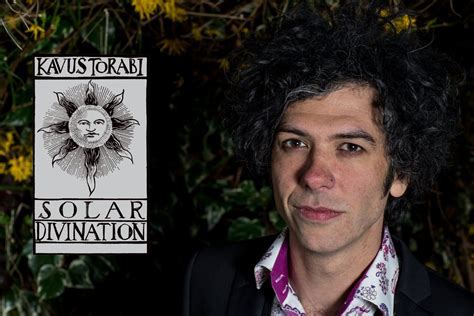
Kavus Torabi – Solar Divination EP

Kavus Torabi, the band’s frontman is indeed a man of many facets. Long-time leader of Knifeworld, that left-field progressive/experimental project which features a plethora of brass, vocalists and innovative combinations of other musicians, the band have been in existence for around a decade, recording half a dozen albums and EPs. However last spring Kavus also launched a completely solo project. Whilst I missed one of a series of solo gigs in April (Peter Hammill was playing a rare gig elsewhere in Manchester that night, I seem to remember), a taster of his wares is available on an EP, ‘Solar Divination’, consisting of a mere three tracks. Given his angular, sometimes abrasive guitar work, the predominant instrument here is something of a surprise, being the harmonium no less. I’d not heard this instrument played in anger since Wandana Bruce accompanied Daevid Allen’s dronish sets back in the spring of 1988, but here it underpins most of the sound in somewhat more searching mode.

kavus

Whilst the title of the EP gives an indication that the approach veers towards the devotional (with nods towards some of Steve Hillage’s early solo work) this is not easy to categorise, with purer guitar-backed songform on the two shorter tracks undermined by more obtuse sounds from said harmonium, whilst ‘The Faceless Undead’ is underpinned by dissonant strumming and stop-start vocals. One has to wait until whilst the last track ‘Slow Movement’ to see perhaps the best way forward: this lengthy piece is an open-hearted invocation which makes total sense of Kavus’ apparently mesmerised persona when singing ‘Selene’ or ‘Master Builder’ with Gong. It would have been fascinating to see that Kavus solo gig to see which styles or even instrumentation dominate in his live world – he has so many apparent strings to his bow. Apparently there is an album on the way which might give us a clue….

https://kavustorabi.bandcamp.com/releases

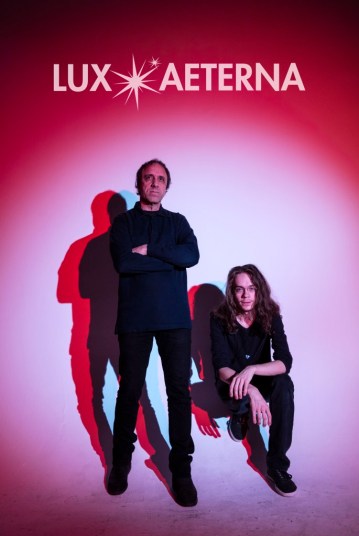
Fabio Golfetti – Lux Aeterna – Parallax

Fabio Golfetti, as some readers of this blog will be aware, is someone Facelift has a long history with, all the way back to the early Nineties when cassette tapes from Brazil arrived periodically, both from the punchy three piece Violeta de Outono, to the more extended workouts of Fabio’s licenced Brazilian version of the Invisible Opera Company of Tibet, whose splendid live album ‘Glissando Spirit’ featured sleevenotes first published in Facelift here. Both bands survive to this day and the excellent Violeta have released relatively recently their 7th studio album ‘Spaces’ and have become one of my all-time favourite bands in recent years. I would and probably should say more about this here, but as I’d love to do a proper interview with Fabio (who I finally got to meet 25 years later in 2016!) about Violeta de Outono, that side of things will have to wait for the moment.

lux-aeterna_4_LOGO_.jpg

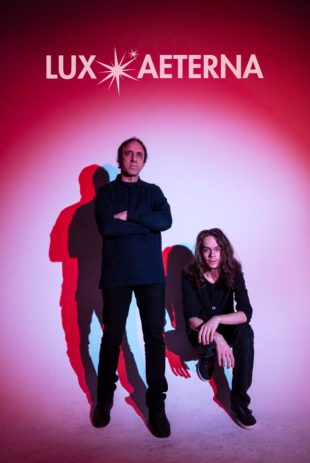
In the meantime, let me direct you towards Lux Aeterna, Fabio’s current project with son Gabriel who provides much of the musical backdrop . Currently only available in digital format, this album-length series of 3 recordings is electronic in conception, synth heavy, which if one were to say it had a chill-out vibe would not do justice to its experimentation. Daevid Allen is on record as saying that Fabio was his favourite glissando player, and the 30 minute opus ‘Glissando’ confirms Fabio’s virtuousity in that regard, a beautiful extended drone in the vein of Allen’s ‘I Am’ or the backdrops to Mother Gong’s ‘Magenta’. However, in terms of general excellence it’s a struggle to get beyond the title track ‘Parallax’, an gloriously uplifting piece which starts in dronish stasis, graduating to an Erpland-ish/Hawkwind synth theme with scattergun percussive effects, and suppressed guitar soloing before finally opening out into a quite spine-tingling conclusion. The somewhat shorter ‘Tick-Tock’, after some initially unsettling scene-setting, veers between some of the synth sounds of Steve Hillage’s ‘Green’ and the bird-like guitar effects of System 7’s ‘Sirenes’. For an album which appears, as things do these days, almost unnoticed as a bonus project on the soundcloud/bandcamp platforms this is high class, lush music for the senses.

https://lux-aeterna.bandcamp.com/

http://lux-aeterna.uk/

Home

https://violetadeoutono.bandcamp.com/


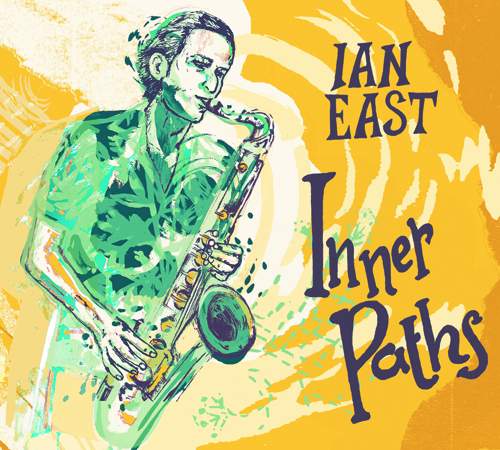
Ian East – Inner Paths

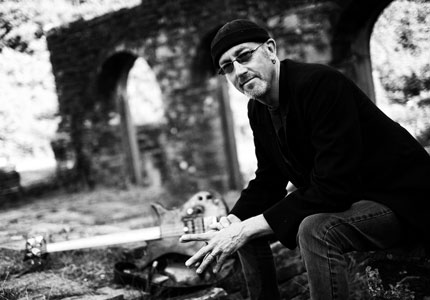
Gong are blessed to have Ian East as their resident woodwind player, filling with gusto the intimidatingly large boots left by two sax giants in Didier Malherbe and Theo Travis, the latter most recently seen in fine form with Soft Machine. If Travis captured more of Didier’s jazz sensibilities, then East is perhaps more playful, his side-projects with the Balkanatics possibly nodding more towards Didier’s eastern influences .

ianeast.jpg

Yet Ian’s remarkable solo album ‘Inner Paths’ sounds like neither, a genuinely innovative project consisting of a mini-orchestra entirely of his own making, with up to a dozen different instruments multi-tracked to provide a rich, layered, multi-faceted ticking and whirring of acoustic sounds. The overall sound is rhythmic, stately, almost mediaeval – Ian East doesn’t go as far as delving into crumhorns and the like, but the overall sound is evocative of music from an era past, interspersed with influences from North Africa and the aforementioned Balkans. With the basic rhythm set down by bass clarinet and a selection of percussive instruments (bells, shakers, cajon and udu), other lower register reed instruments (principally tenor) interweave to allow a further saxophone to solo over the top. If the album title suggests that this is a largely introverted project, then it’s only the lack of other personnel (East also recorded and mixed the album) which reflects this: at times the music is joyous and genuinely grooves. In addition, when we spoke following Gong’s performance at Beatherder Ian revealed that Ian has actually attempted gigging this project live, courtesy of triggered loops, which Ian admitted was genuinely a challenge to pull off. If all 4 albums reviewed here are somewhat off the scale in terms of what might associate with Gong music, than ‘Inner Paths’ is probably the most ambitious – it’s a remarkable achievement.

https://ianeast.bandcamp.com/album/inner-paths

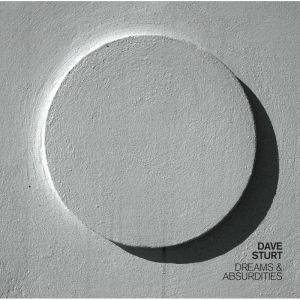
Dave Sturt – Dreams and Absurdities

sturt1

Way back before bass player Dave Sturt joined Gong, among the many projects he was involved in was Jade Warrior – and for some reason I received a copy of ‘Breathing the Storm’ in the early 90s for review and squeezed in a few words in Facelift, not for any Gong/Canterbury connection that I knew of, but purely because it got played to death at Facelift HQ. Amongst many elements collaborating to create a gorgeous, gently rolling groove for Jade Warrior was Dave’s fretless bass, as likely to take the lead lines as flute or keyboard. On hearing the first few bars of ‘Mirage’, the opening track for Dave’s album ‘Dreams and Absurdities’, with fellow Warrior John Field on congas and the bansuri of Waqas Choudhary, one could be forgiven for thinking that this solo project was going to continue in a similar vein. In fact, this album is as diverse as ‘Inner Paths’ is homogenous: looped pieces such as ‘Transcendence’, the jazzy impro noodlings of ‘(In My Head) I’m Swimming (with Kavus Torabi) and the lush atmospheres of ‘White and Greens in Blue’ (with Bill Nelson)  rest alongside more upbeat numbers and the frankly strange ‘Bouncing like Gagarin’, where a spoken word piece (courtesy of Jennie Winson-Bushby) is accompanied  by a ‘talking’ bass which punctuates each word uttered.

dreams and absurdities

Four pieces are key for me: ‘Hollow Form’, immaculately introduced using layers of bass motifs with Sturt soloing over the top, before the piece settles into a multi-layered loop over which bass, cello, violin and the soprano of Theo Travis solo in turn. Some deft brush work from Jeff Davenport completes the groove on what is a minor masterpiece. ‘Jaffa Market’, a reference to the piece’s origins during a Gong tour in Israel in 2009 is another piece that starts in stately  fashion before stretching out William Orbit style into an eastward-looking dancey number. The icing on the cake here is Steve Hillage’s glorious unfettered guitar soloing – Hillage completists will recognise this as one of his finer moments… A less planned guest appearance is Daevid Allen’s wonderful glissando parts to ‘Unique and Irreplaceable’, rescued posthumously from the vaults from a Cipher recording session, here contributing to a brooding and atmospheric drone also featuring Fabio Golfetti – another highlight. Finally the title track ‘Dreams and Absurdities’, a slow waltz where cello and violin intertwine to create the backdrop for more lead bass soloing, set against a bizarre sample apparently from an Asian fish market which sounds almost like the throat singing credited earlier in the album! For me, ‘Dreams and Absurdities’ is the best of the four albums reviewed here, simply for its breadth of style and sheer polish.

Home


And as for Cheb Nettles? My lips are sealed….


For information on all these albums plus current gig news from all Gong musicians, please visit http://www.planetgong.co.uk

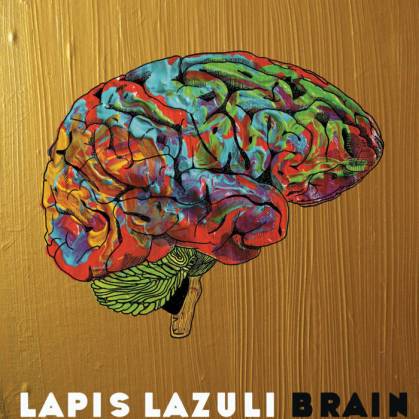
Lapis Lazuli – Brain

brain pic.jpg

It’s practically incomprehensible that Lapis Lazuli have only been in my consciousness for a year, given that the first time I became aware of them was at the Canterbury Sound event last October, where, with due respect to the various academics, writers and contributing musicians, they rather stole the show. Scarcely believable because having gorged on their entire back catalogue within the months that followed, they’ve become such a familiar sound to me that the anticipation surrounding the impending release of their fifth album ‘Brain’ was for me, very real. That Canterbury gig was one of the first to showcase a band shorn of the integral sax sound of Phil Holmes – and whilst it focused on two tracks from the then current album ‘Wrong Meeting’ it also featured a band member (bass player Luke Mennis) who had not recorded on that album. So, unbeknownst to me, the band I saw was in transition, not that you would have guessed from a performance that was both compositionally complex, sonically innovative and unbelievably polished.

In retrospect, it is now clear that the band’s sound was becoming more uncompromising, understandably dominated by two guitars and their effects, set against a rhythm section including the extraordinarily versatile drummer Adam Brodigan, who rarely settles into a groove for long. Whilst the first couple of albums flipped between any number of styles, be they Latino, reggae, Balkan or jazz, softening their impact through extended lineups which incorporated brass, flute, accordion, extra percussion, didgeridoo and even occasional vocals, there is a real sense that Lapis Lazuli have arrived at a definitive sound and style, discarding all fripperies (if not necessarily all Frippisms) en route.

So what does ‘Brain’ sound like? The 5 pieces, clocking in at 10 minutes or so each (mere snippets in the band’s history of extended compositions), are guitar heavy, funky and intricate. There’s no jamming here (for that you need to listen to the band’s alternate ego, which I’ll link to at the bottom of this review), just a continuation of the most tightly composed music I’ve heard since National Health, delivered alternately in joyful or tortured fashion. Yet beyond that it’s so difficult to pin the band’s sound down: in an attempt to try and describe it I’ve played it to various people in the rash hope of pigeonholing the music – but when the responses vary from Sonic Youth to Gentle Giant, the Ruts to Rush, you know you’ve got a job on…

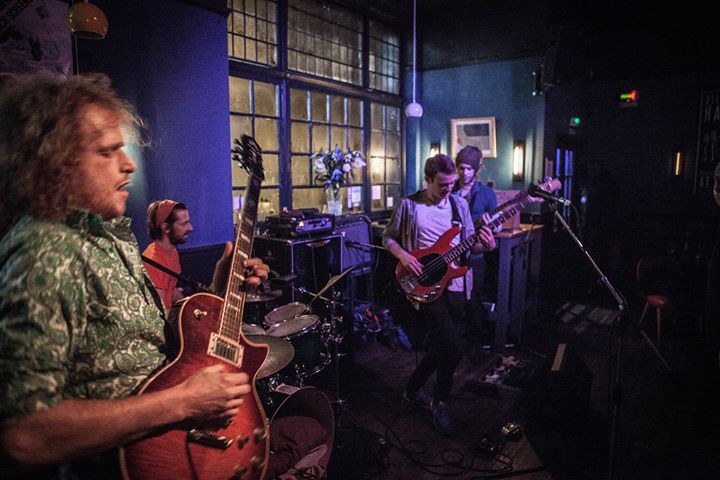
lapis lazuli live.jpg

What is indisputable is that the centrepiece of the album is ‘Hired Soul’ – which provides the memorable whistle-along themes for this album in the same way that ‘School’ did for ‘Wrong Meeting’. The style smacks of the Eighties, is Foalsesque even, with its anthemic, almost pompous melodies and the fulsome keyboard chords produced by guitar, before one of many forays back into Seventies funk. Any doubts that this is the effect that the band was aiming for are dispelled by the ‘Hired Soul’ official video, the latest in a series by Brodigan, this one clearly a take on aspirational fitness videos from that era with its own ‘Green Goddess’ in the lead screen role. Whilst you’ll find elements of this track impossible to get out of your head, you wouldn’t be able to reproduce more than half a minute if asked to recall it unplugged – as with most Lapis tracks it’s gloriously twisted.


‘And Stay Out’ and ‘Low Key’ are more dominated by recognisable guitar sounds, but no less complex, the latter paradoxically introduced by a Spaghetti Western guitar line which suggests briefly that the band might be straying into Tortoise territory, and the former by that Ruts-like riff.  In fact ‘Low Key’ morphs into the wildest guitar thrash-out on the album, memorably captured in brief on the youtube clip ‘Neil Ascends’ here.

But before this, the band have already worked their way through a reggae passage, a stark guitar duet in some indecipherable time signature, brutally punctuated by crashing chords and followed by some ‘La Villa Strangiato’-like noodling. ‘And Stay Out’, is dare I say it, a more conventional series of rock riffs, whilst ‘The Slug’ is the stop start piece that had me laughing out loud during its performance at Kozfest. At the other end of the scale is ‘Falling Line’ , dominated by Luke Mennis’ bass, a Seventies jazz-fusion ballad cheesed out by some Alan Gowen-esque effects, bass meandering and a drum solo augmented by samba hand percussion which Mennis and Lander memorably add to when this piece is performed live. Whilst at times this track veers, quite deliberately, towards muzak territory, the edge is maintained by several ‘wrong’ chord progressions – clever stuff indeed.

For me the prevailing feature of  ‘Brain’ is the almost telepathic interplay between the guitarists: Neil Sullivan’s lead is evocative and Phil Milleresque in the way it ekes out a melody; Lander’s rhythm work, amongst the finest I’ve heard, alternates between funk licks and math rock structures.  This twin assault on the senses reminds on more than one track of Frederic L’Epee’s multi-guitarist bands Philharmonie and Yang, the latter of whom, like Lapis Lazuli retain a desire to rock through the intricacy. The pair contribute so many memorable passages, weaving in and out of sections which alternately pulverise and gently cajole, a case in point being the ‘Shower Scene’ section of ‘Hired Soul’ an alternative clip of which is here.

Ultimately though, it’s ALL wonderful stuff, a joyous nightmare to review. As one friend put it, Lapis Lazuli set out to confound, and they’ve certainly achieved that..

Postscript: this album is available direct from the band, and a vinyl version includes extra tracks not reviewed here. 

https://lapislazuli.bandcamp.com/album/brain

‘Shall We?’ – a 30 minute improvisation by the band is viewable on Youtube here:


PHIL MILLER – A LIFE IN MUSIC – memorial concerts, 6 January 2019

phil miller commem pic

Phil Miller (1949-2017) would have turned 70 next January. In a double tribute concert (separate afternoon and evening performances) on 6th January 2019 at London’s Vortex Jazz Club (near Dalston Kingsland station), his music will once more be brought to life by an extensive line-up of those associated with Phil throughout his nearly 50-year career.

In various combinations, the 20+ musicians will perform a set of Miller compositions from his early bands Delivery, Matching Mole, Hatfield and the North and National Health, and then a second set focusing on the In Cahoots repertoire, the band he led from 1982 to 2011 which often performed at the Vortex.

The two concerts (at 4pm and 8pm) will feature variations in both repertoire and line-ups, to ensure enough variety for those who choose to attend both, but rest assured that Miller’s best-known compositions, including “Calyx”, “God Song”, “Underdub” and “Nan True’s Hole”, will be fixtures of both.

The bands will feature: Roy Babbington, Fred Thelonious Baker, Paul Booth, Doug Boyle, Sarah Gail Brand, Paul Dufour, Jim Dvorak, John Etheridge, Simon Finch, Mark Fletcher, John Greaves, Carol Grimes, Marc Hadley, Mark Hewins, Jakko M Jakszyk, Peter Lemer, Alex Maguire, Didier Malherbe, Patrice Meyer, Jack Adam John Monck, Michael O’Brien, Simon Picard, Trevor Tomkins and Nick Twyman.

BOOK TICKETS NOW ! at : http://www.vortexjazz.co.uk/event/16314/

Further news and updates (plus many previously unheard recordings by Phil’s various bands) can be found at: https://philmillerthelegacy.com/

Soft Machine: Hidden Details album review; Soft Machine Live at the Trades Club, Hebden Bridge 9 November 2018

softs tt.jpg

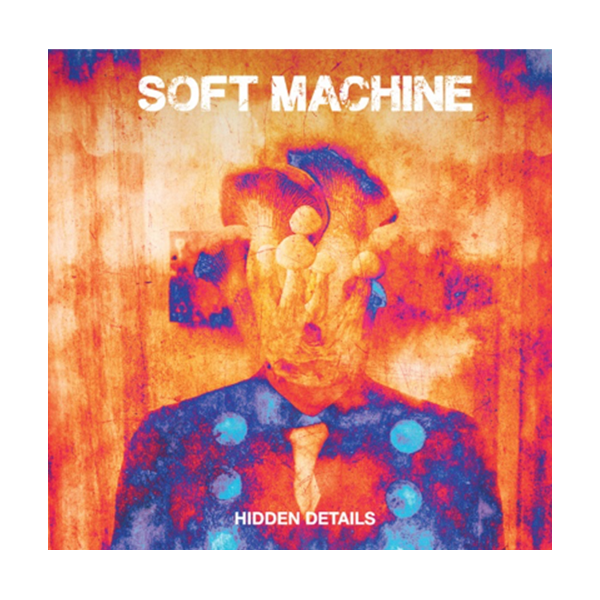
The idea of strolling to your local venue to see the Soft Machine is something I would have considered preposterous when I first heard the ‘Third’ album back in 1985. Yet here I was seeing the band for the third time in 18 months, promoting their new album ‘Hidden Details’ to a sell-out audience at the Trades Club in Hebden Bridge.

‘Hidden Details’ has been in my possession since September and rarely far from my CD player since. Yet I’ve been waiting for the time, space and context to include a review of it on the Facelift blog. The impetus has finally come from this rousing gig, epitomising a surprisingly fresh direction for the band.  Whilst albums from the Soft Machine Legacy, the name under which this outfit toured and recorded as part of an evolving dynasty from previous line-ups involving Elton Dean and Hugh Hopper , were worthy enough, recent tours had given a sense that this band was tightening up its identity with careful selection of archive tracks from ‘Third’ through to ‘Bundles’ to suit its melodic motifs and rocky grooves. ‘Hidden Details’ adds the final pieces of the jigsaw through the authoring of a cohesive set of new tunes. My own feeling on hearing ‘Hidden Details’ for the first time, was that the band almost felt a sense of responsibility to live up to their newly shorn name. Chatting to saxophonist Theo Travis at the gig, the only member of the band who doesn’t hail from band line-ups in the early to mid Seventies, he echoed similar sentiments.

The opening bars of the eponymous title track which opens both the album and live sets are quite startling: the dissonant angular guitar theme with which John Etheridge launches affairs is untypical of the Soft Machine from any of its eras and as such is an almost a statement in itself – this rumbustious track, powered by Roy Babbington’s growling fuzz bass and John Marshall’s omnipresent drumming makes it clear that this is not a band to rest on safe ground. If Travis sets his stall out for the album with a rousing tenor solo, it is if anything surpassed by the Frippian high notes at the end of Etheridge’s finishing shot.

HiddenDetails600.png

But this is just for starters.  With a set list which includes at least half a dozen tracks played from ‘Hidden Details’, the majority of which add rather than detract from the overall impact, it’s clear that certain elements from the previous repertoire had to give, and the chief casualty appears to be some of Etheridge’s stately guitar themes from ‘Softs’. And so convention is swiftly discarded, with even ‘Life on Bridges’ with its memorable anthemic melody played in triplicate in unison by guitar, sax and bass, dissolving into a ‘Fletcher’s Blemish’-like mess. Whilst not played live, there are further sonically uncompromising tracks on the album such as ‘Ground Lift’ and ‘Flight of the Jett’ which confirms that the band are not content to hide behind an undoubted gift to craft beautifully accessible melodies.

That said, there remain instantly identifiable Etheridge tunes, ‘Heart Off Guard’, with wonderful Travis soprano soloing over acoustic guitar; whilst the more electric ‘Broken Hill’, aired memorably live, contains perhaps the most evocative Etheridge guitar theme of the album. Elsewhere, ‘One Glove’ sits somewhere between the heavy rock grooves of ‘Seven’ and various post-Softs compositions from Hugh Hopper, with strutting guitar and sax to add. This one went down a storm live with Roy Babbington in his element.

Three tracks which the band were already playing in their repertoire prior to ‘Hidden Details’ are included on the album and are now staple parts of the set list– all are distant nods to the past, with ‘The Man Who Waved At Trains’ one of many tracks to benefit from Travis’ dexterous flute, plus two parts of ‘Out-bloody-rageous’, the latter introduced through an innovative triggering of samples and effects from the keyboard of Theo Travis;  followed by the track’s main theme duetted by guitar and sax – Travis’ solo is a joyous romp through a much loved Softs ‘standard’.

softs je and jm.JPG

The live set is completed by other notable pieces carefully picked from the discography – the funky ‘Gesolreut’, a highlight from their gig in Manchester a year ago, ‘Chloe and the Pirates’, which started a much-deserved encore, Hugh Hopper’s ‘Kings and Queens’, beautifully crafted, and a medley including ‘Tarabos’ and the inevitable set ender ‘Hazard Profile’. The latter two were separated by a quite unexpected, lengthy and almost angry drum solo from John Marshall, quite remarkable in its dexterity, almost a raging against the years.

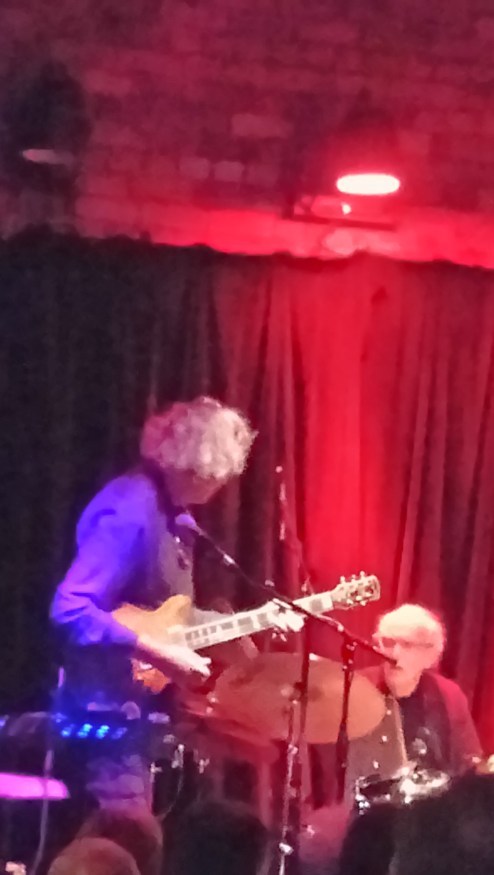
It was interesting seeing the band in a small provincial environment, subtly different from the more metropolitan audience I saw the band last play to where the audience was consistently appreciative throughout, but never quite lost their cool. The Trades Club audience are a fickle lot, took a while to warm up and then seemed to be colossally won over by the end with a noisy primal adulation which I think took the band a bit by surprise. John Etheridge is a charming, self-effacing, slightly mischievous front man, taking time between each tracks to ingratiate himself gently with the audience – with lovely references to both how tonight contrasted with the band’s seamless, non-verbal interactions in the Seventies, (Mike Ratledge was outed as only ever having spoken to an audience once, when an entire rig went down!); or somewhat closer to home relating the story of the band’s extended trip that day from Scotland to the night’s accommodation, including an only too familiar stakeout close to the venue on a single track road where two vehicles (one belonging to the band) refused to budge for the other. It seems almost patronising to mention the band’s vintage (Marshall and Babbington are in their late Seventies) but to produce musicianship of this demanding nature on a regular basis with set lists lasting up to 2 hours cannot pass without mention – it was an admirably high class performance.

Final word must go to ‘Hidden Details’ – a hugely impressive album whichever way you look at it. After you’ve worked your way through many of the tracks described above, you’re left with a final couple of pieces, not contained within the live set but well worth waiting for. ‘Fourteen Hour Dream’ is a weaving piece which jams lightly around a fine Babbington groove with superb flute from author Theo Travis. There are hints here of Seventies band Catapilla or perhaps more pertinently, the Forgas Band, and strange to say that Etheridge’s subtle, understated guitar licks are amongst my favourite moments from him on the album. The vibe is continued in more meditational mode on the lovely dronish ‘Breathe’, and one could not find a greater contrast with the album’s opening salvos. Perhaps the only evidence on view that the band are considering winding things down – let’s hope not just yet…

www.softmachine.org

www.moonjune.com

www.theotravis.com

www.johnetheridge.com


Gigs…Albums…Projects

Update 21 October

A few items of news have come in since this article was last posted back at the start of September.

Phil Miller Memorial Concert

milller legacy pic.jpg

A hotly anticipated memorial concert for Phil Miller will be held at London’s Vortex Jazz Club in Dalston,  on Sunday, January 6th, 2019. Many musicians familiar to readers of this blog are due to appear – news of acts and tickets will appear in the next few weeks at the excellent Phil Miller legacy site 

Lapis Lazuli

Superb Canterbury band, now a four piece, release their 5th album ‘Brain’ on 30th November hopefully to be followed by a tour. One confirmed gig is in Bristol at Crofters Rights http://croftersrights.co.uk/ on 7 December.

lapis lazuli field.jpg

You can pre-order their album here 

Syd Arthur

Canterbury’s other current mercurial sons are apparently on a sabbatical, with a couple of members newly introduced to the joys of parenthood. However, I understand that Matthew Watkins, author of the unique history of Canterbury ‘You Are Here’ reviewed here, is curating a series of archive releases by the band (and there are some very fine cuts to choose from there)

Yamma

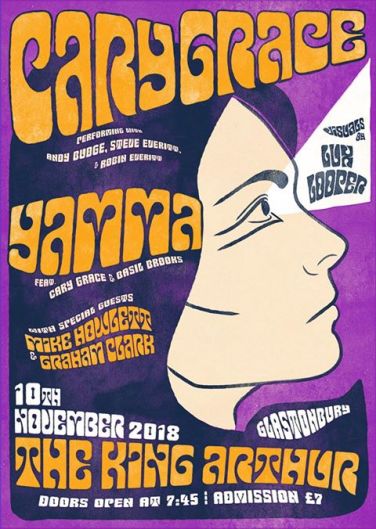
Yamma, who I described as a ‘pop-up’ band in my review of Kozfest here have happily decided to continue their good work – the band, which includes singer/synthesiser player Cary Grace, Mike Howlett, Graham Clark and Zorch twiddler Basil Brooks have a gig at King Arthur’s in Glastonbury on 10 November

yamma gig.jpg

Richard Sinclair

News since the first post of Richard Sinclair’s appearance on an album by the O.A.K band from Rome. Richard appears on an album described as a Progressive Rock Opera dedicated to the life of Italian philosopher and monk Giordano Bruno, who was burnt alive at the pyre as a heretic in Rome 418 years ago – other guests include Sonja Kristina of Curved Air, Dave Jackson of Van der Graaf Generator and the late Maartin Allcock of Jethro Tull/Fairport Convention.


richard sinclair.jpgLots of links to get a fuller flavour of this:
http://www.oakgiordanobruno.eu (information on the album and the whole project)

https://www.youtube.com/watch?v=zfgvlt9alv4 (promo video of the project)

https://www.facebook.com/search/top/?q=oak%20oscillazioni%20alchemico%20kreative (

http://www.oaksound.com/it/ (band website)

The album is available from the links above or via Amazon

Billie Bottle 

billie pic

‘The Other Place’, the latest album by Billie Bottle  (major collaborator with Dave Sinclair in recent years) is almost upon us – full details of the project here with a startling teaser called ‘Plebs’ described by a few online as ‘Slapp Happyesque’ available to listen to here

Invisible Opera Company of Tibet

iocot.jpg

And finally, for the moment, news of a further gig by that living slice of Camembert, The Invisible Opera Company of Tibet, who play the Prince Albert in Brighton on 24 November.

Tickets here:


Original Post September 4, 2018

News of autumn tours in the UK by Caravan and the Soft Machine, a rare Stewart/Gaskin gig plus the recording of a new Gong album got me musing about quite how much new stuff there is currently happening…

In the absence of any recognised forum for forthcoming gigs and albums (although the excellent Calyx Canterbury internet resource has a gig page here and the Gong Appreciation Society does also regularly update its gig page here , here’s an attempt to sum up what I know about (with a request to let me know what I may not know about).

Soft Machine

sm-_0005_pic_7c_-_Soft_Machine_TT_3.jpg

…are already 5 dates into an extensive 50th anniversary tour (the anniversary being of the release of their first album, rather than the band’s inception, which was actually 2 years earlier) to promote their new album ‘Hidden Details’, which on a few initial listenings (review soon) sounds like a startlingly strong release. A number of dates during September in Germany, Italy, Austria, Holland, Slovakia and the Czech Republic are followed by 12 dates in the USA and Canada before launching a 10 date UK tour in November from Canterbury. Then back to the States in the New Year. There is an excellent new Soft Machine website at www.softmachine.org which includes a tour blog

Caravan

… have their own 50th anniversary mini-tour of the UK in November (maybe more dates will be added), mainly in the south of England. In fact you have a unique choice to see Caravan and Soft Machine on consecutive nights if you’re willing to travel the length of the country, the most insane combination being the Soft Machine in Kinross on 8 November, followed by Caravan in Herne Bay on the 9th, a mere 504.9 miles! You could then pop back up north to see Kavus Torabi DJing in Halifax on the 10th (see below)

caravan.jpg

Caravan will continue their tour in the New Year, hopefully visiting Poland in January and Germany in May. Updated details on the official Caravan website at https://officialcaravan.co.uk/

Geoffrey Richardson is currently working on a new album for Cherry Red provisionally entitled Nethersole Farm’, Jan Schelhaas has a new album available via PledgeMusic entitled ‘Ghosts of Eden’ , and with the news that Pye Hastings has relocated back to Canterbury from Scotland, hopefully there is a real chance of collaborations with Geoffrey and the boys at some point in the future.

Gong

gong-by-Ashley-Jones-1

After a series of UK festival gigs this summer, following visits to Finland & China, are currently creating material for a new album, the second from the Kavus Torabi-led line up that produced the brilliant ‘Rejoice I’m Dead’! They are also touring Japan and Canada in the autumn, augmented by Steve Hillage (a hint of this was given when I saw them at Beatherder performing, sans Hillage, part of ‘Fish Rising’). These gigs are in October and November respectively – details at https://www.gongband.com/shows/

The new album will hopefully be released in 2019, and be followed by gigs. One date already confirmed is at the Madhatters Music festival in Devon next May

In the meantime, individual Gong members all have solo projects, which I am hoping to write a feature on in a future blog.

Kavus Torabi embarked on a series of solo gigs last spring to back his mini-EP Solar Divination, featuring, perhaps surprisingly a new direction partly performed on harmonium. He also continues to do DJ sets with Steve Davis with an extensive series of dates detailed here: Kavus has a number of excellent albums available with his own separate band Knifeworld.

Fabio Golfetti, having recently celebrated the 30th anniversary of the seminal Violeta de Outono debut album and its follow-up Em Toda Parte with a remastered release of both on Voiceprint, continues to create new material with both Violeta and his own Invisible Opera Company of Tibet. He also has a project with his son Gabriel called Lux Aeterna which has an album’s worth of often excellent material

lux-aeterna_4_LOGO_-685x1024

Dave Sturt does the occasional gig with Gong violinist Graham Clark and has an excellent solo album ‘Dreams and Absurdities’ available here . He is also performing one gig (alongside Theo Travis) to celebrate Bill Nelson’s 70th birthday in Leeds on 1 December – details here:

Ian East has numerous non-Gong projects and an extremely innovative album entitled ‘Inner Paths’ available here

Dave Sinclair

Released his latest solo album, the crowd-funded ‘Out of Sinc’ earlier this year and maintains a website detailing forthcoming gigs, projects and his extensive back catalogue at  http://www.dave-sinclair.com/

dave sinclair

Richard Sinclair

Richard Sinclair is actively gigging over in Italy where he now resides – word is that he is potentially producing new material which may be released next year under the project title ‘Kent’. Some Italian gigs are listed on the Calyx gigs page:

Dave Stewart/Barbara Gaskin

As mentioned, the duo performed an extremely rare UK gig in London on to launch the release of their latest CD ‘Star Clocks’. A couple of Japanese gigs follow in October 20th & 21st 2018 – full details of both here:

Ultramarine

Ultramarine, who collaborated with Robert Wyatt (on ‘United Kingdoms’), Kevin Ayers (on ‘Hymn’) and assorted other luminaries such as Jimmy Hastings and Lol Coxhill, release their new album Signals Into Space on Les Disques du Crepuscule in November. After a lengthy hiatus, the duo have been recording again in the last few years, and this excellent sounding project breaks out of some of the minimalism of later projects to merge the ambient vibe of ‘Every Man’ with some of the jazzy feel of ‘Bel Air’. It also features ex-Bill Bruford’s Earthworks saxman Iain Ballamy. It’s amazing to think that it’s 25 years since ‘United Kingdoms’

Wizards of Twiddly

who backed Kevin Ayers for a couple of heady years in the 90s, but who remain probably my favourite ever live band, are taking the chance to celebrate their own 30th anniversary in their native Liverpool. Much more to come, but their annual December bash in Liverpool is on December 14th with the promise of further gigs in the New Year. Tickets for this gig at the Zanzibar are here:

59_Original.jpg

If you’ve never tuned into their madcap world, a good recent taster might be here https://vimeo.com/139203907

Lapis Lazuli

After premiering material from their forthcoming album at Kozfest (reviewed here) the band went into Big Jelly Studios in Ramsgate, and spent 3 days recording the 6 new tracks that will make up the new album mixed by guitarist Neil Sullivan and produced by Al Harle.  As with most of their other recordings it’s predominantly live with additional overdubs. Release date hopefully in December followed by gigs. There are also several videos in the pipeline (for a flavour see here)  including the release of an improvised session from a few months ago.

Galen Ayers

Kevin’s daughter Galen now lives in the US and has recently released an album called Monument. She has also been seen recently in duo gigs with Bridget St John (who did a couple of memorable duets with Kevin in the early Seventies, notably ‘The Oyster and the Flying Fish). She hopes to bring the duo to Europe next year, funding permitting.


galen

Please let me know anything I’ve missed and I’ll do my best to update this post.

Phil Howitt, September 2018

Canterbury, Deià and Tomás Graves – a Mallorcan adventure

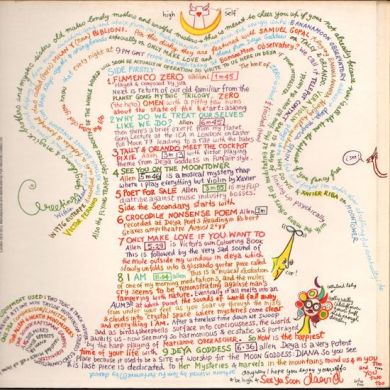
Any student of Gong and the Canterbury scene doesn’t have to delve far, when following the history of the genre, before stumbling on references to Mallorca, or specifically, Deià, a small village on its west coast. In my case the introduction to Daevid Allen’s  solo work was the 1977 album ‘Now Is The Happiest Time Of Your Life’, complete with flamenco intro, a track called ‘Deià Goddess’ and a drone named ‘I Am’, announced via a mule’s plaintive bray recorded outside Daevid’s then residence. It remains one of my favourite albums (see here).

now is the happiest back cover.jpg

Back cover to 'Now Is The Happiest Time Of Your Life', Daevid Allen

Deià was not only the village where Daevid, Kevin Ayers and Lady June had houses at various points, but it was home for significant early sabbaticals for Robert Wyatt and Didier Malherbe in the Sixties, and the place Richard Sinclair headed for after the break up of his relationship and Hatfield and the North in August 1975, an episode chronicled in detail in an interview in Facelift Issue 10. Somewhat more recently Deià was also the place Ultramariners Paul Hammond and Ian Cooper gravitated towards in the early Nineties following the receipt of their advance for ‘United Kingdoms’ (an album on which they collaborated with Robert Wyatt and Jimmy Hastings), giving up their day jobs to do so. Once in the village they met Lady June and were directed to Kevin Ayers’ house, a meeting that led to their collaboration on the reworking of Ayers’ song ‘Hymn’.

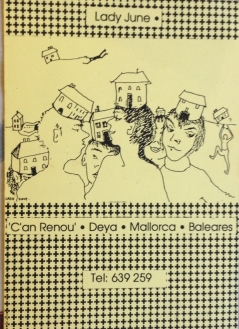
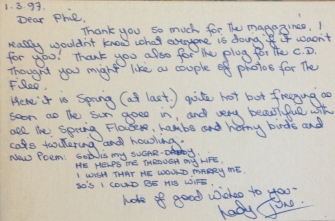
img_1365-e1534792043245.jpg

img_1366.jpg

Postcards from Lady June, mid 1990s

Completely coincidentally, I have an indirect personal connection to Mallorca. My partner Georgina used to live on the island in the early Nineties and her daughter Rosana was born there. Soon after we met in 2005 both disappeared off to the island for the summer to stay with Rosana’s father, Miguel Angel, and I had the chance to go out too. A hire car enabled us to attempt a somewhat ham-fisted pilgrimage to Deià, where the intense heat drove us into a terraced café that would later host Kevin Ayers’ wake, followed by a quick stumble down what turned out to be the ‘Clot’, which housed both Allen’s and Ayers’ abodes, before ending up down at the Cala, a windswept and refreshingly undeveloped beach. Despite being largely unaware of these details at the time I vowed to return to explore properly, but the nearest I got to this was in 2016, when the onset of a serious illness scuppered the chance of visiting the island again on the day we were due to fly out.

In the meantime, the resurrection of my interest in writing about the Canterbury scene in 2016 coincided with me tracking down a book called ‘Tuning Up At Dawn’ by Tomás Graves. Tomás is the son of novelist Robert Graves, and like many of his siblings is also a writer, having published several books including Bread and Oil, regarded as an authoritative examination of Mallorcan and wider Mediterranean culinary traditions and cultural change. He is also, as we’ll see, a musician, as well as a publisher and printer. Prior to Tomás’ book, the main sources of information about the Canterbury/Deià connections were primarily Daevid Allen’s autobiographical ‘Gong Dreaming 1’ plus various newspaper/magazine articles (including some in Facelift). ‘Tuning Up At Dawn’ is a holistic assessment of musical history in Mallorca, but which includes as its first two chapters an account of the author’s early years growing up in an environment receptive to the influx of bohemian emigrees, and then more specifically examining those from the Canterbury axis. Without trying to spoil what should be an essential item on the bookshelf for all readers of this blog, there are nuggets in there about what the initial connection with Canterbury was, and a nickname for Robert Wyatt by which he was known to the Graves family during his first extended stay, alongside some of the more familiar accounts regarding the Daevid Allen’s original ‘seed vision’ which sparked the whole Gong mythology, and the story of Softs benefactor Wes Brunson, the original ‘Stoned Innocent Frankenstein’.

tuning-up1.jpgimg_1364-e1534792266703.jpg

By another coincidence it turned out that Tomás is a neighbour of my stepdaughter’s father Miguel Angel, and mutual friend of several of my partner’s old associates and friends from Palma nearly 30 years ago (including an artist called Eli Sanchez, who recalls being a dancer at a Kevin Ayers/Daevid Allen gig on the island as a 14 year old, at an event we dated as probably 1975). And so I set up tentative plans to meet Tomás should the opportunity arise once in Mallorca.

In our extremely humble abode, a barely converted shepherd’s hut, in blindingly close heat (our task was to look after an enthusiastic dog with a penchant for identifying our children’s sandals as surrogate dog toys – local shoe-selling market traders benefitted as a result) we spent happy days on the beaches at Cala Mondrago, Es Trenc and Cala d’es Mor, and baked-out evenings looking up at a vast, starlit sky, enjoying the first of the season’s shooting stars, listening to the music emanating from across the fields from Porreres, which was ‘in fiesta’, part of a competitive inter-town phenomenon which Tomás describes in his book.

Having acclimatised to what would be our surrounds for the next 10 days, we had another stab at discovering Deià. This was an hour’s worth drive up on the north west coast of the island, nestled within an imposing mountain range above the cove. Despite what appear to be some fairly major traffic-easing infrastructure upgrading, including a colossal tunnel north of Palma through the mountains to Soller, even I could tell that Mallorca was busier than 15 years or so, and one result of this was that on arriving in Deià, and just beyond la Casa de Robert Graves, now a tourist attraction, we found that the road to the Cala was subject to a police road block, apparently as the result of the new-found popularity of the restaurant which provides the portal to the beach on account of it being one of the locations for the recent massive TV hit ‘The Night Manager’.

me and george.jpg

Georgina and myself, outside the Bananamoon Observatory, Deià

And so we parked up a little closer to the village, and, it being lunchtime, headed for a shaded spot to cool off. After an excellent lunch at Sa Font Fresca we wandered down the neighbouring ‘Clot’, the narrow lane which meanders towards the Cala, safe in the knowledge that Daevid Allen’s old residence, the second ‘Bananamoon Observatory’, would be the last house we’d find (just in case we were also armed with various identifying pictures of its glorious bouganvillea, courtesy of a post from Brian Abbott). Brian had also told us that Lady June had lived in the flats somewhere to the left – it was from C’An Renou that I’d received a whole host of postcards, tapes, artwork, her trademark calendars and entertaining correspondence at various points in the 90s. In amongst the odd café, the Deya Archaeological Museum and various quaint and characterful cottages, one of which sported a huge whalebone in its tiny garden, we would have also passed Kevin Ayers’ old house – something to check out next time, maybe.

bananamoon

Looking beyond The Bananamoon Observatory, Deià to the church on the hill

From the ‘Observatory’, through the magnificent flora, it is just possible to see the church, occupying, as is almost always the case with Mallorcan ecclesiastical settlements, pride of place and imposing its image on all that it looks down upon. Here, we had been led to believe, was a graveyard where various luminaries were buried, although a quick Google search revealed that the local cemetery was in fact at neighbouring mountain village Valdemossa, casting temporary doubt as to whether we would definitely find what we were looking for. A tiny graveyard, almost an afterthought alongside a fairly substantial church, initially did not reveal what we were looking for, although I did muse as to whether the Biblioni family plot had any connection to guitarist Joan who performed the magnificent Flamenco Zero on the aforementioned Daevid Allen album.

ayers.JPG

Kevin Ayers headstone, Deià churchyard

Then in a far corner, looking back on the village, we found a stone dedicated to Juan Graves, author and brother of Tomás, alongside that of their mother Beryl, Robert Graves’ second wife, and then down a short set of steps, a more ‘bohemian’ corner containing plaques for Kevin Ayers, his long-time guitarist Ollie Halsall and artist Mati Klarwein, amongst other colourful commemorations containing names I didn’t recognise. Others looking around the graveyard appeared also not to be there by accident. Ollie Halsall’s stone has two guitar dials attached to it, although one is currently missing, it would appear.

I’d contacted Tomás on our arrival in Mallorca, hoping to fix up a meeting – he’d suggested that we come along to his fortnightly gig at a restaurant in another central Mallorcan town, Campos, and have lunch together, towards the end of our stay, which was greatly looking forward to. Then, thanks some unwitting miscommunication from our part, we were cooling off back at base after a day out at the beach a few days after our Deià, and a car pulled up containing none other than Tomás Graves!

Tomás turns out to be an understated but extremely convivial man in his mid-Sixties (he is the youngest child of Robert Graves, fathered as the author approached a similar age). Born and bred in Mallorca (although some of his schooling was in the United Kingdom) he is passionate about Mallorcan tradition, food and culture in all its forms and a proponent of social justice more widely. It may have been the twinkle in his eye, but he reminded me slightly of satirist Peter Cook, albeit a somewhat leaner version… The impromptu visit was probably the best environment in which to speak to Tomás – he admitted the chapters in ‘Tuning Up At Dawn’ were very much anecdotal, rather than a posthumously researched chronology – as a young teenager in Deià when Robert Wyatt and then Daevid Allen arrived in the village the passages he writes in his chapter ‘The Road From Canterbury’ are the recall of someone who grew up with these exotic external influences as normality.

sheep hut 2.JPG

In conversation with Tomás Graves, Porreres, Mallorca

Conversation developed organically, as likely to veer off into discussions of his mutual connections with my partner Georgina, or a general commentary on Mallorcan culture, as much as pandering to my own Canterbury trainspotting needs. But we did talk about Didier Malherbe – how he’d turned up on in the village on his motorbike having travelled from Paris. Tomás still has a Cine8 film of his brother (Juan) and Didier larking around by the sea which he later sent me a copy of.

We talked of him witnessing Didier teaching himself the flute perched on the horizontal bough of a carob tree and the development of the sheep hut in which he lived within the Graves’ land, and Tomás later accompanying Didier, Gilli Smyth and Orlando Allen on bass when they performed at the Hay-on-Wye literary festival as it briefly decamped to Deià in the mid-Noughties. Of Lady June and her tiny flat in Deià which consisted of barely two rooms, one of which was stuffed full of her artwork, but which nevertheless appeared to always be crammed to the rafters with party-goers. Of doing his O Level Media project (over in England) and being able to choose for his resources back in Deià no less than Daevid Allen himself and his huge stash of International Times; being sent the ‘Love Makes Sweet Music’ single in a brown paper wrapper decorated by Daevid’s handwriting and pre-Gong drawings of his Captain Capricorn figure.

We also talked of Richard Branson’s relationship with Deià and the island, and hotels changing ownership as much as a consequence of dissolving personal relationships (some involving musicians) as of business sense. Of his first hand experience of Mati Klarwein’s construction of his huge artwork masterpiece ‘Annunciation’ which was later shrunk to form the album cover for Santana’s ‘Abraxas’. We also talked about Tomás’ plans to film a documentary about Kevin Ayers, his life in Mallorca and related topics, currently thwarted because a. Spanish television companies approached do not regard the subject matter ‘Spanish’ enough and b. because of the exorbitant price of re-screening archive video clips demanded by the appropriate record companies with who copyright resides.

Tomás has a keen personal involvement with music on the island which informs his writing – and is best known for his longtime involvement (on bass) with the band Pa Amb Oli  (which provides most of the original Catalan title of his first book) but actually trained formally from the age of 7 with Bartolomé Calatayud, the Dean of classical guitar in Palma. He is a much called-upon guitarist for various projects: he cryptically mentioned that his band just recently been asked to provide backing band for what he called a ‘karaoke’ project for various visiting musicians, with a cast that has since been revealed to include Bobby Gillespie of Primal Scream, Bob Geldof, Damon Albarn and Paul Simonon, on the occasion of the 50th birthday party of the latter’s wife – the deal was that Tomás and co would choose the songs and the guest musicians would provide the vocals.

trkl.JPG

Tomás con Gas: Steve Lambert, Gus Pollard, Tomás Graves - Ca'n Serraller, Campos

The gig we eventually saw on Saturday was an extension of his Tomás Con Gas duo with singer Gus Pollard, now augmented by guitarist Steve Lambert. Gus and Steve have personal connections to Daevid Allen and Kevin Ayers respectively which I won’t go into here. Under more baking sun, and accompanied by the best food on the island, the threesome worked through 3 sets of approaching an hour each, encompassing an eclectic and comprehensive mix of folk and blues covers from Little Feat to John Martyn via Curtis Mayfield, a meticulously arranged and performed set, featuring a wonderful voice (Gus), some fine picking (Steve) and accompanying guitar and harmony vocals from a very assured Tomás. A joy to behold as the musicians sang for their dinner and more.

gus and tomas 2.JPG

Gus Pollard, Tomás Graves 

This was almost the perfect way to finish our holiday before we left the next morning: a fantastic meal set against a most agreeable musical backdrop, and further vignettes of Mallorcan life shared as the day wore on. And more than a hint that this might not be the end of the story…

all4.JPG


Kozfest 2018

If the only certainties in life are death and taxes, then the only givens at a Kozfest appear to be that a. that at some point you’ll hear ‘The Glorious Om Riff’ being performed on site and b. you’re likely to get passed every few minutes or so by someone wearing a ‘Camembert Electrique’ T-shirt.

As a veteran now of the last three Kozfests  I’d like to add a couple more: c. you’re likely to see Mike Howlett and Graham Clark popping up in guest capacity with numerous bands; and d. you’re going to get covered in orange clay dust following a torrential downpour.

Precisely what Kozfest – A Psychedelic Dream Festival is to you depends on your own personal take: despite the festival capacity being a relatively tiny 500 it takes on many forms. For many it’s a grungy post-Hawkwind vibe, with low-slung basses and leather-clad outfits; for others it’s a chance to fraternise with other grizzled survivors of the free festie movement. You can add into the mix in 2018 a new element: a doomy psych feel  as demonstrated by Saturday headliners, the Cosmic Dead, all flailing hair, dark clothing and unrelenting barrage of noise with few chinks of light permitted.

cosmic dead.jpg

The Cosmic Dead

For me, this time around, the Kozfest experience was partly about mingling – the more you go to Kozfest the more connections you appear to make. My 9 year old son came away with a more rounded musical education than me, and I’ll unashamedly admit that in between having a bloody good chat with familiar faces such as Jonny from GAS and Shankara Andy Bole, and making some lovely new connections with Gong violinist Graham Clark and Invisible Opera Company of Tibet luminary Brian Abbott, that my own musical landscape was dominated by those numerous Gong connections which have always drawn me to the festival. I’ve described Kozfest’s unique winning formula in terms of its setup and scheduling when reviewing previous editions, so please refer to them for a fuller flavour than what is written here.

with graham clark.JPGbrian-abbott-e1534278282725.jpg

The author, Graham Clark, Brian Abbott

I’m afraid to say that in amongst my own general mayhem I missed out on seeing previously loved Kozfavourites Deltanaut and Beastfish (whose keyboard player and good friend Mick West, died earlier this year), and caught only snippets of the splendid Deviant Amps, old punky faves Back to the Planet, the folky festival uplift of Flutatious and the band of star bass player Tom Ashurst (he of last years Ozric pop up band, but this year reinvented as a startling guitar soloist with UBOA). I only heard what sounded like a splendid Mugstar performance through the trees from my tent in the Friday headline slot and had left camp complete with soggy gear before Kangaroo Moon and Ed Ozric’s Noden’s Ictus headlined on Sunday night, but for what I did see, well here goes…

mick west

I’d been most excited by the appearance of Canterbury’s scandalously hidden secret Lapis Lazuli, and I was not to be disappointed. I don’t know if by Sunday evening Kozmic Ken was still of the opinion, expressed after their set on Friday, that they’d been the best band of the festival, but I certainly was. This extraordinary quartet of musicians had the confidence to perform an hour’s worth of entirely new material, and they were certainly like nothing else on the bill. Kozfest prides itself on its ostentatious display of the full gamut of psychedelia: be it spacey drones, bubbling keyboards, or driving rhythms interspersed with guitar heroics. But Lapis Lazuli peddle something rather different, and I go back to drummer Adam Brodigan’s take on psychedelia aired at the Canterbury Sound day last October: to bombard the listener with so many ideas, changes and effects that the listener is transported somewhere else entirely during the course of their set.

lapis .JPG

Lapis Lazuli

Generally Lapis tracks clock in at around 20 minutes, although there are so many twists and turns that they might get through 10 distinct themes in that time. In fact, for what will be their first album without saxophonist Phil Holmes, they managed to race through a good 8 or 9 different tracks,  but unlike their performance in Canterbury, where they replaced Holmes’ lines with midi’d effects, mainly through the guitar, here the overall sound was more of a guitar power-quartet, tuning into a myriad of styles, the most prominent of which is funk. It’s also a band that appears almost without ego: four very gifted musicians pulling together consummately in weaving their way through a mesmeric, tightly written series of compositions.

lapis neil.JPG

Neil Sullivan, Lapis Lazuli

At times the gear shifts are so complex that one can only laugh out loud at the absurdity of it all. A nominal front man might well be Luke Mennis, by far the youngest of the quartet – the Lapis may get through their fair share of bass players, but they are all ridiculously talented: Mennis adds a certain visual presence through an engaging hyperactivity. If I can’t quite describe Lapis Lazuli’s music then that’s in one part testament to their own bloody-mindedness in defying categorisation and in another proof that Brodigan’s vision is being achieved: you are spat out at the end of a set not entirely sure what’s happened, except that an awful lot has. I can’t quite believe this band were off my radar until less than a year ago – each of their 4 albums to date has been stunning, and No 5 sounds like it will be maintaining their own exemplary standards.

lapis band.JPG

Lapis Lazuli

On arriving on site on Thursday night, we’d headed up to the festival’s main drag, not expecting to witness anything in particular (the music doesn’t start until midday on Friday) but ended up not just watching an old Jimi Hendrix concert on screen  in the tiny Wallys Tent (more of which later) but also talking to various luminaries in the GAS tent. One, I realised later was none other than Basil Brooks formerly of Zorch – it turned out that he was due to play on Saturday in a band calling themselves Yamma – this had the stellar line-up of Cary Grace (American singer and synth player who has appeared in various guises in the last few Kozfests, notably in 2016 with Steffe Sharpsrings on guitar), Brooks, Graham Clark (on guitar) and Mike Howlett. An impromptu supergroup if ever there was one.

yamma.jpg

The Yamma effect!

A mid-afternoon set saw the crowd in Judge Trev’s tent in chilled out mode and the sounds initially reflected this: building layers of keyboards, effects, the WX7 of Brooks (an instrument I think I’d last seen Didier Malherbe play in the 90s) and subtle guitar themes under Howlett’s hypnotic bass lines. This moved on in the last third or so of the gig to a memorable blues based piece which brought out the best in Cary Grace’s vocals, with some superb inflections, as well as some outstanding touches from Clark’s guitar – this was high class work and I was surprised to hear later that this quartet was a pop-up band working their way through material together for the first time ever, all in an live environment too.
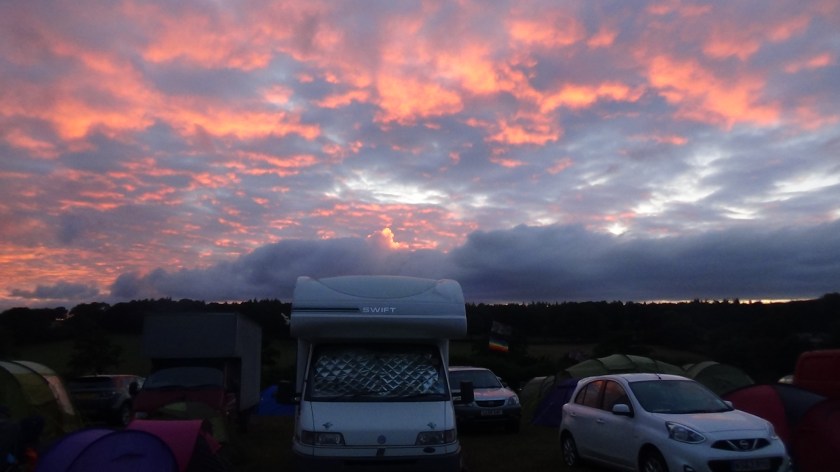
cary grace.jpg

Cary Grace, Yamma

The rest of Saturday drifted past, kids were put to bed, and just before midnight I found myself wandering back up to the site hoping to catch Shankara Andy Bole’s interpretation of ‘Nosferatu’, something he’d performed last year, but which I’d missed. This was staged in the aforementioned ‘Wallys Tent’, capacity around 20, most of whom were horizontal. Thanks to gremlins the actual film never cranked up, despite various scurrying about by others off-stage, leaving Andy and right hand man Brian Abbott to perform an hour-long continuous piece based on triggered loops from the Bole guitar, with additional themes and treatments.   Andy Bole has an extensive back catalogue of material, most of which I am not (yet) familiar with, but what I can tell you is that he crafts universally beautiful music with a glorious sense of space and imperceptible changes in direction. He is also renowned as a bouzouki player and whilst I don’t think this made an appearance during the set various nods to its tuning were exercised. I haven’t ever watched Nosferatu, but am passingly familiar with the story: what was surprising was that the music was uplifting rather than doomy or terrifying – the duo admitted later that they’d gone off on a completely different tack than intended: whether this was as a result of the lack of visuals wasn’t clear. Whichever way, the result was sublime, and alongside the Lapis Lazuli gig a clear highlight of my Kozfest 2018.

Kozfest-400x_center_center.jpg
A ripple of anticipation went around the Planet Gong and Kozfest Facebook groups when the line-up for Sunday’s Judge Trev tent went live, showcasing as it did a whole host of Gong-related acts: The Glissando Guitar Orchestra, Sacred Geometry Banned, Magick Brothers, Invisible Opera Company of Tibet and Kangaroo Moon, punctuated by the Gong-ish Sendelica and the more folky Flutatious in mid-afternoon. I missed the first two bands: the Glissando Guitar Orchestra, based around the Seven Drones recorded by Daevid Allen are the perfect Sunday morning tonic after a hard Saturday night’s partying and were quite a spectacle when I saw them in 2016. I’m still not entirely sure about the make-up of the Sacred Geometry Banned who I’ve managed to miss every time at Kozfest (we were packing up our tent at the time), but based on the excellent quartet of Sacred Geometry albums going under the banner of Microcosmic, the band presumably also set out a spacey template for their audience to chill out to. When we finally arrived on site, it was in time to see the wonderful Magick Brothers, sadly reduced to a duo since the death of Daevid Allen but today augmented by various guests.

clark-howlett.jpg

Magick Brother Graham Clark

Magick was indeed the word to describe my first live viewing of ‘Why Do We Treat Ourselves Like We Do’, the opener from my favourite Allen solo album ‘Now Is The Happiest Time Of Your Life’, superbly sung here by Mark Robson over his own piano accompaniment. Other superb renditions followed of Robson’s interpretation of ‘Wayland Smithy’ the perfect vehicle for both his penny whistle, probably his finest suit, and Graham Clark’s virtuoso violin. Other tracks included ‘Herbaceous Border’, plus a fiery version of the road protest song which I recognised but can’t at this minute put a name to, complete with apology from Robson for ruining the peaceful Sunday afternoon vibe, and, blessed be, ‘Wise Man In Your Heart’ replete with its trademark bassline performed by the bass player from the original version on ‘Good Morning’, Mike Howlett. Brian Abbott also appeared on guest guitar for the Brothers – of the many gigs I’ve seen by this band, this performance was my favourite…

mike-howlett.jpg

Mike Howlett guesting with the Magick Brothers

And so, finally (for me), the Invisible Opera Company of Tibet. If the Magick Brothers carry forward the Allen acoustic vibe, then the Invisibles rock it up. I didn’t see the full set as we were in a queue for food and listening from a distance, but the way my son shot off into the tent told me that the Om Riff was getting its final incarnation of the weekend as the Invisibles joyously rumbled through ‘Master Builder’ with an extended line-up including Andy Bole, Mike Howlett and Graham Clark. I think by this point they’d already performed ‘You Can’t Kill Me’ but thankfully I was witness to a triumphant finale, a rousing version of ‘We Circle Around’ and finally, courtesy of a manic cameo from Tim Hawthorn on vocals, ‘Bad Self’ from the ‘Jewel in the Lotus’ release. A great finale to our festival as we said our goodbyes, admired the sunset and watched others doing the same, then rather misguidedly hit the road before Kangaroo Moon in order to ‘miss the traffic’ on our way back up north. Two hours surveying the centre of Stafford in all its minutae at 2 in the morning allowed to reflect at our leisure as to quite what a poor decision that had been….

looking at sunset.JPGsunset.JPG

All photo credits Anne Roberts & Georgina Filby


Gong at Beatherder Festival, Friday the 13th of July

gong promo

A couple of years ago, whilst teaching in a secondary school in North Yorkshire, I was struggling a bit to convince a group of disengaged 15 year olds that IT and Computing might be where it was at in terms of their education. In a brief moment of clarity, I devised a task to create a website for a fictitious music festival of their choice. The students decided this would be based loosely around the Beatherder festival, located a few miles down the road over the border in Lancashire. Beatherder had been on my radar several times over the last decade, mostly through my stepdaughter Rosana (below), who’d graduated from being a punter there in her teenage years, on to an inspired but ultimately unsuccessful attempt to win a photo competition for tickets (by posing on the local rock outcrop the Hawkstones sat on a toilet which had been inexplicably concreted to said rocks 350 metres above sea level a few decades back), to this year helping to launch the festival on the main stage as a member of bonkers and monstrously loud 30-strong percussive Hebden Bridge outfit Drum Machine.

phil rose drum machine.jpgFor me, I’d tended to avoid Beatherder like the plague, precisely because it appeared to be something of a coming of age festival for younger residents of most of the neighbouring Northern mill-towns, all of which seemed to empty of youth over the relevant weekend. And also because of the very real prospect of bumping into students whilst we were collectively letting our hair down, so to speak.
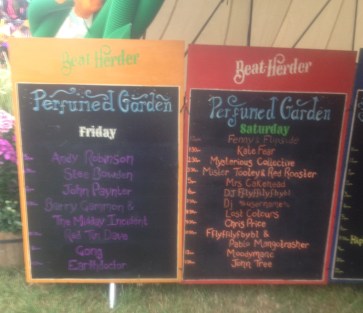
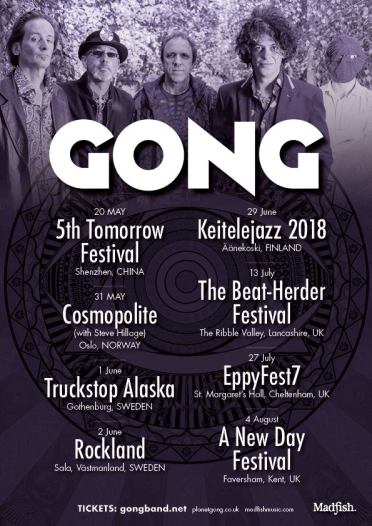
So, how did I find myself at Beatherder 2018, you might ask? The simple answer is courtesy of Gong, who somewhat late in the day were announced as headliners for the ‘Perfumed Garden’ stage, a relative oasis within the general melee of the festival at large. Beatherder is well named, a systematic rounding up of likely types with a mission to pummel them into submission through various degrees of dance-based electronica (if various other excesses didn’t get to them first). In amongst 10 or so stages of varying ferocity (the ‘Fortress’ and the ‘Factory’ looked particularly scary), it was rare to catch anything resembling what might class as conventional instrumentation in amongst the knob-twiddlers and DJs. Or at least that was the case beyond the main stage, which (and I’m showing my age here) was also the only stage to display billings which meant anything to me – with Morcheeba, Orbital (who looked to be a class above most other things at the festival), and, ahem, S Club 3 all appearing. In addition, during the course of making an arrangement for Saturday, I’m fairly sure I uttered a phrase I have never said before in my life (nor am likely to ever again), namely “I’ll see you at Boney M”.

For all the said ferocity of the music, the general vibe was pretty convivial, if a little full-on – I’d been expecting plenty of lairyness, but given that it was impossible to wind down any time before dawn due to the ongoing onslaught of beats, I was up and about long enough presumably to get a bona fide warts-and-all impression. What was definitely the case was that at a particular point on Friday evening, in the run up to midnight, a certain ‘type’ of punter started drifting towards the Perfumed Garden. Whether they were aficionados, Gong-curious, or purely accidental tourists, this domed tent, with its own chill-out café room adjoined,  filled up rapidly, increasing tenfold from the previous act, a rather excellent  and questioning funk-based outfit called Barry Gammon and the Midday Incident.

gong bill

A brief chat with a few of the band members prior to the event revealed that the band had only left London in the early afternoon, been held up inevitably on our creaking motorway system and had just enough time to soundcheck and down some snap before their witching hour appearance. Launching into ‘You Can’t Kill Me’ and following up with ‘Kapital’, there was no better evidence that they now seamlessly switch between the new and the old, sequencing tracks composed 45 years apart with  gusto, spike and menace, Kavus Torabi tossing his wild hair and flashing his eyes around the tent to welcome all and sundry to the fold. The 2016 album ‘Rejoice, I’m Dead’ has now been around for long enough to allow a sober assessment of its merits beyond any initial euphoria about a new Gong release, and in my opinion still represents arguably the band’s finest moment since the Trilogy era – only ‘Zero to Infinity’ comes close. That was reflected tonight in a set list that contained 3 tracks from it, (plus ‘Eternal Wheel’, Fabio Golfetti’s contribution to ‘I See You’, the album this line-up made their collective debut on with Daevid Allen. )

By accident or otherwise (Gong’s normal sound guy was absent tonight, as was their mindboggling light show), the ‘in-house’ sound tonight was VERY beat-heavy, allowing Dave Sturt’s bass to thunder as never before, whilst Cheb Nettles’ polyrhythmic drumming also enjoyed a sharp focus. Ian East’s sax also cut through the dense mix at times, but the uninitiated might not have realised what guitar heroics they were missing, particularly on ‘Rejoice!’, not only on the stupendous double guitar solo which for me was the highlight of the last album, but also in the introductory call-and-response section with sax which was reduced in the sound mix to only half its normal impact.

gong perfume

But these anomalies were only probably (train)spotted by us purists – this band have a unique ability to transcend pretty much anything around them with their renditions of two Gong classics, ‘Master Builder’ and ‘Selene’. The former is currently enjoying arguably its best incarnation, with an extended and evocative crescendo, buoyed by Torabi’s alternatively subtle inflections and crashing chords on guitar, even before the band reach the ‘IAO’ chant in 5-part harmony. ‘Selene’ was simply mesmerising, also elongated and appropriated for this band’s dronish version – this one really did take me somewhere else entirely… And, most unexpectedly, the band performed a quite stunning version of the riff from the first track on Steve Hillage’s ‘Fish Rising’ – Fabio Golfetti later revealed that this had been chosen because it had previously been on the Gong set list not long before Daevid Allen imploded the ‘You’ line-up in the mid-Seventies.

The band finished with ‘Insert Your Own Prophecy Here’, fast developing into an anthem for this particular band. This is a far from flawless composition but it has some truly memorable moments, firstly where the guitars of Torabi and Golfetti alternate chords in a striking passage, then gloriously when drummer Cheb Nettles adds his falsetto scat singing to the final theme. Whilst the crowd had thinned a little towards the end of their 90 minute set, festival crowds being more transient than your regular gig crowds, the band were fabulously received, as they fully deserved (although I was asked during ‘Selene’ by one audience member if the band really were singing about sardines (!), whilst another punter never really quite got over Steve Davis being in the audience, making something of a show of himself in the process – the punter that is).

Chatting to the band afterwards, it was revealed that there are some very welcome developments – whilst there has been no major tour this year, the band have played at a choice selection of festivals far and wide: most notably in Finland and China. There are a couple of UK festival dates to come in Cheltenham and Kent, before tours in Japan and Canada later in the year with Steve Hillage on board`. Even more excitingly, the band are currently writing new material, to be recorded as an album in November, hopefully to come out in 2019 (with gigs to follow?). Part of a new vocal line had been sneakily tried out during ‘Prophecy’, Ian East later revealed.

gong gigs.jpg

Whilst the bulk of the band hit the road back down to London in the wee small hours, Kavus Torabi stayed on with Steve Davis to perform one of their eclectic DJ sets 24 hours later on site, by which time I’d long since retreated back to home comforts. But not before accidentally bumping into one of those scholars mentioned at the top of this review during a relatively benign drum and bass gig on the main stage. He looked at me in sheer consternation, jaw dropping to the floor, as he blurted out “What are you doing here, sir”, before scuttling off, perplexed, into the safety of the masses… Proof that education does occasionally have its place…

20 albums that changed your life – Part 3

Between 1985 and 1989 I lived in Victoria Park/Longsight in Manchester, within half a mile of two major alternative gigging venues, the International and the International 2. Over those years I saw a number of my heroes, including Peter Hammill, Robert Fripp, Gong Maison, Here and Now, Ozric Tentacles and Loose Tubes, the amazing 20-strong young turk British jazz big band, three of were playing with Bill Bruford. In the very early days I was also lucky enough to see many local bands there for nowt thanks to an enlightened policy to allow up and coming bands to showcase there on a Monday night. A mile in the other direction was the University of Manchester Students’ Union which had 2 (later 3) venues and simultaneously at weekends put on a variety of gigs. I remember one particular season where a series of bands went out for £1.50 a go, including then indie-darlings The Primitives as well as the more grebo-oriented Pop will Eat Itself and Gaye Bykers on Acid, which did little for me but were as close to my own more psychedelic tastes as it appeared to get. My tastes were still narrow enough to be at many gigs mainly as a result of mates’ interests rather than my own (and that extended to many a good night at the Boardwalk, an embryonic indie venue just off Deansgate). The Band on the Wall, where I frequently went to sparsely attended jazz gigs on a Thursday night, usually bringing down the average age by 30 years, was much more my musical cup of tea.

drop.jpg

Anyway, once more in the company of housemate Joe, I remember attending a ‘Christmas Ball’ at the University, no doubt in the company of a largely comatose beer-swilling audience, and being unexpectedly poleaxed by a Scottish band neither of us had previously heard of. Intermittently illuminated by a fierce strobe light show, this crew-cutted, polo-necked quartet, all monochromatically dressed (although I can’t remember whether it was in black or white) chugged out a buzz-sawed, reverb-heavy sound entirely irecoil.pngn keeping with the bewildering light show behind them; the aural assault softened by the beautiful harmonies of the two lead men Derek Mackenzie and Colin Angus. This was The Shamen, playing material from ‘Drop’, and was finally the psychedelic music I’d been waiting to hear live. Joe was similarly blown away – around this time he had started or was thinking of starting his fanzine ‘Recoil with fellow housemate Gav.

The Shamen were filed away as people he wanted to interview, and whether by design or otherwise, the next time the Shamen came to town, they ended up staying en masse in our grungy 7-bed house (there was no living room), finding space on the floor around the drum kit at the end of Joe’s bed. By this time Derek had left the band, leaving brother Keith on drums, Pete Stephenson on keyboards and  Angus, with  Will Sinnott having joined on bass. The Shamen were also by this time starting to experiment with house rhythms through existing instrumentation, and through their regular visits to Manchester over the next few years, we got to experience their controversial video backdrops, their music which was slowly morphing into electronica, their altering consciousnesses, and changing line-ups as all original members bar Angus dropped off. I’d moved out by the time the band had started to get popular acclaim with ‘Move Any Mountain’ and later ‘Ebenezer Goode’ and looking back at the stuff which followed ‘Drop’, it sounds very much caught between two stools, but being in the thick of it at the time was so exciting. ‘Drop’, meanwhile, is a much more consistent album, classic psychedelic pop with two fine voices and some superb songs, amongst them ‘Strange Days Dream’, and the anti-Falklands war anthem ‘Happy Days’ – I return to it often.

wizards

Between 1990 and 1993 I worked full time at a free Manchester entertainments newspaper, Up Town, which was lucky enough to be in circulation right through the ‘Madchester’ phenomenon and was underpinned by dubious ethics in terms of in-house professionalism whilst providing an outlet for a whole army of volunteer writers and photographers. My job here wasn’t actually as a journalist, and in any case the music covered was more likely to be the Stone Roses (whose first ever interview appeared in the newspaper) and Happy Mondays but thanks to one particularly progressive editor, I managed to squeeze in interviews with Dagmar Krause, Peter Hammill, Courtney Pine … and the Wizards of Twiddly. The latter were a ubiquitous presence in Manchester and Liverpool at the time, their daft name and gaudy graffiti-like posters arousing mine and others cuwizards tshirt.jpgriosity, accentuated by the appearance of a demo cassette ‘Kitchen Sounds’ at the Up Town office. And that was all it took to be totally sold on the band – ‘Independent Legs’, followed (I still have the T-shirt – in fact I wore it whilst cycling the length of the country a few years back) and I saw them all over the show for the next 10 years – PJ Bells in Manchester was a regular haunt (although I have no recollection of the gig interrupted by the Fire Service described here), The Witchwood in Ashton, St Helen’s Citadel, Glastonbury, Sefton Park, then later a triumphant tour and series of gigs with Kevin Ayers where they did an hour of their own unfathomable material before backing Kevin for an hour of his. As for their music, well it was once described as “jazzy TV themes gone haywire, loon tunes about vegetables, yobboik punk numbers, outrageous guitar heroics and the most blissful sixties-drenched pop.” and I couldn’t have put it better myself… My favourite ever live band.

kava kava

Having shown a bit of interest in the Wizards and raved about them also in Facelift, I became unwittingly (and welcomingly) a repository for similarly off-the-wall music – I somehow got on the mailing list for the wonderful psychedelic label Delerium (which introduced me to the music of Porcupine Tree, Dead Flowers and Electric Orange), but also received cassettes from the likes of the Great Imperial Yoyo (‘Blink’ is a Camembert Electriquesque masterpiece), psychedelic dance pioneers Time Shard … and Kava Kava. I can’t remember the name of Kava Kava’s first cassette and no amount of Google searching will locate it. I did have a later CD version of it which was inside a car which got stolen a couple of years back (and I’m particularly gutted about that). All I can tell you is that it was unpronounceable and was subtitled ‘The Cosmic Wobble’ which is why there is a picture of their even more startling ‘You Can Live Here’ album here. In fact their last full album ‘Maui’ is probably their masterpiece. The band were a fearsome blend of initially messy guitar, hyperactive drumming, Pat Fulgoni’s unsurpassable blues voice (he later became a go to guy for drum and bass vocal samples), and killer funk rhythms which gradually got tighter as the band evolved. Quite why ‘Maui’ wasn’t an intergalactic success I’ll never know. I frequently scan gig listings (as I do with the Wizards) just in case they decide to reform – if they do I’ll be there..

guitar.jpg

For 5 years in the early Nineties I lived in another house share in Chorlton, Manchester with some of the same crew who’d lived in the bombsite we’d hosted the Shamen at towards the end of the 80s. Facelift was going from strength to strength, as was Recoil, and disparate sounds continued to permeate between the various rooms in the house. One such which grabbed me was that of The Guitar and Other Machines, introducing me to the work of the Durutti Column. The Duruttis (ostensibly a duo of guitarist Vini Reilly and drummer Bruce Mitchell) were the unlikely darlings of Factory head honcho Tony Wilson, unlikely in that they were so completely out of kilter with all other Factory acts, or indeed the entire Manchester music scene. Whilst Reilly’s gaunt appearance and well-publicised drawling, tuneless vocals might have have had some common ground with it, the music emanating from his guitar (and keyboards) was (and remained) something of such breathtaking beauty that every subsequent album became a ‘must buy’ whilst the prior catalogue was tracked down in haste. Reilly’s gift is as the purveyor of soaring, semi-classical works of religious intensity – ‘The Guitar’ is listed here because it’s the first album I came across, and like all other albums is a mixture of inspiration and flaws, but it is rather good, with the duo of tracks: ‘Bordeaux Sequence’ and ‘English Landscape Tradition’ amongst the most well-spent 10 minutes you’ll ever experience. I’ve been lucky to witness the Durutti Column in a selection of memorable Manchester locations: the Royal Exchange Theatre, Manchester Cathedral, and even in the splendid Whitworth Hall with the rays of sunset pouring gloriously into the venue, exorcising memories of some disastrous final year university exams in the same room a few years previously!

gravity.jpg

From a different time, genre and source comes Fred Frith’s ‘Gravity. At Facelift in the early 90s I was being sent not only lots of old newspaper cliippings which ended up as the Facelift ‘archive’, and tapes and CDs to review, but also, courtesy of like-minded and altruistic readers, various bits of music to intended to further my own musical education. If you follow the path through my own musical tastes, I had graduated from heavy metal to progressive rock, to experimental music, to jazz crossover – always wanting to go a stage further. I’d sort of reached a dead end with freely improvised jazz, whilst taking the step from Soft Machine to Henry Cow didn’t completely grab me. But somewhere in the middle was the tape sent to me of ‘Gravity’. Fred Frith’s unique guitar style, matched to some semblance of accessibility was embellished by a nod to European folk traditions, whether faux or otherwise. ‘Gravity’ is a standout masterpiece of extended instrumentation with a perverse twist on folk sounds, backed by a whole host of Rock in Opposition musicians including the Muffins and Samla Mammas Manna. The album opened my ears enough to check out a whole genre of RIO work, not least Frith’s involvement with the superb Art Bears trio (with fellow Cow-ers Dagmar and Chris Cutler), and the utterly bonkers Skeleton Crew with Tom Cora playing wonderful grating cello alongside a host of homemade instruments. This education continued with the likes of Nimal, Curlew, Samla, and more recently Iva  Bittova, which I’m sure was entirely the intention of the enlightened soul who sent me the cassette, whose identity I have unfortunately forgotten!


20 albums that changed your life – Part 2


In 1985 I moved to Manchester from my sleepy backwater in Derbyshire and became so engrossed by the buzz of the city, the music, the culture that I forgot to leave for the next 13 years. Manchester in the Seventies, Eighties and Nineties was all about a thriving gigging scene, and I certainly partook of this aspect hungrily, but just as (if not more) important was my own musical ‘education’, provided in a very large part by an extraordinary record library.

manchester record library.png


The Manchester University Precinct was open to the general public and at the time, lent out primarily vinyl (with a few cassettes). You could see it as at that time the physical embodiment of today’s scratch and sniff streaming culture – I’d leave there every few days with a bundle of records under my arm, take back to my university digs, transfer to cassette and peruse at my leisure. When I spoke at the Canterbury Sound day last October, I put together a collage of those albums which were purely the ‘Canterbury’ element of what I borrowed – an extraordinary collection in its own right. But I also explored existing interests such as King Crimson, Hammill/VdGG, Jethro Tull, explored some lesser known prog diversions and had my first delvings into contemporary British jazz. If I went down a few cul de sacs, so be it, at least I knew a bit more. I can’t stress how much of a privilege it was to have all of this music at ones fingertips – it shaped not only the next 3 or 4 years but opened up avenues for so many more…

thid

I can’t remember when I got hold of Third, but I am guessing it was within a couple of months of arriving in Manchester. It had been borrowed on the back of the Daevid Allen/Soft Machine connection – I was already a converted Gongfreak thanks to ‘You’, ‘Angel’s Egg’ and both ’77 live compilations. But ‘Third’ was something entirely different – austere cover, muted production, flattened sounds – this was ‘serious’ music. My best friend from school had gone off to work in Stockton on Tees for a year – I visited him during a week off, and without transport or much brass and in a freezing cold house, have an abiding memory of being huddled in front of a cassette player playing ‘Third’ on repeat. I didn’t initially ‘understand’ ‘Facelift’ as its dissonance was neither the primeval screams of Van der Graaf nor the considered deconstruction of Fripp, and ‘Moon In June’ was entirely outside my comprehension at first in terms of what vocalists were meant to ‘do’, but I was soon converted. Reams have been written about ‘Third’ elsewhere, not least by myself, but I can still pick it up any time I like, immerse myself in it and still be totally enthralled – my number one album still.

over

I’d arrived in Manchester with Peter Hammill’s ‘Enter K’ on cassette, and after having already tracked down most of the VdGG albums previously, I could have been excused in believing that the Hammill solo ego was an inferior parallel project. The first few albums I heard, all mid-Seventies VdGG-fallow period (‘Silent Corner’, ‘Chameleon’, ‘In Camera’) quickly started to suggest more depths, but ‘Over’ from slightly later on bowled me over. This is a ‘concept album’ in as much as all its songs (‘Autumn Song’ excepted) are on the same theme – the utterly consuming break-up of a relationship and I totally tuned into its vibe years before I could truly emphasise with its content (when I did, I found the album unlistenable). It also benefits from a higher than normal quotient of guitar-backed songs, for me, Hammill at his finest: ‘Alice’, ‘(On Tuesdays She Used To Do) Yoga’ and the totally nihilistic ‘Betrayed’. Every song on ‘Over’ is a minor masterpiece, from the punky opener ‘Crying Wolf’ through to the sliver of hope offered by ‘Lost and Found’, set as the morning after to the VdGG track ‘La Rossa’, where the author had contemplated the consummation of a platonic friendship. For years ‘Over’ was my favourite album, it’s still very high up there, and a delight to hear ‘Yoga’ performed live just a month or so ago.

larks tongues

The appearance of ‘Larks Tongues In Aspic’ may not be a surprise to anyone with a smattering of knowledge about music in the progressive/experimental sphere. I’d heard Crimson first at school, when a classmate with elder siblings old enough to have witnessed the 70s prog explosion first hand had recommended. Having bought ‘Three of a Perfect Pair’, at that point a new release from local record emporium ‘Hudson’s’, I’d been a bit perplexed – was this prog? It seemed more ‘new wave’ to me, and even wilfully weird – for the moment I only really ‘got’ ‘Industry’, a precursor to later interest in the likes of Bourbonese Qualk and 23 Skidoo, who were part of the ‘industrial’ wave of the Eighties. But at least it got me going: most of the rest followed quickly from a new resource (see below), favourites being ‘Discipline’ and the wonderfully experimental ‘Starless and Bible Black’ but the best was ‘Larks Tongues’, brimming with tightly orchestrated dissonance, killer riffs and beautiful melodies. A toss up between ‘Easy Money’, with its unparalleled guitar solo and ‘Part 2’ for the highpoint. Another credit too for Bill Bruford, who would continue to figure a lot in future playlists.

3 albums

Perhaps the germination of ideas for the fanzine Facelift came not just with ‘Third’ which opens with a track of that name, but the next three albums which form the next choice. All are roughly contemporary releases following the break up of the classic Trilogy era Gong line-up – one could also include Gong’s ‘Gazeuse!’, Steve Hillage’s ‘Green’ and Tim Blake’s ‘Crystal Machine’. I’d shared a room for a year at University with Joe (more of whom later) and we’d driven each other mad with our polar musical tastes. We’d then gone off to pick fruit together in Herefordshire in the summer of ’86 and on a tinny cassette player played around the nightly campfire I think I probably further drove him (and others) even more bonkers. ‘Now Is The Happiest Time of Your Life’ is simply the hipp(i)est album there could be: three classic 3/4 time signature ballads from the Allen acoustic guitar: ‘Why Do We Treat Ourselves Like We Do’, ‘Only Make Love If You Want To’ and ‘Deia Goddess’ – the latter identifying Allen’s Majorcan residence, whilst elsewhere there is much evidence of the Allen buffoonery masking more serious messages (the biting ‘Poet for Sale’) and an early drone based track (‘I Am’) with glissando and space whisper. Masterful stuff before things got darker with ‘N’Existe Pas’, ‘Playbax’ and before they completely unravelled at the start of the Eighties. ‘Time Is The Key’ is the second album going under the name of Pierre Moerlen’s Gong, and it reflects more of a solo project, with the superb side long suite on Side 1  an orgy of tuned percussion with Moerlen working his way through the extended kit semi-orchestral style. Spliced in the middle of it all is the wonderful pseudo-muzak piece ‘Supermarket’ with its mindboggling dexterity, whilst ‘Ard Na Greine’ and ‘Fairie Steps’ are just beautiful melodies. Side Two is more funked up and shows the other side of Moerlen’s compositional style, even fitting in a completely incongruous (but memorable) Allan Holdsworth solo on ‘Arabesque’. This was my introduction to a whole genre of music involving Moerlen, various other ‘Strasbourgeois’ and offshoots from the likes of Bon Lozaga, Gongzilla et al which has endured until this day (two of my reviews this year could broadly fit into this category).

Bloom’ on the other hand is just an album of pure joy. Best described as unfettered funked up jazz fusion, Didier Malherbe wouldn’t have known that he wouldn’t release another solo album for a further 10 years but he makes this one count. Didier’s Indian and South American influences are well documented, and later the doudouk would dominate his performing repertoire, but for the moment this is just deliciously groovy Gallic electro jazz with Didier soloing gloriously on tenor sax. An album I’d return to over and over if I needed a mood boost. Probably deserving an entry in their own right, Didier’s Hadouk Trio in the Noughties became pretty much my favourite band, with a series of stunning albums corrupting the jazz genre through exotic instrumentation, Didier primarily with the Armenian wind instrument doudouk, the genius Loy Ehrlich through kora, hajouj and multiple stringed and keyed instruments, and my introduction to the hang via Steve Shehan. One of my proudest moments is helping to bring Didier and Loy over to perform to a sell out crowd in Hebden Bridge in 2011.

tantric obstacles

And so to Ozric Tentacles. Derivative and samey? Or for me one of the most inventive, prolific and hearteningly underground projects of the last 30 or more years. Another housemate in Manchester arrived one evening with a vinyl copy of ‘Pungent Effulgent’, which had just been released back in 2009, and I also remember the good chaps at Decoy Records, Manchester’s pioneering jazz and roots record shop before the bomb, raving about the fact that they’d found a band whose main man Ed Wynne was Steve Hillage and Tim Blake rolled into one. After the clean-cut production of ‘Pungent’ I remember being profoundly disappointed the first time I saw them live at the Treworgey Tree Fayre in Cornwall in 1989 (and that festival is a whole other story), but later could put this down to the nature of the beast (both the stage they were playing on, the temporary Wango Riley’s, actually the back of a truck, and Ozrics’ notoriously free live sets at the time). My interest continued to escalate however, firstly the classic ‘Erpland’ double album and countless subsequent gigs in the next couple of years, and secondly the Ozric cassettes, of which ‘Tantric Obstacles’ forms a part. Back in Decoy records, I’d been made aware of a 6-tape collection of pre-Pungent recordings, with brightly covered, photocopied covers and inlays, each filling 90 minutes or so of wildly diverse sounds and influences. Licking my wounds after a relationship break up in a bedsit in South Manchester, the £24 for the set was a small fortune (I was paying only £25 a week in rent and struggled to muster even that) but I took the plunge, and using a cassette machine of just as poor sonic quality as the recordings themselves, took about 6 months to emerge out of the other side. It also corresponded to a time when I really got stuck into producing Facelift, with issues 2 and 3 appearing during that time, and the Ozrics provided the musical nutrition. An interview for the mainstream newspaper I was working for followed (a bizarre experience with the band getting slowly stoned during the interview whilst watching ‘Blind Date’ in their dressing room), I’ve bought everything they’ve done since, and was even witness to a sort of reunion last year at Kozfest – periodically I’ll dig out an album then slowly work my way through their entire catalogue.  Of the 6 cassettes, ‘Sliding Gliding Worlds’ is probably the most diverse and best produced but I struggled to get beyond the punchy ‘Tantric Obstacles’ particularly one guitar passage in ‘Sniffing Dog’, for many a month.

20 albums that changed your life – part 1

Skilfully combining the ’10 albums which changed your life’ meme with the one  which identifies ‘Your top 20 albums’ and ignoring the bit about ‘no need to comment’, here’s a somewhat self-indulgent blog doing what it says on the tin. Albums listed in chronological order of hearing them. Expect a few surprises if you make it that far…

ACDC_Back_in_Black

Whilst I grew up in a very musical household with 3 piano players (I was the odd one out) it didn’t mean I was exposed to a particularly wide range of musical influences – until the age of 10 my musical diet was classical music spiced up occasionally by my father’s wonderful jazz records. In the Seventies chart music didn’t permeate into your life in the same way that it would do in subsequent years: there was little music played in supermarkets, and we didn’t watch commercial TV so didn’t pick up stuff through adverts. My musical education changed when I got my first ‘wireless’ – a plastic blue number which spent many nights under the pillow listening to Radio Luxembourg and overseas cricket commentary. I was lucky enough to reach the age of 10 in November 1976, and quickly my musical palate leant towards chart punk, a few prog infiltrations (such as Yes, ELP and Genesis) and some of the better disco soul-spin offs such as Donna Summer and Diana Ross. Then on to new wave and the mod stuff, The Police and eventually heavy metal, which to this hormonal pre-pubescent rather struck the spot. I remember my sister presenting the ‘Rock and Roll Ain’t Noise Pollution’ single by AC/DC on Christmas day to my appalled parents and defiling the family record player with its screamed vocals and turgid guitar chords. ‘Hells Bells’ was the ‘B’ side, both taken from ‘Back in Black’, which my best mate got in his Christmas stocking and became the our sole playlist for a while…

close to the edge.jpg

As heavy metal became my new religion, I naturally gravitated towards the only radio program I could find which played it – Tommy Vance’s ‘Friday Rock Show’ on Radio 1. Each year a Christmas special (a sort of HM alternative to John Peel’s Festival 50) listed fans’ Top 10 tracks, and in amongst the heavier stuff like AC/DC and Black Sabbath (more of which later) was a whole host of lengthy prog classics from the likes of Pink Floyd, Genesis, Rush.. and Yes. I loved ‘Awaken’ so much that it set me on the road to track down everything by the band over the next few years, and a highlight was certainly ‘Close to the Edge’, which also happened to be a record owned by my sister. I marvelled at the obtuse guitar lines in its title track intro and silly vocal interventions, the funky stuff on ‘Siberian Khatru’ and the general pseudo-classical composition. For a few years I was more into Yes than I have been any other band before or since – I experienced the highs of finding out in 1983 that they were to reform, and the crushing reality that was ‘90125’. I even used to have dreams at night of hearing entirely new albums, only to wake up to find that the whole thing had been illusory. Times and tastes move on but I do return to this album still (and of course continued to write about Bill Bruford in several different contexts).

black sabbath.jpg

Around the time when heavy metal had me in its filthy grasp, the same friend who had a copy of ‘Back In Black’ also introduced me to Black Sabbath’s ‘Mob Rules’. Fine stuff in its own right, but the local library, which just happened to be at the other end of our road back in Matlock had further albums I could dive into. Black Sabbath’s eponymous debut remains a classic – it’s so different from anything else they did subsequently, not least because they were still shaking off their blues and jazz roots and hadn’t yet found that winning ‘formula’ of ‘Paranoid’. And, in common with so many records from the turn of decade, this blend of ideas is breathtaking and so fresh. Rambling bass solos, unique guitar soloing, feedback and the sheer unconvention of it all – plus the chill (as in scary) factor of the opening track. And then there’s ‘The Wizard’ – a joyous harmonica-fuelled romp… Never tire of listening to any of this album – the unreleased material from this album are also a joy, from the bonus track ‘Wicked World’ to the extra guitar bits in an extended version of ‘Warning’. Hard to believe this was all apparently laid down on the way to catch a ferry to France.

vdgg

I’m proud to say that Van Der Graaf Generator’s second album was only the third LP I ever bought (the first two being AC/DC’s bluesy ‘Powerage’ and (ahem) an album by Rose Tattoo. I’d been waiting to explore VdGG for a while after hearing on a regular basis a most untypical VdGG track ‘Theme One’ as a signature tune on the Rock Show’s ‘Friday Night Connection’ segment. The same show often broadcast old BBC sessions, often somewhat incongruously in amongst the general metalfest vibe. One such session was from Van der Graaf and included a rather startling ‘After The Flood’ which introduced me to Peter Hammill’s intense, self-indulgent style, half-crooned, half-growled and backed by intricately scored but very much NOT pseudo-classical music. I can’t remember much else about that session, but on the album ‘The Least We Can Do Is Wave To Each Other’ itself I quickly migrated beyond ‘Flood’ and the VdGG anthem ‘Refugees’ to for me, infinitely more iconic tunes: ‘Darkness 11/11’, which still, I reckon has the world’s greatest single note solo (on Hugh Banton’s keyboards) and ‘White Hammer’, a gothic exploration of the Spanish Inquisition, no less, with its thrilling ‘galumphing’ coda concluded by David Jackson’s screaming saxes. Life has never been quite the same since…

camembert

At 18, and on the point of leaving home for university, I ended up spending a couple of weeks at my grandparents in Nottinghamshire whilst my parents were away in France. I was just killing time really, but with my musical tastes warping away to the more experimental end of the prog spectrum, I was already buying vinyl in spades, and Nottingham had quite an amazing record shop (I think it may actually have been called ‘Amazing Records’) to the extent that I think I even had some sort of loyalty card there. Feeling relatively flush after a summer working on fruit farms, I took my hard earned brass down the shop and emerged with 2 pieces of vinyl: Gong’s ‘Magick Brother, Mystick Sister’ and ‘Camembert Electrique’ and a tape of Peter Hammill’s ‘Enter K’. I’d heard snippets of ‘Camembert’ at school (as detailed in my sleevenotes to one of the ‘Canterburied Sounds ‘ compilations) but the reality was even weirder than I remembered – almost 50 years on from its release it remains one of the most innovative albums there has ever been – it must have been mindblowing at the time: spacewhisper, glissando guitar and the most incredible spiky rhythms accentuated by Pip Pyle’s razorsharp drumming. In the early 90s I felt so privileged to hear the majority of this album performed by a crack Gong line-up including original performers Pip Pyle, Didier Malherbe and Daevid Allen. For many years ‘You’ took over as my fave Gong album as the perfect psychedelic funked out space jam album (!) but ‘Camembert’ is the one I always return to. Check out the alternative GAS release ‘Camembert Eclectique’, in particular ‘Big City Energy’ and ‘Hyp Hypnotise You’ for possibly even more bonkers evidence of an earlier line-up of this band…


Diratz – album review

diratz 2.jpg

Back in the days of Facelift magazine in the Nineties, things got to the happy stage where review CDs (which were a new medium then) started arriving through the door at the rate of around one a week. It was a golden period for releases. During one memorable period “Missing Pieces”, “Singing The Bruise”, “Somewhere in France”, “Hadouk” “Parallel”, plus the first CD reissues of “Hoppertunity Box” and “Caravan” appeared in close succession. All of those albums are classics, other releases from time to time less so, and often the task for the reviewer is to find an angle, a hook, a ‘way in’ to a collection of music that doesn’t immediately grab you.

Then occasionally a record comes along unexpectedly which completely blows your socks off within the first few bars, and the only struggle is to try and analyse quite why it moves you so much. So it is with ‘Diratz’, a remarkable collaboration between Dave Newhouse, he of American RIO band The Muffins, guitarist Bret Hart and an extraordinary French singer called Carla Diratz. This project, recorded on alternate sides of the Atlantic, proved to be such a meeting of minds that it has been quickly followed by North American gigs with an expanded line-up, and you can see why – it just ‘works’.

diratz 3

Carla Diratz’s remarkable voice, a deep, sonorous expression of raw emotion, would be statement enough in isolation. Indeed a cursory search of her previous work brings up evidence of a quite startling project called The Electric Suite (with Corentin Coupe), where her voice is backed only by bass guitar.  But this new project, recognising her impact to the extent that the project and album title bear her surname alone, benefits from musicianship to back it up which is in its own way is just as breathtaking. In truth the music on this album falls very much into one of two categories. The first is the rambling and free compositions which allow the voice to twist down somewhat experimental avenues, backed by impressionistic soundscapes – these are the collaborations attributed to her and guitarist Hart, best of which is the album closers ‘The Old Suzanne’, accompanied by clarinet and  ‘Song For Jaki’, a heartfelt tribute to Jaki Liebzeit of Can. Secondly there are the Newhouse/Diratz songs, which are much more tightly composed and melodic, whilst still maintaining that element of danger and progression. I much prefer the latter – in fact each of three of four such pieces could be described as stunning.

I’m sure I’m not alone in being immediately sold on track 6, ‘Random Nights’, the song which helped publicise the album here, where a romping off-kilter piano rhythm underpins both aching vocals and a repetitive and strident guitar call-out. The way Diratz double tracks her vocal lines early in the track in an almost primeval manner is quite Hammillesque. I was drawn next to the second track ‘A Bout De Souffle’ where Hart’s angular guitar underpins probably the most eloquent vocals on the album.  Punchy drumming from Newhouse junior (son George) and the use of multi-reed chords from father Dave are also highpoints.  Dave Newhouse’s keyboard work with the Muffins always had at its core trademark Softs Third-era keyboard cycles, and the best moments of this album provide these as the backdrop to vocals in a way which seems so completely made to match. In that respect the track ‘Bataclan’, based around the aftermath of the 2015 French nightclub bombing, geographically and emotionally close to home for the Paris-based Diratz, is the one that continues to eat into me on repeated listening. Starting off underpinned by a piano theme resonant of the start of the ‘Rivmic Melodies’ suite, Newhouse’s role switches to one of those memorable cyclical themes before spreading out to provide a lovely sustained organ sound. This track is exemplary in so many ways – principally from the beautiful plaintive solo lines from guest guitarist Mark Stanley, through to Newhouse’s accompanying keys and the heart-wrenching lyrics of Diratz. The anguish at the futility of the bloodshed is set in stark contrast against the simplicity of the accompaniment, with the guitar treatments by Hart providing a disquieting counterpoint.  This is just one example of the evocative lyrical imagery of Diratz – the inlay accompanying the CD itself could almost be a collection of poems in its own right.

diratz 1.jpg

To categorise this music is difficult and probably rather missing the point. I’ve heard mention of the aforementioned Rock in Opposition movement in some quarters, and it’s fair to say that hearing poignant English lyrics delivered in a striking foreign accent, backed by fluent, innovative and somewhat obtuse accompaniment put me in mind of the Art Bears (and no criticism there). But in truth I was reminded just as much in terms of impact of the likes of Portishead and Moloko in somewhat different musical genres in that it takes a classic jazz/blues voice and places it in such a subversive musical context that the overall effect is mesmerising. At its frequent peaks, this project is a real find – let’s hope this transatlantic collaboration finds the legs and the support to produce more of its searching music…

http://www.mannamirage.com/diratz


Gong Expresso – Decadence – album review

gong expresso album banner

The Soften the Glare album, reviewed here back in February, was practically the first thing I’d heard from ex-Gongzilla members since the mid 1990s and proved to be  a power packed trio accentuating in extremis the heavy funk vibes of that band through guitarist Bon Lozaga. And so it was something of a nice surprise to simultaneously discover the current musical whereabouts of Bon’s longtime musical partner, Hansford Rowe, in a release from a band calling themselves Gong Expresso.

Gong Expresso turn out to be a four-piece reuniting Rowe with percussionist Benoit Moerlen and drummer Francois Causse. And if the pixie-heads who constitute your average Gong fan might feel that the use of the ‘Gong’ moniker stretches the historical link a little too far, there’s no doubt that the band’s right to use the name Gong Expresso at least is inalienable. After all the Expresso II album, back in 1977 was recorded by a core line-up of these three musicians alongside Benoit’s brother Pierre, plus Mireille Bauer. It’s also true that Pierre Moerlen, in 1977, booked all gigs for his version of Gong under the name Gong-Expresso. In fact, even back as far as 1976 the musicians who had inherited the Gong name following the departure of Allen, Smyth, Hillage, Blake et al were fielding questions about the legitimacy of using it. Didier’s own take on it back then, as revealed an interview with Aymeric Leroy in 2005 taken from his book ‘L’Ecole de Canterbury’ justifies it thus: “I thought that, should Gong no longer be about Planet Gong, we’d need to find another concept. The word ‘gong’ had another meaning – a percussion instrument. So I thought we’d make music that would be gong-esque, but on a purely musical level.” And so a whole parallel strand of music under the Gong umbrella emerged and has continued to evolve. Until Pierre Moerlen died in 2005, albums under his name continued to appear involving multiple percussionists and funky keyboard work, and even since, perhaps confusingly, a wholly separate outfit from Gong Expresso. called PMGong, continue to perform in France, rather splendidly as it turns out (here they are, performing the track ‘Expresso‘). Presumably they include members of that last Pierre Moerlen line-up.

gong expresso band banner.jpg

On hearing that the fourth member of Gong Expresso was something of a young turk (of such vintage that he could be the son or even grandson of any of the players!), I expected Gong Expresso to continue in the same heavy vein as Gongzilla. Nothing could be further from the truth: ‘Decadence’ is an album of such delicious subtlety that a greater contrast with Soften the Glare could be harder to find.  Instead we find stately tempos, gentle inflections from all instruments and a real devotion to creating a mood rather than an ostentatious display of technique.  Julien Sandiford turns out to be a jazz guitarist of exquisite touch.

The album sets the tone with the superb title track which may be the release’s highlight. The band have crafted a melody worthy of Didier Malherbe’s best lines with Hadouk. A delightful initial guitar theme is embellished with a lick here and there and strummed backdrop, before a rolling bass line, progressive chords and electric lines propel the piece forwards. There’s even a brief dual line between Sandiford and Benoit which recalls the cyclical themes of brother Pierre.

This track sets the bar high. ‘Toumani’, which you’ll find as a sampler on the Gong Expresso website, maintains the dreamy, laid-back approach, with vibraphone soloing  from Benoit Moerlen which is more Gary Burton than Gong – hints of the Burton/Swallow album ‘Hotel Hello’ here in its passive, reflective mood. This ambience is repeated in slightly cheesier style in ‘Frevo’, which swings along bossa nova style, backed by Francois Causse’s hand percussion. The trademark PMG style, repetition of a tuned percussion theme with other instruments falling into line and then deviating, is probably only really apparent on ‘Eastern Platinum’, a marginally more driving piece.

gong expresso banner.png

With Benoit Moerlen’s role in this band to provide much of the accompanying ambience – there are few solos – much of the lead work falls to Canadian guitarist Sandiford, who chooses his notes with the utmost care and precision. His calling card appears to be his restatement of melodies to add a few apposite extra notes to fill the acres of space that exist in each piece. But Rowe also takes the lead in places, notably with aquatic effects on the excellent ‘The Importance of Common Things’.

This is an album of surprising eloquence, hidden depths and overall one of delicious reflection.  It would appear the Rowe/Sandiford collaboration emerged from a trio they perform in together called HR3, which could well be my next port of call.