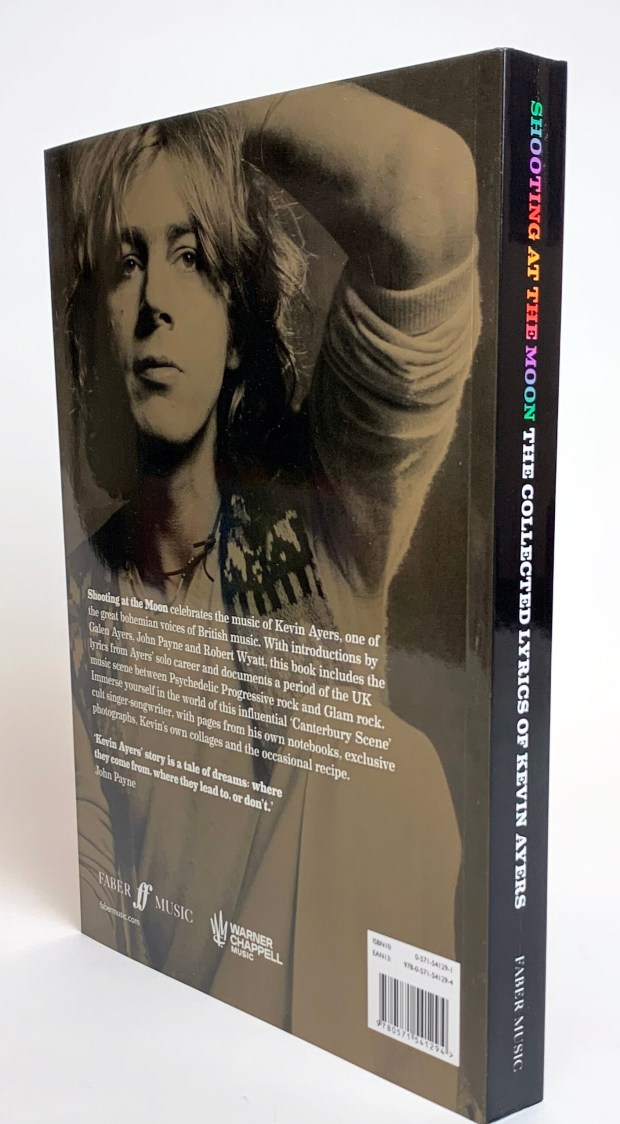
Shooting at the Moon – The Collected Lyrics of Kevin Ayers (Faber Music)

front-cover.jpeg

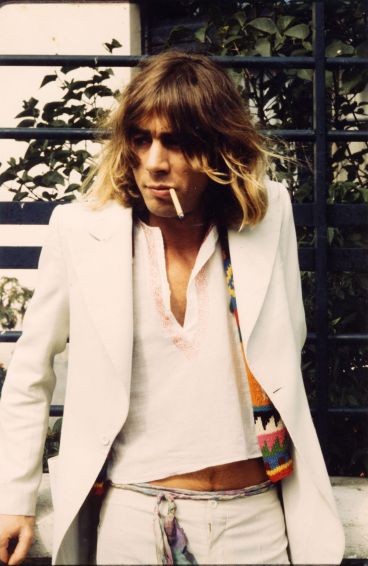
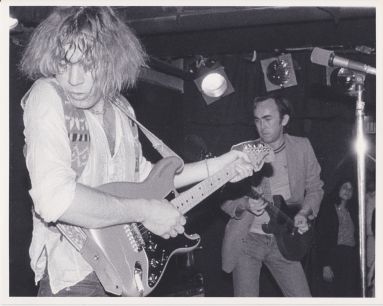
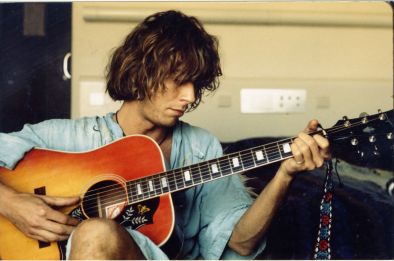
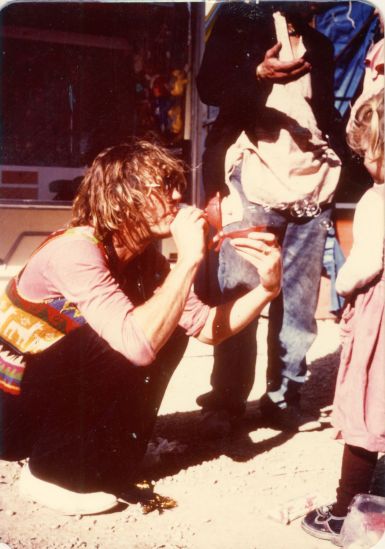
Perhaps it’s surprising there’s never been a Kevin Ayers biography. In many ways, of the all the Canterbury scene artists, Kevin was the one flecked with stardust, the one who (almost) transcended into the mainstream. Yet in most Canterbury scene accounts Kevin is almost forgotten, his exposure limited to his involvement with Soft Machine’s pioneering psychedelia, or perhaps to the lunacy of the Whole World. Conversely you will often come across people outside of the scene who have an attraction to Kevin without any affinity to where he came from musically.

The closest there came to a biography was Martin Wakeling’s ‘Why Are We Sleeping’ fanzine, and because Martin became a close friend around the time of Facelift’s infancy, I received a kickstart education in Kevin’s history, his foibles and his tendency to disappear to the sun at the point at which he was just about to assume star status. Kevin collaborated with contemporary musicians I knew and loved in the Nineties: the Wizards of Twiddly and Ultramarine, and through the former (who had become his backing band) I attended many gigs which combined consummate musicianship with his own languid charm. I was aware anecdotally that this didn’t reveal the full story and by the  last time I saw him, in 2006 in, of all places a snooker club in a fairly rough suburb of Manchester he had retreated so far into his own bubble that the only lights he would allow were those from the emergency exit door. It was still a fabulous memory. In the last few years I’ve become fascinated by the Deia connection which embraced principally him and Daevid Allen but also many others with Canterbury scene connections, and so soon after a recent visit (where I chatted with people who knew him well) it feels particularly relevant to see this compendium.

claude gassian.jpeg

Photo: Claude Gassian

So – whilst ‘Shooting At the Moon’ is not a biography, it is at least a long overdue recognition of Kevin’s talents by someone in the best position to appreciate them – Kevin’s daughter Galen, herself a musician, now based in the States (she has recently released an album called ‘Monument‘). Various interviews surrounding the release of this book have painted a warts-and-all picture of the relationship between Galen and her father, or more pertinently the reality of propping up a character whose disarming demeanour masked a considerably more complex story. This is not an attempt to either hide or embellish the complexities of Kevin’s persona, it is instead a charming coffee table selection of lyrics from all Kevin’s solo albums, beautifully presented, with as many lyrics as possible presented from Kevin’s beautiful own handwriting (whether or not these were transcribed at some point for such a purpose as this book, an aide memoire for concerts, or even originals is not clear, although there’s a fascinating amount of material that was clearly work in progress at some point).

ronald kienhuis.jpeg

Photo: Ronald Kienhaus

The book is full colour, softback with lavishly reproduced publicity photographs, photostrips, marketing material, press clippings and some clearly from Galen’s and others’ personal collections. Each album is represented chronologically, a song to each page, with each release accompanied by at least a couple of artefacts and preceded by a quote, either from Kevin or his collaborators. Galen sought out fans’ feedback around 6 months ago about what Kevin meant to them and some of these thoughts are collated at the back of the book as well as various artefacts such as gig tickets which arrived presumably at the same time.

claude gassian 2.jpeg

Photo: Claude Gassian

There are introductions to the book, an eloquent summary by John Payne, a succinct and loving note from Robert Wyatt, and some personal thoughts from Galen, although her personal mark is in fact all over the project in its lovely presentation, alongside some touching photographs of her and Kevin together in her childhood. I suspect if Ollie Halsall had still been alive, he would also have contributed – pictures of his collaborations with Kevin are conspicuous and the Deia connection is captured pictorially on many occasions.

with Galen.jpeg

with Galen Ayers

And if I’ve not commented on the lyrics themselves, then I’ll leave them to you in their entirety to peruse and dissect: often their languid nature mirroring the laid-back nature of the songs; the lapse into silly ditties Syd Barrett style (although Kevin’s were always more knowing); the occasional wry philosophy; the stories of the bon vivant and the lover in his many guises; the cod-tropicana; and the blues-tinged self-references. The one time I did meet Kevin at close quarters, for his live session with the Wizards at BBC Radio 5 with Mark Radcliffe, in one of the most memorable musical evenings of my life, he was effortlessly charming, witty and somewhat baffled by the hectic nature of the furore he had created around him. He craved privacy but attracted adulation. I hope he would be proud of the body of work preserved so lovingly for him here.

back-cover.jpeg

Order signed copies of ‘Shooting At The Moon’ at

http://www.galenayers.com – where you can also buy Galen’s album ‘Monument’

Alternatively order direct from the publisher at

http://fabermusicstore.com/Shooting-at-the-Moon-0571541291.aspx

or

https://www.amazon.co.uk/dp/0571541291/


Steve Hillage Band and Gong, Liverpool O2 Academy Saturday 23 November

steve hillage.jpg

Steve Hillage

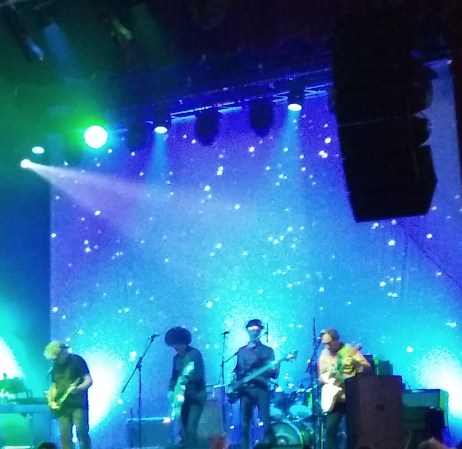
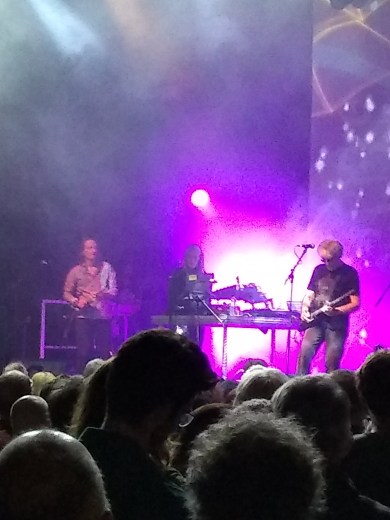
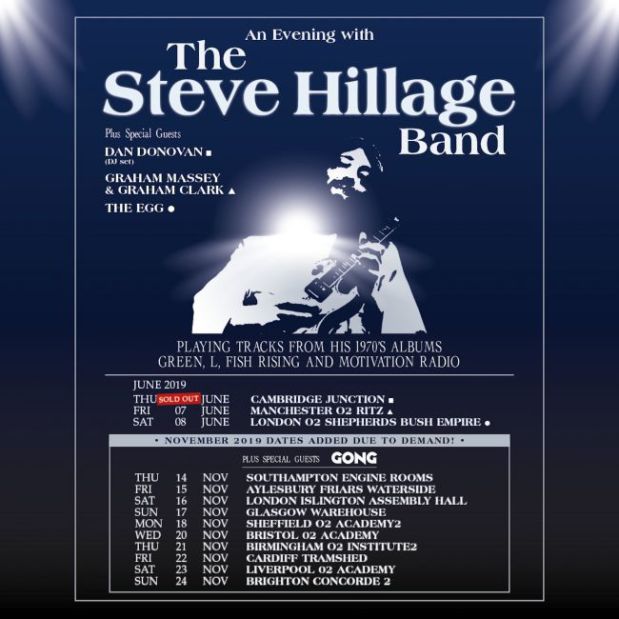
After a 3 gig taster in the summer, the Steve Hillage Band set out on a much larger tour in early November, this time with a twist – not only would the current Gong band be the musicians backing Steve and Miquette Giraudy for their extended 2 hour sets each evening, but Gong themselves would be the support act each night. Interestingly enough, this reverses the scenario from exactly a decade ago when Steve, who was then Gong’s guitarist, promoting the ‘2032’ album, did the support act to Daevid Allen’s Gong with a Steve Hillage Band consisting of himself, Miquette, Mike Howlett and then Gong drummer Chris Taylor.

I’m not sure I’ve ever seen a bad gig in Liverpool – I suppose part of that experience is that whilst I’ve  dropped in on many gigs casually in Manchester over the years, every trek down the M62 has been for a special event of some sort.  Plus audiences here seem determined to have something of a party. There’s certainly little standoffishness. The O2 Academy is somewhat more welcoming than its sister venue than the Ritz in Manchester– queues are more manageable, security almost human and the venue, upstairs on a sticky dance floor, somewhat less congested, to the extent that it was possible to navigate around to different spots in front of the stage without seriously cheesing off your fellow gig-goers.

kavus.jpg

Kavus Torabi

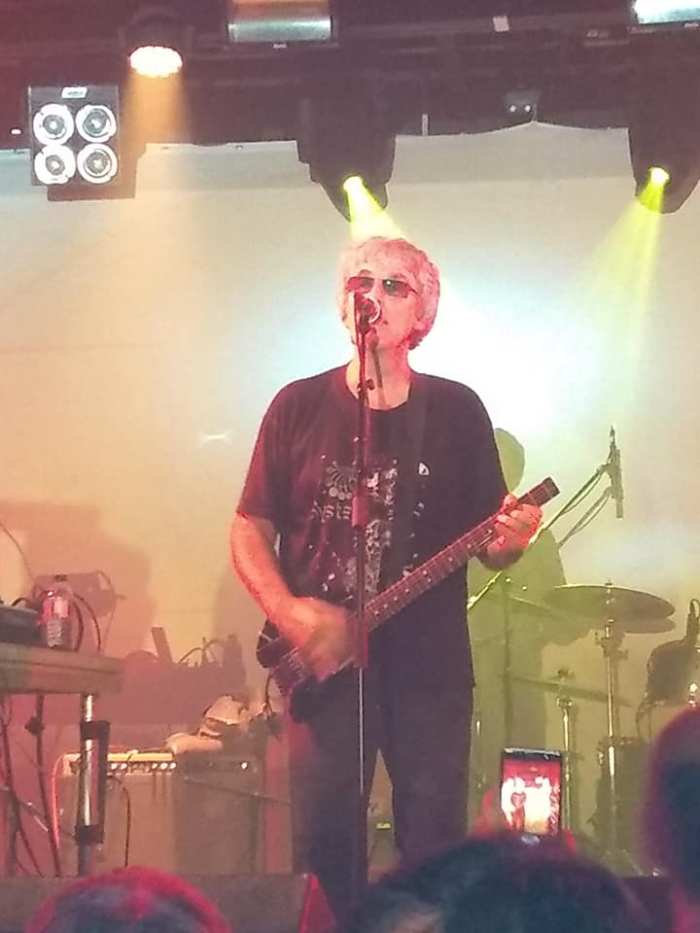
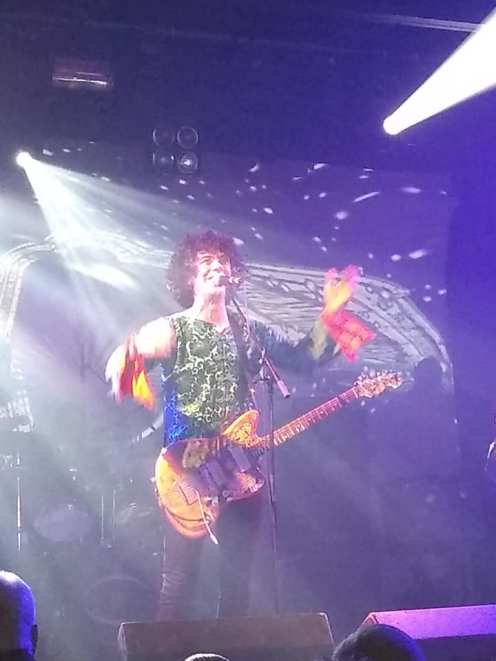
Gong sensed it too – relatively early in the set Kavus Torabi, already beaming from ear to ear, was encouraging the audience to levitate the dance hall and ‘lose their shit’. The band played for an hour but it felt like longer – it was certainly intense enough for one to have quite legitimately wandered away at the end of their set being satisfied with the evening’s events on Gong’s performance alone. The band played 5 tracks, the new opus ‘Forever Reoccuring’, imbued with transcendental atmospherics and a lovely new twist where vocals (whose lyrics I could not fully decipher) embellish the rising mid-piece section; a rather splendid version of ‘Rejoice!’ where Kavus pulled out an extraordinary guitar solo; ‘You Can’t Kill Me’ with an unexpected highlight when Dave Sturt’s bass sound packed in, memorable because of his bisonesque re-joining of the fold once order was restored (“I WAS quite angry”, he later told us); ‘Sawtooth Wake’, a polyrhythmic assault on the ears interspersed with some sweet multi-harmonised vocals; and finally ‘Insert Yr Own Prophecy’ which appears to have become the set-ender of choice, particularly with ‘Master Builder’ off the menu, for reasons which will become obvious. Personally I’d have selected ‘The Elemental’ as my closer and worked backwards – its guitar crashing and discordant vocal harmonies are completely the calling cards of this particular band.

IMG_20191123_194804250 (1).jpg

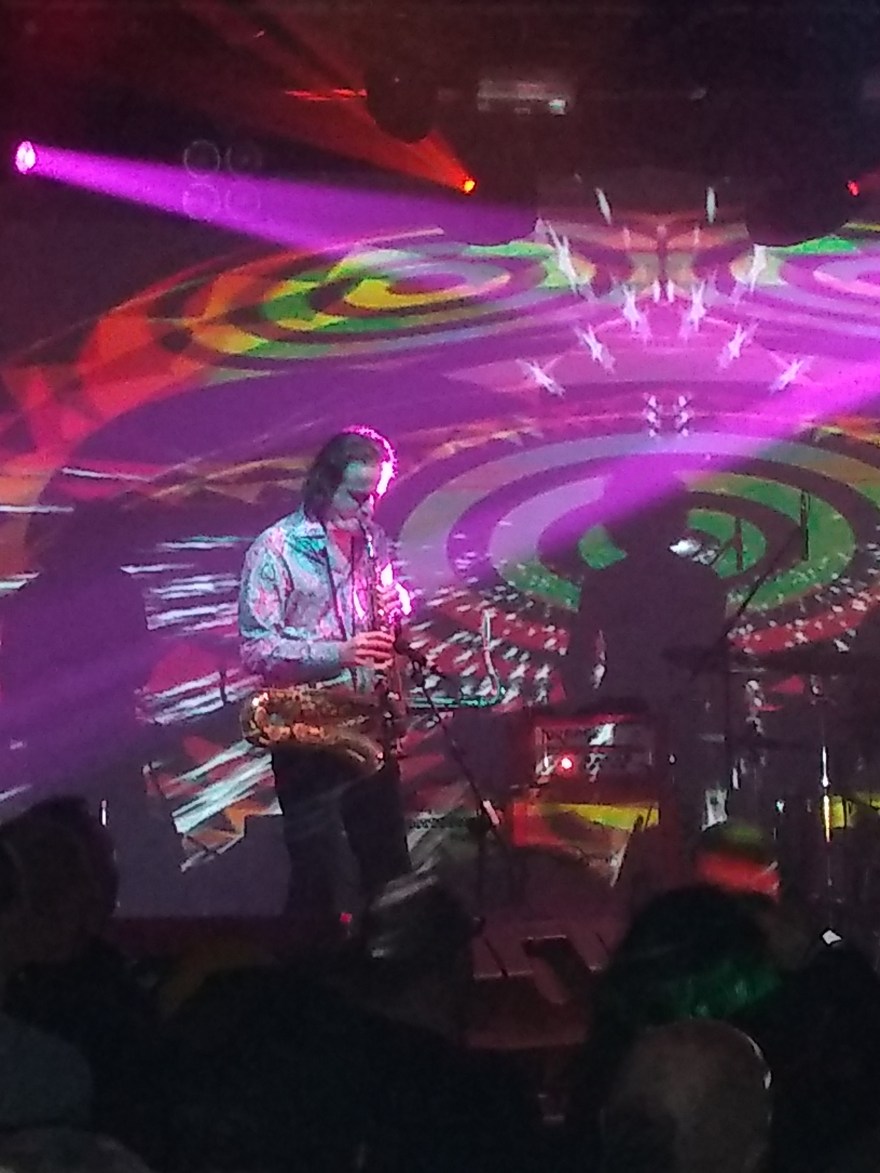
Ian East


There are interesting parallels here from a gig I saw in Liverpool in the Nineties where the Wizards of Twiddly played a solo set and then backed Kevin Ayers for the main event. There was a clear contrast then between the Wizards’ madcap lunacy and Kevin’s languid tunes, and whilst there is less distance between Gong and Steve Hillage Band in terms of genre, Gong were also clearly not out to make up the numbers: their performance was a total barrage on the senses: cacophonous, embracing and utterly uplifting – if Kavus had indeed helped to levitate the building it would also have taken a small army to scrape the audience back off the ceiling.

Not that there was much respite. Assembled in pretty much the same order on stage, the core Gong band were augmented in the centre by Steve Hillage and Miquette Giraudy (on keyboards) for the main event. Set against a mesmerising backdrop of visuals and some fairly intense strobes, the Steve Hillage Band continued an all encompassing sound built around Steve’s effortlessly fluid and often blistering guitar work. If I can’t recall note for note the entire setlist, there was familiarity everywhere: entire swathes of ‘Fish Rising’; big chunks of ‘Green’, some of the celebrated ‘covers’ such as ‘It’s All Too Much’ and ‘Hurdy Gurdy Man’ and more novel outings such as ‘Om Nava Shiva’, ‘The Fire Inside’, the jaunty ‘Motivation’ and a rousing ‘Light In the Sky’ (with Miquette exuberantly conducting the crowd for the chorus).


img_20191123_211403544.jpg

Steve Hillage, Kavus Torabi, Dave Sturt

It was great to see Ian East’s array of instrumentation and the sound of flute and tenor sax breaking through the melee – there was one memorable moment where I was thinking ‘that sounds like a bassoon’, before realising that, of course they were probably Lindsay Cooper’s lines from ‘Fish Rising’,  perfectly captured; other lines dextrously mimicked Dave Stewart’s keyboard work on the original. Elsewhere Kavus’ intricate dual guitar lines with Steve Hillage proved just how tight this band is. And every time you looked stage right there was Fabio Golfetti, implacably conjuring up the atmosphere on glissando guitar. We were musing later on in the pub (with some of the band) on the phenomenon of the glissando sound: I regard it as a gift from Daevid Allen to an entire genre of music – this otherworldly, evocative sound underpins so much music I listen to that it’s almost become a soundtrack in its own right (or as Billie Bottle recently put it, in relation to Brian Abbott, ‘a heavenly chorus (of teapots)’) The assembled number agreed that Fabio’s work in this regard is only rivalled by Daevid’s own. It’s funny what personal recollections you come away from gigs with, but another memento was when most of the band seemed to congregate around the drum kit which, due to the visual projections at the time, placed  Cheb Nettles at the base of a pyramid – intentionally or otherwise this seemed symbolic  in terms of his phenomenal contributions to the band’s base.

IMG_20191123_225045759.jpg

Miquette Giraudy

In terms of tracks: well, the ‘Dervish Riff’ weaved away as bewitchingly as ever, ‘Hurdy Gurdy Man’ truly wigged out in its instrumental extension, but for me the highlight of the set was ‘Ether Ships’, in its remarkable simplicity and intensity – Steve, with his head slightly cocked to the side, subtly building up the anticipation rave style – it was as if time was suspended for a brief moment whilst we were working out which way things would break. If ‘Master Builder’ was the expected encore, it did not disappoint, less grandiose in its airing than the current Gong’s version, but memorable as all members of the band (bar the drummer) out front, singing the IAO chant well into the main riff. And, as this audience clearly weren’t willing to let the band go even at this late stage, they finished off with ‘Never Glid Before’, an instrumental version of almost deranged tempo, gradually upping the ante to its glorious conclusion.

Back down in the foyer, punters were gathered in front of the GAS stall, reinforced with extra personnel and artefacts, Kavus and Dave Sturt mingling amongst them and spreading the bonhomie of an extraordinarily upbeat night. Later in the nearby pub Ma Egerton’s, just a hint that the band were starting to wind down a little towards the end of what must be a gruelling night after night schedule, nice chats with Dave and Kavus (who was fighting off adulation from all-comers), a brief word with Ian East in amongst a small collection of Gongheads including several Kozfest veterans and Tom Ashurst who has recently shared bills with both Gong (at HRH Prog) and Here and Now. Finally, a long conversation with Fabio Golfetti, with whom I have been corresponding for 30 years (with the promise of more to come). And I might even have spotted Cheb Nettles briefly, but one can never quite be sure….

me george and fabio.jpg

with Fabio Golfetti

Invisible Opera Company of Tibet: Jewel in the Lotus 25th Anniversary issue – interview with Brian Abbott

album cover.jpg

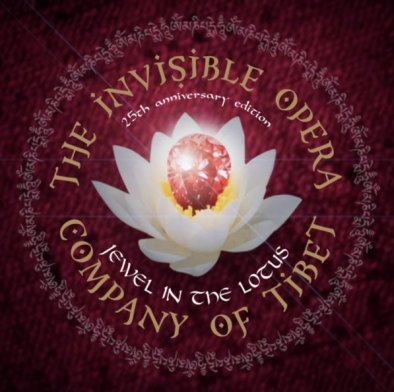
When the Gong Appreciation Society branched out in the early Nineties to provide an excellent record label covering Gong and related acts, one of the first releases to appear was a short CD of studio pieces credited to the Invisible Opera Company of Tibet entitled ‘Jewel in the Lotus’, alongside a lengthy live track featuring Daevid Allen as a ‘guest’. The band also took their place at Gong 25 in London during 1994 in that 2 day celebration of Gong and its wider family. 25 years on and the album has been re-mastered and re-released with several key differences – in fact almost half of the material here is new. Its curator and ever present band member, Brian Abbott is justifiably proud of a release which brings together the entire original recording session. He kindly agreed to answer a few questions relating to this release and the band in general.

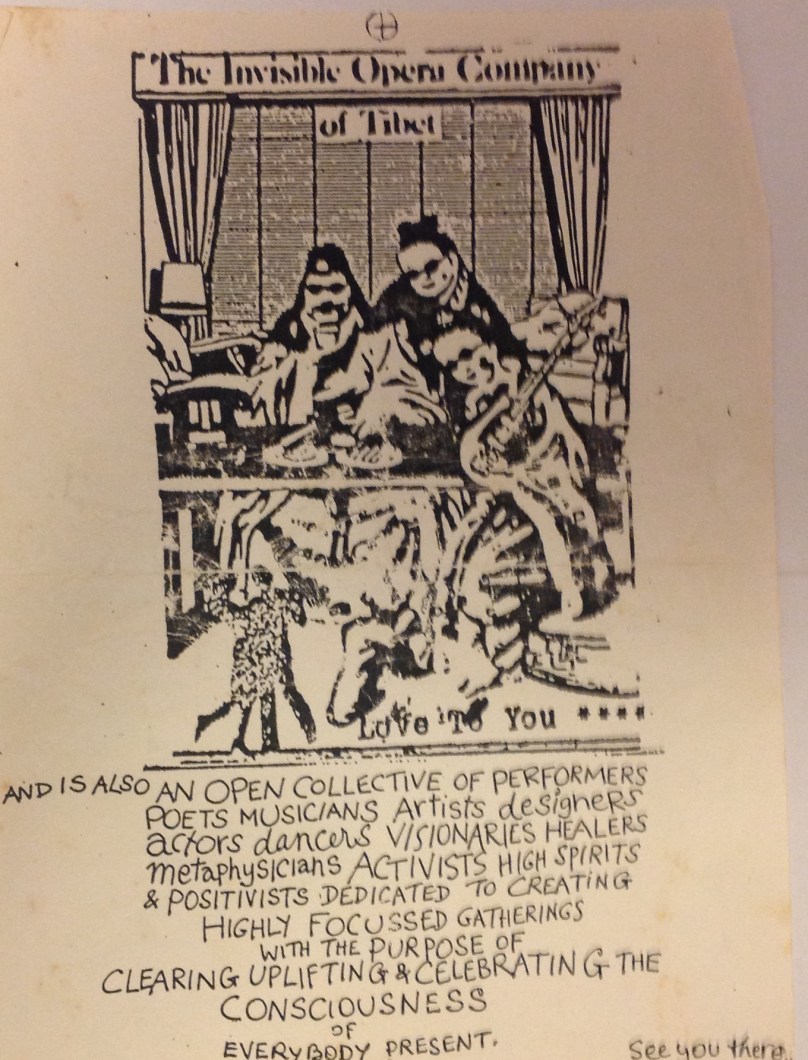
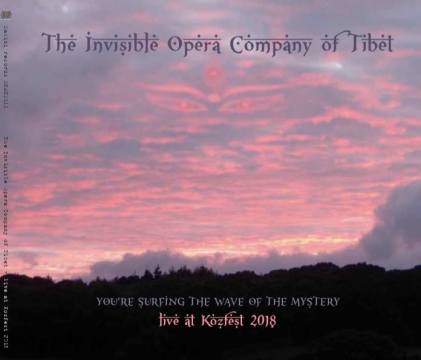
As we mentioned  in our review of their live CD ‘Surfing The Wave of the Mystery’ earlier this year, the term Invisible Opera Company of Tibet has special significance for Gong fans: references to it occur as far back as the early Seventies. I asked Brian as to his understanding of the term. “I believe it’s always been a part of Daevid’s mythology and the whole Gong story. According to Daevid’s  ‘Gong Dreaming 2’  book The Invisible Opera Company of Tibet are a group of ethereal lamas through which the Octave Doctors broadcast their music. They are said to reside in a cave high in the Himalayas.  They are a conduit through which the Gong vibrations issue forth.”

img_1804.jpg

Invisibles flyer of unknown vintage from the Facelift archives

The first time I came across the term in a gigging context (or something approximating it) was also the first time I saw Daevid Allen perform – live in April 1988, soon after his return from a long exile in Australia. In an extraordinarily transformative gig, set somewhat anachronistically against the backdrop of the Afro-Caribbean ‘Hummingbird’ club in central Birmingham, with hefty bouncers everywhere and the constant clank of beer glasses, this was far removed from not just any preconceptions one might have had that Daevid might be about to launch a new Gong, but also from practically anything we’d heard from the Daevid Allen repertoire, although it gave some indication of what he might have been up to during his ‘exile’. I can remember the gig vividly over 30 years on, with Elliett Mackrell (later of Kangaroo Moon) on violin and Wandana Bruce on harmonium and voice whilst Daevid predominantly sang simple ballads and devotional chants, interspersed with the odd rather more humorous sample-based material. I can still remember the audience, many sitting cross-legged, listening to this very gentle music, whilst incense chugged out from stage. There was a fourth member too sat in the gloom to the right of stage: I vaguely remember him being introduced as Brian Abbott, a name which did mean something to me at the time (for reasons which will become clear), but as he was playing tablas, (and as we all know Brian is a guitarist), it was only a recent email exchange which confirmed that it was indeed Mr Abbott on percussion.

A series of gigs in 1988 and a number which followed were billed as the Invisible Co-opera. Brian’s name was already familiar to me as the custodian of GAS from what I had also mis-remembered as Ottery St Mary in the West Country (something I’ve just realised I’ve convoluted that from the fact that Harry Williamson recorded a musical interpretation of his father Henry’s ‘Tarka the Otter’ book in Devon). Brian takes up the story: “I started running GAS in 1981.  Everything then was with Gilli and Harry in North Devon.  Initially I just made contact on a friendly basis, (and) went up to stay a few times.  They were putting together Robot Woman 1 (LINK) at the time.  They had a few cassettes that they did via mail order.  Ark Redman was doing that from Ox’s Cross where they all lived.  So in 1982 they were leaving for Oz and the cassette side of things would stop.  I said I would carry it on and we then between us came up with a whole load more GAS tapes for the catalogue.  I ran it as a mail order business from 1981-1988.  I didn’t make any personal money from it but just ploughed back what little money there was into it to keep it going.  In 1988 I just felt I had done my time with it and it was time to pass it on.  I was not sure who was going to be my successor but I had a lot of communications with Rob Ayling and he seemed very keen to do it, the rest is history.” In fact my own first contact with GAS would have indeed been with Brian as, somewhat wowed by Didier Malherbe’s ‘Bloom’, I began a lifelong quest to get his entire discography, starting with the GAS cassette release ‘Melodic Destiny’. But back to 1988…

img_1806-e1574283062671.jpg

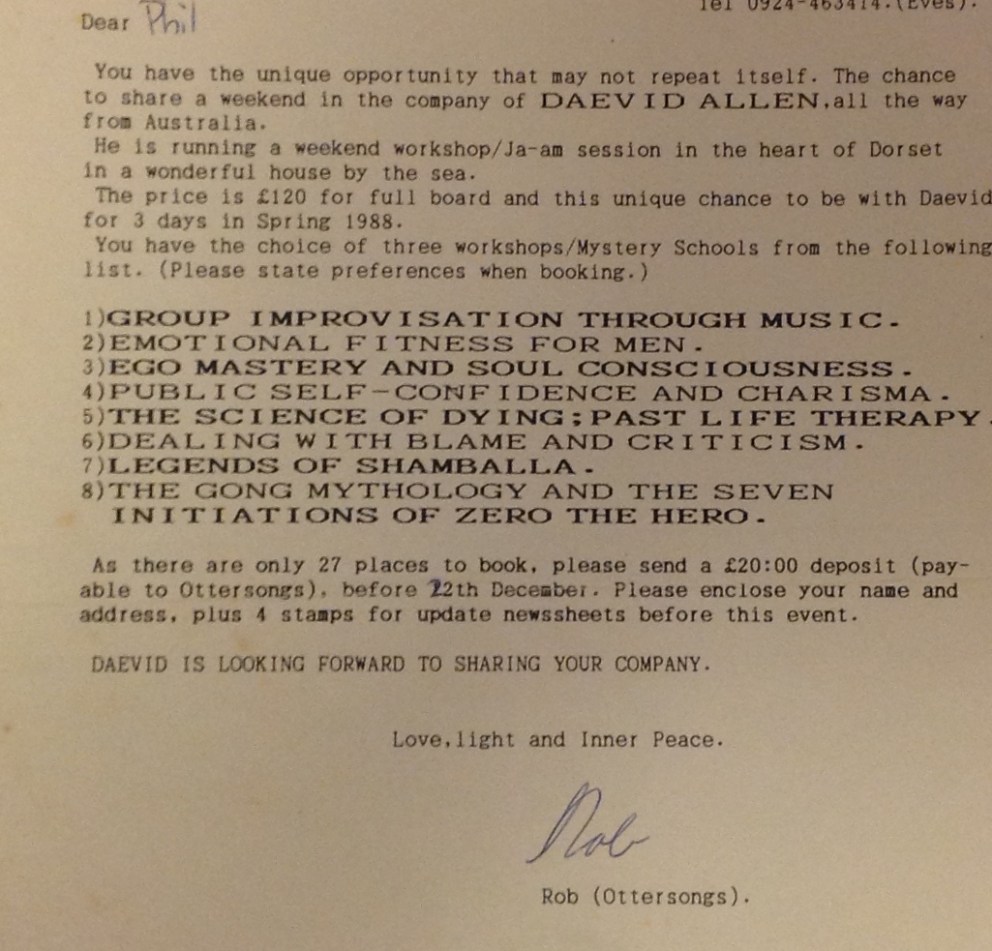
Letter from Rob Ayling (GAS) re: Daevid Allen's workshops, 1988 or 89

“When Daevid first arrived in the UK in 1988 he stayed with us in a large communal farmhouse we were all living in (in) Devon.  There was then the first self initiation workshop at Monkton Wylde Cour in Dorset.  Also the first gig at Exeter Arts centre which I organised.  It was billed then as Daevid Allen and friends and it was mostly acoustic.  I played tablas and acoustic guitar.  (We played) songs that morphed into Gongmaison, old Gong songs and sacred chants.  It was sold out. Then Didier came on board when they were in the South of France.  I could no longer continue as I had work commitments at that time.  So very quickly The Invisibles became Gongmaison.” I can remember the bafflement I felt when the original workshop fliers were posted out to GAS followers, both in terms of the content and the prices, but also the excitement as the project progressed to an intensely claustrophobic but exhilarating gig in an upstairs room at the Swinging Sporran in Manchester in 1989 involving Daevid, Graham Clark and Didier Malherbe, and then on to Gong Maison in Manchester and London and onwards – by the time they played at the Going Going/Gong Maison gig Sonic Relief in October 1990 (where I interviewed Hugh Hopper) I’d seen the band a numerous times.

In 1992 Brian resurrected the Invisible Opera Company of Tibet band, but even prior to this there had been other developments involving the project name in other parts of the world. An album simply entitled ‘Invisible Opera Company of Tibet’, and actually dating back to 1987 had appeared from Australia as one of the first releases on Voiceprint Records (the label formed by aforementioned GAS successor to Brian, Rob Ayling) in a collaboration involving predominantly Daevid and Russell Hibbs, but also Gilli Smyth and Harry Williamson. Meanwhile, from Brazil, Brian had been in contact with Fabio Golfetti, these days, of course, Gong’s guitarist. “During the time I was running GAS Fabio was in communication a lot and he sent me cassettes and flexis and albums and this was by The Invisible Opera company of Tibet (Tropical version).  I remember thinking then this really has the Gong vibe, I was very impressed.  When the Australian version released their album I was also made aware of an American version.  I know they did one cassette album. It was 1992 when I had the calling to create a UK version of the Invisibles. Daevid loved it and gave it his blessing.  He loved the idea of all these different bands existing all over the world working under the same banner. It’s an interesting concept.”

DSC06673

Tim Hawthorn at Kozfest, 2018

On ‘Jewel in the Lotus’, Brian is joined by Jim Peters (keyboards, flute and vocals), Steve Hickeson (drums)  and Tim Hall (bass/vocals), and this is the band I would have seen at Gong 25 alongside other notable performers. “For the most part it was the ‘Jewel’ line up.  Ali Young used to be the dancer with the band but went on to pastures new.  At that gig it was Jackie Juno who debuted with us as dancer, then became (our)  backing singer.  She became the main singer in 2008 when we relaunched the band”. Whilst I would obviously have seen Tim Hall alongside the others at Gong 25, it has taken me a while to piece together his pedigree: at the first Kozfest I went to in 2016, I was aware of a rather wizardly figure appearing on stage as guest vocalist for a band called Shom (he rather stole the show), then as a solo artist Tim Hawthorn at a later festival for a performance I missed. Things only fell into place for me when he sprang on to stage with the Invisibles in 2018 for a manic rendition of ‘Bad Self’, which of course he wrote and sang on ‘Jewel’. I could be forgiven for the confusion given the fact that he goes under several names and even more styles – another early GAS CD release is the beautiful acapella ensemble ‘Silver On The Tree’ alongside other Glastonbury luminaries; he also performs with The Archetypes and has some lovely samples, most notably a cover of Robert Wyatt’s ‘Sea Song’ plus a number of traditional tunes including ‘The Snow It Melts The Soonest , which counts amongst the most beautifully sung music I have ever heard.

profile pic.png

Brian Abbott

Whilst I enjoyed ‘Jewel In The Lotus’ in its original format, the remastered and elongated version for me, (shorn of the bonus live version of ‘We Circle Around’ featuring Daevid Allen which didn’t entirely sit comfortably with the separate studio material), turns it into a significant coherent project in its own right. The strength of the opener ‘Om Mani Padme Hum’, is such that it took me several listens to get beyond it – it is a Buddhist chant which I’d seen Daevid (and Brian) perform in 1988, here turned into a blisteringly rocky number, inspirationally seguing into a version of ‘Master Builder’ which is amongst the very best versions of this track heard performed. This is quite brilliant. ‘All Coming True’, with vocals by Peters, and Tim Hall’s ‘Mysteries’, new for this edition but familiar from somewhere are good rousing knockabout stuff perhaps in the vein of some of Keith Bailey’s stuff with Here and Now (the sleevenotes make a reference to Britpop, which probably does it a disservice). ‘Bad Self’ is a vehicle for Hall’s latent punk sensibilities – a daft OTT performance which is wonderful fun.

insert.jpginsert-1.jpg

Invisibles in full flow, mid Nineties

The other track from the original ‘Jewel’ is the reggae piece ‘The Size of Minus One’, which is really where I started to sit up, for it is the first of three really excellent dub pieces, which get progressively better. ‘Minus One’ is a turbo -charged number, well paced  with crashing cymbals, echoey top end drumming and a slightly otherworldly soundscape powered by the unmistakeable sound of the glissando guitar, a lesser spotted beast in the world of reggae, but as Steffe Sharpstrings has proven with Here and Now and his various dub projects, a perfect accompaniment. Even more crystal clear are the two vocal dub tracks, both featuring sweet and beautifully harmonised vocals. Both are adapted in somewhat unlikely fashion from traditional tunes – the first a pagan chant entitled ‘Goddess Dub’, the second, the achingly delivered ‘Om Tara’ presumably from Buddhist origins. Both feature guitar chops and tasty licks, roaming bass and nice keyboard touches and effects. Beautifully manicured, these tracks are as slick and refined as one could hope. Perhaps it is because these tracks haven’t been heard before, but after ‘Om Mani Padme Hum’, these are the two I’m continually returning to.

Of the revamp of ‘Jewel’, it felt to Brian like unfinished business – the original recordings had been laid down in only 2 days with many elements done in a single take on a very limited budget. “It had been in the pipeline for a very long time.  Dave Kendall the engineer was never happy with the mixes due to the constraints of time and money.  So it was something that both Dave and myself have kept simmering away, doing bits and pieces here and there.  Eventually realising this was the 25th year we decided to bring it out with all the tracks from the session.  I am very proud of it now as its been lovingly restored and polished !”

The CD comes with equally lovingly curated artwork, a trifold with photos and extensive written memories from three of the musicians plus the producer – a fitting
promo.jpg

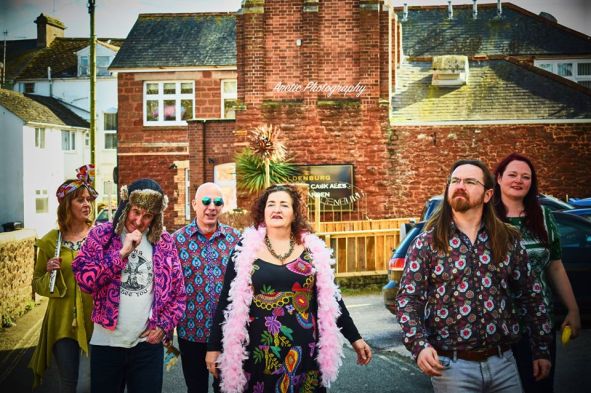
Invisible Opera Company of Tibet 2019

At this point it seemed relevant to ask about the current state of IOCOT – 25 years on, how has the band evolved. Recent additions have been drummer Matt Jackson and also Viv Goodwin-Darke joining from Devonian neighbours Magic Bus, joining Brian, Jackie, bass player Phil Whitehouse and keyboard player Julian Veasy. “At this point it is fair to say – find me a band that hasn’t had its ups and downs.  There have been a lot of musicians over the years that have been within this collective, too many to list here. From its interception in 1992 to the present day we have been gigging and producing music.  There have been fallow periods and difficult times but there has always been a presence. At present there is whole load of new material being written by all members of the band (with) lots of different styles emerging, it’s very exciting.  (We are) just about to start editing the new studio album called ‘the Bardo of Becoming’ based on the Tibetan book of the dead and our journey from death to rebirth.  It will be something very different, exciting and challenging.  Hopefully lots of gigs.  We’ll also be doing the Bardo live. “

All of which could include future appearances at local festival Kozfest where Brian has had a presence one way or another in each of the first 10 years’ events. “Kozfest is a wonderful gathering of likeminded souls.  Initially there was this poster circulating on Facebook with Ken asleep in a chair at a festival dreaming of all these bands that were listed around him.  Lots of people commented saying the bands they would like to see.  This soon became a reality, Kozmik Kens Psychedelic dream festival.  I said we would love to play that.  Us and a whole roll call of bands.  Because I play guitar with another band (Global) we have alternated every year since and have played them all.  Feels like home!”

Thanks to Brian for answering my questions. Lots of information about Brian and the Invisibles and a link to purchase to purchase ‘Jewel in the Lotus’ can be found at www.brianabbott.info but the CD will also be available at www.planetgong.co.uk and  www.burningshed.com

gigi flyer.jpg

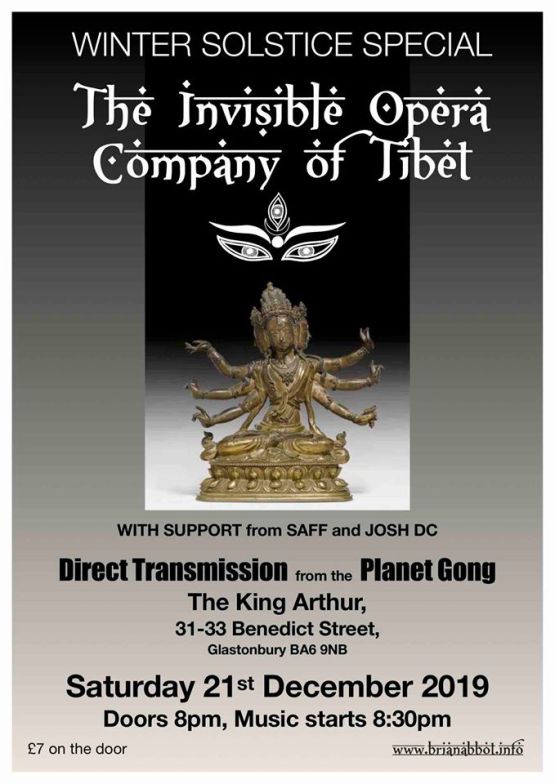
The Invisibles play a Winter Solstice gig on 21st December 2019 in Glastonbury.

Invisible Opera Company of Tibet Discography

1993 Live /studio cassette (“just found a box of new/old stock!)

1994 The Jewel in the Lotus CD (Gas records)

1994/5 Totally Bananas live cassette

2000 Open for Issness (Un released album)

2006 Totally Bananas CD

2011 Live at Sonic Rock CD

2013 Tried So Hard 7” single

2014 Songs from the Temple of Now CD

2019 Surfing The Wave of the Mystery – Live at Kozfest 2018 CD

2019 The Jewel in the Lotus (25th anniversary edition) CD


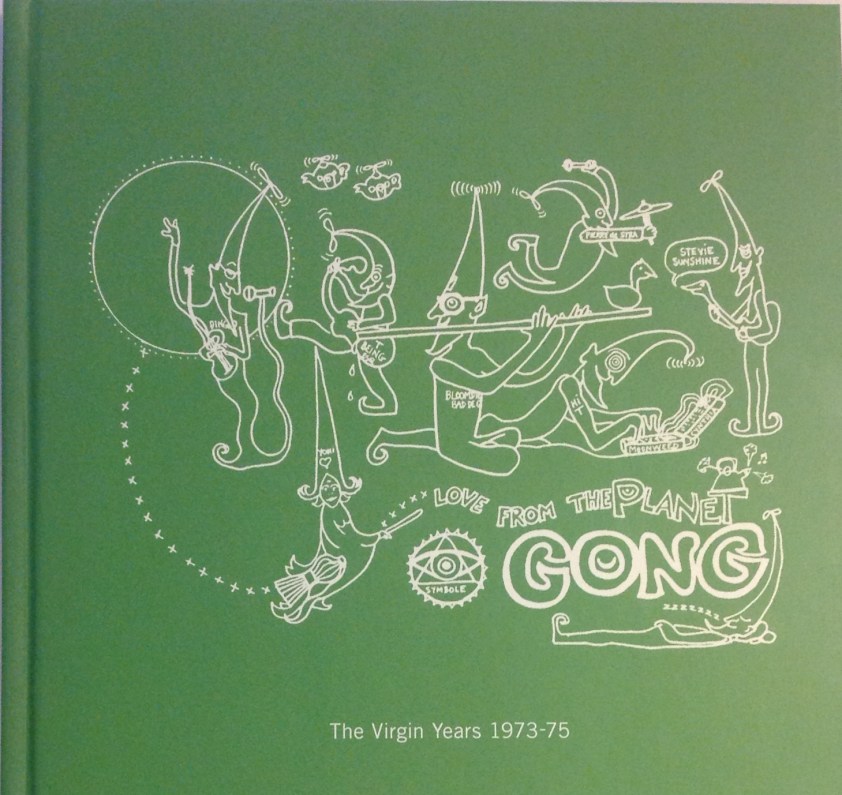
Love from the Planet Gong – the Virgin Years 1973-75 – 13 disc box set (Universal)

img_1795.jpg

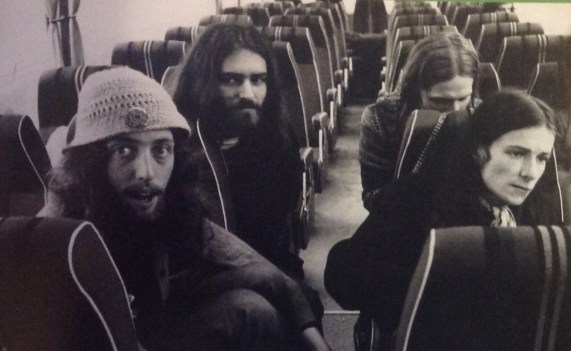
I’ve resisted the lure of the box set for years.  But it’s fair to say that as a regular peruser of the various social media platforms covering Canterbury scene music I’ve rarely seen a level of excitement to parallel the arrival of ‘Love from the Planet Gong’. This 13 disc box set is the baby of Jonny Greene, custodian for practically as long as I can remember of the Gong Appreciation Society and responsible at www.planetgong.co.uk for the hub which perpetuates the wider Gong global family story even beyond Daevid Allen and Gilli Smyth’s physically departure from the Planet. This box set concentrates on a particular slice of Gong history, namely the classic Trilogy era, as well as ‘Shamal’, the album which immediately followed Daevid Allen’s departure.

I’d possibly not realised that this 4 album cycle, which most regard as containing the highpoints of Gong’s career (although that does a disservice to the wonderful ‘Camembert Electrique’) was completed in less than 3 years. It is published courtesy of Universal, or more accurately Virgin, whose confusing tussle for Gong recording rights with Byg/Charly has baffled Gong fans for generations. It’s a massive undertaking, to the extent that this box set is so stuffed with extras that even the ‘core’ albums are padded out with bonuses to reach their digital limits enabling the extra albums to be purely devoted to live performances.

img_1799.jpg

As my own copy arrived rather late in the day, at the tail end of a gargantuan effort at GAS HQ to mail out individual copies of what appears to be a rather popular release, I was already hearing whispers as to what the highlights might be. Chronologically first, but at the same time hard to top, is the remastered version of ‘Flying Teapot’. It’s not putting too much of a gloss on this to say that on first play I was literally hearing elements I’d not been aware of before. Hand drums, female backing vocals, piano are previously unheralded elements of the trilogy album which often receives the least play: if ‘You’ has always been the pinnacle of the Trilogy era to me, and ‘Angel’s Egg’ its swirling predecessor, then ‘Teapot’ often gets overlooked. Where ‘Camembert Electrique’ was punky, and ‘You’ psychedelic, then ‘Teapot’ is very much the jazzy one: Didier Malherbe’s fluent saxophone work is extraordinary, Daevid Allen’s vocals roll along sleazily but at the same time Tim Blake’s ‘Octave Doctors’ reveals itself in a new sonic glory – with genuinely innovative sounds, let’s not also forget that this predates ‘Flute Salad’ as the first solo piece from an individual band member.

Whilst ‘Angel’s Egg’ and ‘You’ also are remastered, there is less of a marked distance from the originals, and so the magic bullets are elsewhere – on ‘You’ it’s an extraordinary demo of ‘A PHP’s advice’ which stopped me in my tracks – this intricate trio version of guitar, bass and vocals is a sonically cut down version of relative complexity which without doubt tops the original which I’ve always regarded as somewhat throwaway. Similarly ‘Where Have All the Flowers Gone’, possibly superior to its later New York Gong incarnation ‘Hours gone’, is a rousing piece dominated by Tim Blake’s unexpected and cacophonous harmonica.

img_1796.jpg

On ‘Angel’s Egg’ it is ‘Ooby Scooby Doomsday’, previously buried for me on a taped version of the ‘Live Etc’ album, but actually a quite remarkable track in its own right, lyrically closer to Magick Brother/Mystic Sister -style anti-system posturing, and musically to ‘Camembert’, but benefitting from the Trilogy line-up for its full-blown instrumentation. It’s a lost Gong classic which is at the same time catchy, sophisticated and rather silly. Another highlight is a bonus on ‘Flying Teapot’, the ‘Radio Gnome Premix – Story Narration’ – a self-explanatory spoken word introduction to the gnomic cosmology which previously appeared on the ‘Mystery and History’ double CD of oddities, complete with a brief snippet of verse which I’d previously failed to identify as being from the voice of the much beloved oddball Lady June.

‘Shamal’ has always been the odd one out in terms of Gong albums for me. Whilst ‘Gazeuse!’ And ‘Expresso II’ are not everyone’s cup of tea (although I love them both) they are at least homogenous percussion-dominated jazz-rock of the highest order. ‘Shamal’ on the other hand sits somewhere between this and the ‘Trilogy’ material, complete its own whimsical (but not entirely successful) lyrics. It was really nice to hear this again but testament to the fact that it doesn’t quite match other Gong albums in that it had been so long since the previous time. Highlights are the funk bass of Mike Howlett on ‘Cat in Clark’s Shoes’ and the title track; some very Gallic jazz-rock which gives a hint of where ‘Bloom’ himself might be heading on ‘Chandra’; whilst ‘Mandrake’ serves as a taste of what was to come with later Pierre Moerlen-led projects.

img_1803.jpg

We’re then into confusing territory for Disc 5 onwards in that parts to me were instantly familiar but I couldn’t always put my fingers on from quite where. The previously mentioned ‘Flowers’ and ‘Ooby Scooby’ were, for the unitiated, ‘lost’ studio tracks which had previously appeared on Virgin’s double ‘Gong Live Etc’ compilation, alongside various snippets of live gigs from, amongst others, the Bataclan, Roanne, Edinburgh, the Marquee and a BBC radio session. What discs 5-12 largely do is source the original concerts for each of these and reproduce them in their entirety, with added tweaking and compiling. Disc 5 is predominantly BBC Radio sessions, the first of which appeared on the ‘Pre Modernist Wireless Radio’ release from 1997, although the better half of that particular CD (with Kevin Ayers as guest) predates the Virgin years and so is not present here. In fact the highlights on this disc are the early January 74 session, with excellent clarity and fine performances, particularly on the jazzy ‘6/8 Tune’.

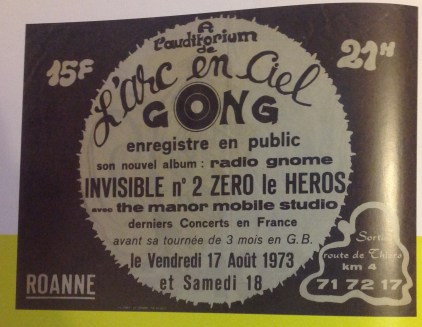
‘Live au Bataclan’ of course appeared in the first wave of CD releases on Mantra in the Nineties, but even that was truncated – this version is much expanded across a couple of disks. There are high points here, but as they are generally trumped by the next concert document I’ll neatly skip to ‘Roanne’. At this point you might, like me,  have been starting to get a touch of Gong-fatigue. But I have to say that the ‘Roanne’ gig is something else. Although sampled briefly on ‘Live Etc’, this did not include the ‘Other Side/Dynamite’ medley which represents amongst the most extraordinary 20 minutes I have heard Gong perform. Apparently captured at a small intimate venue on the Manor Mobile’s first outing, this feels almost like a ‘live in the studio’ project, announced exultantly with a ‘Hare Ganja’ shout by Daevid Allen before morphing into a quasi-religious incantation which is quite remarkable. All the other classic elements are here: swirling keyboards, ethereal space whisper, soaring saxophone, acute guitar interjections, all-encompassing drumming and warm, shifting bass. It all feels somewhat otherworldly as the piece morphs into ‘Dynamite’, with Didier Malherbe’s repetitive sax response to the main chant taking us almost back to the Soft Machine’s ‘We Did It Again’ mantra. More familiar ground elsewhere after this initial peak, but mention for the ‘Ooby Scooby’/’Est-ce que je Suis?’ segment, which stands up well against a particularly approximate version on ‘Bataclan’ which was rather spoiled by Daevid Allen’s jarring French accent. Interesting that the latter track was resurrected wholeheartedly for this live band having been initially aired in the very early 70s (and captured several times on the ‘Eclectique’ album), another punky dispensation.

img_1798-e1573850941340.jpg

The Hyde Park live CD is rather nifty as it features the band in full promotional glory – a precious document of the full ‘You’ band playing ‘You’ material. Particularly excellent here is ‘A Sprinkling of Clouds’ – largely absent from the band’s set list when I eventually got to see them in the Nineties (unlike practically any other Trilogy track), presumably because Tim Blake’s involvement was essential for any authentic performance. This airing is a masterpiece.

The penultimate discs are the one which catches the band in a brief moment of time between ‘You’ and ‘Shamal’ with Steve Hillage centrestage – this is not only an opportunity for the band to air those ‘Shamal’ tunes, but is almost a double header as the band work their way through a significant part of ‘Fish Rising’. Given that the band is clearly in transition, it is the ‘Fish Rising’ pieces which seem more coherent in a band context, and highlights the fact that perversely there was probably a shorter hop to this Steve Hillage solo album (which of course included many ‘You’ members) to ‘Shamal’. It also feels particularly relevant at present – as I write, the current Gong band are backing Steve in his first major tour as the Steve Hillage Band since the Seventies, themselves playing many tracks from ‘Fish Rising’. Disc 13 is, of course a DVD of Quad mixes of seminal album ‘You’ which will unfortunately require far more sophisticated equipment than I can do it justice with.

img_1802.jpg

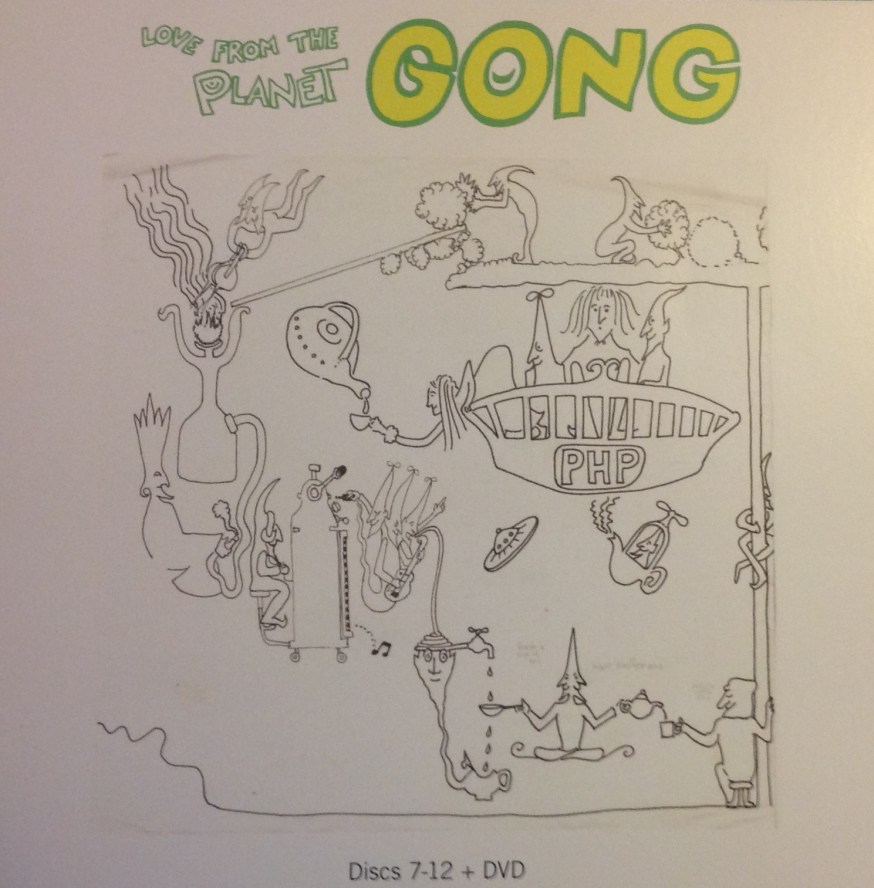
Now: the paraphernalia – the box set comes in, well a box, about 10 inches square, containing 4 separate inserts. Two house the various discs, both in  cardboard trifolds, the first containing discs 1-6 (essentially the four studio albums, the BBC live sessions and the first Bataclan disc), encased in the a reproduction of Daevid’s Flying Teapot Spotters Scroll, the second containing the remaining live CDs, plus the ‘You’ Quad mix DVD in a backpocket, these encased within various artwork including the ‘You’ cover, a Virgin press release circa ‘Angel’s Egg’ and a reproduction of Daevid Allen’s conviction certificate for dope possession in Oxford from September 1974. A further 36-page paper booklet entitled ‘lyric booklets and lyric sheets’ contains not just full lyrics but what I believe are most of the original inserts, including character casts and stories and the pink Pocket Introduction to the Planet Gong A6 booklet which you are encouraged to cut out, fold and staple! You’ll hopefully forgive me if I can’t pinpoint the exact origins of everything within this and the main booklet – everything within here has weaved its way to me at some point in assembling my Gong and Canterbury archive (for which I am indeed grateful) but as I do not have any of the original vinyl LPs I can’t tell what comes from where. No matter, for it is all now generally available to you via the box set.

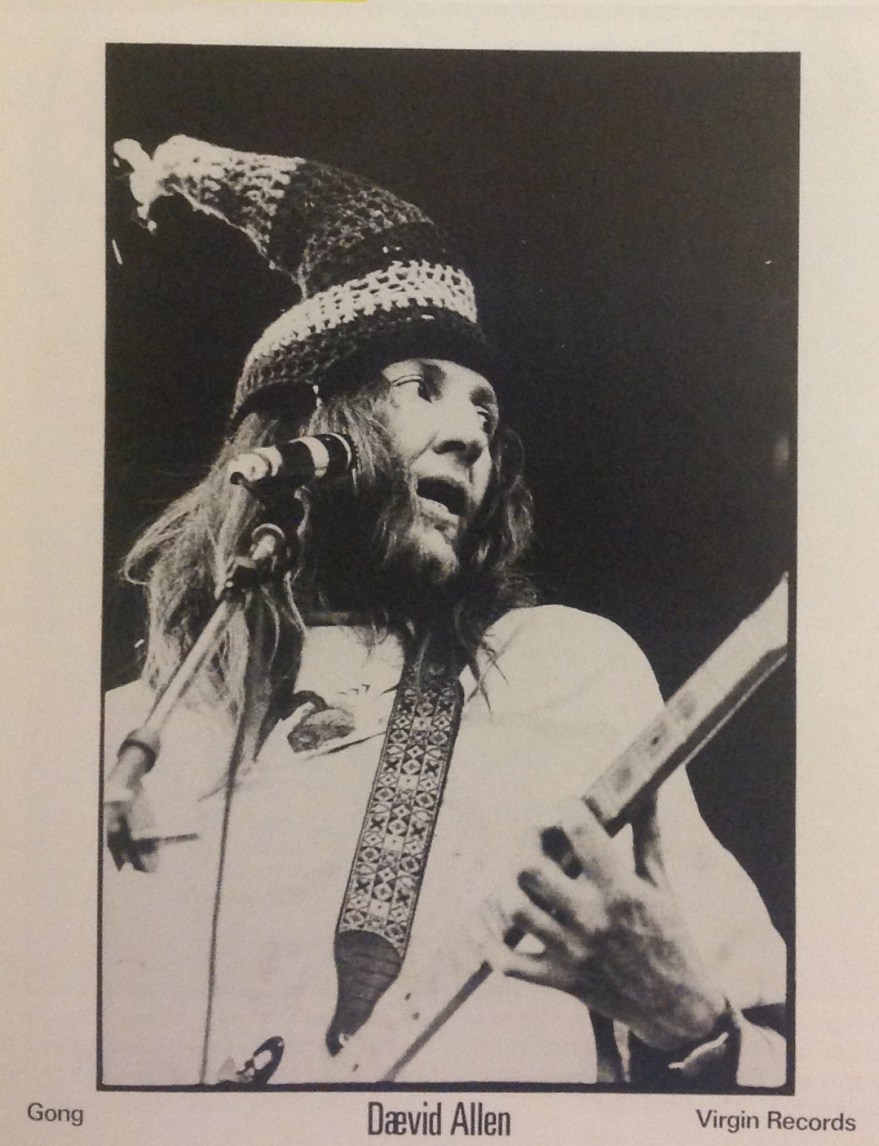
The main 68 page hardbacked book is the chief exhibit, however. Starting with an extraordinary quote from Daevid Allen which I’ve not seen before essentially pinpointing the start of the Gong vision to him smoking ‘West Indian grass’ in 1961, rather than the oft-mentioned ‘seed vision’ chronicled in his first ‘autobiography’ ‘Gong Dreaming 1’, it continues with considerable commentary from Jonny Greene, much from a personal perspective, both initially as a fan, then from the viewpoint of a life fully invested in the Gong story; some splendid photos I’d not seen before; all of the original album front and back covers in full colour; and particularly valuably, contemporary thoughts from principally Mike Howlett, Tim Blake and Steve Hillage, (and also from the ‘switch doctor’ himself Venux de Luxe). Most startling is the account (from both sides) of the events which led to Tim Blake’s departure from the band which is disarming in its honesty.

img_1797-e1573851057953.jpg

The tracklistings detailed both on the back of the entire box set and within each CD trifold are reprised in much more detail within the hardbacked book, including writing and performing credits and in particular some fabulous commentary from Mike Howlett, who not only reflects on the origins of each recording and gives anecdotal detail about their circumstances, but how he has painstakingly remixed many of the performances to balance out the sound levels, alongside remastering by original producer Simon Heyworth. This is possibly the crowning achievement of the box set, in providing clear sonic improvements to even ears as untutored as my own.

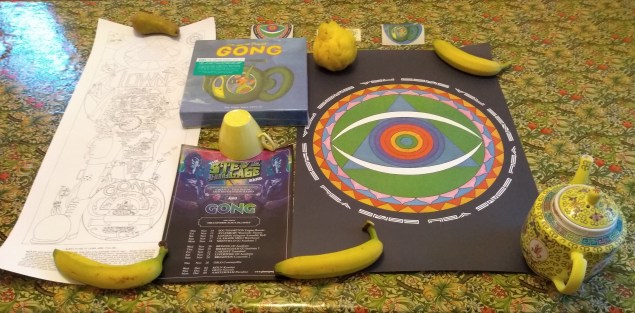
You’ll hopefully forgive the fact that this review not only does not dissect each CD on display in its full minutae – whilst I’ve been listening to all parts of it in varying amounts for a month or so, I know that I will only truly get to know it well over time. It’s an exhaustive and often exhausting chronology, with enough subtle differences as it progresses to start to get a handle on the staged (but in reality relative rapid) transition from Teapot to post-Trilogy eras, with changing personnel, sounds and ultimately styles. Those of you buying it direct from Planet Gong/GAS are rewarded with a few rather nice extras: a full-size teaspotters scroll poster, a reproduction of the ‘You’ mandala in colour, some promotional stuff for both SHB/Gong and Utopia Strong tours, and 3 rather nice stickers for your collection. And the knowledge that in buying directly from the Planet Gong you have in some small way helped to support the surviving musicians from this most extraordinary musical era.

box set full


The Utopia Strong; Kavus Torabi/Steve Davis, Golden Lion Todmorden 8 November 2019

WP_20191108_21_37_41_Pro.jpg

There’s a very fine ‘Fry and Laurie’ sketch from the late Eighties where an old man in a care home, played by Hugh Laurie looks back on his life regretfully, listing all the things he’s never done (‘never watched a woman urinate’, ‘never killed a man’, ‘never ridden a camel’, ‘never had oral sex’ etc). As his demands for this to be rectified get ever more insistent and surreal (‘I want to drink milk from the breasts of a Nepalese maiden’) he’s put firmly in his place by Stephen Fry’s camp carer ‘Brian’, who suggests, in his passable Yorkshire accent, that such outlandish things could never happen in Todmorden, where the sketch is set. I suspect this is the first (and probably only) ever mention of Todmorden in a skit and was certainly the first time I’d heard of the place.

30 years on and surreal would be the operative word here. It’s scarcely more credible that my local boozer (I now live in Tod) should be hosting the launch of an ex-world snooker champion’s first ever tour as a practicing musician, alongside the lead singer of Gong and a pipe player from the experimentalists Coil. Or that I should be ‘raving’ at 1 in the morning to tunes including Magma offshoots whilst Steve Davis and Kavus Torabi punch the air exultantly from their slots behind the decks.

But that’s the nature of this bizarre and extremely memorable gig. I’ve extolled the virtues of the Golden Lion as a venue elsewhere, as well as Steve Davis’ close connection to the current Gong and the wider field of experimental music and so shall concentrate on the evening: principally The Utopia Strong, the 3 piece containing Davis, Torabi and Mike York, as well as the unexpected delights which followed.

utopia strong album.png

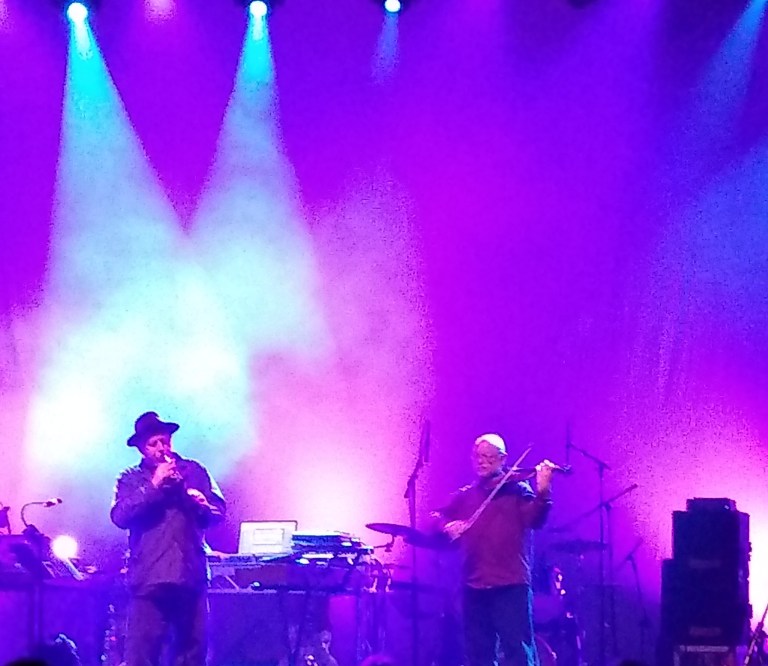
The Utopia Strong produce great washes of sound, a mix of electronica, and both electric and acoustic instrumentation, somewhat tripped out but at the same time disquieting, not safe enough to be background music and also not totally relying on beats to sanitise it. When I discussed the fact post gig with Kavus that I hadn’t heard any of the tracks on the album performed (I’d been particularly been looking forward to hearing ‘Brainsurgeons’ and ‘Do You Believe in Two Gods?’ it became clear that I’d misunderstood the process – the music is completely improvised, starts from a blank canvas every time, and therefore every performance is unique. If I’ve got this right, the genesis of each piece is a series of initial module sounds triggered and compiled by Steve Davis, here seated studiously stage left, squinting at the mass of wires in front of him, and possibly to a lesser degree from Mike York stage right. Kavus’ job is to add electric guitar, sometimes crashing, sometimes picking, sometimes glissandoed, plus hefty washes of harmonium, voice or the gong-like crescendo of a single cymbal. Mike York adds a descant recorder or, best of all, what appeared to be an uillean pipe into the mix. All elements can be looped and effects abound, particularly reverb. Behind it all is a bubbling, swirling light show, the overall ambience accentuated by the intensity of Davis’ and York’s concentration and Kavus’ occasional wild gestures.

kavus 2.jpg

The audience was a fairly typical Golden Lion crew, not all entirely there for the merits of the music (although the reasons for that will become more clear as this review progresses), some rapt in appreciation, others taking the chance to rattle away noisily towards the back of the room, illiciting some strong reactions from at least one aggrieved punter. This wasn’t a problem until the music dipped more into quieter reflective passages, at which point the general babble could be construed as being just damned rude. The music built organically, unexpectedly and there were several small conferences between Kavus and the other band members mid-piece before things moved off in new directions. Like all improvisations there’s a hit and miss element to the final results, but this was ultimately intense, trippy and totally immersive, not always comfortable listening, but certainly transportative.

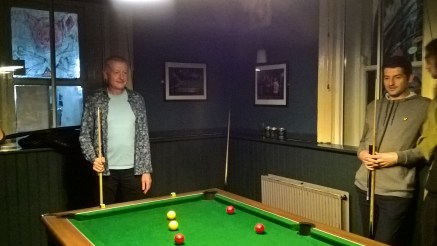
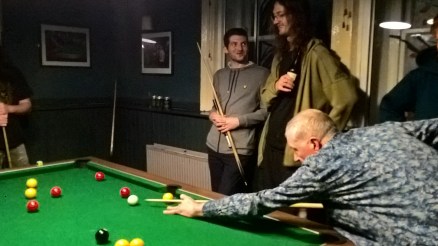
A quick check in at the sound desk where we grabbed a few words with Kavus but things were already moving on. Steve Davis, as apparently he did last time he DJd at the Lion, had agreed to take on all comers down in the pool room, and so a memorable half an hour or so ensued in an extremely convivial but rowdy back room downstairs. Did Steve win all his frames? Probably not, given the occasional crowd cheer which raised the roof, but his involvement was genuine and a joy to witness. One of his challengers was an old cricketing colleague of mine who confessed he’d been practicing all week with the game plan of potting a ball from the break, then clearing up all the balls. This cunning plan came to a sticky end as soon he lost the toss to break. Meanwhile we were chatting to Mike York about his pipes, which he identified as actually being border pipes from the West Country, partly inflated by mouth but mainly through bellows pumped via an elbow. He’d not been happy with this particular section of the Utopians’ performance although it had been one of the more stand out moments for us.

WP_20191108_22_30_30_ProWP_20191108_22_30_49_Pro

But once again things were moving on. Whilst the room upstairs that hosted The Utopia Strong is tiny and at best hosts around 80 people, the downstairs bar opens out nicely, funneling the audience past the bar towards the DJ booth, with a space towards the side complete with sofas and armchairs producing a warming living room feel. Not that many people remained seated for long. The Torabi/Davis set is hugely eclectic, upbeat and danceable as long as your feet are prepared to move in a multitude of directions: there were tracks from Talking Heads and the Beatles, Magma’s near neighbours Offering and Weidorje, a personal blast from the past in Spacemen 3, a spot of The Utopia Strong themselves from their album plus all manner of weird and wonderful stuff not (yet) on my radar. Possibly the most enjoyable DJ set I can recall hearing, all fuelled by a febrile atmosphere, lots of bonhomie and plenty of drink imbibed from both audience and performers. Things were still showing little sign of abating as we left a couple of hours into the set. Outlandish things do indeed happen in Todmorden….

steve-davis-e1573424676327.png

Thanks to Annie Roberts for many of the pictures (the better quality ones!)

Buy the Utopia Strong album at https://theutopiastrong.bandcamp.com/album/the-utopia-strong


Henry Cow – the World is a Problem – Benjamin Piekut (Duke University Press)

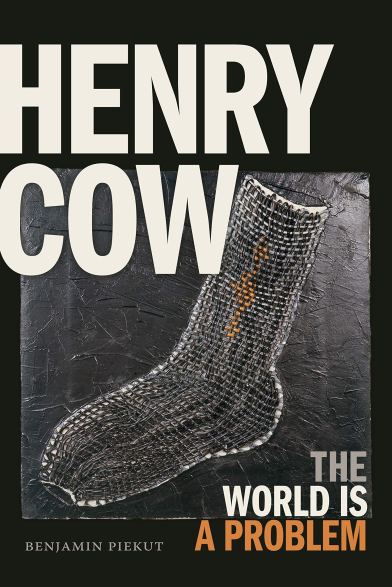
book cover.jpg

In the early days of producing my fanzine Facelift in 1989 I made the cardinal error of publishing something which suggested Henry Cow might be part of the Canterbury scene. I probably wasn’t even aware of doing this until a letter arrived from their drummer Chris Cutler which politely but firmly admonished me for such a suggestion, before offering support for the ‘zine and putting me on the mailing list for his Recommended Records label and distribution network. Ultimately this opened up a whole new musical world for me: Skeleton Crew, Fred Frith’s ‘Step Across the Border’ and ‘Gravity’, The Art Bears and The Work, much of which was more accessible than the Henry Cow I already knew, whose music was and remains something of a mixed blessing to me.

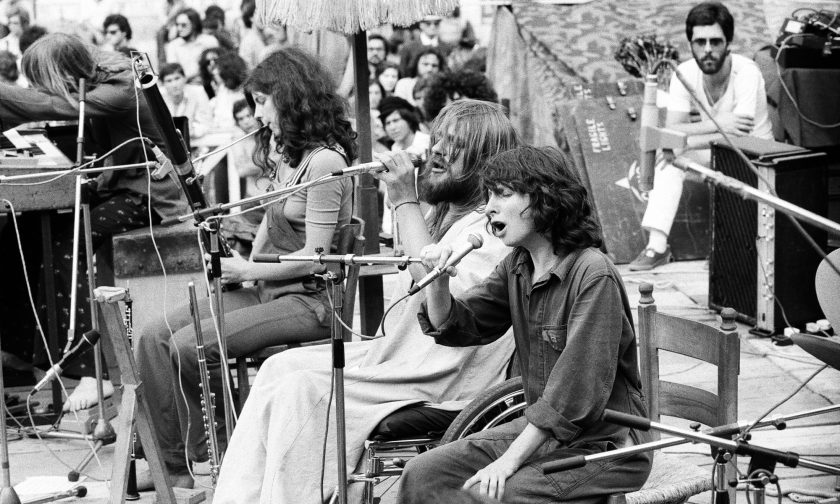
Henry Cow may indeed not be part of the Canterbury scene but what is indisputable is that the paths of musicians from both genres intertwine inevitably, be it from the days of the Ottowa Music Company ensembles in 1971-2 which involved Dave Stewart; to John Greaves’ involvement in National Health (alongside Georgie Born) and Soft Heap; to Hugh Hopper’s work with Lindsay Cooper; Geoff Leigh’s connections with Phil Miller; plus of course the fact that Robert Wyatt unforgettably co-fronted Henry Cow for a heady few concerts in 1975. Facelift published interviews with Dagmar Krause and Peter Blegvad but also gave column inches to Jakko’s involvement with the Lodge (alongside Blegvad and Greaves), Lindsay Cooper’s ‘Oh Moscow’ and much much more. And so this is why this remarkable 500 page tome from Benjamin Piekut can be viewed as an almost a parallel narrative to that of the Canterbury scene and you don’t have to be a Henry Cow expert (I am not) to fully appreciate the story.

This biography is many things but its main strength is as a chronicle of the band’s extraordinary history which spanned barely a decade, meticulously researched from a vast array of sources, not just from the music papers of the times but via interviews with the musicians, plus access to private musicians’ notes, diaries and minutes from the band’s many documented meetings. This, alongside the fact that a significant number of Henry Cow members and associates were at the book’s launch in London suggests that this is a history with involvement of differing degrees from various members of the band, and it would appear that few stones have been left unturned in attempting to produce a definitive biography.

henrycow group photo

Secondly it’s almost a sociological study of a band who very much set out to be different not just musically but also politically – their creation of difficult, questioning music was not just a function of the considerable musical talents of several significant intellects (the band initially emerged from the university of Cambridge), but of a desire to function as a band somewhat differently from the norm.

I was aware that Henry Cow were keen on documenting their own history, often in situ, but having read little of this other than what came my way as archive clippings from the 1970s music media I learnt a lot which surprised me (but maybe not others) – such as the functioning of a band as a collective with its own payroll incorporating a small army of assistants as equal members (roadies, technicians, administrators). Frequent allusion is made to group meetings which decided every facet of the band’s existence, both musicially, ideologically and logistically. Piekut makes much of the term ‘contraviviality’ – his argument is that the tensions within the group, as well as their constant struggle to survive economically contributed to the efficacy of the music and in some cases may even been embraced as an essential part of the band’s existence.

‘The World is a Problem’ also, perhaps unwittingly, contains the best description I have yet seen of the machinations of the embryonic Virgin empire – the context being how Henry Cow benefitted from the setting up of a label which had a surprise success with ‘Tubular Bells’, which for a while at least helped legitimize the support for non-commercial outfits such as Kevin Coyne, Gong, Hatfield and the North as well as Henry Cow.   That said, Richard Branson, as is well chronicled elsewhere, had little personal interest in either the Cows’ or other roster bands’ music and ultimately Henry Cow began to regard Virgin Records as part of the ‘problem’. There are also interesting passages covering crossovers with Virgin label mates Faust, and much later Mike Westbrook’s ‘Orckhestra’, plus the development of ideas which would eventually culminate in the Rock in Opposition movement involving European likeminds, plus Chris Cutler’s ‘Recommended’ mail order and record label outlets. This is an intensely serious book about what would appear to an intensely serious band, but the mood is occasionally lightened through descriptions of the band’s early Dadaist theatricals, such as a performance where the band staged an argument on stage, then split into splinter groups who performed separately from that point onwards.

henry cow w wyatt.jpg

There are heavy going chapters debating exactly the nature of Henry Cow’s improvisational elements, their ongoing ideological ideas and how they fitted into a bewildering spectrum of politically far left experimental musicians, particularly their involvement in Rock for Socialism in 1977. To the casual cynical observer it might appear that Henry Cow created the perfect alchemy to ensure their indisputably marginal audience: extreme music (either intricately composed or uncompromisingly improvised) fringe politics and an alienating intellectualism which is alluded to often within the book (by members of the band) as ‘pompous’. But heartwarmingly this briefly struck a chord in Italy, where the band played to probably their most appreciative audiences, at politically-motivated events where there was the additional novelty of entering a world with little tradition of rock gigs. Elsewhere there is an entertaining discourse about how the band felt about punk, an intellectual analysis which would probably have baffled most of its proponents, and there is a particularly gem unearthed in that Fred Frith was once considered as a producer for the Sex Pistols.

IMG_20191017_174130442

There are also detailed descriptions (and transcriptions) of particular musical pieces that thread their way through explanations of various time signatures – perhaps somewhat unnecessary given the fact that for the small number of people for whom this is essential information may well have already worked it out for themselves. Even if this is in fact necessary to paint the full picture of what the Cow was actually all about, then these extended examinations are of course much less interesting to this reader than the ‘personal’ stuff – the musical tensions that led to particular members leaving the band at various points; Dagmar’s ongoing battles with both health and the practicalities of taking her young son on tour; the various couplings between wider group members; the assimilation then rejection of the Slapp Happy band of Peter Blegvad, Anthony Moore (Dagmar of course remained and became the band’s focal point); the tensions in the core inner circle of Hodgkinson, Cutler and Frith and how it came to be balanced gender-wise by strong feminist personalities in Lindsay Cooper and Georgie Born. And finally, the changing in dynamics within the band over the recording of what eventually became  the album ‘Hopes and Fears’ (credited to the Art Bears)  and its role in the group’s subsequent disbandment.

Piekut is careful not to deviate much from a script that looks at the activities of the Henry Cow musicians purely from within their lifespan of Henry Cow alone – Geoff Leigh and John Greaves for example, drop off the radar pretty much the moment they leave the band. In that regard, for the Canterbury scene student that is perhaps a little frustrating given subsequent collaborations with musicians we all know and love, but an alternative covering the entire Cow legacy, given that this is already a substantial book, would have entailed a monster. One other criticism might be that whilst Piekut often navigates carefully through the musical scores, and has a clear picture of the personal qualities of the indivduals in the band: Tim Hodgkinson’s intellectual vision; Cutler’s work ethic and charisma; Greaves’ sense of fun; Dagmar’s physical fragility, there is barely a mention of each members’ musical ‘voice’. This for me would always be the starting point: Fred Firth’s dissonant multi-instrumental virtuosity; Chris Cutler’s butterfly drum patterns, John Greaves’ warm human bassplaying, Dagmar’s extraordinary mastery of everything vocal from the serene to the guttural and so on. Perhaps too, within the 100 or so pages of references, bibliography and indeces space could have been found for a timeline which in particular would have enabled the reader to keep pace with the various personnel changes within the wider Cow collective.

These, however, are minor criticisms – this remains a remarkable project: compelling, unique and requiring considerable powers of concentration and assiduousness – somewhat like the band themselves.

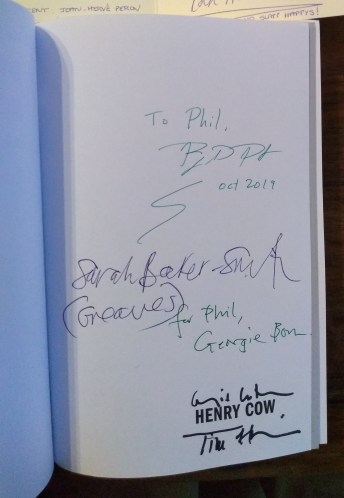
Thanks to ‘Banana Steve’ for procuring this book for me at the October book launch in London

‘The World Is A Problem’ is best ordered from RER Megacorp (because that way the author will see the best rewards for his work)

Soft Machine: Band on the Wall, Manchester, 17 October 2019

theo & logo.png

I wouldn’t want people to think that my social life is a little one-dimensional, but when rifling through my coat pockets before setting out for Soft Machine’s latest gig in Manchester last night I pulled out the ticket for Canterbury Sound gig at the Gulbenkian in Canterbury in June and realised that the last time I’d donned my gig-going leather jacket in anger was also for a Soft Machine gig.

And so for the fourth time in a couple of years (5 if you count the Kozfest performance in 2018 that I heard through the trees – it could have been 6 if you factor in the HRH Prog gig next week that I have tickets for). Same line-up, familiar ground – how could they possibly keep it fresh?

john marshall

The answer is of course obvious: these are consummate musicians for whom no two performances are the same, constantly pulling new rabbits out of the hat in terms of the back catalogue and lucky enough (if that’s the right term) to have an extremely strong album in ‘Hidden Details’ to continue to promote.

For once we arrived at the venue in good time, and were able to make our way almost down to the front of the stage, directly in front of John Etheridge. It struck me that in all my many hours of witnessing musicians at the Band on the Wall, some since its relaunch, but most particularly in the Eighties and Nineties, I have rarely been able to witness musicians at such proximity. With a perfect view of guitarist and the wonderful drumming of John Marshall it was a privilege. Starting with the relatively benign ‘Penny Hitch’, the band were soon ripping into ‘Hidden Details’ and it was here that the band’s abilities to surprise were encapsulated. This particular track has quickly become like an old friend with its reassuringly angular introduction but as it centres around an extended Etheridge solo, and because no two solos are the same, this felt like hearing the piece anew.

john etheridge

‘Fourteen Hour Dream’, a lovely most un-Softs like flute-driven ramble, made its appearance for the first time, the two ballads ‘Heart Off Gold’/’Broken Hill’ genuinely brought a tear to the eye, preceded by a quite wonderful solo filled with Spanish guitar inflections; there was a beautiful version of Hugh Hopper’s ‘Kings and Queens’; and ‘Burden of Proof’, a Legacy number, was dedicated to Allan Holdsworth’s daughter Lynne, who was once again in the audience.  The rasping ‘Gesolreut’, the ever-moving ‘Nettlebed’ from ‘Seven’ (which opened the second set) and ‘One Glove’ from Hidden Details kept things moving at a bluesier, rockier tempo, underpinned by Roy Babbington’s bounding bass.

roy babbington

But the piece de resistance was ‘Hazard Profile’. I think I’ve heard this every time the Softs have played in recent times – it’s an obvious set-closer, a killer riff and general crowd pleaser. But this was something different: tonight performed with possibly the most jaw-dropping guitar solo I have ever seen, even though by this time we’d moved further back from stage. Starting low-end and filthy it gradually built into a quite mammoth investigation of the fretboard, brought to its conclusion in expert style by Theo Travis’ keyboard chords.

theo-travis-e1571416775143.png

The two encores (the reception was so enthusiastic it could quite easily have extended to more) were, a little strangely, ‘Chloe and the Pirates’, but more expectedly ‘Out-Bloody-Rageous’ which is fast becoming the band’s calling card, although I genuinely think they’d forgotten to play it during the main set.

Above all it was Etheridge’s engaging patter which propelled the night along with obvious bonhomie. I’m sure his quips are not all off the cuff, but they are natural and often hilarious: allusions to Roy Babbington’s need to continue gigging because of a large number of children, Theo Travis’ proclivity for different instrumentation being so great that he’d brought a Black and Decker Workmate on stage, or comments about not vacating their stations for the first encore ‘because we’re too old to get off stage easily’, or even a reference to ‘One (G)love’ being a typographical error. I’m sorry John if I’ve revealed all your best lines, but this was gentle self-deprecatory stuff which enhanced the experience. I don’t think the Band on the Wall was full, but, shorn of the seating area from last time (after all if three septugenarians can keep it going for over 2 hours, then why not their audience?), the atmosphere was electric: other than Etheridge the band generally keep masks of inscrutability, but John Marshall broke out into broad smiles at times, not only whilst interacting with Etheridge, but also, as with the rest of the band as a delighted response to the general adulation.

We were lucky enough to grab an extended chat with Theo Travis and John Etheridge afterwards: both revealed their love for the Band on the Wall – in particular John helped me recall, from nowhere, a gig in the early Nineties(?) where he’d gigged with In Cahoots keyboard player Steve Franklin and ‘Rock School’ bassist Henry Thomas. And I talked with Theo about his superb work with Gong for ‘Zero to Infinity’ and his connection to Steven Wilson. Two masters of their art amongst a band of jazz-rock deities. I’m already looking forward to the next time…

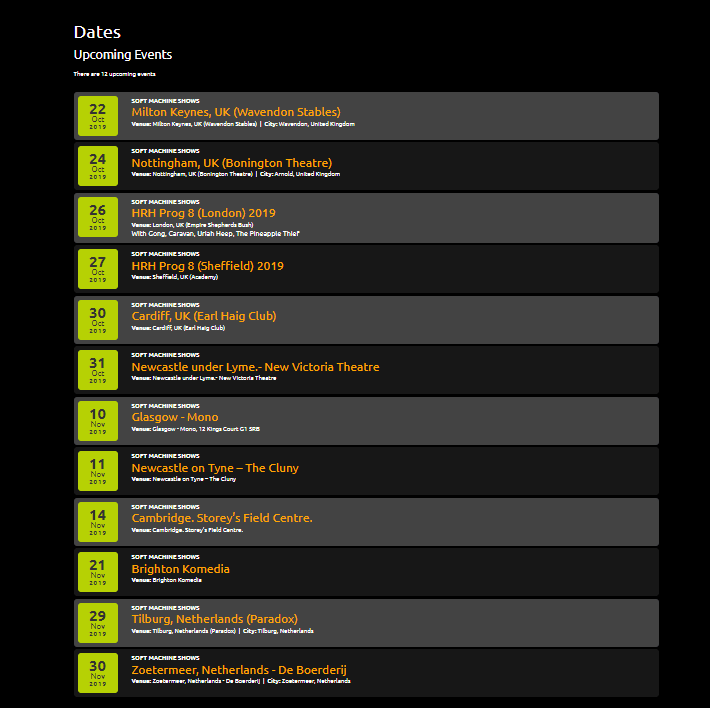
softs dates

North Sea Radio Orchestra: Folly Bololey (Dark Companion)

annie-and-john-med-res

I suspect that for most people reading this blog, the words ‘Foley Bololey’ will be an instantly recognisable part of their own Canterbury lexicon in a similar way to  ‘Punkweed’ or the Octave Doctors. Robert Wyatt’s Learesque lyrics from which this snippet was taken, added greatly to the subterranean otherworldliness of his classic album ‘Rock Bottom’ and it is this album which is reprised in its entirety, alongside other instantly recognisable pieces from the Wyatt canon, for this 2019 release by the North Sea Radio Orchestra.

The NRSO turn out to be a collective of some vintage stretching back to 2002, based around the leadership of Craig Fortnam, propelled along by a small army of classical instrumentation which includes clarinet, bassoon, cello, violin, alongside more traditional rock armoury. This CD, their sixth, is actually credited to North Sea Radio Orchestra featuring John Greaves and (vocalist) Annie Barbazza, which reflects the fact that these two musicians are very much centrestage in the project. The album was recorded live in Italy in late 2018.

‘Folly Bololey’ is just the latest in a number of projects chronicling the work of Robert Wyatt (others include Soup Songs and Comicoperando), who, in involving musicians with a personal connection to Robert, both celebrate the output of a much admired musician and fill something of a vacuum, given that his last real sequence of live appearances were as far back as the mid-Seventies. The prominence of John Greaves on this recording is poignant, for it was he who played bass on the triumphant Henry Cow gigs in 1975, for which Robert Wyatt was a high profile guest.

Despite the large and varied cast, ‘Folly Bololey’ is largely faithful to the originals’ arrangements, with the greatest deviations being more the nature of the instrumentation used rather than any major reinterpretations. So for example Mike Oldfield’s soaring guitar on Little Red Robin Hood Hit the Road is partly replaced by soprano vocals; whilst the simple drum patterns which became a necessity following Robert’s accident are often reprised faithfully on full kit by Gong’s Cheb Nettles. Best moments for me are a very thrashy version of ‘Alifib’, which is cacophonous where the original was disturbing; and ‘A Last Straw’ on which the sub-aquatic feel of the original is perfectly captured by a lovely vibraphone solo from Tommaso Franguelli. And John Greaves’ bass is quite stunning throughout, whether it is fulsomely recreating Hugh Hopper’s lines on ‘Alifie’ or slightly subverting the riffs on ‘Little Red Riding Hood Hit the Road’ – well up in the mix thoughout the album, it rumbles along magnificently.

cover-web-2-med-res

Which brings us to the vocals, largely covered by Barbazza and Greaves. ‘Rock Bottom’s’ charm was, as with all Wyatt albums, as much about the prominence of an iconic voice as his compositions, and, even given Barbazza’s acknowledged admiration for his work and Greaves’ personal connection, any attempt to recreate it must have been scary. Credit to Barbazza she neither attempts to mimic the inflections, or sanitise with either classical overtones or operatics – this is a straight performance of appealing clarity. The counterpoint is Greaves’ more idiosyncratic and instantly recognisable voice, but this is mainly confined to the Ivor Cutler monologues from the ‘Hit The Road’ tracks – in alternatively rasping and sepulchral delivery, both work well.

At the other end of the scale, both ‘O Caroline’ and ‘Sea Song’ were so effective in their simplicity first time around that any attempts to match them are perhaps futile – here, the former at least brings up to date the conversational lyrics courtesy of John Greaves whilst the latter doesn’t really start to tingle until vocals join bassoon and guitar for a lovely intertwining coda.

The album features 4 bonus tracks from beyond the original ‘Rock Bottom’ album, two of which, ‘Ship Building’ and ‘Maryan’ were both written for Robert in their original forms, alongside the aforementioned ‘O Caroline’ and ‘The British Road’, a very straight ahead rock version of one of the tracks from Robert’s superbly stripped down ‘Old Rottenhat’. Best is probably ‘Maryan’, that very Rock Bottomesque track from ‘Shleep’ with its abundance of warm acoustic sounds from violin, bassoon and vibes.

I very much sat down to listen to this album from the point of view of needing to be impressed. And in many places I was: you’ll find it difficult to purge from your consciousness the performances of the ‘Hit The Road’ tracks in particular and I would imagine witnessing a live performance would be even better – reports of the gig at Café Oto earlier this year were uniformly glowing.  If you don’t already have this CD, I suggest you purchase soon, as apparently the initial run of 1000 is almost sold out.

http://store.maracash.com/product_info.php?products_id=496

The search for the Khaen: Didier Malherbe’s most obscure album?

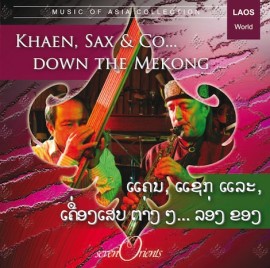
CDK1_LV4.QXD

The arrival of the album ‘Down the Mekong’ through my postbox on Tuesday of last week completes the search for an obscure Didier Malherbe CD which has taken over a year and become an unlikely Holy Grail for myself and another reader of this blog.

I first saw Didier back in 1989 at the Swinging Sporran in Manchester, when, unheralded, he appeared alongside Daevid Allen going under the umbrella of the Invisible Co-opera, in a gig which also introduced me to violinist Graham Clark. The band performed music which was already starting to move away from the devotional material of a year before when Daevid Alen had returned to the UK and played largely acoustic music alongside partner Wandana Bruce and future Kangaroo Moon fiddle player Elliet Mackrell.

The gig cemented a burgeoning love affair for me with the music of Didier, already sparked by his work both with Gong and his own wonderful solo  jazz fusion album ‘Bloom’. Didier was subsequently ever present in the incarnations through the Nineties of first Gong Maison, then Shapeshifter Gong, which also brought Pip Pyle back into the fold, and then the resurrection of the ‘classic’ Gong (or as near as dammit) which saw Daevid, Gilli, Keith Missile, Steffe Sharpstrings, Didier and Pip all hammer out vintage material in what remains my favourite ever live combo. Didier continued to contribute cameo pieces to albums such as ‘Zero to Infinity’ and ‘2032’ as well as the occasional live performance with the band, but by this time his particular ship had sailed to even more fertile waters, namely his own quite wonderful trio Hadouk.

didier

Didier’s solo career is worth (and will sometime get) an article in its own right: by the time I finally got to interview him http://homepages.3-c.coop/facelift/facelift/didier%20malherbe.html in 1998 at Bury’s Met Arts Centre, alongside French guitarist Pierre Bensuasan, with whom he had an enduring and endearing duo, he was already notching up credits with not only Hadouk but a string of solo and guest projects, many showcasing not just only the full gamut of saxophones and flutes one associates him with in Gong, but an increasing range of ‘ethnic’ instruments. Didier was increasingly taking on the task of submersing himself in the intricacies of a number of non-Western wind instruments, before bending their innate sounds to his own interpretations of jazz.

Centrestage of course was the dudouk (or duduk), the mellow, reedy Armenian wind instrument which gave its name in part to the band Hadouk. The dudouk’s emotive wail is perfectly suited to Didier’s lyrical compositions, and over a decade or more the Hadouk Trio produced 5 albums of breathtaking beauty, far removed from the work of Gong, but a colossal entity in their own right.

One of the trademarks of Hadouk was the appropriation, and not just by Didier, of a range of exotic sounding  instruments. If Didier introduced me to the doudouk, and Loy Ehrilich to the hajouj, then it was percussionist Steve Shehan who gave me my first taste of the hang, a wondrously melodic tuned percussive instrument aired on the Hadouk classic ‘Hijaz’,

which for me led to the exploration of a whole new world of handpan drums played by the likes of the genre’s masters David Kuckermann and the Siberian multi-instrumentalist Vladiswar Nadishana. Nadishana guested on one gig with Hadouk in Paris 2008 and eventually took Steve Shehan off to record with the Nadishana trio, thus bringing to an end the Hadouk trio.


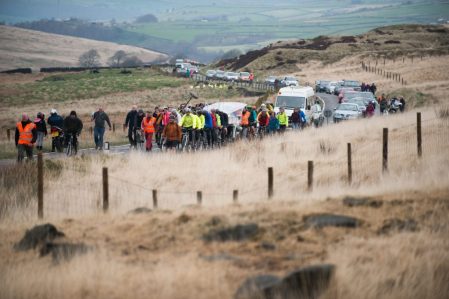
I was so utterly consumed with the music of the Hadouk Trio that I vowed to travel to France to see them perform,  but the arrival of children in 2009 and 2011  made such whimsical trips abroad increasingly unlikely. Hence on finally hearing of a gig opening the Scarborough Jazz Festival in September 2011, I believe their first ever UK gig, I checked some dates and worked out that their Scarborough gig would fall just a day after the monthly jazz club event at Hebden Bridge Trades Club. HX7 Jazz was an embryonic monthly jazz night set up by Dave Nelson, a hugely important musical figure in the local community, composer, pianist and later organizer of the Piano40 festival. Plus memorably, a suite later conceived for the Tour de France’s visit to Hebden Bridge in 2014, when Dave’s piano composition was performed on a grand piano towed on a trailer up Cragg Vale, the longest continuous ascent in England, pulled by 18 bikes welded together – I was involved in testing the prototype for that particular eccentricity.

TheGrandDeparts_020-1024x684

So, a phone call followed, Dave, who shared some mutual musical interests and was conversant with Gong sorted out all the logistics and I helped with the publicity. http://www.hebdenbridge.co.uk/news/2011/148.html The Hadouk Trio arrived in Hebden Bridge to play to a sell out crowd and it was one of the most memorable evening’s music I can recall. I was particularly entranced with the sheer multi-faceted genius of Loy Ehrlich as he switched from strings to keyboards, or even played them simultaneously. If I’d been hoping for the band’s full arsenal of instruments however (the first Hadouk album alone lists nineteen) then I would have been sadly disappointed: not only did Steve Shehan not travel with the band (in fact he may have already have left the band by this point) – and hence no hang – (his replacement was a rather excellent tabla player) – but Didier limited himself to saxophones, flute, dudouk and his unlikely tour de force on amplified spinning tops. The fact that the band was travelling relatively light was quite reasonable given the brevity of their UK tour  – it would have taken quite some van to accommodate their entire 3 man orchestra .

Over the subsequent years, I’d taken it upon myself as something of a quest to collect as many of Didier’s recent projects as possible. Included would be the double album with Eric Lohrer, two further albums with the new Hadouk Quartet and further solo or duo projects, This is where the trail gets slightly confusing: some of these solo works are hosted and published by the Cezame Music Agency https://en.cezame-fle.com/index.php?dlcsv=1 , a compendium of library music from French musicians with a streaming service which allows you to listen to any of said tracks (alongside many thousands of other tracks by French musicians including the likes of Sophia Domancich). Tracks are categorised not by musicians involved but by composer and include fulsome descriptions – this is a service aimed at film producers and documentary makers looking for accompanying soundscapes. A recent search on their website revealed no less than 127 tracks credited to Didier as a composer or co-composer and even that omits the recent duo album with another ex Gong musician Shyamal Maitra. Whilst the duo album with Loy Ehrlich ‘Windprints’ clearly is less heavyweight than Didier’s band projects, (Hadouk-lite perhaps) and the brevity of the tracks reflects this, some albums of more incidental music such as ‘Desert Lands’ do not appear in the catalogue, whilst another Malherbe/Ehrlich duo project CARNETS D’ASIE ET DA’AILLEURS, which I’d avoided for a while because I thought it was likely to be less substantial reveals itself to be a quite magnificent, intricate album.

At Kozfest in 2018 we were camped opposite a couple who appeared to be gravitating towards many of the same Gong-related  gigs as us. Eventually we got talking: the fella, bronzed and habitually stripped down to the waist  introduced himself as ‘Banana Steve’, and as one might expect was an aficionado of both Kevin Ayers and Daevid Allen. We discovered a mutual connection to Martin Wakeling, author of the much-loved Kevin Ayers fanzine ‘Why Are We Sleeping’, but also a interest in Didier Malherbe obscurities. Whilst I’d had some joy in tracking down the majority of items listed on Didier’s discography here: one album in particular remained elusive for both of us: a duo album with Khampha Inthisane ‘Down the Mekong’

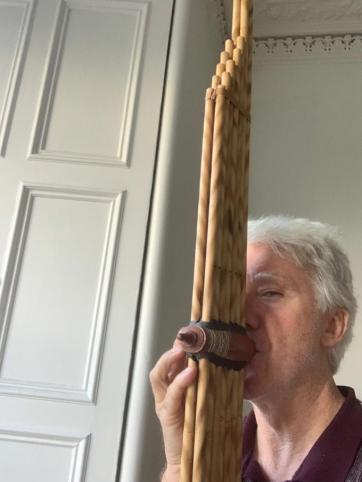
Which takes us to one of the missing instruments I’d been hoping to witness Didier playing in Hebden Bridge– the  khen (or khaen),. Alongside the hang, the khen is responsible for the most unusual sounding music on the later Hadouk Trio albums. On the sonic scale somewhere between a mouth organ, a church organ and a harmonium, it enjoys similarities to the hang in that it can be used to produce chords as well as single notes, no doubt intriguing Didier in terms of the possibilities this opened up.  It also has something of an archaic sound to it, which reflects the instrument’s rich cultural history – it is a traditional instrument from Laos. The khen is a multi-pipe wind instrument made from 14 separate hollow bamboo cones, arranged vertically and with the bizarre visual impact of splitting the player’s face by partially obscuring it, as demonstrated so well on this video  from around 3.20 onwards

Fans of the Hadouk trio will instantly recognize the sound from Parasol Blanc http://www.didiermalherbe.com/wparas3.mp3, where the khen and hajouj  form a beautiful backdrop for a rare solo guest performance from Jon Hassell on trumpet.

A teasing snippet on Didier’s website http://www.didiermalherbe.com/saxdak.mp3 is all that is available to sample from ‘Down The Mekong’ – released in 2011, there are no Youtube samples, no copies available through Planet Gong, contact with the website suggested there were no longer any copies left and tracking down the record label 7Orients only revealed a website which had not been updated for several years and was certainly not returning emails. More extensive google searches revealed a single copy held in an academic French library, presumably available to listen to for someone with the right credentials, but unlikely to be me. But on ebay, amazon, discogs and other more specialized outlets – nothing. I did however, locate a rather interesting interview with Didier in the Laotian Ventiane Times entirely devoted to the khen http://www.laja.la/sub-page/TOURISM/Cultural_TouristSites/khaen%20final2018.pdf?fbclid=IwAR3SZcc5Ms59k3FpcbveqeEp80EfDErAC5Jt40onQSV8cUvQWkUff6hAhO8

Finally, another push towards Didier’s website curator and friend of Facelift Luc Pilmeyer elicited direct contact with Didier and an email exchange followed – he was in Provence, then in Luxembourg, but would dig out a copy on his return. And then… miraculously, in a jiffy bag, complete with his good wishes on the cover, the CD arrived.

As I write, I’m still into the first few listens of Down the Mekong – it sounds lovely. In true  Didier style, whilst he claims to practice the khen daily, in a typically humble act he has left all khen playing to Khampa Inthisane, whilst he accompanies, often providing the melody line, principally on saxes and doudouk. This deferential approach mirrors that of my favourite of all Didier videos

when in the earliest stages of his own obsession with the doudouk, he recorded a superb version of his track ‘Serpent d’Etoiles’ on Russian television alongside Patrice Meyer, this time performing on soprano saxophone, whilst watching beady-eyed as an acknowledged master of the doudouk, Djivan Gasparyan produces a weaving, evocative solo.

Postscript: whilst waiting at the start of September for ‘Down the Mekong’ to arrive, my brother-in-law John came to stay for a couple of nights at our new place in Todmorden. John, a linguist and academic, is a seasoned South Asian traveler and has spent time living in Japan and Malaysia as well as travelling further afield. Whilst relating the story you’ve just read above, it emerged that John had visited Laos, and after I had somewhat cack-handedly attempted to describe the khen, John revealed that he’d attended a concert whilst travelling and had returned back home to Edinburgh the proud owner of an instrument which sounded very much like what I was describing. A couple of days after his visit this photo arrived, proof indeed that we were indeed talking about the same instrument. In a twist that I’m sure Didier would have appreciated, it landed the same day as ‘Down the Mekong’ arrived. Would you khen it…

john

Here and Now, Featherteeth, Tom Ashurst/Mark Robson, The Golden Lion, Todmorden, 5 July 2019

tom ashurst here and now poster

Happy days! In the course of a heady 6 weeks or so I’ve seen Gong, the Ozric Tentacles’ Ed Wynne Band, the Steve Hillage Band, Soft Machine, Caravan, a host of ‘new’ Canterbury bands including Lapis Lazuli and members of Syd Arthur, and now this. If the trip to Canterbury took out a couple of days in travelling, the reward was a gig literally at the end of our street as Here and Now arrived in Todmorden.

The Golden Lion is a venue fast approaching legendary status in its locality. The Boxing Day floods of 2015 came in the middle of, but did not deter, the establishment of this remarkable pub as the musical hub of its community. Ramshackled, chaotic and utterly vibrant, the Golden Lion appears to constantly do several things at the same time: multiple musical events, excellent Thai food, a craft ale shop and a well stocked bar. We’d wandered down the road a few weeks previously, ostensibly to see an excellent local outfit called Jumble Hole Clough perform in the tiny gig room upstairs, but never got past the ground floor bar as a remarkable open mic night, hosted by various members of the utterly bonkers Bacup collective Mrs Cakehead drew us instead into a surreal, anachronistic and fairly approximate blend of 60s flower power and 70s punk attitude.

Tonight’s gig was a threefold event: Here and Now headlining, local act Featherteeth as the main support, and the excellent Tom Ashurst/Mark Robson duo third on the bill. I’d been looking forward to the latter as much as anything, courtesy of the superb live CD recorded by the two reviewed here earlier this year. Traffic problems for Here and Now put back start times for each of the acts, which meant that at the time the gig was due to start the support acts were still soundchecking. Even the Tom Ashurst soundcheck was startling – this precocious talent purveys flurries of bluesy acoustic guitar, often sampled in loops to build multiple layers of sound, then solos effortlessly over the top.

tom ashurst

Tonight’s setlist bore little relation to the CD – the only common song I spotted was a cover of Softs’ ‘Tales of Taliesin’, and even this was shorn of its main guitar solo theme. The venue, upstairs, shrouded in a red glow as thick curtains blocked out the last of the evenings’ sunlight is a somewhat intimate affair – with a capacity of no more than, say, 80 – the numbers assembled slowly built during the set, unfortunately not always by people who seemed willing to listen to the intricacies of the music, here thoroughly embellished by the work of Mark Robson on keyboards, all subtle accompaniments and soundscapes. As Mark explained, he and Tom live at opposite ends of the country, with scant time to practice together, which makes their telepathy all the more impressive. Given the general cacophony amongst the audience I half expected Tom, who possesses a fine line in fruity language, to tell the offenders precisely how to shut up. But actually a rather cleverer tactic prevailed, namely to engage the audience in somewhat more rowdy song-based numbers – I’m not that familiar with the Hawkwind back catalogue, but am guessing that ‘Night of the Hawks’ is part of Tom’s repertoire with the Hawklords, for who he plays bass. A shame not to hear Tom’s superb version of ‘Fohat’, but that’s hopefully for a future, more elongated set.

featherteeth.png

Featherteeth

Featherteeth are a band whose name I’ve seen knocking around locally, and even recognised their violinist as a someone who busks around Tod. This was a hugely enjoyable straight-aheadish four piece based around guitar/vox, bass, fiddle and drums, mixing a few anthemic tunes with some more earthy numbers propelled along by some all-encompassing drums and some excellent fiddle work. Highlights for me were the jiggy ‘Animal Tracks’ the evocative ‘Indian Giver’ and some extended numbers with a ska backbeat. Good rousing stuff to really get the feet moving. To get a taste of what this band are all about, check out this video recorded recently at Todmorden’s BinBagPig studios https://youtu.be/i-rJTVUYBpg

mark robson andy burrows

Mark Robson, Andy Burrows (Here and Now) photo: Phil West

Here and Now are these days a four piece: Keith Bailey on bass, Mark Robson on keys, Andy Burrows on guitar and Gem on drums. This gig was a one off (in a brief chat with Keith he told me that the original plan was to do 3 concerts), but there will be another gig later this month in Southampton prior to the band’s headlining spot at Kozfest. Publicity had been sparse for this gig, but necessarily so as with such a small capacity venue, it had quickly sold out. Word had still spread remarkably quickly to the extent that there were many people who’d travelled a distance. In a heaving amorphous mass, the audience almost blended with the band: Gong T-shirts and dreadlocks abounded and hazyish memories recall a fairly extensive set with a desire to stretch things out which I don’t quite recall from my last time seeing them at Kozfest 2017. Some very familiar tunes which roused a crowd clearly consisting of the converted included ‘What You See Is What You Are’, (the iconic opener from ‘Give and Take’), a very fine rolling version of ‘Surgeon’s Knife’ from ‘All Over The Show’, samplings from the ‘Fantasy Shift’/’Theatre’ era and the inevitable outtings from ‘Floating Anarchy’, including bits of the ’No More Sages’ suite.

keith bailey.jpg

Keith Bailey, Here and Now photo: Phil West

There were at least two songs I didn’t recognise, and whilst I’d assumed these were from the Eighties repertoire I was less familiar with, the fact that Keith introduced the second one as ‘another new one’ suggests that there is strong new material the band is performing, it was utterly in keeping with the expansionist vibe of the evening. I’d mentioned to a friend who hadn’t seen the band before that they would witness one of the finest bass players in the business, and that was certainly confirmed, but I was also totally impressed by Mark Robson on keyboards. I remember when he first joined the band perhaps 20 years ago being slightly perplexed at how such an apparently gentle soul (responsible at the time for releasing the stripped down ‘In Search of a Simple Life’ and fabled for his didgeridoo, penny whistle and soothing vocals) would fit into a rousing punky band. Tonight, well up in the mix, it made sense. A shame that Andy Burrows was less fortunate in terms of sonic exposure – I had to worm my way to the front of the heaving crowd to get a real flavour of what he was doing – he is a fabulous guitar player but his sterling work wasn’t always audible.

Strangely enough, the band’s rousing send off (and I can’t remember whether this was ‘Opium for the People’ or ‘Glad You’re Here’, both of which really got the crowd moving) was greeted with tumultuous acclaim but not calls for an encore – perhaps people were either overwhelmed, or just desperate for some air. Or in our case, just about capable of dragging ourselves back up the hill, exhausted.

setlist

Caravan, Soft Machine, Jack Hues, Lapis Lazuli & Nelson Parade: a weekend of Canterbury music (and more) at the Gulbenkian Arts Centre, Canterbury, 21-22 June 2019


Gulbenkian. 50th Music. Photography by Jason Pay-71.jpg

Caravan at the Gulbenkian: photo Jason Pay

If you’ve been invited to speak in a city whose music you’ve been writing about for 30 years, it’s probably best not to start with an opening gambit of “this is only the second time I’ve been to Canterbury”, but that was how I started my talk at the Canterbury Sound event held at Christchurch University in 2017.

I could sense the room visibly bristle even as I said it. The nature of that second trip to Canterbury (arriving late on Friday night with the whole of the next day spent indoors) meant that I left on the Sunday morning still not much the wiser as to the charms of the city. I vowed to rectify this at some point in the future, for, after all, it’s a bit contradictory making a couple of ‘pilgrimages’ to Deia in Mallorca on the basis of a Canterbury connection if you’ve barely experienced Canterbury itself.

The perfect excuse came with the Gulbenkian Arts Centre’s 50th birthday celebrations and an ambitious program of events which peaked with Saturday evening’s Soft Machine/Caravan double header (and much more..) but also included: a ‘New Canterbury Sound’ event on the Friday evening; a multimedia event the previous Monday based around ‘You Are Here’, the innovative history of the city from Matthew Watkins, who has done more than most to bridge the gap between old and new Canterbury sounds and is a champion of both; and an album airing of Caravan’s ‘For Girls Who Grow Plump In The Night’ on a lazy Sunday afternoon, featuring the thoughts of participants Pye Hastings, Geoffrey Richardson and producer David Hitchcock. Sadly our trip would only be able to incorporate the middle two events, but with no less than 10 musical acts to peruse within them, this would be rich pickings indeed.
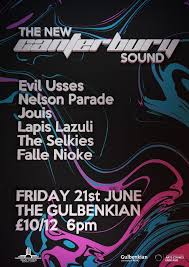
new cant sound image

On the longest day of the year (and possibly the hottest) a drive down from West Yorkshire and an unintended hour-long walk from our campsite through town and up the hill towards the Gulbenkian (I’d foolishly not realised that this arts complex is part of an extensive out of town university campus) meant that we arrived a little hot and bothered but in time to catch the last couple of tracks from the mellow groovings of Jouis. We were greeted by a beaming Joel Magill, from the Dawn Chorus Recording Company. Curator of tonight’s impressive 6-band billing, he is known best to us as the bass player with Syd Arthur, and as a new dad presumably currently surviving life purely through bonhomie and the fumes of adrenaline. Either way he seemed as unphased as it is possible to be as the MC of an event as ambitious as this. The evening, which had been running since about 7 o’clock, alternated bands between the Gulbenkian café, an intimate ground floor setting, with its music filtering out through the open doors on to campus;  and the more stark artsy surroundings of the Theatre with its black stage, tiered seating and dimmed lights.
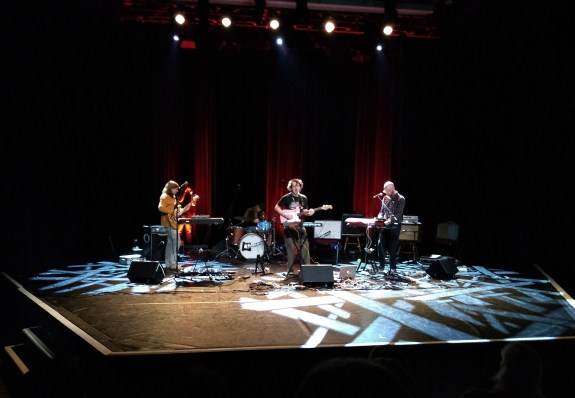
nelson parade.jpg

Nelson Parade

The first band we saw in its entirety was Nelson Parade. I knew there was a Syd Arthur connection here, but hadn’t quite unpicked the link. Syd Arthur’s music more recently has trimmed itself down from its folky roots to something more poppy and electronic, simplifying the rhythms and favouring a more direct approach. This is mirrored to some extent too by drummer Josh Magill’s new project Joshua, and even some website material I’ve heard from violinist/mandolin player Raven Bush. Nelson Parade appear to be ploughing a broadly similar furrow (they label themselves psych pop), but there were a few surprises en route. Firstly, they are fronted by a fourth Magill brother, Callum, mop-haired and bespectacled. I am only familiar with his superb work with The Boot Lagoon, who featured his cacophonous distorted keyboard work providing the textures to seriously groovy music – one Facelift contributor reckoned they was closer to the Canterbury scene sound of Caravan than anything that Syd Arthur purveyed. Nelson Parade on the other hand are a four piece featuring Callum on vocals behind a keyboard (and occasionally guitar), with brothers Josh and Joel on drums and bass respectively, with further guitar stage right. This was a performance of unexpected showmanship.
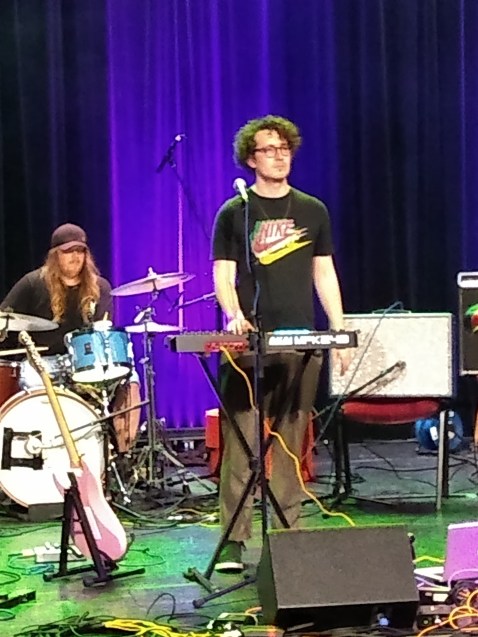
callum and josh.jpg

Josh and Callum Magill, Nelson Parade

Like Syd Arthur’s front man Liam Magill, Callum has a voice which dips in and out of falsetto, and a certain nervous energy underpinning his body language, but this was much more sharply characterised material than Syd Arthur’s often gentle tunes. I was expecting to sit watching this performance in a certain amount of quiet approval at cleverly crafted pop without ever fully being convinced, but it was almost as if a band with credentials such as this couldn’t help themselves in reaching out into more exploratory territories, firstly through a bossa novaish piece ‘Go Home Nelson’ recalling Caravan’s themes and sounds, then through a final piece (possibly ‘Kevin crashed and then woke up’?)where 3 members of the band ended up front of stage, widdling effects boxes in a mesmeric, psychedelic finale. Apologies for the lack of further details here – this was a band completely new to me and I intend to check out further material at https://nelsonparade.bandcamp.com/releases
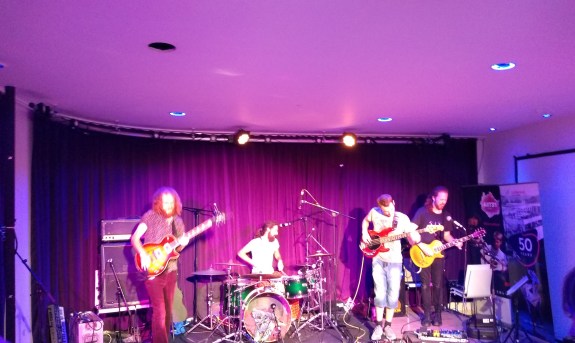
lapis.jpg

Lapis Lazuli

And so back to the café and the hotly anticipated Lapis Lazuli. I was musing on the long drive down that on average each journey I’ve made to see this remarkable band has involved a 500 mile round trip. It must say something about the band that this seems quite a relatively reasonable undertaking to make given the effort which goes into creating their own astonishingly complex compositions.  And for all the initial euphoria of seeing them in Canterbury in 2017 and the Kozfest performance in 2018 where they provided a memorable antidote to the dronish fayre which dominates there, this gig was undoubtedly even more extraordinary.
adam3neil

Adam Brodigan & Neil Sullivan, Lapis Lazuli

Helped by razor sharp drum sounds and a conducive setting where the crowd (complete with several small children running free) and band seemed to merge into a single entranced mob, the band performed three tracks from their most recent album ‘Brain’, all breathtaking in their audacious composition and execution. As one punter remarked, this is a heavier Lapis Lazuli, eschewing any remnants of acousticity into a noisy guitar-driven pulverisation of the senses. New guitarist Martin took the place of Dan Lander and musically made it a seamless transition, but centre stage was the lead work of Neil Sullivan, all flailing hair and strides which matched the purple curtain backdrop;  the dextrous precision of drummer Adam Brodigan; and the irrepressible presence of Luke Mennis, who not only lives and breathes every note he plays, but is similarly consumed by that of those around him.
luke 2

Luke Mennis, Lapis Lazuli

The set started with the fiendishly complex and euphorically delivered ‘Low Key’ and of course was concluded by the new Lapis anthem ‘Hired Soul’, but for me the highlight, unexpectedly, was the stop-start confusion of ‘The Slug’, which extended out into an impossibly catchy groove – for the first time I made the link between this and hypnosis of ‘We Did It Again’ as the crowd were expertly wound up into a frenzy. I could quite happily have jumped back into my car and driven home at this point, so peerless was this performance, although other drivers might not have thanked me for that…
evil usses stage.jpg

Evil Usses on stage

How to wind down? Certainly not with the evening’s headliners the Evil Usses who finished things off in the theatre. Given the stilted Italian announcements coming from the behind the saxophone/keyboard player’s microphone and the exotic hairstyle of the guitarist, who possesses enough extravagant plumes to block up several plumbing systems, one got the impression this band, clearly not from Canterbury, had been flown in for the occasion. In fact they’d made a hop across the country from Bristol – we’d spied their green van, containing some likely looking types on our trip down the M2.

usses

Evil Usses

The Evil Usses were unfathomably brilliant, fuelled by hypnotic, rhythmic bass lines, driving drumming and some sonically stark overlays, be it sax soloing, keyboard effects or abrasive guitar lines. Like Nelson Parade, Evil Usses slowly wound up the audience with ever more weird grooves up to the point where there was a modest stage invasion of around 20 or so hairies of various genders and ages (including most of Lapis Lazuli) gyrating together across the front of the rather large stage front which had previously been stalked by the wonderfully coiffured guitarist.

I left feeling that our first night at the Gulbenkian was one of the best evenings of music I could ever recall. But this was merely the aperitif.

Saturday was a chance to finally look around Canterbury. It’s a strange mix of components: the cathedral an imposing presence from practically every vantage point outside of the city walls, but often obscured from within. The character of some of the older streets and buildings is somewhat subsumed between the inevitable chain stores which abound – even the pedestrian area which has thankfully materialised in the centre of the city could have been transplanted from any other town, with a shortage of places to sit out and absorb the atmosphere on a sunny summer’s day. And yes, we fitted in a trip to the Cathedral, with its colossal dimensions, where a full orchestra practiced for a future performance in the nave, the singers’ voices echoing muddily around the vast indoor cavities.
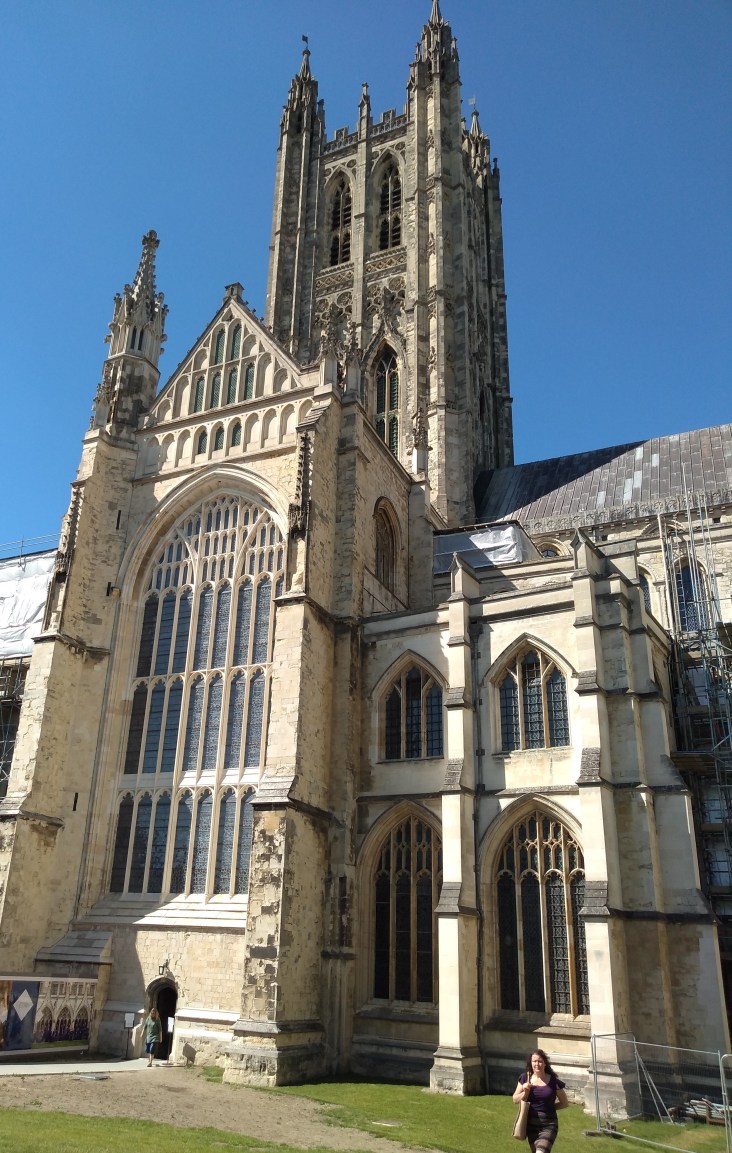
cathedral

gratuitous Cathedral shot

Strangely enough I’d been expecting Canterbury in general to be much more oppressively busy – it was still possible to catch a few reflective moments in the Cathedral’s herb garden, or some of the smaller chapels, until we were beset by a group of fellow visitors led by a member of the local clergy plummily reciting an anecdote about the Queen. Refuelling with a fine veggie meal, we started to slowly edge in the direction of the Gulbenkian, conscious that it would be a good idea to arrive somewhat more promptly tonight.

On the way the local Oxfam had a few CDs for sale, and within its limited non-classical catalogue I spotted no less than 6 albums worth buying for a couple of quid each: Steve Hillage’s ‘L’, two Caveman Shoestore albums from their period before Hugh Hopper joined them, The Polite Force album ‘Canterbury Knights’ (something of a gem) and two albums by the Orb from their later era. If I’d probably already got a couple of these artefacts at home, it seemed rude not to snap them up, the shop was about to close so I wouldn’t be denying anyone the chance. Except that another punter going through the same thought process arrived a minutes later and whilst we exchanged a few  words identifying our affiliation with the ‘scene’,  I felt a few pangs of guilt.
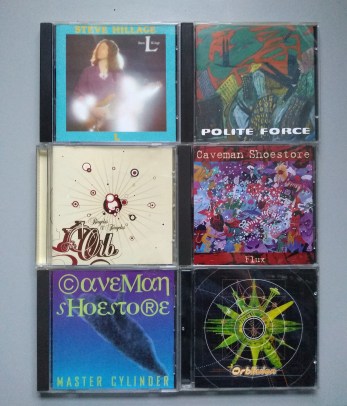
IMG_20190625_131459388.jpg

And so to the evening’s proceedings. We’d been told by a couple of people en route that the ‘Canterbury Sound’ event would start at 6 prompt with Jack Hues, and as I wanted to see the whole evening, we grabbed a bus and arrived at the Gulbenkian with just enough time to snatch a quick word with Aymeric Leroy and spot various performers in the milling crowd, John Marshall and Pye Hastings amongst them, navigating their way around the complex. The concert hall was a much grander setting than even the previous night’s theatre, and our seats were somewhere up in the gods surveying the night’s performances – great for a visual overview, less so for a closeup experience. In the foyer there was merchandise from both Soft Machine and Caravan, the latter sporting some natty new T-shirts and flyers advertising a forthcoming 30 CD box set!
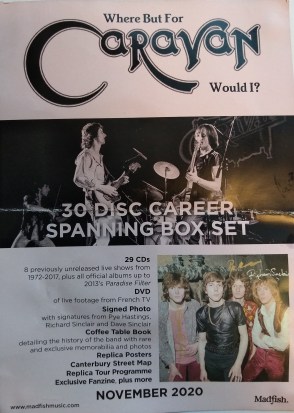
img_20190625_151126866.jpg

Jack Hues was a fellow speaker at that Canterbury sound event in 2017, a musician with latterday connections to the city through his role as a music tutor at Christchurch University, although his own musical pedigree stretches back to the Eighties with Wang Chung. At that 2017 event his own guitar work was backed with his jazz band The Quartet, plus various evocative spoken word passages. However, since then, a vinyl release of a cover of Beck’s ‘Nobody’s Fault But My Own’, backed not only by the Quartet but also by members of Syd Arthur had appeared, resurrecting a connection dating back to 2010 when the larger ensemble had performed Soft Machine’s classic composition ‘Facelift’. Tonight’s line-up was shorn of Liam Magill but contained brothers Josh and Joel, as well as saxophonist Chris Williams, plus the three other members of the Quartet. The band perform impressionistic music, flitting in and out of soundscapes, intertwining recurring themes and occasionally moving off into free jazz territory. The opener was indeed ‘Nobody’s Fault’ but was followed by a new self-composed piece ‘Non Locality in a Sea of Electrons’ which in many ways was the most impressive part of the set, with guitar, keyboard and sax following a singular theme before some muscular drum’n’squawk rhythms a la Bill Bruford’s Earthworks, and a sustained guitar conclusion.
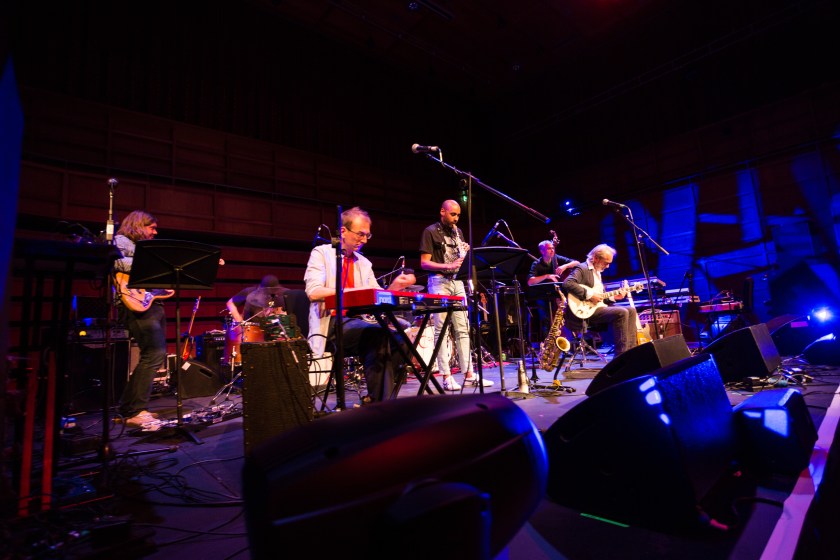
Gulbenkian. 50th Music. Photography by Jason Pay-70.jpg

Jack Hues' The Quartet featuring Syd Arthur: Photo Jason Pay

The third track was a homage to Talk Talk’s Mark Hollis with a cover of ‘Myrrhman’, with a church-organ like ethereality, but as hoped, the climax was the band’s cover of ‘Facelift’. Joel Magill had alluded to the performance of this the previous day when I’d asked him directly whether or not it would be performed – he would only go as far as smilingly admitting ‘It would be rude not to…’ The rendition of any Canterbury classic, albeit one which lends itself to a certain amount of free interpretation, implies a certain level of self-confidence, but there is no doubt that the Quartet carried it off, largely as a combination of an initial section which bore practically no relation to Mike Ratledge’s original brutalities (I was reminded of The Orb’s reinterpretation of a Gong song where they took a couple of notes only and went off on a seemingly tangential journey); and a rather fine middle section where the main riff, with two sets of drums, and both electric and and acoustic basses chuntered on in fine style. I’m sure Hugh would have approved of both this and the Patrice Meyer-like guitar solo, Jack Hues’ finest moment of the night, which followed.

At some point during ‘Facelift’ I spotted John Etheridge wander into the auditorium for a peek, presumably drawn in by a familiar riff and intrigued by its interpretation – this is also a track which the current Soft Machine have in their repertoire. Or possibly he had just been made aware of the change in the running order, which meant that Caravan, rather than the Softs, would perform next.
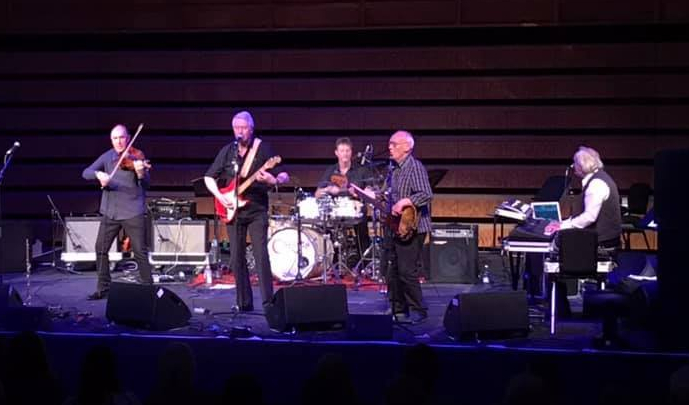
caravan

Caravan (photo: William Hayter)

This was the same Caravan line-up I’d seen in Bury in 2017, performing a slightly pared down set to meet the demands of a packed evening’s schedule, but with a set list reflecting, as in Bury, both the old and the new. Missing was that gig’s highlight ‘Love In Your Eye’ but added was ‘Nightmare’, a piece I’ve never given much time to it in its original form, but here beautifully conceived and executed with some stunning viola work. If only it had been followed by the ‘Last Unicorn’… The classics ‘Golf Girl’ and ‘I Wish I Were Stoned’ were both aired, the former made memorable by percussion from spoons and washboard, and the extended opus tonight was ‘Nine Feet Underground’, more of which later. A healthy smattering of more recent material appeared in the middle of the set, sounding a little stronger on second hearing for me, with again, ‘Dead Man Walking’ by some distance the classiest tune in this regard.
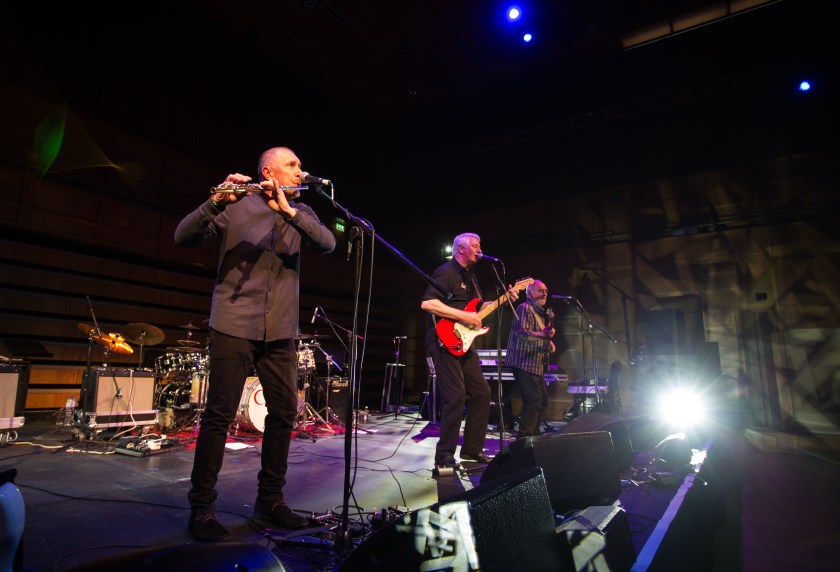
Gulbenkian. 50th Music. Photography by Jason Pay-76.jpg

Geoffrey Richardson, Pye Hastings, Jim Leverton: Photo Jason Pay

One of the advantages of our crow’s nest seats was that we had a full panorama of the band, and were able to see what a fine drummer Mark Walker is, with clear sensitivity to all the dynamics of the show. Perhaps unfairly he will probably always be seen as having unfathomably large boots to fill in the form of the much-loved Richard Coughlan, something that hopefully recedes over time as it has with the roles of Jim Leverton and Jan Schelhaas, given their longevity in the band. Again, our vantage point revealed quite how effortless the latter’s keyboard work is – yes, he can roll out those Dave Sinclair solos, but as it’s fairly pointless in trying to compete with, in my opinion, the genre’s finest soloist, he’s done something much cleverer, i.e. infused the music with something much more his own. Rather than those melodic, soar-across-the-hills solos of Dave Sinclair, Schelhaas is a boogier, a honky-tonk groover and I loved his work tonight.
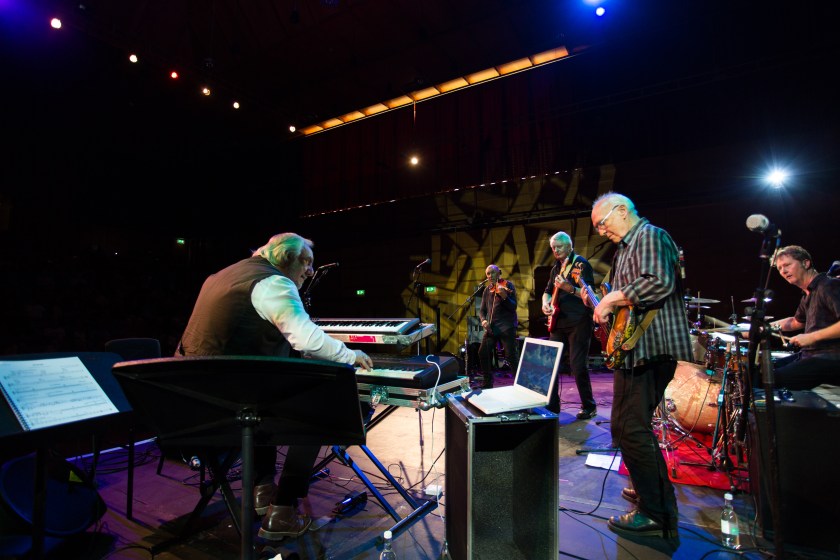
Gulbenkian. 50th Music. Photography by Jason Pay-81.jpg

Caravan from left - Jan Schelhaas, Geoffrey Richardson, Pye Hastings, 
Jim Leverton, Mark Walker: Photo Jason Pay

One of the bonuses of having such versatility around is that when the ship goes off course, there are plenty of skilled hands on deck to bring things back in line. Such was the case with Pye Hastings’ ongoing struggle with his guitar sound, particularly during ‘Nine Feet Underground’. Quite what caused this remains a mystery, but his own anguish at an irresolvable problem was made light of as the gaps in the sound were filled by keyboards and who knows what array of instrumentation by Geoffrey Richardson – it was expertly enough done for us to perhaps never know whether the inspired picked out solo on the viola was scheduled or not. Any doubts that Caravan were the main draw for much of the crowd, despite their set starting at 7.30(!) was dispelled by the heartfelt standing ovation they received at the end of the set.
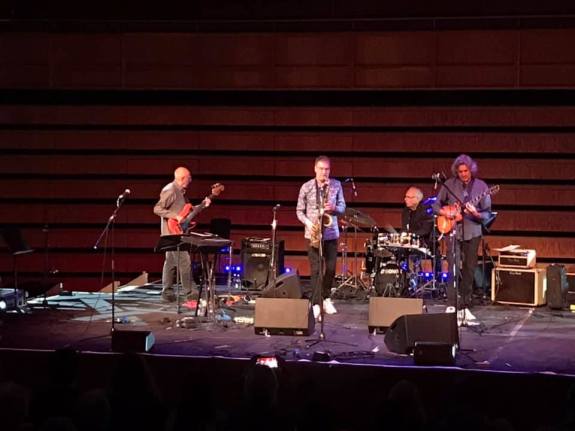
soft machine

Soft Machine (photo William Hayter)

Presumably Soft Machine’s elevation to second last slot was due to their involvement in the final piece too. Either way their own performance too built on recent setlists, with their airing of much of ‘Hidden Details’ very much on merit – this is such a strong record of largely original new music that it should be no other way.
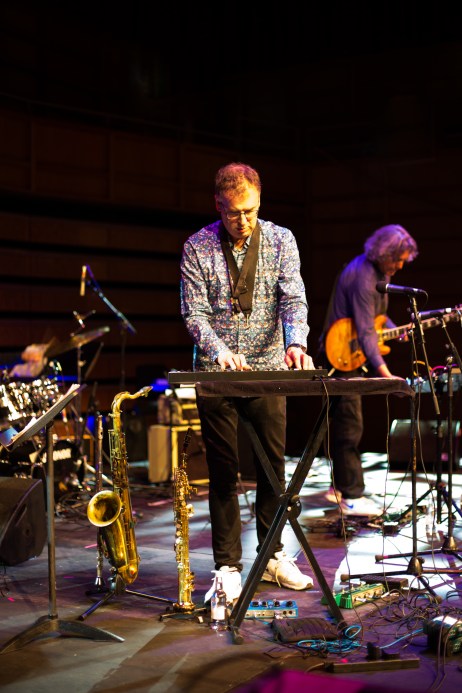
Gulbenkian. 50th Music. Photography by Jason Pay-84.jpg

Theo Travis & John Etheridge: Photo Jason Pay

Kicking off their set with the album’s title track, it struck me what a strong opening statement John Etheridge was making: in the world of keyboard sophistication often associated with the Canterbury scene, here was a virtuoso ripping through abrasive guitar styles, deliberately leaving notes hanging, Hendrix style, in the air. Things calmed down a bit with another beautiful rendition of ‘The Man Who Waved At Trains’ with its echoed loops courtesy of Theo Travis and then the double header of subtle Etheridge tunes ‘Heart Off Guard’ and ‘Broken Hill’ provided poignancy.  ‘Life On Bridges’, whilst lacking perhaps some of the album’s pinpoint accuracy in its triplicate main theme nevertheless made sense of its free jazz section in a way I’d not encountered before. If ‘Golf Girl’ had been Caravan’s anthem tonight, then the Soft Machine’s was the relatively faithful performance of ‘Out-bloody-rageous’, originally recorded around the same time, and reminding us just quite how far the two bands had diverged even by the start of the Seventies when the latter band still had some of its founding members.
Gulbenkian. 50th Music. Photography by Jason Pay-85.jpg

Roy Babbington: Photo Jason Pay

Again our high viewing position made for an excellent perspective of each musician’s playing, and our view of John Marshall’s navigation around his kit was a privilege, and not just on his startling solo in the medley which combines ‘The Relegation of Pluto’, ‘Tarabos’ and ‘Hazard Profile’. The latter track, driven along via monstrously low-slung bass sounds from Roy Babbington saw the guitar high notes missing from Etheridge’s solo on ‘Hidden Details’ appear triumphantly to conclude the set.

And so to the finale, ‘Zoom’. For me this might  best be described as a ‘curio’ rather than the crescendo of the evening it was billed as. Probably more in keeping with its performance art-based surrounds than the musical genre of the two bands which preceded it, this was a 30 minute piece mixing projected visuals, spoken word (penned by Poet Laureate Simon Armitage) and music based around pre-recorded compositions, partly electronic,  from John Harle. The link to the evening’s other events was the appearance in a 6 strong band of the entire Soft Machine.
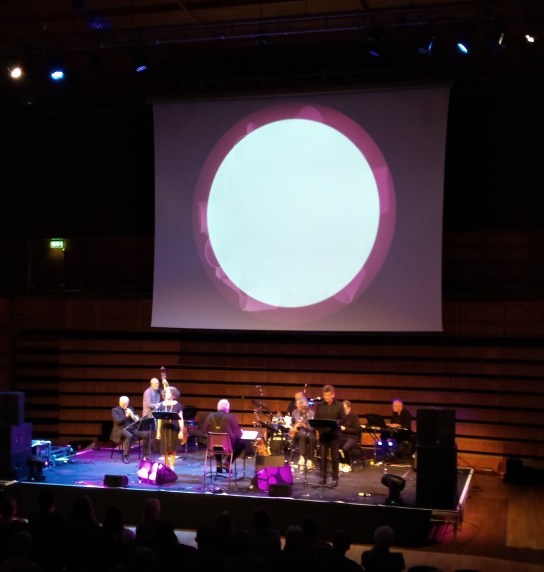
zoom

Zoom (from left: Mike Lovatt, Roy Babbington, 
Nicole Tibbels, John Harle, John Marshall, 
John Etheridge, Graham Bickley, 
Theo Travis, Steve Lodder)

Harle’s program notes made much mention of his own influences from prog rock through to the avant garde but personally I struggled to find obvious references to either in terms of sophistication – the music was neither striking enough, nor weird enough to leave an indelible memory. The role of the Soft Machinists too appeared to be minimal – one brief, effortlessly flurried solo from John Etheridge and a couple of unfurlings of Roy Babbington’s double bass being the main events of note with undoubtedly more musical impact coming from the keyboards of Steve Lodder. The spoken words I felt divided the audience: some were heartily guffawing at the witticisms within them whilst others who looked somewhat bewildered by proceedings. It would take a second viewing of this performance or access to the written material contained within to unwrap it all – or maybe just a different audience. In some ways this was rather a strange end to the evening, with many of the crowd having already left, and the exhilaration of the response to the earlier acts having somewhat dissipated.  Kudos however to Harle for not only putting into practice a mixed arts performance not seen in connection to the Soft Machine for …. well…. 50 years, and for curating a bill which paired Soft Machine and Caravan together for the first time in well over 40. All adding to the sense which had built through the weekend that Canterbury music in all its forms is very much alive and kicking.


Steve Hillage Band, Manchester Ritz Friday 7 June


IMG_20190607_205725340_BURST001.jpgIMG_20190607_205728951.jpg

I have to confess to a somewhat lopsided relationship with the music of Steve Hillage over the years. Introduced to his work through my love of Gong, I backtracked to his early days, was wowed by the brazen psychedelia of Arzachel, the melodic complexity of Khan and even his role as a sideman with Kevin Ayers. Then I purchased practically everything he did with both System 7 and the Orb as he made the progression from production work to embracing the more innovative end of the dance scene in the Nineties. The missing link? Steve’s solo work from the late Seventies, an era which brought him unparalleled adulation until the music press turned against him with the onset of punk.

Perhaps as a result of this, Steve Hillage has appeared to have favoured occasional flirtings with Gong over a resurrection of his solo era, and has even more overtly devoted his energies into the ongoing System 7 project over the last thirty years. The main exception was a brief moment a decade or so ago when he was back full time in the Gong fold for the ‘2032’ album. The Steve Hillage band performed a brief support slot incorporating him and Miquette Giraudy alongside then Gong members Mike Howlett and Chris Taylor.

img_20190607_205745024_burst000_cover_top.jpg

The Steve Hillage band in 2019 is somewhat different. A 7 piece featuring himself and Miquette alongside all current members of Gong is a much grander project: assembled to generate a much more expansive sound and perform a much bigger repertoire. Three guitars, Steve’s voice backed by at times by the entire Gong frontline (and possibly Cheb Nettles too), keyboards and saxophone. Whilst by no means familiar with the entire Hillage back catalogue (and not able a couple of years ago to make that financial leap to get hold of the ‘Searching For the Spark’ mammoth box set) I did recognise practically everything performed.

Any doubts that Steve Hillage might not have still ‘got it’ in terms of guitar wizardry were quickly dispelled – his is a sound relying on wonderful fluidity, and that shone through all night. Solo after solo was reeled off joyously, familiar theme after familiar theme purveyed by a band having the time of their lives. Standout moments for me was the Police-like ‘The Fire Inside’ from ‘Open’ with the sound stripped right down, the uncharacteristic balladeering of ‘Palm Trees (Love Guitar)’ and the sharply rising anticipation of ‘Ether Ships’ (both from Green) but all topped by a distance by the ‘Dervish Riff’ from ‘Fish Rising’, a killer theme aired by Gong themselves on their last tour. I’m less enamoured of the covers which punctuated Steve’s halcyon days as a solo star,  but even that should be taken with a positive spin: I simply enjoy his own material much more than his interpretation of that of the Beatles, the Stones and Donovan. There was a world premiere (apart from the previous night’s airing) of ‘Sea Nature’ (tonight called, I think ‘Submarine’). I also enjoyed Miquette’s punky singalong of the first encore ‘Light In the Sky’ but by this time I think most of us were waiting for ‘The Glorious Om Riff’, which emerged right on cue. If the original tunes aired were dominated by material from ‘Fish Rising’ and ‘Green’, then that suited me just fine: the latter is the most ‘You’-like of all his solo albums, whilst ‘Fish Rising’ has many Canterbury connections and compositions which reflect that.

img_20190607_212023978-1.jpg

It was the first time in years I’d been to a large venue, having been spoiled by the intimacy of lower key venues which have housed the gigs of Gong, Soft Machine, Caravan and others, and this certainly set the tone for an intense, all-encompassing experience. It was also my first visit in a couple of decades to the Ritz, a grandiose old venue on Whitworth Street, fabled for its bouncy floor. Whilst the atmosphere was electric (and the light show utterly stunning), the venue was far too tightly packed for anything other than a little light shifting around – this was, I would guess, a 2000 fan sell out preaching very much to the converted.

As for the band: they looked to be totally elevated by the experience: I’ve rarely seen Kavus Torabi grin so much, tempering his showmanship ever so slightly but still managing to sneak in a couple of astonishing solos of his own. It struck me that Dave Sturt could barely have been more in his element, given a wide stage to stroll around and the chance to funk it up a little; Fabio Golfetti was as ever the peerless glissando player stage left, providing much of the texture. Cheb Nettles, as befits his increasingly elusive reputation, appeared to be either hidden below his drums or strategically positioned out of the lights, but his sonic presence prevailed. Ian East meanwhile was probably even more prominent as a soloist than he currently is with Gong, particularly on tenor, and he even briefly wielded a flute for the ‘Om Riff’, which, as it turned out, was the ‘Master Builder’ version aired on Gong’s tour. If overall the voices were a bit muddied by the mix, the sheer joy of Miquette and Steve acting out their double act centre stage provided the enduring image of the night.

IMG_20190607_205755693.jpg

A word for the support act: there were different accompanying bands on each night of this 3 day tour (Cambridge, Manchester, London) and with this being Manchester it could only be local boys Graham Clark and Graham Massey, resurrecting a partnership which preceded both Clark’s involvement with Gong Maison and Masseys’s music with 808 State. One has to say that this was somewhat more diverse than the main event and not as immediately accessible (no complaints from me there), backed as I’d anticipated by electronica but not enough to obscure some genuine innovation: dipping into free jazz and folk in terms of the instrumentation which provided the overlay, not just from Clark’s peerless violin work (no guitar tonight) but also from Massey’s own excursions on guitar, and in particular soprano saxophone – this was surprisingly searching stuff of which I’d like to hear more.

img_20190607_201337703_burst000_cover_top.jpg

Just before this short tour took place, a November tour was announced which will extend the Steve Hillage band experience, and this time not only will he be backed by the Gong band, but Gong themselves will perform a support slot in their own right. 2 good reasons to catch one of the dates listed here:

tour poster


Stratus Luna (MoonJune)

52402748_2005985772847725_8520687049034956800_n.jpg

I published a few posts a year or so ago centred around the rather self indulgent social media meme of selecting your favourite 5 or 10 somethings, in this case 20 albums which changed my life. A good friend commented that he reckoned every single one of them would be ‘prog’, the inference a good-humoured one that plays on the common parlance that ‘prog’ is something of a four-letter word.

Stratus Luna are a Brazilian band that celebrate all that is good about the genre, rather than a collection of clichés that defile the term. A four piece aged between 17 and 21, this is a compilation of instrumentals of on the one part considerable virtuosity, and on the other hand complex but accessible instrumental compositions. In case you’re wondering about why a review of their eponymous debut album should appear here, then it’s the fact that 3 cousins who have apparently already been playing together since 2007(!)are joined by Gabriel Golfetti on bass who some of you might remember as the son of Gong guitarist Fabio Golfetti, and whose duo electronic album ‘Lux Aeterna’ was reviewed here. Fabio is also credited as mastering the album. No reflection on the excellent work of Gabriel and an extremely tight drummer in Giovanni Lenti , but it is brothers Gustavo and Ricardo Santhiago  who provide the most stellar performances here on keyboard  and guitar respectively – a genuinely astonishing double act.

stratus luna pic.jpg

If the ‘Lux Aeterna’ connection and some initial keyboard reverbs on ‘Nimue’ suggest this might be purely spacey fayre, the illusion is quickly broken by church organ sounds, clean guitar and sweeping keyboard pastiches. Shades of the Enid, maybe? No, this is much less self-important and with considerably more substance.  Memorable moments are everywhere: the funk bass keyboard section of ‘Nimue’, the gorgeous, haunting two string guitar theme which opens and concludes ‘Onirica’ and the gloriously precocious Ozricsesque flurries which precedes its finale, or the talking wah wah of ‘O Centro do Labirinto’. The closer ‘Efemera’ appears to be set up as the stand out track, with some memorably prodigious guitar soloing which recalls Mike Oldfield soaraway moments high on the fretboard, but it is possibly trumped by ‘Zarabatana’, a 9 minute piece where  sitar and hand drums unexpectedly emerge out of a rocky romp (the Hindustani influences referred to on the band’s website?), with a a hint of ‘Matte Kudesai’ thrown in for good measure before the piece rocks on with another intricately picked out guitar solo.

Meanwhile the slow walkin’ talk bass of ‘Pandoras Voadoras’ is the theme which you will find impossible not to be humming constantly at inopportune moments.  Whilst Gustavo is equally proficient on acoustic and electric piano and those lovely clear organ sounds the killer moments are when he switches to Hammond, where the interplay with guitar reminds me often of that the very underrated Seventies band Arthur Brown’s Kingdom Come.

stratus crop pic.png

Another relevant reference point might also, (as with recent albums from Fabio Golfetti’s own excellent band Violeta de Outono), be Khan. The material I review on this blog is without exception ‘progressive’ music, but generally is  characterised by moments of sonic dissonance, or of time signatures which change obliquely at will. Stratus Luna does neither of these things. There are no dud notes, no throwaway filler passages, just a glorious journey of melodic instrumentation which even at the end of May will, I suspect, end up being my favourite album  of 2019. On the evidence of Stratus Luna, if ‘prog’ is indeed a four letter word, then I may need to purchase a swear box!

https://stratusluna.bandcamp.com/album/stratus-luna

https://stratusluna.com/


The Wrong Object: Into The Herd (MoonJune)

wrong object.jpg

One of the strengths of the splendid DVD (with bonus tracks) ‘Romantic Warriors 3: Canterbury Tales’ was its showcasing of bands very much on the periphery of what is regarded as ‘authentic’ Canterbury scene, whether that be current, younger bands based in Canterbury or artists from further afield clearly influenced by the genre. The highlight of the latter batch of artists, although hardly newcomers,  was Wrong Object, led by Michel Delville, a profilic guitarist/keyboardist from Belgium. Not only have The Wrong Object produced half a dozen albums with recognisably quirky compositions, one being amongst the last recordings of legendary saxophonist Elton Dean (2005’s ‘The Unbelievable Truth’), but Michel has also recorded with Alex Maguire (latterday Hatfields keyboard player and lynchpin of  the recent Phil Miller memorial concert), played a lead role in Comicoperando, a project performing the music of Robert Wyatt; Machine Mass; and Doubt (with Maguire and briefly Richard Sinclair).

‘Into The Herd’ displays a bewildering range of styles, presented in such a way that the whole album is one heterogenous journey, flitting through genres both between and within tracks, with a full range of instrumentation on show. A double sax section, which alternately can solo beatifically (‘Another Thing’), generate atmospherics, or alternatively squawk either atonally Gary Windo style or together etch out a rhythm; keyboards that can move between jazz noodling on electric piano (‘Filmic’) or mellotronics. Guitar that can carefully navigate a route through a piece (‘A Mercy’) or can quickly flip to  screaming out a solo (‘Rumble Buzz’) or indulge in heavy rock posturing (‘Into The Herd’).

delville.jpg

If this is to be classed as Canterburyesque, it fits more at the Hatfield or more pertinently National Health end of things rather than Soft Machine (other than a brief but  wonderful blow on ‘Mango Juice’ which could be almost Ratledge meeting Elton Dean  in the afterlife). If that National Health comparison is mainly down to the wealth of styles on display here, then there are more direct references in the slowly building atmospherics underpinned by brooding bass, ever increasing in tempo, on ‘Rumble Buzz’ for example. There is evidence too  of Zeuhlesque discordancy too on the album’s highlight ‘Mango Juice’ which throws in a gutwrenching guitar solo too a la Phil Miller, or in the grumbling wobbly bass of the title track opener.   But elsewhere there are also elements of the warped chamber music of Belgian countrymen Univers Zero (from whom Antoine Guenet is one of the band members), or Balkanesque exuberance in the sheer joy of ‘Filmic’, where the wind section again comes to the fore.

Whilst the review of ‘Into The Herd’ was delayed unavoidably as the Facelift blog rather ground to a halt in the spring, then at least it gave me a chance to give this album a extended listen, which is what it merits.  And it does deserve that because this is highly complex, thoughtful and meticulously constructed music with passages that will immediately resonate with readers here, but also return repeatedly to your subconscious with a bite.

Into the Herd is available from https://thewrongobject.bandcamp.com/album/into-the-herd-hd whilst a simultaneous project from a rather different but equally innovative band called The Gödel Codex, also featuring Delville and Guenet, can be heard (and purchased) at  https://stilll-off.bandcamp.com/album/oak


Carla Diratz / Pascal Vaucel: pRéCis​.​AiMaNt

diratz vaucel

This is the third review within these pages for projects involving the remarkable French vocalist Carla Diratz, and this one sees a collaboration stripped down once more to bare voice and limited instrumental backup. But unlike ‘The Electric Suite’, with Corentin Coupe, which uniquely matched vocals and bass, this pairs her with Pascal Vaucel, a French guitarist who adds enough additional layers with drum tracks and bottom heavy treatments to make this album sound like the work of a band. If I’d looked hard enough, I would have seen him at Kozfests 2016 and ‘17 performing with Bob Hedger in Phaselock. More fool me – he’s clearly a prodigious inventive talent.

As with all Diratz projects I’ve heard to date, the music alternates between pieces which are carefully constructed to showcase her rich voice in conducive, almost conventional genres (which only serves to accentuate the starkness of her delivery); and tracks which are more freely constructed. Whilst I favour the former, the performances are strong throughout and the freeform numbers for me work better than on any of her other albums, testament to some alternately brutal or eloquent passages from the guitar of Vaucel. In fact, as with Dave Newhouse, Diratz appears to have found herself another kindred spirit, another composer with the virtuosity and versatility to do justice to that unique voice.

album cover.jpg

Three original tracks really stand out: ‘Questing Dawn’ with its warm jazz guitar flecks;  the nihilistic, ‘Dharma Song’, dominated by abrasive guitar effects where the Diratz voice reaches its most primeval peak, set against a most industrial backdrop; whilst ‘Blue Drops’ meanwhile, is much more amenable, recalling the gentler, bluesier ambience of Hugh Hopper’s Hughscore, propelled along by simpler guitar lines and relatively gentle percussion. Elsewhere, on ‘Ancora Pier Paolo’ – there are hints of Durutti-column style noodling with multiple call and response vocals and on ‘Movoid Blues’, subtle guitar licks eventually give way to a Hopper-like fuzz bass grind out.

If one needs a reason for reviewing  this fine album on a Canterbury scene blog, then it is for  ‘Sea Song (Robert Wyatt)’, a version which was apparently sent to its author for approval and received it in spades. Tackling a piece which is almost the holy grail of Canterbury tracks is courageous in itself, and whilst the likes of the Unthanks (beautifully) Tim Hawthorn (faithfully) and the University of Errors (authentically) have attempted this, the Diratz/Vaucel version is less diplomatic: gravel voice and heartfelt delivery chill the bones a little, and the scatted coda, which for me in its original form is perhaps the most beautiful two minutes in musical history, is here performed with a hint of menace. It is the most unique re-interpretation to date, and as such works well.

This 10 track album is available digitally at https://carladiratz-pascalvaucel.bandcamp.com/releases but there is also an 8-track vinyl version available to buy direct from Pascal at pascal.vaucel@gmail.com, which includes all 6 pieces mentioned above. I used my copy to christen a record player brought out of a cupboard after a dozen years in hibernation – quite a baptism of fire for it!

Gong live at the Wardrobe, Leeds, 18 May 2019

This reincarnation of Gong have rejuventated the spirit of the band so successfully that this was the fifth time I’d seen the band in less than 3 years, in places as far flung as Devon and Northumberland. Tonight was the relatively short hop to Leeds, and given that 2 of my previous viewings of this lineup had been at festivals, and another in a somewhat offbeat location in a village hall, it seemed slightly novel to see the band in an urban stronghold, this time the metropolitan but nevertheless intimate venue of the Wardrobe. Excitement too, at not only hearing their new album ‘The Universe Also Collapses’ performed live for the first time, but to see a star support act, Ed Wynne, also to some extent re-inventing himself in promoting his first ever solo album ‘Shimmer Into Nature’ reviewed here – he is the Kscope stable mate of Gong.

IMG-20190521-WA0000.jpg

Aside from the impromptu jammed Kozfest performance in 2017, which will live long in the memory, this was the first time I had seen Ed perform live away from the very many times I saw him with Ozric Tentacles, but it was such a joy to see him backed by 3 other live musicians, not just son Silas on keyboards, but by drums and bass too. Ozric Tentacles performances were always all-encompassing but strangely enough Ed’s guitar was often lost in the overall mix – perversely although ‘Shimmer Into Nature’ is very much a multi-layered album, his live band is very much about Ed’s soloing: well up in the mix, centre stage personified – I can’t recall such a joyous outlet for his strident guitar lines. Four tracks from the very fine Shimmer (review here) were aired – I happened to arrive slightly late and walked into my very favourite riff from ‘Oddplonk’, which reassured me that I’d come to the right place. Great to hear this very fine album aired in almost its entirety, but the icing on the cake was the final track, a most unexpected treat from what, on hasty conferral with a fellow Ozrics-fan, to be none less than the title track from the obscure 1988 cassette only release ‘Sliding Gliding Worlds’, reverb heavy and brooding before it culminates in a screaming guitar conclusion. A fabulous ending to a what was much more than an aperitif for the night – I for one would travel far and wide to see this particular band perform in their own right.

IMG-20190521-WA0001.jpg

And so to Gong. Rumour had it that the band would be performing a 2 hour set, a welcome legacy of the Allen days – rich pickings indeed for an audience who like me were also there for the support act. What’s really impressive about this band is that not only are they penning extremely strong new compositions but have the confidence to go out and back themselves in performing it to an audience weaned on gnomes, pixies and Daevid Allen’s charisma. The classic approach for a band of such vintage is to perform a selection of old classics and throw in a couple of newbies from the latest album to whet the appetite. Not this band: ‘Universe’ was performed in its entirety, with three tracks from the preceding album, whilst the 2 hour timeframe gave the scope to fit in plenty of classics too. Gong have so nailed the merging of identities of the old and new that the transitions are seamless: ‘’Kapital’ sits alongside ‘You Can’t Kill Me’ as a rumbustious anthem; ‘Forever Reoccuring’ is maybe the new ‘Selene’ in terms of its heartfelt invocation, whilst ‘Sawtooth Wakes’ competes to provide the evening’s killer moment alongside ‘Master Builder’. And so the drop dead tracks for me could be taken from either camp. ‘Master Builder’ appears to be ever more outrageous in terms of quite how far the tension builds – it takes an aeon to even reach the IAO chant. Yet in the other camp the incredible closing moments of ‘The Elemental’ competes just as memorably. The recent BBC Radio Session had picked out truncated versions of ‘Forever’ and ‘Sawtooth’ to represent the new album, and I’d wondered if they’d not performed ‘Elemental’ purely because the weirdly striking vocal harmonies would be too difficult to reproduce: clearly not the case. The general consensus is that the new album is even more ‘Gongy’ than the last one – moving away from the often intricate compositions of ‘Rejoice’ towards two key band elements –  extremely tranced out  (in the old parlance) in the case of  ‘Forever’ and muscular ‘Dynamite’-style riffing – ‘Sawtooth’ with it’s repetitive unison theme and scattergun drumming was an extraordinary performance of intense menace.

IMG-20190521-WA0002.jpg

Highlights were moments as much as tracks: Kauvs Torabi’s stage presence and the many intricate dual lines between his guitar and the sax of Ian East, the latter surveying proceedings impassively from right of stage; Fabio Golfetti, high up in the mix tonight, purveying glissando guitar like no other and also responsible for a memorable second guitar solo on ‘Rejoice’; Dave Sturt’s floor shaking bass lines on ‘Sawtooth’ and ‘Master Builder’; and Cheb Nettles, a colossus throughout, breaking into a huge sweat as he screams out his scatted vocals on the encore ‘Insert Your Own Prophecy’. This band are at once faithful to the vibe, but also innovatively etching out a vibrant legacy of their own.

Gong: The Universe Also Collapses (Kscope)

gong-universe-cover-art-500.jpg

Album number 2 in the post Daevid Allen era and the press release (plus additional words from frontman Kavus Torabi on the recent BBC Radio 6 session) for ‘The Universe Also Collapses’ makes much of the band seeking to establish its own identity as a unit, away from the ‘guest’ contributions of the last album where Didier Malherbe, Steve Hillage and (posthumously) Daevid Allen all took their bows. In truth that identity had already been marked out definitively on ‘Rejoice I’m Dead!’, as a band with a new effervescent frontman melded trademark Gong angular riffing and spacey glissando with their own complex compositions. Alongside ‘Zero To Infinity’ it was undoubtedly the finest Gong work since the Trilogy era.

More pertinently for me was whether ‘Universe’ could continue this unexpectedly high benchmark. Soundings from those in the know suggested a lot of excitement around this album, which has emerged as a somewhat lopsided 4-track album, which on an old LP would have separated itself into a side 2 of three tracks, with the ‘main’ piece appearing on the whole of side 1. Presumably this is how the shocking pink vinyl version actually materialises.

5D3_5767-sml.jpg

‘Forever Reoccuring’, the aforementioned  20 minute excursion appears to follow the devotional template Kavus Torabi was setting out on his recent solo EP ‘Solar Divination’, built on a central theme containing hints of more than one classic track from ‘You’ in the way the ambience slowly builds towards its much anticipated break-outs. There’s also a reference, intended or otherwise, to ‘A PHPs Advice’ in one of the riffs. When I first heard this track, I thought ‘wow’, this is ‘A Sprinkling of Clouds’ mark 2.  Then I had my doubts the piece merited its full outing.  But then it slowly ate away at me to the extent that when on checking for the twentieth time to see how good it was, I realised that it had me stitched up like a kipper…  Unlike ‘Clouds’ or ‘Master Builder’, it ebbs and flows, successively crescendoing towards various climaxes before dropping away again. Highlights are the superb obtuse guitar solo when the piece first breaks from Kavus (the only such on the album, a shame as it is arguably his finest suit), and even better, at around 12 minutes in a brief rising soprano sax theme as more and more instruments join the fold, either in accompaniment or as counterpoints. This could well be the killer riff that this opus was crying out for, and incidentally comprised the centrepiece of the condensed version on the BBC Live session. Then to some Hillageesque skysaw soloing from Fabio Golfetti before the piece winds back down into more Golfettti glissando with a vocal section very reminiscent of Daevid’s last outtings with the University of Errors. And then it’s gone, surely not 20 minutes of listening already.
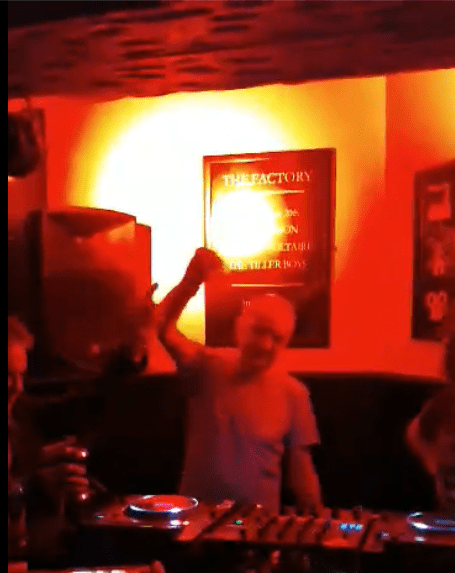
5D3_5633-Edit-sml.jpg

‘If Never I’m And Ever You’ is ‘Forever’’s polar opposite,  a 2 minute piece whose jaunty central riff is about as quantifiably Gongish as it is possible to get, throws in vocal lines from everywhere into the increasing melee and has a rather nice Malherbish fanfare from Ian East to finish. That said, it is relatively benign fayre compared to what is to come next.  For it is clear from the opening few bars of ‘My Sawtooth Wake’ that this could well be the centrepiece of the album. In its 13 or so minutes it rarely deviates from its main premise, a jerky, heavy rhythm which stutters along memorably with all 5 members buying into its magnificence. This is ‘Fohat’ on speed, with disquieting glissando, pounding bass, and screaming solos from guitar and sax. And even when it drops down to moments of vocal reflection, it never quite loses that air of menace before all elements combine in cataclysmic glory. This is marvellous, marvellous stuff with pride of place going to some outstanding drumming from Cheb Nettles recalling Pip Pyle at his frenetic best.

5D3_5767-COLsml.jpg

If ‘Sawtooth’ is, overall, the album’s standout track, then the finest moment is reserved for the concluding part of the final track ‘The Elemental’. A pleasing Sixties sounding ditty, Kavus’ harmonium et al, gets ever more rocky before arriving at the heavy crashing guitar riffs reminiscent of ‘Kapita’ on the last album, but of course, as this is Gong, throws screaming sax into the mix too. “Remember there is only now”, sung in (4-part?) dissonant harmony is the album’s evocative crying call, propelled along by thunderous bass from Dave Sturt. The whoop which signals the end of the first round of this unforgettable chorus is one of sheer exultation at the album’s signal moment. Throughout the album it has been clear that, lyrically, the gnomes are long departed, but Gong’s cosmic identity has endured. Far removed from the sharp characterisation of Daevid Allen’s storytelling, this is a much more detached narrative which ponders the science of life. And it did leave me thinking: is ‘Remember there is only now’ an unfathomable cosmic statement about the universe starting or ending in the same moment in time; an imploring for us all to live in the present; or something unintentionally cheeky about this Gong incarnation being here and here to stay? I’ll leave that for you to ponder…


Postscript: the band play this entire album as part of a quite astonishing evening currently on tour around the UK – 2 hours of Gong with support from Ed Wynne playing (with a new band) his superb solo album ‘Shimmer Into Nature’. Remaining tour dates below

GONG-2019-LIVE-TOUR-POSTER-2.jpg

Mick West Memorial Gig, Trades Club Hebden Bridge 3 April 2019


Mick-West-Crop-SM-1024x698

Whilst not a name that would be immediately recognisable to the majority of people regularly reading this blog, the piece about Mick West’s tragically early death around a year ago was read by more people than any other post in 2018. And so it seems appropriate to talk about the memorial gig held for him last night at Hebden Bridge Trades Club.

Mick was a somewhat larger than life figure, and a wonderfully talented multi-instrumentalist and songwriter much loved by many in his home town of Hebden Bridge and whose music permeated into the lives of many locally and beyond. This evening of fine music packed out a midweek venue, testament to the memory of a highly respected musician.


IMG-20190404-WA0001

Abrasive Pheasants - photo Georgina Filby

Simultaneously broadcast live on Recycle Radio http://recycleradio.co.uk/ (with running commentary from DJ Creedy), the evening consisted of performances from 5 of the many bands Mick had long associations with, and as is often the way of these things, with many musicians appearing more than once. Whilst the performances were not strictly chronological in terms of the origins of the music, things did started off logically enough with the  appearance of Amoeba Pie, originally a duo with Paul Weatherhead, long term collaborationist.  I associate both him and Mick with a somewhat daft, acid-tinged view of the world both lyrically and musically, and this collection of songs, performed by Paul on guitar alongside Steve on bass resurrected a set of Mick’s songs dating back as far as material penned as a 16 year old: a real mix of dope tales, clever plays on words and father/son confrontations, with some folky twists. Some real gems in there.

Abrasive Pheasants came next, a band I never got to see live even though Mick extolled their virtues to me frequently when I saw him latterly. Creedy promised us ‘free jazz improv’, but that does a disservice to a band who laid down some fairly tight funky grooves with some excellent busy drumming to allow some superb lyrical sax to shine through. The only real free departure was in a rather bizarre spoken word piece from bass player Mention also here for Colin Robinson (he of Jumble Hole Clough and frequent Mick collaborator) joining the band on guitar. A very fine band I’ll want to see again.

IMG-20190404-WA0000

Beastfish - photo: Georgina Filby

first saw Beastfish at Kozfest 2017, with Mick on keyboards, and given the circumstances couldn’t bring myself to see them again there in 2018 after Mick’s death. But I’d forgotten quite how stunning they were, even shorn of Mick’s subtle accompaniments. Ostensibly a vehicle for the poetry (both spoken and sung) of Ste, delivered in an urgent, compelling narrative, this band is much much more besides, with tightly arranged music featuring a astonishing performance from guitarist Slim Verhoef, managing to provide both the sonic backdrop and main riffs without breaking breath, whilst Woody on drums and Mike on bass provide slick rhythms. Superb stuff.

A combination of babysitting arrangements, an early start for work next day and the emotion of the evening (the backdrop to all performances was a large screen showing montages and videos of Mick in various stages of his musicial career, and was hugely evocative), meant that we left the Trades before the final two bands: probably the ones Mick is most associated with – the Electric Brains and the Ukranians. Lots of familiar faces and tunes within their ranks without doubt. I’m sure they did him proud.

Look out for the broadcast of this event to pop up here: http://recycleradio.co.uk/


https://soundcloud.com/abrasive-pheasants

https://soundcloud.com/slimverhoef (Beastfish)

Tom Ashurst & Mark Robson: Live In Glastonbury (Electric Salad)

tom-ashurst.jpg

I first came across Tom Ashurst’s name when trying to find out about the unbelievably good bass player performing with Ozric Tentacles’ main man Ed Wynne at Kozfest in 2017. This jammed gig will long endure in my memory, as a crowd emerging sleepily from their tents around midday on the Sunday ambled into an unexpected treat in the festival’s main tent.  I found out subsequently that Tom is also a phenomenally gifted guitarist, and I caught brief snippets of his performance at the same festival in 2018. He is probably best known however as bass player with the Hawklords.

Then, somewhat without warning appeared this CD. Recorded live last year in Glastonbury, this is billed as a duo gig with Mark Robson, the Kangaroo Moon main man and multi-instrumentalist. Not to denigrate Mark’s own considerable talents but this gig (and album) ostensibly appears to be primarily Tom’s show with some sensitive accompaniment on keyboard and occasional star turn from his more well-known companion. And what an impressive performance this is, in terms of composition, arrangement and particularly execution from a very fine guitarist. The general modus operandi appears to be the building of loops of acoustic guitar, sampled then played in increasing numbers of layers, often with the icing on the cake being a blistering solo. Of all of the albums covered in this particular batch of reviews, this has had the most appeal, intrigue and therefore playtime of the lot.

So what do we have here? Let’s start with the ‘covers’, although these are essentially re-interpretations with varying distance from their originals. Beginning with the biggest surprise, the album is launched with ‘Tales of Taliesin’, the ‘Softs’ guitar epic from 1975 – a lovely acoustic version. They continue with ‘Jacques Cousteau Loves Anchovies’, a track I vaguely identified as a Here and Now Eighties piece (the writing credits to Tha Bass and Da Blitz confirm this). Much more memorable is ‘You Shouldn’t Do That’, a Hawkwind cover with Ashhurst (presumably) providing the looped, breathy vocals that invoke a genuinely hypnotic chant. There is also space for ‘Gypsy’s Lullaby’, which I recognise as a Kangaroo Moon staple, and notable for it being the only track with Mark Robson being front of stage (on penny whistle) – an ethereal mix. But all non-originals are universally trumped by ‘Fohat’, a remarkable acoustic version of Gong’s ‘Camembert’ track, slowly built up through guitar motifs which underpin each other, overlap and provide a pulsating backbeat for the eventual ‘takes a little time’ melody etched out initially via guitar, then through wordless vocal before the crashing conclusion. If I was wowed by a recent discovery of Fabio Golfetti reworking this track with Violeta de Outono, then Ashurst’s version is just as stunning and evocative.

tom ashurst here and now poster.jpg

The album is rounded off by three originals, radically different but all impressive in their own way. From the hiphop crash chords of ‘ICRED’, this unfolds into the most unfettered guitar soloing of the album, truly glorious stuff, whilst ‘Dementia Kicking In’ is a bluesy groove a la Pink Floyd’s ‘Money’. The album concludes with ‘Cumulus Nimbus’, a funky piece which put me in the mind of The Egg who I saw many times at festivals in the Nineties: repetitive funked-out danceability personified, albeit that The Egg never had Ashurst’s blissed-out Hillageesque guitar work.

It would be lovely to see how this all pans out live, to witness first hand who this multilevel process works. I’ll get that chance quite soon as the duo perform a support solo slot to Here and Now in my new home town of Todmorden in early July (see above).

In the meantime copies of this truly excellent album are available via Paypal from Tom direct at Tom_ashurst96@hotmail.com for £8+£1 p+p (UK)

The Invisible Opera Company of Tibet: Surfing the Wave of the Mystery, live at Kozfest 2018 (Dakini Records)

iocot koz

The Invisible Opera Company of Tibet, if my gnomic cosmology holds true, was a term originally coined to describe the ‘otherness’ or trance induced by the dronish passages of Gong’s music, specifically that of glissando guitar and space whisper produced by the band’s founders Daevid Allen and Gilli Smyth. It also came to encompass parallel projects in four corners of the globe – Australia, the UK, Brazil and the US, all  of which had Daevid Allen’s patronage and most his involvement (although information about the American branch is somewhat elusive) from the late Eighties onwards.

In fact my first viewing of Daevid Allen, at a memorable gig in April 1988 in an Afro-Caribbean club in Birmingham may well have gone under the umbrella of IOCOT – certainly gigs later in the year with the same musicians did. In the Nineties I got to hear albums by the Australian version (with Russell Hibbs), and the UK band (who I also saw at Gong 25) whilst a tape sent by current Gong guitarist Fabio Golfetti under this name was reviewed in Facelift and became the sleevenotes for its eventual release on Voiceprint. Much much more on that Brazilian connection in a later article.

Meanwhile, the UK version has continued its patronage of the UK festival scene, and are regular attendees at Kozfest, where this particular performance took place last summer. In fact this triumphant gig occurred towards the end of the traditionally Gong-ish Sunday on the festival’s smaller Judge Trev stage where the likes of the Glissando Guitar Orchestra, Yamma, Kangaroo Moon, Microcosmic and Magick Brothers had appeared through the weekend.

Fronted by guitarist Brian Abbott, whose Gong credentials stretch back to being the GAS custodian in the late Eighties, and partner Jackie Juno, this band’s trademarks are both romping through selected riffy Gong and Daevid Allen standards with a definite whiff of Camembert (notably ‘Stoned Innocent Frankenstein’, ‘You Can’t Kill Me’ and ‘We Circle Around’) alongside some strong originals. Occasionally they stop to take breath, and it is here that Jackie Juno’s alter ego presents itself. On the one hand a hugely charismatic, strong-voiced lead vocalist and stage presence, dropping the ‘F’ bomb at will, she can also morph into a more considered poetical side. Right from the off, the invocation ‘Now’ (whose words include this album’s title) sets the scene, whilst the later ‘Temple Song’, backed by thrashy guitar work from Brian Abbott calls down the wrath of the gods on the Chinese state (the track is dedicated, appropriately,  ‘to Tibet’).

iocot promo.jpg

The highpoint, however,  is Juno’s superb, evocative ‘Great Goddess’ poem, extended from Gilli Smyth’s words, which provides the intro for a killer version of ‘Master Builder’. This is somewhat shorter than the current Gong band’s version, but punchy enough for immediate impact. The guest bass player here is none other than Mike Howlett, who of course pounded out the original line on ‘You’. A trio of originals unfamiliar to me is rounded off by  ‘Wake Up’, which alternates between some lovely harmonised verses (hints of ‘And You Tried So Hard’) between Juno and percussionist Trina McDougall, and a somewhat rousing chorus, before extending out into a glissy wig-out (and I’ll wager those two words have never appeared in tandem in print before). The aforementioned ‘Temple Song’ completes a trio of originals– as with most their material, it’s good rousing stuff for the festival crowd. Hats off to a tight band with keyboards (Julian Veasy), bass (Phil Whitehouse) and drums (Tracey Austin) and strong backing vocals throughout, and the three-strong female presence including the excellent drumming adds a different, somewhat boisterous twist to the Daevid Allen originals.

DSC06673.JPG

Tim Hawthorn

Other guests on stage included Andy Bole, adding an extra guitar, and for an unexpected encore, original Invisible Tim Hawthorn/Hall/Flatus, who forsakes his gentle folky balladeering temporarily for a rousing version of ‘Bad Self’, the punked up number which he wrote and sung on ‘Jewel In The Lotus’. Although two further acts were to follow on this particular stage that evening, it brought down the curtain on our own particular viewing for Kozfest this year as we prepared to head back up north, and the pink clouds we emerged from inside the tent to, captured on the album’s front and inside covers, remain a fitting memory of an excellent gig.

You can order this CD direct at https://www.brianabbott.info